Category: Nation & World

  • Why these red state Republicans are resisting Trump’s efforts to expand GOP power

    Why these red state Republicans are resisting Trump’s efforts to expand GOP power

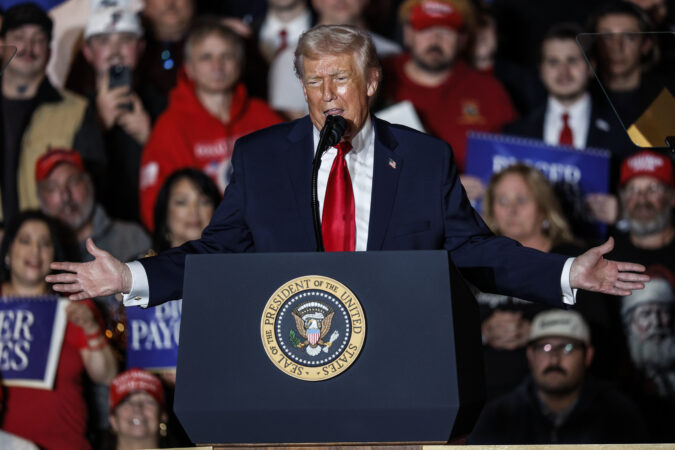
    INDIANAPOLIS — In 44 years in Indiana’s legislature, Vaneta Becker had never before had a call with the White House.

    President Donald Trump was on the line that day in October, urging her and her GOP colleagues to redraw the state’s congressional map to help Republicans in next year’s midterm elections. She told the White House she opposed the idea, and a week or so later got a voice message from an aide asking for a follow-up conversation. Becker called back to leave a message of her own.

    “I’m not going to change my position,” Becker, 76, recalled saying. “You’re wasting your time on me, so just focus on somebody else.”

    Indiana, a state Trump won by 19 percentage points last year, is serving up an unusual amount of resistance to his plan to carve up congressional districts around the country. Since this summer, Republicans in four other states have rejiggered their maps to give their party as many as nine more seats part of a larger plan aimed at retaining power in Congress after next year’s elections.

    But in Indiana, a contingent of GOP state senators has politely but persistently said no. The GOP opponents told Trump and Gov. Mike Braun (R) they weren’t on board and last month 19 of them voted with Democrats to end a legislative session without acting on redistricting. Trump and his allies kept pressing, and the state House passed a plan last week that would likely give Republicans all nine of the state’s congressional districts, two more than they have now.

    The leader of the State Senate, Rodric Bray, agreed to bring the senators back to the state capitol to take up the issue even though he was among those who had voted to end the session. They are expecting to vote Thursday.

    Opponents include longtime Republican lawmakers like Becker who got involved in politics years before the rise of Trump and his Make America Great Again movement. Hoosiers bristle at meddling from Washington, even when it comes from allies, the opponents say.

    The state senators have been increasingly on edge in recent weeks as they endured intimidation — political and physical — and a stream of hoax police reports that seemed designed to draw large law enforcement responses to their homes.

    States draw their congressional districts after the census, and lawmakers from both parties often try to maximize their advantage. Years of litigation sometimes follow, but state lawmakers typically don’t redraw their lines in the middle of the decade unless a court orders it. Trump has rejected the usual way of doing business, demanding Republican-led states make immediate changes.

    So far, Republicans have not netted as many seats as they’d hoped because Democrats have counteracted them by adopting a new map in California and are trying to do the same in Virginia and other states. Opponents of a new GOP-friendly map in Missouri submitted more than 300,000 signatures to the state to try to block it from going into effect until a referendum on it can be held.

    But the GOP resistance in Indiana stands apart, in large part because Republicans across the country have readily acquiesced to Trump’s demands and threats on a range of issues.

    Trump may yet prevail. But the rare instance of pushback here could offer warning signs to Trump that his grip on the party may be loosening amid slides in his public approval rating. A vote against a new map in Indiana would add to his woes as Republicans fret over their ability to hold onto the House next year.

    What happens in Indiana will have effects elsewhere. If Republicans reject the map here, Trump may put more pressure on officials in other states. If they go along with the plan, Democrats in Illinois and Maryland who have resisted redistricting may feel they need now to jump into the fight.

    Time is running short because election officials, candidates and voters need to know where the lines are well ahead of next year’s primaries. But the fight over maps will continue for months. Republicans in Florida are poised to draw a new map and GOP lawmakers in Utah are trying to reverse a court decision that is expected to give Democrats one of the state’s districts.

    In Indiana, lawmakers have been debating whether to redraw the lines since August, but they didn’t see the proposed map until the House unveiled it last week. The map would break Marion County, the home to Indianapolis and the state’s largest African American population, into four districts, diluting Democratic votes. It would likely doom the reelection chances of Democratic Reps. Frank J. Mrvan and André Carson, the only Black member of Indiana’s congressional delegation.

    Trump has hosted Indiana officials at the White House. He’s dispatched Vice President JD Vance to the state twice. In October, he and his aides held their conference call with Indiana state senators to talk up redistricting. At the end of the call, the senators were told to press a number on their phone to indicate whether they supported redrawing the map, even though they were yet to see how the lines would change.

    On Wednesday night, Trump lashed out at the State Senate leader on Truth Social, calling Bray “the only person in the United States of America who is against Republicans picking up extra seats” and warning that lawmakers who oppose the changes were at risk of losing their seats.

    A White House official said earlier that Trump’s team is “not arm twisting. Just outlining the stakes and reminding them western civilization stands in the balance of their decision.”

    About 800 of Becker’s constituents in southwestern Indiana have told her they are against the plan and about 100 have told her they’re for it, she said. Sitting in her wood-paneled cubicle Tuesday in the state capitol, she slid a constituent’s letter out of its envelope.

    “Mid-decade redistricting at the request of President Trump will unnecessarily intensify the already deep partisan divisions in our country,” the man wrote. “Even bringing this topic up in the Indiana legislature will ratchet up the antagonism.”

    Voters know the push is coming from Trump, and many are not afraid to criticize him for it, even if they otherwise support the president, she said. Becker declined to say whether she’d voted for Trump but said she’s “not crazy about him,” especially after the Jan. 6, 2021, attack on the U.S. Capitol.

    Trump is not letting up on his push. Last month the president called out State Sen. Greg Goode (R) in a post on Truth Social, saying he was “very disappointed” that he opposed redistricting even though Goode had not taken a position. Later that day, Goode said, someone falsely told police he had murdered his wife and barricaded himself in his house. Police kicked in the door just after Goode got out of the shower, while his wife and son were getting Christmas decorations in the basement, and officers pointed their guns at Goode’s chest, he said.

    Goode, who serves as the state director for U.S. Sen. Todd Young (R., Ind.), said he didn’t blame Trump for the incident. He got a call from Trump the next day, which he described as polite. Trump called Goode again on Monday, as the state senator was listening to the redistricting debate in committee.

    “It was not a pressured call at all,” Goode said. “The overarching message really from day one is the importance for the Republican Party to maintain control of the United States House of Representatives.”

    Goode said he won’t decide how he’s voting until he hears the final debate among the senators. He’s voted for Trump three times and takes his opinion seriously, but also is listening closely to his constituents, who have overwhelmingly told him they oppose redistricting, he said.

    On Friday, hours after the State House passed the map, Trump named Goode and eight other state senators in a social media post as needing “encouragement to make the right decision.” The conservative group Turning Point Action has claimed it will team up with other Trump-aligned organizations to spend $10 million or more on primaries in 2026 and 2028 against GOP state senators in Indiana who vote against the map. Several Republicans, including Becker, said they’re skeptical the groups would spend so much against members of their own party.

    State Sen. Travis Holdman (R) got a call from the White House a couple of weeks ago asking if he would come to Washington to talk about redistricting, but he declined because he couldn’t miss work as a banking consultant. Adopting a new map now would be unfair, he said, and he doesn’t think the president’s team could change his mind.

    “I voted for Donald Trump in every election,” he said. “I really agree with his policies. We just disagree on this issue.”

    Republicans control the State Senate 40-10, and at least 16 of them would need to vote with Democrats to sideline the map.

    Supporters of the altered map said they want to ensure Republicans hold onto Congress and are responding to districts Democrats drew favoring their party years ago in states they control. Indiana State Sen. R. Michael Young told his colleagues on Monday that the Supreme Court had blessed letting states draw districts for partisan advantage, holding up a recent decision that upheld a new map in Texas.

    “For all those people who think they’re lawyers in Indiana, who think it’s against the law or wrong, the Supreme Court of the United States says different,” he said.

    Others have made their opposition clear, with some saying they’re pushing back on what they call bullying. State Sen. Mike Bohacek (R) grew incensed last month when Trump called Minnesota Gov. Tim Walz (D) “seriously retarded” in a social media post. Bohacek, who has a daughter with Down syndrome, said in a social media post that Trump’s “choice of words have consequences.”

    “I will be voting NO on redistricting, perhaps he can use the next 10 months to convince voters that his policies and behavior deserve a congressional majority,” Bohacek wrote in his post.

    In the State House, Rep. Ed Clere was among 12 Republicans to vote against the map. He believes Trump’s MAGA movement is starting to crack, but doesn’t think that’s what’s behind the GOP resistance to redistricting in Indiana. It stems from a sense of independence that is, he said, “part of Indiana’s DNA.”

    Becker agrees.

    “Hoosiers are very independent,” she said. “And they’re not used to Washington trying to tell us what to do.”

    GRAPHIC

  • Zelensky says U.S.-led peace talks wrestling with Russian demands for Ukrainian territory

    Zelensky says U.S.-led peace talks wrestling with Russian demands for Ukrainian territory

    KYIV, Ukraine — Ukrainian President Volodymyr Zelensky said Thursday that negotiators are wrestling with the question of territorial possession in U.S.-led peace talks on ending the war with Russia, including the future of Ukraine’s eastern Donetsk region and the Russian-occupied Zaporizhzhia nuclear power plant, one of the world’s 10 biggest atomic plants.

    Zelensky revealed details of the ongoing discussions before he headed into urgent talks Thursday with leaders and officials from about 30 countries that support Kyiv’s efforts to obtain fair terms in any settlement to halt nearly four years of fighting.

    Zelensky said Ukraine submitted a 20-point plan to the U.S. on Wednesday, with each point possibly accompanied by a separate document detailing the settlement terms.

    “We are grateful that the U.S. is working with us and trying to take a balanced position,” Zelensky told reporters in the Ukrainian capital Kyiv. “But at this moment it is still difficult to say what the final documents will look like.”

    Russia has in recent months made a determined push to gain control of all parts of Donetsk and neighboring Luhansk, which together make up Ukraine’s valuable Donbas industrial region.

    Ukraine doesn’t accept the surrender of Donbas, Zelensky said, saying that both sides remaining where they currently stand along the line of contact would be “a fair outcome.”

    American negotiators have put forward the possibility of a “free economic zone” in the Donbas, with the Russians terming it a “demilitarized zone,” according to Zelensky.

    Russian officials have not publicly disclosed their proposals.

    U.S. negotiators foresee Ukrainian forces withdrawing from the Donetsk region, with the compromise being that Russian forces do not enter that territory, Zelensky said.

    But he said that if Ukraine must withdraw its forces, the Russians should also withdraw by the same distance. There are many unanswered questions, including who would oversee the Donbas, he added.

    The Russians want to retain control of the Zaporizhzhia plant in southern Ukraine, which is not currently operating, but Ukraine opposes that.

    The Americans have suggested a joint format to manage the plant, and negotiators are discussing how that might work, Zelensky said.

    Ukraine’s allies discuss peace plan with Zelensky

    The leaders of Germany, Britain and France were among those taking part in the meeting of Ukraine’s allies, dubbed the Coalition of the Willing, via video link.

    Zelensky indicated the talks were hastily arranged as Kyiv officials scramble to avoid getting boxed in by President Donald Trump, who has disparaged the Ukrainian leader, painted European leaders as weak, and set a strategy of improving Washington’s relationship with Moscow.

    In the face of Trump’s demands for a swift settlement, European governments are trying to help steer the peace negotiations because they say their own security is at stake.

    German Chancellor Friedrich Merz said Thursday that he, British Prime Minister Keir Starmer and French President Emmanuel Macron suggested to Trump that they finalize the peace proposals together with U.S. officials over the weekend. There may also be talks in Berlin early next week, with or without American officials, he said.

    The talks are at “a critical moment,” European leaders said Wednesday.

    Next week, Ukraine will coordinate with European countries on a bilateral level, Zelensky said late Wednesday, and European Union countries are due to hold a regular summit in Brussels at the end of next week.

    Russia has new proposals on security

    Trump’s latest effort to broker a settlement is taking longer than he wanted. He initially set a deadline for Kyiv to accept his peace plan before Thanksgiving. Previous Washington deadlines for reaching a peace deal also have passed without a breakthrough.

    Russia is also keen to show Trump it is engaging with his peace efforts, hoping to avoid further U.S. sanctions. Russia’s Foreign Minister Sergey Lavrov said Thursday that Russia has relayed to Washington “additional proposals … concerning collective security guarantees” that Ukraine and Europe say are needed to deter future aggression.

    NATO Secretary-General Mark Rutte said Thursday that so far this year Russia has launched over 46,000 drones and missiles against Ukraine.

    He warned his European audience at a speech in Berlin: “We are Russia’s next target.”

    He also described China as “Russia’s lifeline” for its war effort in Ukraine by providing most of the critical electronic components Moscow needs for its weapons. “China wants to prevent its ally from losing in Ukraine,” Rutte said.

    Russia claims battlefield progress

    Putin claimed Thursday in a call with military leaders that Russian armed forces are “fully holding the strategic initiative” on the battlefield.

    Russian troops have taken the city of Siversk, in the Donetsk region of eastern Ukraine where fighting has been fierce in recent months, Lt. Gen. Sergei Medvedev told Putin.

    Ukrainian officials denied Siversk had been captured.

    Putin wants to portray himself as negotiating from a position of strength, analysts say, although Russia occupies only about 20% of Ukraine. That includes Moscow’s 2014 illegal annexation of Crimea and the seizure of territory in the east by Russia-backed separatists later that year, as well as land taken after the full-blown invasion in 2022.

    Ukrainian drones hit Russian oil rig, disrupt Moscow flights

    Meanwhile, Ukrainian long-range drones hit a Russian oil rig in the Caspian Sea for the first time, according to an official in the Security Service of Ukraine who was not authorized to talk publicly about the attack and spoke on condition of anonymity.

    The oil rig in the northern part of the Caspian Sea, about 600 miles from Ukraine, belongs to Russia’s second-biggest oil company, Lukoil, the official told The Associated Press. The rig took four hits, halting the extraction of oil and gas from over 20 wells, he said.

    Russian officials and Lukoil made no immediate comment on the claim.

    Ukraine also launched one of its biggest drone attacks of the war overnight, halting flights in and out of all four Moscow airports for seven hours. Airports in eight other cities also faced restrictions, Russian civil aviation authority Rosaviatsia said.

  • Tennessee executes Harold Wayne Nichols by injection for killing college student in 1988

    Tennessee executes Harold Wayne Nichols by injection for killing college student in 1988

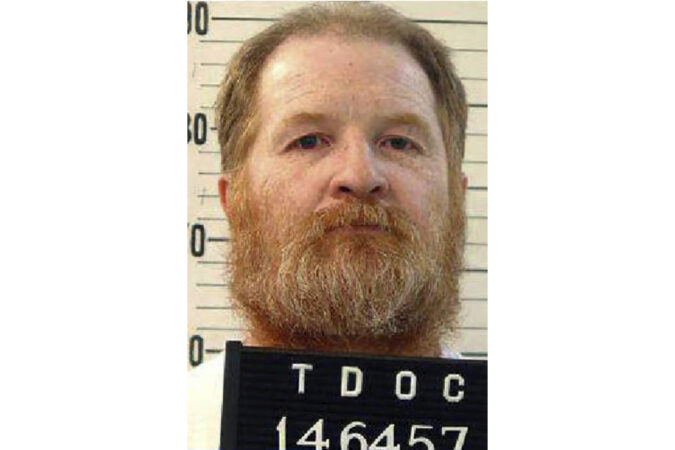
    NASHVILLE, Tenn. — Tennessee executed Harold Wayne Nichols by injection Thursday in Nashville for the 1988 rape and murder of Karen Pulley, a 20-year-old student at Chattanooga State University.

    Nichols, 64, had confessed to killing Pulley as well as raping several other women in the Chattanooga area. Although he expressed remorse at trial, he admitted he would have continued his violent behavior had he not been arrested. He was sentenced to death in 1990.

    “To the people I’ve harmed, I’m sorry,” Nichols said in his final statement. Before Nichols died, a spiritual adviser spoke to him and recited the Lord’s Prayer. They both became emotional and Nichols nodded as the adviser talked, witnesses said.

    Media witnesses reported that a sheet was pulled up to just above Nichols’ waist and he was strapped to a gurney with a long tube running to an IV insertion site on the inside of his elbow. There was a spot of blood near the injection site. At one point he took a very heavy breath and his whole torso rose. He then took a series of short, huffing breaths that witnesses said sounded like snorting or snoring. Nichols’ face turned red and he groaned. His breathing then appeared to slow, then stop, and his face became purple before he was pronounced dead, witnesses said.

    Nichols’ attorneys unsuccessfully sought to have his sentence commuted to life in prison, citing the fact that he took responsibility for his crimes and pleaded guilty. His clemency petition stated “he would be the first person to be executed for a crime he pleaded guilty to since Tennessee re-enacted the death penalty in 1978.”

    The U.S. Supreme Court declined to issue a stay of the execution on Thursday.

    In a recent interview, Pulley’s sister, Lisette Monroe, said the wait for Nichols’ execution has been “37 years of hell.” She described her sister as “gentle, sweet and innocent,” and said she hopes that after the execution she’ll be able to focus on the happy memories of Pulley instead of her murder.

    Jeff Monroe, Lisette Monroe’s husband and Pulley’s brother-in-law, said the family “was destroyed by evil” the night she was killed.

    “Taking a life is serious and we take no pleasure in it,” he said during a news conference following the execution. “However, the victims, and there were many, were carefully stalked and attacked. The crimes, and there were many, were deliberate, violent, and horrific.”

    Pulley, who was 20 when she was killed, had just finished Bible school and was attending college in Chattanooga to become a paralegal, Jeff Monroe said.

    “Karen was bubbly, happy, selfless, and looking forward to the life before her,” he said.

    Nichols has seen two previous execution dates come and go. The state earlier planned to execute him in August 2020, but Nichols was given a reprieve due to the COVID-19 pandemic. At that time, Nichols had selected to die in the electric chair — a choice allowed in Tennessee for inmates who were convicted of crimes before January 1999.

    Tennessee’s lethal injection protocol in 2020 used three different drugs in series, a process that inmates’ attorneys claimed was riddled with problems. Their concerns were shown to have merit in 2022, when Gov. Bill Lee paused executions, including a second execution date for Nichols. An independent review of the state’s lethal injection process found that none of the drugs prepared for the seven inmates executed in Tennessee since 2018 had been properly tested.

    The Tennessee Department of Correction issued a new execution protocol in last December that utilizes the single drug pentobarbital. Attorneys for several death row inmates have sued over the new rules, but a trial in that case is not scheduled until April. Nichols declined to chose an execution method this time, so his execution will be by injection by default.

    His attorney Stephen Ferrell explained in an email that “the Tennessee Department of Correction has not provided enough information about Tennessee’s lethal execution protocol for our client to make an informed decision about how the state will end his life.”

    Nichols’ attorneys on Monday won a court ruling granting access to records from two earlier executions using the new method, but the state has not yet released the records and says it will appeal. During Tennessee’s last execution in August, Byron Black said he was “hurting so bad” in his final moments. The state has offered no explanation for what might have caused the pain.

    Many states have had difficulty obtaining lethal injection drugs as anti-death penalty activists have put pressure on drug companies and other suppliers. Between the shortages and legal challenges over botched executions, some states have moved to alternative methods of execution including a firing squad in South Carolina and nitrogen gas in Alabama.

    Including Nichols, a total of 46 men have died by court-ordered execution this year in the U.S.

  • Venezuelan Nobel laureate credits Trump for pressuring Maduro with ‘decisive’ actions

    Venezuelan Nobel laureate credits Trump for pressuring Maduro with ‘decisive’ actions

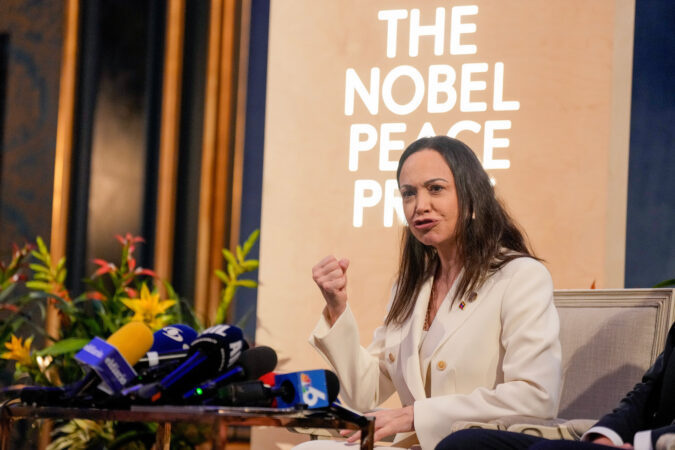
    CARACAS, Venezuela — Venezuelan opposition leader María Corina Machado said Thursday that “decisive” actions by the United States, including the seizure of an oil tanker, have left the repressive government of President Nicolás Maduro at its weakest point, and she vowed to return to the country to keep fighting for democracy.

    Machado’s statements to reporters came hours after she appeared in public for the first time in 11 months, following her arrival in Norway’s capital, Oslo, where her daughter received the Nobel Peace Prize award on her behalf on Wednesday.

    The actions of President Donald Trump “have been decisive to reach where we are now, where the regime is significantly weaker,” she said. “Because before, the regime thought it had impunity …. Now they start to understand that this is serious, and that the world is watching.”

    Machado sidestepped questions on whether a U.S. military intervention is necessary to remove Maduro from power. She told reporters that she would return to Venezuela “when we believe the security conditions are right, and it won’t depend on whether or not the regime leaves.”

    Machado arrived in Oslo hours after Wednesday’s prize ceremony and made her first public appearance early Thursday, emerging from a hotel balcony and waving to an emotional crowd of supporters. She had been in hiding since Jan. 9, when she was briefly detained after joining supporters during a protest in Caracas.

    Machado left Venezuela at a critical point in the country’s protracted crisis, with the Trump administration carrying out deadly military operations in the Caribbean and threatening repeatedly to strike Venezuelan soil. The White House has said the operations, which have killed more than 80 people, are meant to stop the flow of drugs into the U.S.

    But many, including analysts, U.S. members of Congress and Maduro himself, see the operations as an effort to end his hold on power. The opposition led by Machado has only added to this perception by reigniting its promise to soon govern the country.

    On Wednesday, President Donald Trump said the U.S. had seized an oil tanker off the coast of Venezuela. On Thursday, Machado called on governments to expand their support for Venezuela’s opposition beyond words.

    “We, the Venezuelan people that have tried every single, you know, institutional mean, ask support from the democratic nations in the world to cut those resources that come from illegal activities and support repressive approaches,” she said. “And that’s why we are certainly asking the world to act. It’s not a matter of statements, as you say, it’s a matter of action.”

    Machado, 58, was awarded the Nobel Peace Prize in October after mounting the most serious peaceful challenge in years to Maduro’s authoritarian government. Her daughter, Ana Corina Sosa, accepted the prize at a ceremony in Oslo.

    Machado was received Thursday by Norwegian Prime Minister Jonas Gahr Støre, who said that his country is ready to support a democratic Venezuela in “building new and sound institutions.”

    Asked whether the Venezuelan government might have known her whereabouts since January, Machado told reporters: “I don’t think they have known where I have been, and certainly they would have done everything to stop me from coming here.”

    She declined to give details of her journey from Venezuela to Norway. But she thanked “all those men and women that risked their lives so that I could be here today” and later acknowledged that the U.S. government helped her.

    Flight tracking data show that the plane Machado arrived on flew to Oslo from Bangor, Maine.

    Machado won an opposition primary election and intended to challenge Maduro in last year’s presidential election, but the government barred her from running for office. Retired diplomat Edmundo González took her place.

    The lead-up to the election on July 28, 2024, saw widespread repression, including disqualifications, arrests and human rights violations. That increased after the country’s National Electoral Council, which is stacked with Maduro loyalists, declared the incumbent the winner.

    González sought asylum in Spain last year after a Venezuelan court issued a warrant for his arrest.

    It’s unclear how Machado and González could return to Venezuela. An opposition plan to get González back before the Jan. 10 ceremony that gave Maduro another term didn’t materialize.

    Machado, alongside the Norwegian prime minister, said that “we decided to fight until the end and Venezuela will be free.” If Maduro’s government is still in place when she returns, she added, “I will be with my people and they will not know where I am. We have ways to do that and take care of us.”

  • How a U.S. admiral decided to kill two boat strike survivors

    How a U.S. admiral decided to kill two boat strike survivors

    In the minutes after U.S. forces attacked a suspected drug smuggling boat near Trinidad, Adm. Frank M. Bradley, the commander overseeing the operation, faced a choice.

    A laser-guided bomb had killed nine of the 11 people on board, sunk the boat’s motor and capsized the vessel’s front end, according to people who have viewed or been briefed on a classified video of the operation. As smoke from the blast cleared, a live surveillance feed provided by a U.S. aircraft high overhead showed two men had survived and were attempting to flip the wreckage.

    Ahead of the Sept. 2 mission, Defense Secretary Pete Hegseth had given an order to U.S. forces to kill the passengers, sink the boat and destroy the drugs, three people familiar with the operation said. It appeared to Bradley that none of those objectives had been achieved, the admiral would later recount for lawmakers.

    The video feed showed that the two men were struggling to stay atop the flotsam, which people who’ve seen the footage described as roughly the size of a dining room table. Bradley turned to the military lawyer advising him and requested input, according to members of Congress who spoke with him privately last week and people later briefed on those conversations. Under the law of armed conflict, were the men now “shipwrecked” and therefore out of the fight, rendering them unlawful targets?

    The admiral decided that definition did not apply, these people said. Instead, what Bradley explained to lawmakers left some with the impression that there was a prevailing lack of certainty — about the existence of any drugs beneath the wreckage and whether the survivors had a means to call for help or intended to surrender — when he concluded that further action was warranted.

    He ordered a second strike, killing both men. Moments earlier, the video feed had shown them waving their arms and looking skyward, people who saw the footage said. It was unclear, they added, why they were doing so.

    The 30-plus minutes that elapsed between the first strike and the second has become the most consequential moment in Bradley’s three-decade military career — one that includes direct involvement in more than 1,000 lethal strikes governed by the law of armed conflict central to understanding the events of Sept. 2 and whether the strike survivors were lawful targets. The episode has put the admiral and his advisers under a spotlight alongside Hegseth, who has expressed support for Bradley while attempting to distance himself from the fallout.

    Bradley defended his actions when summoned to Capitol Hill last week, telling lawmakers he weighed the fate of the survivors with the understanding that the Trump administration has argued illicit drugs are weapons responsible for killing Americans, and that those who traffic them are not criminals but enemy combatants. U.S. intelligence, he said, showed that everyone on the boat was a “narco-terrorist,” consistent with the administration’s definition, which allowed for deadly force. His testimony provided lawmakers with the fullest account of the operation since the publication of a Washington Post report on Nov. 28 revealing Hegseth’s authorization ahead of the first attack to kill the entire crew and Bradley’s order of a second strike that killed the two survivors.

    Law of war experts and some lawmakers have challenged the admiral’s reasoning and cast doubt on the lawfulness of using the military to kill alleged criminals.

    The military lawyer who advised the admiral, whom The Post is not identifying because they serve in a secretive unit, explained to Bradley how the law of armed conflict defines “shipwrecked,” these people said. International law defines “shipwrecked” persons as those who “are in peril at sea” as a result of a mishap affecting their vessel “and who refrain from any act of hostility.” Combatants who are shipwrecked receive special protection because, unlike troops on land, they cannot take refuge, experts note.

    Bradley spent about eight hours meeting with more than a dozen lawmakers Dec. 4. Four people familiar with those sessions said that he affirmed having sought real-time legal advice, but that he did not say whether his military lawyer considered the survivors shipwrecked and out of the fight.

    There was dissent in the operations room over whether the survivors were viable targets after the first strike, according to two people. What the lawyer advised, though, and whether they rendered a definitive opinion remains unclear.

    A spokesperson for U.S. Special Operations Command, where Bradley is the top commander, declined to comment. The military attorney did not respond to requests for comment.

    Former military lawyers said that in such situations a commander’s top legal adviser would be expected to offer an assessment, but their role is only to advise, not to approve a strike.

    This report is based on the accounts of 10 people who either spoke directly with Bradley on Capitol Hill last week, were briefed on his conversations afterward or are otherwise familiar with the operation. Most spoke on the condition of anonymity because the matter is highly sensitive and Bradley’s communication with lawmakers occurred in classified settings.

    The chain of command

    Two Republican-led committees in Congress have opened inquiries into the Sept. 2 operation, though on Tuesday, Rep. Mike Rogers (R., Ala.), who heads the House Armed Services Committee, said that he was satisfied with the information he had received and planned to end his probe once other members of the panel are given an opportunity to see unedited video of the operation, as he has. A separate Senate inquiry continues.

    President Donald Trump appeared to support releasing video footage of the operation before abruptly backtracking this week and deferring to Hegseth on whether to do so. Hegseth has been noncommittal, saying the Pentagon is “reviewing” the footage to ensure it would not expose military secrets.

    Democrats have demanded fuller investigations and called on the administration to share more evidence with lawmakers. Sen. Mark Warner (D., Va.), the Senate Intelligence Committee’s senior Democrat, said after meeting with Hegseth and other officials Tuesday that he was seeking written documentation of the opinion rendered by Bradley’s military lawyer.

    The first strike Sept. 2 was carried out with a laser-guided GBU-69, according to people familiar with Bradley’s briefings. The munition exploded just above the crew, a setting designed to maximize the blast and the spread of shrapnel fragments. The follow-on strike was taken with a smaller AGM-176 Griffin missile, which killed the two men on impact, people familiar with the video footage said. U.S. forces then fired two additional Griffins at the wreckage to sink it.

    While Bradley made the decision to conduct the follow-on strike that killed the two survivors, Hegseth was the operation’s target engagement authority, meaning he authorized the use of force and ultimately was responsible for the strikes ordered, people familiar with the matter said.

    Hegseth has said that he watched live video of the initial attack but left for other meetings minutes later and was unaware initially that the first strike had left two men alive. It was a couple of hours, Hegseth has said, before he learned that Bradley ordered the second strike.

    Sean Parnell, a spokesman for Hegseth, said in a statement, “We are not going to second-guess a commander who did the right thing and was operating well within his legal authority.”

    Gen. Dan Caine, who as chairman of the Joint Chiefs of Staff is the military’s top officer, saw the full video of the Sept. 2 strike for the first time Dec. 4, when he joined Bradley’s meetings with lawmakers, two U.S. officials said. In a statement for this report, a spokesman for Caine said the chairman has “trust and confidence” in Bradley and military commanders “at every echelon.”

    The admiral’s defense

    The Sept. 2 operation was the first in what has become an extended campaign to target suspected drug runners in the waters around Latin America. In strikes on more than 20 boats, U.S. forces have killed nearly 90 people to date, according to public notices from the Trump administration.

    At the core of Bradley’s defense of the second strike, according to several people familiar with his conversations on Capitol Hill, was his assertion that the attack was not directed at the two survivors but at the boat wreckage and any cocaine it may have sheltered.

    The laws of war stipulate that military commanders must consider the collateral damage of a strike only if the action could pose a threat to civilians, said Geoffrey Corn, a retired Army lawyer. By labeling suspected drug smugglers as combatants in an armed conflict against Americans, as the Trump administration has done, the Defense Department can argue that the military did not need to consider the harm to survivors when striking again, Corn said.

    But many experts, Corn among them, dispute that the U.S. is in an “armed conflict” with cartel groups. Corn also noted that even if they are combatants, once shipwrecked, feasible measures must be taken to try to rescue them before attacking the target again, he said. “That to me is the most troubling aspect of the attack,” he said.

    Bradley’s contention that he was targeting the boat rather than the people, Corn said, fails to explain why the admiral deemed it necessary to launch the second strike rather than first trying to rescue the survivors.

    The admiral told lawmakers that intelligence gathered ahead of the operation indicated the boat being targeted was expected to transfer its cargo to another vessel while both were at sea. After the first strike, Bradley explained, he and his team were unable to rule out whether the men, who were shirtless, had a communications device either on their person or somewhere under the vessel’s wreckage that could have been used to call for help.

    U.S. forces did not intercept any communications from the two survivors after the first strike, Bradley told lawmakers.

    The admiral also theorized, multiple people said, that the two survivors could have drifted to shore or found a way to sail the wreckage to their intended rendezvous point. When the U.S. aircraft providing the live video feed scanned the surrounding area, it did not find another vessel coming to the boat’s aid. And the admiral conceded to some lawmakers that the survivors probably would not have been able to flip the wreckage, said one lawmaker and a U.S. official familiar with Bradley’s conversations.

    The doubts that have emerged

    Todd Huntley, a former director of the Navy’s international law office, which handles law of the sea matters, said in an interview with The Post that the legal definition for being shipwrecked does not require that people are drowning or wounded.

    “They just have to be in distress in water,” said Huntley, a former military lawyer who advised Special Operations forces.

    Huntley also said that the potential presence of a communications device should have been irrelevant. “You can’t kill somebody in the water merely because they have a radio,” he said. The prospect of a rendezvous with another vessel does not indicate an intent to engage in hostilities or prove the survivors posed a threat, he added. “That is such a far-out theory,” Huntley said.

    Trump and other Republicans have framed the administration’s counternarcotics campaign as a necessary measure to defend Americans from fentanyl, the leading cause of drug overdoses in the United States. But the Sept. 2 strike — and most of those that have followed — targeted a boat believed to be ferrying cocaine. Fentanyl smuggled into the U.S. mostly comes through border crossings.

    People familiar with Bradley’s account to lawmakers said that the cargo in this case was heading next to Suriname, a small country east of Venezuela, not the United States. As The Post and others have reported, most of the narcotics that move through the Caribbean are headed toward Europe and Western Africa rather than the U.S.

    “That further underscores that this boat was not a threat to the United States and not a lawful target,” Huntley said.

    While speaking with lawmakers, Bradley said he looked for signs the men were surrendering, such as waving a cloth or holding up their arms. The admiral noted that he saw no such gesture, and did not interpret their wave as a surrender, people familiar with his interviews said.

    To legal experts, Bradley’s assertion that he scanned for a sign of surrender reflected a foundational flaw with the Trump administration’s lethal force campaign: The laws of war weren’t written to address the behavior of criminal drug traffickers, they said.

    On Sept. 2, the 11 passengers on board the targeted boat were almost certainly unaware the Trump administration had declared “war” on them, people familiar with the operation said. It’s unclear whether the strike survivors even realized a U.S. military aircraft was responsible for the explosion that had occurred, these people familiar said, or whether they knew how to indicate surrender — or that surrender was even an option.

    In the weeks leading up to the attack, the Defense Department ran simulations that showed there was the potential for people to survive a first strike, three people familiar with the matter said. That did not appear to affect military planning for this operation. On the day of the attack, the U.S. military had no personnel or equipment on hand to rescue anyone.

  • MyPillow founder and Trump supporter Mike Lindell says he’s running for Minnesota governor in 2026

    MyPillow founder and Trump supporter Mike Lindell says he’s running for Minnesota governor in 2026

    SHAKOPEE, Minn. — Mike Lindell, the fervent supporter of President Donald Trump known to TV viewers as the “MyPillow Guy,” officially entered the race for Minnesota governor Thursday in hopes of winning the Republican nomination to challenge Democratic Gov. Tim Walz.

    “I’ll leave no town unturned in Minnesota,” Lindell told The Associated Press in an interview ahead of a news conference set for Thursday.

    He said he has a record of solving problems and personal experiences that will help businesses and fight addiction and homelessness as well as fraud in government programs. The fraud issue has particularly dogged Walz, who announced in September that he’s seeking a third term in the 2026 election.

    A TV pitchman and election denier

    Lindell, 64, founded his pillow company in Minnesota in 2009 and became its public face through infomercials that became ubiquitous on late-night television. But he and his company faced a string of legal and financial setbacks after he became a leading amplifier of Trump’s false claims that the 2020 election was stolen. He said he has overcome them.

    “Not only have I built businesses, you look at problem solution,” Lindell said in his trademark rapid-fire style. “I was able to make it through the biggest attack on a company, and a person, probably other than Donald Trump, in the history of our media … lawfare and everything.”

    While no Republican has won statewide office in Minnesota since 2006, the state’s voters have a history of making unconventional choices. They shocked the world by electing former professional wrestler Jesse Ventura as governor in 1998. And they picked a veteran TV pitchman in 1978 when they elected home improvement company owner Rudy Boschwitz as a U.S. senator.

    Lindell has frequently talked about how he overcame a crack cocaine addiction with a religious conversion in 2009 as MyPillow was getting going. His life took another turn in 2016 when he met the future president during Trump’s first campaign. He served as a warm-up speaker at dozens of Trump rallies and co-chaired Trump’s campaign in Minnesota.

    Trump’s endorsement could be the key to which of several candidates wins the GOP nomination to challenge Walz. But Lindell said he doesn’t know what Trump will do, even though they’re friends, and said his campaign isn’t contingent on the president’s support.

    His Lindell TV streaming platform was in the news in November when it became one of several conservative news outlets that became credentialed to cover the Pentagon after agreeing to a restrictive new press policy rejected by virtually all legacy media organizations.

    Lindell has weathered a series of storms

    Lindell’s outspoken support for Trump’s false claims that the 2020 election was stolen triggered a backlash as major retailers discontinued MyPillow products. By his own admission, revenue slumped and lines of credit dried up, costing him millions. Several vendors sued MyPillow over billing disputes. Fox News stopped running his commercials. Lawyers quit on him.

    Lindell has been sued twice for defamation over his claims that voting machines were manipulated to deprive Trump of a victory.

    A federal judge in Minnesota ruled in September that Lindell defamed Smartmatic with 51 false statements. But the judge deferred the question of whether Lindell acted with the “actual malice” that Smartmatic must prove to collect. Smartmatic says it’s seeking “nine-figure damages.”

    A Colorado jury in June found that Lindell defamed a former Dominion Voting Systems executive by calling him a traitor, and awarded $2.3 million in damages.

    But Lindell won a victory in July when a federal appeals court overturned a judge’s decision that affirmed a $5 million arbitration award to a software engineer who disputed data that Lindell claimed proved Chinese interference in the 2020 election. The engineer had accepted Lindell’s “Prove Mike Wrong Challenge,” which he launched as part of his 2021 “Cyber Symposium” in South Dakota, where he promised to expose election fraud.

    The campaign ahead

    Lindell said his crusade against electronic voting machines will just be part of his platform. While Minnesota uses paper ballots, it also uses electronic tabulators to count them. Lindell wants them hand-counted, even though many election officials say machine counting is more accurate.

    Some Republicans in the race include Minnesota House Speaker Lisa Demuth, of Cold Spring; Dr. Scott Jensen, a former state senator from Chaska who was the party’s 2022 candidate; State Rep. Kristin Robbins, of Maple Grove; defense lawyer and former federal prosecutor Chris Madel; and former executive Kendall Qualls.

    “These guys haven’t lived what I live,” Lindell said.

    Lindell wouldn’t commit to abiding by the Minnesota GOP endorsement and forgoing the primary if he loses it, expressing confidence that he’ll win. He also said he’ll rely on his supporters to finance his campaign because his own finances are drained. “I don’t have the money,” he acknowledged.

    But he added that ever since word got out last week that he had filed the paperwork to run, “I’ve had thousands upon thousands of people text and call, saying from all around the country … ‘Hey, I’ll donate.’”

  • Judge orders Kilmar Abrego Garcia to be immediately released from immigration detention

    Judge orders Kilmar Abrego Garcia to be immediately released from immigration detention

    GREENBELT, Md. — A federal judge in Maryland ordered Kilmar Abrego Garcia freed from immigration detention on Thursday while his legal challenge against his deportation moves forward.

    U.S. District Judge Paula Xinis ruled that Immigration and Customs Enforcement must release Abrego Garcia from custody immediately.

    “Since Abrego Garcia’s return from wrongful detention in El Salvador, he has been re-detained, again without lawful authority,” the judge wrote. “For this reason, the Court will GRANT Abrego Garcia’s Petition for immediate release from ICE custody.”

    Justice Department and Homeland Security spokespeople didn’t immediately respond to messages seeking comment on the judge’s order. Messages seeking comment were left with Abrego Garcia’s attorney Simon Sandoval-Moshenberg.

    Abrego Garcia, a Salvadoran national, has an American wife and child and has lived in Maryland for years, but he originally immigrated to the U.S. illegally as a teenager. An immigration judge in 2019 ruled Abrego Garcia could not be deported to El Salvador because he faced danger from a gang that targeted his family. When Abrego Garcia was mistakenly deported there in March, his case became a rallying point for those who oppose President Donald Trump’s immigration crackdown.

    Abrego Garcia was returned to the U.S. under a court order. Since he cannot be deported to El Salvador, ICE has been seeking to deport him to a series of African countries. His lawsuit in federal court claims Trump’s Republican administration is illegally using the deportation process to punish Abrego Garcia over the embarrassment of his mistaken deportation to El Salvador.

    Meanwhile, in a separate action in immigration court, Abrego Garcia is petitioning to reopen his immigration case to seek asylum in the United States.

    Additionally, Abrego Garcia is facing criminal charges in federal court in Tennessee, where he has pleaded not guilty to human smuggling. He has filed a motion to dismiss the charges, claiming the prosecution is vindictive.

    A judge has ordered an evidentiary hearing to be held on the motion after previously finding some evidence that the prosecution against Abrego Garcia “may be vindictive.” The judge said many statements by Trump administration officials “raise cause for concern.”

    The judge specifically cited a statement by Deputy Attorney General Todd Blanche that seemed to suggest the Justice Department charged Abrego Garcia because he won his wrongful deportation case.

  • Trump’s handling of the economy is at its lowest point, according to new AP-NORC polling

    Trump’s handling of the economy is at its lowest point, according to new AP-NORC polling

    WASHINGTON — President Donald Trump’s approval on the economy and immigration have fallen substantially since March, according to a new AP-NORC poll, the latest indication that two signature issues that got him elected barely a year ago could be turning into liabilities as his party begins to gear up for the 2026 midterms.

    Only 31% of U.S. adults now approve of how Trump is handling the economy, the poll from The Associated Press-NORC Center for Public Affairs Research finds. That is down from 40% in March and marks the lowest economic approval he’s registered in an AP-NORC poll in his first or second term. The Republican president also has struggled to recover from public blowback on other issues, such as his management of the federal government, and has not seen an approval bump even after congressional Democrats effectively capitulated to end a record-long government shutdown last month.

    Perhaps most worryingly for Trump, who’s become increasingly synonymous with his party, he’s slipped on issues that were major strengths. Just a few months ago, 53% of Americans approved of Trump’s handling of crime, but that’s fallen to 43% in the new poll. There’s been a similar decline on immigration, from 49% approval in March to 38% now.

    The new poll starkly illustrates how Trump has struggled to hold onto political wins since his return to office. Even border security — an issue on which his approval remains relatively high — has declined slightly in recent months.

    The good news for Trump is that his overall approval hasn’t fallen as steeply. The new poll found that 36% of Americans approve of the way he’s handling his job as president, which is down slightly from 42% in March. That signals that even if some people aren’t happy with elements of his approach, they might not be ready to say he’s doing a bad job as president. And while discontent is increasing among Republicans on certain issues, they’re largely still behind him.

    Declining approval on the economy, even among Republicans

    Republicans are more unhappy with Trump’s performance on the economy than they were in the first few months of his term. About 7 in 10 Republicans, 69%, approve of how Trump is handling the economy in the December poll, a decline from 78% in March.

    Larry Reynolds, a 74-year-old retiree and Republican voter from Wadsworth, Ohio, said he believes in Trump’s plan to impose import duties on U.S. trading partners but thinks rates have spiraled too high, creating a “vicious circle now where they aren’t really justifying the tariffs.”

    Reynolds said he also believes that inflation became a problem during the coronavirus pandemic and that the economy won’t quickly recover, regardless of what Trump does. “I don’t think it’ll be anything really soon. I think it’s just going to take time,” he said.

    Trump’s base is still largely behind him, which was not always the case for his predecessor, President Joe Biden, a Democrat. In the summer of 2022, only about half of Democrats approved of how Biden was handling the economy. Shortly before he withdrew from the 2024 presidential race two years later, that had risen to about two-thirds of Democrats.

    More broadly, though, there’s no sign that Americans think the economy has improved since Trump took over. About two-thirds of U.S. adults, 68%, continue to say the country’s economy is “poor.” That’s unchanged from the last time the question was asked in October, and it’s broadly in line with views throughout Biden’s last year in office.

    Why Trump gets higher approval on border security than immigration

    Trump’s approval ratings on immigration have declined since March, but border security remains a relatively strong issue for him. Half of U.S. adults, 50%, approve of how Trump is handling border security, which is just slightly lower than the 55% who approved in September.

    Trump’s relative strength on border security is partially driven by Democrats and independents. About one-third of independents, 36%, approve of Trump on the border, while 26% approve on immigration.

    Jim Rollins, an 82-year-old independent in Macon, Georgia, said he believes that when it comes to closing the border, Trump has done “a good job,” but he hopes the administration will rethink its mass deportation efforts.

    “Taking people out of kindergarten, and people going home for Thanksgiving, taking them off a plane. If they are criminals, sure,” said Rollins, who said he supported Trump in his first election but not since then. “But the percentages — based on the government’s own statistics — say that they’re not criminals. They just didn’t register, and maybe they sneaked across the border, and they’ve been here for 15 years.”

    President Donald Trump made his first stop on an “economic tour” in Mt. Pocono, Pa., on Tuesday, Dec. 9.

    Other polls have shown it’s more popular to increase border security than to deport immigrants, even those who are living in the country illegally. Nearly half of Americans said increasing security at the U.S.-Mexico border should be “a high priority” for the government in AP-NORC polling from September. Only about 3 in 10 said the same about deporting immigrants in the U.S. illegally.

    Shaniqwa Copeland, a 30-year-old independent and home health aide in St. Augustine, Florida, said she approves of Trump’s overall handling of the presidency but believes his immigration actions have gone too far, especially when it comes to masked federal agents leading large raids.

    “Now they’re just picking up anybody,” Copeland said. “They just like, pick up people, grabbing anybody. It’s crazy.”

    Health care and government management remain thorns for Trump

    About 3 in 10 U.S. adults approve of how Trump is handling health care, down slightly from November. The new poll was conducted in early December, as Trump and Congress struggled to find a bipartisan deal for extending the Affordable Care Act subsidies that will expire at the end of this month.

    That health care fight was also the source of the recent government shutdown. About one-third of U.S. adults, 35%, approve of how Trump is managing the federal government, down from 43% in March.

    But some Americans may see others at fault for the country’s problems, in addition to Trump. Copeland is unhappy with the country’s health care system and thinks things are getting worse but is not sure of whether to blame Trump or Biden.

    “A couple years ago, I could find a dentist and it would be easy. Now, I have a different health care provider, and it’s like so hard to find a dental (plan) with them,” she said. “And the people that do take that insurance, they have so many scheduled out far, far appointments because it’s so many people on it.”

    The AP-NORC poll of 1,146 adults was conducted Dec. 4-8 using a sample drawn from NORC’s probability-based AmeriSpeak Panel, which is designed to be representative of the U.S. population. The margin of sampling error for adults overall is plus or minus 4 percentage points.

  • Time magazine names ‘Architects of AI’ as its person of the year for 2025

    Time magazine names ‘Architects of AI’ as its person of the year for 2025

    The “Architects of AI” were named Time’s person of the year for 2025 on Thursday, with the magazine citing this year as when the potential of artificial intelligence “roared into view” with no turning back.

    “For delivering the age of thinking machines, for wowing and worrying humanity, for transforming the present and transcending the possible, the Architects of AI are TIME’s 2025 Person of the Year,” Time said in a social media post.

    The magazine was deliberate in selecting people — the “individuals who imagined, designed, and built AI” — rather than the technology itself, though there would have been some precedent for that.

    “We’ve named not just individuals but also groups, more women than our founders could have imagined (though still not enough), and, on rare occasions, a concept: the endangered Earth, in 1988, or the personal computer, in 1982,” wrote Sam Jacobs, the editor-in-chief, in an explanation of the choice. “The drama surrounding the selection of the PC over Apple’s Steve Jobs later became the stuff of books and a movie.”

    One of the cover images resembling the “Lunch Atop a Skyscraper” photograph from the 1930s shows eight tech leaders sitting on the beam: Meta CEO Mark Zuckerberg, AMD CEO Lisa Su, Tesla CEO Elon Musk, Nvidia CEO Jensen Huang, OpenAI CEO Sam Altman, the CEO of Google’s DeepMind division Demis Hassabis, Anthropic CEO Dario Amodei and AI pioneer Fei-Fei Li, who launched her own startup World Labs last year.

    Another cover image shows scaffolding surrounding the giant letters “AI” made to look like computer componentry.

    It made sense for Time to anoint AI because 2025 was the year that it shifted from “a novel technology explored by early adopters to one where a critical mass of consumers see it as part of their mainstream lives,” Thomas Husson, principal analyst at research firm Forrester, said by email.

    The magazine noted AI company CEOs’ attendance at President Donald Trump’s inauguration this year at the Capitol as a herald for the prominence of the sector.

    “This was the year when artificial intelligence’s full potential roared into view, and when it became clear that there will be no turning back or opting out,” Jacobs wrote.

    AI was a leading contender for the top slot, according to prediction markets, along with Huang and Altman. Pope Leo XIV, the first American pope whose election this year followed the death of Pope Francis, was also considered a contender, with Trump, Israeli Prime Minister Benjamin Netanyahu and New York Mayor-elect Zohran Mamdani topping lists as well.

    Trump was named the 2024 person of the year by the magazine after his winning his second bid for the White House, succeeding Taylor Swift, who was the 2023 person of the year.

    The magazine’s selection dates from 1927, when its editors have picked the person they say most shaped headlines over the previous 12 months.

  • Scientists discover oldest evidence of human-made fire in a 400,000-year-old hearth

    Scientists discover oldest evidence of human-made fire in a 400,000-year-old hearth

    Scientists have discovered the oldest evidence of ancient humans igniting fires: a 400,000-year-old open-air hearth buried in an old clay pit in southern England.

    The study, published in the journal Nature, is based on a years-long examination of a reddish patch of sediment excavated at a site in Barnham. It pushes back the timeline on fire-making by about 350,000 years.

    The nebulous question of how far back human ancestors conjured fire is deeply intertwined with some of the biggest outstanding mysteries about human evolution. The ability to reliably set fires would have allowed humans to cook food, expanding the range of what they could eat and making meals more digestible. That, in turn, could have supported bigger brains that consumed more energy, catalyzing new social behaviors as humans gathered around campfires.

    But campfires don’t leave fossils. It takes painstaking work to reconstruct these ephemeral uses of technology. And what remains unclear is who set them. No telltale bones have been recovered at Barnham, but researchers think it was Neanderthals, close cousins of our species who interbred with our ancestors.

    “The evidence of fire is incredibly difficult to preserve. If you get to ash and charcoal, it can wash away. Sediment can get washed away,” said Nicholas Ashton, curator of Paleolithic collections at the British Museum and one of the leaders of the work. “We just found this one pocket — quite a large site — where it happens to be preserved.”

    Even when traces of fire remain, the task of distinguishing incidental flames sparked by lightning strikes or wildfires from those set by people is difficult. Perhaps most challenging is distinguishing between fires ignited by humans with the know-how from those produced by scavenging embers from wildfires.

    The study could spark more debate.

    “The authors did an excellent job with their analysis of the Barnham data, but they seem to be stretching the evidence with their claim that this constitutes the ‘earliest evidence of fire making,’” Wil Roebroeks, an archaeologist at Leiden University, said in an email, calling the evidence “circumstantial.”

    Ségolène Vandevelde, an archaeologist and adjunct professor at the University of Quebec at Chicoutimi, praised the multidisciplinary approaches the authors used and said the finding was “solid.”

    Pyroarchaeology

    In the Paleolithic era, the Barnham site would have been a woodland with a seasonal pond — set away from the main river valley, where predators might have roamed, according to Robert Davis, an archaeologist at the British Museum and one of the authors of the study. The wildlife would have included elephants, lions, deer, fish and other small mammals.

    Despite the fleeting nature of fire, it can leave traces under the right conditions. At the site in Barnham, where artifacts such as heat-shattered flint hand axes were also found, researchers were intrigued by a layer of reddish sediment — a result of iron-rich sediments being heated to produce a mineral called hematite. For four years, they studied it, trying to determine whether it was the result of a wildfire or deliberate human activity.

    One of the first questions they asked was whether this was a one-time blaze or something closer to a fireplace that was lit and relit many times.

    To deconstruct this question, scientists studied the magnetism of the sediment, which is altered by heating. They conducted modern experiments, to see if they could come up with an estimate of how many heating events might have resulted in the magnetic profile of the sediment — and found that after about a dozen heating events, each one four hours long, their modern samples mimicked the archaeological one.

    Then they examined the chemistry of the site — scrutinizing particular chemical compounds left behind. The patterns they found suggested humans had been using these fires.

    The last element was small pieces of cracked flint scattered about the site — as well as two bits of pyrite, which can create a spark when struck together. A geological study of the area showed that pyrite was scarce in the local landscape, leading the authors to argue that the inhabitants had carried it there for the specific purpose of making fire.

    Scavenging sparks vs. setting fires

    The archaeological record with examples of fires used by hominins — the ancestors of humans — stretches back more than a million years ago in Africa.

    But what interests scientists is not just the ability to successfully scavenge sparks from wildfires or lightning strikes, but also the ability to reliably create it — possibly by striking flint and pyrite together to create sparks.

    The oldest accepted evidence of fires purposefully set are from a Neanderthal site dated to 50,000 years ago in France. That evidence is considered convincing in part because there are chunks of flint showing “microwear traces of having been struck” to create sparks, Roebroeks said. But at Barnham, there are no microwear traces, leaving room for disagreement.

    “It’s a very contentious debate that’s been going on for some time,” Davis said.

    Early hominins would have learned to harvest fire by collecting embers, harvesting the right fuel and tending the fire. And eventually, they had to learn how to make it on demand — which would allow them to live in colder places, cook, fend off predators and socialize after dark.

    The study does not suggest that Barnham was where fire originated; it was probably widespread across the ancient world. But it does offer a rare, preserved snapshot of prehistoric life.

    “The maintenance of fire requires social cooperation, cultural rules and work coupled with knowledge of wood types, and means that a complicated tradition is at play,” said John Hawks, a paleoanthropologist at the University of Wisconsin at Madison.