Category: Nation & World

  • War powers debate intensifies after Trump orders attack on Iran without approval by Congress

    War powers debate intensifies after Trump orders attack on Iran without approval by Congress

    WASHINGTON — Key members of Congress are demanding a swift vote on a war powers resolution that would restrain President Donald Trump’s military attack on Iran unless the administration wins their approval for what they warn is a potentially illegal campaign that risks pulling the United States into a deeper Middle East conflict.

    Both the House and Senate, where the president’s Republican Party has a slim majority, had already drafted such resolutions long before the strikes Saturday. Now they are ready to plunge into a rare war powers debate next week that will serve as a referendum on Trump’s decision to go it alone on military action without formal authorization from Congress.

    “Has President Trump learned nothing from decades of U.S. meddling in Iran and forever wars in the Middle East?” said Sen. Tim Kaine (D., Va.), a leader in the bipartisan effort. He said the strikes on Iran were “a colossal mistake.”

    In the House, Reps. Ro Khanna (D., Calif.) and Thomas Massie (R., Ky.) are demanding Congress go on record with a public vote on their own bipartisan measure. “Congress must convene on Monday to vote,” Khanna said, “to stop this.”

    Massie blasted Trump’s own presidential campaign slogan and said: “This is not ‘America First.’”

    But most Republicans, particularly their leaders, welcomed Trump’s move against Iran. Many cited the longtime U.S. adversary’s nuclear programs and missile capabilities as requiring a military response.

    “Well done, Mr. President,” said Sen. Lindsey Graham (R., S.C.). “As I watch and monitor this historic operation, I’m in awe of President Trump’s determination to be a man of peace but at the end of the day, evil’s worst nightmare.”

    War powers debate tests Congress

    The administration’s decision to launch, with Israel, what appears to be an open-ended joint military operation aimed at changing the government in Tehran is testing the Constitution’s separation of powers in deep and dramatic ways. Nearly two months earlier, Trump ordered U.S. strikes that toppled Venezuelan leader Nicolás Maduro.

    While presidents have the authority as the commander in chief to conduct certain strategic military operations on their own, the Constitution vests Congress with the power to wage war. Before the Iraq War began in March 2003, Republican President George W. Bush made a monthslong push to secure congressional authorization. No such vote was attempted on Iran, and an earlier Senate effort to halt Trump’s actions after last summer’s strike on Iran failed.

    The congressional debate over war powers would mostly be symbolic. Even if a resolution were to pass the narrowly split Congress, Trump likely would veto it and Congress would not have the two-thirds majority needed to overturn that rejection. Congress has often failed to block other U.S. military actions, including in a Senate vote on Venezuela, but the roll calls stand as a public record.

    Republican leaders back Trump’s action

    The response by House Speaker Mike Johnson reflected the party’s long-standing views. Iran, he said, is facing “the severe consequences of its evil actions.”

    Johnson (R., La.) said the leaders of the House and Senate and the respective intelligence committees had been briefed in detail earlier in the week that military action “may become necessary” to protect U.S. troops and citizens in Iran. He said he received updates from Secretary of State Marco Rubio and will stay in “close contact” with Trump and the Defense Department “as this operation proceeds.”

    Senate Majority Leader John Thune (R., S.D.) commended Trump “for taking action to thwart these threats.”

    Thune said he looked forward to administration officials briefing all senators — a signal that lawmakers are seeking more answers to their questions about Trump’s plans ahead.

    Democrats warn strikes are illegal

    Many Democrats are calling the operation illegal, saying the Constitution gives Congress alone the power to declare war. To them, the administration has failed to lay out its rationale or plan for the military strikes, and the aftermath.

    Sen. Chris Van Hollen, who serves on the Senate Foreign Relations Committee, said the president has undertaken “illegal, regime-change war against Iran.”

    “This is not making us safer & only damages the US & our interests,” Van Hollen (D., Md.) said in a social media post. “The Senate must immediately vote on the War Powers Resolution to stop it.”

    House Democratic leader Hakeem Jeffries of New York said while Iran is a “bad actor and must be aggressively confronted” for its human rights abuses and the threat it poses to the U.S. and allies, the administration ”must seek authorization for the preemptive use of military force that constitutes an act of war.”

    New York Sen. Chuck Schumer, the Democratic leader, demanded that Congress be briefed immediately on the administration’s plans.

    “Iran must never be allowed to attain a nuclear weapon but the American people do not want another endless and costly war in the Middle East when there are so many problems at home,” he said.

  • Musk asked Epstein for ‘the wildest party,’ but now he claims to stand up for victims

    Musk asked Epstein for ‘the wildest party,’ but now he claims to stand up for victims

    During an explosive feud with President Donald Trump last spring, Elon Musk reached for the nuclear button. “Time to drop the really big bomb,” he wrote on X in June, “@realDonaldTrump is in the Epstein Files.”

    “The truth will come out,” the Tesla CEO added. He later deleted the posts and reconciled with Trump. In the months since, Musk has issued a steady drum beat of X posts calling for the arrest or prosecution of people linked to Jeffrey Epstein, a convicted sex offender who cultivated relationships with powerful figures in tech, finance, and politics.

    But when the Justice Department released what it said were millions of pages of documents last month from its investigation of the deceased financier, Musk featured prominently in the files.

    The entrepreneur had repeated email exchanges with Epstein, as did Kimbal Musk, his brother and fellow Tesla board member, the documents show. Elon Musk’s messages included inquiries about parties. Musk and Epstein also discussed arranging to meet on Epstein’s island and their assistants arranged a visit for the two at the entrepreneur’s rocket maker, SpaceX. On Christmas Day in 2012, Musk wrote to Epstein and asked: “Do you have any parties planned?” He added that “I’ve been working to the edge of sanity” and wanted to “let loose.”

    The revelations have thrust Musk in the awkward position of trying to cast himself as a stalwart defender of Epstein’s victims while also defending his own interactions with the convicted sex offender. Epstein pleaded guilty in 2008 to two charges of soliciting prostitution, including one involving a minor. He was arrested on federal sex trafficking charges in 2019 and died in federal custody later that year. Judges and lawmakers say that he abused, trafficked, and molested scores of girls over decades.

    In recent weeks, Musk has taken aim in online posts at other political and business figures over their alleged interactions with Epstein — including LinkedIn co-founder Reid Hoffman, former Trump chief strategist Stephen K. Bannon, and billionaire Les Wexner.

    “The big difference between you and me, Reid, is that you went and I did not,” Musk said in a post on X directed at Hoffman in early February, referring to Epstein’s island, adding later, “UNLIKE YOU, I came to my senses and declined to go.” Hoffman has acknowledged visiting Epstein’s island, as part of work to help the Massachusetts Institute of Technology “fundraise from Epstein,” and said that he regretted ever interacting with the sex offender.

    Wexner told Congress this month that he had been “duped” by Epstein and was not aware of his crimes. Bannon did not respond to a request for comment. Musk has refrained from making further allegations against Trump and stayed silent about the Justice Department files linking administration figures to Epstein, including Commerce Secretary Howard Lutnick, who told Congress this month that he once took his family to lunch on Epstein’s island but “did not have any relationship with him.”

    Musk has written on X that he “REFUSED” to visit Epstein’s island, even as the documents show him appearing to seek a visit. “When should we head to your island on the 2nd?” Musk asked Epstein on Christmas Day in 2013, in an apparent reference to a visit for the following January, the documents show.

    Musk and his brother, Kimbal Musk, did not respond to requests for comment for this story. Appearing in the documents released by the Justice Department does not indicate wrongdoing.

    At times, Musk’s attempts to focus on his preferred narrative about Epstein have backfired. Earlier this month, the billionaire reshared an X post from Mohamad Safa, executive director of the human rights group Patriotic Vision. “As someone works in human rights, I’ve never seen anything like the Epstein files in my 15-year career,” Safa wrote. “I don’t understand how we’re not having a global revolution right now.”

    After Musk distributed that message to his around 235 million followers on X, Safa responded to point out that the billionaire was overlooking something.

    “Elon, you’ve got it wrong,” Safa wrote. “It’s a revolution against every person in the Epstein files.”

    Safa told the Washington Post that the Tesla CEO was wrongly trying to lump himself in with the human rights community demanding accountability in relation to Epstein.

    “Elon bought Twitter to mislead the public on global issues, and he is now using it to mislead about his connection to Jeffrey Epstein,” Safa said.

    After the release of the latest trove of files raised new questions about the extent of Musk’s contact with Epstein over the years, Musk issued a late-night statement on X last month in a 1:50 a.m. Eastern reply to a user known as “DogeDesigner.”

    “No one pushed harder than me to have the Epstein files released and I’m glad that has finally happened,” Musk wrote. “I had very little correspondence with Epstein and declined repeated invitations to go to his island or fly on his ‘Lolita Express’,” he said, referring to Epstein’s airplane, “but was well aware that some email correspondence with him could be misinterpreted and used by detractors to smear my name.”

    Musk added, “I don’t care about that, but what I do care about is that we at least attempt to prosecute those who committed serious crimes with Epstein, especially regarding heinous exploitation of underage girls.”

    The Justice Department files reviewed by the Post, including dozens that refer to Musk or his brother Kimbal, paint a vastly different picture of Epstein’s relationship with the Tesla CEO.

    “What day/night will be the wildest party on your island?” Elon Musk asked Epstein in an email from November 2012, as he sought to plan a visit accompanied by actor Talulah Riley — Musk’s ex-wife — the files show. A month later, he wrote to Epstein again about partying.

    “Do you have any parties planned?” he asked. “I’ve been working to the edge of sanity this year and so, once my kids head home after Christmas, I really want to hit the party scene in St Barts or elsewhere and let loose.”

    Musk added, “The invitation is much appreciated, but a peaceful island experience is the opposite of what I’m looking for.”

    The newly released correspondence appears to show the entrepreneur interacting and making plans with Epstein over a period of more than a year that took place several years after Epstein pleaded guilty in 2008.

    In 2013, Musk and Epstein’s assistants planned a visit for the disgraced financier to SpaceX, Musk’s rocket building company. The visit included a scheduled lunch for Musk and Epstein. Epstein was scheduled to travel with three female assistants — one South African and two Russian — whose passports were vetted by SpaceX, a government contractor, for security clearance reasons, according to the emails. While the visit took place as planned, according to the emails, it was not immediately clear whether the two men met for lunch.

    Musk has said he blocked and ultimately “ghosted” Epstein.

    The files also show that Kimbal Musk corresponded with Epstein about an apparent romantic partner whom another person warned him not to mistreat. “Jeffrey: Message received wide and clear. ;)” Kimbal Musk replied, in a message on which he copied Epstein.

    Years later, Epstein wrote in an email: “I gave another girl to kimball and he is thrilled.”

    Kimbal Musk said in a statement that Epstein did not introduce him to his romantic partner at the time of the earlier emails, and that she was an adult.

    “In 2012 I started dating a woman who was 30 years old,” Kimbal Musk posted on X. “I met her through a friend. Epstein did not introduce us. My only meeting with that demon was in his New York office during the day. I never met with him again and I never went to his island.”

    He added that Epstein subscribed to a newsletter of his, leading his email address to appear in searches of the Epstein files numerous times.

    “My heart goes out to the many victims of Jeffrey Epstein, as it does for all who have suffered any kind of sexual abuse or harassment,” Kimbal Musk said.

    Soon after the Justice Department’s release of files last month, the nonprofit organization behind Burning Man, a massive cultural festival held annually in the Nevada desert, announced that Kimbal Musk was no longer on its board of directors. That decision was made by Kimbal Musk “based on other commitments and priorities” and came “well before” the revelations, the organization said.

    Elon Musk, meanwhile, continues to face an uphill battle to convince skeptics that his support for Epstein victims is genuine.

    Scott Berkowitz, president and founder of RAINN, a nonprofit organization aimed at ending sexual violence, said he did not know what is in Musk’s heart, but said one way the entrepreneur could effect change for victims of sexual abuse would be by reining in the Grok chatbot offered by his company xAI, which recently came under fire for allowing the creation of nonconsensual sexualized images of real people.

    “RAINN is working to make the country safer from sexual violence. If Elon Musk wants to be a part of that and to use his influence to make life safer, there’s a long list of ways that he could be part of the solution,” Berkowitz said. “Partner with us to make Grok the model for AI safety and ensure it never creates another nonconsensual image, whether child or adult.”

    On X, many have lobbed criticism at Musk over his messaging on the Epstein files, seeing it as an effort to reframe the narrative around his involvement.

    Given “Elon Musk’s involvement with Epstein and his lies about it, it feels dirty to use this platform, which increasingly feels like his own propaganda machine and PR agency” Fred Lambert, the editor in chief of Electrek, an electric vehicle-focused publication, said in an X post last week.

    Safa, of Patriotic Vision, said he is not convinced by Musk’s sudden interest in accountability. “He should be investigated like any other individual whose name has been mentioned, regardless of social, political, or financial status,” Safa said, adding, “Why did he wait until now to speak out?”
  • Vatican removes salty white film coating Michelangelo’s ‘The Last Judgment’

    Vatican removes salty white film coating Michelangelo’s ‘The Last Judgment’

    VATICAN CITY — Michelangelo’s The Last Judgement is getting a facial, with restorers removing a chalky white film of salt that has accumulated over the Renaissance masterpiece since its last major renovation three decades ago.

    The Vatican on Saturday gave the media a sneak peak to the cleaning operation, which is taking place on a floor-to-ceiling scaffolding that has obscured the imposing fresco of heaven and hell that dominates the front of the Sistine Chapel.

    The cleaning operation is expected to be completed by Easter, in the first week of April. The public can continue to visit in the meantime, but will have to settle for a reproduction of The Last Judgment superimposed on a screen that covers the scaffolding.

    Vatican Museum officials on Saturday described a simple but important cleaning operation to remove the white film of salt that has accumulated on the fresco thanks to the nearly 25,000 people who pass through the Vatican Museums each day.

    “This salt is created because, above all, when we sweat, we emit lactic acid, and unfortunately lactic acid reacts with the calcium carbonate present on the wall,” said Fabio Moresi, in charge of the scientific research team at the Vatican Museums that is overseeing the cleaning.

    Climate change also has a role to play, since the visitors who do come tend to sweat more, creating even more humidity that reacts with the fresco, he said.

    Vatican Museums chief Barbara Jatta described the film as a “cataract” that is easy enough to remove: Restorers dip sheets of Japanese rice paper into distilled water and apply them to the fresco, and carefully wipe away the salt film.

    Viewed up close on Saturday on the scaffolding, the difference between before and after is remarkable: Sections of the fresco that haven’t been cleaned look as if they are coated in a chalky dust; the cleaned sections show the vibrant colors and detail of the original. On the figure of Jesus, for example, at the center of the fresco, a privileged visitor can see how Michelangelo painted his hair and the wounds of his crucifixion.

    The Sistine Chapel is named after Pope Sixtus IV, an art patron who oversaw the construction of the main papal chapel in the 15th century.

    But it was a later pontiff, Pope Julius II, who commissioned Michelangelo to paint the famous ceiling, the Creation of Adam showing God’s outstretched hand, between 1508 and 1512. A later pontiff, Pope Clement VII, commissioned Michelangelo in 1533 to return to paint The Last Judgment.

    The other frescos of the Sistine Chapel, where Pope Leo XIV was elected in May, undergo yearly cleaning with restorers working at night on cherry-pickers that can be removed each morning before the public arrives.

    But such machines can’t access all of The Last Judgement because the fresco is located behind the altar, which is itself raised up on marble steps. That logistical impediment required the mounting of a fixed scaffolding to access the full fresco to clean it.

    The Sistine Chapel underwent a complete restoration between 1979 and 1999, when centuries of smoke, grime, and wax buildup was removed. The Vatican has left small patches of the pre-restored fresco intact to show the difference, which are now visible on the upper floors of the scaffolding and show a nearly blackened wall.

    Rather than radically reduce the number of visitors who can access the Sistine Chapel, the Vatican is studying ways to address humidity levels, through filtration systems and other technologies, so that the salty film doesn’t form again.

  • Pentagon assault on Anthropic sends shockwaves across Silicon Valley

    Pentagon assault on Anthropic sends shockwaves across Silicon Valley

    The Trump administration’s declaration that AI company Anthropic would be cut off from all government contracts shook the tech industry late Friday, hardening political and cultural battle lines across Silicon Valley over military use of artificial intelligence.

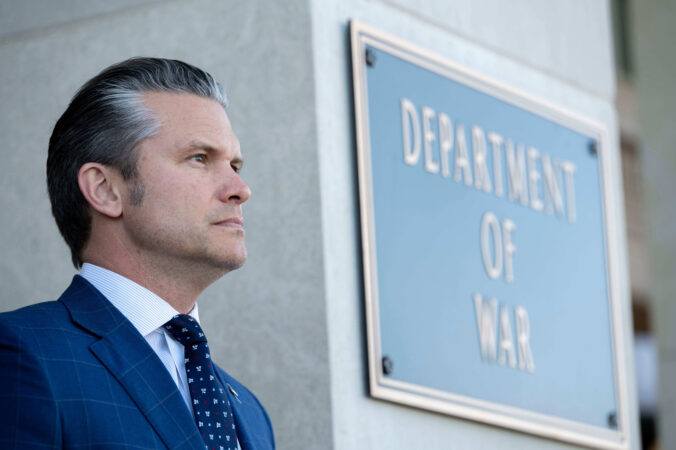
    President Donald Trump ordered government agencies to “immediately cease” using Anthropic’s technology, in a post on Truth Social on Friday, and Defense Secretary Pete Hegseth labeled the company a “supply chain risk to national security” in his own post on X, after the company refused to allow its technology to be used for domestic surveillance and autonomous weapons.

    The Trump administration’s assault on Anthropic appeared to put the company on course to lose billions of dollars of potential revenue, although the startup said in a blog post late Friday that it would challenge Hegseth’s designation in court.

    The firm’s conversational assistant, Claude, is being deployed or tested in at least five government agencies, including the Pentagon, the Department of Health and Human Services, the Department of Homeland Security, and the Department of Energy, according to recent disclosures of AI use mandated by law and an executive order.

    Friday’s aggressive moves by the Trump administration put all of Silicon Valley on notice that tech companies seeking Pentagon contracts risk massive political and business fallout if they don’t back administration policies and cede control of how their technology is used. Rivals of Anthropic including Elon Musk and other tech allies of Trump seized on the conflict to pledge that their own companies would not question Pentagon policies, positioning themselves as loyal patriots.

    Conflict has bubbled between Anthropic and the Trump administration since last year. The company leveraged its relationship with investor Amazon to become the first company to be integrated into classified systems.

    But Anthropic, co-founded in 2021 by CEO Dario Amodei, his sister Daniela, and other former employees of ChatGPT-maker OpenAI, also rankled tech allies of Trump by positioning itself as more safety conscious than other AI developers. (Amazon founder Jeff Bezos owns the Washington Post, which has a content partnership with OpenAI.)

    In the fall, Trump’s AI and crypto czar David Sacks accused Anthropic of attempting to manipulate the government with “fearmongering” about AI technology. Around the same time, Semafor reported that Anthropic displeased the White House by raising ethical objections to how the administration wanted to use its technology, including for surveillance.

    Those tensions flared into an unprecedented public fight between the Pentagon and the tech company this week. Frantic talks between the two sides continued right up until Hegseth’s announcement late Friday that he was declaring Anthropic a risk to national security, according to an X post from Emil Michael, the Pentagon’s technology chief, and a person familiar with the talks.

    Michael was on the phone with Anthropic, suggesting that the company agree to allow analysis of some bulk data on Americans, at the same moment Hegseth said in his X post that Anthropic had been designated a supply chain risk, according to the person, who spoke on the condition of anonymity to discuss the talks.

    Anthropic said in a statement responding to Hegseth on Friday that it would legally challenge his declaration against the company, suggesting that the dispute is far from over. Experts said that Anthropic had strong legal grounds for a challenge.

    A company can only be designated a supply chain risk through a legal process, said Steven Feldstein, a senior fellow at the Carnegie Endowment for International Peace who researches the use of AI in war. “It isn’t legally sufficient to simply proclaim or label [a supply chain risk] and have this be the final word,” he said. “It’s a major overreach.”

    Jessica Tillipman, an associate dean at George Washington University’s law school, said Anthropic could probably make a strong argument in court that it had been unfairly targeted. “This is on incredibly shaky ground,” she said of Hegseth’s declaration on Friday. “I don’t think you have seen a case for more politicized use.”

    Hegseth’s post also asserted that all companies that do business with the U.S. military are now prohibited from doing any commercial activity with Anthropic. Although the legal basis for that sweeping ban was unclear, it could have disastrous consequences for Anthropic, which has received billions of dollars in investment from partners like Amazon, Microsoft, and Nvidia that also supply the military. The companies didn’t respond to requests for comment.

    Should the Pentagon prevail, the U.S. military will need to adapt fast. Claude is deeply integrated into the Maven Smart System, an AI tool built with the technology company Palantir that runs on Amazon’s cloud. It provides troops with a unified picture of intelligence streaming in from multiple sensors, said retired Air Force Lt. Gen. Jack Shanahan, who served as the first director of the Pentagon’s Joint Artificial Intelligence Center and is now an adjunct senior fellow at the Center for a New American Security, a think tank.

    After the U.S. seizure of Venezuelan strongman Nicolás Maduro, an image circulated that showed Claude operating alongside Maven during the operation, Shanahan said, which prompted Anthropic officials to ask Palantir questions about its use in the operation.

    Claude is the “single most widely deployed AI system in the U.S. military,” Shanahan said. He added that it wouldn’t make sense to try to extract the AI tool from all of the Defense Department systems it helps, just as service members are getting skilled with the technology.

    In Silicon Valley, debate raged Friday over whether Anthropic should be celebrated for taking a stand, criticized as unpatriotic, or scoffed at for being strategically naive.

    Right-leaning leaders such as Palmer Luckey, founder of the defense startup Anduril, and investor Keith Rabois posted in support of the military’s decision. Anthropic employees cheered its moves in online posts, and hundreds of employees of Google and OpenAI signed a public letter backing the company’s stance.

    Anthropic’s rivals were poised and at the ready to take advantage of its blunders.

    OpenAI chief executive Sam Altman wrote in a memo to all staff late on Thursday that he had been negotiating with the Pentagon, according to a copy reviewed by the Post. The memo was first reported by the Wall Street Journal.

    Altman wrote that the dispute between Anthropic and the Pentagon had become “an issue for the whole industry,” and that the spat was not about the use of AI but about “control.” The country, he said, “absolutely needs help with AI for defense if we want to continue to enjoy peace and prosperity.”

    But Altman added that he was seeking a deal with the Defense Department that would find middle ground. It would see OpenAI agree to cover any use except those that are “unlawful or unsuited to cloud deployments, such as domestic surveillance and autonomous offensive weapons,” he wrote. And he said the company could deploy technical safeguards and personnel “to partner with the government to ensure things are working correctly.”

    Late on Friday, Altman wrote in a post on X that he had reached such an agreement with the Defense Department to deploy OpenAI’s technology in classified U.S. networks.

    “Two of our most important safety principles are prohibitions on domestic mass surveillance and human responsibility for the use of force, including for autonomous weapon systems,” Altman wrote. The Pentagon “agrees with these principles, reflects them in law and policy, and we put them into our agreement.”

    Jeremy Lewin, under secretary of state for foreign assistance, humanitarian affairs, and religious freedom, wrote in a post on X that the new OpenAI deal permitted the Pentagon the freedom of “all lawful use” of AI that it had sought from Anthropic. The agreement represented “a compromise that Anthropic was offered, and rejected,” he wrote.

    Musk, whose company xAI was certified to work with classified military systems this week, also stepped into the fray. “Anthropic hates Western civilization,” he wrote in a post Friday on his social network X. Musk and xAI did not respond to requests for comment.

    Lewin held up the billionaire as showing a better way for AI firms to engage with the government.

    “Elon and xAI have already agreed to the ‘all lawful uses’ principle — meaning that he’s already agreed not to shut off U.S. systems for nonlegal prudential discretionary reasons,” Lewin, a former staffer for Musk’s government efficiency initiative, the U.S. DOGE Service, wrote on X. “So there’s your difference. Anthropic wants to add additional conditions — Elon has agreed to promise he won’t pull the plug for our systems.”

  • Israeli officials say Iran’s Supreme Leader Khameini has been killed

    Israeli officials say Iran’s Supreme Leader Khameini has been killed

    DUBAI, United Arab Emirates — Iranian Supreme Leader Ayatollah Ali Khamenei died following a major attack by Israel and the United States, Iranian state media confirmed early Sunday, throwing the future of the Islamic Republic into doubt and raising the risk of regional instability.

    President Donald Trump announced the death hours earlier, saying it gave Iranians their “greatest chance” to “take back” their country.

    Iranian state television and the state-run IRNA news agency did not report a cause of death for the 86-year-old.

    The death occurred after a joint U.S. and Israeli aerial bombardment that targeted Iranian military and governmental sites.

    The president also said “heavy and pinpoint bombing” was to continue “uninterrupted” through the week or longer.

    Trump in his post called Khamenei “one of the most evil people in history.”

    Trump said that Khamenei “was unable to avoid our Intelligence and Highly Sophisticated Tracking Systems and, working closely with Israel, there was not a thing he, or the other leaders that have been killed along with him, could do.”

    In a nationally televised address, Israeli Prime Minister Benjamin Netanyahu said there were “growing signs” that Khamenei had been killed when Israel struck his compound early Saturday.

    Shortly after the address, two Israeli officials said Israel had confirmed his death. The officials both spoke to the Associated Press on condition of anonymity pending a formal announcement and gave no further details.

    Khamenei succeeded Ayatollah Ruhollah Khomeini, the leader of the 1979 Islamic Revolution. He had the final say on all major policies, leading Iran’s clerical establishment and its paramilitary Revolutionary Guard — the two main centers of power in the country’s theocracy.

    As the attack on Iran unfolded, Trump urged the Iranian public to “seize control of your destiny” by rising up against the Islamic leadership. In a video announcing the “major combat operations,” Trump told Iranians, “When we are finished, take over your government. It will be yours to take. This will be probably your only chance for generations.”

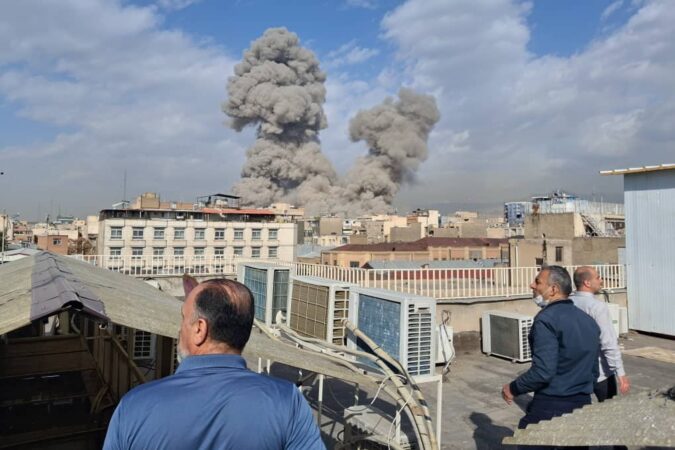
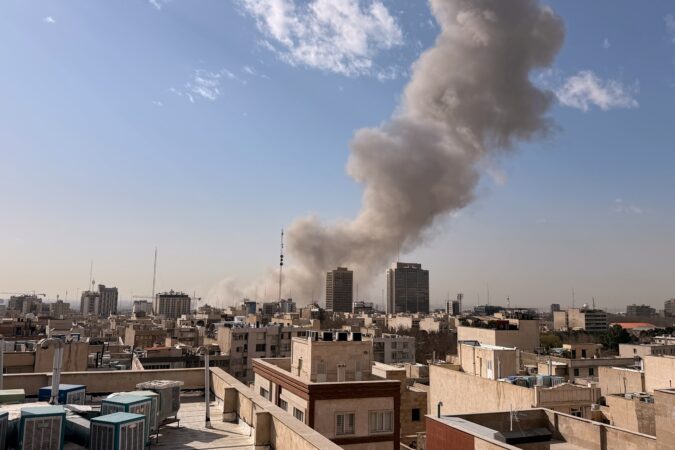
    Iranian state media, citing the Red Crescent, on Saturday evening said at least 201 people had been killed and more than 700 injured. Iran retaliated by firing missiles and drones toward Israel and U.S. military bases in the region, and exchanges of fire continued into the night.

    Some of the first strikes on Iran appeared to hit near the offices of the 86-year-old Khamenei. Before Israeli officials confirmed the death, Iranian Foreign Minister Abbas Araghchi told NBC News that Khamenei and President Masoud Pezeshkian were alive “as far as I know.” He called the attack “unprovoked, illegal, and absolutely illegitimate.”

    The strikes during the holy fasting month of Ramadan opened a stunning new chapter in U.S. intervention in Iran, marking the second time in eight months that the Trump administration has attacked the Islamic Republic during talks over its nuclear program.

    About 12 hours after the attacks began, the U.S. military reported no U.S. casualties and minimal damage at U.S. bases despite “hundreds of Iranian missile and drone attacks.” It said targets in Iran included Revolutionary Guard command facilities, air defense capabilities, missile and drone launch sites, and military airfields.

    Various members of Iran’s leadership were targeted in the attack. Israel said it killed the commander of the Iranian Revolutionary Guard Corps and the country’s defense minister. The Israeli military also said its strikes killed the secretary of the Iranian Security Council, a close adviser to Khamenei.

    Israel said the strikes had targeted three locations in Tehran where intelligence had indicated that top Iranian officials were gathered. Neither Iran nor the U.S. commented on or confirmed Israel’s claims about the Iranian leadership.

    Even if Iran’s top leaders have been killed, regime change is not guaranteed.

    Democrats decried that Trump had taken action without congressional authorization. White House spokesperson Karoline Leavitt said the administration had briefed several Republican and Democratic leaders in Congress in advance.

    The U.N.’s nuclear watchdog said on X it was closely monitoring developments and had seen “no evidence of radiological impact.”

    Iran was in a “near-total internet blackout,” advocacy group NetBlocks said.

    Months of rising tensions

    Tensions have soared in recent weeks as American warships moved into the region. Trump said he wanted a deal to constrain Iran’s nuclear program, as the country struggles with growing dissent following nationwide protests.

    The trigger for Saturday’s strikes appeared to be the unsuccessful latest round of nuclear talks on Thursday. They also reflected dramatic changes that have left Iran’s leadership in its weakest position since the Islamic Revolution nearly half a century ago.

    Israeli and American strikes last June greatly weakened Iran’s air defenses, military leadership, and nuclear program. A regionwide conflict sparked by Hamas’ Oct. 7, 2023, attack on Israel has left Iran’s network of proxies across the Middle East greatly weakened. U.S. sanctions and global isolation have decimated Iran’s economy.

    Iran responded to the latest strikes by launching missiles and drones targeting Israel and strikes targeting U.S. military installations in Bahrain, Kuwait, and Qatar. Israel’s military said Iran fired “dozens” of missiles at Israel, with many intercepted. Emergency responder Magen David Adom noted 89 “lightly injured” people.

    At least three explosions were heard Saturday evening near the Intelligence Ministry building in northern Tehran, witnesses said, adding that air defense systems had begun operating there. Israel’s military said it had begun new strikes against missile launchers and aerial defense systems in central Iran.

    In southern Iran, at least 85 people were reported killed when a girls school was struck, and dozens more were wounded, the local governor told Iranian state TV.

    Capt. Tim Hawkins, a U.S. Central Command spokesperson, said he was “aware of reports” that a girls school was struck and they were looking into them.

    Iran’s state news agency IRNA said at least 15 people were killed in the southwest, quoting the governor of Lamerd, Ali Alizadeh, as saying a sports hall, two residential areas, and a hall near a school were hit.

    Flights across the Middle East were disrupted, and air defense fire thudded over Dubai, the United Arab Emirates’ commercial capital. Shrapnel from an Iranian missile attack on the UAE capital killed one person, state media said.

    Attack was coordinated between Israel and U.S.

    “Active and serious negotiations have yet again been undermined,” Oman’s Foreign Minister Badr al-Busaidi, a key mediator of the nuclear talks, said on X. “Neither the interests of the United States nor the cause of global peace are well served by this.”

    Israel said the operation has been planned for months with the United States. Air Force pilots were striking “hundreds of targets across Iran,” Israeli military chief of staff Lt. Gen. Eyal Zamir said in a statement.

    Targets in the Israeli campaign included Iran’s military, symbols of government, and intelligence targets, according to an official briefed on the operation, who spoke on condition of anonymity to discuss nonpublic information on the attack.

    Trump, in seeking to justify the military action, claimed Iran has continued to develop its nuclear program, despite his assertion last year the program had been “obliterated” by an earlier round of strikes.

    He acknowledged Saturday that there could be American casualties, saying “that often happens in war.” It was a notable statement from a U.S. leader who swept into office on an “America First” platform and vowed to keep out of “forever wars.”

    Trump also said he was aiming to “annihilate” the Iranian navy and destroy regional proxies supported by Tehran. He called on the paramilitary Iranian Revolutionary Guard to lay down arms, saying members would be given immunity or face “certain death” if they didn’t.

    Iran had said it hoped to avert a war, but maintained its right to enrich uranium. It did not want to discuss other issues such as its long-range missile program or support for armed groups like Hamas and Hezbollah.

    Iran has said it hasn’t enriched since June, but it has blocked international inspectors from visiting the sites the U.S. bombed. Satellite photos analyzed by the Associated Press have shown new activity at two of those sites, suggesting Iran is trying to assess and potentially recover material.

    Iran on Saturday requested an urgent session of the International Atomic Energy Agency’s Board of Governors about “these threats to safeguarded nuclear facilities,” according to a letter posted by the semiofficial Tasnim news agency.

    Trump had threatened military action but held off following Iran’s recent crackdown on protests spurred by economic grievances that evolved into a nationwide push against the ruling clerics.

    The Human Rights Activists News Agency says it confirmed more than 7,000 deaths in the crackdown and is investigating thousands more. The government has acknowledged more than 3,000 killed.

    Now, Iranians are likely to be wary about taking to the streets again because the Revolutionary Guard has demonstrated its ruthlessness, said Kamran Matin, an expert on Iran at the University of Sussex in southern England.

    Regional effects

    The strikes could rattle global markets, particularly if Iran makes the Strait of Hormuz unsafe for commercial traffic. A third of worldwide oil exports transported by sea passed through the strait in 2025.

    Saudi Arabia said Iran had targeted its capital and eastern region in an attack that was repelled. Bahrain said a missile attack targeted the U.S. Navy’s 5th Fleet headquarters in the island kingdom, and three buildings were damaged in the capital, Manama, and Muharraq city by drone strikes and debris from an intercepted missile.

    Kuwait’s civil aviation authority said a drone targeted the main international airport, injuring several employees. Kuwait’s state-run news agency said three troops were injured by shrapnel from strikes that hit Ali Al-Salem air base. Explosions could also be heard in Qatar. Jordan said it “dealt with” 49 drones and ballistic missiles.

  • European leaders call for resumption of U.S.-Iran negotiations

    European leaders call for resumption of U.S.-Iran negotiations

    BRUSSELS — How long will it last? Will it grow? What will it mean to us — and to global security overall? Those questions echoed across the Middle East and the planet Saturday as world leaders reacted warily to U.S. and Israeli strikes on Iran that sowed concerns of a broader conflict. The U.N. Security Council scheduled an emergency meeting.

    Perhaps cautious about upsetting already strained relations with U.S. President Donald Trump, many nations abstained from commenting directly or pointedly on the joint strikes but condemned Tehran’s retaliation. Similarly to Europeans, governments across the Middle East condemned Iran’s strikes on Arab neighbors while staying silent on the U.S. military action.

    Other countries were more explicit: Australia and Canada expressed open support for the U.S. strikes, while Russia and China responded with direct criticism.

    The U.S. and Israel launched a major attack on Iran on Saturday, and Trump called on the Iranian public to “seize control of your destiny” by rising up against the Islamic theocracy that has ruled the nation since 1979. Iran retaliated by firing missiles and drones toward Israel and U.S. military bases in the Middle East.

    Some leaders urge resumption of talks

    In a statement, British Prime Minister Keir Starmer, French President Emmanuel Macron, and German Chancellor Friedrich Merz called on the U.S. and Iran to resume talks and said they favored a negotiated settlement. They said their countries didn’t take part in the strikes on Iran but are in close contact with the U.S., Israel, and partners in the region.

    The three countries have led efforts to reach a negotiated solution over Iran’s nuclear program.

    “We condemn Iranian attacks on countries in the region in the strongest terms. Iran must refrain from indiscriminate military strikes. We call for a resumption of negotiations and urge the Iranian leadership to seek a negotiated solution. Ultimately, the Iranian people must be allowed to determine their future,” they said.

    Later, at an emergency security meeting, Macron said France was “neither warned nor involved” in the strikes. He called for intensified efforts for a negotiated solution, saying “no one can think that the questions of Iran’s nuclear program, ballistic activity, regional destabilization will be settled by strikes alone.”

    The 22-nation Arab League called the Iranian attacks “a blatant violation of the sovereignty of countries that advocate for peace and strive for stability.” That coalition of nations has historically condemned both Israel and Iran for actions it says risk destabilizing the region.

    Countries that maintain diplomatic ties with Israel — including Morocco, Jordan, and the United Arab Emirates — denounced Iranian strikes targeting U.S. military bases in the region including in Kuwait, Bahrain, Qatar, and the Emirates.

    Saudi Arabia said it “condemns and denounces in the strongest terms the treacherous Iranian aggression and the blatant violation of sovereignty.” Oman, which has been mediating the talks between Iran and the U.S., said in a statement that the U.S. action “constitutes a violation of the rules of international law and the principle of settling disputes through peaceful means, rather than through hostility and the shedding of blood.”

    Careful wording is (mostly) the order of the day

    Countries in Europe and the Middle East used careful wording, avoiding perceptions that they either support unilateral American action or are directly condemning the United States.

    Others were more blunt. Russia’s Foreign Ministry called the strikes “a pre-planned and unprovoked act of armed aggression against a sovereign and independent U.N. member state.” The ministry accused Washington and Tel Aviv of “hiding behind” concerns about Iran’s nuclear program while actually pursuing regime change.

    Similarly, China’s government said it was “highly concerned” about the U.S. and Israeli strikes on Iran and called for an immediate halt to the military action and a return to negotiations. “Iran’s sovereignty, security and territorial integrity should be respected,” a Chinese Foreign Ministry statement said.

    Meanwhile, Australian Prime Minister Anthony Albanese said his country supports the United States in its effort to stop Iran from obtaining an atomic bomb. He described Iran’s current leadership as a destabilizing force and noted two attacks on Australian soil that were blamed on Tehran. Last August, Australia cut off diplomatic relations with Iran and expelled its ambassador after accusing it of orchestrating two antisemitic attacks in the country.

    Despite recent tensions with the U.S., Canada too expressed its support for the military action. “The Islamic Republic of Iran is the principal source of instability and terror throughout the Middle East,” Prime Minister Mark Carney said.

    The United Nations chief condemned the U.S.-Israeli airstrikes on Iran and called for an immediate return to negotiations “to pull the region, and our world, back from the brink.”

    Secretary-General António Guterres told an emergency meeting of the U.N. Security Council on Saturday that everything must be done to prevent further escalation. “The alternative,” he warned, “is a potential wider conflict with grave consequences for civilians and regional stability.”

    Guterres also condemned Iran’s retaliatory attacks for violating the sovereignty and territorial integrity of Bahrain, Iraq, Jordan, Kuwait, Qatar, Saudi Arabia, and the United Arab Emirates.

    Israel’s U.N. Ambassador Danny Danon, speaking to reporters before the meeting, said it was “hypocrisy” to condemn the airstrikes. He said Iran is responsible for the actions of its proxies in the Middle East and for its nuclear and missile programs, and Israel and the U.S. acted “to prevent an irreversible and immediate threat.”

    Concerns expressed for ‘new, extensive’ war

    Palestinians in the occupied West Bank said they were largely unfazed as war erupted Saturday, barely pausing as booms echoed across the sky from Israel’s Iron Dome intercepting missiles overhead.

    Unlike Israel, Palestinian cities have no warning sirens or bomb shelters, despite the risk of falling debris or errant missiles. As people sheltered less than 10 miles away in Jerusalem, streets in Ramallah swarmed with shoppers browsing meat counters, vegetable stalls, and Ramadan sweets, some stopping to record the sounds of distant sirens and missile interceptions.

    But as Israel closed checkpoints to the movement of people and goods on Saturday, gas stations saw longer-than-usual lines as residents filled spare canisters in case of supply disruptions.

    Nervousness is perceptible across multiple countries as people fear a full-scale war engulfing the region. Norwegian Foreign Minister Espen Barth Eide told Norwegian broadcaster NRK that he was concerned the failure of negotiations between the U.S. and Iran meant a “new, extensive war in the Middle East.”

    The Nobel Peace Prize-winning International Campaign to Abolish Nuclear Weapons condemned the U.S. and Israeli strikes on Iran in harsher words. “These attacks are totally irresponsible and risk provoking further escalation as well as increasing the danger of nuclear proliferation and the use of nuclear weapons,” said its executive director, Melissa Parke.

    EU leaders issued a joint statement Saturday calling for restraint and engaging in regional diplomacy in hopes of “ensuring nuclear safety.”

    “We call on all parties to exercise maximum restraint, to protect civilians, and to fully respect international law,” the statement from European Commission President Ursula von der Leyen and European Council President António Costa said.

    The Arab League, too, appealed to all international parties “to work towards de-escalation as soon as possible, to spare the region the scourge of instability and violence, and to return to dialogue.”

  • Trump: ‘Freedom’ for Iran is goal of ‘major military operation’

    Trump: ‘Freedom’ for Iran is goal of ‘major military operation’

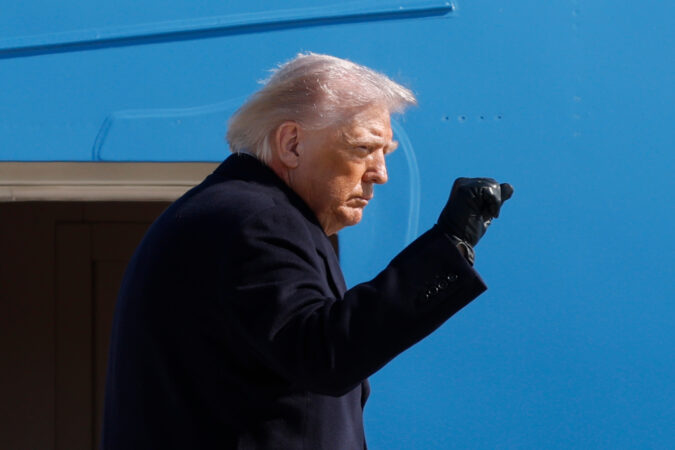
    President Donald Trump told The Washington Post early Saturday that his main concern is “freedom” for the Iranian people as the U.S. launched military strikes in the country.

    A U.S. official said a multiday operation against Iran began at about 1 a.m. Eastern time with a salvo of ship-launched Tomahawk cruise missiles and air-launched munitions from U.S. Air Force and Navy jets.

    Iran quickly launched counterstrikes in response to the attack, which the Trump administration has named “Operation Epic Fury.” Multiple U.S. military bases were targeted by Iran, the official said, including the support facility for its 5th Fleet ships in Bahrain, according to the country’s state-run news service.

    While the operations are ongoing, no U.S. service members have been injured, the official said, who spoke on the condition of anonymity to provide details that had not yet been publicly announced. Israel said it also launched attacks on Iran on Saturday.

    “All I want is freedom for the people,” Trump said in a brief phone interview shortly after 4 a.m., when asked what he hopes his legacy will be as a result of the military action and a push for regime change in Iran.

    “I want a safe nation, and that’s what we’re going to have,” the president said, his first reportable remarks since announcing “major combat operations” in a video message around 2:30 a.m.

    Trump spoke from Mar-a-Lago, his home in Palm Beach, Fla., where he arrived Friday night just hours before the military strikes began. He spoke to the Post as television news played in the background.

    Despite his previous criticism of U.S. involvement in Middle Eastern wars particularly American lives lost during efforts to topple and install new regimes — Trump on Saturday made the case for the United States helping to bring about regime change in the country. In the video address, Trump urged Iranians once the strikes cease to “take over your government,” telling them “this will be probably your only chance for generations.”

    Trump also conceded that U.S. troops were putting their lives at risk in this effort.

    “The lives of courageous American heroes may be lost and we may have casualties,” Trump said in his taped remarks. “That often happens in war. But we’re doing this, not for now. We’re doing this for the future, and it is a noble mission.”

    Less than a year ago, while visiting the Middle East, Trump decried the “so-called nation builders” who “wrecked far more nations than they built.”

    “And the interventionalists were intervening in complex societies that they did not even understand,” Trump said in May at an investment conference in Riyadh, the capital of Saudi Arabia.

    Now, the president is portraying himself as the one willing to assume substantial risk to save the Iranian people, urging them to “seize control” of their “destiny” with U.S. help.

    “No president was willing to do what I am willing to do tonight,” Trump declared in the eight-minute video, which he said was filmed shortly after the attacks began in the early hours Saturday. He stood behind a lectern, wearing a white “USA” ball cap.

    “Now you have a president who is giving you what you want, so let’s see how you respond,” he said, speaking to the Iranian people. “America is backing you with overwhelming strength and devastating force.”

    Trump’s case to the American people for taking the country to war with Iran has never been urgently articulated.

    While the president said the objective of the strikes is to “defend the American people by eliminating imminent threats from the Iranian regime,” in his video about the attacks, Trump accused Iran of a litany of sins: from working to build a nuclear weapon to roadside bombs to a campaign of “mass terror” he said the regime has carried out against the U.S. “for 47 years.”

    Trump invoked the 1979 hostage crisis, in which 66 Americans were taken hostage at the U.S. Embassy in Tehran, and the 1983 bombing of U.S. Marine barracks in Beirut, in which 241 Americans were killed. He said Iran was “probably involved” in the al-Qaeda attack on the USS Cole in 2000 in Yemen.

    “I built and rebuilt our military in my first administration,” Trump said, “and there is no military on Earth even close to its power, strength or sophistication.”

    While speaking to the Post, the president did not take additional questions about the scope of ongoing operations or the potential for U.S. troop involvement on the ground. On Thursday, Vice President JD Vance said in an interview with the Post that any operation Trump initiates in Iran would not result in the U.S. becoming involved in a drawn-out war.

    “The idea that we’re going to be in a Middle Eastern war for years with no end in sight – there is no chance that will happen,” Vance said.

    Foreign policy experts have warned that, unlike the limited strikes the U.S. launched against Iranian nuclear sites in June, a wider conflict with Tehran could embroil Washington for years.

    Trump’s views on U.S. intervention in the Middle East have evolved over time, with the president initially expressing support for the Iraq War at its outset more than two decades ago, before months later calling it a “terrible mistake.”

    He built his political brand as an “America First” president opposed to adventures overseas, decrying the Iraq War during his 2016 campaign and in 2024 pledging a “stop to the endless wars and a return to peace in the Middle East.”

    “We defeated [Islamic State] in record time, but we had no wars,” Trump said in his November 2024 election night victory speech, referring to his first term. “They said, he will start a war. I’m not going to start a war. I’m going to stop wars.”

  • Trump orders all federal agencies to phase out use of Anthropic technology

    Trump orders all federal agencies to phase out use of Anthropic technology

    WASHINGTON — The Trump administration on Friday ordered all U.S. agencies to stop using Anthropic’s artificial intelligence technology and imposed other major penalties, culminating an unusually public clash between the government and the company over AI safety.

    President Donald Trump, Defense Secretary Pete Hegseth, and other officials took to social media to chastise Anthropic for failing to allow the military unrestricted use of its AI technology by a Friday deadline, accusing it of endangering national security after CEO Dario Amodei refused to back down over concerns the company’s products could be used in ways that would violate its safeguards.

    “We don’t need it, we don’t want it, and will not do business with them again!” Trump said on social media.

    Hegseth also deemed the company a “supply chain risk,” a designation typically stamped on foreign adversaries that could derail the company’s critical partnerships with other businesses.

    Anthropic had said it sought narrow assurances from the Pentagon that its AI chatbot Claude would not be used for mass surveillance of Americans or in fully autonomous weapons. The Pentagon said it was not interested in such uses and would only deploy the technology in legal ways, but it also insisted on access without any limitations.

    The government’s effort to assert dominance over the internal decision-making of the company comes amid a wider clash over AI’s role in national security and concerns about how increasingly capable machines could be used in high-stakes situations involving lethal force, sensitive information or government surveillance.

    Trump and others lash out at Anthropic

    Trump said Anthropic made a mistake trying to strong-arm the Pentagon. He wrote on Truth Social that most agencies must immediately stop using Anthropic’s AI but gave the Pentagon a six-month period to phase out the technology that is already embedded in military platforms.

    “The United States of America will never allow a radical left, woke company to dictate how our great military fights and wins wars!” he wrote in all caps.

    After months of private talks exploded into public debate this week, Anthropic said Thursday that the government’s new contract language would allow “safeguards to be disregarded at will.” Amodei said his company “cannot in good conscience accede” to the demands.

    Anthropic can afford to lose the contract. But the government’s actions posed broader risks at the peak of the company’s meteoric rise from a little-known computer science research lab in San Francisco to one of the world’s most valuable startups.

    The president’s decision was preceded by hours of top Trump appointees from the Pentagon and the State Department taking to social media to criticize Anthropic, but their complaints posed contradictions.

    Top Pentagon spokesman Sean Parnell said on social media Thursday that Anthropic’s unwillingness to go along with the military’s demands was “jeopardizing critical military operations and potentially putting our warfighters at risk.” Hegseth said Friday that the Pentagon “must have full, unrestricted access to Anthropic’s models for every LAWFUL purpose in defense of the Republic.”

    Trump’s social media post also mandated the company “better get their act together, and be helpful” during a six-month phase-out period or there would be “major civil and criminal consequences to follow.”

    However, Hegseth’s choice to designate Anthropic a supply chain risk uses an administrative tool that has been designed for companies owned by U.S. adversaries to prevent them from selling products that are harmful to American interests.

    Virginia Sen. Mark Warner, the top Democrat on the Senate Intelligence Committee, noted that this dynamic, “combined with inflammatory rhetoric attacking that company, raises serious concerns about whether national security decisions are being driven by careful analysis or political considerations.”

    Anthropic didn’t immediately reply to a request for comment on the Trump administration’s actions.

    Dispute shakes up Silicon Valley

    The dispute stunned AI developers in Silicon Valley, where venture capitalists, prominent AI scientists and a large number of workers from Anthropic’s top rivals — OpenAI and Google — voiced support for Amodei’s stand in open letters and other forums.

    The move is likely to benefit Elon Musk’s competing chatbot, Grok, which the Pentagon plans to give access to classified military networks, and could serve as a warning to two other competitors, Google and OpenAI, that have still-evolving contracts to supply their AI tools to the military.

    Musk sided with Trump’s administration, saying on his social media platform X that “Anthropic hates Western Civilization.”

    But one of Amodei’s fiercest rivals, OpenAI CEO Sam Altman, sided with Anthropic and questioned the Pentagon’s “threatening” move in a CNBC interview and a letter to employees that said OpenAI shared the same red lines. Amodei once worked for OpenAI before he and other OpenAI leaders quit to form Anthropic in 2021.

    “For all the differences I have with Anthropic, I mostly trust them as a company, and I think they really do care about safety,” Altman told CNBC, hours before he gathered employees for an all-hands meeting Friday.

    Retired Air Force Gen. Jack Shanahan, a former leader of the Pentagon’s AI initiatives, wrote on social media this week that “painting a bullseye on Anthropic garners spicy headlines, but everyone loses in the end.”

    Shanahan said Claude is already being widely used across the government, including in classified settings, and Anthropic’s red lines were “reasonable.” He said the AI large language models that power chatbots like Claude, Grok, and ChatGPT are also “not ready for prime time in national security settings,” particularly not for fully autonomous weapons.

    Anthropic is “not trying to play cute here,” he wrote Thursday on LinkedIn. “You won’t find a system with wider & deeper reach across the military.”

  • Trump says he is ‘not happy’ with the Iran nuclear talks but indicates he’ll give them more time

    Trump says he is ‘not happy’ with the Iran nuclear talks but indicates he’ll give them more time

    TEL AVIV, Israel — President Donald Trump said Friday he’s “not happy” with the latest talks over Iran’s nuclear program but indicated he would give negotiators more time to reach a deal to avert another war in the Middle East.

    He spoke a day after U.S. envoys held another inconclusive round of indirect talks with Iran in Geneva. As American forces gather in the region, Trump has threatened military action if Iran does not agree to a far-reaching deal on its nuclear program, while Iran insists it has the right to enrich uranium for peaceful purposes and denies seeking a nuclear weapon.

    “I’m not happy with the fact that they’re not willing to give us what we have to have. I’m not thrilled with that. We’ll see what happens. We’re talking later,” Trump told reporters as he left the White House on Friday. “We’re not exactly happy with the way they’re negotiating. They cannot have nuclear weapons.”

    Trump was asked about the risks of the U.S. getting involved in a drawn-out conflict if it strikes Iran.

    “I guess you could say there’s always a risk,” Trump replied. “You know, when there’s war, there’s a risk of anything, both good and bad.”

    Later Friday, as he visited Texas, Trump sounded more pessimistic, telling reporters that Iranian negotiators “don’t want to quite go far enough. It’s too bad.”

    He reiterated that he did not want to see Iran allowed to enrich any amount of uranium and said the oil-rich nation should not need to enrich uranium for an energy program.

    When asked by a reporter how close he was to deciding on whether to launch a military strike, he said, “I’d rather not tell you.”

    Trump later told a crowd of supporters in a speech in Corpus Christi, Texas, that he would rather handle Iran “the peaceful way” and that he discussed the issue aboard Air Force One with Texas’ two Republican senators, Ted Cruz and John Cornyn.

    Rubio heads to Israel

    Secretary of State Marco Rubio plans to make a quick trip to Israel early next week, the State Department said. The U.S. Embassy in Israel had earlier urged staff who want to leave to depart, joining other nations in encouraging people to leave the region and signaling that U.S. military action might be imminent.

    The announcement of Rubio’s visit, and Trump’s latest remarks, could indicate a longer timeline for any potential strike.

    The State Department said Rubio would visit Israel on Monday and Tuesday to “discuss a range of regional priorities including Iran, Lebanon, and ongoing efforts to implement President Trump’s 20-Point Peace Plan for Gaza.” It offered no other details.

    Israeli Prime Minister Benjamin Netanyahu has long urged tougher U.S. action against Iran, and has warned that Israel will respond to any Iranian attack.

    A confidential report from the U.N. nuclear watchdog meanwhile confirmed that Iran has not offered inspectors access to sensitive nuclear sites since they were heavily bombed during the 12-day war launched by Israel last June. As a result, it said it could not confirm Iran’s claims that it stopped uranium enrichment after the U.S. and Israeli strikes.

    The report was circulated to member countries and seen by The Associated Press.

    Those wishing to leave ‘should do so TODAY’

    The announcement of Rubio’s visit came just hours after the U.S. Embassy in Jerusalem implemented “authorized departure” status for nonessential personnel and family members, which means that eligible staffers can leave the country voluntarily at government expense.

    In an email, U.S. Ambassador Mike Huckabee urged staff considering departure to do so quickly, advising them to focus on getting any flight out of Israel and to then make their way to Washington.

    “Those wishing to take AD should do so TODAY,” Huckabee wrote, using an acronym for “authorized departure.”

    “While there may be outbound flights over the coming days, there may not be,” he added. The email was recounted to the Associated Press by someone involved with the U.S. mission who wasn’t authorized to share details.

    On a town-hall meeting Friday after the email was sent, Huckabee told staff that he was encouraging airlines to keep flying.

    Vance meets with mediator

    Iran and the United States on Thursday walked away from another round of nuclear negotiations in Geneva without a deal. Technical discussions are scheduled to take place in Vienna next week.

    Iranian Foreign Minister Abbas Araghchi on Thursday said “what needs to happen has been clearly spelled out from our side,” without offering specifics. Iran has long demanded relief from heavy international sanctions in return for taking steps to limit but not end its nuclear program.

    Oman’s Foreign Minister Badr al-Busaidi, who has been mediating the talks, met Friday with Vice President JD Vance to discuss the negotiations.

    “I am grateful for their engagement and look forward to further and decisive progress in the coming days,” al-Busaidi posted on X. “Peace is within our reach.”

    Rafael Grossi, head of the International Atomic Energy Agency, meanwhile met with Christopher Yeaw, a U.S. arms control official. Grossi posted on X that the two men had a “timely exchange on current non-proliferation issues, including in Iran and other areas of common interest.”

    The U.N. chief urged Iran and the U.S. “to focus on the diplomatic track.”

    “We’re seeing both positive messages coming out of the diplomatic tracks, which we’re continuing to encourage,” U.N. Secretary-General António Guterres said, according to his spokesperson Stéphane Dujarric.

    “We’re also seeing very worrying military movements throughout the region, which is extremely concerning as well.”

    Flights suspended as people are urged to leave

    The U.S. has gathered a massive fleet of aircraft and warships in the Middle East, with one aircraft carrier already in place and another heading to the region. Iran says it will respond to any U.S. attack by targeting American forces in the region, potentially including those stationed in U.S. bases in allied Arab countries.

    Airlines such as Netherlands-based KLM have already announced plans to suspend flights out of Tel Aviv’s Ben-Gurion International Airport, and other embassies have also made plans for authorized departures from Israel and neighboring countries.

    Britain’s Foreign Office said that “due to the security situation, U.K. staff have been temporarily withdrawn from Iran.” It said the embassy was operating remotely.

    In Israel, the U.K. said Friday it moved some diplomatic staff and their families from Tel Aviv to another, unspecified location in Israel “as a precautionary measure.” In an update to its travel advice, the Foreign Office advises against “all but essential travel” to Israel.

    British Prime Minister Keir Starmer said Thursday the U.K. was focused on “supporting the political process” between Washington and Tehran.

    Germany‘s Foreign Ministry meanwhile advised urgently against travel to Israel.

    Australia on Wednesday “directed the departure of all dependents of Australian officials posted to Israel in response to the deteriorating security situation in the Middle East.” China, India, and several European countries with missions in Iran have advised citizens to avoid travel to the country.

    China’s Foreign Ministry also advised its citizens already in Iran to leave, according to a statement reported by Chinese state media.

  • Bill Clinton says he ‘did nothing wrong’ with Epstein as he faces grilling over their relationship

    Bill Clinton says he ‘did nothing wrong’ with Epstein as he faces grilling over their relationship

    WASHINGTON — Former President Bill Clinton told members of Congress on Friday that he “did nothing wrong” in his relationship with Jeffrey Epstein and saw no signs of Epstein’s sexual abuse as he faced hours of grilling from lawmakers over his connections to the disgraced financier from more than two decades ago.

    “I saw nothing, and I did nothing wrong,” the former Democratic president said in an opening statement he shared on social media at the outset of the deposition. The closed-door deposition ended after more than six hours of questioning from lawmakers who said he answered every question posed to him.

    The closed-door deposition in Chappaqua, N.Y., marks the first time a former president has been compelled to testify to Congress. It came a day after Clinton’s wife, former Secretary of State Hillary Clinton, sat with lawmakers for her own deposition.

    Bill Clinton has also not been accused of any wrongdoing. Yet lawmakers are grappling with what accountability in the United States looks like at a time when men around the world have been toppled from their high-powered posts for maintaining their connections with Epstein after he pleaded guilty in 2008 to state charges in Florida for soliciting prostitution from an underage girl.

    “Men — and women for that matter — of great power and great wealth from all across the world have been able to get away with a lot of heinous crimes and they haven’t been held accountable and they have not even had to answer questions,” said Republican Rep. James Comer, the chair of the House Oversight Committee, before the deposition began Friday.

    Hillary Clinton told lawmakers Thursday that she had no knowledge of how Epstein had sexually abused underage girls and had no recollection of even meeting him. But Bill Clinton will have to answer questions on a well-documented relationship with Epstein and his former girlfriend Ghislaine Maxwell, even if it was from the late 1990s and early 2000s.

    Bill Clinton in his opening statement said that he would likely often tell the committee that he did not recall the specifics of events from more than 20 years ago. But he also expressed certainty that he had not witnessed signs of Epstein’s abuse.

    Still, Republicans were relishing the opportunity to scrutinize the former Democratic president under oath.

    Still, Republicans were relishing the opportunity to scrutinize the former Democratic president under oath.

    “No one’s accusing anyone of any wrongdoing, but I think the American people have a lot of questions,” Comer said.

    Republicans finally get a chance to question Bill Clinton

    Republicans have wanted to question Bill Clinton about Epstein for years, especially as conspiracy theories arose following Epstein’s 2019 suicide in a New York jail cell while he faced sex trafficking charges.

    Those calls reached a fever pitch late last year when several photos of the former president surfaced in the Department of Justice’s first release of case files on Epstein and Maxwell, a British socialite who was convicted of sex trafficking in December 2021 but maintains she’s innocent. Bill Clinton was photographed on a plane seated alongside a woman, whose face is redacted, with his arm around her. Another photo showed Clinton and Maxwell in a pool with another person whose face was redacted.

    Epstein also visited the White House several times during Clinton’s presidency, and the pair later made several international trips together for their humanitarian work. Comer claimed the committee has collected evidence that Epstein visited the White House 17 times and that Bill Clinton flew on Epstein’s airplane 27 times.

    “We are only here because he hid it from everyone so well for so long,” Bill Clinton said in his opening statement. “And by the time it came to light with his 2008 guilty plea, I had long stopped associating with him.”

    Comer pledged extensive questioning of the former president. He claimed that Hillary Clinton had repeatedly deferred questions about Epstein to her husband.

    Bill Clinton went after Comer for calling his wife before the committee, telling him that “including her was simply not right.”

    The committee was working to quickly publish a transcript and video recording of her deposition.

    Has a precedent been set?

    Democrats, who have supported the push to get answers from Bill Clinton, are arguing that it sets a precedent that should also apply to President Donald Trump, a Republican who had his own relationship with Epstein.

    “I think that President Trump needs to man up, get in front of this committee and answer the questions and stop calling this investigation a hoax,” said Rep. Robert Garcia, the top Democrat on the committee, on Friday.

    Comer has pushed back on that idea, saying that Trump has answered questions on Epstein from the press.

    Trump on Friday expressed remorse at Bill Clinton being forced to testify. “I like Bill Clinton, and I don’t like seeing him deposed,” he told reporters as he departed the White House en route to Corpus Christi, Texas.

    Democrats are also calling for the resignation of Trump’s Commerce Secretary Howard Lutnick. Lutnick was a longtime neighbor of Epstein in New York City but said on a podcast that he severed ties with Epstein following a 2005 tour of Epstein’s home that disturbed Lutnick and his wife.

    The public release of case files showed that Lutnick actually had two engagements with Epstein years later. He attended a 2011 event at Epstein’s home, and in 2012 his family had lunch with Epstein on his private island.

    “He should be removed from office and at a minimum should come before the committee,” Garcia said of Lutnick.

    Republican Rep. Nancy Mace questioned Hillary Clinton about Lutnick’s relationship to Epstein during the deposition on Thursday. On Friday morning, Mace joined in calling for the commerce secretary to come before the committee.

    “I believe we will have the votes to subpoena him,” Democratic Rep. Ro Khanna said.