Category: Nation & World

  • The Trump administration is detaining and questioning refugees already admitted to the U.S.

    The Trump administration is detaining and questioning refugees already admitted to the U.S.

    ST. PAUL, Minn. — Their family spent years opposing Venezuela’s socialist system.

    The government retaliated by sending men to beat the father, a state oil company worker whom it accused of being uncooperative. Other relatives were threatened.

    The situation became so untenable that the family fled the country for the United States in 2021 after it obtained refugee status, according to one of the daughters, a 24-year-old clothing salesperson who was interviewed by The Associated Press.

    The six siblings and their parents settled in Minnesota in 2023, living peaceful lives until the Trump administration said it was casting new scrutiny on refugees. One priority is those admitted to the U.S. under former President Joe Biden, whom the government accuses of prioritizing quantity over detailed screening and vetting, with an initial focus on 5,600 refugees who settled in Minnesota and are not yet permanent residents, making them particularly vulnerable.

    Last month, three masked officers got out of a black SUV with tinted windows outside a St. Paul apartment complex, handcuffed the Venezuelan woman and her mother and told them their legal status was under review, according to the woman, who asked for anonymity for fear of retaliation.

    Overturning years of precedent, immigration authorities have arrested or questioned dozens of refugees in Minnesota, attorneys and advocates say, with more detentions likely to come nationwide.

    In January, a federal judge ordered a temporary halt to the arrest and detention of refugees in Minnesota while a lawsuit challenging the “revetting” continues. The judge ordered the immediate release of all refugees detained in Minnesota, and those taken to Texas.

    Three refugees told The Associated Press that whatever happens, the rounds of inconclusive interviews with immigration authorities well after they thought their status was safe has them questioning their futures in the U.S. and living in constant fear.

    The young woman from Venezuela hasn’t returned to her job at a clothing factory. A man who fled persecution in Myanmar won’t walk on the streets of Minneapolis without a letter from his church appealing for immigrants to “be treated humanely.” A Congolese refugee arrested in St. Paul despite her refugee status says “everything that’s happened feels like a movie.”

    A change in US treatment of refugees

    Welcoming refugees has been a source of bipartisan agreement in the U.S. since Congress passed the Refugee Act with overwhelming support in 1980.

    The act helped make refugee applications some of the immigration system’s most heavily scrutinized. Government decisions that someone was persecuted for who they are or what they believe are rarely second-guessed, and revisiting refugee status that’s already been granted is a major blow to legal tradition, advocates say.

    “They’ve been heavily vetted and were admitted by the government with approval,” said Beth Oppenheim, chief executive officer of HIAS, a major refugee aid group.

    Once a refugee is admitted to the U.S. through the resettlement program, the only way to strip them of their status is to prove that they should never have been admitted, Oppenheim said. That is why the Trump administration is interviewing people again, she said.

    Matthew Tragesser, a spokesman for U.S. Citizenship and Immigration Services, said in a written statement refugees “are REQUIRED to be subject to a full inspection after a year within the United States.”

    “This is not novel or discretionary; it is a clear requirement in law,” he wrote.

    While it is correct that refugees must apply for green cards one year after admission — a change of status that brings a renewed layer of scrutiny — the administration is breaking with decades of tradition by revisiting initial decisions to admit people as refugees, and then detaining them while they are under review.

    “Arresting, detaining, and rescreening refugees are all new changes which will inflict grave harm on vulnerable populations,” said Smita Dazzo, deputy director of U.S. programs at HIAS.

    Venezuela to Minnesota to Houston and back

    In January, U.S. Immigration and Customs Enforcement took the Venezuelan women to Houston on a flight where migrants were shackled at the wrists and ankles and forbidden from talking. The daughter said she was told she was there for green card interviews and isolated in a cold room with no food, water or anything warm to cover her. She said she refused to sign documents without an attorney present.

    “They told us, ‘Your status is worthless. You’re illegal,’” she said. “What we went through is something I wouldn’t wish on anyone … We were supposed to arrive in this country with refugee status, and we thought we would be protected here. But right now, at this moment, it is quite the opposite.”

    The women were released after successfully filing habeas corpus petitions in federal court, part of a flood of last-ditch attempts at freedom under a Trump policy denying bond hearings in immigration court. Friends of their attorney drove them back to Minnesota at their own expense. Since then, the younger woman has been too afraid to leave the house.

    The pastor who received a letter and went to the interview

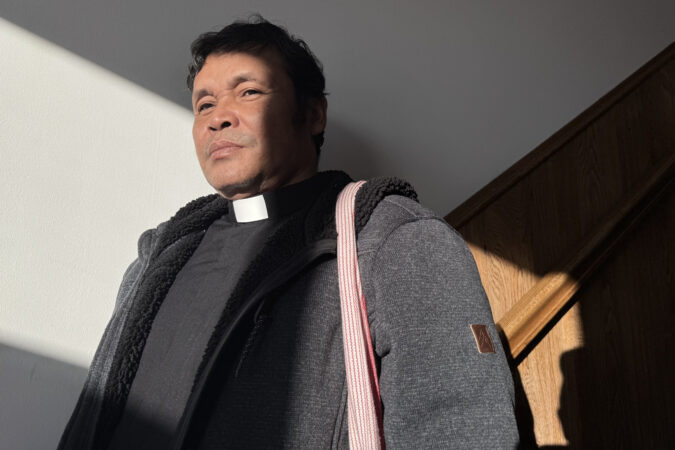
    Saw Ba Mya James, a 46-year-old ethnic Karen father of three who fled military persecution in Myanmar, arrived in St. Paul last year after obtaining refugee status with help from a local church.

    Despite a pending green card application, the Anglican pastor did not attend church for weeks after friends advised him to avoid going outside.

    “I was told to stay at home, so I listened, and I prayed to God with my family,” James said.

    James received a letter Feb. 2 ordering a “post-admissions refugee reverification” at the U.S. Citizenship and Immigration Services St. Paul field office, according to a copy reviewed by The Associated Press.

    During an interview that lasted several hours, an officer pressed James with questions he said he already addressed extensively before being admitted to the U.S. The officer said the review was needed because an inexperienced employee handled James’ initial vetting.

    Within two weeks of the interview, James got another letter asking that he and his family provide fingerprints, which his attorney took as a positive sign.

    Still, James remains wary of being detained. He faithfully carries his church sponsors’ letter appealing for him and other immigrants to “be treated humanely as fellow image-bearers of God.”

    The Congolese refugee arrested arriving at work

    A Congolese woman settled in the Twin Cities area in November 2024 with refugee status, working in the hospitality business as the breadwinner for her husband and four children.

    She said an immigration officer approached her parked car when she arrived for work at 7 a.m. on Jan. 14 in St. Paul, saying he knew her name and that she was a refugee. After telling her to exit the vehicle to answer questions, he handcuffed her despite her efforts to show a work authorization document and identification.

    The woman, who spoke on condition of anonymity because she fears reprisals, was flown to Houston to be questioned in detail about her experiences in the Congo, Uganda and the United States. She and other refugees refused to sign documents to be sent back to their home countries. She was released Jan. 18 without any ID documents to book a flight to Minneapolis. A manager at her company flew to Houston and drove her 17 hours back home.

    “If I told you I’m feeling OK, I’d be lying to you,” she said.

  • THC drinks in beer stores? New hemp regulation effort is brewing in Pennsylvania amid federal crackdown

    THC drinks in beer stores? New hemp regulation effort is brewing in Pennsylvania amid federal crackdown

    While Congress debates the impending ban on hemp-derived THC, a smaller push for regulation is brewing in Pennsylvania that hopes to put THC drinks in beer stores and regulate hemp alongside medical marijuana.

    State Rep. Steven Malagari (D., Montgomery) plans to introduce a bill that could put THC drinks in beer stores, while State Sen. Dan Laughlin (R., Erie), a major proponent of weed legalization — unlike his party’s leaders — is working on legislation that would open the door to hemp-derived THC being regulated like medical marijuana. Pennsylvania hemp businesses look toward these efforts with optimism, but as the clock races down, stakeholders are asking for urgency.

    Representatives from the hemp, medical marijuana, and beer wholesaler industries spoke to state regulators at January’s Pennsylvania Farm Show about shielding the hemp industry from the Nov. 12 deadline that would outlaw all intoxicating hemp products, including Delta-9 THC and CBD, which is what the majority of hemp is grown for in Pennsylvania. Under new rules, many of the state’s hemp farmers would be out of business by fall.

    Across all competing interests, industry representatives said one thing was clear: Lawmakers need to regulate the billion-dollar state hemp market.

    Testifying before the Center for Rural Pennsylvania, stakeholders, including Montgomery County District Attorney Kevin Steele, agreed, stressing the need for safeguards.

    “It’s not about taking away people’s livelihoods in hemp farming and people working in this industry,” Steele said during his testimony. “It’s about community safety and establishing guardrails through legislation to oversee that safety.”

    But, as Congress disagrees on when and if it will regulate hemp-derived THC — including if the ban deadline should be extended — those delays cascade to the states, where local lawmakers await federal guidance before regulating it themselves. While any state proposals for regulation are purely speculative until Congress passes hemp legislation, Laughlin’s and Malagari’s efforts in Pennsylvania imagine what is possible.

    It is important to note, however, that regulating intoxicating hemp products is an uphill battle in a state where recreational marijuana legalization is opposed by Republican state leadership.

    Whether these bills become law or save the state’s hemp industry as it currently stands is up in the air with federal delays, but local hemp businesses choose to be optimistic.

    A view of Tyler Shannon’s Adams County hemp farm. Unless regulations change, he will have to shut down his hemp farm by next year.

    What does any of this mean for Pennsylvania hemp?

    For Tyler Shannon, an Adams County hemp farmer, a full ban on hemp products would be devastating. With the vast majority of Pennsylvania’s hemp grown for cannabinoids, such as Delta-9 THC and CBD, it means that “if hemp is not saved, my family will lose everything, including our farm,” Shannon said.

    Shannon is not alone. Beau Whitney, a leading cannabis market analyst who testified at the January hearing, estimated that Pennsylvania’s cannabinoid market generates just under $1 billion in revenue annually. In his latest report, he found that the majority of Pennsylvania’s hemp-derived THC and CBD products were sold “legally” through semi-regulated channels, in stores or online. “As a result, there were 9,500 jobs, generating $382 million in wages in Pennsylvania,” Whitney said.

    Those in the local hemp industry are confident that a deadline extension will help protect them, but planting season is fast approaching, while hemp farmers have no reassurance that their crops will be legal come fall, Shannon said. His family farm is holding off on a planned $175,000 facility expansion due to the looming ban.

    As of now, no federal or state legislation has been passed to avert the impending doomsday scenario for hemp, and despite the constant regulatory discussions, small hemp farmers and businesses don’t feel on solid ground, Sebastian Stelmach of Manayunk’s Keystone Dispensary said.

    “It’s just scary to think that come November, I might be unemployed and close up shop,” Stelmach said. “A lot of lawmakers realize that we can’t let this industry die. I believe that they’re going to do something, but what that is, I don’t know.”

    Trade organizations, like the U.S. Hemp Roundtable, are lobbying Congress to extend the federal ban deadline by one year, giving regulators time to flesh out less restrictive standards for hemp products.

    “Even [federal agencies] said they don’t have enough time to enforce the rules under the current bill,” said Jonathan Miller, U.S. Hemp Roundtable’s general counsel. “We’ve created a mess here, and we really need this extension to be more deliberate and responsible.”

    In this 2019 file photo, Steve Groff is getting ready to harvest his first crop of hemp plants at his farm in Holtwood, Lancaster County.

    Intoxicating hemp regulated like marijuana

    Laughlin’s bill to establish a Cannabis Control Board would see the state’s medical marijuana program come under new oversight, similar to the liquor and gaming control boards.

    While hemp is not the primary focus of that legislation, organizations like the Pennsylvania Cannabis Coalition (PCC), which represents the state’s medical marijuana industry, hope to see hemp included in Laughlin’s bill to open the doors for more responsive hemp regulation.

    “The Cannabis Control Board would have the authority to deal with hemp products and decide what is safe for consumers as a single regulatory body,” said Meredith Buettner, executive director of PCC. Buettner said it makes the most sense for intoxicating hemp products to be regulated alongside cannabis.

    Laughlin argues that “if it’s a consumable cannabis product, it should fall under one clear regulatory structure.”

    How and where specific hemp THC products would be sold will be worked out in the legislation, but “intoxicating products should be sold through appropriate, regulated channels,” he said.

    Jake Sitler, who owns Lancaster-based Endo THC drinks and testified at the January regulatory hearing, is ready to support any regulation that saves the current hemp framework, like incorporating hemp into a control board, but worries small businesses will get cut out of the deal.

    “The hemp industry concern is where our seat is at the table and to make sure new laws are appropriate for our farmers and our industry,” Sitler said. “And that any new regulation isn’t used as a guise to out-regulate small business down the road.”

    THC and CBD-infused beverages on the shelves of Free Will Collective, an Ardmore smoke shop and wellness store owned by Will Angelos. As Congress moves to ban most intoxicating hemp products, business owners like Angelos aren’t sure they will be able to keep the doors open long past 2027 if current regulations go into effect.

    Delta-9 THC drinks in Pennsylvania beer stores

    The bill from Malagari would carve out regulation for hemp-derived Delta-9 THC drinks, which are among some of the most popular intoxicating hemp products, with a national market of $1.5 billion in annual sales.

    Malagari, who previously worked in beverage wholesale, wants to see THC drinks regulated similarly to beer and malt-beverage products in Pennsylvania.

    Pennsylvania operates a three-tiered system for beer, with licenses at the manufacturing level, distribution level, and retail level. THC drinks would be incorporated into this system, which would begin by allowing established three-tiered license holders to manufacture and sell hemp-derived Delta-9 THC drinks.

    Jake Sitler and his wife, Jamie, standing inside the Endo drinks warehouse. The Lancaster couple founded one of Pennsylvania’s first hemp-derived THC drinks and is grappling with the fact that their business might have to shut down if Congress doesn’t rework its hemp regulations.

    Common retail spaces for beer and malt beverages include beer distributors, grocery stores, restaurants, and bars.

    This legislation, if passed and signed into law, would not prohibit THC drinks from being sold in medical marijuana dispensaries and could work alongside Laughlin’s CCB bill, Malagari said. But he believes that lawmakers should approach THC beverages differently from hemp-derived flower and vapes.

    As an owner of a hemp beverage company, Sitler could benefit from Malagari’s bill, but also wonders if it is too early for beverage carve-outs before a fuller state framework is in place. “A hemp beverage bill with no overarching regulation is putting the cart a bit before the horse,” Sitler said.

  • NYC police arrest man after officers were pelted during a snowball fight

    NYC police arrest man after officers were pelted during a snowball fight

    NEW YORK — A social media content creator was arrested Thursday after New York City police said he was one of a number of people who pelted officers with snow and ice during a massive snowball fight in Washington Square Park this week.

    Gusmane Coulibaly, 27, was charged with obstructing governmental administration, a misdemeanor, and harassment, a non-criminal violation.

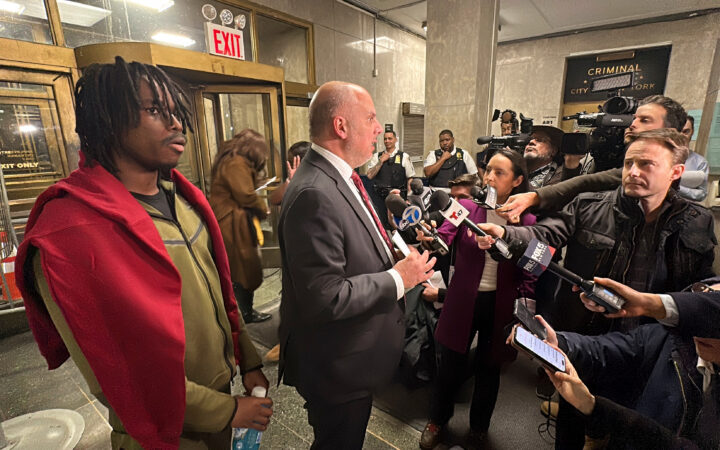
    He appeared in handcuffs and wearing an olive-green sweat suit during his arraignment Thursday evening in Manhattan criminal court. He wasn’t asked to enter a plea, and was released, pending his next court date on April 9.

    Coulibaly didn’t speak during the brief hearing, which was attended by at least a dozen uniformed police officers and police union officials.

    But George Vomvolakis, his attorney, told the judge that the “circumstances surrounding his arrest have been politicized.” He suggested Coulibaly was caught in the middle of a rift between the police department and City Hall.

    “I don’t want to minimize what happened to the officers, but I think the police department is using this because of their dislike or disdain for the mayor,” Vomvolakis said. “I think they’re taking it out on Mr. Coulibaly. They want to pick a fight with the mayor.”

    Mayor Zohran Mamdani, a Democrat, played down the fracas earlier this week as a “snowball fight that got out of hand” and suggested he did not think criminal charges were warranted.

    Monday’s snowball fight, which appeared to be organized by social media content producers, caused a chaotic scene as a large crowd amassed at the popular park to wing snowballs at each other during a winter storm.

    Prosecutors said in court that officers arrived at the park after a 911 call about a disorderly group, including people climbing on a roof.

    Video from the incident shows a large group of people following police officers, showering them with snowballs and jeering, as they retreat to their vehicles outside the park. Videos also showed officers shoving at least two people to the ground while getting hit from all directions by snowballs.

    “The notion that this was a playful snowball fight obviously is not true,” Patrick Hendry, a police union president, told reporters after the proceeding. “This was an attack on the uniform that these police officers wear so proudly every day. They came after these police officers, pelting them with ice, rocks.”

    Hendry said he was disappointed prosecutors didn’t charge Coulibaly with assaulting an officer — the felony offense police originally proposed.

    “It sends a horrible message to these police officers right here that the mayor is not going to have our backs,” he said, standing alongside other officers. “You’re putting a target on these police officers’ backs.”

    Vomvolakis maintained there was no evidence that rocks or ice were packed into the snowballs.

    “What I saw in the video didn’t look like an attack,” Vomvolakis said. ”Did it go a little past, you know, jokes and fun? Was it possibly a little disrespectful to the police? Yes.”

    Assistant District Attorney Victoria Notaro said video showed Coulibaly throwing a snowball that struck Officer Nicholas Johnson in the face, but prosecutors did not find evidence showing that the officer’s injuries were caused “directly by this defendant’s conduct.”

    The officer sustained injuries including redness, tenderness, and pain to his eye, head and neck, Notaro said.

    “We will continue to investigate,” she added.

    Vomvolakis said Coulibaly is a content creator who makes “elaborate videos” including a recent one in which he approached a stranger in a Bronx subway, acted as if he knew him and said he was owed money.

    That interaction got Coulibaly arrested for attempted robbery — a charge that Vomvolakis said he was confident would be dismissed.

    Coulibaly has hundreds of thousands of followers across Instagram, TikTok, YouTube, Snapchat, and other social media platforms, where he posts under the moniker Diaper Man.

    The city’s police department has released images of three other people it is seeking in connection with the snowball fight. Police Commissioner Jessica Tisch has called the treatment of officers at the fight “disgraceful” and “criminal.”

  • Vance: ‘No chance’ U.S. will be in drawn-out war in Middle East

    Vance: ‘No chance’ U.S. will be in drawn-out war in Middle East

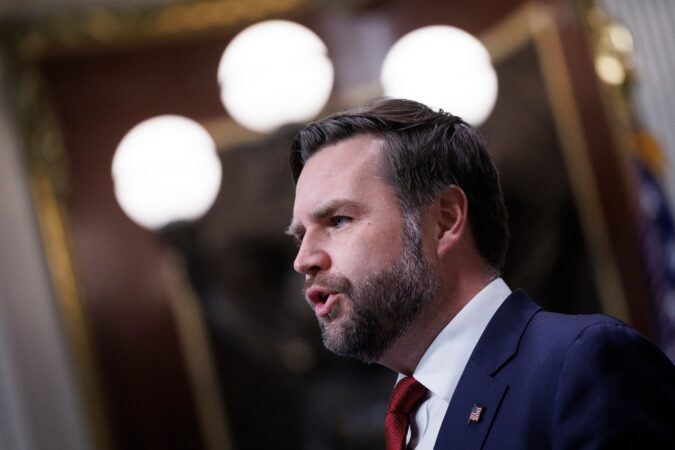
    ABOARD AIR FORCE TWO — Vice President JD Vance said Thursday that while military strikes against Iran remain under consideration by President Donald Trump, there is “no chance” that such strikes would result in the United States becoming involved in a yearslong, drawn-out war.

    Speaking with the Washington Post on Thursday, Vance said he does not know what Trump will decide to do about Iran, describing possibilities that include military strikes “to ensure Iran isn’t going to get a nuclear weapon,” or solving “the problem diplomatically.”

    But if Trump proceeds with another round of strikes on Iran — which some U.S. officials have suggested could be more comprehensive than the bombing of nuclear sites in June — Vance said confidently that it would not turn into the kind of conflict the vice president has harshly criticized.

    “The idea that we’re going to be in a Middle Eastern war for years with no end in sight — there is no chance that will happen,” he told the Post in an interview as he returned to Washington from an event in Wisconsin, effectively pushing back against predictions by some foreign policy experts that there would be no easy out if America got involved in a bigger conflict with Iran.

    Vance noted that last year’s operation in Iran and the January capture of Venezuelan President Nicolás Maduro were “very clearly defined.”

    Vance, a 41-year-old Marine veteran who served in the Iraq War, once said from the Senate floor that he had been “lied to” about the reasons for the United States’ involvement there. He said Thursday that he still sees himself as a “skeptic of foreign military interventions,” a description he believes continues to apply to Trump.

    “I think we all prefer the diplomatic option,” Vance said. “But it really depends on what the Iranians do and what they say.”

    Talks between the United States and Iran continued Thursday in Geneva amid a large-scale buildup of U.S. forces around Iran, though no resolution was reached, and mediators said the negotiations would continue next week.

    Trump has openly acknowledged that he is interested in bringing about regime change to topple Iran’s supreme leader, Ayatollah Ali Khamenei, telling reporters this month that it “would be the best thing that could happen.” The current presence of U.S. military forces in the region is among the largest in more than two decades, since before the Iraq War began in 2003.

    Asked whether, in his days as a commentator and senator offering criticisms of the Iraq War, he could have foreseen being attached to a presidency interested in bringing about a foreign regime change, the vice president chuckled.

    “Well, I mean, look. Life has all kinds of crazy twists and turns,” Vance said. “But I think Donald Trump is an ‘America First’ president, and he pursues policies that work for the American people.

    “I do think we have to avoid repeating the mistakes of the past. I also think that we have to avoid overlearning the lessons of the past. Just because one president screwed up a military conflict doesn’t mean we can never engage in military conflict again. We’ve got to be careful about it, but I think the president is being careful.”

    Prominent commentators within the conservative movement have spent months publicly quarreling over U.S. involvement in the Middle East, including debating what America’s attitude should be toward Israel.

    A growing number of conservatives — particularly young people — have soured on continued military support for the U.S. ally. Traditional conservatives have excoriated some of those voices, meanwhile, fueling a debate on the right about not only foreign policy but antisemitism as well.

    Vance has advocated for Israel-skeptical voices to be heard in the intraparty debate — a conversation that has upset Republican dogma of recent decades — while maintaining that he sees the nation as a strategic ally.

    The divide was apparent last week when former Fox News host Tucker Carlson, who now has his own podcast and frequently criticizes fellow conservatives’ deference to Israel, interviewed Mike Huckabee, the U.S. ambassador to Israel.

    Carlson, who has been a close ally of Vance, and Huckabee, a high-profile U.S. diplomat, have each found themselves in hot water for statements made during the filmed discussion. Huckabee said it would “be fine” if Israel took over other Middle Eastern countries whose land is referenced in Scripture, and Carlson suggested genetic testing to determine the true descendants of Abraham.

    Vance, an active peruser of X, said he had not yet watched the entire interview but had “seen a couple of clips here and there.” Despite calls from some pro-Israel conservative activists and even two Republican members of Congress for the White House to condemn Carlson, who visited the White House on Monday, Vance described the interview as a positive development.

    “I guess my takeaway is it’s a really good conversation that’s going to be necessary for the right, not just for the next couple years but for long into the future,” he said.

    What he has always liked about the political right — “even the people that I find annoying on our side” — is that “there is a real exchange of ideas,” Vance said.

    “And if you think of the Trump coalition in 2024 — and the way that I put it is, you had Joe Rogan, Mark Levin, Sean Hannity, Tucker Carlson, and JD Vance and a coalition of people … but to do that, you have to be willing to tolerate debate and disagreement,” he said. “And I just think that it’s a good thing.”

  • Crowds of Chicago mourners pay respects to Jesse Jackson at start of cross-country memorial services

    Crowds of Chicago mourners pay respects to Jesse Jackson at start of cross-country memorial services

    CHICAGO — A line of mourners streamed through a Chicago auditorium Thursday to pay final respects to the Rev. Jesse Jackson Sr. as cross-country memorial services began in the city the late civil rights leader called home.

    The protégé of the Rev. Martin Luther King Jr. and two-time presidential candidate will lie in repose for two days at the headquarters of the Rainbow PUSH Coalition before events in Washington, D.C., and South Carolina, where he was born.

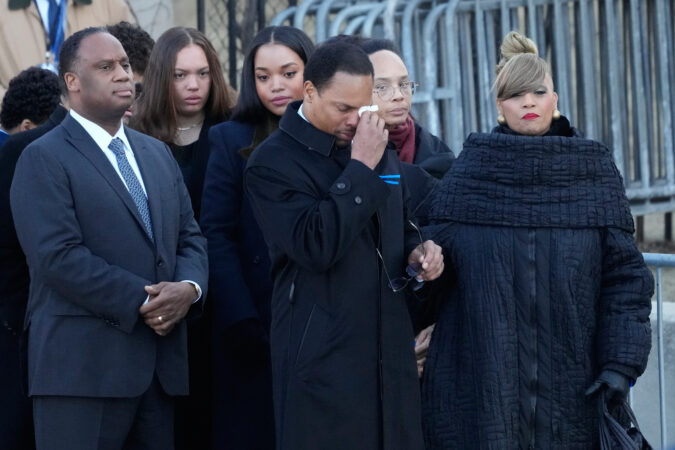
    Family members wiped away tears as the casket was brought into the stately brick building. Flowers lined the sidewalks where people waiting to enter watched a large screen playing video excerpts of Jackson’s notable speeches. Some raised their fists in solidarity.

    Inside, Jackson’s children, Chicago Mayor Brandon Johnson, and the Rev. Al Sharpton were among those who stood by the open casket to shake hands and hug those coming to view the body of Jackson, dressed in a suit and blue shirt and tie.

    “The challenge for us is that we’ve got to make sure that all he lived for was not in vain,” Sharpton told reporters. “Dr. King’s dream and Jesse Jackson’s mission now falls on our shoulders. We’ve got to stand up and keep it going.”

    Jackson died last week at age 84 after battling a rare neurological disorder that affected his mobility and ability to speak in his later years.

    Remembrances have already poured in from around the globe, and several U.S. states, including Minnesota, Iowa, and North Carolina, are flying flags at half-staff in his honor.

    But perhaps nowhere has his death been felt as strongly as in the nation’s third-largest city, where Jackson lived for decades and raised his six children, including a son who is a congressman.

    Bouquets have been left outside the family’s Tudor-style home on the city’s South Side for days. Public schools have offered condolences, and city trains have used digital screens to display Jackson’s portrait and his well-known mantra, “I am Somebody!”

    His causes, both in the United States and abroad, were countless: Advocating for the poor and underrepresented on issues including voting rights, job opportunities, education, and healthcare. He scored diplomatic victories with world leaders, and through his Rainbow PUSH Coalition, he channeled cries for Black pride and self-determination into corporate boardrooms, pressuring executives to make America a more open and equitable society.

    “We honor him, and his hard-earned legacy as a freedom fighter, philosopher, and faithful shepherd of his family and community here in Chicago,” the mayor said in a statement.

    Next week, Jackson will lie in honor at the South Carolina Statehouse, followed by public services. According to Rainbow PUSH’s agenda, Gov. Henry McMaster is expected to deliver remarks; however, the governor’s office said Thursday that his participation wasn’t yet confirmed. Jackson spent his childhood and started his activism in South Carolina.

    Details on services in Washington have not yet been made public. However, he will not lie in honor at the United States Capitol rotunda after a request for the commemoration was denied by the House Speaker Mike Johnson’s office.

    The two weeks of events will wrap up next week with a large celebration of life gathering at a Chicago megachurch and finally, homegoing services at the headquarters of the Rainbow PUSH Coalition.

    Family members said the services will be open to all.

    “Our family is overwhelmed and overjoyed by the amazing amount of support being offered by common, ordinary people who our father’s life has come into contact with,” his eldest son, Jesse Jackson Jr., said before the services began. “This is a unique opportunity to lay down some of the political rhetoric and to lay down some of the division that deeply divides our country and to reflect upon a man who brought people together.”

    The services included prayers from some of the city’s most well-known religious leaders, including Chicago Cardinal Blase Cupich. Mourners of all ages — from toddlers in strollers to elderly people in wheelchairs — came to pay respects.

    Video clips of his appearances at news conferences, the campaign trail and even Sesame Street also played inside the auditorium.

    Claudette Redic, a retiree who lives in Chicago, said her family has respected Jackson, from backing his presidential ambitions to her son getting a scholarship from a program Jackson championed.

    “We have generations of support,” she said. “I’m hoping we continue.”

  • Hillary Clinton testifies she has no information on Epstein’s crimes and doesn’t recall meeting him

    Hillary Clinton testifies she has no information on Epstein’s crimes and doesn’t recall meeting him

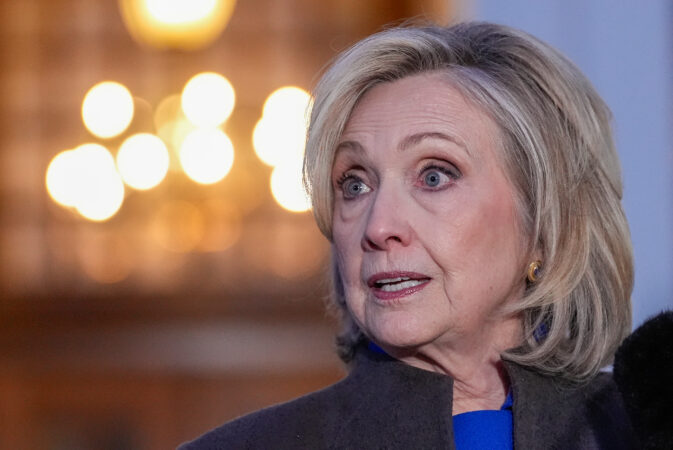
    WASHINGTON — Former Secretary of State Hillary Clinton told members of Congress on Thursday that she had no knowledge of Jeffrey Epstein’s or Ghislaine Maxwell’s crimes, starting off two days of depositions that will also include former President Bill Clinton.

    “I had no idea about their criminal activities. I do not recall ever encountering Mr. Epstein,” Hillary Clinton said in an opening statement she shared on social media. The closed-door deposition concluded after over six hours of questioning Thursday.

    The depositions in the Clintons’ hometown of Chappaqua, a typically quiet hamlet north of New York City, come after months of tense back-and-forth between the former high-powered Democratic couple and the Republican-controlled House Oversight Committee as it investigates Epstein, who killed himself in a New York jail cell in 2019 while awaiting trial. It will be the first time that a former president has been forced to testify before Congress.

    Yet the demand for a reckoning over Epstein’s abuse of underage girls has become a near-unstoppable force on Capitol Hill and beyond.

    President Donald Trump, a Republican who has expressed regret that the Clintons are being forced to testify, bowed last year to pressure to release case files on Epstein. The Clintons, too, agreed to testify after their offers of sworn statements were rebuffed by the Oversight panel and its chairman, Rep. James Comer (R., Ky.) threatened criminal contempt of Congress charges against them.

    “Like every decent person,” Hillary Clinton added in her opening statement, “I have been horrified by what we have learned about their crimes.”

    She has previously said that her husband flew with Epstein for charitable trips but that she did not recall ever meeting Epstein. She had also interacted with Maxwell, Epstein’s former girlfriend and confidant, at conferences hosted by the Clinton Foundation.

    Maxwell, a British socialite, also attended the 2010 wedding of their daughter, Chelsea Clinton.

    As she exited the event center where the deposition was held, Hillary Clinton told reporters that Maxwell had come to the wedding as a guest of someone else and that she had told the committee she only knew Maxwell “as an acquaintance.”

    Republicans relish chance to question Clintons

    Bill Clinton, however, has emerged as a top target for Republicans amid the political struggle over who receives the most scrutiny for their ties to Epstein. Several photos of the former president were included in the first tranche of Epstein files released by the Department of Justice in January, including a number of him with women whose faces were redacted. Clinton has not been accused of wrongdoing in his relationship with Epstein.

    Comer has also pointed to Hillary Clinton’s work as secretary of state to address sex trafficking as another reason to insist on her deposition. Clinton defended her work to address sex trafficking around the world, saying that it remained important to help the millions of survivors of sex trafficking.

    The committee’s investigation has also sought to understand why the Department of Justice under previous presidential administrations did not seek further charges against Epstein following a 2008 arrangement in which he pleaded guilty to state charges in Florida for soliciting prostitution from an underage girl but avoided federal charges.

    Hillary Clinton accused Comer of running a one-sided investigation that has failed to hold Trump and other Republican officials to account. “This institutional failure is designed to protect one political party and one public official,” she said.

    Yet conspiracy theories, especially on the right, have swirled for years around the Clintons and their connections to Epstein and Maxwell, who argues she was wrongfully convicted. Republicans have long wanted to press the Clintons for answers. The deposition was paused after Rep. Lauren Boebert (R., Colo.) sent a photo of Hillary Clinton in the private proceeding to a conservative influencer who posted it on social media, violating the committee’s rules for depositions.

    Democrats said that the incident underscored how important it was for there to be a clear public record of the deposition. Rep. Robert Garcia, the top Democrat on the Oversight panel, said that Hillary Clinton, after the incident, repeated her longstanding demand that the deposition be made public, and Democrats called for a video and transcript of the complete proceedings to be released quickly.

    Comer said that he would work quickly to release a video and transcript of the deposition.

    “The purpose of the whole investigation is to try to understand many things about Epstein,” he told reporters outside the convention center where the depositions were being held. “How did he accumulate so much wealth? How was he able to surround himself with some of the most powerful men in the world?”

    Comer described the deposition as a bipartisan effort and said Thursday that it was “very possible” the committee would question Trump’s Commerce Secretary Howard Lutnick, who was Epstein’s neighbor and had several interactions with him. Under questioning from Democrats earlier this month, Lutnick acknowledged that he had met with Epstein twice after the late financier’s 2008 conviction for soliciting prostitution from a child, reversing his previous claim that he had cut ties with him after 2005.

    Democrats call for Trump to testify

    Democrats, now being led by a new generation of politicians, have prioritized transparency around Epstein over defending the former leaders of their party. Several Democratic lawmakers joined with Republicans on the Oversight panel to advance the contempt of Congress charges against the Clintons last month. Several said they had no relationship with the Clintons and owed no loyalty to them.

    Garcia also called on Trump to testify in the investigation. He argued that Bill Clinton’s appearance sets a precedent that should apply to Trump as well.

    “Let’s get President Trump in front of our committee to answer the questions that are being asked across this country from survivors,” Garcia said.

    Comer previously said that the committee can’t depose Trump because he is a sitting president.

    Still, Democrats are also coming off an effort this week to confront Trump about his administration’s handling of the Epstein files by taking women who survived Epstein’s abuse as their guests to Trump’s State of the Union address.

    Garcia and others are also challenging the Department of Justice’s assertion that it has met the requirements of a law passed by Congress last year that mandates the release of many of the case files on Epstein.

    Senate Democratic leader Chuck Schumer of New York said his caucus in the coming days would also review unredacted versions of the Epstein case files at a Department of Justice office. Schumer, who demanded that the department release all of the files and preserve all materials, said they will “pull on every thread” until they “reveal this massive cover-up.”

  • Cuba says 4 killed in speedboat shooting were attempting to infiltrate the country

    Cuba says 4 killed in speedboat shooting were attempting to infiltrate the country

    HAVANA — Cuba’s government said late Wednesday that the 10 passengers on a boat that opened fire on its soldiers were armed Cubans living in the U.S. who were trying to infiltrate the island and unleash terrorism.

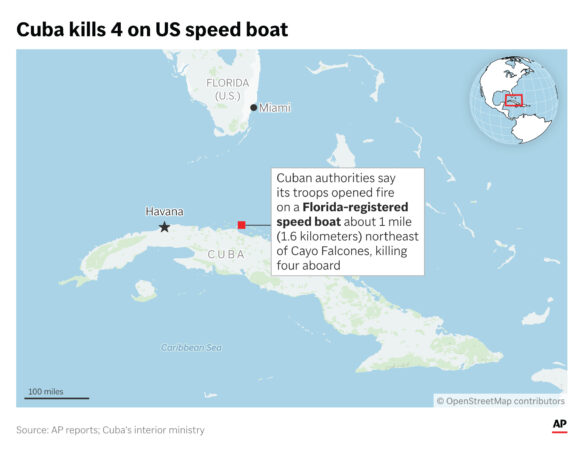
    The announcement came hours after Cuba said its soldiers killed four people and wounded six others aboard a Florida-registered speedboat that had entered Cuban waters and opened fire on the soldiers first, injuring one Cuban officer.

    Cuba’s government said the majority of the 10 people on the boat “have a known history of criminal and violent activity.”

    Secretary of State Marco Rubio had told reporters earlier that he was made aware of the incident and that the U.S. is now gathering its own information to determine if the victims were American citizens or permanent residents.

    “We have various different elements of the U.S. government that are trying to identify elements of the story that may not be provided to us now,” Rubio said while at the airport in Basseterre, St. Kitts, where he was attending a regional summit with Caribbean leaders.

    The Cuban government identified two of the boat passengers as Amijail Sánchez González and Leordan Enrique Cruz Gómez, who are wanted by Cuban authorities “based on their involvement in the promotion, planning, organization, financing, support or commission of actions carried out in the national territory or in other countries, in connection with acts of terrorism.”

    The government said it also had arrested Duniel Hernández Santos, adding that he was “sent from the United States to guarantee the reception of the armed infiltration, who at this time has confessed to his actions.”

    The Associated Press was not immediately able to independently verify that information.

    Cuba’s government said it obtained the details about the passengers aboard the boat from the suspects detained following the shootout.

    It identified seven of the 10 passengers, including Conrado Galindo Sariol, José Manuel Rodríguez Castelló, Cristian Ernesto Acosta Guevara, and Roberto Álvarez Ávila.

    On Thursday, Cuba’s deputy foreign minister, Carlos Fernández de Cossío, said the Cuban government erroneously identified Roberto Azcorra Consuegra as one of the boat passengers late Wednesday. He said Azcorra was not aboard the boat.

    Cuba’s government said that one of the four killed was Michel Ortega Casanova.

    “The investigation process continues until the facts are fully clarified,” the ministry said in a statement.

    Misael Ortega Casanova, brother of Michel Ortega Casanova, told the Associated Press late Wednesday that he was mourning his brother’s death but lamented that he fell into what he called an “obsessive and diabolical” quest for Cuba’s freedom.

    “Only us Cubans who have lived over there understand,” Misael Ortega Casanova said, referring to the “great suffering” that he and other Cubans on the island have faced.

    He noted that his brother, who was a truck driver and an American citizen who lived for more than 20 years in the U.S., leaves behind his wife, his mother, two sisters — one of whom lives in Cuba — and a daughter who is pregnant.

    “No one knew,” Misael said of his brother’s plans. “My mother is devastated.”

    He added: “They became so obsessed that they didn’t think about the consequences nor their own lives.”

    Misael said that he did not recognize any of the names that the Cuban government released.

    He said that while he doesn’t believe in heroes — “because that is ignorance” — he hopes that his brother’s death might be a worthwhile sacrifice: “Maybe it will justify that some day Cuba will be free.”

    A ‘highly unusual’ shootout

    President Donald Trump’s top diplomat refused to speculate on what happened, saying that it could be a “wide range of things,” and that the U.S. will not solely rely on what the Cuban authorities have provided thus far.

    “Suffice it to say, it is highly unusual to see shootouts in open sea like that. It’s not something that happens every day. It’s something, frankly, that hasn’t happened with Cuba in a very long time,” Rubio said.

    He said both the U.S. Department of Homeland Security and the U.S. Coast Guard are investigating the incident and stressed that he wants to verify the facts.

    “The majority of the facts being publicly reported are those by the information provided by the Cubans. We will verify that independently as we gather more information, and we’ll be prepared to respond accordingly,” Rubio said. “We’re going to have our own information on this. We’re going to figure out exactly what happened.”

    He said it was not a U.S. government operation and that he wasn’t “going to speculate about whose boat it was, what they were doing, why they were there, what actually happened.”

    One of the men identified by the Cuban government, Conrado Galindo Sariol, was interviewed in June 2025 by Martí Noticias, a U.S.-based news site that has long called for a change of government in Cuba.

    Galindo, whom the host called “a legend” and a former political prisoner, was quoted as saying that he wants to support the struggles that Cubans face, especially in the eastern part of the island “to achieve the freedom that is needed.”

    He said that the protests in Cuba at that time were “not a spark that’s going to be extinguished.”

    “The regime’s leaders are crisscrossing Cuba, trying to mitigate what’s coming very soon because … they know they’re out of power, that they can’t do anything about it, and they’re looking for ways to prevent the protests from growing in other parts of the country,” Galindo was quoted as saying.

    Fear over increased tensions

    Rubio said he found out about the shooting before the Cuban government posted on social media, noting that the U.S. has “constant contact” with the country “at the Coast Guard level.”

    Earlier, Cuba’s Interior Ministry issued a statement that provided few details about the shooting, but noted that the boat was roughly 1 mile northeast of Cayo Falcones, off Cuba’s north coast.

    The government provided the boat’s registration number, but the Associated Press was unable to readily verify details of the boat because boat registrations are not public in the state of Florida.

    It wasn’t immediately known what the boat and its occupants were doing in Cuban waters. In the statement, the ministry said Cuba’s government was “safeguarding its sovereignty and ensuring stability in the region.”

    The U.S. Attorney’s Office for the Southern District of Florida said it would pursue answers “through every legal and diplomatic channel available,” adding that “facts remain unclear and conflicting.”

    Vice President JD Vance said late Wednesday afternoon that Rubio had briefed him on the incident. He added that the White House was monitoring the situation.

    “Hopefully it’s not as bad as we fear it could be,” Vance said.

    The shooting threatens to increase tensions between the U.S. and Cuba. Following the ouster of Venezuelan President Nicolás Maduro, Trump and top administration officials have taken an increasingly aggressive stance toward Cuba, which had been largely kept economically afloat by Venezuela’s oil.

    The energy crisis Cuba has been grappling with in recent years entered new extremes last month when Trump signed an executive order that would impose a tariff on any country that sells or provides oil to Cuba. The move put pressure on Mexico, which Cuba became largely dependent on for petroleum after Trump halted oil shipments from Venezuela.

    Meanwhile, James Uthmeier, Florida’s attorney general, said he has ordered prosecutors to work with federal, state and law enforcement partners to start an investigation.

    “The Cuban government cannot be trusted, and we will do everything in our power to hold these communists accountable,” he wrote on X.

  • Anthropic CEO says AI company ‘cannot in good conscience accede’ to Pentagon’s demands

    Anthropic CEO says AI company ‘cannot in good conscience accede’ to Pentagon’s demands

    WASHINGTON — Anthropic CEO Dario Amodei said Thursday the artificial intelligence company “cannot in good conscience accede” to the Pentagon’s demands to allow wider use of its technology.

    The maker of the AI chatbot Claude said in a statement that it’s not walking away from negotiations, but that new contract language received from the Defense Department “made virtually no progress on preventing Claude’s use for mass surveillance of Americans or in fully autonomous weapons.”

    The Pentagon’s top spokesman has reiterated that the military wants to use Anthropic’s artificial intelligence technology in legal ways and will not let the company dictate any limits ahead of a Friday deadline to agree to its demands.

    Sean Parnell said Thursday on social media that the Pentagon “has no interest in using AI to conduct mass surveillance of Americans (which is illegal) nor do we want to use AI to develop autonomous weapons that operate without human involvement.”

    Anthropic’s policies prevent its models, such as its chatbot Claude, from being used for those purposes. It’s the last of its peers — the Pentagon also has contracts with Google, OpenAI, and Elon Musk’s xAI — to not supply its technology to a new U.S. military internal network.

    Parnell said the Pentagon wants to “use Anthropic’s model for all lawful purposes” but didn’t offer details on what that entailed. He said opening up use of the technology would prevent the company from “jeopardizing critical military operations.”

    “We will not let ANY company dictate the terms regarding how we make operational decisions,” he said.

    During a meeting on Tuesday between Defense Secretary Pete Hegseth and Amodei, military officials warned that they could cancel Anthropic’s contract, designate the company as a supply chain risk, or invoke a Cold War-era law called the Defense Production Act to give the military more sweeping authority to use its products, even if the company doesn’t approve.

    Amodei said Thursday that “those latter two threats are inherently contradictory: one labels us a security risk; the other labels Claude as essential to national security.”

    Parnell left out the threatened use of the Defense Production Act in the Thursday post on X and said Anthropic has “until 5:01 PM ET on Friday to decide.”

    “Otherwise, we will terminate our partnership with Anthropic and deem them a supply chain risk,” he wrote.

    The talks that escalated this week began months ago. Amodei said that given “the substantial value that Anthropic’s technology provides to our armed forces, we hope they reconsider.” But if they don’t, he said Anthropic “will work to enable a smooth transition to another provider.”

    Sen. Thom Tillis, a North Carolina Republican who is not seeking reelection, said Thursday that the Pentagon has been handling the matter unprofessionally while Anthropic is “trying to do their best to help us from ourselves.”

    “Why in the hell are we having this discussion in public?” Tillis told reporters. “This is not the way you deal with a strategic vendor that has contracts.”

    He added, “When a company is resisting a market opportunity for fear of negative consequences, you should listen to them and then behind closed doors figure out what they’re really trying to solve.”

    Sen. Mark Warner of Virginia, the ranking Democrat on the Senate Intelligence Committee, said he was “deeply disturbed” by reports that the Pentagon is “working to bully a leading U.S. company.”

    “Unfortunately, this is further indication that the Department of Defense seeks to completely ignore AI governance,” Warner said in a statement. It ”further underscores the need for Congress to enact strong, binding AI governance mechanisms for national security contexts.”

    As Pentagon officials say they always will follow the law with their use of AI models, Hegseth told Fox News last February, weeks after becoming defense secretary, that “ultimately, we want lawyers who give sound constitutional advice and don’t exist to attempt to be roadblocks to anything.”

  • Judge rejects request to block Trump White House from building its $400 million ballroom project

    Judge rejects request to block Trump White House from building its $400 million ballroom project

    WASHINGTON — A federal judge on Thursday rejected a preservationist group’s request to block the Trump administration from continuing construction of a $400 million ballroom where it demolished the East Wing of the White House.

    U.S. District Judge Richard Leon ruled that the National Trust for Historic Preservation was unlikely to succeed on the merits of its bid to temporarily halt President Donald Trump’s project. He said the privately funded group based its challenge on a “ragtag group of theories” under the Administrative Procedure Act and the Constitution, and would have a better chance of success if it amended the lawsuit.

    “Unfortunately, because both sides initially focused on the President’s constitutional authority to destruct and construct the East Wing of the White House, Plaintiff didn’t bring the necessary cause of action to test the statutory authority the President claims is the basis to do this construction project without the blessing of Congress and with private funds,” the judge wrote.

    The preservationists sought an order pausing the ballroom project until it undergoes multiple independent reviews and wins approval from Congress.

    Trump used his social media account to hail the ruling as “Great news for America.” The Republican president said the project was ahead of schedule and under budget and “will stand long into the future as a symbol to the Greatness of America.”

    Carol Quillen, president and CEO of the National Trust for Historic Preservation said the group was “disappointed” that no injunction was issued but “pleased that Judge Leon ruled that the National Trust has standing to bring this lawsuit, as we have asserted from the start.”

    “We are also pleased that he encouraged us to amend our complaint — specifically, to assert that the president has acted beyond his statutory authority — and we plan to do so promptly,” Quillen said in a statement. “The judge indicated he will rule expeditiously once we do so, and we will await his decision.”

    The White House announced the ballroom project over the summer. By late October, the Republican president had demolished the East Wing to make way for a ballroom that he said will fit 999 people. The White House said private donations, including from Trump himself, would pay for the planned construction of a 90,000-square-foot ballroom.

    Trump proceeded with the project before seeking input from a pair of federal review panels, the National Capital Planning Commission and the Commission of Fine Arts. Trump has stocked both commission with allies.

    The arts panel approved the project at a meeting last week. The planning commission is set to discuss it further at a March 5 meeting.

    During a preliminary hearing in December, Leon warned the administration to refrain from making decisions on underground work, such as the routing of plumbing and gas lines, that would dictate the scope of future ballroom construction above ground.

    The group challenging the project argued that Trump could be emboldened to go further — and possibly demolish the White House’s West Wing or Executive Mansion — if the court did not intervene.

    “The losers will be (the) American public, who will be left with a massive ballroom that not only overwhelms what is perhaps the nation’s most historically important building, but will have been built in violation of an astonishingly wide range of laws,” plaintiffs’ attorneys wrote.

    The administration said in a court filing that above-ground construction on the ballroom would not begin until April. In the meantime, government lawyers argued, the preservationist group’s challenge was premature because the building plans were not final.

    The administration also argued that other presidents did not need congressional approval for previous White House renovation projects, large and small.

    “Many of those projects were highly controversial in their time yet have since become accepted — even beloved — parts of the White House,” government lawyers wrote.

    Leon, who was nominated to the bench by Republican President George W. Bush, said the White House office behind the project is not an agency covered under the jurisdiction of the Administrative Procedure Act. The judge also said the preservationists, who argued that the ballroom usurped the authority of Congress, did not have the basis to invoke the power of the courts.

    As a result, “I cannot reach the merits of the National Trust’s novel and weighty statutory arguments” at this time, Leon said.

  • U.S., Iran wrap round of talks as Trump weighs diplomacy against strikes

    U.S., Iran wrap round of talks as Trump weighs diplomacy against strikes

    U.S. and Iranian officials completed a round of nuclear negotiations Thursday in Geneva in the shadow of a large-scale U.S. military buildup around Iran. The sides made “significant progress” and agreed to meet next week to discuss technical details in Vienna, said Oman’s foreign minister, the mediator of the talks.

    The apparent plan to continue negotiations, after three rounds in recent weeks, could indicate that President Donald Trump remains open to diplomacy, at least for now. A senior Iranian official, speaking on the condition of anonymity to share details from the closed-door talks, said that the meetings were “serious,” but that the negotiations “still have miles to go” to resolve differences. The Trump administration has yet to weigh in on how the talks went or what is next and did not respond to a request for comment.

    To avert conflict, negotiators will have to find an off-ramp that Iran might accept while also giving the Trump administration the chance to claim a win.

    In statements reported midway through talks by Iran’s state-backed media, Iranian Foreign Ministry spokesman Esmaeil Baqaei expressed hope that by the afternoon, following a pause for each side to consult with capitals, they would focus on what Iran considers the two main issues — restraints on its nuclear program and the lifting of U.S. sanctions.

    The talks may have been “the most serious round of negotiations with the Trump administration ever,” said Ali Vaez, an Iran expert with the International Crisis Group, a Brussels-based think tank. He said he had spoken with the negotiating teams on both sides Thursday.

    “They are the most decisive, because everybody understands what’s at stake and what the price of failure would be,” and if continued over days, “… I think one could be hopeful that maybe they could reach an understanding,” Vaez said.

    The U.S. military has shifted scores of aircraft to bases in Europe and the Middle East since a round of talks ended last week without a breakthrough, amid an intermittent drumbeat of threats from Trump that began in response to Tehran’s violent crackdown on protesters last month. The U.S. military presence, assembled under a president who campaigned on stopping wars and criticized the era of U.S. military intervention in the Middle East, is among the largest in the region in more than two decades, since the U.S. invasion of Iraq in 2003.

    Governments in the region and some of Washington’s closest allies have expressed concerns over what could result. At the same time, U.S. military officials have warned that any direct conflict with Iran would be lengthy and could dangerously deplete already-low U.S. weapons stocks.

    White House envoy Steve Witkoff and Trump’s son-in-law Jared Kushner arrived early Thursday in Geneva, where they were also scheduled to meet with representatives from Ukraine and Russia in hopes of reviving apparently stalled negotiations over an end to that war.

    Iran has said that its focus is on statements by Trump that it can never have a nuclear weapon and must take verifiable steps to that end, in exchange for the rollback of sanctions that have hobbled its economy.

    U.S. officials, including Secretary of State Marco Rubio, have voiced a range of demands — many of them backed by Israel — including an end to Iran’s support for armed groups in the region and curtailment of its ballistic missile program.

    Rubio, Witkoff, and others on the U.S. side have pushed for Iran, which international inspectors say has amassed hundreds of pounds of near-weapons-grade, highly enriched uranium, to surrender that material and accept a ban on future enrichment.

    Iranian negotiators have insisted on their right to enrichment under the Nuclear Non-Proliferation Treaty. “There is no doubt that the United States is interested in addressing nonnuclear issues as well,” Vaez said. “I think the [U.S.] president believes that if he is to sell a deal it also has to address missiles and Iran’s regional activities.”

    “But it is also clear that on those issues a substantive solution might not necessarily be available,” he said. Vaez suggested that a deal on nonnuclear issues might be struck that is “more symbolic than substantive. But it would definitely not amount to the kind of capitulation that the U.S. was hoping it would be able to achieve with heightened pressure on Iran.”

    Iranian Foreign Minister Abbas Araghchi, who headed the Iranian delegation, delivered via his Omani counterpart, Badr al-Busaidi, a new proposal that included “token” nuclear enrichment for medical purposes and other research, according to two people familiar with the proposal, who spoke on the condition of anonymity about closed-door diplomacy.

    The Iranian offer includes a pause on most enrichment for three to five years, during which time Iran would be allowed to maintain 1.5% enrichment for medical purposes at a Tehran research reactor, said one of the people with knowledge of the offer, speaking on the condition of anonymity to share sensitive details. After the pause, a “normal” level of enrichment would be handled by a regional consortium.

    But Iran might be open to locking, under supervision of international inspectors, the sites of vast underground centrifuges and storage sites for enriched uranium that Trump has said were “obliterated” by U.S. and Israeli bombing last summer, the person with knowledge of the offer said.

    The senior Iranian official said after the talks that dismantling Iran’s nuclear sites remained a red line for Tehran and that Iran would not agree to ship enriched uranium out of the country.

    Rafael Mariano Grossi — the director general of the International Atomic Energy Agency that has inspected Iran’s program on the ground since the 2015 nuclear deal signed under the Obama administration, from which Trump withdrew during his first term — also attended the Thursday’s talks.

    Iran has amassed an amount of highly enriched uranium beyond levels needed for most nonmilitary use, although it has said repeatedly it has no intention of producing a nuclear weapon. Grossi said this month there is no evidence of an active plan to build a bomb.

    In the annual State of the Union address, Trump said on Tuesday that he preferred a diplomatic solution, while adding he would “never allow” Iran to have a nuclear weapon: “Can’t let that happen.”

    Ali Shamkhani, an adviser to Iran’s supreme leader, said Thursday that an agreement was “within reach” if the talks stick to Iran’s pledge not to build a nuclear weapon. He said Iran’s foreign minister has “sufficient support and authority” to come to a deal in the negotiations.

    “There is no doubt that the United States is interested in addressing non-nuclear issues as well,” Vaez said. With significant Republican congressional opposition to any deal at all, “I think the [U.S.] president believes that if he is to sell a deal it also has to address missiles and Iran’s regional activities.

    “But it is also clear that on those issues a substantive solution might not necessarily be available,” he said.