Category: Nation & World

  • Judge rejects request to block Trump White House from building its $400 million ballroom project

    Judge rejects request to block Trump White House from building its $400 million ballroom project

    WASHINGTON — A federal judge on Thursday rejected a preservationist group’s request to block the Trump administration from continuing construction of a $400 million ballroom where it demolished the East Wing of the White House.

    U.S. District Judge Richard Leon ruled that the National Trust for Historic Preservation was unlikely to succeed on the merits of its bid to temporarily halt President Donald Trump’s project. He said the privately funded group based its challenge on a “ragtag group of theories” under the Administrative Procedure Act and the Constitution, and would have a better chance of success if it amended the lawsuit.

    “Unfortunately, because both sides initially focused on the President’s constitutional authority to destruct and construct the East Wing of the White House, Plaintiff didn’t bring the necessary cause of action to test the statutory authority the President claims is the basis to do this construction project without the blessing of Congress and with private funds,” the judge wrote.

    The preservationists sought an order pausing the ballroom project until it undergoes multiple independent reviews and wins approval from Congress.

    Trump used his social media account to hail the ruling as “Great news for America.” The Republican president said the project was ahead of schedule and under budget and “will stand long into the future as a symbol to the Greatness of America.”

    Carol Quillen, president and CEO of the National Trust for Historic Preservation said the group was “disappointed” that no injunction was issued but “pleased that Judge Leon ruled that the National Trust has standing to bring this lawsuit, as we have asserted from the start.”

    “We are also pleased that he encouraged us to amend our complaint — specifically, to assert that the president has acted beyond his statutory authority — and we plan to do so promptly,” Quillen said in a statement. “The judge indicated he will rule expeditiously once we do so, and we will await his decision.”

    The White House announced the ballroom project over the summer. By late October, the Republican president had demolished the East Wing to make way for a ballroom that he said will fit 999 people. The White House said private donations, including from Trump himself, would pay for the planned construction of a 90,000-square-foot ballroom.

    Trump proceeded with the project before seeking input from a pair of federal review panels, the National Capital Planning Commission and the Commission of Fine Arts. Trump has stocked both commission with allies.

    The arts panel approved the project at a meeting last week. The planning commission is set to discuss it further at a March 5 meeting.

    During a preliminary hearing in December, Leon warned the administration to refrain from making decisions on underground work, such as the routing of plumbing and gas lines, that would dictate the scope of future ballroom construction above ground.

    The group challenging the project argued that Trump could be emboldened to go further — and possibly demolish the White House’s West Wing or Executive Mansion — if the court did not intervene.

    “The losers will be (the) American public, who will be left with a massive ballroom that not only overwhelms what is perhaps the nation’s most historically important building, but will have been built in violation of an astonishingly wide range of laws,” plaintiffs’ attorneys wrote.

    The administration said in a court filing that above-ground construction on the ballroom would not begin until April. In the meantime, government lawyers argued, the preservationist group’s challenge was premature because the building plans were not final.

    The administration also argued that other presidents did not need congressional approval for previous White House renovation projects, large and small.

    “Many of those projects were highly controversial in their time yet have since become accepted — even beloved — parts of the White House,” government lawyers wrote.

    Leon, who was nominated to the bench by Republican President George W. Bush, said the White House office behind the project is not an agency covered under the jurisdiction of the Administrative Procedure Act. The judge also said the preservationists, who argued that the ballroom usurped the authority of Congress, did not have the basis to invoke the power of the courts.

    As a result, “I cannot reach the merits of the National Trust’s novel and weighty statutory arguments” at this time, Leon said.

  • U.S., Iran wrap round of talks as Trump weighs diplomacy against strikes

    U.S., Iran wrap round of talks as Trump weighs diplomacy against strikes

    U.S. and Iranian officials completed a round of nuclear negotiations Thursday in Geneva in the shadow of a large-scale U.S. military buildup around Iran. The sides made “significant progress” and agreed to meet next week to discuss technical details in Vienna, said Oman’s foreign minister, the mediator of the talks.

    The apparent plan to continue negotiations, after three rounds in recent weeks, could indicate that President Donald Trump remains open to diplomacy, at least for now. A senior Iranian official, speaking on the condition of anonymity to share details from the closed-door talks, said that the meetings were “serious,” but that the negotiations “still have miles to go” to resolve differences. The Trump administration has yet to weigh in on how the talks went or what is next and did not respond to a request for comment.

    To avert conflict, negotiators will have to find an off-ramp that Iran might accept while also giving the Trump administration the chance to claim a win.

    In statements reported midway through talks by Iran’s state-backed media, Iranian Foreign Ministry spokesman Esmaeil Baqaei expressed hope that by the afternoon, following a pause for each side to consult with capitals, they would focus on what Iran considers the two main issues — restraints on its nuclear program and the lifting of U.S. sanctions.

    The talks may have been “the most serious round of negotiations with the Trump administration ever,” said Ali Vaez, an Iran expert with the International Crisis Group, a Brussels-based think tank. He said he had spoken with the negotiating teams on both sides Thursday.

    “They are the most decisive, because everybody understands what’s at stake and what the price of failure would be,” and if continued over days, “… I think one could be hopeful that maybe they could reach an understanding,” Vaez said.

    The U.S. military has shifted scores of aircraft to bases in Europe and the Middle East since a round of talks ended last week without a breakthrough, amid an intermittent drumbeat of threats from Trump that began in response to Tehran’s violent crackdown on protesters last month. The U.S. military presence, assembled under a president who campaigned on stopping wars and criticized the era of U.S. military intervention in the Middle East, is among the largest in the region in more than two decades, since the U.S. invasion of Iraq in 2003.

    Governments in the region and some of Washington’s closest allies have expressed concerns over what could result. At the same time, U.S. military officials have warned that any direct conflict with Iran would be lengthy and could dangerously deplete already-low U.S. weapons stocks.

    White House envoy Steve Witkoff and Trump’s son-in-law Jared Kushner arrived early Thursday in Geneva, where they were also scheduled to meet with representatives from Ukraine and Russia in hopes of reviving apparently stalled negotiations over an end to that war.

    Iran has said that its focus is on statements by Trump that it can never have a nuclear weapon and must take verifiable steps to that end, in exchange for the rollback of sanctions that have hobbled its economy.

    U.S. officials, including Secretary of State Marco Rubio, have voiced a range of demands — many of them backed by Israel — including an end to Iran’s support for armed groups in the region and curtailment of its ballistic missile program.

    Rubio, Witkoff, and others on the U.S. side have pushed for Iran, which international inspectors say has amassed hundreds of pounds of near-weapons-grade, highly enriched uranium, to surrender that material and accept a ban on future enrichment.

    Iranian negotiators have insisted on their right to enrichment under the Nuclear Non-Proliferation Treaty. “There is no doubt that the United States is interested in addressing nonnuclear issues as well,” Vaez said. “I think the [U.S.] president believes that if he is to sell a deal it also has to address missiles and Iran’s regional activities.”

    “But it is also clear that on those issues a substantive solution might not necessarily be available,” he said. Vaez suggested that a deal on nonnuclear issues might be struck that is “more symbolic than substantive. But it would definitely not amount to the kind of capitulation that the U.S. was hoping it would be able to achieve with heightened pressure on Iran.”

    Iranian Foreign Minister Abbas Araghchi, who headed the Iranian delegation, delivered via his Omani counterpart, Badr al-Busaidi, a new proposal that included “token” nuclear enrichment for medical purposes and other research, according to two people familiar with the proposal, who spoke on the condition of anonymity about closed-door diplomacy.

    The Iranian offer includes a pause on most enrichment for three to five years, during which time Iran would be allowed to maintain 1.5% enrichment for medical purposes at a Tehran research reactor, said one of the people with knowledge of the offer, speaking on the condition of anonymity to share sensitive details. After the pause, a “normal” level of enrichment would be handled by a regional consortium.

    But Iran might be open to locking, under supervision of international inspectors, the sites of vast underground centrifuges and storage sites for enriched uranium that Trump has said were “obliterated” by U.S. and Israeli bombing last summer, the person with knowledge of the offer said.

    The senior Iranian official said after the talks that dismantling Iran’s nuclear sites remained a red line for Tehran and that Iran would not agree to ship enriched uranium out of the country.

    Rafael Mariano Grossi — the director general of the International Atomic Energy Agency that has inspected Iran’s program on the ground since the 2015 nuclear deal signed under the Obama administration, from which Trump withdrew during his first term — also attended the Thursday’s talks.

    Iran has amassed an amount of highly enriched uranium beyond levels needed for most nonmilitary use, although it has said repeatedly it has no intention of producing a nuclear weapon. Grossi said this month there is no evidence of an active plan to build a bomb.

    In the annual State of the Union address, Trump said on Tuesday that he preferred a diplomatic solution, while adding he would “never allow” Iran to have a nuclear weapon: “Can’t let that happen.”

    Ali Shamkhani, an adviser to Iran’s supreme leader, said Thursday that an agreement was “within reach” if the talks stick to Iran’s pledge not to build a nuclear weapon. He said Iran’s foreign minister has “sufficient support and authority” to come to a deal in the negotiations.

    “There is no doubt that the United States is interested in addressing non-nuclear issues as well,” Vaez said. With significant Republican congressional opposition to any deal at all, “I think the [U.S.] president believes that if he is to sell a deal it also has to address missiles and Iran’s regional activities.

    “But it is also clear that on those issues a substantive solution might not necessarily be available,” he said.

  • Journalists slain at record level in 2025, majority by Israel, watchdog says

    Journalists slain at record level in 2025, majority by Israel, watchdog says

    Last year was the deadliest on record for journalists. For the third year in a row, Israel killed more journalists and media workers than any other country amid the war in Gaza, according to a report released Wednesday by the Committee to Protect Journalists.

    The report found an increase in the use of drones to kill journalists, with 39 documented cases: 28 by Israel’s military in Gaza, five by the paramilitary Rapid Support Forces in Sudan, and four by Russia in Ukraine. The CPJ documented just two drone killings in 2023.

    Of the 129 journalists killed around the world in 2025, the Israeli military was responsible for 86, about two-thirds of the deaths, the CPJ found. The death toll is the highest since the New York-based press freedom group started tracking the killing of journalists in 1992.

    The Israel Defense Forces “strongly rejects the claims” presented in the report, the IDF said in a statement to the Washington Post on Wednesday.

    “The IDF does not intentionally harm journalists or their family members, and on the contrary, operates solely against military targets, in accordance with international law, and employs all possible measures to mitigate harm to civilians, including journalists,” the statement said. “Any claim of intentional harm to civilians — including family members of journalists due to their professional activity, is completely false.”

    The second-highest number of killings occurred in Sudan, where nine journalists were killed. Mexico was third with six deaths, followed by Russia with four and the Philippines with three. The Russia tally includes Ukrainian journalists killed by Russian forces in Ukraine.

    The Israel-Gaza war is the deadliest conflict on record for journalists, according to the CPJ, with 252 killed as of early January. The CPJ determined that 249 of them were killed by Israel, 209 of whom were Palestinians in Gaza. Hamas killed two Israeli journalists in its Oct. 7, 2023, cross-border attack on Israel.

    Israel’s offensive in Gaza has killed more than 70,000, the majority of them women and children, according to the Gaza Health Ministry, following the Hamas attack on Israel that killed about 1,200 people Oct. 7, 2023. In the wake of a fragile Israel-Hamas ceasefire brokered by President Donald Trump in October, Israeli strikes in Gaza have continued.

    “Attacks on the media are a leading indicator of attacks on other freedoms, and much more needs to be done to prevent these killings and punish the perpetrators,” CPJ chief executive Jodie Ginsberg said in a statement. “We are all at risk when journalists are killed for reporting the news.”

    After an Israeli strike on Nasser hospital in Gaza in August killed journalists Mariam Dagga, Hussam al-Masri, Mohammed Salama, Moaz Abu Taha, and Ahmed Abu Aziz — who were all working with prominent news outlets — and prompted calls for accountability from rights groups, the IDF said in a statement that it “regrets any harm to uninvolved individuals and does not target journalists as such.”

    Israeli Prime Minister Benjamin Netanyahu said that the attack was a “tragic mishap.”

    Israel’s strikes on Gaza meant Palestinian journalists were covering the same bombardments they were trying to survive. In 2023, 77 journalists were killed in the Israel-Gaza war, 72 of whom were Palestinians killed in Israeli strikes. In 2024, Israel killed 82 journalists in Gaza and three in Lebanon, per the CPJ.

    Last year, 52 of the 86 journalists killed by Israel were Palestinians in Gaza. The 2025 tally also includes journalists killed by Israel in Iran and Yemen. Meanwhile, one Palestinian journalist was killed by a Palestinian armed group in Gaza in October, by the CPJ’s count.

    There have been no credible investigations by Israel of these killings since the Israel-Gaza war began with the Hamas attack on Oct. 7, 2023, said Sara Qudah, the CPJ’s Middle East and North Africa regional director.

    Israel said it opened an inquiry into the strikes on Nasser hospital. It also said it was reviewing a 2023 Israeli attack in Lebanon that killed a Reuters journalist and injured other reporters, including an American, but U.S. lawmakers said in December that Israel has not held the perpetrators accountable.

    “Impunity is becoming a pattern and a norm,” Qudah told the Post. “Israel is able to target and kill journalists with full impunity, with no investigation and no accountability.”

    Israel has levied claims, without providing substantial evidence, that some of the journalists it killed were legitimate targets due to accusations that they were working with Hamas, which their outlets have denied. Some journalists were killed in the course of their lives in a war zone, with no sign of targeting. The press freedom group said Israel was undertaking the most “deliberate effort to kill and silence journalists that CPJ has ever documented.”

    Qudah said she hoped the International Criminal Court would investigate the killings. “Those who killed these journalists and those who ordered the killings of these journalists should be held accountable and prosecuted,” she said.

    The CPJ includes the killing of a journalist in the index if evidence such as interviews with witnesses or verified footage shows they were killed in the line of work — either accidentally in a conflict zone or on a dangerous assignment, or deliberately because of their reporting. The press freedom group determined that 47 of the journalists killed last year were deliberately killed for their work. Under international humanitarian law, journalists are considered civilians and should not be targeted.

    The index includes reporters who gather the news and media workers such as interpreters, drivers, and fixers.

    The killing of journalists in Mexico and the Philippines underscores systemic safety risks facing reporters in both countries, according to the CPJ: At least one journalist has been killed in Mexico every year for the past decade.

    But more than 75% of all journalists slain in 2025 were killed in conflict settings, including Gaza, along with Sudan and Ukraine.

    Killings have continued into 2026. In January, the Israeli military struck and killed three journalists, including a CBS News contributor, as they traveled in their car south of Gaza City, rescue officials and local reporters told the Post last month.

    The IDF said in a statement that its troops had identified “several suspects who operated a drone affiliated with Hamas in the central Gaza Strip, in a manner that posed a threat to their safety.” The statement did not clarify how the IDF drew the connection to Hamas, or whether it had identified the targets as journalists.

  • Trump, seeking executive power over elections, is urged to declare emergency

    Trump, seeking executive power over elections, is urged to declare emergency

    Pro-Trump activists who say they are in coordination with the White House are circulating a 17-page draft executive order that claims China interfered in the 2020 election as a basis to declare a national emergency that would unlock extraordinary presidential power over voting.

    President Donald Trump has repeatedly previewed a plan to mandate voter ID and ban mail ballots in November’s midterm elections, and the activists expect their draft will figure into Trump’s promised executive order on the issue. The White House declined to elaborate on Trump’s plans.

    “Under the Constitution, it’s the legislatures and states that really control how a state conducts its elections, and the president doesn’t have any power to do that,” said Peter Ticktin, a Florida lawyer who is advocating for the draft executive order. Ticktin attended the New York Military Academy with Trump and was part of his legal team that filed an unsuccessful 2022 lawsuit accusing Democrats of conspiring to damage him with allegations that his 2016 campaign colluded with Russia.

    “But here we have a situation where the president is aware that there are foreign interests that are interfering in our election processes,” Ticktin went on. “That causes a national emergency where the president has to be able to deal with it.”

    The emergency would empower the president to ban mail ballots and voting machines as the vectors of foreign interference, Ticktin argued.

    The idea of claiming emergency executive powers based on allegations of foreign interference attaches new significance to the administration’s actions to reinvestigate the 2020 election. Trump has never accepted defeat, while never finding evidence of widespread fraud. Director of National Intelligence Tulsi Gabbard is leading a review of election security that officials said focuses on foreign influence.

    A 2021 intelligence review concluded that China considered efforts to influence the election but did not go through with them.

    Ticktin said he’s had “certain coordination” with White House officials but declined to specify, citing safety concerns. But his input has successfully led to a presidential action before. Ticktin represents Tina Peters, a former Colorado county clerk imprisoned on state charges arising from breaking into voting equipment, whom Trump said he pardoned in December. (The presidential pardon did not free Peters from her nine-year prison term because the president has no power over state crimes.)

    A White House official said the staff is regularly in communication with a variety of outside advocates who want to share their policy ideas with the president, but any speculation about his actions or announcements is just speculation.

    “I have searched the depths of Legal Arguments not yet articulated or vetted on this subject, and will be presenting an irrefutable one in the very near future,” Trump said on social media Feb. 13. “I will be presenting them shortly, in the form of an Executive Order,” he added the same day.

    Trump is pressuring Republicans to pass legislation to require proof of citizenship for voter registration and ID to cast ballots. The measure, called the Save America Act, passed the House but faces obstacles in the Senate, where Republican leaders have rejected Trump’s demand to change the chamber’s rules to move the legislation forward.

    “President Trump is committed to ensuring that Americans have full confidence in the administration of elections, and that includes totally accurate and up-to-date voter rolls free of errors and unlawfully registered non-citizen voters,” White House spokeswoman Abigail Jackson said. “The President has urged Congress to pass the SAVE Act and other legislative proposals that would establish a uniform standard of photo ID for voting, prohibit no-excuse mail-in voting, and end the practice of ballot harvesting.”

    Trump has said that if the bill fails, he will act unilaterally to impose the changes for the midterms. What that executive order could look like and the draft circulating among activists have not been previously reported.

    An early version of the proposed draft, obtained by the Washington Post, cites a 2018 executive order that declared an emergency to impose sanctions on foreign entities targeting election infrastructure. President Joe Biden repeatedly extended that emergency, and in 2024, the Treasury Department used the order to place Iranian and Russian entities under sanctions.

    “There is now clear and compelling evidence from court cases and forensic analysis that these threats have not been mitigated but instead have intensified,” reads the proposed draft, dated April 2025. “This constitutes an unusual and extraordinary threat to the national security and foreign policy of the United States.”

    Last June, Senate Judiciary Committee Chairman Chuck Grassley (R., Iowa) released FBI records showing an initial tip alleging a Chinese effort to produce fraudulent driver’s licenses for mail ballots. Suspicions of Chinese ballots spurred the hunt for bamboo fibers in Arizona ballots during a Republican-led audit in 2021, which reaffirmed Joe Biden’s victory in the state.

    Gabbard recently was present when the FBI searched a warehouse in Fulton County, Georgia, to seize ballots from the 2020 election there. The affidavit submitted to obtain the search warrant, however, did not allege foreign interference. Her office also examined voting machines used in Puerto Rico looking for cybersecurity vulnerabilities, in coordination with the FBI and the Departments of Justice and Homeland Security, according to a spokesperson for the Office of the Director of National Intelligence. That inquiry was first reported by Reuters.

    “The stage is largely being set by the revelations coming out of foreign powers being involved in influencing the 2020 election,” said Jerome Corsi, who circulated the draft executive order in July. Corsi helped spread the “birtherism” smear against Barack Obama and a conspiracy theory involving slain Democratic staffer Seth Rich, for which he later apologized. Special counsel Robert S. Mueller III investigated Corsi as a possible link between WikiLeaks and Roger Stone during the 2016 campaign, which Corsi denied.

    “If there was a provable foreign intrusion, that would be a national security emergency and the order could be issued under his powers as commander in chief,” Corsi added.

    Sen. Mark R. Warner of Virginia, the top Democrat on the Senate Intelligence Committee, said there is no national emergency.

    “We’ve been raising the alarm for weeks about President Trump’s attacks on our elections and now we’re seeing reports that outline how they may be planning to do it,” Warner said in a statement in response to this article. “This is a plot to interfere with the will of voters and undermine both the rule of law and public confidence in our elections.”

    The measures listed in the 2025 draft of the proposed executive order include requiring hand-marked and hand-counted paper ballots, requiring voters to register anew for the 2026 midterms with proof of citizenship, and restricting mail ballots to limited circumstances. The draft also proposes authorizing the Justice Department, U.S. Citizen and Immigration Services, the Social Security Administration, and the Postal Service to have a role in identifying ineligible voters.

    The draft cites emergency authority from laws including the National Emergencies Act of 1976, the Federal Information Security Modernization Act of 2014 and the Defense Production Act of 1950.

    Article I, Section 4 of the Constitution assigns power to regulate elections to state legislatures and Congress, with no role for the president. A presidential emergency on elections has never been tested in court.

    Trump also signed an executive order last March to require proof of citizenship on voter registration forms and withhold funding from states accepting mail ballots after Election Day. Courts in five cases blocked parts of the order, with three of them pending appeal and another awaiting a ruling, according to a litigation tracker compiled by the legal website Just Security.

    “The conduct of our elections is not for any president to decide. And it must never be manipulated to serve a political agenda,” the League of Women Voters, which brought one of the lawsuits against the 2025 order, said in a statement. “We will challenge any executive action that suppresses voters, undermines free and fair elections, or violates the constitutional framework that protects our democracy.”

    A Washington Post-ABC News-Ipsos poll this month found 54% of American adults, and 55% of independents, oppose Trump’s stated desire for the federal government to take over election administration and vote-counting in certain states. Twenty-three percent of adults said they supported it, and the same proportion said they had no opinion.

  • Voice of America is covering Iran’s protests, but not its best-known dissident

    Voice of America is covering Iran’s protests, but not its best-known dissident

    When Sahar Tahvili, a professor at a Swedish university, sat for an interview with Voice of America’s Persian service on Jan. 9, she discussed the security concerns for Iranian viewers using Starlink satellites to circumvent the government’s internet blackouts.

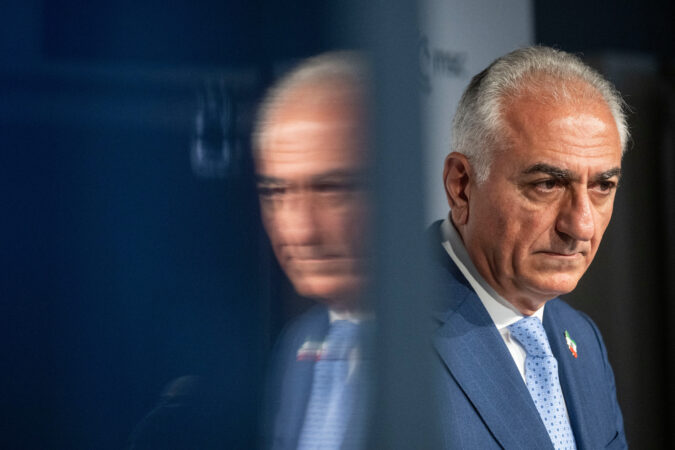
    But it was a greeting at the start of the interview that crossed a line with the company’s top brass. She thanked the network for having her before invoking the name of Reza Pahlavi, the son of Iran’s deposed shah: “Let me first pass my greetings to our compatriots in Iran, a nation that, by standing on the right side of history and by responding in the millions to Crown Prince Reza Pahlavi’s call, is shaping historic days for the freedom of our country.”

    Later that day, Tahvili received a phone call from the VOA producer who arranged her interview, complaining that she had violated Voice of America’s new policy barring mentions of Pahlavi’s name — which she said she didn’t know about.

    “He called me in a very angry way and said, ‘Why did you mention his name?’” Tahvili, adjunct associate professor of AI industrial systems at Sweden’s Mälardalen University, said in an interview. “No one is allowed to mention Pahlavi’s name.” Because she had mentioned him, Tahvili said she was told her interview, which aired live, would not be reposted to social media and she would no longer be welcome on the network.

    Critics including Tahvili allege that since the mass protests broke out in the final days of last year, the U.S. government has systematically censored the best-known Iranian opposition figure by banning his name from its broadcasts. They also claim that, in the process, U.S. Agency for Global Media Deputy CEO Kari Lake and the new head of the Persian service, Ali Javanmardi, have exerted control over a government broadcaster that’s long been editorially independent of the U.S. government.

    In a January interview with Reuters, President Donald Trump questioned whether Pahlavi has enough support to take over in Iran, but said “that would be fine with me” if he wins over the majority of Iranians. “He seems very nice, but I don’t know how he’d play within his own country,” Trump said.

    In the same interview, he remained noncommittal about efforts to pressure regime change in Iran either, saying, “Whether or not it falls or not, it’s going to be an interesting period of time.”

    The push to excise Pahlavi’s name was first reported by the Hill.

    Lake and Javanmardi, a former VOA contractor recently brought in to run the Persian service, have defended their new rules, saying that they are simply clamping down on an effort by VOA employees eager to see one opposition group prevail over another at a time when Iran’s regime under Ayatollah Ali Khamenei is on shaky ground. They say it applies to all opposition leaders, not just Pahlavi.

    “We are not in the business of selecting Iran’s political leadership,” Lake said in a statement. “That decision belongs solely to Iran’s 93 million citizens, who have a right to self-determination. Right now, the story should be about them, not the numerous opposition groups outside Iran. Elevating external opposition figures over voices inside the country risks externalizing the conflict in ways that would only benefit the cruel regime and undermine protesters on the ground.”

    In a separate statement, Lake called Javanmardi “a respected and fearless journalist” with deep experience reporting on Iran and the region. “His commitment is to journalistic responsibility, truth, and ensuring coverage that aligns with American policy interests and centers the voices of the Iranian people in support of their right to freedom and self-determination.”

    The spokesperson did not make Javanmardi available for an interview.

    Javanmardi has voiced opinions, however, about Pahlavi on-air, saying in a recent VOA appearance, “The United States government is not going to replace a dictator inside Iran with another totalitarian one who has threatened all his opponents even before coming to power with death and elimination.” In recent months he has also described other media as engaging in “propaganda engineering” and “artificial magnification” of issues in Iran.

    Javanmardi has also called out Iranians for not participating in the recent protests. “We should all participate in identifying the mercenaries who did not join the people and are involved in suppressing the people,” he said in one broadcast. “Let’s participate so that they do not have immunity, both inside and outside Iran.”

    Under Lake, Voice of America has undergone massive staff cuts. The broadcaster, first set up in 1942 to counter Nazi propaganda abroad, suspended most of its programming after Trump issued an executive order in March. Then, Lake cut hundreds of contractors and placed hundreds of full-time staffers on paid administration leave. A federal judge blocked Lake from firing the employees and instructed the agency to uphold its statutory obligations for broadcasting. As a result, Lake brought back broadcasting in a few languages mandated by law, including Farsi.

    In January, Congress rejected requests from Lake and the White House to zero out the agency’s budget, approving a $653 million budget. Lake said she was “disappointed” at the move.

    VOA’s Persian service, once among its largest divisions, has maintained a skeleton crew since this summer, when Lake briefly ordered staff back and called for some broadcasts amid escalating military tensions between Iran and Israel. Many of those recalled staffers were put back on administrative leave when the conflict simmered.

    But when popular uprising broke out in late December, Lake once again ramped up its staffing, bringing back a few dozen employees and contractors.

    She also tapped Javanmardi, who years earlier worked as a VOA correspondent based in Irbil, Iraq, to lead the charge. He quickly became a divisive figure among staffers and viewers because of his close control over broadcasts. So far, more than 58,000 people signed a Change.org petition to have him removed, saying, “Ali Javanmardi’s biased approach silences the Iranian struggle and betrays the trust of those who depend on honest journalism.”

    In an email, a U.S. Agency for Global Media spokesman defended the new policy regarding opposition figures. “Mr. Reza Pahlavi himself, as well as the leaders of other political groups, have been invited to speak on the Voice of America,” he said.

    Despite the invitation, Pahlavi has not appeared on the network. Pahlavi did not respond to a request for comment.

    Several VOA staffers working on the broadcasts, who spoke on the condition of anonymity out of fear of retaliation, said that Javanmardi appeared to target Pahlavi. The staffers said he personally approves all guests before they appear on air and has instructed staff not to book anyone who sympathizes or promotes Pahlavi.

    “He completely censors his name, his activity and everything,” one staffer said, noting that Javanmardi has refused to play audio of protesters in Iran shouting Pahlavi’s name. “All the people chanting in Iran — nothing. He censors everything.”

    Holly Dagres, a senior fellow at the Washington Institute who writes a Substack newsletter called “The Iranist,” said that many Iranians have indeed chanted Pahlavi’s name during the protests. “While this may seem surprising to outside observers, nostalgia for the pre-1979 era has grown in recent years,” she said. “Many Iranians — particularly Gen Zers who weren’t alive during that period — perceive life before the revolution as a better time.”

    She added that omitting this detail “erases a key element of the uprising — including the motivations of some of the protesters who have risked, and in some cases lost, their lives in the name of freedom.”

    Another staffer said that no pro-Pahlavi content can appear on the network. “If anything ever has been published or broadcast, it’s because we missed it,” the staffer said.

    Another employee said that the approach has hampered reporting, such as when Sen. Lindsey Graham (R., S.C.) met with Pahlavi and Javanmardi instructed the staff not to cover it.

    However, one VOA staffer defended the policy, saying that without it, the service and the United States could be labeled having interfered in Iran’s internal affairs.

    And Arash Azizi, a lecturer at Yale University who writes about Iran for different publications, also said he is “at least partially favorable” to VOA’s approach because Pahlavi leads “one political faction” of the opposition.

    “No country in the world should recognize Mr. Pahlavi as the leader of the Iranian opposition because he has absolutely no legitimacy for that position,” Azizi said. “I think it’s good for VOA to have effectively pulled the brake and say, look, you’re nobody’s leader. You can’t just appoint yourself the leader and then expect us to treat you as one.”

    Navid Mohebbi, a former political prisoner in Iran now advising the National Union for Democracy in Iran (NUFDI), which supports Pahlavi, said in a statement that VOA is effectively the “only major Persian-language diaspora outlet” that has avoided covering Pahlavi’s calls for demonstrations in Iran and protesters shouting pro-Pahlavi slogans.

    “This level of censorship is striking, particularly when even Iranian regime media and outlets hostile to the United States acknowledged the existence of these slogans,” he said.

    For Tahvili, who grew up watching VOA in Iran, the experience of being banned from the network was painful.

    “For us, for my generation, we grew up with the Voice of America,” she said. “It was the only channel, the only Persian-language news source that we had at that time. Freedom of speech. Professional journalism. It really hurts to see how it changed from that to this.”


  • US filings for jobless aid rise modestly to 212,000 as layoffs remain at historically healthy levels

    US filings for jobless aid rise modestly to 212,000 as layoffs remain at historically healthy levels

    WASHINGTON — Slightly more Americans applied for unemployment benefits last week as layoffs remain at relatively healthy levels.

    The number of Americans filing for jobless aid for the week ending Feb. 21 rose by 4,000 to 212,000 from the previous week, the Labor Department reported Thursday. That’s in line with the forecasts of analysts surveyed by the data firm FactSet.

    Filings for unemployment benefits are viewed as representative of U.S. layoffs and are close to a real-time indicator of the health of the job market.

    Earlier this month, the Labor Department reported that U.S. employers added a surprisingly strong 130,000 jobs in January and the unemployment rate fell to 4.3% from 4.4%. However, government revisions cut 2024-2025 U.S. payrolls by hundreds of thousands, reducing the number of jobs created last year to just 181,000. That’s about one-third of the previously reported 584,000 and the weakest since the pandemic year of 2020.

    While weekly layoffs have remained in a historically low range mostly between 200,000 and 250,000 for the past few years, a number of high-profile companies have announced job cuts recently, including UPS, Amazon, Dow and the Washington Post in recent weeks.

    The Labor Department also recently reported that job openings fell in December to the lowest level in more than five years.

    For now, the U.S. job market appears stuck in what economists call a “low-hire, low-fire” state that has kept the unemployment rate historically low, but has left those out of work struggling to find a new job.

    Data over the past year has broadly revealed a labor market in which hiring has clearly slowed, hobbled by uncertainty stoked by President Donald Trump’s tariffs and the lingering effects of the high interest rates the Fed engineered in 2022 and 2023 to tamp down a spike of pandemic-induced inflation.

    Economists are conflicted about whether the stronger-than-expected January job gains are a one-off or possibly the first sign of a recovering labor market, which could lead the Fed to further delay more cuts to its key interest rate.

    The government issues it February jobs report next week.

    Some Fed officials have specifically argued that last year’s weak hiring shows that borrowing costs are weighing on growth and discouraging companies from expanding. A sustained pickup in hiring could undercut that theory.

    The Labor Department’s report Thursday showed that the four-week moving average of jobless claims, which balances some of the week-to-week volatility, ticked up by 750 to 220,250.

    The total number of Americans filing for jobless benefits for the previous week ending Feb. 14 fell by 31,000 to 1.83 million, the government said.

  • Justice Department says it’s reviewing whether any Epstein-related records were mistakenly withheld

    Justice Department says it’s reviewing whether any Epstein-related records were mistakenly withheld

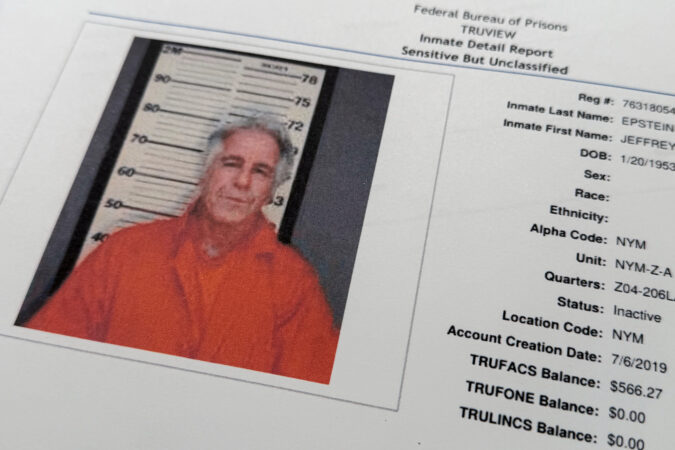
    WASHINGTON — The Justice Department said Wednesday that it was looking into whether it improperly withheld documents from the Jeffrey Epstein files after several news organizations reported that some records involving uncorroborated accusations made by a woman against President Donald Trump were not among those released to the public.

    The announcement followed news reports saying that a massive tranche of records released by the Justice Department did not include several summaries of interviews that the FBI conducted with an unidentified woman who came forward after Epstein’s 2019 arrest and claimed to have been sexually assaulted by both Trump and Epstein when she was a minor in the 1980s.

    “Several individuals and news outlets have recently flagged files related to documents produced to Ghislaine Maxwell in discovery of her criminal case that they claim appear to be missing,” the Justice Department said in a post on X. “As with all documents that have been flagged by the public, the Department is currently reviewing files within that category of the production.” Maxwell, Epstein’s longtime confidant, is serving a 20-year prison sentence on a sex trafficking conviction.

    It said that if any document is found to have been improperly withheld and is responsive to the federally enacted law mandating the files’ release, “the Department will of course publish it, consistent with the law.”

    At issue is a series of interviews said to have been conducted in 2019 with a woman who made an allegation against Trump, who has consistently denied any wrongdoing in connection with Epstein. News reports from recent days say the accuser was interviewed four times but a summary of only one of those interviews was included in the publicly released files.

    The missing records were earlier reported by the journalist Roger Sollenberger on Substack and NPR, and have since been documented by other news organizations, including the New York Times, MS Now, and CNN.

    Rep. Robert Garcia, the top Democrat on the House Oversight Committee, said in a statement that his panel would investigate the withheld records. He said he had reviewed unredacted evidence logs and “can confirm that the DOJ appears to have illegally withheld FBI interviews” with the accuser.

    The Justice Department last month said it was releasing more than 3 million pages of records related to Epstein, who took his own life in a New York jail cell in 2019 while awaiting trial on sex trafficking charges. The department said at the time that, though it was attempting to be transparent, it was also entitled to withhold records that exposed potential abuse victims, were duplicates or protected by legal privileges, or related to an ongoing criminal investigation.

    “Some of the documents contain untrue and sensationalist claims against President Trump that were submitted to the FBI right before the 2020 election. To be clear, the claims are unfounded and false, and if they have a shred of credibility, they certainly would have been weaponized against President Trump already,” the department said in a statement last month as it released the records.

    The redaction process was quickly revealed to have been flawed, with the department withdrawing some materials identified by victims or their lawyers, along with a “substantial number” of documents identified independently by the government.

    Lawyers for Epstein accusers told a New York judge last month that the lives of nearly 100 victims had been “turned upside down” by sloppy redactions in the government’s latest release of records. The exposed materials include nude photos showing the faces of potential victims as well as names, email addresses, and other identifying information that was either unredacted or not fully obscured.

    Other uncorroborated claims against Trump and other public figures were included in the publicly available files. The department did not say in its social media post Wednesday why records related to this specific accusation might have been withheld.

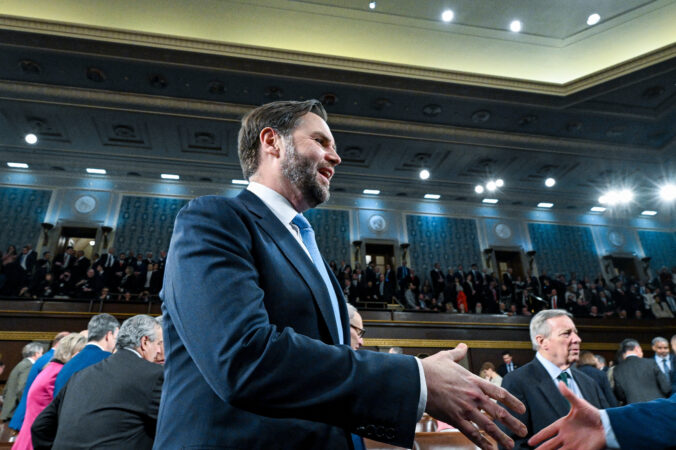
  • Vance says administration is pausing some Medicaid funding to Minnesota because of fraud concerns

    Vance says administration is pausing some Medicaid funding to Minnesota because of fraud concerns

    WASHINGTON — Vice President JD Vance announced Wednesday that the Trump administration would “temporarily halt” some Medicaid funding to the state of Minnesota over fraud concerns, as part of what he described as an aggressive crackdown on misuse of public funds.

    Vance, who made the announcement with Mehmet Oz, the administrator for the Centers for Medicare and Medicaid Services, said the administration was taking the action “in order to ensure that the state of Minnesota takes its obligations seriously to be good stewards of the American people’s tax money.”

    Oz, who referred to people committing fraud as “self-serving scoundrels,” said the federal government would hold off on paying $259.5 million to Minnesota in funding for Medicaid, the healthcare safety net for low-income Americans.

    “This is not a problem with the people of Minnesota, it’s a problem with the leadership of Minnesota and other states who do not take Medicaid preservation seriously,” Oz said.

    Wednesday’s move is part of a larger Trump administration effort to spotlight fraud around the country. That effort comes after allegations of fraud involving daycare centers run by Somali residents in Minneapolis prompted a massive immigration crackdown in the Midwestern city, resulting in widespread protests. President Donald Trump, in his State of the Union address on Tuesday, announced Vance would spearhead a national “war on fraud.”

    Trump also recently nominated Colin McDonald to serve as the first assistant attorney general in charge of a Justice Department division dedicated to rooting out fraud.

    Oz said the administration was simultaneously notifying Minnesota’s Democratic Gov. Tim Walz as he was making the announcement publicly. Messages sent to spokespeople for Walz, former Vice President Kamala Harris’ 2024 running mate, were not immediately returned.

    “We will give them the money, but we’re going to hold it and only release it after they propose and act on a comprehensive corrective action plan to solve the problem,” Oz said.

    He said Walz would have 60 days to respond and advised healthcare providers and Medicaid beneficiaries who were concerned to contact Walz’s office.

    A spokesperson for Minnesota Attorney General Keith Ellison, whose office investigates Medicaid fraud, referred questions to the state Department of Human Services, which administers Medicaid in the state, A department spokesperson said the agency was preparing a statement.

    Earlier Wednesday, Ellison held a news conference to promote legislation that would give his office more staff and new legal tools to combat Medicaid fraud.

    Oz said the Centers for Medicare and Medicaid Services were also taking action to crack down on fraud in Medicare, the healthcare system relied upon by millions of older adults.

    He said CMS for six months would block any new Medicare enrollments for suppliers of durable medical equipment, prosthetics, orthotics or other supplies used to treat chronic conditions or assist in injury recovery.

    The Office of the Inspector General for the U.S. Department of Health and Human Services found last year that Medicare improperly paid suppliers nearly $23 million for durable medical equipment from 2018 through 2024. But it found that most of that was before January 2020, when changes to the system were implemented.

    Oz also announced a new crowdsourcing effort he said would help “crush fraud” by soliciting Americans’ tips and suggestions.

    “All of us are smarter than any one of us,” he said.

    In a news release accompanying the announcement, CMS said the funding being paused in Minnesota included some $244 million in unsupported or potentially fraudulent Medicaid claims and about $15 million in claims involving “individuals lacking a satisfactory immigration status.”

    Immigrants who are not living in the U.S. legally, as well as some lawfully present immigrants, are not allowed to enroll in the Medicaid program that provides nearly-free coverage for health services.

    CMS said in the release that if Minnesota fails to satisfy its requirements, it may defer up to $1 billion in federal funds to the state over the next year.

    A CMS spokesperson didn’t immediately respond to an inquiry about what the agency will require from Minnesota in order to restart the deferred funding.

    The administration has threatened to cut off funding for various programs for some Democratic-run states over fraud concerns over the last few months.

    One judge blocked those actions and required that payments flowing to Minnesota and four other states — California, Colorado, Illinois and New York — for a variety of social service programs. The government had said that there was “reason to believe” that those states were granting benefits to people in the country illegally. It did not initially explain where that information came from, but a government lawyer told the judge it was largely in reaction to news reports about possible fraud.

    Another judge said she would not let it cut off funding for administrative costs for 22 states that have refused to hand over information about applicants and recipients of food aid through the Supplemental Nutritional Assistance Program.

    The latest action was prompted in part by a series of fraud cases, including a nonprofit called Feeding Our Future accused of stealing pandemic aid meant for school meals. Prosecutors have put the losses from that case at $300 million.

    Since then, Trump has targeted the Somali diaspora in Minnesota with immigration enforcement actions and has made a series of disparaging comments about the community. During his State of the Union address on Tuesday, Trump said “pirates” have “ransacked Minnesota.”

    Federal agencies have also been enlisted to assist in targeting fraud in Minnesota.

    Last December, the U.S. Treasury Department issued an order requiring money wire services that people use to send money to Somalia to submit additional verification to the Treasury.

    The Center for Medicare and Medicaid Services told Minnesota in January that it intended to freeze parts of payments for some Medicaid programs that were deemed high-risk. The state said that those cuts would add up to more than $2 billion annually if they lasted and made an administrative appeal.

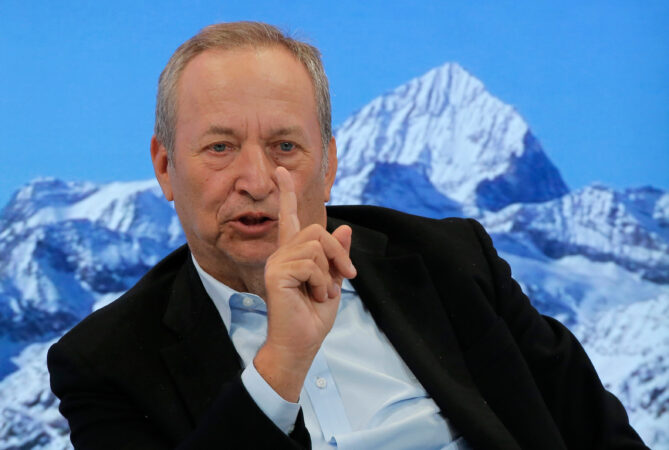
  • Larry Summers will resign from teaching at Harvard during review of Epstein ties, university says

    Larry Summers will resign from teaching at Harvard during review of Epstein ties, university says

    Former U.S. Treasury Secretary Larry Summers will resign from teaching at Harvard University amid a campus review of his ties to the late convicted sex offender Jeffrey Epstein, the university announced Wednesday.

    Summers, who has been on leave since November and whose name appeared hundreds of times in newly released Epstein files, will step down at the end of the school year, according to a statement from Harvard spokesperson Jason Newton.

    “Professor Summers has announced that he will retire from his academic and faculty appointments at Harvard at the end of this academic year and will remain on leave until that time,” Newton said.

    In a statement, Summers said it was a difficult decision and expressed gratitude to the students and colleagues he worked with over 50 years.

    “Free of formal responsibility, as President Emeritus and a retired professor, I look forward in time to engaging in research, analysis, and commentary on a range of global economic issues,” Summers said.

    The Justice Department’s latest release has rippled through academia, uncovering Epstein’s ties to numerous researchers who sought his funding and his friendship even after he became a convicted sex offender. Summers’ resignation follows that of Richard Axel, a Nobel laureate, who on Tuesday announced he would step down as co-director of Columbia University’s Zuckerman Mind Brain Behavior Institute.

    Summers served as treasury secretary under former President Bill Clinton and went on to lead Harvard as president for five years starting in 2001. Summers also has Philly-area roots. He grew up in Penn Valley and attended Lower Merion schools, graduating from Harriton High School in the early 1970s.

    A trove of files released by the government cast new light on Summers’ relationship with Epstein, which spanned years and included visits to one another at their homes in Massachusetts and New York. The two traded emails on topics ranging from politics and the economy to women and romance.

    Summers, who has been married for 20 years, consulted Epstein on a separate relationship with a woman he was tutoring in economics, according to emails from 2018 and 2019. Epstein described himself as Summers’ “wing man” and encouraged persistence. In a 2018 email, Summers said the woman was never his student but he had “known her father for 20 plus years as Chinese economic official.”

    “I have a very good life w Lisa kids etc.,” Summers said in a 2018 email, referencing his wife. “Easy to put at risk for something that might not materialize at all or if it does might prove transient.”

    In a 2016 email, Summers appeared to use a slur for Asian people while discussing an upcoming meeting between Epstein and an official from a Chinese university.

    Responding to previous revelations, Summers last year said he had “great regrets in my life” and that his association with Epstein was a “major error in judgment.”

    Harvard officials have publicly said little about Summers’ relationship. When Summers went on leave last year, the university said it was reviewing “individuals at Harvard” who were in the Epstein documents “to evaluate what actions may be warranted.”

    Epstein’s ties to Harvard were the focus of a 2020 campus report finding that the financier gave more than $9 million to the Ivy League school, mostly for a center founded by math and biology professor Martin Nowak. The report did not mention Summers’ relationship with Epstein. Nowak was later disciplined by Harvard.

    In December, Summers was dealt a lifetime ban from the American Economic Association, a nonprofit scholarly association dedicated to economic research, over his Epstein ties.

    At Columbia, Axel said in a statement Tuesday that he regretted his association with Epstein, calling it a “serious error in judgment.” He said he is also giving up his position as an investigator at the Howard Hughes Medical Institute but will continue to research and teach in his laboratory at the Zuckerman Institute in Manhattan.

    Axel was one of the 2004 winners of the Nobel Prize in physiology or medicine for discoveries related to the human olfactory system. His name appears more than 600 times in Justice Department files reviewed by the Associated Press, including in emails he exchanged with Epstein and on schedules noting their meetings, dinners and lunches.

    In a news article published in 2007, while Epstein was initially under investigation in Florida, the scientist praised Epstein’s intellect, telling New York magazine: “He has the ability to make connections that other minds can’t make. He is extremely smart and probing.”

    The resignations are the latest fallout from the Justice Department’s recent release of millions of pages of records pertaining to Epstein and his longtime confidant and former girlfriend Ghislaine Maxwell. Resignations have rippled across the academic, legal and business communities.

    In Britain, former Prince Andrew and ex-diplomat Peter Mandelson were arrested because of their connections to Epstein and Maxwell.

  • Trump floats new retirement benefit for 54 million workers

    Trump floats new retirement benefit for 54 million workers

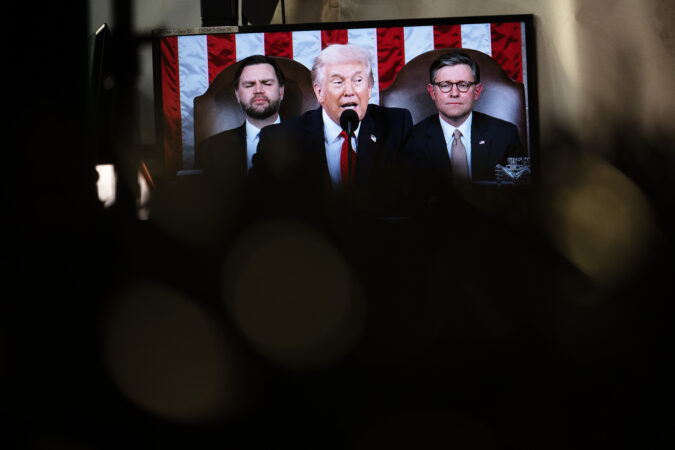
    President Donald Trump, in his State of the Union address Tuesday night, suggested a major new retirement benefit for tens of millions of American workers, embracing an economic policy that proponents say could bolster the federal retirement safety net.

    Speaking to congressional lawmakers, Trump pledged to extend to private-sector workers the same type of retirement plan already available to federal employees. He also said the government would kick in up to $1,000 per year to their accounts, presumably in matching benefits. Roughly 54 million workers in the private sector have no workplace retirement benefits and do not benefit from stock market gains, according to research cited by the Economic Innovation Group, a Washington-based think tank, as part of what some experts have termed a “retirement crisis” in America.

    “Half of all of working Americans still do not have access to a retirement plan with matching contributions from an employer,” Trump said. “To remedy this gross disparity, I’m announcing that next year, my administration will give these often forgotten American workers — great people, the people that built our country — access to the same type of retirement plan offered to every federal worker. We will match your contribution with up to $1,000 each year.”

    The announcement was celebrated by Trump supporters as a major new economic policy heading into the 2026 midterm elections, but critics pointed out some problems with Trump’s pledges, and are skeptical it will substantially boost savings for working-class Americans.

    The most obvious challenge is that it’s not clear how much Trump can do on his own. Under existing authorities, the administration can create portable retirement accounts — modeled on the Thrift Savings Plan used by federal employees — and make them available to workers who currently lack a workplace plan. But the government cannot compel employers or workers to automatically enroll, nor can it unilaterally appropriate funds to provide a universal $1,000 match to all eligible workers.

    Instead, the administration can facilitate take-up of a benefit that already exists. The bipartisan Secure 2.0 bill, signed by President Joe Biden in 2022, created a “Saver’s Match” — a federal contribution of up to $1,000 annually for qualifying workers who put $2,000 in an eligible retirement account. One problem has been that many eligible workers have had nowhere to put their contributions. Trump’s executive action could create additional account infrastructure, but eligibility would still be constrained. Only workers who make less than $25,000 per year, or roughly $41,000 for couples, are eligible.

    More impactful would be if Trump’s comments spur congressional action. A White House official suggested that the administration will support bipartisan legislation to automatically enroll eligible workers in federal accounts, provide the $1,000 federal match for low- and moderate-income workers, and make those accounts portable across jobs. One bill is backed by a coalition that spans Charles Schwab, AARP, DoorDash, and Uber.

    White House economist Kevin Hassett has backed a similar kind of approach. Of the more than $200 billion in annual income tax expenditures related to retirement savings, less than 1% flows to workers in the bottom income quintile, according to the Economic Innovation Group. This would move some of those benefits down the income distribution.

    “Since we’ve had the 401(k) system this has always been the problem: A huge share of the workforce has not been participating and doesn’t have access to these benefits. Closing that gap is a big first step,” said John Lettieri, cofounder of the Economic Innovation Group. “It’s a long-run exercise to get people into the market, engaged in long-term savings and investment behavior with matching benefits. That’s a proven way of building wealth over time, including for low-income savers.”

    That said, there are reasons to doubt that even the legislation being debated in Congress would do much to increase retirement security for low-income workers. Low-income Americans often do not have enough to live on already, much less an extra $2,000 per year to put into retirement accounts, said Matt Bruenig, founder of the People’s Policy Project, a left-leaning think tank.

    The Survey of Consumer Finances suggests that fewer than 12% of people who earn below $43,000 save for retirement.

    “Almost no low-income people have retirement accounts. This is not because they are disallowed from having them,” Bruenig said. “It’s because they can barely pay their bills. Nothing in the president’s plan changes that.”