Category: Nation & World

  • Louvre museum’s director resigns in wake of jewels heist in Paris

    Louvre museum’s director resigns in wake of jewels heist in Paris

    PARIS — The Louvre museum’s director resigned Tuesday after months of pressure following the October theft of the French crown jewels, as the world’s most visited museum faced widening scrutiny over security failures, labor unrest, and a suspected ticket fraud scheme.

    Laurence des Cars quit after a punishing year for the former royal palace — the high-profile jewels heist from the Apollo Gallery, a mid-February burst pipe near the Mona Lisa, water leaks damaging priceless books, staff walkouts and a wildcat strike over overcrowding, and understaffing.

    The landmark has faced a widening narrative of an institution spiraling out of control.

    And that pressure deepened in recent weeks when French authorities revealed a suspected decadelong ticket fraud operation linked to the museum that investigators say may have cost the Louvre 10 million euros ($11.8 million).

    President Emmanuel Macron accepted des Cars’ resignation as “an act of responsibility” at a moment when the Louvre needs “calm” and new momentum for security upgrades, modernization, and other major projects, according to a statement from his office.

    Macron wants to give des Cars a new mission during France’s presidency of the Group of Seven leading industrialized nations, focused on cooperation among major museums, the statement said.

    For many in France’s cultural world, the resignation answers months of head-scratching over why no top official had fallen after the heist: a daylight robbery that many in the country saw as the most humiliating breach of French heritage security in living memory.

    It also came as lawmakers and cultural officials widened scrutiny of the museum’s leadership and security practices in the months since the breach.

    Brazen theft

    Thieves took less than eight minutes in October to steal crown jewels valued at 88 million euros ($102 million) from the Louvre, in a weekend operation that stunned visitors, exposed glaring vulnerabilities and left one of France’s most symbolically charged collections in criminal hands.

    Several suspects were later arrested, but the stolen pieces remain missing.

    Des Cars, one of the most prominent museum directors in Europe, had offered to resign on the day of the robbery, but it was initially refused by the culture minister.

    In remarks after the theft, she described the moment as a “tragic, brutal, violent reality” for the Louvre and said that, as the person in charge, it had felt right to offer her resignation.

    Lightning rod

    In an interview published on Tuesday by daily newspaper Le Figaro, des Cars said that she had tried to steer the Louvre through the fallout from the heist, but had concluded that she could no longer carry out the museum’s transformation in the current institutional climate.

    Staying on, she said, would have meant managing the status quo when the museum still needs deep reform.

    “I was there to take the lightning” as museum director, she said.

    Des Cars also said that the October break-in exposed problems that she had been warning about since taking office, including aging infrastructure, obsolete technical systems, and severe congestion.

    She had led the Louvre since 2021, taking over one of the museum world’s most prestigious jobs as the institution emerged from the coronavirus pandemic and mass tourism returned.

    Multifaceted crisis

    In June, a wildcat strike by front-of-house staff and security workers forced the Louvre to halt operations, stranding thousands of visitors outside the glass pyramid and underscoring the depth of anger among employees over overcrowding, understaffing, and what unions called untenable working conditions.

    Workers said that the pressure of daily visitor flows — particularly around the Mona Lisa — had become unmanageable and that promised reforms were arriving too slowly. There were growing complaints that the infrastructure and staffing of the crumbling medieval structure haven’t kept pace with the crowds pouring through its galleries.

    The resignation came at an especially punishing moment, less than two weeks after French authorities revealed the separate ticket fraud scheme.

    That case widened scrutiny beyond the jewels robbery and toward the museum’s day-to-day controls.

    Fraud scheme

    Prosecutors say tour guides are suspected of — up to 20 times a day — reusing the same tickets to bring in different visitor groups, at times allegedly with the help of Louvre employees, in a system investigators believe operated for a decade.

    In a rare interview just days ago with the Associated Press after the fraud case was made public, the Louvre’s No. 2, general administrator Kim Pham, said that fraud at an institution the size of the Louvre was “statistically inevitable.”

    He argued that the museum’s sheer scale — millions of visitors, multiple checkpoints, and a sprawling historic complex — makes it uniquely exposed.

    But he also acknowledged shortcomings, and said that the museum had tightened validation checks and increased controls.

    New Renaissance

    The succession of crises has put new political weight on a project Macron has heavily championed: the Louvre’s sweeping overhaul plan, branded the “Louvre New Renaissance.”

    Unveiled by Macron in January 2025, the renovation, which could take up to a decades, aims to modernize a museum widely seen as overstretched and physically worn down by mass tourism.

    The plan includes a new entrance near the Seine River to ease pressure on I.M. Pei’s pyramid, new underground spaces and a dedicated room for the Mona Lisa with timed access — all intended to improve crowd flow and reduce the daily crush that has become a symbol of the Louvre’s success and its dysfunction.

    The project is expected to cost roughly 700 million-800 million euros ($826 million-$944 million), with funding from ticket revenue, state support, donations, and Louvre Abu Dhabi-related income.

    The scale and cost of that plan now loom over the search for des Cars’ successor.

    Macron has framed the overhaul as a national priority, comparing its ambition to other landmark French restoration efforts and casting it as part of a broader defense of French cultural prestige.
  • Trump administration sues New Jersey over restrictions on immigration arrests

    Trump administration sues New Jersey over restrictions on immigration arrests

    TRENTON — The Trump administration is suing New Jersey over a state order that prohibits federal immigration agents from making arrests in nonpublic areas of state property, such as correctional facilities and courthouses.

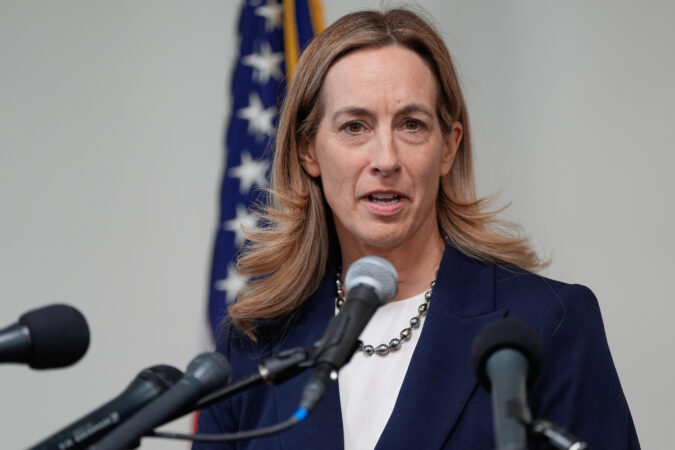
    The Justice Department lawsuit, filed Monday in federal court in Trenton, challenges Gov. Mikie Sherrill‘s Feb. 11 executive order, which also bars the use of state property as a staging or processing area for immigration enforcement.

    Sherrill, a Democrat who took office Jan. 20, “insists on harboring criminal offenders from federal law enforcement,” the lawsuit said, accusing her of attempting to obstruct federal law enforcement and thwart President Donald Trump’s immigration crackdown.

    Sherrill’s executive order “poses an intolerable obstacle” to immigration enforcement and “directly regulates and discriminates” against the federal government, said the lawsuit, which misspelled her name as “Sherill.”

    Asked about the lawsuit Tuesday, Sherrill said: “What I think the federal government needs to be focused on right now, instead of attacking states like New Jersey working to keep people safe, is actually training their ICE agents.”

    The state’s acting attorney general, Jennifer Davenport, said the Trump administration was “wasting its resources on a pointless legal challenge.” New Jersey will fight the lawsuit and “continue to ensure the safety of our state’s immigrant communities,” she said.

    The lawsuit is the latest in the Trump administration’s fight against state and local level restrictions on immigration enforcement.

    Last year, the Justice Department sued Minnesota and Colorado, as well as cities including New York, Chicago, Los Angeles, and Denver over so-called sanctuary laws, which are aimed at prohibiting police from cooperating with immigration agents.

    Last May, the Trump administration sued four New Jersey cities — Newark, Jersey City, Paterson, and Hoboken — over such policies. That case is pending.

  • Supreme Court rules the Postal Service can’t be sued, even when mail is intentionally not delivered

    Supreme Court rules the Postal Service can’t be sued, even when mail is intentionally not delivered

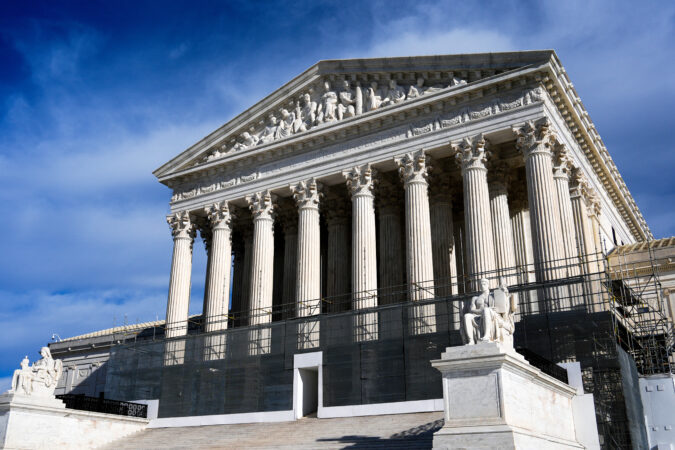
    WASHINGTON — A divided Supreme Court on Tuesday ruled that Americans can’t sue the U.S. Postal Service, even when employees deliberately refuse to deliver mail.

    By a 5-4 vote, the justices ruled against a Texas landlord, Lebene Konan, who alleges her mail was intentionally withheld for two years. Konan, who is Black, claims racial prejudice played a role in postal employees’ actions.

    Justice Clarence Thomas, writing for a majority of five conservative justices, said the federal law that generally shields the Postal Service from lawsuits over missing, lost, and undelivered mail includes “the intentional nondelivery of mail.”

    In dissent, Justice Sonia Sotomayor wrote that while the protection against lawsuits is broad, it does not extend to situations when the decision not to deliver mail “was driven by malicious reasons.” Justice Neil Gorsuch joined his three liberal colleagues in dissent.

    President Donald Trump’s Republican administration had warned that a ruling for Konan would have led to a flood of similar lawsuits against the cash-strapped Postal Service.

    Konan, who’s also a real estate agent and an insurance agent, claims two employees at a post office in Euless, Texas, part of the Dallas-Fort Worth metroplex, deliberately didn’t deliver mail belonging to her and her tenants because, she alleges, they didn’t like that she is Black and owns multiple properties.

    According to court documents, the dispute began when Konan discovered the mailbox key for one of her rental properties had been changed without her knowledge, preventing her from collecting and distributing tenants’ mail from the box. When she contacted the local post office, she was told she wouldn’t receive a new key or regular delivery until she proved she owned the property. She did so, the documents say, but the mail problems continued, despite the USPS inspector general instructing the mail to be delivered.

    Konan alleges the employees marked some of the mail as undeliverable or return to sender. Konan and her tenants failed to receive important mail such as bills, medications, and car titles, according to the lawsuit. Konan also claims she lost rental income because some tenants moved out due to the situation.

    After filing dozens of complaints with postal officials, Konan finally filed a lawsuit under the 1946 Federal Tort Claims Act, which allows some lawsuits against the government. The case focused on the reach of the special postal exemption to the law.

  • Behind closed doors, GOP lawmaker questioned ‘disturbing’ East Wing demolition

    Behind closed doors, GOP lawmaker questioned ‘disturbing’ East Wing demolition

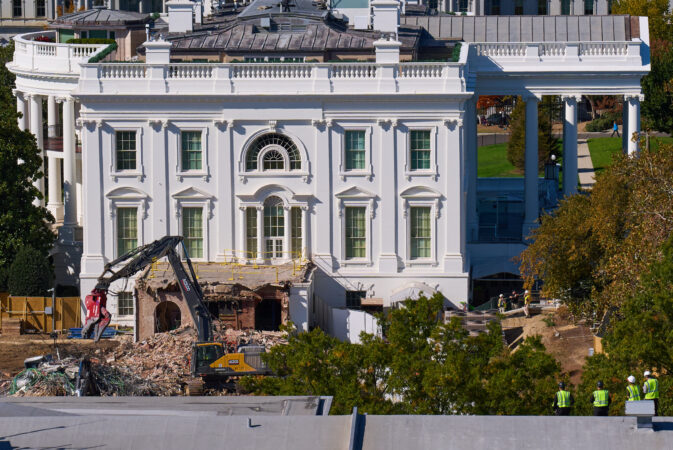
    As GOP leaders leaped to defend President Donald Trump’s decision to tear down the East Wing of the White House last year, one Republican lawmaker privately warned a senior White House aide that he had “substantial concerns” and demanded answers about how the decision was made.

    Administration officials had pledged the project would not “interfere” with existing structures, and the public had no warning about the demolition.

    “The stark images of the East Wing demolished in mere days were disturbing to Americans who cherish preservation of our nation’s history,” Rep. Michael R. Turner (R., Ohio), co-chair of the congressional Historic Preservation Caucus, wrote in an Oct. 24 letter obtained through a Freedom of Information Act request and shared with the Washington Post.

    Turner’s correspondence to Will Scharf, Trump’s staff secretary and chairman of the National Capital Planning Commission, the review committee with the power to approve or reject the ballroom project, raised questions about oversight, transparency, and process, including whether the White House had taken steps to preserve artifacts.

    The communication, obtained by the government watchdog group Public Citizen, adds to the public understanding of sweeping concerns voiced by members of Congress, preservationists and others over transparency and other issues with Trump’s project. A federal judge is weighing a legal challenge to the construction.

    Scharf responded more than seven weeks later, telling Turner that Trump administration officials did not consult with or get the approval of the commission before tearing down the East Wing. But, he added, they were not required to since the commission’s review process covers only “vertical” construction — not demolition or site preparation. Scharf has made the same argument several times since, a position critics have blasted as absurd because those three steps are so closely linked — and because part of the commission’s duty in reviewing projects is to consider the preservation of buildings that already exist.

    Turner declined, through a spokeswoman, to discuss the letter or his concerns, and none of the other 17 Republicans on the Historic Preservation Caucus responded to interview requests.

    The letter from Turner “revealed what people were really thinking,” said Jon Golinger, democracy advocate at Public Citizen. “I bet there’s a lot more high-ranking Republicans who feel the same.”

    Trump has cast the 90,000-square-foot, privately funded addition as a needed upgrade to the White House that taxpayers will not have to support. Administration officials have publicly identified about two dozen companies and about a dozen individual donors they say have already contributed hundreds of millions toward the $400 million project, including major corporations such as Amazon, Google, and Palantir that collectively have billions of dollars in contracts before the administration. (Amazon founder Jeff Bezos owns the Washington Post.)

    Americans oppose Trump’s demolition of the White House’s East Wing by a more than 2-to-1 ratio, according to an Economist/YouGov poll conducted this month.

    Given that, Golinger said, he’s not surprised by Republicans’ relative silence on the project in a midterm election year.

    “I certainly haven’t seen a lot of campaign ads saying, ‘Elect me for this reason,’” Golinger said. “No Republicans have had to … put their name behind this project and say, ‘This is what I stand for.’”

    Many liberal lawmakers and political groups, meanwhile, have invoked the ballroom in appeals to voters ahead of the midterms. Congressional Democrats have pressed the Trump administration and its allies to divulge more details, asking whether donors stand to gain for their contributions.

    “BLOCK Trump’s White House Ballroom,” said one fundraising email sent by Defend Democracy Now PAC last month. “Top Democrats are fighting TOOTH AND NAIL to stop this wasteful project in its tracks.”

    On Oct. 30, Rep. Teresa Leger Fernandez (D., N.M.), Turner’s fellow co-chair on the Historic Preservation Caucus, was among the 60 House Democrats who sent Trump a public letter asking for some of the same information Turner had requested privately less than a week before.

    U.S. District Judge Richard J. Leon is expected to rule soon on whether the project can proceed after criticizing the Trump administration for making an “end run” around congressional oversight by soliciting private donations for the project rather than seeking taxpayer money.

    At a court hearing last month, Leon expressed skepticism of Justice Department lawyers’ argument that Congress had authorized the White House to make changes to its grounds by setting aside several million dollars in funding and allowing the Interior Department to solicit gifts for national parks.

    Leon, a George W. Bush appointee, said the congressional authorization was narrow and limited to matters such as White House maintenance, not carte blanche to undertake one of the biggest changes in the White House’s history. Justice Department lawyers have argued that any pause on the project could pose a national security risk and said they will immediately appeal if Leon grants a stay on construction.

    If he rules that Congress must explicitly authorize the ballroom building, Trump could press congressional Republicans to deliver, which would commit Turner to a public up-or-down vote.

    “There will be nowhere to run,” Golinger said, “and nowhere to hide.”

  • Trump’s newest tariffs could face legal challenge, though time is short

    Trump’s newest tariffs could face legal challenge, though time is short

    President Donald Trump’s new tariffs are not legally justified, according to several prominent economists and trade experts, who say there is no sign of the profound international financial problems that such measures were intended to remedy.

    Hours after the Supreme Court invalidated the emergency tariffs that he imposed last year, Trump on Friday invoked a 1974 law to announce a new 10% global import tax, later raising it to 15%. The president cited a provision known as Section 122 that authorizes temporary restrictions on imports to deal with “fundamental international payments problems.”

    In an official proclamation, the president said the nation’s “balance of payments,” a comprehensive account of Americans’ financial transactions with foreigners, was suffering “a large and serious deficit.” And he listed a number of metrics reflecting a deteriorating U.S. financial posture.

    The law does not define “balance-of-payments deficit,” and economists disagree about what should be included in the term. But several critics, including the International Monetary Fund’s former chief economist and a prominent conservative legal commentator, disputed the president’s claim. Trump wrongly conflated an alleged payments deficit with the merchandise trade deficit that he targeted last year with his first set of comprehensive tariffs under the International Emergency Economic Powers Act (IEEPA), they said.

    “The U.S. does not have a ‘payments’ problem. It can finance its trade deficits,” Gita Gopinath, the former IMF official, now teaching at Harvard University, wrote on X.

    Added Andrew McCarthy, a former federal prosecutor, writing in the conservative National Review: “These new tariffs are even more clearly illegal than Trump’s IEEPA tariffs.”

    Opposition to the new import taxes erupted even before they took effect at 12:01 a.m. on Tuesday. The outcry suggested that the president, still smarting from his 6-3 Supreme Court defeat, could face renewed legal jeopardy over the centerpiece of his economic agenda.

    “I do anticipate a lawsuit,” said Scott Lincicome, vice president of general economics for the Cato Institute and a former trade lawyer.

    U.S. importers would have the right to sue once they paid the tariffs. Liberty Justice Center, the nonprofit public-interest law firm that represented several small businesses in one of the tariff cases decided by the Supreme Court, said Monday that it is “closely monitoring” the president’s latest actions.

    “We will ensure that whatever authority the executive branch relies on, it follows the rules Congress actually wrote and the constitutional guardrails that protect our system of separated powers,” said Sara Albrecht, the center’s chairman.

    The debate over the Section 122 levies shows that questions of law and economics will continue to dog Trump’s bid to remake the global trading system. This time, there is no question that Congress has delegated to the president the power to levy tariffs — only under what circumstances. At issue are complex definitional questions of international economics and the legislative intent behind the wording of an untested provision in U.S. trade law.

    Time may also be a factor. The Section 122 tariffs expire after 150 days unless Congress votes to extend them, which is unlikely.

    Judges might be reluctant to “second guess” the president’s judgment on whether a balance-of-payments problem exists, said John Veroneau, a lawyer who served as deputy U.S. trade representative under President George W. Bush.

    Still, the administration’s newfound reliance upon Section 122 reverses the legal arguments it made last year. Defending the president’s emergency tariffs, Justice Department attorneys told an appeals court that Section 122 did not apply to Trump’s trade deficit concerns, which were “conceptually distinct from balance-of-payments deficits.”

    The White House declined to elaborate on the president’s Feb. 20 proclamation and fact sheet, which blamed a loss of domestic manufacturing for an excessive number of dollars leaving the country. Problems with the nation’s balance of payments can “endanger the ability of the United States to finance its spending, erode investor confidence in the economy, and distress the financial markets,” the proclamation said.

    Congress passed the Trade Act of 1974 when the United States was dealing with a distinctly different set of economic issues. In 1971, President Richard M. Nixon abruptly ended the convertibility of dollars into gold, marking the end of the Bretton Woods system of fixed exchange rates.

    At the time, foreign central banks were rushing to trade their unwanted dollars for gold, threatening to deplete U.S. financial reserves.

    There’s no sign of that sort of crisis today. The dollar has dropped about 10% over the past year, but it remains above its level for most of the decade leading to 2015. There’s certainly no sign of the “imminent and significant depreciation” that Section 122 requires.

    But even some Democrats say the administration is reacting to worrisome financial ailments.

    Economist Brad Setser, who served in the Treasury Department under President Barack Obama, said the global economy is characterized by dangerous imbalances.

    For years, the U.S. has run a deficit in its current account, the broadest measure of the nation’s trade balance, while China has run a mirror-image surplus. To keep running a large trade deficit, the U.S. must attract financing from abroad. So far, it’s been able to do that, which is why many analysts do not share the administration’s urgency.

    But the nation’s net international investment position — which balances the value of foreign stocks and bonds owned by Americans against what foreigners own in this country — is also deteriorating. That figure reached negative $26.7 trillion last year, down sharply in recent years.

    Some of that decline reflects foreigners’ large purchases of U.S. stocks, which have outperformed other markets, and thus is not a problem, Setser said. But the deterioration in the investment account also stems from the growth in the U.S. external debt, which carries a rising interest burden.

    “At this level of the current account [deficit], U.S. external debt will tend to rise. The external position will tend to weaken, which is one definition of a balance-of-payments problem,” he said. “The debt position does worry me.”

  • Savannah Guthrie says her family is offering a $1 million reward for her mother Nancy’s recovery

    Savannah Guthrie says her family is offering a $1 million reward for her mother Nancy’s recovery

    Today show host Savannah Guthrie said her family is now offering a $1 million reward for information leading to the recovery of her mother, Nancy Guthrie, who went missing from her Arizona home more than three weeks ago.

    Savannah Guthrie said Tuesday that her family is still holding out for a miracle and hopes her mother will be found alive, but she also acknowledged that they realize it might be too late.

    “She may already be gone,” Savannah Guthrie said in an Instagram post. “She may already have gone home to the Lord that she loves and is dancing in heaven.”

    Nancy Guthrie, 84, was last seen at her home just outside Tucson, Ariz., on Jan. 31 and was reported missing the next day. Authorities believe she was kidnapped, and the FBI released surveillance videos of a masked man who was outside Guthrie’s front door on the night she vanished.

    Drops of her blood were found on the front porch, but authorities haven’t publicly revealed much evidence. Since the first days of her disappearance, authorities have expressed concern about Nancy Guthrie’s health because she needs vital daily medicine.

    Savannah Guthrie said her family needs to know where her mother is no matter what happened.

    “Someone out there knows something that can bring her home,” she said.

    Several hundred people are working the Guthrie investigation, and more than 20,000 tips have been received, the Pima County Sheriff’s Office has said. The FBI and other agencies are assisting.

    The porch camera footage released two weeks ago, which showed a man wearing a backpack and gloves outside Nancy Guthrie’s house, gave investigators their first major break. But it also has fueled intense speculation.

    The sheriff’s department said Monday that it’s aware of differences in the masked person’s clothing depicted in various images that were released, namely with and without a backpack.

    “There is no date or time stamp associated with these images,” the department said. “Therefore, any suggestion that the photographs were taken on different days is purely speculative.”

    Sheriff Chris Nanos said a week ago that members of Guthrie’s family, including siblings and spouses, are not suspects.

    Savannah Guthrie said Tuesday that her family also will donate $500,000 to the National Center for Missing and Exploited Children.

    “We are hoping that the attention that has been given to our mom and our family will extend to all the families like ours,” she said.

  • Supreme Court ruling against Trump’s tariffs is unlikely to end to trade policy chaos

    Supreme Court ruling against Trump’s tariffs is unlikely to end to trade policy chaos

    WASHINGTON — The Supreme Court’s stunning rebuke of President Donald Trump’s most sweeping tariffs means he can’t conjure up new import taxes on a whim anymore.

    But the justices’ ruling on Friday is nonetheless unlikely to ease the uncertainty over Trump’s trade policy that has paralyzed businesses over the past year. “It’s only gotten more complicated for everybody,” said trade lawyer Ryan Majerus, partner at King & Spalding and a former U.S. trade official.

    Vexing questions remain: How will the president use other laws to reconstruct the tariffs the Supreme Court knocked down, and will those attempts withstand legal challenges? What does the decision mean for the trade deals Trump strong-armed other countries into accepting, using his now-defunct tariffs as leverage? Can importers collect refunds for the tariffs they paid last year, and if so, how?

    Then there’s Trump’s own unpredictability. Even though he had weeks to prepare for an unfavorable Supreme Court ruling, his response was still chaotic: On Friday, he said he’d use other legal authority to impose 10% levies on imports from other countries. Saturday, he ratcheted it up to 15%.

    Normally, lower tariffs arising from the Supreme Court’s decision might be expected to give the economy a little lift. But “any benefit you would get from that is more than offset to a modest negative from the uncertainty front,” said Mike Skordeles, head of U.S. economics at Truist, a bank.

    Trump looks for new import taxes

    Gone for good are the sweeping tariffs Trump justified under the 1977 International Emergency Economic Powers Act (IEEPA), mainly to combat America’s persistent trade deficits. But that doesn’t mean the president can’t invoke other laws to rebuild much of his tariff wall around the U.S. economy.

    “Tariff revenues will be unchanged this year and will be unchanged in the future,” Treasury Secretary Scott Bessent said in a Fox News interview Sunday.

    Trump reached for a stop-gap option immediately after his defeat Friday at the Supreme Court: Section 122 of the Trade Act of 1974 allows the president to impose tariffs of up to 15% for up to 150 days. But any extension beyond 150 days must be approved by a Congress likely to balk at passing a tax increase as November’s midterm elections loom.

    Section 122 has never been invoked before, and some critics say the president can’t use it as a stand-in for the IEEPA tariffs to combat the trade deficit.

    Bryan Riley of National Taxpayers Union, for example, argues that Section 122 is meant to give the president a tool to fight what it calls “fundamental international payments problems,’’ not the trade deficit.

    The provision arose from the financial crises that emerged in the 1960s and 1970s when the U.S. dollar was tied to gold. Other countries were dumping dollars in exchange for gold at a set rate, putting alarming downward pressure on the dollar. But the U.S. currency is no longer linked to gold, so Section 122 has been “effectively rendered obsolete,’’ Riley wrote in a commentary.

    “Given the amount of money at issue for U.S. businesses, it is not hard to imagine a new wave of litigation attacking Section 122, and again seeking refunds of Section 122 duties collected,” said trade lawyer Dave Townsend, a partner at Dorsey & Whitney.

    A sturdier alternative is Section 301 of the same 1974 trade act, which gives the United States a handy cudgel with which to smack countries it accuses of engaging in “unjustifiable,” “unreasonable” or “discriminatory” trade practices. In a statement Friday, in fact, U.S. Trade Representative Jamieson Greer said the administration was launching a series of 301 investigations after the loss at the Supreme Court.

    Trump invoked Section 301 in his first term to impose sweeping tariffs on Chinese imports in a dispute over the sharp-elbowed tactics that Beijing was using to challenge America’s technological dominance. Those tariffs were upheld in court and kept by the Biden administration.

    “We’re eight years in, and those China tariffs are still here,” King & Spalding’s Majerus said. “They’re sticky tariffs.’’

    Confusion surrounds Trump’s trade deals

    The Supreme Court’s decision also raises questions about the lopsided trade agreements Trump negotiated last year, using the threat of potentially unlimited IEEPA tariffs to squeeze concessions out of U.S. trading partners from the European Union to Japan.

    Will countries try to back out of their commitments, now that the IEEPA tariff threat is gone?

    The European Union’s trade deal with Trump is already on hold amid confusion following the Supreme Court’s ruling — and Trump’s decision to respond to it with the 15% Section 122 global tariff.

    European lawmakers on Monday delayed a vote on ratifying the pact to seek clarification. They are worried that Trump’s new import tax will stack on top of the “most favored nation’’ tariffs the United States charges under pre-existing World Trade Organization rules — and lift U.S. tariffs on EU imports above the 15% the Europeans had agreed to last year.

    “A deal is a deal,” said commission spokesman Olof Gill. “So now we are simply saying to the US, it is up to you to clearly show to us what path you are taking to honor the agreement.”

    Then there’s the United Kingdom, which had reached a deal with Trump last year for 10% tariffs on its exports to the United States. Will they really go to 15%?

    Still, trade analysts largely expect U.S. trade partners to stick by the deals they reached with Trump last year. For one thing, the United States could wallop them with hefty Section 301 tariffs, which are potentially unlimited, for violating trade agreements.

    “They’re going to pretty leery of rocking the boat on their deals,” Majerus said. “Violations of trade agreements can be a basis for taking 301 action. So you could see Section 301 become an enforcement mechanism’’ for the United States.

    “We are confident that all trade agreements negotiated by President Trump will remain in effect,’’ U.S. Trade Representative Greer said in his statement.

    A messy refund process

    In its ruling, the Supreme Court didn’t bother to say what would happen to all the money collected from the IEEPA tariffs, $133 billion as of mid-December. It left the messy issue of refunds to importers — but likely not to consumers — to lower courts and the Customs and Border Protection agency, which collects import taxes. But they’re likely to be overwhelmed — hundreds of companies are already lined up to get their money back — and the refunds could take months or years to be paid.

    “The whole thing’s going to be a mess,’’ Majerus said.

    It’s possible that Congress will order Customs to take an “easy ‘one-click’ approach to refunds,’’ wrote strategists Thierry Wizman and Gareth Berry at the investment bank Macquarie. Otherwise, they warned, the Trump administration could “make the refund process as burdensome as possible, requiring every importer to file stacks of paperwork, if not file a lawsuit, to get its money back. That would be costly for businesses.”

  • Chinatown Stitch, which would cap the Vine Street Expressway, is in limbo after Trump yanked funds. Can it be saved?

    Chinatown Stitch, which would cap the Vine Street Expressway, is in limbo after Trump yanked funds. Can it be saved?

    Wrangling a big transportation project takes deft timing: scheduling the planning and construction stages in proper order, obtaining environmental approvals, and lining up financing from local, state, and federal sources.

    At least Philadelphia’s Chinatown Stitch, an effort to cap the Vine Street Expressway and reconnect the north and south sides of the neighborhood, had the money up front — until it didn’t.

    Now officials are trying to figure out how best to keep the project moving while replacing the lost $159 million federal grant.

    “This is a pretty unprecedented situation,” said Jesse Buerk, associate director of capital programs and project development for the Delaware Valley Regional Planning Commission (DVRPC).

    “I’ve never seen it before, where a project is funded and it’s moving along through the process, and then the funds are completely rescinded,” he said, speaking at the recent committee meeting.

    ‘A significant gamble’

    Congressional Republicans pushed through a massive domestic policy and spending bill last July that killed most of the Neighborhood Access and Equity grant program in the Department of Transportation.

    It wasn’t just Philadelphia or the Chinatown Stitch project that got nixed. That legislation rescinded $3.2 billion that had been awarded but not yet spent through the Biden-era program, 55 projects across the nation aimed at mitigating the impact of highway projects on marginalized communities.

    President Donald Trump’s administration targeted equity and access transportation projects as wasteful “DEI”-style spending.

    The city proposed using a different source of federal funding controlled by PennDot to finance the final design of the Stitch project, which would be needed before it could be considered “shovel ready.” That way, the project could progress while city officials look for construction money.

    But at a meeting earlier this month, the DVRPC’s Regional Technical Committee voted to table the city’s request to study it further.

    Several suburban residents on the technical committee, composed of experts from the eight counties in the region and the state governments of Pennsylvania and New Jersey, had raised concerns about spending up to $12.5 million on the design work without having construction money locked up.

    “This request is a significant gamble if you’re not able to recoup those reconnecting communities [funds],” said Brian E. Styche, a transportation planner for Chester County. “We would just like more time to discuss what the plan B is.”

    DVRPC’s board of directors is scheduled to discuss the city proposal on Thursday.

    Christopher Puchalsky, policy director for the city’s Office of Transportation and Infrastructure Systems, said he understood the concerns: “I don’t think there’s any arguing with the fact there’s some amount of risk.”

    Alternative construction funding

    The city was able to complete planning and engineering work with $8.4 million of the grant. It needs to secure final design funding before federal environmental review and approval, Puchalsky said.

    Not being able to move forward would add additional delay to the project, he said.

    The city is exploring alternatives for construction money, including the possibility of tax-increment financing for at least some of the funds, Puchalsky said.

    That form of financing uses property tax revenue for development in a specific local district.

    “There’s just enormous community support and political support for this project that a lot of the folks have been waiting 40 years for,” he said.

    What is the Stitch?

    The Chinatown Stitch project involves building a cap over I-676 from just east of 10th Street to 13th Street, allowing for a park as well as more developable land. It would reconnect the north and south sides of the neighborhood, which are split by the interstate.

  • Coast Guard investigating swastika drawn in men’s bathroom at Cape May facility

    Coast Guard investigating swastika drawn in men’s bathroom at Cape May facility

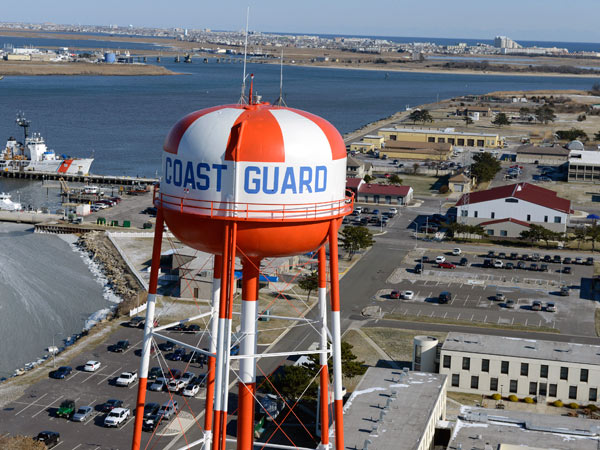
    The U.S. Coast Guard is investigating an incident in which a swastika was reportedly drawn on a bathroom wall at the Coast Guard’s training center in Cape May.

    “Following discovery of a hate symbol drawn on a bathroom wall in a building at Training Center Cape May, the Coast Guard immediately referred the matter to the Coast Guard Investigative Service for investigation — consistent with longstanding Coast Guard policy. This hate symbol was immediately removed,” a spokesperson for the service branch said in an email Monday.

    The Washington Post first reported on Monday that the hate symbol — which the Coast Guard did not specify —was a hand-drawn swastika that was discovered Thursday evening in the men’s bathroom.

    Adm. Kevin Lunday, the Coast Guard commandant, was informed about the incident on Saturday, the Post reported.

    “The Commandant immediately traveled to Training Center Cape May and held a mandatory All Hands with the nearly 900 recruits and staff to address the incident directly, reinforce the Coast Guard’s strong standards and policies, and reaffirm the Service’s dedication to accountability through our core values,” the Coast Guard spokesperson said.

    In a statement, Lunday declared: “Anyone who adheres to or advances hate or extremist ideology — get out. Leave. You don’t belong in the United States Coast Guard and we reject you.”

    Lunday added: “We will not allow anyone to put a stain of hate on our United States Coast Guard. We will not be defined by the cowardly acts, but instead be defined by our unwavering response and our resolve to defeat them.”

    The spokesperson said that the Coast Guard is “committed to maintaining a workplace that is safe, professional, and respectful for every member of our workforce. Any behavior that undermines these standards will be addressed swiftly and seriously.”

    Late last year, the Post reported that the Coast Guard had planned to downgrade swastikas and nooses in its workplace harassment manual as being “potentially divisive” rather than hate symbols.

    In December, Lunday announced that the revisions were “completely removed” from the policy manual and that swastikas and nooses would still be considered overt hate symbols, the Post reported.

  • Former ICE instructor says agency has slashed training for new officers

    Former ICE instructor says agency has slashed training for new officers

    A former instructor for U.S. Immigration and Customs Enforcement on Monday accused the agency of dramatically slashing training standards for new officers and lying to Congress about it as the Trump administration seeks to rapidly expand its mass deportation operation.

    Ryan Schwank, who resigned from his job at an ICE academy in Georgia last week, told congressional Democrats at a hearing that the agency eliminated 240 hours of “vital classes” from a mandatory 580-hour training program, including instruction about the legal boundaries for the use of force, how to safely handle firearms, and the proper way to detain and arrest immigrants.

    “Law enforcement is a deadly serious biz. It is not a place for shortcuts,” Schwank said. “Deficient training can and will get people killed. … ICE is lying to Congress and the American people about the steps it is taking to ensure that 12,000 officers can faithfully uphold the Constitution and perform their jobs.”

    Ahead of the hearing, Schwank provided a joint panel of House and Senate Democrats copies of internal ICE documents that he said shows the extent of the cuts.

    Schwank’s testimony comes two weeks after acting ICE director Todd M. Lyons testified in front of separate House and Senate committees amid growing public outrage over the aggressive tactics of ICE and other federal immigration officers. Two U.S. citizens were fatally shot by federal officers in Minneapolis last month.

    During his testimony in the House on Feb. 10, Lyons responded to questions about the agency’s training program by saying it has not reduced the “meat of the training” but has sought to reduce the time it takes to get officers into the field. He said training used to take place five days a week for eight hours a day but has been changed to six days a week for 12 hours per day.

    In a statement Monday, the Department of Homeland Security said ICE recruits receive 56 days of training before beginning their assignments, along with an average of 28 additional days of “on-the-job-training.” DHS said recruits are receiving the same total hours of training as they always have.

    “No training hours have been cut. Our officers receive extensive firearm training, are taught de-escalation tactics, and receive Fourth and Fifth Amendment comprehensive instruction,” said Lauren Bis, a spokesperson for the department.

    Schwank said that among the classes eliminated were 16 hours of firearms training. He also said that a two-hour class on the rights of protesters was shortened into 10 minutes of discussion during a lecture on “the concept of seizure.”

    Schwank was separately asked to review an internal memo, signed by Lyons, that said ICE officers are authorized to use administrative warrants, approved by senior ICE officials, to enter private residences. That marked a shift from the federal government’s long-standing position that officers must obtain judicial warrants signed by federal judges.

    Schwank said he was instructed to train the recruits on the policy but was told he could not talk about the information publicly or even take notes after reading the memo. The Washington Post and other news outlets reported on the memo last month.

    “ICE is teaching cadets to violate the Constitution and attempting to cloak it in secrecy by demanding I lie about it,” he said.