Category: Nation & World

  • Bill would restrict Trump administration’s push for ICE detention centers

    Bill would restrict Trump administration’s push for ICE detention centers

    Sens. Jeanne Shaheen (D., N.H.) and Maggie Hassan (D., N.H.) introduced a bill Monday that would bar the Department of Homeland Security from opening new immigration detention centers without state and local officials’ consent.

    The legislation is a response to the Trump administration’s plans to convert warehouses into new processing sites and detention centers across the country as part of President Donald Trump’s campaign to deport millions of undocumented immigrants. Reps. Chris Pappas (D., N.H.) and Maggie Goodlander (D., N.H.) plan to introduce a companion bill in the House.

    The legislation has little chance of passing the Republican-controlled Congress, but it reflects the qualms that some lawmakers in both parties have expressed about the administration’s push to set up facilities in their states and districts, some of which could house as many as 10,000 people.

    “Our new bill responds directly to the concerns we’ve heard from local officials in towns like Merrimack, New Hampshire, and across the country,” Shaheen said in a statement. “They were never consulted about ICE’s plans, and they don’t want the chaos of new detention facilities in their communities.”

    Shaheen and Hassan are introducing the bill as Democrats demand the Trump administration agree to new restrictions on DHS after federal agents last month shot and killed two U.S. citizens in Minneapolis. Much of DHS shut down earlier this month after the two sides failed to strike a deal to send more money to the agency.

    The bill would prohibit DHS from setting up new processing sites or detention centers unless local officials and the state’s governor sign off.

    At least one governor — Pennsylvania Gov. Josh Shapiro (D) — has said he opposes the administration’s plans to set up a new detention center in his state.

    “I don’t think this is helpful to have in our community,” Shapiro said this month. “I don’t want it here, and we’re exploring what options we have.”

    The bill would also require the administration to notify Congress and to accept public comment for at least 60 days before setting up new detention centers or processing sites.

    U.S. Immigration and Customs Enforcement has bought facilities in Maryland, Pennsylvania, New Jersey, Georgia, Michigan, Texas, and Arizona to detain undocumented immigrants, according to an ICE spokesperson. The administration undertook “community impact studies and a rigorous due diligence process to make sure there is no hardship on local utilities or infrastructure prior to purchase,” according to the spokesperson.

    Republicans in Congress largely support Trump’s deportation campaign, which they argue is necessary after the arrival of millions of undocumented immigrants under the Biden administration. Republicans included $45 billion for expanding immigration detention in the tax and spending law that Trump signed last year. But some Republican lawmakers have expressed concerns about the administration’s plans to set up new detention centers and processing sites in their states and districts.

    Sen. Roger Wicker (R., Miss.) relayed local officials’ concerns about a proposed facility in his state to Homeland Security Secretary Kristi L. Noem earlier this month. “I appreciate her for agreeing to look elsewhere,” Wicker wrote on X.

    Rep. Dan Meuser (R., Pa.) said he is working to set up a meeting between DHS officials and local leaders in his district, where DHS bought two facilities that it plans to convert into a processing site and detention center.

    “These recent developments have raised serious concerns, and I share many of the same questions being raised by local officials and residents,” Meuser said in a statement.

    Sen. Dave McCormick (R., Pa.) said in a statement that his team was also in touch with DHS officials and local leaders to assess the impact of the facilities, including the possibility of thousands of new jobs. ICE estimates the two facilities together would create more than 11,000 jobs.

    Rep. Mike Collins (R., Ga.) and his aides have been in frequent communication with ICE and local leaders about a planned detention center in his district that would hold up to 9,000 people, according to Emma Gibson, a Collins spokesperson. The district is a Republican stronghold, but the city manager of Social Circle — the small city where the detention center would open — and many residents oppose the project.

    Collins supports Trump’s efforts “to detain and deport criminal illegal aliens who flooded across our border under Joe Biden, but he also shares the concerns of the Social Circle community that the city may not have the infrastructure or capacity to support the demands of this facility,” Gibson wrote in an email to the Washington Post.

    Democrats appear to have had less success in pushing back on the administration’s plans to build new detention centers and processing sites. Hassan told Todd M. Lyons, the acting ICE director, in a hearing last week that DHS had failed to consult local leaders about its plans to open a facility in her state.

    “I would hope that I would get the same treatment to that Senator Wicker got — which is to say the town doesn’t want the dentition center, so please cancel it,” Hassan said. “And I would expect that my partisan affiliation shouldn’t make any difference to that determination.”

    Lyons said in the hearing that DHS officials had spoken with New Hampshire Gov. Kelly Ayotte (R) about the project’s economic impact. ICE did not say whether it plans to move forward with the facility.

    Sen. John Fetterman of Pennsylvania — the only Senate Democrat who voted for legislation this month to fund DHS — has come out against the proposed facilities in his state, warning that they would “do significant damage to these local tax bases, set back decades-long efforts to boost economic development, and place undue burdens on limited existing infrastructure in these communities.”

    Democrats from Georgia, New Jersey, and Arizona have also voiced concerns about proposed detention centers and processing sites.

    Sens. Ruben Gallego and Mark Kelly, both Democrats of Arizona, wrote to Noem and Lyons this month seeking more information by Feb. 17 about DHS’ purchase of a warehouse in Surprise, Ariz., that it plans to turn into a processing site.

    “Given the scale of this project, the total lack of community involvement, the concerns we have heard from local leaders, and the potential implications for the community and region, we urge the Department to immediately provide answers about this project before it moves forward,” Gallego and Kelly wrote.

    The Democrats have not heard back from DHS, according to Kelly’s office.
  • FBI Director Kash Patel defends partying with U.S. Olympic ice hockey team

    FBI Director Kash Patel defends partying with U.S. Olympic ice hockey team

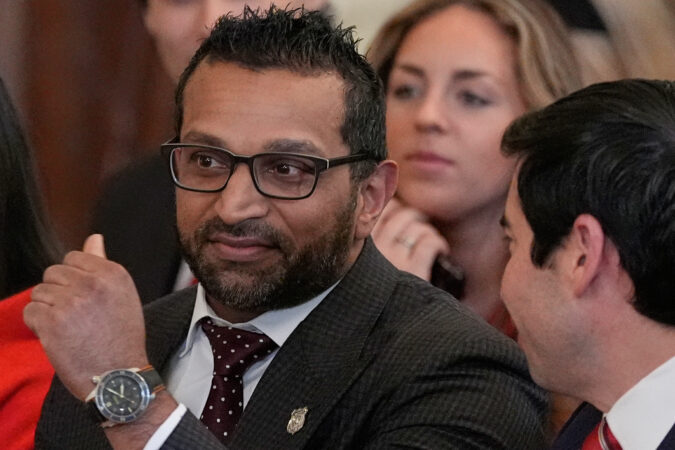
    FBI Director Kash Patel is defending himself after videos showed him drinking and partying with the U.S. men’s hockey team at the Olympics on Sunday, during a weekend in which several emergencies unfolded for the law enforcement bureau.

    As clips of Patel raucously celebrating with Team USA went viral Sunday night, Patel took to social media to say the men’s hockey team had invited him into the locker room to celebrate with them after it had clinched the gold medal in an overtime victory over Canada.

    “For the very concerned media — yes, I love America and was extremely humbled when my friends, the newly minted Gold Medal winners on Team USA, invited me into the locker room to celebrate this historic moment with the boys — Greatest country on earth and greatest sport on earth,” Patel, an avid hockey fan, wrote on X.

    In one video shared by a ProPublica reporter, Patel appears to be chugging a beer, spraying the bottle’s contents about the locker room, and ecstatically pumping his fists, as the team breaks out in a rendition of “Courtesy of the Red, White and Blue (The Angry American),” a country anthem about American defiance written after the 9/11 terrorist attacks.

    Another video showed Patel flashing a shaka, or “hang ten,” sign next to team center Dylan Larkin as both mug for the camera. In yet another video — reshared by an FBI spokesperson — Patel holds a phone out as President Donald Trump, apparently on speakerphone, invites the team to the White House and says he will also have to invite the gold-medal-winning U.S. women’s hockey team or “be impeached.”

    “I’m on it,” Patel tells Trump. “I’m f—ing on it.”

    On Monday, NBC News reported that the U.S. women’s hockey team said it was declining Trump’s invitation.

    “We are sincerely grateful for the invitation extended to our gold medal–winning U.S. Women’s Hockey Team and deeply appreciate the recognition of their extraordinary achievement,” a USA Hockey spokesperson said. “Due to the timing and previously scheduled academic and professional commitments following the Games, the athletes are unable to participate.”

    “They were honored to be included and are grateful for the acknowledgment,” the spokesperson added.

    The White House did not immediately respond to a request for comment.

    The locker room videos prompted public criticism of Patel and questions about his judgment during a critical time for the bureau. Hours earlier, an armed man was fatally shot by U.S. Secret Service agents and a sheriff’s deputy after he breached the secure perimeter of Trump’s Mar-a-Lago estate. Patel had promised from his official X account that the FBI, the lead agency investigating the incident, was “dedicating all necessary resources” to the matter.

    The FBI is also still involved in a high-profile search for Nancy Guthrie, the mother of Today show anchor Savannah Guthrie, who remains missing after more than three weeks. U.S. intelligence agencies also warned American citizens in Mexico to shelter in place amid a wave of violence across that country after “El Mencho,” the head of the Jalisco New Generation Cartel, was killed by Mexican security forces Sunday.

    “There was a threat at the president’s residence at MAL, Americans in Mexico are facing major threats by cartel members, Nancy Guthrie is still missing, and our FBI Director thinks he’s a frat bro?!” Xochitl Hinojosa, a former Justice Department spokesperson under the Biden administration, wrote on X.

    Several others resurfaced a clip of Patel in 2023 criticizing then-FBI Director Christopher A. Wray for using a government jet for personal travel.

    “Maybe we ground that plane. [Or charge him] $15,000 every time it takes off. Just a thought,” Patel said then.

    FBI representatives have steadfastly defended Patel’s trip to Italy and denied he used the FBI’s taxpayer-funded Gulfstream jet for personal travel, for which Democrats have investigated him in the past. In the days leading up to the Olympics men’s hockey final, FBI spokesperson Ben Williamson clashed with several news outlets that had reported Patel had used the government jet to fly to Italy with plans to attend hockey games at the Olympics.

    Williamson said Thursday on X that Patel’s trip had been planned months ago and would include meetings with Italian law enforcement and other security officials.

    “The FBI also has a major role in Olympic security … so we have a U.S. consulate briefing on Olympic security and current FBI posture, as well as thanking FBI personnel on the ground,” Williamson added then.

    Williamson also said “any personal portion [of the trip] would be reimbursed,” according to an email to MS NOW that he posted Sunday.

    Representatives for the FBI did not immediately respond for a request for additional comment Monday morning, as well as questions about whether Patel’s attendance at Olympic events would be considered personal travel and, if so, how much Patel would reimburse the bureau.

  • Rob Reiner’s son pleads not guilty to murder in the killing of his parents

    Rob Reiner’s son pleads not guilty to murder in the killing of his parents

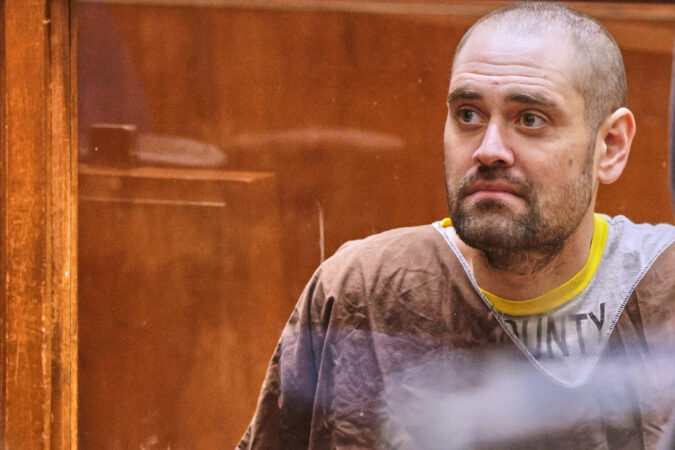
    LOS ANGELES — Nick Reiner, the 32-year-old son of Hollywood luminary Rob Reiner and Michele Singer Reiner, pleaded not guilty Monday to two counts of first-degree murder more than two months after their deaths, denying for the first time that he fatally stabbed his parents.

    Reiner’s attorney, Deputy Public Defender Kimberly Greene, entered the plea on his behalf as he stood behind glass in an enclosed custody area of the packed Los Angeles courtroom.

    The third of Rob Reiner’s four children, Nick Reiner has been held without bail since his arrest hours after beloved actor-director Reiner and photographer and producer Singer were found dead on Dec. 14 at their home in the upscale Brentwood section of Los Angeles.

    Reiner appeared in court with a shaved head and light facial hair, wearing brown jail clothes. He talked to his lawyer briefly through the glass before the judge began the hearing. At one point a low door in the enclosure was opened and they crouched down and spoke face-to-face. During the hearing, he spoke only to answer “yes” when the judge asked if he waived his right for next steps of the case to proceed speedily.

    Reiner was not wearing the suicide prevention smock he wore in his first court appearance in December days after his parent’s killings. It was the third time he had been set to enter a plea, but issues surrounding the high-stakes, closely watched case, including a surprising change in defense lawyers, kept it from happening until Monday.

    The judge told Reiner to return to court April 29 for the scheduling of a preliminary hearing where prosecutors will present evidence and a new judge will decide if it’s enough for Reiner to go to trial.

    The case will now be handled by longtime Los Angeles Superior Court Judge Sam Ohta. He has had many prominent murder, manslaughter, and public corruption cases in his courtroom in recent years, but none have drawn the national media attention this case has.

    District Attorney Nathan Hochman said outside court that his office still hasn’t decided whether it will seek the death penalty for Reiner. Hochman said the death penalty decision “goes through a very rigorous process. We will be looking at all aggravating and mitigating circumstances.”

    Reiner’s not guilty plea is common for criminal defendants at this stage of the case, whatever their longer-term plan might be.

    Reiner’s former attorney, the high-profile private lawyer Alan Jackson, had to quit the case at the previous hearing, citing reasons beyond his and his client’s control that ethics wouldn’t let him reveal. But in parting, he adamantly declared that “pursuant to the laws of California, Nick Reiner is not guilty of murder,” a stance made official by Reiner’s plea Monday.

    Authorities have said nothing about possible motives, and leaks in the case have been virtually nonexistent on both sides, leaving some of the most basic questions about the killing unanswered publicly.

    Rob Reiner, 78, and Michele Singer Reiner, 70, died from “multiple sharp force injuries,” the LA County Medical Examiner said in initial findings. Authorities said they were killed hours before the bodies were discovered. A court order has prevented the public release of more details.

    Deputy District Attorney Habib Balian said Monday that his office is still awaiting the full autopsy report from the medical examiner, but all other evidence has been turned over to the defense.

    Rob Reiner was a prolific director whose work included some of the most memorable and endlessly watchable movies of the 1980s and ’90s. His credits included This is Spinal Tap, Stand By Me, A Few Good Men, and When Harry Met Sally… , during whose production he met photographer Michele Singer and married her soon after.

  • Judge Cannon orders secrecy for report on Trump classified-documents case

    Judge Cannon orders secrecy for report on Trump classified-documents case

    A federal judge in Florida blocked public release of special counsel Jack Smith’s extensive report on the classified-documents case against President Donald Trump — a resounding victory for Trump’s efforts to block public viewing of what probably would be damaging details about his retention of classified materials after he left the White House in 2021.

    The decision Monday morning from U.S. District Judge Aileen M. Cannon resulted from litigation that has dragged on for more than a year in her courtroom. Cannon ruled that releasing the special counsel report could violate grand jury secrecy rules and could result in impugning the presumption of innocence for Trump and his co-defendants in a case that did not result in guilty verdicts.

    The ruling can be appealed. Although Trump and the Justice Department both opposed the public release of the report, First Amendment advocacy groups and media outlets pushed in Cannon’s court for release.

    Smith charged Trump in 2023 with 40 counts of illegally retaining classified defense information and obstructing government efforts to retrieve the materials. Two of Trump’s personal aides were charged with obstruction alongside him.

    Cannon dismissed those charges in a decision that broke with legal precedent, ruling that Smith was unlawfully appointed and therefore had no authority to bring charges. Her decision did not touch on the merits of the case, which Trump aides at the time believed was the strongest of the criminal cases against Trump that were brought during the Biden administration.

    Smith appealed the ruling but dropped the appeal after Trump won the 2024 presidential election, citing federal regulations that say a sitting president cannot be prosecuted.

    In her Monday ruling, Cannon lambasted Smith for compiling the report even though she dismissed the charges in 2024. Using the discovery in the case to complete the report amounted to circumventing her ruling, she said.

    In the final days before Trump took office, Smith submitted the final report to then-Attorney General Merrick Garland. Garland did not push to release it because, at the time, an appeal of Cannon’s dismissal order was still pending as the Justice Department tried to resurrect the case against Trump’s two co-defendants.

    “To say this chronology represents, at a minimum, a concerning breach of the spirit of the Dismissal Order is an understatement, if not an outright violation of it,” Cannon wrote.

    “The Court need not countenance this brazen stratagem or effectively perpetuate the Special Counsel’s breach of this Court’s own order,” she continued.

    Garland made public the first volume of Smith’s report, which detailed the case that prosecutors built against Trump over his alleged attempts to obstruct the 2020 election results. For 137 pages, Smith detailed the incriminating evidence he says he collected against Trump over his two-year investigation and said he was confident that he had ample evidence to obtain a conviction in court.

    That case also never made it to trial, with the Justice Department asking a judge to dismiss it in the final weeks before Trump took office for his second term.

    The second volume of the special counsel report was expected to similarly detail the incriminating evidence Smith collected against Trump and reveal what would have been the special counsel’s strategy at court.

    Prosecutors already said that some of the documents found in the FBI search of Mar-a-Lago, Trump’s Florida home and private club, contained information about top-secret U.S. operations so closely guarded that many senior national security officials were kept in the dark about them.

    Trump and his attorneys first asked Cannon to block the release of the report before he was inaugurated for his second term. Cannon temporarily blocked the release on Jan. 7, 2025 — about two weeks before Trump took office.

    Once Trump regained the presidency, the Justice Department said it opposed releasing the report. Trump, in his personal capacity, also filed requests in Cannon’s court to block the release.

    Smith has testified to Congress in recent months about his cases against Trump. He has said that he is limited in what he can reveal, in part because of Cannon’s prohibition on releasing the report.

    It is common practice for special counsels to release reports even if their investigations do not result in guilty verdicts.

    Special counsel Robert K. Hur, for example, released a report in 2024 detailing his investigation into whether President Joe Biden unlawfully retained classified materials after his vice presidency. The damaging report explained why Hur opted against charging Biden.

    Cannon attempted to differentiate the release of Smith’s report from other cases, saying that there was no precedent for releasing a report in a case in which the charges have been dismissed and the defendants maintain their innocence.

    Trump’s request to dismiss the case on the grounds that Smith was unlawfully appointed was considered a long shot when he filed it, and Cannon’s ruling was unexpected and unusual.

    “The Court strains to find a situation in which a former special counsel has released a report after initiating criminal charges that did not result in a finding of guilt, at least not in a situation like this one, where the defendants contested the charges from the outset and still proclaim their innocence,” Cannon wrote.

  • 25 Mexican National Guard troops were left dead during an operation that killed cartel leader ‘El Mencho’

    25 Mexican National Guard troops were left dead during an operation that killed cartel leader ‘El Mencho’

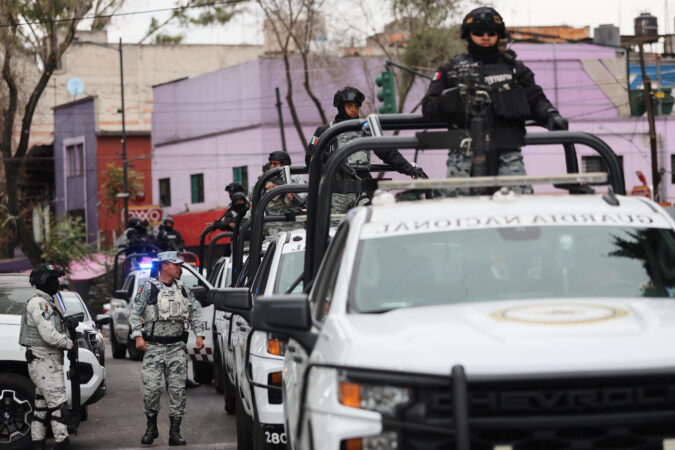
    GUADALAJARA, Mexico — Mexico Security Secretary Omar García Harfuch said Monday 25 members of the National Guard were left dead in Jalisco in six separate attacks after the killing of Jalisco New Generation Cartel leader Nemesio Oseguera Cervantes.

    Oseguera Cervantes, known as “El Mencho” was the boss of one of the fastest-growing criminal networks in Mexico, notorious for trafficking fentanyl, methamphetamine and cocaine to the United States and staging brazen attacks against government officials who challenged it.

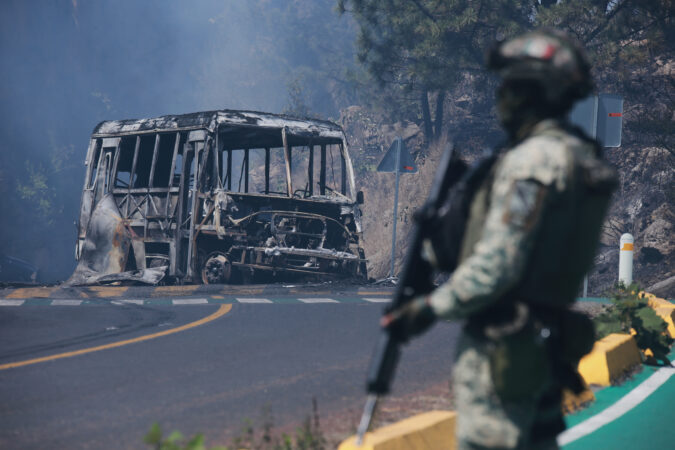
    He was killed during a shoot-out in his home state of Jalisco as the Mexican military attempted to capture him. Cartel members responded with violence across the country, blocking roads and setting fire to vehicles.

    Also killed were a prison guard, an agent from the state prosecutor’s office and a woman whom García Harfuch did not identify. He also said some 30 criminal suspects were killed in Jalisco and four others were killed in Michoacan.

    Several Mexican states canceled school on Monday, with local and foreign governments warning their citizens to stay inside after widespread violence erupted.

    President Claudia Sheinbaum urged calm Monday and authorities said all of the more than 250 cartel roadblocks across 20 states had been cleared. The president was expected to address the situation at her daily news briefing Monday morning.

    The White House confirmed that the U.S. provided intelligence support to the operation to capture the cartel leader and applauded Mexico’s army for taking down a man who was one of the most wanted criminals in both countries.

    Mexico hoped the death of the world’s biggest fentanyl traffickers would ease Trump administration pressure to do more against the cartels, but many remained hunkered down and on edge as they waited to see the powerful cartel’s reaction.

    Many fear more violence

    The U.S. Embassy said via X that its personnel in eight cities and the state of Michoacan would shelter in place and work remotely Monday and it warned U.S. citizens in many parts of Mexico to do the same.

    Cars began circulating in Guadalajara before sunrise Monday with the start of the work week, a notable change from Sunday when Jalisco’s state capital and Mexico’s second-largest city was almost completely shut down as fearful residents stayed home.

    More than 1,000 people were stuck in Guadalajara’s zoo overnight, sleeping in buses. On Monday morning. mothers wrapped up in blankets carried their toddlers out of the buses for a much-needed bathroom break as police trucks guarded the area.

    Luis Soto Rendón, the zoo’s director, said many had been trapped there since 9 a.m. the day before, when violence broke out in Jalisco and the surrounding states. Families were left stranded, trying to distract their children, as they decided they couldn’t return home in nearby states like Zacatecas and Michoacan.

    “We decided to let people stay inside the zoo for their safety,” Soto said. “There are small children and senior citizens.”

    Irma Hernández, a 43-year-old hotel security guard in Guadalajara, arrived at work early Monday morning.

    She normally takes public transportation to work, but buses were not running and she had no way to cross the city. Her bosses organized a private car to pick her up. Her family, she said, was staying at home, too scared to leave.

    “I am worried because I don’t know how to get home if something happens,” she said.

    Passengers arriving at the city’s international airport Sunday night were told it was operating with limited personnel because of the burst of violence.

    Authorities in Jalisco, Michoacan and Guanajuato reported at least 14 other people killed Sunday, including seven National Guard troops.

    Videos circulating on social media Sunday showed tourists in Puerto Vallarta walking on the beach with smoke rising in the distance.

    A blow against a cartel could be a diplomatic coup

    David Mora, Mexico analyst for International Crisis Group, said the capture and outburst of violence marks a point of inflection in Sheinbaum’s push to crack down on cartels and relieve U.S. pressures.

    U.S. President Donald Trump has demanded Mexico do more to fight the smuggling of the often-deadly drug fentanyl, threatening to impose more tariffs or take unilateral military action if the country does not show results.

    There were early signs that Mexico’s efforts were well received by the United States.

    U.S. Ambassador Ron Johnson recognized the success of the Mexican armed forces and their sacrifice in a statement late Sunday. He added that “under the leadership of President Trump and President Sheinbaum, bilateral cooperation has reached unprecedented levels.”

    But it may also pave the way for more violence as rival criminal groups take advantage of the blow dealt to the CJNG, Mora said.

    “This might be a moment in which those other groups see that the cartel is weakened and want to seize the opportunity for them to expand control and to gain control over Cartel Jalisco in those states,” he said.

    “Ever since President Sheinbaum has been in power, the army has been way more confrontational, combative against criminal groups in Mexico,” Mora said. “This is signaling to the U.S. that if we keep cooperating, sharing intelligence, Mexico can do it. We don’t need U.S. troops on Mexican soil.”

    ‘El Mencho’ was a major target

    Oseguera Cervantes, who was wounded in the operation to capture him Sunday in Tapalpa, Jalisco, about a two-hour drive southwest of Guadalajara, died while being flown to Mexico City, the Defense Department said in a statement.

    During the operation, troops came under fire and killed four people at the location. Three more people, including Oseguera Cervantes, were wounded and later died, the statement said.

    White House press secretary Karoline Leavitt said via X that the U.S. government provided intelligence support for the operation. “‘El Mencho’ was a top target for the Mexican and United States government as one of the top traffickers of fentanyl into our homeland,” she wrote. She commended Mexico’s military for its work.

    The U.S. State Department had offered a reward of up to $15 million for information leading to the arrest of El Mencho. The Jalisco New Generation Cartel is one of the most powerful and fastest-growing criminal organizations in Mexico and began operating around 2009.

    In February 2025, the Trump administration designated the cartel as a foreign terrorist organization.

    Sheinbaum has criticized the “kingpin” strategy of previous administrations that took out cartel leaders, only to trigger explosions of violence as cartels fractured. While she has remained popular in Mexico, security is a persistent concern and since U.S. President Donald Trump took office a year ago, she has been under tremendous pressure to show results against drug trafficking.

    The Jalisco cartel has been one of the most aggressive cartels in its attacks on the military — including on helicopters — and is a pioneer in launching explosives from drones and installing mines. In 2020, it carried out a spectacular assassination attempt with grenades and high-powered rifles in the heart of Mexico City against the then head of the capital’s police force and now federal security secretary.

  • Mexican army kills leader of Jalisco New Generation Cartel during operation to capture him

    Mexican army kills leader of Jalisco New Generation Cartel during operation to capture him

    MEXICO CITY — The Mexican army killed the leader of the Jalisco New Generation Cartel, Nemesio Rubén Oseguera Cervantes, known as “El Mencho,” on Sunday, decapitating what had become Mexico’s most powerful cartel and giving the government its biggest prize yet to show the Trump administration its efforts.

    Oseguera Cervantes was wounded in an operation to capture him Sunday in Tapalpa, Jalisco, about a two-hour drive southwest of Guadalajara, and he died while being flown to Mexico City, the Defense Department said in a statement. The state is the base of the cartel known for trafficking huge quantities of fentanyl and other drugs to the United States.

    During the operation, troops came under fire and killed four people at the location. Three more people, including Oseguera Cervantes, were wounded and later died, the statement said. Two others were arrested and armored vehicles, rocket launchers, and other arms were seized. Three members of the armed forces were wounded and receiving medical treatment.

    The U.S. Embassy in Mexico said on X that the operation was carried out by Mexican special forces “within the framework of bilateral cooperation, with U.S. authorities providing complementary intelligence.”

    Roadblocks and burning vehicles

    The killing of the powerful drug lord set off several hours of roadblocks with burning vehicles in Jalisco and other states. Such tactics are commonly used by the cartels to block military operations. Jalisco canceled school in the state for Monday.

    Videos circulating on social media showed plumes of smoke billowing over the tourist city of Puerto Vallarta in Jalisco, and people sprinting through the airport of the state’s capital in panic. On Sunday afternoon, Air Canada announced it was suspending flights to Puerto Vallarta “due to an ongoing security situation” and advised customers not to go to their airport.

    In Guadalajara, the state capital, burning vehicles blocked roads. Mexico’s second-largest city is scheduled to host matches during this summer’s soccer World Cup.

    The U.S. State Department warned U.S. citizens in Jalisco, Tamaulipas, Michoacan, Guerrero, and Nuevo Leon states to remain in safe places due to the ongoing security operations. Canada’s embassy in Mexico warned its citizens in Puerto Vallarta to shelter in place and generally to keep a low profile in Jalisco.

    Jalisco Gov. Pablo Lemus told residents to stay at home and suspended public transportation.

    U.S. had offered up to $15 million for his capture

    The U.S. State Department had offered a reward of up to $15 million for information leading to the arrest of El Mencho. The Jalisco New Generation Cartel, known as CJNG, is one of the most powerful and fastest growing criminal organizations in Mexico and was born in 2009.

    In February, the Trump administration designated the cartel as a foreign terrorist organization.

    Mexican President Claudia Sheinbaum, like her predecessor, has criticized the “kingpin” strategy of previous administrations that took out cartel leaders only to trigger explosions of violence as cartels fractured. While she has remained popular in Mexico, security is a persistent concern, and since U.S. President Donald Trump took office a year ago, she has been under tremendous pressure to show results against drug trafficking.

    On Sunday, Sheinbaum applauded Mexican security forces and called for calm in a post on X.

    A Jalisco state official who requested anonymity because they were not authorized to speak publicly said that a member of the National Guard died in Tapalpa during the operation, a jail guard was killed at a lockup in Puerto Vallarta when prisoners rioted, and an agent from the Jalisco state prosecutor’s office was killed in Guadalajara. Details were not immediately available.

    Known as an aggressive cartel

    The Jalisco cartel has been one of the most aggressive cartels in its attacks on the military — including on helicopters — and is a pioneer in launching explosives from drones and installing mines. In 2020, it carried out a spectacular assassination attempt with grenades and high-powered rifles in the heart of Mexico City against the then head of the capital’s police force, who is now federal security secretary.

    The DEA considers the cartel to be as powerful as the Sinaloa cartel, one of Mexico’s most infamous criminal groups, with a presence in all 50 U.S. states. It is one of the main suppliers of cocaine to the U.S. market and, like the Sinaloa cartel, earns billions from the production of fentanyl and methamphetamines. Sinaloa, however, has been weakened by infighting after the loss of its leaders Ismael “El Mayo” Zambada and Joaquín “El Chapo” Guzmán, both in U.S. custody.

    Oseguera Cervantes, 59, was originally from Aguililla in the neighboring state of Michoacan. He had been significantly involved in drug trafficking activities since the 1990s. When he was younger, he migrated to the U.S. where he was convicted of conspiracy to distribute heroin in the U.S. District Court for the Northern District of California in 1994 and served nearly three years in prison.

    Following his release from custody, Oseguera Cervantes returned to Mexico and reengaged in drug trafficking activity with drug lord Ignacio Coronel Villarreal, alias “Nacho Coronel.” After Villarreal’s death, Oseguera Cervantes and Erik Valencia Salazar, alias “El 85,” created the Jalisco New Generation Cartel around 2007.

    Initially, they worked for the Sinaloa Cartel, but eventually split and for years the two cartels have battled for territory across Mexico.

    Indicted several times in the U.S.

    Since 2017, Oseguera Cervantes has been indicted several times in the United States District Court for the District of Columbia.

    The most recent superseding indictment, filed on April 5, 2022, charges Oseguera Cervantes with conspiracy and distribution of controlled substances (methamphetamine, cocaine, and fentanyl) for the purpose of illegal importation into the United States and use of firearms during and in connection with drug trafficking offenses. Oseguera Cervantes is also charged under the Drug Kingpin Enforcement Act for directing a continuing criminal enterprise.

    Last year, people searching for missing relatives found piles of shoes and other clothing, as well as bone fragments, at what authorities later said was a Jalisco cartel recruitment and training site.

  • After a deadly raid, an AI power struggle erupts at the Pentagon

    After a deadly raid, an AI power struggle erupts at the Pentagon

    One of the nation’s leading artificial intelligence firms is negotiating whether it can continue to work with the military, according to people familiar with the discussions, after Pentagon officials called their once-close relationship into question in the wake of January’s raid to capture Venezuelan leader Nicolás Maduro.

    Anthropic’s Claude model is one of a handful of leading AI systems that the Pentagon is using to rapidly build its capabilities in cyberwarfare, improve the performance of its autonomous weapons systems, and increase the efficiency of its personnel.

    Defense Secretary Pete Hegseth’s team has insisted in recent weeks that the military must have the freedom to use the powerful tools as it sees fit. Officials say other leading AI firms have gone along with the demand. ChatGPT maker OpenAI, Google, and Elon Musk’s xAI have agreed to allow the Pentagon to use their systems for “all lawful purposes” on unclassified networks, a Defense official said, and are working on agreements for classified networks. (The Washington Post has a content partnership with OpenAI.)

    The companies did not respond to requests for comment.

    But Anthropic — which has sought to position itself as the most safety-minded of the companies — has corporate principles that may keep it from giving the Pentagon carte blanche. Unlike many traditional weapons, powerful AI systems can be deployed in many ways not foreseen by their designers, and the dispute has raised questions about who should have the final say over their use by the military. While Anthropic has not said exactly what its qualms are with the Pentagon’s demands, its chief executive has recently warned of the dangers of autonomous weapons and AI-powered mass surveillance.

    In a statement to the Washington Post, Anthropic said it is “committed to using frontier AI in support of U.S. national security.”

    “Claude is used for a wide variety of intelligence-related use cases across the government, including the [Defense Department], in line with our Usage Policy,” Anthropic said. “We are having productive conversations, in good faith, with [the Defense Department] on how to continue that work and get these complex issues right.”

    Until recent weeks Anthropic had been in an enviable position, with a $200 million contract and its technology uniquely approved for use within the Pentagon’s classified networks. That quickly began to change, Trump administration officials say, following Anthropic’s response to its recent use by the Pentagon in the Maduro operation.

    Technology developed by defense firm Palantir and Anthropic’s Claude were used in preparation for the Jan. 3 raid, according a person familiar with the assault, who spoke on the condition of anonymity to share confidential details about the operation. During the raid, scores of Maduro’s security guards and Venezuelan service members were killed.

    After the attack, a senior defense official said, an executive from Anthropic discussed the raid with an executive at Palantir, asking whether Anthropic’s tools had been used. The Palantir executive relayed the question to the Defense Department, saying it implied that Anthropic might have disapproved of how Claude had been used, the official said. That prompted department leaders to call into doubt whether the company could be fully relied on.

    “They expressed concern over the Maduro raid, which is a huge problem for the department,” one administration official said.

    However, Anthropic said it had not discussed any specific operations with the Defense Department nor “discussed this with, or expressed concerns to, any industry partners outside of routine discussions on strictly technical matters.”

    The dispute appears to run deeper than any questions over the attack on Venezuela. Hegseth sees AI dominance as a must-have capability and his directives have pressed the military to move fast to embrace the technology. In January, he said that “speed wins” in an AI-driven future, and he has ordered the Pentagon to unblock data for AI to train, while pushing the department to move from “campaign planning to kill chain execution.”

    “We must approach risk tradeoffs, ‘equities,’ and other subjective questions as if we were at war,” Hegseth wrote in the January 2026 directive.

    Just over two weeks after Hegseth’s directive came down, Dario Amodei, Anthropic’s co-founder and chief executive, published an essay sketching a potential dystopia in which AI empowers a new generation of unstoppable weapons and surveillance tools.

    “We should worry about them in the hands of autocracies, but also worry that because they are so powerful, with so little accountability, there is a greatly increased risk of democratic governments turning them against their own people to seize power,” Amodei wrote about swarms of AI-enabled drones.

    Such weaponry is likely still many years away, but failing to reach an agreement could quickly have far-reaching consequences for the company.

    The Pentagon has suggested that it could be branded a “supply chain risk,” something that would not only impact Anthropic, but any firm that uses the company’s AI. The designation has typically been aimed at Chinese and Russian companies.

    “We may require that all our vendors and contractors certify that they don’t use any Anthropic model,” a defense official told the Post.

    In the past, firms have been able to have riders in their contracts with the Pentagon indemnifying them from liability if their technology is used in an unlawful way and allowing them to bind the government to only use the technology for lawful purposes.

    But it may be unreasonable for firms contracting with the Pentagon to try to set limitations on how their rapidly evolving technology can be applied, said Frank Kendall, who served as Air Force secretary during the Biden administration and oversaw its development of a fleet of autonomous warplanes.

    “The military’s function is the application of violence, and if you’re going to give anything to the Defense Department, it’s likely going to be used to help kill people,” Kendall said.

    The administration has held that its actions — which also include U.S. strikes on alleged drug boats in the Caribbean, its deployment of active duty troops on U.S. soil, and its decision to use lethal force in Minneapolis, killing two U.S. citizens — have been lawful. But the Trump administration has also fired many of the independent military and Justice Department lawyers who would have had the ability to challenge the legality of those usages.

    “If you’re worried about this administration doing unlawful things, you should just not work with them,” Kendall said.

    The Pentagon has been integrating AI into some of its weapons systems for years but never at the speed at which it is now. That’s partly driven by its competition with China and evolving threats like hypersonic missiles — where a human’s reaction time can be inadequate.

    But there’s also been an emphasis on making sure AI’s unpredictable learning could be fenced in.

    At Edwards Air Force Base in 2024, the Air Force flew its first AI fighter jet in dogfights — and the jet, an F-16 that carried the AI in a computer in the back, was already besting elite test pilots by shaving milliseconds off turns and maneuvers. Even then, there was a human in the loop, a test pilot inside the jet who could disengage the AI as needed — and the AI itself was kept in a system that was not connected to any networks. As the Air Force moved forward withe the AI, it said making sure the data it learned on was clean was the priority, to avoid security risks.

    In 2023, the Biden administration instructed the Pentagon that any AI use in systems would require levels of review, anti-tamper mechanisms, and safeguards to ensure that humans would retain the decision on use of force.

    That policy is still in force but will be reviewed as needed, the administration official told the Post.

  • After Epstein revelations, Europe vows accountability while U.S. holds back

    After Epstein revelations, Europe vows accountability while U.S. holds back

    As the U.S. Justice Department demurs from new inquiries linked to the Epstein files, the approach by European authorities stands in stark contrast. On the other side of the Atlantic, governments are promising to hold the wealthy, powerful, and politically connected to account.

    Under public scrutiny, officials in Britain, France, Norway, and beyond have opened a flurry of investigations and independent commissions to look into evidence of potential crimes in more than 3 million files related to convicted sex offender Jeffrey Epstein that were released last month by congressional order. In three weeks, the revelations have prompted resignations, raids, and other legal actions, none more notable than the detention Thursday of Andrew Mountbatten-Windsor, the younger brother of King Charles III, on suspicion of misconduct in office.

    “Nobody is above the law,” British Prime Minister Keir Starmer said on television shortly before the arrest.

    Starmer delivered that statement even as the tide of accountability knocked at the door of 10 Downing Street. Communications made public in the files showed that Peter Mandelson, a former British ambassador to the United States selected by Starmer, maintained closer ties to Epstein than previously disclosed. Those revelations sparked a flurry of calls for Starmer’s resignation — including from within his own Labour Party.

    The fallout in Britain comes as a former Norwegian prime minister, a former French minister, and other prominent figures on the continent face new investigations in what is fast shaping up to be a European exercise in accountability.

    As the Trump administration has portrayed Europe as in decline, some observers see the European response as evidence of the relative robustness of the rule of law in the continent’s democracies, compared with the concentration of power in Trump’s America.

    “In Norway and across Europe, the instinct has been transparency and formal investigations,” said Julie E. Stuestøl, a member of Norway’s parliament who serves on its justice committee. “In the U.S., it looks more like containment.”

    She added, “The contrast is striking.”

    Senior Democratic lawmakers in Washington are comparing the broad legal action across the Atlantic to the muted response in the United States.

    “The DOJ’s handling of the Epstein files is a travesty,” Sen. Charles E. Schumer (D., N.Y.) said in a post on X. “The White House press secretary says, ‘We are moving on.’ But, in France, the Paris prosecutor’s office just opened two investigations based on new leads from the released files. And in Britain, former prince Andrew has been arrested over ties to Epstein. When will there be justice in America?”

    Some analysts point out that the Epstein case has roiled the United States for years while the impact in Europe has been more of a slow burn that ignited with the release of the latest files.

    “One interpretation is that accountability still means something more in Europe than in America,” said Nathalie Tocci, director of the Rome-based Institute for International Affairs. “A less generous interpretation is that it is a newer shock in Europe than in the U.S.”

    The disclosures shook the country “to its core,” said Stuestøl, the Norwegian lawmaker whose party advocated for an independent commission. “People are tired of elites protecting elites behind closed doors,” which has made objections to the proposal untenable, she said.

    Epstein pleaded guilty in 2008 to two charges of soliciting prostitution, including one involving a minor. He was arrested on federal sex trafficking charges in 2019 and died in federal custody later that year. His death was ruled a suicide. Judges and lawmakers say that over decades, Epstein abused, trafficked and molested scores of girls, many of whom have come forward in court and in other public forums.

    Some prominent figures in the United States have resigned from their jobs or lost business after the documents revealed their relationships with Epstein, but none is known to have faced criminal charges. In Washington, efforts to hold people accountable for their involvement with Epstein have at times also fallen along partisan lines.

    President Donald Trump in November called on the Justice Department to examine the relationships between Epstein and several prominent Democrats, including former President Bill Clinton. Attorney General Pam Bondi tapped federal prosecutors in Manhattan to take on the job, but the Justice Department has not announced charges related to the inquiry.

    “I can’t talk about any investigations, but I will say the following, which is that in July, the Department of Justice said that we had reviewed the files, the Epstein files, and there was nothing in there that allowed us to prosecute anybody,” Deputy Attorney General Todd Blanche said in an interview with CNN’s Dana Bash earlier this month. “The entire world can look at and see if we got it wrong.”

    British authorities have not detailed the allegations against Mountbatten-Windsor, formerly known as Prince Andrew, whom police released Thursday night after officials searched two addresses in Norfolk and Berkshire. The new Epstein documents include photographs that appear to show Mountbatten-Windsor, who has denied any wrongdoing, crouched over a woman on a floor. They also indicate that he provided confidential government materials to Epstein at a time when the former prince was representing Britain as a trade envoy. The actions came months after he was stripped of his royal titles as a result of his ties to Epstein.

    The British government is considering whether to introduce legislation that would remove Mountbatten-Windsor from the line of royal succession “regardless of the outcome of the police investigation,” the BBC reported Saturday, citing Defense Minister Luke Pollard. Mountbatten-Windsor is eighth in line to the throne.

    Following the arrest, King Charles III issued a statement assuring the British public that the “the law must take its course” in the investigation of his brother.

    “There is a great irony that in the year we are celebrating the 250th anniversary of the birth of the American republic, the British monarchy is one that gives us a lesson in democracy,” said Dominique Moisi, a senior analyst of international affairs for the Institut Montaigne, a Paris-based think tank.

    Norwegian Prime Minister Jonas Gahr Støre said he supports investigating the links between prominent Norwegians and Epstein. Like other European leaders, Støre is under pressure to respond to voter outrage over the documents, which have implicated a global network of celebrities and politicians.

    “I think it has been quite shocking for people to get this insight into this world and the connection between people with power. And how it has affected people without power, who have been abused and subjected to assault,” Støre told Norwegian public broadcaster NRK.

    Earlier this month, former Norwegian prime minister Thorbjørn Jagland was charged with aggravated corruption over Epstein links. Police have searched residences of Jagland, who formerly chaired the Norwegian Nobel Committee. Authorities also said they are investigating whether Jagland received gifts, travel, or loans tied to his positions, including as head of the Council of Europe, the continent’s highest human rights watchdog.

    The moves against him came as it emerged that he had planned visits to Epstein’s homes in Paris and New York, and that Epstein had visited Jagland’s residence in Strasbourg, France. Jagland, who has denied criminal liability and said he would cooperate with authorities, could face up to 10 years in prison.

    Also this month, Norwegian diplomat Mona Juul resigned in the face of corruption charges after Norwegian media reported that Epstein left her children millions of dollars in his will. Authorities are looking into Epstein’s links to Juul and her husband, who played a role in back-channel talks between Israeli and Palestinian negotiators that led to the Oslo accords. Juul has denied criminal liability.

    Scandal hit the country’s stoic monarchy, too: Documents revealed that Norwegian Crown Princess Mette-Marit had stayed at an Epstein property in Palm Beach, Fla., and exchanged scores of messages with the disgraced financier. Her name appears repeatedly in the files, including after Epstein’s 2008 conviction for soliciting sex from a minor. The crown princess has expressed “deep regret” over her connection to Epstein.

    Authorities in Latvia and Lithuania opened investigations into the possible trafficking of young women and girls by Epstein. In Slovakia, the documents brought down Miroslav Lajčák, the prime minister’s national security adviser, who resigned over email exchanges with Epstein.

    In France, Paris prosecutor Laure Beccuau announced two new investigations related to the Epstein files, one focused on sex trafficking and the other on financial crimes. French authorities were already looking into former French culture minister Jack Lang and his daughter over allegations of tax fraud and receiving money from Epstein. That inquiry followed an investigation by French news outlet Mediapart, which detailed close ties to Epstein.

    Beccuau is calling for yet-unknown victims of Epstein to come forward.

  • NASA will return its moon rocket to the hangar for more repairs before astronauts strap in

    NASA will return its moon rocket to the hangar for more repairs before astronauts strap in

    CAPE CANAVERAL, Fla. — Grounded until at least April, NASA’s giant moon rocket is headed back to the hangar this week for more repairs before astronauts climb aboard.

    The space agency said Sunday it’s targeting Tuesday for the slow, 4-mile trek across Kennedy Space Center, weather permitting.

    NASA had barely finished a repeat fueling test Thursday, to ensure dangerous hydrogen fuel leaks were plugged, when another problem cropped up.

    This time, the rocket’s helium system malfunctioned, further delaying astronauts’ first trip to the moon in more than half a century.

    Engineers had just tamed the hydrogen leaks and settled on a March 6 launch date — already a month late — when the helium issue arose. The helium flow to the rocket’s upper stage was disrupted; helium is needed to purge the engines and pressurize the fuel tanks.

    “Returning to the Vehicle Assembly Building at Kennedy is required to determine the cause of the issue and fix it,” NASA said in a statement.

    NASA said the quick rollback preps preserve an April launch attempt, but stressed that will depend on how the repairs go. The space agency has only a handful of days any given month to launch the crew of four around the moon and back.

    The three Americans and one Canadian assigned to the Artemis II mission remain on standby in Houston. They will become the first people to fly to the moon since NASA’s Apollo program that sent 24 astronauts there from 1968 through 1972.

  • EU says U.S. must honor a trade deal after court blocks Trump tariffs

    EU says U.S. must honor a trade deal after court blocks Trump tariffs

    BRUSSELS — The European Union’s executive arm requested “full clarity” from the United States and asked its trade partner to fulfill its commitments after the U.S. Supreme Court struck down some of President Donald Trump’s most sweeping tariffs.

    Trump has lashed out at the court decision and said Saturday that he wants a global tariff of 15%, up from the 10% he announced a day earlier.

    The European Commission said the current situation is not conducive to delivering “fair, balanced, and mutually beneficial” trans-Atlantic trade and investment, as agreed to by both sides and spelled out in the EU-U.S. Joint Statement of August 2025.

    American and EU officials sealed a trade deal last year that imposes a 15% import tax on 70% of European goods exported to the United States. The European Commission handles trade for the 27 EU member countries.

    A top EU lawmaker said on Sunday he will propose to the European Parliament negotiating team to put the ratifying process of the deal on pause.

    “Pure tariff chaos on the part of the U.S. administration,” Bernd Lange, the chair of Parliament’s international trade committee, wrote on social media. “No one can make sense of it anymore — only open questions and growing uncertainty for the EU and other U.S. trading partners.”

    The value of EU-U.S. trade in goods and services amounted to 1.7 trillion euros ($2 trillion) in 2024, or an average of 4.6 billion euros a day, according to EU statistics agency Eurostat.

    “A deal is a deal,” the European Commission said. “As the United States’ largest trading partner, the EU expects the U.S. to honor its commitments set out in the Joint Statement — just as the EU stands by its commitments. EU products must continue to benefit from the most competitive treatment, with no increases in tariffs beyond the clear and all-inclusive ceiling previously agreed.”

    Jamieson Greer, Trump’s top trade negotiator, said in a CBS News interview Sunday morning that the U.S. plans to stand by its trade deals and expects its partners to do the same.

    He said he talked to his European counterpart this weekend and hasn’t heard anyone tell him the deal is off.

    “The deals were not premised on whether or not the emergency tariff litigation would rise or fall,” Greer said. “I haven’t heard anyone yet come to me and say the deal’s off. They want to see how this plays out.”

    Europe’s biggest exports to the U.S. are pharmaceuticals, cars, aircraft, chemicals, medical instruments, and wine and spirits. Among the biggest U.S. exports to the bloc are professional and scientific services like payment systems and cloud infrastructure, oil and gas, pharmaceuticals, medical equipment, aerospace products, and cars.

    “When applied unpredictably, tariffs are inherently disruptive, undermining confidence and stability across global markets and creating further uncertainty across international supply chains,” the commission added.

    As primarily a trading bloc, the EU has a powerful tool at its disposal to retaliate — the bloc’s Anti-Coercion Instrument. It includes a raft of measures for blocking or restricting trade and investment from countries found to be putting undue pressure on EU member nations or corporations.

    The measures could include curtailing the export and import of goods and services, barring countries or companies from EU public tenders, or limiting foreign direct investment. In its most severe form, it would essentially close off access to the EU’s 450-million customer market and inflict billions of dollars of losses on U.S. companies and the American economy.