Category: Nation & World

  • Armed man shot and killed at Mar-a-Lago was never interested in politics or guns, cousin says

    Armed man shot and killed at Mar-a-Lago was never interested in politics or guns, cousin says

    CAMERON, N.C. — The 21-year-old North Carolina man who entered a gate at President Donald Trump’s Mar-a-Lago resort with a shotgun before he was shot and killed worked as a golf course groundskeeper and liked to sketch.

    Austin Tucker Martin rarely, if ever, talked about politics, seemed afraid of guns, and came from a family of Trump supporters, according to Braeden Fields, a cousin who said the two grew up together.

    “I wouldn’t believe he would do something like this. It’s mind-blowing,” Fields said. “He wouldn’t even hurt an ant. He doesn’t even know how to use a gun.”

    Martin walked up to the secure perimeter at Mar-a-Lago early Sunday and went through a gate when it opened for employees to leave, a U.S. Secret Service spokesperson said Monday. Martin dropped a gas can and raised a shotgun at two Secret Service agents and a Palm Beach County sheriff’s deputy, who then opened fire “to neutralize the threat,” said Sheriff Ric Bradshaw.

    Trump, who often spends weekends at the Palm Beach, Fla., resort, was at the White House at the time.

    Investigators have not identified a motive. Trump faced two assassination attempts during the 2024 campaign, including one just a few miles from Mar-a-Lago when a man was spotted aiming a rifle through shrubbery while Trump was golfing.

    Following Sunday’s incident, Secret Service spokesperson Anthony Guglielmi said investigators believe Martin bought his shotgun while driving to Florida. Authorities said his family had recently reported him missing.

    Martin was from central North Carolina, where guns and hunting are a part of life, his cousin said. But whenever they’d go hunting or target shooting, Martin would never pick up a gun, Fields told the Associated Press on Sunday.

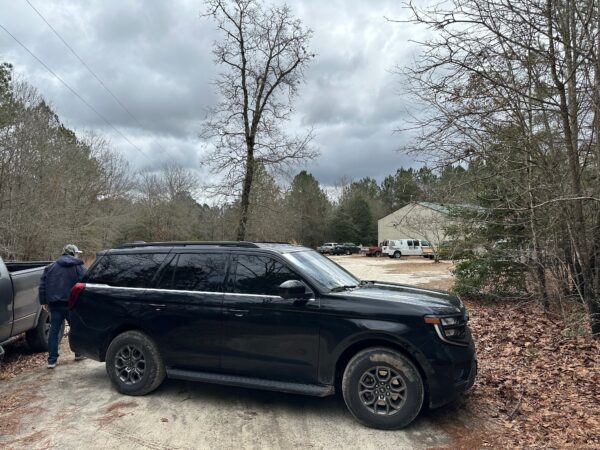
    He lived with his mother in a modest modular house down a rutted sandy road near the town of Cameron. No one answered the door Monday, and the large police presence from the day before was gone.

    Martin’s sister was just 21 when she was killed in a car accident in 2023, and he has an older brother who’s in the military, Fields said.

    For the past three years, Martin worked as a groundskeeper at Pine Needles Lodge & Golf Club.

    “It’s tragic. I feel for his family,” said Kelly Miller, president of the course in nearby Southern Pines. “It’s just unfortunate what transpired. It was totally unexpected.”

    Martin last year started a business to sell pen drawings he made, according to state records. A website matching the company name features illustrations of golf courses, buildings, and ancient Roman architecture.

    Politics didn’t seem to be among his interests, his cousin said

    “We are big Trump supporters, all of us. Everybody,” Fields said, but his cousin was “real quiet, never really talked about anything.”

  • Biden, aides project optimism in cancer fight, but some close friends worry

    Biden, aides project optimism in cancer fight, but some close friends worry

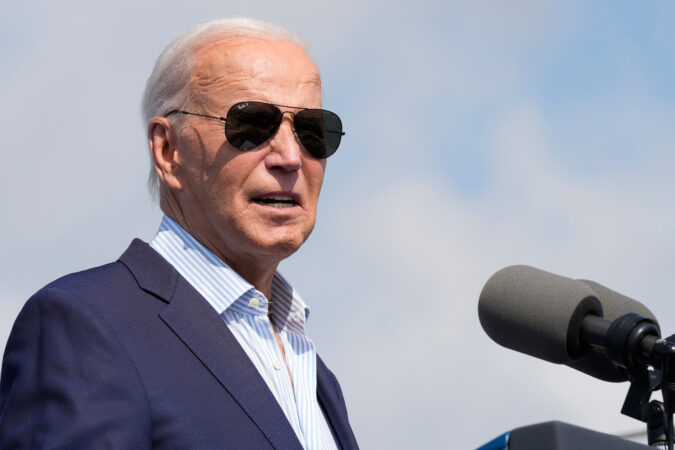
    Longtime friends and allies of Joe Biden say they are worried about the toll an aggressive form of prostate cancer is taking on the former president and his health. But Biden and his aides say he is doing well, making progress on ongoing projects, and maintaining public appearances.

    Biden has been encouraged as he has gone through treatment and aides said the former president is doing as well as they could hope nearly a year after he announced his metastatic prostate cancer diagnosis. He is continuing to work on his memoir and build out his foundation and presidential library, attending board dinners and meetings. He was spotted last week on an Amtrak train from Washington to Delaware, where he took pictures with passengers.

    Biden’s public engagements since leaving office last January have been fairly limited. He attended Tatiana Schlossberg’s funeral in January, traveled with his family to St. Croix during the holidays, and has been seen on flights, planes, at Mass, and at restaurants. He is expected to visit South Carolina this month and deliver remarks at an event to mark the sixth anniversary of his victory in that state’s primary, which set the stage for his 2020 presidential win.

    Four people close to Biden who have spoken with him in recent months, who spoke on the condition of anonymity to discuss sensitive details, said there have been no updates from the president on his condition. But the people, including two former Biden officials and an elected Democrat, said he has at times appeared more fatigued in private interactions over the past several weeks, a source of worry that they have attributed to the strain of cancer and its treatment.

    A fifth person said Biden is staying active and engaged, and remains “encouraged and positive about his prognosis given his positive response to treatment.”

    Biden’s personal office declined to comment for this story.

    Biden, 83, announced last May that he was diagnosed with Stage 4 prostate cancer that had metastasized to the bone. The cancer is characterized by a Gleason score of 9, meaning it is an aggressive cancer that is more likely to spread quickly. (The scale ranges from 6 to 10.) At the time, Biden’s office said the cancer was responding to hormone therapy, “which allows for effective management.”

    Biden rang the ceremonial bell at Penn Medicine Radiation Oncology in Philadelphia on Oct. 20 after completing a course of radiation therapy. He also underwent surgery in September to remove skin cancer lesions on his head.

    Medical experts said metastatic prostate cancer is incurable — and most commonly spreads to the bones, as it has for Biden — though an array of advancements in recent years has made it possible to manage it effectively. That means patients can live with the cancer for years and end up dying of something else entirely, said Judd Moul, professor of urology at the Duke Cancer Institute at Duke University.

    Without knowing additional details about Biden’s health and treatment, experts said his prognosis could vary widely. Biden’s office has not shared additional details that would indicate the degree to which the cancer has spread or how Biden responded to radiation last year. Oncologists said some men with advanced prostate cancer can live many years with effective treatment while others deteriorate rapidly.

    The elements of Biden’s diagnosis that are publicly known — including his Gleason score and the fact that the cancer was Stage 4 and had already spread at the time of diagnosis — indicate he is facing a serious and advanced form of the disease, one that typically requires ongoing treatment and close monitoring.

    “Bone metastasis is the most common place prostate cancer spreads, but the degree is important and how it’s found,” Moul said. “The degree of spread or amount of spread is just as important as the fact there’s spread.”

    Moul added: “There are a lot of men with advanced prostate cancer who can live many, many years. It’s unfair to all of our patients to paint a pessimistic picture for everyone because there are a lot of patients, even with metastatic cancer, who die of something else.”

    The five-year survival rate for metastatic prostate cancer is 34% to 38%, according to the American Cancer Society, which notes that advancements in treatments have significantly improved outcomes.

    It is also common for metastatic prostate cancer to spread to the spine, said Gerald Denis, Shipley prostate cancer research professor at Boston University Chobanian & Avedisian School of Medicine. Doctors especially want to avoid a weakening of the bones, Denis said, noting that such weakening in the spine can lead to fractures. He said there are “highly effective end of life medications to reduce pain.”

    “If the spine has been degraded by the tumor metastasis, it’s entirely possible to break your back simply by getting out of bed the wrong way,” Denis said, noting he does not know any of the specifics of Biden’s case. “This is a very painful and difficult stage of the terminal illness. … I am very sad for him and his family.”

    Biden’s cancer diagnosis has raised uncomfortable questions for Democrats, who for months were embroiled in a debate over whether Biden’s decision to seek reelection paved the way for Trump’s return to office. Most have been loath to relitigate that controversy in recent months, focused instead on winning control of the House in this year’s midterms and picking up Senate seats.

    Biden’s diagnosis has forced the party to privately grapple with what would have happened had he served a second term and then received his diagnosis just months in. That in part has fueled a broader discussion about when Democratic leaders and lawmakers should step aside, a debate that is playing out in some key primary races and some older lawmakers’ decisions to seek another term.

    Several allies of the former president said they are saddened at the way Biden’s post-presidency has unfolded. Trump has attacked him relentlessly, fellow Democrats have not wanted to defend him because of lingering anger and resentment over the 2024 election, and he has been battling an aggressive form of cancer.

    Biden has faced a post-presidency with little modern precedent. He is the oldest president to leave office, giving him limited time to shape his legacy outside of his four-year term. And Trump — who has faced similar questions about his age, physical health, and mental acuity — has remained fixated on his predecessor since returning to office last year, insulting him almost daily and repeating the false claim that he won the 2020 election.

    “I think Joe Biden is the worst thing that ever happened to old people,” Trump said in an interview with the New York Times last month.

    Barbara Perry, a presidential scholar at the University of Virginia’s Miller Center, said presidents who leave office on negative terms — whether they lost reelection or were unpopular — are often able to rehabilitate their image in their post-presidential years.

    Jimmy Carter, another one-term Democrat who some referred to as a “failed president,” is often held up as the person with the most successful post-presidency. But while Carter’s work on housing and global poverty helped enhance his reputation, it did not alter perceptions among many about his time in office. Carter spent nearly two years in hospice after battling metastatic melanoma.

    “We don’t know how long President Biden will have to correct for the ways things ended, which by all accounts was not a positive for him,” Perry said. “The other element of this in political and historical terms is what’s happening to him now raises questions about what was happening to him in the White House with his health.”

  • Police in Britain arrest former ambassador Mandelson in probe into Epstein ties

    Police in Britain arrest former ambassador Mandelson in probe into Epstein ties

    LONDON — British police on Monday arrested Peter Mandelson, a former U.K. ambassador to the United States, in a misconduct probe stemming from his ties to the late Jeffrey Epstein. It came days after a friendship with Epstein landed the former Prince Andrew in police custody.

    Both men are suspected of improperly passing U.K. government information to the disgraced U.S. financier, and the high-profile British arrests are some of the most dramatic fallout from the trove of more than 3 million pages of Epstein-related documents released last month by the U.S. Justice Department.

    London’s Metropolitan Police force said “officers have arrested a 72-year-old man on suspicion of misconduct in public office” at an address in north London. He was taken to a police station for questioning.

    The man was not named, in keeping with British police practice, but the suspect in the case previously was identified as the former diplomat, who is 72. Mandelson was filmed being led from his London home to a car by plainclothes officers on Monday afternoon.

    Under U.K. law, police can hold a suspect without charge for up to 24 hours. This can be extended to a maximum of 96 hours. Mandelson could be charged, released unconditionally, or released while investigations continue.

    Claims of leaked government information

    Police are investigating Mandelson over claims he passed sensitive government information to Epstein a decade and a half ago. He does not face allegations of sexual misconduct.

    His arrest came four days after Andrew Mountbatten-Windsor, the former Prince Andrew, was arrested in a separate case on suspicion of a similar offense related to his friendship with Epstein. Andrew was released after 11 hours in custody while the police investigation continues.

    Mandelson served in senior government roles under previous Labour governments and was U.K. ambassador to Washington until Prime Minister Keir Starmer fired him in September after emails were published showing that he maintained a friendship with Epstein after the financier’s 2008 conviction for sex offenses involving a minor.

    The files released in January contained more explosive revelations about Mandelson’s ties to Epstein, whom he once called “my best pal.”

    Messages suggest that Mandelson passed on sensitive — and potentially market-moving — government information to Epstein in 2009, when Mandelson was a senior minister in the British government. That includes an internal government report discussing ways the U.K. could raise money after the 2008 global financial crisis, including by selling off government assets. Mandelson also appears to have told Epstein he would lobby other members of the government to reduce a tax on bankers’ bonuses.

    British police launched a criminal probe earlier this month and searched Mandelson’s two houses in London and western England.

    The decision to appoint Mandelson nearly cost Starmer his job earlier this month, as questions swirled around his judgment about someone who has flirted with controversy during a decades-long political career.

    Though he acknowledged he made a mistake and apologized to victims of Epstein, Starmer’s position remains precarious. His future may rest on the release of files connected to Mandelson’s appointment. The government has pledged to begin releasing those documents in early March, though the timeline may be complicated by his arrest.

    Mandelson a contentious figure

    Mandelson has been a major, if contentious, figure in the center-left Labour Party for decades. He is a skilled — critics say ruthless — political operator whose mastery of political intrigue earned him the nickname “Prince of Darkness.”

    The grandson of former Labour Cabinet minister Herbert Morrison, he was an architect of the party’s return to power in 1997 as centrist, modernizing “New Labour” under Prime Minister Tony Blair.

    Mandelson served in senior government posts under Blair between 1997 and 2001, and under Prime Minister Gordon Brown from 2008 to 2010. In between, he was the European Union’s trade commissioner. Brown has been particularly angered by the revelations and has been helping police with their inquiries.

    Mandelson twice had to resign from government during the Blair administration over allegations of financial or ethical impropriety, acknowledging mistakes but denying wrongdoing.

    He later returned to government and was back on the political front line when Starmer named him ambassador to Washington at the start of U.S. President Donald Trump’s second term. Mandelson’s trade expertise and comfort around the ultra-rich were considered major assets. He helped secure a trade deal in May that spared Britain some of the tariffs Trump has imposed on countries around the world.

    The status of the deal is now up in the air after Trump announced a new set of global tariffs in the wake of a U.S. Supreme Court decision quashing his previous import tax order.

    Earlier this month Mandelson resigned from the House of Lords, Parliament’s upper chamber, to which he was appointed for life in 2008. But he still has the title — Lord Mandelson — that went with it.

  • Mexican forces tracked slain cartel boss to secluded cabin, officials say

    Mexican forces tracked slain cartel boss to secluded cabin, officials say

    GUADALAJARA, Mexico — Mexican forces located the drug kingpin known as “El Mencho,” whom they killed in a major operation over the weekend, in part by tracking one of his girlfriends to a secluded cabin, Mexican officials said Monday.

    Officials canceled school in some states and warned communities to stay inside as reports spread of violent cartel reprisals, and authorities deployed thousands of troops to the western Mexican state of Jalisco. But Mexico’s president said Monday the country was under control and returning to normalcy.

    Security forces closed in on Nemesio Rubén Oseguera Cervantes, 59, at a cabin in Tapalpa, in Jalisco. He fled as his bodyguards opened fire. Eight cartel members were killed in the gun battle, Gen. Ricardo Trevilla Trejo, Mexico’s secretary of national defense, told reporters Monday.

    Authorities captured the cartel leader, wounded by gunfire, in nearby woodlands. They took him, two of his bodyguards, and a wounded soldier by helicopter to get medical treatment, but they died en route, Trevilla said. Officials decided to head for an airport in Michoacán to transport the bodies by air force plane to Mexico City.

    Mexican special forces and National Guard troops helped plan and execute the operation, with support from the Mexican Air Force, Trevilla said. Mexican troops “accomplished their mission,” he said, emotional and tearful, and demonstrated the “strength of the Mexican state, without a doubt.”

    The killing of Mexico’s most powerful drug lord provoked violence: Beginning Sunday, the cartel burned vehicles, blocked highways, attacked gas stations and banks, and set other fires, said Omar García Harfuch, Mexico’s top security official. The government registered 85 blockades across the country, with 18 in Jalisco alone, and 27 other acts of violence against authorities. Seventy people were detained in seven states. More than 25 security officials were killed in the operation, as was a 59-year-old woman. More than 30 “criminals” were also killed, García Harfuch said. He praised Mexican forces for “debilitating an organization with international reach.”

    Harfuch called Oseguera’s Jalisco New Generation Cartel the “principal” organization responsible for violence in the country, “including homicide, human trafficking, extortion, kidnapping, and armed attacks against authorities.”

    In an overnight statement, the U.S. Embassy issued alerts covering areas of 18 Mexican states — more than half the total. It warned Americans in eight cities, including popular tourist destinations such as Puerto Vallarta and Cancún, to shelter in place, citing dangers from blocked roads and criminal activity.

    In a late-night message, President Claudia Sheinbaum urged Mexicans to remain “informed and calm.”

    Guadalajara, the capital of Jalisco, was among the cities hit hardest in Sunday’s initial wave of violence. Pablo Lemus Navarro, Jalisco’s governor, said in a video on social media that he had declared a “code red” emergency, suspending public transportation, major events, and school on Monday.

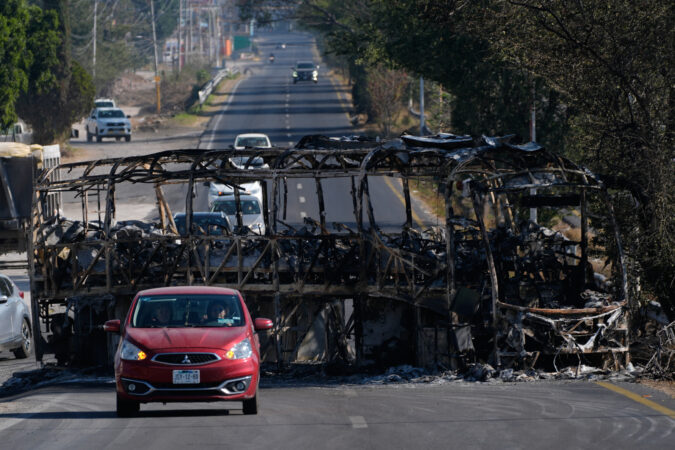
    Photographs taken in the immediate aftermath of Oseguera’s killing showed the burned-out wreckage of cars and buses blocking Guadalajara street junctions and entrances to businesses, with surrounding neighborhood streets largely empty after residents were warned to stay inside.

    In Puerto Vallarta, a vacation resort on Jalisco’s Pacific coast, footage verified by Reuters showed black smoke billowing over the city and burning vehicles blocking a highway underpass.

    Oseguera was Mexico’s most dominant cartel leader, expanding the Jalisco New Generation Cartel into a major power that took control of lucrative drug routes into the United States. The cartel, which traffics large quantities of fentanyl, cocaine, heroin, and methamphetamine across the U.S.-Mexico border, eventually eclipsed the rival Sinaloa Cartel as Mexico’s most powerful group.

    According to a statement from Mexico’s Defense Ministry, security forces had intended to detain Oseguera, but a shootout forced them to return fire.

  • France moves to bar U.S. Ambassador Charles Kushner from direct government access

    France moves to bar U.S. Ambassador Charles Kushner from direct government access

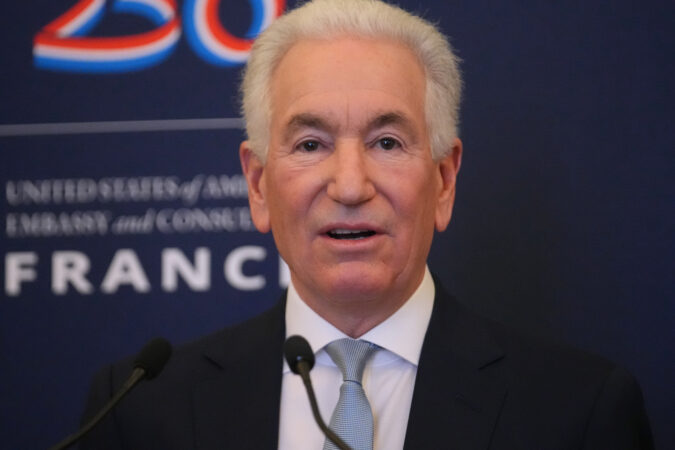
    PARIS — France’s top diplomat Monday requested that U.S. Ambassador Charles Kushner no longer be allowed direct access to members of the French government after he skipped a meeting to discuss comments by the Trump administration over the beating death of a far-right activist.

    French authorities had summoned Kushner to the Quai d’Orsay, which houses the Foreign Affairs Ministry, on Monday evening but he did not show up, according to diplomatic sources.

    Jean-Noel Barrot, the foreign affairs minister, moved to restrict Kushner’s access “in light of this apparent misunderstanding of the basic expectations of the mission of an ambassador, who has the honor of representing his country.”

    The ministry, however, left the door open for reconciliation.

    “It remains, of course, possible for Ambassador Charles Kushner to carry out his duties and present himself at the Quai d’Orsay, so that we may hold the diplomatic discussions needed to smooth over the irritants that can inevitably arise in a friendship spanning 250 years,” it said.

    Kushner, who is the father of President Donald Trump’s son-in-law and special envoy Jared Kushner, had been summoned following a statement by the State Department’s Counterterrorism Bureau. It posted on X that “reports, corroborated by the French Minister of the Interior, that Quentin Deranque was killed by left-wing militants, should concern us all.” The U.S. Embassy had posted that statement on social media.

    Deranque, a far-right activist, died of brain injuries this month from a beating in the French city of Lyon. He was attacked during a fight on the margins of a student meeting where a far-left lawmaker was a keynote speaker.

    His killing highlighted a climate of deep political tension ahead of next year’s presidential vote.

    “We reject any instrumentalization of this tragedy, which has plunged a French family into mourning, for political ends,” Barrot said over the weekend. “We have no lessons to learn, particularly on the issue of violence, from the international reactionary movement.”

    The State Department said in its post that “violent radical leftism is on the rise and its role in Quentin Deranque’s death demonstrates the threat it poses to public safety. We will continue to monitor the situation and expect to see the perpetrators of violence brought to justice.”

    Kushner was summoned in August over his letter to French President Emmanuel Macron alleging the country did not do enough to combat antisemitism. France’s foreign officials met with a representative of the U.S. ambassador since the diplomat did not show up for that meeting.

  • Panama orders occupation of 2 key canal ports after Supreme Court ruling

    Panama orders occupation of 2 key canal ports after Supreme Court ruling

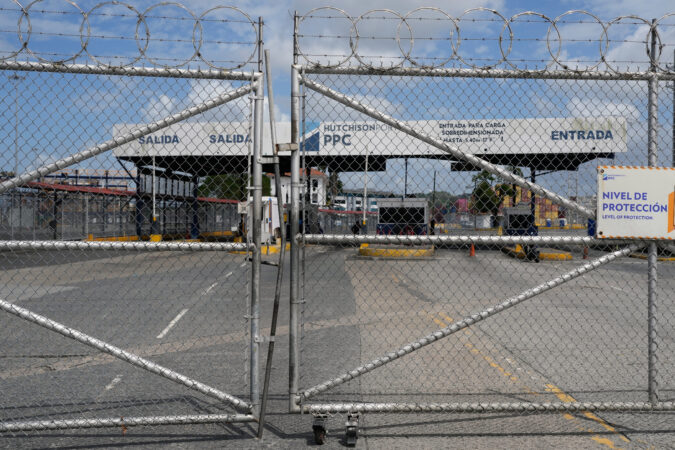
    PANAMA CITY — The Panamanian government on Monday issued a decree ordering the occupation of two ports at the entrances of the Panama Canal, a move triggered by a final Supreme Court ruling that declared the operating concession held by Hong Kong-based company CK Hutchison unconstitutional.

    The decree authorizes the Panama Maritime Authority to occupy the ports for “reasons of urgent social interest.” The occupation includes all movable property within or outside the Balboa and Cristóbal terminals, specifically covering cranes, vehicles, computer systems, and software.

    The saga surrounding the two Panamanian ports is part of a broader rivalry between the United States and China, in which the Central American country became caught in the middle after U.S. President Donald Trump accused China last year of “running the Panama Canal.”

    CK Hutchison was slated to sell the two ports to a consortium that includes U.S. investment firm BlackRock, but this prompted swift intervention from the Chinese government, which halted the deal.

    In January, Panama’s Supreme Court struck down the law approving the concession contract for Panama Ports Company, or PPC, a subsidiary of CK Hutchison. The ruling also invalidated an extension granted in 2021, stripping the port operations of any legal basis.

    PPC has operated these terminals since 1997, when the state awarded it the concession to manage the ports located at the Pacific and Atlantic entrances to the Panama Canal.

    Panama’s government announced days ago that it will guarantee the continuity of port operations and job stability, and that APM Terminals, a subsidiary of the Danish group A.P. Moller-Maersk, would temporarily assume the administration of the terminals while a new contract is awarded.

    Meanwhile, CK Hutchison Holdings started arbitration proceedings against Panama under the rules of the International Chamber of Commerce. It’s unclear what the impact of the proceedings would be and how long they could take. It also threatened to sue APM Terminals, if it operates the concession. The Danish group responded that it’s not a party to the legal proceedings.

    A PPC spokesperson told local media last week that the company was seeking an agreement with the Panamanian government to continue operating.

  • Israelis brace for another war as Trump mulls strikes on Iran

    Israelis brace for another war as Trump mulls strikes on Iran

    TEL AVIV — In Ramat Aviv, a quiet and green neighborhood in northwest Tel Aviv, some of the buildings hit by Iranian missiles during the 12-day war between Israel and Iran last June still stand in ruins.

    Chen, 44, a resident of one of the damaged apartments still undergoing renovation, said that although he, his wife, and their children, age 10 and 7, were not in the apartment at the time, it was not easy to recover. “It took us a lot of time to stabilize,” said Chen, who spoke on the condition that he be identified only by first name out of concern for his family’s safety.

    Now, as the United States assembles a massive amount of war-fighting machinery in the Middle East, and U.S. officials say the Trump administration appears ready to undertake an extended military assault on Iran, Israelis are once again preparing for war. Such an attack risks Iranian retaliation not just against U.S. military targets but also against Israel.

    Similar anxiety is now gripping many Iranians and others throughout the region who could get caught in the prolonged conflict.

    “There is a sense of stress; it is a very unpleasant feeling,” Chen said. “If it starts — should we stay in Ramat Aviv? Should we leave?” He doesn’t want his children to experience an attack; the sirens and explosions caused them anxiety, he said, adding that evacuating poses its own challenges: “You don’t know when it will actually happen, and you also don’t want to get stuck.”

    The 12-day conflict between Israel and Iran in June killed at least 29 people in Israel, according to the Israel Defense Forces. In Iran, at least 610 people were killed, according to the country’s Health Ministry.

    “We are prepared for any scenario. And if the Ayatollahs make the mistake of attacking us, they will experience a response they cannot even imagine,” Prime Minister Benjamin Netanyahu said at an IDF officers’ graduation ceremony on Thursday.

    Soroka Medical Center in Beersheba, one of Israel’s largest hospitals, also sustained a direct hit from an Iranian missile in June, causing minor injuries and extensive damage.

    “It will take several more years until we finish rebuilding everything that was destroyed,” Shlomi Codish, the medical center’s director general, said. A quarter of the hospital’s beds and more than a third of its operating rooms have been unusable since the strike, Codish said.

    Now, the hospital is preparing for the possibility of another war. “Once the order is given, we’ll have to move 400 to 500 patients on very short notice, including premature babies and elderly patients on ventilators,” he said. They will be moved to the hospital’s protected spaces or discharged home.

    “This is our reality in the Middle East; unfortunately, we are a bit more skilled at this due to the circumstances,” Codish said. Beyond treating the population of southern Israel, he said the hospital must also focus on the staff’s resilience.

    There were 2,300 people there the day the missile hit, he said. “When things escalate, it’s a heavy emotional burden for a place that’s already been targeted, including the feeling that the Iranians know exactly how to target us,” he said. “We are working hard with the team to restore their sense of security.”

    After more than two years of Israel fighting on various fronts — from Gaza to Iran and Lebanon — many Israelis seem accustomed to military threats, at least on the surface.

    Amid the preparations, most Israelis continue their daily routines, going to work and school until sirens are heard or further instructions are issued by the Home Front Command.

    IDF spokesperson BG Effie Defrin said Friday that “the IDF remains vigilant in defense” and that there is there is “no change in the guidelines.”

    “It’s very weird to have different life-threatening things fill you with fear in different ways,said Amalya Liebermann, 27, a video director and editor from Tel Aviv. “But just trying to keep some sort of normalcy and continue with at least communal living in a way, I think that helps a lot.”

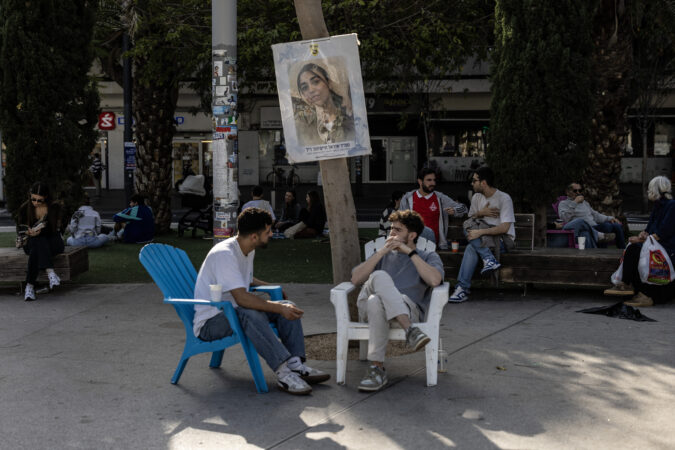
    While Israeli news anchors and commentators attempt to parse statements from President Donald Trump pointing to the possibility of a U.S. attack on Iran, Liebermann chose to spend Saturday afternoon in the warm late-winter sun with her friend Rani Assa Polansky, 26.

    They met in one of the city’s more crowded squares, which also became a memorial site for the victims of the Oct. 7 Hamas-led attack. “After the previous Iranian war, which was really tough and scary, even thinking about the possibility is so anxiety-inducing that it makes me freeze. So I prefer not to think about it,” Liebermann added.

    Assa Polansky also prefers not to think of the possibility, but said her boyfriend packed an emergency bag with passports and a bottle of water.

    Unlike the campaign in June, when Israel launched a surprise attack on Iran, current and former Israeli officials say that Israel now is not expected to strike first and will defer to the U.S., joining only if necessary. “The U.S. is leading, and Israel is playing second fiddle,” Energy Minister Eli Cohen, a member of Israel’s Security Cabinet, told Galatz Radio last week.

    “As for when Israel joins, we have made it clear: If anyone in Iran tries to divert the fire toward the State of Israel, we will exact a very heavy price,” Cohen added.

    “We need to continue to stay out of it, in coordination with the Americans, of course,” former national security adviser Tzachi Hanegbi told Channel 12. “When they need us, we know how to be there.”

    “The level of coordination and cooperation with the U.S., as well as the state of readiness within Israel, is at its peak,” Brig. Gen. (Res.) Ran Kochav, former Air and Missile Defense Commander and IDF spokesperson, told the Washington Post.

    “For 30 years, all Israeli governments tried to ensure that the Iranian problem would not just be an Israeli problem, and they succeeded,” Kochav added. “The Americans are now leading this effort, and we should be pleased with that, staying involved and coordinated — and perhaps even participating, if the Americans agree. There is an opportunity here that likely won’t return in the coming years.”

    Meanwhile, Iranian and U.S. officials have been engaged in talks that Washington hopes will secure limits on Tehran’s nuclear program. Trump said Thursday that Iranian leaders “must make a deal” or “bad things will happen.”

    Netanyahu told the annual conference of Presidents of Major American Jewish Organizations that any deal must ban all Iranian enrichment of uranium and dismantle “the equipment and the infrastructure that allows” for enrichment.

    “In Israel, there is a hope that the Americans will do the job for us,” said Danny Citrinowicz, senior researcher in the Iran and the Shi’ite Axis Program at the Institute for National Security Studies. “Netanyahu wants a broad campaign that will severely damage Iran’s strategic capabilities; for him, this is a dream come true.”

    While the U.S. can significantly weaken Iran, Citrinowicz saidI still don’t see any strategic goal that can be achieved in this campaign.”

    Some Israelis voiced exhaustion.

    “None of us really wants another war, we’re all really tired,” said Daniel, 29, a resident of Tel Aviv, who works in the tech industry, and spoke on the condition that he identified only by first name because he is still on active reserve duty. “We do understand that if America attacks Iran, obviously, there will be repercussions against us.”

    “In Israel, we have to hold these two emotions, right? One is that we want peace, and second, that understanding that maintaining it sometimes does come with a price,” Daniel said, adding that there is a “a theocratic regime over there that needs to be taken down, so we’re up for it,” because doing so will “do good for the whole region.”

    Perhaps with a more moderate regime in Iran, he said, he would be able to visit the country one day. “Iran is a beautiful place,” he said, “and historically, Persians and Jews got along very well.”
  • State Department orders nonessential U.S. diplomats to leave Lebanon as tensions with Iran soar

    State Department orders nonessential U.S. diplomats to leave Lebanon as tensions with Iran soar

    WASHINGTON — The United States has ordered nonessential diplomats and their family members at the U.S. Embassy in Beirut to leave Lebanon, the State Department said Monday, as tensions over Iran rise with the threat of a potentially imminent military strike.

    The department said in an updated travel alert for U.S. citizens in Lebanon that it “ordered the departure of non-emergency U.S. government personnel and family members of government personnel due to the security situation in Beirut.”

    The alert, which was formally released several hours after word began to circulate about the move, said U.S. personnel remaining in Lebanon would have their in-country travel restricted.

    A department official said earlier that a continuous assessment of the regional security environment determined it was “prudent” to draw down the U.S. Embassy Beirut’s footprint so that only essential personnel remain at their posts.

    The official, who spoke on the condition of anonymity before the move was formally announced, said that it is a temporary measure and that the embassy will remain operational.

    Lebanon has been the site of numerous Iran-related retaliatory attacks against U.S. facilities, interests, and personnel for decades given Tehran’s support for and influence with the Hezbollah militant group, which is held responsible for the deadly bombings of the Marine barracks in Beirut in 1983 and an embassy annex in 1984.

    As such, changes in the staffing status of the embassy in Beirut have often been seen as a bellwether for potential U.S. or Israeli military action in the region, particularly against Iran. A similar ordered departure was imposed for Beirut and other embassies in the region, including in Iraq, shortly before President Donald Trump ordered military strikes against Iranian nuclear facilities last June.

    It was unclear if other American embassies in the Middle East would implement similar orders.

    Tensions have escalated between the U.S. and Iran as Trump has built up the largest military presence in the Middle East in decades and repeatedly threatened action if Tehran does not negotiate a deal to constrain its nuclear program. A second aircraft carrier is heading to the region to join a surge of other American warships and aircraft, offering the Republican president several options for a potential strike even as talks may continue.

    Oman’s foreign minister, Badr al-Busaidi, said the U.S. and Iran plan to hold their next round of nuclear talks Thursday in Geneva. A U.S. official, who was not authorized to comment publicly and spoke on the condition of anonymity, confirmed the meeting.

    Iran’s top diplomat, Abbas Araghchi, told CBS on Sunday that he expected to meet U.S. envoy Steve Witkoff then and said a “good chance” remained for a diplomatic solution on the nuclear issue.

    Araghchi has said a proposed deal would be ready to share within days, and he told CBS that Iran was still working on it.

    Asked Friday whether the U.S. could take limited military action as the countries negotiate, Trump said, “I guess I can say I am considering that.” He also told reporters later that Iran “better negotiate a fair deal.”

    Indirect talks between the longtime adversaries in recent weeks have made little visible progress. Beyond the nuclear program, Iran has refused to discuss wider U.S. and Israeli demands that it scale back its missile program and sever ties to armed groups.

    A second State Department official, also speaking on the condition of anonymity to discuss plans that had not been formally announced, said Secretary of State Marco Rubio may delay his intended visit to Israel this weekend.

  • 4 years into Russia’s full-scale invasion of Ukraine, a look at the war by the numbers

    4 years into Russia’s full-scale invasion of Ukraine, a look at the war by the numbers

    Russia’s invasion of Ukraine four years ago launched Europe’s biggest conflict since World War II, causing immense suffering for civilians and harrowing ordeals for soldiers while rewriting the post-Cold War security order.

    The fighting entered its fifth year Tuesday, and it shows no signs of stopping anytime soon.

    The U.S. has brokered talks with delegations from Moscow and Kyiv as part of the Trump administration’s yearlong push for peace. But reconciling key differences, such as the future of Russian-occupied Ukrainian land and postwar security for Ukraine, has thwarted progress.

    Meanwhile, thousands of each countries’ troops have died on the battlefield, and Ukrainian civilians have been battered by Russian aerial strikes that have brought years of power outages and water cuts.

    Here’s a look at the conflict, by the numbers, since the full-scale invasion on Feb. 24, 2022.

    1.8 million

    The upper end of the estimated number of soldiers killed, wounded, or missing on both sides, according to a report last month by the Center for Strategic and International Studies, a think tank.

    It estimated that Russia has suffered 1.2 million casualties, including up to 325,000 troop deaths, between February 2022 and December 2025 — what it said was the largest number of troop deaths for any major power in any conflict since World War II.

    Russia has not released figures on battlefield deaths since January 2023, when it said more than 80 soldiers were killed in a Ukrainian strike, bringing the total military deaths Moscow has confirmed to just over 6,000.

    CSIS estimated that Ukraine has seen 500,000 to 600,000 military casualties, including up to 140,000 deaths.

    Ukrainian President Volodymyr Zelensky said earlier this month that 55,000 Ukrainian troops have died in the war. Many are missing, he said.

    Neither Moscow nor Kyiv gives timely data on military losses. Independent verification is not possible.

    14,999

    The U.N. Human Rights Monitoring Mission’s count for civilian deaths in Ukraine since Russia’s all-out invasion, though it says that is likely an underestimate. More than 40,600 civilians were injured over the same period, it said in a December report.

    The war has killed at least 763 children, according to the U.N.

    Last year was the deadliest for civilians in Ukraine since 2022. The conflict killed 2,514 civilians and injured 12,142 in the country in 2025 — a 31% increase in civilian casualties over 2024, it said.

    19.4%

    The percentage of Ukrainian land occupied by Russia, according to the Institute for the Study of War.

    Over the past year, Russia has gained just 0.79% of Ukraine’s territory in the grinding war of attrition, the Washington-based think tank said in calculations provided earlier this month to the Associated Press, underscoring the little progress Moscow’s forces have made despite huge costs in troops and armor.

    Before Russia’s all-out invasion, it controlled nearly 7% of Ukraine, including Crimea and parts of the Donetsk and Luhansk regions in the east, as Moscow-backed separatists fought the Ukrainian army, according to Ukrainian officials and Western analysts.

    13%

    The percentage drop in foreign military aid to Kyiv last year compared with the annual average between 2022 and 2024, according to Germany’s Kiel Institute, which tracks assistance to Kyiv.

    U.S. President Donald Trump stopped sending American weapons paid for by the U.S. to Ukraine after he took office just over a year ago. European countries, striving to make up the difference, increased their military aid last year by 67% compared with the 2022-2024 period, the institute said in a report this month.

    Foreign humanitarian and financial aid to Ukraine fell by 5% last year in comparison with the average in the previous three years, it said.

    5.9 million

    The number of Ukrainian civilians who have left their country.

    Some 5.3 million of those people have found refuge in Europe, according to a report this month from the U.N. office in Ukraine.

    Additionally, around 3.7 million Ukrainians forced out of their homes have moved elsewhere within the country, the U.N. said in December.

    Ukraine’s prewar population was more than 40 million.

    2,881

    The number of Russian attacks that affected the provision of medical care in Ukraine since the full-scale invasion, according to a report from the World Health Organization on Monday.

    There was a nearly 20% increase in such attacks last year compared with 2024, the U.N. agency said.

    A report earlier in the month from the WHO documented at least 2,347 strikes on healthcare facilities, in addition to others that damaged vehicles and the storage of medical supplies.

  • Supreme Court to consider whether states can sue over greenhouse gas emissions

    Supreme Court to consider whether states can sue over greenhouse gas emissions

    The Supreme Court agreed Monday to take a case examining whether states and cities can sue fossil fuel companies over harms caused by climate change, a legal tactic modeled on the push to hold tobacco companies responsible for the health effects of smoking.

    The case is significant because dozens of municipalities are seeking billions in damages against oil and gas companies, often accusing them of misleading the public or hiding evidence about the links between greenhouse gases and climate risks. The companies deny any wrongdoing.

    The justices will hear an appeal by Suncor and ExxonMobil, which argue the city of Boulder’s legal action in state court is preempted by federal law. They say greenhouse gas emissions are inherently a federal issue because the pollution emanates from outside Colorado and drifts across state lines.

    “Boulder, Colorado, cannot make energy policy for the entire country,” the companies wrote in a petition to the Supreme Court.

    Boulder sued Suncor and ExxonMobil in 2018, alleging the company knowingly sold fossil fuels that would cause a range of harms in Colorado, including increased summer heat, more intense wildfires, and a greater concentration of ground-level ozone. The city sought to recoup damages for past and future harms. The companies denied the claims.

    After complicated legal wrangling, the Colorado Supreme Court eventually ruled that federal law did not preempt Boulder’s lawsuit in state court and that the suit could move forward. The companies then appealed to the Supreme Court.

    The Trump administration took the unusual step of asking the Supreme Court to take up the case, even though the federal government was not directly involved in it. Attorneys for Boulder urged against that.

    “There is no constitutional bar to states addressing in-state harms caused by out-of-state conduct, be it the negligent design of an automobile or sale of asbestos,” attorneys wrote in filings.

    The Supreme Court last year declined to take a similar case involving a lawsuit by Honolulu seeking to hold fossil fuel companies responsible for climate change damage in Hawaii. The Biden administration had urged the court not to take it up at the time.

    In 2023, the Supreme Court allowed lawsuits by a handful of municipalities seeking to hold businesses responsible for climate change.

    The high court last month heard arguments in a related case in which a Louisiana community is attempting to preserve a $745 million jury verdict against Chevron and keep the case and similar cases in state court. The case could have consequences for how communities rectify environmental damage allegedly caused by oil companies.

    In a major ruling in 2022, the Supreme Court curbed the ability of the Environmental Protection Agency to regulate greenhouse gases.