Category: Nation & World

  • Trump appears ready to attack Iran as U.S. strike force takes shape

    Trump appears ready to attack Iran as U.S. strike force takes shape

    The Trump administration appears ready to launch an extended military assault on Iran, current and former U.S. officials said, as the Pentagon amasses an immense strike force in the Middle East despite the risks of U.S. combat fatalities and American ensnarement in an extended war.

    The arsenal, under assembly for weeks, is awaiting the arrival of the aircraft carrier USS Gerald R. Ford and its accompanying warships, officials familiar with the matter said, after military leaders last week extended their deployment and ordered the ships to the region from the Caribbean Sea. The vessels were approaching the Strait of Gibraltar on Thursday, making an attack possible within days, said these people, whom like others spoke on the condition of anonymity to discuss sensitive military planning.

    President Donald Trump, speaking Thursday morning at an event in Washington, was ambiguous about what he might do. “Maybe we’re going to make a deal. Maybe not,” he said at the inaugural meeting of his Board of Peace. “You’re going to be finding out over the next, maybe, 10 days.”

    The administration wants it known, officials said, that they are building combat power in the region. The president also has publicly raised the possibility of toppling Iran’s supreme leader, Ayatollah Ali Khamenei, a longtime U.S. adversary, suggesting last week that it would be “the best thing that could happen,” if Iran ends up with new leaders.

    Still, it remains unclear whether Trump has approved military action, people familiar with the matter said. One consideration, some noted, is the ongoing Winter Olympics, which conclude Sunday in Italy.

    The United States, backed by ally Israel, would have an “overwhelming advantage” militarily over Iran, said Daniel B. Shapiro, a former U.S. ambassador to Israel and senior Pentagon official during the Biden administration. The warships in or nearing the Middle East join a sprawling array of combat power already in position, including dozens of fighter jets, air-defense capabilities, and other weapons.

    But a major conflict with Iran poses grave risks, Shapiro said, including ballistic missiles capable of killing U.S. troops in the region, a network of proxy forces across the Middle East that could quickly turn any attack into a far wider and deadlier war, and the potential for significant disruption to maritime shipping and the global oil market.

    “They’ll definitely take terrible damage from combined U.S.-Israeli strikes,” said Shapiro, a distinguished fellow at the Atlantic Council, referring to Iran. “But that doesn’t mean it ends quickly, or clean — and they do have some ability to impose some costs in the other direction.”

    The military buildup coincides with recent meetings between U.S. and Iranian officials aimed at negotiating changes to Tehran’s nuclear program. White House press secretary Karoline Leavitt told reporters this week that the two sides had “made a little bit of progress” but were still “very far apart on some issues.” Iranian officials, she added, are “expected to come back to us with some more detail in the next couple of weeks.” It is unclear if Trump is willing to wait that long.

    Regional diplomats initially thought that the Trump administration’s military pressure on Iran was meant to push Tehran to offer greater concessions in those negotiations, according to a European diplomat briefed on the Iran talks. But after the most recent talks concluded Tuesday, diplomats now believe that Iran is not prepared to budge from its “core positions,” including its right to enrich uranium.

    “The Iranians were planning to drown them in technicalities and delay substance,” the diplomat said. “While a more traditional approach would have built on the dialogue, … Trump does not have the patience.”

    The U.S. military buildup initially was reassuring to some officials in the region, according to this diplomat, but the indications that the Trump administration is preparing for an extended conflict have become deeply concerning.

    “Some actors may have favored targeted strikes to add pressure on Iran,” said the diplomat, referring to officials from Saudi Arabia and the United Arab Emirates. “But an extended conflict will be bloody and it could bring more countries, either deliberately or by miscalculation, into the war.”

    Secretary of State Marco Rubio plans to travel to Israel on Feb. 28 to meet with Israeli Prime Minister Benjamin Netanyahu, a State Department official said. The trip would be aimed at keeping Netanyahu abreast of the status of U.S.-Iran negotiations, the official said, but it does not preclude the Pentagon from launching strikes first. In summer, the U.S. struck Iran’s nuclear facilities even as the president’s top diplomats had diplomatic meetings with Iranian counterparts on the books.

    Netanyahu is eager for the United States to launch a major attack on Iran, and in a speech Sunday he put forward his own conditions for any U.S. agreement with Tehran. Any deal must ban all enrichment of uranium and dismantle “the equipment and the infrastructure that allows you to enrich in the first place,” Netanyahu told the annual conference of Presidents of Major American Jewish Organizations. It should also require that all enriched uranium leave Iran, restrict Iran’s ballistic missile program and impose sustained inspections of Iran’s civilian nuclear program, he said.

    Middle East experts have said Iran is unlikely to agree to all of Israel’s demands and it views them as a breach of Tehran’s ability to defend itself.

    Khamenei in recent days has resisted signing a deal, arguing in social media posts that Tehran has the right to produce nuclear power and the range of its missile arsenal should not be limited. He also has taunted U.S. officials.

    “The Americans constantly say that they’ve sent a warship toward Iran,” he said in one message Tuesday. “Of course, a warship is a dangerous piece of military hardware. However, more dangerous than that warship is the weapon that can send that warship to the bottom of the sea.”

    An extended assault against Iran could mark the most significant action in decades against the longtime U.S. adversary. For years, Iran has sponsored and facilitated attacks on U.S. troops across the region, U.S. officials broadly agree.

    Trump began pondering new strikes against Iran in January, after he pledged to rescue anti-government protesters there following a wave of executions. The president tabled military action, in part because U.S. defense officials warned it would be difficult to manage Iranian counterattacks while a relatively limited number of U.S. forces were in the region, people familiar with the matter said.

    The administration has since surged U.S. weaponry, including another aircraft carrier, the USS Abraham Lincoln, that was diverted from the South China Sea. Numerous Navy destroyers, scores of fighter jets, and other war planes also have been deployed, including advanced F-35s with the ability to evade radar.

    A review of flight-tracking data in recent days has shown a fleet of tanker planes also relocating to Europe and the Middle East, and many fighter jets repositioned at Muwaffaq Al Salti Air Base in Jordan. Other U.S. military aircraft appear to have relocated to or transited through Vrazhdebna Air Base in Bulgaria, data show.

    The military buildup signals the Trump administration is “prepared for something much more extended than a one-day cycle” of strikes, said Dana Stroul, a former senior Pentagon official during the Biden administration who is now with the Washington Institute.

    An extended conflict would mark a sea change from Trump’s recent military forays, including the January U.S. Special Operations raid to capture Venezuelan President Nicolás Maduro in Caracas, a weekslong bombing campaign last spring against Houthi rebels in Yemen, and the surgical strikes last year against Iran’s nuclear facilities. In each of those cases, Trump authorized significant military action that was significant in scope but limited in duration, declared victory afterward and pivoted to other issues.

    Trump has criticized previous U.S. administrations for allowing the United States to become entrapped in lengthy military interventions in the Middle East that killed thousands of U.S. troops and dominated Pentagon resources.

    A lack of calamities during those previous operations has made it easy to overlook the potential pitfalls of future missions, said Jason Dempsey, a retired Army officer who studies the use of military force for the Center for a New American Security. They include lethal attacks against U.S. troops, aircraft collisions, or U.S. pilots being forced to parachute or crash behind enemy lines.

    “Military operations look quick and easy — right until they are not,” Dempsey said. “What we did in Venezuela was such a unique operation, and a one-off. And even that — I’m not sure it will turn out fine.”

  • An arts panel made up of Trump appointees approves his White House ballroom proposal

    An arts panel made up of Trump appointees approves his White House ballroom proposal

    WASHINGTON — The U.S. Commission of Fine Arts, a panel made up of President Donald Trump’s appointees, on Thursday approved his proposal to build a ballroom larger than the White House itself where the East Wing once stood.

    The seven-member panel is one of two federal agencies that must approve Trump’s plans for the ballroom. The National Capital Planning Commission, which has jurisdiction over construction and major renovation to government buildings in the region, is also reviewing the project.

    Members of the fine arts commission originally had been scheduled to discuss and vote on the design concept after a follow-up presentation by the architect, and had planned to vote on final approval at next month’s meeting. But after the 6-0 vote on the design, the panel’s chairman, Rodney Mims Cook Jr., unexpectedly made another motion to vote on final approval.

    Six of the seven commissioners — all appointed by the Republican president in January — voted once more in favor. Commissioner James McCrery did not participate in the discussion or the votes because he was the initial architect on the project before Trump replaced him.

    The ballroom will be built on the site of the former East Wing, which Trump had demolished in October with little public notice. That drew an outcry from some lawmakers, historians, and preservationists who argued that the president should not have taken that step until the two federal agencies and Congress had reviewed and approved the project, and the public had a chance to provide comment.

    The 90,000-square-foot ballroom would be nearly twice the size of the White House, which is 55,000-square-feet, and Trump has said it would accommodate about 1,000 people. The East Room, the largest room in the White House, can fit just over 200 people at most.

    Commissioners offered mostly complimentary comments before the votes.

    Cook echoed one of Trump’s main arguments for adding a larger entertaining space to the White House: It would end the long-standing practice of erecting temporary structures on the South Lawn that Trump describes as tents to host visiting dignitaries for state dinners and other functions.

    “Our sitting president has actually designed a very beautiful structure and, as was said, in the comments earlier, the United States just should not be entertaining the world in tents,” Cook said.

    The panel received mainly negative comments from the public

    Members of the public were asked to submit written comment by a Wednesday afternoon deadline. Thomas Luebke, the panel’s secretary, said “over 99%” of the more than 2,000 messages it received in the past week from around the country were in opposition to the project.

    Luebke tried to summarize the comments for the commissioners.

    Some comments cited concerns about Trump’s decision to unilaterally tear down the East Wing, as well as the lack of transparency about who is paying for the ballroom or how contracts were awarded, Luebke said. Comments in support referenced concerns for the U.S. image on the world stage and the need for a larger entertaining space at the White House.

    Trump has defended the ballroom in a recent series of social media posts that included drawings of the building. He said in one January post that most of the material needed to build it had been ordered “and there is no practical or reasonable way to go back. IT IS TOO LATE!”

    The commission met Thursday over Zoom and heard from Shalom Baranes, the lead architect, and Rick Parisi, the landscape architect. Both described a series of images and sketches of the ballroom and the grounds as they would appear after the project is completed.

    Trump has said the ballroom would cost about $400 million and be paid for with private donations. To date, the White House has only released an incomplete list of donors.

    A lawsuit against the project is still pending

    The National Trust for Historic Preservation has sued in federal court to halt construction. A ruling in the case is pending.

    Carol Quillen, president and CEO of the privately funded nonprofit organization, said the group was “puzzled” by both votes because the final plans had not been presented or reviewed. But with the votes, she said the commission had “bypassed its obligation to provide serious design review and consider the views of the American people,” including all of the negative public comments.

    Quillen said that while her organization has always acknowledged the usefulness of a larger White House meeting space, “we remain deeply concerned that the size, location, and massing of this proposal will overwhelm the carefully balanced classical design of the White House, a symbol of our democratic republic.”

    At the commission’s January meeting, some members had questioned Baranes, Trump’s architect, about the “immense” design and scale of the project even as they broadly endorsed Trump’s vision.

    On Thursday, Cook and other commissioners complimented Baranes for updating the building’s design to remove a large pediment, a triangular structure above the south portico, that they had had objected to because of its size.

    “I think taking the pediment off the south side was a really good move,” said commissioner Mary Anne Carter, who also is head of the National Endowment for the Arts. “I think that really helps to restore some balance and make it look, just more aligned” with the White House.

    Baranes said it was the biggest design change and that Trump had “agreed to do that.”

    Trump quietly named his final two commissioners to the panel in late January. Pamela Hughes Patenaude has a background in housing policy and disaster recovery, and was as a deputy secretary at the Department of Housing and Urban Development in Trump’s first term. Chamberlain Harris is a special assistant to the president and deputy director of Oval Office operations.

    The ballroom project is scheduled for additional discussion at a March 5 meeting of the National Capital Planning Commission, which is led by a top White House aide. This panel heard an initial presentation about the project in January.

    At the meeting, the White House defended tearing down the East Wing, saying that preserving it was not an option due to structural issues, past decay and other concerns. Josh Fisher, director of the White House Office of Administration, cited an unstable colonnade, water leakage, mold contamination and other problems.

  • Former Prince Andrew arrested and held for hours on suspicion of misconduct over ties to Epstein

    Former Prince Andrew arrested and held for hours on suspicion of misconduct over ties to Epstein

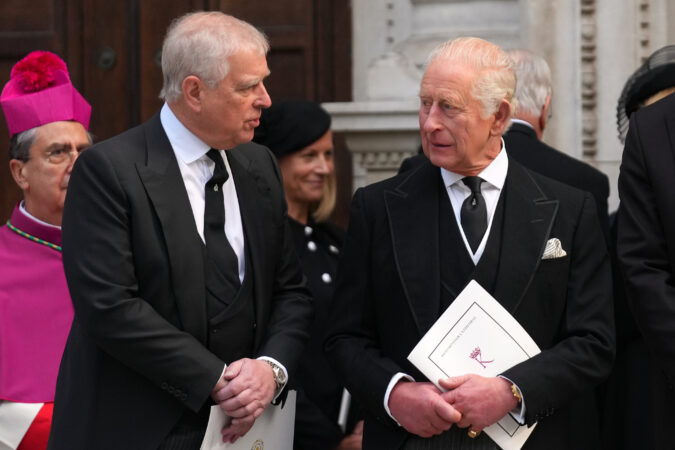
    LONDON — The former Prince Andrew was arrested and held for hours by British police Thursday on suspicion of misconduct in public office related to his links to Jeffrey Epstein, an extraordinary move in a country where authorities once sought to shield the royal family from embarrassment.

    It was the first time in nearly four centuries that a senior British royal was placed under arrest, and it underscored how deference to the monarchy has eroded in recent years.

    King Charles III, whose late mother lived by the motto “never complain, never explain,” took the unusual step of issuing a statement on the arrest of his brother, now known as Andrew Mountbatten-Windsor.

    “Let me state clearly: the law must take its course,’’ the king said. “As this process continues, it would not be right for me to comment further on this matter.’’

    The Thames Valley Police force said Mountbatten-Windsor was released Thursday evening, about 11 hours after he was detained at his home in eastern England. He was photographed in a car leaving the station near his home on the royal Sandringham Estate.

    Police said he was released under investigation, meaning he has neither been charged nor exonerated. Police said they had finished searching Mountbatten-Windsor’s home, but officers were still searching his former residence near Windsor Castle.

    The police force, which covers areas west of London, including Mountbatten-Windsor’s former home, said Thursday that a man in his 60s from Norfolk in eastern England, had been arrested and was in custody. Police did not identify the suspect, in line with standard procedures in Britain.

    Mountbatten-Windsor, 66, moved to the king’s private estate in Norfolk after he was evicted from his longtime home near the castle earlier this month.

    Police previously said they were “assessing” reports that Mountbatten-Windsor sent trade information to Epstein, a wealthy investor and convicted sex offender, in 2010, when the former prince was Britain’s special envoy for international trade. Correspondence between the two men was released by the U.S. Justice Department late last month along with millions of pages of documents from the American investigation into Epstein.

    “Following a thorough assessment, we have now opened an investigation into this allegation of misconduct in public office,’’ Assistant Chief Constable Oliver Wright said in a statement.

    “We understand the significant public interest in this case, and we will provide updates at the appropriate time,” he added.

    Police also said they were searching two properties.

    Earlier in the day, pictures circulated online that appeared to show unmarked police cars at Wood Farm, Mountbatten-Windsor’s home on the Sandringham Estate in Norfolk, with plainclothes officers gathering outside.

    Mountbatten-Windsor has consistently denied any wrongdoing in his association with Epstein.

    The allegations being investigated Thursday are separate from those made by Virginia Giuffre, who claimed she was trafficked to Britain to have sex with the prince in 2001, when she was just 17. Giuffre died by suicide last year.

    Still, Giuffre’s family praised the arrest, saying that their “broken hearts have been lifted at the news that no one is above the law, not even royalty.”

    The family added: “He was never a prince. For survivors everywhere, Virginia did this for you.”

    A ‘spectacular fall from grace’

    “This is the most spectacular fall from grace for a member of the royal family in modern times,” said Craig Prescott, a royal expert at Royal Holloway, University of London, who compared it in severity to the crisis sparked by Edward VIII’s abdication to marry American divorcee Wallis Simpson.

    “And it may not be over yet,’’ Prescott added.

    Thursday’s arrest came a day after the National Police Chiefs’ Council said it had created a coordination group to assist forces across the U.K. that are assessing whether Epstein and his associates committed crimes in Britain. In addition to the concerns about Mountbatten-Windsor ’s correspondence, documents released by the U.S. suggest Epstein may have used his private jet to traffic women to and from Britain.

    The documents also rocked British politics. Prime Minister Keir Starmer had to fight off questions about his judgment after the papers revealed that Peter Mandelson, the man he appointed ambassador to the U.S., had a longer and closer relationship with Epstein than was previously disclosed.

    London’s Metropolitan Police Service has said it is investigating allegations of misconduct in public office related to Mandelson’s own correspondence with Epstein. Mandelson was fired as ambassador to the U.S. in September.

    But it is Mountbatten-Windsor’s relationship with Epstein that brought the scandal to the doors of Buckingham Palace and threatened to undermine support for the monarchy.

    The last time a senior British royal was arrested was almost 400 years ago during the reign of King Charles I that saw a growing power struggle between the crown and Parliament.

    After the king attempted to arrest lawmakers in the House of Commons in 1642, hostilities erupted into the English Civil War, which ended with victory for the parliamentary forces of Oliver Cromwell.

    Charles I was arrested, tried, convicted of high treason, and beheaded in 1649.

    Modern concerns about Mountbatten-Windsor’s links to Epstein have dogged the royal family for more than a decade.

    The late Queen Elizabeth II forced her second son to give up royal duties and end his charitable work in 2019 after he tried to explain away his friendship with Epstein during a catastrophic interview with the BBC.

    But as concern mounted about what the Epstein files might reveal, the king moved aggressively to insulate the royal family from the fallout.

    Since October, Charles has stripped his younger brother of the right to be called prince, forced him to move out of the royal estate he occupied for more than 20 years and issued a public statement supporting the women and girls abused by Epstein.

    Last week, the palace said it was ready to cooperate with police investigating Mountbatten-Windsor.

    Charles was forced to act after Mountbatten-Windsor’s correspondence with Epstein torpedoed the former prince’s claims that he severed ties with the financier after Epstein’s 2008 conviction for soliciting a minor for prostitution.

    Instead, emails between the two men show Epstein offering to arrange a date between Mountbatten-Windsor and a young Russian woman in 2010, and the then-prince inviting Epstein to dinner at Buckingham Palace.

    Additional correspondence appears to show Mountbatten-Windsor sending Epstein reports from a two-week tour of Southeast Asia that he undertook in 2010 as Britain’s trade envoy.

    Danny Shaw, an expert on law enforcement in the U.K., told the BBC that in most cases, suspects are held between 12 and 24 hours and are then either charged or released pending further investigation.

    Mountbatten-Windsor will be placed in “a cell in a custody suite” with just “a bed and a toilet,” where he will wait until his police interview.

    “There’ll be no special treatment for him,″ Shaw said.

  • Silicon Valley is building a shadow power grid for data centers across the U.S.

    Silicon Valley is building a shadow power grid for data centers across the U.S.

    The GW Ranch project approved on 8,000 windswept acres of West Texas will look like many of the other data centers that have sprung up across the country to support Silicon Valley’s ambitions for artificial intelligence. Dozens of airplane-hangar-size warehouses packed with computing hardware will consume more power than all of Chicago.

    But it’s missing one standard feature: The mammoth project, recently green-lit by state environmental regulators, won’t need new power lines to deliver the electricity that it guzzles. GW Ranch will be walled off from the power grid and generate its own electricity from natural gas and solar plants installed on site.

    GW Ranch is set to become part of a shadow power grid emerging across the country with potentially far-reaching consequences for the U.S. electricity system and environment.

    After the rapid growth of data centers triggered pushback from politicians, utilities, and local residents over the pressures they place on the grid, tech companies are now building their own fleet of private power plants, mostly fueled by natural gas.

    Dozens of sprawling off-grid data center projects are planned across Texas, New Mexico, Pennsylvania, Wyoming, Utah, Ohio, and Tennessee, according to a review of regulatory filings, permits, earnings call transcripts, and other documents by the energy industry research firm Cleanview. Several are already under construction.

    Companies rushing to develop the facilities include Meta, ChatGPT-maker OpenAI, business software provider Oracle, and oil giant Chevron. (The Washington Post has a content partnership with OpenAI.)

    The off-grid projects already approved by state energy and environmental regulators could power all of New York City several times over, a vast new energy infrastructure that will bring huge new industrial facilities to communities across the country and increase U.S. emissions of carbon dioxide and other air pollutants. A handful of states have passed laws to encourage off-grid data centers by loosening rules around who can build power plants and where they can be located.

    The projects are sparking alarm from El Paso to Davis, West Virginia, from residents unhappy to learn that gas plants large enough to fuel major cities are set to sprout in places they were never expected.

    “This came out of nowhere,” said Amy Margolies, a resident fighting an off-grid data center planned near Davis, in one of West Virginia’s major tourism corridors. The project was permitted to operate a gas plant large enough to generate roughly equivalent power to that used by every home in the state. It is being propelled by a 2025 state law that eased approvals for off-grid data centers.

    “They removed local control completely for this speculative gold rush,” Margolies said. “Everything is shrouded in secrecy, and the public is removed from the process.”

    The idea of taking data centers off-grid is the latest in a line of provocative strategies adopted by the tech industry in its pursuit of more electricity that also includes reviving old nuclear plants, backing long-shot fusion energy schemes, and planning to plunk down hundreds of compact nuclear power plants in communities across the U.S. But while these approaches are fossil fuel-free, most of the sector’s immediate investments will be in gas power, driving up the planet-warming emissions the companies long promised to take a lead in curbing.

    Billions of dollars are now being invested in power plants for off-grid data centers, even though key engineering challenges have not been solved, according to veteran energy developers.

    Most of the projects rely on natural gas because the variable output of solar and wind is difficult to manage without the grid as backup. But the most efficient gas turbines are back-ordered for years, forcing developers to use more wasteful and polluting equipment.

    “It is catastrophic for climate goals,” said Michael Thomas, founder of Cleanview, which has identified 47 behind-the-meter projects nationwide.

    Others warn that off-grid projects could struggle to keep the lights on. Gas plants typically spend a third or more of the year down for maintenance, but data centers generally operate around the clock. “I get that cost is no object for these companies and they just want to get online,” said Jigar Shah, an energy entrepreneur who helped manage federal energy investments for the Biden administration. “But they have not figured out even with unlimited funds how to make these plants run with 24/7 reliability.”

    Shah said the projects could also drive up prices for customers who still use the power grid, as developers outbid utilities for equipment and leave other ratepayers to bear the costs of maintenance for older energy infrastructure. “This whole thing feels like a fairy tale concocted on the back of a napkin,” he said.

    Developers of the projects have said they can use backup generators or gas plants to keep data centers operating without interruption. President Donald Trump and White House officials have argued that loosening regulations that gave utilities a monopoly over power generation will make electricity more abundant and protect ordinary consumers.

    “President Trump’s vision really since the beginning of the administration is … ‘Let the AI companies become power companies. Let them stand up their own power generation as they built side by side with these new data centers,’” said David Sacks, Trump’s AI and crypto czar, during a podcast interview at the World Economic Forum meeting in Davos, Switzerland, last month. “We get this infrastructure, [and] residential rates don’t go up.”

    Silicon Valley’s build-out of AI infrastructure is “too onerous for the power grid to take on,” said Kevin Pratt, chief operating officer of Pacifico Energy, the energy developer building GW Ranch in Texas. “We were hearing, ‘We want you to build these projects, but the utility can’t give us the power we need. What can you do?’”

    The off-grid strategy appears to have worked for Elon Musk. In 2024, his company xAI got a Memphis data center up and running in months — instead of the more typical years — in part by largely sidestepping the grid and powering the facility with dozens of portable gas generators.

    Last month, the Environmental Protection Agency ruled the setup illegally breached emissions rules, and required the company to get permits. But tech industry officials say xAI had put rivals on notice that unless companies found work-arounds to lengthy wait times for power grid hookups, they risked being left behind.

    The fallout is now reverberating in places like Tucker County, W.Va. Residents learned through a legal notice in the community newspaper the Parsons Advocate that developer Fundamental Data was seeking to build a massive, off-grid data center with a large gas plant on a ridgeline near Davis.

    The state law promoting such projects strips local officials of their usual authority to vet and approve new developments if these proposals are related to data center campuses using off-grid power. Fundamental Data received a state environmental permit for the gas plant over the loud objections of residents and officials in surrounding communities.

    The company declined to say how many gas turbines it plans to use or what kind they will be. It would not comment on whether the data center would be for AI development, crypto mining, or something else.

    “As designed, it is intended to operate independently and does not rely on ratepayer-funded infrastructure or impact existing residential customers,” Fundamental Data said in a statement.

    The project is one of at least three large off-grid data center developments that builders are pursuing in West Virginia under its 2025 law. One of the others, the Monarch Compute Campus in Mason County, will initially use gas to generate enough electricity to power 1.5 million homes, plans say, and later quadruple its output. That would see the site generate and consume several times the total electricity consumption of West Virginia residents.

    The major tech companies that will tap this shadow grid are mostly keeping their names off the projects while developers go through the messy process of permitting, overcoming community opposition and construction.

    Meta is one exception. Through a subsidiary, it is working with natural gas colossus Williams on a project called Socrates in New Albany, Ohio, that will install a pair of off-grid gas power plants that will each sprawl across 20 acres. Williams says it will be operational this year.

    The social media giant has another off-grid project in El Paso, Texas, where it is working with the local utility to create a large gas generating facility by linking together 813 modest generators. Local officials and activists have protested the plan, alleging that Meta won lucrative city and county incentives after leaving the impression its data center campus would be powered by clean energy.

    Meta’s local partner, El Paso Electric, wrote in regulatory filings first reported on by the Texas Tribune that using solar panels and battery storage “would require thousands of acres adjacent to the Data Center site which are not available.”

    Meta said that the fossil fuel power used in El Paso will be paired with purchases of renewable energy. “As with all of our data centers, including dozens of renewable projects throughout Texas, we work to add energy to the grid and match our data center’s electricity use with 100% clean, and renewable energy,” company spokesman Ryan Daniels said in an email.

    Oracle and OpenAI are also developing off-grid power plants for their data centers. Construction is underway at their Stargate Project Jupiter campus in New Mexico, which will be powered by massive natural gas systems.

    OpenAI chief executive Sam Altman is an investor in aerospace firm Boom Supersonic, which has refashioned a jet engine design to power off-grid data centers. The first batch will go to developer Crusoe, which is building one of the world’s largest data center campuses in Wyoming.

    Despite the immense capital invested and shovels in the ground, the AI industry’s off-grid plans do not compute for some veterans of big energy projects.

    Developers are “trying to rush to market with a bunch of clankety old stuff that was headed to the scrapyard, or with dozens to hundreds of small generating units strung together,” said Aaron Zubaty, CEO of California-based Eolian, which builds large energy installations.

    Those untested designs will inevitably develop maintenance problems that cause cost overruns, malfunctioning equipment and unanticipated outages, Zubaty said. He predicted that spending on the projects may be more likely to pay off by creating pressure on utility companies to accommodate more data centers on the grid.

    “If you are a utility, this can’t be your future,” he said. “You can’t have your biggest customers never need you again.”

  • When Rhode Island shooter started firing, bystanders jumped into action to end the carnage

    When Rhode Island shooter started firing, bystanders jumped into action to end the carnage

    PROVIDENCE, R.I. — Sitting in the stands at a hockey game, Michael Black heard what he thought was popping balloons before quickly realizing it was gunfire. As dozens of people rushed out of the Rhode Island arena, Black told his wife to “run, run” and then lunged toward the shooter’s handgun.

    Black managed to get his left hand caught in the chamber of Robert Dorgan’s gun, jamming it and then briefly attempted to hold Dorgan down. But Dorgan, a former bodybuilder, hoisted Black into the air before at least two other bystanders rushed over to subdue the shooter. One of them could be seen on video putting Dorgan into a choke hold.

    Dorgan fell to the ground, with the 58-year-old Black on top of him. The shooter died from a self-inflicted gunshot after pulling out a second gun as the two locked eyes. Black never heard Dorgan say a word.

    “The first thought was the safety of my wife. And the second thought was, because the bullets were coming out, was to focus in on the gun,” said Black, who ran a printing company until he retired in 2021 and has no specialized emergency response training. “Get the gun and then subdue the shooter.”

    Pawtucket police have said the shooter behind the deadly ice rink tragedy on Monday was Robert Dorgan, who also went by Roberta Esposito and Roberta Dorgano.

    Dorgan’s ex-wife Rhonda Dorgan and adult son Aidan Dorgan were killed in the shooting, and three others were injured: Rhonda Dorgan’s parents, Linda and Gerald Dorgan; and a family friend, Thomas Geruso, all of whom remained in critical condition Wednesday.

    ‘Courageous citizens’ help stop tragedy

    Along with Black, Robert Rattenni, and Ryan Cordeiro are being credited as subduing the suspect. Separately, Chris Librizzi and Glenn Narodowy, both retired Rhode Island firefighters and EMTs, and nurse Maryann Rattenni provided first aid in the immediate aftermath.

    Pawtucket police say this group of “courageous citizens” who rushed to intervene in the attack “undoubtedly prevented further injury and increased the chances of survival for the injured.”

    “I look at it as being fortunate, saddened tremendously in the loss, but fortunate that a small group of people could make a difference,” Black said in a Zoom interview Thursday from South Carolina where he was on a college visit with his son.

    One of the more puzzling unsolved questions surrounding the ice rink shooting is over why Dorgan chose the Dennis M. Lynch arena. It was a familiar spot for Dorgan’s family, with Aidan Dorgan, 23, playing hockey and had once hoped to be recruited by a college hockey team. He’d shown up Monday to watch his little brother’s hockey match with his mom, grandparents, and other family. Dorgan had also been known to frequent the arena to watch family matches.

    On Monday, Amanda Wallace-Hubbard, Aidan Dorgan’s sister and stepdaughter to Rhonda Dorgan, was in the stands. She has since credited Black as the reason she’s still alive since she was likely next in line to have been shot.

    Black also said a detective reached out to him Tuesday to say that one of Dorgan’s daughters wanted to thank him for his efforts.

    Survivors grapple with hero title

    Authorities have not directly said that Dorgan was transgender and have said questions around Dorgan’s gender identity are not relevant to their investigation surrounding the case.

    However, court records from Dorgan’s past show that gender identity was at least one of the contributing factors to Dorgan’s wife filing for divorce in 2020 after nearly 30 years of marriage. Dorgan’s X account mentions being transgender and sharing far-right ideologies.

    With Dorgan dead, other bystanders rushed to provide treatment for the five people who had been shot and were lying between the bleachers. Blood was everywhere. Police arrived within minutes, and Black with his injured hand was escorted outside in the parking lot where he reunited with his wife.

    “My wife saw me and she ran underneath the yellow tape, kind of grabbed me from behind, and we gave a big hug,” Black said. “She said, ‘I heard you helped with the shooter. And she says, what’s all the blood? I said, ’I got my hand caught in the gun.’ And then she said, ‘Honey, I don’t know whether I should be proud of you, but I’m pissed off at you for putting yourself in that situation.’”

    As he was sitting in the hospital getting treatment on his injured hand, Black recalled a nurse calling him a hero — a label that has repeatedly been applied to all three bystanders in recent days.

    “I said I don’t feel like I’m a hero right now,” Black said. “I looked up and I was feeling for the family. So I started getting some tears in my eyes. And then she got tears in her eyes, too. It was just a moment of decompression at that point.”

    Black said after the shooting he initially canceled plans to take his son on a college visit to South Carolina before reconsidering and going ahead with the trip.

    “About an hour and a half later, as I was decompressing a little bit, I was on my couch, the TV, and I had my chocolate Lab next to me, and I started thinking that I’m not going to allow this shooter to change my life,” he said. “I’m not going to allow him to start, you know, dictating or making me afraid.”

  • Former South Korean president receives life sentence for imposing martial law in 2024

    Former South Korean president receives life sentence for imposing martial law in 2024

    SEOUL, South Korea — Former South Korean President Yoon Suk Yeol was found guilty of leading an insurrection on Thursday and sentenced to life in prison for his brief imposition of martial law in 2024, a ruling that marks a dramatic culmination of the country’s biggest political crisis in decades.

    The conservative leader was ousted from office after he declared martial law and sent troops to surround the National Assembly on Dec. 3, 2024, in a baffling attempt to overcome a legislature controlled by his liberal opponents.

    Judge Jee Kui-youn of the Seoul Central District Court said he found Yoon, 65, guilty of rebellion for mobilizing military and police forces in an illegal attempt to seize the Assembly, arrest political opponents and establish unchecked power for an indefinite period.

    Martial law crisis recalled dictatorial past

    Yoon’s martial law imposition, the first of its kind in more than four decades, recalled South Korea’s past military-backed governments when authorities occasionally proclaimed emergency decrees that allowed them to station soldiers, tanks, and armored vehicles on streets or in public places such as schools to prevent anti-government demonstrations.

    As lawmakers rushed to the National Assembly, Yoon’s martial law command issued a proclamation declaring sweeping powers, including suspending political activities, controlling the media and publications, and allowing arrests without warrants.

    The decree lasted about six hours before being lifted after a quorum of lawmakers managed to break through a military blockade and unanimously voted to lift the measure.

    Yoon was suspended from office on Dec. 14, 2024, after being impeached by lawmakers and was formally removed by the Constitutional Court in April 2025. He has been under arrest since last July while facing multiple criminal trials, with the rebellion charge carrying the most severe punishment.

    Yoon’s lawyers reject conviction

    An expressionless Yoon gazed straight ahead as the judge delivered the sentence in the same courtroom where former military rulers and presidents have been convicted of treason, corruption and other crimes over the decades.

    Yoon Kap-keun, one of the former president’s lawyers, accused the judge of issuing a “predetermined verdict” based solely on prosecutors’ arguments and said the “rule of law” had collapsed. He said he would discuss whether to appeal with his client and the rest of the legal team.

    Former President Yoon claimed in court that the martial law decree was only meant to raise public awareness of how the liberals were paralyzing state affairs, and that he was prepared to respect lawmakers if they voted against the measure.

    Prosecutors said it was clear Yoon was attempting to disable the legislature and prevent lawmakers from lifting the measure through voting, actions that exceeded his constitutional authority even under martial law.

    The court also convicted and sentenced five former military and police officials involved in enforcing Yoon’s martial law decree. They included ex-Defense Minister Kim Yong Hyun, who received a 30-year jail term for his central role in planning the measure, mobilizing the military and instructing military counterintelligence officials to arrest 14 key politicians, including National Assembly speaker Woo Won-shik and current liberal President Lee Jae Myung.

    In announcing Yoon and Kim’s verdicts, Jee said the decision to send troops to the National Assembly was key to his determination that the imposition of martial law amounted to rebellion.

    “This court finds that the purpose of [Yoon’s] actions was to send troops to the National Assembly, block the Assembly building and arrest key figures, including the National Assembly speaker and the leaders of both the ruling and opposition parties, in order to prevent lawmakers from gathering to deliberate or vote,” Jee said. “It’s sufficiently established that he intended to obstruct or paralyze the Assembly’s activities so that it would be unable to properly perform its functions for a considerable period of time.”

    Protesters rally outside court

    As Yoon arrived in court, hundreds of police officers watched closely as Yoon supporters rallied outside a judicial complex, their cries rising as the prison bus transporting him drove past. Yoon’s critics gathered nearby, demanding the death penalty.

    There were no immediate reports of major clashes following the verdict.

    A special prosecutor had demanded the death penalty for Yoon Suk Yeol, saying his actions posed a threat to the country’s democracy and deserved the most serious punishment available, but most analysts had expected a life sentence since the poorly planned power grab did not result in casualties.

    South Korea has not executed a death-row inmate since 1997, in what is widely seen as a de facto moratorium on capital punishment amid calls for its abolition.

    Jung Chung-rae, leader of the liberal Democratic Party, which led the push to impeach and remove Yoon, expressed regret that the court stopped short of the death penalty, saying the ruling reflected a “lack of a sense of justice.”

    Song Eon-seok, floor leader of the conservative People Power Party, to which Yoon once belonged, issued a public apology, saying the party feels a “deep sense of responsibility” for the disruption to the nation.

    The office of current President Lee Jae Myung did not immediately comment on the ruling.

    Other officials sentenced for enforcing martial law

    Last month, Yoon was sentenced to five years in prison for resisting arrest, fabricating the martial law proclamation, and sidestepping a legally mandated full cabinet meeting before declaring the measure.

    The Seoul Central Court had previously convicted two other members of Yoon’s Cabinet in connection with the martial law debacle. That includes Prime Minister Han Duck-soo, who received a 23-year prison sentence for attempting to legitimize the decree by forcing it through a Cabinet Council meeting, falsifying records and lying under oath. Han has appealed the verdict.

    Yoon is the first former South Korean president to receive a life sentence since former military dictator Chun Doo-hwan, who was sentenced to death in 1996 for his 1979 coup, a bloody 1980 crackdown on pro-democracy protesters in Gwangju that left more than 200 people dead or missing, and corruption.

    The Supreme Court later reduced his sentence to life imprisonment, and he was released in late 1997 under a special presidential pardon. He died in 2021.

  • Some of the California avalanche victims had roots in Lake Tahoe

    Some of the California avalanche victims had roots in Lake Tahoe

    TRUCKEE, Calif. — After days of increasingly brutal conditions in California’s Sierra Nevada, a group of 15 backcountry skiers set out for home. But as they left remote huts at thousands of feet of elevation and trekked back toward the trailhead, they were slammed by a treacherous avalanche that left eight dead and one missing.

    With avalanche warnings in effect through early Thursday, officials were still waiting for the powerful storm to clear so they could recover the bodies of the victims of Tuesday’s avalanche, the nation’s deadliest in nearly half a century. Officials have not yet released the names.

    The ski group involved has deep ties to the alpine recreation community in Lake Tahoe, including the elite Sugar Bowl Academy, which issued a statement late Wednesday mourning the loss of victims with “strong connections to Sugar Bowl, Donner Summit and the backcountry community.”

    It did not say how the skiers, said to range in age from 30 to 55, were connected to the school, which offers alpine and backcountry ski instruction and academics for young athletes.

    “We are an incredibly close and connected community,” Sugar Bowl Academy executive director Stephen McMahon said in the statement. “This tragedy has affected each and every one of us.”

    Four in the group employed by Blackbird Mountain Guides, which offers mountaineering and backcountry ski trips as well as safety courses across the West and internationally. One of them was among the six survivors.

    The three-day tour, which began Sunday, was for intermediate to expert skiers, according to the company’s website.

    The tour company said in a statement Wednesday night that it has launched an investigation and paused field operations at least through the weekend while it prioritizes supporting the victims’ families.

    The guides who led the group were trained or certified in backcountry skiing, and were instructors with the American Institute for Avalanche Research and Education.

    While in the field, they “are in communication with senior guides at our base, to discuss conditions and routing based upon conditions,” founder Zeb Blais said in the statement.

    “We don’t have all the answers yet, and it may be some time before we do,” the company said. “In the meantime, please keep those impacted in your hearts.”

    Mayor Max Perrey of Marin County’s Mill Valley, a small city about 14 miles (22 kilometers) north of San Francisco, confirmed that some in the group were women from his city. He was not able to provide additional details but told The Associated Press via email that more information would be released later.

    One of the victims was married to a member of a backcountry search and rescue team in the area, said Placer County Sheriff Wayne Woo.

    The Sierra Avalanche Center issued an avalanche watch Sunday morning, and that was elevated to a warning by 5 a.m. Tuesday, indicating that avalanches were expected. It is not clear whether the guides knew about the change before they began their return trek.

    Authorities described a harrowing scene as the survivors scoured the snow for the missing and waited six hours for help to arrive in blizzard conditions. They found three of the bodies, Nevada County Sheriff Shannan Moon said.

    The skiers all had beacons that can send signals to rescuers, and at least one guide was able to send text messages. But it was not clear whether they were wearing avalanche bags, which are inflatable devices that can keep skiers near the surface, sheriff’s Capt. Russell “Rusty” Greene said.

    One of those rescued remained hospitalized Wednesday, Moon said.

    Three to 6 feet (91 centimeters to 1.8 meters) of snow has fallen in the area since Sunday. The area was also hit by subfreezing temperatures and gale force winds.

    The avalanche is the deadliest in the U.S. since 1981, when 11 climbers were killed on Mount Rainier in Washington state, and the second deadly avalanche near Castle Peak this year, after a snowmobiler was buried January. Each winter the slides kill 25 to 30 in the country, according to the National Avalanche Center.

    The area near Donner Summit, where the ski trip took place, is one of the snowiest places in the Western Hemisphere and until just a few years ago was closed to the public. The summit is named for the infamous Donner Party, a group of pioneers who resorted to cannibalism after getting trapped there in the winter of 1846-1847.

  • U.S. trade deficit slipped lower in 2025, but gap for goods hits a record despite Trump tariffs

    U.S. trade deficit slipped lower in 2025, but gap for goods hits a record despite Trump tariffs

    WASHINGTON — The U.S. trade deficit slipped modestly in 2025, a year in which President Donald Trump upended global commerce by slapping double digit tariffs on imports from most countries. But the gap in the trade of goods such as machinery and aircraft — the main focus of Trump’s protectionist policies — hit a record last year despite sweeping import taxes.

    Overall, the gap between the goods and services the U.S. sells other countries and what it buys from them narrowed to just over $901 billion, from $904 billion in 2024, but it was still the third-highest on record, the Commerce Department reported Thursday.

    Exports rose 6% last year, and imports rose nearly 5%.

    And the U.S. deficit in the trade of goods widened 2% to a record $1.24 trillion last year as American companies boosted imports of computer chips and other tech goods from Taiwan to support massive investments in artificial intelligence.

    Amid continuing tensions with Bejing, the deficit in the goods trade with China plunged nearly 32% to $202 billion in 2025 on a sharp drop in both exports to and imports from the world’s second-biggest economy. But trade was diverted away from China. The goods gap with Taiwan doubled to $147 billion and shot up 44%, to $178 billion, with Vietnam.

    Economist Chad Bown, senior fellow at the Peterson Institute for International Economics, said the widening gaps with Taiwan and Vietnam might put a “bull’s-eye’’ on them this year if Trump focuses more on the lopsided trade numbers and less on the U.S. rivalry with China.

    In 2025, U.S. goods imports from Mexico outpaced exports by nearly $197 billion, up from a 2024 gap of $172 billion. But the goods deficit with Canada shrank by 26% to $46 billion. The United States this year is negotiating a renewal of a pact Trump reached with those two countries in his first term.

    The U.S. ran a bigger surplus in the trade of services such as banking and tourism last year — $339 billion, up from $312 billion in 2024.

    The trade gap surged from January-March as U.S. companies tried to import foreign goods ahead of Trump’s taxes, then narrowed most of the rest of the year.

    Trump’s tariffs are a tax paid by U.S. importers and often passed along to their customers as higher prices. But they haven’t had as much impact on inflation as economists originally expected. Trump argues that the tariffs will protect U.S. industries, bringing manufacturing back to America and raise money for the U.S. Treasury.

  • Billionaire Les Wexner says he was ‘duped’ by adviser Jeffrey Epstein, ‘a world-class con man’

    Billionaire Les Wexner says he was ‘duped’ by adviser Jeffrey Epstein, ‘a world-class con man’

    NEW ALBANY, Ohio — The billionaire behind the retail empire that once blanketed shopping malls with names such as Victoria’s Secret and Abercrombie & Fitch told members of Congress on Wednesday that he was “duped by a world-class con man” — close financial adviser Jeffrey Epstein. Les Wexner also denied knowing about the late sex offender’s crimes or participating in Epstein’s abuse of girls and young women.

    “I was naive, foolish, and gullible to put any trust in Jeffrey Epstein. He was a con man. And while I was conned, I have done nothing wrong and have nothing to hide,” the 88-year-old retired founder of L Brands said in a statement to the House Oversight and Reform Committee released before his interview.

    The panel’s Democrats had subpoenaed him after the latest Justice Department release of Epstein-related documents revealed new details about Wexner’s relationship with the well-connected financier. Ranking member Rep. James Comer, a Kentucky Republican, said that Wexner “answered every question asked of him” during the six-hour proceeding and that a video and transcript would be released soon.

    Wexner described himself to the lawmakers as a philanthropist, community builder and grandfather who always strove “to live my life in an ethical manner in line with my moral compass,” according to the statement. He said he was eager “to set the record straight” about his ties with Epstein. Their relation ended bitterly in 2007, after the Wexners discovered he’d been stealing from them.

    As one of Epstein’s most prominent former friends, Wexner has spent years answering for their decades-long association and he sought to use the proceeding to dispel what he called “outrageous untrue statements and hurtful rumor, innuendo, and speculation” that have shadowed him.

    Rep. Robert Garcia, a California Democrat who sat in on Wednesday’s interview, expressed skepticism in comments to reporters gathered near the proceeding.

    “There is no single person that was more involved in providing Jeffrey Epstein with the financial support to commit his crimes than Les Wexner,” he said.

    In response to allegations by the prominent late Epstein victim Virginia Giuffre, who claimed in court documents that Wexner was among men Epstein trafficked her to, Wexner testified to utter devotion to his wife of 33 years, Abigail. He said he’d never once been unfaithful “in any way, shape, or form. Never. Any suggestion to the contrary is absolutely and entirely false.”

    Wexner’s name appears more than 1,000 times in the Epstein files, which does not imply guilt and Wexner has never been charged with any crimes. His spokesperson said the number of mentions is not unexpected given their long-running ties.

    ‘A most loyal friend’

    Epstein first met Leslie Wexner through a business associate around 1986.

    It was an opportune time for Wexner’s finances. The Ohio business owner had grown a single Limited store in Columbus into a suite of 1980s mall staples: The Limited, Limited Express, Lane Bryant and Victoria’s Secret. Bath & Body Works, Abercrombie & Fitch, Lerner, White Barn Candle Co., and Henri Bendel would follow.

    Wexner told lawmakers that it was several years before he turned over management of his vast fortune to Epstein, after the “master manipulator” connived to gain his trust. He gave Epstein power of attorney in 1991, allowing Epstein to make investments and do business deals and to purchase property and help Wexner as he developed New Albany from a small rural city to a thriving upscale Columbus suburb.

    Epstein had “excellent judgment and unusually high standards,” Wexner told Vanity Fair in a 2003 interview, and he was “always a most loyal friend.”

    On Wednesday, the billionaire said he didn’t circulate in Epstein’s social circle, but often heard accounts of his encounters with other wealthy people.

    Epstein “carefully used his acquaintance with important individuals to curate an aura of legitimacy,” Wexner said. He said he visited Epstein’s infamous island only once, stopping for a few hours one morning with his wife and young children while they were cruising on their boat.

    “It is interesting that Mr Wexner has already begun to clarify in his mind that somehow he and Mr. Epstein weren’t even friends,” Garcia told reporters. “We should be very clear that the two were very close, per reporting. They spent a lot of time together.”

    Epstein recalls ‘gang stuff’

    In one of the newly released documents, Epstein sent rough notes to himself about Wexner saying: “never ever, did anything without informing les” and “I would never give him up.” Another document, an apparent draft letter to Wexner, said the two “had ‘gang stuff’ for over 15 years” and were mutually indebted to each other — as Wexner helped make Epstein rich and Epstein helped make Wexner richer.

    Wexner spokesperson Tom Davies said Wexner never received the letter, characterizing it as fitting “a pattern of untrue, outlandish, and delusional statements made by Epstein in desperate attempts to perpetuate his lies and justify his misconduct.”

    Wexner told the congressional representatives that Epstein “lived a double life,” presenting himself to his wealthy clients as a financial guru with steady girlfriends while “most carefully and fully” hiding his misdeeds with underage girls. “He knew that I never would have tolerated his horrible behavior. Not any of it,” he said.

    Exploiting a sexy brand

    Some accusers said Epstein touted his ties to Wexner and claimed that he could help get them jobs modeling for the Victoria’s Secret catalog.

    One woman, an aspiring actor and model, told the FBI that Epstein said he was best friends with the longtime Victoria’s Secret owner and that she’d have to learn to be comfortable in her underwear and not be a prude, according to recently released grand jury testimony. Another woman said she reported Epstein to police in 1997 after he groped her during what she thought was a modeling interview for the Victoria’s Secret catalog. After Epstein’s 2019 arrest, Wexner’s lawyers told investigators that the business owner had heard a rumor that Epstein might be holding himself out as connected to Victoria’s Secret, prosecutors wrote in a recently disclosed memorandum summarizing the probe. When Wexner asked Epstein about it, Epstein denied doing so, the lawyers said, according to the memo.

    Wexner did not address the specific issue in his statement Wednesday, but repeatedly lamented being deceived by Epstein — “an abuser, a crook, and a liar.” L Brands sold off Victoria’s Secret in 2020, in one of Wexner’s final acts as chair.

    A relationship unravels

    Wexner did not publicly reveal until after Epstein’s arrest on federal sex trafficking charges in July 2019 that he had severed their relationship. In a Wexner Foundation letter that August, he said that happened in 2007. But the Justice Department’s newly released records show the two were in touch after that.

    Wexner emailed Epstein on June 26, 2008, after a plea deal was announced that would require him to serve 18 months in a Florida jail on a state charge of soliciting prostitution from a minor in order to avoid federal prosecution. He wound up serving 13 months.

    “Abigail told me the result … all I can say is I feel sorry. You violated your own number 1 rule … always be careful,” Wexner wrote. Epstein replied: “no excuse.”

    Davies said the 2007 date Wexner cited in 2019 applied to firing Epstein as financial adviser, revoking his power of attorney, and removing his name from Wexner’s bank accounts.

    Wexner also said in the 2019 letter that Epstein had misappropriated “vast sums” of his and his family’s fortune while overseeing his finances. An investigative memo from the latest document release says that Wexner’s attorneys told investigators in 2008 that Epstein had repaid him $100 million. Wexner said in Wednesday’s statement that Epstein returned “a substantial amount” of the undisclosed total.

    Garcia said that congressional investigators have identified more than $1 billion that was “either transferred, provided in stocks or given directly” by Wexner to Epstein — though Wexner “appears to be unaware” of much of it.

    Continuing fallout for Wexner

    On Wednesday, Wexner testified that he had never seen Epstein with any young girls and acknowledged the “unfathomable” pain he inflicted, even as discoveries in the Epstein files have placed new pressure on him.

    One survivor, Maria Farmer, said a redacted FBI report contained in the document release vindicated her longstanding claim that she filed one of the earliest complaints against Epstein while she was under his employ in 1996 working on an art project at the Wexners’ estate.

    Meanwhile, survivors of a sweeping sexual abuse scandal at the Ohio State University are citing Wexner’s association with Epstein to try to get his name removed from a campus football complex and university nurses also want his name scrubbed from the Wexner Medical Center.

  • Mark Zuckerberg quizzed on kids’ Instagram use in social media trial

    Mark Zuckerberg quizzed on kids’ Instagram use in social media trial

    LOS ANGELES — Mark Zuckerberg and opposing lawyers dueled in a Los Angeles courtroom on Wednesday, where the Meta CEO answered questions about young people’s use of Instagram, his congressional testimony and internal advice he’s received about being “authentic” and not “robotic.”

    Zuckerberg’s testimony is part of an unprecedented social media trial that questions whether Meta’s platforms deliberately addict and harm children.

    As of early afternoon, Zuckerberg has not directly answered the central question of the case: whether Instagram is addictive. The plaintiff’s attorney, Mark Lanier, asked if people tend to use something more if it’s addictive.

    “I’m not sure what to say to that,” Zuckerberg said. “I don’t think that applies here.”

    Attorneys representing the plaintiff, a now 20-year-old woman identified by the initials KGM, claim her early use of social media addicted her to the technology and exacerbated depression and suicidal thoughts. Meta Platforms and Google’s YouTube are the two remaining defendants in the case, which TikTok and Snap have settled.

    Beginning his questioning, Lanier laid out three options of what people can do regarding vulnerable people: help them, ignore them, or “prey upon them and use them for our own ends.” Zuckerberg said he agrees the last option is not what a reasonable company should do, saying, “I think a reasonable company should try to help the people that use its services.”

    When he was asked about his compensation, Zuckerberg said he has pledged to give “almost all” of his money to charity, focusing on scientific research. Lanier asked him how much money he has pledged to victims impacted by social media, to which Zuckerberg replied, “I disagree with the characterization of your question.”

    Lanier questioned the Meta CEO extensively about a comment he made during a past congressional hearing, where he said Instagram employees are not given goals to increase amount of time people spent on the platform.

    Lanier presented internal documents that seemed to contradict that statement. Zuckerberg replied that they previously had goals associated with time, but said he and the company made the conscious decision to move away from those goals, focusing instead on utility. He said he believes in the “basic assumption” that “if something is valuable, people will use it more because it’s useful to them.”

    Lanier also asked Zuckerberg about what he characterized as extensive media training, including for testimonies like the one he was giving in court. Lanier pointed to an internal document about feedback on Zuckerberg’s tone of voice on his own social media, imploring him to come off as “authentic, direct, human, insightful and real,” and instructing him to “not try hard, fake, robotic, corporate or cheesy” in his communication.

    Zuckerberg pushed back against the idea that he’s been coached on how to respond to questions or present himself, saying those offering the advice were “just giving feedback.”

    Regarding his media appearances and public speaking, Zuckerberg said, “I think I’m actually well known to be sort of bad at this.”

    The Meta CEO has long been mocked online for appearing robotic and, when he was younger, nervous when speaking publicly. In 2010, during an interview with renowned tech journalists Kara Swisher and Walt Mossberg, he was sweating so profusely that Swisher asked him if he wanted to “take off the hoodie” that was his uniform at the time.

    Lanier spent a considerable stretch of his limited time with Zuckerberg asking about the company’s age verification policies.

    “I don’t see why this is so complicated,” Zuckerberg said after a lengthy back-and-forth, reiterating that the company’s policy restricts users under the age of 13 and that they work to detect users who have lied about their ages to bypass restrictions.

    Zuckerberg mostly stuck to his talking points, referencing his goal of building a platform that is valuable to users and, on multiple occasions, saying he disagreed with Lanier’s “characterization” of his questions or of Zuckerberg’s own comments.

    Zuckerberg has testified in other trials and answered questions from Congress about youth safety on Meta’s platforms. During his 2024 congressional testimony, he apologized to families whose lives had been upended by tragedies they believed were caused by social media. But while he told parents he was “sorry for everything you have all been through,” he stopped short of taking direct responsibility for it. This trial marks the first time Zuckerberg stands before a jury. Once again, bereaved parents are sitting in the courtroom audience.

    The case, along with two others, has been selected as a bellwether trial, meaning its outcome could impact how thousands of similar lawsuits against social media companies are likely to play out.

    A Meta spokesperson said the company strongly disagrees with the allegations in the lawsuit and said they are “confident the evidence will show our longstanding commitment to supporting young people.”

    One of Meta’s attorneys, Paul Schmidt, said in his opening statement that the company is not disputing that KGM experienced mental health struggles, but rather disputing that Instagram played a substantial factor in those struggles. He pointed to medical records that showed a turbulent home life, and both he and an attorney representing YouTube argue she turned to their platforms as a coping mechanism or a means of escaping her mental health struggles.

    Zuckerberg’s testimony comes a week after that of Adam Mosseri, the head of Meta’s Instagram, who said in the courtroom that he disagrees with the idea that people can be clinically addicted to social media platforms. Mosseri maintained that Instagram works hard to protect young people using the service, and said it’s “not good for the company, over the long run, to make decisions that profit for us but are poor for people’s well-being.”

    Much of Mosseri’s questioning from the plaintiff’s lawyer centered on cosmetic filters on Instagram that changed people’s appearance — a topic that Lanier is sure to revisit with Zuckerberg. He is also expected to face questions about Instagram’s algorithm, the infinite nature of Meta’s feeds and other features the plaintiffs argue are designed to get users hooked.

    Meta is also facing a separate trial in New Mexico that began last week.