Category: Nation & World

  • Shooter killed ex-wife and a son in Rhode Island ice rink attack, police say

    Shooter killed ex-wife and a son in Rhode Island ice rink attack, police say

    PAWTUCKET, R.I. — The person who opened fire Monday during a youth hockey game at a Rhode Island ice rink was specifically targeting family members, killing an ex-wife and son as many fans dived for cover while a handful rushed the shooter to stop the attack, authorities said.

    Pawtucket Chief of Police Tina Goncalves said the shooter’s ex-wife Rhonda Dorgan and adult son Aidan Dorgan were killed and three others were injured: Rhonda Dorgan’s parents, Linda and Gerald Dorgan, and a family friend Thomas Geruso, all of whom remained in critical condition Tuesday afternoon, Goncalves said

    Police identified the shooter as 56-year-old Robert Dorgan, who died from an apparent self-inflicted gunshot wound. Dorgan also went by the names Roberta Esposito and Roberta Dorgano, authorities said.

    Goncalves said there was “no indication” there would be violence at the ice rink in Pawtucket on Monday afternoon, adding that Dorgan had been to many hockey games to watch family members play before without incident.

    Gender identity apparently was a contributing factor to Dorgan’s wife filing for divorce in 2020 after nearly 30 years of marriage.

    Court filings show Rhonda Dorgan initially wrote “gender reassignment surgery, narcissistic + personality disorder traits” as reasons for filing but crossed that out and wrote “irreconcilable differences which have caused the irremediable breakdown of the marriage.”

    Court documents show that two shared the same last name even prior to getting married. Authorities have not provided additional details about the same name.

    Under the name Roberta Dorgano, Dorgan posted on X that Rhonda Dorgan “hates the person who stole her husband” while posting about the couple’s marital troubles in 2018. A year later Dorgan wrote on social media: “Transwoman, 6 kids: wife – not thrilled,” and encouraged people to not let being transgender stop them from creating a family.

    A day before the shooting, Dorgan responded on X to anti-transgender posts by actor Kevin Sorbo and Infowars conspiracy theorist Alex Jones by saying that constant criticism of transgender people is “why we Go BERSERK.”

    Brutal attack ended when fans rushed to stop shooter

    Goncalves on Tuesday credited several “good Samaritans” who intervened and quickly stopped the attack

    At least three bystanders were able to contain Dorgan in the middle of the stands as the crowd fled and ran around them, but said Dorgan was still able to reach for a second firearm and died of a self-inflicted gunshot, Goncalves said.

    The hockey game was livestreamed by LiveBarn, a streaming platform for youth sporting events, whose videos have been shared on social media showing players on the ice as popping sounds are heard. Chaos quickly unfolds as players on benches dive for cover, those on the ice frantically skate toward exits and fans flee their seats.

    LiveBarn’s social media account has been issuing warnings to those who shared the video that they do not have permission to do so.

    Michael Steven, who recorded video after the shooting, recalled crying parents trying to locate their children outside the arena and young people being taken out on stretchers.

    “It happens far too often in our nation,” Steven told reporters.

    Members of the community held a vigil at Slatersville Congregational Church in North Smithfield in the evening Tuesday.

    “It’s absolutely mind-boggling that this could happen to people we know and love and support through everything,” said Amy Goulet, whose son is a hockey player in the community.

    Shooter known for bad temper, coworker says

    Dorgan was an employee of General Dynamics Bath Iron Works, a ship building facility in Bath, Maine, that contracts with the U.S. Navy, David Hench, a spokesperson for the shipyard, said Tuesday. Coworkers said Dorgan often used the first name Roberta at work.

    A colleague, Destiny Mackenzie, recalled that Dorgan used the women’s bathroom and said the two of them would often talk about family. Mackenzie said Dorgan’s ex-wife never came up in conversation but a hockey-playing son was a frequent topic.

    “What was supposed to be some seniors’ only chance at playoff games is now ruined,” she wrote in a message to The Associated Press. “Images that these kids and family’s now have to live with. That’s who I send my condolences to is those families.”

    Mackenzie said Dorgan had a bad temper that sometimes led to screaming matches with colleagues.

    Another coworker said Dorgan appeared to be split on the issue of transgender acceptance, one second being proud of transitioning and the next, embarrassed. That coworker, who spoke on condition of anonymity for fear of workplace reprisals, said they knew Dorgan owned guns but was unsure how many.

    Dorgan briefly served in the Marine Corps, enlisting on April 26, 1988, according to military records provided by the service. Less than three months later, on July 13, Dorgan was separated from the service with the lowest military rank.

    Maj. Jacoby Getty, a Marine Corps spokesman, told The Associated Press that the rapid discharge indicated Dorgan’s character “was incongruent with Marine Corps’ expectations and standards.”

    Getty declined to provide more detail.

    Monday’s shooting came nearly two months after the state was rocked by a shooting at Brown University that killed two students and wounded nine others, as well as left a Massachusetts Institute of Technology professor dead. Authorities later found Claudio Neves Valente, 48, dead from a self-inflicted gunshot wound at a New Hampshire storage facility.

    “Our state is grieving again,” Rhode Island Gov. Dan McKee said in a statement. “As governor, a parent, and a former coach, my heart breaks for the victims, families, students, and everyone impacted by the devastating shooting at Lynch Arena in Pawtucket.”

  • Iran says it temporarily closed the Strait of Hormuz as it held more indirect talks with the U.S.

    Iran says it temporarily closed the Strait of Hormuz as it held more indirect talks with the U.S.

    GENEVA, Switzerland — Iran announced the temporary closure of the Strait of Hormuz on Tuesday for live fire drills in a rare show of force as its negotiators held another round of indirect talks with the United States over the Islamic Republic’s disputed nuclear program.

    It was the first time Iran has announced the closure of the key international waterway, through which 20% of the world’s oil passes, since the U.S. began threatening Iran and rushing military assets to the region. It was not immediately clear if the strait had been closed, but such a rare and perhaps unprecedented move could further escalate tensions that threaten to ignite another war in the Middle East.

    As the talks began, Iran’s state media announced that Iranian forces had fired live missiles toward the strait and would close it for several hours for “safety and maritime concerns.”

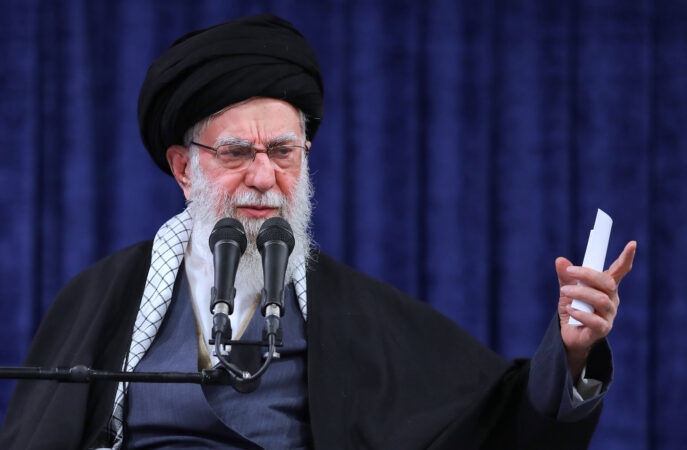
    Supreme Leader Ayatollah Ali Khamenei meanwhile warned that “the strongest army in the world might sometimes receive such a slap that it cannot get back on its feet.”

    Iranian diplomat sees ‘new window’ in talks

    Iran’s foreign minister later adopted a different tone, expressing optimism about the talks and saying “a new window has opened” for reaching an agreement.

    “We are hopeful that negotiations will lead to a sustainable and negotiated solution which can serve the interests of relevant parties and the broader region,” Abbas Araghchi told a U.N. disarmament conference after leading the Iranian delegation at the talks held in Geneva.

    He added that Iran “remains fully prepared to defend itself against any threat or act of aggression,” and that the consequences of any attack on Iran would not be confined to its borders.

    He made no specific mention of the military drills or the closure of the Strait of Hormuz.

    President Donald Trump, who scrapped an earlier nuclear agreement with Iran during his first term, has repeatedly threatened to use force to compel Iran to agree to constrain its nuclear program. Iran has said it would respond with an attack of its own. Trump has also threatened Iran over the killing of protesters.

    Vance says talks went well ‘in some ways’

    Trump’s envoys, Steve Witkoff and Jared Kushner, led the U.S. delegation at the latest indirect talks, held inside the residence of the Omani envoy to Geneva. Oman, a longtime regional mediator, had hosted an earlier round on Feb. 6.

    There was progress in the talks but many details remained to be discussed, according to a U.S. official who was not authorized to comment publicly and spoke on condition of anonymity. The Iranian delegation said they would present more detailed proposals in the next two weeks to narrow gaps, the official said.

    “In some ways, it went well,” Vice President JD Vance said in an interview with Fox News Channel after he spoke with Witkoff and Kushner. “But in other ways, it was very clear that the president has set some red lines that the Iranians are not yet willing to actually acknowledge and work through.”

    The U.S. also hosted talks between envoys from Russia and Ukraine in Geneva on Tuesday and Wednesday, days ahead of the fourth anniversary of the all-out Russian invasion of its neighbor.

    Araghchi, who led the Iranian side, also said he met with Director-General Rafael Grossi of the International Atomic Energy Agency on Monday in Geneva. The Iranian minister said they discussed the agency’s role in helping to achieve an agreement.

    A live fire drill

    Iran said its Revolutionary Guard started a drill early Monday in the Strait of Hormuz, the Persian Gulf, and the Gulf of Oman, which are crucial international shipping routes. It was the second time in recent weeks that Iran has held a live fire drill in the Strait of Hormuz.

    Iran often carries out military drills in the strait that can impede maritime traffic, but the announced closure went a step further. Danny Citrinowicz, an Iran expert at Israel’s Institute for National Security Studies, said Iran last closed the strait during the war with Iraq in the 1980s, when it mined the waterway.

    He said the latest announcement was a clear message to the international community that any strike on Iran would have global impact.

    Khamenei meanwhile stepped up his warnings to the U.S. over its buildup of military forces in the region.

    “Of course a warship is a dangerous apparatus, but more dangerous than the warship is the weapon that can sink the warship,” Khamenei said, according to Iranian state TV.

    He also warned the U.S. that “forcing the result of talks in advance is a wrong and foolish job.”

    U.S. increases military presence

    Last week, Trump said the USS Gerald R. Ford, the world’s largest aircraft carrier, was being sent to the Mideast. It will join the USS Abraham Lincoln and its accompanying guided-missile destroyers, which have been in the region for three weeks.

    U.S. forces shot down an Iranian drone that approached the Lincoln on the same day last week that Iran tried to stop a U.S.-flagged ship in the Strait of Hormuz.

    Gulf Arab nations have warned any attack could spiral into another regional conflict in a Mideast still reeling from the Israel-Hamas war.

    The Trump administration is seeking a deal to limit Iran’s nuclear program and ensure it does not develop nuclear weapons. Iran says it is not pursuing weapons and has so far resisted demands that it halt uranium enrichment on its soil or hand over its stockpile of highly enriched uranium.

    The U.S. and Iran were in the middle of months of meetings when Israel’s launch of a 12-day war against Iran back in June halted the talks. The U.S. bombed Iranian nuclear sites during that war, likely destroying many of the centrifuges that spun uranium to near weapons-grade purity. Israel’s attacks decimated Iran’s air defenses and targeted its ballistic missile arsenal as well.

    Before the June war, Iran had been enriching uranium up to 60% purity, a short, technical step away from weapons-grade levels.

  • ‘He loved Philadelphia, and Philadelphia loved him’: Jesse Jackson in Philadelphia through the years

    ‘He loved Philadelphia, and Philadelphia loved him’: Jesse Jackson in Philadelphia through the years

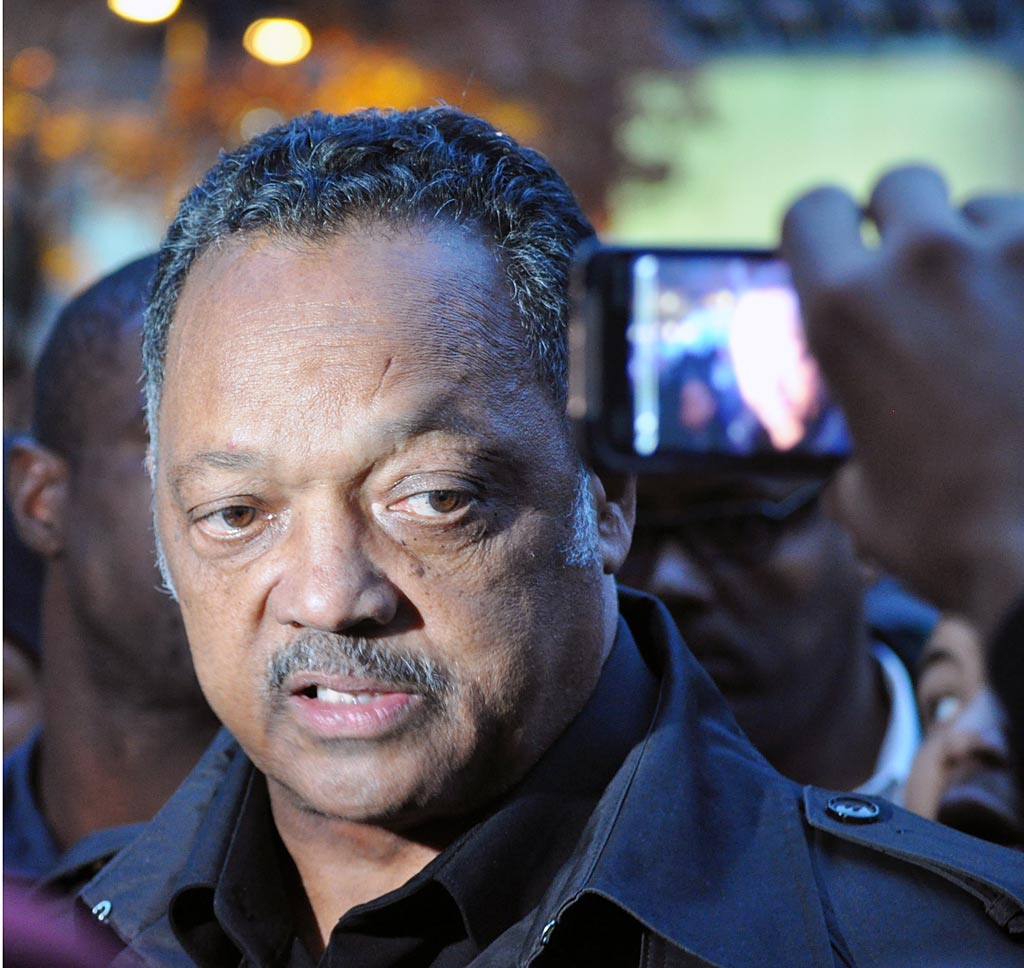
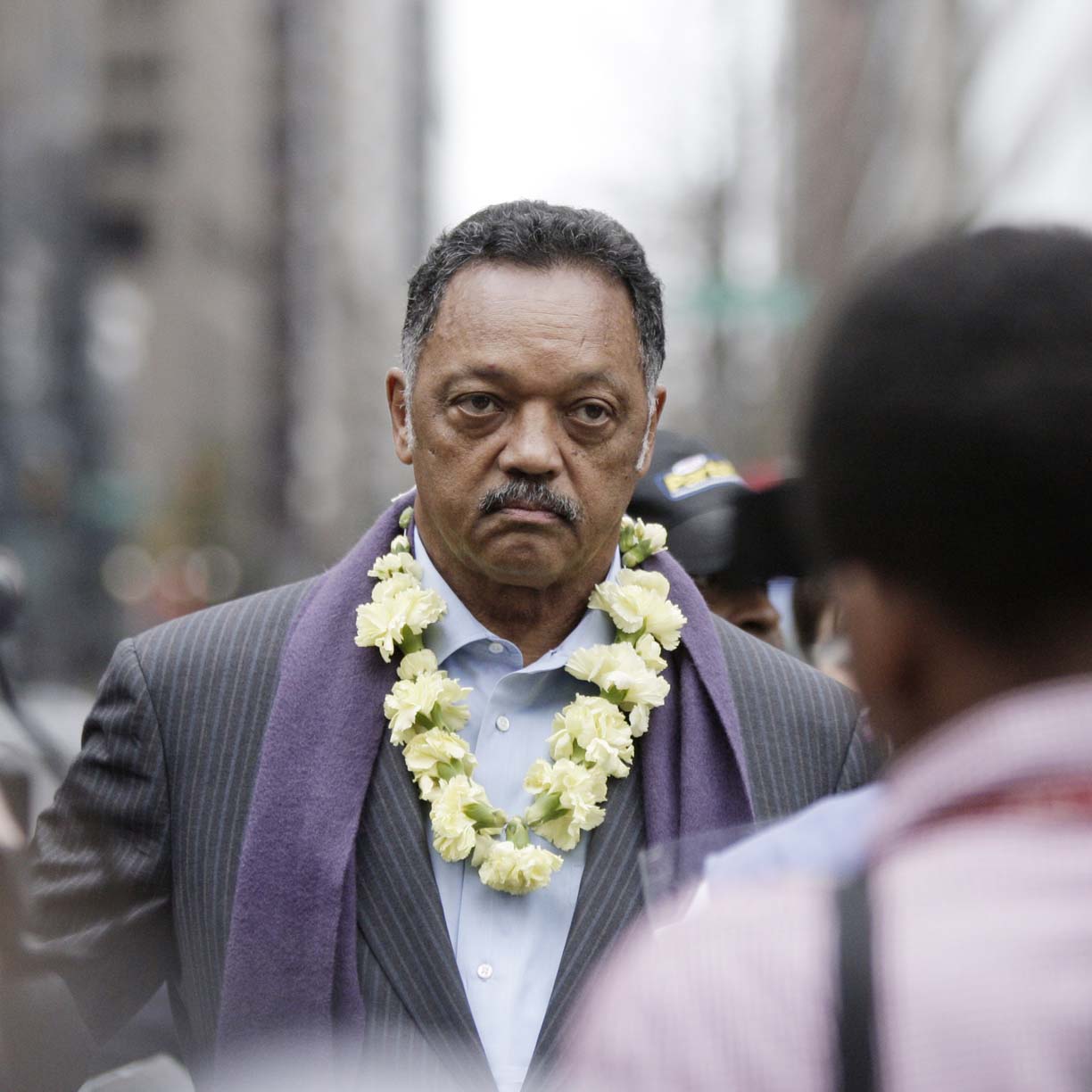
    The Rev. Jesse L. Jackson, a civil rights icon and a regular presence in Philadelphia who energized Black voters both locally and nationally for more than five decades, died Tuesday at his home in Chicago following a prolonged battle with a rare neurological disorder. He was 84.

    “Jesse Jackson will be remembered in Philadelphia as a civil rights hero, and a leader in terms of independent Black politics nationwide,” said former Councilmember W. Wilson Goode Jr., the son of Philly’s first Black mayor, W. Wilson Goode Sr. “He loved Philadelphia, and Philadelphia loved him.”

    A native of Greenville, S.C., Rev. Jackson initially rose to prominence in the mid-1960s, when he joined the 1965 voting rights march that the Rev. Dr. Martin Luther King Jr. led from Selma to Montgomery, Ala. In the years following King’s assassination in 1968, Rev. Jackson largely came to be considered his successor.

    Rev. Jackson would go on to become a prominent Black political and cultural leader in his own right, with his lengthy time in the public eye including presidential runs in 1984 and 1988. His visits to Philadelphia date back to the 1970s, and run the gamut from time in town supporting his own presidential campaigns — though neither of which were successful in the ‘80s — to appearances at the Democratic National Convention in 2016.

    The Rev. Jesse Jackson, founder and president of the Rainbow/PUSH Coalition, acknowledges the cheers of delegates as he walks to the podium to deliver remarks on the third night of the Democratic National Convention in Philadelphia on July 27, 2016.
    Hillary Clinton supporters and the Rev. Jesse Jackson (right) on the fourth day of the Democratic National Convention at the Wells Fargo Center on July 28, 2016.
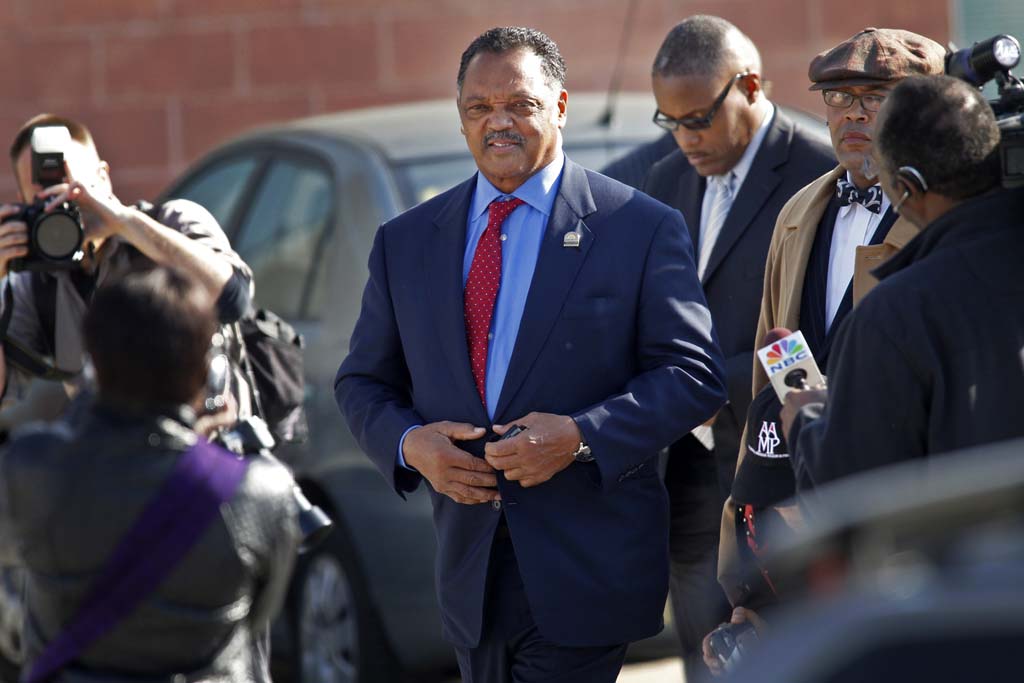
    The Rev. Jesse Jackson visits Baltimore’s turbulent intersection of West North Avenue and Pennsylvania Avenue on April 28, 2015.

    Across that time, Rev. Jackson served as a sort of rallying figure for Black Philadelphians at large, who largely supported his candidacy during his presidential runs, despite him failing to secure the Democratic nomination statewide. Still, his impact for Black voters both in Philadelphia and nationally remains everlasting.

    “That was the Rosetta stone to everything Jackson was trying to achieve,” said former Daily News scribe Gene Seymour, nephew of legendary People Paper columnist Chuck Stone. “We aren’t to be ignored or dismissed or cast aside — we matter.”

    In that sense, Goode Jr. said, Rev. Jackson will remain a political icon who inspired the nationalization of Black political empowerment.

    “Jesse Jackson is also a cultural icon in terms of telling people to be proud of being Black, and telling themselves, ‘I am somebody,’” Goode Jr. said, referencing Rev. Jackson’s famed refrain. “That is something that was indelible in the soul of Black people across the nation and world, and in Philadelphia here as well.”

    The Rev. Jesse Jackson visits the turbulent intersection of West North Avenue and Pennsylvania Avenue in Baltimore on April 28, 2015.
    The Rev. Jesse Jackson visited Occupy Philadelphia protesters on Nov. 13, 2011. He told them to “never surrender.”
    The Rev Jesse Jackson at Joe Frazier’s funeral at Enon Tabernacle Baptist Church on Cheltenham Avenue in Philadelphia on Nov. 14, 2011.
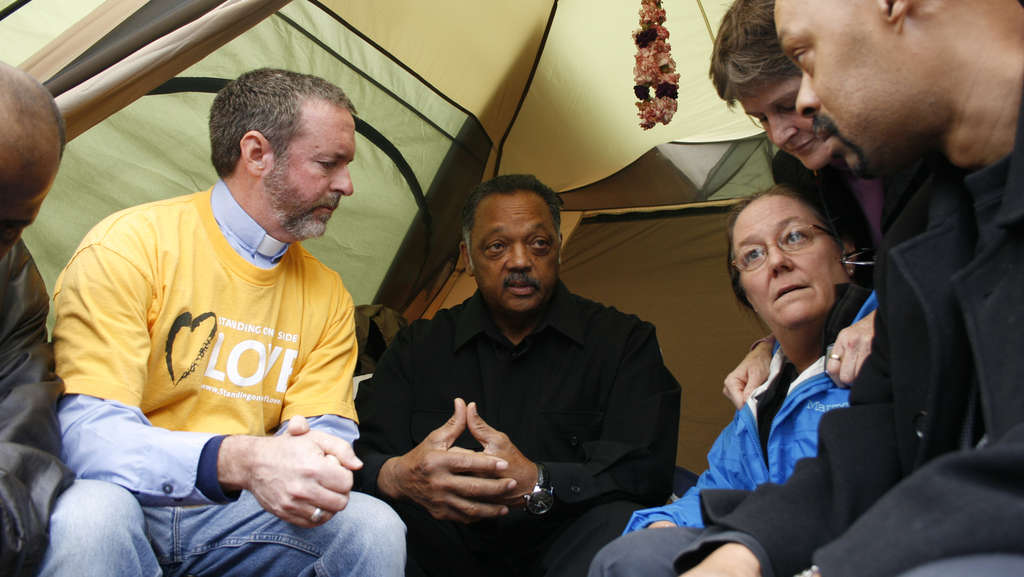
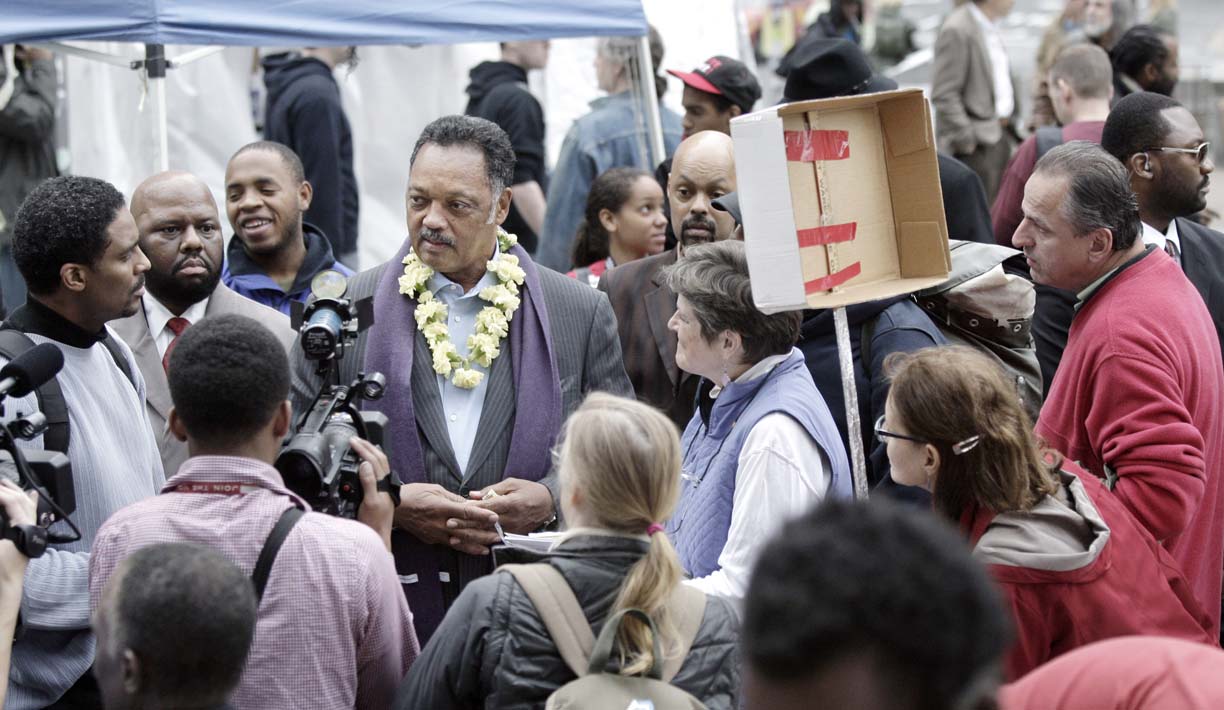
    The Rev. Jesse Jackson (center) visits the Interfaith tent, donated by Quakers, to talk to the Rev. Peter Friedrich (left) and (from right) Phillip Hall, Hollister Knowlton, and Joyce Moore in 2011.

    Though Philadelphia’s Black community generally was supportive of and receptive to Rev. Jackson’s messaging historically, Seymour said, he maintained something of a complicated relationship with the city’s prominent politicians. Wilson Goode Sr., for example, officially supported Walter Mondale and Michael Dukakis for president in the 1980s. At least in 1988, Seymour said, Rev. Jackson likely had “the people’s hearts,” despite lacking the official nomination.

    Wilson Goode Sr. was not immediately available for comment.

    “His presidential campaigns in 1984 and 1988 reshaped American politics,” said the Rev. Gregory Edwards, of the Philly-based POWER Interfaith, in a statement. “Those campaigns widened the political imagination of this country and helped cultivate a generation of Black elected leaders.”

    Rev. Jackson’s relationship with Goode Sr. was somewhat complicated following the 1985 MOVE bombing, which brought the civil rights leader to tour the ruins of the 6200 block of Osage Avenue in its aftermath. Rev. Jackson urged a congressional investigation into the incident, which he called “excessive force,” but avoided criticizing Goode directly in subsequent meetings. Goode, meanwhile, said that the city would cooperate with any groups investigating the incident, The Inquirer reported at the time.

    “He was not happy with what happened in ‘85 with MOVE,” Seymour said.

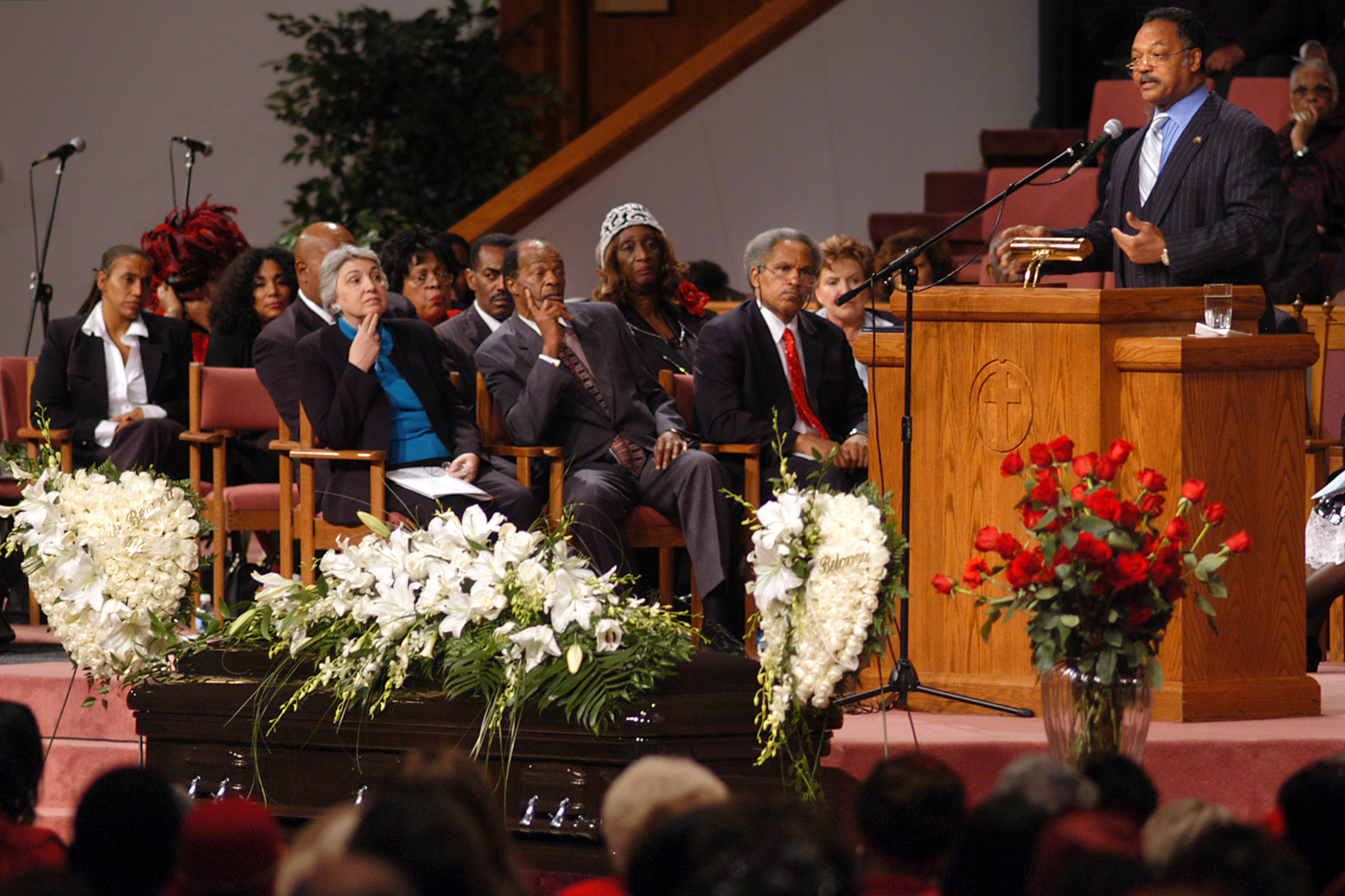
    The Rev. Jesse L. Jackson speaks during during funeral services for civil rights activist C. Delores Tucker at Deliverance Evangelistic Church on Oct. 21, 2005. Seated in front row behind him, left to right are Eleanor Smeal, president of the Feminist Majority Foundation; Marion Barry, former mayor of Washington, and Philadelphia Mayor John Street.
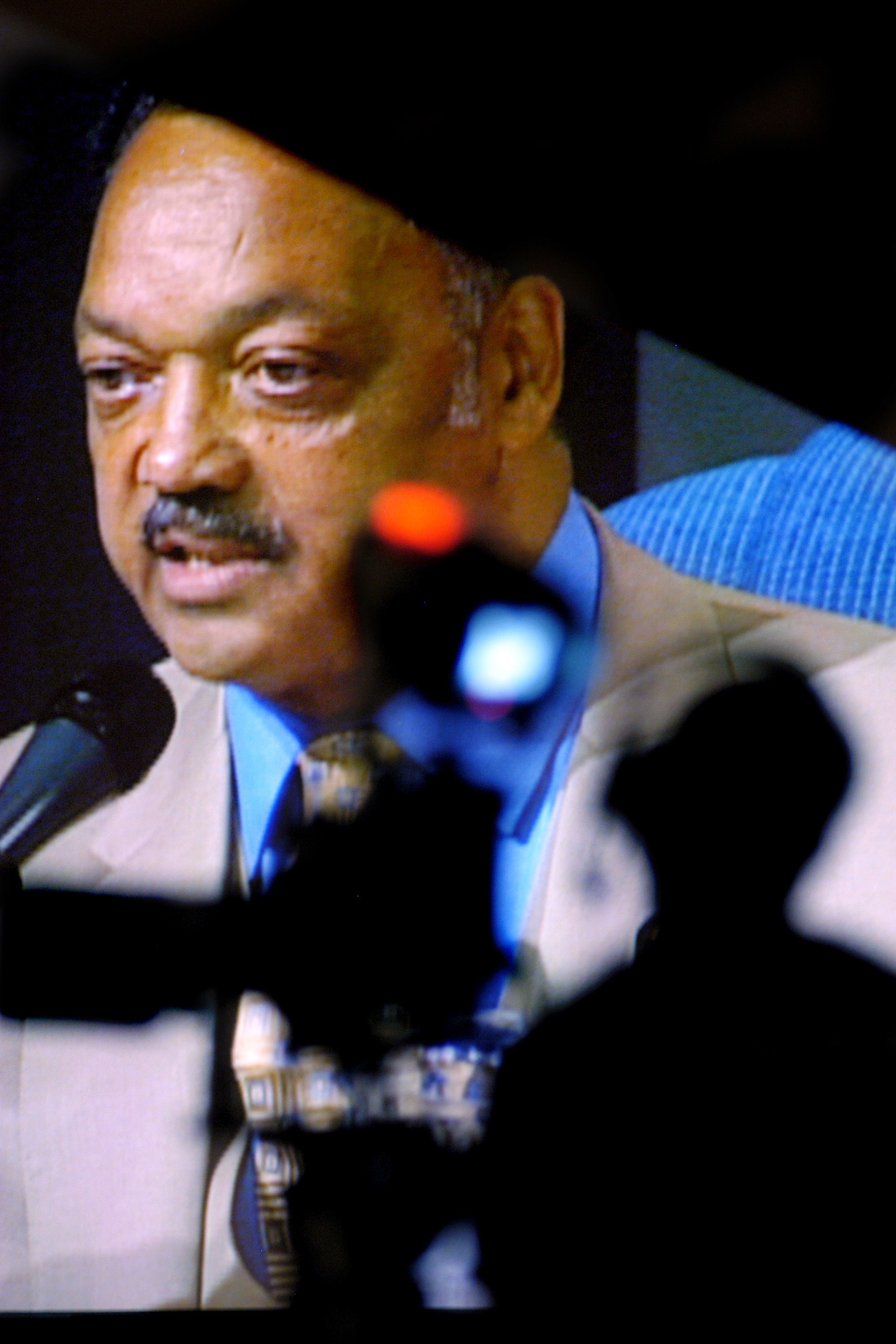
    Rev. Jackson is projected live on a large screen monitor (camera operator in foreground) as he participates in a panel discussion laying out a legal and political strategy for fulfilling Brown v. the Board of Education, at the annual NAACP meeting on July. 14, 2004 at the Convention Center.
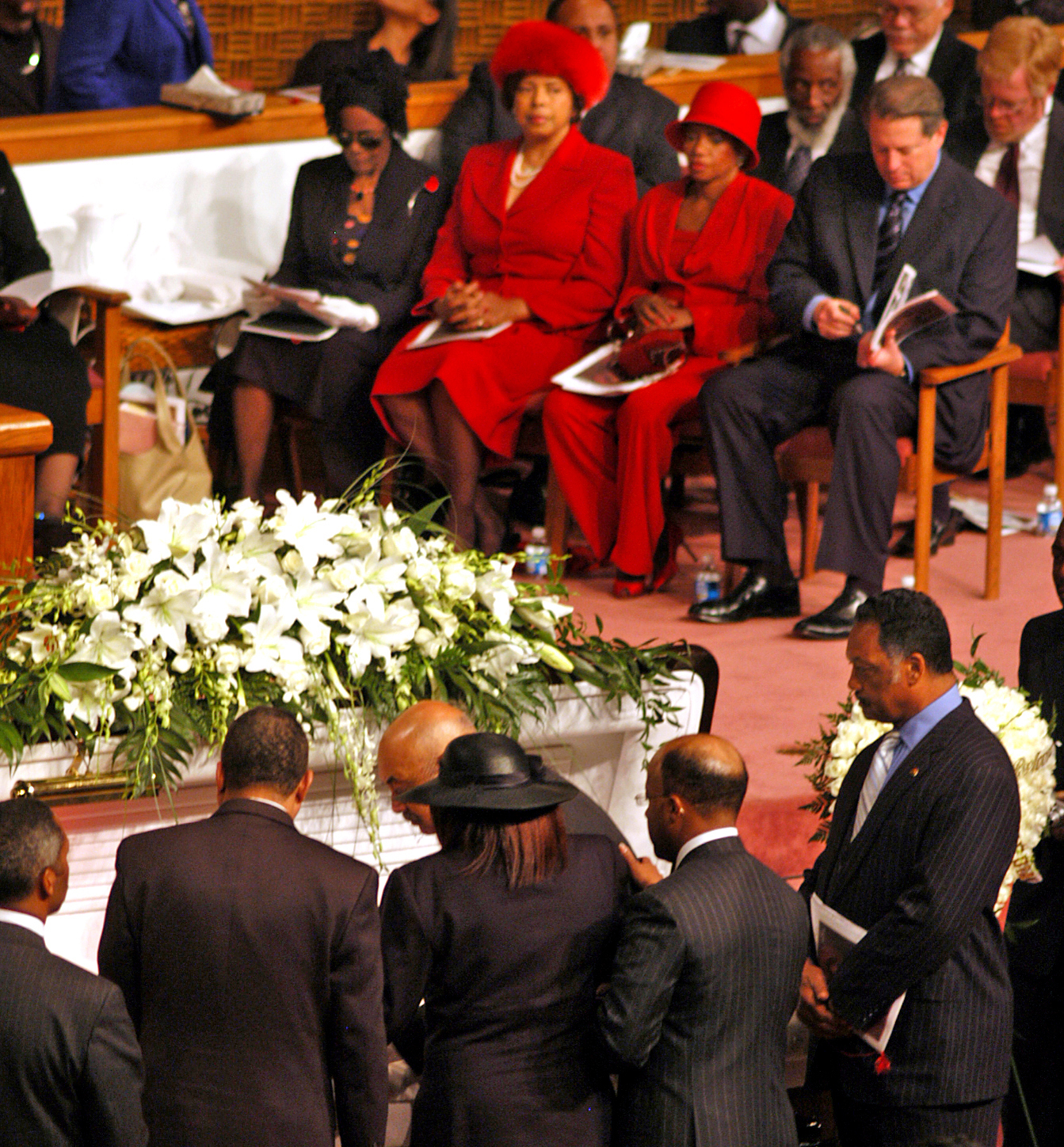
    Her family stands by as husband (partially hidden) William T. Tucker covers the body of civil rights activist C. Delores Tucker in her casket at the beginning of funeral service at Deliverance Evangelistic Church on Oct. 21, 2005. At right is the Rev. Jesse L. Jackson, founder and president of the Rainbow Coalition/PUSH, who later delivered the eulogy. Seated in rear at right is former Vice President Al Gore.
    AIDS quilt panels flank the podium as the Rev. Jesse Jackson speaks at an African American AIDS conference at the Wyndham Franklin Plaza Hotel on Feb. 28, 2005.

    Still, Rev. Jackson often served as a defender of Philadelphia’s famed Black figures. In 2011, for example, Rev. Jackson spoke at the funeral of legendary world heavyweight boxing champion Joe Frazier, who had long competed with the fictional Rocky Balboa for recognition. As Jackson put it at the time, Frazier was the “real champion,” not the “Italian Stallion.”

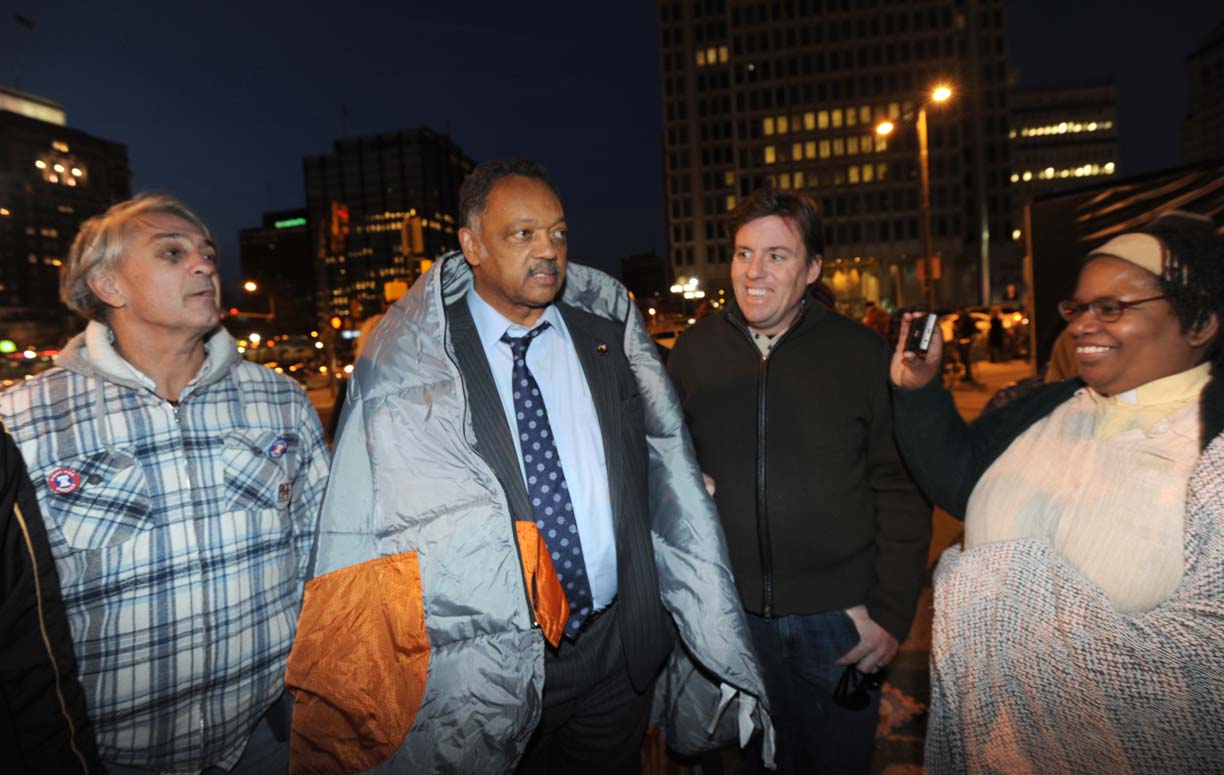
    The Rev. Jesse Jackson, who has a sleeping bag draped around his shoulders, is talking and praying with Occupy Philadelphia demonstrators: Brad Wilson (from left); the Rev. Bill Golderer, pastor of Broad Street Ministry; and Donna Jones, pastor of the Cookman Baptist Initiative.

    “If you were of importance as a Black person in America during the time [Jackson] was in the public eye,” Seymour said, “he was there to speak on your behalf.”

    Goode Jr.’s most prominent memory of Rev. Jackson, meanwhile, dates back to the mid-1980s, when he was a student at the University of Pennsylvania. At the time, he said, Rev. Jackson attended a National Black Student Union conference following an invitation from its organizers, Goode Jr. included. It was, Goode Jr. said, an inspiration.

    “It meant a lot to us,” Goode Jr. said. “Not just Black leaders at Penn, but across the nation, who were gathered there.”

    Striking Red Cross worker Lenny Lerro takes a picture of himself with the Rev. Jesse Jackson as they walk the picket line in 2011 on Spring Garden Street in Philadelphia.
    Rev. Jesse Jackson visits with folks at Occupy Philadelphia, just outside City Hall on Nov. 20, 2011.
    The Rev. Jesse Jackson visits with folks at Occupy Philadelphia, just outside City Hall on Nov. 20, 2011.
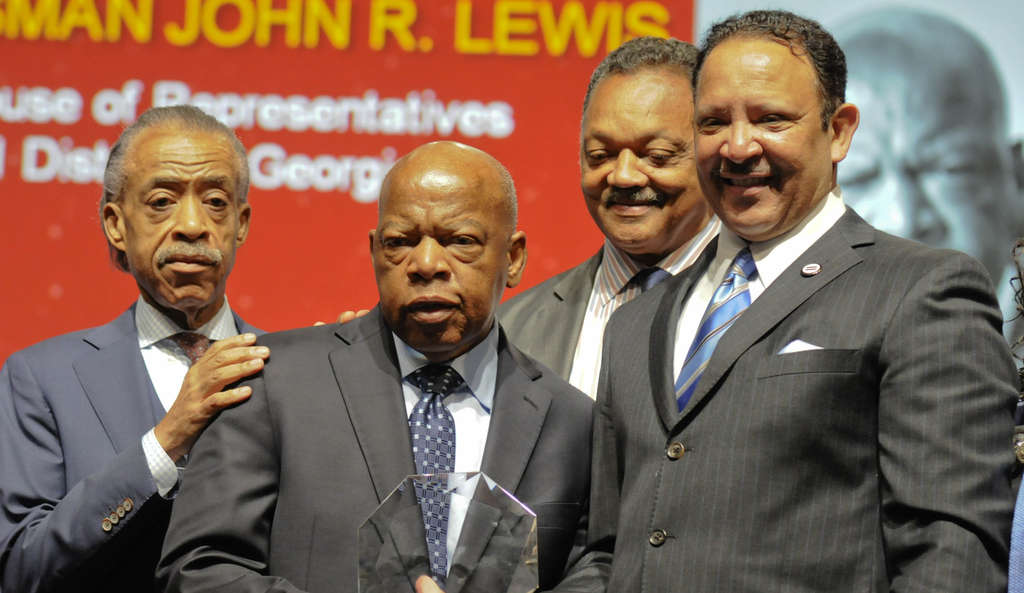
    U.S. Rep. John Lewis (second from left) is presented with the Civil Rights Champion Award in 2013 by (from left) the Rev. Al Sharpton, the Rev. Jesse Jackson, and Marc Morial, president of the Urban League.
  • Ramadan arrives in Gaza under shaky ceasefire deal, but the festive spirit eludes many Palestinians

    Ramadan arrives in Gaza under shaky ceasefire deal, but the festive spirit eludes many Palestinians

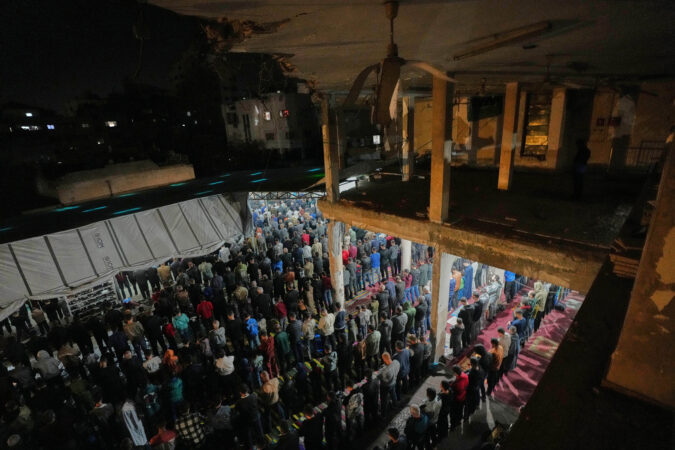
    GAZA CITY, Gaza Strip — Palestinians in Gaza are preparing to welcome the Muslim holy month of Ramadan under a fragile ceasefire deal, but many say the challenges of their daily lives and the losses of the Israel-Hamas war are dampening the typically festive spirit.

    “There is no joy after we lost our family and loved ones,” said Gaza City resident Fedaa Ayyad. “Even if we try to cope with the situation, we can’t truly feel it in our hearts. … I am one of those who cannot feel the atmosphere of Ramadan.”

    In Gaza, the first day of the holy month is Wednesday. During Ramadan, observant Muslims fast daily from dawn to sunset. In normal circumstances, the month often brings families and friends together to break their fast in joyous gatherings. For Muslims, it’s a time for increased worship, religious reflection, and charity.

    Circumstances in Gaza are far from normal. Israel’s military offensive has killed more than 72,000 Palestinians, according to Gaza’s Health Ministry, and caused widespread destruction and displaced most of the territory’s residents. Israel launched the offensive after Hamas-led militants killed some 1,200 people, mostly civilians, and took another 251 hostage in their attack on Oct. 7, 2023.

    As Gaza residents visited markets this week, some lamented that economic woes cast a pall on the month.

    “There is no cash among the people. There is no work. It’s true that it is Ramadan, but Ramadan requires money,” said Gaza City resident Waleed Zaqzouq. He said merchants should consider people’s financial hardships.

    Before the war, “people lived a dignified life,” he said. “The situation has completely changed in the war, meaning people have been devastated and worn down.”

    The Oct. 10 U.S.-brokered ceasefire deal attempted to halt more than two years of war between Israel and Hamas. While the heaviest fighting has subsided, there has been almost daily Israeli fire in Gaza.

    Israeli forces have carried out repeated airstrikes and frequently fire on Palestinians near military-held zones, killing more than 600 Palestinians, according to Gaza health officials. The ministry, which is part of the Hamas-led government, maintains detailed casualty records that are seen as generally reliable by U.N. agencies and independent experts. But it does not distinguish between civilians and militants.

    Militants have carried out shooting attacks on Israeli troops, and Israel says its strikes are in response to that and other violations. Four Israeli soldiers have been killed.

    Gaza’s winter has highlighted the grim conditions of the displaced residents and the many needs of the enclave and its people. Severe cold has caused child deaths in Gaza, and torrential rain has flooded displacement camps and collapsed already badly damaged buildings.

    “There is much that has changed from this Ramadan to Ramadan before the war,” said Raed Koheel, who lives in Gaza City. “In the past, the atmosphere was more delightful. The streets were lit up with decorations. All streets had decorations. Our children were happy.”

    Still, amid the hardships, some in the Gaza Strip have worked to bring a taste of Ramadan’s festivities.

    Surrounded by ruins and crumbled buildings in Khan Younis, calligrapher and artist Hani Dahman dipped his brush in paint and wrote “Welcome, Ramadan” in Arabic as children watched.

    “We are here in Khan Younis camp, trying to bring happiness to the hearts of children, women, men and entire families,” Dahman said. “We are … sending a message to the world that we are people who seek life.”

    Strands of Ramadan decorations were hung among the ruins. Mohammed Taniri watched the decorations take shape.

    “When they provide such beautiful, simple decorations, it brings joy to the children,” he said. “Despite all the hardships, they are trying to create a beautiful atmosphere.”

  • History and conservation groups are suing the Trump administration over censorship at national parks

    History and conservation groups are suing the Trump administration over censorship at national parks

    A new lawsuit filed by a group of conservation and history organizations is challenging President Donald Trump’s executive order to remove historic information from national parks.

    It comes a day after a federal judge ordered restoration of the slavery exhibits at the President’s House in Philadelphia and marks the latest chapter in a showdown between historical transparency versus censorship.

    On Tuesday, the National Parks Conservation Association filed a lawsuit in Massachusetts federal court against the Department of Interior, challenging Trump’s 2025 executive order that forced national parks to change or strip displays tied to topics ranging from slavery and racism to LGBTQ+ rights and climate change.

    “Plaintiffs are organizations committed to protecting the national parks, preserving history, promoting access to high quality scientific information, and providing high quality interpretive materials — including exhibits, signs, brochures, and other educational materials — that bridge the gap between physical objects and human understanding for park visitors,” the lawsuit says.

    “They and their members — including avid users of national parks and historians whose research is being erased — have been injured by these actions and seek to ensure that the administration does not wash away history and science from what the National Park Service has recognized is ‘America’s largest classroom.’ ”

    The coalition, which includes the American Association for State and Local History, the Association of National Park Rangers, the Coalition to Protect America’s National Parks, the Society for Experiential Graphic Design, and the Union of Concerned Scientists, is asking the court to declare Trump’s executive order unlawful and to order removed materials to be restored.

    “In filing this litigation together, we are taking a stand for the soul of our national parks,” Alan Spears, senior director of cultural resources at the National Parks Conservation Association, said. “Censoring science and erasing America’s history at national parks are direct threats to everything these amazing places, and our country, stand for.”

    In Philadelphia, U.S. District Judge Cynthia M. Rufe issued a ruling Monday requiring the federal government to restore the President’s House site to its original state. The removed exhibits paid tribute to the enslaved people who lived in George Washington’s home during his presidency.

    In her 40-page opinion, Rufe — who is a George W. Bush appointee — does not mince words. She compared the federal government’s argument that it can unilaterally control the exhibits in national parks to the dystopian totalitarian regime in George Orwell’s 1984.

    The plaintiff’s group for the Massachusetts suit is being represented by Democracy Forward, a progressive nonprofit that challenges government actions it views as harmful.

    “You cannot tell the story of America without recognizing both the beauty and the tragedy of our history,” Skye Perryman, Democracy Forward’s president and CEO said in a statement. “The president’s effort to erase history and science in our national parks violates federal law, and is a disgrace that neither honors our country’s legacy nor its future.”

    Beyond Philadelphia, the lawsuit also mentions other examples of Trump’s executive order in action, including the removal of an interactive display mentioning climate change at Fort Sumter in South Carolina, short films on labor history being scrapped at Lowell’s National Historical Park in Massachusetts, and the removal of displays discussing negative impacts tourists, settlers, and cattle ranchers have on the Grand Canyon National Park.

    The lawsuit goes on to point out the irony of Trump’s executive order aiming to avoid “disparaging Americans,” despite the president’s own new signage at the White House, which takes jabs at former President Joe Biden and others along his West Wing “Walk of Fame.”

    The parties are asking a judge to order that national parks must be allowed to present the full historical and scientific picture without censorship and for their court costs to be paid for.

  • Stephen Colbert says CBS blocked interview with Texas Democrat over FCC concerns

    Stephen Colbert says CBS blocked interview with Texas Democrat over FCC concerns

    CBS late-night host Stephen Colbert rebuked his own network Monday night, claiming that lawyers for parent company Paramount Skydance prohibited him from airing an interview with Texas State Rep. James Talarico, a Democratic candidate for the U.S. Senate, over concerns it would violate the Federal Communications Commission’s equal time rule.

    “You know who is not one of my guests tonight?” Colbert asked his audience. “That’s Texas state representative James Talarico. He was supposed to be here, but we were told in no uncertain terms by our network’s lawyers, who called us directly, that we could not have him on the broadcast.”

    In response, the studio audience booed.

    “Then I was told, in some uncertain terms, that not only could I not have him on, I could not mention me not having him on,” Colbert continued. “And because my network clearly does not want us to talk about this, let’s talk about this.” A representative for Paramount Skydance did not respond to a request for comment.

    Colbert launched into a segment about the FCC’s equal time rule, which requires broadcasters to provide equal opportunity to political candidates. News and talk show interviews have traditionally been exempt from the mandate. But in January, the FCC, issued a public notice saying that daytime and nighttime talk shows would have to apply for a exemptions to the equal time rule for each of their programs.

    “Importantly, the FCC has not been presented with any evidence that the interview portion of any late night or daytime television talk show program on air presently would qualify for the bona fide news exemption,” the FCC’s notice read.

    At the time, Anna M. Gomez, the FCC’s lone Democrat, called the notice “misleading” and said nothing has changed about the FCC’s requirements.

    In a statement Tuesday, Gomez wrote that CBS’s decision is an example of “corporate capitulation in the face of this Administration’s broader campaign to censor and control speech” and said that the FCC has “no lawful authority to pressure broadcasters for political purposes.”

    “CBS is fully protected under the First Amendment to determine what interviews it airs, which makes its decision to yield to political pressure all the more disappointing,” she said.

    In a statement Tuesday afternoon, CBS defended itself and pushed back against Colbert’s account.

    “THE LATE SHOW was not prohibited by CBS from broadcasting the interview with Rep. James Talarico,” a spokesperson for the network said in a statement. “The show was provided legal guidance that the broadcast could trigger the FCC equal-time rule for two other candidates, including Rep. Jasmine Crockett, and presented options for how the equal time for other candidates could be fulfilled. THE LATE SHOW decided to present the interview through its YouTube channel with on-air promotion on the broadcast rather than potentially providing the equal-time options.”

    Colbert is already on his way out of CBS, set to depart the network in May when his show goes off the air. CBS announced over the summer that it is canceling The Late Show, the long-running talk show once hosted by David Letterman, which it claimed is “purely a financial decision.”

    Led by Chairman Brendan Carr, the FCC in President Donald Trump’s second term has remade itself as a speech enforcer tackling perceived liberal bias in the media industry. Carr’s speech agenda has been marked by investigations of media companies and threats to take action against broadcasters that do not follow rarely enforced FCC rules. He has frequently invoked a little-used “news distortion” policy as justification, a practice condemned by a bipartisan group of former FCC chairs and commissioners in a November letter.

    Following on-air comments in September by ABC’s Jimmy Kimmel in the wake of conservative activist Charlie Kirk’s killing, Carr suggested on a podcast that the agency could take action against the network and its parent company Disney, which owns broadcast licenses across the country.

    “We can do this the easy way or the hard way,” Carr told conservative podcast host Benny Johnson about Kimmel. “These companies can find ways to change conduct and take actions on Kimmel, or there’s going to be additional work for the FCC ahead.” Carr drew bipartisan criticism for his role in the episode, with Sen. Ted Cruz (R., Texas) likening him to a cinema mafioso. ABC suspended Kimmel for several days in September.

    Last summer the FCC approved an $8 billion deal for David Ellison’s Skydance to buy CBS parent company Paramount after a series of concessions. Skydance pledged to conduct a review of CBS’s programming and agreed to refrain from diversity, equity and inclusion initiatives. It also appointed an ombudsman with Republican Party ties to handle claims of bias.

    In July, CBS also settled a lawsuit from Trump, who claimed that a 60 Minutes interview with political rival Kamala Harris was “deceitful” in its editing. Colbert claimed the $16 million settlement was a “big, fat bribe.” The network canceled The Late Show three days later.

    Colbert’s criticism also comes amid another corporate pursuit for Paramount Skydance.

    The company is trying to persuade Warner Bros. Discovery to accept its hostile bid to buy the company rather than sell to Netflix. It’s unclear whether the FCC would have a role in such a deal, even if Paramount is involved, because no broadcast spectrum licenses would be changing hands. Still, any deal of this size would need government approval, probably from Trump’s Justice Department, where antitrust chief Gail Slater just resigned.

    In December, Trump has said he would be “involved” in vetting the Netflix-Warner Bros. deal, which has massive implications for Hollywood, movie theaters and streaming. More recently, Trump backtracked, saying he is “not involved” in the deal.

    Talarico, 36, has been a member of the Texas House of Representatives since 2018 and more recently has been a rising star in the Democratic Party. He is running for a U.S. Senate seat in Texas, which is holding its primary contests on March 3.

    Though Colbert’s interview with Talarico didn’t broadcast over the airwaves, it was made available on YouTube.

    “This is the party that ran against cancel culture,” Talarico told Colbert. “Now they’re trying to control what we watch, what we say, what we read. And this is the most dangerous kind of cancel culture — the kind that comes from the top.”

  • New Orleans celebrates Mardi Gras, the indulgent conclusion of Carnival season

    New Orleans celebrates Mardi Gras, the indulgent conclusion of Carnival season

    NEW ORLEANS — People leaned out of wrought iron balconies, hollering the iconic phrase “Throw me something, Mister” as a massive Mardi Gras parade rolled down New Orleans’ historic St. Charles Avenue on Tuesday.

    Mardi Gras, also known as Fat Tuesday, marks the climax and end of the weekslong Carnival season and a final chance for indulgence, feasting, and revelry before the Christian Lent period of sacrifice and reflection. The joyous goodbye to Carnival always falls the day before Ash Wednesday.

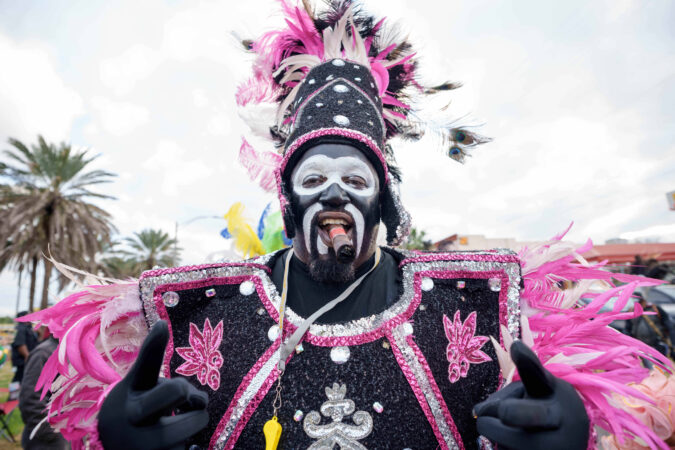
    In Louisiana’s most populous city, which is world-famous for its Mardi Gras bash, people donned green, gold, and purple outfits, with some opting for an abundance of sequins and others showing off homemade costumes.

    The revelers began lining the streets as the sun rose. They set up chairs, coolers, grills, and ladders — offering a higher vantage point.

    As marching bands and floats filled with women wearing massive feathered headdresses passed by, the music echoing through the city streets, people danced and cheered. Others sipped drinks, with many opting for adult concoctions on the day of celebration rather than the usual morning coffee.

    Each parade has its signature “throws” — trinkets that include plastic beads, candy, doubloons, stuffed animals, cups, and toys. Hand-decorated coconuts are the coveted item from Zulu, a massive parade named after the largest ethnic group in South Africa.

    As a man, dressed like a crawfish — including red fabric claws for hands — caught one of the coconuts, he waved it around, the gold glitter on the husk glistening in the sun.

    Sue Mennino was dressed in a white Egyptian-inspired costume, complete with a gold headpiece and translucent cape. Her face was embellished with glitter and electric blue eyeshadow.

    “The world will be here tomorrow, but today is a day off and a time to party,” Mennino said.

    The party isn’t solely confined to the parade route. Throughout the French Quarter, people celebrated in the streets, on balconies and on the front porches of shotgun-style homes.

    One impromptu parade was led by a man playing a washboard instrument and dressed as a blue alligator — his papier-mâché tail dragging along the street, unintentionally sweeping up stray beads with it. A brass band played “The Saints” as people danced.

    In Jackson Square, the costumed masses included a man painted from head to toe as a zebra, a group cosplaying as Hungry Hungry Hippos from the tabletop game and a diver wearing an antique brass and copper helmet.

    “The people are the best part,” said Martha Archer, who was dressed as Madame Leota, the disembodied medium whose head appears within a crystal ball in the Haunted Mansion attraction at Disney amusement parks.

    Archer’s face was painted blue and her outfit was a makeshift table that came up to her neck — giving the appearance that she was indeed a floating head.

    “Everybody is just so happy,” she explained.

    The good times will roll not just in New Orleans but across the state, from exclusive balls to the Cajun French tradition of the Courir de Mardi Gras, or Fat Tuesday Run — a rural event in Central Louisiana featuring costumed participants performing, begging for ingredients and chasing live chickens to be cooked in a communal gumbo.

    Parades are also held in other Gulf Coast cities such as Mobile, Ala., and Pensacola, Fla., and there are other world-renowned celebrations in Brazil and Europe.

    One of the quirkiest is an international Pancake Day competition pitting the women of Liberal, Kan., against the women of Olney, England. Pancakes are used because they were thought to be a good way for Christians to consume the fat they were supposed to give up during the 40 days before Easter.

    Contestants must carry a pancake in a frying pan and flip the pancake at the beginning and end of the 415-yard race.

  • Georgia students recall horror of being shot as father of accused school shooter goes on trial

    Georgia students recall horror of being shot as father of accused school shooter goes on trial

    ATLANTA — Georgia high school students on Tuesday testified in court about the horrors of being shot during their algebra class, and recounted through tears seeing a classmate in a pool of blood, then seeing blood on their own bodies and fearing they might die.

    Various students took the stand at the trial of Colin Gray, the father of Colt Gray, who investigators said had carefully planned the Sept. 4, 2024, shooting at the school northeast of Atlanta that left two teachers and two students dead and several others wounded.

    This is one of several cases around the nation where prosecutors are trying to hold parents responsible after their children are accused in fatal shootings.

    A ninth-grade girl saw a hole in her wrist and began screaming moments after the gunfire began in her Algebra I class, she testified Tuesday.

    “I was also worried that I was going to die and how that would affect my parents because my dad has a heart problem,” she said.

    As paramedics carried her out of the school building, she saw Colt Gray on the floor with his hands behind his back and screamed obscenities at him as she passed by him.

    “I remember yelling at him that we were kids, because we were kids,” she said. The faces of she and others who testified were not shown during a video livestream of the testimony because of their young ages.

    Other students said the trauma was not limited to their physical wounds, as they spoke of being depressed, anxious and slow to trust people even now, more than a year later.

    “Just seeing what I saw that day, it just sticks with me … and not being able to trust certain people, trust people,” said one girl who sustained a gunshot wound to her left shoulder.

    Many of the students said they were still in counseling to deal with nightmares, fears of loud noises and anxiety at school and at home. “Even to go on a walk around my neighborhood, anxiety would fill my head, and I feel like somebody driving past me would shoot me,” a female student testified.

    Colt Gray, who was 14 years old at the time of the shooting, faces 55 counts, including murder in the deaths of four people and 25 counts of aggravated assault. His father Colin Gray faces 29 counts, including two counts of second-degree murder and two counts of involuntary manslaughter.

    Colin Gray should be held responsible for providing the weapon despite warnings about alleged threats his son made, a prosecutor said as the father’s trial began Monday.

    “This case is about this defendant and his actions in allowing a child that he has custody over access to a firearm and ammunition after being warned that child was going to harm others,” Barrow County District Attorney Brad Smith said in his opening statement.

    Prosecutors argue that amounts to cruelty to children, and second-degree murder is defined in Georgia law as causing the death of a child by committing the crime of cruelty to children.

    But Brian Hobbs, an attorney for Colin Gray, said the shooting’s planning and timing “were hidden by Colt Gray from his father.”

    “That’s the difference between tragedy and criminal liability,” he said. “You cannot hold someone criminally responsible for failing to predict what was intentionally hidden from them.”

    With a semiautomatic rifle in his book bag, the barrel sticking out and wrapped in poster board, Colt Gray boarded the school bus, investigators said. He left his second-period class and emerged from a bathroom with the gun and then shot people in a classroom and hallways, they said.

    Smith told the jury that in September 2021, Colt Gray used a school computer to search the phrase, “how to kill your dad.” School resource officers were then sent to the home, but it was determined to be a “misunderstanding,” Smith said.

    Sixteen months before the shooting, in May 2023, law enforcement acted on a tip from the FBI after a shooting threat was made online concerning an elementary school. The threat was traced to a computer at Gray’s home, Smith said.

    Colin Gray was told about the threat and was asked whether his son had access to guns. Gray replied that he and his son “take this school shooting stuff very seriously,” according to Smith. Colt Gray denied that he made the threat and said that his online account had been hacked, Smith said.

    That Christmas, Colin Gray gave his son the gun as a gift and continued to buy accessories after that, including “a lot of ammunition,” Smith said.

    Colin Gray knew his son was obsessed with school shooters, even having a shrine in his bedroom to Nikolas Cruz, the shooter in the 2018 massacre at Marjory Stoneman Douglas High School in Parkland, Fla., prosecutors have said. A Georgia Bureau of Investigation agent had testified that the teen’s parents had discussed their son’s fascination with school shooters but decided that it was in a joking context and not a serious issue.

    Three weeks before the shooting, Gray received a chilling text from his son: “Whenever something happens, just know the blood is on your hands,” according to Smith.

    Colin Gray was also aware his son’s mental health had deteriorated and had sought help from a counseling service weeks before the shooting, an investigator testified.

    “We have had a very difficult past couple of years and he needs help. Anger, anxiety, quick to be volatile. I don’t know what to do,” Colin Gray wrote about his son.

    But Smith said Colin Gray never followed through on concerns about getting his son admitted to an inpatient facility.

  • Trump picks his White House assistant for panel reviewing ballroom

    Trump picks his White House assistant for panel reviewing ballroom

    When Congress created the Commission of Fine Arts more than a century ago, its members were intended to be “well-qualified judges of the fine arts” who would review and advise on major design projects in the nation’s capital, lawmakers wrote. The initial slate of commissioners included Daniel Burnham and Frederick Law Olmsted Jr., architects and urban planners who designed much of Washington.

    Now, the 116-year-old commission is set to include its newest, youngest member: Chamberlain Harris, a 26-year-old White House aide and a longtime executive assistant for President Donald Trump, who is slated to be sworn in at the panel’s next public meeting on Thursday.

    Trump’s selection of Harris — who was known as the “receptionist of the United States” during the president’s first term and has no notable arts expertise — comes amid the president’s push to install allies on the arts commission and another panel, the National Capital Planning Commission. Both commissions are reviewing Trump’s planned White House ballroom and are expected to review his other Washington-area construction projects, such as his desired 250-foot triumphal arch.

    Trump has said he hopes to complete the projects as quickly as possible, despite complaints about their size, design, and potential impact on Washington. A historical preservation group has sued the administration over the ballroom project, saying that Trump should have consulted with the federal review panels before tearing down the White House’s East Wing annex and beginning construction on his planned 90,000-square-foot, $400 million ballroom.

    A federal judge weighing whether to halt the ballroom project in December had instructed the White House to go through the commissions before beginning construction.

    Asked about Harris’s qualifications to serve on the fine arts commission, the White House on Tuesday touted her as a “loyal, trusted, and highly respected adviser” to the president.

    “She understands the President’s vision and appreciation of the arts like very few others, and brings a unique perspective that will serve the Commission well,” Steven Cheung, the White House communications director, said in a statement. “She will be a tremendous asset to the Commission of Fine Arts and continue to honorably serve our country well.”

    Harris, who holds the title of deputy director of Oval Office operations, received a bachelor’s degree in political science in 2019 from the University at Albany, SUNY, with minors in communications and economics, according to an archived copy of her resumé on LinkedIn. She continued working for Trump as an executive assistant when he was out of office.

    Harris was one of seven fine arts commissioners Trump appointed during a 19-day spree in January. The president had left the commission empty for months after firing all six members in October but raced to restock the panel ahead of the agency’s January meeting when the ballroom project was first added to the agenda.

    Former fine arts commissioners said they could not recall a commissioner in the panel’s history with as little prior arts experience as Harris. Several former commissioners also noted that Trump has installed multiple appointees with minimal arts and urban planning expertise on both panels set to review his construction projects remaking Washington.

    “It’s disastrous,” said Alex Krieger, an architect and professor at the Harvard Graduate School of Design, who was chosen for the commission in 2012 by President Barack Obama and served a second term in the first Trump administration. “Some of these people just have no qualifications to evaluate matters of design, architecture, or urban planning.”

    Past commissioners have included Billie Tsien, an architect currently working on Obama’s library, and Perry Guillot, a landscape architect who redesigned the White House Rose Garden during Trump’s first term.

    Witold Rybczynski, an architect who was chosen for the Commission of Fine Arts by President George W. Bush and served a second term under Obama, wrote in an email that President Joe Biden also reshaped the panel by firing Trump appointees before their terms had concluded. He also noted that past presidents installed some political appointees and lesser-known experts to the panel, too.

    “The degree of expertise … has varied,” Rybczynski wrote in an email. He is the Martin and Margy Meyerson Professor Emeritus of Urbanism at the University of Pennsylvania.

    The fine arts commission on Thursday is slated to review the latest ballroom designs and may vote to advance the project. The White House has said it hopes to win formal approval from both review panels by March and begin aboveground construction of the ballroom as early as April.

  • Russian and Ukrainian officials meet in Geneva for U.S.-brokered talks after almost 4 years of war

    Russian and Ukrainian officials meet in Geneva for U.S.-brokered talks after almost 4 years of war

    GENEVA, Switzerland — Delegations from Moscow and Kyiv met in Geneva on Tuesday for another round of U.S.-brokered peace talks, a week before the fourth anniversary of Russia’s full-scale invasion of its neighbor.

    However, expectations for any breakthroughs in the scheduled two days of talks in Switzerland were low, with neither side apparently ready to budge from its positions on key territorial issues and future security guarantees, despite the United States setting a June deadline for a settlement.

    The head of the Ukrainian delegation, Rustem Umerov, posted photos on social media of the three delegations at a horseshoe-shaped table, with the Ukrainian and Russian officials sitting across from each other. President Donald Trump’s envoy, Steve Witkoff, and son-in-law Jared Kushner sat at the head of the table in front of U.S., Russian, Ukrainian, and Swiss flags.

    “The agenda includes security and humanitarian issues,” Umerov said, adding that Ukrainians will work “without excessive expectations.”

    Tough talks expected

    Discussions on the future of Russian-occupied Ukrainian territory are expected to be particularly tough, according to a person familiar with the talks who spoke to the Associated Press on condition of anonymity because the person was not authorized to talk to reporters.

    Russa is still insisting that Ukraine cede control of its eastern Donbas region.

    Also in Geneva will be American, Russian, and Ukrainian military chiefs, who will discuss how ceasefire monitoring might work after any peace deal, and what’s needed to implement it, the person said.

    During previous talks in Abu Dhabi, the capital of the United Arab Emirates, military leaders looked at how a demilitarized zone could be arranged and how everyone’s militaries could talk to one another, the person added.

    Kremlin spokesperson Dmitry Peskov cautioned against expecting developments on the first day of talks as they were set to continue on Wednesday. Moscow has provided few details of previous talks.

    Trump describes the talks as ‘big’

    Ukraine’s short-handed army is locked in a war of attrition with Russia’s bigger forces along the roughly 750-mile front line. Ukrainian civilians are enduring Russian aerial barrages that repeatedly knock out power and destroy homes.

    The future of the almost 20% of Ukrainian land that Russia occupies or still covets is a central question in the talks, as are Kyiv’s demands for postwar security guarantees with a U.S. backstop to deter Moscow from invading again.

    Trump described the Geneva meeting as “big talks.”

    “Ukraine better come to the table fast,” he told reporters late Monday as he flew back to Washington from his home in Florida.

    It wasn’t immediately clear what Trump was referring to in his comment about Ukraine, which has committed to and taken part in negotiations in the hope of ending Russia’s devastating onslaught.

    Complex talks as the war presses on

    The Russian delegation is headed by Russian President Vladimir Putin’s adviser Vladimir Medinsky, who headed Moscow’s team of negotiators in the first direct peace talks with Ukraine in Istanbul in March 2022 and has forcefully pushed Putin’s war goals. Medinsky has written several history books that claim to expose Western plots against Russia and berate Ukraine.

    The commander of the U.S. military — and NATO forces — in Europe, Gen. Alexus Grynkewich, and Secretary of the U.S. Army Dan Driscoll will attend the meeting in Geneva on behalf of the U.S. military and meet with their Russian and Ukrainian counterparts, said Col. Martin O’Donnell, a spokesman for the U.S. commander.

    Overnight, Russia used almost 400 long-range drones and 29 missiles of various types to strike 12 regions of Ukraine, injuring nine people, including children, according to the Ukrainian President Volodymyr Zelensky.

    Zelensky said tens of thousands of residents were left without heating and running water in the southern port city of Odesa. He said Moscow should be “held accountable” for the relentless attacks, which he said undermine the U.S. push for peace.

    “The more this evil comes from Russia, the harder it will be for everyone to reach any agreements with them. Partners must understand this. First and foremost, this concerns the United States,” the Ukrainian leader said on social media late Monday.

    “We agreed to all realistic proposals from the United States, starting with the proposal for an unconditional and long-term ceasefire,” Zelensky noted.

    The talks in Geneva took place as U.S. officials also held indirect talks with Iran in the Swiss city.

    Meanwhile, Ukraine’s Security Service, or SBU, used long-range drones to strike an oil terminal in southern Russia and a major chemical plant deep inside the country, a Ukrainian security official who spoke on condition of anonymity because he was not authorized to speak publicly told the AP.

    Drones targeted the Tamanneftegaz oil terminal, one of the biggest ports of its type on the Black Sea, in Russia’s Krasnodar region for the second time this month, starting a fire, the official said.

    Drones also hit the Metafrax Chemicals plan, which manufactures chemical components used in explosives and other military materials, in Russia’s Perm region, more than 1,000 miles from the Ukrainian border, according to the official.