Angelo’s Pizzeria owner Danny DiGiampietro has been pursuing two ambitious goals: reviving a landmark Montgomery County bakery and opening a branch of his Michelin-recommended pizza-and-sandwich operation in South Jersey, where it all began.
Both projects now appear to be gaining momentum. While Angelo’s vaunted rolls are being baked at the former Conshohocken Italian Bakery property, which DiGiampietro purchased last year, the long-held plans to reopen the bakery’s counter to retail customers remain on hold. DiGiampietro said the building requires additional work, which he declined to specify. “Every time we fix one thing, something else comes up,” he said.
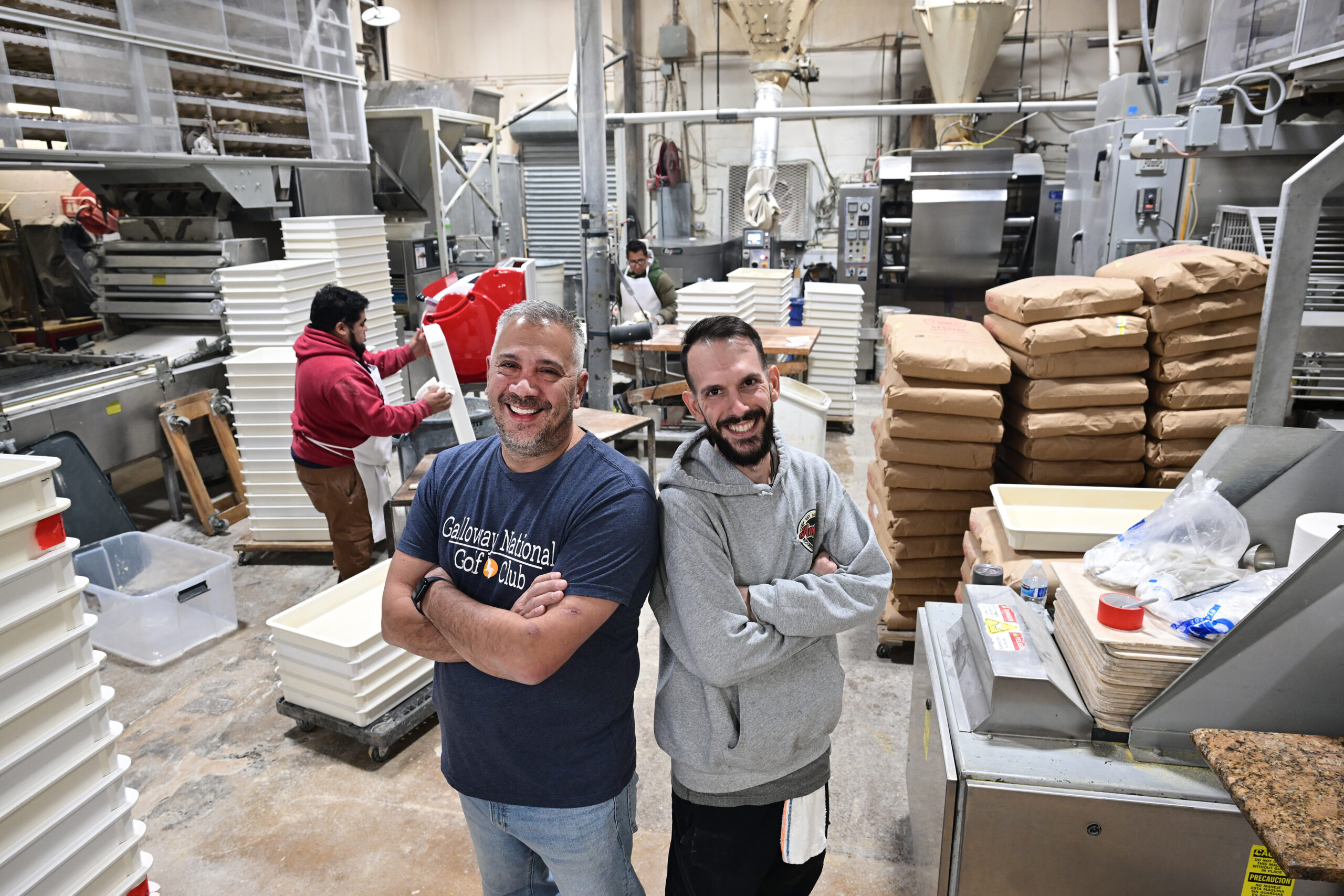
Danny DiGiampietro (left), owner of Angelo’s Pizzeria, with partner Jared Braunstein at the bakery in Conshohocken in December 2024.
But Angelo’s is moving into wholesale bread production, the backbone of Conshohocken Italian Bakery’s business under the Gambone family for more than a half-century before its 2024 closing.
A key piece of the puzzle is on the way: a massive Polin oven imported from Italy to give his bakers more flexibility, DiGiampietro said.
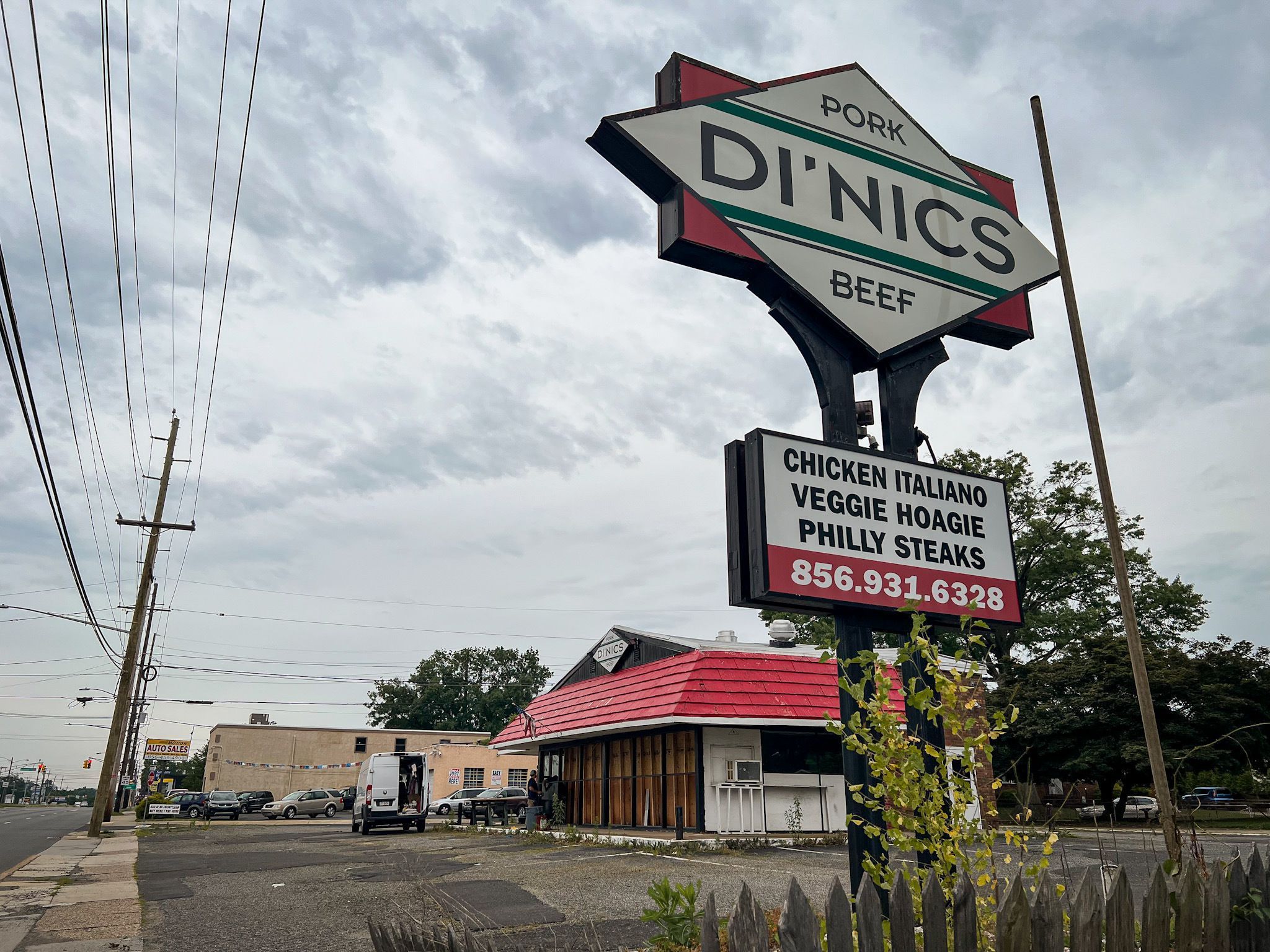
The future location of Angelo’s Pizzeria in West Collingswood Heights, previously Di’Nics, on June 18, 2026.
At “Conshy,” as the Jones Street bakery was known, the Gambone family supplied rolls and bread to hundreds of restaurants and sandwich shops throughout the region. Its closing created a frenzy among customers and competitors.
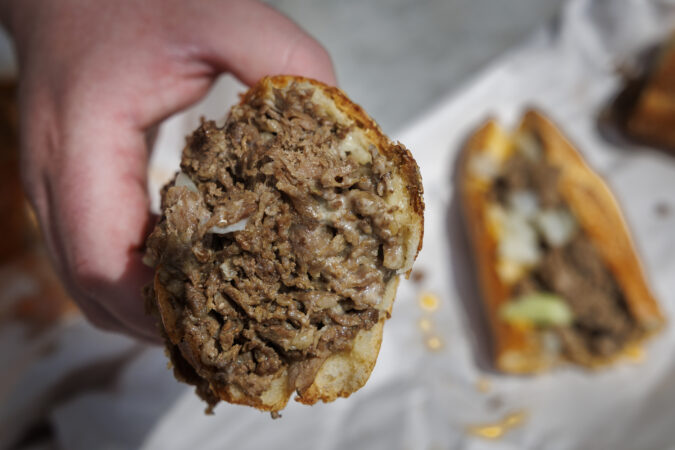
DiGiampietro said the new oven will allow bakers to create a line of kaiser rolls, potato rolls, steak rolls, and hoagie rolls. Although he will in effect be selling to his sandwich shop competitors, he likens it to giving shops “the canvas to make their art,” DiGiampietro said. “Everyone’s different.”
A return to wholesaling was not in the initial plans for DiGiampietro, who owned a bread bakery in South Philadelphia about 20 years ago. “I went bankrupt the first time. So hopefully I don’t go bankrupt again.”
Meanwhile, demolition and rebuilding are underway at the future Angelo’s Pizzeria location at 310 Black Horse Pike in the West Collingswood Heights neighborhood of Haddon Township, Camden County. The stand-alone building was formerly Di’Nics.
Crews recently gutted the building, which DiGiampietro hopes to transform into a full-service Angelo’s within the next several months.
The project will mark his return to New Jersey. DiGiampietro opened his first Angelo’s in Haddonfield in 2013 before closing it in 2018 to focus on the Ninth Street location in South Philadelphia, which opened in 2019 and helped turn Angelo’s into one of the region’s most sought-after pizzeria and cheesesteak shops.
The Angelo’s in West Collingswood Heights, about 10 minutes from the Walt Whitman Bridge, will include table seating as well as a counter overlooking the kitchen. Initially, DiGiampietro wanted more seating. Then he began talking about a takeout-only operation.
“But people love the show,” he said. “They like to see everything happening.”
The build-out still requires installation of a pizza oven, walk-in refrigeration, and other equipment. Even so, DiGiampietro believes the compact space can work.
“We think we can keep a dining room and still fit everything we need in there,” he said. “It’ll be tight, but we work on Ninth Street in basically a submarine, so how much tighter can it get?”
Jasmine Jackson sat on her couch at her home in Winslow Township, watching a broadcast of the nation’s fastest high school hurdlers competing at the 2025 Brooks PR Invitational. As she watched, she made it her goal to be on that track, competing in the race.
After a year of training and dropping time, her invitation arrived in the mail, making her the first athlete in Winslow Township history to earn a spot in the prestigious event.
“It was a big accomplishment when I got the invitation,” she said. “I was ecstatic. To know I was the first to do this showed it was a stepping stone to something even greater.”
And something greater came at this year’s Brooks PR Invitational on June 7 in Renton, Wash.
The Winslow Township High School sophomore claimed the 100-meter hurdles title with a time of 13.33 seconds. It came days after winning the New Jersey Meet of Champions and running a personal-best 13.28 seconds.
Jasmine Jackson set a personal record in the 100-meter hurdles at the New Jersey Meet of Champions.
Her personal record currently ranks No. 3 in state history, No. 3 all-time on the wind-legal list for sophomores, and No. 3 in the nation this season. Jackson continues to climb the ranks as one of the nation’s fastest hurdlers and wants to accomplish more.
Her love for hurdling began at a young age. Jackson grew up going to the track with her dad, Tyree Jackson, who was a sprinter and relay runner at Camden High School and Rowan. He is now a track-and-field coach at Pennsauken.
When she was 5, she saw a hurdle on the track and asked her dad if she could try to jump over it. Tyree initially said no, worried she might hurt herself, but she persistently asked, so he finally gave in.
She cleared the hurdle with her right leg leading and left leg trailing, the form she still uses today.
“It was perfect,” Tyree said.
Starting out, however, he wasn’t convinced that hurdles would become her event.
“There were a lot of times where I thought that maybe hurdles weren’t for her because she was too timid and scared to actually run through the hurdles,” he said.
Tyree scoured the internet for drills and training ideas to help his daughter develop as a hurdler. His former teammates offered advice on technique and form, and they soon progressed from wickets to smaller hurdles. She joined Winslow Elite Track and Field at age 8 to keep improving.
By 14 years old, Jasmine broke the national record for the 100-meter hurdles with a time of 13.72 seconds at the 58th AAU Junior Olympic Games in Greensboro, N.C. That race gave her a newfound confidence.
“That race pushed her over the edge as far as her demeanor and her confidence level because in order for her to win and break the record, she had to beat some really talented athletes she had never beaten before,” Tyree said.
And as her confidence has grown, her times have dropped.
Part of that growth has come from racing against the nation’s best, including one of her biggest competitors, Nia Armstrong from Tampa, Fla. The hurdlers have developed a friendly rivalry over the years since they typically compete in the same races and push each other to faster times.
“Whenever those two compete against each other, it’s like I don’t care who else is on the track, the race is going to be between them,” Tyree said.
Before the Meet of Champions earlier this month, Jasmine was nervous. The meet featured the toughest competition she faced all season. But as she set up on the line, she reminded herself that she belongs here and is built for the moment.
“I just tell myself I’ve been here before. It’s just a track. I know how to run. I know how to hurdle. I know what I’m capable of,” she said. “I believe in myself, I’m ready for this moment, and not to let an opportunity pass by because you might not get it again.”
Developing self-belief in a mentally challenging sport, Jasmine says, has been one of her biggest areas of growth.
“She’s always been good. She just didn’t have the confidence to know that she’s good,” said Shawnnika Brown, Jasmine’s high school coach. “Now, she is running with a purpose.”
That purpose is reflected in her daily routine. Jasmine trains with her team after school, goes to the gym to lift weights, and does additional hurdle sessions with her dad on the weekends.
Having Tyree as her coach has also been an important part of her success.
“I try not to let the coach interfere with the father,” Tyree said. “I’ve learned how to talk to her and get her motivated to the best of my ability without her being upset with the father.”
After Jasmine won at Brooks, Tyree let his daughter enjoy the moment before turning their attention to the next race.
“She knows I’m going to focus on the flaws first before I celebrate her and give her roses because I sometimes have to be the coach first and then dad second,” he said.
That approach is shaping one of the nation’s fastest high school hurdlers, but Jasmine’s goals go beyond state titles and national championships.
Jasmine Jackson will compete at the New Balance Nationals at Franklin Field this weekend.
“The ultimate goal is to go to the Olympics,” Jasmine said. “Knowing I have that goal in mind, no matter how I feel, I know I have to work for it. It’s not going to be given to me. I have to earn it.”
For now, the 15-year-old can check the Brooks PR Invitational off her list. Up next is the New Balance Nationals running until Sunday at Franklin Field. Jasmine will run the 100-meter hurdles and 4×400-meter relay championship. She is looking to earn her first national title at the event.
“I’m tired of being second at this event,” she said, laughing. “I’m going up against pretty tough girls, so it’s going to take a lot to win. I believe I can do it if I put my mind to it.”
RINGOES — The first time Ozgur Tunceli planted hazelnut saplings on her Hunterdon County farm, deer came through and ate them to the ground.
The next time, her goats did the same.
“Imagine me sitting there and crying and regretting everything that I did,” she said. “I said, ‘I should sell this farm and just go back to my suburban life.’”
Instead, she got an electric fence. Now, four years after she set out to become a hazelnut farmer, Tunceli has close to 1,000 trees planted on her hilly, sprawling property in Ringoes. She’s part of a small but widening group of pioneers who are working to make hazelnuts as much of a signature New Jersey crop as tomatoes, blueberries, corn, and cranberries.
“We are really trying to build an entire industry here,” Tunceli said.
The state wants to help, said Ed Wengryn, the state’s agriculture secretary.
Officials are eyeing incentives to offset high startup costs and entice more farmers into growing the trees, Wengryn said.
And Sen. Andrew Zwicker (D-Middlesex), whose district office is just up the road from a hazelnut farm in Hillsborough, is seeking $6.5 million in state funding to help growers buy equipment to sort, shell, and package nuts for sale and secure a processing site. He envisions hazelnuts at every Garden State farm stand and a New Jersey version of Nutella on supermarket shelves someday.
“The potential for New Jersey to become a major player in hazelnut production is enormous,” Zwicker said. “I don’t think New Jersey peaches, blueberries, and tomatoes are going away, but I think if we get this right, we will be known worldwide as a hazelnut producer.”
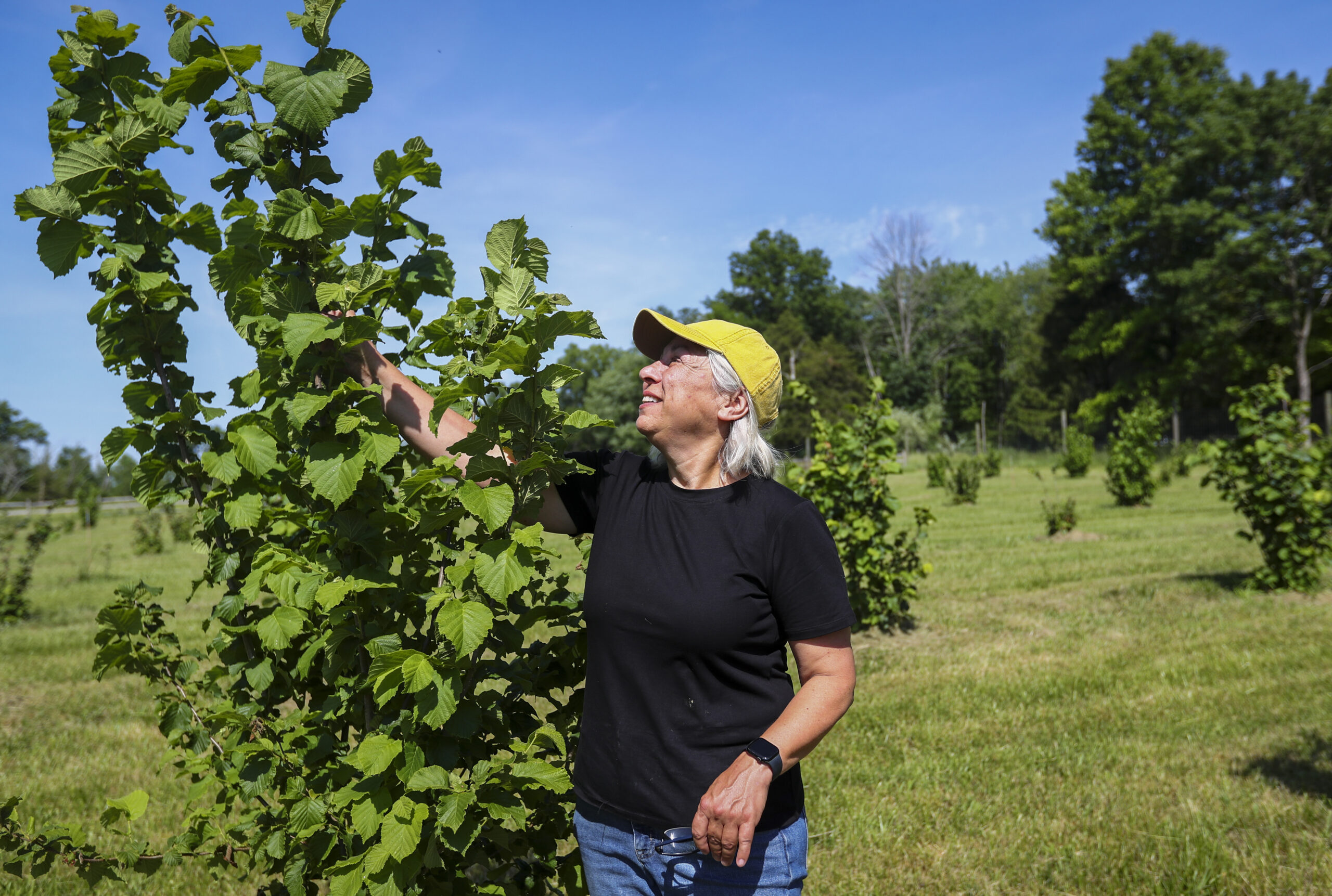
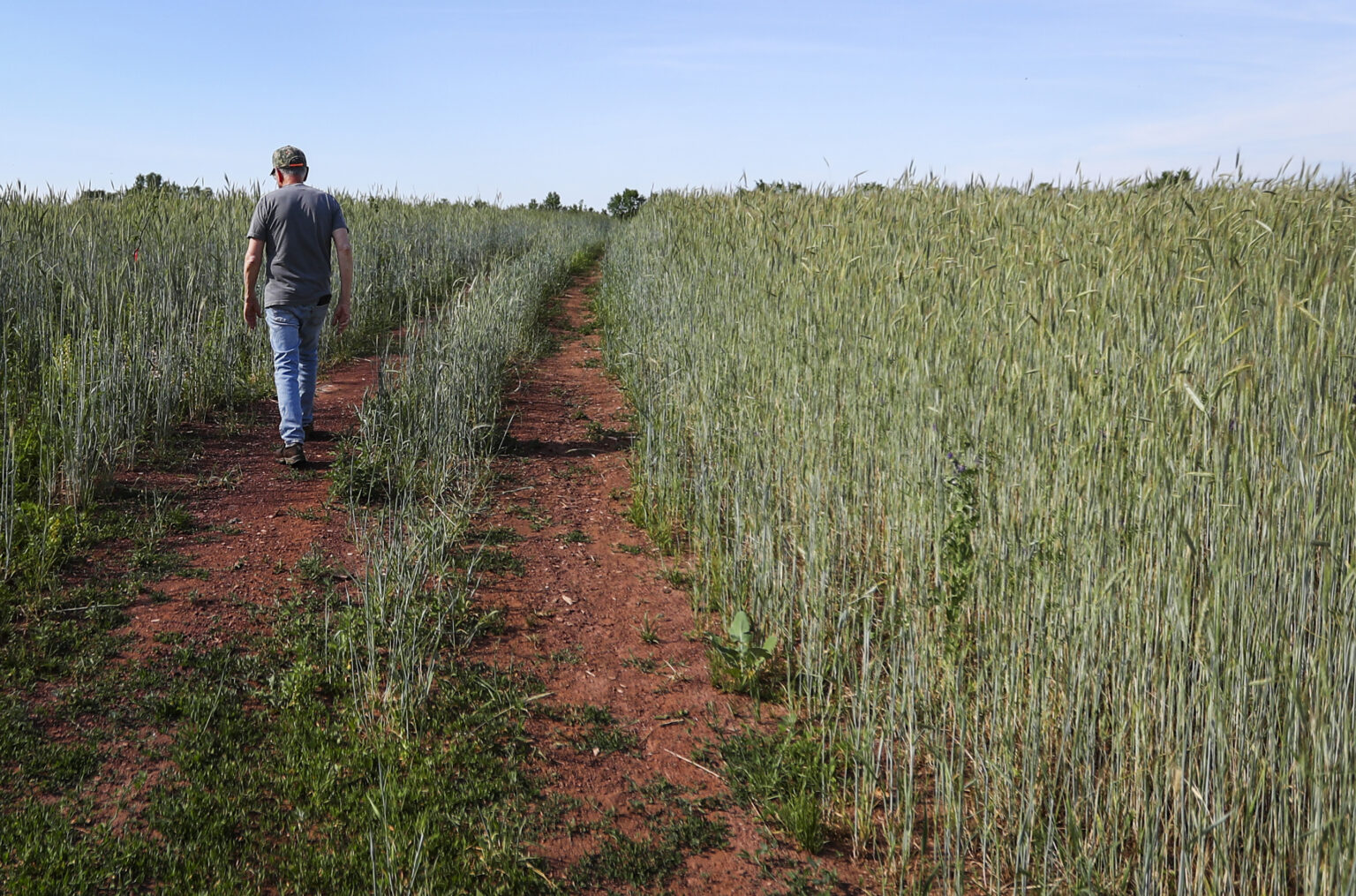
Ozgur Tunceli shows one of the few of her hazelnut trees that is taller than she is on June 5, 2026, at Our Farm by the Creek, her hazelnut farm in Ringoes.
Some hazelnut history
Turkey produces about 70% of the world’s hazelnuts, and until recently, Oregon’s Willamette Valley was the only place in the U.S. to grow the nutrient-rich, round nuts also known as filberts.
The seeds for New Jersey’s fledgling filbert industry were first planted, literally, by Rutgers University.
Tom Molnar was a Rutgers student about 30 years ago hunting for a Ph.D. topic when he decided to focus on hazelnuts, which are native to New Jersey but had been decimated by disease decades ago. Molnar’s mentor was the late C. Reed Funk, Rutgers’ famed turfgrass breeder whose work made the school millions in royalties and a global powerhouse in grass development. Funk saw better breeding as key to growing nuts in the Northeast, Molnar said.
“We had land, we had funding, and he knew how to run a breeding program,” said Molnar, who’s now a professor of plant biology at Rutgers.
Molnar rejected nut trees like walnut, pistachio, and pecan, not wanting to compete with big U.S. producers like California and Georgia. He picked hazelnuts because, besides being native to New Jersey, they need less water, are more compact, and produce faster than other nut trees, he said.
He started by collecting hazelnut seeds from around the world and eventually planted tens of thousands of trees at Rutgers’ research farm in East Brunswick, observing and experimenting to create disease-resistant, higher-yield trees.
By 2020, his research had progressed enough that he wanted to see how his trees would do around the Garden State. He partnered with several farmers to plant Rutgers-bred varieties whose names honor their Jersey roots: Raritan, Somerset, Monmouth, and Hunterdon. Those farms still serve as living laboratories, with new growers adding to their ranks since Rutgers licensed a Columbus nursery to sell their cultivars.
“This has been a dream to grow hazelnuts in the eastern U.S. for 200 years,” Molnar said.
Ed Clerico was one of the “early adopters,” as Molnar puts it.
Farmer Ed Clerico walks the fields of his farm in Hillsborough on June 6, 2026.
Clerico is a third-generation farmer whose family ran a dairy farm in Hillsborough (the one near Zwicker’s office), but who pivoted in retirement to perennial crops that don’t require annual tillage and planting.
He also had a career in water resource management, an experience that has deepened his dedication to filbert farming.
His 38-acre farm sits along Royce Brook, which feeds the Millstone and Raritan rivers, two waterways that flow through nearby Manville and Bound Brook and that sometimes catastrophically flood. He regards hazelnut trees, as well as thirstier breeds like the persimmons and pawpaws he’s planting in a floodplain beside the brook, as pulling double duty.
“There’s just a lot of benefits to agroforestry. Growing trees sequester a lot of carbon, so there’s greenhouse gas benefits. And they help with water quality and flood mitigation,” Clerico said. “This could be one of the best stormwater management and water quality advancements. When you hear about stormwater management, people are very oriented towards man-made infrastructure, but we could be using the environment as infrastructure too.”
Wengryn already is a convert, for the trees’ ecological benefits alone.
“They create a shade canopy, reducing ambient air temperatures in and around the orchard area. When we get these intense storms that drop a quarter to a half inch of rain in 15 minutes, the leaf canopy breaks that up, so it actually falls more gently to the soil and we get less soil erosion from this kind of agriculture,” Wengryn said.
Molnar ticks off a long list of other perks he hopes will persuade more farmers to plant Rutgers’ hazelnuts. They don’t require as many fungicides or insecticides, or as much pruning, as the peach, apple, and other fruit trees more commonly grown in New Jersey. They’re harvested by machine so don’t need as much labor as hand-picked crops. The trees are more climate-resistant and can live for over 50 years, making them both less susceptible to weather extremes that can destroy less-hardy crops and a good long-term investment. And hazelnuts aren’t as perishable as other crops; harvested unshelled nuts can be stored and stay fresh for over a year.
“That means you could sell them throughout the winter into the spring,” Molnar said.
But several hurdles have kept the industry small so far.
The high land costs that can make farming a pricey profession in New Jersey have hindered hazelnut expansion, farmers agreed.
The costs and logistics of processing are another barrier, Molnar added.
With most filbert farming occurring on other continents, U.S. growers must look to Europe and beyond for the machinery to harvest, sort, and get the nuts to market. Tunceli, Clerico, and two other farmers formed an agroforestry cooperative to process, promote, and sell their nuts. The co-op recently bought some equipment, funded by a federal grant, that they’ll house at Tunceli’s 89-acre farm until they find funding to open a separate processing facility.
Farmer Ed Clerico bought specialized equipment, including this mower, to harvest hazelnuts on his Hillsborough farm.
At the same time, it takes five years for young hazelnut trees to produce their first nuts and seven to eight years for them to come into significant production, Molnar said. That means farmers see little to no return on their investment for years.
“Younger farmers don’t really have that much money to invest, while older farmers don’t have that much time,” Tunceli said.
Tunceli, who’s 56 and has kept her job in the healthcare insurance industry, hopes her orchards will thrive enough for her to live wholly off her land, but she expects that could take another five years.
Because hazelnuts have not been a U.S. crop outside of Oregon, some local farmers also see challenges in who to sell them to, fretting that a market might not exist here.
Tuncheli is not one whit worried about that.
She grew up in Turkey and immigrated here for college about 30 years ago. In Turkey, every bit of hazelnut trees gets used, she said. The kernels become nut butters, oils, flour, milk, candies, desserts, and other foods; the trees’ leaves can make herbal teas; their limbs can be used to weave baskets; and nutshells can be used for exfoliating scrubs, cosmetics, and even clean-burning fuels.
“That part is really easy,” she grinned.
Wengryn doesn’t see that as a problem either, noting a “global craze” for treats like Italian company Ferrero’s Nutella and Ferrero Rocher chocolate-hazelnut bonbons.
“People love this product,” he said of hazelnuts. “There’s very little domestic production of it, and this is an opportunity to enter that market.”
The future of filberts
Zwicker has submitted two budget resolutions that, if approved, would provide $298,200 in state funding to the agroforestry cooperative to support hazelnut automation, cold storage, food safety compliance, and commercial-scale infrastructure and nearly $6.3 million for the cooperative to build a processing facility and establish grower incentives.
Wengryn said he aims to work with the state Economic Development Authority to tailor more “business builder” funding to sustainable agriculture like hazelnut farming. He also thinks New Jersey could designate money collected under the Regional Greenhouse Gas Initiative, a multistate effort to reduce the power sector’s emissions that worsen climate change, for agroforestry.
“This type of agriculture really complements that carbon sequestration and really does improve our air quality and our water quality,” he said.
Whether or not New Jersey becomes a hub for hazelnuts, Rutgers’ cultivars now grow beyond the Garden State. Their trees are planted on about 300 acres across New Jersey, Pennsylvania, New York, and Ohio, Molnar said.
His work has made him somewhat of a celebrity in agriculture, at least elsewhere, in places where hazelnuts are a major, prized crop.
“In New Jersey, I’m an anonymous nobody, and like, nobody cares what I do,” he said with a laugh. “I guess agriculture isn’t really cool.”
Thomas Molnar stands in front of hazelnut trees cultivated by his team at Rutgers Horticultural Farm 3 in East Brunswick.
But Clerico expects Molnar’s research, like the trees on his own Hillsborough farm, will outlive them both.
“Rutgers’ work isn’t just leading-edge in terms of New Jersey. What they’ve done in their breeding programs to produce trees that have multiple gene resistance to diseases could benefit everywhere in the world,” Clerico said.
Some state legislators clearly agree and aren’t waiting on the industry to scale up to brag about New Jersey’s role in the hazelnut tree’s return to the region’s soils.
They want hazelnuts to be the official state nut.
The Assembly passed the proposal Thursday, despite opposition from most of the chamber’s Republicans that drove some to voice their objections for the record.
Assemblywoman Aura Dunn (R-Morris) said anointing hazelnuts the state nut was a few decades premature, Assemblyman Gregory Myhre (R-Ocean) said the American chestnut should get the honor, and Brian Bergen (R-Morris) blasted the the bill as a “moronic, awful, stupid, crazy, nutty piece of legislation.”
“Why on earth do we need a state nut?” Bergen said, before imploring Assembly Speaker Craig Coughlin: “I just really wish that, Mr. Speaker, you would do a better job selecting the bills that come to the floor, because this is useless.”
Bill sponsor Assemblyman Sterley Stanley (D-Middlesex), whose district includes Rutgers’ research farm, remained undeterred.
In a sweeping statement on the Assembly floor with Molnar standing at his side, Stanley hailed hazelnuts as “the most promising engine for economic development offered to rural communities in decades.”
“These trees represent a monumental achievement for our state, a true breakthrough in science that reinforces why we are known as the Garden State,” he said. “These hazelnuts are testament to the balanced spirit of innovation and resilience that lies at the heart of what it means to be a New Jerseyan.”
On a warm weekend earlier this month, dozens of shoppers, some of them dressed in Regency-inspired apparel, milled about the city of Bordentown, in Burlington County.
Those donning bonnets and hand fans weren’t time travelers or lost actors — they were there to celebrate the opening of a new bookshop with plenty of historic flair of its own.
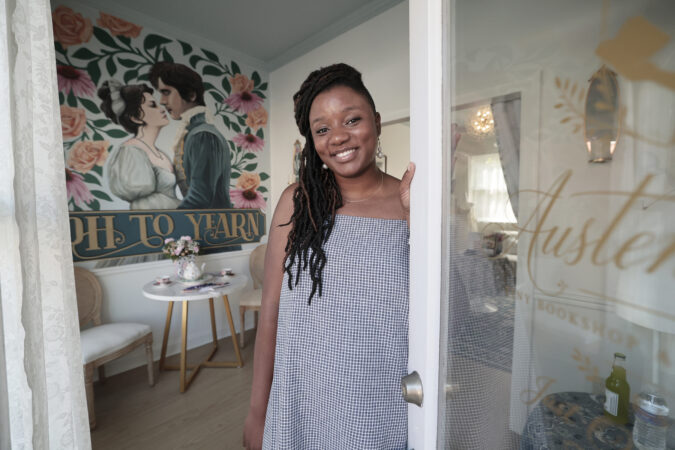
Inspired by the works of renowned 18th- and 19th-century novelist Jane Austen, Austen’s Shelf penned a new chapter June 6 with the opening of its storefront at 230 Farnsworth Ave. The bookshop, which held a period-inspired costume contest for the occasion, is part of a growing surge of independent bookstores nationwide.
Austen’s Shelf launched last year as a mobile bookstore in a 98-square-foot trailer.
Austen’s Shelf launched last year as a 98-square-foot mobile bookstore that popped up at festivals and events, many of them in South Jersey. It was born out of founder Charity Herndon’s desire to fulfill a lifelong dream of owning a bookstore, something she decided to pursue after facing a breast cancer scare.
While she ultimately didn’t end up with a diagnosis, the experience changed how the now-30-year-old looked at life.
“I feel like a completely different person than I was before the health scare,” she said. “After you get over that mountain, it’s kind of like, all systems go.”
For Herndon, it was. Within months of her mobile shop’s September opening, she began to contemplate a more permanent space, seeing a desire from customers to “sit and linger.” With long lines forming at pop-ups, she felt like the shop had become as much about buying a book as it was a place for people to connect.
That was further stoked after a dreary winter and one particularly busy January pop-up at Turtle Beans Coffee in Bordentown. During that event, she said visitors told Herndon “we need a bookstore like this in town.”
While there’s already an independent bookstore there, Old Book Shop of Bordentown specializes in general used, out-of-print, and antiquarian books. Coincidentally, Jane Austen is the 21-year-old shop’s second-best selling author, owner Doug Palmieri said.
Given the two don’t have significant crossover in their business models, he welcomes having another bookshop nearby. Like antique stores, “the more there are in one area, the better for business,” he said, adding that he got a boost during Austen’s Shelf’s opening weekend, which coincided with the New Jersey book crawl and another store’s opening.
Independent bookstores like Austen’s Shelf are on the rise nationally. According to the American Booksellers Association, 605 new bookstore businesses opened in 2025, an 87% increase from 2024.
They’ve proliferated in the Philadelphia suburbs in recent months. Chapter Two Books opened in Wynnewood in May, Forage Books debuted in Kennett Square in February, and two bookstores, Celia Bookshop and Dirt Farm Books, opened in Swarthmore in October and January, respectively. The latter specializes in used and rare books.
Books aren’t the only media form making a resurgence. A Passyunk Square resident is on the hunt for a place to set up Little Movie Store, a video rental shop in the vein of Blockbuster.
Palmieri — a 20-year member, current secretary, and past president of the Downtown Bordentown Association, which promotes and supports local businesses — attributes the growth of indie bookshops partly to an uptick in younger readers, primarily those in their 20s and 30s.
“They like the touch and feel of books,” he said. “They like to have the books in their hands.”
DBA treasurer and past president CJ Mugavero, who owns Artful Deposit, sees the rise in retail as something of a reaction to the increased digitization of society.
“What people are craving is the human factor,” she said. That’s helped spur a number of new businesses in Bordentown recently.
Located next door to Austen’s Shelf, menswear and home store Haberdashery and Home debuted this month. Earlier this spring, the historic city welcomed art spaces Bonaparte Boutique and Sleeping Cat, an expansion of studio Leaping Dog. Abyssal Brewing and yoga and pilates studio The Movement also put down roots there in the first half of this year.
Beyond a desire for the tactile, “people long for community, and I think that’s something you can’t necessarily find if you’re just ordering your books off of Amazon,” Herndon said.
That was top of mind when she conceptualized her new space, which is small, but more than quadruple the size of the mobile bookshop. Clocking in at under 500 square feet, it has a “homey” vibe that allows for lingering and connecting. There are two sitting areas, one with a couch, the other a table and chairs. The latter sits beneath a large mural depicting Elizabeth Bennett and Mr. Darcy from Austen’s Pride and Prejudice,painted by Philadelphia artist Erik Weedeman.
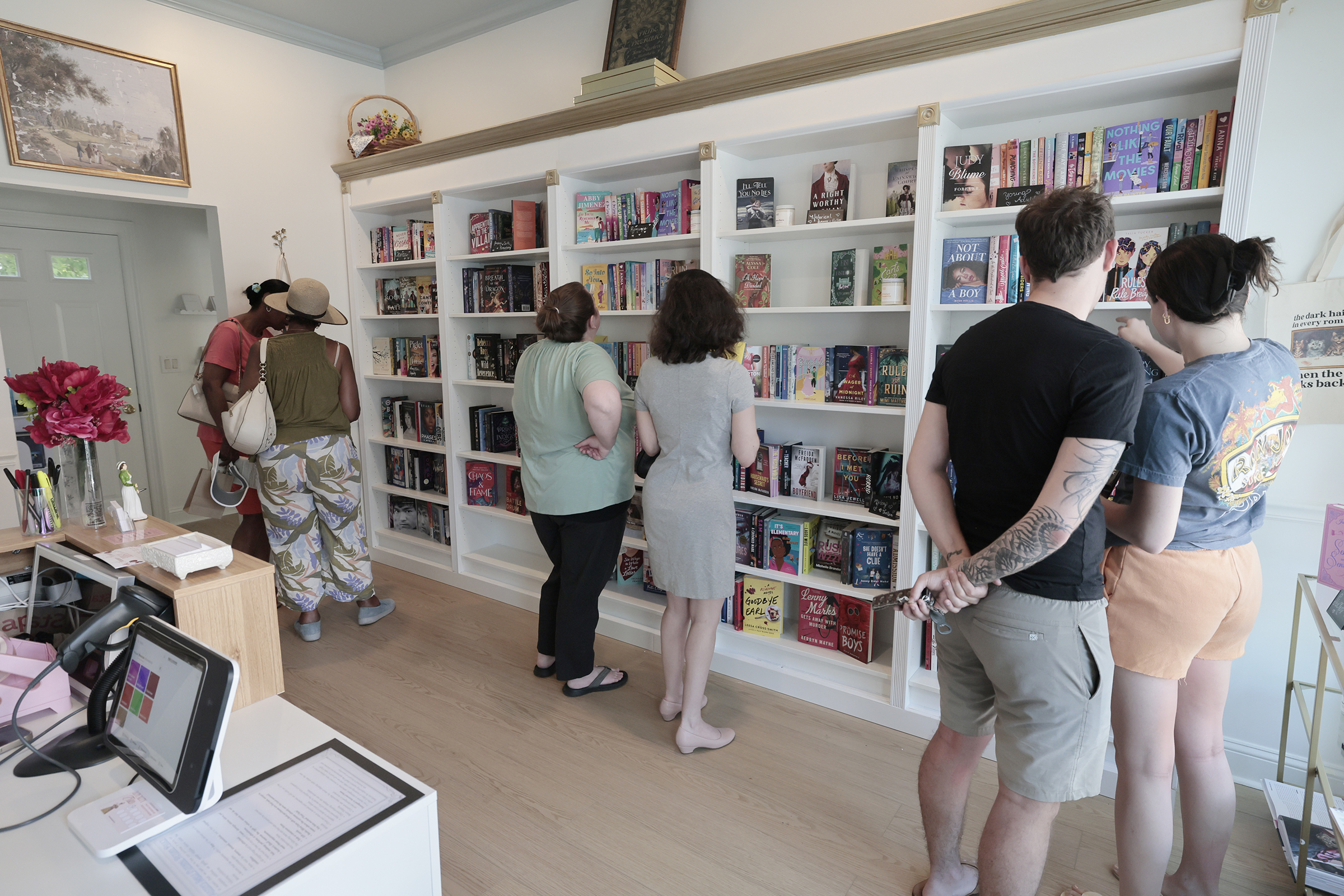
Shoppers browse for books and other goods at Austen’s Shelf in Bordentown.
Like its predecessor, this edition of Austen’s Shelf caters to a wide range of readers, stocking a curated selection of young adult, literary fiction, poetry, mystery and thriller, and fantasy, as well as children’s books.
There’s also a room dedicated to Austen, complete with a gilded digital display showing film adaptations of her books. Herndon also sells a selection of what she’s dubbed “Regency-modern” apparel.
With a permanent space now up and running, Herndon has no plans to stop taking the mobile bookstore out. She’s just refining the schedule and taking on fewer events.
A former Bordentown resident who now lives in Gloucester County, Herndon hopes the shop helps draw visitors to the city. She wants visiting Austen’s Shelf to feel “like an experience where the entire town can kind of be a place to linger.”
If opening weekend was any indication, that just might be the case. Looking out at the historic city during the grand opening and seeing people wander the streets in period-inspired attire, she said the image “just fits like a glove. It’s the dream, literally.”
Austen’s Shelf is open Wednesdays and Thursdays from 11 a.m. to 6 p.m., Fridays and Saturdays from 11 a.m. to 7 p.m. and Sundays from 11 a.m. to 5 p.m.
This suburban content is produced with support from the Leslie Miller and Richard Worley Foundation and The Lenfest Institute for Journalism. Editorial content is created independently of the project donors. Gifts to support The Inquirer’s high-impact journalism can be made at inquirer.com/donate. A list of Lenfest Institute donors can be found at lenfestinstitute.org/supporters.
After nearly 25 years in operation, the newly renovated H Mart in Cherry Hill is drawing crowds as regulars and newcomers marvel at its major improvements.
The outpost of the renowned Korean grocery store off Route 70 has served the local community since 2001. In April 2025, the Cherry Hill Township Planning Board approved plans for an expansion. A year later, the grocery store reopened with enhancements to the first floor and an open-concept food court, bakery, and retail space on the second.
As a diehard H Mart fan, I decided to venture across the bridge on a recent Thursday and see the 39,000-square-foot store for myself.
Customers shop inside H Mart Cherry Hill.
Where to start your H Mart visit
I arrived at the brick building, marked with the familiar “H Mart” sign in big red letters, at about 11 a.m. Entering through the double sliding doors of the second floor, I found myself inside the new food court.
A few customers dined in the massive seating area that morning, enjoying various dishes. I decided to grab an iced brown sugar coffee boba from Tiger Sugar as a little treat to sip on during my exploration.
Beginning the journey on the second floor was the right move, according to Ryan Solot, a regular shopper at H Mart. He and his wife, Miki Solot, came to the store once a week before renovations. The couple were shopping for dashi stock and Japanese sauces when I ran into them. They were happy to see the makeover, particularly on the second floor’s general shop department. But the Solots still felt the first-level aisles were a bit narrow for ideal grocery shopping.
“The layout is strangely unchanged,” Ryan Solot said. “It’s still kind of awkward to get through the aisles … but start from the top [floor] and make your way down, it’s much more organized upstairs.”
Korean beauty section at H Mart Cherry Hill.
The second floor of H Mart: general goods, Korean beauty products, and an arcade
Walking out of the food court area, I found a mini Korean beauty store with boxed shelving displaying creams, serums, cleansers, tonics, and other products from popular brands such as Medicube, Anua, and Beauty of Joseon. Attendants explained the various products to customers, especially to Korean skincare novices like myself.
Neon arrow signs next to the beauty department directed me into H Mart’s general store and “H Pop” section. A small selection of drinks and snacks lined the shelves leading me into the rows of shelves with over-the-counter medicines, vitamins, toiletry items, slippers, bedding, and kitchenware.
In the back corner I found a vast selection of cutesy notebooks, pens (ones with funky kiwi and toilet attachments), furry character key chains, mini toys, makeup storage containers, and other knickknacks. The prices for items were organized by serial numbers, which were listed on a card hanging off the shelves. Pro tip: Take a photo of that price card to reference as you shop.
Customers shop inside H Mart Cherry Hill.
The first floor of H Mart: frozen foods, fresh produce and seafood, snacks, and lots of instant noodles
Taped to the elevator, two signs offered directions on where to find specific items. “Second floor: food court, house ware, characters, K-beauty, game, health food” and “First floor: Asian/Western, produce, fish, meat, ready to eat, banchan” were written in all caps and highlighted in yellow.
The elevator also had another sign with an important tip for shoppers: “You are welcome to shop freely on both 1st and 2nd floor, and you may check out either floor.”
Downstairs on the first level, the elevator opened up to aisles upon aisles of snacks, produce, sauces, packaged sweets, and lots of instant noodles. Each aisle is organized by number with a sign noting all the items available.
Shrimp crackers at H Mart Cherry Hill.
I walk into Aisle 3 as I exited the elevator and found snacks galore. KitKats, Pocky sticks, Buldak ramen-flavored chips, O’jelly real plum candies, lychee gummies, Poongnyun Bakery seaweed crackers, and so much more lined the shelves. I picked up some of my favorites: Shrimp crackers, crispy snacks made from starch and ground shrimp, and a bag of chocolate yogurt-covered orange slices sitting nearby.
Next, I headed into Aisle 5 for beverages. The vast selection includes soy milk, hojicha, banana milk, corn silk tea, coconut milk and juice, and taro. I grabbed a tall can of Thai tea and a couple of glass bottles of Ramune, a fizzy, fruity, sweet Japanese soda.
Thai tea at H Mart Cherry Hill.
I stopped by Aisle 10 for chili oil and pho seasonings. And on Aisle 1, I found instant noodles plentiful — the Japanese-style soba noodle box piqued my interest. At the end of Aisle 9, I saw cups filled with ice in the freezer section and drinks packaged in pouches for easy pouring. I grabbed the peach mango tea to accompany my post-shopping food court lunch.
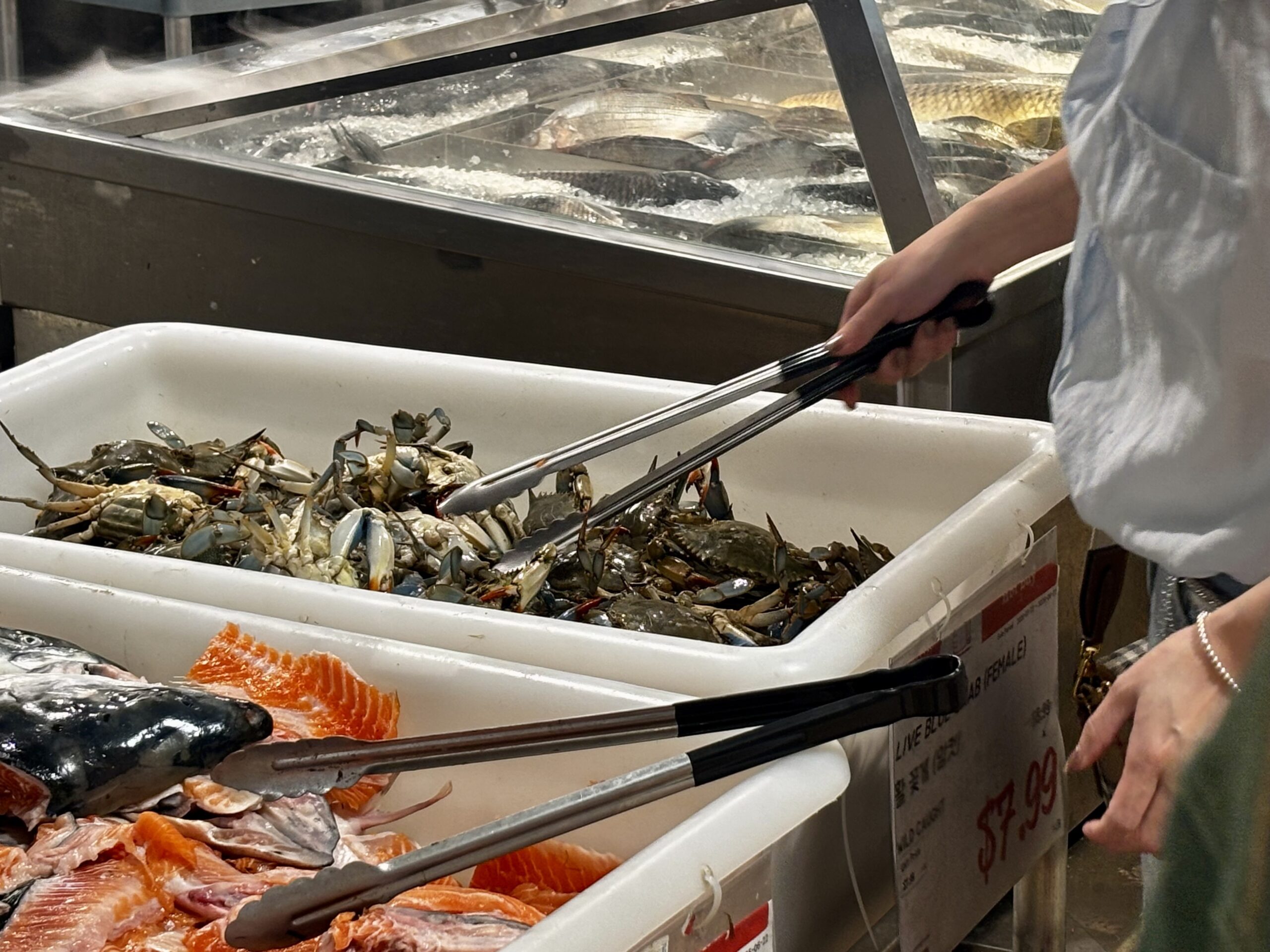
As I walked deeper into the store, I found Catherine Yao and her mother, Jingjing Dong, in the massive seafood section, picking live crabs from a big box.
Live crab selection at H Mart Cherry Hill.
Yao and Dong, who live five minutes from the store, come to the H Mart every week. They come for the fresh seafood — live fish, lobsters, and crabs swim in big tanks near the butchers, while some sit in displays on ice — and frozen meats — think beef bulgogi and pork belly. The two also like exploring the premade foods section next door; I picked up a crab onigiri for the road.
The mother-daughter duo recommended stopping by the vast produce section near the cashiers. “I like the fresh durian, lychees, mangoes, and the gold melons,” Dong said.
Food court at H Mart Cherry Hill.
The food court
Around noon, I took the elevator back up to the second floor and ventured back into the food court for lunch.
The court can feel overwhelming, with nine vendors to choose from — think bibimbap, Korean fried chicken, and noodles. Thankfully, Yao and Dong recommended a couple of options: Kyodong Noodles, a Korean-style Chinese noodle restaurant; Daily Seoul, a Korean lifestyle food brand; and Tiger Sugar, the Taiwanese bubble tea vendor I sampled earlier.
While perusing the vendors, I ran into regular Ryan Solot at Mirim, a traditional Korean restaurant. He recommended the cold buckwheat noodle soup. “I didn’t like how it looked at first but then I tried it and it was very good,” he said.
Spicy cold buckwheat noodle soup H Mart Cherry Hill.
I ordered the spicy buckwheat noodles with beef at Mirim. The dish was served in a metal bowl with pickled vegetables on the side, chopsticks included.
For Yao, the food court is a great addition to the store.
“I like coming here more now because they have a food court — we go to eat there pretty often, for lunch and dinner sometimes,“ she said.
H Mart Cherry Hill: 1720 Route 70 E, Cherry Hill; 856-489-4611; Monday to Sunday, 9 a.m. to 9 p.m.
People have been bragging about their trips to the Outer Banks since I moved to the Shore three decades ago. Quieter, cheaper, more laid back, more of a relaxing vacation than anything you’ll find in, say, Sea Isle.
Last summer, with an increasingly unaffordable Jersey Shore spawning a subculture of people swearing by other places, we looked at the cost of vacationing in Hawaii and Paris, along with Margate. Deals could be had.
This summer, as gas prices are on the rise, the appeal of an eight-hour drive to North Carolina might give even a priced-out Margatian pause.
Is it worth the drive to get to Duck, N.C.? What about flying to Dublin? Has the “We’re going to Europe instead” crowd thinned out?
We priced options for a family of four and targeted a week in July, the 11th to the 18th.
Rental inventory at the Jersey Shore is rapidly depleting, said Duane Watlington, the CEO and founder of Vacation Rentals Jersey Shore LLC. As of April 1, Long Beach Island is 83% booked for the eight summer weeks, June 27-Aug. 22, he said.
But Watlington said rental prices were looking better, with “Most listings … the same price or up to 10% lower for weekly rentals due to the soft market we had in 2025.”
Everything is relative, of course. Available rentals for that week on LBI can range from a four-bedroom Harvey Cedars charmer at $11,000 to a cozy two-bedroom Beach Haven duplex available Friday to Friday for just $3,000.
The real value, Watlington advised, is in September, with rentals as much as half the price of peak summer weeks, a warm ocean, and the joys of “locals summer.”
Data from HomeToGo showed that Sea Isle City rentals ranged from $6,745 to a whopping $18,828, with an average of $9,389.10 for available properties during that peak July week.
Bethany Beach, Del., ($5,537.59) and Duck, N.C., ($5,361.90) had similar average weekly rentals. Ocean City averaged $6,321.53 for that week, according to Berger Realty data.
Watlington said the median price on LBI for a July or August rental is $7,000 per week, with a range of $1,000 to (yikes) $55,000 week.
The sun peeks out from under the clouds as it sets in Mazatlan, Mexico (AP Photo/Marco Ugarte)
Looking abroad
Paul Ferdinand of Rainbow Voyages in Philadelphia found little available in Dublin during July, “regardless of price.”
He advised switching to early August, and came up with a very competitive trip, detailed below.
Mezgaron James of YouBeEverywhere Travel suggested Mazatlán, Mexico, which she said combines the charm of a Jersey Shore boardwalk with the luxury of a hotel on Mexico’s Pacific coast.
In the end, results were undeniable: The total cost of the more adventurous destinations like Ireland or Mexico was comparable, or even less, than a typical weekly rental at the Shore.
Here are the details.
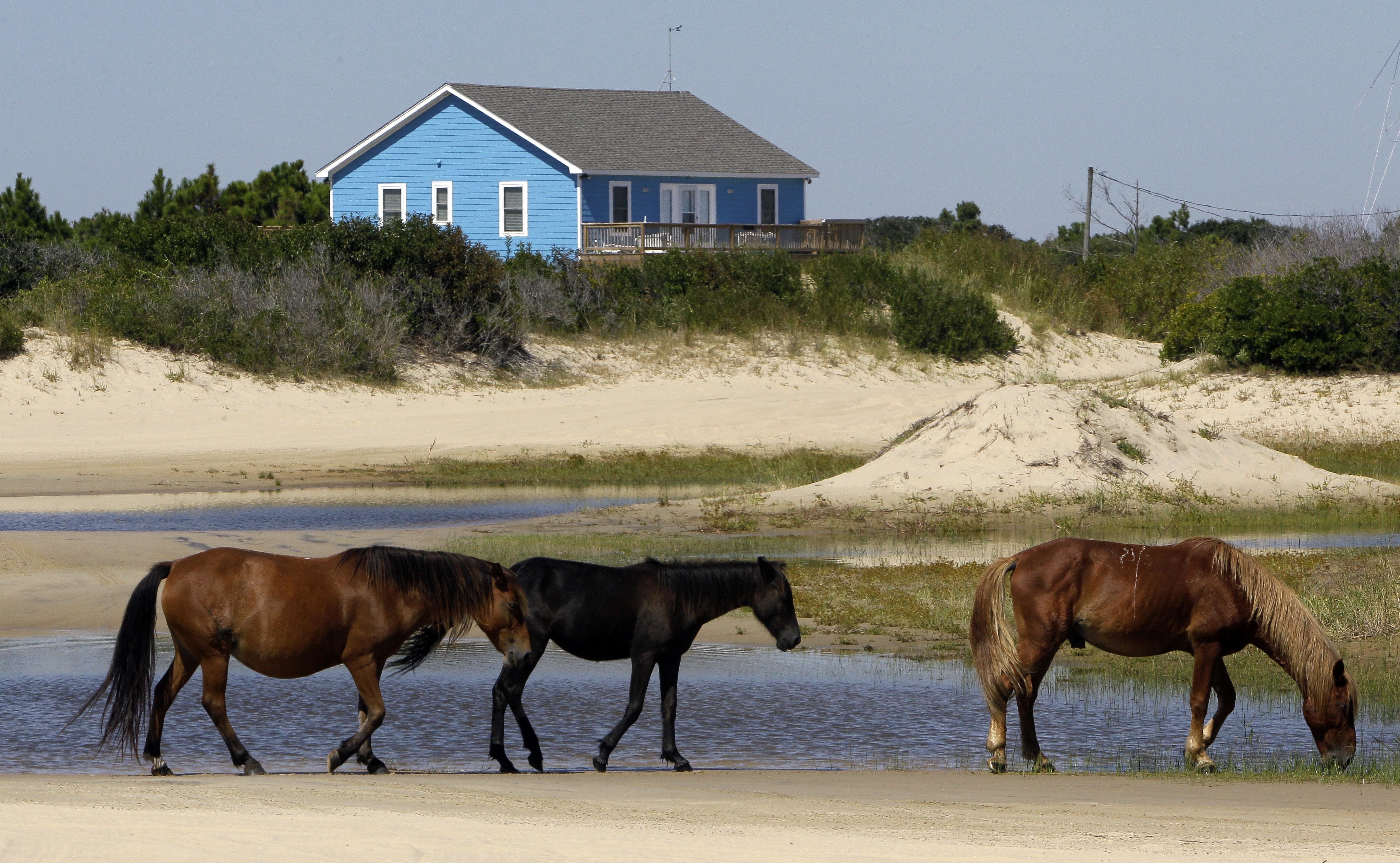
In this Tuesday, Sept. 14, 2010 photo, wild horses are seen in Corolla, N.C. A boom in vacation homes in the last 25 years in this remote place has seen the descendants of colonial Spanish mustangs confined to a 7,500-acre sanctuary on the northern tip of North Carolina’s Outer Banks, and now the herd itself may shrink along with its habitat. (AP Photo/Gerry Broome)
Outer Banks: Linens included
Outer Banks rentals trend toward the larger side, so the trick might be to vacation with that other family whose kids like your kids.
Myles Wood, of Shoreline OBX, said his company includes a friendly $250 credit for beach gear rental during your stay.
Jersey Shore veteran renters, used to having to (literally) bring their own sheets, find this extremely attractive.
“One of the things we aim to do if someone comes down, everything’s taken care of,” Wood said.
Rental prices have crept up a bit, he notes, but said those priced out of buying a beach house in New Jersey will be pleasantly surprised to see a lower bar of entry, like this Duck beach cottage listed at $650,000.
Sample food: At Aqua, $34 gets you Chef Cory Bryant’s Shrimp and Grits, with smoked pork belly lardons, sun-dried tomatoes, and a creamy lobster sauce.
Vibe: Personal space-y. Says Wood: “Our beaches are wide enough and plentiful enough. You get a slice of personal heaven.”
What’s free? Beaches and parking, oh my.
Drawbacks: No true boardwalk scene. Long, and increasingly expensive, drive for a week’s vacation.
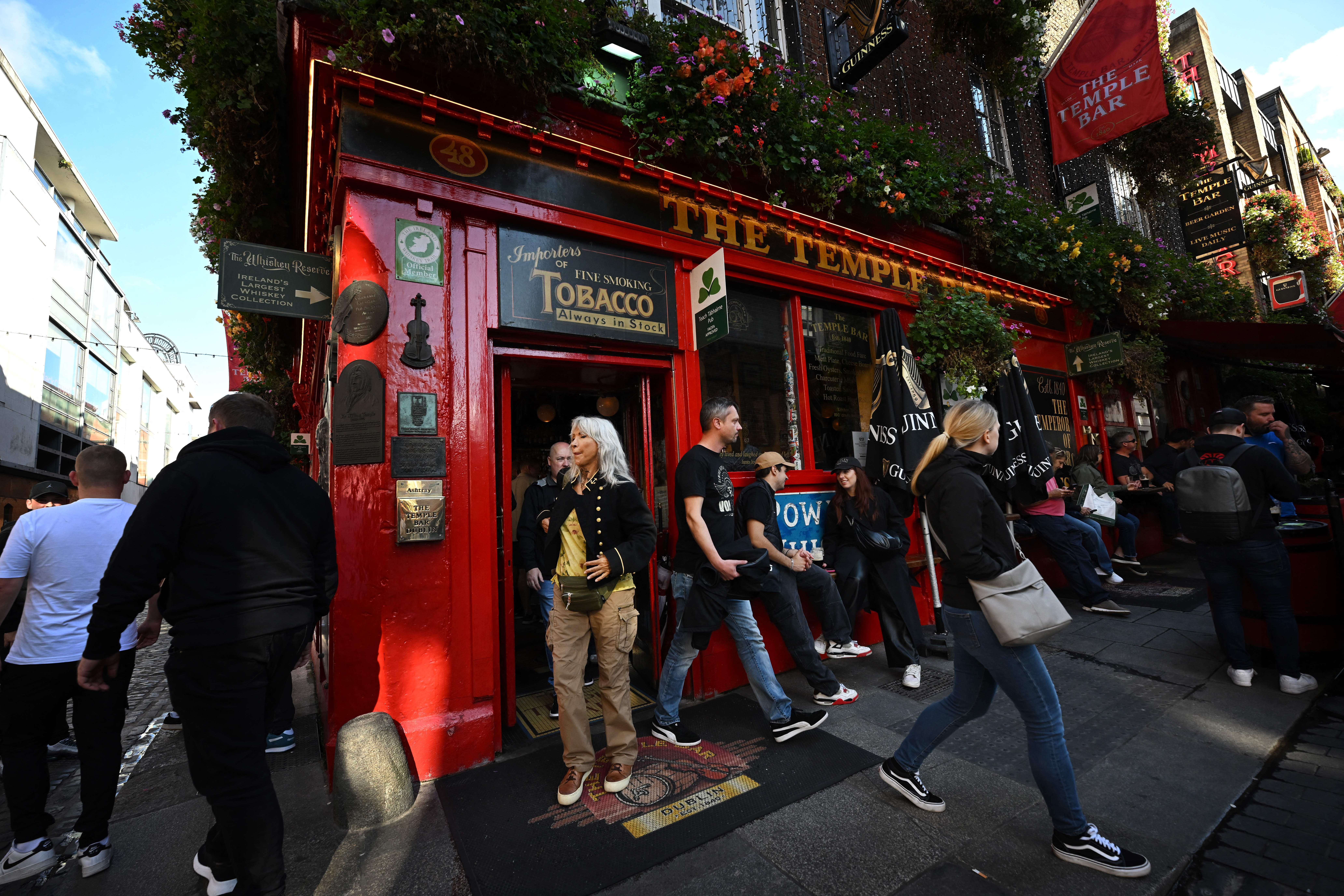
Drinkers and tourists visit the Temple Bar pub in the Temple Bar area of Dublin on September 15, 2024.
He found a “stylish one-bedroom apartment” for four at the Dublin City Center location of the Staycity chain that will rent for a week for $1,996. If it’s just for two, he recommends the Hoxton Hotel for its “tasteful decor and fawning service,” which will run about $2,029 mid-August, “a steal for that hotel group,” he said.
Airfare round-trip from Philly on Aer Lingus Irish Airlines will run you around $929 per person, including a seat assignment, checked bag, and in-flight meal.
Vibe: Sea Isle meets James Joyce. Cliffs!
Sample food: Three-course menu at Vintage Kitchen in Dublin for 72 euros features theSkeaghanore duck with miso, sprouting broccoli, sweet potato, and samphire (sea beans).
What’s free? At the Guinness Storehouse, take the basic tour where mom and dad get a free stout.
Drawbacks: Peak Dublin Bay temps are about 59 degrees.
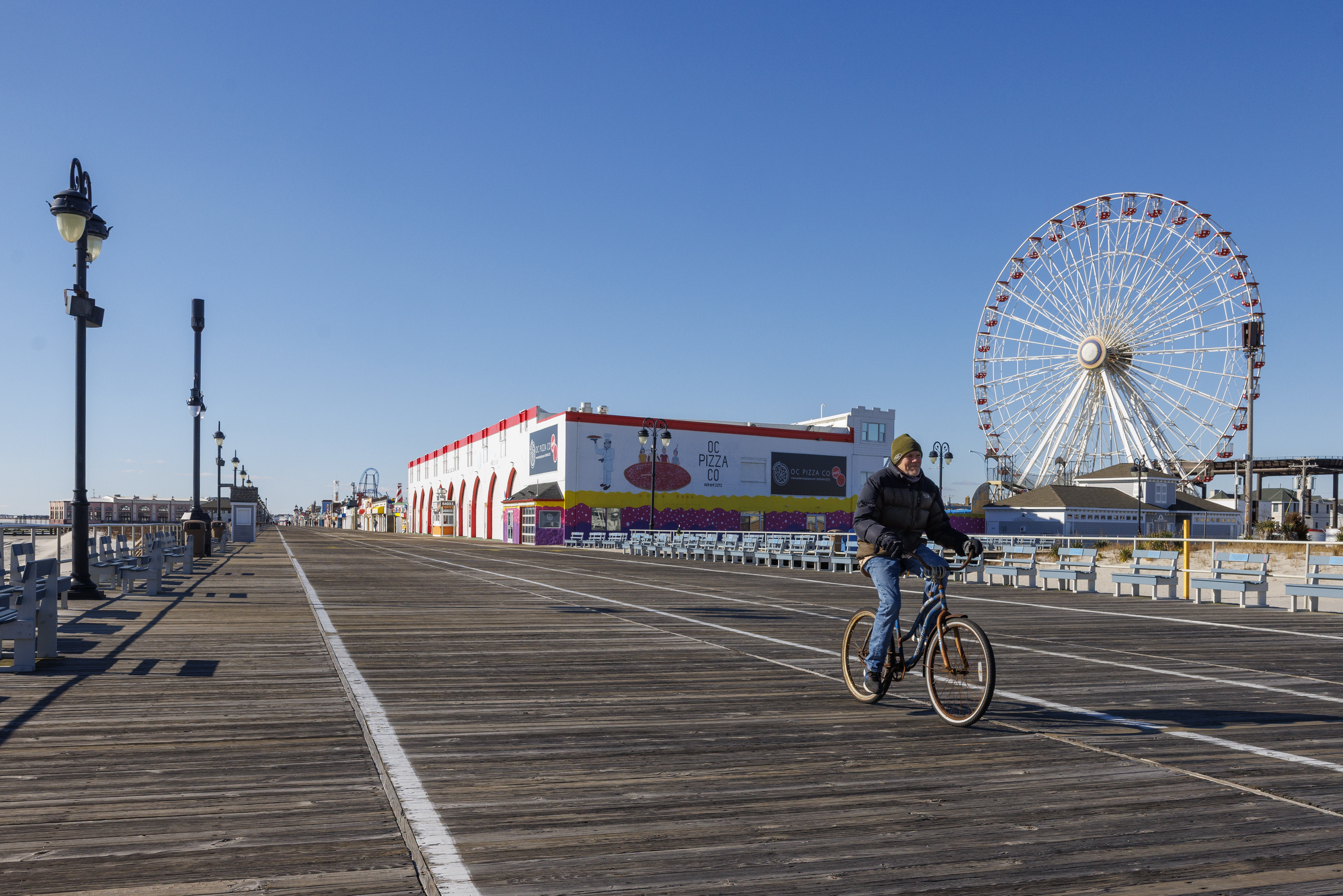
Boardwalk near 6th Street, Ocean City, NJ.
Ocean City: Nostalgia — for a price
Brian Logue, of the Anchor Group in Ocean City, notes that Ocean City has had some record sale prices. But that hasn’t affected rental prices, he said. “The upside for tenants is that rental prices have not kept up with value.”
He’s not sold on the North Carolina alternative.
“From experience, I have clients who love the Outer Banks,” he said. “But unless you have your own plane, it’s eight hours in the car each way.”
He thinks people may think they want an alternative to their ancestral Shore destinations, but in the end, they really don’t.
“There’s not a boardwalk,” he said of the Outer Banks. “The things that make Ocean City ‘America’s Greatest Family Resort,’ it doesn’t exist there. It doesn’t have that nostalgic Jersey feel.”
Maria Sacco Handle, of the Shore House Team, said the snowy winter has spurred interest in Jersey Shore rentals. She said prices have stayed “fairly steady,” with some early booking incentives that will disappear as the season approaches.
“Believe it or not, we love a snowy winter at the Jersey Shore — it reminds everyone how amazing a week at the beach will feel,“ she said. “My advice to anyone thinking about renting this summer: Don’t sit on the fence — the best weeks always go first.”
A typical week in Brigantine in July comes out as about the same as the Outer Banks, minus the cost of driving and plus the cost of a beach tag ($15 per week per person).
In a time-honored Jersey Shore tradition, you’ll have to bring your own bed linens or rent them (no Outer Banks-y credit included).
A four-bedroom, two-bath charming blue rental house in Brigantine’s “A zone,” in the middle of the island, is listed for $5305, a bargain by current Jersey Shore standards.
Sample food: Spicy tuna with Caribbean jerk seasoning at La Scala Beach House will run you $25.
Vibe: With one way on and off, Brigantine is its own insular vibe. All-terrain vehicle holders can go tailgate at the cove.
What’s free?Hmm. An early morning around the island bike ride, as always.
What’s not? Linens! BYO.
Perks: The Borgata is just a short hop over the bridge, and you can visit some stranded marine mammals at the Marine Mammal Stranding Center. Also, golf.
Frolicking in a beachside seawater pool in Mazatlán, Mexico.
Mazatlán, Mexico: 13-mile boardwalk
“This was the first thing that popped in my mind,” said Philadelphia travel agent Mezgaron James.
She’s referring to Mazlatán, Mexico, a resort town on Mexico’s Pacific coast. “A lot of people don’t know they have the longest boardwalk in the world, a 13-mile boardwalk. It’s a place that’s untouched.”
James priced out seven nights in our target week, July 11 to 18, at Costa de Oro Beach Hotel, including round-trip tickets on American Airlines from Philadelphia for … $4,000.
“It’s family-friendly,” James said. “There’s a lot of things to do. It’s still lively like the Jersey Shore, but you’ll see a nice mix of people, fishermen hauling the morning’s catch, people bicycling and jogging, catch a coffee and pastry. There’s zip-lining. There’s open air taxis.”
The hotel provides direct access to the beach at no extra cost.
“It’s actually a four-star hotel with a pool right by the beach,” she said.
Sample food: I’m ordering the Zarandeado fish, a whole grilled fish available at multiple places.
Vibe: The 13-mile boardwalk will meet all your Jersey needs.
What’s free? Beaches.
Drawbacks: Check with the U.S. Department of State’s travel advisory to see about impacts from any nearby (but not in tourist areas, typically) cartel violence.
Inquirer staff writer Chris A. Williams contributed to this article.
MaryJane Hackney, 80, of Gloucester Township, longtime first grade teacher at Loring-Flemming Elementary School, singer, theater devotee, and diehard Phillies fan, died Sunday, May 3, of Alzheimer’s disease at the Residence at Voorhees Senior Living Center.
Inspired by her own favorite grade school teacher, Mrs. Hackney knew early in life that she wanted to be a teacher, too. She earned a bachelor’s degree in education, taught elementary school students in Pennsylvania for a few years, and spent nearly three decades, from 1981 to her retirement in 2010, working with thousands of first graders at Loring-Flemming in Gloucester Township.
“She loved the energy first graders have,” said her husband and caregiver, David. “She taught fourth, fifth, and sixth grades at first. But after going to first grade, she said she would never go back.”
Mrs. Hackney was so influential at school and at Loring-Flemming for so long that she taught children of her former students. Until a few years ago, she was routinely greeted around town by 40-year-olds who said: “Do you remember me?” Often, she did.
“MaryJane was a force to be reckoned with,” a former colleague said in an online tribute. “When I arrived at Loring-Flemming with only one year of teaching experience, she took me under her wing and taught me so many important lessons about life and education.”
Mrs. Hackney especially enjoyed teaching her students to read, and she told her husband that “one of her greatest joys was seeing the excitement of young children when they realized they could read.” The father of one of her former students told David Hackney recently that his son became an avid reader — and the father had to buy many books — thanks to Mrs. Hackney’s tutelage.
“She was a constant source of good books and brought all of her best reads for us to share,” a former teaching colleague said in a tribute. “Everyone drifted to her classroom for support, information, or just to have a good laugh.”
Affable, innovative, and energetic, Mrs. Hackney participated in projects for the local and state education associations, and raised funds to buy new school equipment. She was a champion of new early education programs and a popular guest on the local Emmy Award-winning public TV program “Classroom Close-up, NJ.”
Mrs. Hackney stands with her Grade 1 students at Loring-Flemming during the 1962-63 school year.
She was funny and witty, a former colleague said, “and her ability to know what was going on in our school, district, county, and state was incredible.” Before Loring-Flemming, Mrs. Hackney taught for a few years at a Lutheran elementary school in Delaware County and Ralph Waldo Emerson Elementary School in Bucks County.
Outside the classroom, Mrs. Hackney enjoyed singing, the theater, and the Phillies. She sang alto in choirs in high school and college, and attended nearly every performance of the Arden Theatre Co. in Philadelphia from 1996 until recently. Her husband worked several jobs over the years, and her absolute favorite, he said, was the one that had company tickets to Phillies games.
MaryJane Pierce was born June 22, 1945, in Abington. She grew up in Croydon, was so smart that she skipped third grade, and graduated from Delhaas High School in 1962.
Mrs. Hackney studied education and American history in college.
She studied education and American history at what is now Concordia University Chicago in Illinois, and later enjoyed traveling to historic sites with her husband. She knew David Hackney from high school, and they got serious during a double date to celebrate her 21st birthday in 1966.
Eight weeks later, they got engaged. They married in 1967 during the famous Glassboro Summit Conference, had a daughter, Jennifer, and lived in Drexel Hill and Havertown before moving to Gloucester Township in 1974.
Mrs. Hackney liked histories and mysteries, and was longtime friends with local author Lisa Scottoline. She knew the words to Elvis Presley songs, doted on her daughter and grandson, Joshua, and visited relatives in Ireland several times after retiring.
She moved to the Residence at Voorhees a year ago. “I will forever remember her lessons, her delicious brownies, and helping hand that was used not just for her students but for the entire faculty and staff,” a former colleague said.
Mrs. Hackney smiles with her daughter, Jennifer.
Her husband said: “She was fascinated by people, curious about people. And if you started talking about teaching, she could go on for hours.”
In addition to her husband, daughter, and grandson, Mrs. Hackney is survived by a sister, Deborah, and other relatives.
A man who recently served as a dean at Ocean County College was charged with sexually assaulting a minor, the Atlantic County Prosecutor’s Office said Monday.
James Hadley, of Barnegat in Ocean County, was arrested Friday when he allegedly traveled to Pleasantville in Atlantic County to meet the juvenile for a sex act, the prosecutor’s office said. Hadley was described as 66 years old, but public records indicate that he is 65.
Earlier this year, Hadley became the dean of the School of Business and Social Sciences at Ocean County College.
In an emailed statement Monday night, the college said it was informed by law enforcement on Friday afternoon about “the situation regarding James Hadley.”
The statement continued: “Upon receiving this information, we took immediate action and placed Mr. Hadley on a suspension and restricted him from campus. An interim dean has been appointed.”
Ocean County College said it has “no record of complaints or reports concerning his conduct while employed with our College. As an open active investigation is pending, the College will not be offering further comment at this time. We are fully cooperating with any police inquiry.”
The prosecutor’s office said that based on three alleged incidents this month, Hadley was charged with second-degree sexual assault of a victim under the age of 16, second-degree luring a minor to commit a sexual act, third-degree endangering the welfare of a child, and fourth-degree criminal sexual contact.
The investigation showed Hadley had previously met the child to engage in sexual acts that he paid the child to perform, the prosecutor’s office said.
The case, which remains open, was investigated by the Pleasantville Police Department with assistance from the Atlantic County Prosecutor’s Office’s Special Victims Unit.
Last weekend I photographed members of the group Philly Iranians at the museum steps calling for a “free, secular, democratic Iran — united for human rights and against gender apartheid.” (They used cigarettes to burn a sheet of paper representing the Islamic Republic. The smoking symbolized and celebrated the “power of women” they told me, as under Iran’s Islamic penal code, women’s rights are severely restricted.)
The flag with the Lion and Sun emblem was the official flag of Iran since 1907. It was changed following the 1979 Islamic Revolution is strictly banned from public use in the Islamic Republic. Iranian opposition groups use the old flag in protests.
I even mentioned the art museum in this space in January.
Workers reinstall the Young Meher statue behind construction fencing outside the museum along Kelly Drive. The work by Armenian artist Khoren Der Harootian was presented to the city in 1976 for the Bicentennial. It was reconditioned and will be the centerpiece of the Armenian Heritage Walk to be unveiled in April for American’s 250th anniversary. Student athletes from Fordham University in the Bronx visit the Philadelphia Museum of Art. The steps, anyway. The grey sweats are their “normal travel attire.”
Being there so often, I knew exactly what was going on as I saw three adults and a kid changing clothes next to the Rocky statue. I didn’t have to ask, as I knew exactly what was coming next as they got decked out in gray cotton sweats, black stocking watch caps, and high-top black Converse All-Star Chuck Taylors.
Mariusz Sliwa, his wife Magdalena, and their six year-old son Tymek came from Poznan, Poland. Marcin Danych, a friend now living in Chicago, joined them for what is now a classic pilgrimage.
When he was a boy, Mariusz’s father was “a typical factory worker … worked seven days a week,” he told me. But when he was with his father at night they would watch Rocky — “Playing it over and over, in the VHS.” It was just a part of Mariusz’s childhood, so he wanted his own son to experience it.
I see it every time I am at the steps, people of all ages, from all over sprinting up those 72 steps, “Gonna Fly Now” playing in their heads. It’s why writer Michael Vitez asked me to join him, to spend a year at the steps meeting people just like Mariusz, seeking a tangible way to inhabit a universal story of hope. As Michael often says, “It’s like the ocean; the waves keep crashing on the beach, they never stop.”
Mariusz wanted to bring his father with him from Poland, but he is unable to travel. With his friend Danych’s help, he recorded video — over and over — running up the steps with Magdalena and Tymek. And with just Tymek. And only Magdalena and Tymek together. Finally, Tymek alone. He was making his own Rocky movie. Recasting the scene, as it is etched in his mind.
I hope he sends me a copy. After he shares it back home with his dad.
Since 1998 a black-and-white photo has appeared every Monday in staff photographer Tom Gralish’s “Scene Through the Lens” photo column in the print editions of The Inquirer’s local news section. Here are the most recent, in color:
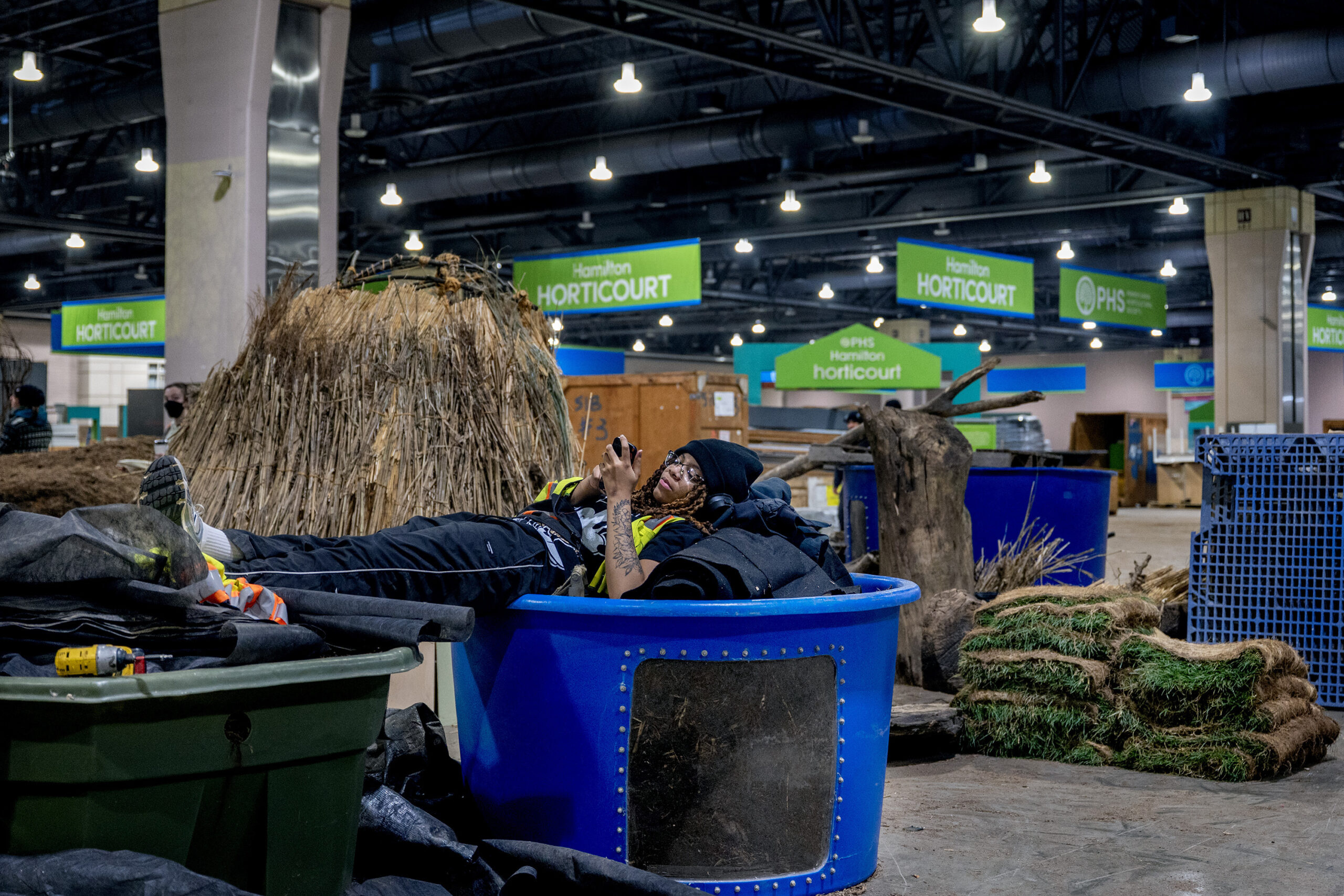
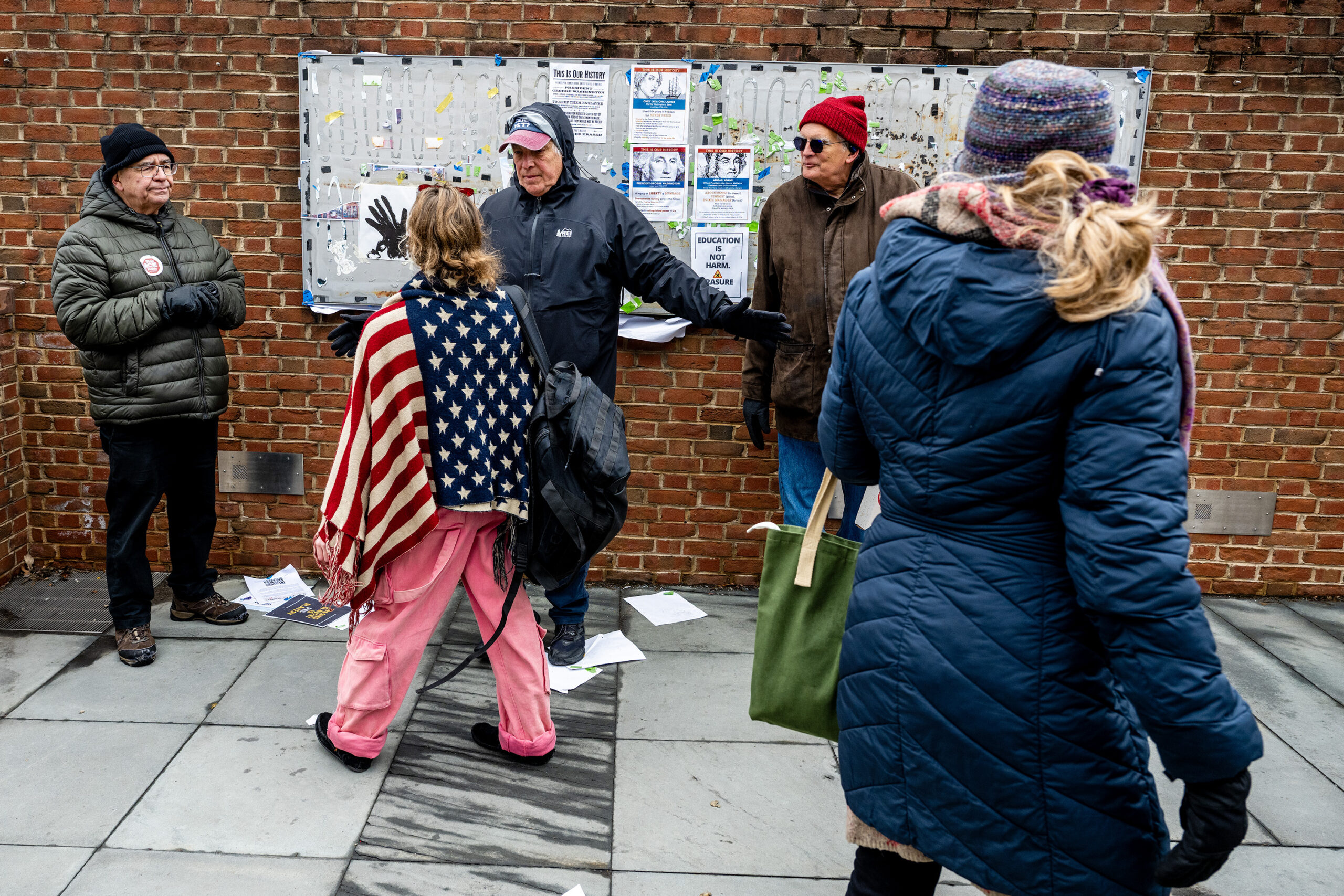
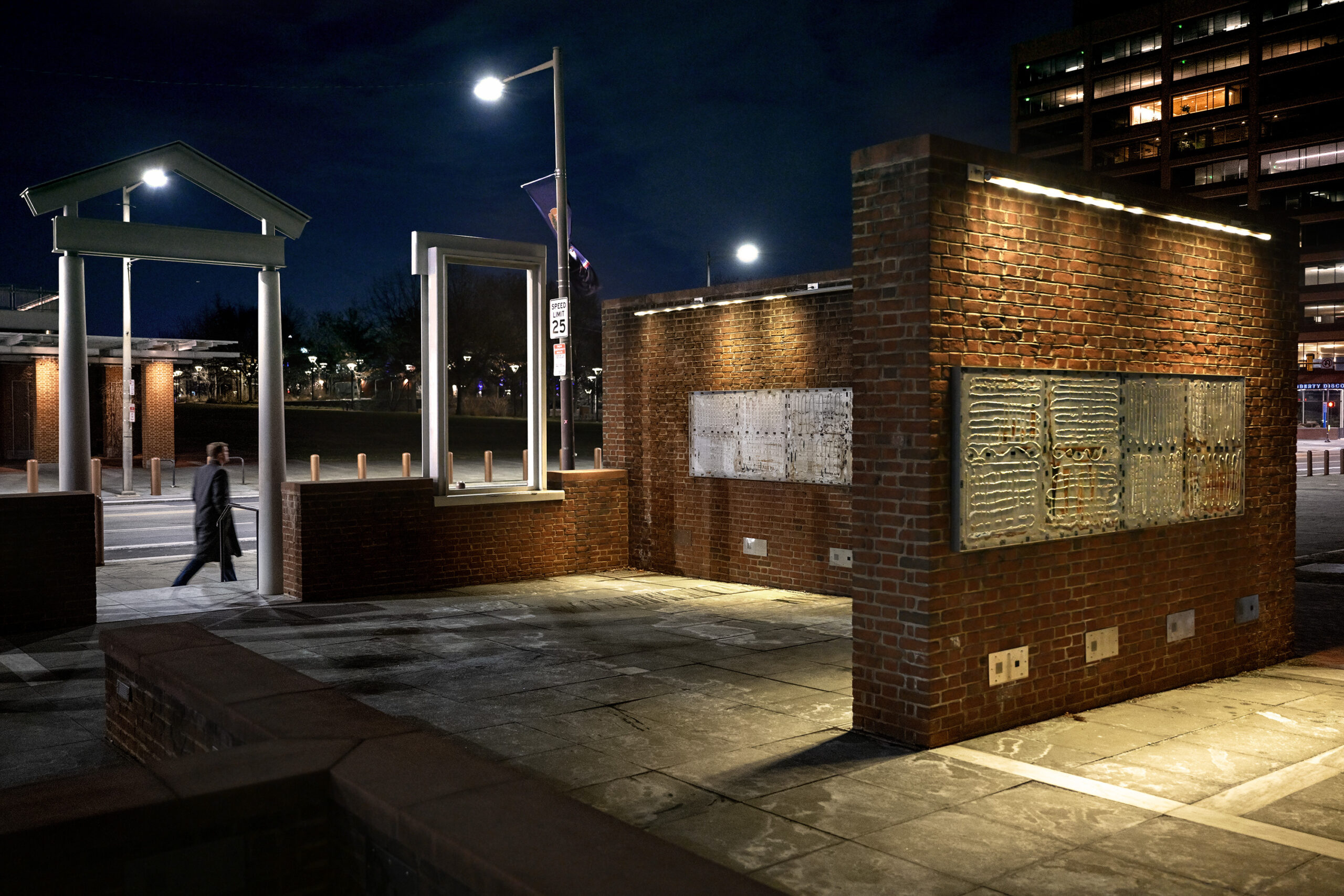
March 2, 2026: Lynasia Allen, a junior horticulture student at W.B. Saul High School is on lunch break at the Convention Center while setting up for the PHS Philadelphia Flower Show before it opened to the public. Her school’s exhibit is titled, “Up-Rooted, Re-Planted.” February 23, 2026: Bystanders at the President’s House try to prevent a “counter-protester” from ripping off notes posted by visitors where panels about slavery had been removed by President Donald Trump’s administration.February 16, 2026: What came first? The dirty snowpacked berm of frozen slush or the graffiti? February 9, 2026: Walking through a corrugated metal culvert called the “Duck Tunnel,” a pedestrian navigates the passageway under the SEPTA tracks on the Swarthmore College campus. February 2, 2026: A light-as-air Elmo balloon rolls along a sidewalk in Haddonfield, propelled by the wind as Sunday’s heavy snow starts to turn to ice and sleet. January 26, 2026: The President’s House in Independence National Historical Park hours Jan, 22, after all historical exhibits were removed following President Trump’s Executive Order last March that the content at national parks that “inappropriately disparage” the U.S. be reviewed. The site, a reconstructed “ghost” structure titled “Freedom and Slavery in the Making of a New Nation” (2010), serves as a memorial to the nine people George Washington enslaved there during the founding of America.January 19, 2026: A low-in-the-sky winter sun is behind the triangular pediment of the “front door” of the open-air President’s House installation in Independence National Historical Park. The reconstructed “ghost” structure with partial walls and windows of the Georgian home known in the 18th century as 190 High St. is officially titled, “Freedom and Slavery in the Making of a New Nation” (2010). It is designed to give visitors a sense of the house where the first two presidents of the United States, George Washington and John Adams, served their terms of office. The commemorative site designed by Emanuel Kelly, with Kelly/Maiello Architects, pays homage to nine enslaved people of African descent who were part of the Washington household with videos scripted by Lorene Cary and directed by Louis Massiah. Deepika Iyer holds her niece Ira Samudra aloft in a Rockyesque pose, while her parents photograph their 8 month-old daughter, in front of the famous movie prop at the top of the steps at the Philadelphia Art Museum. Iyer lives in Philadelphia and is hosting a visit by her mother Vijayalakshmi Ramachandran (partially hidden); brother Gautham Ramachandran; and her sister-in-law Janani Gautham who all live in Bangalore, India.January 5, 2026: Parade marshals trail behind the musicians of the Greater Kensington String Band heading to their #9 position start in the Mummers Parade. Spray paint by comic wenches earlier in the day left “Oh, Dem Golden Slippers” shadows on the pavement of Market Street. This year marked the 125th anniversary of Philly’s iconic New Year’s Day celebration.Dec. 29, 2025: Canada geese at sunrise in Evans Pond in Haddonfield, during the week of the Winter Solstice for the Northern Hemisphere. December 22, 2025: SEPTA trolley operator Victoria Daniels approaches the end of the Center City Tunnel, heading toward the 40th Street trolley portal after a tour to update the news media on overhead wire repairs in the closed tunnel due to unexpected issues from new slider parts.December 15, 2025: A historical interpreter waits at the parking garage elevators headed not to a December crossing of the Delaware River, but an event at the National Constitution Center. General George Washington was on his way to an unveiling of the U.S. Mint’s new 2026 coins for the Semiquincentennial, December 8, 2025: The Benjamin Franklin Bridge and pedestrians on the Delaware River Trail are reflected in mirrored spheres of the “Weaver’s Knot: Sheet Bend” public artwork on Columbus Boulevard. The site-specific stainless steel piece located between the Cherry Street and Race Street Piers was commissioned by the City’s Public Art Office and the Delaware River Waterfront Corporation and created and installed in 2022 by the design and fabrication group Ball-Nogues Studio. The name recalls a history that dominated the region for hundreds of years. “Weaver’s knot” derives from use in textile mills and the “Sheet bend” or “sheet knot” was used on sailing vessels for bending ropes to sails. November 29, 2025: t’s ginkgo time in our region again when the distinctive fan-shaped leaves turn yellow and then, on one day, lose all their leaves at the same time laying a carpet on city streets and sidewalks. A squirrel leaps over leaves in the 18th Century Garden in Independence National Historical Park Nov. 25, 2025. The ginkgo (Ginkgo biloba) is considered a living fossil as it’s the only surviving species of a group of trees that existed before dinosaurs. Genetically, it has remained unchanged over the past 200 million years. William Hamilton, owner the Woodlands in SW Phila (no relation to Alexander Hamilton) brought the first ginkgo trees to North America in 1785.November 24, 2025: The old waiting room at 30th Street Station that most people only pass through on their way to the restrooms has been spiffed up with benches – and a Christmas tree. It was placed there this year in front of the 30-foot frieze, “The Spirit of Transportation” while the lobby of Amtrak’s $550 million station restoration is underway. The 1895 relief sculpture by Karl Bitter was originally hung in the Broad Street Station by City Hall, but was moved in 1933. It depicts travel from ancient to modern and even futuristic times.
Philadelphia and environs didn’t quite make the grade, but areas along the Jersey Shore and in southern Delaware did experience blizzard conditions early on the morning of Feb. 23, the National Weather Service reported Friday.
Blizzard criteria — sustained winds or frequent gusts to 35 mph, with falling and/or blowing snow reducing visibility to less than a quarter mile for three or more continuous hours — were met along about a 20- to 25-mile-wide corridor in New Jersey from Monmouth to Cape May, said Alex Staarmann, a meteorologist in the Mount Holly office who was part of the investigative team.
Those conditions also were observed in Sussex County, Del.
In addition to direct instrument observations, Staarmann said, the weather service relied on available visual evidence from photographs and videos. “They’re an element of analysis as well,” he said.
As for why Philadelphia came up short, Staarmann said “the visibility certainly was low enough at times, but the winds weren’t quite as strong as we were forecasting farther inland.”
Among the locations where blizzard conditions were preliminarily confirmed were the extreme eastern portion of Burlington County, Atlantic City, Long Beach Island, and all the resort towns in Cape May County.
The weather service had posted a blizzard warning for the entire state of New Jersey, all of Delaware, and for Philly, Delaware County, and nearby portions of Bucks, Chester, and Montgomery Counties.
However, conditions were not quite so extreme to the north and west of the city, nor were the snow totals quite so robust.
Blizzard or not, by any other name it was a disruptive storm that generated 20 inches of snow in parts of the region, and 14 inches at Philadelphia International Airport, No. 16 on the all-time snow list that dates to the winter of 1884-85.