The Philadelphia region’s first snowfall of the season ended up having quite a March-like quality.
Totals generally ranged from 4 to 8 inches, but the snow literally was so heavy that the average shoveler may have had a hard time discerning the difference.
“When I was shoveling my car out, it felt rough,” said Michael Silva, meteorologist at the National Weather Service Office in Mount Holly. Silva lives in Mount Laurel, where an unofficial 7 inches was reported.
The snow was so weighty because it had a high liquid content, the result of temperatures close to the freezing mark, as so often happens in March. The borderline temperatures also would help explain the range in accumulations, he said.
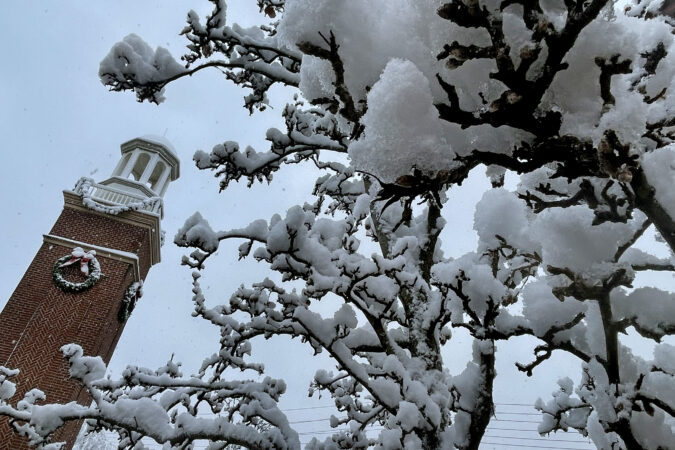
The snow glommed onto the trees, weighing down branches. In fact it took down a branch outside the Mount Holly office that damaged a federal car (sorry, taxpayers).
The highest amounts, just over 8 inches, were recorded in Chester and Bucks Counties.
Officially, at Philadelphia International Airport, where temperatures didn’t get below freezing until midmorning Sunday, 4.2 inches was measured.
By contrast, Boston has measured only 3.1 inches so far.
Here are the snowfall totals posted by the weather service as of 10 a.m. Monday.
window.addEventListener(“message”,function(a){if(void 0!==a.data[“datawrapper-height”]){var e=document.querySelectorAll(“iframe”);for(var t in a.data[“datawrapper-height”])for(var r,i=0;r=e[i];i++)if(r.contentWindow===a.source){var d=a.data[“datawrapper-height”][t]+”px”;r.style.height=d}}});
Philadelphians awoke to the first significant snowfall of the season on Sunday, with 3 to 7 inches of snow blanketing the area.
And although the worst of the snow was over, high winds and increasingly dangerous icy conditions will be moving in, forecasters said.
While temperatures were in the upper 20s on Sunday afternoon, they’ll be very different when commuters set out on Monday morning.
“We are expecting a pretty strong blast of Arctic air moving in,” leaving temperatures in the mid-teens, said Alex Staarmann, a meteorologist with the National Weather Service in Mount Holly.
With snow on the ground and temperatures below freezing, Philadelphia schools will be opening two hours late Monday.
Archdiocesan high schools and parish and regional Catholic elementary schools in the city will also operate on a two-hour delay. (Catholic schools in suburban counties generally follow their local districts’ lead.)
“The safety and well-being of our students are our top priorities,” Superintendent Tony B. Watlington Sr. said in a message to district families. “We are encouraging students, families and staff to travel safely tomorrow morning.”
Students who arrive late because of weather challenges won’t be marked late, and weather-related absences will be excused if a parent or guardian sends a note.
While some plowed streets and shoveled sidewalks may have been cleared by Sunday afternoon, cold winds Sunday night into Monday morning may blow a thin layer of snow back onto roads, Staarmann said.
Winds are forecast to pick up, from 10 to 20 mph, with gusts up to 35, he said. That could make for dangerous conditions.
“If there’s any slush or snow melt on the roads or pavement from today, it certainly could refreeze if it’s not treated,” he said.
Totals for the storm, which hit the area around 11 p.m. Saturday, slightly exceeded earlier forecasts of 3 to 5 inches. Areas north of the city, like Doylestown and the Trenton airport, saw closer to 7 inches.
“This snow is generally a wetter snow,” Tyler Roys, senior meteorologist at AccuWeather, said. “It’s heavier to move. It’s not easy as if it were fluffy snow. This one is going to take a little work.”
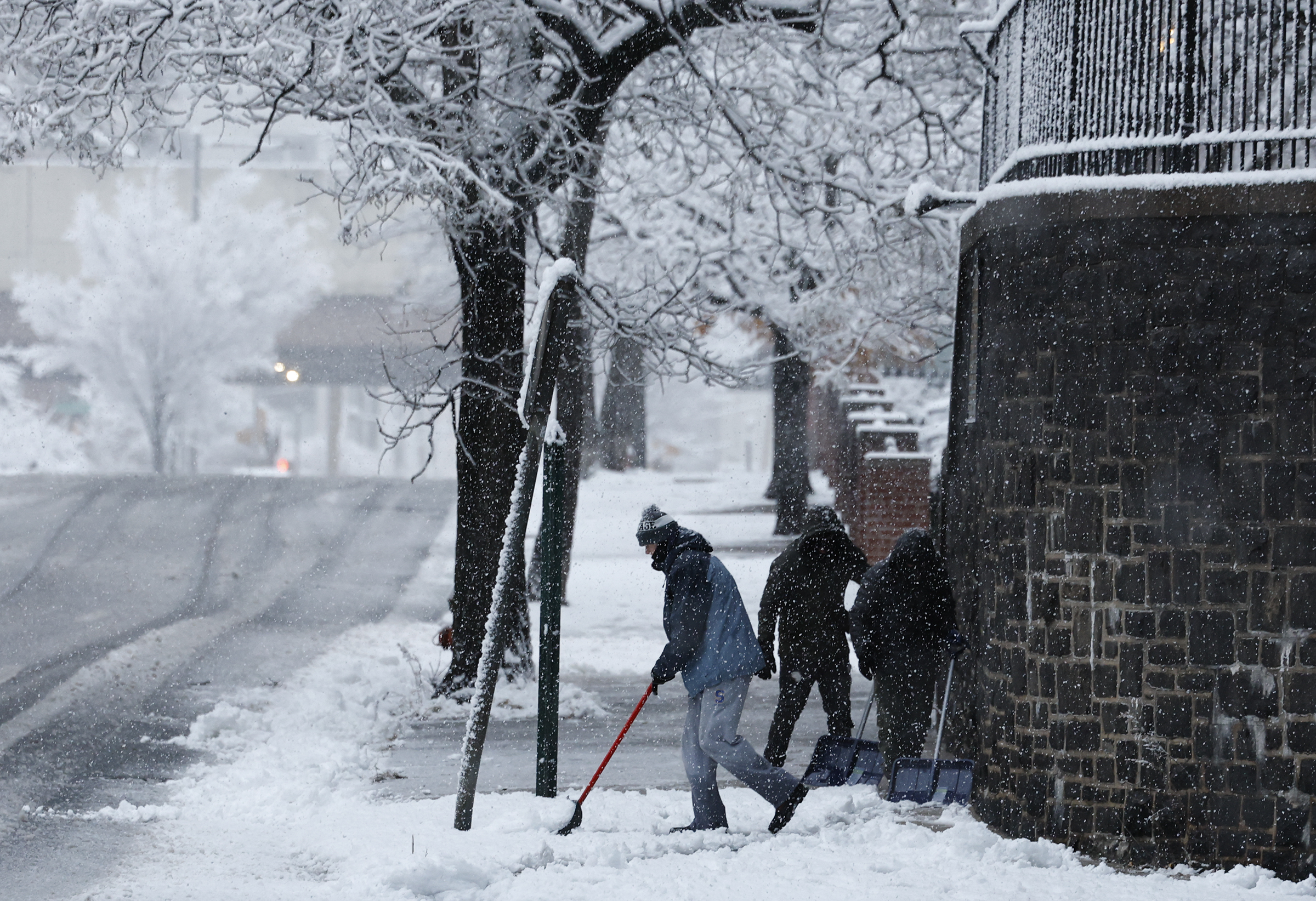
Workers clear snow from sidewalks in the Old City neighborhood on Sunday, Dec. 14, 2025.
Colder air will follow on the heels of the snow system, with Monday morning temperatures hovering in the teens.
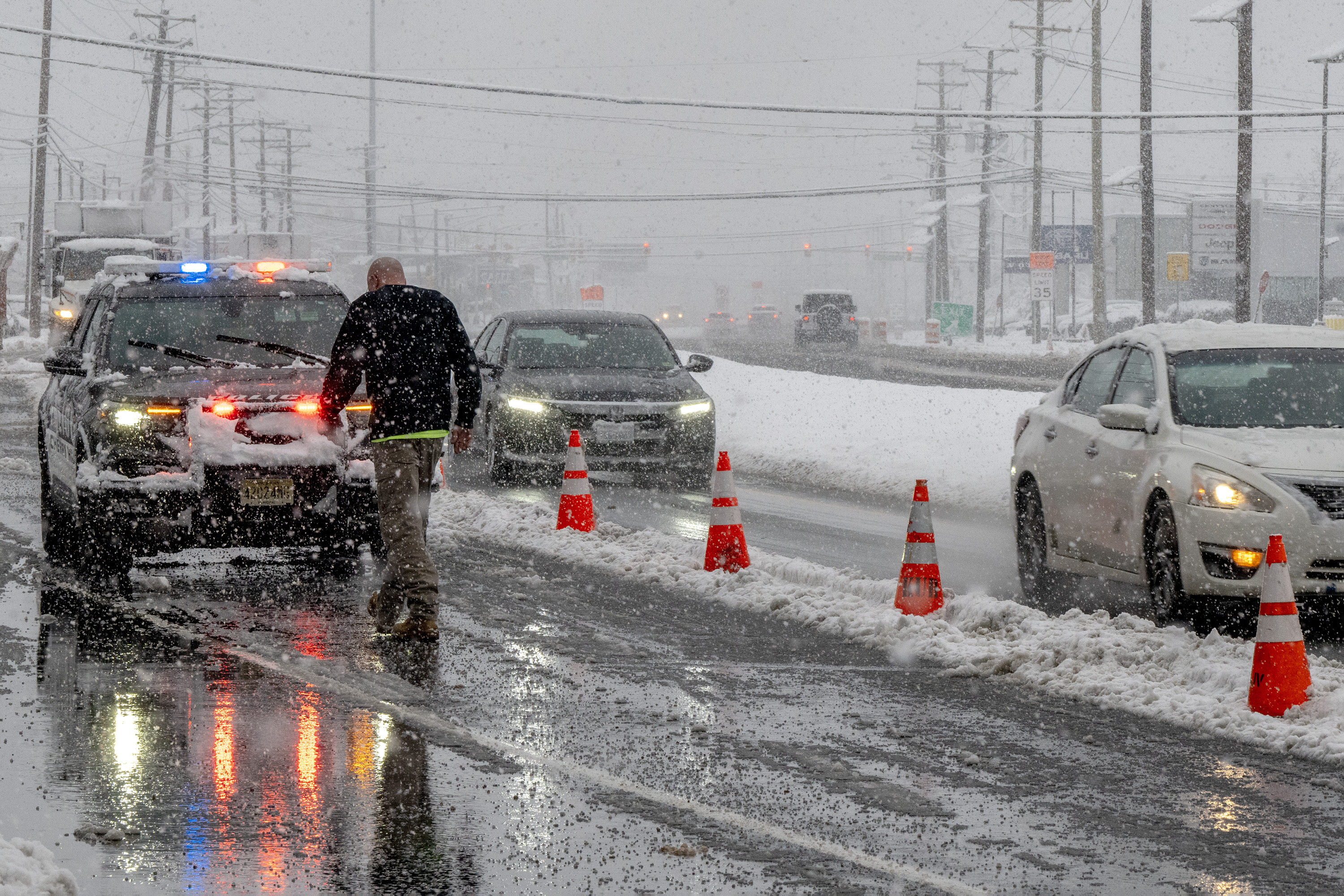
An early morning accident and a downed utility pole had eastbound traffic on Rt. 70 in Cherry Hill down to one lane Sunday morning, Dec. 14, 2025, during the first significant snowfall of the season with 3 to 7 inches of snow blanketing the area
Icing will be an issue until temps rise later in the week.
At the height of the storm, more than 26,000 Peco customers experienced outages across the region, said spokesperson Matt Rankin.
By late Sunday afternoon, around 3,000 customers remained without power. Crews were out working to get power restored to customers as quickly and safely as possible, Rankin added.
SEPTA spokesperson Andrew Busch said crews would be monitoring for icy or dangerous conditions as the temperatures fall.
Eagles fans traveling on the Broad Street Line reported some significant delays shortly before kickoff, with at least one train reportedly stalled for 15 minutes near the Walnut-Locust station, passengers said. Busch said the temporary slowdown and crowding had been due to a train being pulled out of service near Erie Avenue, but that the situation had been resolved.
At the stadium, tailgaters were not deterred by the snowy conditions.
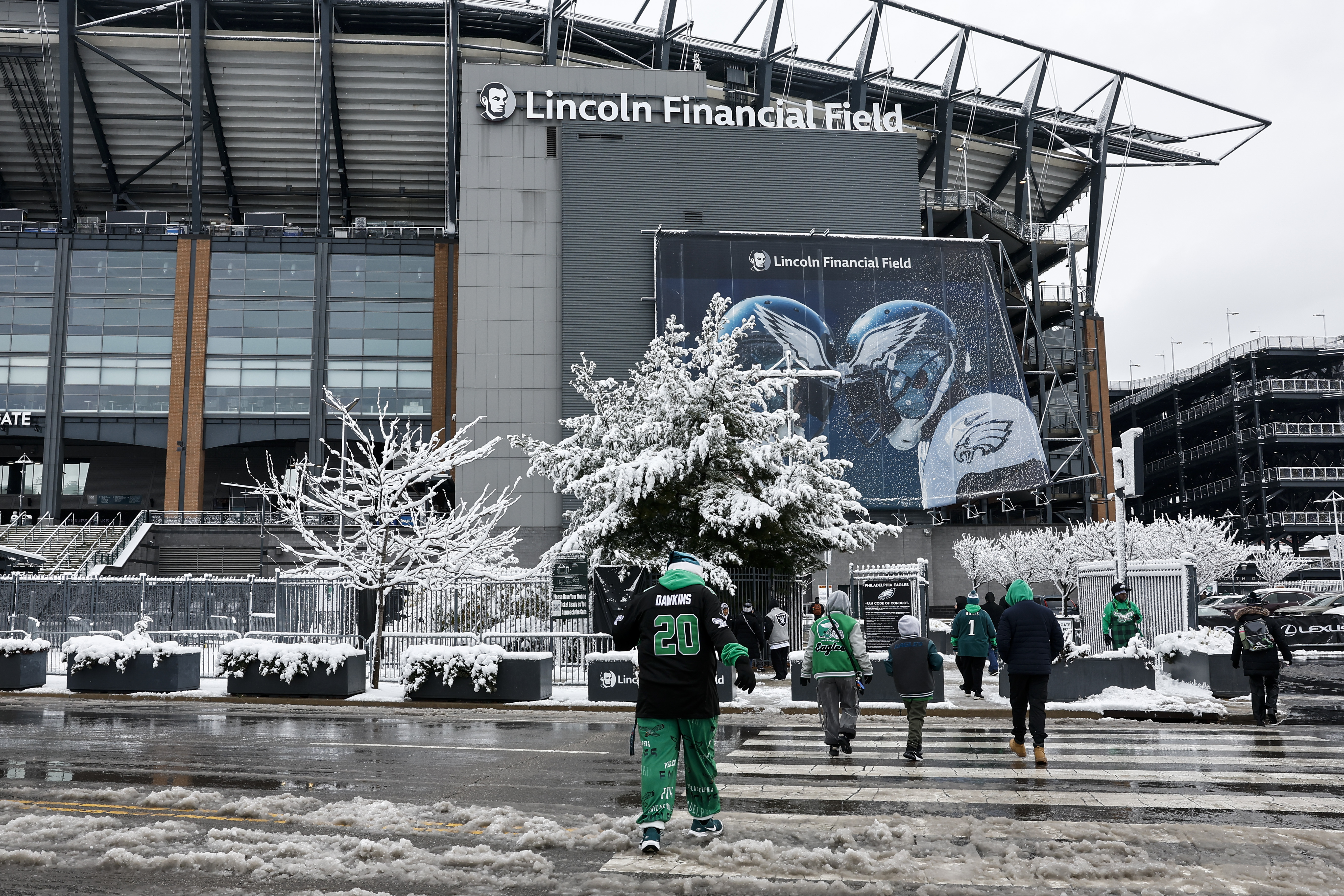
Fans make their way into the stadium before the Philadelphia Eagles game against the Las Vegas Raiders at Lincoln Financial Field on Sunday, Dec. 14, 2025 in Philadelphia.
“It’s been great,” said Jim Carroll, of Warren County, N.J., sipping a pregame beer in the parking lot outside the Linc with friend Jim Singer. “Brutally cold, but setting up for a big Eagles victory so it’s all good.”
It was still snowing when Robert Rodriguez and Victor Sierra of Burlington County, and their family members, arrived hours before game time.
Sure it was cold, said Rodriguez, a season ticket holder for over 25 years. But he wouldn’t miss for it any amount of snow.
“The beauty of it’s perfect,” he said, nodding toward the snow-capped stadium in the distance.
An usher clears snow from the seats before the Philadelphia Eagles play the Las Vegas Raiders at Lincoln Financial Field in Philadelphia, on Sunday, Dec. 14, 2025.
Philadelphia International Airport was experiencing heavy delays with the effects of the storm, with over 182 flights delayed and 17 cancellations, said airport spokesperson Heather Redfern.
With planes being deiced for takeoff, departing flights were experiencing delays of about 38 minutes, Redfern said.
The airport briefly halted ground traffic earlier Sunday morning, as crews tended to icy conditions.
Monday afternoon is forecast to be warmer but still below freezing, with temperatures in the mid to high 20s.
Without much snow melt by Tuesday morning, dropping overnight temperatures could mean more trouble for some commuters for a second day.
“That could still produce some spotty black ice or refreezing of snow melt,” Staarmann said.
Higher temperatures on Wednesday should help remaining ice and snow to melt.. But AccuWeather senior meteorologist Chad Merrill said changing weather conditions later in the week could pose a problem for some regional commuters: A new front may bring rain Thursday night into Friday morning.
“Sometimes when you have this Arctic air mass that lingers, even though the temperatures are going to warm up this week, the ground is still very cold,” Merrill said.
That’s a recipe for a different challenge.
“So, there is some potential that when this front comes through Thursday night and Friday morning, that there could be some limited visibility due to fog,” Merrill said.
Mike and Alexis Butler with children John, 8, and Julie, 6, find a small hill to sled on in Wallworth Park in Cherry Hill after the sun came out Sunday afternoon.
ATLANTIC CITY — The journey through Atlantic City is bumpy these days, and not only because Atlantic Avenue is desperately in need of paving.
Ducktown Tavern owner John “Johnny X” Exadaktilos has one wish for Atlantic City that has nothing to do with the gut-jarring avenue that runs in front of his bar.
“Just normal,” says Exadaktilos. “I just want things to be normal.”
Atlantic City, a place of historic mayoral misdeeds, multimillionaire overreach, and chronic unwanted attention, has managed in this waning year, even as its workers string up holiday decorations, to come up with a new plot twist: Its newly reelected Democratic Mayor Marty Small Sr. is on trial for alleged physical abuse of his teenage daughter.
The trial has left Small untethered from his cell phone as new casinos have been green lit in New York City, and the state moves to tighten its authority over the town. Another trial, of Small’s wife, La’Quetta Small, who is the superintendent of schools, is set for Jan. 12.
With Small reporting to an Atlantic County courthouse each day to face his daughter, who spent seven hours testifying against him on Tuesday, a bit of a hush has fallen on the city as it awaits the outcome, which could come this week.
The sentiment in City Hall, where many employees owe their jobs to Small, leaned toward the assumption that Small would beat this charge like he’s beaten two previous indictments on voter fraud charges.
But will the city emerge unscathed?
“Every day, people who live in Atlantic City want to know what those of us are elected are doing to make their lives better and respond to their issues and concerns,” said council member Kaleem Shabazz, who was going from a planning board meeting to a mayor-less City Hall last week. “Whatever will happen will happen. The city still has to function. People have to be responsible.”
On Dec. 1, as Small readied for jury selection in Mays Landing, New York City approved three casinos, two for Queens and one for the Bronx, a development long feared in Atlantic City.
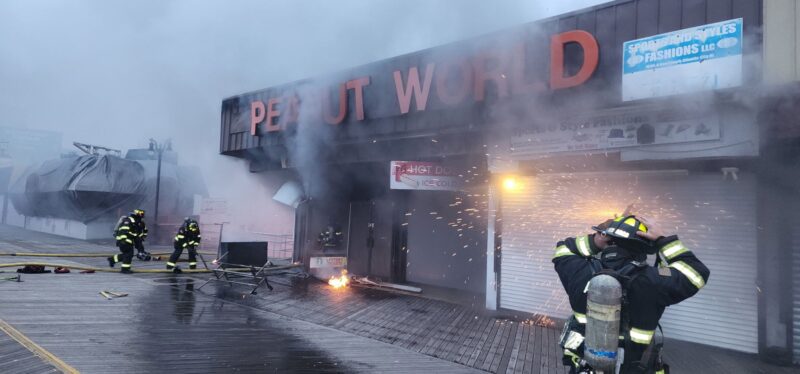
On Dec. 5, with the jury picked, the iconic Peanut World on the Boardwalk erupted in flames. On Dec. 9, with the mayor listening to his daughter, legislators in Trentonwere proposing more state oversight of A.C. including a surprise provision that would give the state the power to pick developers for major projects.
The biggest threat may come from the New York casinos, which some in the industry estimate could threaten as much as 30% of A.C.’s business and lead to the shuttering of one casino, if not more.
Small could face jail time and be forced to step down as mayor under New Jersey law, if convicted. He and his wife, who has been attending her husband’s trial, taking notes in the back, have resisted calls to relinquish their powerful roles as mayor and superintendent.
“It’s not ideal obviously,” said Shabazz. “If you had to pick a multiple choice question what would you want to be happening in your public schools, that wouldn’t be something you would pick, if you’re a parent or a taxpayer.”
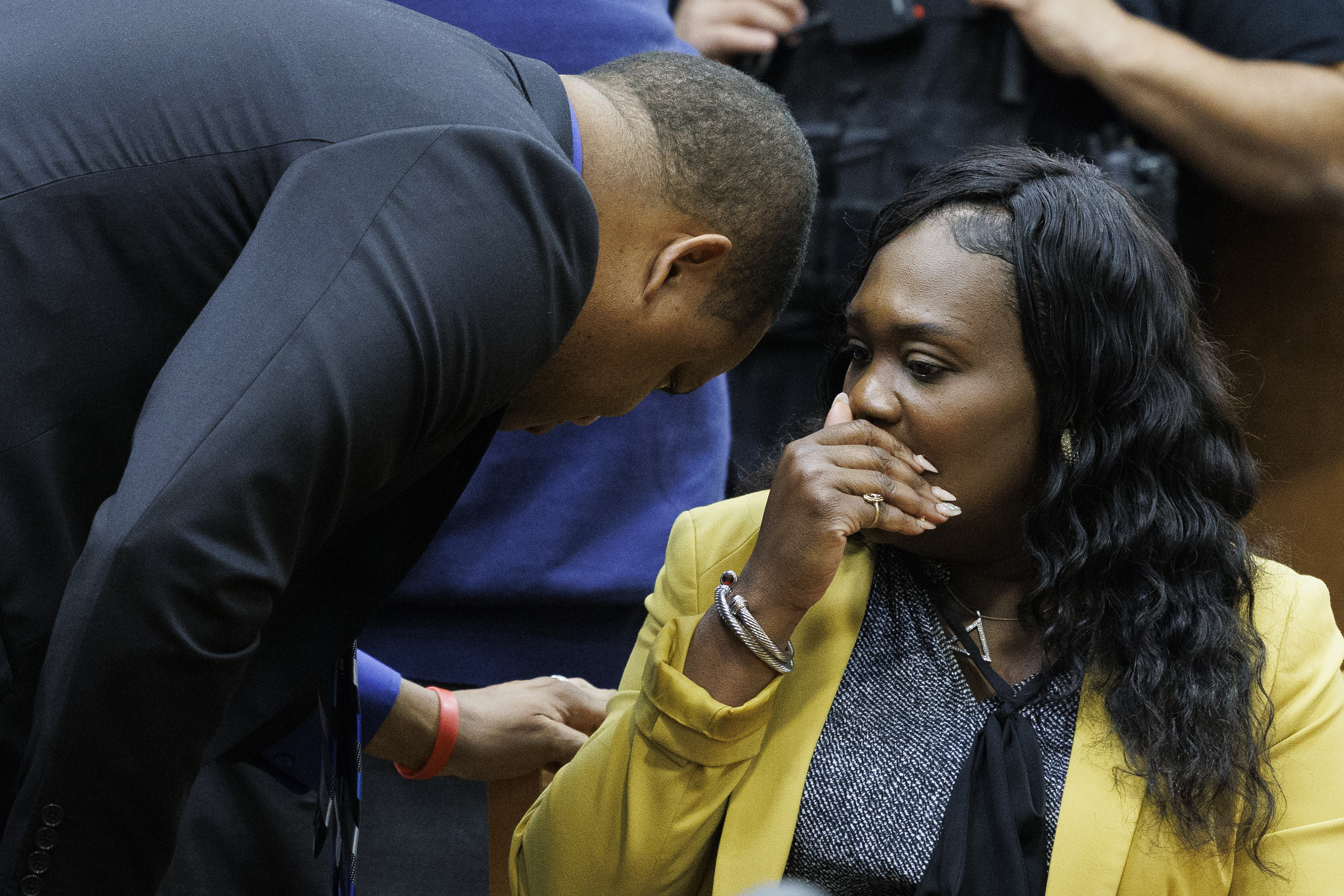
Atlantic City Mayor Marty Small and his wife, Superintendent of Schools La’Quetta Small, chat before the start of arraignment on Oct. 10, 2024. Mayor Small stood trial last week in Mays Landing. Cameras were barred from the courtroom during the trial.
‘A wake-up call’
Early one morning last week, having just come from a planning board meeting, Shabazz said the city was going about its business. “I’m not at the trial, I’m on my way to City Hall,” he said. “The work of government has to go on.”
Shabazz, who’s been focused for years, even decades, on some of the same intractable problems of the resort, remains optimistic. It’s a city where it can be hard to read the scorecard: progress seems to be there, but not there, at the same time.
The city’s only full-size supermarket, the beleaguered Save A Lot is under new management, and the adjacent nuisance liquor store is expected to close. High-profile developers like Jared Kushner and K. Hovnanian appear to be going forward with residential projects in the city’s Inlet section. There are new restaurants, like the Byrdcage in Chelsea and Simpson’s, relocating next month to Atlantic Avenue.
Shabazz is hoping the state will return zoning authority back to the city after years of the Casino Reinvestment Control Authority overseeing planning and zoning in the city’s tourism district.
Kaleem Shabazz, president of the local chapter of the NAACP in Atlantic City, and Maryam Sarhan, a community organizer, stand in front of mural honoring civil rights leaders. “The city still has to function,” he said, while its mayor is on trial for alleged child abuse. “People have to be responsible.”
But last week, as the mayor listened to his daughter testifying that he struck her in the head with a broom, after she threw detergent at him and refused to go to a community march, the state went in the opposite direction: a bill to renew the state’s takeover of Atlantic City for another six years that would allow the state to pick a “master developer” to oversee big projects, the Press of Atlantic City reported.
“We have to be competitive,” Shabazz said. “We have to let people know that we’re open for business and we’re safe and secure. Crime is down significantly.”
Like others interviewed, he believes Atlantic City can sell itself as a safe and affordable seaside destination. “We still have a free beach,” he said. “We have to let people know what we have.”
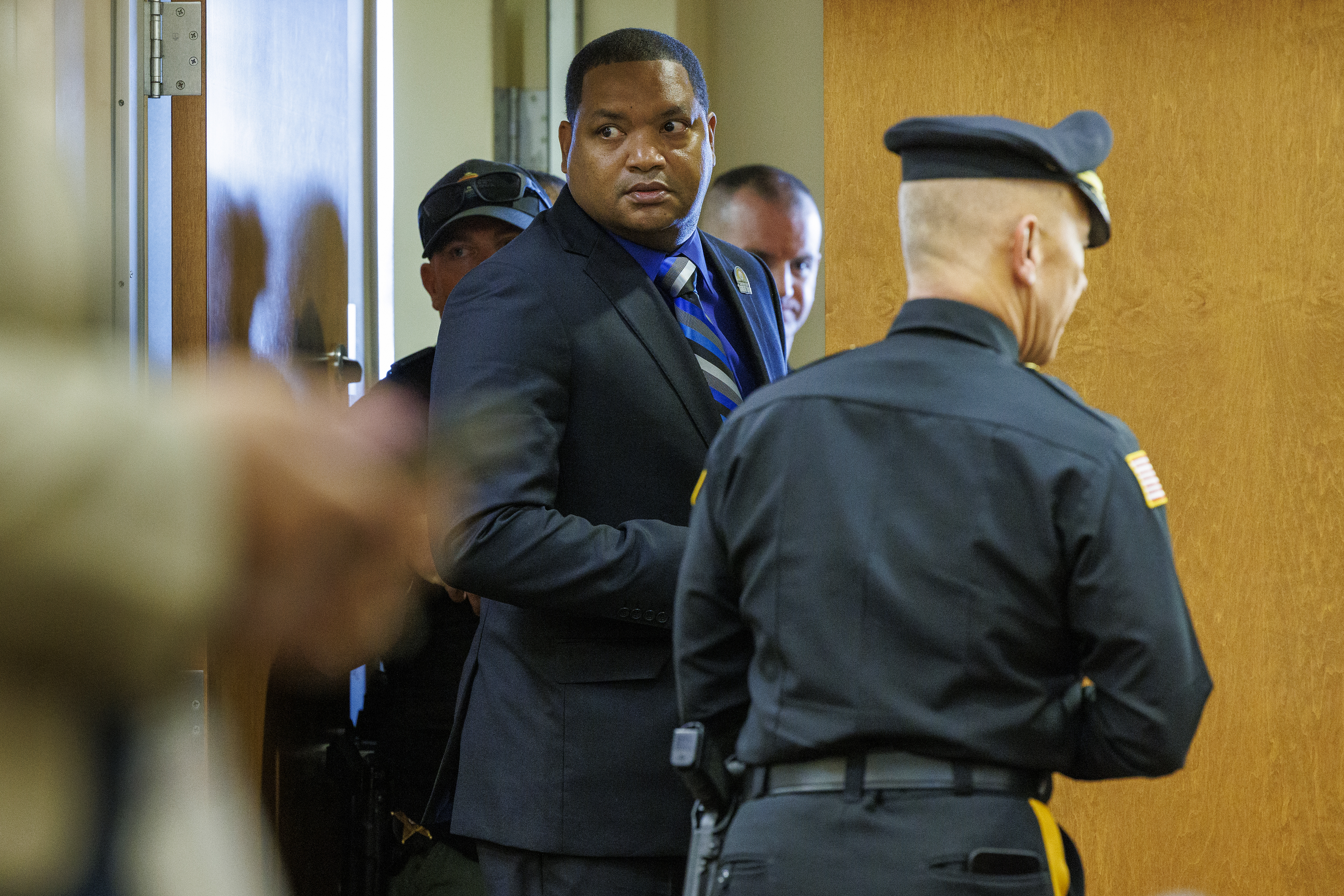
Atlantic City Mayor Marty Small arriving for his arraignment before Judge Bernard DeLury at the Atlantic County Criminal Courthouse in Mays Landing on Oct. 10, 2024. Small testified in his own defense Friday during his trial. Cameras were barred from the courtroom.
Small has defended himself by describing this latest situation as a private family problem, not related to his job performance. He has called the prosecution politically motivated and an overreaction. A jury will now weigh in.
John Boyd Jr., a principal in the Boyd Co., which advises companies on where to locate, said many developers (and homeowners) continue to balk at Atlantic City, despite the upward pressure on Jersey Shore real estate that has left the city as arguably the last affordable seashore town in the entire Northeast.
He called the three New York City casino licenses “a wake-up call” for New Jersey, and advocates a plan where the state allows casinos at the Meadowlands and/or Monmouth Park but shares the revenue with Atlantic City.
“If you ask national developers their opinion of Atlantic City, it wouldn’t be a very positive one for a myriad of reasons,” he said.
“Good governance is fundamental to economic development success. Companies want to minimize risk. It’s more than the mayor being on trial. It’s the uncertainty.”
Meanwhile at the slots
Inside Hard Rock casino during a blustery stretch last week, people were three deep at the holiday-branded Mistletoe Bar in the lobby, and nine guitars had become a menorah in the atrium.
Gamblers were locked in as names were called for a random spin-the-wheel drawing every half hour. A convention of real estate agents brought lines to the check-in desk. The trial was off in the distance, invisible to most.
“I do love coming to Atlantic City,” said Adam Druck, 33, a Realtor from York, Pa. “I hope the trial doesn’t make too much difference to what’s going on here.”
Asked about New York casinos, Joe Pendle, 71, a retired police officer from North Jersey, said he was comfortable with his routines at Hard Rock, where free rooms and meals anchored his pleasant stays. (Hard Rock itself has one of the three licenses in New York City, an $8.1 billion project near Citi Field in Queens, which it projects will result in $1 billion a year in tax revenue.)
“I have a three-room suite upstairs,” noted Pendle. “I like the beach.”
Arthur Austin, 70, of Old Bridge, said he had worked for decades on Wall Street and had no desire to travel to New York for a casino weekend.
“I worked in the city for 20 years,” he said. “I only go into the city if I have to.”
Adam Druck, 33, of York, Pa., and Eric Moeller, 36, of Reading, inside Hard Rock casino on Dec. 9, where they were staying as part of Triple Play Realtor Convention and Trade Expo in Atlantic City.
Out-of-towners like Austin hadn’t heard about Small’s trial, but the local gamblers at Hard Rock sure had.
“Atlantic City is a crooked place, and it’s always gonna be crooked because of what everybody’s into,” said a 57-year-old woman who lives locally and was playing the slots. She did not want her name used so that she could speak her mind in a small town.
“People want their guy to stay in there,” said the woman. “He gives everybody a job. You could flourish, but only if you are with the right people.”
“I don’t think that it hurts Atlantic City,” said Seng Bethia, 40, of Atlantic City, who was at the slots. “His daughter is such a sweet girl. It was bad, just the whole thing.”
‘Are you kidding me right now?’
Exadaktilos, the Ducktown Tavern owner who is Small’s loudest detractor, said he had taken things down a notch of late, putting aside his popular weekly Facebook live rants that he said had started consuming him.
Still, last week, as the prosecution wound up its case, the city sent out a contractor to do some temporary filling in of cracks on Atlantic Avenue in advance of the city’s holiday parade, and Exadaktilos found himself back on Facebook live.
“Are you kidding me right now?” he said over footage of the roadway. “What happened to Atlantic Avenue is going to be paved? Horrible.”
Boyd, the location consultant, points to bright spots. The national developers are a vote of confidence, as is the Septemberopening of the SeaHaus boutique hotel on the Boardwalk, a Marriott property. Showboat and the Sheraton near the Convention Center are converting rooms to residences.
Boyd sees potential for Atlantic City to follow the likes of Coney Island, which has seen a renaissance, to attract film business, to market itself as a live-work-play destination.
Outgoing council member George Tibbitt looks at the Kushner plan, a 180-unit apartment complex, as another missed opportunity. “No vision there,” he said. “That’s desperate development.”
“New York City definitely makes me afraid,” said Tibbitt. “There’s only so many gambling dollars to go around. Adding more casinos is going to be devastating. We have to clean the city up. We have to get the neighborhoods filled back up.”
One industry the city bet heavily on was cannabis: Its midtown quickly filled with 16 dispensaries. But after complaints from the cannabis entrepreneurs themselves, city council capped the number at 16, leaving many that have been approved but have yet to open (including one that necessitated the demolishing of a historic church) in limbo.
Atlantic City is a place where things can seem to be finally coming together, while simultaneously unraveling. Big plans vaporize, like the highly touted gym and nightclub outside Showboat, where last summer, the owner set up couches, DJ booths, and exercise machines, got stalled by permitting issues, and quietly dismantled them.
Miguel Lugo, general manager at AC Leef, which held out for a strategic spot on Albany Avenue, said his cannabis business has been good. He looks forward to the dispensary running financial literacy classes for the community, and getting its cultivation license.
“On this side of the town, everything’s been phenomenal,” Lugo said. “I’m super focused on AC Leef. I don’t know what’s going on with the mayor.”
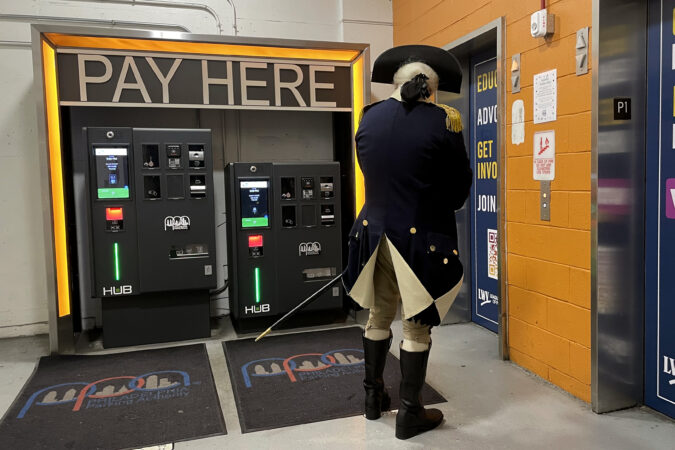
I was so close. If I had made it through one or two more green lights while driving from my last assignment… Or if I had not waited so long for the “right” car to pass in front of the building I was photographing for a real estate story…
Then I might’ve been there seconds earlier when Gen. Washington stood at the back of his SUV placing his sword on the hip of his dress uniform. Or photographed him walking through the empty parking garage.
Instead, I arrived at the elevators seconds after he did.
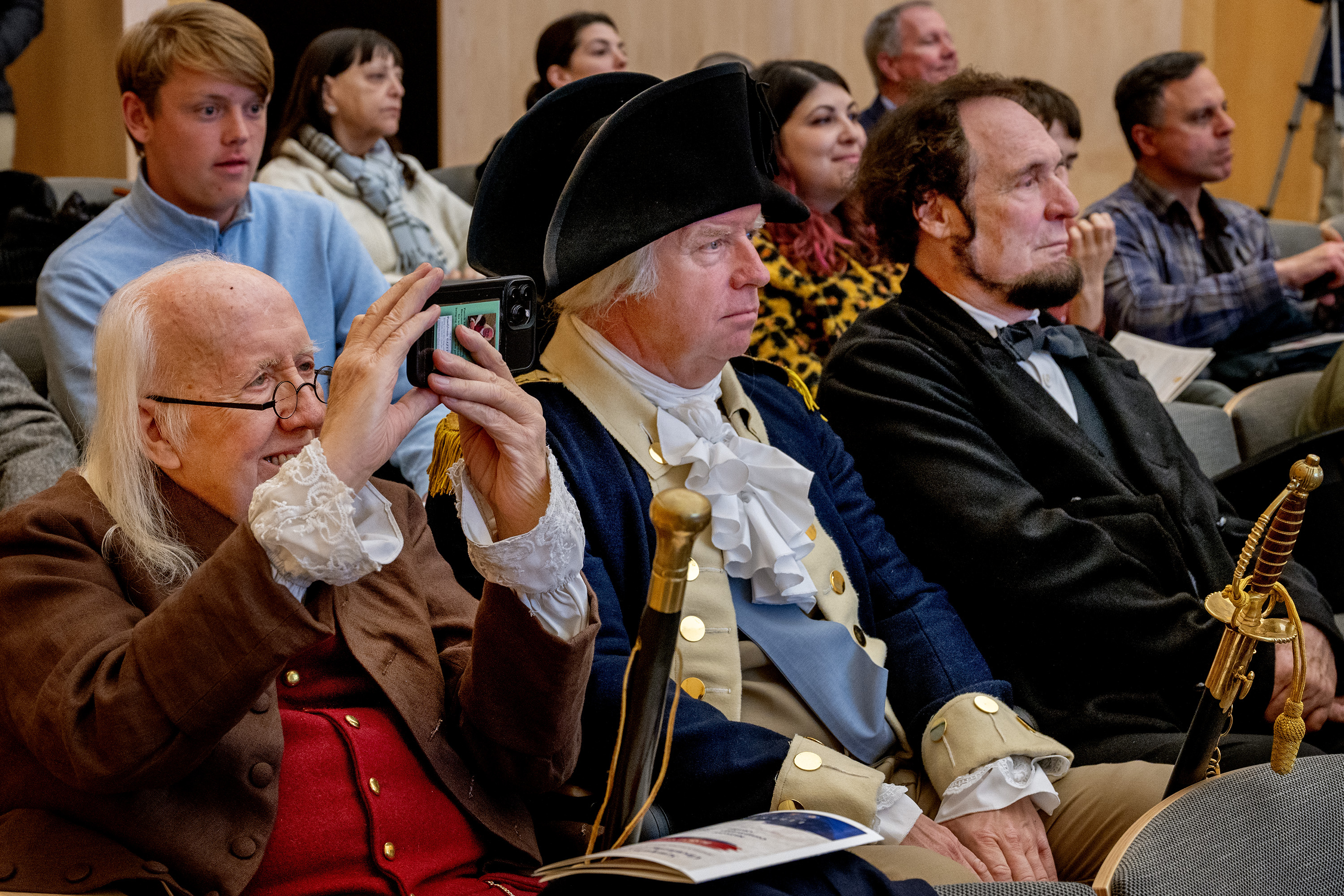
Historical interpreters Benjamin Franklin (from left) Gen. George Washington and President Abraham Lincoln are in the audience as the U.S. Mint unveils new coins for America’s 250th birthday.
There isn’t a day that goes by that I am not reminded how photography is all about the timing. And I don’t mean just the 1/500th of a second your camera shutter is open.
There is an expression “f/8 and be there” often attributed to legendary photographer Arthur “Weegee” Fellig. The “there” has come to mean not fussing over the technical aspects — an f-stop/lens aperture — of taking pictures but instead being “in the moment.”
Weegee, however, meant it literally. He was a New York crime scene photographer in the 1930s and 1940s famous for arriving before the police and made his living getting there and taking a picture before his competition (there were a dozen newspapers and tabloids in Manhattan back then).
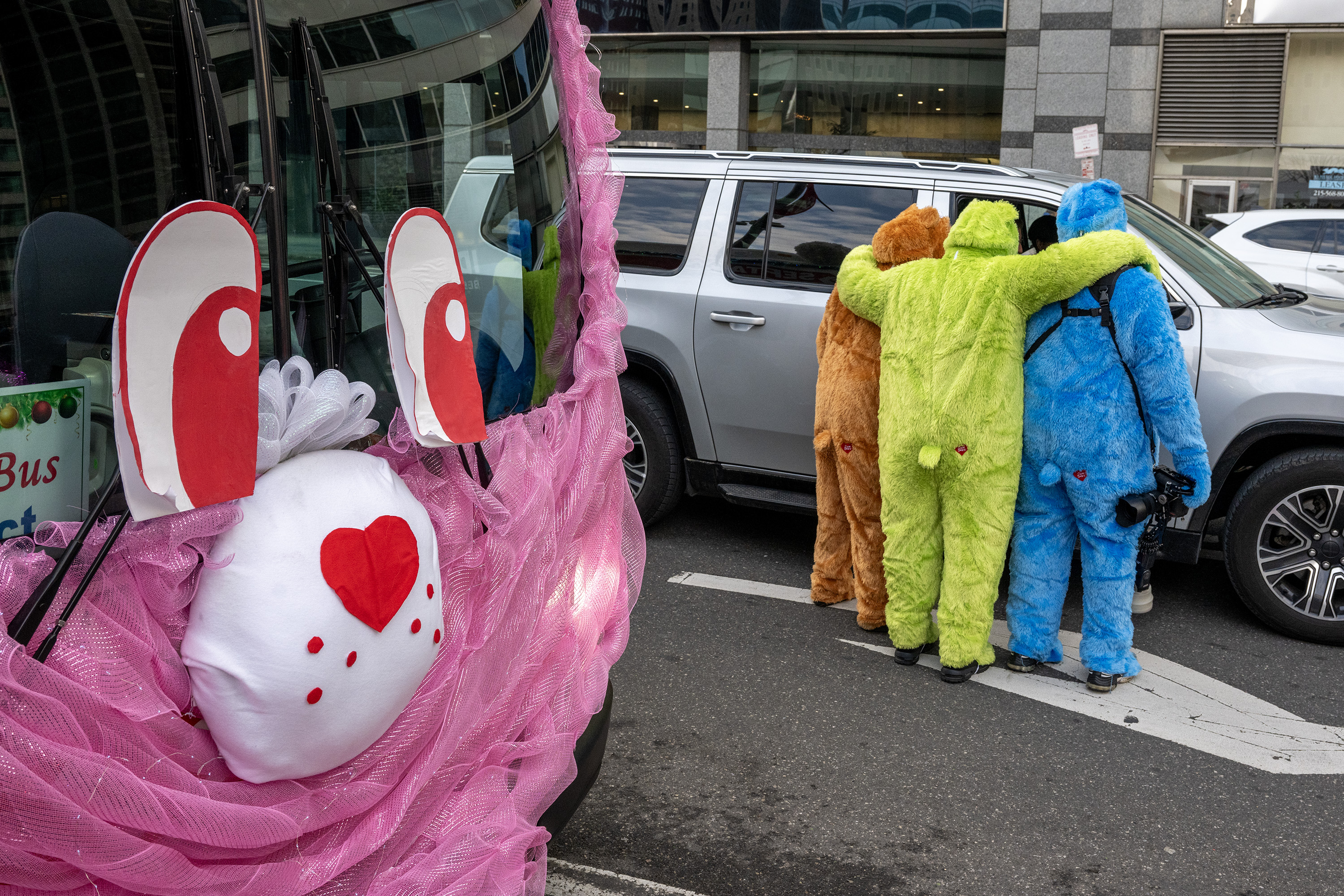
Another “good timing” came for me last Saturday. I was in Center City with my family on my day off. There were so many people in the Christmas Village in LOVE Park we walked along the outskirts, where we found the annual Festibus competition. That’s where SEPTA employees volunteer their time to decorate buses for the holidays and compete for bragging rights. And let riders vote for their favorites among the eight decorated buses parked along JFK Boulevard and 15th Street.
I made a fast photo of SEPTA workers costumed as Care Bears who went over to a passing coworker stopped in traffic. But I couldn’t leave with only a photo of the backsides of mechanic Raymond Borges and operators Jose DeCos and James Smith.
So I stayed behind to document more of their greeting visitors and some of the other buses.
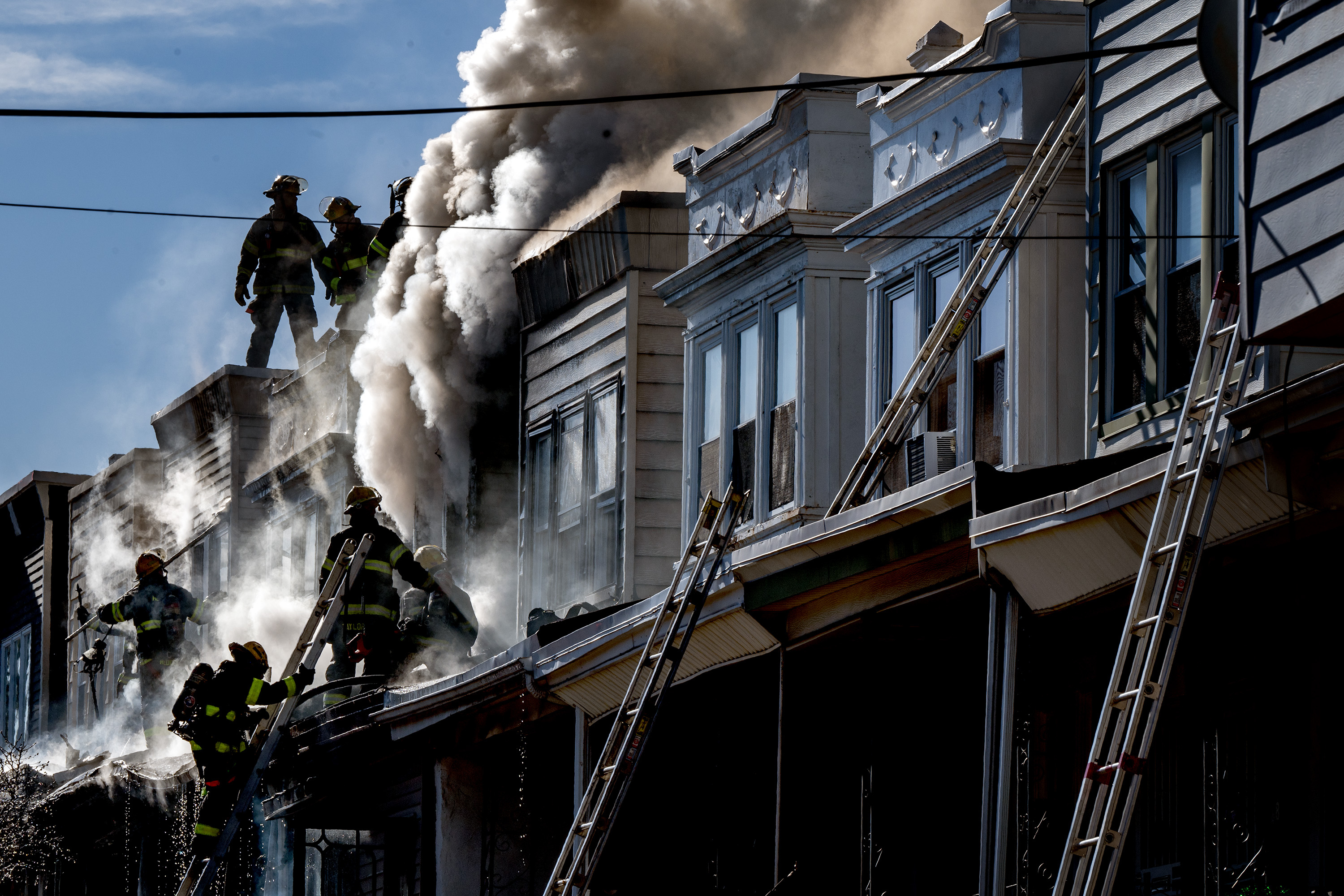
Walking out of the garage where the artists were working, I heard a news helicopter and looked up, then over to see a column of smoke rising to the north.
I got there as firefighters were just starting to climb up to the rowhouse roofs on North Lambert Street.
The fire, near La Salle University, was placed under control within an hour. But sadly, a 70-year-old mother of three did not get out in time and died in the blaze.
Since 1998 a black-and-white photo has appeared every Monday in staff photographer Tom Gralish’s “Scene Through the Lens” photo column in the print editions of The Inquirer’s local news section. Here are the most recent, in color:
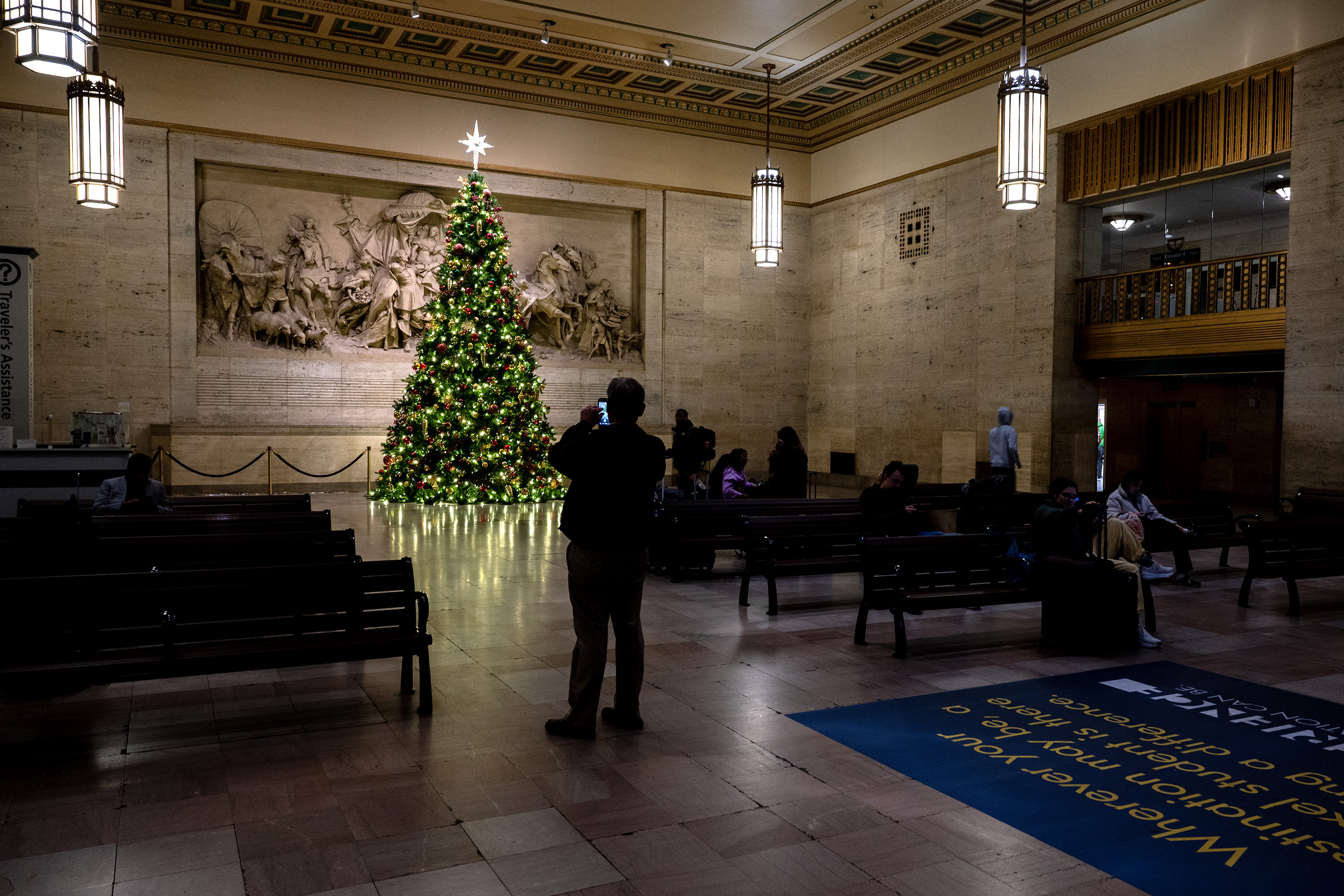
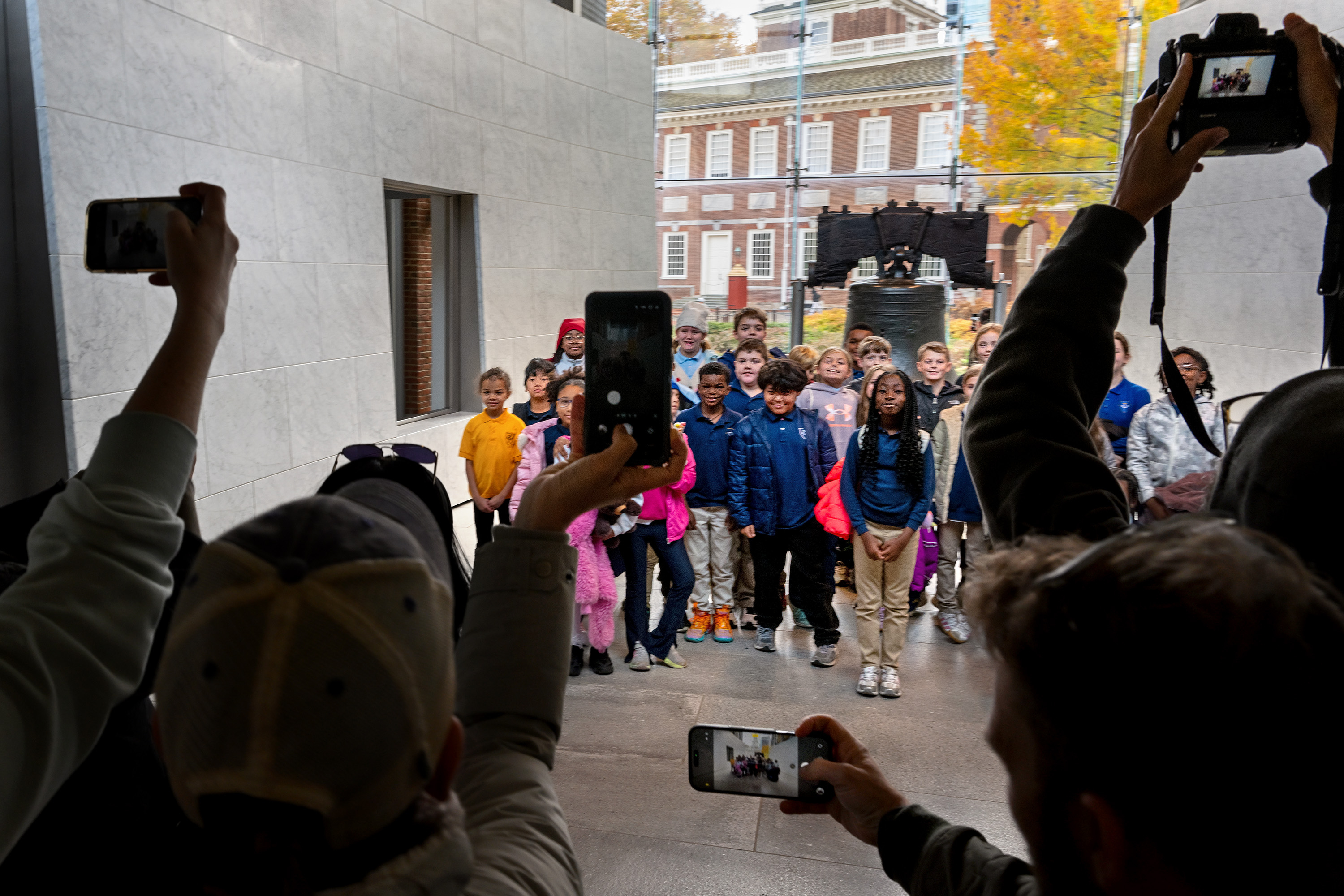
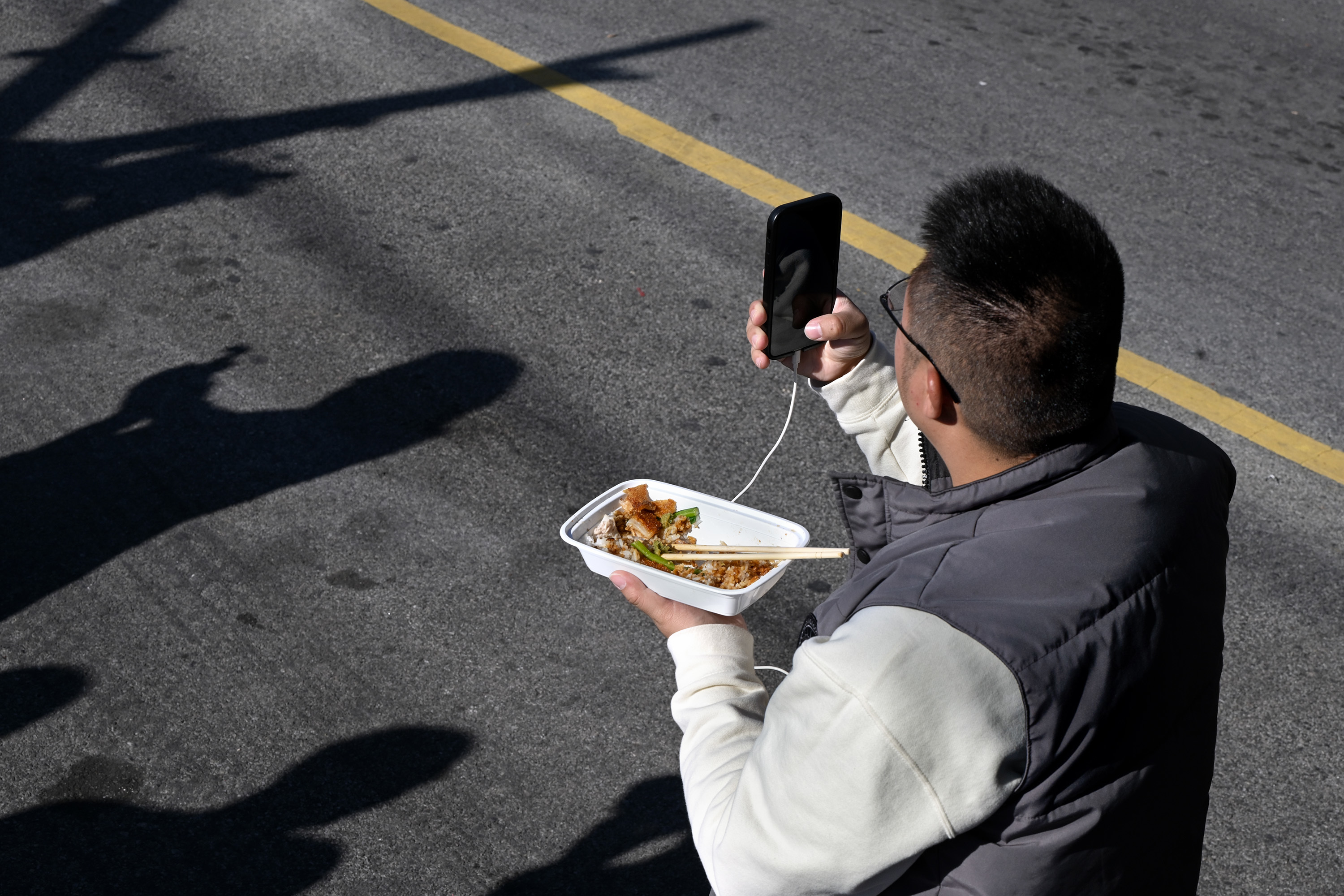
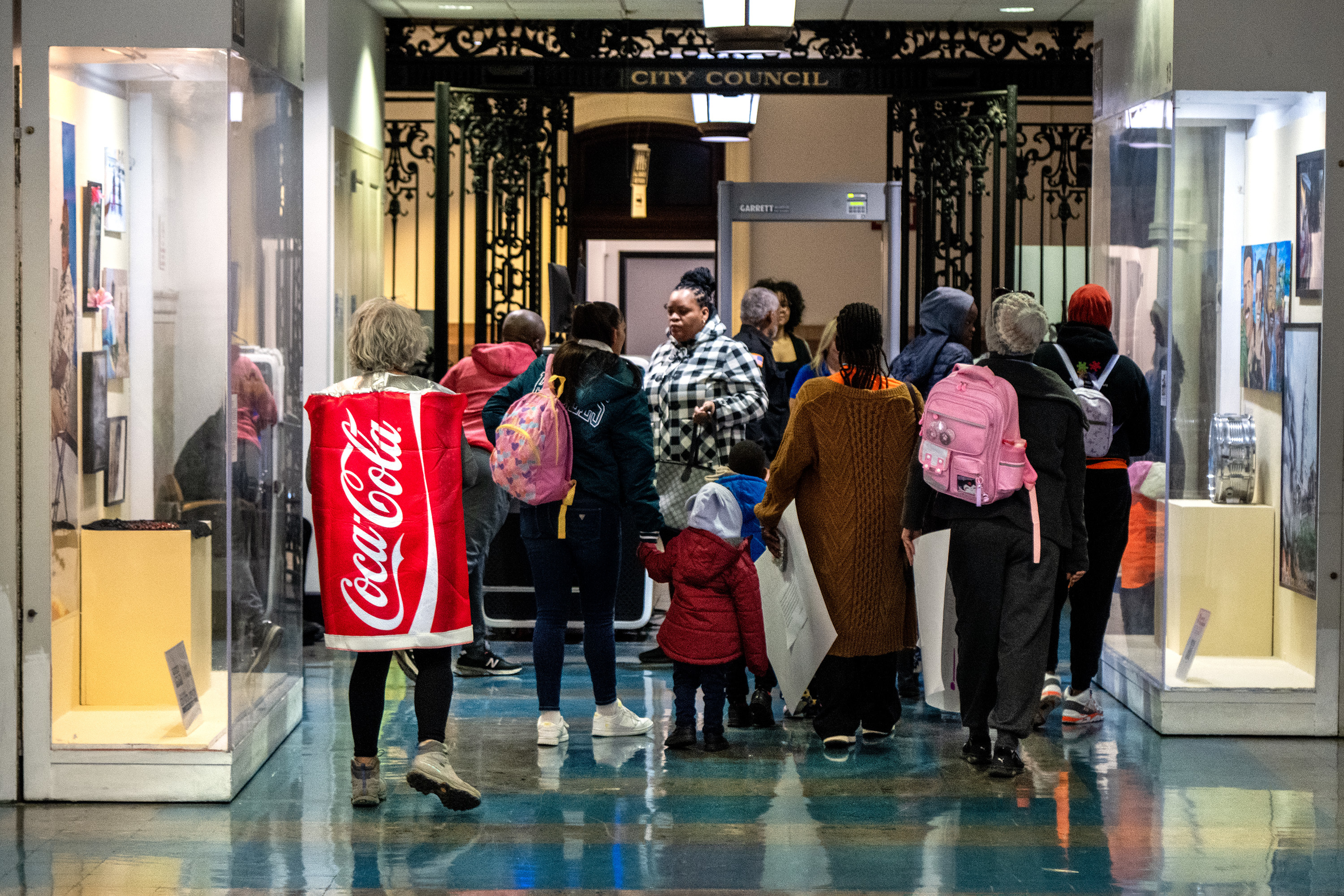
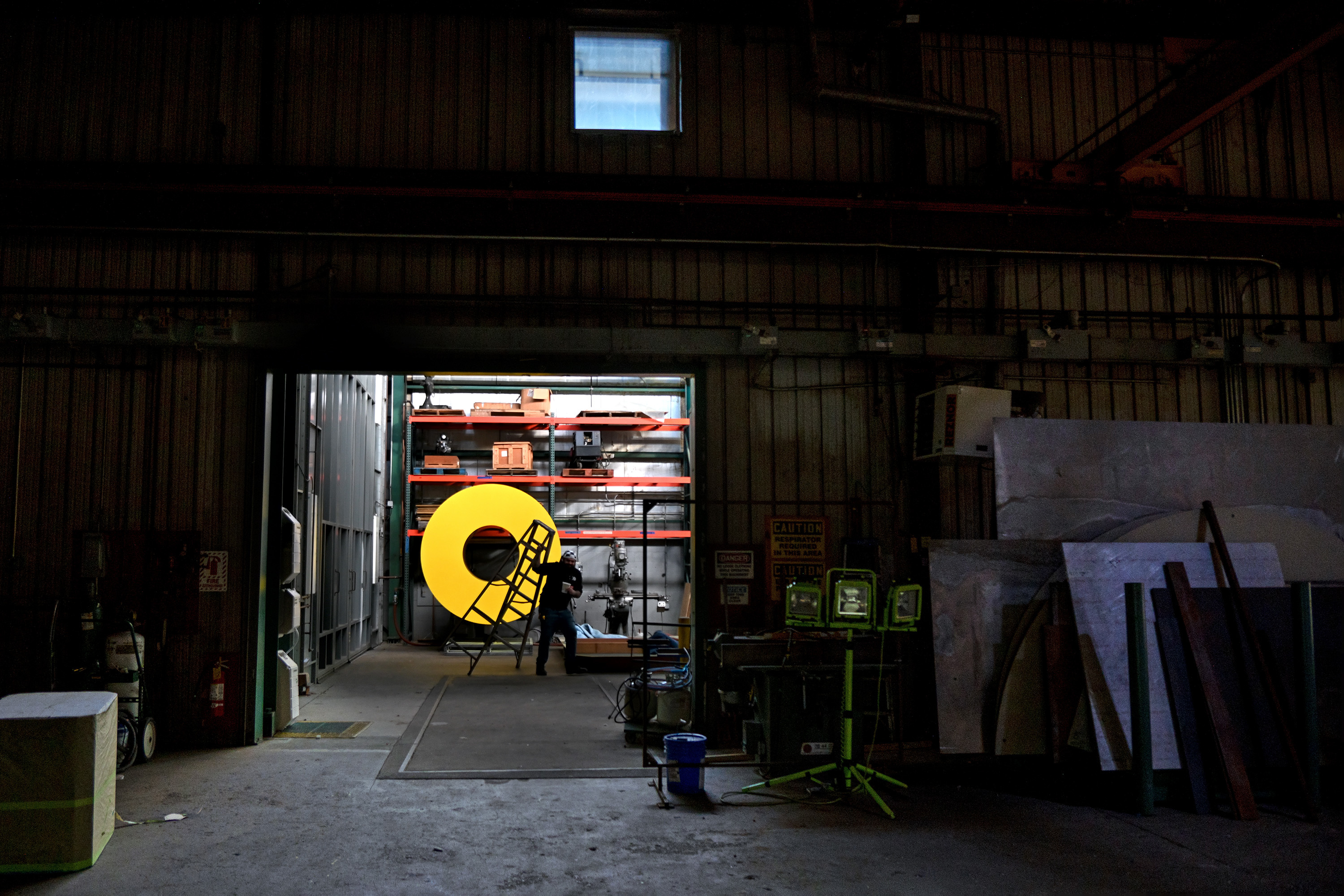
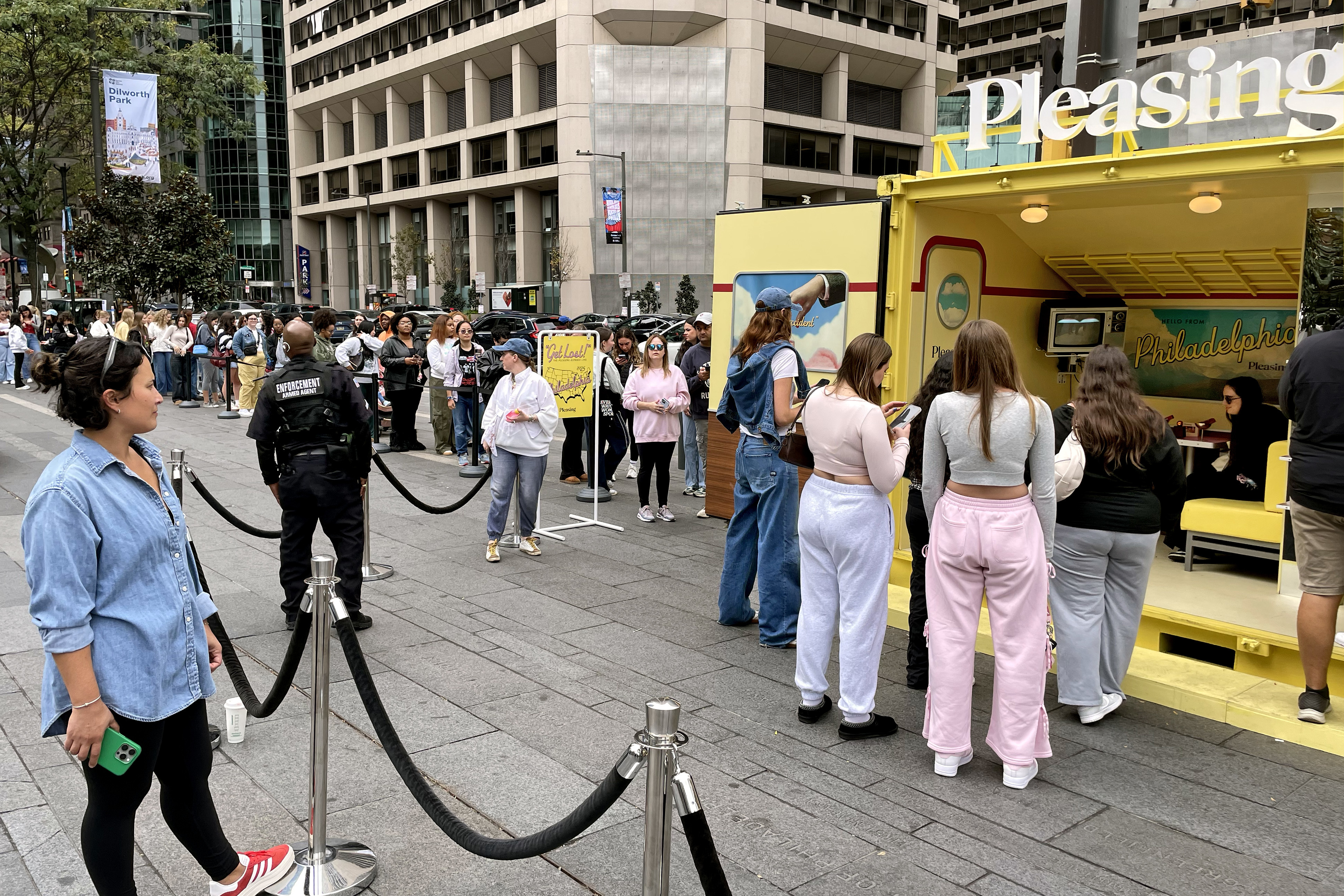
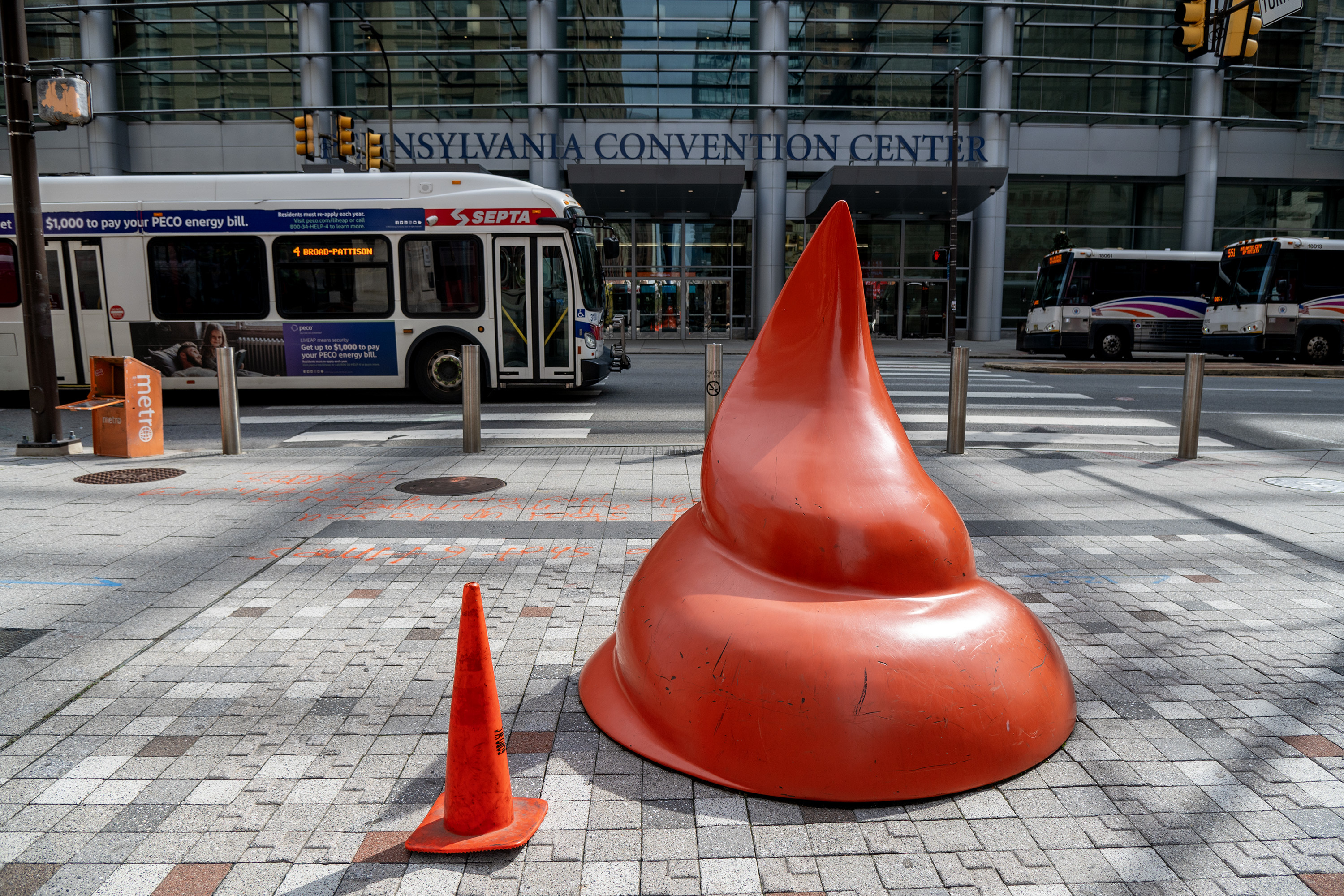
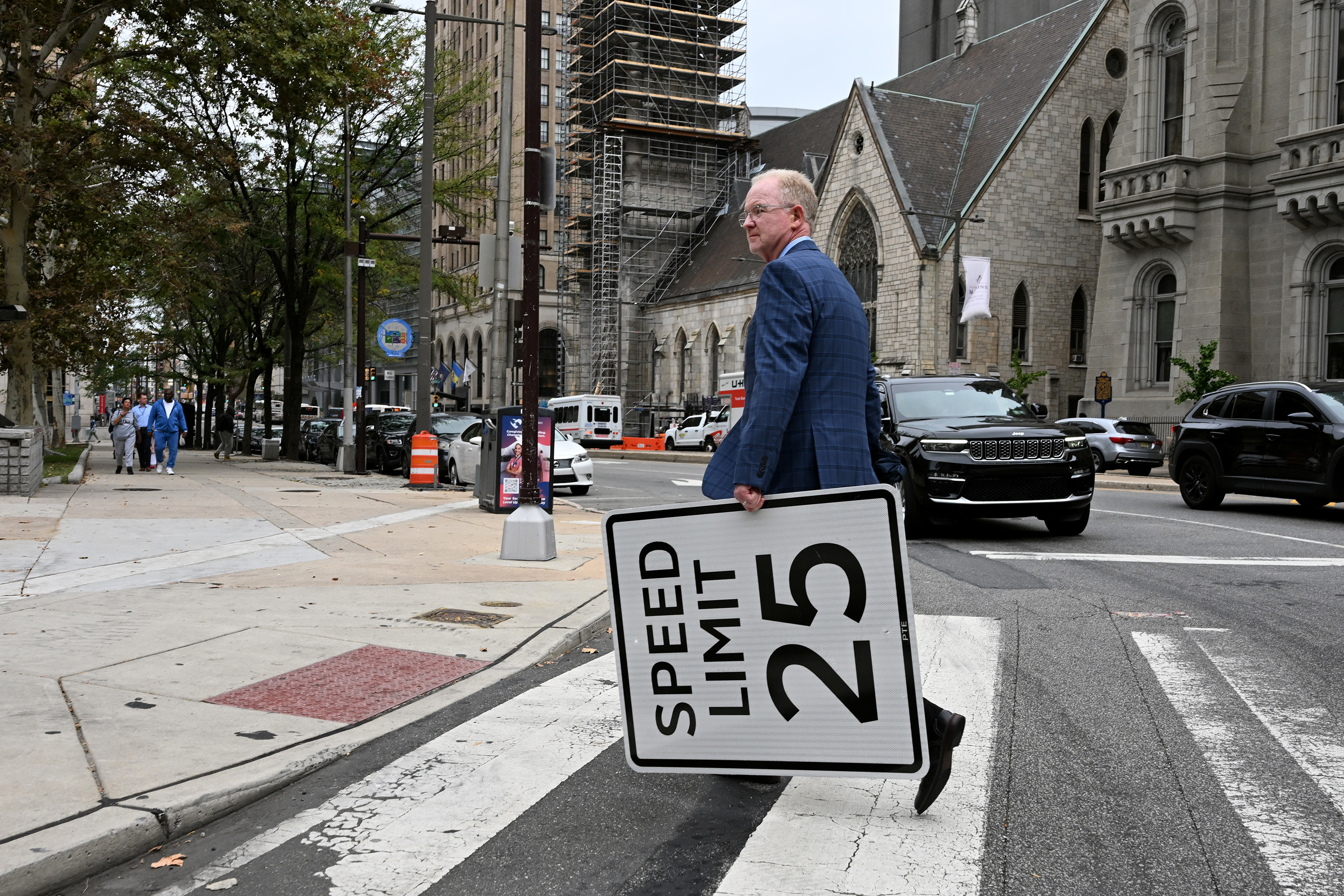
December 8, 2025: The Benjamin Franklin Bridge and pedestrians on the Delaware River Trail are reflected in mirrored spheres of the “Weaver’s Knot: Sheet Bend” public artwork on Columbus Boulevard. The site-specific stainless steel piece located between the Cherry Street and Race Street Piers was commissioned by the City’s Public Art Office and the Delaware River Waterfront Corporation and created and installed in 2022 by the design and fabrication group Ball-Nogues Studio. The name recalls a history that dominated the region for hundreds of years. “Weaver’s knot” derives from use in textile mills and the “Sheet bend” or “sheet knot” was used on sailing vessels for bending ropes to sails. November 29, 2025: t’s ginkgo time in our region again when the distinctive fan-shaped leaves turn yellow and then, on one day, lose all their leaves at the same time laying a carpet on city streets and sidewalks. A squirrel leaps over leaves in the 18th Century Garden in Independence National Historical Park Nov. 25, 2025. The ginkgo (Ginkgo biloba) is considered a living fossil as it’s the only surviving species of a group of trees that existed before dinosaurs. Genetically, it has remained unchanged over the past 200 million years. William Hamilton, owner the Woodlands in SW Phila (no relation to Alexander Hamilton) brought the first ginkgo trees to North America in 1785.November 24, 2025: The old waiting room at 30th Street Station that most people only pass through on their way to the restrooms has been spiffed up with benches – and a Christmas tree. It was placed there this year in front of the 30-foot frieze, “The Spirit of Transportation” while the lobby of Amtrak’s $550 million station restoration is underway. The 1895 relief sculpture by Karl Bitter was originally hung in the Broad Street Station by City Hall, but was moved in 1933. It depicts travel from ancient to modern and even futuristic times. November 17, 2025: Students on a field trip from the Christian Academy in Brookhaven, Delaware County, pose for a group photo in front of the Liberty Bell in Independence National Historical Park on Thursday. The trip was planned weeks earlier, before they knew it would be on the day park buildings were reopening after the government shutdown ended. “We got so lucky,” a teacher said. Then corrected herself. “It’s because we prayed for it.” November 8, 2025: Multitasking during the Festival de Día de Muertos – Day of the Dead – in South Philadelphia.November 1, 2025: Marcy Boroff is at City Hall dressed as a Coke can, along with preschoolers and their caregivers, in support of former Mayor Jim Kenney’s 2017 tax on sweetened beverages. City Council is considering repealing the tax, which funds the city’s pre-K programs. October 25, 2025: Austin Gabauer, paint and production assistant at the Johnson Atelier, in Hamilton Twp, N.J. as the finished “O” letter awaits the return to Philadelphia. The “Y” part of the OY/YO sculpture is inside the painting booth. The well-known sculpture outside the Weitzman National Museum of American Jewish History was removed in May while construction continues on Market Street and has been undergoing refurbishment at the Atelier at the Grounds for Sculpture outside of Trenton.October 20, 2025:The yellow shipping container next to City Hall attracted a line of over 300 people that stretched around a corner of Dilworth Park. Bystanders wondered as they watched devotees reaching the front take their selfies inside a retro Philly diner-esque booth tableau. Followers on social media had been invited to “Climb on to immerse yourself in the worlds of Pleasing Fragrance, Big Lip, and exclusive treasures,” including a spin of the “Freebie Wheel,” for products of the unisex lifestyle brand Pleasing, created by former One Direction singer Harry Styles.October 11, 2025: Can you find the Phillie Phanatic, as he leaves a “Rally for Red October Bus Tour” stop in downtown Westmont, N.J. just before the start of the NLDS? There’s always next year and he’ll be back. The 2026 Spring Training schedule has yet to be announced by Major League Baseball, but Phillies pitchers and catchers generally first report to Clearwater, Florida in mid-February.October 6. 2025: Fluorescent orange safety cone, 28 in, Poly Ethylene. Right: Paint Torch (detail) Claes Oldenburg, 2011, Steel, Fiberglass Reinforced Plastic, Gelcoat and Polyurethane. (Gob of paint, 6 ft. Main sculpture, 51 ft.). Lenfest Plaza at the Pennsylvania Academy of the Fine Arts on North Broad Street, across from the Convention Center.September 29, 2025: A concerned resident who follows Bucks County politics, Kevin Puls records the scene before a campaign rally for State Treasurer Stacy Garrity, the GOP candidate for governor. His T-shirt is “personal clickbait” with a url to direct people to the website for The Travis Manion Foundation created to empower veterans and families of fallen heroes. The image on the shirts is of Greg Stocker, one of the hosts of Kayal and Company, “A fun and entertaining conservative spin on Politics, News, and Sports,” mornings on Talk Radio 1210 WPHT.September 22, 2025: A shadow is cast by “The Cock’s Comb,” created by Alexander “Sandy” Calder in 1960, is the first work seen by visitors arriving at Calder Gardens, the new sanctuary on the Ben Franklin Parkway. The indoor and outdoor spaces feature the mobiles, stabiles, and paintings of Calder, who was born in Philadelphia in 1898, the third generation of the family’s artistic legacy in the city.September 15, 2025: Department of Streets Director of Operations Thomas Buck leaves City Hall following a news conference marking the activation of Automated Speed Enforcement (ASE) cameras on the Broad Street corridor – one the city’s busiest and most dangerous roads. The speed limit on the street, also named PA Route 611, is 25 mph.
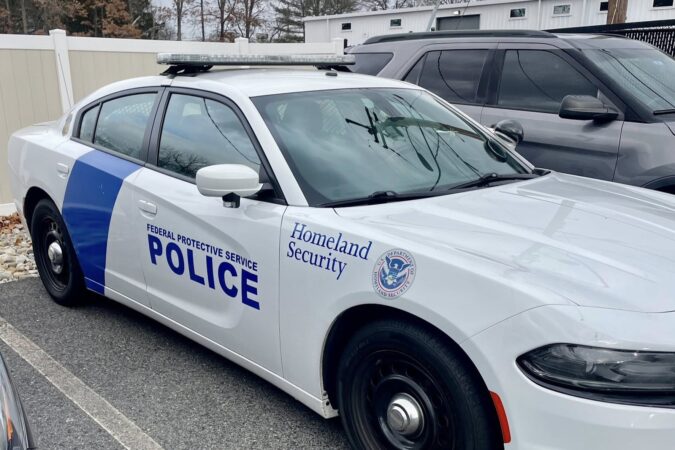
A South Jersey man was charged with impersonating law enforcement after he showed up at a police investigation claiming to work for the U.S. Department of Homeland Security, police in Gloucester County said Friday.
Nicholas M. Cabral, 32, of Sewell, drove in his wife’s marked Homeland Security police vehicle Wednesday afternoon to the scene of a Washington Township police call on the 200 block of Strand Avenue and said he was a Homeland Security police officer, the Washington Township Police Department said.
The police call was for a report that a home under construction had a front door open. The caller was later identified as Cabral, the police department said.
Cabral allegedly attempted to assist officers in clearing the property while holding a handgun. Cabral had a permit to carry the firearm, but the follow-up investigation determined he did not work for any law enforcement agency, the police department said.
The investigation found that the marked Homeland Security vehicle was used by Cabral’s wife, who did work for the agency as a police officer and was out of state on assignment, the township police department said.
The Department of Homeland Security was notified and took possession of the vehicle.
The investigation, using data from automated license plate readers, found that Cabral allegedly had driven the vehicle with its emergency lights activated and also went to a Wendy’s restaurant.
Cabral was charged with impersonating a police officer and possession of a weapon for an unlawful purpose.
The Washington Township Police Department said Cabral was transferred to the Salem County jail and his gun was taken as evidence. Online court records indicated that Cabral was released from custody Friday.
A woman answering the phone at his residence, which is a block from the scene of the police call on Strand Avenue, said Cabral was unavailable and hung up.
Cabral’s attorney could not be reached for comment.
A spokesperson for the Department of Homeland Security also could not be reached for comment.
The odds are almost always stacked against a white Christmas around here, but it is looks like the region will experience a white Dec. 14.
The National Weather Service on Friday said Philadelphia was all but certain to get at least an inch of snow during the weekend, with a general 2 to 4 inches expected, said Joe DeSilva, a meteorologist in the Mount Holly office.
The weather service issued a winter-weather advisory for the entire region from 7 p.m. Saturday through 1 p.m. Sunday.
A storm forming along an Arctic front combined with a strung idsturbance in the upper atmosphere were forecast to begin shaking out snowflakes very late Saturday night or early Sunday. It’s possible that the snow may be mixed with rain, at least at the outset, especially south and east of the city.
And while this may be shocking, computer models continue to tweak outcomes, leaving “still a little bit of uncertainty how this low is going to track,” said DeSilva’s colleague Eric Hoeflich.
However, recent model runs overall have been a shade more bullish on snow amounts than they had been, and the U.S. model has bumped up amounts slightly, said DeSilva.
Timing and duration issues remained to be resolved, and snow could cause commuting issues in the morning. In addition to church-goers, tail-gaters will be commuting commuting to the Eagles game at Lincoln Financial Field in South Philly, and supermarkets typically experience brisk traffic in the run-up to Eagles’s games.
The snow, however, is forecast to end well before kickoff at the Linc, scheduled for 1:15 p.m., DeSilva said.
Some flakes were evident Thursday in the region, with Philadelphia International Airport, where winds gusted past 30 mph, reporting its third “trace” of the season.
The renegade flakes were flying from lake-effect snows, said Bill Deger, senior meteorologist with AccuWeather Inc.
The winds have shut off, and both Friday and Saturday were expected to be tranquil with daytime temperatures mostly in the 30s.
And this time, that holiday least-favorite, the “wintry mix,” wouldn’t be in the mix.
How much snow for Philly?
AccuWeather Inc. was calling for up to 3 inches.
If the storm is a quick mover, expect the inch, but if slows down and ripens a bit, it could be as much as 3, said AccuWeather senior meteorologist Bill Deger.
The weather service was pretty much on board with that estimate.
It painted 3 nches for Philly on its Friday morning snow map.
One near-certainty: This will change.
What time would the snow start?
It is likely to begin very late Saturday night or very early Sunday and continue until mid- or late morning, forecasters say.
Temperatures throughout the day are not expected to get past 30, with wind chills in the teens.
It might feel even colder if the Eagles lose to the lowly Las Vegas Raiders.
Regardless, everyone should be able to make it home.
“We’re not talking a major snowstorm,” Hoeflich said.
But this would be something a little bit different compared with recent local snow history.
Hoeflich noted that, as happened last winter, generous snow has fallen to the north, south, and west, leaving “a giant snow hole” over the Philadelphia area.
But bills proposed in the House by U.S. Rep. Chuck Fleischmann (R., Tenn.) and in the Senate by U.S. Sen. John Kennedy (R., La.) appear to still fall woefully short of what is needed, a coastal advocacy group says. U.S. House Rep. Jeff Van Drew, however, believes there will be adequate funding.
Dan Ginolfi, executive director of the American Coastal Coalition, an advocacy group for coastal communities and beaches, said the current best case would be the Senate bill, which proposes to spend $62.2 million. The House bill proposes $23 million.
However, both proposals fall short of the approximately $200 million needed to fund approved projects in various states that received no money last year, he said.
Any approvedmoney would go to the U.S. Army Corps of Engineers, which would choose which beach erosion projects to manage.
In New Jersey, projects set for Cape May, Stone Harbor, Avalon, Sea Isle, Strathmere, Ocean City, and Long Beach Island have been stalled because of the lack of funding. So, too, have projects in Maryland, Delaware, Georgia, and Florida.
That means “the level of risk in New Jersey right now is unacceptable,” Ginolfi said.
He noted that it’s not only beaches at risk, but homes, businesses, public property, and infrastructure.
“It really is imperative that the federal and state government work together to achieve a solution,” he said.
Ginolfi noted that coastal communities in the U.S. generate $36 billion in federal and state tax revenue. So he sees $200 million as a good return on investment.
He said his numbers for potential beach replenishment projects in the bills were confirmed with appropriations committees in both the House and Senate.
However, the office of Van Drew, a Republican who represents many New Jersey beach communities, said the coalition’s numbers “misrepresent the true amount of funding available.”
Paxton Antonucci, a spokesperson for Van Drew, said there is actually $166 million available in the House bill “for costs associated with shore protection like beach replenishment, which is the typical amount.”
He said that number will come close to $200 million “after we compromise with the Senate.”
In reality, Van Drew said, most beach replenishment funding comes from outside the regular budget process. He has actively sought such money.
In October, Van Drew wrote to the Army Corps, requesting that it “activate disaster recovery authorities … to repair shore protection projects at the Jersey Shore, in response to damages caused by Hurricane Erin and by the recent nor’easter over the weekend of Oct. 10-12.”
And he wrote to Gov. Phil Murphy and Gov.-elect Mikie Sherrill this week urging that New Jersey declare a state of emergency to secure federal money “for the severe coastal erosion and storm damage affecting the Jersey Shore.”
Van Drew said the Shore has been battered since July by “intense wind, wave, and water impacts from storm events including Hurricane Erin, Hurricane Imelda, offshore Hurricane Humberto, and a succession of destructive nor’easters.”
He said the result has been “significant dune loss, beach profile collapse, and damage to public infrastructure in multiple municipalities.”
The American Coastal Coalition has faulted Murphy’s office for failing to request disaster repair projects from the Army Corps in the wake of the storms.
However, Murphy’s office said the storms this year did not meet financial thresholds needed to qualify for major federal disaster declarations.
In addition, the office said that, even if they did, replenishment projects at Army Corps-engineered beaches are not routinely eligible for Federal Emergency Management Agency reimbursement.
Rather, the office blamed Congress for putting forth a budget that cut beach replenishment projects, and said that blue states are a target of the Trump administration.
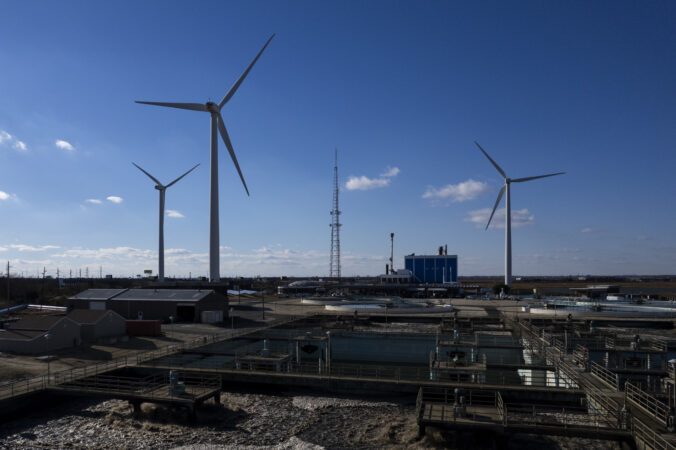
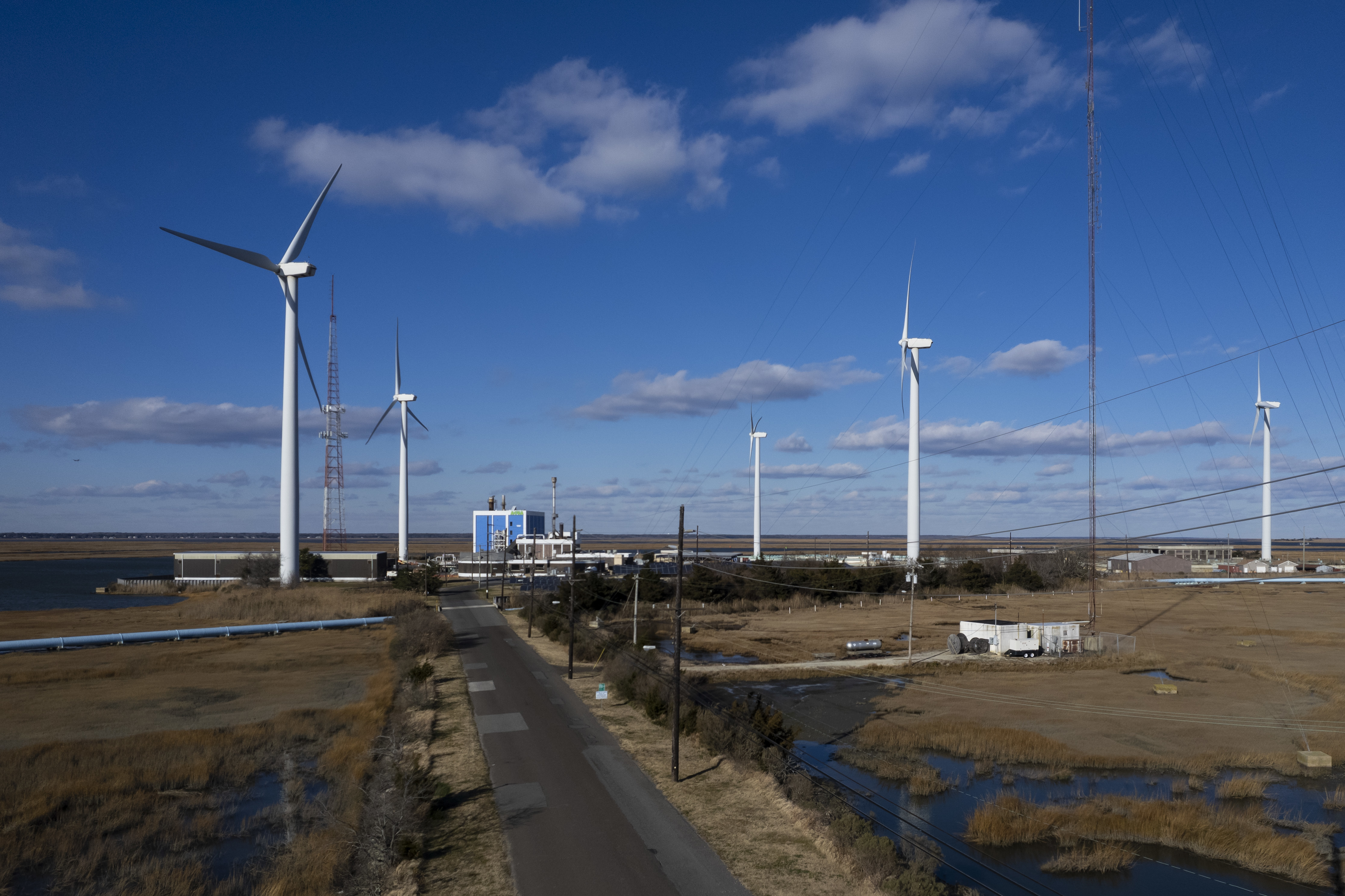
Blustery winds propelled the giant blades of five turbines at the Jersey-Atlantic Wind Farmon a recent day. Set on a back bay island, they were once contested over fears of noise, aesthetics, and worries of threats to Shore birds.
But two decades later, they have emerged as a spinning landmark to Atlantic City.
The 380-foot turbines silently rotate in clear view of motorists streaming to casinos. Some visitors have even requested hotel rooms facing the structures, which are taller than the Statue of Liberty.
The embrace of the land-based wind farm contrasts sharply with the more recently divisive battle over offshore wind projects, an effort stalled by economics and the Trump administration.
Together, the Jersey-Atlantic Wind Farm turbines produce 63% of the energy for the Atlantic County Utilities Authority’s wastewater treatment plant, which serves 14 municipalities. Officials calculate the farm has saved ratepayers $8.8 million since its grand opening on Dec. 12, 2005.
It is one of only two wind farms operating in New Jersey. The other is a much smaller farm in Bayonne.
“This was a total home run for everybody involved,” said Richard Dovey, president of the ACUA at the time it was built. “It’s been nothing but successful, environmentally and economically … [an] inspiration for many other entities, whether they’re public or private.”
How the wind farm came to be
The idea for a wind farm near Atlantic City came from a worker in the energy industry who passed the idea onto Dovey in the early 2000s. With Dovey’s help, it picked up support in former Gov. Jim McGreevey’s administration.
Dovey believed in renewable energy and thought it could power the ACUA’s regional wastewater treatment plant on City Island in Absecon Bay, about two miles from the Atlantic Ocean. He thought Atlantic City’s ample breezes from land and seawould make it an ideal location.
Atlantic City’s ample breezes from land and sea made an ideal location for a wind farm.
Community Energy Inc., a developer of wind power based in the Philadelphia suburbs, played a significant role in the project’s development and received a $1.7 million grant from the New Jersey Board of Public Utilities.
The New Jersey Sierra Club backed the project.
Construction began in mid-2005. The project cost $12 million and included driving pilings into an island of upland surrounded by wetlands and installing intricate concrete bases to support the turbines made by GE.
Currently, the wind farm is owned by Texas-based Leeward Energy. Leeward rents the land for the wind farm from ACUA.
In return, ACUA has a 20-year agreement to purchase the power produced by the turbines from Leeward for 7.9 cents a kilowatt-hour, which was cheap even then. Now, the rate is about half the market rate for energy.
It has helped ACUA keep some of the lowest sewer rates in the state.
However, that agreement is expiring, and the two sides are in negotiations to renew a contract, which could change the rate the ACUA pays for its wind power.
window.addEventListener(“message”,function(a){if(void 0!==a.data[“datawrapper-height”]){var e=document.querySelectorAll(“iframe”);for(var t in a.data[“datawrapper-height”])for(var r,i=0;r=e[i];i++)if(r.contentWindow===a.source){var d=a.data[“datawrapper-height”][t]+”px”;r.style.height=d}}});
Community concerns
Initially, the wind farm faced resistance. Residents in the neighboring Venice Park section of Atlantic City were concerned primarily about potential noise from the turbines.
To allay their fears, Dovey organized a bus trip that took residents to visit a wind farm in Somerset County in Pennsylvania.
“Their major concern was noise,” Dovey, now 73, recalls. “We drove literally underneath the turbine. One neighborhood leader took one step out and said my air conditioner is louder than this; let’s go home. They thought the turbines were beautiful, even inspiring.”
In addition, there were apprehensions regarding how the turbines would affect birds and marine life. The wind farm is just below the Edwin B. Forsythe National Wildlife Refuge, a 48,000-acre area of coastal habitat. New Jersey Audubon agreed to monitor the impact on the bird population as part of its support for the project.
According to the ACUA, a three-year study by NJ Audubon found “a small number of bird deaths which could be attributed to collisions with turbines.” It found more fatalities were caused by raccoons, feral cats, and collisions with wires and trucks.
People were also concerned about the visual impact, fearing they might spoil scenic views, affect property taxes, and hurt tourism. However, the wind farm has since become an iconic part of the landscape.
The concerns were part of a broader debate at the time regarding the emerging push among some New Jersey leaders for offshore wind farms, which had faced a moratorium by the state.
Even though the moratorium was lifted, and Gov. Phil Murphy backed a large offshore wind program that would have powered millions of homes, the debate continued. This year, President Donald Trump issued an executive order to stop offshore wind, making any project in the near future unlikely.
However, a federal judge recently ruled that Trump exceeded his authority with the order, a ruling the administration is likely to challenge. It is unclear whether renewable energy companies still have the political will for a renewed push to build an offshore wind farm off the coast of New Jersey.
Taking advantage of wind
The Jersey-Atlantic Wind Farm is an example of how wind power can work, even if on a smaller scale. The farm is ideally located because of consistent land and ocean breezes. If winds exceed 45 mph, the turbines, each equipped with a weather station, switch off to protect the machinery. That happens only a few times a year.
Matt DeNafo, current president of the ACUA, says the wind farm has been a “huge project” for his organization. The ACUA is operating a pilot project that would store energy captured by the turbines in a battery. A solar array on site also provides about 3% of the facility’s power.
DeNafo said the arrangement with Leeward brought significant economic stability through the 20-year fixed rate. He said it allows the agency to offer the lowest wastewater rates in the region.
At the same time, the ACUA does not have to pay for maintenance of the turbines, while still collecting rent from Leeward.
If winds exceed 45 mph, the turbines, each equipped with a weather station, switch off to protect the machinery.
“It’s really been a great partnership for us. It’s been a beacon for our organization,” DeNafo said. One casino was “getting a lot of requests for windmill-view rooms because it’s got a calming effect.”
Harrah’s, MGM, and Borgata casino hotels all are in view of the windmills.
Amy Menzel, a spokesperson for the ACUA, said summer tours of the wind farm and treatment plant are popular.
“We give open house tours in the summer on Wednesdays,” Menzel said. “People can just drop in. We have a lot of curious people who are visiting the Shore. The tours are really a mix of locals and out-of-town visitors, people who just want to get a little closer and learn more.”
Editor’s note: This article has been corrected to note that the wind farm is on an upland, not a wetland.
With the region in the grips of bitter cold, New Jersey Gov. Phil Murphy on Thursday declared a state of emergency due to “anticipated impacts on the delivery of propane” for homes and businesses because of a service disruption at a Delaware County distribution facility.
The declaration allows operators of commercial vehicles transporting propane to drive for 14 hours instead of the normal limit of 11 hours before taking the mandatory 10 hours of off-duty after a shift.
“I am declaring a State of Emergency to ensure that the approximately 186,000 New Jerseyans who rely on propane for home heating purposes can receive it without interruption. This Executive Order expands delivery capabilities to keep homes heated and families secure,” Murphy said in a statement.
The declaration, which takes effect 9 a.m. Friday, will remain in effect until Murphy determines that the emergency no longer exists, according to the governor’s executive order containing the declaration.
The rules for commercial truck driving are governed by the Federal Motor Carrier Safety Administration, but a federal waiver is available during a declared state of emergency, according to the executive order.
The National Propane Gas Association said on its website that an electric transformer at the Marcus Hook Terminal on Nov. 19 “suffered an incident which disabled the propane truck-loading rack for three days, and created lingering problems at the terminal.”
Energy Transfer Partners, which operates the terminal, has been unable to pump propane from its storage cavern, the association said.
“Wait times at the terminal have been increasing, and given that the terminal is loading directly from the pipeline, the time to load is taking longer than normal,” the association said, adding later that the timing for repairs is uncertain.
A representative for Energy Transfer could not be reached for comment Thursday evening.
Bancroft, a South Jersey nonprofit provider of services for people with intellectual and developmental disabilities, has hired Gregory Passanante to succeed Toni Pergolin as president and CEO.
Passanante, who will be the 10th president in the organization’s 143-year history, is scheduled to start Jan. 7.
Since 2023, Passanante has been northeast market administrator for Shriners Children’s Hospital Philadelphia. Before that, he was chief nursing officer at Wills Eye Hospital.
Passanante will take over a Cherry-Hill-based organization that is in solid financial condition, especially compared to 2004 when Pergolin arrived as chief financial officer and had to worry about making payroll because the organization was so weak financially.
In the 12 months that ended June 30, the nonprofit had operating income of $13 million on $284 million in revenue, according to its audited financial statement. Bancroft had 1,642 clients and employed 2,853 people on a full-time basis at the end of the fiscal year.