It’s a longstanding question: Where does South Jersey start? Is the dividing line the same as where Eagles fans stop and Giants fans begin? Is it based on your area code? Is there someother sign that you’ve crossed from the North to the South?
The Inquirer is posing that very question to readers, along with one other hotly debated item: Is there such a thing as Central Jersey?
A high-end gym is taking over the former Buy Buy Baby space in the Ellisburg Shopping Center. Club Studio Fitness is expected to open a 30,240-square-foot gym in spring 2027. Club Studio Fitness, the boutique-style gym from parent company LA Fitness, is known for its premium amenities like cryotherapy and red-light therapy, a juice bar, stretch stations, and locker rooms, in addition to its fitness and wellness offerings. Memberships at Club Studio Fitness’ only other New Jersey location, in Edgewater, range from $189 to $249 per month.
In honor of Martin Luther King Jr. Day, the township is hosting two service events in the coming week. On Sunday from 1 to 4 p.m., volunteers will help with trail maintenance throughout Croft Farm. And on Monday, kids 11 to 17 can participate in a youth leadership workshop with the police department. Advanced registration is required.
Two Cherry Hill residents are among the 2026 Martin Luther King Jr. Freedom Medal recipients, awarded by Camden County. Artist Giselle Brown and Col. Ted Gallagher, director of veterans affairs for Camden County, will be recognized alongside nine other recipients next Wednesday. Brown is a 17-year-old whose work has been recognized at the local, state, and national level, and Gallagher is a decorated 28-year military veteran who went on to work at the U.S. Department of Health and Human Services before joining the county.
Broadway show Suffs is currently in town and has two South Jersey connections, one far less obvious than the other. The touring musical, which is at the Academy of Music through Sunday, was created by playwright, composer, and actor Shaina Taub, whose mother is a Cherry Hill native. It follows the suffrage movement and centers on South Jersey Quaker activist Alice Paul, who was born in Mount Laurel. The Inquirer’s Rosa Cartagena dives into what inspired the Tony Award-winning production.
Washington, D.C.-based Cozen O’Connor Public Strategies has named a new principal to its Cherry Hill office. Braxton Plummer will help grow the government relations firm’s practice throughout New Jersey and the region.
Park Royal Orthodontics recently opened at 921 Haddonfield Rd. at Towne Place at Garden State Park. The practice offers orthodontic care for all ages.
A clarification: We notedin last week’s newsletter thatAppliances Outlet will be moving into the space occupied by Whole Hog Cafe and Wine Legend. Appliances Outlet will only take over part of the space, and neither of the current businesses are slated to close.
🏫 Schools Briefing
There are no classes Monday for Martin Luther King Jr. Day.
There will be a preschool information session next Wednesday at 6:30 p.m. at West’s new auditorium.
Chick’s Deli got a shout-out from BestofNJ.com as one of the best sandwich shops in New Jersey. The website noted specialty sandwiches like the chicken cheesesteak with broccoli rabe and sharp provolone “really shine.” It also suggested trying the mushroom cheesesteak.
🎳 Things to Do
♒ Napkin Wars: Battle of the Zodiac!: Represent your zodiac sign during this fun “napkin war” party, where three DJs will spin tunes. ⏰ Saturday, Jan. 17, 9 p.m.-2 a.m. 💵 $19.03 📍 Vera
👩⚕️ Game Plan for Wellness: Jefferson Cherry Hill Hospital’s community health expo will include wellness stations and tables, healthcare screenings, cooking and exercise demos, and more. ⏰ Sunday, Jan. 18, 11 a.m.-2 p.m. 💵 Free 📍 Jefferson Cherry Hill Hospital
🧁 Valentine’s Day Cupcake Decorating: Registration opens tomorrow for this event geared toward kids in sixth through 12th grade. ⏰ Sunday, Feb. 8, 2-3:30 p.m. 💵 Free 📍 Cherry Hill Public Library
The kitchen island has cabinetry which contrasts with the slate-gray cabinets throughout the rest of the space.
Located in the Olde Springs neighborhood, this four-bedroom, three-and-a-half bathroom home blends classic and modern design elements. Its first floor features include a dining room, a multipurpose room with a tiled fireplace, a laundry and mudroom, and an open-concept kitchen and living room. The kitchen has a large island with white cabinetry that contrasts with the slate-gray cabinets throughout the rest of the space and matches the subway tile backsplash. It opens into a two-story living room. The bedrooms are upstairs, including a primary suite with a double vanity and soaking tub.
By submitting your written, visual, and/or audio contributions, you agree to The Inquirer’s Terms of Use, including the grant of rights in Section 10.
This suburban content is produced with support from the Leslie Miller and Richard Worley Foundation and The Lenfest Institute for Journalism. Editorial content is created independently of the project donors. Gifts to support The Inquirer’s high-impact journalism can be made at inquirer.com/donate. A list of Lenfest Institute donors can be found at lenfestinstitute.org/supporters.
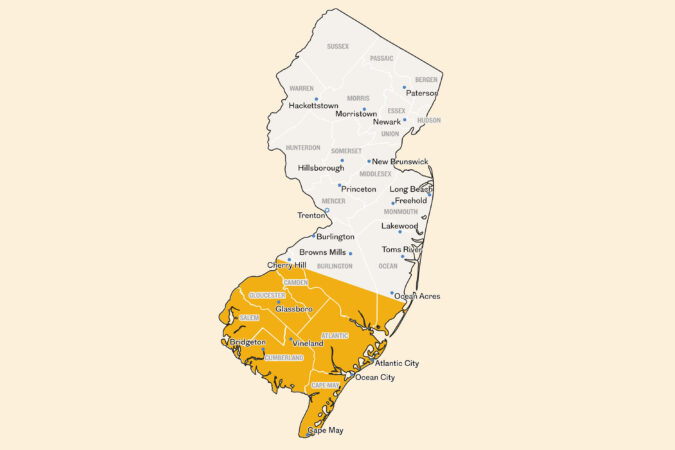
We’ve asked where South Philly starts, and about the Eagles-Steelers divide, but now it's time to answer an even more controversial question: Where does South Jersey end and North Jersey begin?
It’s a toughie, even entire movies have tried to answer this question. Is it just Eagles country vs. Giants country? Or maybe area code based? Turnpike exits? Or just simple geography of towns and counties? We want to hear from you.
story continues after advertisement
Use the sliders below to draw the dividing line. Submit your pick and see how other Inquirer readers voted.
The Rest of New Jersey
Central Jersey
South Jersey
You think South Jersey includes south_city_marker.
If we averaged out the votes from Inquirer readers, South Jersey would include south_city_average.
We’re not done yet, though. Now you’ve told us where South Jersey starts, we have another question for you: If it exists, where does Central Jersey start?
selection_answer
Of those that voted, central_votes believe there is a Central Jersey. The average Inquirer reader placed north_city_average in North Jersey and central_city_avg in Central Jersey.
Thank you for taking our quiz. If you want to weigh in more (like Pork Roll or Taylor Ham) let us know!
Staff Contributors
Design, Development, and Reporting: Garland Fordice
Editing: Sam Morris
Copy Editing: Brian Leighton
Illustration: Julia Duarte
(()=>{var Ft=(t,e)=>()=>(e||t((e={exports:{}}).exports,e),e.exports);var at=Ft(p=>{var Ot={0:”Jan.”,1:”Feb.”,2:”March”,3:”April”,4:”May”,5:”June”,6:”July”,7:”Aug.”,8:”Sept.”,9:”Oct.”,10:”Nov.”,11:”Dec.”};function rt(t){return t===void 0&&(t=new Date),Ot[t.getMonth()]}var Ct={0:”Jan”,1:”Feb”,2:”Mar”,3:”Apr”,4:”May”,5:”Jun”,6:”Jul”,7:”Aug”,8:”Sep”,9:”Oct”,10:”Nov”,11:”Dec”};function ot(t){return t===void 0&&(t=new Date),Ct[t.getMonth()]}function S(t){return t==null}function lt(t){return typeof t==”number”&&isFinite(t)}function O(t){return lt(t)&&Math.floor(t)===t}var Nt=[“one”,”two”,”three”,”four”,”five”,”six”,”seven”,”eight”,”nine”],It=[“million”,”billion”,”trillion”,”quadrillion”,”quintillion”,”sextillion”,”septillion”,”octillion”,”nonillion”,”decillion”],it=[“th”,”st”,”nd”,”rd”,”th”,”th”,”th”,”th”,”th”,”th”],Dt=[11,12,13];function ct(t){if(S(t))return””;var e=+t;return O(e)?Dt.indexOf(e%100)>-1?it[0]:it[e%10]:””}var Bt=[“first”,”second”,”third”,”fourth”,”fifth”,”sixth”,”seventh”,”eighth”,”ninth”],Ht=new RegExp(/s+([^s]*)s*$/);p.apdate=function(t){return t===void 0&&(t=new Date),rt(t)+” “+t.getDate()+”, “+t.getFullYear()},p.apdatetab=function(t){return t===void 0&&(t=new Date),ot(t)+” “+t.getDate()+”, “+t.getFullYear()},p.apmonth=rt,p.apmonthtab=ot,p.apnumber=function(t){if(S(t))return””;var e=+t;return O(e)?e=10?t.toString():Nt[e-1]:t.toString()},p.aptime=function(t){t===void 0&&(t=new Date);var e,s,n=t.getHours(),r=t.getMinutes(),i=r===0;if(i){if(n===0)return”midnight”;if(n===12)return”noon”}return n0?n:12):(e=”p.m.”,s=n===12?n:n-12),i?s+” “+e:s+”:”+(r<10?"0"+r:r)+" "+e},p.capfirst=function(t){if(S(t))return"";var e=String(t);return""+e.charAt(0).toUpperCase()+e.slice(1)},p.intcomma=function(t){if(S(t))return"";var e,s=+t;return lt(s)?((e=s.toString().split("."))[0]=e[0].replace(/B(?=(d{3})+(?!d))/g,","),e.join(".")):t.toString()},p.intword=function(t){if(S(t))return"";var e=+t;if(!O(e))return t.toString();var s=Math.abs(e);if(s<1e6)return t.toString();var n=Math.ceil(Math.log(s+1)/Math.LN10)-1,r=n-n%3,i=e/Math.pow(10,r);return(i=Math.round(10*i)/10)+" "+It[Math.floor(r/3)-2]},p.ordinal=function(t,e){if(e===void 0&&(e=!1),S(t))return"";var s=+t;return O(s)?e&&s{F=F||window.PMNdataLayer,F?F.push({event:”misc_event”,eventAction:t,eventLabel:e}):window.location.hostname.includes(“localhost”)?console.log(“Analytics event:”,t,e,”(not actually being sent due to localhost)”):console.log(“Failed to push analytics event”,t,e)},E={event:(t,e)=>{$t(t,e)}};var et=async(t,e)=>(await fetch(`https://inq-junto.herokuapp.com/${t}`,{method:”POST”,headers:{“Content-Type”:”application/json”},mode:”cors”,body:JSON.stringify(e)})).json(),H=()=>{let e=document.querySelector(“.js-inno”).dataset.junto;if(e)return e;throw new Error(“no junto id found”)},v={getDefaultId:()=>H(),vote:(t,e=H())=>{et(“vote”,{poll:e,ballot:t})},results:async(t=H())=>await et(“results”,{poll:t})};var nt=1,st=[],R=class{constructor(e){this.el=e,this.contentPosition=”default”,this.possibleSteps=new Array,this.currentStep=null,this.offset=window.innerHeight*.9,this.instanceOfSteps=nt,nt++,this.setPossibleSteps()}start(){this.el.classList.add(“is-visible”),this.updateContent(),this.bindings()}setPossibleSteps(){this.el.querySelectorAll(“.js-steps-step”).forEach(e=>{e.dataset.step&&this.possibleSteps.push(e.dataset.step)})}bindings(){window.addEventListener(“scroll”,()=>{this.updateContent()}),window.addEventListener(“resize”,()=>{this.updateContent()})}updateContent(){this.updateCurrentStep()}updateCurrentStep(){let e;if(this.el.querySelectorAll(“.js-steps-step”).forEach((n,r)=>{n.getBoundingClientRect().top{let o=”is-“+r,c=”is-“+i;this.possibleSteps.indexOf(r){document.querySelectorAll(“.js-steps”).forEach(t=>{st.push(new R(t))})},start:()=>{st.forEach(t=>t.start())}};var je=at();var ut=()=>/Android|webOS|iPhone|iPad|iPod|BlackBerry|IEMobile|Opera Mini/i.test(navigator.userAgent);var Y=(t,e=null,s=null)=>{s||(s=document.querySelector(“head”));let n=document.createElement(“script”);n.type=”text/javascript”,n.src=t,e&&(n.onload=e),s.appendChild(n)},dt=()=>(window.PMNdataLayer?.[0]!==void 0&&window.PMNdataLayer[0])?.analytics?.user?.state===”Subscribed”,pt=()=>{let e=(window.PMNdataLayer?.[0]!==void 0&&window.PMNdataLayer[0])?.analytics?.user?.state;return window.location.host.includes(“zzz-systest”)||window.location.host.includes(“pmn.arcpublishing.com”)||window.location.host.includes(“stage.fusion.inquirer.com”)||typeof e>”u”},ht=()=>{let e=(window.PMNdataLayer?.[0]!==void 0&&window.PMNdataLayer[0])?.analytics?.user?.hasAdsFreeReading;return!!(e&&e==1)},V=()=>window.location.host.includes(“localhost”);var C=(t,e)=>{let s=[…t.querySelectorAll(“[data-populate]”)];t.dataset.populate&&s.unshift(t);let n=s.filter(r=>{let i=r.closest(“[data-populate-context]”);return!i||i==t});for(let r of n){let o=r.dataset.populate.trim().split(/s*,s*/).map(c=>c.split(/s*:s*/));for(let[c,d]of o){let l=c.split(“.”).reduce((u,b)=>u?.[b],e),f=l==null||l==null,m=d?.split(/s+/)||[“innerHTML”];for(let u of m)u.startsWith(“.”)&&r.classList.toggle(u.substring(1),f?!1:l),!f&&(u==”innerHTML”?r.innerHTML=l:u.startsWith(“@”)?r.setAttribute(u.substring(1),l):u.startsWith(“–“)&&r.style.setProperty(u,l))}}};var Rt=(t,e)=>{let s=[];return e.forEach(n=>{let r=new DOMPoint(n.getAttribute(“cx”),n.getAttribute(“cy”));if(t.isPointInFill(r))s.push(n);else return}),s},Yt=(t,e)=>{let s=[];return e.forEach(n=>{let r=new DOMPoint(n.getAttribute(“cx”),n.getAttribute(“cy”));if(!t.isPointInFill(r))s.push(n);else return}),s},g=(t,e,s)=>Rt(t,e).sort((o,c)=>s===”north”?o.getAttribute(“cy”)-c.getAttribute(“cy”):c.getAttribute(“cy”)-o.getAttribute(“cy”)).slice(0,2).map(o=>o.getAttribute(“data-name”)).join(” and “),k=(t,e,s)=>Yt(t,e).sort((o,c)=>s===”north”?o.getAttribute(“cy”)-c.getAttribute(“cy”):c.getAttribute(“cy”)-o.getAttribute(“cy”)).slice(0,2).map(o=>o.getAttribute(“data-name”)).join(” and “),G=(t,e,s)=>{let n=document.createElementNS(“http://www.w3.org/2000/svg”,”line”);return n.setAttribute(“class”,s),n.setAttribute(“x1”,0),n.setAttribute(“y1”,t),n.setAttribute(“x2”,531.5),n.setAttribute(“y2″,e),n},J={behavior:”auto”,block:”center”,inline:”center”},z=(t,e,s,n)=>{let r=(h,l)=>{let f=”http://www.w3.org/2000/svg”,m=document.createElementNS(f,h);for(let u in l)u===”href”||u===”xlink:href”?m.setAttributeNS(“http://www.w3.org/1999/xlink”,”xlink:href”,l[u]):m.setAttribute(u,l[u]);return m},i=t.querySelector(“defs”),o=r(“path”,{id:`${n}Path`,d:`M -20,${e} L 551.5,${s}`,stroke:”transparent”,fill:”none”});i.appendChild(o);let c=r(“text”,{class:`average-line-label average-line-label-${n}`});t.appendChild(c);let d=r(“textPath”,{href:`#${n}Path`,startOffset:”50%”,”text-anchor”:”middle”});d.textContent=`${n===”south”?”South”:”Central”} Average`,c.appendChild(d)};var x=document.querySelector(“.js-slider-section-wrapper”),T=document.querySelector(“.js-slider”),N=document.querySelector(“.inno-slider__map”),A=document.querySelector(“.js-slider-jersey-test-line”),D=document.querySelectorAll(“.js-slider-grabber”),y=document.querySelector(“.js-slider-jersey”),Vt=””,mt=””,X=”south”,I=!1,a=new Object,Gt=()=>{let t=!1,e=!1,s,n,r=515.91,i=700;D.forEach(o=>{let c=o.dataset.type;o.addEventListener(“mousedown”,d=>{I=!0,document.querySelector(“.js-slider-instructions”).classList.add(“is-hidden”);let h=()=>{t=!1,e=!1,o.style.cursor=”grab”,document.removeEventListener(“mousemove”,l),document.removeEventListener(“mouseup”,h)},l=f=>{if(!t)return;let m=f.clientY-n,u=12,b=950,j=w=>w>=u&&w<=b?w:w{document.querySelector(“.js-slider-instructions”).classList.add(“is-hidden”);let h=d.touches[0],l=()=>{t=!1,e=!1,o.style.cursor=”grab”,document.removeEventListener(“mousemove”,f),document.removeEventListener(“mouseup”,l)},f=m=>{if(!t)return;let b=m.touches[0].clientY-n,j=12,w=950,tt=M=>M>=j&&M<=w?M:M{document.querySelector(“.js-slider-instructions”).classList.add(“is-hidden”),Vt=y,X=”north”;let o={south_city_marker:g(y,document.querySelectorAll(“.inno-slider__city-points”),”north”),south_city_average:g(document.querySelector(“.js-slider-south-avg”),document.querySelectorAll(“.inno-slider__city-points”),”north”)};C(document.querySelector(“.step-group-0 .js-steps-steps”),o),W({area:”south”}),x.classList.remove(“is-picking”)}),T?.querySelector(“.js-slider-north-submit”)?.addEventListener(“click”,()=>{mt=y,X=”north”;let o=document.querySelector(“[data-step=’central_choice’]”).getAttribute(“data-central-pick”),c={north_city_marker:g(y,document.querySelectorAll(“.inno-slider__city-points”),”south”),north_city_average:g(document.querySelector(“.js-slider-north-avg”),document.querySelectorAll(“.inno-slider__city-points”),”south”),selection_answer:o.replace(“%%north_city_marker%%”,`${g(y,document.querySelectorAll(“.inno-slider__city-points”),”south”)}`).replace(“%%central_city_average%%”,`${k(document.querySelector(“.js-slider-north-avg”),document.querySelectorAll(“.inno-slider__city-points”),”north”)}`),central_votes:`${a.centralPercentage?a.centralPercentage?.toFixed():0}%`,central_city_avg:k(document.querySelector(“.js-slider-north-avg”),document.querySelectorAll(“.inno-slider__city-points”),”north”)};C(document.querySelector(“.step-group-1 .js-steps-steps”),c),W({area:”north”,central:!0}),document.querySelector(“body”).style.overflow=””,x.classList.remove(“is-picking”)}),document.querySelector(“.js-slider-north-start”)?.addEventListener(“click”,()=>{x.classList.add(“is-picking”),document.querySelector(“body”).style.overflow=”hidden”,Z(),document.querySelector(“.js-central-label”).classList.remove(“is-hidden”),T.scrollIntoView({behavior:”instant”})}),document.querySelector(“.js-slider-north-skip”)?.addEventListener(“click”,()=>{Z(“skip”);let o=document.querySelector(“[data-step=’central_choice’]”).getAttribute(“data-no-central-pick”),c={north_city_marker:g(y,document.querySelectorAll(“.inno-slider__city-points”),”south”),north_city_average:g(document.querySelector(“.js-slider-north-avg”),document.querySelectorAll(“.inno-slider__city-points”),”south”),selection_answer:o.replace(“%%north_city_marker%%”,g(y,document.querySelectorAll(“.inno-slider__city-points”),”south”)).replace(“%%central_city_average”,k(document.querySelector(“.js-slider-north-avg”),document.querySelectorAll(“.inno-slider__city-points”),”north”)),central_votes:`${a.centralPercentage?a.centralPercentage?.toFixed():0}%`,central_city_avg:k(document.querySelector(“.js-slider-north-avg”),document.querySelectorAll(“.inno-slider__city-points”),”north”)};C(document.querySelector(“.step-group-1 .js-steps-steps”),c),W({area:”north”,skipped:”skipped”,central:!1}),x.classList.add(“is-central-skipped”)})},U=()=>{A.setAttribute(“y1”,document.querySelector(“.inno-slider__circle-grabbers-left”).getAttribute(“cy”)),A.setAttribute(“y2”,document.querySelector(“.inno-slider__circle-grabbers-right”).getAttribute(“cy”)),ft()},ft=()=>{let e=y.getAttribute(“points”).split(” “).map(r=>{let i=r.split(“,”);return{x:parseFloat(i[0]),y:parseFloat(i[1])}}),s=[];X===”south”?s=[0,1]:s=[3,2],e[s[0]].x=A.getAttribute(“x1”),e[s[1]].x=A.getAttribute(“x2”),e[s[0]].y=A.getAttribute(“y1”),e[s[1]].y=A.getAttribute(“y2″);let n=e.map(r=>`${r.x},${r.y}`).join(” “);y.setAttribute(“points”,n)},W=({area:t,skipped:e,central:s})=>{T?.classList.add(“is-answered”),x.classList.add(`is-picked-${t}`),yt(),document.querySelector(“.js-south-slider-submit”).classList.add(“is-hidden”),document.querySelector(“.js-north-slider-submit”).classList.add(“is-hidden”),document.querySelector(“.js-slider-jersey”).classList.add(“is-set”);let n=[],r={};if(e||D.forEach(i=>{let o=i.dataset.type;n.push(i.getAttribute(“cy”)),I&&(r={…r,[`${t}-${o}`]:parseFloat(i.getAttribute(“cy”))})}),t===”south”)$.start(),document.querySelector(“.step-group-0”).querySelector(“[data-step=’south_choice’]”)?.scrollIntoView(J),I&&(v.vote({…r}),v.vote({[`${t}-line`]:n.toString()},”2025-south-jersey-line-tbd–STARTER-COMBINED”));else{let i=document.querySelector(“.step-group-1″);i.style.display=”block”,document.querySelector(“.step-group-0”).classList.remove(“is-hidden”),i.querySelector(“[data-step=’central_choice’]”)?.scrollIntoView(J),I&&(v.vote({…r,central:s}),v.vote({[`${t}-line`]:n.toString()},”2025-south-jersey-line-tbd–STARTER-COMBINED”))}},Z=t=>{mt||(x.classList.add(“is-picking-north”),document.querySelector(“.js-jersey-label”).innerHTML=”North Jersey”,T?.classList.remove(“is-answered”),yt(“restart”),document.querySelector(“.js-slider-north-jersey”)?.classList.remove(“is-hidden”),y=document.querySelector(“.js-slider-north-jersey”),t||D.forEach(e=>{currentY=e.getAttribute(“cy”),e.setAttribute(“cy”,Number(currentY)-50)}),U(),document.querySelector(“.js-north-slider-submit”).classList.remove(“is-hidden”))},yt=()=>{A.classList.toggle(“is-hidden”),D.forEach(t=>t.classList.toggle(“is-hidden”))},Jt=async()=>{let t=await v.results();a.results=t;let e={northLeft:Object.entries(t.ballot[“north-left”]),northRight:Object.entries(t.ballot[“north-right”]),southLeft:Object.entries(t.ballot[“south-left”]),southRight:Object.entries(t.ballot[“south-right”])},s=Object.entries(t.ballot.central).reduce((c,d)=>{let h=d[0],l=d[1];return{…c,total:c.total+l,central:h==”true”?c.central+l:c.central}},{total:0,central:0}),n=s.central/s.total*100;a.centralPercentage=n,Object.keys(e).map(c=>{let h=e[c].reduce((l,[f,m])=>({countNum:l.countNum+m,sum:l.sum+Number(f)*m}),{countNum:0,sum:0});return h.sum/h.countNum}).map((c,d)=>{a[Object.keys(e)[d]]||(a[Object.keys(e)[d]]={}),a[Object.keys(e)[d]].avg=c});let i=G(a.southLeft.avg,a.southRight.avg,”inno-slider__south-avg”);N.append(i),z(N,a.southLeft.avg,a.southRight.avg,”south”),document.querySelector(“.js-slider-south-avg”).setAttribute(“points”,`0,${a.southLeft.avg} 531.5,${a.southRight.avg} 531.5,1031.82 0,1031.82`);let o=G(a.northLeft.avg,a.northRight.avg,”inno-slider__north-avg”);N.append(o),z(N,a.northLeft.avg,a.northRight.avg,”north”),document.querySelector(“.js-slider-north-avg”).setAttribute(“points”,`0,0 531.5,0 531.5,${a.northRight.avg} 0,${a.northLeft.avg}`)},gt={init:()=>{Gt(),ft(),Jt()},restartCentral:()=>{Z()}};var zt=()=>{},vt={init:()=>{zt()}};var Wt=()=>{ht()&&document.querySelectorAll(“.js-adbox”).forEach(e=>{e.classList.add(“is-hidden”)})},St={init:()=>{Wt()}};var Xt=()=>{document.querySelectorAll(“.js-form”).forEach(t=>{t.addEventListener(“submit”,e=>{e.preventDefault(),Ut(t)})})},Ut=t=>{let e=t.dataset.id,s=new FormData(t),n=new Object;for(let r of s)n[`form-${e}-${r[0]}`]=r[1];v.vote({…n,[`form-${e}`]:Object.values(n).join(“///”)}),t.classList.add(“has-submitted”),t.querySelector(“.js-button-label”).textContent=”Form submitted!”,setTimeout(()=>{t.querySelector(“.js-form-button”).disabled=!0},500)},bt={init:()=>{Xt()}};var L,wt,Zt=()=>{L=document.getElementById(“js-inno-toast”)},Kt=t=>{if(!L)return;L.innerHTML=t,L.classList.add(“is-active”);let e=()=>{L.addEventListener(“transitionend”,Qt,{once:!0}),L.classList.remove(“is-active”)};clearTimeout(wt),wt=setTimeout(e,5e3)},Qt=()=>{L.innerHTML=””},q={init:()=>{Zt()},showToast:Kt};var B,At=!1,te=async()=>new Promise(t=>{setTimeout(()=>{console.log(“simulating createShareLink for localhost”),t(“https://inquirer.com/interactives”),ee()},100)}),ee=()=>{let t=document.querySelector(“.js-gift-toast-receiver”);!t||!(t instanceof HTMLElement)||setTimeout(()=>{let e=t?.querySelector(“span”);e&&(e.innerHTML=”Gift link copied to clipboard“)},20)},ne=()=>{let t=window.services?.createShareLink;t&&(B=t),V()&&(B=te),B&&re()},se=async t=>{let e=”text/plain”,s=async()=>{try{return await B(window.location.pathname)}catch{t.dataset.state=”error”,q.showToast(“Hmm, we couldn’t generate a gift link…”)}},n=new ClipboardItem({[e]:s()});await navigator.clipboard.write([n]).catch(r=>{console.log(r),q.showToast(“Couldn’t copy to clipboard, try again?”),t.dataset.state=”error”}),q.showToast(“Gift link copied to clipboard!”),t.dataset.state=”complete”},re=()=>{document.querySelectorAll(“.js-gift”).forEach(e=>{(dt()||V()||pt())&&e.classList.add(“is-available”)}),document.querySelectorAll(“.js-gift-button”).forEach(e=>{e instanceof HTMLButtonElement&&e.addEventListener(“click”,()=>{e.classList.contains(“disabled”)||(e.dataset.state=”loading”,At=!0,se(e),setTimeout(()=>{e.dataset.state=”ready”},2e3))})});let t=document.querySelector(“.js-gift-toast-receiver”);!t||!(t instanceof HTMLElement)||oe(t)},oe=t=>{new MutationObserver(s=>{for(let n of s){let r=[…n.addedNodes].at(0);if(!(r instanceof HTMLElement))return;At&&q.showToast(r.outerHTML)}}).observe(t,{subtree:!0,childList:!0})},Lt={init:()=>{ne()}};var ie=()=>{window.addEventListener(“message”,t=>{if(t.data[“datawrapper-height”]){let e=t.data[“datawrapper-height”];for(let s in e)document.querySelector(`#datawrapper-chart-${s}`).setAttribute(“height”,e[s])}})},ce=()=>{document.querySelectorAll(“.js-datawrapper-graphic”).forEach(t=>{Y(`https://datawrapper.dwcdn.net/${t.dataset.id}/embed.js`,null,t)})},le=()=>{window.addEventListener(“message”,t=>{let e=t.data;document.querySelectorAll(`iframe[src*=”${e.id}”]`).forEach(n=>{n.style.height=`${e.height}px`})},!1)},ae=()=>{document.querySelectorAll(“.js-pym-graphic”).forEach(t=>{if(typeof window{new window.pym.Parent(t.id,t.dataset.iframe)};typeof window.pym>”u”?Y(“https://pym.nprapps.org/pym.v1.min.js”,e):e()}})},qt={init:()=>{ie(),ce(),ae(),le()}};var P,ue=()=>{document.querySelectorAll(“.js-hover”).forEach(t=>{t.addEventListener(“click”,()=>{jt(t)}),t.addEventListener(“mouseenter”,()=>{jt(t)}),t.addEventListener(“mouseout”,()=>{xt(t)})}),window.addEventListener(“scroll”,()=>{P!==null&&de()})},de=()=>{(P>window.scrollY+100||P{xt(t)})},jt=t=>{t.classList.add(“is-visible”),P=window.scrollY},xt=t=>{t.classList.remove(“is-visible”),P=null},_t={init:()=>{ue()}};var _,K,Q=!0,pe=()=>{_=document.querySelectorAll(“.js-video-autoplay”)},he=()=>{window.addEventListener(“resize”,()=>{Et()}),window.addEventListener(“scroll”,()=>{Et()}),_.forEach(t=>{t.addEventListener(“volumechange”,e=>{t.muted!==Q&&!ut()&&(Q=t.muted,me())})})},Et=()=>{let t;_.forEach((e,s)=>{let n=e.getBoundingClientRect(),r=n.height/2;n.y-r&&(t=e)}),t!==K&&(K=t,_.forEach(e=>{e.pause()}),t?t.play():K=null)},me=()=>{_.forEach(t=>{t.muted=Q})},kt={init:()=>{pe(),_&&he()}};var Tt={init:()=>{gt.init?.(),vt.init?.(),St.init?.(),bt.init?.(),Lt.init?.(),qt.init?.(),_t.init?.(),$.init?.(),kt.init?.(),q.init?.()}};var fe=()=>{},Pt={init:()=>{fe()}};var ye=document.querySelector(“.js-inno”),Mt=()=>{Tt.init(),Pt.init()};ye?Mt():new MutationObserver((e,s)=>{if(document.querySelector(“.js-inno”)){s.disconnect(),Mt();return}}).observe(document,{attributes:!0,childList:!0,subtree:!0});})();
A New Jersey town’s hopes of celebrating Groundhog Day their way may have been dashed once again.
For years, Milltown, a borough in central New Jersey with about 7,000 residents, did its own version of the classic Punxsutawney festivities with a live groundhog front and center.
But their access to the hero rodent is dwindling, leaving organizers groundhog-less in the town’s most crucial hour.
State laws ban importing wild animals that could potentially carry rabies.
A bill first introduced in 2024 and later passed by New Jersey legislators, intended to carve out an exception to the rule, allowing out-of-state woodchucks (yes, woodchuck and groundhog are interchangeable terms) to be brought in for the sake of the holiday tradition.
But on Monday, Gov. Phil Murphy vetoed that bill, citing public safety, sending the Groundhog Day enthusiasts of Milltown back to the drawing board.
It wasn’t always this way.
Milltown’s Groundhog Day and the beginning of Milltown Mel
Milltown’s Groundhog Day dates back to 2009 (much more recent than Punxsutawney‘s, which started in the 1880s).
Jerry and Cathy Guthlein, who owned a funeral home together in Milltown, were inspired by the official celebrations one state over after they made the five-hour drive to see the hubbub for themselves.
They were hooked.
“Jeez, if they can do it,” Jerry Guthlein recalled to NJ Advance Media, “I can do it.” He paid about $300 for a baby groundhog from a Sunbury, Pa., breeder and raised him.
That little groundhog grew into the role of Milltown Mel, a beloved local icon who made Groundhog Day predictions for the small town for five years before dying in 2015. That’s when Mel 2.0 stepped up to the plate in 2016; a younger, larger, and “friskier” groundhog, according to Jerry Guthlein at the time. And then, you guessed it, he was succeeded by Mel 3.0 until he died in 2021 at the age of about 3.
The average life span of groundhogs varies. Wild groundhogs live an average of two to three years, but can get up to six years, according to PBS. In captivity, they can live as long as 14 years.
In the years since founding Milltown’s Groundhog Day celebrations, the Guthleins stepped back, and the event would go on to be organized by a group of volunteers known as the Milltown Wranglers, who would tend to the sitting groundhog. During their version of events, they’ll hoist an iteration of Mel into the air, while doughnuts and coffee are served to attendees and local bands play.
After Mel 3.0’s death in 2021, Russell Einbinder, one of the Milltown Wranglers, drove to Tennessee to pick up a newborn replacement groundhog. But state officials seized the chuckling (the real and adorable phrase baby woodchucks/groundhogs are called) months later, the New York Times reported. Officials cited concerns for public health and wildlife disease, including rabies.
Those concerns aren’t just groundhog-focused.
Importing groundhogs and other wild animals is part of a longstanding state ban dating back decades to help prevent rabies and other diseases. Notably, you can’t test an animal for rabies unless it’s dead, according to the CDC.
Still, the seizure rubbed Einbinder and other groundhog enthusiasts the wrong way.
“He never actually got to be the Mel,” Einbinder told the Times. The Inquirer reached out to Einbinder for comment but did not hear back as of publication time.
Wranglers attempted for years to find a legal groundhog, but the original Pennsylvania breeder who brought on Mel the first had died. Other reputable breeders were gone. Einbinder’s calls to zoos and wildlife rescues were fruitless.
And just like that, Milltown’s Groundhog Day went dormant.
Local lawmakers seek a carveout
In 2024, legislators worked on and passed a bill that would create a special exception to New Jersey’s general ban on importing wild animals. The carveout would allow towns and counties to import woodchucks for their Groundhog Day celebrations if their local groundhog died.
The bill included guardrails, including that the municipality would need to prioritize finding a New Jersey groundhog before looking elsewhere. There was also a provision that the Division of Fish and Wildlife would be involved and set up a procedure to help relocate and import woodchucks, and create rules for how they should be housed and cared for.
Sterley S. Stanley (D., Middlesex) was a primary sponsor of the bill. He’s better known for his work on healthcare reform, but got involved with the local bill after meeting Einbinder and becoming “fascinated by the backstory,” according to NJ Advance Media.
“While I am disappointed that we could not establish a new pathway for Milltown to procure a new groundhog, I look forward to continuing to work with state and community partners to find a creative solution to this issue that allows Milltown to resume this cherished tradition within the current regulatory framework set forth by relevant authorities,” Stanley told The Inquirer on Tuesday.
Initially, the bill earned a lot of giggles at meetings, but received near-unanimous lawmaker support and moved through both legislative houses between 2024 and 2025 with ultimate approval. The legislature ultimately passed the bill, but too late for a Milltown Groundhog Day to be organized for 2025.
“We have been working very hard to get that statute changed, but it has not happened yet,” the wranglers wrote on their Facebook page at the time last January. “Until that change occurs, we cannot continue our annual celebration. Hopefully the necessary legislation will be done in time for us to resume Groundhog Day next year.”
Now, with less than a month until Groundhog Day 2026, Murphy has vetoed the bill entirely, leaving Milltown’s Groundhog Day at risk of being canceled for the sixth year in a row.
“Defending these State interests can pose obstacles to obtaining a permit to import wildlife from outside New Jersey, which may understandably frustrate communities that engage in celebrations traditionally involving wildlife,” Gov. Murphy said in a statement included in his veto notice. “However, the State must uphold its obligation to protect the people and animals of New Jersey.”
The Governor’s Office declined to comment further.
It’s unclear what’s next for Milltown’s Groundhog Day.
In his statement, Gov. Murphy said he didn’t think vetoing the loophole meant Milltown should abandon its festivities. Instead, he encouraged organizers to work with the New Jersey Division of Fish and Wildlife to find some sort of alternative opportunity, though he didn’t elaborate on what that might look like.
Years back, after one of the Mel’s deaths, People for the Ethical Treatment of Animals (PETA) wrote to Milltown organizers, encouraging them to opt for an animatronic groundhog or a costume instead of a live animal. But organizers brushed off concerns and continued to buy the chucklings when they could source them.
Organizers haven’t posted an update on their Facebook page since last February and could not be reached for comment as of publication time.
New Jersey officials have filed suit against the large scrap metal recycler EMR over a string of hazardous and “especially dangerous” fires at its facilities, especially in Camden.
One four-alarm fire at an EMR scrapyardon Camden’s Front Street nearly a year ago resulted in black, billowing smoke that could be seen for 15 miles and led to the voluntary evacuation of 100 families.
As a result of that Feb. 21, 2025, fire, the U.K.-based metal recycler agreed in August to pay $6.7 million toward improvements to Camden’s Waterfront South neighborhood. The fire occurred when a lithium ion battery embedded in an item ignited while being recycled.
That fire was one of a dozen at the Camden facilities in the last five years, says the suit filed by the state Attorney General Matthew Platkin and the Department of Environmental Protection (DEP). EMR has several facilities in Camden.
“It is outrageous that EMR has failed to correct the dangerous conditions at its facilities in Camden — conditions that have resulted in over a dozen hazardous fires in recent years that threaten the lives and health of Camden residents,“ Platkin said in a statement. ”We’re taking action today to hold EMR accountable for its reprehensible conduct and to protect Camden residents.”
He accused EMR of turning “a quick buck at the expense of their communities.”
Joseph Balzano, CEO of EMR USA, on Monday pointed to the $6.7 million agreement from August. “It appears the current Attorney General is not aware of … EMR’s fire suppression investments,” he said. “We look forward to working with the State of New Jersey to addressing the scourge of lithium ion battery fires plaguing recycling facilities throughout the country.”
‘Severe harm’
The civil suit, filed Monday in New Jersey Superior Court in Camden, alleges that fires at EMR facilities have created an “ongoing public nuisance.”
It alleges that the company’s facilities are unsafe, and that the company has failed to take steps to remedy those conditions.
As a result, EMR has caused “severe harm” to the “health and well-being” of nearby communities.
EMR’s global headquarters is in England. But the company has various subsidiaries in the U.S. EMR USA Holdings Inc. is a Delaware company with its headquarters on North Front Street in Camden. Both EMR Eastern, LLC and Camden Iron & Metal Inc are subsidiaries with Camden addresses.
The lawsuit alleges that fires related to EMR’s scrap metal operations have occurred in multiple locations. The company also has facilities in Bayonne and Newark. The suit notes a fire that broke out in May 2022 on a barge in the Delaware Bay carrying scrap metal between the company’s Newark and Camden locations.
But the suit singles out the Camden location as the worst with some fires occurring within days of each other.
“Over the last five years, at least 12 major fires have occurred in scrap metal piles at Defendants’ facilities in the Camden Waterfront South neighborhood,” the lawsuit states.
The suit states that the fires filled streets with smoke and air pollution, “causing chemical and burning smells to permeate through homes and causing residents to suffer from asthma and other acute respiratory illnesses.”
It alleges the fires have “caused severe harm to the health and well-being of individuals and communities in the vicinity.”
The Feb. 21, 2025, fire occurred at EMR’s waterfront shredder facility. It started in a large pile of scrap metal material waiting to be shredded. It burned for eight hours before Camden firefighters brought it under control, but took 12 hours to fully extinguish.
The burning pile measured 300 feet by 250 feet, according to the suit, and was roughly two stories high. It was destined for a conveyor belt leading to a four-story building.
The pile, conveyor belt, and building all became fully engulfed in the city’s Waterfront South area, which is home to 2,300 people. The suit states that the community already “experiences disproportionate environmental harm and risks due to exposures or cumulative impacts from environmental hazards.”
The scene at EMR Metal Recycling in Camden on Feb. 22, 2025, the morning after a four-alarm fire.
The fires
Among the fires in Camden since 2020, according to allegations in the suit:
Feb. 18, 2020: “Automobile fluff” caught fire at the shredder facilityon Front Street.
Nov. 29, 2020: EMR failed to notify the DEP of this fire at the Kaighns Avenue facility.
Jan. 29, 2021: EMR failed to notify the DEP in a timely manner when a pile of material three stories high and 300 feet by 150 feet ignited at the shredder facility, causing the nearby Sacred Heart School and 30 families to evacuate. Five firefighters were treated for smoke inhalation and one was hospitalized. Two residents were hospitalized for smoke inhalation.
Feb. 27, 2021: Residue caught fire at the shredder facility and could be seen burning from Philadelphia and the Benjamin Franklin Bridge.
Feb. 28, 2022: A pile of shredded material caught fire at the South Sixth Street facility.
July 21, 2022: A fire occurred at the shredder facility.
July 22, 2022: A fire broke out at the South Sixth Street facility, possibly from a lithium ion battery.
Oct. 18, 2022: During a fire at the shredder facility, residents were offered hotel accommodations by EMR if they needed to evacuate.
July 29, 2024: A pile of material caught fire at the South Sixth Street facility.
“Neighbors of EMR should not have to live in fear of the industrial business next door to them, wondering whether the air is safe to breathe and the company values its role in the community as much as its profits,” DEP commissioner Shawn LaTourette said in a statement.
The suit seeks to make EMR take measures that include adding continual surveillance and monitoring, reducing the height of scrap piles, hiring an engineer to evaluate its facilities and issue a report to the DEP, installing a system that can generate real time reports, and immediately notifying the DEP of any issues.
It seeks a maximum allowable penalty of $1,000 under a nuisances law, and any other money a court might award.
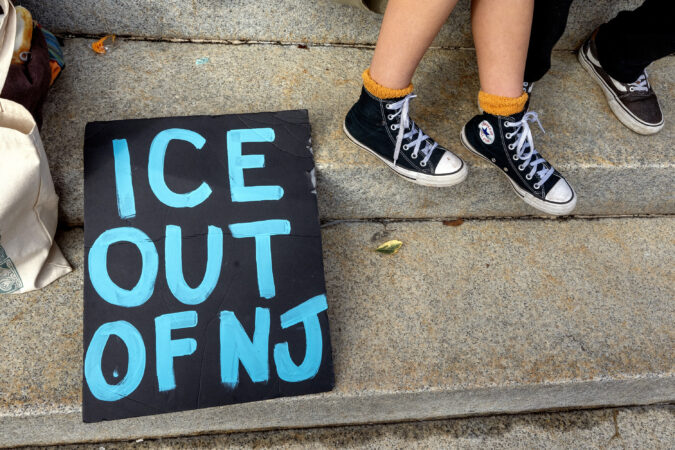
Legions of suburbanites decried federal ICE actions on Sunday in a series of vigils and protests across the Philadelphia area, signaling the breadth of opposition to a central part of President Donald Trump’s agenda.
Expressions of anger, sadness, and resistance poured out into the streets of major cities nationwide this weekend in response to the killing of 37-year-old Renee Good by an ICE officer in Minnesota. But that dysphoria also spilled into small towns — including in places like Gloucester County, New Jersey, where voters favored Trump in 2024.
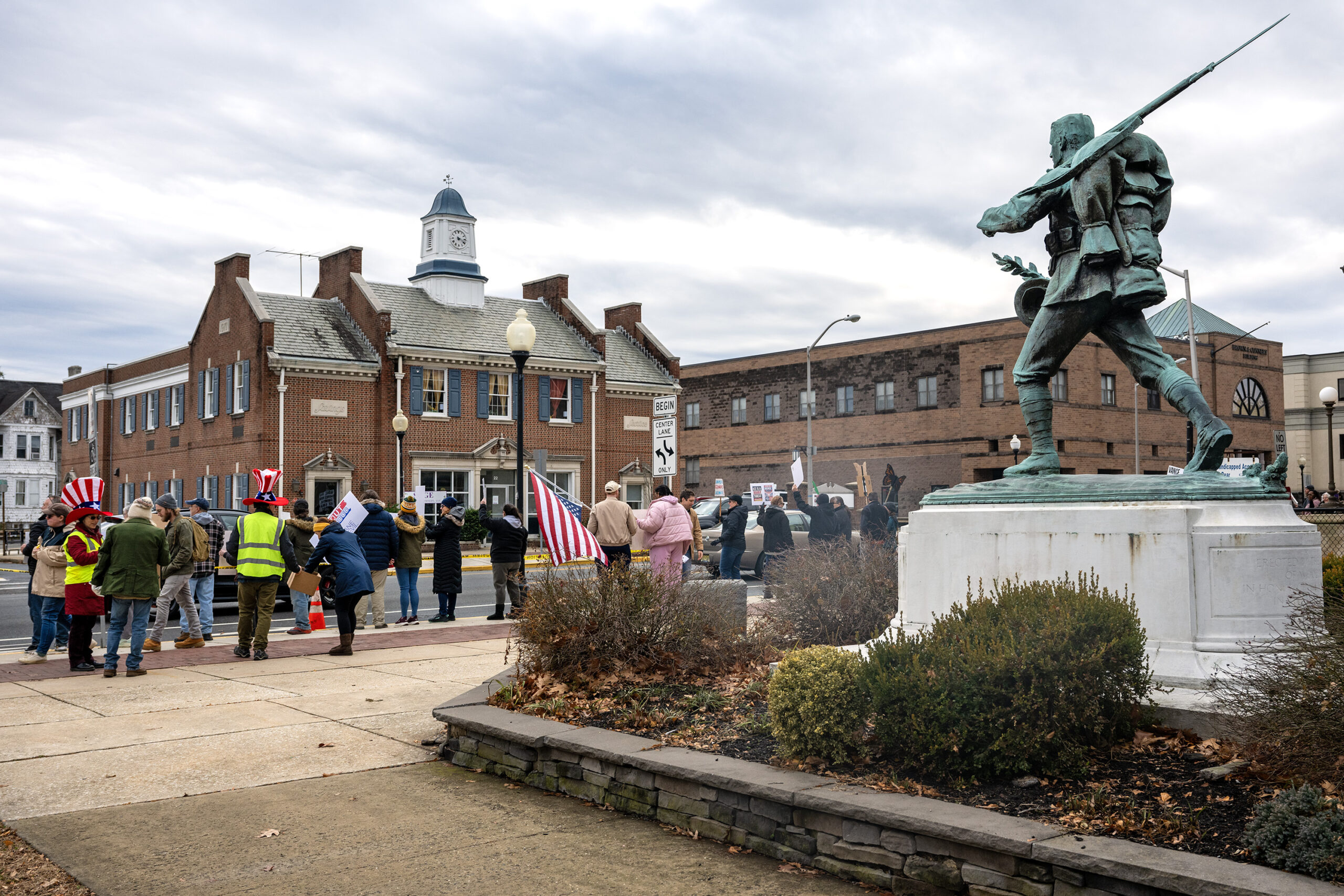
“I’ve been quiet and timid my whole life, and now I’m just trying to speak up,” said Cristen Beukers, one of more than 100 people who attended a demonstration in Gloucester’s county seat, Woodbury, a city of about 10,000. Gathered along North Broad Street, near the Gloucester County Courthouse, participants’ signs, whistles, and bullhorn-led protest chants were met with beeping car horns and the supportive shouts of drivers.
Beukers, 40, of nearby Paulsboro, called for a proper investigation into the shooting death of Good, a mother and poet, on Wednesday.
Mi Casa Woodbury and Cooper River Indivisible hold a “roadside rally” in downtown Woodbury, N.J., in support of immigrants and to protest ICE on Sunday, Jan. 11, 2026, as protests against Trump administration actions spread in the suburbs.
Thousands of ICE agents and federal troops have swarmed blue American cities as part of Trump’s unprecedented campaign to arrest and deport millions of immigrants. Good was shot three times in the driver’s seat of her SUV after a brief confrontation with ICE agents on a residential Minneapolis street. Trump administration officials insist ICE agent Jonathan Ross fired out of self-defense; video footage appears to show he was not in the vehicle’s path when he fired.
“It’s an S.O.S.,” said Alex Baji, 31, of Woodbury, who said he’s a former IRS auditor laid off last year by the Department of Government Efficiency, overseen by billionaire Elon Musk. “Masked goons murdering U.S. citizens — and the vice president says it’s perfectly justified.”
The turnout in Woodbury suggested a new level of urgency for the tight-knit suburban community, said Kaitlin Rattigan. Rattigan is a community organizer with Mi Casa Woodbury, a group that formed in response to ICE activity in their neighborhoods. Mi Casa has held a demonstration every Sunday since mid-November, even if just a few people attended.
“I think it’s a turning point for many people — and frankly for white people,” Rattigan, who is white, said.
According to a recent poll conducted by Pew Research Center, 50% of American adults surveyed in October disapproved of the Trump administration’s approach to immigration, while 39% approve. (Some participants responded “neither.”) While 53% of respondents said the country is doing “too much” when it comes to immigration enforcement, a large majority continue to say at least some people living in the United States should be deported.
Trump has derided and propagandized protesters as “paid insurrectionists,” “domestic terrorists,” or radical leftists — people who are not representative of mainstream Americans, Steve McGovern, a political science professor at Haverford College, said in an interview. Anti-ICE rhetoric in the suburbs threatens Trump’s narrative, according to McGovern. Trump’s 2024 win was fueled by key gains in Philadelphia’s suburbs, an Inquirer analysis found.
“The popular image of suburbia continues to be a place where lots of middle-class, mainstream people live and work,” he said. “If suburbanites take to the streets and in large numbers, that would send — I think — a powerful message that a strong majority of the country is increasingly fed up with the outrageous, lawless, and even murderous behavior of ICE agents.”
At least one Republican observer was skeptical. Guy Ciarrocchi, a GOP analyst, said in a statement these protests no longer influence independent voters, nor intimidate Republicans.
“Unfortunately, these ‘rallies’ are political theatre — plug [and] play crowds with professional signs for any ‘cause.’ Tools to rally extremist Democrat voters,” he said. “Ms. Good’s death was a tragedy. And, ICE’s work is important and necessary. No ‘rent a rally’ will change either of those truths.”
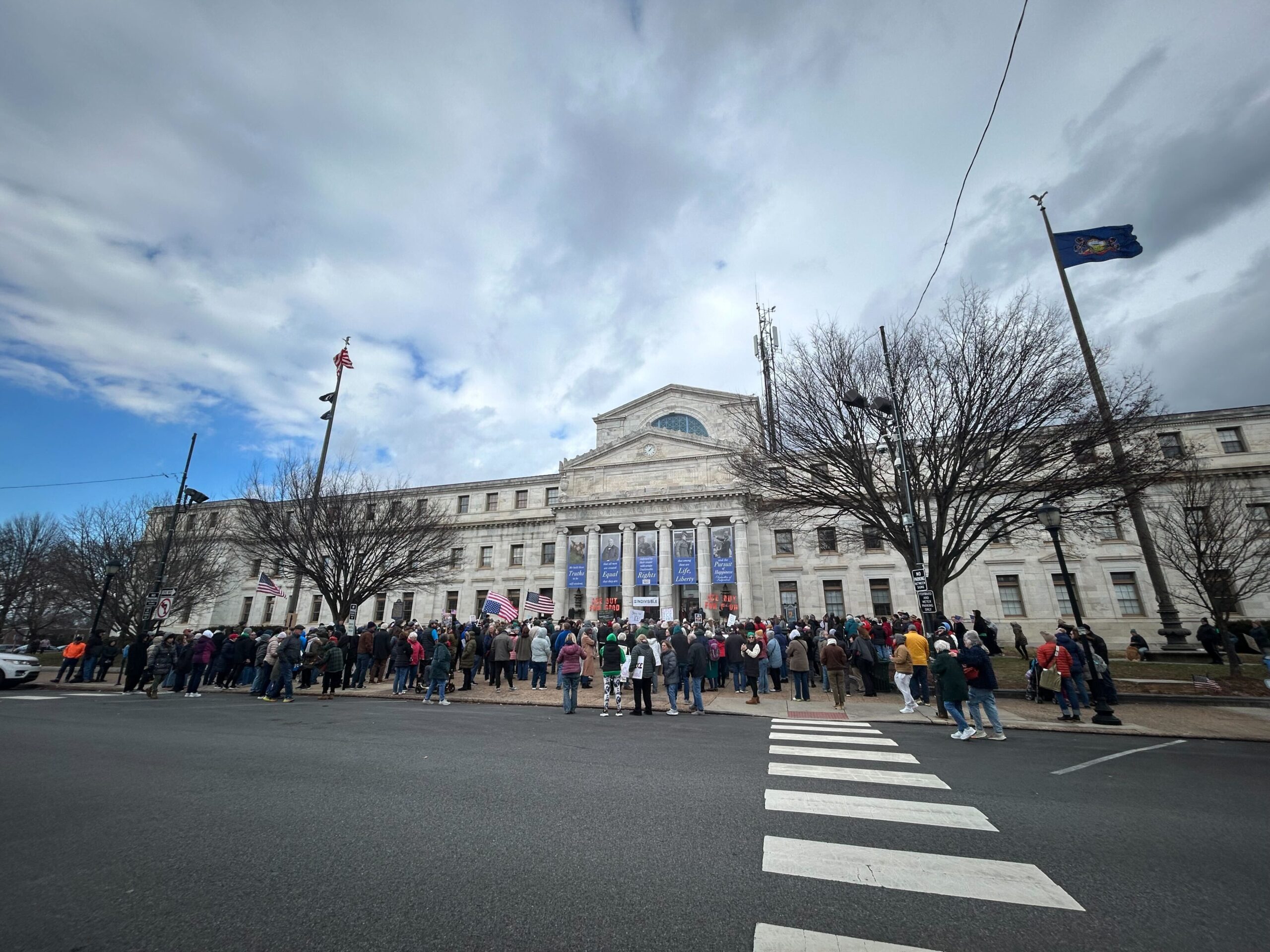
Outside the Delaware County Courthouse in Media, hundreds shouted into the bitter wind: “United we stand, divided we fall.” The voices came from attendees of all ages — older people in wheelchairs, young parents pushing babies in strollers, and children holding crayon-drawn signs etched with messages like “ICE Cream, not ICE” and “NO ICE because it’s cruel.”
“The entire nation is watching Pennsylvania,” said U.S. Rep. Mary Gay Scanlon, a Delaware County Democrat. “We can reject Trumpism at the state and federal levels this year. … We will not be bullied out of the future that we and all our children deserve.”
Area residents hold what organizers called a “vigil for peace on our communities” on Jan. 11, 2026, in Media, Pa.
In the increasingly blue suburban county — that not long ago was solidly red — the vocal opposition to Trump has grown louder in recent years, said Cathy Spahr, coleader of Delco Indivisible, which organized Sunday’s vigil for Good.
“We didn’t have this during the first [Trump] administration,” she said of the event’s turnout. Spahr said she was especially heartened by the attendance given that the vigil was announced only days before — and ended an hour before the Eagles’ first playoff game of the year.
But Spahr and several attendees said there’s something special about coming together closer to home. And logistically, it’s easier.
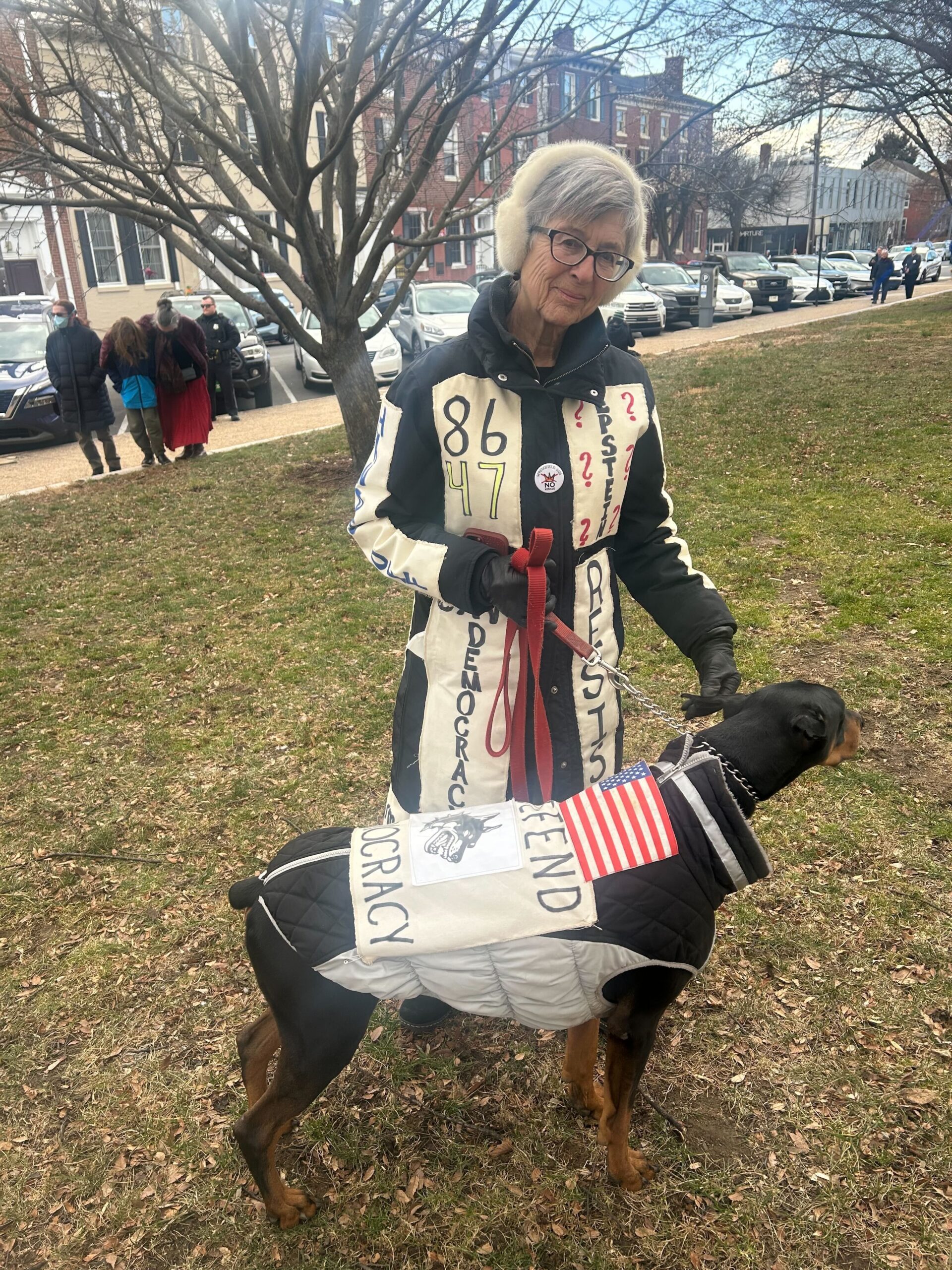
Corinne Fiore, 75, of Media, and her 4-year-old Doberman, Laser, cherish the opportunity to be involved in the anti-Trump movement in Delaware County.
Corinne Fiore, 75, of Media, poses with her 4-year-old Doberman, Laser, who wears a “Defend Democracy” vest to local rallies and events, on Jan. 11, 2026, outside of the Delaware County Courthouse in Media, Pa.
“I just can’t get in a car and go for 10 hours somewhere,” she said. She’s thankful she doesn’t have to. “Delaware County has a lot of responsible people in it. They’re good and kind people. Patriotic people.”
For families with young children, the Media vigil also presented a convenient opportunity to teach their children the importance of standing up for their neighbors.
“I want to show them it’s important to stand up to a bully,” said Candice Carbone Bainbridge, 42, of Wallingford. Nearby, her 8-year-old daughter, Cora, held a sign with pink and purple lettering that read: “Be a good human. It’s not that hard!”
Sixteen miles southeast, in Bellmawr, N.J., dozens gathered along Black Horse Pike, hoisting signs, cheering on supportive honks from passing commercial trucks, and dancing to the Rascals’ 1968 anthem, “People Got to Be Free.”One poster read, “American foundations are being destroyed, no one is safe, stand up now.”
Karen Kelly, 72, who drove 40 minutes and DJed the demonstration, said she’s frustrated by apathy and disengagement.
“All the people staying home — doing nothing — have to get the heck up,” Kelly said.
Residents in the outskirts of Philadelphia expressed similar sentiments to their suburban counterparts.
“This is not law enforcement, this is brutality,” said Susan MacBride, 84, at a protest in Roxborough, which was largely attended by residents of Cathedral Village, a retirement community in Northwest Philadelphia. Tired of what she described as the Trump administration’s cruelty and disrespect, MacBride felt compelled to put a pause on her retirement and join the 160-person rally at Ridge Avenue and Cathedral Road.
“Kids need to know this isn’t normal; it’s a period of disruption, but we can’t let them get used to this,” she said.
Nearby neighbor Lorraine Webb, 73, agreed with MacBride.
“This isn’t what we are about, we need to do better,” Webb said. “We need to show up because this isn’t just a Center City issue; it’s a Philadelphia issue.”
Richard Codey, a former New Jersey acting governor and longtime state senator, has died at 79, his family announced Sunday.
The Democrat represented an Essex County-based district in the Assembly from 1974 to 1982 and the Senate from 1982 to 2024, the longest combined service in state history. His family said he died peacefully at home Sunday after a brief illness.
He was the New Jersey Senate president from 2002 to 2010.
After Gov. Jim McGreevey resigned in 2004, Mr. Codey served as acting governor for the remaining 14 months of McGreevey’s term, until Jon Corzine was elected and succeeded him. Under a state constitutional provision in effect at the time, Mr. Codey concurrently served as governor and Senate president.
In a statement on Facebook, Mr. Codey’s family said he served with humility and compassion. “He made friends as easily with Presidents as he did with strangers in all-night diners,” the family’s statement said.
Legislators who served alongside Mr. Codey reacted to his death on social media.
“New Jersey has lost a remarkable public servant who touched the lives in meaningful ways of everyone who knew him,” Scutari said in a statement on Facebook.
State Sen. John McKeon served the same district as Mr. Codey in the Assembly for 22 years before succeeding him in the Senate.
“Observing firsthand his empathy, humility, and advocacy for those who could not speak for themselves have had a profound and enduring influence on my professional life,” McKeon said on Facebook.
Known for his feisty, regular-guy persona, Mr. Codey was a staunch advocate of mental health awareness and care issues. The Democrat also championed legislation to ban smoking from indoor areas and sought more money for stem cell research.
As acting governor, Mr. Codey passed and signed a state law that limited public contracts for vendors who make campaign contributions.
Mr. Codey operated his family’s funeral home before entering politics.
Mr. Codey routinely drew strong praise from residents in polls, and he gave serious consideration to seeking the Democratic nomination for governor in 2005. But he ultimately chose not to run when party leaders opted to back wealthy Wall Street executive Jon Corzine, who went on to win the office.
Mr. Codey would again become acting governor after Corzine was incapacitated in April 2007 due to serious injuries he suffered in a car accident. He held the post for nearly a month before Corzine resumed his duties.
After leaving the governor’s office, Mr. Codey returned to the Senate and also published a memoir that detailed his decades of public service, along with stories about his personal and family life.
His wife told the Associated Press that Mr. Codey was willing to support her speaking out about postpartum depression, even if it cost him elected office.
“He was a really, really good guy,” Mary Jo Codey said. “He said, ‘If you want to do it, I don’t care if I get elected again.’”
The Codey family said it would share information about his funeral in the coming days.
This article contains information from the Associated Press.
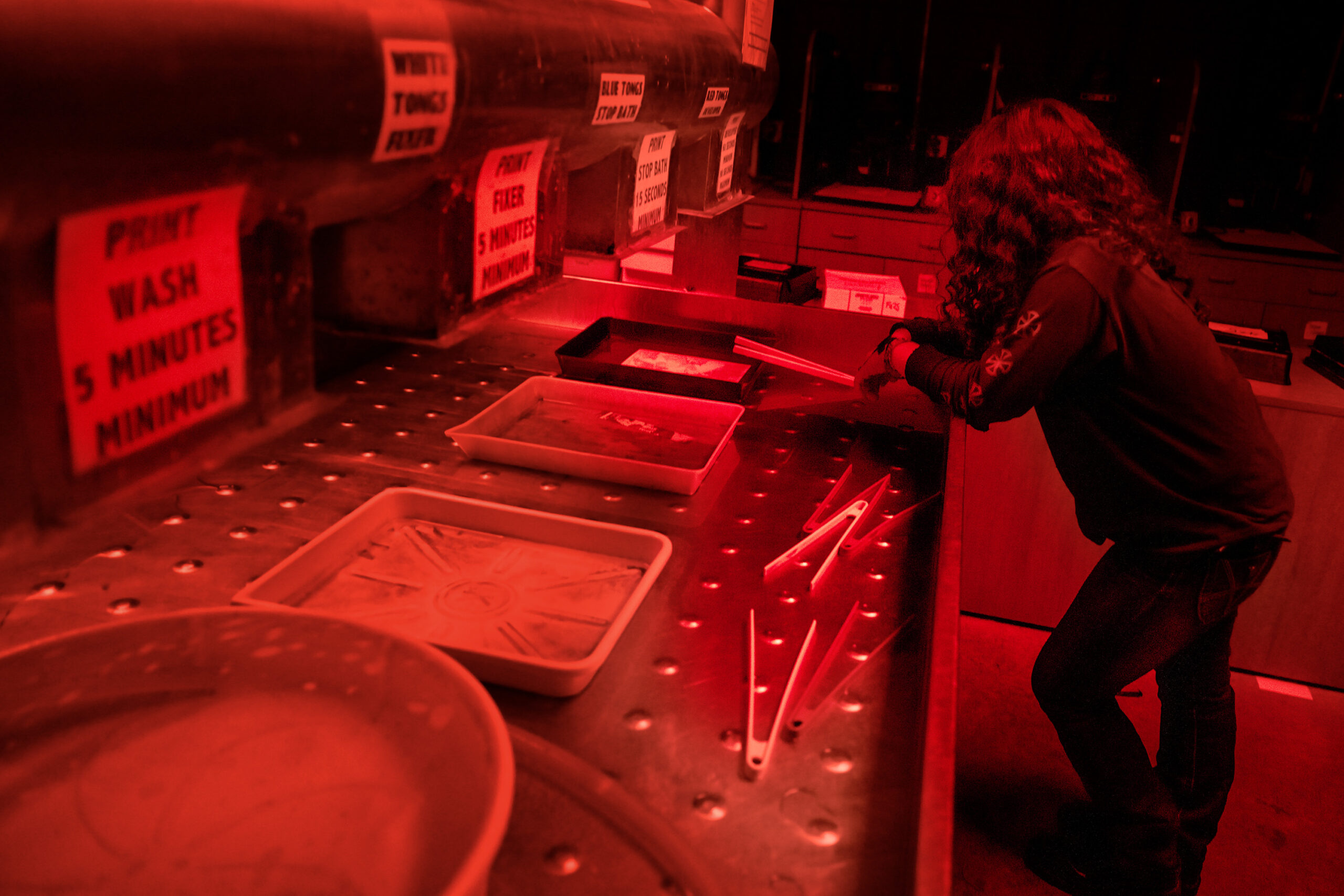
I stepped into a real live, working — smells and all — black and white darkroom this week, for the first time in decades.
I watched Charlotte Astor, a junior at Cherry Hill High School East, develop her B&W photographs in the school’s darkroom.
For a few years after The Inquirer went digital I kept the small enlarger and other personal equipment that I’d used in my crude basement darkroom from when I was starting out. I had little use for it after I got my first staff job with bigger and better facilities. It all stayed boxed up, through multiple moves, long after I’d stopped exposing any film — even for family photos.
I finally gave it all away when young people first started using analog formats like typewriters, vinyl records, “dumb phones,” and film cameras as a move away from digital overload. (A few years ago our photo staff did a group project where we each took a turn with the same 35 mm mechanical camera using just one roll of black-and-white film.)
Like many digital natives who grew up with smartphones and the internet and are now “detoxing,” Astor has totally embraced B&W 35 mm, photographing at hardcore shows around the area for a zine she self-publishes, “Through Our Eyes.”
“So often,” she says of the music scene, “you’ll see these people taking a million photos a second, and to me it’s just waste. When I shoot film, I only have 36 shots before I gotta risk reloading in the middle of the pit, so every shot I have to make count. It keeps me in that moment, with this kind of clarity. When you get the shot, even though you can’t see it, you just know that you got that moment perfect. That moment means everything to me. I wouldn’t trade it for the world, and digital will never come close.”
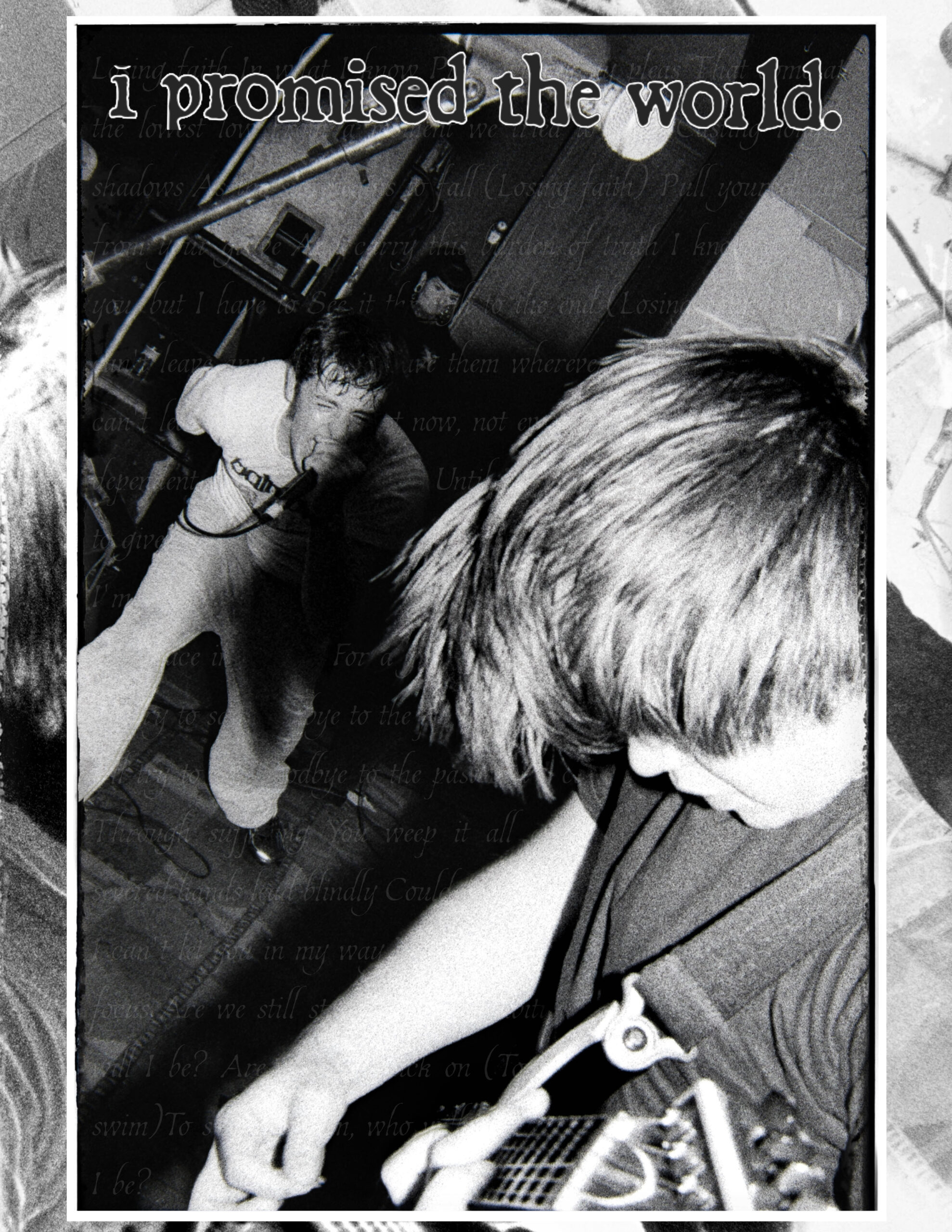
Photo by Charlotte Astor, from a show by “I Promised the World” at the First Unitarian Church in Philadelphia Nov. 22, 2025. Taken with a Nikon FE and Tmax 3200 film.
But that’s not why I was taking her picture. Our story, published next week, is about Astor’s four year search for a demo tape — yes, an analog cassette — from her mother’s teenage band.
I enjoyed talking with her about photography, and I couldn’t stop thinking about what digital photography has brought us.
Film demanded patience and technical precision. Digital offered instant feedback and greater flexibility in lighting conditions.
Photojournalists delivered images faster, adapted to the demands of online media and met tighter and more frequent deadlines.
The transition hasn’t changed the way I see, and interpret. I still emphasize composition, context, or complexity. However, I have adapted and adjusted. I see the value in making the kinds of thumbnails that online platforms prioritize to generate algorithmic attention.
Between photographing for stories on assignment I still wander whatever neighborhood I am in looking for “standalones.”
But I am also always on the lookout for “stock” photos that can be used as thumbnails with future stories. Think images of police tape or flashing lights, city street scenes, and skylines, educational, civic, and medical institutions.
Made while riding in a parking garage elevator, this photo had been been published with over a dozen stories in the past year.
After an assignment at the Philadelphia Art Museum, I loitered outside.
Ahead of Sunday’s wildcard playoff game against the San Francisco 49ers, the museum put up giant cutouts of four Eagles players on its iconic front steps. The cutouts first appeared in 2014 (before the Birds’ wild-card loss to the New Orleans Saints) and again a few times over the years, including before both Super Bowl wins in 2018 and last year.
The newspaper already has lots of photos from the steps, including many of that movie prop, but I knew the city’s Art Commission is voting next week to see if it stays, or not.
That famous movie prop seen out-of-focus – and captured – between changing f-stops for different depths-of-field. Did you know (spoiler alert, there is math involved) that an f-stop is the numerical value of the ratio of the focal length of the lens to the diameter of its aperture.
If it stays, the “original” version of the statue from 1982’s Rocky III that now sits at street level would be moved inside the museum for an exhibit this summer, then go back outside and installed at the top of the steps “permanently.” And the “second casting” statue there now “temporarily” would be returned to Sylvester Stallone.
It was that really nice, warm sprint-like day we had on Wednesday, following those bitterly cold first days of 2026, so I didn’t mind being outside making “stock” photos.
And THAT’S when I spotted a real moment — the kind photographers live for — of the family taking selfies on the steps, and how I ended up making the photo at the very top of this column.
Since 1998 a black-and-white photo has appeared every Monday in staff photographer Tom Gralish’s “Scene Through the Lens” photo column in the print editions of The Inquirer’s local news section. Here are the most recent, in color:
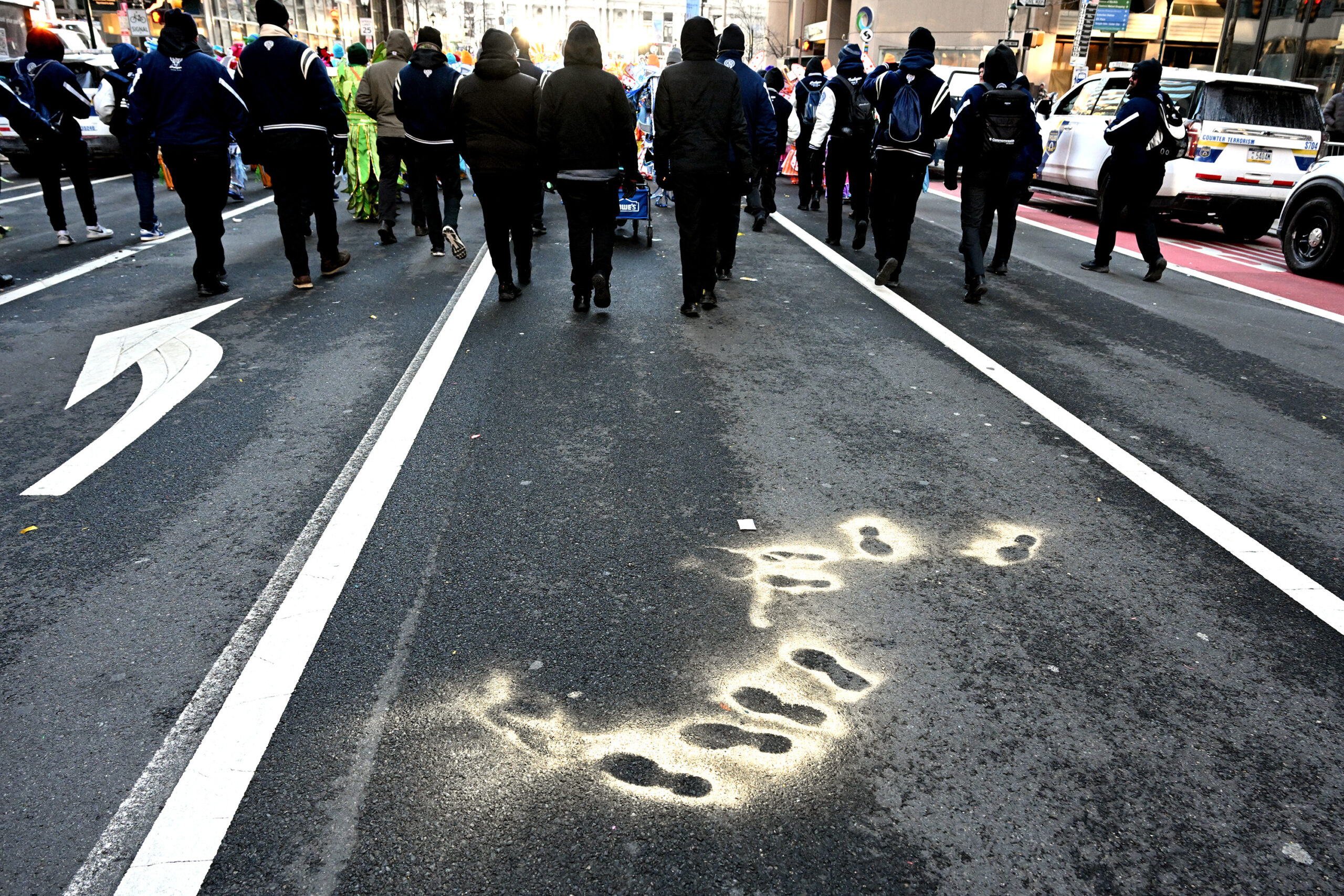
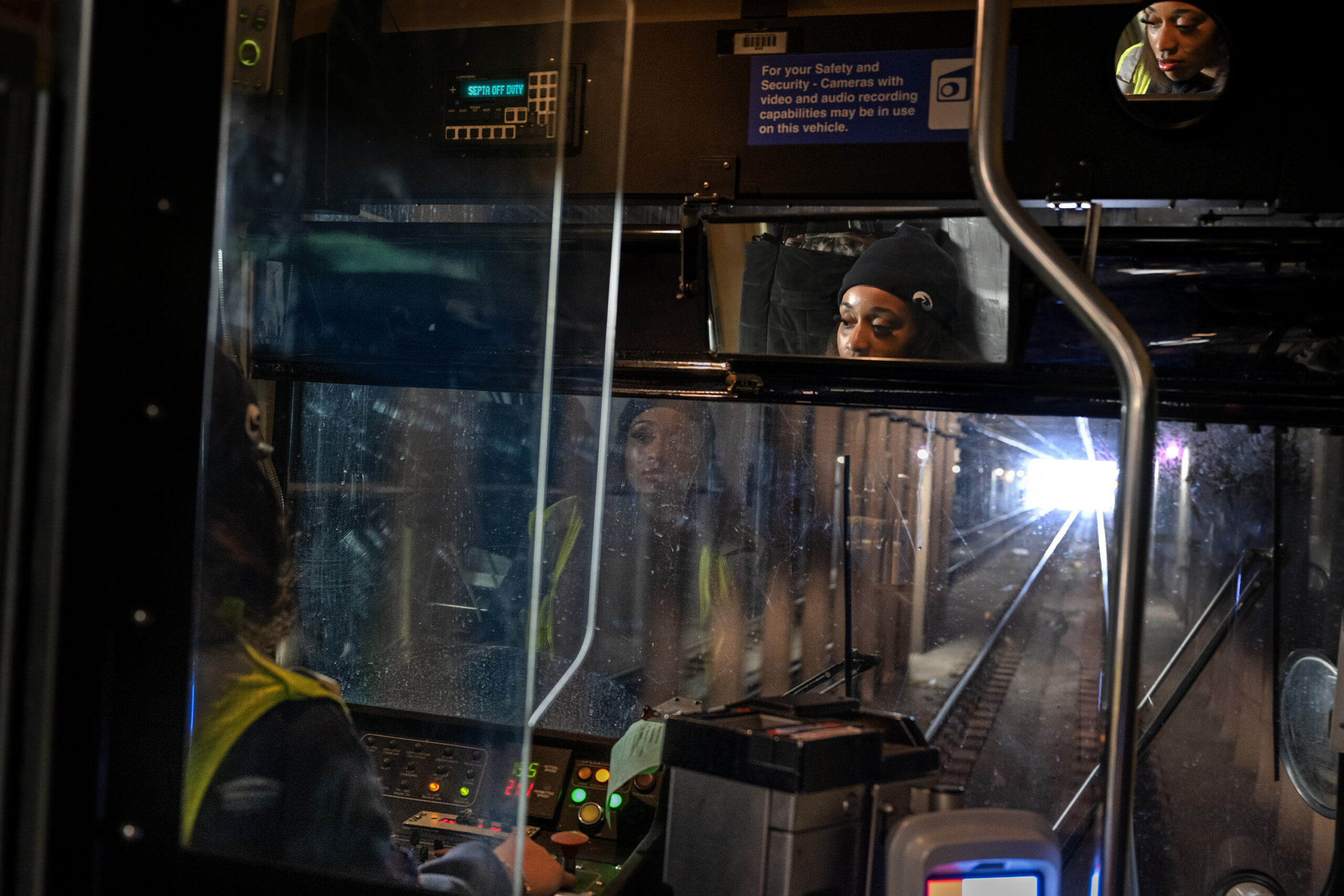
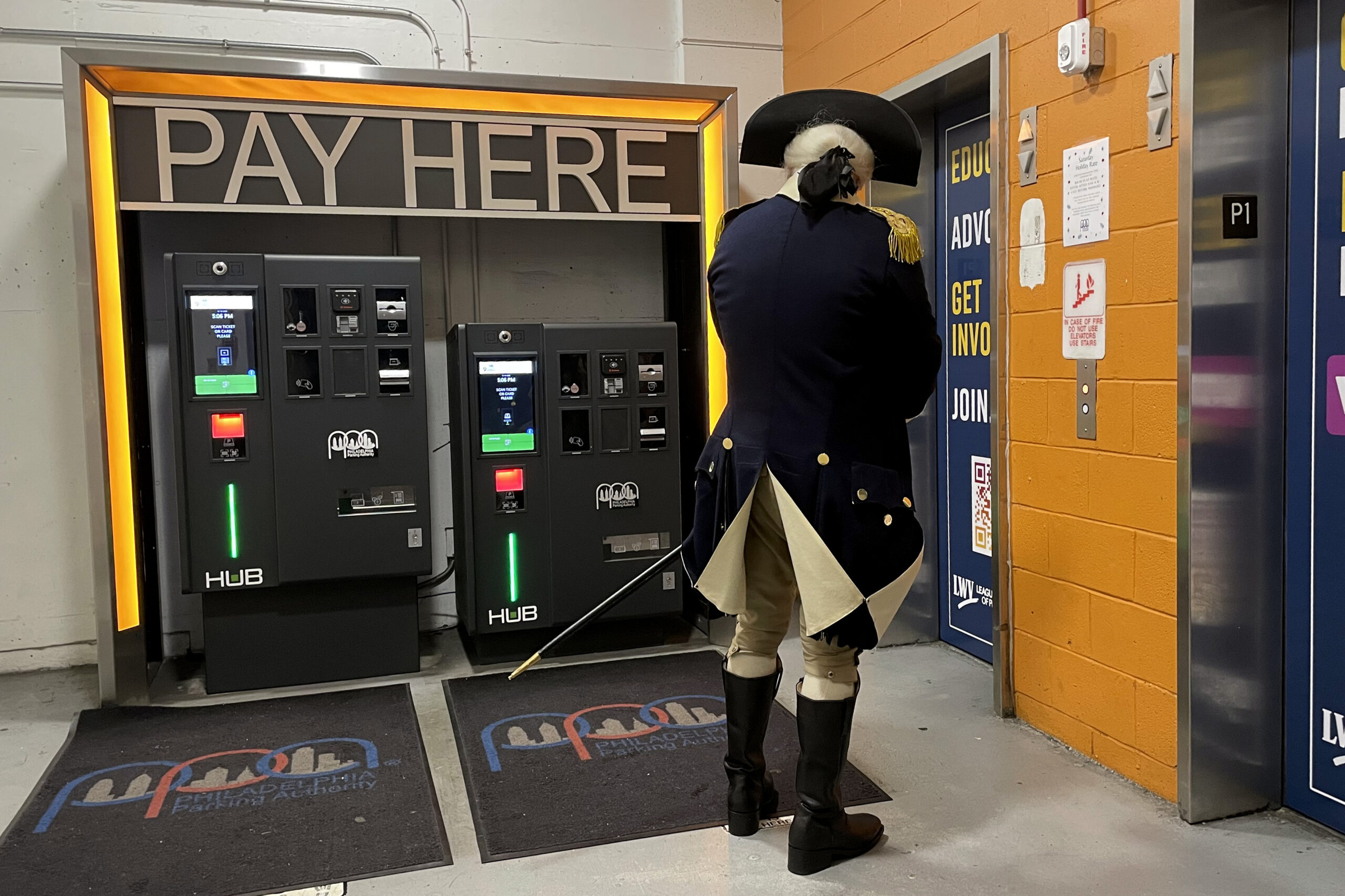
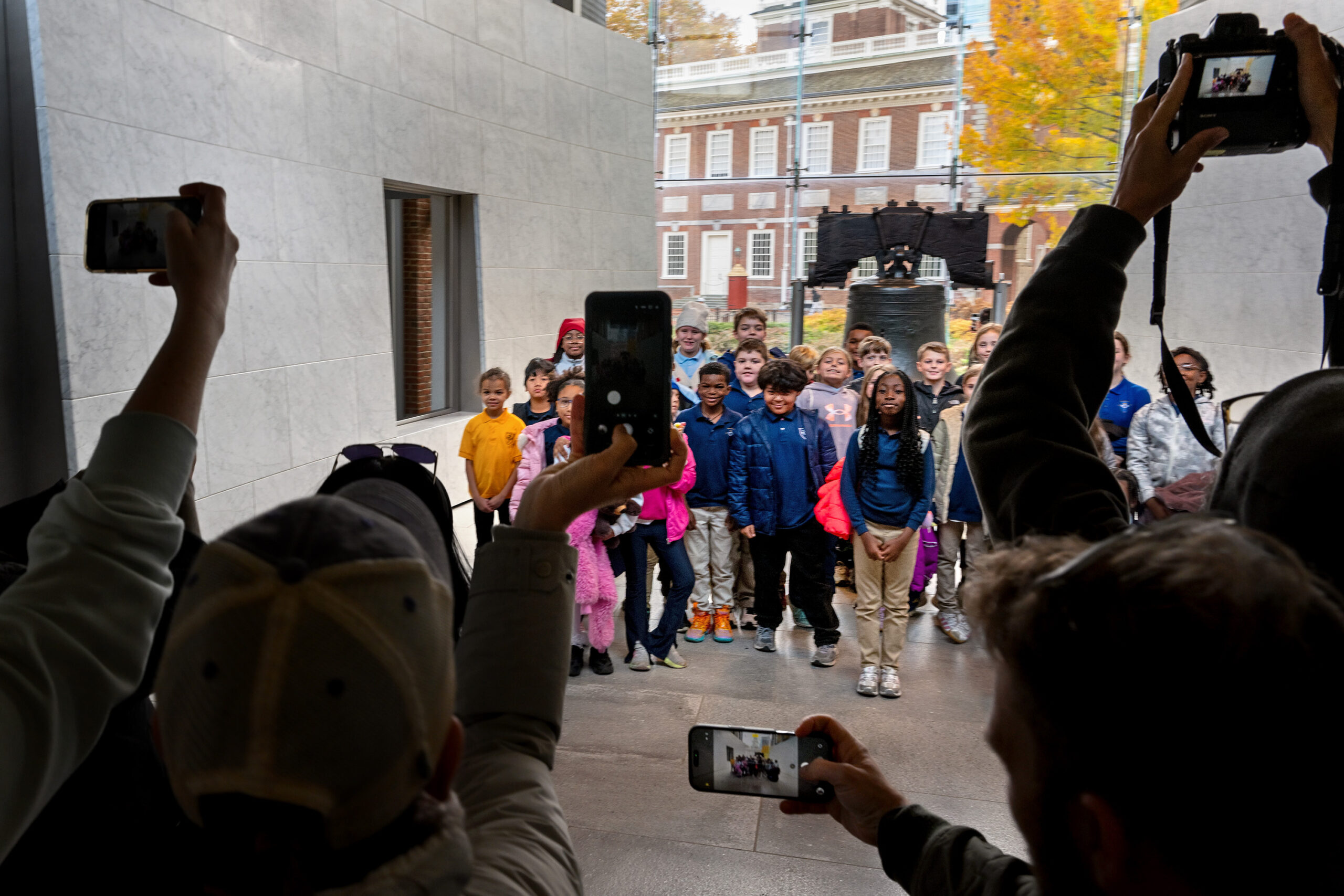
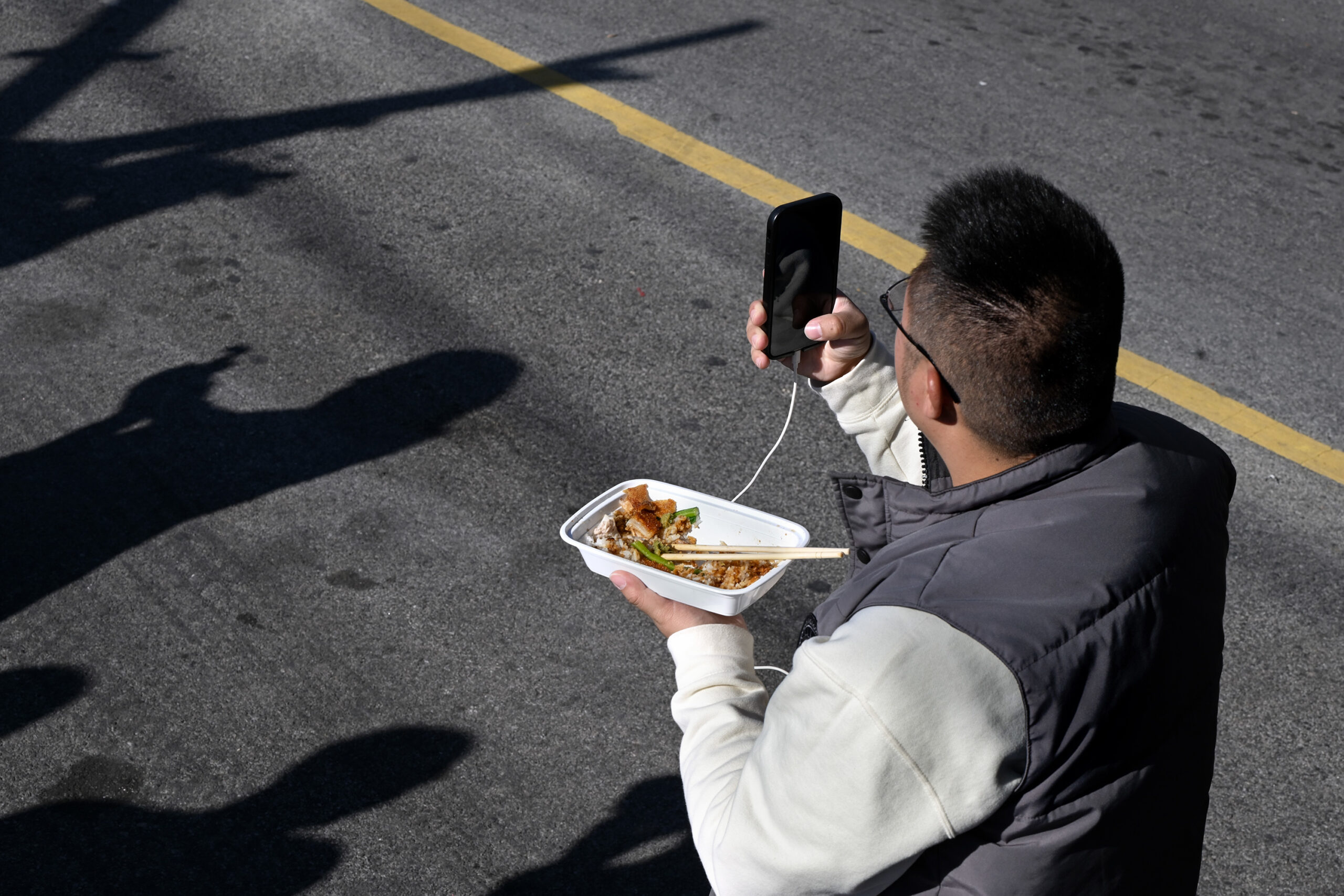
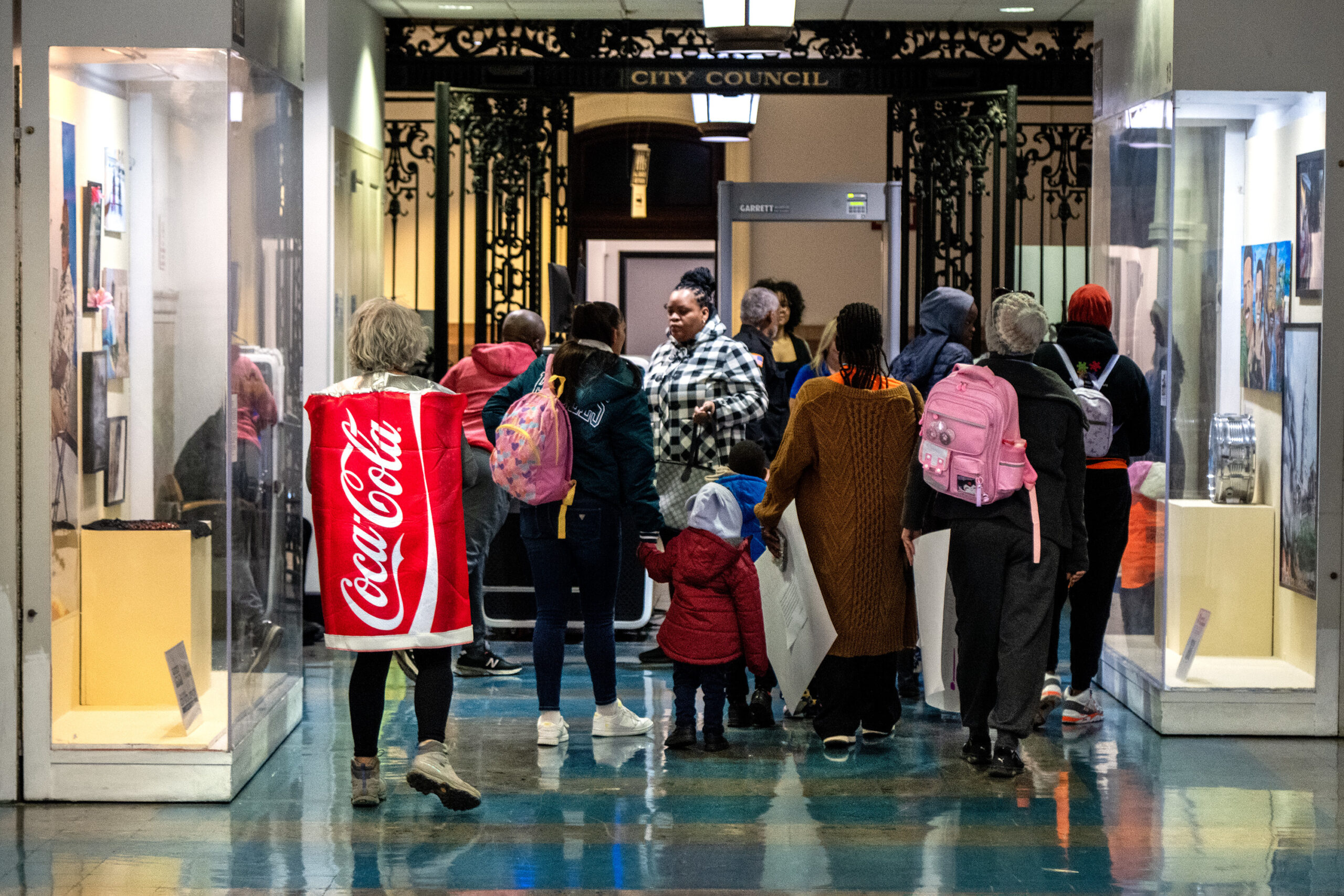
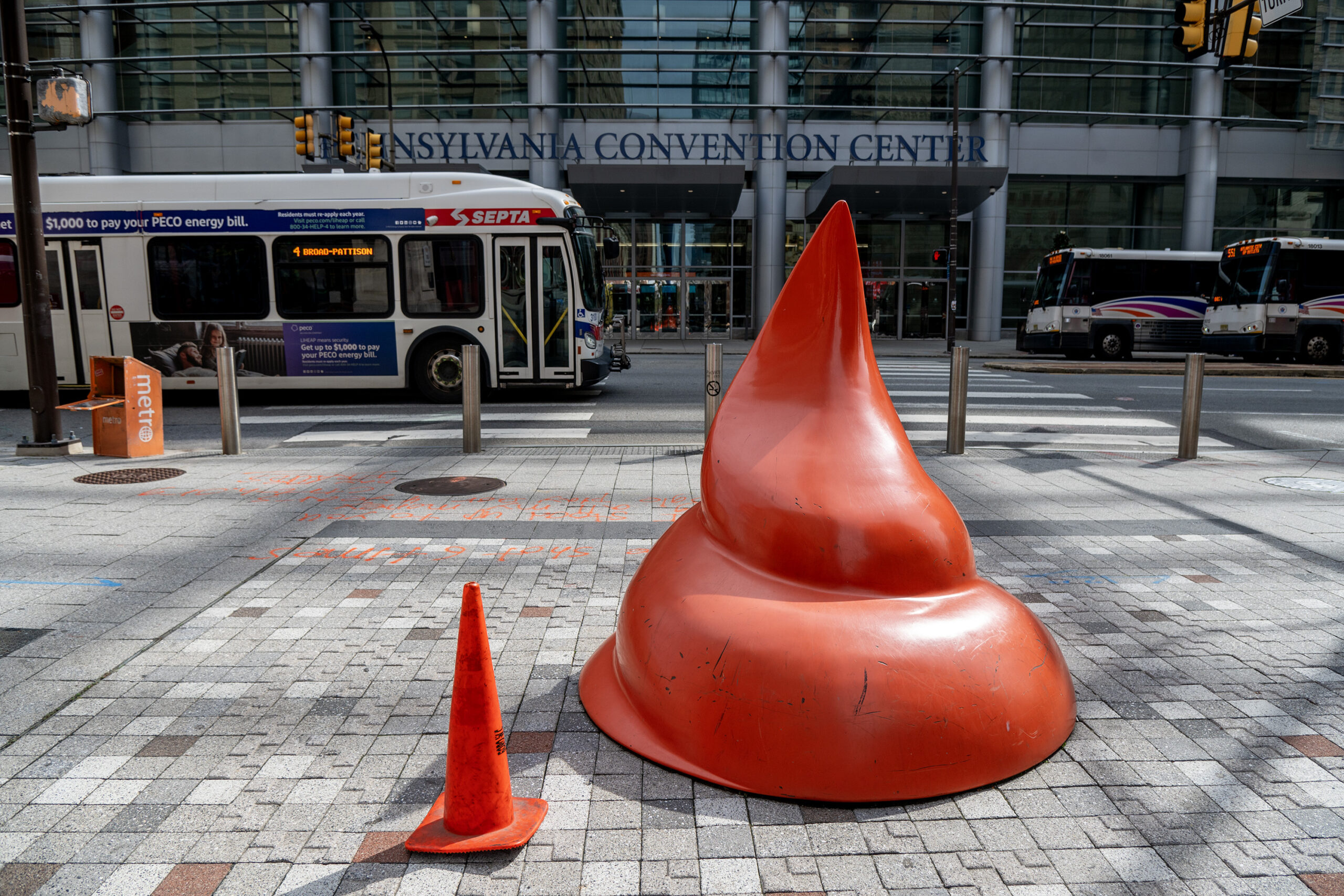
January 5, 2026: Parade marshals trail behind the musicians of the Greater Kensington String Band heading to their #9 position start in the Mummers Parade. Spray paint by comic wenches earlier in the day left “Oh, Dem Golden Slippers” shadows on the pavement of Market Street. This year marked the 125th anniversary of Philly’s iconic New Year’s Day celebration.Dec. 29, 2025: Canada geese at sunrise in Evans Pond in Haddonfield, during the week of the Winter Solstice for the Northern Hemisphere. December 22, 2025: SEPTA trolley operator Victoria Daniels approaches the end of the Center City Tunnel, heading toward the 40th Street trolley portal after a tour to update the news media on overhead wire repairs in the closed tunnel due to unexpected issues from new slider parts.December 15, 2025: A historical interpreter waits at the parking garage elevators headed not to a December crossing of the Delaware River, but an event at the National Constitution Center. General George Washington was on his way to an unveiling of the U.S. Mint’s new 2026 coins for the Semiquincentennial, December 8, 2025: The Benjamin Franklin Bridge and pedestrians on the Delaware River Trail are reflected in mirrored spheres of the “Weaver’s Knot: Sheet Bend” public artwork on Columbus Boulevard. The site-specific stainless steel piece located between the Cherry Street and Race Street Piers was commissioned by the City’s Public Art Office and the Delaware River Waterfront Corporation and created and installed in 2022 by the design and fabrication group Ball-Nogues Studio. The name recalls a history that dominated the region for hundreds of years. “Weaver’s knot” derives from use in textile mills and the “Sheet bend” or “sheet knot” was used on sailing vessels for bending ropes to sails. November 29, 2025: t’s ginkgo time in our region again when the distinctive fan-shaped leaves turn yellow and then, on one day, lose all their leaves at the same time laying a carpet on city streets and sidewalks. A squirrel leaps over leaves in the 18th Century Garden in Independence National Historical Park Nov. 25, 2025. The ginkgo (Ginkgo biloba) is considered a living fossil as it’s the only surviving species of a group of trees that existed before dinosaurs. Genetically, it has remained unchanged over the past 200 million years. William Hamilton, owner the Woodlands in SW Phila (no relation to Alexander Hamilton) brought the first ginkgo trees to North America in 1785.November 24, 2025: The old waiting room at 30th Street Station that most people only pass through on their way to the restrooms has been spiffed up with benches – and a Christmas tree. It was placed there this year in front of the 30-foot frieze, “The Spirit of Transportation” while the lobby of Amtrak’s $550 million station restoration is underway. The 1895 relief sculpture by Karl Bitter was originally hung in the Broad Street Station by City Hall, but was moved in 1933. It depicts travel from ancient to modern and even futuristic times. November 17, 2025: Students on a field trip from the Christian Academy in Brookhaven, Delaware County, pose for a group photo in front of the Liberty Bell in Independence National Historical Park on Thursday. The trip was planned weeks earlier, before they knew it would be on the day park buildings were reopening after the government shutdown ended. “We got so lucky,” a teacher said. Then corrected herself. “It’s because we prayed for it.” November 8, 2025: Multitasking during the Festival de Día de Muertos – Day of the Dead – in South Philadelphia.November 1, 2025: Marcy Boroff is at City Hall dressed as a Coke can, along with preschoolers and their caregivers, in support of former Mayor Jim Kenney’s 2017 tax on sweetened beverages. City Council is considering repealing the tax, which funds the city’s pre-K programs. October 25, 2025: Austin Gabauer, paint and production assistant at the Johnson Atelier, in Hamilton Twp, N.J. as the finished “O” letter awaits the return to Philadelphia. The “Y” part of the OY/YO sculpture is inside the painting booth. The well-known sculpture outside the Weitzman National Museum of American Jewish History was removed in May while construction continues on Market Street and has been undergoing refurbishment at the Atelier at the Grounds for Sculpture outside of Trenton.October 20, 2025:The yellow shipping container next to City Hall attracted a line of over 300 people that stretched around a corner of Dilworth Park. Bystanders wondered as they watched devotees reaching the front take their selfies inside a retro Philly diner-esque booth tableau. Followers on social media had been invited to “Climb on to immerse yourself in the worlds of Pleasing Fragrance, Big Lip, and exclusive treasures,” including a spin of the “Freebie Wheel,” for products of the unisex lifestyle brand Pleasing, created by former One Direction singer Harry Styles.October 11, 2025: Can you find the Phillie Phanatic, as he leaves a “Rally for Red October Bus Tour” stop in downtown Westmont, N.J. just before the start of the NLDS? There’s always next year and he’ll be back. The 2026 Spring Training schedule has yet to be announced by Major League Baseball, but Phillies pitchers and catchers generally first report to Clearwater, Florida in mid-February.October 6. 2025: Fluorescent orange safety cone, 28 in, Poly Ethylene. Right: Paint Torch (detail) Claes Oldenburg, 2011, Steel, Fiberglass Reinforced Plastic, Gelcoat and Polyurethane. (Gob of paint, 6 ft. Main sculpture, 51 ft.). Lenfest Plaza at the Pennsylvania Academy of the Fine Arts on North Broad Street, across from the Convention Center.
The waves rocked a dead 30-foot juvenile humpback whale that lay belly-up near Delaware’s Bethany Beach Friday as marine rescue workers prepared for the open-air postmortem examination that would take place on the sand.
The whale was first seen “floating at sea,” two miles off the Indian River Inlet earlier in the week, according to the Marine Education, Research & Rehabilitation Institute, also known as MERR. It finally beached Thursday.
As Suzanne Thurman, executive director of MERR, waited for heavy machinery Friday morning, she guessed the whale might weigh about 20,000 pounds, posing a serious challenge for the people investigating the mammal’s cause of death.
The weight, the constant movement at the behest of the ocean, and the slippery feel of the oil in the whale’s blubber made cutting it open for a necropsy — the examination to determine cause of death — inherently risky, said Thurman. The heavy machinery would have to stabilize the whale on land so the scientists could do their work.
“It can’t be towed,” Thurman said. “There are no other effective ways to move the whale.”
Unlike other animal necropsies, the whale’s postmortem examination would have to take place on the open beach, she said.
“A necropsy is very important because we can’t always tell what happened to the whale simply by looking at it,” she said, adding even if a whale is injured, scientists have to check for signs of human impact and if there was an underlying disease that led to its death.
Finding the cause of death for whale fatalities is crucial for conservationists. Though whale populations have largely rebounded since their peak hunting days, they face more trafficked waterways and a changing climate, which put them at risk all the same.
Whenever there’s a significant die-off of any marine population that “demands immediate response,” the U.S. National Oceanic and Atmospheric Administration gets involved, declaring what’s called an unusual mortality event. This allows scientists to investigate the deaths and study the remaining population in real time.
There are three active unusual mortality events, all involving whales in the Atlantic — the Atlantic minke whale, the North Atlantic right whale, and the Atlantic humpback whale.
How the Delaware fatality factors into the larger picture of whale population health remains to be seen.
The speed at which MERR staff can finish the necropsy depends on environmental factors and equipment availability from the state.
After MERR is done with the necropsy, Thurman said the whale will be buried in the beach because it’s too heavy to move anywhere else and it will become an important source of nutrients.
The Delaware whale is the second such mammal death in the region this week.
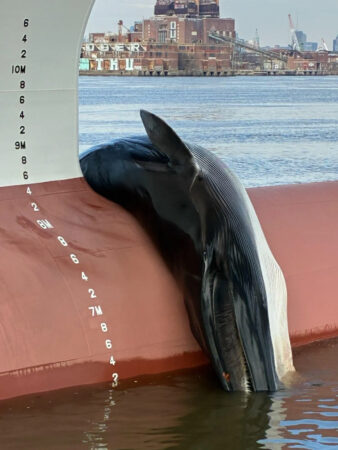
A 25- to 30-foot fin whale was discovered on the bow of a ship Sunday night at a marine terminal in Gloucester City, N.J., though the necropsy process has been much slower.
The Marine Mammal Stranding Center took the lead in the New Jersey investigation, limiting public comments to its social media posts. By Wednesday, the Stranding Center said it had a necropsy plan in place for the 12- to 13-ton whale, but staff couldn’t move forward with it until they had a suitable burial location secured.
NOAA’s law enforcement arm, which is tasked with enforcing about 40 different marine laws, has opened an investigation into the whale death despite the incomplete necropsy. A spokesperson could not expand on what drove the decision, citing the pending investigation.
Stranding Center data, dating back to 2002, shows that whale strandings peaked in New Jersey in 2023, with a total of 14 cases. The following year saw a drop in strandings with a total of nine cases reported. Last year, strandings in New Jersey dropped to four.
A New Jersey school resource officer has been charged with misconduct and child endangerment after an altercation with a juvenile in 2024, Gloucester County prosecutors said.
Charles P. Rudolph, 51, of Franklinville, was indicted on second-degree official misconduct and second-degree endangering, abusing, or neglecting a child on Wednesday, according to the Gloucester County Prosecutor’s Office.
Both counts carry a maximum sentence of 10 years in state prison.
Prosecutors say that while employed as a school resource officer, on behalf of the Gloucester County Sheriff’s Office, Rudolph “forcefully pushed” a juvenile’s neck, face, and chest onto a table while the juvenile was handcuffed during an incident that occurred on Dec. 19, 2024.
Officials did not release moreinformation on the incident that led to the altercation between Rudolph and the juvenile, any identifying details about the child,or the school where Rudolph worked.
The Gloucester County Sheriff’s Office declined to comment on the case.
Rudolph’s lawyer could not be reached for comment.
A court appearance is preliminarily scheduled for Feb. 5, according to prosecutors.
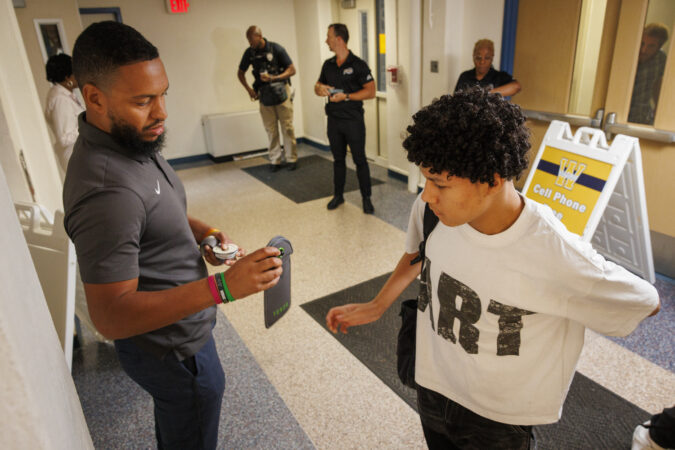
Gov. Phil Murphy signed a law Thursday banning cell phones in New Jersey public schools from “bell to bell”in an effortto help students focus on learning.
During a bill-signing event at Ramsey High School in Bergen County, Murphy said the law would promote improved academic performance and student mental health.
“By getting rid of needless distractions, we are fundamentally changing our schools’ learning environments and encouraging our children to be more attentive and engaged during the school day,” Murphy said. “This is a sensible policy that will make a world of difference for our children.”
Murphy, who said he refrains from bringing his phone into meetings, borrowed a phone to use as a propfor the news conference because his was locked in his car.
“That will be locked up until I’m no longer governor,” said Murphy, who leaves office Jan. 20.
The bill was heavily endorsed by principals and teachers, who said valuable instruction time is lost when they have to direct students to put away the devices during class.
Experts say cell phones have become a growing distraction and hinder learning. Students have been using their phones to text friends and even towatch movies during class. The devices have also been used for cyberbullying.
Bans will not go into place in schools around the state, however, until next school year.The law requires the state Department of Education to develop guidelines for districts to draft polices restricting the use of cell phones and devices by students in classrooms and during the school day.
Local school boards that operate more than 600 districts across the state must then adopt a new policy. The law takes effect for the 2026-2027 school year.
Many districts in South Jersey, including Cherry Hill, Deptford, Moorestown, Washington Township, and Woodbury, already restrict cell phone use in classrooms, but the policies have not been consistently enforced and punishments vary. Some require students to store their phones in lockers all day, while others allow phones during lunch and breaks.
Some districts only require students to keep their phones turned off, while others provide locations for the devices to be stored during the school day.
Under the bell-to-bell approach of the new state law, students will not be permitted toaccess their phones for the entire school day.
Lianah Carruolo, a seventh-grade student at Woodbury Junior-Senior High School, unlocks her cell phone pouch in September 2024.
Woodbury Superintendent Andrew Bell said a cell-phone-free campus policy at Woodbury Senior High School has drastically changed the culture. There are fewer disciplinary issues and students interact more with classmates and teachers, he said.
“Students are noticeably happier, engaged and present in their classrooms, and connected to one another,”said Dwayne Dobbins Jr., acting co-principal of Woodbury Junior-Senior High School.
What happens next?
Districts must adopt policies restricting cell phones during the entire school day. That may require students to lock up the devices when they arrive or secure them in locked pouches.
In South Jersey, 12 districts in Burlington, Camden, and Gloucester Counties received grants. The grant amounts varied depending on the size of each district.
window.addEventListener(“message”,function(a){if(void 0!==a.data[“datawrapper-height”]){var e=document.querySelectorAll(“iframe”);for(var t in a.data[“datawrapper-height”])for(var r,i=0;r=e[i];i++)if(r.contentWindow===a.source){var d=a.data[“datawrapper-height”][t]+”px”;r.style.height=d}}});
Gloucester City Superintendent Sean Gorman said his district used a $10,823 grant to install cabinets in classrooms where students in grades 7-12 must lock up their devices when they arrive for homeroom. Younger students are instructed to leave the devices at home, he said.
“We know it’s right for kids,” Gorman said. “If you let them bury their head in their phone for a good portion of the day they will.”
Other districts, like Woodbury, have opted to use locked pouch systems to store students’ phones. They retrieve their phones at the end of the day.
Some parents have expressed concern that they will not be able to reach their children, especially in the event of an emergency. School officials say parents will still be able to contact their children through the main office.
There have also been arguments by opponents that states are overreacting with the cell phone bans and that the legislation is unlikely to have the intended impact.
But groups have parents have also mobilized to speak out against cell phone use, circulating pledges to wait until eighth grade or high school to purchase phones for their children.
Are there exceptions to the ban?
Districts will have some flexibility to allow exceptions. For example, some students use their phones for medical conditions such as glucose testing.
Exceptions may also be made for students with individual education plans or IEPs and use devices such as tablets and ear buds as part of their curriculum.
Before the law signed Thursday, some districts allowed students to retrieve their phones during breaks, in the hallways between classes or during lunch. The law no longer permits that.
Will students be penalized?
It will be left to districts to decide how policy violations should be handled. Some districts with policies already have opted for a progressive discipline approach.
Gorman said Gloucester City has had 60 violations at its high school since the new policy took effect in September, down from 130 the previous year. The school has 731 students.
First-time offenders are given a two-day, in-school suspension and their phone is confiscated, Gorman said. A second offense gets a four-day, in-school suspension; three-time offenders are given a three-day, out-of-school suspension and remanded to an alternative program, he said.
Gorman said students have largely accepted the policy. The school has had fewer disciplinary problems and conflicts typically escalated through text messages have decreased, he said.
“We barely had any repeat offenders,” Gorman said.