Category: New Jersey News

  • Collingswood mayor settles conflict-of-interest lawsuit as the borough’s EMS future is in flux

    Collingswood mayor settles conflict-of-interest lawsuit as the borough’s EMS future is in flux

    A month and a half after Collingswood’s mayor defiantly disagreed with a solicitor’s opinion that she should recuse herself from a vote to grant an ambulance-services contract to Virtua Health, which employs her husband, Daniela Solano-Ward signed a settlement agreement nullifying the vote and recusing herself from the matter.

    The shift followed a lawsuit filed by James Maley, who sits alongside Solano-Ward on the South Jersey borough’s three-person commissioners board, accusing the mayor of a conflict of interest. The lawsuit asked a judge to discard a Dec. 1 vote outsourcing Collingswood’s EMS services to Virtua Health.

    A Superior Court of Camden County judge, Francisco Dominguez, issued a temporary restraining order on Jan. 5 prohibiting Collingswood from executing the contract with Virtua or making changes to the borough’s EMS services.

    The borough settled the lawsuit Jan. 16, in an agreement that voided the contract with Virtua, and requires Solano-Ward to recuse herself from all EMS-related matters, according to a copy of the settlement obtained by The Inquirer.

    The settlement instructs Maley and Commissioner Amy Henderson Riley, Solano-Ward’s political ally and the borough’s director of public safety, to devise a plan to select an independent consultant to assist in deciding the future of Collingswood EMS services and a schedule for a public process.

    “Today’s settlement allows us to move forward as an elected body in a way that reflects the values of Collingswood,” Maley said in a statement. “My concerns in filing this action were rooted in two core principles: avoiding conflicts of interest under the law and ensuring that major decisions, especially those involving essential services like Fire and EMS, are made with full public awareness and engagement.”

    Solano-Ward confirmed she would limit her involvement with the EMS process moving forward, but said she trusted Henderson Riley and Maley to “roll up their sleeves and work together to find a resolution in a timely manner.”

    The catalyst for the dispute was concerns that Solano-Ward heard from the borough’s fire chief over his department’s lack of capacity to respond to the 4,000 calls it receives annually, the mayor said in a December commissioners meeting. The emergency medical services generate $450,000 a year, the lawsuit says.

    The mayor held a meeting with Collingswood’s fire chief in August, the suit says, and brought her husband, a Virtua critical-care physician, Jared Ward. He does not hold leadership positions in the South Jersey health system.

    Virtua was one of two entities that responded to a request for proposals to provide ambulance services for the borough.

    At the Dec. 1 commissioners meeting, Solano-Ward defended her husband’s involvement, saying the borough does not have a medical officer and she wanted to be sure no question went unasked.

    “We reached out to our attorney and he agreed that there could be a conflict of interest,” the mayor said in the meeting. “To which I respectfully disagree and I will be voting on the matter.”

    The commissioner’s board approved the contract in a 2-1 vote, with Maley opposing. Before the vote, the former long-time mayor, who held the position from 1997 until May, expressed outrage at the lack of transparency during the process and Solano-Ward’s participation.

    “It’s absurd, it is wrong, it’s unethical,” Maley said.

    The contentious lawsuit spilled into the January commissioners meeting, in which residents seemed divided on the issue. Some complained about the perceived lack of transparency by Solano-Ward in the decision to privatize the borough’s EMS department, while others accused Maley of neglecting the ambulance services during his tenure as mayor.

  • A massive and controversial AI data center is under construction in South Jersey

    A massive and controversial AI data center is under construction in South Jersey

    The French developer of South Jersey’s first large-scale AI data center made his case to residents on Wednesday, saying his massive under-construction facility will benefit them in ways unprecedented in the emerging industry.

    But at a contentious town hall, several residents said they’re not taking his word for it, especially given the timing at which the developer was asking for their input.

    “You couldn’t do this before the building was built?” asked one resident, who spoke during public comment but declined to give their name. “You kind of took our voice away.”

    The 2.4 million-square-foot, 300-megawatt Vineland data center was approved by city council more than a year ago. The center is already under construction, and the developer expects to complete it by November.

    Located on South Lincoln Avenue, off State Route 55, the site was formerly a private industrial park.

    DataOne, a French company that manages advanced data centers, is the owner, operator, and builder. Its client, Nebius Group, an Amsterdam-based AI-infrastructure company, will operate the center’s internal technology, which will fuel Microsoft’s AI tools.

    Located on South Lincoln Avenue, off State Route 55, the site was formerly a private industrial park. It was sold to DataOne in a private transaction, the details of which Charles-Antoine Beyney, DataOne’s founder and chief executive officer, declined to disclose.

    At city council meetings and on social media, some residents have voiced concerns about the environmental, financial, and quality-of-life impacts of the site. Prior to Wednesday’s meeting, residents were prompted to submit questions online that were then addressed in a presentation. Dozens also took to the mic afterward.

    Beyney said he understood their concerns, but they don’t apply to his center, which will use “breakthrough” technology to reduce its environmental impact.

    “Most of the data centers that are being built today suck, big time,” Beyney said Wednesday. “They consume water. They pollute. They are extremely not efficient. This is clearly not what we are building here.”

    “No freaking way am I am going to do what the entire industry is doing … just killing our communities and killing our lungs to make money,” he added.

    Developers tout promises of data centers

    Data centers house the technology needed to fuel increasingly sophisticated AI tools. In recent years, they have been proliferating across the country and the region.

    In June, Gov. Josh Shapiro announced a $20 billion investment by Amazon in Pennsylvania data centers in Salem Township and Falls Township.

    Politicians on both sides of the aisle — from Republican President Donald Trump to Democratic Pa. Gov. Josh Shapiro — have encouraged the expansion, as have certain labor and business leaders. Yet environmental activists and some neighbors of proposed data centers have pushed back.

    Across the Philadelphia region, residents have recently organized opposition to proposals for a 1.3 million-square-foot data center in East Vincent Township and a 2 million-square-foot facility near Conshohocken (that was forced to be withdrawn in November due to legal issues).

    This week, Limerick Township residents voiced concerns about the possibility of data centers being built in their community. And in Bucks County, a 2-million-square-foot data center is already under construction in Falls Township.

    Pennsylvania and New Jersey are home to more than 150 data centers of varying sizes and scopes, according to Data Center Map, a private company that tracks the facilities nationwide. But so far, the AI data center boom has largely spared South Jersey.

    A 560,000-square-foot data center is being built in Logan Township, Gloucester County, and is set to have a capacity of up to 150 megawatts once completed in early 2027, according to the website of its designer, Energy Concepts. There are also smaller, specialized data centers in Atlantic City and Pennsauken, according to Data Center Map.

    In Vineland, Beyney said his gas-powered center will have nearly net-zero emissions, not consume water while cooling the equipment, and generate 85% of its own power. He told residents: “You will not see your bill for electricity going and skyrocketing.”

    Opponents of data centers worry their electric bills will rise due to the centers. The developer in Vineland says that won’t happen in South Jersey.

    The facility will be 100% privately funded, he said, after the company turned down a nearly $6.2 million loan from the city amid resident backlash. The loan was approved at a December council meeting, and Beyney said DataOne would have paid about $450,000 in interest, money that could have gone back into the community.

    “That’s a shame,” Beyney said, “but we follow the people.”

    At a meeting next week, Vineland City Council could approve a PILOT agreement that would give DataOne tax breaks on the new construction in exchange for payments to the city.

    Beyney said DataOne plans to be a good neighbor. Across the street from the data center, he said they will build a vertical farm — which grows crops indoors using technology — and provide free fruits and vegetables to Vineland residents in need.

    Residents voice concerns about Vineland data center

    Several residents expressed skepticism, and even anger, about Beyney’s data-center promises, noting that Cumberland County already has plenty of farms.

    Regarding the data center itself, they asked how Beyney could be so confident about new technology, questioned the objectivity of his data, and accused him of taking advantage of a city where nearly 14% of residents live below the poverty line.

    Beyney denied the allegations.

    At least one resident said he was moved by Beyney’s assurances.

    “I was a really big critic of [the data center all along], but I think what you said tonight has alleviated a lot of my concerns,” said Steve Brown, who lives about a mile away from the data center. He still had one gripe, however: The noise.

    “What I hear every night when I wake up at 2, 3, 4 o’clock in the morning is this rumble off in the distance,” Brown said. “When I get out of my car every day when I get home, I hear it.”

    Brown invited Beyney and his team to come hear the noise from his kitchen or back patio. Beyney said they would do so, and promised to get the sound attenuated as soon as possible, certainly by the end of the project’s construction.

  • A major winter storm is looking inevitable for Philly, with the snow expected to stick around

    A major winter storm is looking inevitable for Philly, with the snow expected to stick around

    The details are likely to remain elusive well into the weekend, but on Wednesday evidence was accumulating that the Philadelphia region could become a winter wonderland for the remainder of January.

    “We’re definitely going to get some snow,” said Alex Staarmann, a meteorologist with the National Weather Service in Mount Holly, which probably won’t make a first accumulation guess until Thursday afternoon. Snow could begin as early as Saturday night and continue into Monday.

    The weather service Thursday posted a winter-storm watch for the entire region — for all of Delaware and most of Pennsylvania and New Jersey — in effect from 7 p.m. Saturday until 1 p.m. Monday.

    At the weather office, “It’s all hands on deck,” said agency hydrologist Ray Kruzdlo Thursday. The “outside chance” that the region would be spared a major storm “is leaving us.”

    AccuWeather Inc. is calling for 6 to 10 inches for Philly, very much subject to change, said senior meteorologist Bob Larsen.

    Several inches of snow would be all but certain, the weather service said. Philadelphia could have a 75% chance of a foot or more, based on analysis of a blend of computer models, and a 50-50 shot of 18 inches or more. However, the individual models are having their usual squabbles, with the American being the snowiest.

    In any event, Staarmann said: “It could be a significant storm for most of the region.”

    And that applies to the rest of the Mid-Atlantic and Northeast. AccuWeather Inc. estimated that snow and ice during the weekend could affect half the nation’s population.

    Said Stephen Morgan, a meteorologist with Fox Weather: “It’s one of the most sprawling systems we’ve seen in several years.”

    Predictably, computer models have been using the map as a Ouija board, moving around the zones of the expected heaviest snows.

    Earlier in the week, it appeared that the region would be near the northern edge of the snowfall; on Wednesday, however, the models bumped the snow north, increasing the chances that snow could mix with sleet and freezing rain in Delaware and South Jersey.

    The snow could mix with sleet at the height of the storm even in the Philly region, the weather service said. That would hold down accumulations: Sleet is slow to accumulate. Conversely, since it is pure ice, it is slower to melt.

    Should any rain get mixed in, it would freeze on contact: The upper air may be warmer, but temperatures at the surface are forecast to be mostly in the teens Sunday.

    The amounts of snow and mixing would depend on the track of a storm that is forecast to develop off the Texas Gulf Coast and track through the Tennessee Valley and off the Mid-Atlantic coast on Sunday. That track ultimately will be determined by other moving parts in the atmosphere.

    As the storm intensifies, its onshore winds would import warmer air into the upper atmosphere, changing the snow to sleet and/or freezing rain, but the surface layers would remain quite cold, Larsen said.

    Despite the potential mixing, it is at least possible that Philly will get its first double-digit snowfall since Jan. 22, 2018, said Paul Dorian, a meteorologist with Arcfield Weather, based in Valley Forge.

    In the short term, Thursday may be a day to savor. It’s heading into the mid-40s, with nothing falling from the skies. The cold begins to filter in Friday, and highs will be in the teens Saturday.

    After the precipitation shuts off Sunday night or Monday, whatever has fallen won’t be in a hurry to disappear, Staarmann said.

    Temperatures might not get above freezing for several days after the snow stops, he said. Wind chills are expected to be in the single digits Monday morning, and below zero Tuesday.

    “This overall very cold weather pattern is likely to continue into next weekend, potentially beyond,” the weather service said.

    “The next couple of weeks will feature some of the worst weather winter has to offer,” Dorian said.

    Said Fox’s Morgan: “The overall pattern in the Northeast seems to be locked in to a colder than average at least to Groundhog Day.”

    Punxsutawney Phil might want a “do not disturb” sign this year outside his burrow.

  • South Jersey man is accused of drugging, molesting men renting room at his home

    South Jersey man is accused of drugging, molesting men renting room at his home

    A 60-year-old man has been accused through an indictment of drugging and sexually molesting two men who at different times rented a room from him at his home, Burlington County Prosecutor LaChia L. Bradshaw said Wednesday.

    Craig M. Cardella, of Mansfield Township, pleaded not guilty on Tuesday at his arraignment in Superior Court in Mount Holly. He was charged by indictment in December with multiple counts of kidnapping, aggravated criminal sexual contact, and related offenses.

    Robert M. Perry, Cardella’s lawyer, declined to comment Wednesday evening.

    The charges involved two victims during separate time periods, Bradshaw said.

    In late 2024, a man renting a room from Cardella contacted Mansfield Township police and said he awakened at night to find Cardella in bed with him, holding a mask over his mouth and nose and touching him sexually, Bradshaw said.

    A search warrant was obtained for Cardella’s home and a safe was discovered in a closet that contained two bottles of chloroform, along with prescription sleep medication, medical masks, a camcorder and digital storage devices, Bradshaw said.

    Prosecutors allege that Cardella used the chloroform to prevent his victims from waking while they were being molested.

    Anyone who believes they were victimized by Cardella can contact Detective Ken Allen at allen@mansfieldpd.org.

  • In one of Phil Murphy’s final acts as governor, he signed a bill that could help Camden tower get $400 million in tax credits

    In one of Phil Murphy’s final acts as governor, he signed a bill that could help Camden tower get $400 million in tax credits

    Hours before leaving office, New Jersey Gov. Phil Murphy on Tuesday signed legislation that could make it easier for commercial real estate projects in Camden to qualify for hundreds of millions of dollars in state tax incentives.

    One planned development that could benefit is the Beacon Building, a proposed 25-story office tower downtown on the northwest corner of Broadway and Martin Luther King Boulevard, The Inquirer previously reported.

    Murphy approved the bill and dozens of others on the final day of his second term, shortly before fellow Democrat Mikie Sherrill was sworn in as governor. Another newly signed law authorizes up to $300 million in tax breaks to renovate the Prudential Center in Newark, home of the New Jersey Devils. The hockey team is owned by Harris Blitzer Sports & Entertainment, which also owns the Philadelphia 76ers.

    The Camden-focused law makes changes to the state’s gap-financing program, known as Aspire, which authorizes up to $400 million in corporate tax credits over 10 years for “transformative” redevelopment projects that have a total cost of $150 million and meet other requirements.

    To qualify for the incentives, most commercial projects must generate a net positive benefit to the state, based on the Economic Development Authority’s economic modeling. The new law exempts certain projects from that “net benefit test.”

    The law applies to redevelopment projects located in a “government-restricted municipality” — as described in the Aspire program’s statute — “which municipality is also designated as the county seat of a county of the second class.” In addition, the project must be located in “close proximity” to a “multimodal transportation hub,” an institution of higher education, and a licensed healthcare facility that “serves underrepresented populations.”

    A rendering of the 25-story Beacon Building proposed for the northwest corner of Broadway and Martin Luther King Boulevard in Camden. It would be the tallest building ever constructed in the city.

    The site of the proposed Beacon Building is across the street from the Walter Rand Transportation Center and Cooper University Hospital. Rutgers’ Camden campus is also nearby. Lawmakers said projects in New Brunswick and Trenton could also qualify for exemptions under the law.

    Development firm Gilbane is leading the project with the Camden County Improvement Authority. Gilbane has yet to announce any commitments from tenants.

    Assembly Majority Leader Louis Greenwald (D., Camden), who sponsored the legislation, has said it wasn’t written with a specific project in mind but rather to remove a barrier to investment in South Jersey.

    Critics said that the law removes a key safeguard meant to protect taxpayers and that it represented an about-face for Murphy, who earlier in his tenure sought to reform corporate incentive programs.

    “Just in terms of the governor signing the bill, this is a massive disappointment,” said Antoinette Miles, state director of the New Jersey Working Families Party.

    “Broadly, if there’s a so-called transformative project that can’t pass the net benefit test, maybe it isn’t so transformative,” she said.

    Murphy’s office announced the bill signing without commenting on it, though he has previously cheered state investment in Camden. Any Aspire tax incentives must be approved by the state’s Economic Development Authority.

  • A teen’s search for her mom’s long-lost demo | Inquirer Cherry Hill

    A teen’s search for her mom’s long-lost demo | Inquirer Cherry Hill

    Hello, Cherry Hill! 👋

    What would you do to find a long-lost piece of a parent’s past? One Cherry Hill teen has spent four years on such a quest. Here’s why. Also this week, work is underway for a 64-unit affordable apartment project, plus there are more changes at the mall.

    If someone forwarded you this email, sign up for free here.

    This Cherry Hill teen is on a mission to find her mom’s long-lost demo

    Cherry Hill High School East junior Charlotte Astor is on the hunt for a copy of her mom’s long-lost demo.

    A Cherry Hill teenager has embarked on an unlikely journey to find a demo tape her mom recorded with her hardcore band more than 30 years ago.

    Charlotte Astor, a 16-year-old East student, has gone down something of a rabbit hole in search of a tangible connection to her mom’s youth, turning up leads across the country.

    Everything Astor knows about her 47-year-old mom is from stories, but she wants something more. Astor’s quest has connected her with hundreds of people who have tried to help locate one of just a few dozens copies of the tape, made shortly before the group broke up.

    The Inquirer’s Dugan Arnett delves into Astor’s search and the unexpected connections she’s made along the way.

    💡 Community News

    • Township tax bills for the first half of 2026 will be sent out Friday, and residents will have extra time to pay them due to the delayed mailing. There will be an extended grace period until Feb. 18.
    • Work is underway to clear a vacant former residential property at 1991 Route 70 East near Wexford Leas Swim Club. A developer plans to build 64 affordable apartments, including 52 senior independent-living apartments and 12 units for those needing supportive care. (70 and 73)
    • A few mall updates: The Dick’s House of Sport is starting to take shape, with steel framing now rising at the site of the former One Cherry Hill office building. The 120,000-square-foot store is slated to open sometime this year. And inside the mall, plus-size women’s clothing brand Torrid and accessories and apparel retailer Michael Kors recently closed their doors. (42 Freeway)
    • The township is hosting two meetings in the next week where residents 55 and older can provide feedback on the ongoing senior needs assessment. About a third of the township’s residents are 55 and older, so officials want to understand their specific needs. The meetings will take place at the library tomorrow from 11 a.m. to 2 p.m. and Tuesday from 6 to 8:30 p.m.

    🏫 Schools Briefing

    • There’s a preschool information session tonight at 6:30 p.m. at West’s new auditorium. And on Tuesday, the Board of Education will host a meeting at 6:30 p.m. See the district’s full calendar here.
    • The school district is currently looking to expand its experiential learning program for seniors and is seeking businesses to offer internship-like experiences. Juniors apply and interview for positions and the program runs from September to March. Learn more about the program here.

    🍽️ On our Plate

    🎳 Things to Do

    🛼 Soda Pop Boba Skate Party: K-Pop fans won’t want to miss this themed skate party, which will feature the popular Korean music, along with Top 40 hits. Popping boba flights will also be available for $9. ⏰ Friday, Jan. 23, 6:30-9:30 p.m. 💵 $14 admission, plus $6 skate rental 📍Hot Wheelz

    ☪️ Create and Celebrate: Kids ages 7 to 12 can make crafts inspired by Muslim culture and traditions as part of the library’s Muslim Heritage Month for Kids series. Registration is required. ⏰ Saturday, Jan. 24, 10 a.m.-noon 💵 Free 📍Cherry Hill Public Library

    🎶 Wicked Drag Brunch: Performers will dress as characters from the iconic Broadway show-turned-movie and belt out favorite tunes. ⏰ Sunday, Jan. 25, 2:30-5 p.m. 💵 $19.03 📍Vera

    🏡 On the Market

    An updated five-bedroom home with a show-stopping kitchen

    The 12-foot island has seating for eight people.

    This five-bedroom Voken Tract home has undergone a full makeover, giving it a sleek and bright interior offset by black accents. The home has a living room with a wood-burning fireplace and a wine bar, and an open-concept dining and sitting area that flows into the kitchen, which features a 12-foot island, white cabinetry, quartz countertops, a stone-tiled backsplash, and professional-grade appliances. There are five bedrooms, including a primary suite with a walk-in closet, soaking tub, and double vanity. Other features include a finished basement, an in-ground pool, and outdoor dining and entertaining areas.

    See more photos of the home here.

    Price: $1.3M | Size: 4,030 SF | Acreage: 0.95

    🗞️ What other Cherry Hill residents are reading this week:

    By submitting your written, visual, and/or audio contributions, you agree to The Inquirer’s Terms of Use, including the grant of rights in Section 10.

    This suburban content is produced with support from the Leslie Miller and Richard Worley Foundation and The Lenfest Institute for Journalism. Editorial content is created independently of the project donors. Gifts to support The Inquirer’s high-impact journalism can be made at inquirer.com/donate. A list of Lenfest Institute donors can be found at lenfestinstitute.org/supporters.

  • At 18, South Jersey figure skater Isabeau Levito is heading to the Olympics: ‘I feel like I really achieved my dream life’

    At 18, South Jersey figure skater Isabeau Levito is heading to the Olympics: ‘I feel like I really achieved my dream life’

    Weeks before she had made the team, South Jersey figure skater Isabeau Levito was confidently saying, “when I go to the Olympics …”

    Levito, 18, who lives and trains in Mount Laurel, wasn’t being cocky. She knew; she had done the math.

    Qualifying for the 2026 Milan Cortina Olympics was “definitely a realistic goal for me for the past three years,” said Levito, the 2023 U.S. champion and 2024 world silver medalist. “But I felt like I had to prove myself again after missing a bit of last season with an injury.

    “But when the season was going the way it was going, score-wise, internationally, I just had to skate the way I can skate at nationals and have it solidified.”

    Isabeau Levito performs during the women’s free skating competition at the U.S. Figure Skating Championships in St. Louis. She won the bronze medal.

    Indeed, with two clean programs and the bronze medal at the 2026 U.S. Figure Skating Championships earlier this month, combined with strong results throughout the season and last year, that spot was hers.

    So when she met with Justin Dillon, chief high performance officer for U.S. Figure Skating, who told her reality show-style that she was on the team, Levito seemed happy but not surprised. Her head coach, Yulia Kuznetsova, however, was flooded with tears.

    “This is a huge dream for Yulia,” Levito said.

    Kuznetsova skated pairs while growing up in Russia and later in Disney on Ice, where she performed with her now-husband and another of Levito’s coaches, Slava Kuznetsov. But she never made it to that top frozen stage — until now as a coach.

    Kuznetsova also knew it was within reach. But the duo knew what they needed to do.

    Isabeau Levito performs during the women’s free skating competition at the U.S. Figure Skating Championships in St. Louis. She won the bronze medal.

    They opted this season for a triple flip combination instead of a triple Lutz. They thought the flip had a better chance of being called clean. (This worked out, but her individual triple Lutz also has been getting better results lately.)

    “Next season, I really want to switch things around and do new things and have more fun with it,” Levito said, “because this season it was a matter of doing all the skills that I honed, all the things that are the most comfortable and the most reliable. But next season, let’s just start risking things.”

    First, there’s that big trip to her mother’s hometown of Milan, Italy, where her grandmother and other relatives still live and where she’ll compete with and against her friends: the other American women, Amber Glenn and Alysa Liu, and many international skaters.

    She’s looking forward to being fully immersed in the Olympic experience and having her family see her skate. The opening ceremony is Feb. 6.

    “I am going to run this [Olympic] village,” she said. “This is going to be so fun.”

    She’s read about the village and watched TikToks from the Summer Games.

    “But I really have no idea what the Olympic Village is going to look like. That’s why I’m so excited to get there and explore it,” she said.

    Most of the ice sports, including figure skating, will be in Milan. The snow and sliding sports, plus curling, will be 250 miles away in Cortina and other mountain regions. This Olympics will be held in six villages across northern Italy.

    Before nationals, Levito had a lot of obligations. There were days when film crews came into the rink and stayed all day, cutting into her training time.

    The results were viral social media videos for sponsors such as Red Bull (she compares skills with a hockey player) and Everlane (she answers rapid-fire questions while getting ready to get on the ice at the Igloo Ice Rink in Mount Laurel).

    Now she’s back to a more typical schedule of skating for hours every day.

    “Everything’s exactly the same,” she said of her days on the ice. “What’s different, though, is how exciting it is going to the rink every day, being that I’m actually training for the Olympics right now.”

    Does Olympic prep include getting a tattoo of the rings, as so many athletes do?

    “I just don’t know if I would get a tattoo in general,” Levito said. “I think I’m going to start with the Olympic necklace,” which many Olympians sport.

    “If I did get a tattoo, it would be in such a hidden place, and it would be so tiny and microscopic. And I’m thinking to myself, ‘If that’s the circumstances I would get a tattoo under, maybe I should think about it for a while.’”

    Meanwhile, time is ticking, meaning she needs to shop for some formal dresses to wear at Olympic banquets and choose things to pack for any downtime.

    Levito said she likely will bring a couple of books as well as her bedazzling kit. Besides all the sparkles she wears on the ice, she enjoys adding rhinestones to her various makeup cases and a comb.

    “It’s so soothing,” she said.

    Isabeau Levito skates her short program at the Grand Prix de France in October.

    There is a lot of talk of extra bling: The three American women have a good chance of earning medals at the Olympics. But Levito isn’t thinking about that.

    “The village is what I’m focused on,” she said. “And obviously skating my best, but I can already feel like I will.”

    The pressure also is off a bit. With Glenn winning her third consecutive national title and Liu as the reigning world champion, Levito feels she’s less in the spotlight than she was a couple of years ago, when she won nationals and the silver medal at worlds.

    But it’s all good.

    “Honestly to me right now my life feels like perfect,” she said. “Dare I say I love everything that’s in my life, like personal life, and just like my goals that I’ve achieved, whether I’m under the radar or not?

    “I’m just so happy right now. I feel like I really achieved my dream life that I had in mind maybe five or some years ago. I feel like I’m really living what I was wishing for or envisioning for myself, so I’m just beyond proud.”

  • How N.J. ended up having some of the most restrictive e-bike regulations in the country

    How N.J. ended up having some of the most restrictive e-bike regulations in the country

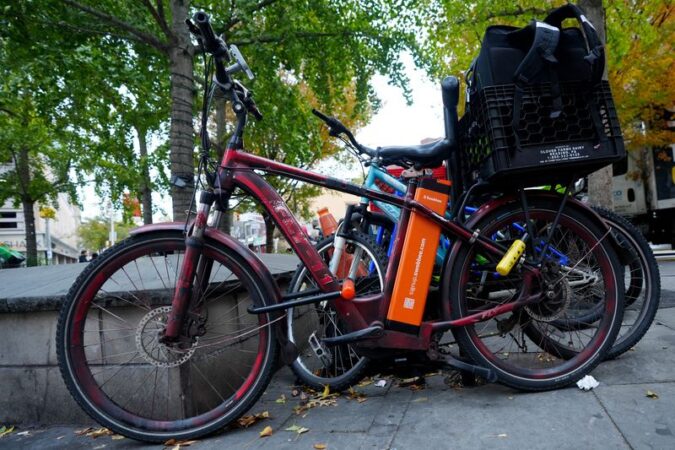
    With a flick of his pen, outgoing Gov. Phil Murphy signed a bill Monday that makes New Jersey one of the most restrictive states for e-bikes, much to the dismay of cycling enthusiasts within and beyond the Garden State’s borders.

    Under the new regulations, all e-bikes must be registered and insured, whether they are low-speed e-bikes, which require pedaling and cannot exceed 20 mph, or high-speed bikes, called motorized bicycles or e-motos, that can go up to 28 mph.

    Riders will need to be at least 15 years old and they will need a motorized bicycle license to ride. People 17 and older can ride an e-bike using a driver’s license.

    The New Jersey law treats all e-bikes as the same, whereas most other states that regulate e-bikes tend to focus on e-motos when it comes to license and insurance requirements. The slower pedal-assist bikes face a patchwork of regulations across the country, with some restrictions on where they can go. By requiring insurance for the pedal-assist bikes people use for exercise and commuting, New Jersey now has some of the toughest regulations in the country for e-bikes, and cycling enthusiasts across the country fear their states might follow suit.

    The new regulations mark a dramatic shift in how New Jersey sees e-bikes. It was only in 2019 that state leaders, including Murphy, touted them as an alternative to cars with the potential to cut emissions and congestion in the state, allowing them to operate on streets, highways, and bicycle paths.

    Introduced in the legislature in November, the bill with e-bike restrictions traveled quickly across both chambers as lawmakers felt moved to action by fatalities in the state, including that of a Scotch Plains 13-year-old boy who collided with a landscaping truck while riding his e-bike in September and died.

    “It is clear that we are in an age of increasing e-bike use that requires us to take action and update regulations that help prevent tragedies from occurring,” Murphy said Monday.

    This is a point that even the most ardent critics of the new law have long agreed with. It had been six years since the last update to e-bike laws, and they agree that reckless riders abound.

    If New Jersey Facebook groups are any indicator, the law has plenty of supporters, sick of fast e-bikes taking up sidewalk space and e-motos zipping through residential neighborhoods.

    Ocean City Mayor Jay A. Gillian said in a statement Tuesday that the city had long called for the change.

    “Nobody likes more red tape, but the benefits of the new law far outweigh the inconvenience of the new registration requirements,” he wrote.

    Still, cycling advocates maintain the law is creating an unnecessary insurance requirement on a slew of people, such as tourists going down the Shore with their low-speed e-bikes, delivery drivers, and people who use pedal-assist bikes for exercise.

    Critics worry the law is not addressing some of the main issues plaguing the industry, such as misleading advertisements marketing e-motos as e-bikes and the sale of modification hardware that makes bikes go faster.

    State Sen. President Nicholas Scutari, a Democrat whose district includes Scotch Plains, introduced the bill in November, arguing that the increase in e-bikes created dangers for riders, motorists, and pedestrians.

    “Requiring registration and licensing will improve their safe use, and having them insured will protect those injured in accidents,” he said Monday.

    The 2019 e-bike laws did include insurance requirements for e-motos, which had to be registered and titled with the New Jersey Motor Vehicle Commission, but cycling advocates say these have never been enforced.

    Debra Kagan, executive director of the New Jersey Bike Walk Coalition, said she has asked for state data on e-moto registration and there does not seem to be any.

    The MVC did not immediately respond to a request asking for e-moto registration data.

    A fiscal analysis by the New Jersey Office of Legislative Services anticipated an increase in administrative costs for the MVC to update its technology systems, for communications, and to prepare an annual registration report for all e-bike classes. It did not give an estimate of how much that could cost the state. The law comes with no money attached.

    “Now this new legislation will require that all e-bikes, even the lowest speed e-bikes that don’t have throttles, would require licensing and registration, and there is no system and no funding to implement that across the state there,” Kagan said.

    The new law, critics add, will also carry a negative economic impact for the state, despite the expected fees the OLS says will be collected through registrations and eventual penalties for violations.

    While low-speed e-bikes can exceed $2,000, budget models can start at around $400, making them a suitable affordable transportation alternative.

    Patrick Cunnane, who sits on the board of directors of the trade organization People for Bikes and is an adviser to a bike shop in Gloucester County, worries that may no longer be the case for many with the new added costs of registration and insurance.

    Shore town boosters and small bike-rental businesses also feel threatened, Cunnane said. He said it was not out of the realm of possibility that the ability to travel on e-bikes could be what tips the scales between a stay in Ocean City, N.J., or one in Ocean City, Md., or at the Delaware beaches.

    “It’s just crazy for New Jersey to isolate themselves from an activity that’s really a lot of fun and safe,” he said.

    Niclas Elmer, owner of Tuckahoe Bike Shop, which has a handful of locations in Atlantic and Cape May Counties, said even as the threat of added regulation loomed, parents balked at buying their children low-speed e-bikes.

    “It was hard for us because we couldn’t give a straight answer [regarding regulations],” said Elmer, who has been in the retail business for more than 20 years.

    Further worrying Elmer is the status of bike rentals, a key part of his business model. He doesn’t know if these will be exempt from the new laws.

    To Elmer and others, cycling advocates say the fight over e-bike regulations is not over.

    Cunnane said People for Bikes has already been in touch with the administration of new Gov. Mikie Sherrill on the matter. The hope is that in the year the state has to set its new registration framework, advocates will be able to influence new legislation that walks back some of the restrictions.

    Cunnane was encouraged by the comments of the legislators who supported the law. They clearly want to tackle what they perceive to be a large problem, he said. Cycling advocates are not against all regulation; they simply want more targeted ways to address safety concerns.

    “We think we can really help make it better,” he said.

  • SEPTA Regional Rail delays this morning are due to a train pulling down overhead wires

    SEPTA Regional Rail delays this morning are due to a train pulling down overhead wires

    SEPTA Regional Rail riders experienced significant delays — at times, 30 minutes to an hour — at the peak of morning rush hour on Tuesday morning, after a train pulled electrical wires down.

    A West Trenton Line train struck overhead electrical wires near Wayne Junction train station in the Nicetown section of Philadelphia at 7:45 a.m., said SEPTA officials.

    The train lost power and was tangled in the wires it had pulled down.

    Marie Pollock, 24, who was on board, felt the train start to gradually slow down before quickly and forcefully coming to a stop. Pollock could see wires hitting the train windows and noted that other passengers were startled during the collision.

    “We were keeping the doors closed because it was so cold,” Pollock said. “We were on kind of a hill, so there wasn’t any room for SEPTA to get a shuttle, and the power was out on both tracks, so we couldn’t get a typical rescue train to us.”

    Pollock, who had already been waiting a half-hour in 20-degree chill for her 6:17 a.m. West Trenton Line train before the ordeal, said passengers waited inside the stuck train for an hour and a half.

    SEPTA crews had to cut through the downed wires to free the train and then used a diesel-powered train to tow the disabled one to Wayne Junction, where passengers took other trains into Center City.

    Pollock’s four-hour journey didn’t end until 10 a.m. when she finally arrived at Jefferson Station.

    Since then, service interruptions have been occurring primarily on the Warminster, Lansdale/Doylestown, and West Trenton lines. However, delays cascade throughout the rail system, leading to 15 to 45-minute delays on other lines, said SEPTA spokesperson Andrew Busch.

    “Repairs are still continuing,” Busch said Tuesday afternoon, “but service has improved. Some minor delays, and we are advising passengers to plan for some extra time during rush hour, but we expect the evening commute to be better than this morning.”

    There is currently no timeline for completed repairs.

    SEPTA urges riders to use the SEPTA mobile app and septa.org for the latest updates.

    Today’s service interruptions follow a streak of solid performance by SEPTA after months of disruptions while SEPTA rushed to inspect and repair a fleet of 223 trains after five caught fire last year.

  • A N.J. power broker’s son was convicted in a fatal hit-and-run. Former Gov. Murphy pardoned him on his last day.

    A N.J. power broker’s son was convicted in a fatal hit-and-run. Former Gov. Murphy pardoned him on his last day.

    The governor’s pardon was issued Tuesday even before a jury convicted Harris Jacobs, 28, for a hit-and-run in Atlantic City that killed a pedestrian.

    The pardon was one of 97 issued by former Gov. Phil Murphy in his final hours in office. Jacobs’ attorney, Lou Barbone, told the news site BreakingAC that his client was notified even before the jury came back with its verdict on Tuesday.

    Gov. Mikie Sherrill was sworn in at noon Tuesday to be New Jersey’s 57th Governor.

    Jacobs is the son of attorney and Atlantic City power broker and Democratic fundraiser Joe Jacobs, who has longstanding ties to Murphy and his wife, Tammy.

    Harris Jacobs was involved in a fatal hit and run at 3:30 a.m.on Sept. 4, 2022 outside the Dunkin’ Donuts at Atlantic and Indiana in Atlantic City, according to the Atlantic County Prosecutor.

    Jacobs spoke to his father 10 times after the crash, but never called police, according to testimony reported by BreakingAC.

    The pedestrian, Orlando Fraga, 76, was pronounced dead at the scene. Both Fraga and Jacobs were from Atlantic City.

    Seven hours after the accident, Jacobs was arrested and charged with leaving the scene of an accident. He was initially jailed is in the Atlantic County Justice Facility, but later released pending his trial.

    Surveillance video showed Harris stopping at the Dunkin’ Donuts and rushing to the injured man. He told his roommate what happened, according to BreakingAC’s account of the trial, and repeatedly called his father, but did not call police.

    A first trial in May ended without a verdict. But the retrial ended in conviction on Tuesday, which was immediately nullified by the governor’s pardon.

    Barbone did not immediately return a request for comment. The governor’s office also did not respond to a request.

    The second-degree conviction would have carried a sentence of five to 10 years under New Jersey law.