Category: New Jersey News

  • Judge was right to toss racketeering charges against George Norcross, N.J. appeals court says

    Judge was right to toss racketeering charges against George Norcross, N.J. appeals court says

    A New Jersey appellate court on Friday declined to reinstate racketeering charges against Democratic power broker George E. Norcross III, dealing a fresh blow to prosecutors who had accused him of running a criminal enterprise.

    The three-judge panel affirmed a lower court order dismissing a 13-count indictment against Norcross, 69, and five codefendants, whom a grand jury alleged used threats of economic and reputational harm — as well as their control of Camden government — to obtain property on the city’s waterfront from a developer and a nonprofit.

    Acting Attorney General Jennifer Davenport — Democratic Gov. Mikie Sherrill’s nominee for the post — will now have to decide whether to file another appeal in a case that was brought by her predecessor. A spokesperson said the Attorney General’s Office is reviewing the opinion, which says the state has 45 days to pursue an appeal at the state Supreme Court.

    Mercer County Superior Court Judge Peter Warshaw ruled last February that none of the threats described in the June 2024 indictment were unlawful because, he said, state law permits such statements in the context of economic bargaining. Warshaw also found the charges were time-barred.

    The state Attorney General’s Office appealed Warshaw’s decision, arguing that the judge had failed to review thousands of pages of grand jury evidence and that the indictment properly alleged criminal extortion.

    On Friday, the appellate court in a 92-page opinion upheld Warshaw’s order but did so on different legal grounds. The panel said several of the indictment’s racketeering conspiracy and extortion charges were time-barred under the statute of limitations. Other counts failed to state a crime, were untimely, or both, the panel said.

    Norcross’ representatives didn’t immediately respond to requests for comment.

    In addition to Norcross — founder of insurance brokerage Conner Strong & Buckelew and chair of Cooper University Health Care — the grand jury charged his brother Philip, CEO of the law firm Parker McCay; attorney William Tambussi; former Camden Mayor Dana L. Redd; Sidney R. Brown, CEO of logistics firm NFI; and John J. O’Donnell, an executive at residential developer The Michaels Organization.

    Statute of limitations

    The case centers on Norcross’ efforts to acquire real estate in Camden following a 2013 New Jersey law he allegedly shaped that turbocharged corporate tax incentives for development in a city that had faced decades of disinvestment.

    Prosecutors say that from 2014 through 2016, Norcross and his associates threatened a nonprofit redevelopment group and Philadelphia developer Carl Dranoff, coercing them into selling property for less money than they believed it was worth.

    Norcross and his partners then used the properties to obtain millions of dollars in state tax credits for various corporate entities and later sold the credits for cash, the state says.

    In contrast to the lower court judge, the appeals panel did not weigh whether the threats allegedly made in 2014 and 2016 were unlawful. Instead, the panel said the charges associated with those threats — racketeering and extortion conspiracies — were filed by prosecutors beyond the five-year statute of limitations.

    To comply with that statute, prosecutors needed to show that the conspiracies outlined in the June 2024 indictment continued past 2019. The state contended that it met this burden because corporate entities controlled by Norcross continued to receive tax credits during that period and because the indictment says the power broker took steps to conceal his conduct in the years since.

    But the appellate panel agreed with Warshaw that “the objects of the conspiracies were concluded” with the completion of the redevelopment deals years earlier.

    The court also rejected the concealment argument, saying the indictment does not meet a legal requirement alleging an “agreement among the conspirators to continue to act in concert in order to cover up, for their own self-protection, traces of the crime.”

    Dealings with Carl Dranoff

    The appeals court did find that another charge related to waterfront real estate dealings was timely, but failed to satisfy other legal requirements.

    When Dranoff in 2018 tried to sell the 349-apartment Victor Lofts to a real estate investment firm for $71 million, the indictment says he faced resistance from Camden officials. They agreed to “slow down” a government approval at the direction of Philip Norcross — an attorney who, like his brother, had no official role in city government, the indictment says.

    The sale ultimately fell through, and the city moved to terminate Dranoff’s option to develop another property known as Radio Lofts. The dispute led to years of litigation, and Dranoff ultimately settled with the city in 2023, agreeing to forfeit his rights to Radio Lofts and pay Camden $3.3 million despite believing “he was in the right,” according to the indictment.

    Prosecutors allege this was another conspiracy to extort Dranoff. But while the alleged conduct occurred within the limitations period, the appeals panel said, the indictment failed to meet the legal requirements for alleging conspiracy to commit extortion. For example, neither George Norcross nor his codefendants were accused of threatening or planning to threaten Dranoff to settle, the panel said.

    Serving on the panel were Appellate Judges Greta Gooden Brown, Lisa Rose and Ellen Torregrossa-O’Connor.
  • A coastal ‘bomb’ and single-digit temperatures are expected this weekend in the Philly area

    A coastal ‘bomb’ and single-digit temperatures are expected this weekend in the Philly area

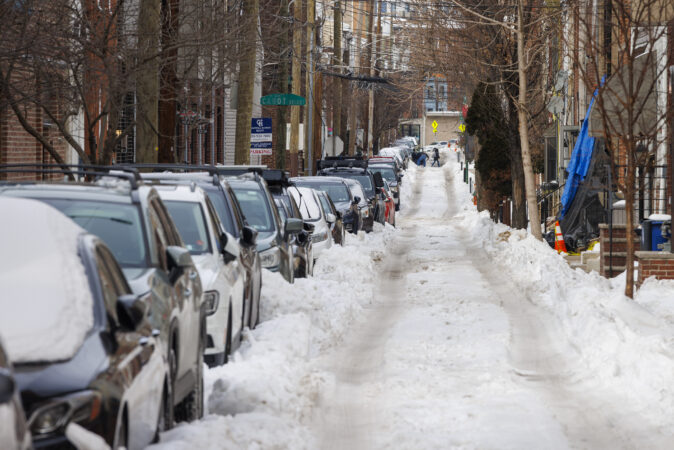
    It remains a long shot that a fresh layer of frosting will coat the hardening and tenacious snowpack, but evidently that street-congesting frozen mass isn’t exiting in the near future.

    As of Friday morning, it appeared that a potent coastal storm that is expected to qualify as a meteorological “bomb” was going to spare the Philadelphia region from another snowfall.

    But it is expected to have serious impacts on the New Jersey and Delaware beaches, with a combination of onshore gales and a tide-inciting full moon, forecasters are warning.

    On the mainland, it is poised to generate winds that would add sting to what has been one of the region’s most significant outbreaks of Arctic air in the period of record.

    Lows at Philadelphia International Airport both Thursday and Friday mornings — 13 and 11, respectively — were several degrees above what was forecast.

    But they are to drop into single digits Saturday morning, and flirt with a record. Wind chills during the weekend are expected be in the 10-below range, said Mike Silva, a meteorologist with the National Weather Service in Mount Holly.

    “Even though there might not be much or any snow in Philly,” he said, “it’s going to be cold, and we’re still going to have the wind impacts.”

    window.addEventListener(“message”,function(a){if(void 0!==a.data[“datawrapper-height”]){var e=document.querySelectorAll(“iframe”);for(var t in a.data[“datawrapper-height”])for(var r,i=0;r=e[i];i++)if(r.contentWindow===a.source){var d=a.data[“datawrapper-height”][t]+”px”;r.style.height=d}}});

    Is the snow threat off the table for Philly?

    Computer models continue to keep the storm far enough off the coast to preclude a major snowfall inland.

    But “it wouldn’t take much of a jog west to really mess up the forecast,” said Tom Kines, senior meteorologist with AccuWeather Inc. It’s been known to happen.

    On Friday morning, the National Weather Service was posting a 30% chance that Philly would get something measurable — technically 0.1 inches — Saturday night into Sunday, with about a 10%shot at an inch.

    The weather service was expecting an inch at the Shore, but with a slight chance of several inches.

    Forecasters are certain that a storm is going to blow up off the Southeast coast as frigid air that is penetrating all the way to Disney World interacts with the warm waters of the Gulf Stream.

    Gusts at the Shore during the day Sunday might be as high as 40 mph as the storm could reach “bomb” status.

    What exactly is a ‘bomb?’

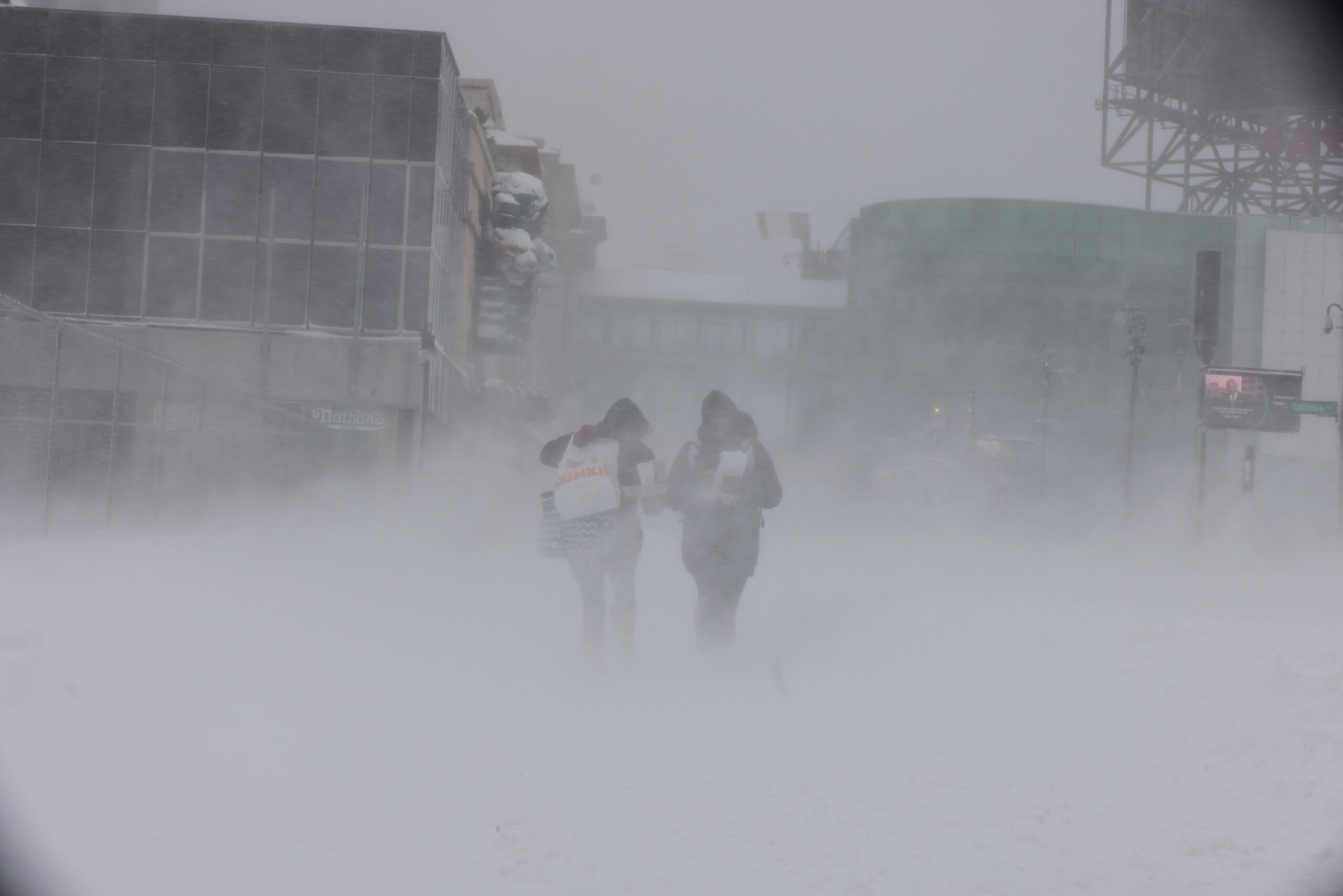
    Two brave souls endure the snow and winds from a meteorological bomb cyclone in Atlantic City in January 2022.

    The technical definition of a meteorological bomb is a drop in central barometric pressure of 0.7 inches in a 24-hour period, about a 2% to 3% change in the weight of the air. That might not seem like much, but it’s a big deal if you’re a column of air.

    Such a drop in pressure indicates a rapidly developing storm. Air is lighter in the centers of storms, as precipitation is set off by lighter warm air rising over denser cold air.

    As a weather term, bomb first appeared in an academic paper in 1980 by atmospheric scientists Frederick Sanders at the Massachusetts Institute of Technology and John Gyakum at McGill University.

    They found that the western Atlantic, in the proximity of the Gulf Stream, was one of two regions on the planet most prone to bombs. The other was the area near the Kuroshio Current in the far northwestern Pacific.

    Both are massive reservoirs of warmer waters that interact with cold air coming off land masses. Some of the European settlers in the colonial era learned about the effects the hard way, experiencing mega-storms that were alien to areas in England.

    Gyakum, who was Sanders’ graduate student at MIT, recalled Thursday that the duo took some blowback for using the word bomb.

    But with a cyclone of such ferocity, the term was worth using to draw the public’s attention to potential impacts, which sometimes exceed those of hurricanes, Gyakum said.

    He said he had no doubt this weekend’s storm would reach bomb status.

    While any heavy snows from this storm are likely to bypass the Philly region, some accumulating snow is possible the middle of next week, Kines said, although nothing in a league with what happened Sunday.

    When can Philly expect a thaw?

    Temperatures during the coming workweek are due to moderate, at least slightly, with highs around freezing Monday through Thursday, 10 to 12 degrees warmer than what is expected this weekend.

    The cold “certainly eases up,” Kines said.

    But that 9.3 inches of snow and sleet that accumulated Sunday evidently has taken a particular liking to the region. As for when it will disappear, he said: “It’s going to take a while.”

    The overall cold upper-air pattern looks to persist, said Paul Pastelok, AccuWeather’s long-range forecaster. And the extensive snow cover is going to have a refrigerant effect on temperatures.

    So when will it warm up and go away?

    “We’ll find out Monday,” Kines said. He was referring to Groundhog Day, of course, when Punxsutawney Phil will issue his extended forecast.

    Nevertheless, he said, meteorologists will be on call if needed.

    “It never hurts to get a second opinion,” he said.

  • Mikie Sherrill supports enshrining N.J.’s existing sanctuary policy into law as immigrant rights groups push for an expanded version

    Mikie Sherrill supports enshrining N.J.’s existing sanctuary policy into law as immigrant rights groups push for an expanded version

    New Jersey Gov. Mikie Sherrill supports cementing the state’s sanctuary state policy into law — as it’s already written.

    The Immigrant Trust Directive, commonly called a sanctuary policy, restricts state law enforcement from cooperating with U.S. Immigration and Customs Enforcement (ICE). Enshrining the policy into law would ensure future governors of either party could not unilaterally take it away. As of now, the directive could be undone with a flick of a pen.

    Immigrant rights groups in New Jersey have pushed for several years to make the policy permanent with a new law, a move they say is increasingly urgent amid President Donald Trump’s immigration crackdown in Minneapolis, which has reverberated across the country. But those activists want to expand protections, which could clash with Sherrill’s approach.

    “Gov. Sherrill supports a bill to codify the directive,” her spokesperson Sean Higgins said. “What she does not support is anything that undermines the ability to defend our protections in court, which puts people at risk.”

    Sherrill has said making changes to the directive while making it law could invite lawsuits and risk the whole policy, which was enacted during Trump’s first presidency and has survived federal judges appointed by both Trump and former President George W. Bush.

    “New Jersey’s directive has already withstood judicial review — and that additional action, if not precise, could undo important protections which we cannot risk under the Trump administration,” Sherrill said during her primary campaign.

    Higgins said those concerns “have not changed.”

    Immigrant rights groups nearly reached the finish line late last year after the state legislature passed a bill that included some of the changes they wanted to make.

    But former Gov. Phil Murphy rejected the bill in his final hours in office. Like Sherrill, he said the policy could be in jeopardy if it changed and could invite lawsuits.

    Amol Sinha, the executive director of ACLU New Jersey, disagrees.

    The bill Murphy vetoed — which Democratic lawmakers have already signaled they will reintroduce in the new session would remove an exception for law enforcement to work with federal immigration authorities on final orders of removal and prohibit law enforcement from providing money to federal immigration authorities.

    Sinha and others who support the bill say those changes would be on solid legal ground. Since the courts previously found federal law does not preempt the state’s immigration policy, and the state has the right to determine where its resources go, he said, he believes Murphy’s veto was overly cautious.

    “We cannot be in a situation where we’re constantly afraid of lawsuits and therefore we don’t pass any laws,” Sinha said. “There is legal risk to every law that passes in New Jersey. You’re going to get sued, and if you don’t want to get sued, then you shouldn’t be in government.”

    Sherrill’s stance on the matter has, at times, been ambiguous.

    After a general election debate in late September, she said she was “going to focus on following the law and the Constitution” when pressed by reporters on whether she would keep the directive in place. In October, she said she supported aspects of the policy but also suggested she wanted to revisit it.

    During the primary contest, her spokesperson said Trump “is changing the rules rapidly” and Sherrill would “address the circumstances as they exist,” but she had also signaled support for keeping the policy.

    Since taking office last week, Sherrill has taken other steps to try to shield the state from ICE. She announced Thursday that her administration plans to launch a state database for New Jerseyans to upload videos of ICE operations in the state after two fatal shootings in Minnesota.

    But the pressure to work with legislators on making the sanctuary directive law remains.

    Assemblymember Balvir Singh, a Burlington County Democrat and cosponsor of the bill Murphy rejected, said part of the urgency is concern over Trump’s threats to withhold federal funding from Democratic-led states over policy disagreements.

    Even though Sherrill has kept the policy in place, a directive carries less weight than a statute backed by two branches of government.

    “Our executive can be put under a tremendous amount of pressure where they have to figure out how they’re going to fund our social services systems that rely on federal funding,” Singh said.

    Just last week, Trump directed federal government agencies to review funding for several Democratic states, including New Jersey, almost all of which were on a list of sanctuary jurisdictions produced by his administration.

    The one exception was Virginia, where new Democratic Gov. Abigail Spanberger rescinded a directive that instructed law enforcement to work with ICE. The previous week, Trump said he planned to cut off federal funding for states with sanctuary cities.

    Singh, whose district includes communities with large immigrant populations, said preserving the seven-year-old policy through law is “the very minimum.”

    ‘I take Gov. Sherrill at her word’

    Sherrill declined to comment on the specifics of the bill that reached Murphy’s desk, and the question will be whether lawmakers are able to enact changes to the current directive or if she will only sign a carbon copy of what already exists.

    The sanctuary bill was one of three pieces of legislation aimed at protecting immigrants that Murphy weighed in his final days in office. He signed one about creating model policies for safe spaces in the state and vetoed another aimed at limiting data collected by government agencies and health centers, citing a “drafting oversight.”

    As she waited anxiously for Murphy’s decisions on the bills earlier this month, Nedia Morsy, the executive director of immigrant advocacy group Make the Road New Jersey, said that New Jersey should not “make policy based on fear” and that immigrants in the state were experiencing a “collective feeling of suffocation.”

    She criticized Murphy’s vetoes, saying legal experts had already vetted the bills.

    Sherrill has repeatedly promised to fight Trump and recently said that ICE agents are “occupying cities, inciting violence, and violating the Constitution” and need to be held accountable “for their lawless actions.”

    Her comments have given some activists hope that she will be willing to work with them.

    And while a single bill cannot stop ICE from sweeping New Jersey communities, Sinha said, the state can “put up safeguards and guardrails” through policies like the ones Murphy rejected.

    “I take Gov. Sherrill at her word that she wants to push back against authoritarianism,” he added, “and to me, that means doing whatever we can to protect immigrants in our state.”

  • Gov. Mikie Sherrill says N.J. will create a database for uploading videos of ICE: ‘Get your phone out’

    Gov. Mikie Sherrill says N.J. will create a database for uploading videos of ICE: ‘Get your phone out’

    New Jersey Gov. Mikie Sherrill said her administration will create an online database for people to upload videos they record of ICE.

    “If you see an ICE agent in the street, get your phone out,” she urged New Jerseyans in an appearance on The Daily Show on Wednesday night with host Desi Lydic in New York City.

    Sherrill, a Democrat and former member of Congress, said her administration will set up an online portal “so people can upload all their cell phone videos and alert people.”

    Cell phone video from onlookers has been used to rebut the narrative of President Donald Trump’s administration after federal agents fatally shot Renee Good and Alex Pretti in Minneapolis.

    Sherrill outlined her plan just eight days after she was sworn into office. She became the second woman to lead the state and the first female veteran governor in the country.

    “They will pick people up, they will not tell us who they are … they’ll pick up American citizens. They picked up a 5-year-old child,” she said on the show. “We want documentation, and we are going to make sure we get it.”

    The policy announcement was not featured in the television broadcast, but it was posted to YouTube shortly afterward by The Daily Show.

    New Jersey residents routinely report ICE activity and arrests around the state, including recently in Bridgeton and Princeton. The Garden State is home to about the seventh-largest undocumented population in the country, an estimated 476,000 people, according to the Migration Policy Institute in Washington.

    Amy Torres, executive director of the New Jersey Alliance for Immigrant Justice, said Sherrill needs to do more.

    “We don’t need to see more evidence of what ICE is doing,” Torres said. “They’ve arrested a New Jersey mayor. They’ve gone after a sitting member of Congress. They’ve opened up a 1,000-bed facility in our state’s largest city and they’re ripping our families apart. New Jersey doesn’t need more evidence, we need leadership who is going to act.”

    She said the governor should work to pass additional immigrant protections, like those contained in two bills former Gov. Phil Murphy rejected in his final day in office that would have safeguarded immigrants’ data and expanded the state’s sanctuary policy.

    Sherrill, meanwhile, also said her administration plans to put out information to help New Jerseyans know their rights in the state. And she said she will not allow ICE raids “to be staged from state properties.”

    Sherrill, a former Navy helicopter pilot, compared U.S. Immigration and Customs Enforcement to secret police forces she observed in foreign nations during her service.

    “I knew where this was headed when we started to see DHS people taking loyalty oaths to the president, not the Constitution,” she said. “We saw people in the street with masks and no insignia, so not accountable at all, hiding from the population.”

    New Jersey has become a key state in the Trump administration’s plan to arrest and deport millions of immigrants, and has been slated for an expansion of ICE detention.

    A facility in Elizabeth was for a time the only detention center in the state. But the 1,000-bed Delaney Hall in Newark was reopened for detention in May, and the administration recently announced plans to hold 1,000 to 3,000 detainees at Joint Base McGuire-Dix-Lakehurst, which spans parts of Burlington and Ocean Counties.

    The specific details surrounding that South Jersey undertaking remain unknown.

    In Wednesday night’s television appearance, Sherrill denounced the Minneapolis shootings, calling Good “a mother of three, who drops her 6-year-old off in her Honda Pilot and then gets shot and killed.”

    And she noted that Pretti worked at the Minneapolis VA as an ICU nurse.

    “I saw his official photo, and I’ve seen a million of those … with the flag in the background, I know those guys,” Sherrill said.

    Pretti was fatally shot by a Border Patrol agent, while Good was shot and killed by an ICE agent. Both agencies fall under the Department of Homeland Security.

    The new governor also said on The Daily Show that she called Trump to discuss his decision to freeze funding for the planned Gateway Tunnel in North Jersey, a project championed by Sherrill that would connect New York and New Jersey under the Hudson River.

    New Jersey Gov. Mikie Sherrill does her best New Jersey “Oh!” and “C’mon!” impressions on The Daily Show with host Desi Lydic.

    “I haven’t heard back from him yet to flag for him that this is about 100,000 jobs in the region, and by the way, his numbers aren’t looking so good in that area,” she said.

    Sherrill said the president “should listen to me because I just won back all his voters,” citing her victory in November of more than 14 percentage points, outperforming her Democratic predecessors and reversing rightward shifts in 2024.

    But she also said it is time to “rethink” the federal government’s relationship with states because of attacks from Trump.

    “We need to start looking at expanding,” she said. “This is a time when I think we’re going to see a large expansion of state power, because the states are the rational actors in this space.”

    Sherrill also played a game with Lydic where she picked which things were most New Jersey, choosing Tony Soprano over Snookie; hating New Yorkers over hating Pennsylvanians; diners over Wawa; and “C’mon!” over “Oh!”

  • Former Willingboro mayor is found guilty of mortgage fraud

    Former Willingboro mayor is found guilty of mortgage fraud

    The former mayor of Willingboro Township and a business associate were found guilty by a federal jury of mortgage fraud, the U.S. Attorney’s Office in New Jersey said Wednesday.

    Nathaniel Anderson, 59, who is still a town councilman in Willingboro, and Chrisone D. Anderson, 58, of Sicklerville, were each convicted of one count of conspiracy to commit wire fraud affecting a financial institution, one count of bank fraud, and two counts of making a false statement on a mortgage application, said Senior Counsel Philip Lamparello from the prosecutor’s office.

    The jury deliberated for less than three hours after a two-week trial before U.S. District Judge Robert Kirsch in federal court in Trenton, Lamparello said.

    Sentencing is scheduled for June 1. “Though we respect the jury’s decision, we plan to appeal this conviction to the Third Circuit Court of Appeals,” Troy A. Archie, attorney for Chrisone Anderson, said in an email.

    Anderson was represented by federal public defenders who could not be reached Wednesday night.

    The Andersons, who are not related, conspired to save Nathaniel Anderson’s home, which was facing foreclosure in 2015, by orchestrating a fraudulent short sale to Chrisone Anderson, prosecutors said.

    The scheme involved Chrisone Anderson posing as a buyer of the home and claiming that Nathaniel Anderson would no longer live there so that his mortgage lender would forgive the rest of his loan.

    The fraudulent misrepresentations included that Chrisone Anderson would occupy the home as her primary residence, prosecutors said.

    Nathaniel Anderson’s problems with his residency began in 2009 as he and his then-wife fell behind on mortgage payments, prosecutors said.

    The couple divorced, but Anderson wanted to keep his home through a short sale. That’s a process by which a mortgage lender agrees to write off the remaining debt of a mortgage holder in default — provided the holder can arrange a sale of the property to dispense with most of the remaining debt.

  • Philly snow cleanup: What to know about plowing, parking, schools, and more

    Philly snow cleanup: What to know about plowing, parking, schools, and more

    As Mayor Cherelle L. Parker put it earlier this week, we’re not out of the woods yet.

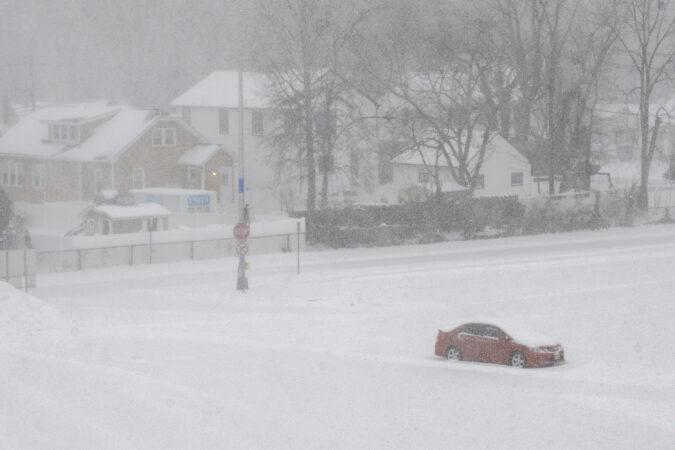
    The storm that hit Philadelphia Sunday brought with it 9.3 inches of snow for the city proper — the most we’ve seen at one time in a decade. And while that really sells the wintery vibe — especially when combined with the bitter cold we’re experiencing — cleanup efforts are ongoing.

    Highways and public transportation in the region are largely restored, but some city streets remain packed with snow and ice. City school buildings Wednesday were in their third day of snow-related closures. And we might even be looking at more snow to come.

    Here is what you need to know:

    Roads (mostly) cleared

    PennDot’s vehicle and speed restrictions have been lifted on all interstates and major highways across the Philadelphia region, as were those on state roads in New Jersey. But street plowing in the city remains a work in progress.

    Residents from around the city told The Inquirer many side streets and some secondary streets remained coated in several inches of snow and ice, making traveling on them difficult or impossible. Data from PlowPHL, a service that tracks plow movement, indicated Tuesday that roughly a quarter of city streets had not received any snow treatment since the storm.

    Parking enforcement resumes

    The Philadelphia Parking Authority reopened its offices Wednesday, and began on-street parking enforcement for safety violations including parking in bus zones and in front of fire hydrants. The 24-hour $5 emergency garage parking rate was also rescinded, with PPA garages returning to their usual rates, the authority said.

    Public transit resuming

    SEPTA on Monday restored all of its subway, trolley, and suburban trolley services, and as of Wednesday was running Regional Rail lines on their normal weekday schedules. Bus service, SEPTA notes online, is largely operational, though several routes remain suspended due to road conditions.

    Among the suspended buses Wednesday were routes 3, 5, 40, 41, and 115, according to the agency’s alerts page. The suspended routes, SEPTA indicated, would be restored “once it is safe to do so.”

    PATCO, meanwhile, returned to its normal weekday schedule Tuesday.

    Airport operational

    Philadelphia International Airport experienced hundreds of flight cancellations and delays due to the storm, but remained open despite the inclement weather, Parker said at a news conference this week.

    As of early Wednesday afternoon, the airport had experienced about 87 delays and 57 cancellations, according to flight data tracking website FlightAware. On Monday, the day after the storm, there were 326 delays and 290 cancelations, followed by 255 delays and 156 cancelations Tuesday, FlightAware indicated.

    Schools go virtual

    Philadelphia school buildings are slated to reopen Thursday after three straight days of being closed in the wake of the storm. A full snow day was declared Monday, followed by two days of virtual learning Tuesday and Wednesday.

    Archdiocesan high schools and city parochial schools will also go back to in-person classes Thursday.

    Students and staff who arrive late to class due to weather-related issued would not have their lateness counted against them, Superintendent Tony B. Watlington Sr. said.

    This week’s disruption to the usual school schedule had begun taking its toll on some parents. Outside the city, many suburban districts had already reopened by Wednesday.

    More snow possible

    Post-storm, the Philadelphia region faces frigid temperatures that are expected to remain well below freezing until at least Feb. 4. Highs were expected to top out around the teens, and lows consistently in the single digits — along with wind chills reaching down into the negatives.

    And then, of course, there is the potential for more snow this weekend.

    Forecasters said Wednesday that it remained unclear exactly what we should expect, but a major coastal storm is likely to appear during the weekend. Early computer models indicated that the system would remain far offshore enough to spare the Philadelphia area from major snowfall, but accumulation predictions remain in flux.

  • Most New Jersey public schools have reopened, and here’s how they’re making up missed days

    Most New Jersey public schools have reopened, and here’s how they’re making up missed days

    After the major snow storm that shut down many New Jersey public schools for at least two days, the big question for students and teachers is how districts will make up missed time.

    Most South Jersey districts reopened Wednesday, many with two-hour delays because of frigid temperatures and icy neighborhood streets and side roads.

    Winslow schools in Camden County remained closed for a third consecutive day, citing ongoing hazardous road and sidewalk conditions. The sprawling 58-square-mile municipality is one of the largest in New Jersey. Parents have complained in social media posts about icy streets and bus stop routes.

    Meanwhile, Eastside High School in Camden was also closed due to icy conditions near the school, while the rest of the district reopened. Camden has many students who walk to school. The district said the day would be made up.

    Late Wednesday, Davida Coe-Brockington, Camden’s acting state district superintendent announced that all city schools would be closed Friday.because of road conditions. She said the district plans to reopen Friday with a two-hour delay.

    School officials consider factors such as road conditions, snow and ice accumulation, and readiness of the campus, sidewalks, and parking lots, said Haddon Heights Superintendent Carla Bittner. Her district used its only built-in emergency closing day.

    “The safety of our students and staff is our absolute priority,” Bittner said.

    With 50 days left of winter and the possibility of another storm looming this weekend, additional snow days may be on the horizon, further disrupting school calendars, parental work days, and vacation plans. And districts must still meet the state requirement of 180 school days.

    How do districts make up snow days?

    Some districts have days built into the calendar for the school year for inclement weather, or tack on additional days as needed at the end of the school year. The state leaves it to local districts decide how many days to set aside.

    In Cherry Hill, where schools were closed for two days this week, the district will use days already designated as holidays. That means students will go to school Feb. 16, President’s Day and March 30, which was supposed to be the first day of spring break.

    If needed, Cherry Hill would use March 31 to make up another snow day, according to Nina Baratti, a district spokesperson. Even with inclement weather days, the last day of school (June 18) has not changed, she said.

    Haddon Heights will convert a March 13 in-service day for teachers into a full instruction day for students, according to its calendar. Additional days would be pulled from spring break in April if needed.

    Woodbury Superintendent Andrew Bell said his district would use two days set aside for professional development for teachers to make up snow days this week.

    How many school days are required?

    The New Jersey Department of Education requires schools to be open for a minimum of 180 days in order to qualify for state funding.

    The school year must align with the state’s fiscal year and end on June 30 or earlier. Most union contracts with local districts require schools to close by June 30. Districts typically try to avoid keeping schools open late into June, when unairconditioned buildings can become unbearable.

    According to Timothy Purnell, executive director of the New Jersey School Boards Association, the number of snow days also can be determined during negotiations between the district and union leaders.

    What about virtual learning?

    Like most states, New Jersey allowed virtual and hybrid instruction when the pandemic shut down schools. However, state law now strictly limits remote learning.

    While Philadelphia and New York City shifted to remote classes because of snow closings, New Jersey only allows virtual instruction under limited circumstances, according to the state Department of Education.

    School districts may seek approval for virtual learning for school closures lasting more than three consecutive days because of a declared state of emergency, declared public health emergency, or a directive by a health agency or officer ordering a public health-related closure.

  • A Cherry Hill man with autism was kicked off a cruise | Inquirer Cherry Hill

    A Cherry Hill man with autism was kicked off a cruise | Inquirer Cherry Hill

    Hello, Cherry Hill! 👋

    A Cherry Hill mom is on a mission to increase understanding for people with autism after her adult son was kicked off a cruise last month. Also this week, we look at whether Wegmans is using biometric technology to spy on its customers, we’ve mapped how much snow fell around town this past weekend, plus a township resident has been charged in the hit-and-run death of a pedestrian.

    If someone forwarded you this email, sign up for free here.

    A Cherry Hill mom is advocating for greater autism awareness after her son was kicked off a cruise

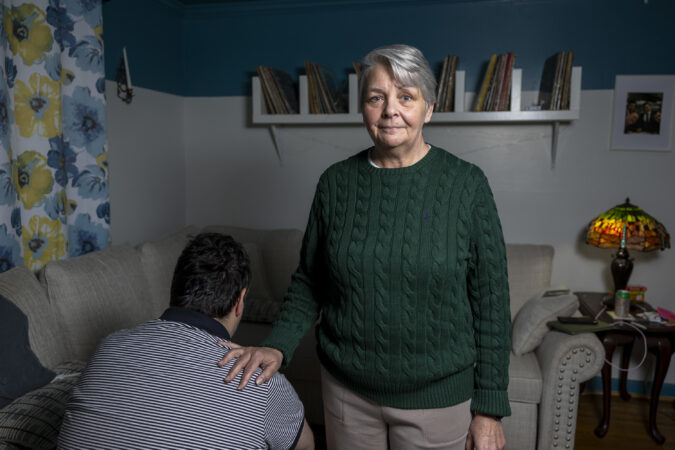
    Cherry Hill resident Carolyn Piro poses for a portrait with her son Sean Curran, who has autism.

    Cherry Hill resident Carolyn Piro’s first vacation in a decade didn’t end how she expected. The mom of four — including a son with autism and two other sons with development disabilities — took her family on a Celebrity Cruise to the Caribbean last month to celebrate her 60th birthday.

    She chose the cruise line because the company, Royal Caribbean, claims to offer an “autism friendly” environment. But when her eldest son was kicked off the ship on Christmas Eve over an incident on board, Piro found staff lacked understanding about his needs.

    After having what she described as the “worst Christmas ever,” Piro is on a mission to increase awareness and acceptance for people with autism, The Inquirer’s Melanie Burney reports.

    Is the Cherry Hill Wegmans collecting shoppers’ biometric data?

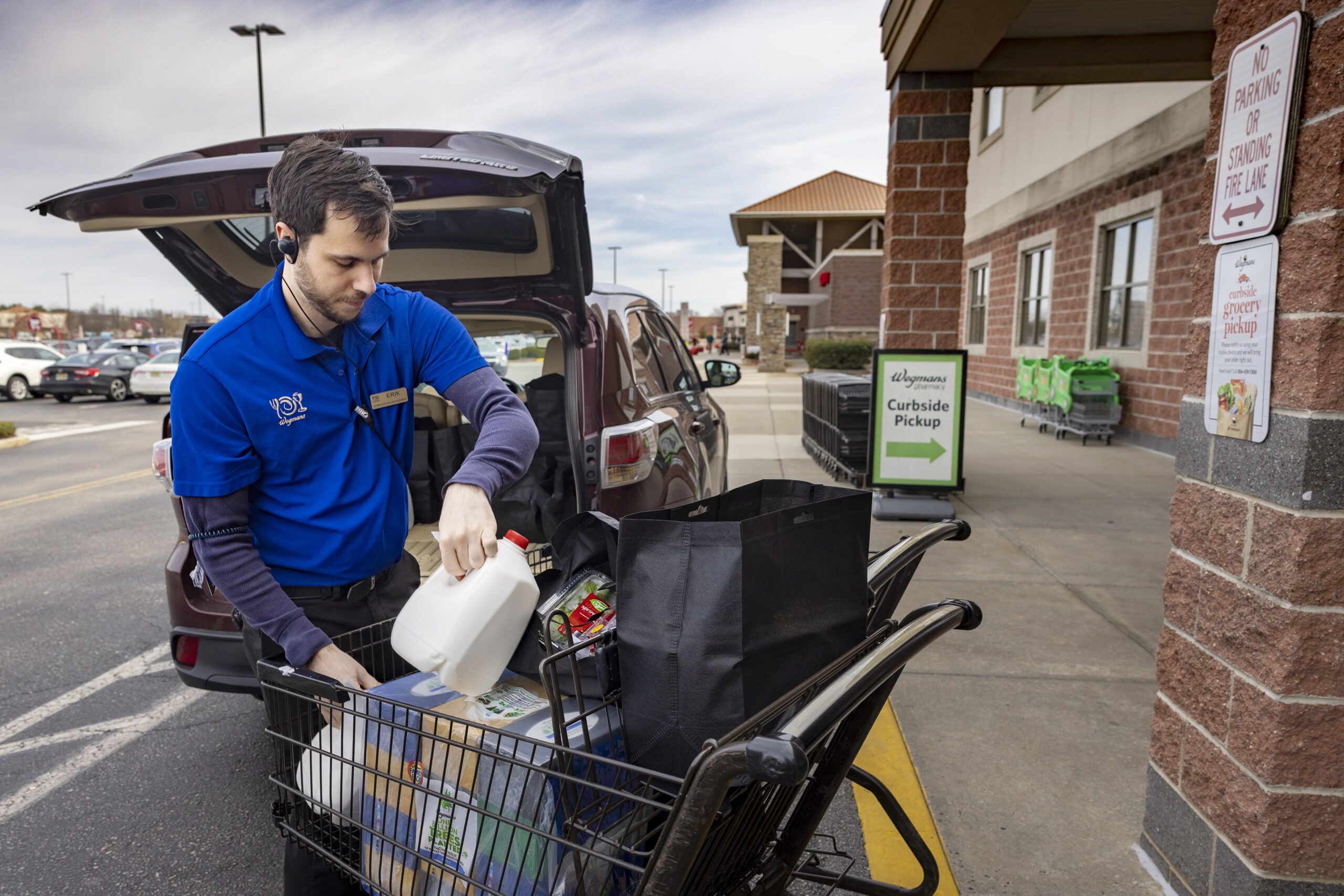
    Wegmans has nine New Jersey locations, including in Cherry Hill and Mt. Laurel.

    Signs in New York City Wegmans grocery stores recently alerted shoppers that it was collecting biometrics, raising concerns about what it was doing with that data and whether it was collecting it from other stores, too.

    The popular Rochester, New York-based grocery store won’t say if it’s collecting similar data at its Cherry Hill location, but noted it does have cameras with facial recognition technology in “a small fraction of our stores that exhibit an elevated risk,” The Inquirer’s Denali Sagner reports.

    Read more about why biometric technology is gaining traction in stores beyond Wegmans.

    💡 Community News

    • The region saw its largest snowstorm in a decade over the weekend, with Cherry Hill recording 9.3 inches as of Monday morning, according to one figure reported to the National Weather Service. Freezing temperatures are expected to remain this week, meaning the snow and ice aren’t going anywhere. Check out a map of where the most snow fell.
    • Due to the storm, Monday’s township council meeting has been pushed to tonight. The caucus meeting is at 7 p.m., with the council meeting slated for 7:30 p.m.
    • A 34-year-old Cherry Hill resident has been charged in the death of a 75-year-old woman in a hit-and-run on Jan. 17. Shakira Carter allegedly hit Andrea Wilson and her dog, Ozzie, near a crosswalk in the Evesham Road and Alpha Avenue area. Carter, a juvenile detention officer, fled the scene before returning in a different vehicle. She has been suspended from work with the Camden County Juvenile Detention Center and charged with second-degree leaving the scene of a fatal motor vehicle accident. (NBC10)
    • Last week, Cherry Hill residents Giselle V. Brown and Ted Gallagher were recognized as recipients of the 2026 Camden County Freedom Medal for their contributions to the community. Township resident Jim Peeler was also presented with the 2026 Camden County Congressional Award.
    • Women’s apparel and accessories store Francesca’s, which has a location at the Cherry Hill Mall, is reportedly closing its remaining stores after years of financial turmoil. Francesca’s filed for Chapter 11 bankruptcy protection in late 2020. (Fox Business)
    • In case you missed it, Club Studio Fitness recently announced it will open a 30,240-square-foot location at Ellisburg Shopping Center in the former Buy Buy Baby space.
    • Gearing up for the Academy Awards? While they may still be six weeks out, the AMC Cherry Hill 24 is screening several of the nominated movies, including the William Shakespeare-inspired Hamnet, the Leonardo DiCaprio-led One Battle After Another, and the 1930s-set Sinners.

    🏫 Schools Briefing

    • Due to snow closures on Monday and Tuesday, the district has planned make-up days for Feb. 16, previously allocated as a holiday for President’s Day, and March 30, which was originally the first day of spring break.

    🍽️ On our Plate

    • In case you missed it, the James Beard Award semifinalists were announced last week, and there are two Cherry Hill ties among them: Russ Cowan of Radin’s Delicatessen was nominated in the Best Chef: Mid-Atlantic category, and township native Greg Vernick got the region’s lone nod in the Outstanding Restaurateur category.
    • Speaking of Greg Vernick, his latest restaurant, run by fellow Cherry Hill native Meredith Medoway, opened yesterday. Located in Kensington, Emilia is a neighborhood trattoria with a seasonal menu featuring house-made pasta and live-fire cooking.

    🎳 Things to Do

    🛍️ Hott’s Pop-Up Home and Lifestyle Show: Browse local businesses selling home decor, food, and art. ⏰ Friday, Jan. 30-Sunday, Feb. 1, times vary 💵 Pay as you go 📍Cherry Hill Mall

    🧸 The Winter Fever Toy Show: Browse over 180 tables of antique and collectible toys. ⏰ Saturday, Jan. 31, 9 a.m. admission for early buyers, 10 a.m.-4 p.m. for general admission 💵 $10 general admission, $20 for early buyers, free for kids under 12 📍Cherry Hill Army National Guard Recruiting Station

    📼 The Bygone Boomerang Vintage Show: If you’re in search of other vintage finds, this show features vendors selling goods like housewares, clothing, art, and more from the 1950s to ‘90s. ⏰ Sunday, Feb. 1, 10 a.m.-4 p.m. 💵 $5, free for kids under 12 📍Cherry Hill Army National Guard Recruiting Station

    ❤️ Galentine’s Besties Brunch: Tickets are going fast for this third annual event, which connects women with one another. Attendees are encouraged to wear red. ⏰ Sunday, Feb. 1, 1-4 p.m. 💵 $36.09 📍Vera

    🏡 On the Market

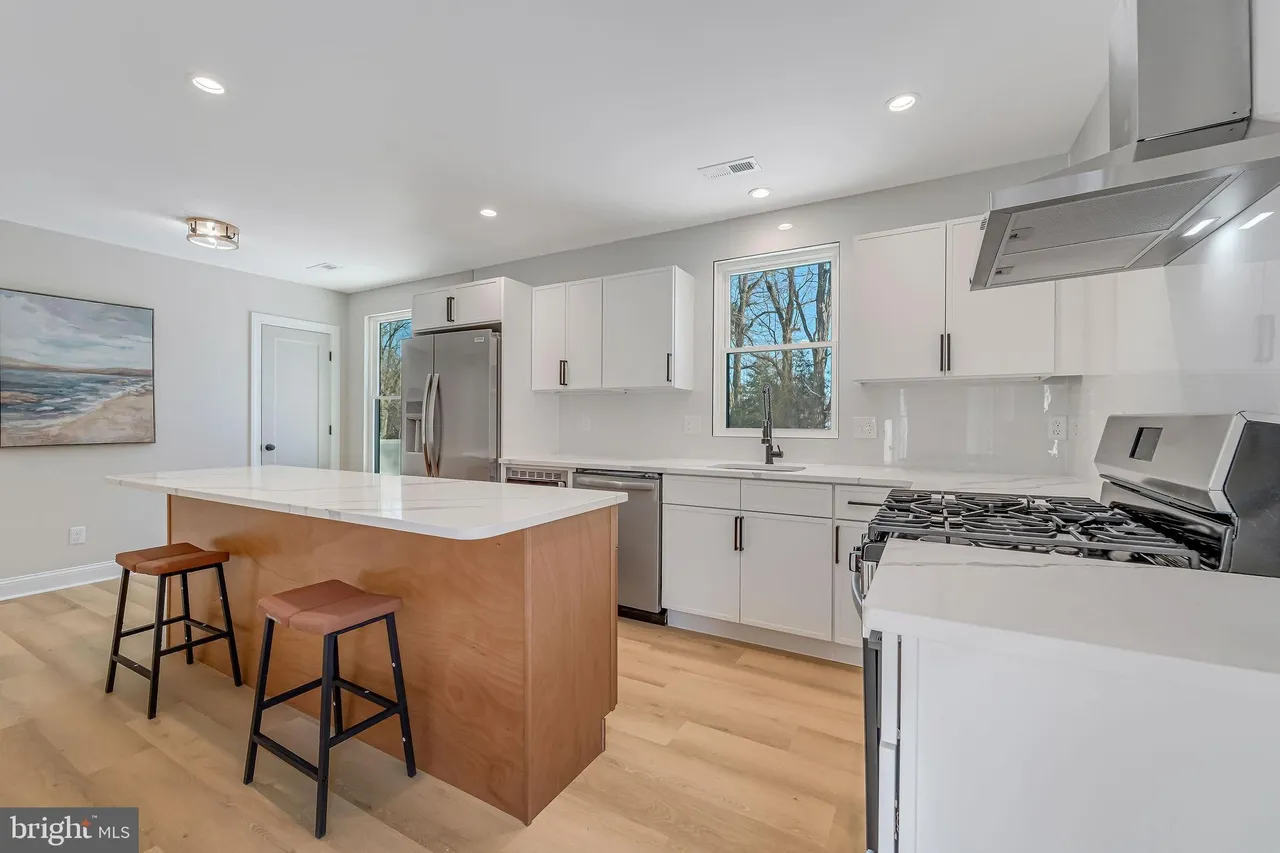
    A completely updated Ashland home

    The updated kitchen features two-tone cabinetry and an island.

    Located in the Ashland neighborhood, this three-bedroom, two-bathroom home recently underwent a full renovation down to the studs, and now has new windows, a new roof, new HVAC and electrical systems, as well as a completely updated interior. The first floor features a kitchen with an island, a living room, two bedrooms, including the primary, and a full bathroom. There’s another room and bathroom upstairs, and a basement downstairs. There’s an open house Saturday from 11 a.m. to 2 p.m.

    See more photos of the home here.

    Price: $395,000 | Size: 2,470 SF | Acreage: 0.17

    📈 Cherry Hill market report

    • Median listing price: $435,000 (down $25,000 from November) 📉
    • Median sold price: $492,500 (up $35,000 from November) 📈
    • Median days on the market: 52 (up 11 days from November) 📈

    This Cherry Hill market report is published on a monthly basis. Above is data for December from realtor.com.

    🗞️ What other Cherry Hill residents are reading this week:

    By submitting your written, visual, and/or audio contributions, you agree to The Inquirer’s Terms of Use, including the grant of rights in Section 10.

    This suburban content is produced with support from the Leslie Miller and Richard Worley Foundation and The Lenfest Institute for Journalism. Editorial content is created independently of the project donors. Gifts to support The Inquirer’s high-impact journalism can be made at inquirer.com/donate. A list of Lenfest Institute donors can be found at lenfestinstitute.org/supporters.

  • ‘Bone-chilling’ cold is sticking around Philly, and so is the snow

    ‘Bone-chilling’ cold is sticking around Philly, and so is the snow

    Out of the snow globe, and into the freezer.

    After having experienced its heaviest snowfall in about a decade, the Philadelphia region now faces frigid temperatures that are expected to barely squeak out of the teens until next week. And all while dealing with cleanup from the 9.3 inches of snow that blanketed the city, a task made more complicated by minimal natural melting due to the cold — plus monitoring another potential winter storm for this coming weekend.

    But don’t panic just yet. Forecasters at the National Weather Service office in Mount Holly say it’s too early to tell whether mean old Jack Frost will set his sights on us once again in the coming days, and what level of snowfall we could see if he does.

    “There will likely be a system somewhere off the Eastern Seaboard over the weekend,” said weather service meteorologist Joe DeSilva. “But it’s very uncertain at this point.”

    Besides, we’ve got enough to worry about already.

    It won’t just be cold in the Philadelphia area this week — it will be dangerously so. On Tuesday, temperatures generally stretched only into the low or mid 20s, a good five to 10 degrees lower than what we saw Monday, the weather service said. Lows, meanwhile, stuck stubbornly in the single digits, with wind chills making it feel like zero or below.

    That cold, it seems, will refuse to budge until next week. As we move through the final week of January, temps are expected to continue to nosedive, the weather service said.

    Daytime highs throughout the week are expected to top out in the mid- or upper teens in the Philadelphia region, with some spots seeing the off chance of making it into the 20s. Lows are likely to stick in the single digits through Friday. As the weather service put it in a Tuesday afternoon update, this is “bone-chilling” cold that has the potential not only to stress the energy grid — as New Jersey and Philadelphia officials alluded to Monday — but also to cause frostbite and hypothermia.

    Philadelphia, in fact, has the grim potential of hitting zero degrees for the first time in 32 years sometime in the coming days. We haven’t seen zero at the Philadelphia International Airport since Jan. 19, 1994, but that mercifully long streak could be broken Thursday or Friday, when temperatures are expected to go as low as 2 or 3 degrees, DeSilva said.

    “We still have three nights before we get there, so lots could change between now and then,” he added.

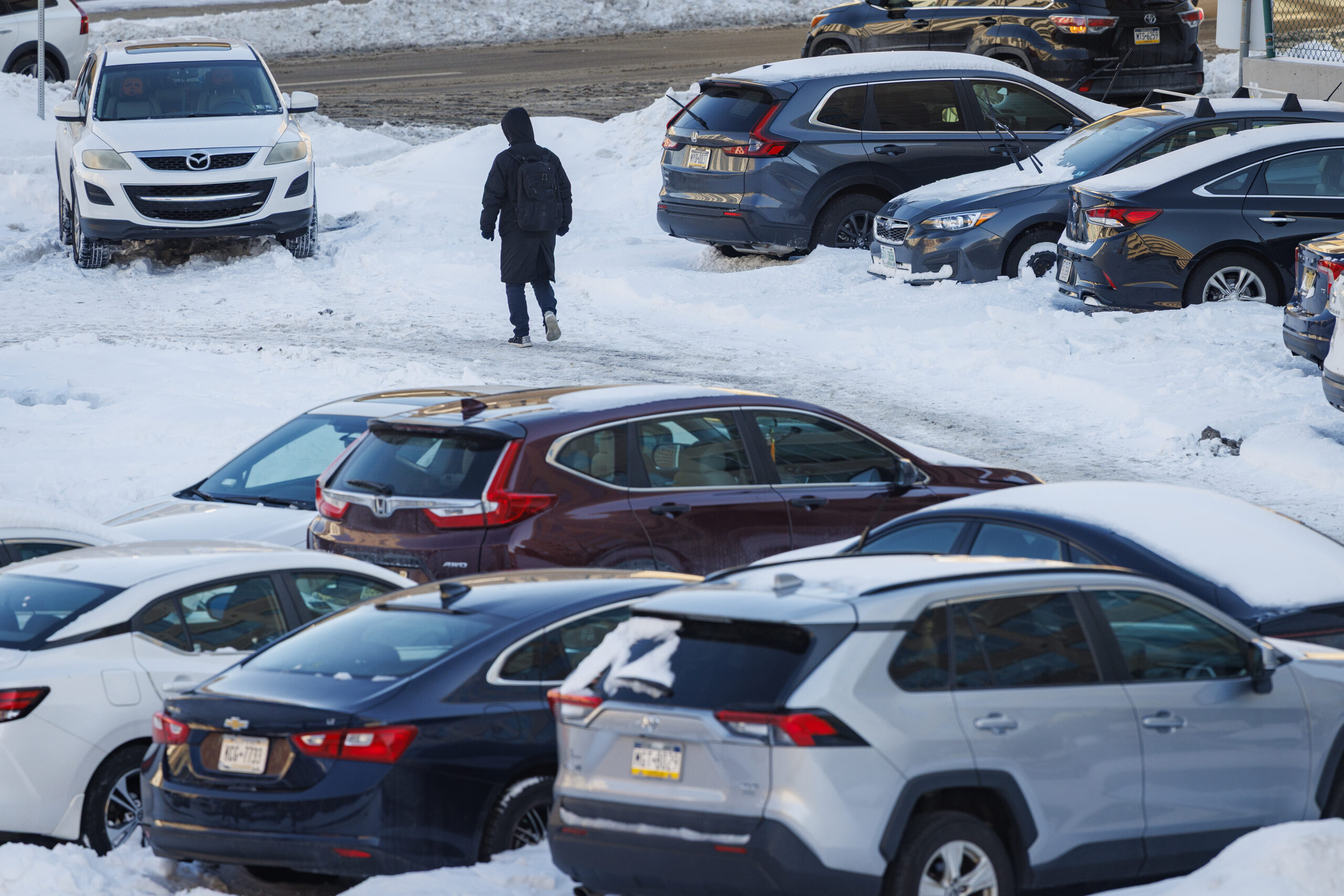
    A pedestrian walks through a snow-covered parking lot at Ninth and Arch Streets in Center City Philadelphia, Tuesday, Jan. 27, 2026.

    These lows arrive as Philadelphia continues to dig out from last weekend’s winter storm, which resulted in a days-long snow emergency in the city that was only lifted Tuesday amid closures for city offices, courts, and schools. Despite a full-court press by the Philadelphia Streets Department, many smaller streets remained unplowed, and the cold weather threatened to institute a deep freeze that could complicate the cleanup, officials have said.

    Unfortunately, no break is imminent. Temperatures are not expected to get above freezing until the early or middle part of next week, and even then perhaps barely so. In its Tuesday afternoon forecast, the weather service called the length and magnitude of the arctic air mass descending upon the area “exceedingly rare” and urged caution. Normal low temperatures for Monday’s date, for example, stand at about 25 degrees.

    “We are running 15 to 20 degrees below average,” DeSilva said.

    And then there is the possibility of even more snow amid our extended bout of cold — though as of Tuesday afternoon, it remained just that. The weather service noted that it remained unclear where precipitation could fall, and in what amounts, though early models indicated that the storm could spare much of the area away from the coast. Still, DeSilva said, it remained too early Tuesday to tell what to expect.

    “If lows track further off the coast, we could see less impact here, but if they’re closer, we may have some moderate impacts,” DeSilva said.

  • N.J., Pa. to see more than $200M restored for EV chargers in legal win over Trump administration

    N.J., Pa. to see more than $200M restored for EV chargers in legal win over Trump administration

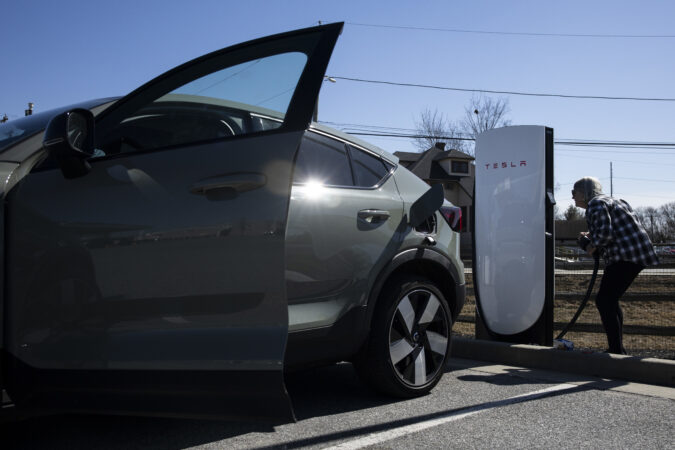
    New Jersey and Pennsylvania are poised to regain roughly $244 million in federal funding for electric‑vehicle charging stations after securing a legal victory over the Trump administration.

    New Jersey announced this week that it expects $73 million to be reinstated.

    Pennsylvania had planned on $171.5 million in EV‑charging funds last year, according to Alex Peterson, a spokesperson for Gov. Josh Shapiro.

    “This ruling guarantees that these obligated funds cannot again be interrupted,” Peterson said.

    On Friday, a U.S. District Court sided with 20 states that filed suit last year demanding restoration of the National Electric Vehicle Infrastructure Formula Program (NEVI). New Jersey and Pennsylvania were among the plaintiffs.

    In her decision, Judge Tana Lin, who was appointed by former President Joe Biden, prohibited the Department of Transportation from withholding funding for approved state EV‑charger deployment plans.

    Lin concluded from Seattle that the Federal Highway Administration (FHA) overstepped its authority by halting funding already authorized by Congress. She described the agency’s action as arbitrary and capricious.

    “This win puts New Jersey back on track for $73 million in funding unlawfully stripped away through the Trump Administration’s illegal actions,” Jennifer Davenport, New Jersey’s acting attorney general, said this week in a statement. “New Jerseyans want sustainable transportation options.”

    New Jersey, Pennsylvania, and Delaware were among plaintiffs in the suit against a Trump administration freeze on the $5 billion. It’s unclear whether Trump administration officials will appeal.

    The states’ legal challenge stemmed from an executive order President Donald Trump signed on his Inauguration Day to eliminate EV mandates — which the suit states never existed.

    Regardless, the suit stated, the administration used the order to “immediately pause the disbursement of funds” for EV infrastructure appropriated through the Inflation Reduction and Infrastructure Investment and Jobs acts signed by Biden.

    Other states that joined the suit included Washington, Colorado, California, Arizona, Delaware, Hawaii, Illinois, Kentucky, Maryland, Minnesota, New Mexico, Michigan, New York, North Carolina, Oregon, Rhode Island, Vermont, and Wisconsin.

    Davenport called the Trump administration’s refusal to spend funds approved by Congress “unlawful.”

    This story has been updated to include newer figures on Pennsylvania’s plan to fund EV charging infrastructure.