Category: News

Latest breaking news and updates

  • Lower Merion police shot and killed a former child abuse investigator wanted for child rape, authorities said

    Lower Merion police shot and killed a former child abuse investigator wanted for child rape, authorities said

    A former Morton Borough police officer is dead after Lower Merion police shot and killed him when he exchanged gunfire with officers in Bala Cynwyd Wednesday morning, authorities said.

    Francis Connell Collier, 38, who previously served as a part-time officer in the Delaware County borough, was wanted on charges of rape and other sex crimes involving children at the time of the shooting.

    Authorities said Lower Merion police spotted Collier’s vehicle on Old Lancaster Road in the Bala Cynwyd section of the township around 3:48 a.m. When they saw him return to his car, police said, officers confronted him, and he shot at the officers, who returned fire, fatally wounding him.

    The officers had not been serving a warrant for Collier’s arrest at the time of the shooting, but the department was aware of the charges against him, said Lower Merion Police Capt. John Tucci.

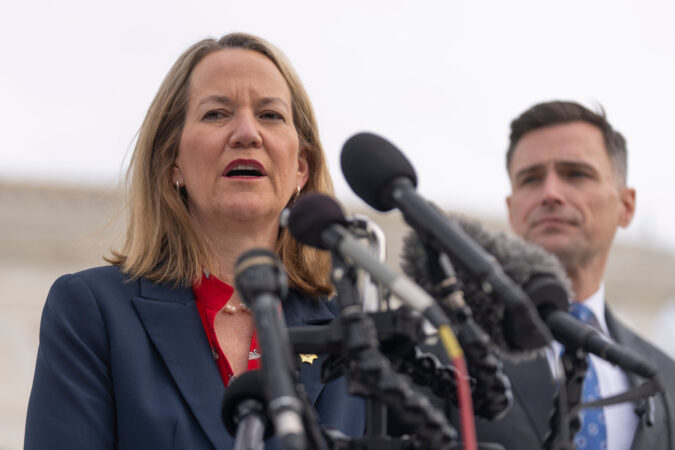
    Charges in the rape case had been filed Tuesday in Upper Darby, according to a spokesperson for the Attorney General’s Office, which brought the case against him.

    In addition to serving in Morton, Collier was previously a member of the Delaware County District Attorney’s Office’s Child Abuse and Exploitation Task Force, a spokesperson for District Attorney Tanner Rouse said.

    Collier’s appointment in 2022 was not made during Rouse’s tenure, and he was removed from the task force the following year during a leadership change within the unit, the spokesperson said.

    When the sex abuse allegations against Collier were reported to authorities late last year, Rouse’s office initially investigated, but later referred the case to state prosecutors because of a conflict of interest.

    In a statement on Collier’s shooting death Wednesday, the Delaware County DA’s Office said he ”reportedly engaged in actions that led to what has been described as ‘suicide by cop.’”

    Police have not released the names of the officers involved in the shooting, which is under investigation by the Montgomery County District Attorney’s Office. It was unclear whether the officers had been placed on leave, as is customary, as the inquiry continues.

    Morton Borough police learned of the criminal investigation in December, department officials said, and Collier was placed on unpaid administrative leave.

    He resigned from the department on Dec. 19, they said.

    The criminal case against Collier began late last year, authorities said, when Delaware County investigators learned that he may have sexually abused children.

    Two women told investigators Collier had touched them inappropriately in the early 2000s, when they were five and six years old and Collier was a teenager, according to the affidavit of probable cause for his arrest. The women said the abuse began in 2001 and 2003, the affidavit said.

    Collier was 15 when he assaulted the first victim the document said.

    The second woman said Collier had assaulted her as well, framing the abuse as a “game” that involved sex toys and sex acts. She said she told her mother at the time that Collier was touching her inappropriately but when confronted, she said, he denied the abuse.

    Years later, the women said, they learned that Collier worked with Delaware County’s child abuse task force, which investigates sex crimes against children. They said they grew worried when they saw social media posts showing Collier posing with children, the document said.

    When investigators interviewed Collier about the allegations in early December, the affidavit said, he failed a polygraph test, but told detectives he “never intentionally touched the girls inappropriately.”

    Investigators referred the case to the Pennsylvania Attorney General’s Office that month because of a possible conflict or interest, the affidavit said. State investigators later interviewed people who said the women had told them of the abuse years ago when they were children, and prosecutors filed the criminal charges against Collier on Tuesday, just hours before his death.

    Lower Merion police said the shooting took place in the area of Old Lancaster Road and City Avenue, a block from St. Joe’s University and not far from Edgehill Court, the apartment complex where Collier lived.

    A neighbor, Liam Riley, said he heard at least seven shots ring out when police confronted Collier.

    “I saw a officer run up, grab something out of his trunk, and then run back up to [Collier’s] car,” Riley, a St. Joe’s University senior, said. “Then I heard them yelling to the guy, ‘Put your hands out of the window, put your hands out of the window.”

    Juliette Palasol, a student at Drexel University who lives a block away with her family, said they didn’t hear the early morning gunfire, but her father left for work at 5 a.m. to find that many of the neighborhood roads closed.

    “I couldn’t believe it — my brother, my cousins — none of us heard it,” Palasol said, outside the Edgehill Court. “I was just surprised to see police bring out firetrucks, drones, and robotic dogs to the scene.”

    Around noon on Wednesday, police officers, assisted by Union Fire Association, raised a ladder to Collier’s third-story apartment, where officers broke through the window and piloted a drone inside to conduct an initial search of his residence. Officers also used a robotic dog to search the apartment “out of an abundance of caution,” police said.
  • Daniela Petroff, AP’s longtime fashion and Vatican reporter, has died at 80

    Daniela Petroff, AP’s longtime fashion and Vatican reporter, has died at 80

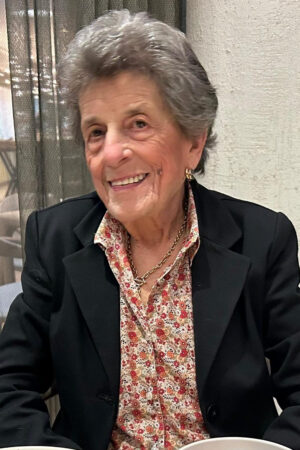
    ROME — Daniela Petroff, who helped shape the Associated Press’ fashion and Vatican coverage for nearly four decades with style, authority and wit, has died in Rome. She was 80.

    Ms. Petroff died Tuesday at home, where she was recovering from a fall, said her husband, Victor Simpson, the retired AP Rome bureau chief.

    Ms. Petroff worked for the Chicago Tribune and Time magazine in Rome before moving onto the AP as a Vatican reporter and Milan fashion correspondent. She launched what became a mainstay of the AP’s culture report, covering the four weeks of menswear and womenswear each year.

    In 1985, the Simpsons endured an unfathomable tragedy: Their 11-year-old daughter, Natasha, was killed during the Dec. 27, 1985, terrorist attack at Rome’s airport that also wounded their son, Michael. When their youngest daughter, Debbie, was born two years later, Pope John Paul II called to congratulate Ms. Petroff.

    In announcing Ms. Petroff’s death, Simpson wrote that she had gone to sleep after lunch and decided not to wake up, “to finally embrace again her beloved Natasha.”

    Led AP’s Milan fashion coverage

    Fluent in Italian, German, French and English, Ms. Petroff spearheaded AP’s Milan fashion coverage just as Giorgio Armani was becoming an international figure, setting the pace for other reporters with informative, succinct, fact-based dispatches that stayed away from opinion and reviews.

    “She had a gift for putting the facts into kind of a very artful context,” said Lisa Anderson, who covered Milan fashion for the Chicago Tribune for nearly a decade starting in the mid-1980s. “She looked at that industry, which often takes itself too seriously, with a lot of amusement as well as respect, which is probably the right combination of qualities to approach fashion reporting.”

    Ms. Petroff’s last AP byline appeared in September, when her authoritative profile of Armani was published following the designer’s death.

    “Starting with an unlined jacket, a simple pair of pants and an urban palette, Armani put Italian ready-to-wear style on the international fashion map in the late 1970s, creating an instantly recognizable relaxed silhouette that has propelled the fashion house for half a century,” Ms. Petroff wrote.

    She covered the rise of Gianni Versace, Gucci in the Tom Ford era, Karl Lagerfeld at Fendi, and the Missoni fashion dynasty, and often put her fashion knowledge and smart wordsmithing to work on the Vatican beat.

    In one 2014 story about Pope Francis’ new batch of cardinals, she mused: “But with the ‘slum pope’ now calling the sartorial shots, fashionistas and Vaticanistas are wondering how his new cardinals — who hail from some of the poorest places on Earth, including Haiti, Burkina Faso and Ivory Coast — will dress themselves for their new role.”

    In between those assignments, Ms. Petroff covered some of the biggest cultural events in Italy, including the 2003 reopening of Venice’s La Fenice opera house after a devastating fire. “True to its namesake the phoenix, La Fenice has risen up from the ashes,” she wrote at the reopening.

    Early life in Paris, New York

    Born in 1945 in Mecklenburg, Germany, Ms. Petroff grew up first in Paris and then New York, where she attended the all-girl Convent of the Sacred Heart Catholic school. An only child, her parents and she moved to Rome for Ms. Petroff’s final two years of high school, which she completed at Marymount International School.

    After attending Manhattanville College in New York, Ms. Petroff returned to Rome and graduated from La Sapienza University with a degree in modern languages. In Rome, she soon met the new AP news editor, Victor Simpson. They were married in 1973.

    A childhood friend from New York, Gail Willett Bejarano, recalled ice-skating in Central Park, afterschool ice cream at Schraftt’s, and pushing the rules with the nuns at Sacred Heart. While Ms. Petroff was a top student, she was also part of the posse of girls who would go to ogle the boys at nearby Loyola, “hike your uniform up and put lipstick on, all forbidden,” Bejarano recalled.

    After retiring from AP in 2017, Ms. Petroff dedicated herself to her alma mater, Marymount, where she served as chair of the board.

    A private funeral is scheduled Thursday. A memorial service is planned for Monday at Marymount.

    In addition to Simpson, Ms. Petroff is survived by her son, Michael, and daughter, Debbie.

  • City will pay $2,000 toward Philly homicide victims’ funerals in new program

    City will pay $2,000 toward Philly homicide victims’ funerals in new program

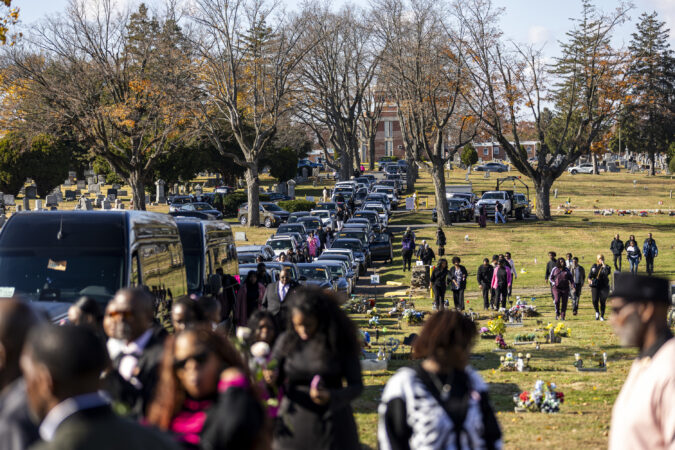
    Families of people killed in Philadelphia will be eligible to receive up to $2,000 to help cover funeral costs under a new city program announced Wednesday.

    The initiative, called the Homicide Victim Funeral Assistance (HVFA) Program, will be available to families whose loved ones are killed on or after March 1, city officials said. The money will be paid directly to funeral service providers, with applications reviewed within 48 hours, they said.

    “Grief is not a bill you should have to carry alone,” said Adam Geer, the city’s chief public safety director, during a news conference unveiling the program.

    The program will be administered by the city’s Office of the Victim Advocate, a division of its Office of Public Safety created last year and led by Adara Combs.

    Combs said the initiative grew out of conversations with families who found themselves planning funerals while still in shock, and struggling financially.

    “This program is born out of listening,” she said.

    The average funeral costs $9,100 in Philadelphia, according to data collected by the Senior Rate Registry. When a loved one is murdered, that expense can arrive suddenly and without warning, Geer said.

    To qualify for aid, families must show their loved one was killed in the city and that their death was ruled a homicide, Combs said.

    The city’s program is meant to be a supplement to existing state aid. Families may also apply for up to $6,500 reimbursement through the state’s Victims Compensation Assistance Program, she said.

    The announcement comes as homicides in Philadelphia have fallen sharply in recent years. After peaking at 562 killings in 2021, the city recorded 255 murders last year — its lowest number in 60 years, according to police data. As of Tuesday, 15 people had been killed so far this year.

    Mayor Cherelle L. Parker said the program is a way for the city to move beyond platitudes.

    “I get so tired of telling people that … our thoughts and prayers are with you,” she said. “We’re sending thoughts and prayers, but they’re literally looking at funeral bills, and they’re trying to figure out, in the midst of this loss, how will we pay?”

    “I am proud that we have been able to come together and use government as a tool to help families in need,” she said.

    To receive additional information or apply after March 1, call 215-686-2115 or email OVAfuneralfund@phila.gov.

  • Trump floats new retirement benefit for 54 million workers

    Trump floats new retirement benefit for 54 million workers

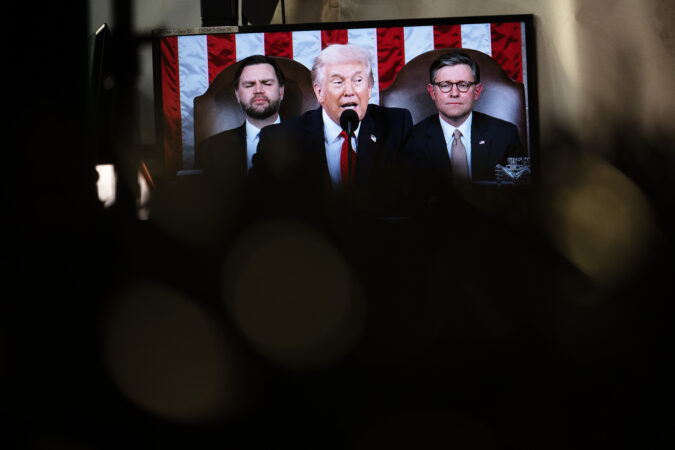
    President Donald Trump, in his State of the Union address Tuesday night, suggested a major new retirement benefit for tens of millions of American workers, embracing an economic policy that proponents say could bolster the federal retirement safety net.

    Speaking to congressional lawmakers, Trump pledged to extend to private-sector workers the same type of retirement plan already available to federal employees. He also said the government would kick in up to $1,000 per year to their accounts, presumably in matching benefits. Roughly 54 million workers in the private sector have no workplace retirement benefits and do not benefit from stock market gains, according to research cited by the Economic Innovation Group, a Washington-based think tank, as part of what some experts have termed a “retirement crisis” in America.

    “Half of all of working Americans still do not have access to a retirement plan with matching contributions from an employer,” Trump said. “To remedy this gross disparity, I’m announcing that next year, my administration will give these often forgotten American workers — great people, the people that built our country — access to the same type of retirement plan offered to every federal worker. We will match your contribution with up to $1,000 each year.”

    The announcement was celebrated by Trump supporters as a major new economic policy heading into the 2026 midterm elections, but critics pointed out some problems with Trump’s pledges, and are skeptical it will substantially boost savings for working-class Americans.

    The most obvious challenge is that it’s not clear how much Trump can do on his own. Under existing authorities, the administration can create portable retirement accounts — modeled on the Thrift Savings Plan used by federal employees — and make them available to workers who currently lack a workplace plan. But the government cannot compel employers or workers to automatically enroll, nor can it unilaterally appropriate funds to provide a universal $1,000 match to all eligible workers.

    Instead, the administration can facilitate take-up of a benefit that already exists. The bipartisan Secure 2.0 bill, signed by President Joe Biden in 2022, created a “Saver’s Match” — a federal contribution of up to $1,000 annually for qualifying workers who put $2,000 in an eligible retirement account. One problem has been that many eligible workers have had nowhere to put their contributions. Trump’s executive action could create additional account infrastructure, but eligibility would still be constrained. Only workers who make less than $25,000 per year, or roughly $41,000 for couples, are eligible.

    More impactful would be if Trump’s comments spur congressional action. A White House official suggested that the administration will support bipartisan legislation to automatically enroll eligible workers in federal accounts, provide the $1,000 federal match for low- and moderate-income workers, and make those accounts portable across jobs. One bill is backed by a coalition that spans Charles Schwab, AARP, DoorDash, and Uber.

    White House economist Kevin Hassett has backed a similar kind of approach. Of the more than $200 billion in annual income tax expenditures related to retirement savings, less than 1% flows to workers in the bottom income quintile, according to the Economic Innovation Group. This would move some of those benefits down the income distribution.

    “Since we’ve had the 401(k) system this has always been the problem: A huge share of the workforce has not been participating and doesn’t have access to these benefits. Closing that gap is a big first step,” said John Lettieri, cofounder of the Economic Innovation Group. “It’s a long-run exercise to get people into the market, engaged in long-term savings and investment behavior with matching benefits. That’s a proven way of building wealth over time, including for low-income savers.”

    That said, there are reasons to doubt that even the legislation being debated in Congress would do much to increase retirement security for low-income workers. Low-income Americans often do not have enough to live on already, much less an extra $2,000 per year to put into retirement accounts, said Matt Bruenig, founder of the People’s Policy Project, a left-leaning think tank.

    The Survey of Consumer Finances suggests that fewer than 12% of people who earn below $43,000 save for retirement.

    “Almost no low-income people have retirement accounts. This is not because they are disallowed from having them,” Bruenig said. “It’s because they can barely pay their bills. Nothing in the president’s plan changes that.”

  • City agrees to fix yearslong ‘courtesy-tow’ problem. A judge still needs to approve the court settlement.

    City agrees to fix yearslong ‘courtesy-tow’ problem. A judge still needs to approve the court settlement.

    Our long municipal nightmare could be over.

    The dreaded courtesy-tow system, the bane of so many Philadelphia drivers, looks to be finally getting an overhaul, with the city promising — in writing — to use its “reasonable best efforts” to stop losing your cars.

    If that happens, gone will be the days of parking a Hyundai on 15th Street, only to find it the following week in the middle of Washington Avenue with $120 worth of parking tickets on the windshield.

    No more riding around in the back of a police cruiser in a futile attempt to locate a Honda that could be practically anywhere within our 142-square-mile city.

    Who could forget the guy who was forced to pay nearly $1,000 to get his BMW off the auction block after it was courtesy towed into a loading zone, then impounded by the Philadelphia Parking Authority?

    And the women who were pulled over by police in other states for driving their own “stolen” cars, even though they had actually been courtesy towed in Philly months earlier.

    Now, a less infuriating system could be in the works.

    After a protracted legal battle in federal court — and six years’ worth of Inquirer stories — lawyers for the city have tentatively agreed to fix the problem.

    The city said in a settlement agreement filed in federal court last week that it will pay $750,000 to 36 courtesy-tow victims and start requiring tow truck drivers who participate in the city’s vehicle relocation program to keep track of where they unhook them. U.S. District Judge Joshua D. Wolson still has to sign off on the agreement.

    “They will have a handheld device to record where they are deposited and that will go to a website,” said Joseph Kohn of Kohn, Swift & Graf, which represented the plaintiffs along with attorney David Rudovsky.

    Under the terms of the agreement, the city is expected to partner with the Philadelphia Parking Authority (PPA), which already uses such technology, to create a citywide system similar to those in Chicago, Phoenix, and other cities that maintain online databases of towed vehicles.

    What is a courtesy tow?

    “Courtesy towing” is a Philly term to describe what the city formally calls “relocation towing.” It’s a notoriously dysfunctional process for moving legally parked vehicles to make room for things like special events, utility work, or construction.

    Some cars go missing for days or weeks. Others disappear forever.

    Example of a courtesy tow gone wrong (it often goes wrong):

    You legally park at the curb near your home in an area covered by your parking permit. That block, unbeknownst to you, subsequently becomes a temporary no-parking zone, say, for a construction project. When you return a couple days later, your car is gone. No one at the police department or any other branch of city government has any idea where it is.

    You’re on your own.

    This happens because the city allows private towing companies to handle much of the work, and those companies either fail to notify the police department where they dropped off the vehicles, or the information gets lost somewhere within an antiquated system of handwritten logs and fax machines. There is little accountability.

    To add insult to injury, some of the towing companies will drop off vehicles in no-parking zones. Then the PPA comes along and starts ticketing those vehicles, unaware that they had been courtesy-towed to that location.

    Lastly, the coup de grâce: Drivers who appeal those tickets are typically unsuccessful because they can’t prove to a hearing officer or a judge that they hadn’t parked there.

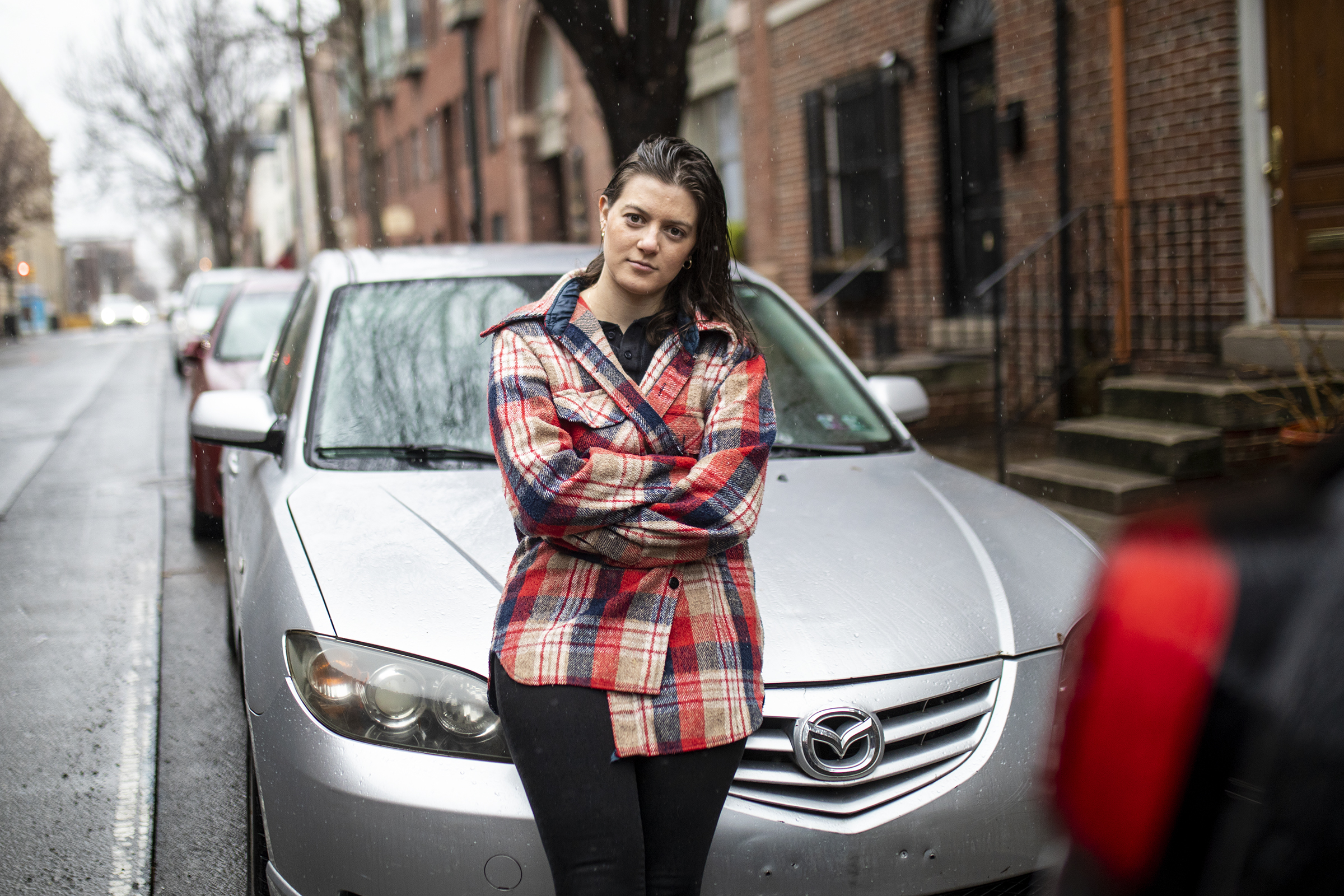
    Julia Sheppard, photographed in 2021 after she spent a month looking for her Mazda sedan, which had been “courtesy towed.” Then a Temple law student, Sheppard had to pay towing fees because she couldn’t document the city’s involvement.

    The problem got so bad that Comedy Central’s The Daily Show dedicated a segment to it in 2024.

    But Mary Henin wasn’t laughing when she had guns in her face during a trip to the New Jersey Shore in May 2020. Long Beach Island police ordered her and a friend out of her Nissan, claiming it had been stolen. She was handcuffed and sat by the side of the road for 45 minutes until police could determine that the car was hers.

    “It was horrible,” Henin, a public defender, recalled on Monday. “We’re lucky we were only just detained at the end of the day.”

    Turns out, Henin’s car had been courtesy-towed months earlier for tree trimming. When she was unable to find it, she reported it stolen, as police often advise drivers. Henin later found it a few blocks from her West Philadelphia home and reported that to police, but they never took it out of the stolen-vehicle database.

    The same thing happened a year later to Julia Lipkis, another Philadelphia courtesy-tow victim. She was pulled over by police in Virginia and wrongly accused of driving a stolen car.

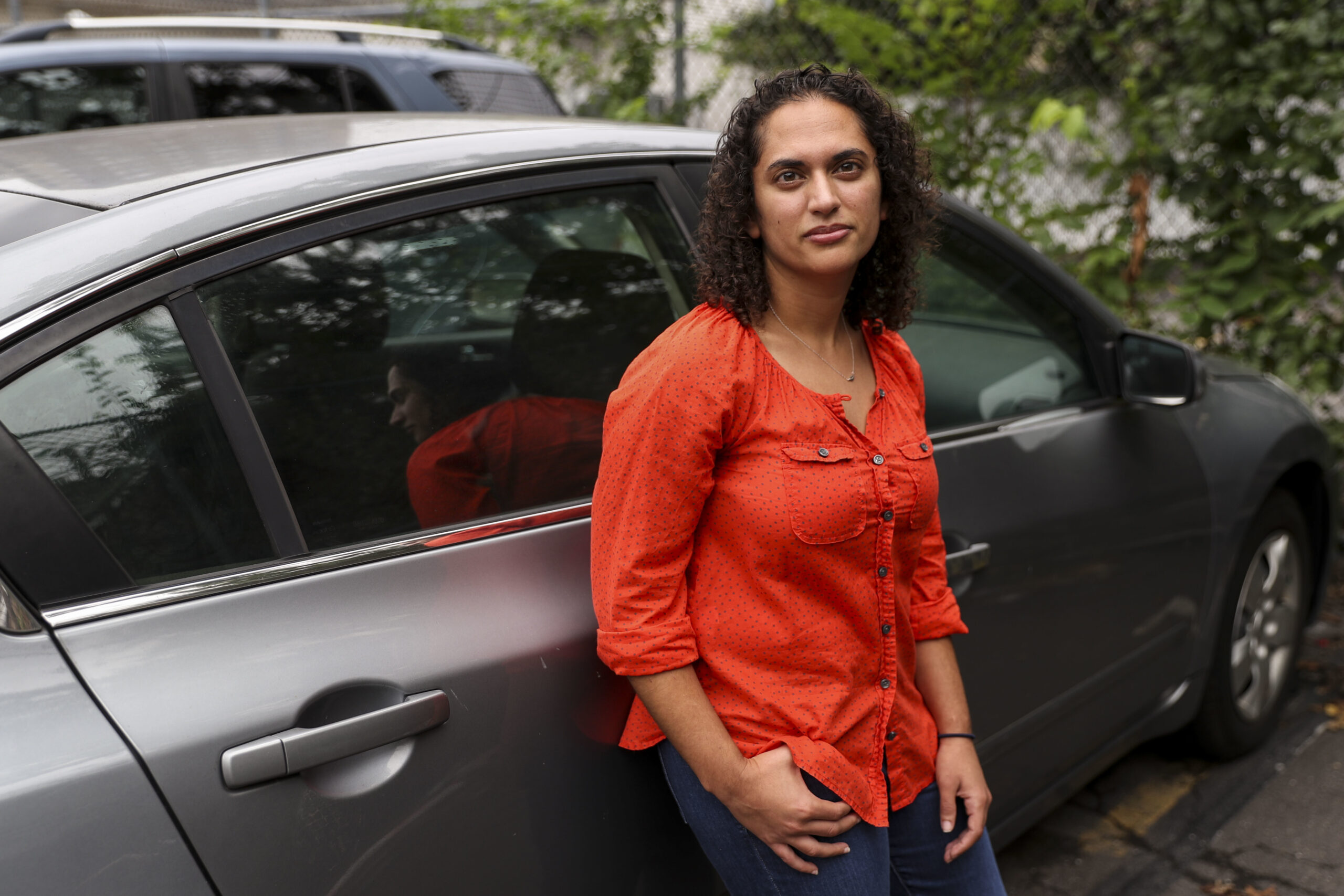
    Mary Henin, a public defender in Philadelphia, was pulled over by police in New Jersey and ordered out of her car at gunpoint. She sat in handcuffs trying to explain to officers that her car wasn’t stolen, but was only in the stolen-car database because it had been courtesy towed in Philadelphia.

    posed for a portrait near her car in Philadelphia, Pa. on Thursday, August 13, 2020. Henin’s car was courtesy towed and then reported stolen when it couldn’t be found. It was later found, but remained on the stolen vehicle list, leading to her being stopped and handcuffed until the issue was resolved.

    Henin was one of the original plaintiffs in a federal lawsuit filed in 2021 alleging that the courtesy-tow process is a violation of the Fourth and Fourteenth Amendments.

    “It’s a taking of property and a due-process violation,” said Kohn, the plaintiffs’ lawyer. He said he first learned of the problem in The Inquirer.

    Under the proposed new system outlined in the settlement, the PPA would first put stickers on cars before they are courtesy towed, so its parking enforcement officers will know not to issue citations if a vehicle ends up in a no-parking or metered area.

    Henin said she’s relieved that the city has finally moved forward with fixes to a system that has been broken for so long.“ I’m just hoping we can see them implemented quickly,” she said.

    Ava Schwemler, a spokesperson for the city’s Law Department, declined on Wednesday to comment on the settlement.

    “While the litigation has been settled, we remain at work finalizing all of the process changes that will follow,” Schwemler wrote by email. “The city will provide additional information in the near future about the changes that are occurring.”

    PPA spokesperson Marty O’Rourke said the parking authority is willing to assist the city “in any way that it can.”

    “At this point, there has been no formal operational agreement with the PPA,” O’Rourke said.

    ‘Bureaucratic nightmare’

    It’s not clear when courtesy towing in Philadelphia got so bad. The Inquirer began reporting on drivers’ Kafkaesque experiences in January 2020, but the problem likely goes back much further.

    City Hall has consistently ignored the problem, and, for years, refused to acknowledge that it even exists.

    When Henin and three other vehicle owners filed their suit, the city tried to settle the case by offering them each $15,000, instead of fixing the systemic issues. Two plaintiffs took the money, but Henin and another driver moved forward with the suit.

    Dozens more drivers with similar stories later came forward and filed a second lawsuit. They considered pursuing a class-action case.

    Still, the city would not budge. In legal filings, lawyers for the city argued that it wasn’t responsible for the missing vehicles because they had been towed by private companies.

    “[T]hey do not claim an injury that is fairly traceable to the city,” Anne Taylor, chief deputy city solicitor, wrote of the plaintiffs in 2023.

    In the fall of 2024, there was a glimmer of hope. City Council passed a resolution to “hold hearings to investigate” the practice of courtesy-towing.

    “Philadelphia drivers have been frustrated with the bureaucratic nightmare of getting their vehicles back, with some viewing courtesy-towing as little more than a money-making scheme,” read the resolution, which was introduced by Councilmember Jeffery Young.

    Those hearings led to … nothing. They never even happened. No one has explained why.

    In a pair of rulings in late 2024 and early 2025, U.S. District Judge Mitchell S. Goldberg rejected the city’s arguments to have the case thrown out. The two lawsuits were later consolidated.

    Goldberg ruled that because the city distributes the temporary no-parking signs that precede most courtesy-tows, it has a duty to keep track of the vehicles, whether they are towed by the police department, the parking authority, or a private company.

    “I just don’t understand how a big city can have this issue,” Danielle Ditommaso, 27, whose Volkswagen Jetta was courtesy-towed from the Ben Franklin Parkway in 2022, told The Inquirer last year.

    She never saw the car again.

    Aarthi Manohar, co-counsel on the federal lawsuit, said she couldn’t comment on negotiations with the city or what led to the settlement. She commended the drivers who brought the case for sticking it out for five years.

    “They knew the city could and should do better,” Manohar said. “They were willing to wait nearly half a decade.”

  • Fact check: A look at Trump’s false and misleading claims in his State of the Union speech

    Fact check: A look at Trump’s false and misleading claims in his State of the Union speech

    WASHINGTON — On inflation, immigration, tariffs, and matters of war and peace, President Donald Trump presented a frequently distorted account of the state of the nation Tuesday as he claimed a “turnaround for the ages” and myriad achievements that don’t pass scrutiny.

    Trump has spent the last year boasting of his accomplishments while mocking the record of his predecessor, Joe Biden. But much of this bluster has been based on misinformation, which he again fell back on during his State of the Union address.

    Here’s a closer look at the facts:

    The economy

    Claim: “When I last spoke in this chamber 12 months ago, I had just inherited a nation in crisis, with a stagnant economy.”

    The facts: Not quite. Voters were unhappy with high inflation in the 2024 election, but the U.S. economy was far from stagnant. The U.S. gross domestic product rose 2.8% in 2024 after adjusting for inflation. That’s a stronger pace of growth than the 2.2% achieved last year during the start of Trump’s second term.

    Trump: “Incomes are rising fast, the roaring economy is roaring like never before.”

    The facts: Not so. After-tax incomes, adjusted for inflation, rose just 0.9% in 2025, down from 2.2% in 2024, Biden’s last year in office. The annual gain in Trump’s first year is the smallest since 2022, when inflation soared and caused Americans’ inflation-adjusted income to drop.

    Wages and salaries are the largest component of incomes, and their growth has slowed as companies have sharply slowed hiring. Workers typically command smaller wage gains in such an environment.

    Investment

    Claim: “I secured commitments for more than $18 trillion pouring in from all over the globe.”

    The facts: Trump has presented no evidence that he’s secured this much domestic or foreign investment in the U.S. Based on statements from various companies, foreign countries, and the White House’s own website, that figure appears to be exaggerated, highly speculative, and far higher than the actual sum. The White House website offers a far lower number, $9.6 trillion, and that figure appears to include some investment commitments made during the Biden administration.

    A study published in January raised doubts about whether more than $5 trillion in investment commitments made last year by many of America’s biggest trading partners will actually materialize and questions how it would be spent if it did.

    Jobs

    Claim: “More Americans are working today than at any time in the history of our country.”

    The facts: Yes, but the number of Americans with jobs always rises as the population grows. The relevant figure is the proportion of Americans with jobs, which has fallen significantly in the last quarter-century, partly because the workforce is aging and more people are retired. The proportion of Americans with jobs peaked at 64.7% in April 2000, and was 59.8% in January.

    The unemployment rate is a low 4.3%, but was lower when Biden left office in January 2025, at 4%. During Biden’s presidency, the rate fell to a 50-year low of 3.4%.

    Foreign wars

    Claim: “My first 10 months I ended eight wars.”

    The facts: This statistic, which Trump frequently cites, is highly exaggerated.

    Although he has helped mediate relations among many nations, his impact isn’t as clear-cut as he makes it seem. In at least two instances of peace he claims credit for achieving, there were no wars to end: no fighting between Serbia and Kosovo, and friction rather than fighting between Egypt and Ethiopia over the Grand Ethiopian Renaissance Dam.

    The other wars Trump counts as those that he has solved were between Israel and Hamas, Israel and Iran, India and Pakistan, Rwanda and Congo, Armenia, and Azerbaijan, and Cambodia and Thailand. His influence varied in those conflicts.

    Tariffs

    Claim: Tariff revenues are “saving our country, the kind of money we’re taking in.”

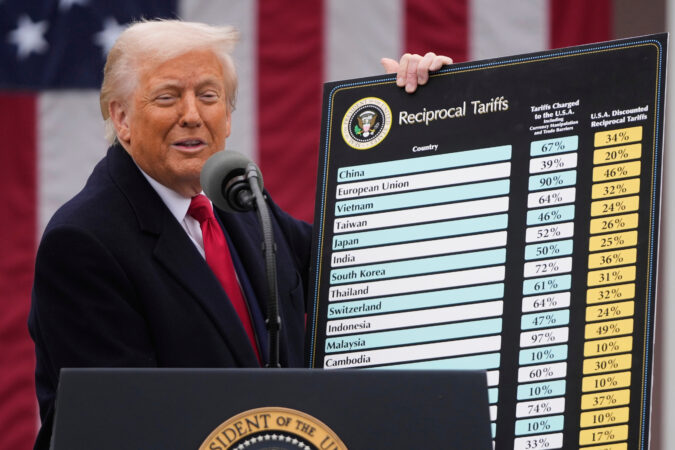
    The facts: Though Trump has imposed massive tax hikes on imports, they’re not sizable enough to make a dent in the government’s annual budget deficits. Nor have the tariffs corresponded with manufacturing job gains.

    Before the Supreme Court struck down Trump’s tariffs based on an emergency declaration, the Congressional Budget Office estimated that his new taxes would raise $3 trillion over 10 years, or $300 billion annually.

    That’s not enough to cover the cost of his $4.7 trillion in tax cuts, including additional interest cuts, that favored companies and the wealthy. Nor is it enough to pay down an annual budget deficit that last year was $1.78 trillion.

    Claim: “Tariffs paid for by foreign countries will, like in the past, substantially replace the modern day system of income tax.’’

    The facts: Not likely. Under Trump, tariff revenues have swelled — to $195 billion in the budget year that ended Sept. 30 from $77 billion the year before. But the import taxes accounted for less than 4% of federal revenue. Income taxes and payroll taxes that finance Social Security and Medicare account for 84%.

    Medicine

    Claim: “I took prescription drugs, a very big part of healthcare, from the highest price in the entire world to the lowest. That’s a big achievement. The result is price differences of 300, 400, 500, 600% and more.”

    The facts: This is impossible. Although the Trump administration has taken steps to lower drug prices, cutting them by more than 100% would theoretically mean that people are being paid to take medications.

    Geoffrey Joyce, director of health policy at the University of Southern California’s Schaeffer Center, said in August that this claim is “total fiction” by the president. He agreed that it would amount to drug companies paying customers, rather than the other way around.

    Crime

    Claim: “Last year, the murder rate saw its single largest decline in recorded history. This is the biggest decline. Think of it in recorded history, the lowest number in over 125 years.”

    The facts: Trump takes credit for a significant decrease in violent crime during 2025, claiming the murder rate in the U.S. dropped to its lowest in 125 years. But this is misleading. Crime had already been trending down in recent years.

    A study released in January by the independent Council on Criminal Justice, which collected data from 35 U.S. cities on homicides, showed a 21% decrease in the homicide rate from 2024 to 2025.

    The report noted that when nationwide data for jurisdictions of all sizes is reported by the FBI later this year, there is a strong possibility that homicides in 2025 will drop to about 4 per 100,000 residents. That would be the lowest rate ever recorded in law enforcement or public health data going back to 1900.

    FBI reports for 2023 and 2024 show significant reductions in violent crimes.

    Crime surged during the coronavirus pandemic, with homicides increasing nearly 30% in 2020 over the previous year, the largest one-year jump since the FBI began keeping records. But violent crime dropped to near pre-pandemic levels around 2022 when Biden was president.

    Immigration

    Claim: “We will always allow people to come in legally, people that will love our country and will work hard to maintain our country.”

    The facts: Trump has actually taken steps to restrict who can emigrate to the U.S., often in the name of protecting national security.

    He suspended the refugee program on his first day in office and in October resumed the program but only in limited numbers for white South Africans.

    Trump has also placed restrictions on who can travel or emigrate to the U.S. from nearly 40 countries around the world. Many of those countries are in Africa.

    Taxes

    Claim: “With the great big beautiful bill, we gave you no tax on tips, no tax on overtime and no tax on Social Security.”

    The facts: Though the president frequently says his big tax cut bill means no tax on Social Security, that’s not true for everyone. Not all Social Security beneficiaries will be able to claim the deduction, which lasts until 2029.

    Those who won’t be able to do so include the lowest-income seniors who already don’t pay taxes on Social Security, those who choose to claim their benefits before they reach age 65 and those above a defined income threshold. The deductions also phase out as income increases.

    Elections

    Claim: “I’m asking you to approve the Save America Act to stop illegal aliens and other who are unpermitted persons from voting in our sacred American elections. The cheating is rampant in our elections.”

    The facts: He and his allies have never produced evidence of rampant election cheating. Experts say voter fraud is extremely rare, and very few noncitizens ever slip through the cracks.

    For example, a recent review in Michigan identified 15 people who appear to be noncitizens who voted in the 2024 general election, out of more than 5.7 million ballots cast in the state. Of those, 13 were referred to the attorney general for potential criminal charges. One involved a voter who has since died, and the final case remains under investigation.

    1776

    Claim: “The revolution that began in 1776 has not ended. It still continues because the flame of liberty and independence still burns in the heart of every American patriot.”

    The facts: To be clear, the American Revolution started the previous year, on April 19, 1775. The colonies declared independence in 1776. It ended Sept. 3, 1783.

  • Trump administration hits Iran with new sanctions as nuclear talks near

    Trump administration hits Iran with new sanctions as nuclear talks near

    WASHINGTON — The Trump administration on Wednesday imposed another tranche of sanctions on people and companies accused of enabling Iran’s ballistic missile program, drone production, and illicit oil sales as the U.S. presses Tehran to make a deal ahead of nuclear talks this week.

    The sanctions against 30 people, companies, and ships come as President Donald Trump has massed the largest U.S. buildup of warships and aircraft in the region in decades and has threatened to use military action in a bid to get Iran to constrain its nuclear program.

    The latest round of talks between U.S. officials, including envoy Steve Witkoff, and Iranian negotiators via mediator Oman are scheduled for Thursday in Geneva.

    The new sanctions imposed by the Treasury Department’s Office of Foreign Assets Control include a list of ships accused of being part of Iran’s “shadow fleet,” which refers to rusting oil tankers that smuggle oil for countries facing stiff sanctions.

    Also targeted are drone manufacturing firms, including Qods Aviation Industries, which has supplied drones “to all branches of the Iranian military and buyers in Africa and Latin America,” the Treasury Department said.

    Among other things, sanctions deny the people and firms access to any property or financial assets held in the U.S. and prevent American companies and citizens from doing business with them. However, they are largely symbolic because many of them do not hold funds with U.S. institutions.

    “Treasury will continue to put maximum pressure on Iran to target the regime’s weapons capabilities and support for terrorism, which it has prioritized over the lives of the Iranian people,” Treasury Secretary Scott Bessent said in a statement.

    Trump and other top administration officials insist that Iran cannot be allowed to develop a nuclear weapon and ramped up pressure months after U.S. strikes in June on three Iranian nuclear sites.

    Iran long has maintained its nuclear program is peaceful. It had been enriching uranium up to 60% purity before the June attack — a short, technical step away from weapons-grade levels of 90%.

    “We wiped it out and they want to start all over again. And they’re at this moment again pursuing their sinister ambitions,” Trump said during his State of the Union speech Tuesday night. “We are in negotiations with them. They want to make a deal, but we haven’t heard those secret words: We will never have a nuclear weapon.”

  • States sue Trump administration over changes to childhood vaccine recommendations

    States sue Trump administration over changes to childhood vaccine recommendations

    SACRAMENTO, Calif. — More than a dozen states sued the Trump administration Tuesday over its rollback of vaccine recommendations for children, calling the move an illegal threat to public health.

    The states argue that the Centers for Disease Control and Prevention put children’s lives at risk when it announced last month that it would stop recommending all children get immunized against the flu, rotavirus, hepatitis A, hepatitis B, some forms of meningitis, and RSV. Under the new guidance, which was met with criticism from medical experts, protections against those diseases are recommended only for certain groups deemed high risk or when doctors recommend them in what’s called “shared decision-making.”

    The new vaccine recommendations ignore long-standing medical guidance and will make states have to spend more to protect against outbreaks, the states, including Arizona and California, said.

    “The health and safety of children across the country is not a political issue,” Arizona Attorney General Kris Mayes, a Democrat, said at a news conference. “It is not a culture war talking point.”

    Emily G. Hilliard, press secretary for the Department of Health and Human Services, blasted the complaint as a “publicity stunt dressed up as a lawsuit.”

    Pennsylvania, New Jersey, and Delaware all joined the Arizona-led lawsuit.

    “Every Pennsylvanian deserves accurate information to make their own healthcare decisions when consulting with their doctors — and science, not politics, will continue to guide our healthcare decisions here in the Commonwealth,” said Gov. Josh Shapiro, a Democrat who has repeatedly joined litigation against the Trump administration since last year.

    The lawsuit escalates an ongoing battle between Democratic-led states and Republican President Donald Trump’s administration over the federal government’s changes to public health policy under Health Secretary Robert F. Kennedy Jr. The Trump administration has laid off thousands of workers at federal public health agencies, cut funding for scientific research and altered government guidance on fluoride and other topics.

    Kennedy last year ousted every member of a vaccine advisory committee and replaced them with his own picks, which Tuesday’s complaint alleges was unlawful.

    The lawsuit comes months after the Democratic governors of California, Washington state, and Oregon launched an alliance to establish their own vaccine recommendations. The governors said the Trump administration was risking people’s health by politicizing the CDC.

    States, not the federal government, have the authority to require vaccinations for schoolchildren, though the CDC’s requirements typically influence state regulations.

  • Surgeon general nominee Casey Means grilled on vaccines, pesticides in hearing

    Surgeon general nominee Casey Means grilled on vaccines, pesticides in hearing

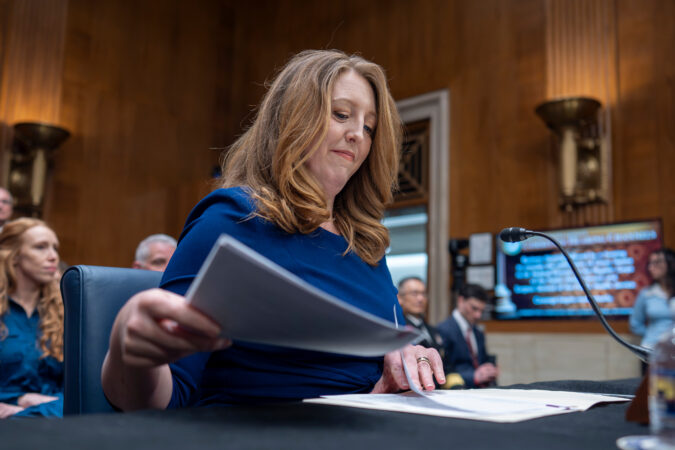
    After over a year without a surgeon general, the Senate Health Committee is grilling Casey Means on vaccinations, her business entanglements, and past comments on pesticides, as they weigh whether she should serve as the nation’s top doctor.

    Means wrote the book considered the bible of the Make America Healthy Again movement with her brother, Calley Means, a Trump administration official. As surgeon general, she could amplify many of her messages around healthy eating and exercise, although she has faced criticism for some of her ties to wellness products.

    Means is drawing fire and praise from both sides of the aisle, reflecting the MAHA coalition’s crosscutting appeal. Her messages on food found favor with both sides, while Democrats and the panel’s GOP chair probed her views on vaccinations and a Republican senator raised questions on how her stance on pesticides could impact American farmers.

    Means highlighted the nation’s chronic illness rates and a path to how she hopes to change them in her opening remarks.

    “Public health leaders must address the evidence-based, modifiable drivers of chronic diseases which include ultra-processed foods, industrial chemical exposure, lack of physical activity, chronic stress and loneliness, and overmedicalization,” Means said. “As surgeon general, I would call on every American and the Public Health Service to join in a great national healing — one that halts preventable chronic disease, makes healthy living the easiest choice, honors the body’s connection to the environment, and puts America back on the road towards wholeness and health.”

    Her initial confirmation hearing was delayed after she gave birth in the fall. This hearing is also a referendum on the controversial moves of her political patron, Health Secretary Robert F. Kennedy Jr., who has overhauled federal vaccine guidelines and upended the public health system. Means, like Kennedy, has publicly questioned the number of vaccines included in the childhood vaccine schedule, as well as the hepatitis B shot. Public health experts say the vaccine schedule is safe and effective.

    Vaccine questions

    At the beginning of the hearing, Chairman Bill Cassidy (R., La.) cautioned that as the nation’s top doctor, Means would have a responsibility to fight back against the vaccine skepticism rising across the country “at a time when so many, for whatever reason, sow distrust and confusion.”

    Sen. Bernie Sanders (Ind., Vt.), the panel’s ranking minority-party member, went further, accusing Trump and Kennedy of spreading misinformation on vaccines and pleading with Means to take a stand against them.

    Cassidy later peppered Means with questions around immunizations, pointing to children who have died of vaccine-preventable disease. Means emphasized that while she supports vaccines, she believes parents and patients must speak to their physicians. She also refused to explicitly say vaccines do not cause autism when pressed, instead saying that no stones should be left unturned in the search for the causes of autism. As health secretary, Kennedy instructed the Centers for Disease Control and Prevention to remove from its website the long-settled scientific conclusion that vaccines do not cause autism.

    In his questioning, Sanders started by pointing out the overlap between his and Means’s interest in fighting against ultra-processed food, before pivoting to further press Means on the scientific community’s determination that vaccines don’t cause autism.

    “Anti-vaccine rhetoric has never been a part of my message,” Means said, adding that the nation should study when children are getting many medications.

    Business ties and pesticides

    A Washington Post examination last year found that Means had made over half a million dollars from partnerships with companies that her financial forms described as selling “diagnostic testing,” “herbal remedies and wellness products,” and “teas, supplements, and elixirs” from 2024 into the summer of 2025, according to her financial disclosures. Legal and advertising experts told the Post last fall that they were concerned about whether Means clearly disclosed her ties to some brands.

    Sen. Tammy Baldwin (D., Wis.) grilled Means on some of her connections to wellness products: “It seems to me that you’ve spent your career sort of making money off the flaws” in the healthcare system.

    Sen. Chris Murphy (D., Conn.) said he was concerned that Means was in “willful violation” of Federal Trade Commission rules, recommending products without telling followers she was sponsored by such products.

    Means pushed back on the allegations and said she “would rectify that immediately” if it has inadvertently happened.

    “I take conflicts of interest incredibly seriously,” Means said.

    While many Republicans spoke highly of Means’s approach to improving American diets and fighting chronic disease, some others did not hold back in their questioning of her past remarks on psilocybin, pesticides, and other items.

    Pesticides are a hot-button issue among the MAHA movement after Trump issued an executive order protecting a key ingredient in a weed killer.

    She wrote in a newsletter sent in 2024: “How can we help bring a pesticide-free world to fruition? It starts with each of us prioritizing eating organic food as much as possible and standing firmly against buying or serving food sprayed with pesticides.”

    Sen. Jon Husted (R., Ohio) stressed that he has heard questions from Ohio farmers about her comments on pesticides, calling them critical for the food supply and farmers’ stability.

    Means called her thoughts on pesticides a core belief that was important to understand the impact pesticides could be having on Americans’ bodies, but noted she understood change could not happen overnight to destabilize the farming ecosystem.

    Means also got in a testy exchange with Sen. Patty Murray (D., Wash.) over birth control, with Means stressing that it’s important to highlight the possible risks including stroke for women. Means has a history of disparaging birth control, which has been under fire from wellness and right-wing influencers.

    Bucking the medical mainstream

    Secretary Kennedy has championed Means’s nomination.

    “She has an extraordinary capacity to communicate to the American public. That is the function of the surgeon general,” Kennedy said at an event Monday, saying Means would be a medical and “moral” authority for the public and he hoped she would be confirmed very soon.Means’ credentials — attending Stanford for her undergraduate education and medical school, racking up academic honors, writing scientific papers and working on research at top institutions — came up in the hearing.

    Means left her medical residency over seven years ago and has encouraged Americans to ask questions of their doctors — positions Kennedy has said led to her nomination.

    Means, a physician, has a medical license in Oregon that she voluntarily placed in inactive status, according to the state medical board, which means she cannot practice medicine in Oregon as of the beginning of 2024. Sen. Andy Kim (D., N.J.) raised concerns about Means’s medical license. Means pushed back on him by noting she practiced medicine and sees her background as “a feature, it’s not a bug.

    MAHA supporters have lauded her for challenging the medical mainstream.

    Public health experts have raised questions about some of her advice. In her book Good Energy, Means writes that “the ability to prevent and reverse” a variety of ailments, including infertility and Alzheimer’s, “is under your control and simpler than you think.”

    Medical experts have said that while there is significant evidence that diet and exercise can lower the risk of some chronic conditions and slow the progression of diseases, Means overstates the science when she says it can reverse many of them.

  • Breeze Airways is expanding again at the Atlantic City Airport

    Breeze Airways is expanding again at the Atlantic City Airport

    The Atlantic City International Airport will soon offer even more southbound flights.

    Breeze Airways, a budget carrier founded in 2021, is set to add direct flights between A.C. and Tampa twice a week starting this summer, the company announced Tuesday.

    The routes will be offered on Wednesdays and Saturdays beginning July 1, according to Breeze, and fares for a one-way ticket will start at $79 per person.

    The airline announced the new route to and from the Jersey Shore along with more than a dozen other nonstop flights nationwide.

    Breeze Airways is adding nonstop flights from Atlantic City to Tampa twice a week starting in July.

    “The addition of these new cities and routes will give even more travelers the opportunity to save precious hours that would otherwise be spent flying through hubs or driving,” David Neeleman, Breeze Airways’ founder and CEO, said in a statement, noting his company’s mission to offer affordable airfare in underserved markets. Neeleman has founded four other airlines, including JetBlue.

    Last month, Breeze announced new nonstop service from Atlantic City to Charleston, S.C., and Raleigh-Durham, N.C., as well as a flight to Tampa, Fla., that includes a stopover.

    The Charleston flights are set to be offered on Wednesdays and Saturdays starting May 6. And the Raleigh-Durham and stopover Tampa routes are scheduled for Thursdays and Sundays starting June 11.

    All Breeze flights out of Atlantic City can be booked online now at flybreeze.com.

    Breeze Airways is a private company, so it is not required to publicly report its finances. Last year, however, the airline announced that it had turned a profit for the first time in the fourth quarter of 2024, a period in which the company generated more than $200 million in revenue.

    The Utah-based carrier has expanded in recent years, now operating more than 300 routes, including seasonal flights, to 86 cities in the U.S., Mexico, and the Caribbean.

    Breeze is one of only a few major airlines that operate a dozen or so flights in and out of Atlantic City every day, depending on the season.

    Last year, Allegiant Air started offering flights from A.C. Spirit Airlines, meanwhile, has trimmed its flight schedule from the airport, a move that resulted in the 2024 decision to shut down its crew hub there.

    American Airlines allows passengers to go through security in Atlantic City and then get on a bus to catch flights at the Philadelphia International Airport.