The Wallingford-Swarthmore school board on Tuesday approved a plan that would eliminate nearly 20 positions as it tries to reverse what officials have called a trend of unsustainable spending in the affluent suburban district.
The reorganization plan, which was approved by the board 8-0 and takes effect July 1, will save the district about $2 million, said Superintendent Russell Johnston. Five administrative positions will be eliminated, along with positions for instructional assistants at the middle and high schools, a high school special education teacher, high school secretary, and high school part-time guidance counselor, among other roles.
Some of those positions are currently unfilled. And not everyone whose position is being eliminated will be leaving the district: Employees with seniority will be able to bump less senior staff, Johnston said.
Overall, the changes will result in three to four layoffs, Johnston said Tuesday. Seven long-term substitutes will also no longer work in the district.
“This is not about solving a problem in this year’s budget,” but ensuring the district can sustain its programs in the future, Johnston said Tuesday.
“Bottom line: the district has a spending problem,” DeJuana Mosley, the district’s business administrator, said at a November finance committee meeting. She said there had been “considerable increases” in staffing since 2021 — and the district’s budget grew by 18%, from $89 million to $105 million — despite no increase in enrollment.
The district also lacked adequate inventory management, Mosley said — describing a “culture of just ordering stuff” — and faces other mounting pressures, including deferred maintenance and a lack of curricular investments, including some course materials not aligned to Pennsylvania or Advanced Placement standards.
Mosley described the district’s $164 million capital plan as “added pressure,” but not the source of budget troubles.
Meanwhile, the district’s tax base — which is heavily residential, with limited commercial properties — has declined, Mosley said. Taxable assessed value dropped by $6 million from 2024 to 2025, resulting in a loss of $175,000 in annual tax revenue for the district.
Even if the district raised taxes for the coming year by 3.5%, the maximum amount allowed by state law, it would still be short $2.6 million, Mosley said.
The school board parted ways with former superintendent, Wagner Marseille, in 2024, after an opposition campaign from parents that accused Marseille of excessive spending, among other allegations. Marseille, who had led the district since 2021, was replaced on an interim basis in August 2024 by Jim Scanlon, a former West Chester superintendent.
The board hiredJohnston, a former Massachusetts education commissioner, in May.
In an interview this week, Johnston said that in planning for the fiscal year starting July 1, he “began to see more and more signs that we needed to make this adjustment.”
He said that in November, “I brought the full scope of the problem before the board.”
Which positions are being cut?
Five administrative positions will be cut under the plan approved Tuesday: director of assessment, compliance, and federal programs; supervisor of counseling and wellness; safety and security coordinator; communications and community relations liaison; and supervisor of buildings and grounds.
Other cuts include: two high school and one middle school instructional support positions; a high-school part-time guidance counselor; a high school secretary; a high-school special education teacher; a middle-school safety aide; a middle-school long-term substitute; a middle-school substitute custodian; and six teachers on special assignment helping with new curriculum rollouts. (The plan also includes the creation of two new curriculum supervisor positions.)
In outlining the cuts Tuesday, Johnston said, “This is really about a change in positions, not people.” He said responsibilities from discontinued administrative positions would be shifted to other administrators.
“What’s good for students is sometimes hard for adults,” he said.
The district is also eliminating “Cultural Proficiency Equity Teacher Leader” positions, which were created in 2022-23 and gave additional money to teachers working on equity initiatives.
Johnston said at a finance committee meeting last week that “this is no way a backing off of our commitment to equity,” and responsibilities would be absorbed elsewhere.
What happens next?
The reorganization plan isn’t the only way the district is trying to save money. At last week’s finance meeting, Johnston said the district would eliminate redundant software programs and increase oversight of supply purchases. He also said he would be sending a memo to staff to cut back on snacks at after-school events.
The district, which taxes residents at a relatively high rate compared to others, will be limited in how much it can increase taxes in future years, with the Act 1 index that dictates how much they can increase taxes projected to decline, Johnston said. The board directed district officials to prepare a budget for 2026-27 with an increase between 3-3.4%, under the 3.5% state-imposed limit.
“We want to make sure what we live with next year, we can live with in future years,” he said last week.
WASHINGTON — President Donald Trump started in sales mode, using his State of the Union address to deliver an upbeat vision of the U.S. economy.
But that portrayal collides with the sentiment of Americans who remain anxious about their finances and feel they haven’t benefited from Trump’s policies. He took the high road to honor the gold medal-winning U.S. men’s Olympic hockey team and a war hero before pivoting abruptly to a darker tone as he ridiculed Democrats.
Trump’s ‘roaring’ economy is at odds with sour public sentiment
Much of the nation is worried about the direction of the economy, but Trump says the good times are here, insisting repeatedly that rising costs are no longer a problem.
“The roaring economy is roaring like never before,” he said. He cheered the lower cost of gasoline, mortgage rates, prescription drug prices, and the rising stock market: “Millions and millions of Americans are all gaining.”
Such optimism, as so many Americans are feeling economic strains, risks painting Trump as out of touch. Just 39% of U.S. adults approved of Trump’s handling of the economy in February, according to AP-NORC polling.
Still, the president focused much of the first hour of his speech on the economy, something Republicans had urged him to do as they head into the midterm elections.
First lady Melania Trump awards World War II Navy pilot Capt. Royce Williams the Congressional Medal of Honor as President Donald Trump delivers the State of the Union address to a joint session of Congress.
Trump wraps himself in the flag
For a president who always seems to be spoiling for a fight, Trump also tried to summon Americans’ innate patriotic impulses. In addition to the hockey team, he singled out war heroes and those who had taken brave stands in other countries, using the moment to bestow numerous presidential medals in an effort to give the address a more positive gloss.
It underscored the president’s media savvy and understanding that even if a moment isn’t appreciated completely in real time, it can have an afterlife in the days following speech, especially on social media.
Yet in one revealing moment, Trump lamented why he couldn’t give a congressional medal to himself.
Taking aim at Democrats
Tributes to the Olympic hockey team and a World War II veteran didn’t unify the room for long.
The Republican president soon took aim at Democrats and blamed them for many of the nation’s ills.
Trump said rising healthcare premiums are “caused by you,” suggested Democrats “are not protecting” Social Security and blamed them for the nation’s affordability crunch. “You caused that problem. You caused that problem,” Trump said as he glared at the Democratic side of the room.
He seemed to get angrier as the speech progressed.
“These people are crazy, I’m telling you, they’re crazy,” he said. “Democrats are destroying this country.”
Trump’s MAGA base loves such aggression. It’s unclear, however, if the rest of the country feels the same.
Secretary of State Marco Rubio (from left), Chief Justice John Roberts, Justice Elena Kagan, Justice Brett Kavanaugh, and Justice Amy Coney Barrett applaud before President Donald Trump delivers the State of the Union address Tuesdy to a joint session of Congress in the House chamber at the U.S. Capitol.
The Supreme Court’s ‘unfortunate’ decision
By Trump’s standards, he held his tongue when it came to the Supreme Court.
After the court struck down his tariff policy last week, Trump said the justices who voted against one of his signature issues were an “embarrassment to their families.” By Tuesday, he simply called the ruling “unfortunate.”
Trump sought to treat the ruling with indifference, insisting that tariff revenues were “saving” the U.S., ignoring the fact that the levies haven’t made a significant dent in government debt. He said the tariffs were paid by foreign countries even as virtually every study concludes that costs have been paid by U.S. firms and consumers.
At one point, he seemed to take the long view that history would ultimately vindicate him even if the Supreme Court would not.
“As time goes by, I believe the tariffs paid by foreign countries will, like in the past, substantially replace the modern day system of income tax, taking a great burden off the people that I love,” he said.
That is unlikely. The federal income tax is authorized by the 16th Amendment to the Constitution and the power to collect revenue is ultimately defined by Congress, not the president.
Trump vows action on election ‘cheating’
The president also used the speech to reprise his attack on the integrity of U.S. elections.
“Cheating is rampant in our elections,” Trump said.
Trump has made such claims for years, focused on his 2020 election loss, claims rejected by dozens of courts and his own attorney general at the time.
But the timing of Tuesday’s prime-time claims, less than nine months before voters across America are scheduled to decide control of Congress, was noteworthy. So, too, was Trump’s suggestion that he would take action to address a problem that doesn’t appear to exist.
“They want to cheat. They have cheated, and their policy is so bad that the only way they can get elected is to cheat,” Trump said of Democrats. “And we’re going to stop it. We have to stop it.”
Trump is calling on Congress to pass a bill requiring voters to show a photo ID before casting ballots. But he also recently vowed to enact an executive order to address the issue, although the White House has not clarified what it might entail.
No mention of Minneapolis
Sometimes what’s not said is as notable as what is.
Trump has highlighted immigration since the very first speech in which he announced his 2016 presidential campaign. And on Tuesday night, he revived much of the same language he’s used throughout the past decade, blasting “criminal aliens” and warning of “drug lords, murderers all over our country.”
What he didn’t mention: the most aggressive immigration enforcement tactics that threatened to bring the U.S. to the brink earlier this year. He didn’t mention the deaths of two U.S. citizens in Minneapolis last month at the hands of federal agents.
Indeed, it was Rep. Rashida Tlaib (D., Mich.), who shouted that “Alex wasn’t a criminal,” referring to Alex Pretti, one of the U.S. citizens killed in Minneapolis.
During her Democratic rebuttal, Virginia Gov. Abigail Spanberger said law enforcement must work to build trust in communities and said Trump “every minute spent sowing fear is a minute not investigating murders.”
Trump said nothing of his administration’s shift in tactics, including a drawdown of agents in the Twin Cities. And he made no acknowledgment of the broad concerns in the U.S. about Trump’s approach on immigration, as demonstrated by the 60% of U.S. adults who disapproved of his handling of the issue in February, according to AP-NORC polling.
Drumbeat for war gets louder
Trump has already built up the largest U.S. military presence in the Middle East in decades. And in his speech, he outlined a rationale for using those forces to launch a major military strike against Iran.
The president said that Iran and its proxies have “spread nothing but terrorism, death and hate,” adding that its leaders killed at least 32,000 protesters in recent weeks, which is at the further end of estimates over the death toll. The U.S.-based Human Rights Activist News Agency has so far counted more than 7,000 dead and believes the death toll is far higher. Iran’s government offered its only death toll on Jan. 21, saying 3,117 people were killed.
Trump also warned that the nation has developed missiles that can threaten Europe and is working on missiles “that will soon reach” the U.S.
“My preference is to solve this problem through diplomacy. But one thing is certain, I will never allow the world’s number one sponsor of terror, which they are, by far to have a nuclear weapon. Can’t let that happen.”
On brand, the speech was the longest SOTU ever
The president, ever mindful of records that allow him to say he was the first, the best or had done the most, succeeded clearly on one thing: he beat his own record for the longest, clocking in at just under 1 hour, 48 minutes.
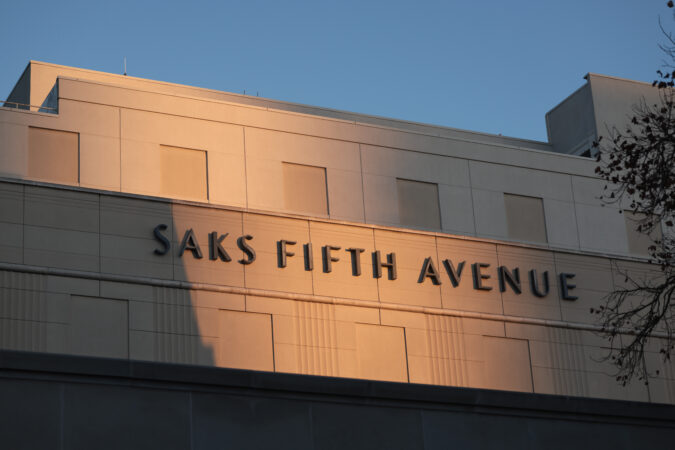
Hair stylist Artur Kirsh, who has long served clients out of his Saks Fifth Avenue salon in Bala Cynwyd, will be relocating to Narberth in April as Saks prepares to close. Kirsh will open a second salon at Boyds in Center City this fall.
Kirsh’s relocation comes after Saks Global, the owner of Saks Fifth Avenue and Neiman Marcus, announced the closure of numerous department stores, including the Bala Cynwyd Saks, in February. Saks Global filed for bankruptcy in January.
Kirsh said he was surprised to hear about the closure, but decided to take the opportunity to “do something huge” and open two new studios, expanding his presence in the region.
Kirsh will open Artur Kirsh Hair Studio, his new Narberth location, in April at 948 Montgomery Ave. He described the studio as “very artsy” and “very hip.” The Narberth outpost will have ample parking, a “fun and intimate” vibe, and will allow clients to move beyond traditional salon hours and schedule based on their availability, according to a news release. Kirsh called the Narberth studio a “boutique concierge salon concept.”
The hair stylist will continue to see clients at Saks through March to ensure a “seamless transition” ahead of the department store’s closure in April.
Kirsh said he chose Narberth because it’s minutes from his old Saks studio and would allow him to maintain some continuity for Main Line clients.
Kirsh will also expand his footprint in Center City in September, where he plans to open Artur Kirsh Salon on the fourth floor of Boyds department store at 1818 Chestnut St.
“I’ll have best of both worlds,” he said. “I’ll have the suburbs and the city.”
Though the changes happened quickly, Kirsh said he’s ultimately looking forward to the next chapter.
“When you’re in an old place, you kind of get stale,” he said. “Things happen for a reason.”
Kirsh was born and raised in Russia and moved to New York in the mid-1990s. After training at a Manhattan salon, Kirsh relocated to the Philadelphia area. He has worked out of the Bala Cynwyd Saks for six years. Kirsh specializes in coloring and “dry cutting” and describes himself as the ”go-to stylist for models and local celebrities.”
In addition to his Bala Cynwyd salon, Kirsh sees clients at the Rittenhouse Spa & Club in Center City, John Barrett Salon in New York City, and Oasis Salon & Med Spa in Boca Raton, Fla. Over the years, Kirsh has styled a number of celebrity clients, including Dorinda Medley, Betsey Johnson, Carolina Herrera, Celine Dion, Kathy Griffin, and Ken Downing.
This suburban content is produced with support from the Leslie Miller and Richard Worley Foundation and The Lenfest Institute for Journalism. Editorial content is created independently of the project donors. Gifts to support The Inquirer’s high-impact journalism can be made at inquirer.com/donate. A list of Lenfest Institute donors can be found at lenfestinstitute.org/supporters.
Homes along Yorkshire Way in Birmingham Township, one of the wealthiest communities in the Philadelphia region.
Chester County is home to six of the 10 wealthiest spots in the Philadelphia area, according to the latest U.S. Census American Community Survey, which compiles self-reported income data.
Topping the list is Pocopson Township, which had a median annual household income of $230,000 during the five-year period ending in 2024. It’s followed by West Pikeland ($226,100), Birmingham ($215,000), and Easttown ($214,900). West Vincent ($202,600) and Charlestown ($202,200) were the other two Chesco spots in the top 10, ranking No. 7 and 8, respectively.
The county saw widely ranging snowfall totals from this week’s storm thanks to heavy banding. According to figures reported to the National Weather Service, Malvern saw the largest total in Chester Countyat 12.3 inches, while East Coventry came in at the lower end, with 5.5 inches. See a map of how much snow fell near you earlier this week. Keep an eye out for a bit more snow today.
Former Chester County detective Christine Bleiler, who was a technical adviser on HBO’s popular drama Mare of Easttown, is suing the county and her former supervisor over alleged sex discrimination. Bleilerwas a police officer in Oxford Borough before becoming a county detective in 2015. She resigned from her post in September.
💡 Community News
In case you missed it, East Vincent’s planning commission recommended last week that the township’s board of supervisors deny a proposed data center at the Pennhurst site when it comes in front of them next month. The commission said the proposal, which calls for five two-story data center buildings, a sixth building, an electrical substation, and a solar field, was not in compliance with the zoning ordinance. The board of supervisors is holding a public hearing on March 16 at 6:30 p.m. at East Vincent Elementary School.
Pennhurst isn’t the only data center proposed in the area that’s getting pushback from local officials and residents. Envision Land Use has decided to look elsewhere to develop what it’s calling a “boutique” data center after public outcry over its plans, which called for building a 120,000-square-foot, three-story center at 299 Schuylkill Rd. On Monday, North Coventry Township’s board of supervisors took a preemptive vote that they’d reject the proposal, before it was even formally submitted.
The developer looking to build a data center on a remediated Superfund site in East Whiteland Township has submitted updated plans following last month’s planning commission meeting. The applicant is expected to attend tonight’s planning commission meeting, which will begin at 7 p.m. at the township building, and will also be live streamed.
Last week, Constellation Energy Group withdrew its application for data center code amendments, which were set to come before the East Coventry Township board of supervisors next month. The energy company was seeking changes that would have allowed data centers on five properties.
Lincoln University in Lower Oxford Township is planning to implement new safety measures for large events after a shooting at homecoming in October left one dead and six others injured. The university said it won’t host outdoor events after dusk, and events will be held within “a controlled environment” so visitors can be screened.
A group of residents is trying to save a deteriorating West Goshen fieldstone home from being demolished, with hopes of restoring it and converting it into an education center about the county’s Quaker history and involvement in the Underground Railroad. A judge will decidethe fate of the property, which was built in 1900 and has been left to deteriorate for the past two decades.
John Michael Bontrager, founding head of investment-risk adviser Chatham Financial, is focused on revitalizing Kennett Square, including spaces like beer garden The Creamery. He recently sat down withThe Inquirer’s Joseph N. DiStefano to talk about the projects he’s focusing on.
West Chester-based home shopping giant QVC Group, parent company to HSN, is being sued for $30 million by fashion designer and longtime former HSN host, Antthony Mark Hankins, who says he was abruptly and unjustifiably terminated last July.
Heads up for drivers: A monthslong Peco project to improve natural gas infrastructure in Willistown Township is set to get underway Monday. Work will take place on Paoli Pike between Frazer Avenue and South Cedar Hollow Road and on Fairview Road between Paoli Pike and Gable Road. Paoli Pike will be closed weekdays from 9 a.m. to 3 p.m. until the end of July. During the closures, drivers will be directed to use Devon and Darby Roads and Lancaster Avenue. The project is expected to wrap up by July 31. In Caln Township, Olive Street between South Caln Road and 13th Avenue will continue to be closed on weekdays from 8 a.m. to 4 p.m. for utility construction. Work is now expected to wrap up on April 30.
A new gating system at the Oxford Borough parking garage at 2nd Street and Octoraro Alley will go into effect Monday. The system will have 24-hour enforced payments, though free or reduced-cost parking may be implemented in the future.
Enrique Lopez-Gomez, 32, of West Grove,pleaded guilty this month to third-degree murder after allegedly punching a 9-month-old baby who was in his care in 2024 and not seeking medical attention for the child afterward. Lopez-Gomez will remain in prison while he awaits sentencing.
A few pieces of early childhood education news: In Downingtown, a new Kiddie Academy is opening this weekend at 595 Bell Tavern Blvd.Also, The Learning Experience is planning to open two new Chester County locations. They will be at 715 Pike Springs Rd. in Phoenixville and 43 Lancaster Pike in Malvern. A timeline for opening hasn’t been announced yet. (Philadelphia Business Journal)
🏫 Schools Briefing
Great Valley School District is discontinuing its use of the Bus Status app and will instead send communications through ParentSquare.
The Octorara Area School District is looking for a resident of Sadsbury or West Fallowfield Townships to fill an open board director seat. Applications are due Monday.
Tredyffrin/Easttown School District will open applications for a redistricting steering committee April 6 to 24. The committee will be comprised of 10 parents or guardians who will work with Wendy Towle, the district’s director of curriculum, instruction, staff development and planning, plus an external facilitator and “observers,” on a redistricting process in anticipation of the opening of the new Bear Hill Elementary School.
Cup of Dreams Coffee and Tea in the Paoli Village Shoppes is closing on Saturday as its lease ends.The owner is looking for a new location.
Tasty Table Catering has opened a new storefront known as The Table: Kitchen + Market for private events for up to 40 people. It’s located at its headquarters at 10 Leopard Rd. in Berwyn.
West Chester Restaurant Week continues through Sunday. See all the participating restaurants here.
🎳 Things to Do
🎭 Twelfth Night: William Shakespeare’s comedy gets a modern twist. ⏰ Wednesday, Feb. 25-Sunday, March 29, times vary 💵 Prices vary 📍People’s Light, Malvern
🍸 Hush: An Immersive Speakeasy Experience: TheFranklin Follies will perform parlour noir-style music, while cocktails featuring Bluebird Distillery libations will be served. ⏰ Friday, Feb. 27, 8 p.m. 💵 $35 📍The Colonial Theatre, Phoenixville
🍺 Kennett Winterfest: Over 60 craft breweries will be at this annual event, along with food trucks, live music, and vendors. ⏰ Saturday, Feb. 28, 12:30-4 p.m. 💵 $20.80 for non-alcoholic tickets, $62.40 for regular admission 📍South Broad Street, Kennett Square
🪈 Family Concert with BVS Woodwind Quintet: This family-friendly and interactive performance features woodwind instruments. ⏰ Saturday, Feb. 28, 2-3 p.m. 💵 $10-$30 📍Kennett Library, Kennett Square
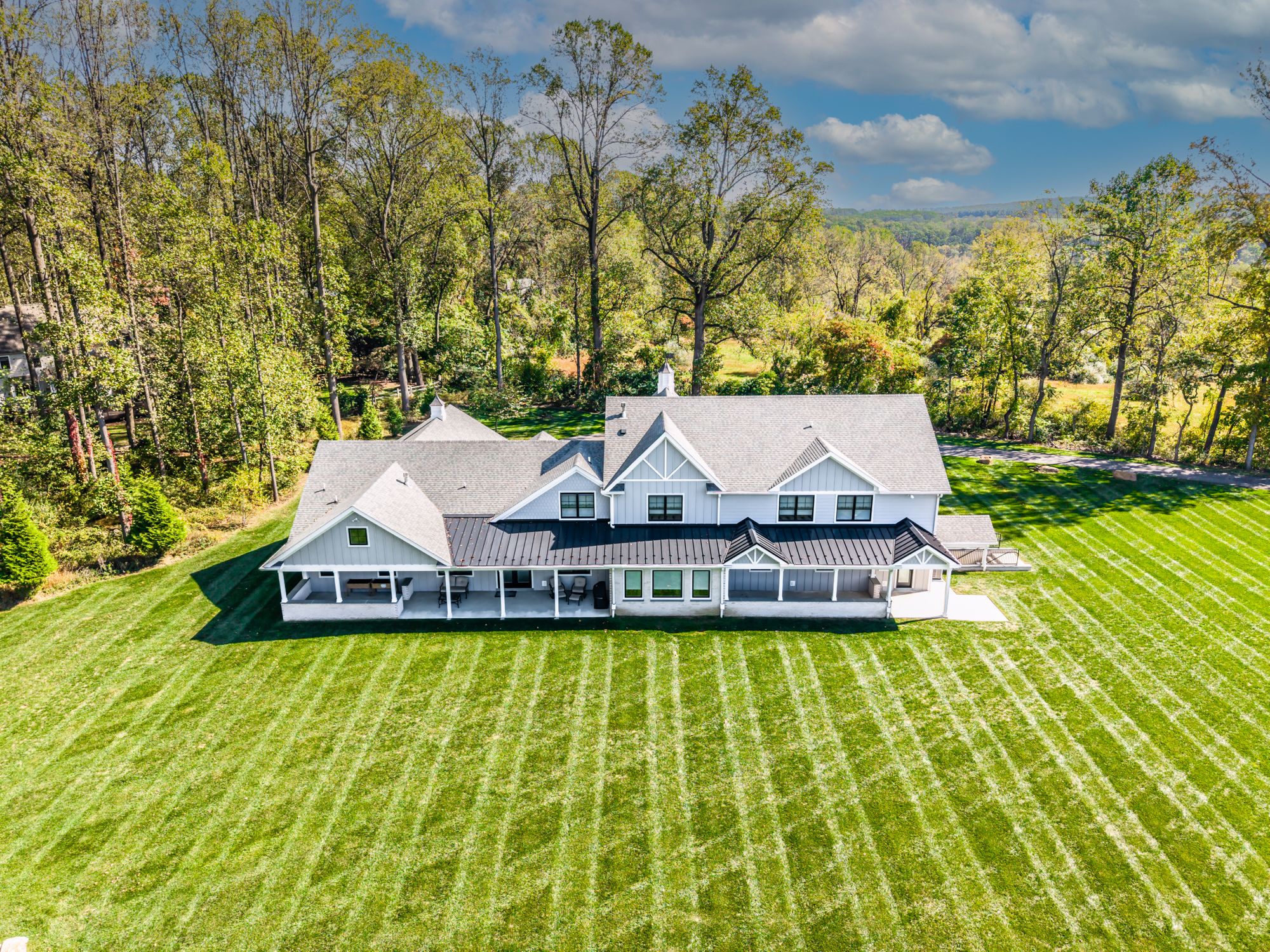
The home has a covered porch that looks out on the surrounding property.
Built in 2021, this sprawling Chester Springs estate has plenty of privacy thanks to both conservation land and surrounding pastures. The home features a two-tone kitchen with a quartz-topped island and a walk-in pantry that opens onto a dining and living room with a fireplace. Spanning six total bedrooms, the home has two primary suites, one on the first floor and another upstairs. The first-floor suite has a double vanity and a large walk-in shower, while the second-floor suite also has a soaking tub. Other features include a walk-out finished basement, a five-car garage, and a whole-house backup generator.
By submitting your written, visual, and/or audio contributions, you agree to The Inquirer’s Terms of Use, including the grant of rights in Section 10.
This suburban content is produced with support from the Leslie Miller and Richard Worley Foundation and The Lenfest Institute for Journalism. Editorial content is created independently of the project donors. Gifts to support The Inquirer’s high-impact journalism can be made at inquirer.com/donate. A list of Lenfest Institute donors can be found at lenfestinstitute.org/supporters.
Chelsea Carriere, archaeologist with PS&S, grabs for a bucket while digging at Croft Farm.
Over the weekend, archaeologists unearthed pieces of the past as they excavated around the historic Croft Farm property. The dig, which was open to the public to view and part of a project to stop groundwater from entering the home’s basement, revealed artifacts dating back hundreds and thousands of years.
They provide clues to the site’s past, including as a stop on the Underground Railroad, and before that, asaplace where the Lenni-Lenape Indigenous peoplelived.
Animal bones and pieces of pottery will help archaeologists better understand eating habits and traditions of those who lived there, The Inquirer’s Brett Sholtis reports.
This week’s storm brought a lot of snow to the region, with totals varying widely thanks to heavy banding. While the National Weather Service didn’t report an official total for Cherry Hill, surrounding towns reported 14 to 16.5 inches. The bad news (for those who don’t like snow): There’s the potential for a little bit more today. The good news is that it’s unlikely the snow will stick around as long as it did with last month’s storm thanks to the warmer temperaturesand the extra daylight that late February brings.
Cherry Hill residents had a median household income of $121,500 between 2020 and 2024, according to the latest U.S. CensusAmerican Community Survey, which compiles self-reported income data over a five-year period. That’s up just about $2,000 from the last survey, looking at data from 2010 to 2014, and makes Cherry Hill the third-wealthiest town in Camden County.
Good news for pickleball players: Eight new public courts are in the works at two sites around town. The township is planning to build four courts with lightsat Beechwood Avenue and Route 38. The goal is to start construction this summer and have the courts ready by early fall. Meanwhile, Camden County is building four courts at the nearly 18-acre John Adler Memorial Park at Challenge Grove at the corner of Bortons Mill and Caldwell Roads. Construction on those courts is also expected to begin this summer and will add to the park’s existing sports facilities, including a softball field, and basketball and bocce courts.
The planning board is meeting Monday evening to hear public comment about an amendment to the township’s Housing Element and Fair Share Plan, which would amend its overall master plan if adopted. One change would allow for the site of the six-story office building at 3 Executive Campus to be redeveloped into residential or mixed-used buildings with between 39 and 64 affordable units. It would also allow for part of the 28.2-acre site’s land to be developed. See a draft of the amendment here.
A Cherry Hill man who pleaded guilty to child molestation after having a sexual encounter with a 13-year-old girl in Indianain 2021 was sentenced last week to three years in prison. Jonathan A. Trauger, 28, must also register as a sex offender for a decade after his release. (Courier Post)
📸 Cherry Hill residents dig out after the storm
Three generations of Cherry Hill residents, Julio Maldonado Sr., 79 (right), Julio Maldonado III, 19 (middle), and Julio Maldonado Jr., 49, (left), dug out the family’s car on Covered Bridge Road Monday. “We live together, play together, and work together,” Julio Maldonado Jr. said.
🏫 Schools Briefing
There are several school board committee meetings on Monday evening, which are open to the public. See the district’s full calendar here.
East girls’ swimming will take on Bridgewater-Raritan Regional High School in the NJSIAA Team Swimming Championships this morning, after the event was postponed due to the weather. The meet will kickoff at 8:30 a.m. East defeated Passaic County Technical Institute 88-82 in group semifinals to claim its spot. As for the East boys’ swimming team, after making it to the semifinals, the Cougars fell to Hillsborough High 91.5-78.5. (NJ.com)
The NJSIAA girls’ basketball playoffs kick off this week, with both East and West competing. The West girls’ team will look to defend its state championship title in the first round of the Group 3 tournament on Friday at 3:45 p.m., hosting Cumberland Regional High School. Follow the results here and see the Lions’ full group bracket here. And East will take on Atlantic City High School tomorrow at 4:30 p.m. as part of the Group 4 tournament. See East’s full group bracket here.
Camden Catholic High School’s boys’ wrestling team captured its 20th state title on Sunday, defeating Pope John XXIII Regional High School 53-19. It now has the third-highest number of state titles among public and non-public teams. (Courier Post)
🍽️ On our Plate
Two Cherry Hill spots serve some of the best bagels in the state, according to a new ranking from NJ.com. Bagel Spot on Kings Highway landed at No. 18 on the list for its 24 types of bagels and 30 varieties of spreads, while K & A Bagel Cafe came in at No. 43. The Route 70 spot has 21 kinds of bagels and 18 spreads, including a honey cinnamon butter.
🎳 Things to Do
🎷 A Journey Through Jazz: Hear the Bradford Hayes Jazz Quartet perform. ⏰ Friday, Feb. 27, 7-8:30 p.m. 💵 $15 in advance, $20 at the door 📍Croft Farm Arts Center
☕ Bridgerton Handbuilding Workshop: Fans won’t want to miss this workshop, where you can make a teacup and saucer inspired by the popular Netflix show. ⏰ Saturday, Feb. 28, 10 a.m.-1 p.m. 💵 $150 📍Hugs Ceramics
🍎 Holistic Health and Healing Expo: Learn about holistic wellness through lectures and workshops. You can also meet practitioners and shop for related goods. ⏰ Sunday, March 1, 11 a.m.-5 p.m. 💵 Free or $7.18 for VIP admission 📍DoubleTree by Hilton Cherry Hill Philadelphia
✡️ Purim Carnival: Kids are encouraged to dress in costume for this event celebrating the Jewish holiday. There will be face painting, games, crafts, food, and drinks. ⏰ Sunday, March 1, 11:30 a.m.-1:30 p.m. 💵 $20 per child 3 and older, free for adultsand children under 3📍Congregation Kol Ami
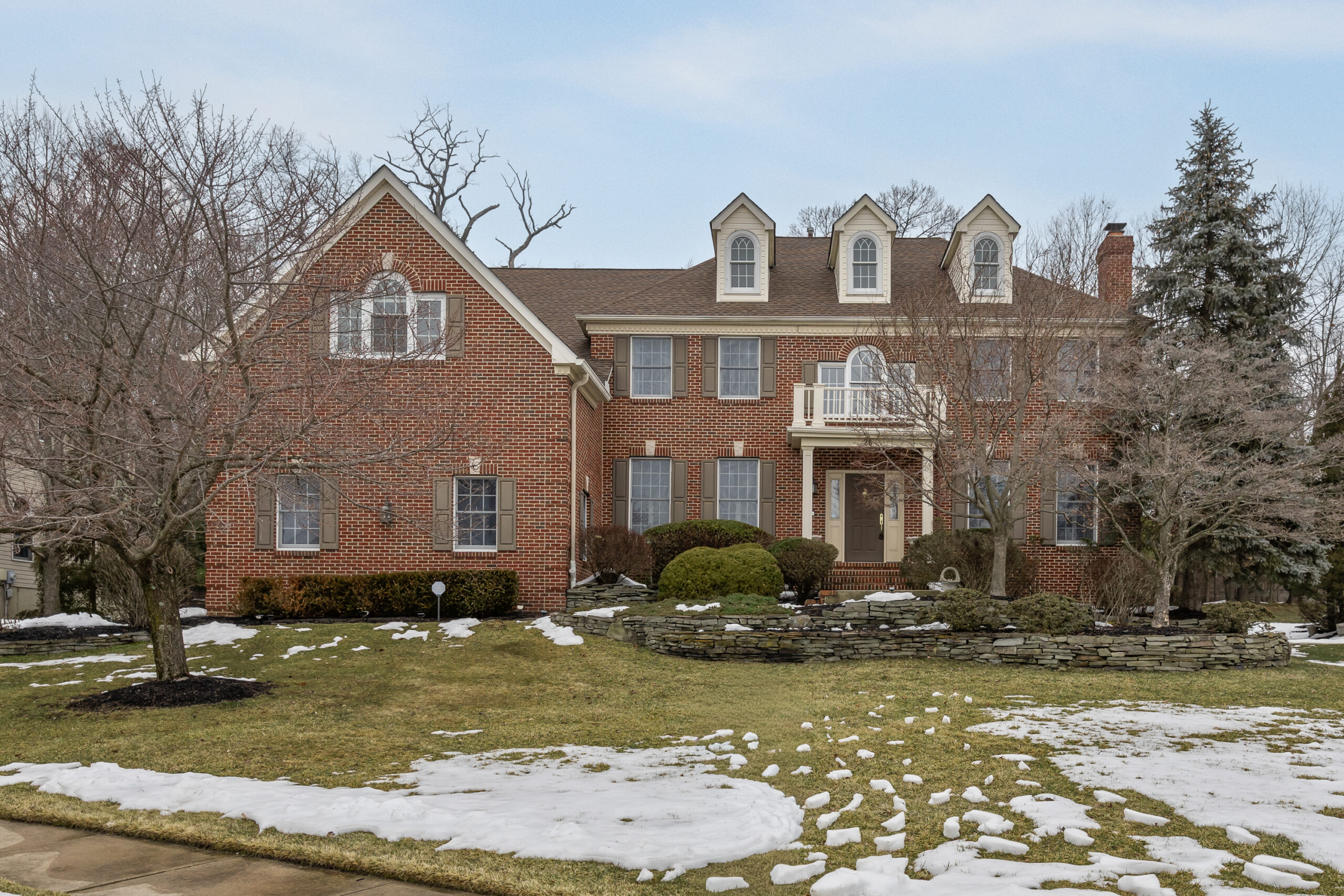
The home has a classic brick facade, a portico, and dormers.
Located in the Short Hills neighborhood, this brick-fronted home is full of classic elements, including a covered portico and dormers. Inside, there’s a two-story foyer, a formal living room with a gas fireplace, a formal dining room, a first-floor office, and a family room with a brick fireplace. The kitchen has a double oven, a separate bar area, and a dining area with vaulted ceilings and access to the deck. There are four bedrooms upstairs, including a primary suite with a separate sitting area, a large walk-in closet, a jacuzzi tub, and two vanities. Other features include a finished basement with a full bathroom, a three-car garage, and a patio.
By submitting your written, visual, and/or audio contributions, you agree to The Inquirer’s Terms of Use, including the grant of rights in Section 10.
This suburban content is produced with support from the Leslie Miller and Richard Worley Foundation and The Lenfest Institute for Journalism. Editorial content is created independently of the project donors. Gifts to support The Inquirer’s high-impact journalism can be made at inquirer.com/donate. A list of Lenfest Institute donors can be found at lenfestinstitute.org/supporters.
New Jersey lawmakers just got a nearly 70% raise when they took their oaths in January.
It’s their first pay bump in more than two decades. The state’s legislators had been paid a $49,000 salary since 2001, but this year they saw it jump to $82,000 under a law signed in 2024.
Despite the increase, their spending power isn’t any bigger than it was 25 years ago. But legislators giving themselves a raise is a politically fraught move.
Their new salaries fall below the state’s median household income of more than$100,000, though the legislature says most of its members have other employment. Garden State lawmakersare considered part-time, even though they meet throughout the year and some members say the job is a full-time commitment.
“They say it’s part-time but I would argue that people act like it’s full-time, and it really is a full-time job,” said Assemblymember Anthony Angelozzi, a newly elected Democrat who represents parts of Burlington and Atlantic Counties and also works as a Hammonton teacher and leads the Hammonton Education Association, the local teachers union.
“My term is two years, and I am in a swing district … so if I don’t work hard every day to do things in my district and to talk to people, build relationships, visit the 25 towns that I represent, I’m going to lose my seat,” he said.
window.addEventListener(“message”,function(a){if(void 0!==a.data[“datawrapper-height”]){var e=document.querySelectorAll(“iframe”);for(var t in a.data[“datawrapper-height”])for(var r,i=0;r=e[i];i++)if(r.contentWindow===a.source){var d=a.data[“datawrapper-height”][t]+”px”;r.style.height=d}}});
New Jersey legislators are now among the highest-paid in the country, but they’re still paid less than their counterparts in Harrisburg, whose salaries are more than $113,000, including per diems, above Pennsylvania’s median household income of roughly $78,000.
In New Jersey, each chamber was scheduled to meet for less than a dozen full sessions in 2025, but members met more frequently for committee meetings and quorums, in which lawmakers can conduct business if more than half are present.
Most New Jersey state lawmakers have other jobs, too
Along with Angelozzi, all of the other 19 state lawmakers who represent Camden, Burlington, and Gloucester Counties in the state House and Senate also received a paycheck from outside employment, according to 2024 financial disclosures. A handful of them also reported receiving Social Security or pension income.
Assemblymember Balvir Singh, a Burlington County Democrat who began his term last year, said he’s not sure he would have voted for the pay increase given the drastic jump at once, though he would have supported a formula with annual increases over time.
“I think not doing something for so many years and then doing it all of a sudden, definitely is a suspicion among people, and rightfully so,” he said.
Singh works as a public school curriculum and instruction supervisor, which gives him flexibility to plan his work hours around days he has to be in the legislature, though he still uses his time off for legislative matters and constituent services.
window.addEventListener(“message”,function(a){if(void 0!==a.data[“datawrapper-height”]){var e=document.querySelectorAll(“iframe”);for(var t in a.data[“datawrapper-height”])for(var r,i=0;r=e[i];i++)if(r.contentWindow===a.source){var d=a.data[“datawrapper-height”][t]+”px”;r.style.height=d}}});
Does better pay mean Trenton can better represent New Jerseyans?
Proponents of payingelectedofficials higher salaries argue thatitcan lead to a more diverse legislature that’s more representative of New Jerseyans, though the evidence is limited.
Anthony Campisi, a political consultant who works in both New Jersey and Pennsylvania, said higher legislative pay opens up the prospect of running for state office to those who aren’t independently wealthy or hold white-collar jobs, that come with the flexibility to go to Trenton regularly, like lawyers.
“I think it’s a good thing to pay legislators living wages,” he said. “They’re responsible for appropriating billions of dollars for overseeing important legislative work that impacts every aspect of our lives.”
But Peverill Squire, a national expert on legislative pay based at the University of Missouri, said pay increases lead to minimal changes in the makeup of legislatures because of the financial and time commitment that comes with running for office.
“It makes it more attractive for more people to think about, but it’s still a very difficult thing to run for office, and so in the final analysis, it doesn’t have as big an impact as one might have thought it would,” he said.
That being said, higher pay can incentivize legislators to remain in the job. Squire said state lawmakers who step down voluntarily often do so because of the financial impact on their families.
The average state legislator salary across the country hasn’t kept pace with inflation over the past few decades, according to the National Conference of State Legislatures(NCSL). In New Jersey, the old salary of $49,000 in 2001 had the buying power of roughly $90,000 today.
New Hampshire legislators receive the lowest annual salary of $100, which has not been changed since 1889. Meanwhile, New Mexico lawmakers do not receive a salary, but they receive per diems.
In 2025, only six states paid their lawmakers more than New Jersey lawmakers’ new salary of $82,000, while Pennsylvania lawmakers made the third most behind New York and California, according to NCSL data.
New Jersey Gov. Mikie Sherrill holds up a just signed executive order during her inauguration ceremony in Newark, N.J., Tuesday, Jan. 20, 2026. Sherrill will received a higher salary than her predecessor, former Gov. Phil Murphy, under a law taking effect this year.
Should New Jersey become a full-time legislature?
The 2024 law,which was signed by former Gov. Phil Murphy, also increased the salary for the governor and other public employees, including legislative staff, cabinet members, and judges.
Starting this year with Gov. Mikie Sherrill, the state’s top executive got a 20% pay increase from $175,000 to $210,000. For comparison, Pennsylvania Gov. Josh Shapiro’s salary has risen to nearly $254,000 this year.
The Office of Legislative Services estimated in 2024 that the increases altogether would bring a cost increase to the state of at least $9.8 million for 2026 and at least $12.4 million in 2027 and thereafter.
The bill faced opposition from some Republican lawmakers, including member Alex Sauickie, a Republican whose district includes parts of Burlington, Middlesex, Monmouth, and Ocean Counties. Sauickie said the billwas brought forward at a horrible time as New Jersey residents struggled with the high cost of living — an issue that persists as the law takes effect.
“We should fix the state for everybody else before we make adjustments for ourselves,” said Sauickie, whose district includes parts of Burlington, Middlesex, Monmouth, and Ocean Counties.
The GOP lawmaker said he does not believe higher wages lead to better legislators.
“Under the old salary we had questionable legislators, and out of the gate on the new salary I think we still have questions about certain legislators,” he added.
Antoinette Miles, the state director of the progressive Working Families Party, said New Jersey should have a full-time legislature with term limits, attractive pay, and limits on outside income.
“The real problem is that too many legislators are moonlighting as lawyers, lobbyists, or even at a second public job,” she said.
But even with a higher salary, the lack of job security as an elected official makes it a hard sell as an only source of employment, especially in a politically fickle district like Angelozzi’s.
“Nothing in politics is guaranteed … if I lose my job, I would have to be guaranteed to go back to my full-time day job, because, you know, I have bills to pay,” Angelozzi said.
When a messy land dispute between Gov. Josh Shapiro and his backyard neighbor poured into public view via federal court filings earlier this month, it jolted his sleepy Montgomery County neighborhood.
The picturesque suburban community tucked behind Penn State Abington is usually quiet and boring, current and former neighbors said, just the way they like it. It’s a great place to raise their kids, and where Shapiro’s four children have grown up. Among the biggest points of contention is when one neighbor fails to say hello to another. Many houses in the neighborhood sit a quarter-mile away from the main road, behind winding, tree-lined driveways. Some of the homes have been purchased in recent years for upward of $1 million. In many ways, the neighbors said, it’s the perfect picture of the suburban American dream.
But this month, the neighborhood also became the battleground for dueling lawsuits between Shapiro and his neighbors, Jeremy and SimoneMock, bringing tension to atranquil community.
What’s more: Shapiro’s office alleges the lawsuit against him is a political hit job to hurt him as he runs for reelection, citing the Mock family’s communications with the top Republican in the state Senate and his frequent sparring partner, President Pro Tempore Kim Ward. The family’s attorney in the lawsuit is also a local lawyer known to represent Republican causes, and whose former clients include the political campaigns of President Donald Trump and U.S. Sen. Dave McCormick.
The Mocks, meanwhile, argue in their lawsuit — filed in the U.S. District Court for the Eastern District of Pennsylvania — that Shapiro has used his powerful position as governor to infringe on their constitutional rights and take their land.
The disputed land — a 2,900-square-foot strip between Shapiro and his neighbor’s lawn — had not been an issue between them until security updates were proposed to Shapiro’s home after a Harrisburg man firebombed the state-owned governor’s residence last April while Shapiro and his family slept inside, both the Shapiros and Mocks said in court filings. The man, Cody Balmer, later pleaded guilty to attempted murder and related crimes for the attack, and was sentenced to 25 to 50 years in prison.
Afterward, state police proposed security upgrades to Shapiro’s personal residence and the state-owned governor’s mansion in Harrisburg, suggesting the installation of an eight-foot fence along the perimeter of Shapiro’s personal property, along with tree trimming, a new security system, and other landscaping efforts expected to cost more than $1 million, Spotlight PA reported. The proposed taxpayer-funded improvements to the Montgomery County home — criticized by the Republican-controlled state Senate — came in addition to the more than $32 million in repairs and security upgrades made to the governor’s mansion in Harrisburg, which included the replacement of an existing security fence there.
(function() { var l = function() { new pym.Parent( ‘shapiroyard__graphic’, ‘https://media.inquirer.com/storage/inquirer/ai2html/shapiroyard/index.html’); }; if(typeof(pym) === ‘undefined’) { var h = document.getElementsByTagName(‘head’)[0], s = document.createElement(‘script’); s.type = ‘text/javascript’; s.src = ‘https://pym.nprapps.org/pym.v1.min.js’; s.onload = l; h.appendChild(s); } else { l(); } })();
The Shapiros allege in a countersuit that they believed the disputed piece of lawn was theirs, and that they had maintained it for 22 years. When a land surveyor hired by the state to help with the security upgrade projects found that the Shapiros did not own the disputed part of the land, the Shapiros approached the Mocks in July to purchase or lease it.
Ultimately, the talks fell apart, as the neighbors blamed one another for being unwilling to make a deal.
Any resolution is now likely to be decided in court.
The Mocks in their lawsuit — represented by Delaware County attorney Wally Zimolong, who describes himself on his website as the “‘go-to’ lawyer in Pennsylvania for conservative causes and candidates” — accused Shapiro in his official capacity as governor of an “outrageous abuse of power” by illegally occupying a part of their yard that they pay taxes on. The Shapiro family quickly filed a countersuit in the Montgomery County Court of Common Pleas, arguing they have control of the land through adverse possession, a legal mechanism through which a person can gain ownership of a property they’ve actively used for at least 21 years.
The Mocks have asked a federal judge to find that Shapiro, as governor, violated their constitutional rights; as well as prohibit state officials from trespassing on their property moving forward; and to award them damages. Private attorneys representing Shapiro have asked the Common Pleas Court to find they are the owners of the disputed part of the yard and refund attorney fees.
‘Everybody got along’
Shapiro and his wife, Lori, have lived in the same home in the neighborhood for 22 years, purchasing the four bed, three-and-a-half bath property in June 2003 for $465,000 as the young couple wanted to move back to the Philadelphia suburbs after spending several years working as staffers on Capitol Hill. Shapiro ran for state House the following year and represented the area until 2011, in what was the beginning of his decades-long political career that has helped flip Montgomery County, the state’s third-most populous county, from red to blue.
Several current and former neighbors in the Philadelphia suburb raced to defend the Shapiros as great neighbors, adding they don’t mind the additional state police presence as his star rises as a top Democrat and after the governor and his family were victims of political violence. Others said they’ve had a good relationship with the Mocks so far.
“We had nothing but pleasant experiences with Josh. I have nothing that I can say negative in any way, shape, or form,” said Eileen Simon, who used to live next door to Shapiro until 2020. Simon lived in the neighborhood for 48 years. She hasn’t spoken to the Shapiro family in a few years, but recalled that her grandchildren would often play on the Shapiro’s backyard swing set.
“We were all neighbors together, and everybody got along,” Simon added. “I’m devastated that this has happened.”
Cathy Keim, who moved out of the neighborhood seven years ago and shared a boundary line with the Shapiros for some of the nearly 40 years she lived there, also recalled a neighborhood where everyone got along. Keim said she believes the current dispute is petty, and added thatwhen Shapiro first built his swing set behind her pool fence, he mistakenly put it on her property. When the Keims alerted him to it, Shapiro quickly moved it back onto his own backyard, she said.
“That area, it looked like it should be theirs because of the pool fence,” she said. “I had to tell them, ‘that’s our property,’ and they very quickly moved it.”
Stephanie Berrong, whose backyard also abuts the Shapiro’s property, said in a text message that after the arson attack, the Shapiros asked if they could remove a tree on her property to build the security fence. Berrong and her husband agreed, and said the Shapiros were “respectful of our time and our property” throughout the tree-removal process. She did not comment on the Mocks.
“We just felt it was the right thing to do, considering someone tried to burn down the governor’s mansion with them, and their kids, inside,” Berrong added.
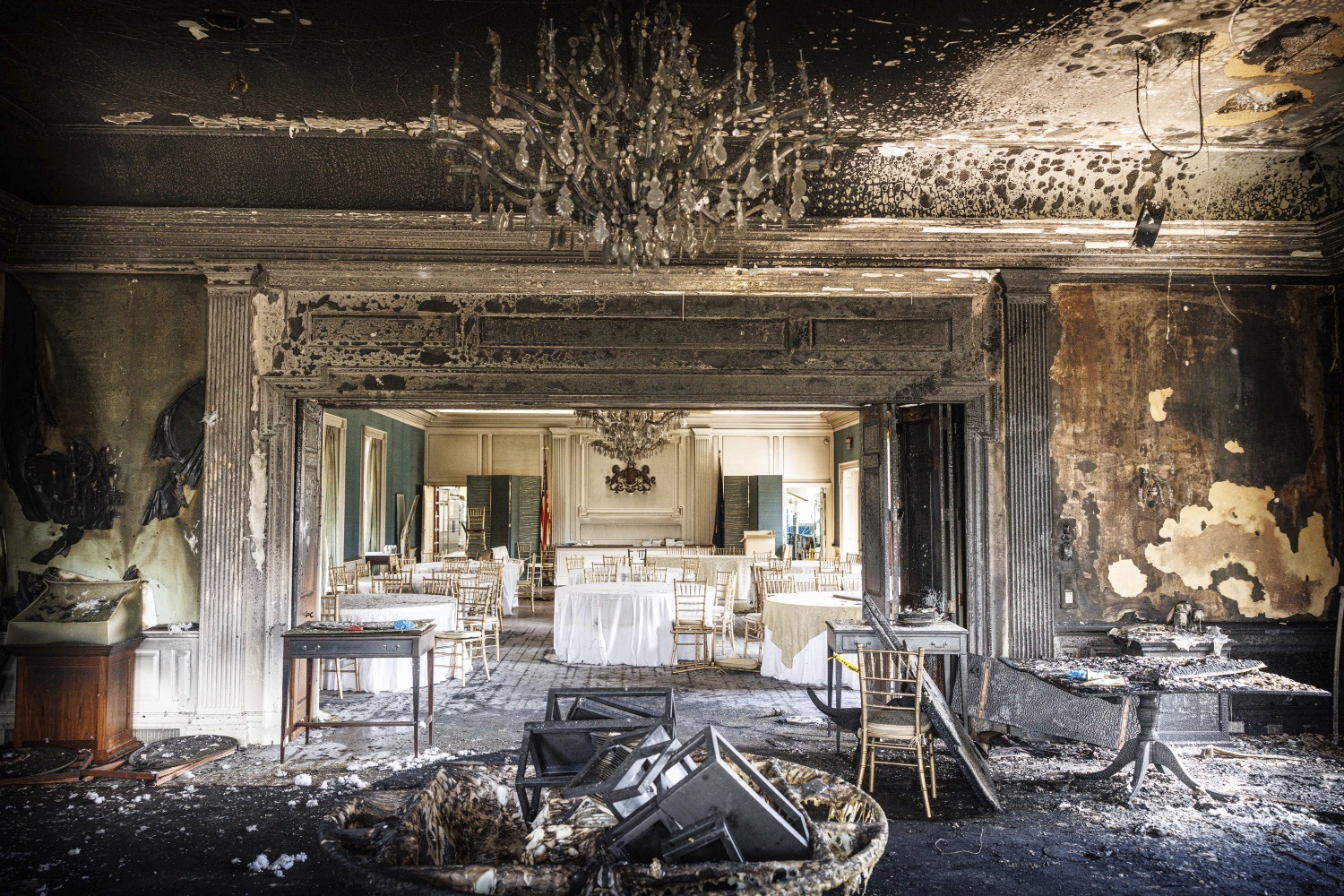
This image provided by Commonwealth Media Services shows damage after a fire at the Pennsylvania governor’s mansion while Democratic Gov. Josh Shapiro and his family slept inside on April 13, 2025, in Harrisburg.
State police never built the security fence that started the land feud, instead opting to surround Shapiro’s home with updated landscaping. That escalated the conflict with the Mocks. In their lawsuit, the Mocks allege that despite ongoing negotiations over the strip of land, the Shapiros began planting arborvitae-type trees and other plants on the Mocks’ property, flying drones over it, and threatening to remove healthy trees. The lawsuit also accuses state police of “chasing away” contractors who came to work in the Mocks’ yard.
The Shapiros, meanwhile, argue in court filings that the Mocks’ alleged harassment is causing them irreparable harm and further threatening their safety. According to a source briefed on the conflict, the Mocks at one point posted a series of signs on the land and a tree that read “Hippity hoppity, stay off my property,” and “This is my property,” among other efforts to antagonize the Shapiros.
John Ginsberg grew up in the home now owned by the Mocks during the 1970s and ‘80s, and said he never thought of their property as stretching into the land now owned by the Shapiro family.
“It just wasn’t an area that was used,” said Ginsberg, who now works as an attorney in Washington. “It wasn’t maintained, and it was brambly.”
Another man, who requested anonymity to speak freely about his neighbors, said he lived next to the Shapiros for more than 21 years, and has for decades shared the upkeep on a portion of the property highlighted in the lawsuit with Shapiro, taking turns clearing and replanting the area.
“I don’t think either of us thought twice about that little strip of land,” he said.
The Shapiros have been great neighbors, he said, and the Mocks have been “good neighbors to us,” describing them as a “nice young family.”
Political allegations
Shapiro has faced ongoing scrutiny from the state Senate for implementing the $1 million in security upgrades to his personal home, in addition to $32 million in repairs and security upgrades to the governor’s mansion following the arson attack. All of the upgrades were implemented without legislative approval due to their urgent nature.
A Senate committee in December took the unprecedented step to subpoena Shapiro over the security upgrades to his personal home, arguing that his administration had not been transparent in previous inquiries about how state taxpayer dollars were being used to upgrade security at Shapiro’s personal home.
Ward, the top official in the state Senate, has been critical of the state spending on security upgrades, saying that taxpayer dollars should not be funding security upgrades to Shapiro’s private residence.
Shapiro’s office is quick to note that Ward has been in contact with the neighbors taking the governor to court — saying that helps show the land dispute lawsuit is politically motivated.
Ward, of Westmoreland County, told ABC27 earlier this month that she had had contact with the Mock family on two occasions. A person close to Ward said that the senator is an acquaintance of the Mocks, but that the family had already obtained legal counsel by the time Ward reached out to them, and that the lawmaker did not encourage Shapiro’s neighbors to take any legal action against him.
Senate President Pro Tempore Kim Ward leaves the House chamber Feb. 3 following Gov. Josh Shapiro annual budget proposal in Harrisburg.
Jeremy Mock has owned a small coffee business in Ward’s legislative district in western Pennsylvania since 2022, according to public business filings. He and his wife moved to the Abington Township neighborhood in 2017, and have had no issues with the Shapiros until the fence feud, according to both parties’ lawsuits.
“This dispute over a small piece of the Shapiros’ backyard has been turned into a shameless political stunt by their neighbors and members of the Republican State Senate, who are now harassing and exploiting the Shapiros,” said Rosie Lapowsky, a spokesperson for Shapiro, without directly naming Ward.
Zimolong, the Mocks’ attorney, said the fact that the couple was willing to work with the Shapiros to find a solution dispels any claim that their suit is politically motivated. The Mocks could have said “no” from the outset when the Shapiros approached them, he argued, but instead participated in negotiations.
“At base, this is a straightforward defense of the property rights of two innocent owners, who were living peacefully next to the Shapiros for over nine years,” Zimolong added in a statement.
“Even today, the Mocks remain open to resolving the dispute,” Zimolong said.
Gov. Josh Shapiro and his wife, Lori Shapiro, depart a talk for his new memoir “Where We Keep the Light” on Jan. 29 in Washington, D.C
Zimolong says he has never discussed the lawsuit with Ward or coordinated with her staff over the issue, “and I have no intention of doing so.”
He saidhe is one of few attorneys in southeastern Pennsylvania who is “not afraid to hold a powerful governor accountable” and does not have work before the state that would present an ethical conflict.
Erica Clayton Wright, a spokesperson for Ward, noted that taxpayer funds have now been used to pay for security upgrades to Shapiro’s personal residence and the property of his neighbors, and argued that it’s “not the first time Gov. Shapiro’s team has been put in the awkward position of pointing fingers to distract from Gov. Shapiro’s questionable methods of operation.”
“It is important not to lose sight of the need to ensure the governor and his family are safe while also safeguarding the processes in place to manage taxpayer funds,” Clayton Wright said.
“Absolutely no one but Gov. Shapiro himself is responsible for trying to take his neighbor’s property via squatter rights, which has resulted in federal and state lawsuits,” she said.
Staff writer Abraham Gutman contributed to this article.
Lights shine from a window of the abandoned Greyhound intercity bus terminal on Filbert Street as construction crews demolish fixtures and begin renovations ahead of a May reopening.
While the old depot is ready for crowds of travelers attending high-profile special events this year, the city Department of Planning and Development has identified three possible locations for a permanent intercity bus station.
Officials sifted through 208 possible locations over the past two years before zeroing in on the three sites:
Eighth and Arch Streets: A pair of parking lots on Arch Street near Eighth Street next to the African American Museum. The lots, at 701-709 and 721-737 Arch St., are owned by the city and Parkway Corp.
15th and Vine Streets: The Philadelphia Gateway Garage at 1540 VineSt. along with an adjoining parking lot. They are owned by the Pennsylvania Department of Transportation and the Philadelphia Parking Authority.
Near 30th Street Station: A parking lot just north of 30th Street Station, at 2931 ArchSt., near the Cira Centre office tower.
On Wednesday, the city Planning Commission is holding a public open house at Independence Visitors Center from 6to8 p.m. People can learn about the sites, share their ideas, and ask questions about the future home of an intercity bus facility.
There’s also an online survey collecting opinionsaboutwhat the intercity bus station needs andwhere it should go, due March 13.
The former Greyhound terminal at 1001 FilbertSt. “is not a long-term solution for the city’s intercity bus needs,” city officials say, though it will provide a safe and comfortable indoor station for travelers, as opposed to the current, haphazard outdoor curbside loading zones along Spring Garden Street near Columbus Boulevard.
It is scheduled to reopen in plenty of time for eventscelebrating America’s 250th birthday and World Cup soccer tournament matches in the summer.
The city says its goal is a modern “transportation hub” with amenities for travelers and bus operators and, ideally, some development built around the facility. It would be owned by the city.
“Public ownership means it won’t be closed down by a landlord or private bus company,” the planning department said in a statement. In addition, the forever depot “could be designed to have housing in the floors above the station or retail spaces within the station. These uses could help support … construction and operation.”
Why was Philly’s Greyhound terminal moved?
Greyhound ran the terminal at 10th and Filbert for more than three decades but pulled out in June 2023, ending its lease with the owners amid the bus company’s push to cut costs by shedding real estate it owned or rented nationwide.
Other intercity bus carriers have done the same, operating from curbsides in a number of cities.
When those plans fell through, the building was empty again, while Greyhound, its parent company FlixBus, and family-owned Peter Pan Bus Lines were operating at curbside on the 600 block of Market Street. That site, chosen by city officials, lacked benches, bathrooms, or shelter for customers.
Traffic was a mess, and SEPTA had to reroute some of its metro bus routes for a time.
In November 2023, Greyhound and the other carriers moved operations to a corner in Northern Liberties along Spring Garden Street with more space than the Market Street block. City officials promised it was temporary, but the “station” is still there, with attendant trash and disruptions to local business.
Consultants and city planners picked 35 potential sites for closer analysis. They were looking for places that could accommodate a multistory, mixed-used development in addition to a station and that were close to Center City or University City, transit, and highway ramps.
Strengths: Proximity to several transit stops and to I-676 and I-95, as well as the potential to build public parking above the station and to use the African American Museum building when that entity moves to the Parkway.
Challenges: The ownership, split between the city and a private corporation, could require coordinating with the Federal Detention Center there on the southwest corner, and buses may need to be routed through Chinatown.
Challenges: Amtrak owns the property, however, and the city would have to coordinate with the company to develop over the railroad tracks and the structural work needed to strengthen the lot and ramps for heavy bus traffic. PennDot also has said there would have to be substantial work to the entrance and exit ramps to the Schuylkill Expressway.
What’s next?
The city plans to consider the feedback it gets Wednesday, update the schematics, and then hold another public event later in the year. It hopes to have a final report by the end of 2026 that names the site.
And then begins the long process of acquiring the site, designing the project, and figuring out how to pay for it.
Philadelphia’s miles of trails draw a constant stream of runners, walkers, hikers, cyclists, and commuters.
Yet for years, city officials have depended on residents calling in or logging in to the 311 system to report trail issues before a crew was sent out.
Now, Philadelphia Parks and Recreation (PPR) is set to roll out the city’s first dedicated trail-maintenance crew, a pilot program funded by a $600,000 grant from the William Penn Foundation.
The money will fund a six-person team tasked exclusively with monitoring and maintaining multiuse trails that thread through 10 watershed-protecting parks.
Susan Buck, PPR’s deputy commissioner of operations, said the crew would launch this summer and resolve a long-standing logistical problem.
“The focus has always been on building the trails,“ Buck said. ”However, in recent years we would go to community meetings and hear more about trail maintenance.”
Right now, addressing a downed tree or a washed-out path means pulling staff away from recreation centers and neighborhood parks. A dedicated trail crew will ease that strain, she said, and position the city to address issues before they snowball into bigger problems.
Now, PPR can be proactive, she said.
Parks are priorities
The crew’s immediate priority will be to rotate through 10 watershed parks, such as Wissahickon Valley, Pennypack, Tacony Creek, and Cobbs Creek. Crews will also monitor the Schuylkill River Trail, which recently saw major repairs to sinkholes and storm damage.
Buck said the crew will initially be responsible for about 80 miles of trails.
The city has 166 miles of trails or more depending on what’s being counted. Overall, PPR manages asphalt, gravel, and dirt trails that residents use not only for recreation but for commuting and walking neighborhood to neighborhood.
The new crew will have skid-steer loaders, which are small versatile vehicles with mechanized arms and buckets used to clear, dig, grade, and lift. And they’ll have other equipment such as wood chippers and chainsaws.
For the average park-goer, it should translate to a smoother weekend run, daily commute, or less frustrating bike ride, Buck said.
“Overall, people will see safer trails and more enjoyable trails,” Buck added. “If you’re a runner or cyclist getting hit by overgrown brush, maybe we’ll be able to get to that faster. Ruts and divots should get filled in faster.”
By having a mobile team that can move from the Wissahickon to East Fairmount Park, the city aims to create a uniform experience for all users.
Buck has been working alongside Sarah Clark Stuart, the trails manager for the Streets Department.
The two are working toward a cost-sharing agreement betweenthe two departments to turn the pilot program into an annual part of the city budget.
That way the crew can continue to clear overgrown brush, haul away downed trees, fix washouts, tackle soil erosion, eliminate tripping hazards, and clean graffiti off signs.
The pilot program could use existing employees or result in new hires, she said.
‘Great cities have great parks’
Sara Stevenson, executive director of Friends of the Wissahickon (FOW), said the dedicated crew represents a shift in the way the city has viewed its natural assets. The nonprofit FOW helps manage the city-owned Wissahickon Valley Park.
The 2,000-acre park has more than 50 miles of paved and dirt trails. The new trail crew will be assigned to help with paved paths and major arteries like Forbidden Drive.
“It’s a great program,” Stevenson said. “The more we can invest in Parks and Rec, the better our city will be. This is a good step forward and a recognition of how important the trail system is.”
The Wissahickon relies on thousands of volunteers annually to pull invasive species, clear debris, and help with other maintenance. Stevenson said that the demands of maintaining sustainable trails requires a professional, daily presence.
“Great cities have great parks,” Stevenson said. “I think what we’ll see is a new standard of care … It’s an illustration that the city understands the value of the trail across the entire city.”
WASHINGTON — President Donald Trump declared during a marathon State of the Union on Tuesday that “we’re winning so much” — insisting he’d sparked an economic boom at home and imposed a new world order abroad in hopes it can counter his sliding approval ratings.
Trump’s main objective was convincing increasingly wary Americans that the economy is stronger than many believe, and that they should vote for more of the same by backing Republicans during November’s midterm elections. In all, Trump spoke for a record 108 minutes, breaking — by eight minutes — the previous time mark from his address before a joint session of Congress last year.
The president largely avoided his usual bombast, only occasionally veering off-script — mostly to slam Democrats. As he did during such addresses in his first term, Trump relied on a series of surprise special guests to dramatically punctuate his message. They included U.S. military heroes and a former political prisoner released after U.S. forces toppled Venezuelan President Nicolás Maduro.
Trump drew some of the loudest applause of the night when he invited the Olympic gold medal-winning U.S. men’s hockey team into the House chamber.
“Our country is winning again. In fact, we’re winning so much that we really don’t know what to do about it. People are asking me, ‘Please, please, please, Mister President, we’re winning too much. We can’t take it anymore,’” Trump said before introducing the team.
The hockey players, wearing their medals and “USA” sweaters, drew a bipartisan standing ovation. Trump pointed to the Democratic side of the chamber and quipped, “That’s the first time I ever I’ve ever seen them get up.”
In a made-for-TV moment, the president announced he would be awarding the Presidential Medal of Freedom, America’s highest civilian honor, to the hockey team’s goaltender, Connor Hellebuyck. He also bestowed the Purple Heart on Andrew Wolfe — a National Guard member who was shot while deployed on the streets of the nation’s capital. Wolfe made his first public appearance since then during the speech.
That scene recalled a similar surprise announcement in 2020, when Trump gave the Medal of Freedom to conservative radio host Rush Limbaugh during his State of the Union speech.
Trump vowed to plow ahead, using “alternative” laws to impose the taxes on imports and telling lawmakers, “Congressional action will not be necessary.” Trump argued that the tariffs are paid by foreign countries, despite evidence that the costs are borne by American consumers and businesses. “It’s saving our country,” he said.
The only Supreme Court justices attending were Chief Justice John Roberts, as well as Justices Brett Kavanaugh, Amy Coney Barrett and Elena Kagan. Trump greeted them personally before the speech, despite last week slamming Coney Barrett — who he appointed to the high court in his first term — for siding with the majority against his tariffs.
Democrats also stood for Trump vowing to halt insider trading by members of Congress. But Rep. Mark Takano, a California Democrat, yelled, “How about you first!” Rep. Rashida Tlaib, a Michigan Democrat, called out, “You’re the most corrupt president!”
When some heckling continued, Trump proclaimed, “You should be ashamed of yourselves.” Later, he pointed at Democrats and proclaimed, “These people are crazy.”
Democratic Rep. Al Green was escorted from the chamber early in the speech, after he unfurled a sign of protest that read “Black People Aren’t Apes!” That was an apparent reference to a racist video the president posted that depicted former President Barack Obama and First Lady Michelle Obama as primates in a jungle. Green was also removed during Trump’s address last year.
The president, meanwhile, was mostly optimistic and patriotic, but Trump struck a darker tone in large swaths of his speech to warn about the dangers posed by immigrants. He invited lawmakers from both parties to “protect American citizens, not illegal aliens” and championed proposals to limit mail-in ballots and tighten voter identification rules.
There also are persistent fears that tariffs stoking higher prices could eventually hurt the economy and job creation. Economic growth slowed in the last three months of last year.
It is potentially politically perilous ahead of November elections that could deliver congressional wins to Democrats, just as 2018’s blue wave created a strong check to his administration during his first term.
On Tuesday, Trump blamed his predecessor, former President Joe Biden, along with Democratic lawmakers in the chamber, saying they were responsible for rising prices and health care costs, two issues his political opponents have repeatedly raised against him.
“You caused that problem,” Trump said of affordability concerns. He added a moment later, “They knew their statements were a dirty, rotten lie.”
Trump also said he’d press tech companies involved in artificial intelligence to pay higher electricity rates in areas where their data centers are located. Such data centers tend to use large volumes of electricity, potentially increasing the cost of power to other consumers in the area.
Another notable off-script moment came as Trump was referencing prescription drug prices, saying, “So in my first year of the second term — should be my third term — but strange things happen,” prompting at least one chant in the chamber of “Four more years!”
Virginia Gov. Abigail Spanberger, who delivered the Democratic response to Trump’s speech, slammed the president’s aggressive immigration policies, his widespread cuts to the federal government and his tariffs.
“Even though the Supreme Court struck these tariffs down four days ago, the damage to us, the American people, has already been done. Meanwhile, the president is planning for new tariffs,” she said. “Another massive tax hike on you and your family.”
A warning to Iran
Trump’s address came as two U.S. aircraft carriers have been dispatched to the Middle East amid tensions with Iran. Trump said, “My preference is to solve this problem through diplomacy.”
“But one thing is certain, I will never allow the world’s number one sponsor of terror — which they are, by far — to have a nuclear weapon,” he added.