Category: News

Latest breaking news and updates

  • Death toll in Spanish train collision rises to 40 as authorities fear more bodies could be found

    Death toll in Spanish train collision rises to 40 as authorities fear more bodies could be found

    ADAMUZ, Spain — Regional Spanish officials said Monday that at least 40 people are confirmed dead in a high-speed rail collision the previous night in the country’s south when the tail end of a train jumped the track, causing another train speeding past in the opposite direction to derail.

    Juanma Moreno, the president of Andalusia, the southern Spanish region where the accident happened, confirmed the new death toll in an afternoon news conference. Efforts to recover the bodies from the two wrecked train cars continued, he added.

    The impact tossed the second train’s lead carriages off the track, sending them plummeting down a 13-foot slope. Some bodies were found hundreds of feet from the crash site, Moreno said earlier in the day, describing the wreckage as a “mass of twisted metal” with bodies likely still to be found inside.

    Authorities are also focusing on attending hundreds of distraught family members and have asked for them to provide DNA samples to help identify victims.

    The crash took place Sunday at 7:45 p.m. when the tail end of a train carrying 289 passengers on the route from Malaga to the capital, Madrid, went off the rails. It slammed into an incoming train traveling from Madrid to Huelva, another southern Spanish city, according to rail operator Adif.

    The head of the second train, which was carrying nearly 200 passengers, took the brunt of the impact, Spanish Transport Minister Óscar Puente said. That collision knocked its first two carriages off the track. Puente said that it appeared the largest number of the deaths occurred in those carriages.

    Authorities said all the survivors had been rescued in the early morning.

    Three days of mourning for a nation in shock

    The accident shook a nation which leads Europe in high-speed train mileage and takes pride in a network that is considered at the cutting edge of rail transport.

    Spanish Prime Minister Pedro Sánchez declared three days of national mourning for the victims of the crash.

    “Today is a day of pain for all of Spain,” Sánchez said on a visit to Adamuz, a village near the accident site, where many locals helped emergency services handle the influx of distraught and hurt passengers overnight.

    Twisted metal after a violent impact

    Moreno, the regional leader, said Monday morning that emergency services were still searching for bodies.

    “Here at ground zero, when you look at this mass of twisted iron, you see the violence of the impact,” Moreno said. “The impact was so incredibly violent that we have found bodies hundreds of meters away.”

    Video released by the Civil Guard showed the worst-hit carriages shredded open, train seats cast on the gravel packing under the tracks. One carriage lay on its side, bent around a large concrete pillar, with debris scattered around the area.

    Passengers reported climbing out of smashed windows, with some using emergency hammers to break the glass.

    Andalusia’s regional emergency services said 41 people remained hospitalized, 12 of whom were in intensive care units. Another 81 passengers were discharged by late Monday afternoon, authorities said.

    Train services Monday between Madrid and cities in Andalusia were canceled, causing large disruptions. Spanish airline Iberia added flights to Seville and another two to Malaga to help stranded travelers. Some bus companies also reinforced their services in the south.

    Officials call accident ‘strange’

    Transport Minister Puente early Monday said the cause of the crash was unknown.

    He called it “a truly strange” incident because it happened on a flat stretch of track that had been renovated in May. He also said the train that jumped the track was less than 4 years old. That train belonged to the Italian-owned company Iryo, while the second train was part of Spain’s public train company, Renfe.

    According to Puente, the back part of the first train derailed and crashed into the head of the other train. An investigation into the cause could take a month, he said.

    The Spanish Union of Railway Drivers told the Associated Press that in August, it sent a letter asking Spain’s national railway operator to investigate flaws on train lines across the country and to reduce speeds at certain points until the tracks were fully repaired. Those recommendations were made for high-speed train lines, including the one where Sunday’s accident took place, the union said.

    Álvaro Fernández, the president of Renfe, told Spanish public radio RNE that both trains were well under the speed limit of 155 mph; one was going 127 mph, the other 130 mph. He also said that “human error could be ruled out.”

    The incident “must be related to the moving equipment of Iryo or the infrastructure,” he said.

    Iryo issued a statement on Monday saying that its train was manufactured in 2022 and passed its latest safety check on Jan. 15.

    Identifying the victims

    The Civil Guard opened an office in Cordoba, the nearest city to the crash, as well as offices in Madrid, Malaga, Huelva, and Seville for family members of the missing to seek help and leave DNA samples.

    “There were moments when we had to remove the dead to get to the living,” Francisco Carmona, firefighter chief of Cordoba, told Onda Cero radio.

    A sports center in Adamuz, a town in the province of Cordoba, about 230 miles south of Madrid, was turned into a makeshift hospital. The Spanish Red Cross set up a help center offering assistance to emergency services and people seeking information.

    “The scene was horrific. It was terrible,” Adamuz Mayor Rafael Moreno told AP and other reporters. “People asking and begging for help. Those leaving the wreckage. Images that will always stay in my mind.”

    One passenger had been treated in a local hospital along with her sister before she returned to Adamuz with hopes of finding her lost dog. She was limping and had a small bandage on her cheek, as seen by an AP reporter.

    First deadly accident for Spain’s high-speed trains

    Spain has spent decades investing heavily in high-speed trains and currently has the largest rail network in Europe for trains moving over 155 mph, with more than 2,400 miles of track, according to the International Union of Railways.

    The network is a popular, competitively priced and safe mode of transport. Renfe said more than 25 million passengers took one of its high-speed trains in 2024.

    Iryo became the first private competitor in high-speed to Renfe in Spain in 2022.

    Sunday’s accident was the first with deaths on a high-speed train since Spain’s high-speed rail network opened its first line in 1992.

    Spain’s worst train accident this century occurred in 2013, when 80 people died after a train derailed in the country’s northwest. An investigation concluded the train was traveling 111 mph on a stretch with a 50 mph speed limit when it left the tracks. That stretch of track was not high speed.
  • As Trump goes to Davos, the world faces a ‘new reality’

    As Trump goes to Davos, the world faces a ‘new reality’

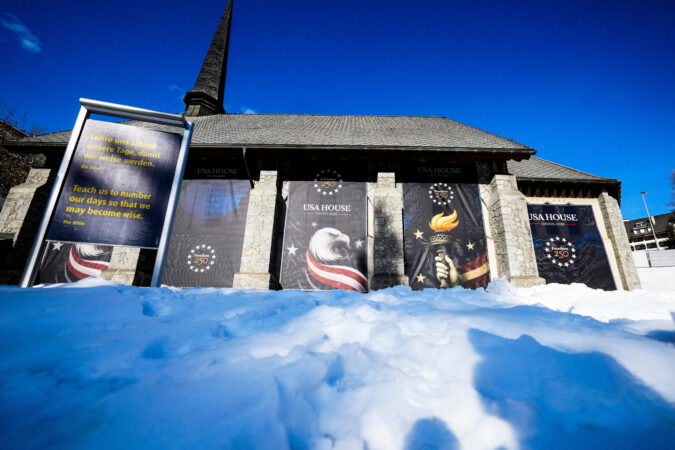
    DAVOS, Switzerland — In some ways, the scene in this picturesque Swiss resort town in late January is as ever. The tall evergreen forest below the Jakobshorn peak is crowned with fresh snow. The small airfield up in the mountains is packed with private jets. Phalanxes of black vans and SUVs crawl through icy streets. Beyond an elaborate security cordon, pavilions representing many of the world’s most influential tech companies, industries, and sovereign wealth funds populate storefronts, awaiting the foot traffic of the global elite who descend on this corner of the Alps every year.

    Behind it all, though, there’s a profound shift. President Donald Trump is leading one of the largest U.S. delegations ever to attend the World Economic Forum’s annual meeting, where he is set to deliver an address Wednesday, at a moment when his administration seems in open conflict with the paradigms that have long defined (and have come to be caricatured by) these conclaves in Davos. His trade wars on U.S. allies and adversaries alike are unraveling webs of globalization championed here for decades. And his constant use of coercion in his foreign policy cuts against Davos’ ethos of comity and cooperation.

    Trump’s speech will come days after he began threatening to impose fresh tariffs on European partners for their unwillingness to oblige his assertions that the United States must annex Greenland. He lashed out in anger at Danish and broader European obstruction over the weekend, guaranteeing that the Arctic territory would dominate conversation in Davos.

    “We stand ready to engage in a dialogue based on the principles of sovereignty and territorial integrity,” read a joint statement from European countries facing U.S. tariffs over Greenland. “Tariff threats undermine transatlantic relations and risk a dangerous downward spiral.”

    Trump’s extraordinary capture earlier this month of Venezuelan President Nicolás Maduro seemed to set new precedents, underscoring the White House’s view that the Western Hemisphere ought to be a U.S. sphere of influence. A slew of prominent foreign policy thinkers see Trump ushering in a global order where “might makes right.”

    “Gunboat diplomacy is back with a vengeance,” Comfort Ero, head of the International Crisis Group, a think tank, recently said. “What do you do when international law becomes international niceties?”

    The response from Davos seems more cautious and calibrated than it might have been in the past. For more than a decade, the organizers of the World Economic Forum have warned about disruptions to the international order — of fractures, crises and dysfunction that can only be solved with collective global effort. This year’s vaguer and more humble theme — “a spirit of dialogue” — may have been chosen in anticipation of the Trump-shaped wrecking ball swinging toward the forum.

    “There’s a robust consensus that the world economy is entering some kind of new reality,” Mirek Dusek, a WEF managing director responsible for the annual event’s programming and business, told me. “Our role is really to be helpful as an organization, and in this moment bring protagonists together.”

    At least to that end, Davos can deliver. The forum’s organizers are touting record participation, with some 65 heads of state or government in attendance, alongside dozens more finance and foreign ministers, as well as close to 2,000 prominent CEOs and business leaders. They convene at a time, as the international advocacy group Oxfam notes in its latest report, when billionaire wealth grew by some $2.5 trillion over the past year — a figure greater than the total wealth possessed by the bottom half of humanity (more than 4 billion people).

    With Trump’s shadow over Davos, there’ll be little consensus over tackling inequality or perhaps any other shared global challenges. The WEF’s annual Global Risks report, which surveys more than 1,000 geopolitical and economic experts from around the world, pointed to “geoeconomic confrontation” as the prime source of short-term concern. The WEF’s latest iteration of the Global Cooperation Barometer, an index using dozens of metrics to chart how the world is getting along, declared that “multilateralism is indeed waning.”

    That zeitgeist is being driven, in part, by Trump’s political project. “Trump’s central strategic insight has always been that America is better prepared than any other country to thrive in a cutthroat arena,” wrote Hal Brands, a senior fellow at the American Enterprise Institute, a conservative Washington think tank. “If Washington no longer wishes to sustain the liberal order, or just can’t afford to uphold it against growing challenges, perhaps it makes sense to seize the largest share of the loot.”

    But the conveners in Davos don’t want pessimism to prevail. “Cooperation is like water, if it sees it’s being blocked it finds a way,” Borge Brende, a former Norwegian politician and WEF president and CEO, said during a briefing call with journalists earlier this month.

    The world isn’t standing pat in the face of Trumpist disruption. Clear signals were sent in recent days by Canadian Prime Minister Mark Carney, who acknowledged the shifting “new world order” on a trip to China where his government reset a long-troubled relationship while touting a “new strategic partnership.” Ottawa’s overtures would not have happened without a year of hostility from Washington, including Trump’s statements urging Canada to become the 51st U.S. state.

    “The global trading system is undergoing a fundamental change,” reducing “the effectiveness of multilateral institutions on which trading partners such as Canada and China have greatly relied,” Carney told reporters in Beijing, gesturing to the deterioration of the rules-based order and the weakening of international institutions. “This is happening fast. It’s large. It’s a rupture.”

    Separately, after a quarter-century of negotiations, four South American countries sealed a free-trade agreement with the European Union. “This is the power of partnership and openness. This is the power of friendship and understanding between peoples and regions across oceans,” European Commission President Ursula von der Leyen said alongside Brazilian President Luiz Inácio Lula da Silva in Rio de Janeiro on Friday. “And this is how we create real prosperity — prosperity that is shared. Because, we agree, that international trade is not a zero-sum game.”

    The new alignments that are emerging place Trump’s America in a conspicuous light. “The United States will remain the most economically and militarily powerful country in the world for several more years,” wrote international relations theorist Amitav Acharya, in an essay for Foreign Policy. “But it will be absent from, if not actively hostile toward, the existing international order.”

    Acharya labeled this “unique configuration” shaped by U.S. antagonism as “the world minus one.”

  • Trump ties Greenland takeover bid to Nobel Prize in text to Norway leader

    Trump ties Greenland takeover bid to Nobel Prize in text to Norway leader

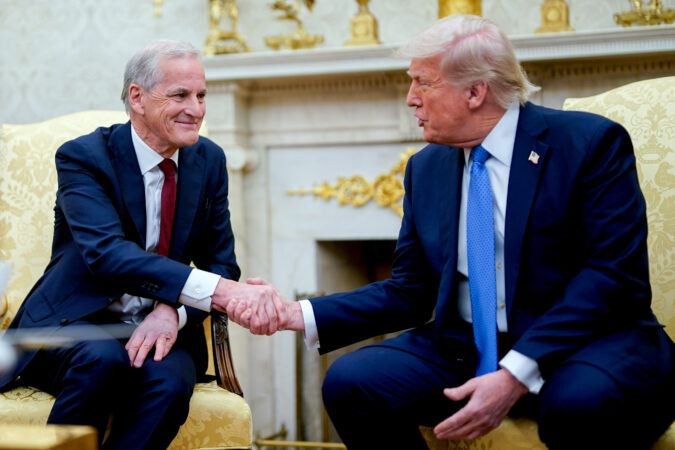
    BRUSSELS — In a message to Norway’s prime minister, President Donald Trump linked his insistence on taking over Greenland to his grievance over not receiving the Nobel Peace Prize — adding a new twist to Trump’s stoking of a trade war that is shaking the trans-Atlantic alliance.

    In the weekend text to Norwegian Prime Minister Jonas Gahr Store, Trump wrote that he no longer needed to “think purely of Peace” after he didn’t win the peace prize last year — an award that the president has openly coveted and that is bestowed by the Nobel Committee in Norway.

    Trump then questioned the “ownership” of Greenland by Denmark, a NATO ally, and repeated his ambition for the U.S. to take “complete and total control” of the autonomous Danish territory.

    The White House confirmed the authenticity of the message, with White House deputy press secretary Anna Kelly saying that Trump “is confident Greenlanders would be better served if protected by the United States from modern threats in the Arctic region.”

    Store confirmed Trump’s leaked message in a statement Monday. He said Trump was responding to a text that Store had sent on behalf of Norway and Finland, conveying opposition to U.S. tariffs against European nations rejecting the takeover of Greenland. “We pointed to the need to de-escalate and proposed a telephone conversation,” Store said.

    The attempt to defuse tensions seems not to have worked. Trump’s reply came shortly after.

    “Considering your Country decided not to give me the Nobel Peace Prize for having stopped 8 Wars PLUS, I no longer feel an obligation to think purely of Peace, although it will always be predominant, but can now think about what is good and proper for the United States of America,” Trump wrote in the text, which was first reported by PBS.

    Store said he made his support for Greenland and Denmark clear, and that he has repeatedly explained to Trump that it is up to the Nobel Committee, not the Norwegian government, to award the annual peace prize.

    On Monday, Treasury Secretary Scott Bessent sought to reframe the narrative. “It’s a complete canard to think President Trump’s action on Greenland is due to” not receiving the Nobel Prize, he told reporters on the sidelines of the World Economic Forum annual meeting in Davos, Switzerland.

    European retaliation, he added, would be “very unwise.”

    Trump’s bid to buy or seize Greenland — effectively a demand to grab a NATO ally’s territory against its will — and to unleash a trade war with European leaders who disapprove, has sparked the greatest trans-Atlantic crisis in generations.

    U.K. Prime Minister Keir Starmer said Monday that it would be “completely wrong” for Trump to slap tariffs on European nations in his push for Greenland — even as Starmer sought to preserve the relationship with the United States which is vital to European security.

    The British leader’s comments added to mounting European pushback. French President Emmanuel Macron has likened Trump’s declaration to a form of “intimidation,” and Swedish Prime Minister Ulf Kristersson described it as blackmail. Even Italian Prime Minister Giorgia Meloni, a Trump ally, called it a “mistake.”

    In remarks to reporters on Monday, Starmer denounced economic coercion against allies as the wrong approach to resolving disagreements. He described tariffs as harmful to British workers and businesses. “A trade war over Greenland is no one’s interest,” Starmer said, calling for discussions between Greenland, Europe, and the United States.

    Still, he declined to say whether he would support calls within the European Union, of which the U.K. is no longer a member, for retaliation against Washington.

    Trump has said controlling Greenland is necessary for national security reasons — a point disputed by allies and some members of Congress who rebutted the president’s claim that the Arctic territory faces imminent security risks from Russia and China. Trump’s unwillingness, so far, to back down risks driving a deeper wedge in the Western alliance or, some fear, causing an irreparable break.

    After months of trying to keep Trump onside, European policymakers are weighing options to retaliate. The continent’s top leaders still stress they would much rather avoid an escalation, but Trump’s threats are fueling a growing chorus of calls from lawmakers and politicians for European leaders to stand up for the continent and fire back.

    “Appeasement has failed,” wrote Javi López, a lawmaker from Spain and vice president of the European Parliament. “Europe can only protect its sovereignty (from Ukraine to Greenland) by reducing dependencies, strengthening its deterrence, and using without limits its most powerful tool: access to the world’s largest single market.”

    If diplomatic efforts fail, the E.U.’s arsenal of trade tools includes imposing tariffs on a list of more than $100 billion worth of American goods, which EU officials prepared last year but suspended to sign a trade deal with Trump.

    Another option would be triggering an instrument often dubbed the bloc’s trade “bazooka,” which would allow for targeting American services in Europe — a major profit center for U.S. tech giants.

    European Union leaders have warned that Russia stands to benefit from the rift at NATO. On Monday, the Kremlin spokesperson, Dmitry Peskov, appeared to stir the pot by telling reporters that by taking action on Greenland, Trump stood to make history one way or another.

    Peskov said there was “a lot of disturbing information” recently and that he would not comment about “our plans regarding Denmark and Greenland.”

    Aside from “whether this is good or bad, whether it complies with international law or not,” he added, “there are international experts who believe that by resolving the issue of Greenland’s accession, Trump will go down in history, not only in U.S. history, but also in world history. It is difficult to disagree with these experts.”

    Russia, preoccupied with its war in Ukraine, has largely stood by while Trump ordered military strikes on Venezuela and seized Moscow’s longtime ally President Nicolás Maduro. That has left Russian President Vladimir Putin’s credibility on the world stage diminished as Trump flexes his muscles among friends and foes alike.

    Ambassadors of the E.U.’s 27 nations debated the possibility of retaliation against Washington during a closed-door meeting in Brussels on Sunday, although there was a broad preference to try to de-escalate — as they have done after Trump’s previous rounds of tariffs.

    European leaders are headed to the World Economic Forum in Davos this week, hoping that face-to-face meetings with Trump will talk him down from the intensifying confrontation. The president has declared the new tariffs on eight countries would start Feb. 1 unless they acquiesce to his plan to acquire Greenland.

    Those European nations — Britain, Denmark, France, Finland, Germany, the Netherlands, Norway, and Sweden — recently sent troops to Greenland in small numbers for joint exercises with the Danish military. European leaders cast the deployment as a sign of NATO’s commitment to protecting the Arctic in response to Trump’s warnings that Arctic security was at risk.

    Because the EU operates as a single trading bloc, the imposition of tariffs on some of its 27 nations could affect all of them, European officials said.

    Leaders of Denmark and Greenland have said repeatedly that they welcome deeper U.S. economic and security involvement, but that the vast island territory — which Trump covets for its strategic Arctic location and natural resources — is not for sale.

    “Blackmail between friends is obviously unacceptable,” French Finance Minister Roland Lescure said in Berlin on Monday. If the U.S. tariff threats come to fruition, Lescure added, “we Europeans must remain united and coordinated in our response and, above all, be prepared to make full use of the European Union’s instruments.”

    France has pushed for Europe to take a harder line against Trump, while many of its EU neighbors preferred restraint. On Monday, however, German Finance Minister Lars Klingbeil echoed the sentiment, saying the EU should consider using the “toolbox for responding to economic blackmail.”

  • Valentino Garavani, an Italian fashion designer known for his signature shade of red, has died at 93

    Valentino Garavani, an Italian fashion designer known for his signature shade of red, has died at 93

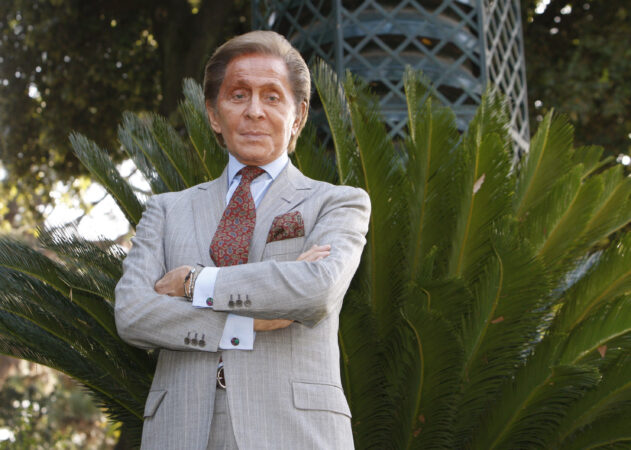
    ROME — Valentino Garavani, the jet-set Italian designer whose high-glamour gowns — often in his trademark shade of “Valentino red” — were fashion show staples for nearly half a century, has died at home in Rome, his foundation announced Monday. He was 93.

    “Valentino Garavani was not only a constant guide and inspiration for all of us, but a true source of light, creativity and vision,″ the foundation said in a statement posted on social media.

    His body will repose at the foundation’s headquarters in Rome on Wednesday and Thursday. The funeral will be held Friday at the Basilica Santa Maria degli Angeli e dei Martiri in Rome’s Piazza della Repubblica.

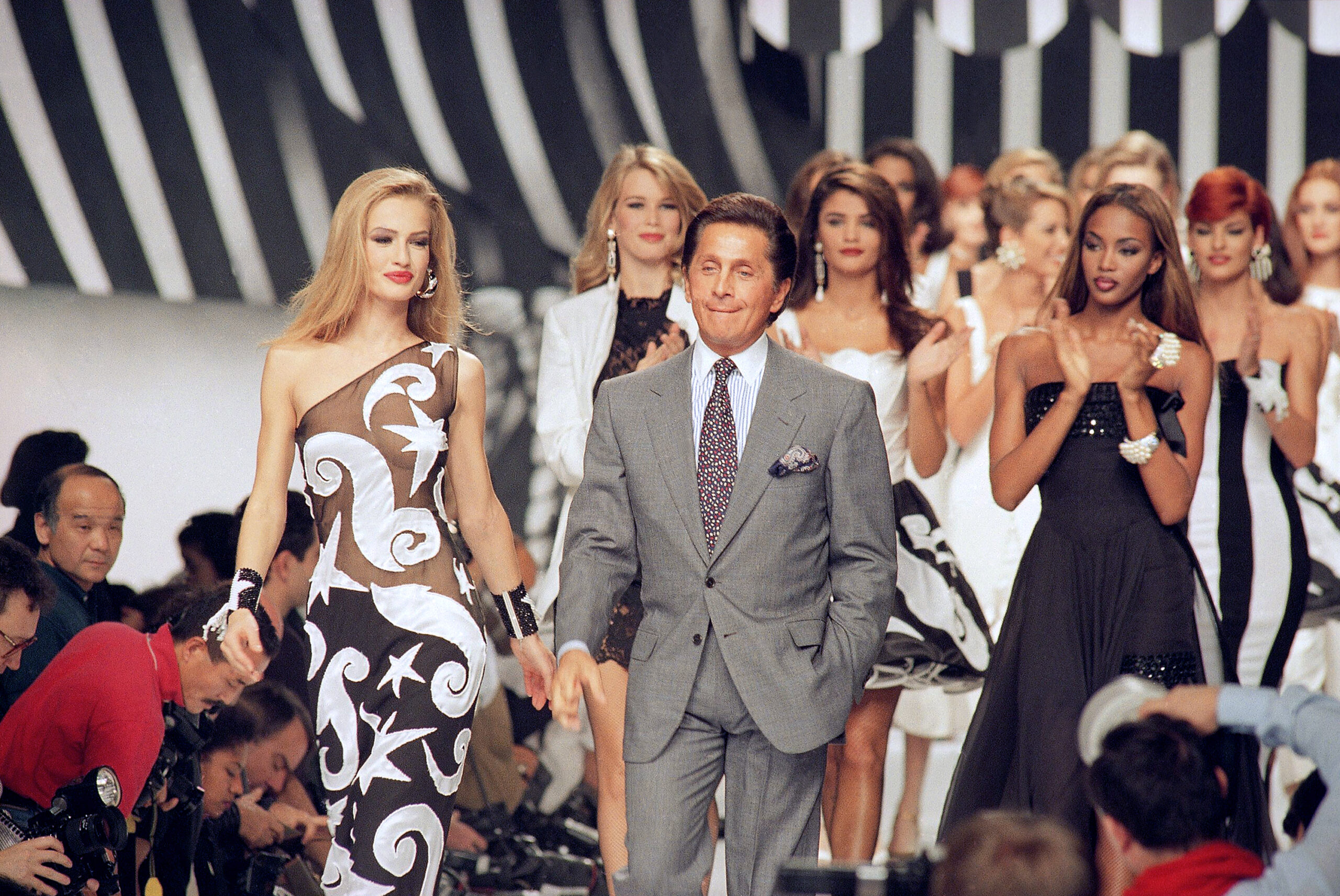
    Italian fashion designer Valentino Garavani walks the catwalk with his models after a fashion show on October 20, 1991 in Paris, France.

    Universally known by his first name, Valentino was adored by generations of royals, first ladies and movie stars, from Jackie Kennedy Onassis to Julia Roberts and Queen Rania of Jordan, who swore the designer always made them look and feel their best.

    “I know what women want,” he once remarked. “They want to be beautiful.”

    Never one for edginess or statement dressing, Valentino made precious few fashion faux-pas throughout his nearly half-century-long career, which stretched from his early days in Rome in the 1960s through to his retirement in 2008.

    His fail-safe designs made Valentino the king of the red carpet, the go-to man for A-listers’ awards ceremony needs. His sumptuous gowns have graced countless Academy Awards, notably in 2001, when Roberts wore a vintage black and white column to accept her best actress statue. Cate Blanchett also wore Valentino — a one-shouldered number in butter-yellow silk — when she won the Oscar for best supporting actress in 2004.

    Valentino was also behind the long-sleeved lace dress Jacqueline Kennedy wore for her wedding to Greek shipping magnate Aristotle Onassis in 1968. Kennedy and Valentino were close friends for decades, and for a spell the one-time U.S. first lady wore almost exclusively Valentino.

    He was also close to Diana, Princess of Wales, who often donned his sumptuous gowns.

    Models flank Italian fashion designer Valentino Garavani in Rome, Italy, at the end of the fashion show for his spring-summer collection on Jan. 20, 1971.

    Beyond his signature orange-tinged shade of red, other Valentino trademarks included bows, ruffles, lace and embroidery; in short, feminine, flirty embellishments that added to the dresses’ beauty and hence to that of the wearers.

    Perpetually tanned and always impeccably dressed, Valentino shared the lifestyle of his jet-set patrons. In addition to his 152-foot (46-meter) yacht and an art collection including works by Picasso and Miro, the couturier owned a 17th-century chateau near Paris with a garden said to boast more than a million roses.

    Valentino and his longtime partner Giancarlo Giammetti flitted among their homes — which also included places in New York, London, Rome, Capri and Gstaad, Switzerland — traveling with their pack of pugs. The pair regularly received A-list friends and patrons, including Madonna and Gwyneth Paltrow.

    “When I see somebody and unfortunately she’s relaxed and running around in jogging trousers and without any makeup … I feel very sorry,” the designer told RTL television in a 2007 interview. “For me, woman is like a beautiful, beautiful flower bouquet. She has always to be sensational, always to please, always to be perfect, always to please the husband, the lover, everybody. Because we are born to show ourselves always at our best.”

    Valentino was born into a well-off family in the northern Italian town of Voghera on May 11, 1932. He said it was his childhood love of cinema that set him down the fashion path.

    “I was crazy for silver screen, I was crazy for beauty, to see all those movie stars being sensation, well dressed, being always perfect,” he explained in the 2007 television interview.

    After studying fashion in Milan and Paris, he spent much of the 1950s working for established Paris-based designer Jean Desses and later Guy Laroche before striking out on his own. He founded the house of Valentino on Rome’s Via Condotti in 1959.

    From the beginning, Giammetti was by his side, handling the business aspect while Valentino used his natural charm to build a client base among the world’s rich and fabulous.

    After some early financial setbacks — Valentino’s tastes were always lavish, and the company spent with abandon — the brand took off.

    Early fans included Italian screen sirens Gina Lollobrigida and Sophia Loren, as well as Hollywood stars Elizabeth Taylor and Audrey Hepburn. Legendary American Vogue editor-in-chief Diana Vreeland also took the young designer under her wing.

    Over the years, Valentino’s empire expanded as the designer added ready-to-wear, menswear and accessories lines to his stable. Valentino and Giammetti sold the label to an Italian holding company for an estimated $300 million in 1998. Valentino would remain in a design role for another decade.

    In 2007, the couturier feted his 45th anniversary in fashion with a 3-day-long blowout in Rome, capped with a grand ball in the Villa Borghese gallery.

    Valentino retired in 2008 and was briefly replaced by fellow Italian Alessandra Facchinetti, who had stepped into Tom Ford’s shoes at Gucci before being sacked after two seasons.

    Facchinetti’s tenure at Valentino proved equally short. As early as her first show for the label, rumors swirled that she was already on her way out, and just about one year after she was hired, Facchinetti was indeed replaced by two longtime accessories designers at the brand, Maria Grazia Chiuri and Pier Paolo Piccioli.

    Chiuri left to helm Dior in 2016, and Piccioli continued to lead the house through a golden period that drew on the launch of the Rockstud pump with Chiuri and his own signature color, a shade of fuchsia called Pink PP. He left the house in 2024, later joining Balenciaga, and has been replaced by Alessandro Michele, who revived Gucci’s stars with romantic, genderless styles.

    Valentino is owned by Qatar’s Mayhoola, which controls a 70% stake, and the French luxury conglomerate Kering, which owns 30% with an option to take full control in 2028 or 2029. Richard Bellini was named CEO last September.

    Valentino has been the subject of several retrospectives, including one at the Musee des Arts Decoratifs, which is housed in a wing of Paris’ Louvre Museum. He was also the subject of a hit 2008 documentary, “Valentino: The Last Emperor,” that chronicled the end of his career in fashion.

    In 2011, Valentino and Giammetti launched what they called a “virtual museum,” a free desktop application that allows viewers to feast their eyes on about 300 of the designer’s iconic pieces.

  • Trump tied his stance on Greenland to not getting the Nobel Peace Prize, European officials said

    Trump tied his stance on Greenland to not getting the Nobel Peace Prize, European officials said

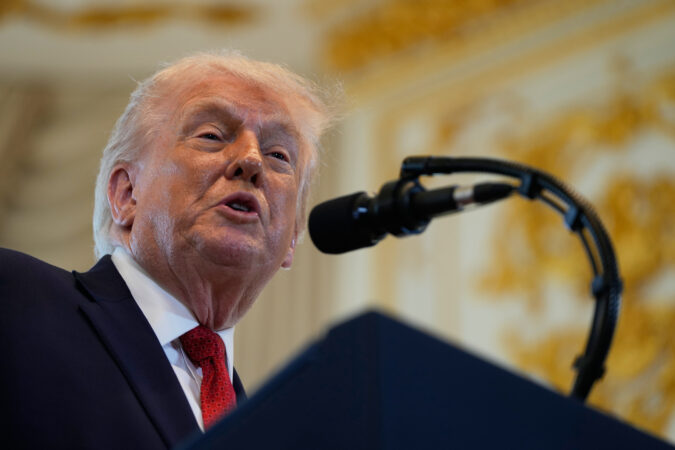
    U.S. President Donald Trump linked his aggressive stance on Greenland to last year’s decision not to award him the Nobel Peace Prize, telling Norway’s prime minister that he no longer felt “an obligation to think purely of Peace,” in a text message released on Monday.

    Trump’s message to Jonas Gahr Støre appears to ratchet up a standoff between Washington and its closest allies over his threats to take over Greenland, a self-governing territory of NATO member Denmark. On Saturday, Trump announced a 10% import tax starting in February on goods from eight nations that have rallied around Denmark and Greenland, including Norway.

    Those countries issued a forceful rebuke.

    The White House has not ruled taking control of the strategic Arctic island by force. Asked whether Trump could invade Greenland, Danish Foreign Minister Lars Løkke Rasmussen said on Monday that “you can’t leave anything out until the president himself has decided to leave anything out.”

    Rasmussen, speaking to reporters following a meeting with his British counterpart Yvette Cooper in London, encouraged Washington to instead discuss solutions.

    British Prime Minister Keir Starmer also sought to de-escalate tensions on Monday. “I think this can be resolved and should be resolved through calm discussion,” he said, adding that he did not believe military action would occur.

    In a sign of how tensions have increased in recent days, thousands of Greenlanders marched over the weekend in protest of any effort to take over their island. Greenland Prime Minister Jens-Frederik Nielsen said in a Facebook post Monday that the tariff threats would not change their stance.

    “We will not be pressured,” he wrote.

    Meanwhile, Naaja Nathanielsen, Greenland’s minister for business, minerals, energy, justice and equality, told The Associated Press that she was moved by the quick response of allies to the tariff threat and said it showed that countries realize “this is about more than Greenland.”

    “I think a lot of countries are afraid that if they let Greenland go, what would be next?”

    Trump cites Nobel as escalation in text to Norwegian leader

    Trump’s Sunday message to Gahr Støre, released by the Norwegian government, read in part: “Considering your Country decided not to give me the Nobel Peace Prize for having stopped 8 Wars PLUS, I no longer feel an obligation to think purely of Peace, although it will always be predominant, but can now think about what is good and proper for the United States of America.”

    It concluded: “The World is not secure unless we have Complete and Total Control of Greenland.”

    The Norwegian leader said Trump’s message was a reply to an earlier missive sent on behalf of himself and Finnish President Alexander Stubb, in which they conveyed their opposition to the tariff announcement, pointed to a need to de-escalate, and proposed a telephone conversation among the three leaders.

    “Norway’s position on Greenland is clear. Greenland is a part of the Kingdom of Denmark, and Norway fully supports the Kingdom of Denmark on this matter,” the Norwegian leader said in a statement. “As regards the Nobel Peace Prize, I have clearly explained, including to President Trump what is well known, the prize is awarded by an independent Nobel Committee and not the Norwegian Government.”

    The Norwegian Nobel Committee is an independent body whose five members are appointed by the Norwegian Parliament.

    U.S. Treasury Secretary Scott Bessent defended the president’s approach in Greenland during a brief Q&A with reporters in Davos, Switzerland, which is hosting the World Economic Forum meeting this week.

    “I think it’s a complete canard that the president would be doing this because of the Nobel,” Bessent said, immediately after saying he did not “know anything about the president’s letter to Norway.”

    Bessent insisted Trump “is looking at Greenland as a strategic asset for the United States,” adding that “we are not going to outsource our hemispheric security to anyone else.”

    Trump has openly coveted the peace prize, which the committee awarded to Venezuelan opposition leader María Corina Machado last year. Last week, Machado presented her Nobel medal to Trump, who said he planned to keep it, though the committee said the prize can’t be revoked, transferred or shared with others.

    Starmer says a trade war is in no one’s interest

    In his latest threat of tariffs, Trump indicated they would be retaliation for last week’s deployment of symbolic numbers of troops from the European countries to Greenland — though he also suggested that he was using the tariffs as leverage to negotiate with Denmark.

    European governments said that the troops traveled to the island to assess Arctic security, part of a response to Trump’s own concerns about interference from Russia and China.

    Starmer on Monday called Trump’s threat of tariffs “completely wrong” and said that a trade war is in no one’s interest.

    He added that “being pragmatic does not mean being passive and partnership does not mean abandoning principles.”

    Six of the eight countries targeted are part of the 27-member European Union, which operates as a single economic zone in terms of trade. European Council President Antonio Costa said Sunday that the bloc’s leaders expressed “readiness to defend ourselves against any form of coercion.” He announced a summit for Thursday evening.

    Starmer indicated that Britain, which is not part of the EU, is not planning to consider retaliatory tariffs.

    “My focus is on making sure we don’t get to that stage,” he said.

    Denmark’s defense minister and Greenland’s foreign minister are expected to meet NATO Secretary-General Mark Rutte in Brussels on Monday, a meeting that was planned before the latest escalation.

  • Philly area measures weekend snowfall totals as winter’s coldest weather moves in

    Philly area measures weekend snowfall totals as winter’s coldest weather moves in

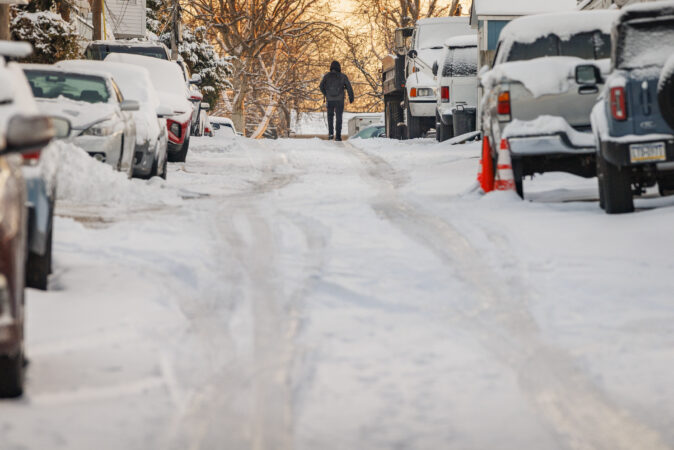
    Sunday’s snowfall might have been the best winter weather has to offer: Just enough to enchant, without back-knotting amounts to shovel.

    Totals varied throughout the Philadelphia region, with a high of 4.9 inches in East Rockhill Township, Bucks County, to less than an inch at Philadelphia International Airport.

    The official National Weather Service observation for the region in Mount Holly, Burlington County, was 3.6 inches.

    Snowfalls were reported over 24 hours by National Weather Service employees, trained spotters, weather stations, automated systems, and the public. They do not include Saturday’s snow.

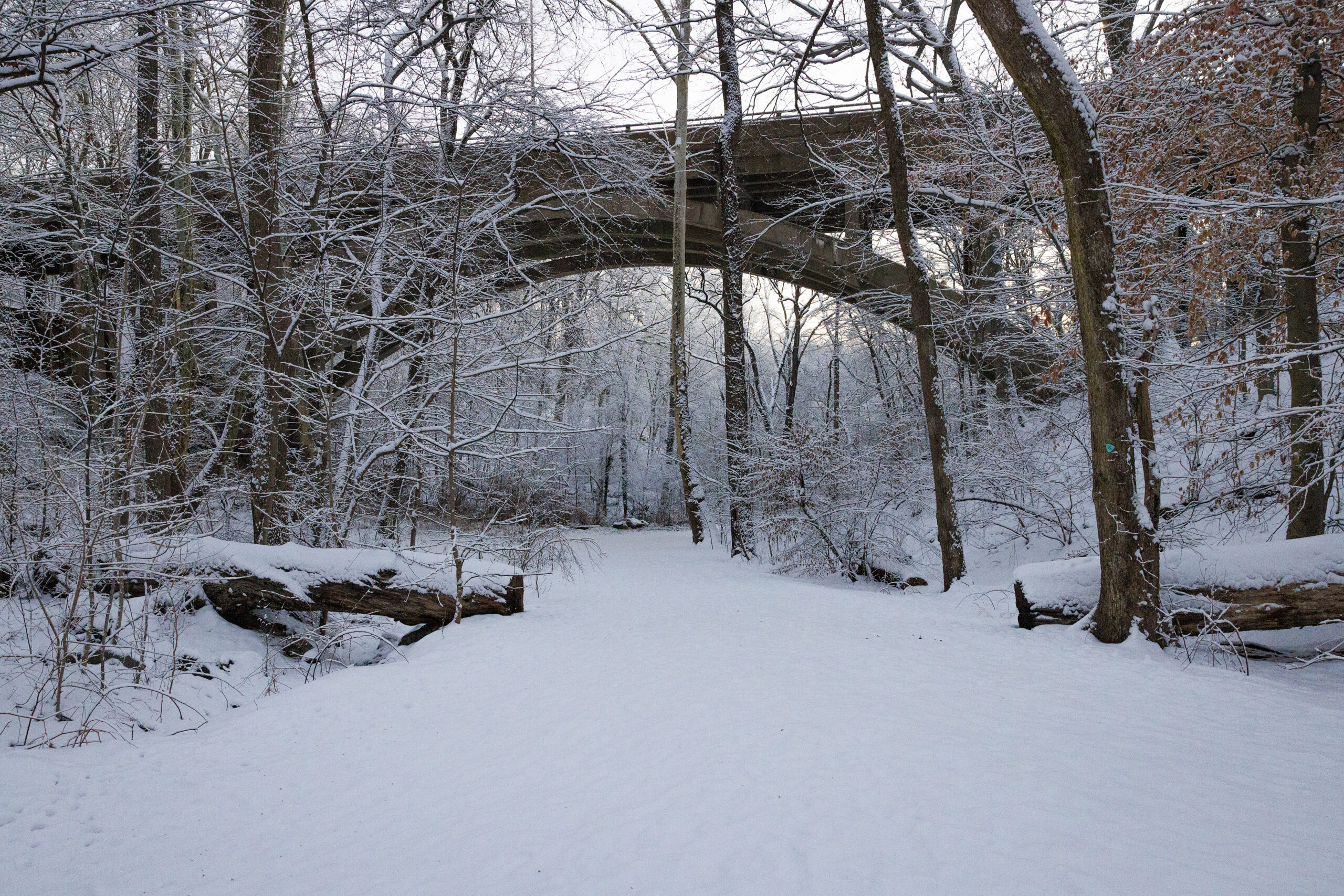
    Snow covered the trail leading down to Forbidden Drive from North Jannette Street on Monday.

    Overall, the weekend was good news for skiers. Stroudsburg in Monroe County in the Poconos received 4.2 more inches of powder that resorts didn’t have to make.

    Weisenberg Township in Lehigh County received 4.8 inches.

    Areas farthest east of the city, including the Shore region, received the least amount of snow. Atlantic City International Airport reported only a dusting.

    window.addEventListener(“message”,function(a){if(void 0!==a.data[“datawrapper-height”]){var e=document.querySelectorAll(“iframe”);for(var t in a.data[“datawrapper-height”])for(var r,i=0;r=e[i];i++)if(r.contentWindow===a.source){var d=a.data[“datawrapper-height”][t]+”px”;r.style.height=d}}});

    But with most homeowners and businesses likely to be shoveled out by Monday night, forecasters warn that the coldest weather of the winter so far is on the way — along with bitter wind chills, according to Joe DeSilva, a meteorologist with the National Weather Service in Mount Holly.

    “For this week, it’s going to be mostly cold,” DeSilva said. “Especially tonight [Monday] and tomorrow night we’ll have wind chills mainly in the single digits. Tonight we’ll have windchills around zero to 5 degrees above zero.”

    In fact, the Weather Service says windchills could even dip to minus-15 degrees Monday night into Tuesday morning northwest of the I-95 corridor.

    The Weather Service has issued a cold weather advisory as a result.

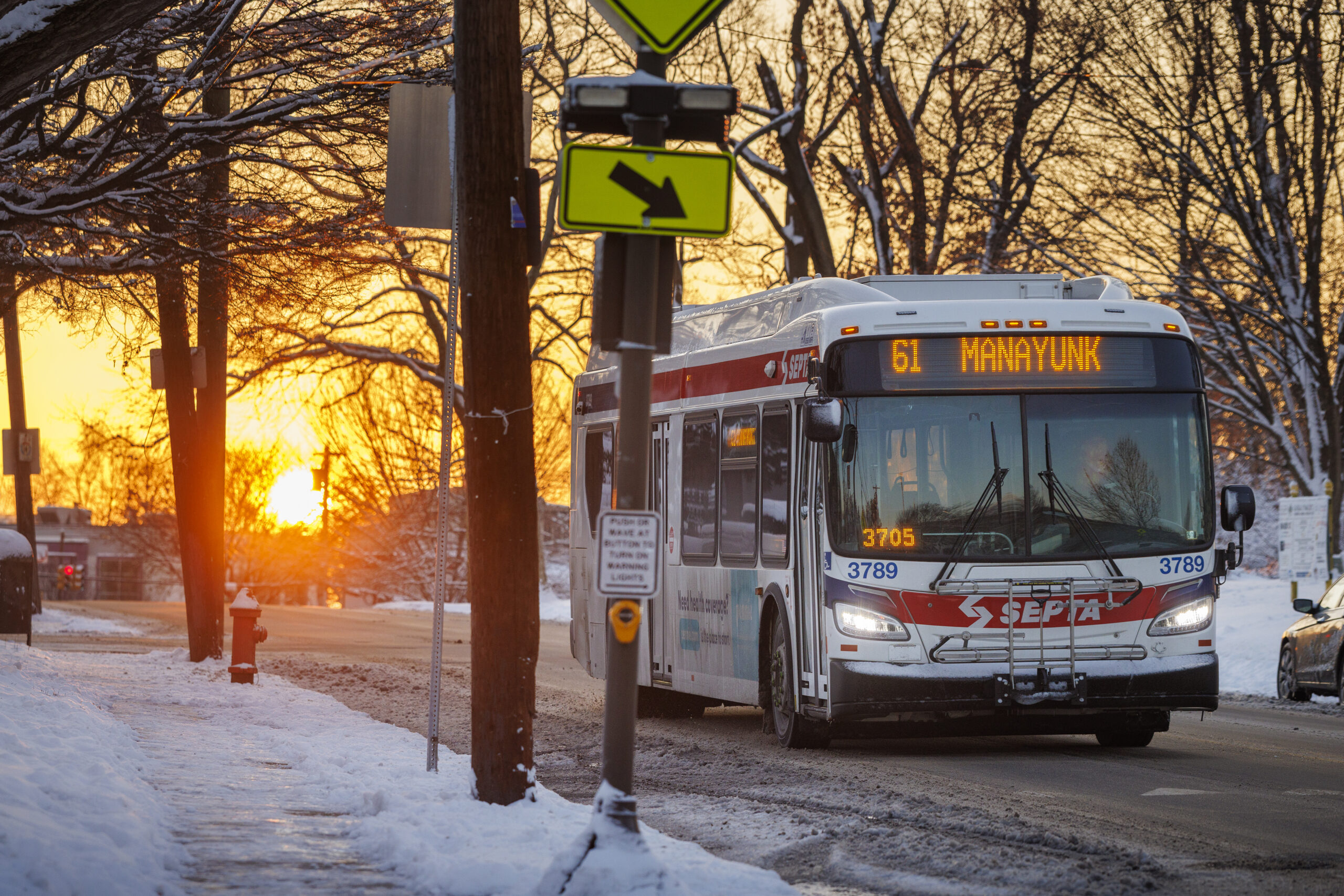
    A route 61 SEPTA bus heads up Ridge Avenue in Roxborough on Monday.

    DeSilva said the jet stream is due to dip south — like a big door swinging open to let in all the frosty air from the Arctic and northern Canada.

    “Once that passes tonight,” DeSilva said, “the cold air will start pouring in.”

    After the sunny and mid-30s of Monday afternoon, temperatures were to dip Monday night to around 15 with 10 to 15 m.p.h. winds.

    Then the cold settles in, with a high of only 23 on Tuesday with a low of 10.

    Some relief comes on Wednesday with a forecast high of 36 and overnight lows of 28.

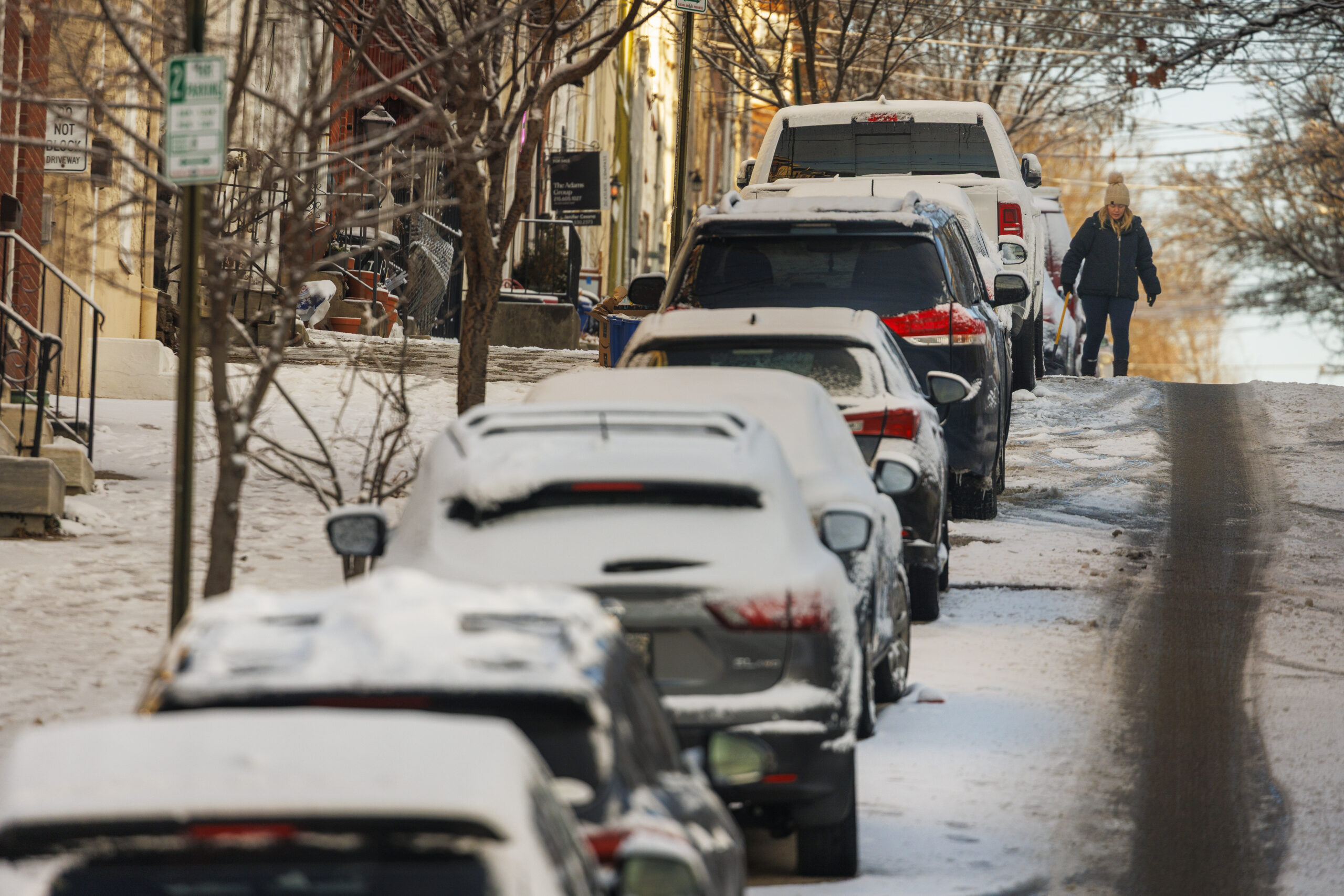
    A woman clears a car along Calumet Street in the East Falls section of Philadelphia on Monday before driving away.

    Thursday, however, looks like a return to more normal temperatures with a mostly sunny day and a high of 43.

    Unfortunately, bracing cold returns for the weekend, with a forecast low of 13 overnight Friday night and a low of 8 overnight Saturday.

  • It may feel like zero in Philly this week, and the ‘wind chill’ has Pennsylvania roots

    It may feel like zero in Philly this week, and the ‘wind chill’ has Pennsylvania roots

    The region evidently is about to migrate from the refrigerator to the freezer this week, with wind-chill levels possibly approaching zero as temperatures fall to the teens and a brisk west wind adds sting.

    “Wind chill” has been a staple of National Weather Service forecasts and media weather reports since 1973.

    (Commercial services, such as AccuWeather Inc., now have their own variants.)

    At different times it has been a subject of contention, confusion, derision, and revision; its popularity, however, endures.

    In terms of alerting the public to potential health hazards, “I think it’s useful,” said Michael DeAngelis, vice chair of emergency medicine at Temple University’s Lewis Katz School of Medicine.

    Said Harvey V. Lankford, a retired physician and writer who has done a deeper dive into wind chill than most humans: “It’s a yardstick.

    “The public loves it.”

    But where do those numbers come from, and do they tell us how we really feel?

    The birth of ‘wind chill’

    Gentoo penguins walk at Neko Harbour in Antarctica, Saturday, Nov. 22, 2025. (AP Photo/Mark Baker)

    Wind chill is a measure of heat loss from the body from the combination of temperature and wind.

    What we know about its effects has a lot to do with former Eagle Scout Paul Siple, the pride of Erie’s Central High School.

    He pursued his quest while accompanying Admiral Richard Byrd on his legendary expeditions to that icy forbidden planet known as Antarctica, where the wind stings “like a knife drawn across the face,” as one of his associates put it. At age 19, Siple had won a highly publicized national competition to join Byrd.

    Siple minted the term wind chill in his 565-page unpublished doctoral dissertation, a copy of which Lankford obtained from Clark University, in Worcester, Mass.

    On a later expedition, Siple, assisted by geologist Charles Passel, conducted experiments measuring how long it took to freeze a container of water under a variety of temperature and wind conditions. Winds obviously accelerated the freezing process.

    Using that data they estimated heat loss from human skin, publishing their findings in a landmark 1945 paper.

    But Lankford said Siple got remarkable results in his more primitive earlier research, which included estimating frostbite thresholds, using a relatively simple formula involving wind speeds and temperatures.

    Siple’s work would become the basis for the wind chill factor that the weather service massaged and began sharing publicly in 1973.

    Frostbite and the wind chill revision

    The wind chill calculations underwent a significant revision a quarter century ago.

    U.S. and Canadian scientists during the 1990s used human subjects to upgrade the index, including establishing new frostbite thresholds.

    Twelve subjects, with sensors inside their cheeks and their faces bare, were subjected to temperatures ranging from 32 to 58 below at three different wind speeds.

    They were monitored for signs of “frostnip,” which precedes frostbite by about a minute.

    For the record, the researchers found that with wind chills of 40 below, frostnip occurs within 15 minutes.

    The weather service said the revised index profited from “advances in science, technology and computer modeling.”

    Yet Siple obviously had been on to something decades earlier, Lankford said.

    In a paper published in 2021 in the journal Wilderness and Environmental Medicine, Lankford and coauthor Leslie R. Fox wrote that some of the modern findings on frostbite thresholds were remarkably similar to what appeared in Siple’s dissertation.

    Lankford said they were not surprised by the similarities: “We were stunned.”

    Staying safe in the cold

    Aside from frostnip and frostbite potential, exposure to frigid temperatures and strong winds poses a variety of other health hazards, DeAngelis said.

    Those conditions can seriously exacerbate certain lung problems.

    For the healthy, he recommends proceeding with caution while exercising. Sweating in the cold — it does happen, just ask runners and hikers — can increase the risk of hypothermia.

    Plus, your brain, heart, kidneys, and other internal organs will be diverting blood flow from muscles and extremities, and that could slow recovery from exertion.

    Or you could just put off that run or bike workout until Thursday, when it may go up to 40 degrees.

  • How Penn helped to rescue RHD’s Family Practice health clinics after a nonprofit ownership change

    How Penn helped to rescue RHD’s Family Practice health clinics after a nonprofit ownership change

    A year ago, leaders of Family Practice & Counseling Network feared their health clinic, which has served low-income Philadelphians for more than 30 years, wouldn’t survive past June.

    The clinic was part of Resources for Human Development, a Philadelphia human services agency that a fast-growing Reading nonprofit called Inperium Inc. had acquired in late 2024.

    As a federally qualified health clinic since 1992, the clinic had received an annual federal grant, higher Medicaid rates, and other benefits.

    But federal rules prohibited the clinic from continuing to retain that status and those benefits under a parent company. That meant Family Practice & Counseling Network had two options: close or spin out into a new entity that would reapply to be a federally qualified clinic.

    “We had to figure it out,” the organization’s CEO Emily Nichols said in a recent interview.

    At the time, the organization’s three main locations had 15,000 patients. They are “very underserved, low-income people that deserve good healthcare,” she said.

    Thanks to $9.5 million in financial and operational support from the University of Pennsylvania Health System, a new legal entity took over the clinics in July. They now operate under the tweaked name, Family Practice & Counseling Services Network, and without the federal status.

    “Penn allowed us to survive,” Nichols said.

    Still in a precarious position

    The nonprofit, with its name now abbreviated as FPCSN, remains in a precarious position.

    Because of the corporate change, the $4.2 million annual grant that Family Practice had been receiving through RHD had to be opened up for other applicants under federal law. FPCSN applied but won’t find out until March the result of the competition.

    Natalie Levkovich, CEO of the Health Federation of Philadelphia, a nonprofit that supports community health centers in Southeastern Pennsylvania, expressed confidence that the clinic will regain the funding, which helps cover the cost of caring for people who don’t have insurance.

    “FPCSN is a well-run, well-regarded, well-supported health center that has an established, high-functioning practice in multiple locations,” Levkovich said. The clinic received letters of support from all the other federal clinics in the area, she said.

    In addition to the grant, other key benefits of being a federally qualified health center — the status the clinic had for 33 years — are receiving medical malpractice insurance through the federal government and enhanced Medicare and Medicaid rates.

    A mural in a conference room at Family Practice & Counseling Services Network’s headquarters in Nicetown shows a timeline of the agency’s history since its founding in 1992.

    In return, federally qualified clinics have to accept all patients, including people without insurance. The insurance mix of FPCSN’s patient population is about 60% Medicaid, 20% uninsured, 10% Medicare, and 10% commercial, Nichols said.

    Also, half of a federal clinic’s board members have to be patients at the clinic. FPCSN has three main locations, in Southwest Philadelphia, on the western edge of North Philadelphia, and in the West Poplar neighborhood. Its revenue in fiscal 2025 was $31 million.

    During the past year, 55 FPCSN staff members have left, leaving 140 employees still at the organization, including 16 nurse practitioners who provide the primary care. The departures may have contributed to a decline in the number of patients seen to 13,500 last year, compared to 15,000 the year before, Nichols said.

    Why Penn helped FPCSN

    Federally qualified health centers form the core safety net in Philadelphia and across the nation, said Richard Wender, who chairs Family Medicine and Community Health at Penn, which had a longstanding relationship with RHD’s clinics.

    Under contract, Penn family practice physicians were providing prenatal care to 400 pregnant patients at the clinics that would have closed abruptly at the end of June if Penn hadn’t provided support. “We wanted them to be able to continue to take care of the patients that they were taking care of,” Wender said.

    The money from Penn helped pay startup costs for the new entity and bridged the period until FPCSN was able to secure new contracts with insurance companies.

    Penn also didn’t want the clinic’s patients showing up in its already busy emergency departments for basic care. “That adversely affects their health because it’s not a good place to get preventive care,” he said.

    But it was important to Penn that there was a pathway back to federal clinic status. “We feel as optimistic as we can,” Wender said.

    Wender and Nichols credited Kevin Mahoney, CEO of Penn’s health system, with the preservation of FPCSN’s services for low-income Philadelphians by throwing his full support behind the effort.

    “You have to have a CEO, a leader in your health system, who understands that this is the responsibility of large academic health centers,” Wender said.

  • The theft of hundreds of remains from Mount Moriah Cemetery raises a question no one can seem to answer: How did this happen?

    The theft of hundreds of remains from Mount Moriah Cemetery raises a question no one can seem to answer: How did this happen?

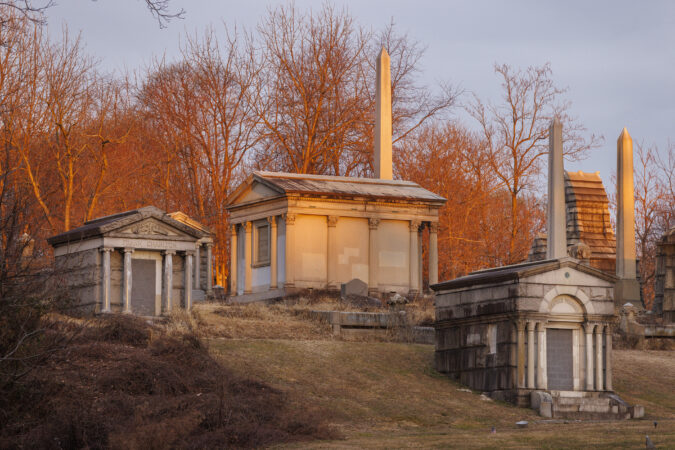
    Past a marble monument for a Civil War hero, down a grass path where toppled headstones disappear into ivy and weeds and faded miniature American flags droop, lies the underground vault of James Campbell, who died in 1913 and whose remains may have been among the dozens stolen in one of the largest grave desecration cases ever uncovered in Pennsylvania.

    Jonathan Christian Gerlach, who was charged with more than 500 offenses earlier this month and is being held in jail in lieu of $1 million bail, is accused of methodically breaking into burial vaults and mausoleums at Mount Moriah Cemetery, prying open caskets and removing human remains from Campbell’s burial ground and at least 25 other sites across the sprawling Philadelphia and Yeadon Borough cemetery.

    Inside Campbell’s vault, where his family members were also entombed 12 feet beneath the cemetery’s surface as early as 1872, investigators said they found three broken caskets, crumbled marble, and a discarded pry bar. Six sets of human remains, they said, were missing.

    Authorities allege that Gerlach moved through the cemetery repeatedly, at all hours, accessing sealed burial sites and removing dozens of remains over several weeks without being detected. Large sections of the cemetery, overgrown and rarely monitored, offered long stretches of isolation — conditions investigators say Gerlach may have exploited. And as law enforcement continues to sort through the evidence, local officials and cemetery advocates are pressing for changes to prevent this from happening again.

    “We were too slow to move,” said Yeadon Mayor Rohan Hepkins. “Nobody thought such a dastardly act — such an inhumane and incomprehensible act — was possible.”

    Hepkins last week joined state and local officials to discuss what can be done to protect the burial grounds, where an estimated 180,000 people are buried.

    He and others expressed cautious resolve that the cemetery could be secured well enough to prevent another violation of this scale.

    “I wish I could tell loved ones that I’m not critically concerned, but I am,” said State Sen. Anthony Williams, who represents the district where Mount Moriah Cemetery is located and was one of the officials who gathered to discuss preventive measures. “But I don’t know that Mount Moriah will ever be restored to the condition that they buried their loved ones in.”

    Mount Moriah Cemetery, a historic landmark abandoned by its last owner and under court receivership, has long been plagued by neglect and limited oversight.

    Investigators say Gerlach’s crimes unfolded over the course of months, starting in the fall and ending on the night of Jan. 6, when Yeadon detectives arrested the Pennsylvania man as he attempted to leave the cemetery.

    License plate readers and cell phone towers place Gerlach near or inside the cemetery during both daylight and darkness. On Christmas Eve, for example, the technologies captured Gerlach’s vehicle or phone at least three times between 12:28 a.m. and 12:54 p.m., court records show.

    The day before, on Dec. 23, a Yeadon investigator working the case saw scratch marks on the heavy stone slab sealing the underground Zeigler family vault, as if, a detective wrote in an affidavit of probable cause for Gerlach’s arrest, it had been “marked” as a target. When the detective returned on Dec. 26, the stone had been broken and nine sets of human remains stolen.

    Yeadon police, who investigated the crimes alongside other authorities, have since been inundated with hundreds of calls and emails from anguished family members seeking answers, Chief Henry Giammarcco said.

    Rescuing Mount Moriah

    Mount Moriah Cemetery opened in 1855. Its owners, the Mount Moriah Cemetery Association, abandoned it in 2011, after years of mismanagement. The Friends of Mount Moriah, a volunteer-driven nonprofit, formed that same year with the goal of rescuing the grounds from vandalism, crime, and decay. In 2014, a Philadelphia judge appointed a receivership, the Mount Moriah Cemetery Preservation Corporation, to temporarily manage the cemetery until a permanent owner could be found.

    More than a decade later, no permanent owner has emerged.

    In 2018, the two groups and other stakeholders commissioned an ambitious strategic plan that called for stabilizing the cemetery’s finances, finding a permanent owner, and remaking Mount Moriah into a viable public space. The plan assumed significant investment and long-term stewardship. Neither materialized.

    “There’s no clear revenue stream, and there’s significant infrastructure improvements and capital improvements that are required, on top of maintenance costs,” said Brian Abernathy, who served as chair of the preservation corporation when the plan was created.

    At the time, Abernathy said, “there was a lot of hope and optimism about what we could accomplish with it. But the plan stalled over obstacles that persist today, he said, including enticing an owner when so many costly repairs are needed.

    Under the court order, the corporation — a board composed of officials from Philadelphia and Yeadon, including Hepkins — is responsible for preserving the cemetery but has delegated day-to-day care to Friends of Mount Moriah.

    Over the years, Friends of Mount Moriah made visible gains. Its 12-person board and volunteers hauled away abandoned cars, tires. and trash, righted toppled headstones, and uncovered burial vaults beneath thick vines, brush, and overgrowth.

    “Until this happened,” said John Schmehl Jr., the group’s president, “security was not our first concern.”

    <div data-analytics-viewport="autotune" data-analytics-label="visor-arcgis" id="bones"
      data-iframe-fallback="https://www.inquirer.com/resizer/ORTQkrqPSCXca2NSc4Uhl9preV8=/1400x932/smart/arc-anglerfish-arc2-prod-pmn.s3.amazonaws.com/public/5FUK4MYNPFH7LD3SAPB6X4O7TQ.jpg"
      style="width: 0; min-width: 100% !important; border: none;" data-iframe-fallback-height="509.789917082823"
      data-iframe="https://media.inquirer.com/storage/inquirer/projects/innovation/arcgis_iframe/bones.html"
      data-iframe-height="509.789917082823" data-iframe-resizable></div>
    <script type="text/javascript">
      (function() {
        var l2 = function() {
          new pym.Parent('bones',
                         'https://media.inquirer.com/storage/inquirer/projects/innovation/arcgis_iframe/bones.html');
        };
        if (typeof(pym) === 'undefined') {
          var h = document.getElementsByTagName('head')[0],
            s = document.createElement('script');
          s.type = 'text/javascript';
          s.src = 'https://pym.nprapps.org/pym.v1.min.js';
          s.onload = l2;
          h.appendChild(s);
        } else {
          l2();
        }
      })();
    </script>

    Yet thieves knew the grounds. Last year, Schmehl said, more than $14,000 worth of lawn equipment — including mowers, weed trimmers, and hand tools — was stolen from the cemetery garage. Friends of Mount Moriah entered the growing season without the equipment needed to keep large sections of the cemetery accessible, he said.

    Now, the group is scrambling to implement security improvements across the cemetery’s more than 100 acres, including repairing dilapidated fencing, launching random patrols, and installing cameras on both the Philadelphia and Yeadon sides of the property. Fencing construction began last week. Schmehl said the group is seeking a private security company to monitor the cameras around the clock.

    Cemetery volunteers dwindle

    The backyard of 60-year-old Robin Pitts’ house overlooks the Springfield Avenue side of Mount Moriah, where her mother, brother, and extended family are buried.

    As a child, Pitts said, she played kickball on an unfenced stretch of the cemetery near where Betsy Ross — the seamstress whose burial helped cement Mount Moriah’s place in American history — rested for more than a century.

    Those memories later drew Pitts to volunteer with Friends of Mount Moriah for nearly two decades, she said. On Saturdays, she said, she grilled hot dogs and hamburgers for volunteers who picked up trash and mowed the grass along Springfield Avenue.

    But during the pandemic, Pitts said, the grounds began to deteriorate beyond what volunteers could manage. “I thought, ‘Enough’s enough. I can’t do this anymore,’” she said. She stopped volunteering.

    Last week, Pitts walked down a path choked with waist-high grass and weeds where she once mowed. She pointed past a tangle of barren hemlock blocking a path to a tree and several headstones — some toppled, others obscured by vines and brush. “We used to clean it all the way past there,” Pitts said. “Now nobody does.”

    A shrinking volunteer base has slowed progress at the cemetery, Schmehl said. Some cleanup events draw just one volunteer. “It’s a struggle, to say the least,” he said, adding that entire sections of the cemetery “have been reclaimed by nature.”

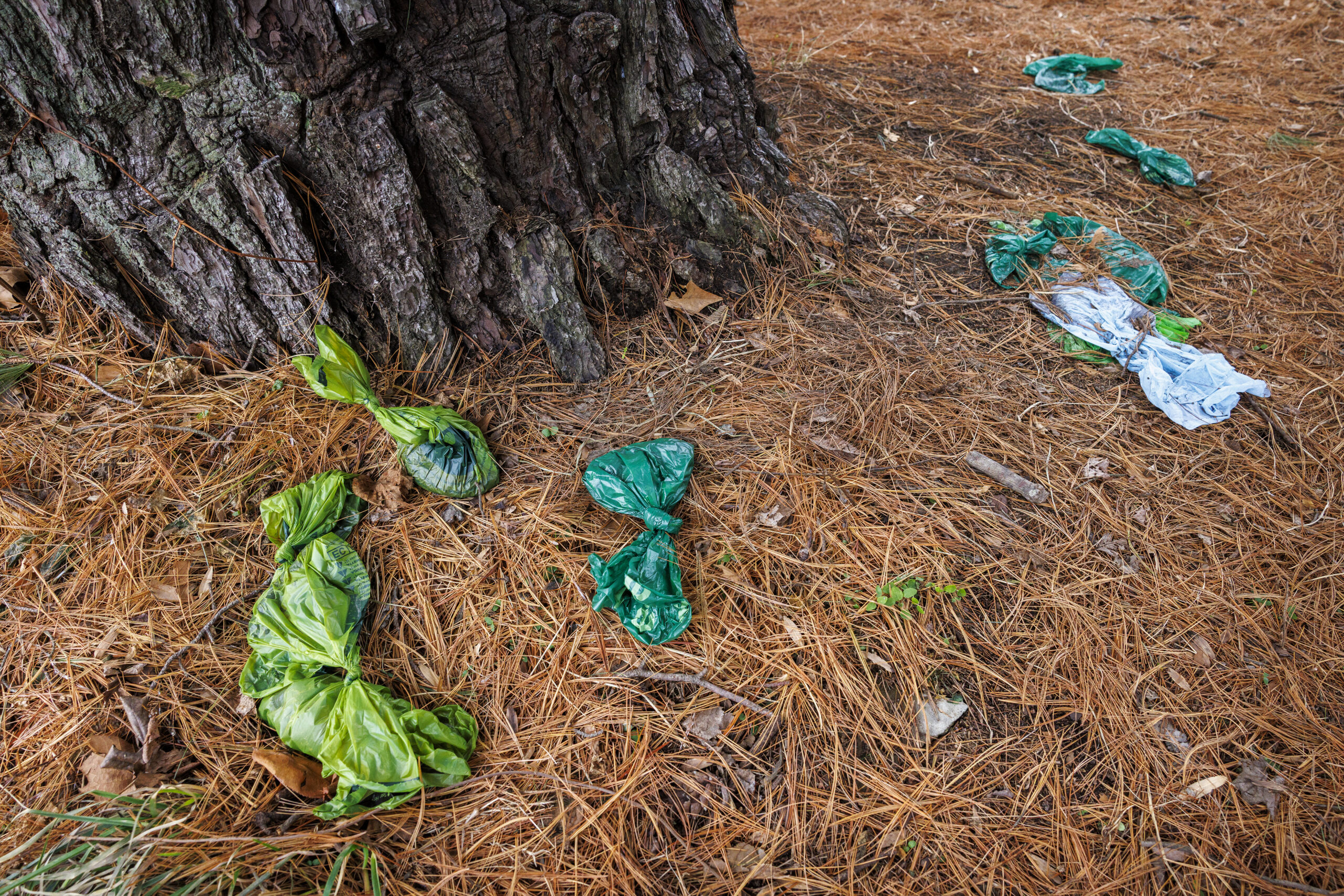
    Picture of dog waste discarded on the grounds of Mount Moriah Cemetery on Wednesday, Jan. 14, 2026.

    The cemetery is now open just two days a week, Saturdays and Sundays.

    The costs of needed improvements are also significant. By Thursday, Friends of Mount Moriah had spent more than $20,000 of its roughly $90,000 annual budget to begin fencing construction and repairs, and secure the mausoleums and vaults that had been desecrated in the recent crimes. Additional donations, Schmehl said, will be needed to sustain the effort.

    As recently as spring 2023, Mount Moriah Cemetery Preservation Corp. held more than $400,000 in its endowment, according to a letter filed in Philadelphia Orphans’ Court. Aubrey Powers, the receivership’s chair, did not respond to questions concerning the receivership’s contributions to the Friends of Mount Moriah or what the corporation will do to help address security or infrastructure needs.

    As a condition of the receivership, the corporation must file semiannual reports to the court. A year ago, the only reference to security was a brief note stating that the receivership “continues to encourage the Philadelphia and Yeadon Police Departments to schedule patrols in and around Mount Moriah Cemetery more frequently to deter criminal activity.”

    Hepkins said increased patrols would be part of a broader strategy to reduce criminal activity and restore oversight to the cemetery. Meanwhile, a spokesperson for the Philadelphia Police Department said officers patrol the cemetery’s perimeter, not its grounds.

    “There has to be some sort of intervention in order to rectify what’s happened at Mount Moriah,” Abernathy said. “And I just don’t know who’s going to provide that intervention.”

    Whose remains are missing?

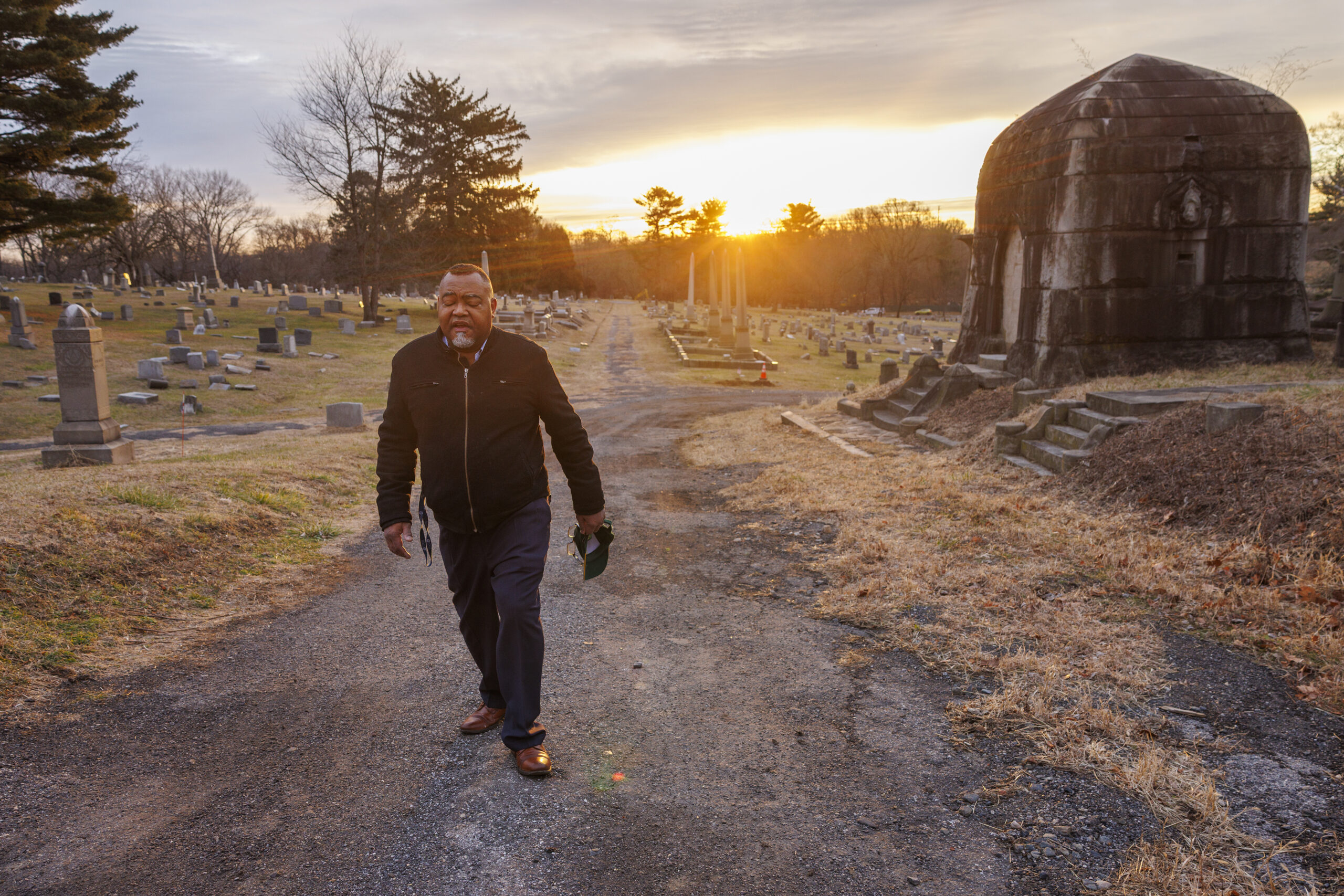
    Hepkins on Wednesday climbed a steep hill from a small parking lot off Cobbs Creek Parkway to a cluster of mausoleums that Gerlach is accused of breaking into.

    Yeadon Mayor Rohan Hepkins during a walking tour of Mount Moriah Cemetery, Wednesday, Jan. 14, 2026. Graves at the cemetery were allegedly robbed by Jonathan Christian Gerlach.

    At the family mausoleum of John Hunter, a former president of the Mount Moriah Cemetery Association, authorities allege Gerlach smashed through a sealed cinder-block doorway and shattered the marble floor. He then rappelled 10 feet into the crypt and removed the remains of 15-year-old Martha Hunter, who died in 1869.

    He left behind a length of white rope and a screwdriver, authorities said.

    Just feet away, in the mausoleum of wholesale grocer Jonathan Prichard, Gerlach pulled cinder block from a sealed window and rifled through five of nine caskets inside, investigators allege. The remains of 62-year-old Mary Prichard Steigleman, Prichard’s daughter, are now missing.

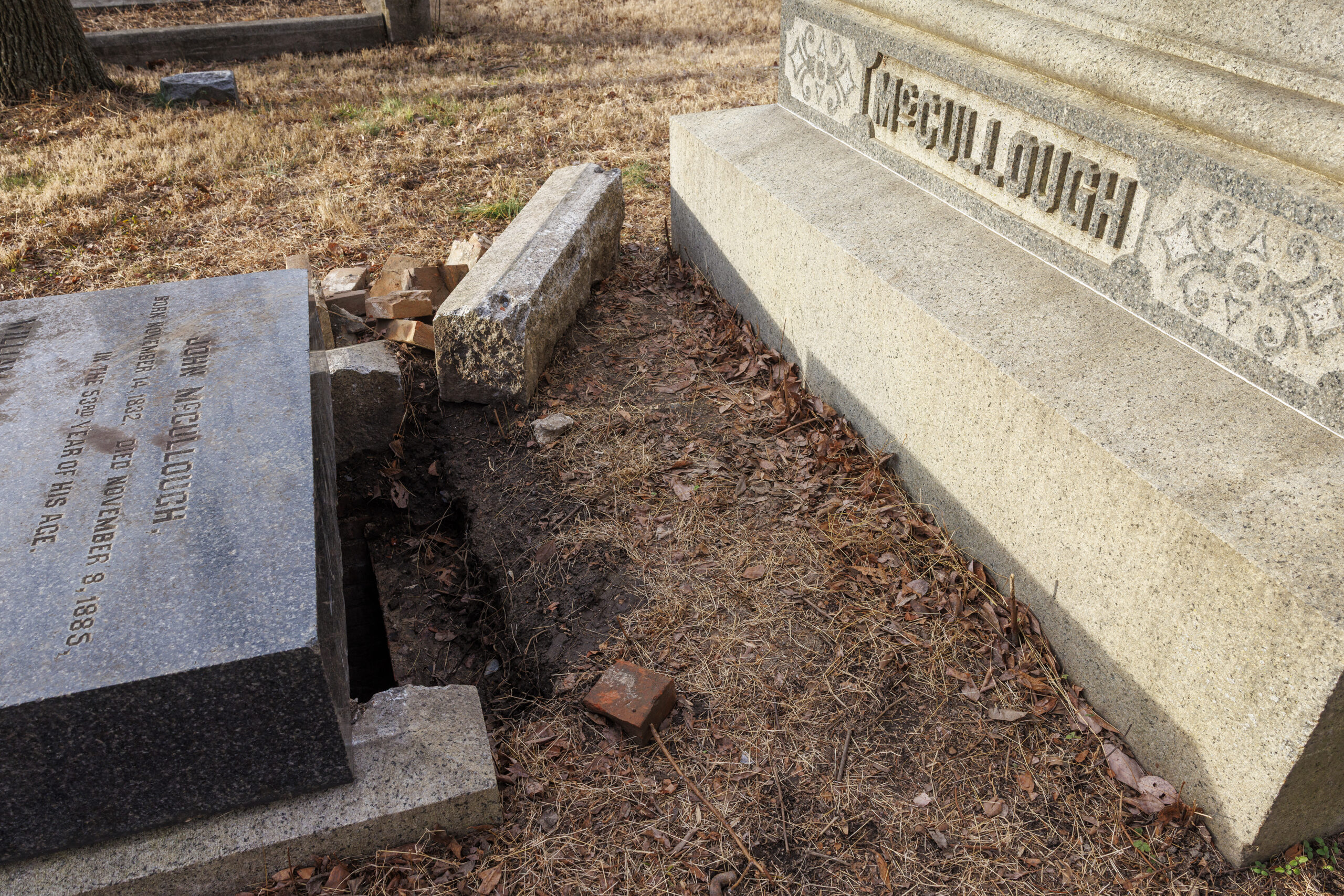
    Nearby is the family vault of John McCullough, a Shakespearean actor who died in 1889. Beneath a towering monument etched with a line from Julius Caesar, authorities said they found two caskets disturbed, one tipped onto its side. Both were empty.

    More than a week after Gerlach’s alleged break-in, bricks torn from the vault’s seal lay piled beside the entrance, and a foot-long hole exposed the floor below. Inside, wooden pallets that investigators believe Gerlach used to climb down cluttered the crypt.

    The McCullough family burial tomb at Mount Moriah Cemetery, Wednesday, Jan. 14, 2026. This and several other graves at this cemetery were allegedly broken into by Jonathan Christian Gerlach.

    A short walk away is the cemetery’s naval plot, where rows of identical white headstones mark the graves of more than 2,000 Navy officers. It’s Hepkins’ favorite part of the cemetery, he said.

    Hepkins once hoped to be buried at Mount Moriah, a place he called “godly.” Now, he said, “I have to reconsider. I want my bones held somewhere in sacred perpetuity.”

  • In his new book, Gov. Josh Shapiro recalls an ‘offensive’ vetting process to be Kamala Harris’ running mate

    In his new book, Gov. Josh Shapiro recalls an ‘offensive’ vetting process to be Kamala Harris’ running mate

    Pennsylvania Gov. Josh Shapiro questioned whether he was being unfairly scrutinized as the only Jewish person being considered as a finalist to be Vice President Kamala Harris’ running mate — and briefly entertained his own run for the presidency — according to a copy of his upcoming book obtained by The Inquirer.

    In his memoir, Where We Keep the Light, set to debut on Jan. 27, Shapiro wrote that he underwent significant questioning by Harris’ vetting team ahead of the 2024 presidential election about his views on Israel, and his actions supporting the end of pro-Palestinian protests at the University of Pennsylvania — leading him to wonder whether the other contenders for the post had faced the same interrogation.

    Shapiro, a popular Democratic governor long rumored to have future presidential ambitions, even briefly entertained a run shortly after then-President Joe Biden unexpectedly dropped out of the race in July 2024, according to his book. The Abington Township resident is now seen as a top contender for the 2028 Democratic nomination as he seeks reelection in Pennsylvania this year.

    But before Shapiro ended up in the veepstakes for Harris’ running mate, he wrote in his book that there was a moment right after Biden dropped out of the race where he considered whether he should run for president.

    “Well, now what?” Shapiro wrote. “Maybe there would be a process the party would engage in to replace him? Did I want to be part of that?”

    He called his wife, Lori, who at the time was out of the country with their two younger kids. “I don’t think we are ready to do this,” Shapiro recalled his wife saying from a Walmart in Vancouver. “It’s not the right time for our family. And it’s not on our terms.”

    After that call, Shapiro wrote that he quickly decided he didn’t want to run and would back Harris, as Biden also endorsed her for the top of the ticket.

    Once the field cleared for Harris, Shapiro recalled seeing his face on TV as her potential running mate, before he was asked by her campaign manager to be formally vetted.

    In the days that followed, Shapiro contended with increasing national scrutiny as he emerged as a front-runner. Some pro-Palestinian protesters began calling Shapiro “Genocide Josh” online, he wrote. And top Democrats questioned whether a Jewish running mate would deter voters from supporting Harris, as Shapiro had been outspoken against some pro-Palestinian campus protests that year.

    What was unknown: Whether those same questions — and some even more extreme — were circulating within Harris’ camp, Shapiro wrote in his most detailed retelling of his experience vying for the vice presidency to date.

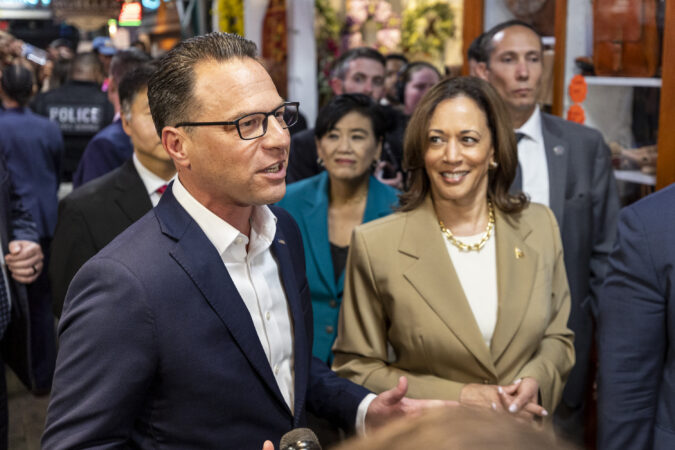
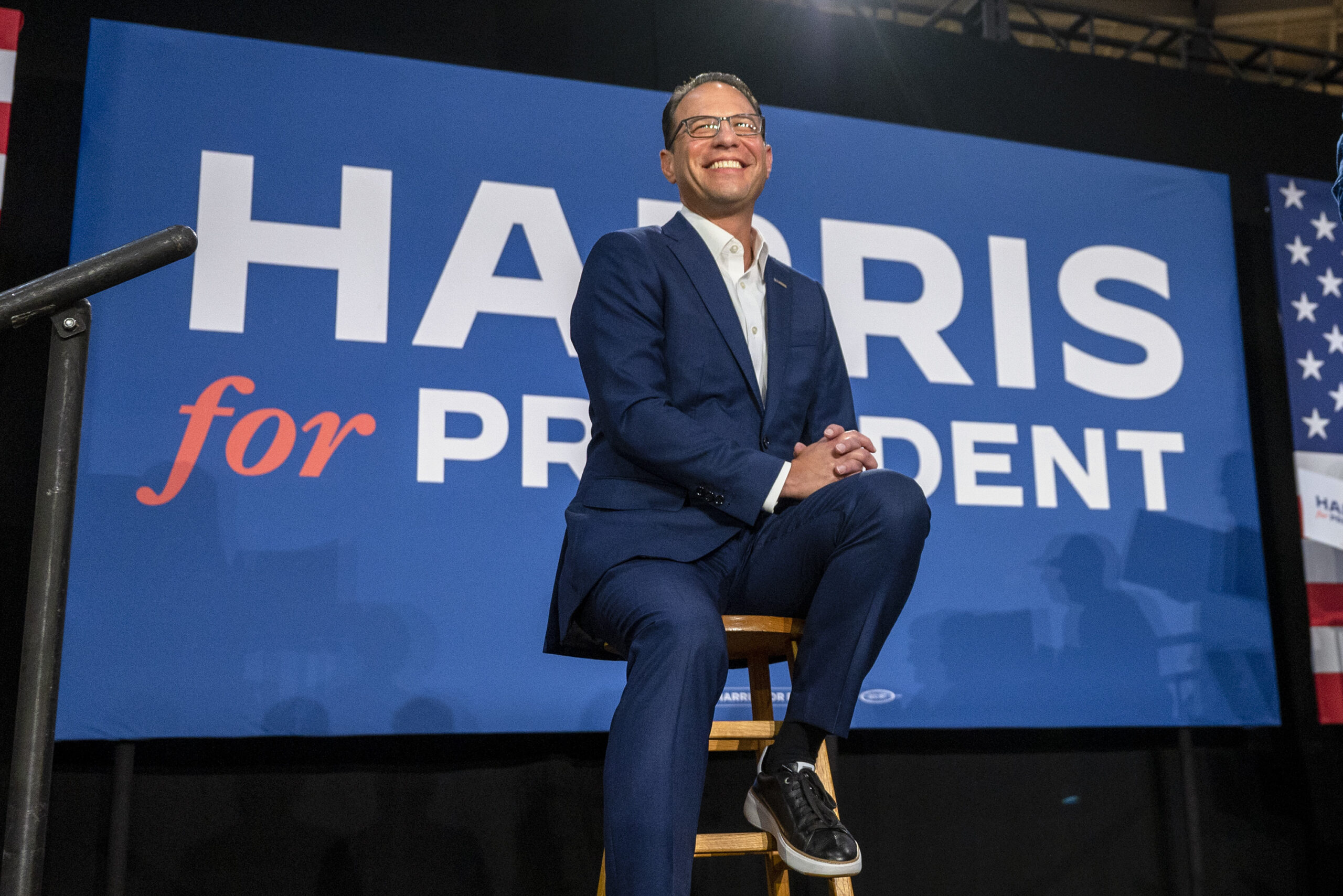
    Gov. Josh Shapiro at a rally for Vice President Kamala Harris at Wissahickon High School in Ambler on July 29, 2024.

    Just before he went to meet with Harris at the vice president’s residence in the summer of 2024, Shapiro received a call from Dana Remus, former White House counsel for Biden who was coleading the vetting process for Harris.

    “Have you ever been an agent of the Israeli government?” Remus asked, according to Shapiro’s memoir.

    “Had I been a double agent for Israel? Was she kidding?” Shapiro wrote in his 257-page book. “I told her how offensive the question was.”

    According to the memoir, Remus then asked if Shapiro had ever communicated with an undercover Israeli agent, which he shot back: “If they were undercover… how the hell would I know?”

    “Remus was just doing her job. I get it. But the fact that she asked, or was told to ask that question by someone else, said a lot about some of the people around the VP,” Shapiro wrote.

    In high school, Shapiro completed a program in Israel that included service projects on a farm, and at a fishery in a kibbutz, as well as at an Israeli army base, which he once described in his college student newspaper as “a past volunteer in the Israeli army.”

    Harris’ office could not be reached for comment Sunday evening. Remus also could not immediately be reached for comment Sunday.

    Shapiro, more broadly, recalled getting the feeling from Harris’ vetting team that she should pick Shapiro — a popular Democratic governor in a critical swing state — but that they had reservations about whether Shapiro’s views would mesh with Harris’.

    In one vetting session with U.S. Sen. Catherine Cortez Masto (D., Nev.), former Labor Secretary Marty Walsh, former associate Attorney General Tony West, and former senior Biden adviser Cedric Richmond, Shapiro wrote that he had been questioned “a lot” about Israel, including why he had been outspoken against the protests at Penn.

    “I wondered whether these questions were being posed to just me — the only Jewish guy in the running — or if everyone who had not held a federal office was being grilled about Israel in the same way,” he wrote. (Illinois Gov. JB Pritzker, who is Jewish, was also vetted to be Harris’ running mate. Harris’ husband, Doug Emhoff, is also Jewish.)

    In his book, Shapiro recalled the whirlwind two weeks as an awe-inspiring window into an opportunity — but ultimately it was one he knew he didn’t want.

    When Shapiro finally sat down with Harris in the dining room at the Naval Observatory, he said it became clear that she had a different vision for the vice presidency than what he wanted. He would work primarily with her staff and couldn’t say whether he would have access to her. In her own experience as vice president, she saw the job as mostly to make sure that you aren’t making any problems for the president, he wrote.

    Shapiro noted his own relationship with his No. 2, Lt. Gov. Austin Davis. The role in itself has few powers, but Shapiro views Davis as a governing partner and is one of few people who can walk into his office unannounced at any time, he wrote. He wanted the same relationship with Harris, he said, noting that he knew he would not be the decision-maker.

    “If we had door A and door B as options, and she was for door A and I was for door B, I just wanted to makes sure that I could make the case for door B,” Shapiro wrote.

    But Harris was “crystal clear” that that wasn’t the kind of president-vice president dynamic she envisioned, he said.

    In her own book released last year, 107 Days, Harris recalled the meeting differently. There, she wrote that Shapiro had “peppered” her with questions and “mused that he would want to be in the room for every decision.” His ambitions, she said, didn’t align with her view that a vice president should be a No. 2 and not a “copresident.”

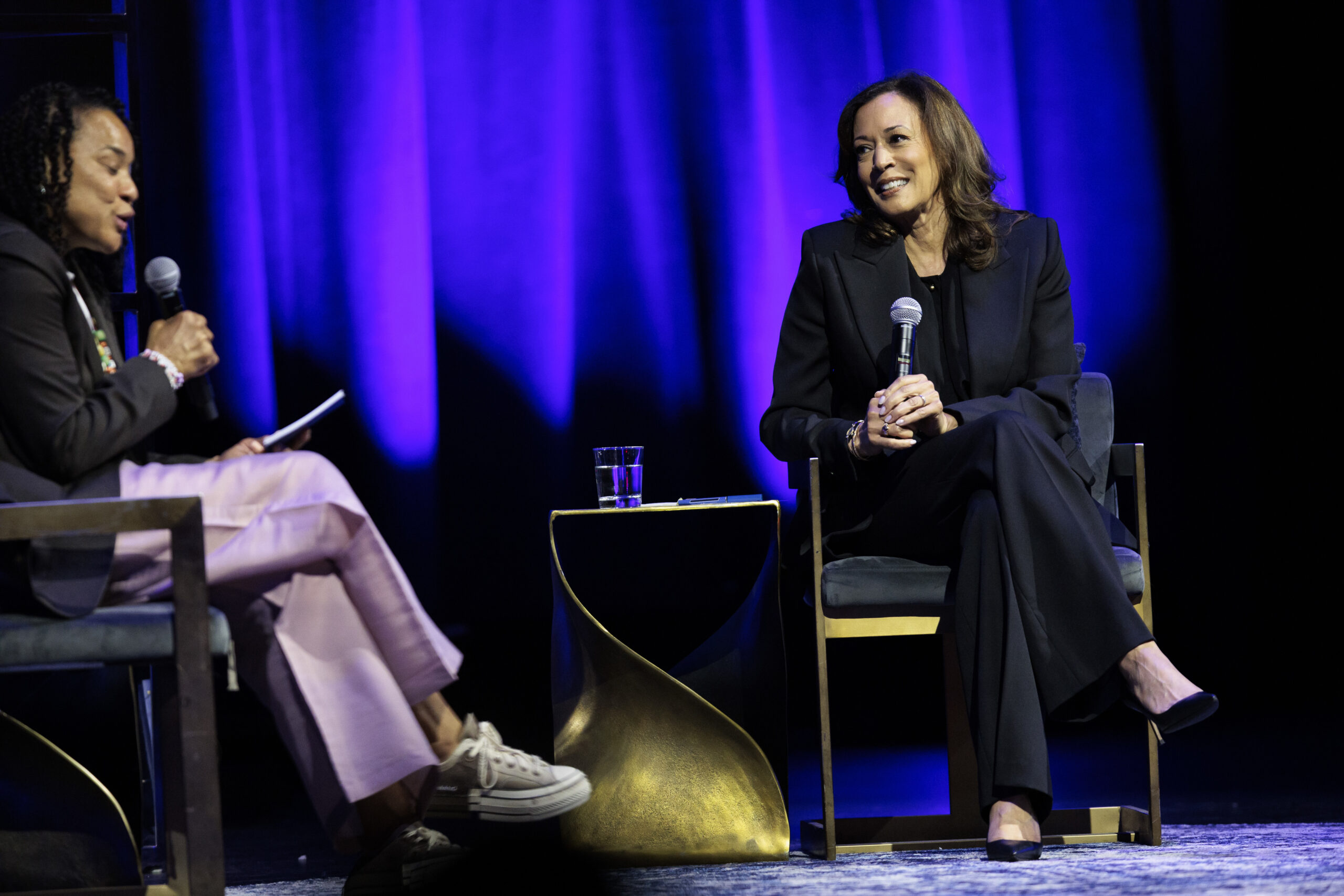
    Former Vice President Kamala Harris speaks with Dawn Staley (left), while promoting her new book “107 Days,” at the Met on Sept. 25 in Philadelphia. The event was held in partnership with Uncle Bobbie’s Coffee & Books.

    As Shapiro tells it, the friction with Harris’ team didn’t stop there.

    Shortly after meeting with Harris, Shapiro in his book recalled another unpleasant conversation with Remus, in which he wrote that she said she “could sense that I didn’t want to do this.”

    According to the book, Remus said it would be hard for Shapiro to move to Washington, it would be a strain financially for his family who “didn’t have a lot of money” by D.C. standards, and that Lori would need to get a whole new wardrobe and pay people to do her hair and makeup.

    It was then that he decided to leave the apartment where he had been asked to wait until Harris could come and talk to him again, he recalled.

    “These comments were unkind to me. They were nasty to Lori,” Shapiro wrote. “I hold no grudge against Remus, who I know was doing the job she had to do, but I needed to leave.”

    Shapiro went home, he said, and went over the day’s events with Lori at the edge of their bed.

    “On one hand, I was still tugged by the prestige of it all. It’s an honor. It’s a big title. But that’s never been enough for me,” he wrote. Still, he struggled with what it would mean to withdraw, concerned about not playing his part in a high-stakes election and letting his supporters down. Ultimately, he decided that it was not his race to win or lose, he wrote.

    “People were going to cast their votes for her, or they weren’t,” he added.

    Vice President Kamala Harris, Democratic nominee for president, and her running mate Minnesota Gov. Tim Walz, address a rally to kick off their campaign at the Liacouras Center in Philadelphia, Pa., on Tuesday, August 6, 2024.

    He decided that day he did not want the job, and toyed with the idea about publicly releasing a statement withdrawing himself from the running. He said he also tried to tell Harris he did not think it would be a good fit, but wasn’t able to reach her.

    Shortly thereafter, Harris announced that she had chosen Minnesota Gov. Tim Walz to be her running mate in an ultimately unsuccessful campaign against President Donald Trump. The two would debut their presidential ticket at a rally at the Liacouras Center in North Philadelphia. Shapiro wrote that he didn’t want to go.

    “I was wrung out. I just wanted to be home with my family, to take a walk with Lori, and just be,” he wrote.

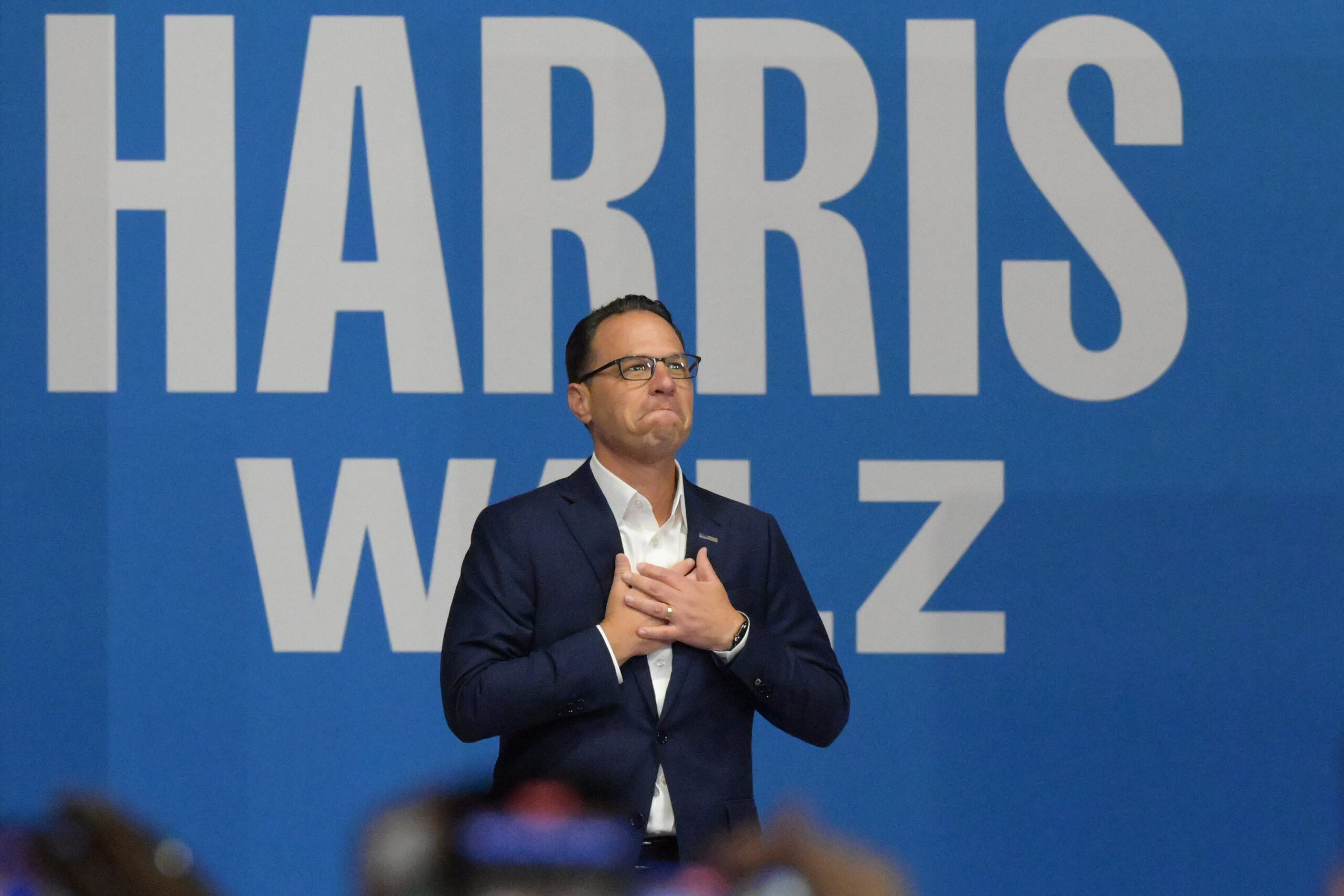
    Gov. Josh Shapiro takes the stage ahead of Vice President Kamala Harris and Gov. Tim Walz at a rally in Philadelphia’s Liacouras Center on August 6, 2024.

    But when it was time for him to take the stage ahead of Walz and Harris, he was long-applauded by his home city and gave a speech “from my heart” about how he took pride in his faith and his support for Walz and Harris.

    Shapiro’s memoir will be released Jan. 27 and is a reflection on his decades as an elected official, including as Pennsylvania attorney general, as well as the firebombing of his home last year. He will tout the book in Philadelphia on Saturday at 3 p.m. at Parkway Central Library. He will also discuss the book at upcoming book tour stops in New York and Washington.