Category: News

Latest breaking news and updates

  • Philly got its biggest snow in 10 years. This time nature will help with the cleanup.

    Philly got its biggest snow in 10 years. This time nature will help with the cleanup.

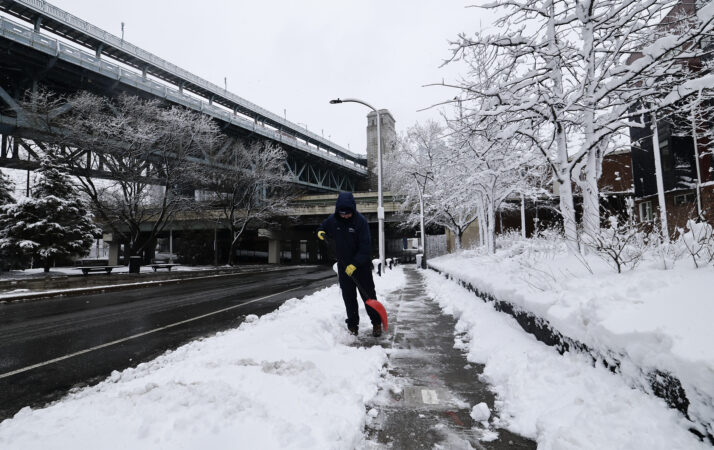
    If it wasn’t an actual blizzard, Philly’s biggest snowfall in a decade sure acted like one, and the weather the rest of this week isn’t expected to be particularly pleasant.

    But in terms of disruption — not to mention aesthetics — this was in a wholly different category from the Jan. 25 siege of snow and ice. And the aftermath should not be anywhere near as punitive and burdensome.

    Although the 14 inches measured officially at Philadelphia International Airport, dwarfed the 9.3 inches of snow and sleet that accumulated in last month’s storm, Zach Schwartz, 33, was among those who found the picturesque snow more palatable than the attack of ice balls and an Arctic freeze.

    “The last snowstorm was a tough time for everyone,” said Schwartz, who was at a Point Breeze playground helping a friend build an igloo for their kids, “and I think the city was kind of in shock a little bit.”

    The most recent storm, which left as much as 20 inches of snow in parts of South Jersey and southeastern Bucks County, did cause some issues.

    More than 130,000 households lost power at some point. Scores of trees came down as the snow, heavy and wet at the start, glommed onto branches that took beatings from the winds that gusted past 40 mph.

    The storms closed schools to the chagrin of hundreds of thousands of learning-eager children, and museums on Monday. It disrupted SEPTA services and airport operations.

    At least 87 trees across the city were downed as a result of the storm as of Monday afternoon, and the city was working to determine which ones to prioritize clearing first, Parks and Recreation commissioner Susan Slawson said.

    Mayor Cherelle L. Parker advised Philadelphians to avoid unnecessary travel as crews worked to clear the streets.

    Yet early fears that the snowfall would reach what the National Weather Service called “potentially historic” levels didn’t quite materialize, and it was not known if the storm had met “blizzard” criteria. Stopping short of “historic,” New Jersey Gov. Mikie Sherrill called it “a generational storm.”

    This one likely won’t have the staying power of last month’s storm

    While the volume of snow is formidable, road crews throughout the region now have a tremendous ally — the late-February sun.

    The city did adjust its response after the prior storm cleanup left many residents chock-full of complaints. Director of Clean and Green Initiatives Carlton Williams said Monday instead of one snow melter, the city secured three, with two already on the road Monday, despite the much shorter notice of the storm.

    But the big melter is in the sky.

    The amount of solar energy beaming toward Philadelphia is more than 35% stronger than it was on Jan. 25, according to NASA’s figures, and blacktop is great absorber of sunlight. Plus the region now is getting an hour more of daylight.

    Plus, instead of an Arctic freeze, it is forecast to be moderately cold this week, with highs in the low 30s Tuesday, and in the 40s Wednesday and Thursday.

    A weak clipper could produce an inch or less of snow early Wednesday, but, sorry kids, that won’t be another school-closer. More light rain or snow or a mix is possible Thursday.

    Computer models on Monday were seeing a potential for more snow early next week, but they may well sober up come Tuesday.

    After the Jan. 25 storm, Philly had 18 consecutive days of at least 3 inches on the ground officially at the airport, the longest stretch in 65 years. That streak won’t be challenged this time around.

    One other huge difference: Those 14 inches didn’t include a speck of ice, which, as we learned, is amazingly melt-resistant.

    Why snow totals varied tremendously

    The nor’easter that generated the snow did qualify as a “bomb cyclone,” said Tom Kines, senior meteorologist with AccuWeather Inc. The technical criteria aside, a bomb cyclone is particularly powerful storm.

    In fact, the storm’s intensity, based on a measure of its central pressure, was equal to that of a Category 1 hurricane, he added.

    Fortunately, the Shore escaped major flooding, but the winds circulating around the storm’s center over the ocean hurled back snow far inland.

    window.addEventListener(“message”,function(a){if(void 0!==a.data[“datawrapper-height”]){var e=document.querySelectorAll(“iframe”);for(var t in a.data[“datawrapper-height”])for(var r,i=0;r=e[i];i++)if(r.contentWindow===a.source){var d=a.data[“datawrapper-height”][t]+”px”;r.style.height=d}}});

    South Jersey locations received the most, along with areas in southeastern Bucks County. However, totals backed off precipitously to the west.

    “There was a really tight gradient,” said Amanda Lee, a weather service meteorologist in Mount Holly. All areas in Philly’s neighboring Pennsylvania counties did report at least several inches of snow.

    Within that broad east-west divide, however, amounts varied considerably from place to place, due in part to “banding,” in which narrow corridors of snow, caused by rapidly rising air, migrate from place depositing rapidly accumulating snow to areas underneath.

    Conversely, areas on either side of the band are snow-deprived.

    As to whether this qualified as Philadelphia’s first blizzard in 33 years, that is a verdict deferred.

    By the National Oceanic and Atmospheric Administration’s decree, a blizzard requires “frequent winds of 35 mph or higher with considerable falling and/or blowing snow that frequently reduces visibility to 1/4 of a mile or less. These conditions are expected to prevail for a minimum of 3 hours.”

    That’s a lot to ask for a snowstorm, and it is going to take considerable forensic work of poring through observations to determine whether those conditions were met in Philadelphia or elsewhere in the region, said Nick Guzzo, a weather service meteorologist in Mount Holly.

    Another big difference between this and the January storm

    Whatever else it is called, this was the most spectacularly beautiful snowfall of the season, thanks to the snow’s remarkable adhesive power.

    On the morning of Jan. 26 the trees were bare, as though they wanted no part of the snow and ice-ball assault.

    On Monday this time around, snow enchanted the branches and uncannily worked its way into architectural details.

    Cape May Mayor Zack Mullock said his town, famous for its Victorian buildings, “looks beautiful” covered in the foot of snow that had fallen.

    Said Mullock, “It looks like a snow globe.”

    Staff writers Ximena Conde, Kristen A. Graham, Michelle Myers, Amy S. Rosenberg, Henry Savage, and Nick Vadala contributed to this article.

  • Pennsylvania leaders want to avoid another lengthy state budget impasse. But with a $4.3 billion budget shortfall on the horizon, can they?

    Pennsylvania leaders want to avoid another lengthy state budget impasse. But with a $4.3 billion budget shortfall on the horizon, can they?

    HARRISBURG — Pennsylvania’s top leaders want to avoid another ugly, monthslong budget standoff, showing resolve this year to begin negotiations much sooner in hopes of approving a spending deal by their June 30 deadline.

    But that doesn’t change the state’s financial predicaments: Pennsylvania is again on track to spend more than it brings in this fiscal year. Gov. Josh Shapiro has pitched spending at least $4.3 billion more than the state is projected to raise in revenue next fiscal year, part of his $53.2 billion budget proposal.

    Shapiro, who is up for reelection this year and is a rumored 2028 presidential contender, has struggled in budget negotiations since taking office to deliver on his national image as a moderate Democrat willing to work across the aisle while leading the state with a GOP-controlled Senate and narrow Democratic House majority.

    And after last year — when lawmakers couldn’t agree on a state budget deal for months, leading to a bitter impasse and negotiations stretching into November while schools and counties went unfunded — the governor is trying a new strategy.

    Shortly after unveiling his budget proposal to lawmakers last month, Shapiro called top legislative leaders in for a meeting in his office to discuss their spending priorities. Last year, the initial negotiation conversation took place just before the June budget deadline, taking months to arrive at an agreement. House Majority Leader Matt Bradford (D., Montgomery), Senate Majority Leader Joe Pittman (R., Indiana), House Minority Leader Jesse Topper (R., Bedford), and Senate Minority Leader Jay Costa (D., Allegheny) accepted Shapiro’s invitation.

    Rosie Lapowsky, a spokesperson for Shapiro, said in a statement that the early conversation was intended to “ensure they remain timely, constructive, and focused on results.”

    A $4.3 billion budget shortfall — and disagreement over how to fix it

    Both Pittman and Bradford, who control their chambers and are top architects to any final budget deal in closed-door negotiations with Shapiro, said the first talks were a good first step in opening negotiations much sooner than last year. But they acknowledged the tough fiscal realities facing the state, and disagreed on how to address them.

    “It just simply spends too much money. We can’t continue the spending trajectory,” Pittman said of Shapiro’s $53.2 billion budget proposal. “It’s only going to cause us to have conversations, as the Independent Fiscal Office pointed out about massive, broad-base tax increases.”

    The Independent Fiscal Office was created by the state legislature in 2010 and is required to produce revenue projections for current and future years. An IFO report this month found that the budget deficit could top $6 billion this year, and hit $8 billion by 2028-29, likely requiring broad tax increases to fill the gap.

    “Assuming he’s reelected, if he’s reelected, I can’t imagine he’s going to be wanting to deal with budgets in 2027 and 2028 that are going to have to call for broad-based tax increases,” added Pittman, who has endorsed Shapiro’s likely GOP gubernatorial challenger, State Treasurer Stacy Garrity.

    State Senate Majority Leader Joe Pittman (R., Indiana) during a Feb. 3 news conference at the Capitol in Harrisburg.

    Meanwhile, Bradford, a Democrat, believes the state should focus on the long game in addressing Pennsylvania’s budget shortfall, citing the state’s efforts to recruit new businesses and pass tax cuts to encourage economic growth, as well as Shapiro’s renewed push to create new revenue streams like the taxation and regulation of recreational marijuana and the slot-machine look-alikes know as skill games.

    Pennsylvania’s declining population has “put a lot of stress on our budget books,” Bradford said.

    “The best thing we can do is continue to grow this economy,” Bradford added.

    State Rep. Matt Bradford (D., Montgomery County) during a Feb. 3 news conference at the Capitol in Harrisburg.

    Even without increasing its spending over the 2025-26 fiscal year — an impossible feat due to growing Medicaid obligations — Pennsylvania would still be poised to spend $1.2 billion more than it is expected to bring in next fiscal year.

    To avoid raising taxes this year, leaders will need to raise new revenues and tap into its more than $7 billion in reserves. Republican leaders want to avoid tapping into the state’s Rainy Day Fund until an emergency arises, citing the state’s lackluster revenue projections in future years. However, it’s unclear what government programs or agencies they’d like to cut.

    Just as he did last year to no avail, Shapiro this month again proposed regulating and taxing recreational marijuana and skill games as a way to help fill the state’s budget shortfall. This time, however, his projections on how much revenue could be made has increased dramatically since last year, without changing much of the scope of the proposals.

    For example, last year he pitched a 20% tax on the sale of legal marijuana that he estimated would bring in $535.6 million in its first year. This year, he projected the same idea, but instead projected a marijuana tax would bring in $729.4 million in its initial year — a 36% increase. A Shapiro administration official said earlier this month that the projected increase is due to more interest from marijuana companies that want to do business in Pennsylvania.

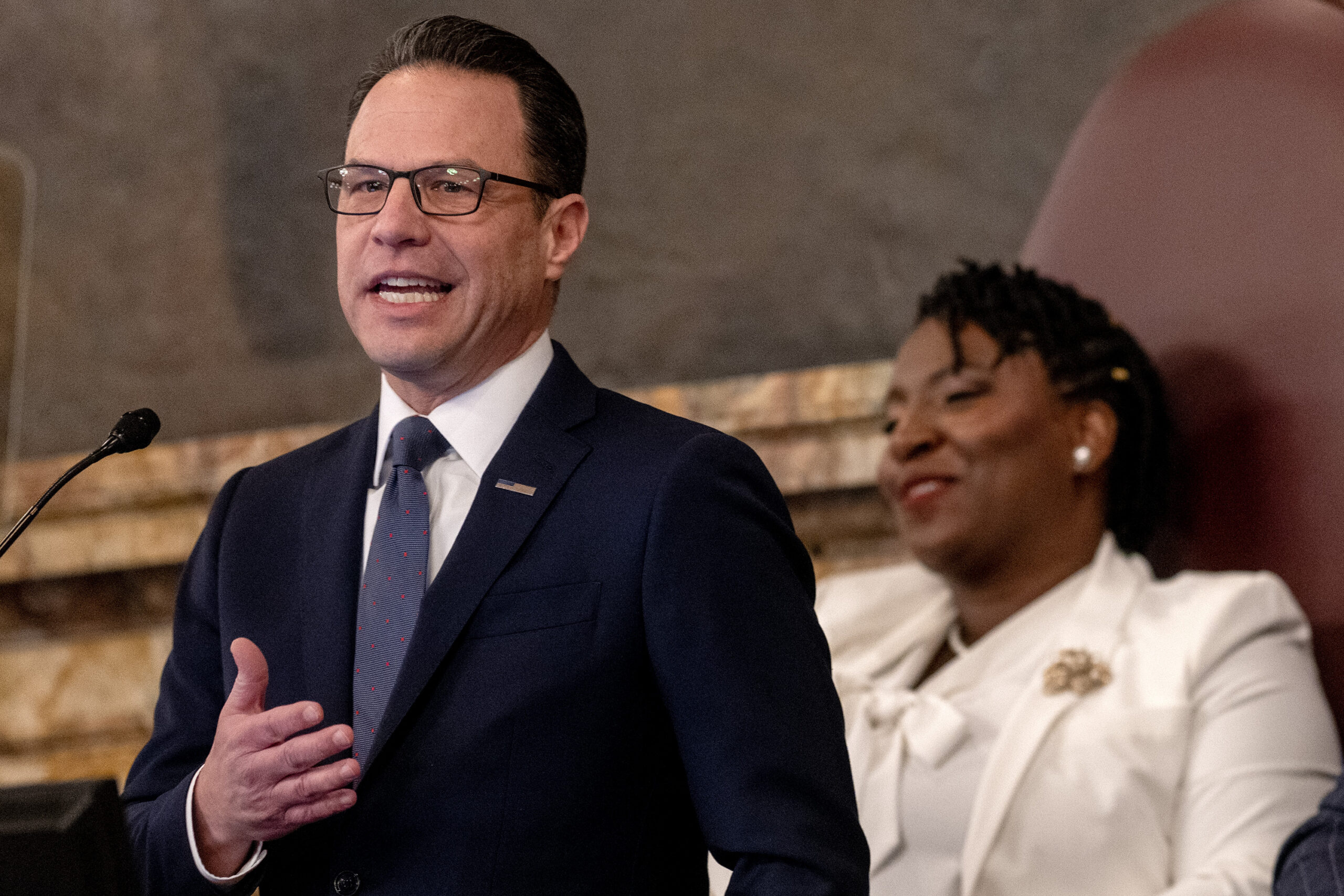
    Gov. Josh Shapiro makes his annual budget proposal in the state House chamber on Feb. 3. House Speaker Joanna McClinton is seated behind him.

    State revenues are $362 million higher than expected so far this fiscal year, according to the IFO, offering some hope that the state may continue to grow its economy to fill some of the budget hole.

    Lapowsky, Shapiro’s spokesperson, said in a statement that Shapiro’s budget pitch shows “that government can be a force for good in people’s lives when leaders come together and put Pennsylvanians first.”

    Election year optimism and a preview of the fights to come

    Legislators on the powerful Senate and House appropriations committees, led by House Appropriations Chair Jordan Harris (D., Philadelphia) and Senate Appropriations Chair Scott Martin (R., Lancaster) will individually begin analyzing Shapiro’s budget proposal line-by-line in public hearings this week. Both committees were scheduled to begin their budget hearings on Monday, but were rescheduled to begin on Tuesday afternoon and Wednesday morning for the Senate and House, respectively, due to a snowstorm that blanketed the Philadelphia area.

    The weekslong series of hearings examine the budget needs for each state government agency and row office, as well as the spending from the previous year. Secretaries and elected officials from each office come before the committee to answer questions about their proposed spending.

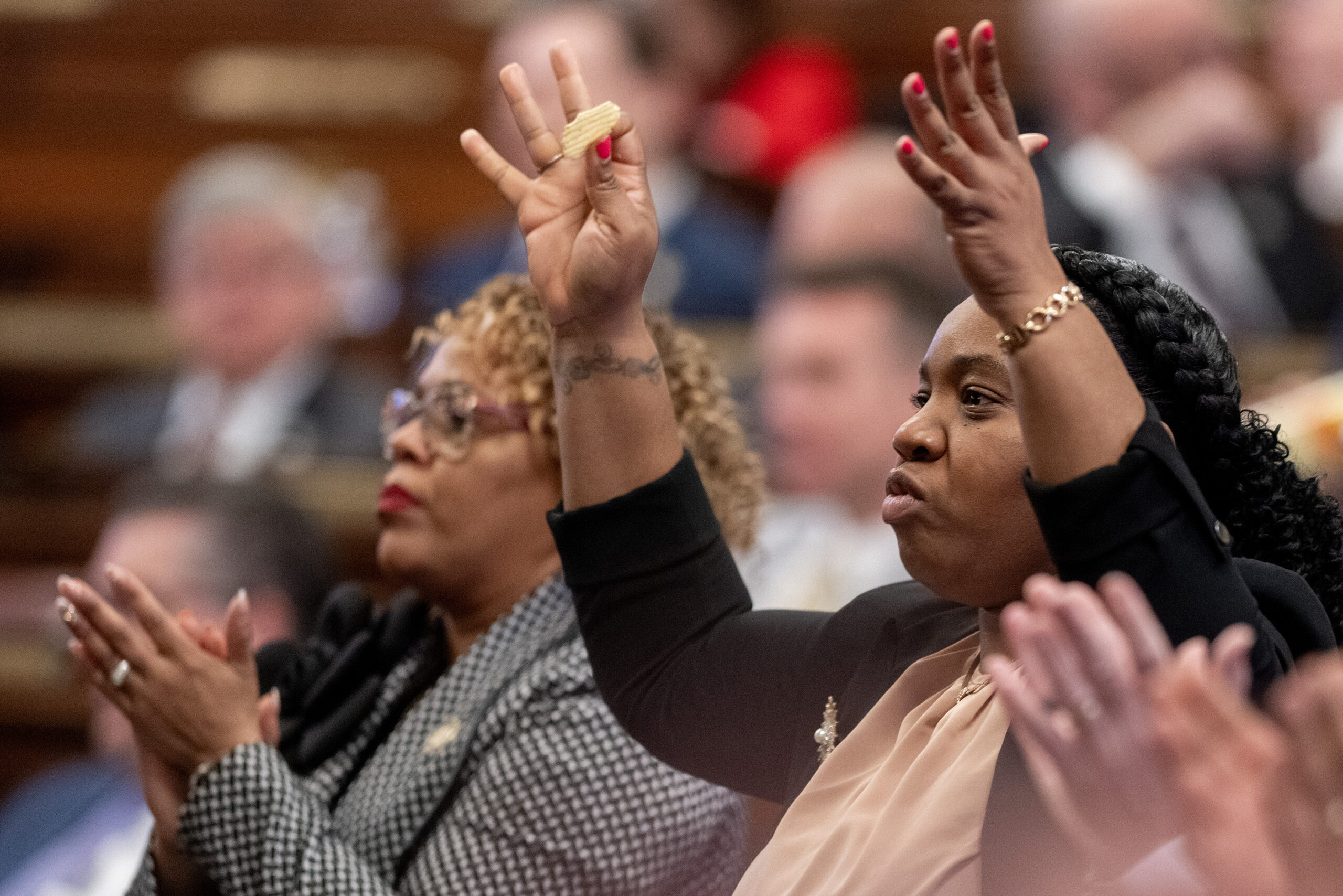
    State Reps. Johanny Cepeda-Freyitz (left), a Berks County Democrat, and Carol Kazeem (D., Delaware) in the state House chamber Feb. 3 during Gov. Josh Shapiro’s annual budget proposal.

    Pittman said Senate Republicans are likely to zero in on Shapiro’s $1 billion proposed bonding initiative for a range of infrastructure projects relating to energy, housing, local governments, and schools that he largely billed as “a major investment in building new housing.” They’ll also likely question why the Department of Corrections is seeking a $150 million funding increase, after the closure of two state prisons last year.

    GOP members of the Senate committee will also likely question top officials in the Pennsylvania State Police and the Department of General Services over spending for security upgrades at Shapiro’s personal residence following an arson attack last year on the governor’s mansion in Harrisburg, and a mail vendor’s failure to deliver a month’s worth of state mail to residents.

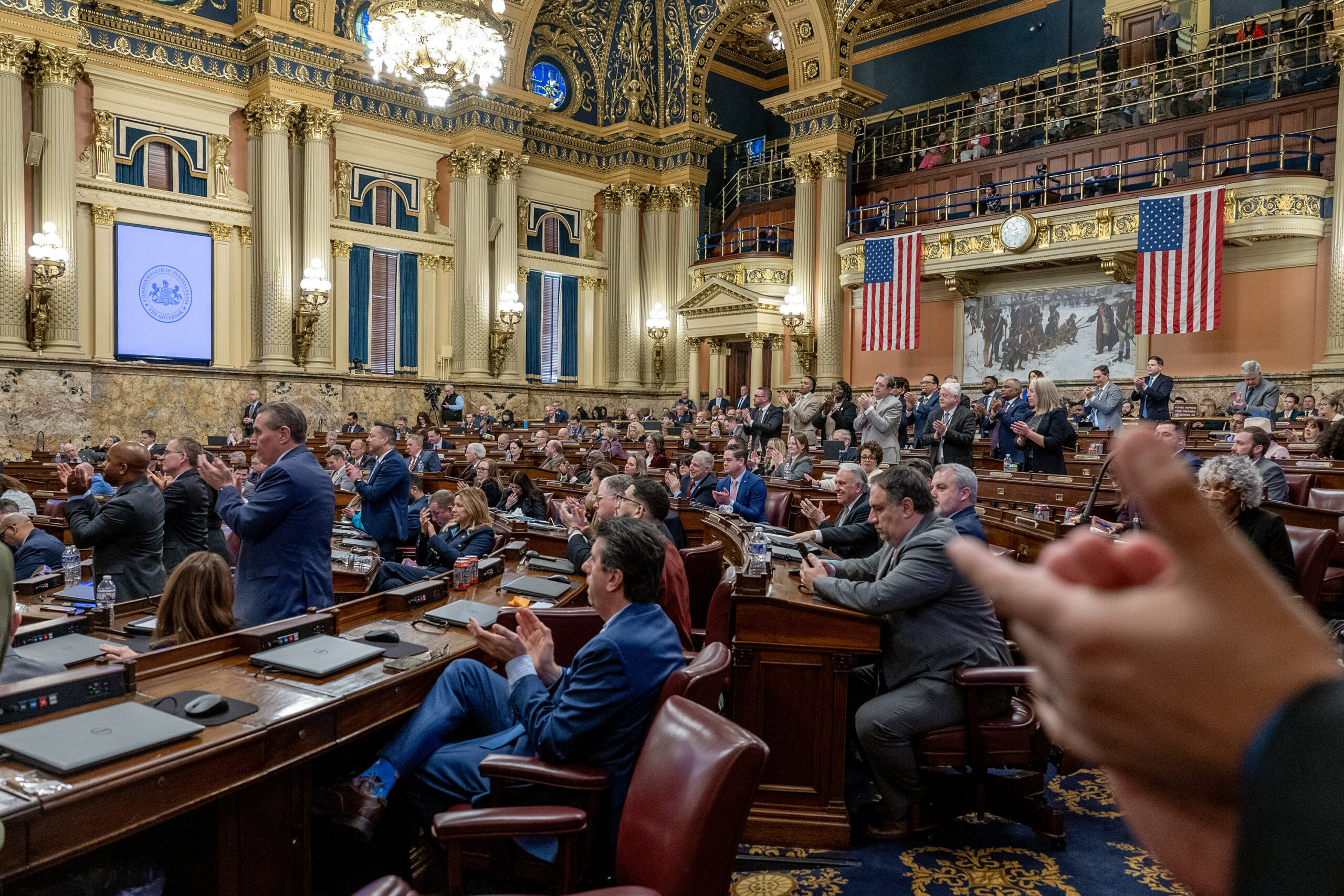
    The state House chamber as Gov. Josh Shapiro makes his annual budget proposal Feb. 3 in Harrisburg.

    House Democrats, meanwhile, are likely to bring attention to the successes of the Working Pennsylvanians Tax Credit and additional increases to public education under the state’s new adequacy formula, Bradford said.

    “We’ve got real accomplishments and a real opportunity to prioritize funding education, affordability, and build on what we’ve done,” Bradford said.

    Unlike the last round of budget negotiations, mass transit funding for SEPTA and other transit agencies is unlikely to be a roadblock this year, as lawmakers have until next year to find a long-term funding solution.

    Despite the inevitable disagreements ahead, there is some cause for optimism heading into another year of Pennsylvania state budget negotiations: Midterm election years often produce much less contentious budget battles, as lawmakers are motivated to reach an agreement and bring home their accomplishments to their districts as they campaign for reelection in November.

    Both Bradford and Pittman expressed hope that the election year may bring an increased willingness among all parties to finish an on-time budget.

    But, “divided government creates all kinds of twists and turns,” Pittman added. “I certainly can’t predict what’s coming ahead here.”

  • Philly schools will remain virtual on Tuesday; other Pa. and N.J. districts are a mixed bag

    Philly schools will remain virtual on Tuesday; other Pa. and N.J. districts are a mixed bag

    School districts around the region made varying calls for how they’re handling classes Tuesday as the region continues to dig out from the massive snowstorm that dumped more than a foot of snow in many places — with some closed altogether, others fully open, and others open, but delayed.

    The Philadelphia School District opted for another day of virtual instruction.

    Superintendent Tony B. Watlington Sr. has said the nation’s eighth-largest school system favors in-person instruction, but places student and staff safety as its highest priority.

    In Upper Darby, Delaware County, Superintendent Dan McGarry made the call to bring students in on time.

    “The district transportation team and facilities team have been working hard all day to clear snow from our facilities for in-person instruction,” McGarry wrote in a message to families and staff. “We have been in communication with the township as well, and I want to thank them for their hard work getting roads clear for school tomorrow.”

    Districts including Council Rock and Pennridge, both in Bucks County, called two hour delays.

    In Montgomery County, Cheltenham and Lower Merion schools both announced a two-hour delay.

    “Buses are expected to arrive at bus stops two hours after their normal pickup times; however, please be patient as snow and ice on some streets may cause additional delays,” Lower Merion spokesperson Amy Buckman said in a message to families Monday evening.

    Cherry Hill and Moorestown, in Camden County, will also hold classes with a two-hour delay.

    Renewed debate over virtual instruction in New Jersey

    And while some Pennsylvania districts pivot to virtual instruction when significant snow falls, that’s not possible in New Jersey, where state law prevents it.

    A handful of New Jersey districts opted for total closures. Lenape Regional, Evesham, and Medford schools, all in Burlington County, cancelled classes altogether.

    Winslow schools in Camden County will remain closed Tuesday for a second consecutive day, said interim Superintendent Mark Pease. The district was shut down for three days during the last storm.

    Pease said the district would use two days from its spring in April to make up the missed days. The break will be cut to three days, he said.

    “If we get another storm, we will be extending the school year,” Pease said. “Let’s hope this is it for the winter.”

    The snow storm renewed calls among some New Jersey educators to the state to allow virtual and hybrid instruction to avoid closing schools due to inclement weather.

    In a social media post, Camden Education Association President Pam Clark said she was asking Gov. Mikie Shirrell to revisit the virtual option for traditional public schools. She used the hashtag “not fair.”

    New Jersey allowed virtual and hybrid instruction when the pandemic shut down schools.

    However, state law now strictly limits remote learning, according to the state Department of Education. Districts must meet a state requirement of 180 days.

    School districts may seek approval for virtual learning for school closures lasting more than three consecutive days because of a declared state of emergency or a declared public health emergency.

    There has been pushback against virtual learning because of concerns about learning loss suffered during the pandemic. There also are concerns that some schools don’t have enough Chromebooks or devices for students to log on.

    Timothy Purnell, executive director of the New Jersey School Boards Association, said districts should have the flexibility to pivot when circumstances warrant such as a snow day.

    Districts have invested in technology and training to successfully implement virtual instruction, he said.

    “Limiting virtual instruction days exclusively to public health emergencies is yesterday’s logic,“ Purnell said in a statement.

  • Coast Guard investigating swastika drawn in men’s bathroom at Cape May facility

    Coast Guard investigating swastika drawn in men’s bathroom at Cape May facility

    The U.S. Coast Guard is investigating an incident in which a swastika was reportedly drawn on a bathroom wall at the Coast Guard’s training center in Cape May.

    “Following discovery of a hate symbol drawn on a bathroom wall in a building at Training Center Cape May, the Coast Guard immediately referred the matter to the Coast Guard Investigative Service for investigation — consistent with longstanding Coast Guard policy. This hate symbol was immediately removed,” a spokesperson for the service branch said in an email Monday.

    The Washington Post first reported on Monday that the hate symbol — which the Coast Guard did not specify —was a hand-drawn swastika that was discovered Thursday evening in the men’s bathroom.

    Adm. Kevin Lunday, the Coast Guard commandant, was informed about the incident on Saturday, the Post reported.

    “The Commandant immediately traveled to Training Center Cape May and held a mandatory All Hands with the nearly 900 recruits and staff to address the incident directly, reinforce the Coast Guard’s strong standards and policies, and reaffirm the Service’s dedication to accountability through our core values,” the Coast Guard spokesperson said.

    In a statement, Lunday declared: “Anyone who adheres to or advances hate or extremist ideology — get out. Leave. You don’t belong in the United States Coast Guard and we reject you.”

    Lunday added: “We will not allow anyone to put a stain of hate on our United States Coast Guard. We will not be defined by the cowardly acts, but instead be defined by our unwavering response and our resolve to defeat them.”

    The spokesperson said that the Coast Guard is “committed to maintaining a workplace that is safe, professional, and respectful for every member of our workforce. Any behavior that undermines these standards will be addressed swiftly and seriously.”

    Late last year, the Post reported that the Coast Guard had planned to downgrade swastikas and nooses in its workplace harassment manual as being “potentially divisive” rather than hate symbols.

    In December, Lunday announced that the revisions were “completely removed” from the policy manual and that swastikas and nooses would still be considered overt hate symbols, the Post reported.

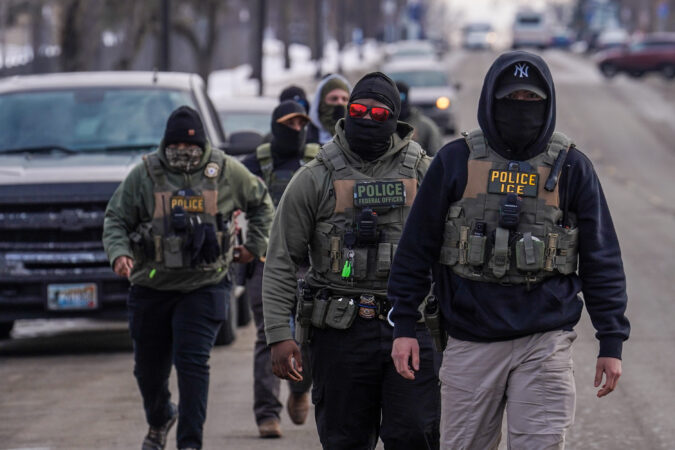
  • Former ICE instructor says agency has slashed training for new officers

    Former ICE instructor says agency has slashed training for new officers

    A former instructor for U.S. Immigration and Customs Enforcement on Monday accused the agency of dramatically slashing training standards for new officers and lying to Congress about it as the Trump administration seeks to rapidly expand its mass deportation operation.

    Ryan Schwank, who resigned from his job at an ICE academy in Georgia last week, told congressional Democrats at a hearing that the agency eliminated 240 hours of “vital classes” from a mandatory 580-hour training program, including instruction about the legal boundaries for the use of force, how to safely handle firearms, and the proper way to detain and arrest immigrants.

    “Law enforcement is a deadly serious biz. It is not a place for shortcuts,” Schwank said. “Deficient training can and will get people killed. … ICE is lying to Congress and the American people about the steps it is taking to ensure that 12,000 officers can faithfully uphold the Constitution and perform their jobs.”

    Ahead of the hearing, Schwank provided a joint panel of House and Senate Democrats copies of internal ICE documents that he said shows the extent of the cuts.

    Schwank’s testimony comes two weeks after acting ICE director Todd M. Lyons testified in front of separate House and Senate committees amid growing public outrage over the aggressive tactics of ICE and other federal immigration officers. Two U.S. citizens were fatally shot by federal officers in Minneapolis last month.

    During his testimony in the House on Feb. 10, Lyons responded to questions about the agency’s training program by saying it has not reduced the “meat of the training” but has sought to reduce the time it takes to get officers into the field. He said training used to take place five days a week for eight hours a day but has been changed to six days a week for 12 hours per day.

    In a statement Monday, the Department of Homeland Security said ICE recruits receive 56 days of training before beginning their assignments, along with an average of 28 additional days of “on-the-job-training.” DHS said recruits are receiving the same total hours of training as they always have.

    “No training hours have been cut. Our officers receive extensive firearm training, are taught de-escalation tactics, and receive Fourth and Fifth Amendment comprehensive instruction,” said Lauren Bis, a spokesperson for the department.

    Schwank said that among the classes eliminated were 16 hours of firearms training. He also said that a two-hour class on the rights of protesters was shortened into 10 minutes of discussion during a lecture on “the concept of seizure.”

    Schwank was separately asked to review an internal memo, signed by Lyons, that said ICE officers are authorized to use administrative warrants, approved by senior ICE officials, to enter private residences. That marked a shift from the federal government’s long-standing position that officers must obtain judicial warrants signed by federal judges.

    Schwank said he was instructed to train the recruits on the policy but was told he could not talk about the information publicly or even take notes after reading the memo. The Washington Post and other news outlets reported on the memo last month.

    “ICE is teaching cadets to violate the Constitution and attempting to cloak it in secrecy by demanding I lie about it,” he said.

  • The detective who helped advise ‘Mare of Easttown’ is suing Chester County over discrimination

    The detective who helped advise ‘Mare of Easttown’ is suing Chester County over discrimination

    A former Chester County detective — who served as a technical adviser for the HBO crime drama Mare of Easttown — is suing her former employer and supervisor in federal court over alleged sex discrimination.

    Christine Bleiler, who became Kate Winslet’s “go-to person” on developing her Emmy-winning performance as titular character Mare Sheehan, says she was subjected to a “prolonged pattern of hostile, discriminatory, and demeaning treatment based on her sex,” according to a complaint filed this month in the Eastern District of Pennsylvania.

    And though an internal investigation “corroborated” that she was being harassed, according to the suit, the county failed to remedy the harassment to which she was subjected.

    In addition to Chester County, the lawsuit names as a defendant Thomas Goggin, who was Bleiler’s supervisor from 2021 to 2023. Bleiler resigned in September.

    A spokesperson for the county declined to comment on ongoing litigation. An attorney for Goggin, who now serves as police chief in West Pikeland Township, did not immediately respond to a message seeking comment.

    Bleiler, who worked as a police officer for nearly a dozen years in Oxford Borough before beginning as a Chester County detective in 2015, began working under Goggin in February 2021. He accused her of talking too much, yelled at her repeatedly over how she handled suspects or on differences in opinion, demeaned and condescended to her, and told her “she ‘better not’ tell anyone that he was a problem,” according to the complaint.

    In August 2023, Bleiler brought the complaints to the detective division’s leadership, prompting an internal investigation that ultimately corroborated her claims, the suit says. Goggin was suspended for two weeks and was demoted, according to the complaint.

    Bleiler was worried about working near Goggin once he returned from his suspension, the suit says, fearing that he might retaliate. She was instructed by the department’s leadership to “bury her head in her work” and “move on from this.” Though she began reporting to a new supervisor, working in proximity to Goggin “caused her significant discomfort, anxiety and distress over potential retaliation and continued harassment,” the complaint says.

    Bleiler is asking a judge to declare that the county and Goggin’s actions violated federal and state antidiscrimination laws. It asks the court to grant her compensation for past and future lost earnings, earning capacity, and benefits, which the complaint argues Bleiler lost due to the “discriminatory and retaliatory conduct.”

    “The conduct of defendants, as set forth above, was severe or pervasive enough to make a reasonable person believe that the conditions of employment had been altered and that the working environment was hostile or abusive, and in fact made plaintiff believe that her working environment was hostile and abusive because of her sex and her complaint of sex discrimination,” the complaint states.

    While a detective for the county, in 2019 Bleiler served as a technical adviser for HBO’s Mare of Easttown, taking phone calls from Winslet morning and night to discuss upcoming scenes or to answer questions. At one point, Winslet visited her at the Justice Center in West Chester.

    “She insisted,” Bleiler told The Inquirer in 2021. “I told my lieutenant at that time, he couldn’t believe it. He said, ‘All right, she’s your responsibility. Get her in and get her out, keep it quiet.’”

  • Armed man shot and killed at Mar-a-Lago was never interested in politics or guns, cousin says

    Armed man shot and killed at Mar-a-Lago was never interested in politics or guns, cousin says

    CAMERON, N.C. — The 21-year-old North Carolina man who entered a gate at President Donald Trump’s Mar-a-Lago resort with a shotgun before he was shot and killed worked as a golf course groundskeeper and liked to sketch.

    Austin Tucker Martin rarely, if ever, talked about politics, seemed afraid of guns, and came from a family of Trump supporters, according to Braeden Fields, a cousin who said the two grew up together.

    “I wouldn’t believe he would do something like this. It’s mind-blowing,” Fields said. “He wouldn’t even hurt an ant. He doesn’t even know how to use a gun.”

    Martin walked up to the secure perimeter at Mar-a-Lago early Sunday and went through a gate when it opened for employees to leave, a U.S. Secret Service spokesperson said Monday. Martin dropped a gas can and raised a shotgun at two Secret Service agents and a Palm Beach County sheriff’s deputy, who then opened fire “to neutralize the threat,” said Sheriff Ric Bradshaw.

    Trump, who often spends weekends at the Palm Beach, Fla., resort, was at the White House at the time.

    Investigators have not identified a motive. Trump faced two assassination attempts during the 2024 campaign, including one just a few miles from Mar-a-Lago when a man was spotted aiming a rifle through shrubbery while Trump was golfing.

    Following Sunday’s incident, Secret Service spokesperson Anthony Guglielmi said investigators believe Martin bought his shotgun while driving to Florida. Authorities said his family had recently reported him missing.

    Martin was from central North Carolina, where guns and hunting are a part of life, his cousin said. But whenever they’d go hunting or target shooting, Martin would never pick up a gun, Fields told the Associated Press on Sunday.

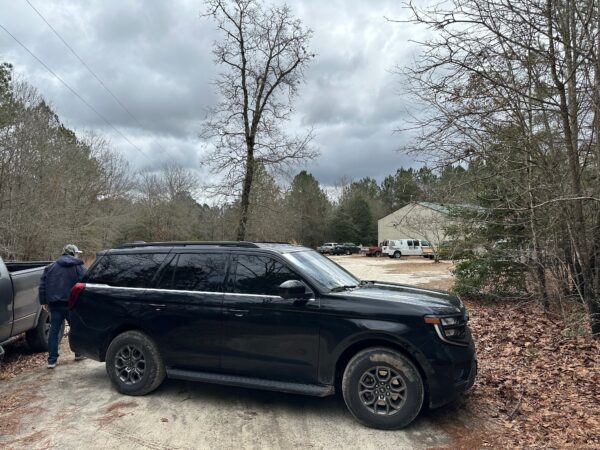
    He lived with his mother in a modest modular house down a rutted sandy road near the town of Cameron. No one answered the door Monday, and the large police presence from the day before was gone.

    Martin’s sister was just 21 when she was killed in a car accident in 2023, and he has an older brother who’s in the military, Fields said.

    For the past three years, Martin worked as a groundskeeper at Pine Needles Lodge & Golf Club.

    “It’s tragic. I feel for his family,” said Kelly Miller, president of the course in nearby Southern Pines. “It’s just unfortunate what transpired. It was totally unexpected.”

    Martin last year started a business to sell pen drawings he made, according to state records. A website matching the company name features illustrations of golf courses, buildings, and ancient Roman architecture.

    Politics didn’t seem to be among his interests, his cousin said

    “We are big Trump supporters, all of us. Everybody,” Fields said, but his cousin was “real quiet, never really talked about anything.”

  • Biden, aides project optimism in cancer fight, but some close friends worry

    Biden, aides project optimism in cancer fight, but some close friends worry

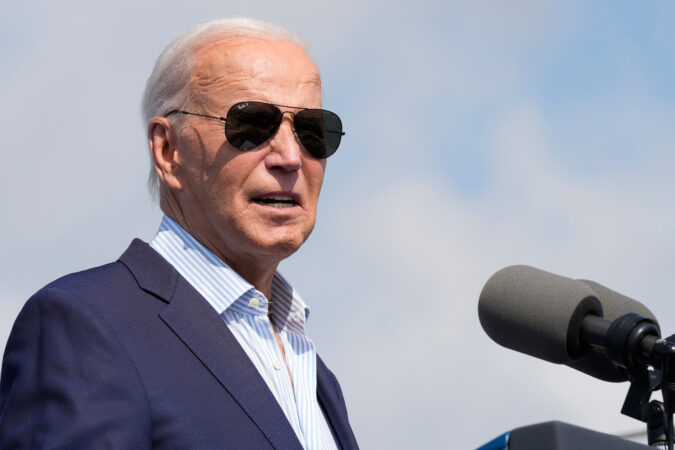
    Longtime friends and allies of Joe Biden say they are worried about the toll an aggressive form of prostate cancer is taking on the former president and his health. But Biden and his aides say he is doing well, making progress on ongoing projects, and maintaining public appearances.

    Biden has been encouraged as he has gone through treatment and aides said the former president is doing as well as they could hope nearly a year after he announced his metastatic prostate cancer diagnosis. He is continuing to work on his memoir and build out his foundation and presidential library, attending board dinners and meetings. He was spotted last week on an Amtrak train from Washington to Delaware, where he took pictures with passengers.

    Biden’s public engagements since leaving office last January have been fairly limited. He attended Tatiana Schlossberg’s funeral in January, traveled with his family to St. Croix during the holidays, and has been seen on flights, planes, at Mass, and at restaurants. He is expected to visit South Carolina this month and deliver remarks at an event to mark the sixth anniversary of his victory in that state’s primary, which set the stage for his 2020 presidential win.

    Four people close to Biden who have spoken with him in recent months, who spoke on the condition of anonymity to discuss sensitive details, said there have been no updates from the president on his condition. But the people, including two former Biden officials and an elected Democrat, said he has at times appeared more fatigued in private interactions over the past several weeks, a source of worry that they have attributed to the strain of cancer and its treatment.

    A fifth person said Biden is staying active and engaged, and remains “encouraged and positive about his prognosis given his positive response to treatment.”

    Biden’s personal office declined to comment for this story.

    Biden, 83, announced last May that he was diagnosed with Stage 4 prostate cancer that had metastasized to the bone. The cancer is characterized by a Gleason score of 9, meaning it is an aggressive cancer that is more likely to spread quickly. (The scale ranges from 6 to 10.) At the time, Biden’s office said the cancer was responding to hormone therapy, “which allows for effective management.”

    Biden rang the ceremonial bell at Penn Medicine Radiation Oncology in Philadelphia on Oct. 20 after completing a course of radiation therapy. He also underwent surgery in September to remove skin cancer lesions on his head.

    Medical experts said metastatic prostate cancer is incurable — and most commonly spreads to the bones, as it has for Biden — though an array of advancements in recent years has made it possible to manage it effectively. That means patients can live with the cancer for years and end up dying of something else entirely, said Judd Moul, professor of urology at the Duke Cancer Institute at Duke University.

    Without knowing additional details about Biden’s health and treatment, experts said his prognosis could vary widely. Biden’s office has not shared additional details that would indicate the degree to which the cancer has spread or how Biden responded to radiation last year. Oncologists said some men with advanced prostate cancer can live many years with effective treatment while others deteriorate rapidly.

    The elements of Biden’s diagnosis that are publicly known — including his Gleason score and the fact that the cancer was Stage 4 and had already spread at the time of diagnosis — indicate he is facing a serious and advanced form of the disease, one that typically requires ongoing treatment and close monitoring.

    “Bone metastasis is the most common place prostate cancer spreads, but the degree is important and how it’s found,” Moul said. “The degree of spread or amount of spread is just as important as the fact there’s spread.”

    Moul added: “There are a lot of men with advanced prostate cancer who can live many, many years. It’s unfair to all of our patients to paint a pessimistic picture for everyone because there are a lot of patients, even with metastatic cancer, who die of something else.”

    The five-year survival rate for metastatic prostate cancer is 34% to 38%, according to the American Cancer Society, which notes that advancements in treatments have significantly improved outcomes.

    It is also common for metastatic prostate cancer to spread to the spine, said Gerald Denis, Shipley prostate cancer research professor at Boston University Chobanian & Avedisian School of Medicine. Doctors especially want to avoid a weakening of the bones, Denis said, noting that such weakening in the spine can lead to fractures. He said there are “highly effective end of life medications to reduce pain.”

    “If the spine has been degraded by the tumor metastasis, it’s entirely possible to break your back simply by getting out of bed the wrong way,” Denis said, noting he does not know any of the specifics of Biden’s case. “This is a very painful and difficult stage of the terminal illness. … I am very sad for him and his family.”

    Biden’s cancer diagnosis has raised uncomfortable questions for Democrats, who for months were embroiled in a debate over whether Biden’s decision to seek reelection paved the way for Trump’s return to office. Most have been loath to relitigate that controversy in recent months, focused instead on winning control of the House in this year’s midterms and picking up Senate seats.

    Biden’s diagnosis has forced the party to privately grapple with what would have happened had he served a second term and then received his diagnosis just months in. That in part has fueled a broader discussion about when Democratic leaders and lawmakers should step aside, a debate that is playing out in some key primary races and some older lawmakers’ decisions to seek another term.

    Several allies of the former president said they are saddened at the way Biden’s post-presidency has unfolded. Trump has attacked him relentlessly, fellow Democrats have not wanted to defend him because of lingering anger and resentment over the 2024 election, and he has been battling an aggressive form of cancer.

    Biden has faced a post-presidency with little modern precedent. He is the oldest president to leave office, giving him limited time to shape his legacy outside of his four-year term. And Trump — who has faced similar questions about his age, physical health, and mental acuity — has remained fixated on his predecessor since returning to office last year, insulting him almost daily and repeating the false claim that he won the 2020 election.

    “I think Joe Biden is the worst thing that ever happened to old people,” Trump said in an interview with the New York Times last month.

    Barbara Perry, a presidential scholar at the University of Virginia’s Miller Center, said presidents who leave office on negative terms — whether they lost reelection or were unpopular — are often able to rehabilitate their image in their post-presidential years.

    Jimmy Carter, another one-term Democrat who some referred to as a “failed president,” is often held up as the person with the most successful post-presidency. But while Carter’s work on housing and global poverty helped enhance his reputation, it did not alter perceptions among many about his time in office. Carter spent nearly two years in hospice after battling metastatic melanoma.

    “We don’t know how long President Biden will have to correct for the ways things ended, which by all accounts was not a positive for him,” Perry said. “The other element of this in political and historical terms is what’s happening to him now raises questions about what was happening to him in the White House with his health.”

  • Police in Britain arrest former ambassador Mandelson in probe into Epstein ties

    Police in Britain arrest former ambassador Mandelson in probe into Epstein ties

    LONDON — British police on Monday arrested Peter Mandelson, a former U.K. ambassador to the United States, in a misconduct probe stemming from his ties to the late Jeffrey Epstein. It came days after a friendship with Epstein landed the former Prince Andrew in police custody.

    Both men are suspected of improperly passing U.K. government information to the disgraced U.S. financier, and the high-profile British arrests are some of the most dramatic fallout from the trove of more than 3 million pages of Epstein-related documents released last month by the U.S. Justice Department.

    London’s Metropolitan Police force said “officers have arrested a 72-year-old man on suspicion of misconduct in public office” at an address in north London. He was taken to a police station for questioning.

    The man was not named, in keeping with British police practice, but the suspect in the case previously was identified as the former diplomat, who is 72. Mandelson was filmed being led from his London home to a car by plainclothes officers on Monday afternoon.

    Under U.K. law, police can hold a suspect without charge for up to 24 hours. This can be extended to a maximum of 96 hours. Mandelson could be charged, released unconditionally, or released while investigations continue.

    Claims of leaked government information

    Police are investigating Mandelson over claims he passed sensitive government information to Epstein a decade and a half ago. He does not face allegations of sexual misconduct.

    His arrest came four days after Andrew Mountbatten-Windsor, the former Prince Andrew, was arrested in a separate case on suspicion of a similar offense related to his friendship with Epstein. Andrew was released after 11 hours in custody while the police investigation continues.

    Mandelson served in senior government roles under previous Labour governments and was U.K. ambassador to Washington until Prime Minister Keir Starmer fired him in September after emails were published showing that he maintained a friendship with Epstein after the financier’s 2008 conviction for sex offenses involving a minor.

    The files released in January contained more explosive revelations about Mandelson’s ties to Epstein, whom he once called “my best pal.”

    Messages suggest that Mandelson passed on sensitive — and potentially market-moving — government information to Epstein in 2009, when Mandelson was a senior minister in the British government. That includes an internal government report discussing ways the U.K. could raise money after the 2008 global financial crisis, including by selling off government assets. Mandelson also appears to have told Epstein he would lobby other members of the government to reduce a tax on bankers’ bonuses.

    British police launched a criminal probe earlier this month and searched Mandelson’s two houses in London and western England.

    The decision to appoint Mandelson nearly cost Starmer his job earlier this month, as questions swirled around his judgment about someone who has flirted with controversy during a decades-long political career.

    Though he acknowledged he made a mistake and apologized to victims of Epstein, Starmer’s position remains precarious. His future may rest on the release of files connected to Mandelson’s appointment. The government has pledged to begin releasing those documents in early March, though the timeline may be complicated by his arrest.

    Mandelson a contentious figure

    Mandelson has been a major, if contentious, figure in the center-left Labour Party for decades. He is a skilled — critics say ruthless — political operator whose mastery of political intrigue earned him the nickname “Prince of Darkness.”

    The grandson of former Labour Cabinet minister Herbert Morrison, he was an architect of the party’s return to power in 1997 as centrist, modernizing “New Labour” under Prime Minister Tony Blair.

    Mandelson served in senior government posts under Blair between 1997 and 2001, and under Prime Minister Gordon Brown from 2008 to 2010. In between, he was the European Union’s trade commissioner. Brown has been particularly angered by the revelations and has been helping police with their inquiries.

    Mandelson twice had to resign from government during the Blair administration over allegations of financial or ethical impropriety, acknowledging mistakes but denying wrongdoing.

    He later returned to government and was back on the political front line when Starmer named him ambassador to Washington at the start of U.S. President Donald Trump’s second term. Mandelson’s trade expertise and comfort around the ultra-rich were considered major assets. He helped secure a trade deal in May that spared Britain some of the tariffs Trump has imposed on countries around the world.

    The status of the deal is now up in the air after Trump announced a new set of global tariffs in the wake of a U.S. Supreme Court decision quashing his previous import tax order.

    Earlier this month Mandelson resigned from the House of Lords, Parliament’s upper chamber, to which he was appointed for life in 2008. But he still has the title — Lord Mandelson — that went with it.

  • Mexican forces tracked slain cartel boss to secluded cabin, officials say

    Mexican forces tracked slain cartel boss to secluded cabin, officials say

    GUADALAJARA, Mexico — Mexican forces located the drug kingpin known as “El Mencho,” whom they killed in a major operation over the weekend, in part by tracking one of his girlfriends to a secluded cabin, Mexican officials said Monday.

    Officials canceled school in some states and warned communities to stay inside as reports spread of violent cartel reprisals, and authorities deployed thousands of troops to the western Mexican state of Jalisco. But Mexico’s president said Monday the country was under control and returning to normalcy.

    Security forces closed in on Nemesio Rubén Oseguera Cervantes, 59, at a cabin in Tapalpa, in Jalisco. He fled as his bodyguards opened fire. Eight cartel members were killed in the gun battle, Gen. Ricardo Trevilla Trejo, Mexico’s secretary of national defense, told reporters Monday.

    Authorities captured the cartel leader, wounded by gunfire, in nearby woodlands. They took him, two of his bodyguards, and a wounded soldier by helicopter to get medical treatment, but they died en route, Trevilla said. Officials decided to head for an airport in Michoacán to transport the bodies by air force plane to Mexico City.

    Mexican special forces and National Guard troops helped plan and execute the operation, with support from the Mexican Air Force, Trevilla said. Mexican troops “accomplished their mission,” he said, emotional and tearful, and demonstrated the “strength of the Mexican state, without a doubt.”

    The killing of Mexico’s most powerful drug lord provoked violence: Beginning Sunday, the cartel burned vehicles, blocked highways, attacked gas stations and banks, and set other fires, said Omar García Harfuch, Mexico’s top security official. The government registered 85 blockades across the country, with 18 in Jalisco alone, and 27 other acts of violence against authorities. Seventy people were detained in seven states. More than 25 security officials were killed in the operation, as was a 59-year-old woman. More than 30 “criminals” were also killed, García Harfuch said. He praised Mexican forces for “debilitating an organization with international reach.”

    Harfuch called Oseguera’s Jalisco New Generation Cartel the “principal” organization responsible for violence in the country, “including homicide, human trafficking, extortion, kidnapping, and armed attacks against authorities.”

    In an overnight statement, the U.S. Embassy issued alerts covering areas of 18 Mexican states — more than half the total. It warned Americans in eight cities, including popular tourist destinations such as Puerto Vallarta and Cancún, to shelter in place, citing dangers from blocked roads and criminal activity.

    In a late-night message, President Claudia Sheinbaum urged Mexicans to remain “informed and calm.”

    Guadalajara, the capital of Jalisco, was among the cities hit hardest in Sunday’s initial wave of violence. Pablo Lemus Navarro, Jalisco’s governor, said in a video on social media that he had declared a “code red” emergency, suspending public transportation, major events, and school on Monday.

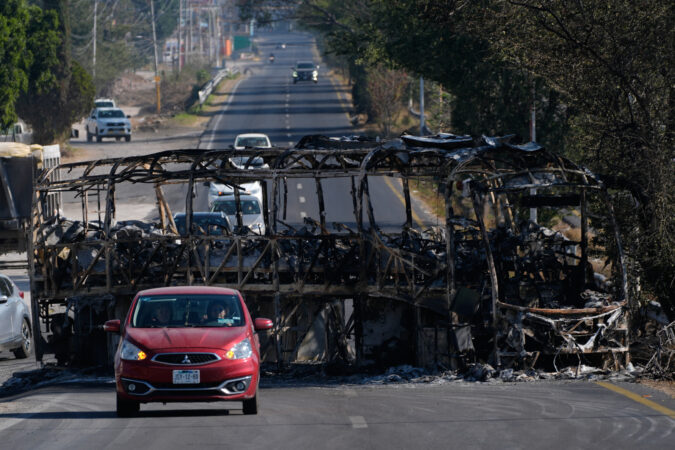
    Photographs taken in the immediate aftermath of Oseguera’s killing showed the burned-out wreckage of cars and buses blocking Guadalajara street junctions and entrances to businesses, with surrounding neighborhood streets largely empty after residents were warned to stay inside.

    In Puerto Vallarta, a vacation resort on Jalisco’s Pacific coast, footage verified by Reuters showed black smoke billowing over the city and burning vehicles blocking a highway underpass.

    Oseguera was Mexico’s most dominant cartel leader, expanding the Jalisco New Generation Cartel into a major power that took control of lucrative drug routes into the United States. The cartel, which traffics large quantities of fentanyl, cocaine, heroin, and methamphetamine across the U.S.-Mexico border, eventually eclipsed the rival Sinaloa Cartel as Mexico’s most powerful group.

    According to a statement from Mexico’s Defense Ministry, security forces had intended to detain Oseguera, but a shootout forced them to return fire.