The Supreme Court agreed Monday to take a case examining whether states and cities can sue fossil fuel companies over harms caused by climate change, a legal tactic modeled on the push to hold tobacco companies responsible for the health effects of smoking.
The case is significant because dozens of municipalities are seeking billions in damages against oil and gas companies, often accusing them of misleading the public or hiding evidence about the links between greenhouse gases and climate risks. The companies deny any wrongdoing.
The justices will hear an appeal by Suncor and ExxonMobil, which argue the city of Boulder’s legal action in state court is preempted by federal law. They say greenhouse gas emissions are inherently a federal issue because the pollution emanates from outside Colorado and drifts across state lines.
“Boulder, Colorado, cannot make energy policy for the entire country,” the companies wrote in a petition to the Supreme Court.
Boulder sued Suncor and ExxonMobil in 2018, alleging the company knowingly sold fossil fuels that would cause a range of harms in Colorado, including increased summer heat, more intense wildfires, and a greater concentration of ground-level ozone. The city sought to recoup damages for past and future harms. The companies denied the claims.
After complicated legal wrangling, the Colorado Supreme Court eventually ruled that federal law did not preempt Boulder’s lawsuit in state court and that the suit could move forward. The companies then appealed to the Supreme Court.
The Trump administration took the unusual step of asking the Supreme Court to take up the case, even though the federal government was not directly involved in it. Attorneys for Boulder urged against that.
“There is no constitutional bar to states addressing in-state harms caused by out-of-state conduct, be it the negligent design of an automobile or sale of asbestos,” attorneys wrote in filings.
The Supreme Courtlast yeardeclined to take asimilar case involvinga lawsuit by Honolulu seeking to hold fossil fuel companies responsible for climate change damage in Hawaii. The Biden administration had urged the court not to take it up at the time.
In 2023, the Supreme Court allowed lawsuits by a handful of municipalities seeking to hold businesses responsible for climate change.
The high court last month heard arguments in a related case in which a Louisiana community is attempting to preserve a $745 million jury verdict against Chevron and keep the case and similar cases in state court. The case could have consequences for how communities rectify environmental damage allegedly caused by oil companies.
In a major ruling in 2022, the Supreme Court curbed the ability of the Environmental Protection Agency to regulate greenhouse gases.
An Arizona State University vice provost and dean, who has degrees in mathematics and geography and has studied urban planning, will become Temple University’s next senior vice president and provost.
Elizabeth “Libby” A. Wentz, 62, an Ohio native with a doctorate from Pennsylvania State University, will step into her new role at Temple July 1, subject to approval by the board of trustees, the school announced Monday.
“My background in urban planning has kind of shaped who I am and shaped my thinking, and I just think that there’s so many great opportunities for recruiting students, for creating internships for students, for creating research experiences for students in an urban environment that the university’s rural counterparts don’t have in the same way,” Wentz said in an interview.
Wentz has overseen Arizona State’s Graduate College since 2020 and previously was dean of social sciences, which included geography and urban planning. She will replace David Boardman, who has been Temple’s interim provost since July when Gregory Mandel left the job. Boardman was not a candidate for the job and will continue his role as dean of the college of media and communication.
As Temple’s provost — essentially the university’s number two leader — she will oversee 17 schools and colleges, multiple campuses, and the school’s undergraduate, graduate, and professional programs.
She is the first provost in at least more than a decade to come from outside the university and was selected through a national search, chaired by a faculty member and a dean.
“Libby sort of stuck out for me after the hour I spent with her as being literally right on the same page relative to her ability to articulate the mission and the purpose of Temple and why that was so important,” Temple president John Fry said in an interview.
He was struck by her commitment to student success, he said. “She obviously had time to interact with students and, I think took like really special care and interest in our students,” he said.
And, Arizona State has grown tremendously in part because of its commitment to online programs, he said, which are a priority in Temple’s strategic plan. Temple has lost about a quarter of its enrollment over the last decade.
“We don’t have the kind of online enrollment that you would expect a place like Temple to have,” Fry said. “One of the things Libby and I did speak about was her familiarity with the ASU online infrastructure. She’s taught in it. She obviously has led parts of it.”
Temple remains amid searches for several other key positions, including chief operating officer and law and engineering school deans.
Wentz said she was attracted to Temple because she wanted to remain at an urban university and has long admired the work of Fry, who has had a longstanding relationship with Arizona State president Michael M. Crow. Temple a year ago became part of the University Innovation Alliance, a small nonprofit sponsored through Arizona State that is aimed at finding innovations to improve learning and increase college attendance, retention, and graduation rates ― especially for low-income students ― then scaling those innovations.
“They built a really strong rapport and have a very similar philosophy around higher education which also very much aligns with kind of my own interest and my own philosophy,” Wentz said.
Both Temple and Arizona State, which has its main campus in Tempe, are major research institutions; Arizona is much bigger with over 194,000 students, compared to Temple with more than 33,000, including its international campuses.
“Honestly the biggest difference [between the two] is the weather right now,” Wentz joked, noting that it was 81 and sunny in Tempe on Sunday as Philadelphia prepared for blizzard conditions.
Arizona State does not have a faculty union, so learning to work with Temple’s faculty union will be new.
“That’s going to be an exciting area for me to learn about,” she said.
Urban planning background
Fry has a reputation as an urban planner and in his prior leadership jobs at the University of Pennsylvania, Drexel, and Franklin and Marshall focused on development and improving the campuses and their neighborhoods. He has aspirations for Temple, too, including building an “innovation corridor” stretching from Temple’s recently acquired Terra Hall at Broad and Walnut Streets in Center City to the health campus, a little more than a mile north of main campus on Broad Street.
Wentz said she and Fry had not talked about urban planning, but that she looks forward to working on the university’s new strategic plan, which includes more green spaces, a new 1,000-bed residence hall, a STEM complex, and an emphasis on more attractive and defined entrances to its North Philadelphia main campus. The three pillars of the plan are student success, research in action, and place-based impact.
“Those are going to be some really exciting conversations that I look forward to having with John, as well as with the Temple planners to think about how do we make it a safe space for students and a great learning environment.” she said.
During a 2022 talk at Arizona State, Wentz discussed how urban planning figured into her work.
“Most of the work that I do applies to the urban environment and urban analytics, so trying to understand how it is that cities work and trying to make the physical urban environment a better place for people to live,” Wentz said during that talk.
Building trust and collaboration
In her new role at Temple, she said, early on she will focus on getting to know the community and the university’s financial model and make clear her commitment to shared governance and data-informed decision making.
Wentz, who grew up near Cleveland and got her bachelor’s in mathematics and master’s in geography at Ohio State University, spent the last 30 years at Arizona State. She became a professor there in 1997.
She helped the university launch its medical school and has grown graduate enrollment and graduate student funding.
Wentz said she prides herself on building a culture of trust and collaboration and has worked with the local community. She said she’s looking forward to doing the same at Temple.
She plans to come to Philadelphia in a couple weeks and look for a place to live, she said.
“I’m going to come after the snowstorm, I think, instead of before,” she said Sunday.
Sens. Jeanne Shaheen (D., N.H.) and Maggie Hassan (D., N.H.) introduced a bill Monday that would bar the Department of Homeland Security from opening new immigration detention centers without state and local officials’ consent.
The legislation is a response to the Trump administration’s plans to convert warehouses into new processing sites and detention centers across the countryas part of President Donald Trump’s campaign to deport millions of undocumented immigrants. Reps. Chris Pappas (D., N.H.) and Maggie Goodlander (D., N.H.) plan to introduce a companion bill in the House.
The legislationhas little chance of passing the Republican-controlled Congress, but it reflects the qualms that some lawmakers in both parties have expressed about the administration’s push to set up facilities in their states and districts, some of which could house as many as 10,000 people.
“Our new bill responds directly to the concerns we’ve heard from local officials in towns like Merrimack, New Hampshire, and across the country,” Shaheen said in a statement. “They were never consulted about ICE’s plans, and they don’t want the chaos of new detention facilities in their communities.”
Shaheen and Hassan are introducing the bill as Democrats demand the Trump administration agree to new restrictions on DHS after federal agents last month shot and killed two U.S. citizens in Minneapolis. Much of DHS shut down earlier this month after the two sides failed to strike a deal to send more money to the agency.
The bill would prohibit DHS from setting up new processing sites or detention centers unless local officials and the state’s governor sign off.
At least one governor — Pennsylvania Gov. Josh Shapiro (D) — has said he opposes the administration’s plans to set up a new detention center in his state.
“I don’t think this is helpful to have in our community,” Shapiro said this month. “I don’t want it here, and we’re exploring what options we have.”
The bill would also require the administration to notify Congress and to accept public comment for at least 60 days before setting up new detention centers or processing sites.
U.S. Immigration and Customs Enforcement has bought facilities in Maryland, Pennsylvania, New Jersey, Georgia, Michigan, Texas, and Arizona to detain undocumented immigrants, according to an ICE spokesperson. The administration undertook “community impact studies and a rigorous due diligence process to make sure there is no hardship on local utilities or infrastructure prior to purchase,” according to the spokesperson.
Republicans in Congress largely support Trump’s deportation campaign, which they argue is necessary after the arrival of millions of undocumented immigrants under the Biden administration. Republicans included $45 billion for expanding immigration detention in the tax and spending law that Trump signed last year. But some Republican lawmakers have expressed concerns about the administration’s plans to set up new detention centers and processing sites in their states and districts.
Sen. Roger Wicker (R., Miss.) relayed local officials’ concerns about a proposed facility in his state to Homeland Security Secretary Kristi L. Noem earlier this month. “I appreciate her for agreeing to look elsewhere,” Wicker wrote on X.
Rep. Dan Meuser (R., Pa.) said he is working to set up a meeting between DHS officials and local leaders in his district, where DHS bought two facilities that it plans to convert into a processing site and detention center.
“These recent developments have raised serious concerns, and I share many of the same questions being raised by local officials and residents,” Meuser said in a statement.
Sen. Dave McCormick (R., Pa.) said in a statement that his team was also in touch with DHS officials and local leaders to assess the impact of the facilities, including the possibility of thousands of new jobs. ICE estimates the two facilities together would create more than 11,000 jobs.
Rep. Mike Collins (R., Ga.) and his aides have been in frequent communication with ICE and local leaders about a planned detention center in his district that would hold up to 9,000 people, according to Emma Gibson, a Collins spokesperson. The district is a Republican stronghold, but the city manager of Social Circle — the small city where the detention center would open — and many residents oppose the project.
Collins supports Trump’s efforts “to detain and deport criminal illegal aliens who flooded across our border under Joe Biden, but he also shares the concerns of the Social Circle community that the city may not have the infrastructure or capacity to support the demands of this facility,” Gibson wrote in an email to the Washington Post.
Democrats appear to have had less success in pushing back on the administration’s plans to build new detention centers and processing sites. Hassan told Todd M. Lyons, the acting ICE director,in a hearing last week that DHS had failed to consult local leaders about its plans to open a facility in her state.
“I would hope that I would get the same treatment to that Senator Wicker got — which is to say the town doesn’t want the dentition center, so please cancel it,” Hassan said. “And I would expect that my partisan affiliation shouldn’t make any difference to that determination.”
Lyons said in the hearing that DHS officials had spoken with New Hampshire Gov. Kelly Ayotte (R) about the project’s economic impact. ICE did not say whether it plans to move forward with the facility.
Sen. John Fetterman of Pennsylvania — the only Senate Democrat who voted for legislation this month to fund DHS — has come out against the proposed facilities in his state, warning that they would “do significant damage to these local tax bases, set back decades-long efforts to boost economic development, and place undue burdens on limited existing infrastructure in these communities.”
Democrats from Georgia, New Jersey, and Arizona have also voiced concerns about proposed detention centers and processing sites.
Sens. Ruben Gallego and Mark Kelly, both Democrats of Arizona, wrote to Noem and Lyons this month seeking more information by Feb. 17 about DHS’ purchase of a warehouse in Surprise, Ariz., that it plans to turn into a processing site.
“Given the scale of this project, the total lack of community involvement, the concerns we have heard from local leaders, and the potential implications for the community and region, we urge the Department to immediately provide answers about this project before it moves forward,” Gallego and Kelly wrote.
The Democrats have not heard back from DHS, according to Kelly’s office.
WASHINGTON — A trio of Senate Democrats is calling for the government to start refunding roughly $175 billion in tariff revenues that the Supreme Court ruled were collected because of an illegal set of orders by President Donald Trump.
Sens. Ron Wyden of Oregon, Ed Markey of Massachusetts, and Jeanne Shaheen of New Hampshire unveiled a bill on Monday that would require U.S. Customs and Border Protection to issue refunds over the course of 180 days and pay interest on the refunded amount.
The measure would prioritize refunds to small businesses and encourages importers, wholesalers, and large companies to pass the refunds on to their customers.
“Trump’s illegal tax scheme has already done lasting damage to American families, small businesses, and manufacturers who have been hammered by wave after wave of new Trump tariffs,” said Wyden, stressing that the “crucial first step” to fixing the problem begins with “putting money back in the pockets of small businesses and manufacturers as soon as possible.”
The bill is unlikely to become law, but it reveals how Democrats are starting to apply public pressure on a Trump administration that has shown little interest in trying to return tariff revenues after the Supreme Court announced its 6-3 ruling on Friday.
Because of the ruling, going into November’s midterm elections for control of Congress, Democrats have begun telling the public that Trump illegally raised taxes and now refuses to repay the money to the American people.
Shaheen said that repairing any of the damage caused by the tariffs in the form of higher prices starts with “President Trump refunding the illegally collected tariff taxes that Americans were forced to pay.” Markey stressed that small business tend to have ”little to no resources” and a “refund process can be extremely difficult and time consuming” for companies.
The Trump administration has asserted that its hands are tied, because any refunds should be the responsibility of further litigation in court.
That message could put Republicans on the defensive as they try to explain why the government isn’t proactively seeking to return the money. GOP lawmakers had planned to try to preserve their House and Senate majorities by running on the income tax cuts that Trump signed into law last year, saying that tax refunds this year would help families.
Treasury Secretary Scott Bessent told CNN on Sunday that it’s “bad framing” to raise the question of refunds because the Supreme Court ruling did not address the issue. The administration’s position is that any refunds will be decided by lawsuits winding their way through the legal system, rather than by a president who has repeatedly stressed to voters that he has the ability to act with speed and resolve.
“It is not up to the administration — it is up to the lower court,” Bessent said, stressing that rather than offer any guidance he would “wait” for a court opinion on refunds.
Trump has defended his use of the 1977 International Emergency Economic Powers Act to impose broad tariffs on almost every U.S. trading partner, saying that his ability to levy taxes on imports had helped to end military conflicts, bring in new federal revenues, and apply pressure for negotiating trade frameworks.
The University of Pennsylvania’s Penn Wharton Budget Model released estimates that the refunds would total $175 billion. That’s the equivalent of an average of $1,300 per U.S. household. But determining how to structure reimbursements would be tricky, as the costs of the tariffs flowed through the economy in the form of customers paying the taxes directly as well as importers passing along the cost either indirectly or absorbing them.
The president has previously claimed that refunds would drive up U.S. government debt and hurt the economy. On Friday, he told reporters at a briefing that the refund process could be finished after he leaves the White House.
“I guess it has to get litigated for the next two years,” Trump said, later amending his timeline by saying: “We’ll end up being in court for the next five years.”
FBI Director Kash Patel is defending himself after videos showed him drinking and partying with the U.S. men’s hockey team at the Olympics on Sunday, during a weekend in which several emergencies unfolded for the law enforcement bureau.
As clips of Patel raucously celebrating with Team USA went viral Sunday night, Patel took to social media to say the men’s hockey team had invited him into the locker room to celebrate with them after it had clinched the gold medal in an overtime victory over Canada.
“For the very concerned media — yes, I love America and was extremely humbled when my friends, the newly minted Gold Medal winners on Team USA, invited me into the locker room to celebrate this historic moment with the boys — Greatest country on earth and greatest sport on earth,” Patel, an avid hockey fan, wrote on X.
In one video shared by a ProPublica reporter, Patel appears to be chugging a beer, spraying the bottle’s contents about the locker room, and ecstatically pumping his fists, as the team breaks out in a rendition of “Courtesy of the Red, White and Blue (The Angry American),” a country anthem about American defiance written after the 9/11 terrorist attacks.
Another video showed Patel flashing a shaka, or “hang ten,” sign next to team center Dylan Larkin as both mug for the camera. In yet another video — reshared by an FBI spokesperson — Patel holds a phone out as President Donald Trump, apparently on speakerphone, invites the team to the White House and says he will also have to invite the gold-medal-winning U.S. women’s hockey team or “be impeached.”
“I’m on it,” Patel tells Trump. “I’m f—ing on it.”
On Monday, NBC News reported that the U.S. women’s hockey team said it was declining Trump’s invitation.
“We are sincerely grateful for the invitation extended to our gold medal–winning U.S. Women’s Hockey Team and deeply appreciate the recognition of their extraordinary achievement,” a USA Hockey spokesperson said. “Due to the timing and previously scheduled academic and professional commitments following the Games, the athletes are unable to participate.”
“They were honored to be included and are grateful for the acknowledgment,” the spokesperson added.
The White House did not immediately respond to a request for comment.
The locker room videos prompted public criticism of Patel and questions about his judgment during a critical time for the bureau. Hours earlier, an armed man was fatally shot by U.S. Secret Service agents and a sheriff’s deputy after he breached the secure perimeter of Trump’s Mar-a-Lago estate. Patel had promised from his official X account that the FBI, the lead agency investigating the incident, was “dedicating all necessary resources” to the matter.
The FBI is also still involved in a high-profile search for Nancy Guthrie, the mother of Today show anchor Savannah Guthrie, who remains missing after more than three weeks. U.S. intelligence agencies also warned American citizens in Mexico to shelter in place amid a wave of violence across that country after “El Mencho,” the head of the Jalisco New Generation Cartel, was killed by Mexican security forces Sunday.
“There was a threat at the president’s residence at MAL, Americans in Mexico are facing major threats by cartel members, Nancy Guthrie is still missing, and our FBI Director thinks he’s a frat bro?!” Xochitl Hinojosa, a former Justice Department spokesperson under the Biden administration, wrote on X.
Several others resurfaced a clip of Patel in 2023 criticizing then-FBI Director Christopher A. Wray for using a government jet for personal travel.
“Maybe we ground that plane. [Or charge him] $15,000 every time it takes off. Just a thought,” Patel said then.
FBI representatives have steadfastly defended Patel’s trip to Italy and denied he used the FBI’s taxpayer-funded Gulfstream jet for personal travel, for which Democrats have investigated him in the past. In the days leading up to the Olympics men’s hockey final, FBI spokesperson Ben Williamson clashed with several news outlets that had reported Patel had used the government jet to fly to Italy with plans to attend hockey games at the Olympics.
Williamson said Thursday on X that Patel’s trip had been planned months ago and would include meetings with Italian law enforcement and other security officials.
“The FBI also has a major role in Olympic security … so we have a U.S. consulate briefing on Olympic security and current FBI posture, as well as thanking FBI personnel on the ground,” Williamson added then.
Williamson also said “any personal portion [of the trip] would be reimbursed,” according to an email to MS NOW that he posted Sunday.
Representatives for the FBI did not immediately respond for a request for additional comment Monday morning, as well as questions about whether Patel’s attendance at Olympic events would be considered personal travel and, if so, how much Patel would reimburse the bureau.
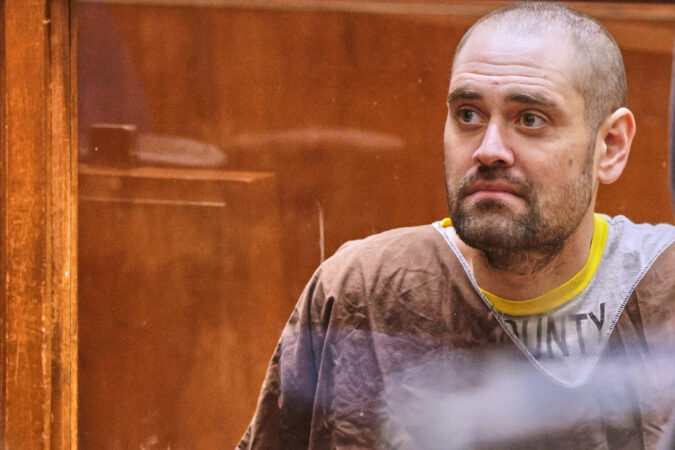
LOS ANGELES — Nick Reiner, the 32-year-old son of Hollywood luminary Rob Reiner and Michele Singer Reiner, pleaded not guilty Monday to two counts of first-degree murder more than two months after their deaths, denying for the first time that he fatally stabbed his parents.
Reiner’s attorney, Deputy Public Defender Kimberly Greene, entered the plea on his behalf as he stood behind glass in an enclosed custody area of the packed Los Angeles courtroom.
The third of Rob Reiner’s four children, Nick Reiner has been held without bail since his arrest hours after beloved actor-director Reiner and photographer and producer Singer were found dead on Dec. 14 at their home in the upscale Brentwood section of Los Angeles.
Reiner appeared in court with a shaved head and light facial hair, wearing brown jail clothes. He talked to his lawyer briefly through the glass before the judge began the hearing. At one point a low door in the enclosure was opened and they crouched down and spoke face-to-face. During the hearing, he spoke only to answer “yes” when the judge asked if he waived his right for next steps of the case to proceed speedily.
Reiner was not wearing the suicide prevention smock he wore in his first court appearance in December days after his parent’s killings. It was the third time he had been set to enter a plea, but issues surrounding the high-stakes, closely watched case, including a surprising change in defense lawyers, kept it from happening until Monday.
The judge told Reiner to return to court April 29 for the scheduling of a preliminary hearing where prosecutors will present evidence and a new judge will decide if it’s enough for Reiner to go to trial.
The case will now be handled by longtime Los Angeles Superior Court Judge Sam Ohta. He has had many prominent murder, manslaughter, and public corruption cases in his courtroom in recent years, but none have drawn the national media attention this case has.
District Attorney Nathan Hochman said outside court that his office still hasn’t decided whether it will seek the death penalty for Reiner. Hochman said the death penalty decision “goes through a very rigorous process. We will be looking at all aggravating and mitigating circumstances.”
Reiner’s not guilty plea is common for criminal defendants at this stage of the case, whatever their longer-term plan might be.
Reiner’s former attorney, the high-profile private lawyer Alan Jackson, had to quit the case at the previous hearing, citing reasons beyond his and his client’s control that ethics wouldn’t let him reveal. But in parting, he adamantly declared that “pursuant to the laws of California, Nick Reiner is not guilty of murder,” a stance made official by Reiner’s plea Monday.
Authorities have said nothing about possible motives, and leaks in the case have been virtually nonexistent on both sides, leaving some of the most basic questions about the killing unanswered publicly.
Rob Reiner, 78, and Michele Singer Reiner, 70, died from “multiple sharp force injuries,” the LA County Medical Examiner said in initial findings. Authorities said they were killed hours before the bodies were discovered. A court order has prevented the public release of more details.
Deputy District Attorney Habib Balian said Monday that his office is still awaiting the full autopsy report from the medical examiner, but all other evidence has been turned over to the defense.
Rob Reiner was a prolific director whose work included some of the most memorable and endlessly watchable movies of the 1980s and ’90s. His credits included This is Spinal Tap, Stand By Me, A Few Good Men, and When Harry Met Sally… , during whose production he met photographer Michele Singer and married her soon after.
A federal judge in Florida blocked public release of special counsel Jack Smith’s extensive report on the classified-documents case against President Donald Trump — a resounding victory for Trump’s efforts to block public viewing of what probably would be damaging details about his retention of classified materials after he left the White House in 2021.
The decision Monday morning from U.S. District Judge Aileen M. Cannon resulted from litigation that has dragged on for more than a year in her courtroom. Cannon ruled that releasing the special counsel report could violate grand jury secrecy rules and could result in impugning the presumption of innocence for Trump and his co-defendants in a case that did not result in guilty verdicts.
The ruling can be appealed. Although Trump and the Justice Department both opposed the public release of the report, First Amendment advocacy groups and media outlets pushed in Cannon’s court for release.
Smith charged Trump in 2023 with 40 counts of illegally retaining classified defense information and obstructing government efforts to retrieve the materials. Two of Trump’s personal aides were charged with obstruction alongside him.
Cannon dismissed those charges in a decision that broke with legal precedent, ruling that Smith was unlawfully appointed and therefore had no authority to bring charges. Her decision did not touch on the merits of the case, which Trump aides at the time believed was the strongest of the criminal cases against Trump that were brought during the Biden administration.
Smith appealed the ruling but dropped the appeal after Trump won the 2024 presidential election, citing federal regulations that say a sitting president cannot be prosecuted.
In her Monday ruling, Cannon lambasted Smith for compiling the report even though she dismissed the charges in 2024. Using the discovery in the case to complete the report amounted to circumventing her ruling, she said.
In the final days before Trump took office, Smith submitted the final report to then-Attorney General Merrick Garland. Garland did not push to release it because, at the time, an appeal of Cannon’s dismissal order was still pending as the Justice Department tried to resurrect the case against Trump’s two co-defendants.
“To say this chronology represents, at a minimum, a concerning breach of the spirit of the Dismissal Order is an understatement, if not an outright violation of it,” Cannon wrote.
“The Court need not countenance this brazen stratagem or effectively perpetuate the Special Counsel’s breach of this Court’s own order,” she continued.
Garland made public the first volume of Smith’s report, which detailed the case that prosecutors built against Trump over his alleged attempts to obstruct the 2020 election results. For 137 pages, Smith detailed the incriminating evidence he says he collected against Trump over his two-year investigation and said he was confident that he had ample evidence to obtain a conviction in court.
That case also never made it to trial, with the Justice Department asking a judge to dismiss it in the final weeks before Trump took office for his second term.
The second volume of the special counsel report was expected to similarly detail the incriminating evidence Smith collected against Trump and reveal what would have been the special counsel’s strategy at court.
Prosecutors already said that some of the documents found in the FBI search of Mar-a-Lago, Trump’s Florida home and private club, contained information about top-secret U.S. operations so closely guarded that many senior national security officials were kept in the dark about them.
Trump and his attorneys first asked Cannon to block the release of the report before he was inaugurated for his second term. Cannon temporarily blocked the release on Jan. 7, 2025 — about two weeks before Trump took office.
Once Trump regained the presidency, the Justice Department said it opposed releasing the report. Trump, in his personal capacity, also filed requests in Cannon’s court to block the release.
Smith has testified to Congress in recent months about his cases against Trump. He has said that he is limited in what he can reveal, in part because of Cannon’s prohibition on releasing the report.
It is common practice for special counsels to release reports even if their investigations do not result in guilty verdicts.
Special counsel Robert K. Hur, for example, released a report in 2024 detailing his investigation into whether President Joe Biden unlawfully retained classified materials after his vice presidency. The damaging report explained why Hur opted against charging Biden.
Cannon attempted to differentiate the release of Smith’s report from other cases, saying that there was no precedent for releasing a report in a case in which the charges have been dismissed and the defendants maintain their innocence.
Trump’s request to dismiss the case on the grounds that Smith was unlawfully appointed was considered a long shot when he filed it, and Cannon’s ruling was unexpected and unusual.
“The Court strains to find a situation in which a former special counsel has released a report after initiating criminal charges that did not result in a finding of guilt, at least not in a situation like this one, where the defendants contested the charges from the outset and still proclaim their innocence,” Cannon wrote.
Pennsylvania State University’s THON dance marathon raised a record $18.8 million to fight pediatric cancer, organizers announced Sunday at the conclusion of the annual event.
The 46-hour dance marathon, which has been going on for more than 50 years at the state’s flagship university, began 6 p.m. Friday inside Penn State’s Bryce Jordan Center on the main University Park campus and finished 4 p.m. Sunday. More than 700 dancers competed.
The money raised goes toward Four Diamonds charity, which supports research for a cure and families whose children get treatment at Penn State Health Children’s Hospital.
“While we are incredibly proud of this record-breaking total, the true success of THON is found in the thousands of Penn State students who came together with a singular purpose,” Benjamin Roitman, THON executive director, said in a statement “This milestone is a direct reflection of the tireless effort and collective spirit of our community who, embodied the ‘Love Leads Forward’ theme, proved that there is no limit to what we can achieve when we stand together for the common cause of conquering childhood cancer.”
More than 16,500 student volunteers participated in THON, which along with Four Diamonds has helped more than 4,800 children through the years, the organization said.
UPPER BERN, Pa. — Not enough clean water. Hundreds of thousands of gallons of sewage dumped into systems designed to handle much less. More calls for already overwhelmed EMS departments.
Pennsylvania leaders, municipal officials, and first responders say communities will be overwhelmed by the federal government’s plans to turn vacant warehouses in Berks and Schuylkill Counties into massive ICE detention centers and processing facilities.
A recently released memo from the Department of Homeland Security (DHS) says it selected sites based on engineering reviews and found a warehouse-to-detention center conversion would have “no detrimental effect.”
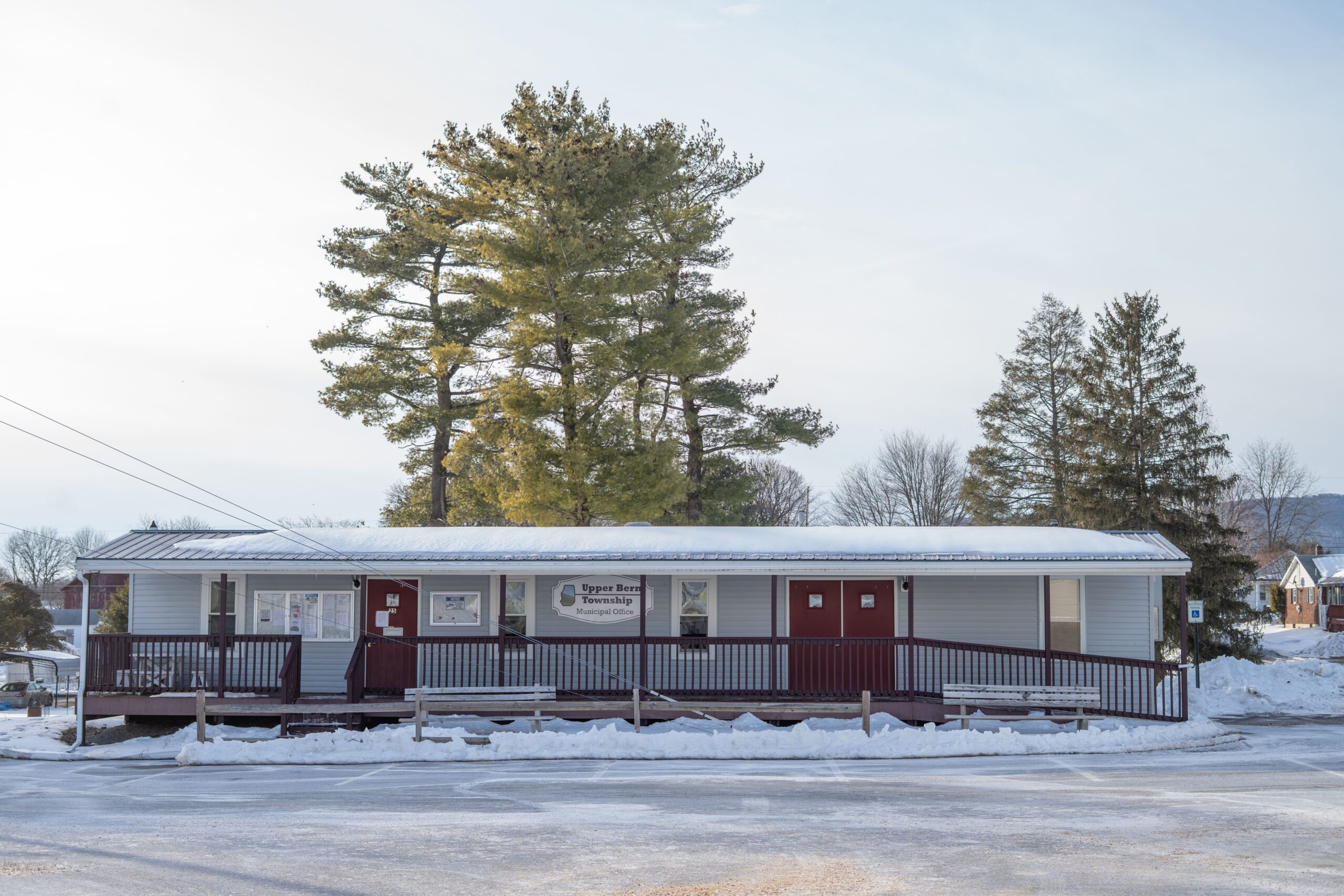
But state officials and Upper Bern Township leaders — who were blindsided by the Feb. 2 purchase and are still largely operating in the dark — are pointing to facts about capacity and raising serious concerns about how these plans would play out.
Commonwealth leaders in emergency management, environmental protection, health, and labor cosigned a Feb. 12 letter to Homeland Security Secretary Kristi Noem asking that the department not “impose such intolerable burdens on residents of Schuylkill and Berks counties.”
“If reporting about DHS’s plans is accurate, the facilities will violate the legal requirements applicable to public drinking water, sewage, and water pollution,” the state officials wrote.
They continued: “The stress each facility will place on local infrastructure will, among other things, jeopardize Pennsylvanians’ access to safe water, deplete resources and infrastructure needed for emergencies, and overextend already strained emergency response personnel.”
The federal government has provided few specifics on the impacts Immigration and Customs Enforcement’s plans could have on these rural communities. A meeting among federal, state, and local officials has yet to materialize.
Upper Bern Township’s Board of Supervisors, who have spoken publicly through solicitor Andrew Hoffman, said in a prepared statement on Feb. 12 that ICE’s plans at the vacant warehouse would “more than double” Upper Bern’s population.
Its wastewater treatment plant could be overwhelmed by a 1,500-bed facility, and supervisors wonder what extracting “potable water from wells for those 1,500 or more people” could do to the water supply.
Here’s what we know about the potential impact on the community:
A view from the Upper Bern Township building near Shartlesville, Pa., on Feb. 9.
Sewage
When the Department of Environmental Protection (DEP) signed off on the plan to build the Hamburg Logistics Center several years ago, documents show the agency approved the warehouse to produce 8,000 gallons of sewage daily.
If it’s used as an ICE processing center and holds up to 1,500 people, that number would skyrocket to more than 100,00 gallons per day, officials said in their letter to Noem.
Upper Bern’s “maximum monthly flow from serving its current customers is 131,000 gallons per day,” they continued. And its treatment plant is designed to only treat up to 155,000 gallons daily.
Upper Bern renewed its wastewater permit with DEP in January 2024, indicating that the township was not modifying or adding onto the system. The average monthly flow reported during that renewal was 78,000 gallons per day.
Township sewer engineer John Roche said no one has submitted a formal request to change the use or increase sewer capacity at the warehouse.
“If the use changes, we’d have to look at that on an individual basis,” Roche told Spotlight PA after a supervisors’ meeting on Feb. 12. “We haven’t had any new requests yet.”
Neither Roche nor Upper Bern’s solicitor was available for comment for this story.
The former Big Lots warehouse in Schuylkill County, which ICE wants to turn into a detention center for 7,500 people, has a system approved to discharge even less than the one in Upper Bern — no more than 6,000 gallons per day, according to the letter. The system is also connected to the treatment facility by a 2-inch diameter pipe, which state officials told Noem isn’t suitable for a detention center.
Drinking water
Neither warehouse was designed to provide the amount of potable water that would be needed to run these detention centers, state officials warn, and finding alternatives would be all but impossible.
Upper Bern officials said the township has no public water system. Homes and businesses rely on wells for potable water.
In the letter to Noem, state officials wrote that the vacant warehouse is designed to draw water from an on-site water well. The Department of Environmental Protection (DEP) previously approved the construction of such a system, “because it could provide treated water for use by a limited number of employees engaged in warehouse activities based on three anticipated separate shifts in a 24-hour period.”
However, the agency hasn’t approved the operation of the system. What’s more, it’s not designed to provide drinking water 24 hours a day for some 1,500 people, they wrote.
During an April 2025 inspection, DEP officials also found several deficiencies that suggest the drinking water system “was not constructed in accordance with the approved designs.”
The Tremont Township warehouse is even more strained, the letter said. While it is serviced by the Schuylkill County Municipal Authority’s public water system, that system already struggles to provide adequate services to the community.
State officials estimate a 7,500-bed facility would need up to 800,000 gallons of safe water per day, which is nearly all of the available 1 million gallons stored for the Tremont area. The plant is permitted to only treat 330,000 gallons daily by the Susquehanna River Basin Commission.
That not only threatens access to safe drinking water, but could also “lead to calamity in the event of an emergency,” state department heads warned. For example, the same water supply is used for fighting fires, and the current systems may not have the supply or the water pressure needed to extinguish a blaze.
Emergency services
Communities across Pennsylvania are already experiencing an EMS crisis. Adding high-density facilities to the rural communities of Upper Bern and Tremont Townships — populations 1,600 and 300, respectively — will exacerbate those problems, local first responders told Spotlight PA.
Hamburg EMS has served Upper Bern Township for years, Chief Leslie Herring told Spotlight PA. While there are still many unknowns, she said first responders worry about how the ICE processing facility would impact their call volumes and response times.
“We’re just concerned because it’s not only going to affect us, it’s going to affect every other neighboring squad in the county,” Herring said. “We’re worried about what it’s going to do to all the surrounding municipalities and boroughs.”
Berks County officials declined to discuss the impact on emergency services. Emergency Services Director Brian Gottschall referred a Spotlight PA reporter to county spokesperson Jonathan Heintzman. Heintzman later declined to comment after consulting with the county commissioners and solicitor.
Scott Krater, director of Schuylkill County’s 911 center, is responsible for dispatching EMS, police, and fire personnel throughout the county, and noted the challenges these sectors already have. He said attracting 911 call operators is difficult.
Schuylkill County already has three prisons — run by the county, state, and federal governments — but none house the number of people anticipated for the empty warehouse. The county prison typically incarcerates fewer than 300 people, and both the federal and state prisons have about 1,200 inmates each.
“Those normal challenges that we have here would obviously be the same, or maybe more taxing on the telecommunicators that are working currently with the increase in call volume,” Krater told Spotlight PA.
Western Berks Ambulance Association provides mutual aid for Upper Bern Township and is the second in line to respond to emergencies, CEO Anthony Tucci said.
Tucci reached out to other EMS companies and DHS to learn more and better prepare, but said he hasn’t heard back. He estimates an ICE facility could add an additional 60 to 70 EMS calls a month.
“I think it’s going to be a huge impact on our community,” Tucci said.
Fire departments operate on a similar system of mutual aid and could also experience an increase in emergency calls, state leaders wrote in their letter to Noem.
While Tremont is serviced by five fire departments, Upper Bern is protected by just one: Shartlesville Fire Company, which is staffed by volunteers. It’s unclear how many calls the department averages monthly. Calls and emails to the fire company were not returned.
DHS has also failed to engage with area hospitals that would serve the ICE facilities, the Pennsylvania agency leaders said in their letter, which they called disconcerting. Hospitals need to plan for disasters, such as a fire at these buildings, that would cause an influx in patients.
“Area hospitals may not have the capacity to prepare for these emergency events without support and the lack of communication from federal officials raises serious concerns,” the state leaders wrote.
Reading Hospital and Penn State Health St. Joseph in Berks County did not immediately respond to Spotlight PA’s questions, nor did St. Luke’s Hospital or Lehigh Valley Hospital in Schuylkill County.
The Hospital and Healthsystem Association of Pennsylvania, which represents more than 235 providers across the state, was unable to say whether DHS has contacted local hospitals.
“Hospitals continuously update their plans — especially when there is a major change in the community — to ensure they are prepared to respond to emergencies and address their communities’ needs,” the association said in an emailed response to Spotlight PA questions. “Strong collaboration with local leaders, state and federal agencies, and other stakeholders is an important part of this process.”
Public safety
Neighbors have questioned how the proposed processing center would affect public safety.
Chelsey and Zach Kramer, who live in a mobile home community across the road from the warehouse, came to Upper Bern Township’s Board of Supervisors meeting on Feb. 12 to oppose ICE’s purchase of the warehouse.
They said they are worried about guns and security presence at the site, road closures, and not being able to access their home.
“Are we going to have to be showing ID to get home? Are they going to be blocking off our roads?” Chelsey Kramer told Spotlight PA.
The Kramers said they also worry about how a detention facility could impact recreational and family-friendly spaces near their home.
“When they were looking at these facilities, who at DHS looked at the campground and the mobile home community and the game lands and public trails and everything, and the community park right here, and said: ‘Let’s put one right there,’” Zach Kramer said. “The campground is going to go under for one, because who’s going to want to go vacationing near a detention facility? I know most of my neighbors are upset about this.”
The Berks County township doesn’t have its own police department, and State Police are responsible for coverage. Cars already back up at the major thoroughfares near Mountain Road during shift changes at nearby warehouses, local first responders told Spotlight PA.
Some speakers during the Feb. 12 meeting said they are worried about protesters and “agitators” coming to the area, and ensuring that people can exercise their rights to protest.
State Police “remain committed to providing the best law enforcement coverage with the utmost professionalism,” agency spokesperson Ethan Brownback told Spotlight PA in a statement, adding that their dedication to the area “remains unchanged.”
Property taxes
The $87.4 million sale of the Upper Bern warehouse to the federal government takes the sprawling property — located near the Appalachian Trail — off the tax rolls.
Since the warehouse was built and placed on the market, the property has remained vacant while generating about $199,620 annually in county property taxes, $31,229 in township taxes, and $597,110 for the Hamburg Area School District.
The township did not respond to Spotlight PA’s questions about how that revenue loss would affect the community’s annual budget.
“They’re losing $600,000 a year on school property taxes, and that’s important,” county Commissioner Dante Santoni Jr. said during a Feb. 11 town hall. “The most important thing is what it does to our communities, and we’ve seen what it’s done around this country. It tears us apart, it pits people against each other, and creates chaos.”
Spotlight PA’s Gabriela Martínez contributed to this article.
BEFORE YOU GO … If you learned something from this article, pay it forward and contribute to Spotlight PA at spotlightpa.org/donate. Spotlight PA is funded by foundations and readers like you who are committed to accountability journalism that gets results.
GUADALAJARA, Mexico — Mexico Security Secretary Omar García Harfuch said Monday 25 members of the National Guard were left dead in Jalisco in six separate attacks after the killing of Jalisco New Generation Cartel leader Nemesio Oseguera Cervantes.
Oseguera Cervantes, known as “El Mencho” was the boss of one of the fastest-growing criminal networks in Mexico, notorious for trafficking fentanyl, methamphetamine and cocaine to the United States and staging brazen attacks against government officials who challenged it.
He was killed during a shoot-out in his home state of Jalisco as the Mexican military attempted to capture him. Cartel members responded with violence across the country, blocking roads and setting fire to vehicles.
Also killed were a prison guard, an agent from the state prosecutor’s office and a woman whom García Harfuch did not identify. He also said some 30 criminal suspects were killed in Jalisco and four others were killed in Michoacan.
Several Mexican states canceled school on Monday, with local and foreign governments warning their citizens to stay inside after widespread violence erupted.
President Claudia Sheinbaum urged calm Monday and authorities said all of the more than 250 cartel roadblocks across 20 states had been cleared. The president was expected to address the situation at her daily news briefing Monday morning.
The White House confirmed that the U.S. provided intelligence support to the operation to capture the cartel leader and applauded Mexico’s army for taking down a man who was one of the most wanted criminals in both countries.
Mexico hoped the death of the world’s biggest fentanyl traffickers would ease Trump administration pressure to do more against the cartels, but many remained hunkered down and on edge as they waited to see the powerful cartel’s reaction.
Many fear more violence
The U.S. Embassy said via X that its personnel in eight cities and the state of Michoacan would shelter in place and work remotely Monday and it warned U.S. citizens in many parts of Mexico to do the same.
Cars began circulating in Guadalajara before sunrise Monday with the start of the work week, a notable change from Sunday when Jalisco’s state capital and Mexico’s second-largest city was almost completely shut down as fearful residents stayed home.
More than 1,000 people were stuck in Guadalajara’s zoo overnight, sleeping in buses. On Monday morning. mothers wrapped up in blankets carried their toddlers out of the buses for a much-needed bathroom break as police trucks guarded the area.
Luis Soto Rendón, the zoo’s director, said many had been trapped there since 9 a.m. the day before, when violence broke out in Jalisco and the surrounding states. Families were left stranded, trying to distract their children, as they decided they couldn’t return home in nearby states like Zacatecas and Michoacan.
“We decided to let people stay inside the zoo for their safety,” Soto said. “There are small children and senior citizens.”
Irma Hernández, a 43-year-old hotel security guard in Guadalajara, arrived at work early Monday morning.
She normally takes public transportation to work, but buses were not running and she had no way to cross the city. Her bosses organized a private car to pick her up. Her family, she said, was staying at home, too scared to leave.
“I am worried because I don’t know how to get home if something happens,” she said.
Passengers arriving at the city’s international airport Sunday night were told it was operating with limited personnel because of the burst of violence.
Authorities in Jalisco, Michoacan and Guanajuato reported at least 14 other people killed Sunday, including seven National Guard troops.
Videos circulating on social media Sunday showed tourists in Puerto Vallarta walking on the beach with smoke rising in the distance.
A blow against a cartel could be a diplomatic coup
David Mora, Mexico analyst for International Crisis Group, said the capture and outburst of violence marks a point of inflection in Sheinbaum’s push to crack down on cartels and relieve U.S. pressures.
U.S. President Donald Trump has demanded Mexico do more to fight the smuggling of the often-deadly drug fentanyl, threatening to impose more tariffs or take unilateral military action if the country does not show results.
There were early signs that Mexico’s efforts were well received by the United States.
U.S. Ambassador Ron Johnson recognized the success of the Mexican armed forces and their sacrifice in a statement late Sunday. He added that “under the leadership of President Trump and President Sheinbaum, bilateral cooperation has reached unprecedented levels.”
But it may also pave the way for more violence as rival criminal groups take advantage of the blow dealt to the CJNG, Mora said.
“This might be a moment in which those other groups see that the cartel is weakened and want to seize the opportunity for them to expand control and to gain control over Cartel Jalisco in those states,” he said.
“Ever since President Sheinbaum has been in power, the army has been way more confrontational, combative against criminal groups in Mexico,” Mora said. “This is signaling to the U.S. that if we keep cooperating, sharing intelligence, Mexico can do it. We don’t need U.S. troops on Mexican soil.”
‘El Mencho’ was a major target
Oseguera Cervantes, who was wounded in the operation to capture him Sunday in Tapalpa, Jalisco, about a two-hour drive southwest of Guadalajara, died while being flown to Mexico City, the Defense Department said in a statement.
During the operation, troops came under fire and killed four people at the location. Three more people, including Oseguera Cervantes, were wounded and later died, the statement said.
White House press secretary Karoline Leavitt said via X that the U.S. government provided intelligence support for the operation. “‘El Mencho’ was a top target for the Mexican and United States government as one of the top traffickers of fentanyl into our homeland,” she wrote. She commended Mexico’s military for its work.
The U.S. State Department had offered a reward of up to $15 million for information leading to the arrest of El Mencho. The Jalisco New Generation Cartel is one of the most powerful and fastest-growing criminal organizations in Mexico and began operating around 2009.
In February 2025, the Trump administration designated the cartel as a foreign terrorist organization.
Sheinbaum has criticized the “kingpin” strategy of previous administrations that took out cartel leaders, only to trigger explosions of violence as cartels fractured. While she has remained popular in Mexico, security is a persistent concern and since U.S. President Donald Trump took office a year ago, she has been under tremendous pressure to show results against drug trafficking.
The Jalisco cartel has been one of the most aggressive cartels in its attacks on the military — including on helicopters — and is a pioneer in launching explosives from drones and installing mines. In 2020, it carried out a spectacular assassination attempt with grenades and high-powered rifles in the heart of Mexico City against the then head of the capital’s police force and now federal security secretary.