Category: News

Latest breaking news and updates

  • Savannah Guthrie says her family is offering a $1 million reward for her mother Nancy’s recovery

    Savannah Guthrie says her family is offering a $1 million reward for her mother Nancy’s recovery

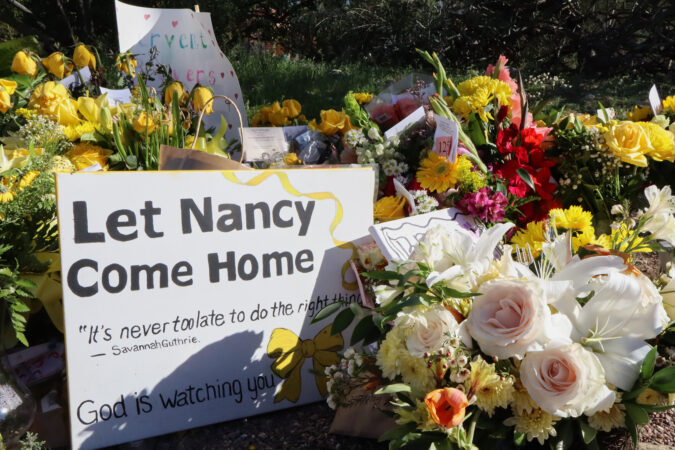
    Today show host Savannah Guthrie said her family is now offering a $1 million reward for information leading to the recovery of her mother, Nancy Guthrie, who went missing from her Arizona home more than three weeks ago.

    Savannah Guthrie said Tuesday that her family is still holding out for a miracle and hopes her mother will be found alive, but she also acknowledged that they realize it might be too late.

    “She may already be gone,” Savannah Guthrie said in an Instagram post. “She may already have gone home to the Lord that she loves and is dancing in heaven.”

    Nancy Guthrie, 84, was last seen at her home just outside Tucson, Ariz., on Jan. 31 and was reported missing the next day. Authorities believe she was kidnapped, and the FBI released surveillance videos of a masked man who was outside Guthrie’s front door on the night she vanished.

    Drops of her blood were found on the front porch, but authorities haven’t publicly revealed much evidence. Since the first days of her disappearance, authorities have expressed concern about Nancy Guthrie’s health because she needs vital daily medicine.

    Savannah Guthrie said her family needs to know where her mother is no matter what happened.

    “Someone out there knows something that can bring her home,” she said.

    Several hundred people are working the Guthrie investigation, and more than 20,000 tips have been received, the Pima County Sheriff’s Office has said. The FBI and other agencies are assisting.

    The porch camera footage released two weeks ago, which showed a man wearing a backpack and gloves outside Nancy Guthrie’s house, gave investigators their first major break. But it also has fueled intense speculation.

    The sheriff’s department said Monday that it’s aware of differences in the masked person’s clothing depicted in various images that were released, namely with and without a backpack.

    “There is no date or time stamp associated with these images,” the department said. “Therefore, any suggestion that the photographs were taken on different days is purely speculative.”

    Sheriff Chris Nanos said a week ago that members of Guthrie’s family, including siblings and spouses, are not suspects.

    Savannah Guthrie said Tuesday that her family also will donate $500,000 to the National Center for Missing and Exploited Children.

    “We are hoping that the attention that has been given to our mom and our family will extend to all the families like ours,” she said.

  • Philly trash pickup starts Wednesday, on a two-day delay. Here’s when your trash will get collected.

    Philly trash pickup starts Wednesday, on a two-day delay. Here’s when your trash will get collected.

    As sanitation crews finish clearing the 14 inches of snow that blanketed Philadelphia during this week’s near-blizzard, more workers can now be diverted back to trash pickup.

    Trash and recycling collections will resume Wednesday on a two-day delayed schedule, meaning households with Monday pickups will get their trash collected Wednesday. Tuesday trash pickups will be on Thursday, Wednesday pickups on Friday, Thursday pickups on Saturday, and households with Friday pickups will have trash collected on Sunday.

    Due to the modified schedule, there will be no second trash collection for neighborhoods that regularly receive it, and no collections in rear driveways for the rest of the week. With significant snow accumulation, the Streets Department said the measures would help mitigate the risk of sanitation trucks getting stuck in snow.

    Expect collection delays as crews navigate through the snow and ice, and inaccessible streets may experience additional delays of trash pick up, according to the Streets Department.

    Residents who cannot wait for delayed trash collection or do not receive collections due to unplowed streets can use one of the six sanitation convenience centers. Open Monday through Saturday, from 8 a.m. to 6 p.m., residents can drop off trash and recycling at these locations.

    Sanitation convenience centers in Philadelphia

    • Northeast Philadelphia: 8401 State Rd., zip code 19136
    • Northwest Philadelphia: 320 Domino Ln., zip code 19128
    • Port Richmond: 3901 Delaware Ave., zip code 19137
    • Southwest Philadelphia: 3033 S 63rd St., zip code 19153
    • Strawberry Mansion: 2601 W Glenwood Ave., zip code 19121
    • West Philadelphia: 5100 Grays Ave., zip code 19143
  • A deteriorating West Goshen house is at the center of a preservation fight

    A deteriorating West Goshen house is at the center of a preservation fight

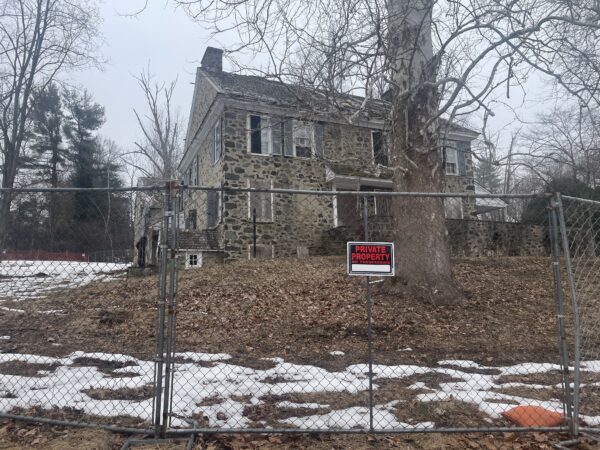
    Posts online beckoned urban explorers to creep through a century-old West Goshen home that has sat empty and deteriorating for more than two decades. Police have frequented the property — responding to sounds of gunshots, or finding the doors open, but halting their searches, worried the floor might collapse.

    The once-impressive three-story fieldstone house, with its private bridge and stonemason barn, has become something of an “attractive nuisance,” as a court document says, and a safety threat as it deteriorates.

    After the township intervened, the future of the privately owned property at 905 Westtown Rd. is now in the hands of a judge, who will weigh whether the property can be restored or if it ought to be demolished.

    But a group of residents fear losing the house, even in its much-diminished state, and have launched an effort to save the property. The hope is to halt possible development and instead turn it into a heritage center that would educate visitors on Chester County’s Quaker history and its roots to the Underground Railroad.

    It’s one example of a broader push and pull in Chester County, where residents want to preserve open space and history, and hold off development. But with privately owned land, especially land that is not protected for being historic, municipal officials can only do so much.

    “It’s a beautiful place. When you spend some time there, it’s like a window through time,” said Stephen Lyons, who is leading the preservation group Save Forsythe Farm, an unofficial name for the property derived from John Forsythe, who lived from 1754 to 1840, eventually owning the land and helping establish Westtown School.

    “It has a spirit of beauty,” he said.

    After sitting vacant for 20 years, the house has rotted from the inside

    The home was built more than a century ago — a structural engineer’s report puts it at 1900, a datestone on the property indicates 1818, and others suggest it may be older.

    The property, purchased by Joseph Kravitz in 2003, has descended into disrepair in the last two decades. Kravitz was found to have violated property maintenance codes in recent years. The property went into foreclosure and was listed for sheriff’s sale several times.

    But in September, with the property still owned by Kravitz, West Goshen officials submitted a 350-page petition to Chester County Court seeking conservatorship, arguing the house was neglected and in need of substantial rehabilitation.

    A judge approved the petition in November and appointed BDP Impact Real Estate as the conservator, which was tasked with creating a plan for abatement. Its final report will be heard in court on March 16, and the judge will determine what path should be followed. To retain ownership, Kravitz can reimburse the conservator and pay a fee, township officials said.

    Kravitz did not respond to phone calls or an email seeking comment.

    Under the conservatorship, a fence was placed to fend off explorers, and a structural engineer was brought in to assess the structures on the property. The engineer would not go beyond the front door of the house, out of fear of falling through the floor.

    But without going inside, the engineer found significant interior deterioration from a leaking roof, according to the report. Plaster, which once covered the ceilings, had rotted, fallen, and created mounds on the floor, revealing the skeletal wooden beams. The gutters have been disconnected, with water saturating the soil near the foundation. Cracks were seen on some windows.

    An in-ground swimming pool had “substantial” algae growth. A pool equipment shed was distorted. And a masonry barn structure was “in a state of impending collapse.”

    A single-lane bridge, allowing access from Westtown Road across a creek, is “not suitable for permanent use without repair or reconstruction.”

    When township solicitor Carl Ewald visited the property with the structural engineer in November, he mistook the swimming pool for a murky patch of grass.

    “It’s a very unfortunate situation, because I was able to find online pictures of this property from 20-some years ago, when it last went up for sale, and it was a really nice property back then,” he said.

    Along with an estimated $171,730 to install a temporary bridge to ferry equipment to the property, it would cost roughly $121,600 to demolish the main house, the conservator estimated.

    The estimated cost of rehabilitation was much higher: $1.2 million. Under that plan, the masonry walls would have to be stabilized and retained, and the interior fully gutted.

    It is unclear whether that is feasible and where the money would come from, Ewald said.

    “The court will be looking at that and determining whether that’s something that could be done, or whether demolition is the only real option,” he said.

    He thinks people might not realize how far gone the property is.

    “It’s unbelievable how fast water penetration into a structure really damages it, and how a house like this that stood for many years and, in 20 years, was really reduced to a shell,” Ewald said.

    The ability to ‘synthesize all these histories’

    With such a difficult path ahead, why not let the property go?

    For residents, it represents the region’s deep historical ties, and it offers the potential for preserving open space.

    Lyons grew up one mile away from the area. After living in New York as a musician and actor, he returned during the height of the COVID-19 pandemic to care for his parents, and Lyons became immersed in learning about the history of West Goshen, and the abolitionist and Quaker histories entrenched in the community.

    The goal for Save Forsythe Farm would be to create an open space that connects to the nearby Barker Park. In the group’s vision, the home would become a historic site that teaches about abolition, Black history, civil rights history, Quaker history, and more.

    “Forsythe Farm has a tremendous potential to synthesize all these histories and our connection to land and also First Nations people as well,” Lyons said.

    But this experience has prompted a proposed ordinance to address how demolition by neglect is handled amid private property rights, which the township’s board of supervisors and historic commission are set to discuss Thursday.

    Still, the hope is to keep the house from being demolished, said Brittany Schugsta, vice chair of the Save Forsythe Farm group. Her family once tried to buy the property, but ended up in East Goshen.

    “When I lived in West Goshen … it felt much more convenient. There was all the shopping hubs and all of those kind of places around, but it lacked that richness of history,” she said.

    If the owner does not reimburse the conservator, the property would be sold by the court to the highest bidder, Ewald said. The money would pay off the liens, debts, and the conservatorship. Any money left over would go to Kravitz.

    The township could buy the property, if officials are willing to spend a couple of million dollars “at minimum,” Ewald said. But it is not yet clear how much the property would cost, or if officials would want to purchase it.

    The house is something of a symbol of the past, said Bill Aaronson. He can see 905 Westtown from his front porch on Bob-O-Link Lane, where he has lived since the 1980s. He watched the home sell. He didn’t think much about it, until his son took a stroll and saw how much it had declined.

    And then he heard what it could become: a development.

    Speaking at a historical commission meeting last year, Kravitz said he envisioned several draftsman-style houses, called “Forsythe’s Homes” or “Barkerville.”

    (Though Kravitz has discussed his intentions previously, township officials said no plans had been submitted or were under review.)

    The concept prompted Aaronson to become more involved with Save Forsythe Farm.

    “The house itself is an extraordinary presence, and it symbolizes what the history here was, more than a plaque ever would,” Aaronson said.

  • Supreme Court ruling against Trump’s tariffs is unlikely to end to trade policy chaos

    Supreme Court ruling against Trump’s tariffs is unlikely to end to trade policy chaos

    WASHINGTON — The Supreme Court’s stunning rebuke of President Donald Trump’s most sweeping tariffs means he can’t conjure up new import taxes on a whim anymore.

    But the justices’ ruling on Friday is nonetheless unlikely to ease the uncertainty over Trump’s trade policy that has paralyzed businesses over the past year. “It’s only gotten more complicated for everybody,” said trade lawyer Ryan Majerus, partner at King & Spalding and a former U.S. trade official.

    Vexing questions remain: How will the president use other laws to reconstruct the tariffs the Supreme Court knocked down, and will those attempts withstand legal challenges? What does the decision mean for the trade deals Trump strong-armed other countries into accepting, using his now-defunct tariffs as leverage? Can importers collect refunds for the tariffs they paid last year, and if so, how?

    Then there’s Trump’s own unpredictability. Even though he had weeks to prepare for an unfavorable Supreme Court ruling, his response was still chaotic: On Friday, he said he’d use other legal authority to impose 10% levies on imports from other countries. Saturday, he ratcheted it up to 15%.

    Normally, lower tariffs arising from the Supreme Court’s decision might be expected to give the economy a little lift. But “any benefit you would get from that is more than offset to a modest negative from the uncertainty front,” said Mike Skordeles, head of U.S. economics at Truist, a bank.

    Trump looks for new import taxes

    Gone for good are the sweeping tariffs Trump justified under the 1977 International Emergency Economic Powers Act (IEEPA), mainly to combat America’s persistent trade deficits. But that doesn’t mean the president can’t invoke other laws to rebuild much of his tariff wall around the U.S. economy.

    “Tariff revenues will be unchanged this year and will be unchanged in the future,” Treasury Secretary Scott Bessent said in a Fox News interview Sunday.

    Trump reached for a stop-gap option immediately after his defeat Friday at the Supreme Court: Section 122 of the Trade Act of 1974 allows the president to impose tariffs of up to 15% for up to 150 days. But any extension beyond 150 days must be approved by a Congress likely to balk at passing a tax increase as November’s midterm elections loom.

    Section 122 has never been invoked before, and some critics say the president can’t use it as a stand-in for the IEEPA tariffs to combat the trade deficit.

    Bryan Riley of National Taxpayers Union, for example, argues that Section 122 is meant to give the president a tool to fight what it calls “fundamental international payments problems,’’ not the trade deficit.

    The provision arose from the financial crises that emerged in the 1960s and 1970s when the U.S. dollar was tied to gold. Other countries were dumping dollars in exchange for gold at a set rate, putting alarming downward pressure on the dollar. But the U.S. currency is no longer linked to gold, so Section 122 has been “effectively rendered obsolete,’’ Riley wrote in a commentary.

    “Given the amount of money at issue for U.S. businesses, it is not hard to imagine a new wave of litigation attacking Section 122, and again seeking refunds of Section 122 duties collected,” said trade lawyer Dave Townsend, a partner at Dorsey & Whitney.

    A sturdier alternative is Section 301 of the same 1974 trade act, which gives the United States a handy cudgel with which to smack countries it accuses of engaging in “unjustifiable,” “unreasonable” or “discriminatory” trade practices. In a statement Friday, in fact, U.S. Trade Representative Jamieson Greer said the administration was launching a series of 301 investigations after the loss at the Supreme Court.

    Trump invoked Section 301 in his first term to impose sweeping tariffs on Chinese imports in a dispute over the sharp-elbowed tactics that Beijing was using to challenge America’s technological dominance. Those tariffs were upheld in court and kept by the Biden administration.

    “We’re eight years in, and those China tariffs are still here,” King & Spalding’s Majerus said. “They’re sticky tariffs.’’

    Confusion surrounds Trump’s trade deals

    The Supreme Court’s decision also raises questions about the lopsided trade agreements Trump negotiated last year, using the threat of potentially unlimited IEEPA tariffs to squeeze concessions out of U.S. trading partners from the European Union to Japan.

    Will countries try to back out of their commitments, now that the IEEPA tariff threat is gone?

    The European Union’s trade deal with Trump is already on hold amid confusion following the Supreme Court’s ruling — and Trump’s decision to respond to it with the 15% Section 122 global tariff.

    European lawmakers on Monday delayed a vote on ratifying the pact to seek clarification. They are worried that Trump’s new import tax will stack on top of the “most favored nation’’ tariffs the United States charges under pre-existing World Trade Organization rules — and lift U.S. tariffs on EU imports above the 15% the Europeans had agreed to last year.

    “A deal is a deal,” said commission spokesman Olof Gill. “So now we are simply saying to the US, it is up to you to clearly show to us what path you are taking to honor the agreement.”

    Then there’s the United Kingdom, which had reached a deal with Trump last year for 10% tariffs on its exports to the United States. Will they really go to 15%?

    Still, trade analysts largely expect U.S. trade partners to stick by the deals they reached with Trump last year. For one thing, the United States could wallop them with hefty Section 301 tariffs, which are potentially unlimited, for violating trade agreements.

    “They’re going to pretty leery of rocking the boat on their deals,” Majerus said. “Violations of trade agreements can be a basis for taking 301 action. So you could see Section 301 become an enforcement mechanism’’ for the United States.

    “We are confident that all trade agreements negotiated by President Trump will remain in effect,’’ U.S. Trade Representative Greer said in his statement.

    A messy refund process

    In its ruling, the Supreme Court didn’t bother to say what would happen to all the money collected from the IEEPA tariffs, $133 billion as of mid-December. It left the messy issue of refunds to importers — but likely not to consumers — to lower courts and the Customs and Border Protection agency, which collects import taxes. But they’re likely to be overwhelmed — hundreds of companies are already lined up to get their money back — and the refunds could take months or years to be paid.

    “The whole thing’s going to be a mess,’’ Majerus said.

    It’s possible that Congress will order Customs to take an “easy ‘one-click’ approach to refunds,’’ wrote strategists Thierry Wizman and Gareth Berry at the investment bank Macquarie. Otherwise, they warned, the Trump administration could “make the refund process as burdensome as possible, requiring every importer to file stacks of paperwork, if not file a lawsuit, to get its money back. That would be costly for businesses.”

  • FDA is removing the ‘black box’ warning on hormone treatments for women in menopause. Here’s what you need to know.

    FDA is removing the ‘black box’ warning on hormone treatments for women in menopause. Here’s what you need to know.

    For years, Cathleen “Cat” Brown, a Philadelphia obstetrician and gynecologist, would listen to patients complaining of hot flashes, brain fog, and painful sex and prescribe estrogen as a safe option for easing their menopausal symptoms.

    But when the women read the drug label and pharmacy package insert, they’d recoil at a “black box” warning, Brown said. The bold, black-bordered alert warned women that estrogen may put them at higher risk of breast cancer, cardiovascular disease, stroke, and dementia.

    “It was making liars out of doctors,” Brown said. “It frankly scared the crap out of patients, and it really caused distrust between the patients and the providers.”

    A black box warning is the highest safety alert that the U.S. Food and Drug Administration requires drug manufacturers to include on medications in which clinical data shows the drug can cause death or serious health risks.

    But the warning label placed on all estrogen-based treatments since 2003 was based on an outdated and flawed government-funded study, known as the Women’s Health Initiative.

    Newer scientific research shows that the benefits of hormone replacement therapy, or HRT, far outweigh the risks for most women, experts say, particularly those who are younger than 60 or within 10 years of menopause.

    More recent evidence also suggests that estrogen can reduce the risk of breast cancer, cardiovascular disease, Alzheimer’s, bone fractures, and cognitive decline, extending women’s lives by about 10 years.

    In November, FDA Commissioner Martin Makary announced that the agency was taking steps to remove the black box warning on hormone treatments for women.

    “We are going to stop the fear machine steering women away from this life-changing, even life-saving treatment,” Makary said at a news conference.

    Brown, an ob-gyn at Jefferson Abington Hospital, said the FDA’s reversal will lead to more medical schools teaching doctors how to treat menopause and provide women with more access to hormone therapies.

    “It’s causing kind of a tidal wave in the medical community,” Brown said. “It was a relief to see the FDA catching up with the science.”

    The Inquirer spoke with Brown, who also serves as the medical director for a national menopause telehealth provider called Winona, about the FDA’s shift on HRT and what that means for aging women. This conversation has been edited for length and clarity.

    What prompted the FDA warning on estrogen treatments?

    The black box warning was one of the aftereffects of the whole Women’s Health Initiative study released in 2002. They basically published the results before they really had a chance to have it peer-reviewed and really analyze the data, and it went all over the news, and suddenly there was this widespread panic. Doctors across America got scared. Patients got scared, and everyone was taken off their HRT.

    Why was the 2002 study misleading?

    In that study, they were giving HRT to much older women, like in their late 60s, who weren’t great candidates to start it. They were also using different forms of HRT than we’re using now, so a lot of more synthetic hormones. The most popular one back then was Premarin, which came from a pregnant mare’s urine, so horse estrogens.

    We were also giving these women higher doses of hormones, and it was causing more medical problems.

    What has changed since?

    Now we really lean toward giving you bioidentical hormones, like the same compounds that your ovaries were making on their own. It’s much safer. Our body processes it better, and we’re able to use lower doses to have the same effectiveness than those old synthetic hormones that they had to do at higher doses before. We also learned from that study that there’s a magic window — the safest time to initiate hormone replacement therapy is within 10 years of a woman going through menopause.

    What led to the FDA’s reversal?

    So the FDA held an expert panel last July. They invited all these experts on hormone therapy to speak and basically give their justification for why that black box warning needs to be removed. It’s really been a disservice to women, because all the women who were taken off HRT ended up with bad osteoporosis, weak bones, and more medical problems from the loss of estrogen from their bodies.

    They also talked about the fact that we should not have this black box warning on estrogen products, especially estrogen vaginal cream, which is so safe that it really could be over the counter. For women in nursing homes, a little bit of vaginal estrogen could have prevented recurrent urinary tract infections. So many women die of urinary sepsis and bacteremia that has come from a UTI. Topical vaginal products also significantly improve sex life for women.

    What is HRT?

    We’re actually starting to call it hormone therapy, because we’re not trying to replace your levels back to what you were making on your own in your 20s or 30s. It’s about giving you enough dosage of hormone to give you the health benefits and mitigate bothersome symptoms and help women with that menopausal transition.

    When we are aging, within our 40s and into our 50s, we lose estrogen at a dramatic rate. We also have testosterone in our bodies as women and that drops, too. That fluctuation of hormones causes this whole litany of symptoms, like hot flashes, night sweats, brain fog, joint pain, dry skin, brittle hair, hair loss, so many things.

    Estrogen is a powerhouse hormone that keeps all the tissues in our body healthy.

    Why is this a win for women’s health?

    More women are demanding better and not wanting to go gently into old age and suffer anymore. This is also pushing more medical education institutions to start infusing menopause into the curriculum. Women’s health has never been in the forefront.

    It’s always been something we do secretly and quietly, which I think is kind of a parallel to the gender disparities in the world, like once we’re done childbearing and we’re no longer in our fertile peak, it’s like we’re less important to the world, and nobody wants to focus on it. This is causing a trend where more women are going to get educated and more doctors are going to start learning.

  • Philly school officials want to close Lankenau High and give it to the city. A 1970s legal agreement may snarl that deal.

    Philly school officials want to close Lankenau High and give it to the city. A 1970s legal agreement may snarl that deal.

    Could a 1973 legal agreement help save Lankenau High?

    The Schuylkill Center for Environmental Education hopes so.

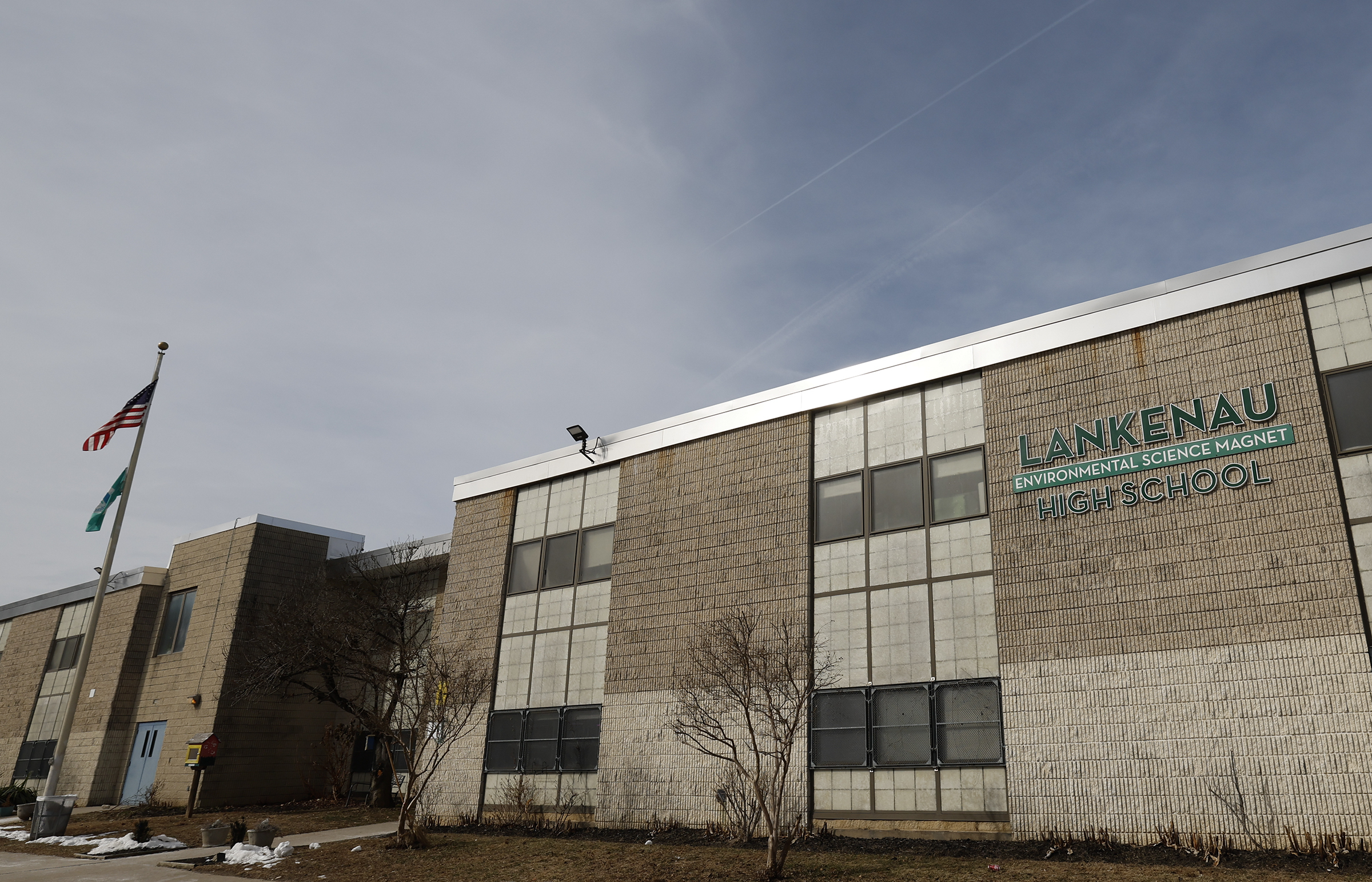
    The Philadelphia School District has proposed closing Lankenau, the city’s environmental science magnet school, and giving it to the city to help further Mayor Cherelle L. Parker’s affordable-housing goals, or for job creation.

    But the Schuylkill Center, Lankenau’s neighbor, believes it’s prohibited from doing so, and just notified Superintendent Tony B. Watlington Sr.

    The Schuylkill Center “holds a right to repurchase the property in the event that it is transferred or conveyed or used for any purpose other than school purposes, pursuant to a restriction in the October 4, 1973 deed by which [the Schuylkill Center] conveyed the property to the Lankenau School,” a lawyer for the environmental center wrote in a letter sent to the district Monday.

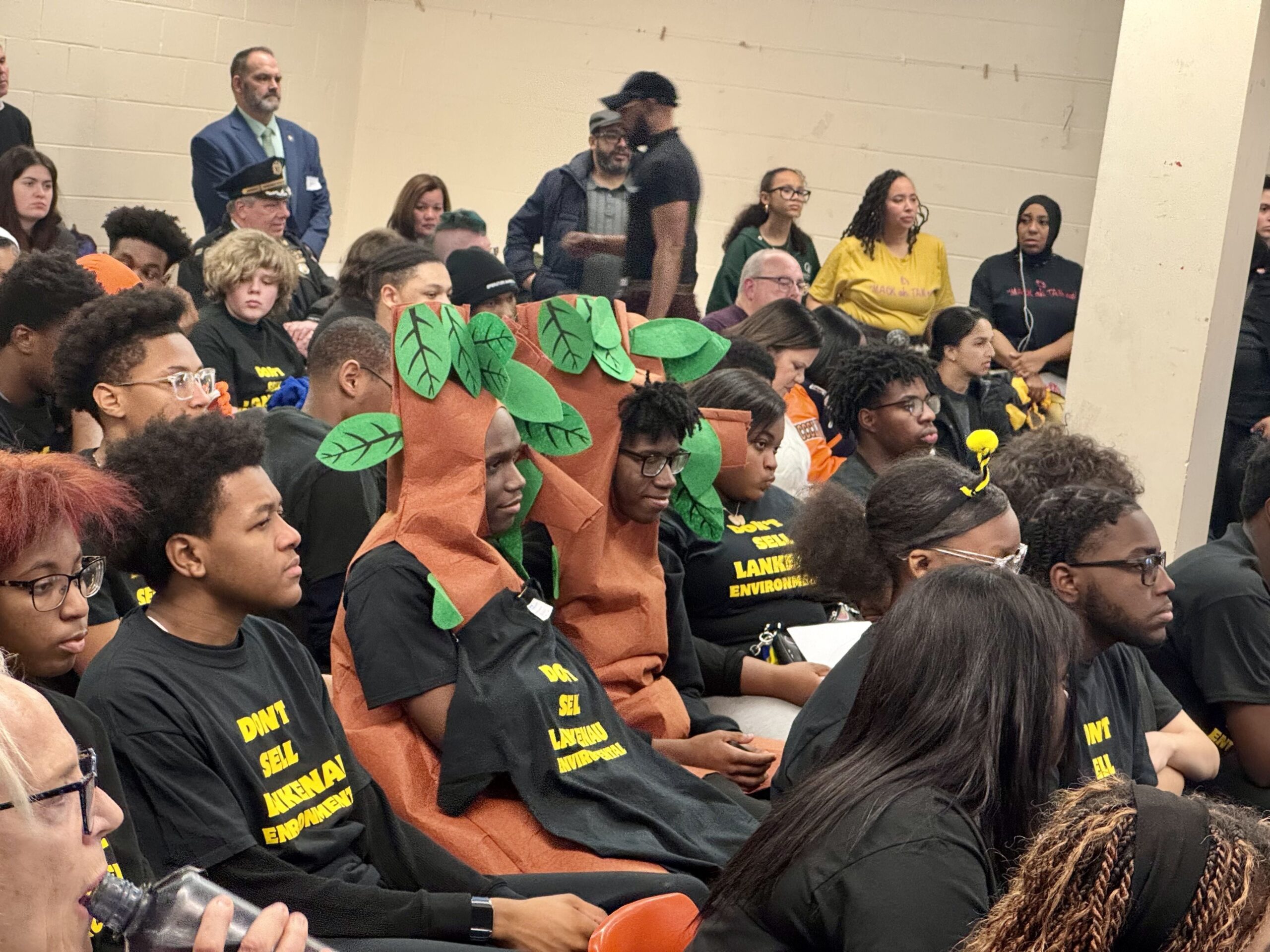
    Students, staff, and community members who support Lankenau High School – including some dressed as trees – packed a recent community meeting at the school about its proposed closure.

    If the district is “considering a sale of the property or using the property for any purposes other than continued use as a school, this letter serves as written notice of [the Schuylkill Center’s] right to repurchase,” lawyer Sean T. O’Neill wrote to Watlington, “The school district must provide [the Schuylkill Center] with reasonable advance notice of any potential conveyance or change in use and allow [the Schuylkill Center] the opportunity to exercise its right to repurchase.”

    The center, which touts itself as “one of the first urban environmental education centers in the country,” was founded in 1965. It has trails and a visitors’ center and runs educational programs and a wildlife clinic.

    District officials had no immediate comment.

    Lankenau’s history

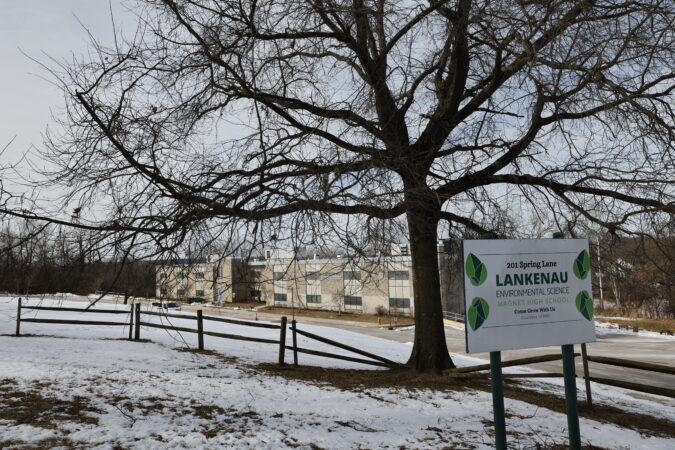
    Lankenau sits amid 400 wooded acres adjacent to the Schuylkill Center. The 17-acre parcel Lankenau High now sits on was originally the site of the private Lankenau School for Girls; after that school closed, the Philadelphia School District purchased the land.

    What is now Lankenau High was first a program of Saul High and then Germantown High, but in 2005, it became a standalone school as part of then-CEO Paul Vallas’ small schools initiative.

    Since then, Lankenau has soared as a diverse, hands-on magnet with a 100% graduation rate in a location like no other.

    News that Lankenau landed on the district’s closure list infuriated students, parents, community members, and elected officials, who have mounted a robust campaign to fight plans to shut the school and relocate it as an honors program inside Roxborough High.

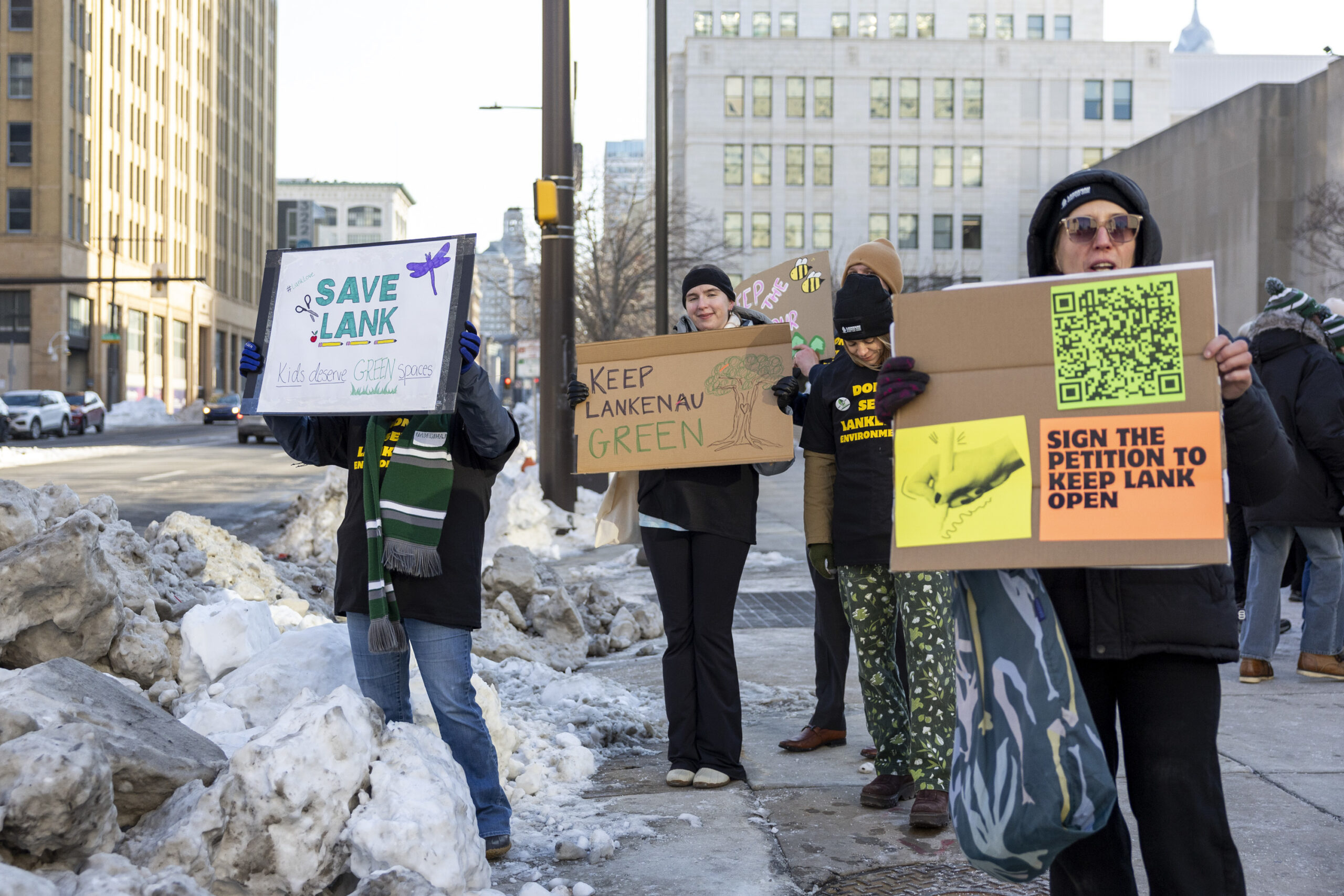
    Teachers, students, and community members from Lankenau High School rally outside a Philadelphia school board meeting in January.

    They’re particularly alarmed that Lankenau’s small size, used to justify its closing, came as enrollment shrank after the school system ordered changes to its special-admissions policy.

    The Schuylkill Center’s first priority is for Lankenau to remain as it is, said Erin Mooney, executive director of the 60-year-old organization, which now partners closely with Lankenau.

    “We are in opposition to Lankenau’s closing,” said Mooney, “but should something change with Lankenau, we want to ensure that the site continues to be used to teach people about nature.”

    Mooney, who has been public in the Schuylkill Center’s support for the school, discovered the language giving the Schuylkill Center right of first refusal if the property ever ceases being a school in the 1973 agreement.

    Watlington is scheduled to present his sweeping facilities plan — which as of January included 20 closures, six co-locations and 159 modernizations — at a school board meeting Thursday.

    The Lankenau Environmental Science Magnet High School in Roxborough on Saturday, January 24, 2026.

    But the superintendent has said what he presents to the board may include some tweaks to his initial recommendations.

    Mooney hopes the information the Schuylkill’s lawyers sent Monday helps Lankenau come off the closing list.

    “We want Lankenau to stay,” she said, “and I wanted the school board to have this information as part of its decision-making.”

    Watlington’s recommendations are just that; the school board has ultimate say. It has not given a date for the final vote on school closings, but said no vote will happen Thursday.

  • The Flower Show must go on: Crews start setting up for Philly Flower Show despite snow and years of weather curses

    The Flower Show must go on: Crews start setting up for Philly Flower Show despite snow and years of weather curses

    Inside a large exhibition room at the Pennsylvania Convention Center on Monday morning, where workers are setting up next week’s Philadelphia Flower Show, one could be fooled into believing that spring has somehow arrived early in Philly.

    The scent of mulch permeates every corner, tendrils of pink and red flowers are delicately laid over massive tree trunks, a mobile hanging from the ceiling dangles dozens of iridescent butterfly cutouts over the floor, and bright green shrubbery dots the halls.

    It seems as if Punxsutawney Phil maybe got it wrong this time.

    But one thing gives it away: the gaping open loading dock door ushering in a channel of 35-degree air that slices through the center of the exhibition hall. Clusters of snowflakes billow in toward a mint-colored wooden fence and a tree house.

    For the organizers of the Philadelphia Flower Show, an annual week and a half-long event that features dozens of horticultural exhibits, the 14-inch snow dump over the weekend was less than ideal, said Seth Pearsoll, the show’s creative director and vice president with the Pennsylvania Horticultural Society. But it wasn’t a surprise.

    “We have been watching the weather for weeks on end,” Pearsoll said. “You just got to stay on top of it.”

    The show, which opens to the general public on Saturday —the Horticultural Society members preview is Friday — and ends March 8, is typically held in the late winter/early spring. That’s led to some historically dicey weather.

    A 1993 blizzard forced the show to close early. Meteorologists predicted huge snowfalls in 2001 and 2013 as well. And, in 2018, a nor’easter hit the city on the opening night of the show. When the show was held outside during the years of the COVID-19 pandemic, it was shuttered or postponed for short stretches because of inclement weather.

    Despite the weather challenges the show, which has been running for nearly 200 years, is typically held at this time of year partly due to tradition. The show dates to an era long before the internet when the event was designed to present the season’s products to florists, landscapers, farmers, and others in the horticultural industry so they could place their orders in time for spring planting.

    “After that it was just part of the DNA of the show,” Pearsoll said.

    The show brings in a quarter million visitors each year, he said, and requires meticulous planning and constant pivoting.

    The original schedule for Monday included a 7 a.m. load-in time, he said, but his team later pushed that to noon to ensure that all the trucks could get to the facility safely. Many of the plant deliveries for Monday were moved to Tuesday or Wednesday, by which time the team hopes roads will be clearer.

    Trucks won’t just be contending with the weather in Philly but across the country as the event is getting shipments in from Minnesota, Florida, and New York, among other states.

    Most of the plants themselves are protected in climate-controlled trucks.

    “I think, for me, having been a part of outdoor shows, having worked a million flower shows, weather is always a thing,” Pearsoll said. “So I’ve really come to see it as just another one of those planning variables in the event industry.”

    The way he views it, the snowy, slushy, frigid weather outside enhances the magic of walking through rows of plants that have, through “sorcery,” as he calls it, been manipulated into blooming out of season.

    “It’s this crazy thing, right?” he said. “It mean it’s science. It’s art.”

    The Philadelphia Flower show is scheduled for Saturday through March 8 (with a Horticultural Society members preview on Friday) at the Pennsylvania Convention Center, 11th and Arch Streets. Hours: 10 a.m. to 8 p.m., except until 6 p.m. on March 8. Admission varies depending on person’s age and day and time of entrance. Information: phsonline.org or 215-988-8800.

  • Chinatown Stitch, which would cap the Vine Street Expressway, is in limbo after Trump yanked funds. Can it be saved?

    Chinatown Stitch, which would cap the Vine Street Expressway, is in limbo after Trump yanked funds. Can it be saved?

    Wrangling a big transportation project takes deft timing: scheduling the planning and construction stages in proper order, obtaining environmental approvals, and lining up financing from local, state, and federal sources.

    At least Philadelphia’s Chinatown Stitch, an effort to cap the Vine Street Expressway and reconnect the north and south sides of the neighborhood, had the money up front — until it didn’t.

    Now officials are trying to figure out how best to keep the project moving while replacing the lost $159 million federal grant.

    “This is a pretty unprecedented situation,” said Jesse Buerk, associate director of capital programs and project development for the Delaware Valley Regional Planning Commission (DVRPC).

    “I’ve never seen it before, where a project is funded and it’s moving along through the process, and then the funds are completely rescinded,” he said, speaking at the recent committee meeting.

    ‘A significant gamble’

    Congressional Republicans pushed through a massive domestic policy and spending bill last July that killed most of the Neighborhood Access and Equity grant program in the Department of Transportation.

    It wasn’t just Philadelphia or the Chinatown Stitch project that got nixed. That legislation rescinded $3.2 billion that had been awarded but not yet spent through the Biden-era program, 55 projects across the nation aimed at mitigating the impact of highway projects on marginalized communities.

    President Donald Trump’s administration targeted equity and access transportation projects as wasteful “DEI”-style spending.

    The city proposed using a different source of federal funding controlled by PennDot to finance the final design of the Stitch project, which would be needed before it could be considered “shovel ready.” That way, the project could progress while city officials look for construction money.

    But at a meeting earlier this month, the DVRPC’s Regional Technical Committee voted to table the city’s request to study it further.

    Several suburban residents on the technical committee, composed of experts from the eight counties in the region and the state governments of Pennsylvania and New Jersey, had raised concerns about spending up to $12.5 million on the design work without having construction money locked up.

    “This request is a significant gamble if you’re not able to recoup those reconnecting communities [funds],” said Brian E. Styche, a transportation planner for Chester County. “We would just like more time to discuss what the plan B is.”

    DVRPC’s board of directors is scheduled to discuss the city proposal on Thursday.

    Christopher Puchalsky, policy director for the city’s Office of Transportation and Infrastructure Systems, said he understood the concerns: “I don’t think there’s any arguing with the fact there’s some amount of risk.”

    Alternative construction funding

    The city was able to complete planning and engineering work with $8.4 million of the grant. It needs to secure final design funding before federal environmental review and approval, Puchalsky said.

    Not being able to move forward would add additional delay to the project, he said.

    The city is exploring alternatives for construction money, including the possibility of tax-increment financing for at least some of the funds, Puchalsky said.

    That form of financing uses property tax revenue for development in a specific local district.

    “There’s just enormous community support and political support for this project that a lot of the folks have been waiting 40 years for,” he said.

    What is the Stitch?

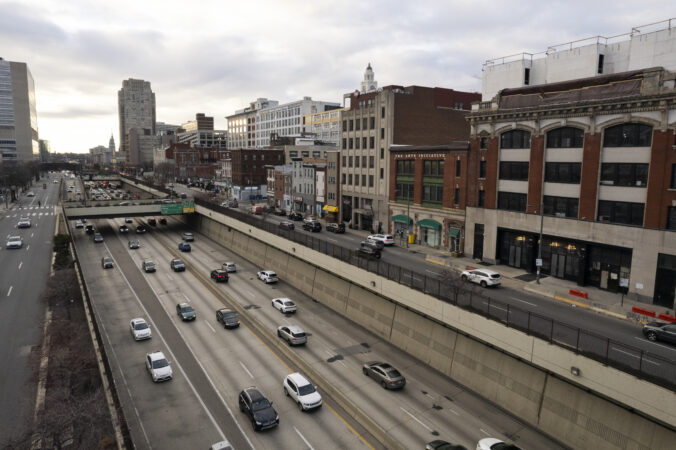
    The Chinatown Stitch project involves building a cap over I-676 from just east of 10th Street to 13th Street, allowing for a park as well as more developable land. It would reconnect the north and south sides of the neighborhood, which are split by the interstate.

  • Students would transition from this closing North Philly school to worse-performing ones in the district’s plan

    Students would transition from this closing North Philly school to worse-performing ones in the district’s plan

    Philadelphia School District officials said they considered poverty rates and prior school closings in a neighborhood when weighing which schools to close.

    Each school had a score based on its surrounding neighborhood, and only one of 20 proposed closures is in a “very high risk” neighborhood: John Welsh Elementary.

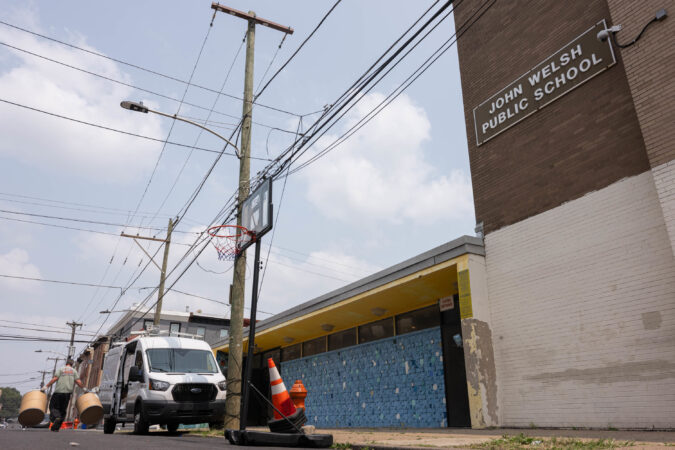
    Welsh, on the northern edge of the Norris Square neighborhood, has 185 K-8 students and operates at under a quarter of the building’s capacity. Enrollment has declined over the past several years and the school now holds an average of 20 students per grade, including only 9 second graders. About two-thirds of the students are Latino, and the other third are Black.

    While it’s small and its building is not in good shape, it was not necessarily obvious that the district would target Welsh for closure — because so-called neighborhood vulnerability was a factor in officials’ decision-making.

    But Welsh parents and students argue the school shouldn’t be closed because its students were performing well, despite the lack of investment from the district, as well as the condition of the building and its surrounding neighborhood.

    Kareemia Boyd, the parent of a Welsh eighth grader, credited the school with helping her son turn around his grades after he came from a charter school. She transitioned her son to Welsh in fifth grade, when his grades were suffering and he experienced bullying. Now poised to graduate this year, she said he gets A’s and B’s.

    “I didn’t expect he would actually grow in so many ways,” she said at a recent community meeting about the closure plan.

    The district’s draft plan calls for the Welsh building to be upgraded and converted into a new year-round high school which would open for the 2029-30 school year.

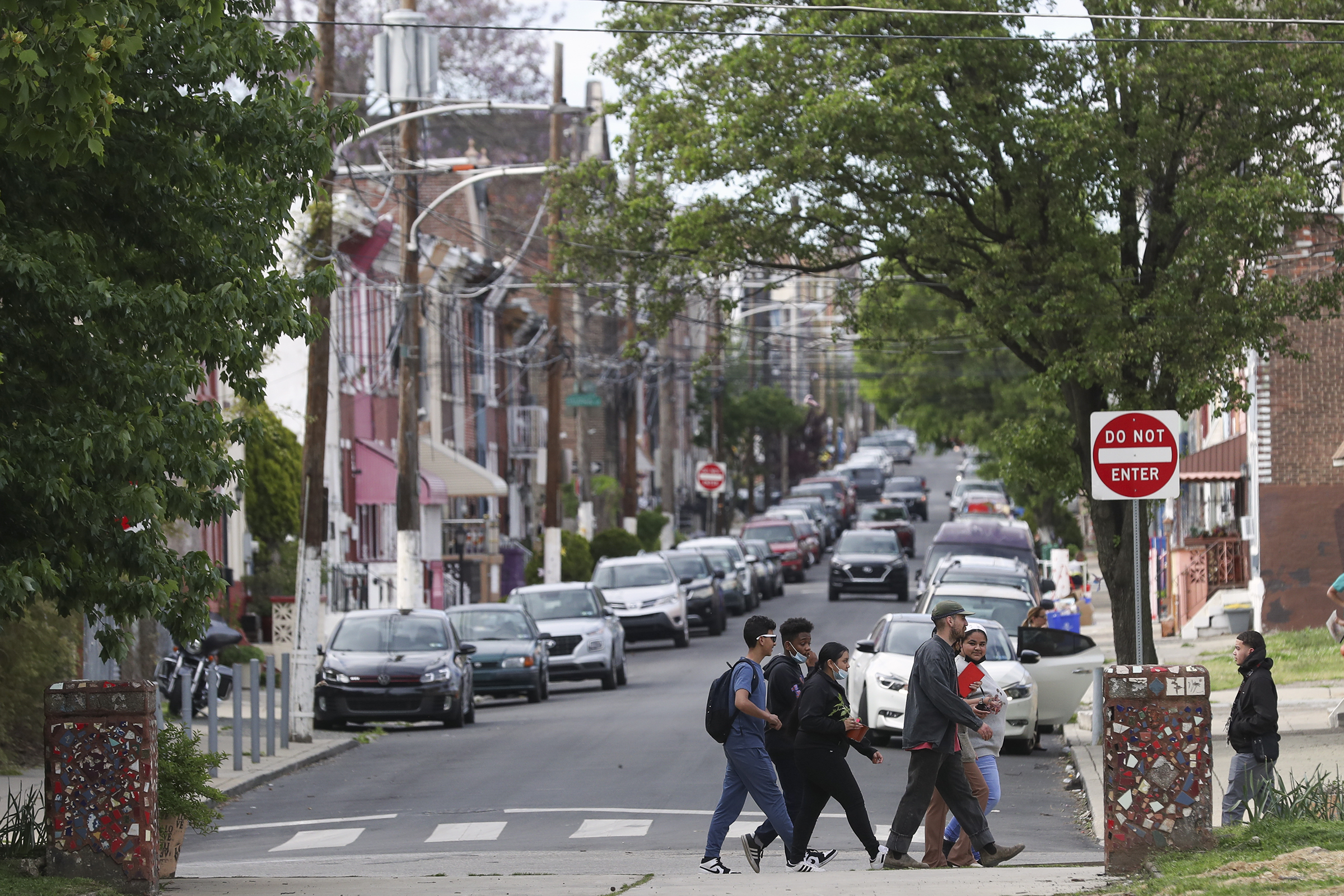
    Pedestrians walk along Susquehanna Avenue in the Norris Square neighborhood in 2022.

    Current Welsh students would transition to John F. Hartranft School or William McKinley School. Hartranft and McKinley would receive new ADA investments and other renovations, Algebra I instruction, and pre-K programming, officials said.

    Several students asked district officials at the community meeting why they would be transitioned to Hartranft and McKinley, when those schools have performed worse academically than Welsh. About 14% of students at Hartranft and 10% of students at McKinley scored at least a proficient level on state English language arts exams last year, compared to 20% of Welsh students.

    District representatives said they did not consider academic performance when deciding whether to close schools. Instead they focused on getting proper resources to students and schools, they said, which will be more feasible once schools are consolidated.

    Boyd said her son’s teachers at Welsh pushed him to improve, and wouldn’t let him settle for less than what he was capable of. She appreciated how much they cared about him, and said they had “a big impact.”

    “I want somebody to care about my kid as much as I do,” she said.

    She said she believes the declining enrollment has to do with the school’s neighborhood. Boyd said people are concerned about crime and drugs, and don’t feel safe sending their kids to the school, particularly when school security is limited.

    But for those who have stayed, Sary Rodriguez, a parent of current Welsh fifth and eighth graders, said it’s a community where everyone looks out for others.

    “We all know each other. We all support each other. So it’s hurting a lot of people,” she said about the district’s plan.

    Young people enjoy Norris Square Park in the Norris Square neighborhood, where Welsh Elementary School is slated to close under a proposal from the school district.

    Rodriguez also has a 19-year-old daughter who graduated from Welsh and works at the school. But Rodriguez said she’s considering moving her children to charter schools if the school closes, in part because of her concerns for the academics at McKinley and Hartranft. No matter where they go, transitions are difficult for all involved, she said, including parents.

    “It’s not only the students that have to meet new people and new friends and new teachers, their parents have to start all over [with] a new relationship with teachers and students, the neighborhood … I don’t know nothing about those schools,” she said.

    Rodriguez implored the district officials at the community meeting to genuinely consider pleas to keep the school open.

    “I really have the feeling it doesn’t matter what we say or what we do. It’s just going to be a decision that they’re gonna make,” she said.

    Rodriguez said she’s upset that the district hasn’t invested in Welsh, but plans to put resources into a new school at the same location.

    “It bothers me that they’re going to spend the money to fix it for a high school and they can’t fix it for our kids,” she said.

    Ava Huertas, a sixth grader at Welsh, planned to graduate from the school just like her grandmother, mother, and sister did. She’s been enrolled there since she was in kindergarten, and now would have to move to a new school for eighth grade before transitioning again for high school.

    She asked several questions to district officials about why they were planning to close her school, reading off notecards and avoiding eye contact. As she wrapped up her final question, she thanked the officials for listening, but had to be honest about her feelings.

    “I hope that the plan doesn’t go through, I’m not gonna lie,” she said.

  • Quakertown schools are planning counseling and police presence after student arrests at ICE protest

    Quakertown schools are planning counseling and police presence after student arrests at ICE protest

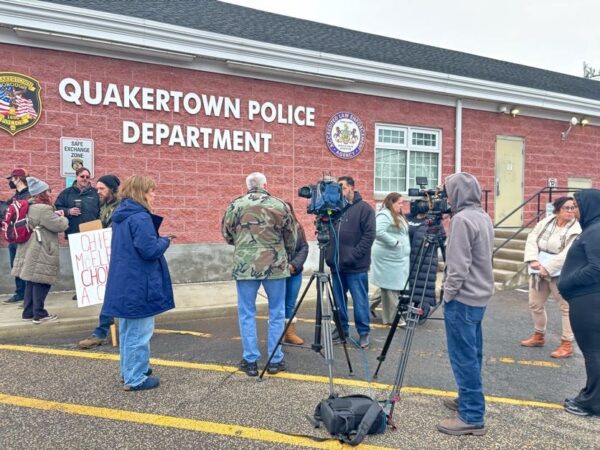
    The Quakertown Community School District is planning to offer counseling and has requested a police presence this week after a student walkout Friday to protest federal immigration enforcement ended in a clash with police and multiple student arrests.

    “Our responsibility is to focus on creating as safe and supportive a learning environment as possible for students and staff to return to school this week,” acting Superintendent Lisa Hoffman said in a statement Sunday night.

    Like districts across the region, Quakertown schools were closed Monday because of snow. But administrators are preparing to reopen amid continuing intense attention from Friday’s walkout, which involved about 35 students from Quakertown Senior High School. Unlike other walkouts at Philadelphia-area schools by students protesting U.S. Immigration and Customs Enforcement, Quakertown’s protest turned confrontational.

    Videos circulating online appear to show the Quakertown Borough police chief putting a teenage girl in a chokehold during the incident, which police said involved students entering traffic and damaging property and resulted in the arrests of five students and one adult.

    The status of the students who were arrested, including whether they were still in custody, wasn’t clear Monday. A spokesperson for the Bucks County District Attorney’s Office — which is investigating the police response to the protest — said state law barred the office from discussing the teenagers’ cases.

    The spokesperson, Manuel Gamiz, did not respond to questions about the charges, where the students were being held, or when they would be arraigned. While police had said one adult was arrested, Gamiz said that to his knowledge “no adult was ever charged” in connection with the incident.

    Community members organized by the group Upper Bucks United demanded the immediate suspension of the police chief, Scott McElree, at a borough council meeting Monday night. An online petition also calls for McElree’s resignation.

    McElree, who is also the borough manager, did not respond to requests for comment Monday.

    Reached by phone Monday afternoon, borough council vice president James Roberts Jr. hung up on a reporter. He did not answer a second call. Messages left for four other council members were not immediately returned Monday.

    Witold Walczak, legal director of the ACLU of Pennsylvania, said in a statement Monday that “by all accounts, including abundant video evidence, there were no issues at the demonstration until Quakertown police arrived and incited violence.”

    Walczak called for a “full and transparent investigation” and for Quakertown police and McElree “to be held accountable for their actions if the evidence confirms the apparent excessive force, retaliation and false arrest.”

    In response to a series of questions sent Monday, the police department sent a written statement, saying the borough and department were “fully cooperating with the Bucks County District Attorney’s Office concerning this investigation. Until this investigation is complete, neither the Borough nor its Police Department will be commenting on this matter.”

    Tensions led to walkout cancellation

    In her statement Sunday, Hoffman offered more context about Friday’s walkout, which the district had attempted to cancel that morning.

    In the week leading up to the walkout, Hoffman said, administrators met with student organizers “to discuss alternative ways to demonstrate their right to free speech that wouldn’t disrupt the school day.”

    Like “nearly every school district across the region,” Hoffman said, “it is our practice not to endorse or facilitate a student walkout during the school day for any reason. However, we also know it is our responsibility and duty to provide reasonable safety and security support for students and staff members who enter and exit our schools.”

    The district was concerned that students who planned to participate in the walkout reported they were being bullied and threatened, Hoffman said.

    At 9 p.m. Thursday, Hoffman said, “the district received what was deemed a new and concerning threat of violence.” A district spokesperson did not respond to questions Monday, including about the nature of the threat.

    Though the district issued a notice and met with student organizers before school Friday, attempting to cancel the protest, administrators gathered in front of the high school at 11:25 a.m. Friday, preparing for the “the possibility that students would proceed with their walkout despite the safety concerns shared with them,” Hoffman said.

    As students walked off campus — not following any previously discussed route, Hoffman said — district officials heard from community members that some students in town “were engaging in disruptive and unsafe behavior,” Hoffman said.

    At that point, students “were no longer under the district’s custodial control or supervision, and we have almost no legal ability to regulate or investigate their behavior,” she said.

    Hoffman said the district has no additional information on arrests or the investigation. She said administrators and “many of our staff members have been inundated with hateful messages and concerning physical threats to our personal safety via email, phone, and social media” since the walkout.

    “This is simply inexcusable,” Hoffman said. “We have and will continue to report these threats to the appropriate law enforcement agencies.”

    The district is working with the Bucks County Intermediate Unit to develop a “counseling support plan” for students and staff, Hoffman said. She also said it had “communicated with our law enforcement partners for police presence and support as we return to school.”

    Over the weekend, supporters created a GoFundMe campaign to raise money for the students’ legal fees, court costs, medical expenses, and other support services. By Monday afternoon, it had collected more than $28,000. The campaign’s organizer did not respond to a request for comment.