Mae Laster, 87, of Philadelphia, retired French, algebra, and photography teacher for the School District of Philadelphia, longtime president of Friends of Wynnefield Library, award-winning committee chair for the Philadelphia section of the National Council of Negro Women Inc., community center adviser, church trustee, volunteer, and undisputed Laster family Scrabble champion, died Friday, Jan. 2, of age-associated decline at Lankenau Medical Center.
Born in Philadelphia, Ms. Laster earned academic degrees at West Philadelphia High School and Temple University. She was a lifelong reader and stellar student, and she tutored her high school classmates in math and later taught elementary and middle school students for 30 years.
“She was a firm and no-nonsense kind of teacher,” a former student said in an online tribute. “But she was a lot of fun. As an adult, she always offered guidance and advice.”
Her daughter, Lorna Laster Jackson, said: “She had a passion for learning and sharing with others. She was always an advocate for children.”
Ms. Laster chaired community service and Founder’s Day committees for the National Council of Negro Women Inc.
Ms. Laster served as president of Friends of Wynnefield Library for more than 20 years and was active at its many book readings, content discussions, concerts, and fundraisers. She earned several important financial grants for the library, and her personal collection of books at home numbered more than 1,000.
“She loved reading to our young patrons, especially during our Dr. Seuss birthday celebrations,” library colleagues said in a tribute.
She chaired community service and Founder’s Day celebration committees for the National Council of Negro Women and earned the local section’s achievement award in 1998. “Mae was a blessing to the Philadelphia section,” colleagues said in a tribute. “We will always remember her feisty way of asking questions and not easily put off.”
Ms. Laster was an advisory board member at the Leon H. Sullivan Community Development Center and a trustee at Zion Baptist Church. Colleagues at the community center called her “a very thoughtful and talented person.” They said: “She was always forthright and had a strong opinion.”
Ms. Laster (center) especially enjoyed reading to young people at the Wynnefield Library.
At church, she was a member of the New Day Bible Class and proofreader for the newsletter. She also volunteered with the Wynnefield Residents Association, the Girl Scouts, and the 4-H Club.
In a citation, City Council members praised her achievements regarding “education, community service, and all those whose lives were enriched by her wisdom, kindness, and unwavering faith.” In a resolution, members of the state Senate noted “her extraordinary life, her enduring contributions, and her lasting impact on education, community, and faith.”
Friends said in online tributes that she “had a great sense of humor” and was “the sweetest mom on the planet, who was always like a mom to me.” One friend called her “a community-minded leader who advocated tirelessly to preserve the quality of life in Wynnefield.”
At home, Ms. Laster studied the dictionary, knew words that nobody else did, and became the undisputed Scrabble champion of her family and friends. She was so good, her daughter said, that nobody volunteered to play against her. “It was humiliating,” her daughter said.
Ms. Laster was a lifelong advocate for children.
Mae R. Johnson was born June 5, 1938, in Philadelphia. She grew up in Winston-Salem, N.C., with her grandmother and returned to Philadelphia in the 1950s to live with her mother and begin high school.
She was an excellent student, especially good with words and numbers, and she graduated from West Philadelphia High in 1956 and earned a bachelor’s degree in early childhood education at Temple.
She met Francis Laster in the neighborhood, and they married, and had a daughter, Lorna, and sons Francis Jr., Charles, and Ahman. Her husband owned and operated the popular Rainbow Seafood Market, and they lived in West Philadelphia and Wynnefield. They divorced later. He died in 2020.
Ms. Laster enjoyed bowling, photography, and horticulture. She listened to jazz, classical, and gospel music. She collected butterflies and stamps.
Ms. Laster was “all about positive change,” her daughter said.
She shared recipes with friends and kept in touch through memorable phone calls. She helped organize high school reunions and appreciated the educational TV shows on the Public Broadcasting System.She retired from teaching about 20 years ago.
“She was all about positive change,” her daughter said. “She spoke from compassion and her truth. She did more good than she knew. She was dynamite.”
In addition to her children, Ms. Laster is survived by six grandchildren, three great-grandchildren, three great-great-grandchildren, a sister, and other relatives. A brother died earlier.
A celebration of her life was held earlier.
Donations in her name may be made to Friends of Wynnefield Library, Attn: Terri Jones, 5325 Overbrook Ave., Philadelphia, Pa. 19131.
Ms. Laster graduated from West Philadelphia High School in 1956 and earned a bachelor’s degree in early childhood education at Temple.
LONDON — Police searched the former home of Andrew Mountbatten-Windsor again on Friday, a day after he was arrested and held in custody for nearly 11 hours on suspicion of misconduct in having shared confidential trade information with the late convicted sex offender Jeffrey Epstein.
In another blow for the former Prince Andrew, the British government is considering formally removing him from the line of succession to the crown. Despite losing his status as prince and facing a police investigation, Andrew remains eighth in line to the throne. That can only be changed with new legislation.
When the king stripped his brother of his titles in the fall, the government said passing a new law would not be a good use of Parliament’s time.
But that view has changed and the government is now considering legislation once the police investigation is finished. James Murray, the government’s chief secretary to the treasury, said “the government is considering any further steps that might be required, and we’re not ruling anything out.”
The last time a royal was removed from the line of succession was after the abdication of King Edward VIII in 1936, when the law was changed to strike him and any descendants from the list.
Removing Andrew would also require agreement from more than a dozen other countries, including Jamaica, Canada, and Australia, that have the British monarch as head of state.
Following one of the most tumultuous days in the modern history of Britain’s royal family, the former prince was back at his new residence on the Sandringham estate, King Charles III‘s private retreat, around 115 miles northeast of London.
Police have concluded their search there, but are still searching Royal Lodge, his 30-room former home in the parkland near Windsor Castle, just west of the capital, where the king’s younger brother had lived for decades until his eviction earlier this month. Unmarked vans, believed to be police vehicles, have been entering the grounds Friday morning.
The search is expected to continue for several days.
Mountbatten-Windsor, who was pictured slouched in the back of his chauffeur-driven car following his release Thursday evening from a police station near Sandringham, remains under investigation, which means he has neither been charged nor exonerated by Thames Valley Police, the force responsible for areas west of London.
Arrest was years in the making
His arrest follows years of allegations over his links with Epstein, who died by suicide in a New York jail in 2019.
The accusation at the heart of his arrest is that Mountbatten-Windsor — who was known as Prince Andrew until October when his brother stripped him of his titles and honors and banished him from Royal Lodge — shared confidential trade information with the disgraced financier when he was a trade envoy for the U.K.
Emails released last month by the U.S. Department of Justice appeared to show Mountbatten-Windsor sharing reports of official visits to Hong Kong, Vietnam, and Singapore, and sending Epstein a confidential brief on investment opportunities in Afghanistan.
Thames Valley Police has previously said it was also reviewing allegations that a woman was trafficked to the U.K. by Epstein to have a sexual encounter with Andrew. Thursday’s arrest had nothing to do with that.
Other police forces are also conducting their own investigations into Epstein’s links to the U.K., including the assessment of flight logs at airports, large and small. They are coordinating their work within a national group.
On Friday, London’s Metropolitan Police said it was assessing, with the help of U.S. counterparts, whether the capital’s airports, which include Heathrow, “may have been used to facilitate human trafficking and sexual exploitation.”
It also said that it’s asking past and present officers who protected Mountbatten-Windsor to “consider carefully” whether they saw or heard anything that may be relevant to the investigations.
As of now, it said no new criminal allegations have been made regarding sexual offenses within its jurisdiction.
Mountbatten-Windsor has consistently denied any wrongdoing in his association with Epstein but has not commented on the most recent allegations that have emerged with the release of the so-called Epstein files.
Arrest was sudden, investigation will take time
Police swept into the grounds of Mountbatten-Windsor’s home to arrest him at 8 a.m. Thursday — his 66th birthday — before taking him to Aylsham police station for questioning.
It’s not known what he told them. He may have said nothing, or “no comment,” as is his right.
Experts said that misconduct in a public office is notoriously difficult to prove.
“Firstly, it must be determined if Andrew Mountbatten-Windsor was in a role within government that constitutes the title of public officer,” said Sean Caulfield, a criminal defense lawyer at Hodge Jones & Allen. “There is no standard definition to clearly draw on.”
The Crown Prosecution Service will ultimately make a decision about charging Mountbatten-Windsor.
Andrew Gilmore, a partner at Grosvenor Law, said that prosecutors will apply the two-stage test known as the “Code for Crown Prosecutors.”
“That test is to determine whether there is a more realistic prospect of a conviction than not based on the evidence and whether the matter is in the public interest,” he said. “If these two tests are met, then the matter will be charged and proceed to court.”
Arrest is not just unusual, it’s historic
Mountbatten-Windsor was the first royal since King Charles I nearly four centuries ago to be placed under arrest. That turned into a seismic moment in British history, leading Charles’ beheading and the temporary abolition of the monarchy.
Mountbatten-Windsor’s arrest is arguably one of the gravest crises for the House of Windsor since its establishment more than 100 years ago. Arguably, only the abdication of King Edward VIII in 1936, and the death of Diana, Princess of Wales, in 1997, have been as grave for the institution of the British monarchy in modern times.
In a statement Thursday, the king said the “law must take its course,’’ but that as ”this process continues, it would not be right for me to comment further on this matter.’’
The allegations are not related to Epstein’s sex trafficking
The allegations being investigated Thursday are separate from those made by Virginia Giuffre, who claimed she was trafficked to Britain to have sex with the prince in 2001, when she was just 17. Giuffre died by suicide last year.
Still, Giuffre’s sister-in-law Amanda Roberts said that she was overjoyed when she got a phone call at 3 a.m. telling her the news of the arrest. But those feelings of elation were quickly complicated by the realization that she couldn’t share the feelings of “vindication” with Giuffre.
“We can’t tell her how much we love her, and that everything that she was doing is not in vain,” Roberts added tearfully.
Pennsylvania lawmakers say Congress should reclaim its power over taxes and tariffs after the U.S. Supreme Court quashed President Donald Trump’s controversial global tariffs.
The nation’s high court ruled 6-3 Friday that Trump overstepped with tariffs imposed under an emergency powers law, dealing a significant blow to the president’s economic agenda and reasserting congressional authority.
Chief Justice John Roberts and Justices Neil Gorsuch and Amy Coney Barrett — both Trump nominees — joined liberal justices in the majority. Justices Brett Kavanaugh, Clarence Thomas, and Samuel A. Alito Jr. dissented.
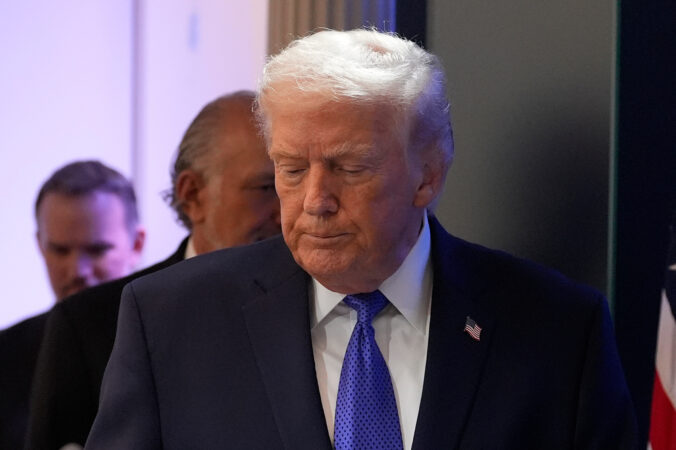
Trump told reporters at the White House Friday that he was “ashamed” of the three Republican-appointed justices for not having “the courage to do what’s right for our country.”
But local lawmakers celebrated the decision as a step toward alleviating inflation exacerbated by Trump’s tariffs.
It’s “the first piece of good news that American consumers have gotten in a very long time,” said U.S. Rep. Brendan Boyle (D., Philadelphia), the ranking member of the House Budget Committee.
The decision is unlikely to be the end of the road for Trump’s efforts to impose tariffs. The court struck down the broad authority Trump had claimed to impose sweeping tariffs, but he could still impose additional import and export taxes using powers he employed in his first term.
Friday’s decision centers on tariffs imposed under an emergency powers law, including the “reciprocal” tariffs he waged on other countries, The Associated Press reported.
What’s next
It remains unclear what will happen to tariff revenue that’s already been collected — about $30 billion a month since Trump took office last year, NPR reported. But Pennsylvania lawmakers are pushing for Congress to reassert its power to control the country’s purse strings.
“As the Supreme Court validated this morning, Congress has the authority to levy taxes and tariffs,” Boyle said. “It’s time now for us to finally reclaim that authority and bring some certainty and rationality to our tariff policy, which under Donald Trump has been all over the map and changes day by day, even hour by hour.”
Casey-Lee Waldron, a spokesperson for U.S. Rep. Brian Fitzpatrick (R., Bucks), said in a statement Friday that the lawmaker “applauds” the high court’s decision, “which validates the Congressman’s opposition to blanket and indiscriminate tariffs that are not narrowly tailored, and that do not lower costs for the American consumer.”
Waldron added that Fitzpatrick supports enforcing trade laws, but “this should always be done in a collaborative manner with a bipartisan, bicameral majority in Congress.”
Pennsylvania Gov. Josh Shapiro and N.J. Gov. Mikie Sherrill, both Democrats, celebrated the decision Friday in statements that noted the challenges the tariffs had caused for local economies.
Speaking to reporters at the National Governors Association meeting in Washington, Shapiro said tariffs had done real harm to Pennsylvanians, citing rising prices for farmers and for consumer goods.
“There is a direct line connecting those price increases to the president pushing the tariff button,” Shapiro said. “I think the Supreme Court got it right, and I say that as a former attorney general, and I say that as someone who actually follows the law.”
U.S. Sen. Dave McCormick (R., Pa.), however, came to the defense of Trump’s tariff policies, saying in a statement that he believes Trump “was using legitimate emergency authorities very effectively to protect our national security and achieve fair trade for U.S. companies and American workers.”
McCormick, a former Treasury official and former hedge fund executive, said he was disappointed with the court’s ruling and called to find other ways to accomplish Trump’s economic and national security goals, which include preventing “foreign competitors from cheating Pennsylvania workers.”
Shockwaves in Philly and beyond
Trump enacted the sweeping tariffs early last year, arguing that the move would incentivize companies to bring operations back to the United States and even trade deficits with other countries.
The move, however, sent shock waves through the U.S. economy as prices increased and U.S. exports, including Pennsylvania’s lumber sales, suffered.
Tariffs slowed business at the Port of Philadelphia, which reported cargo volume down across the board.
Philly is a major gateway for produce, bringing in more fresh fruit than any other U.S. port, largely from Central and South America. The port saw record container volume last year, handling almost 900,000 units, up 6% over 2024. About two-thirds of that cargo was refrigerated — fruit and meat, for example.
But this year got off to a slow start. “The story is increased competition and tariffs,” Sean Mahoney, marketing director at the Philadelphia Regional Port Authority (PhilaPort), said during the agency’s board meeting on Wednesday.
Leo Holt, president of the city’s primary terminal operator Holt Logistics, hopes companies that see savings would pass them on to consumers. In practice, he acknowledged many would likely take a conservative approach.
“I think consumers are going to demand that at least there’s an accounting for what they’re paying,” Holt said Friday.
U.S. Sen. Chris Coons (D., Del.) said in a statement that he knows many Republican colleagues of his “are privately breathing sighs of relief this morning at the court’s decision.”
“They should instead be asking themselves why they didn’t use their legislative authority to do more to stop these tariffs when they had the chance — and what they’ll do differently next time when President Trump inevitably tries again,” Coons said.
‘Nobody is going to rush to drop their prices’
The Supreme Court’s ruling will be welcome news for some businesses, but it also sparks uncertainty.
Not all of Trump’s tariff increases came through the use of the International Emergency Economic Powers Act, and therefore some will remain in place, said Julie Park, a partner at London-based tax and business advisory firm Blick Rothenberg.
“This decision brings further uncertainty for businesses,” she said in a statement. That’s in part because Trump could seek to reimpose tariffs through other legal tools, leaving “businesses in limbo about if they will get refunded.”
U.S. exporters will also be closely following what happens next, since the fate of Trump’s tariffs will likely determine whether other countries, like Canada, keep their retaliatory measures in place. Canada is Pennsylvania’s biggest export market, with the state sending more than $14 billion in goods there in 2024. Top exports included machinery, cocoa, iron, and steel.
Pennsylvania’s dairy industry has also been caught in the middle of the global trade war, as China and Canada imposed extra taxes on those goods in response to U.S. tariffs.
It’s also unclear whether companies will receive refunds for the tariffs they’ve paid in the past year.
Tim Avanzato, vice president of international sales at Lanca Sales Inc, said his New Jersey-based import-export company should be eligible for as much as $4 million in tariff refunds.
“It’s going to create a paperwork nightmare for importers,” he said, noting that he doesn’t expect the Trump administration to make it easy to retrieve this money.
Avanzato said he is also watching for ways the administration may implement new tariffs. Consumers, he said, shouldn’t expect changes in the immediate term.
“Companies are not very good at passing on savings,” Avanzato said. “Nobody is going to rush to drop their prices.”
Sen. Andy Kim (D., N.J.) said Trump cost Americans “a lot of money.”
“Trump 2.0: You pay for his tariffs, tax breaks for his billionaire donors, & insane corruption for his friends and family,” the South Jersey Democrat added in a social media post.
The Supreme Court’s decision is “a step” in righting wrongs by the Trump administration, he said, but there’s “so much more to go.”
Staff Writers Katie Bernard, Max Marin, Aliya Schneider and Rob Tornoe and The Associated Press contributed to this article.
Haverford College president Wendy Raymond is considering convening a committee that would review whether mega donor and U.S. Commerce Secretary Howard Lutnick’s name should remain on the campus library.
Raymond’s statement to the campus community this week follows concerns expressed by Haverford students and alumni about Lutnick’s ties to sex offender Jeffrey Epstein. She noted “a growing number of Fords have written to express their dismay.”
“While forming a naming review committee does not predetermine any outcome, it is a serious step and not something I would take lightly,” Raymond wrote to the campus. “I will take the time necessary to continue to reflect and to engage with thought partners before determining whether to activate a review committee.”
Under Haverford’s gift policy, the school can rename a building if “the continued use of the name may be deemed detrimental to the college, or if circumstances change regarding the reason for the naming.” If Raymond convenes a committee, she would then consider its recommendations and make her recommendation to the external affairs committee of the board of managers, as well as to its chair and vice chair. The external affairs committee then would make its recommendation to the full board of managers.
Lutnick, a 1983 graduate and former chair of the college’s board of managers, is one of the school’s biggest donors, having given $65 million. Documents released by the U.S. Justice Department this month show that Lutnick had contact with the late financier as recently as 2018, long after Epstein pleaded guilty to obtaining a minor for prostitution and soliciting a prostitute.
And during congressional testimony last week, he said he visited Epstein’s private island with his family in 2012. Lutnick previously said he had not been in a room with Epstein, whom he found “disgusting,” since 2005.
The outside of the Lutnick Library at Haverford College.
Raymond’s announcement comes one day after students held a town hall to discuss their concerns and feelings about Lutnick‘s ties to Epstein.
Students who organized the town hall said Raymond’s communications about Lutnick have fallen short. They said they had hoped at least to see a review committee started.
“Many students, including myself, are deeply disappointed and, in many cases, hurt by the neutral and softened language in these communications,” senior English major Paeton Smith-Hiebert wrote to Raymond.
Smith-Hiebert is co-founder of the Haverford Survivor Collective, which started in 2023 and is led by Haverford students and survivors of sexual assault. She said while Raymond notes she is having conversations about the topic, the collective hasn’t been consulted.
“Given the gravity of this situation, survivors are among those most directly affected,” she wrote. “Many are feeling significant harm and institutional betrayal … While I understand there are many stakeholders to consult, it is difficult to reconcile the stated commitment to engagement with the apparent absence of those most impacted.”
Raymond’s message, she said, also should have included a reference to resources or support for survivors who are struggling, she said.
Between 50 and 100 students attended the nearly two-hour town hall, several attendees said, with no students speaking in favor of keeping Lutnick’s name on the building. Students introduced an open letter with demands that has since been signed by 235 students, staff, and alumni as of 8:30 a.m. Friday, said Smith-Hiebert. The letter calls on the college to immediately convene a review committee, rename the library, acknowledge the distress and harm members of the community are experiencing, and “adopt a clear and unambiguous morals clause” in the gift policy.
Students also discussed the possibility of protest actions to urge the college to act as soon as possible.
The issue of Lutnick’s name on the library is likely to come up at a plenary session,where students discuss and vote on important campus issues. That session is scheduled forMarch 29.
If the students were to pass a resolution calling for the removal of Lutnick’s name from the library, it would go to Raymond for signing.
Milja Dann, 19, a sophomore psychology major from Woodbury, N.J., said she went through all of the Epstein files that mention Lutnick and Epstein and saw references to at least seven planned in-person encounters. Students compiled a 10-page document on the Lutnick-related material in the files.
“I feel it is extremely difficult for survivors of sexual violence to see that name and know it is so closely associated with a man who has perpetuated violence and harm to so many people,” Dann said.
A Commerce Department spokesperson told the Associated Press last month that Lutnick had had “limited interactions” with Epstein, with his wife in attendance, and had not been accused of “wrongdoing.” Lutnick told lawmakers last week: “I did not have any relationship with him. I barely had anything to do with him.”
Some students at the town hall talked about the difficulty of going in the library, which is the heart of the academic campus.
“For me, walking into that space has been uncomfortable for a while,” Smith-Hiebert said, referring to when Lutnick was named President Donald Trump’s commerce secretary. “That discomfort has only intensified given this news.”
Lutnick, formerly chairman of Cantor Fitzgerald L.P., a New York City financial firm that lost hundreds of employees in the 9/11 World Trade Center attacks, served on Haverford’s board for 21 years.
In addition to the library, which also bears his wife Allison’s name, the indoor tennis and track center is named for his brother Gary Lutnick, a Cantor Fitzgerald employee who was killed on 9/11, and the fine arts building carries the name of his mother, Jane Lutnick, a painter. He also funded the college’s Cantor Fitzgerald Art Gallery.
Students discussed whether removing Lutnick’s name from the library would be enough or if other references should come down, too, said Cade Fanning, the associate editor of the Clerk, Haverford’s student newspaper, who attended the meeting.
“That had the most split opinions,” said Fanning, 21, a senior history major from Annapolis.
But people were concerned thatseeing the Lutnick name on anything, even if it was a relative, would be difficult for survivors, Fanning said. And the relatives’ names still signify Lutnick’s “imprint” on the college, he said.
Students also discussed that while they want his name off the library, the college should install a plaque explaining the history, rather than erasing it, Smith-Hiebert said.
The grandson of the inventor of Reese’s Peanut Butter Cups went viral after penning an open letter to Pennsylvania’s Hershey Company on Feb. 14. But it was far from a valentine.
Brad Reese, 70, accused the confectionery manufacturer of hurting the brand his grandfather H.B. Reese began a century ago, cutting corners with its chocolate quality. Within the week, Reese’s post has sparked discussions about brand integrity, ingredients, and legacy.
In a LinkedIn post, Reese said Hershey’s assortment of Reese’s products (including the valentine heart-shaped ones he had recently sampled) include different, cheaper ingredients, swapping milk chocolate for compound coatings and peanut butter for peanut butter créme.
“How does The Hershey Co. continue to position Reese’s as its flagship brand, a symbol of trust, quality, and leadership, while quietly replacing the very ingredients (Milk Chocolate + Peanut Butter) that built Reese’s trust in the first place?” Reese wrote.
Reese isn’t wrong. Several Reese’s products today — including the valentine’s hearts and the Easter egg-shaped versions — use chocolate-flavored coatings that cannot be legally called “milk chocolate,” a term that’s regulated by the Food and Drug Administration. It’s unclear exactly when the swaps occurred.
The flagship Reese’s Peanut Butter Cups continue to list milk chocolate and peanuts as the first two ingredients.
Still, the product line’s variance represents a shift across the candy industry as cocoa prices continue to rise, driven by a combination of factors, including climate-sparked changes in supply, tariffs, and labor shortages, the New York Times reports. Chocolate companies, including Hershey’s, have responded by making cost-effective ingredient swaps. The Times reported that several chocolate-forward Hershey’s candies no longer listed milk chocolate among their ingredients during last Halloween season.
Hershey doesn’t deny the swaps, but is defending its quality.
The company said in a statement Wednesday that Reese’s Peanut Butter Cups are made the same way they’ve always been, with house-made milk chocolate and roasted peanuts, but that ingredients for some other Reese’s products can vary based on demand.
“As we’ve grown and expanded the Reese’s product line, we make product recipe adjustments that allow us to make new shapes, sizes, and innovations that Reese’s fans have come to love and ask for, while always protecting the essence of what makes Reese’s unique and special: the perfect combination of chocolate and peanut butter,” the company said.
A package of Reese’s Hearts is shown on Tuesday, Feb. 17, 2026, in New Jersey. (AP Photo/Pablo Salinas)
A government database last updated in 2023 shows changes to the ratio of peanuts and milk chocolate used in Reese’s Peanut Butter Eggs over the years. Three years ago, the egg chocolates had more peanuts and milk chocolate than anything else. But the current formula lists sugar and vegetable oil first — and no milk chocolate.
Reese said he thinks Hershey has gone too far this time.
He picked up a bag of Reese’s Mini Hearts for Valentine’s Day, but threw them away after sampling.
“It was not edible,” Reese told The Associated Press. “You have to understand. I used to eat a Reese’s product every day. This is very devastating for me.”
Reese’s grandfather, H.B. Reese, spent two years at Hershey before leaving to form his own company, H.B. Reese Candy Co. in 1919. The company manufactured about 12 types of chocolate, made with ingredients that included real cocoa butter, fresh cream, and freshly roasted peanuts.
He invented Reese’s Peanut Butter Cups in 1928. They were a hit and had wrappers included the slogan: “Made in Chocolate Town, so they must be good.” H.B. Reese died in 1956. His six sons eventually sold his company to Hershey in 1963.
Now, Reese is waging war.
He redesigned his personal website to take on Hershey’s ingredient swaps. The lead photo on the homepage shows an orange cap with the phrase “MAKE REESE’S GREAT AGAIN” stitched on the front. He says the website is devoted to “protecting Reese’s brand integrity.” It includes a list of news coverage his LinkedIn call-out has received to date.
“Right now, the REESE’S story is diverging from what’s inside REESE’S products. And that divergence puts REESE’S and the legacy behind it, at risk,” Reese said on LinkedIn. “As the grandson of the man who created REESE’S Peanut Butter Cups, I’m not asking for nostalgia. I’m asking for alignment. For truth in REESE’S brand stewardship.”
The Supreme Court ruled Friday that most of President Donald Trump’s widespread tariffs put in place last year are invalid — but that doesn’t mean shoppers will suddenly see prices drop.
The high court ruled that Trump overstepped his authority by relying on a decades-old emergency law to impose tariffs on goods from nearly every country.
Now, the fate of the tariffs is uncertain. Trump indicated at a news conference Friday that he would not back off from his prominent economic policy and would impose tariffs using other laws.
Here’s what the ruling means for American consumers and what happens next.
Does this mean all tariffs are off?
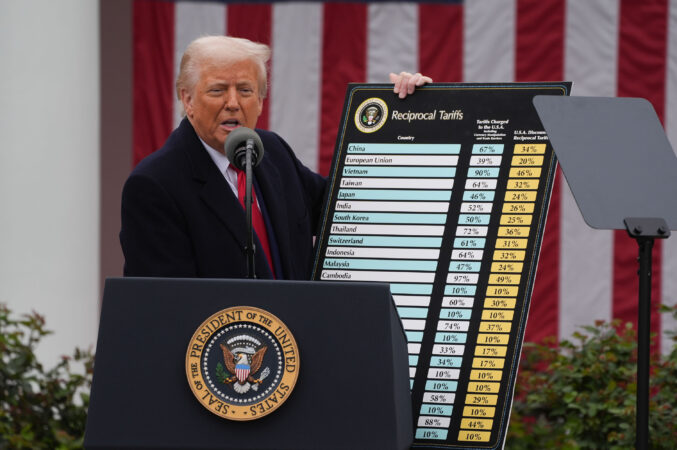
No. The Supreme Court’s ruling applies to the tariffs Trump imposed under the International Emergency Economic Powers Act (IEEPA). That includes the country-specific tariffs such as a 15% levy on goods from European Union countries or a 20% tariff on imports from Vietnam.
That includes most of the tariffs Trump put into place last year, but not all of them. Sector-specific tariffs, such as duties on steel, aluminum, and autos will remain in place.
What does this mean for prices?
Tariffs contributed to rising prices throughout the past year, though not as significantly as some analysts had initially feared. Still, the Yale Budget Lab estimates that the average household would lose about $1,800 because of the cost of tariffs in the short term.
Federal Reserve Chair Jerome H. Powell said in December that tariff price increases caused much of the overshoot in inflation, which has remained stubbornly higher than the Fed’s target rate of 2%.
But even with IEEPA tariffs gone, consumers are unlikely to see much immediate relief in their shopping bills.
“Generally, prices don’t go down once they’ve gone up,” said Joe Feldman, senior managing director and retail analyst at Telsey Advisory Group. “We might see a little bit of relief.”
Companies may be wary to reduce prices when so much uncertainty remains about the future of tariffs.
For months last year, many companies stocked up on imports in anticipation of tariffs. That gave them a cushion before they had to raise prices to make up for the increased cost of goods. That advance inventory started running out for many late last year, but it’s possible that throwing out the IEEPA tariffs will prevent future price increases that would have otherwise taken place.
Will I get any rebates?
Probably not. For the most part, tariffs are paid by importing companies during a Customs and Border Protection process. Individual consumers eventually see some of those fees in the form of cost increases but do not pay tariffs directly.
It’s unlikely that individual businesses will refund customers for price increases.
Trump said several times last year that he planned to use the tariff revenue, which was about $200 billion as of mid-December, to give stimulus checks to Americans. But there are many challenges inherent in that plan, including that tariff funds go to the Treasury and must be allocated by Congress before they are used.
Will businesses get refunds from tariff payments?
Maybe. There’s already a process in place for importers to adjust and dispute the duties they’ve paid at the border, and it’s possible that companies will use that system to appeal the fees they’ve paid over the past several months.
But the government has yet to say if or how refunds would work or how long they might take to reach companies. The Supreme Court did not address what to do about refunds.
At a news conference shortly after the decision was announced, Trump criticized the Supreme Court for not addressing the refund issue.
“I guess it has to get litigated for the next two years,” he said.
Businesses are preparing for a potential refund process, and some had already started petitioning CBP for refunds even before the court ruled, in the hopes of getting put in the front of the line.
Costco, one of the nation’s largest retailers, sued customs officials in late November, saying separate legal action was needed to guarantee its refund rights.
What does this mean for the future of tariffs?
Trump is unlikely to simply dismiss the idea of tariffs because of the legal setback. Members of the Trump administration have already discussed other avenues to impose levies. After the Supreme Court oral arguments, Trump told reporters his team would “develop a ‘game two’ plan.”
There are more traditional — albeit slower — ways to put tariffs in place, such as the sector-specific tariffs on steel, aluminum, and copper. Those are generally proceeded by a government investigation and are more specific than the countrywide tariffs Trump imposed last year.
Trump said Friday after the decision that the government would use a separate law, Section 122, to implement a 10% global tariff. That law allows tariffs to be imposed for 150 days.
He also said he would impose “several” new tariffs under Section 301, which applies to unfair trade practices.
One way Trump might proceed would be to use a different law to temporarily put in place tariffs of up to 15% for about five months, said Patrick Childress, an international trade attorney at Holland & Knight in D.C. and a former assistant general counsel at the Office of the U.S. Trade Representative. During that time, the Trump administration could conduct investigations using a separate law to potentially put in place country-specific tariffs.
“This is the path I think the administration is most likely to take because it gives them speed. They have flexibility to raise tariffs up or down, and they result in country-specific tariffs much like the IEEPA tariffs,” Childress said.
If that’s how the White House ultimately tackles tariffs, it could mean that not much changes at all for consumers.
A Willow Grove man who made more than $600,000 by trading stocks based on confidential information his then-girlfriend gave him about an impending corporate acquisition was sentenced Friday to two years in federal prison.
Carlos Sacanell, 59, apologized for his actions before U.S. District Judge Wendy Beetlestone, saying he’d made a “terrible decision” and had “profound regret” for what he did.
“This action does not represent who I am,” said Sacanell, who pleaded guilty last year to one count of securities fraud.
Sacanell’s crimes occurred in 2023, prosecutors said, when his longtime partner told him that her company, the Chicago-based Oak Street Health Inc., was about to be acquired by CVS Health.
The next day, prosecutors said, Sacanell — without his girlfriend’s knowledge — bought hundreds of thousands of dollars worth of Oak Street stocks and call options.
Sacanell adjusted his purchases over the next few weeks as his girlfriend continued sharing occasional insights about whether or not the deal might go through, prosecutors said. The woman was not aware that he was trading on the information she gave him, prosecutors said, but when the acquisition ultimately closed, Sacanell netted about $617,000.
In April 2023, prosecutors said, the FBI confronted Sacanell — who worked as a scientist — about what they viewed as his suspicious trades, but he denied that he had any insider information about Oak Street or the deal.
Sacanell was indicted in late 2024. His relationship with his then-girlfriend has since ended, his lawyer said, and he is now expected to report to prison in about two months.
He is also expected to be deported once his term of incarceration ends, his lawyer said. Sacanell was born and raised in Spain before becoming a lawful permanent resident of the United States, but will now likely be deported due to his conviction.
Sacanell said he had already repaid about $300,000 worth of his illicit proceeds, and vowed that he would not commit any similar infractions in the future.
“I regret it every day of my life,” Sacanell said.
BARCELONA, Spain — Barcelona’s towering Sagrada Familia basilica reached its maximum height on Friday, though the magnum opus of Catalan architect Antoni Gaudí remains years away from completion.
A crane placed the upper arm of a cross atop the Tower of Jesus Christ, the church’s soaring central piece, which now stands 566 feet above the city.
With Friday’s addition, the Sagrada Familia inched closer to being done. The unfinished monument became the world’s tallest church last year after another part of its central tower was lifted into place.
The first stone of the Sagrada Familia was placed in 1882, but Gaudí never expected it to be completed in his lifetime. Only one of its multiple towers was finished when he died at the age of 73 in 1926, after being hit by a tram.
In recent decades, work has sped up as the basilica became a major international tourist attraction, with people enthralled by Gaudí’s radical aesthetic that combines Catholic symbolism and organic forms.
Inside, the Tower of Jesus Christ is still being worked on. Those who wish to actually see the cross will have to wait until the tower’s inauguration this summer, when the scaffolding surrounding it will be removed, according to the church.
Topping the central tower, which soars above the transept, has been a priority ahead of celebrations this June that will mark the centenary of Gaudí’s death.
As Gaudí had planned, the cross has four arms so its shape can be recognized from any direction, said Sagrada Familia’s rector, the Rev. Josep Turull. If Barcelona’s city government will allow it, the original plan also includes a light beam shining from each of the cross’ arms, symbolizing the church’s role as a spiritual lighthouse, he added.
Millions of tourists visit the Sagrada Familia every year, and entrance fees largely fund the ongoing construction.
This year, the Sagrada Familia will hold several events to celebrate the Catalan Modernist’s legacy, which includes other stunning buildings in Barcelona and elsewhere in Spain.
The Sagrada Familia became the world’s tallest church last October, when it rose above the spire of Germany’s Ulmer Münster, a Gothic Lutheran church built over more than 500 years, starting in 1377. That church tops out at 530 feet.
At Sagrada Familia, a prayer verse is included at the base of the cross installed Friday afternoon, said church rector Turull.
It reads: “You alone are the Holy One, you alone are the Lord, you alone are the Most High.”
The U.S. military is stationing a vast array of forces in the Middle East, including two aircraft carriers, fighter jets and refueling tankers, with President Donald Trump saying that Iran had 10 to 15 days at most to strike a deal over its nuclear program.
“We’re either going to get a deal, or it’s going to be unfortunate for them,” Trump told reporters Thursday aboard Air Force One. On a deadline, Trump said he thought 10 to 15 days was “pretty much” the “maximum” he would allow for negotiations to continue.
“I would think that would be enough time,” he said.
The deployment is unlike anything the U.S. has done since 2003, when it amassed forces before the invasion of Iraq. It dwarfs the military buildup that Trump ordered off the coast of Venezuela in the weeks before he ousted President Nicolas Maduro.
While the U.S. isn’t likely to deploy ground troops, the buildup suggests Trump is giving himself discretion to launch a sustained campaign lasting many days, in cooperation with Israel. While discussions have focused on a sustained campaign far more sweeping than the overnight strikes the U.S. launched against Iran’s nuclear program last June, the president is also weighing a limited early strike designed to drive Tehran to the negotiating table, the Wall Street Journal reported Thursday.
“Maybe we’re going to make a deal,” Trump said in a speech on Thursday morning. “You’re going to be finding out over the next probably 10 days.”
Heightened geopolitical worries over U.S.-Iran tensions sent stocks lower and extended a surge in oil, with Brent crude, the global benchmark, rising above $71 a barrel on Thursday.
The open question is whether Iran can possibly satisfy Trump’s demands and whether, by positioning so much military hardware to the region, Trump may feel compelled to use it rather than backing down.
Tracking site FlightRadar24’s data shows a surge of flight activity by U.S. military transport, aerial tankers, surveillance aircraft and drones to bases in Qatar, Jordan, Crete and Spain.
The aircraft, whose transponders make them visible over land to the tracking site, include KC-46 and KC-135 air-to-air refuelers and C-130J cargo planes used to move troops and heavy equipment.
It also includes E-3 Sentry jets equipped with airborne warning and control system radar, which provide “all-altitude and all-weather surveillance” of potential battle zones, as well as RQ-4 Global Hawk surveillance drones.
The weapons at Trump’s disposal are formidable. The USS Abraham Lincoln aircraft carrier is accompanied by three Arleigh Burke-class guided-missile destroyers, which can carry Tomahawk missiles. The carrier’s air wing includes F-35C fighter jets.
The USS Gerald R. Ford, the most expensive U.S. warship ever built, at $13 billion, is accompanied by guided missile destroyers, and its associated air wing includes F/A-18E and F/A-18F Super Hornets, E-2D airborne early warning aircraft, as well as MH-60S and MH-60R Seahawk helicopters and C-2A Greyhounds.
The two carriers provide “more options, and would enable us to conduct operations on a more sustained basis – if it comes to that,” said Michael Eisenstadt, director of military studies for the Washington Institute for Near East Policy. He said the buildup “signals to the Iranians the need to be more flexible in negotiations.”
Trump met with his son-in-law, Jared Kushner, and special envoy, Steve Witkoff, on Wednesday for an update on the negotiations with Iran. Officials met in the Situation Room on Wednesday to discuss possible action and were told to expect that all U.S. military forces deployed to the region would be in place by mid-March, according to a U.S. official.
A major strike against Iran – where leaders are anxious about regime stability following widespread unrest – risks entangling the U.S. in its third war of choice in the Middle East since 1991, against a more formidable adversary than the U.S. has faced in decades.
Trump’s use of the military in his second term has been characterized by short and successful engagements with minimal harm to American troops, including the bombing of Iranian nuclear targets in June, attacking alleged drug-trafficking boats and the raid that extracted Maduro in early January.
But if fresh strikes on Iran prompt a wider conflagration, the president could face considerable public pressure. Trump spoke against U.S. engagement in foreign wars on the campaign trail, but has gone on to bomb Iran, Tehran-backed Houthi militants in Yemen and militants in Syria.
“With Iran’s air defenses largely neutralized by previous U.S. and Israeli strikes, the U.S. strike fighters would operate largely with impunity over Iranian airspace,” said Bryan Clark, a defense analyst for the Hudson Institute and a former Navy strategy officer. “There is always the risk of downed pilots, but I think the bigger risk is to ships. The same cruise and ballistic missiles the Iranians gave to the Houthis could be turned against U.S. ships in the Persian Gulf, Arabian Sea and Red Sea.”
Thousands of U.S. servicemembers in the region are also within range of Iranian ballistic missiles, and regime officials have vowed to respond with full force to a U.S. strike.
Beyond attacks on U.S. military assets, Iran could try to close the Strait of Hormuz, the narrow waterway between Oman and Iran traversed by 25% of maritime oil traffic.
The U.S. strikes in June 2025 focused on three sites associated with Iran’s nuclear program, but a more ambitious effort to topple the regime in Tehran could involve attacks on sites associated with the Islamic Revolutionary Guard Corps and potentially senior leadership including Supreme Leader Ayatollah Ali Khamenei.
But Iran might be able to withstand such decapitation attempts.
“Israel already killed the top leaders of the IRGC in its opening strikes in the June war and Iran was able to reconstitute and respond within 24 hours,” said Jamal Abdi, president of the U.S.-based National Iranian American Council. “They’ve now planned for these possibilities in future wars and so now may be even more resilient if senior leaders are killed.”
White House press secretary Karoline Leavitt said Wednesday that Iran was expected to offer a response to the negotiations within “the next couple of weeks,” but did not preclude the possibility of military action before that. “The president will continue to watch how this plays out,” she said.
Justices wrote the Constitution “very clearly” gives Congress the power to impose taxes, which include tariffs, and that Trump could not invoke emergency powers to impose them.
Philly area lawmakers, area businesses react to Supreme Court ruling
President Donald Trump slammed Republican-nominated Supreme Court justices who ruled against him Friday.
Pennsylvania lawmakers say Congress should reclaim its power over taxes and tariffs after the U.S. Supreme Court quashed President Donald Trump’s controversial global tariffs.
The nation’s high court ruled 6-3 Friday that Trump overstepped with tariffs imposed under an emergency powers law, dealing a significant blow to the president’s economic agenda and reasserting congressional authority.
Chief Justice John Roberts and Justices Neil Gorsuch and Amy Coney Barrett — both Trump nominees — joined liberal justices in the majority. Justices Brett Kavanaugh, Clarence Thomas, and Samuel Alito dissented.
Trump told reporters at the White House Friday that he was “ashamed” of the three Republican-appointed justices for not having “the courage to do what’s right for our country.”
But local lawmakers celebrated the decision as a step toward alleviating inflation exacerbated by Trump’s tariffs.
It’s “the first piece of good news that American consumers have gotten in a very long time,” said U.S. Rep. Brendan Boyle (D., Philadelphia), the ranking member of the House Budget Committee.
The decision is likely not the end of the road for Trump’s efforts to impose tariffs. The court struck down the broad authority Trump had claimed to impose sweeping tariffs but he could still impose additional import and export taxes using powers he employed in his first term.
President of Philly port operator says Supreme Court ruling ‘hard to interpret’
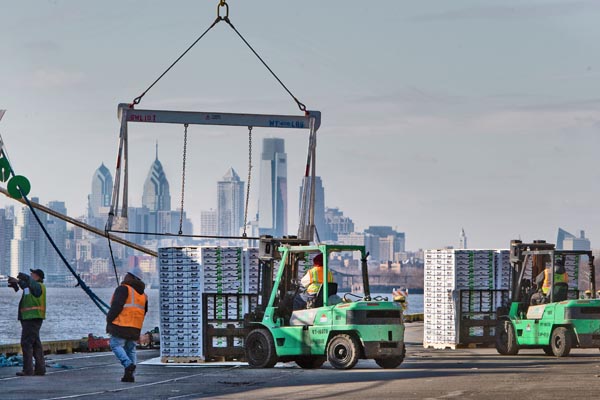
Workers move cargo at the Tioga Marine Terminal in Port Richmond.
Andrew Sentyz is president of Delaware River Stevedores, which operates the Port of Philadelphia’s publicly owned Tioga Marine Terminal in Port Richmond.
“It’s kind of hard to interpret,” he said of the Supreme Court ruling. “…I don’t know if I have a handle on what exactly it’s going to impact, and what it’s not. Some [tariffs] are still there, some are not.”
“Our business is a lot like a public utility in that there’s a demand and there’s a supply and we’re like the conduit the goods pass through,” he said. “…Trade policy massively affects how much moves or how much doesn’t move and in which direction.”
Sentyz said he’s cautiously optimistic about a normalization in trade.
“From the perspective that people have more certainty, I think it is welcome,” he said of the court ruling. “People receiving the cargo, they like a market that’s predictable. When it’s unpredictable it makes their business much harder. We’re impacted by how much they buy or sell.”
Will companies get refunds for paying tariffs the Supreme Court has now ruled were illegally imposed?
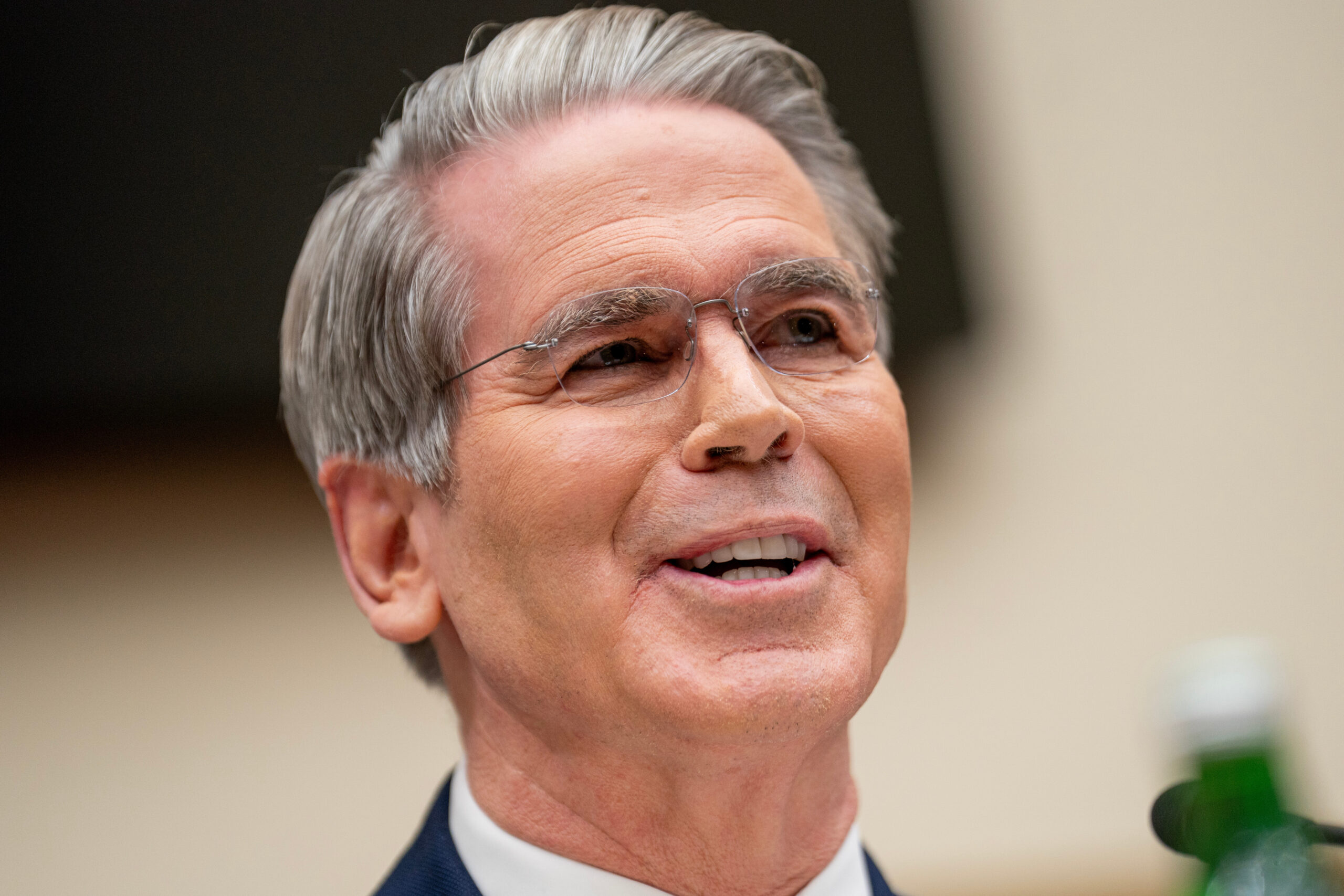
Treasury secretary Scott Bessent doesn’t think it’s likely.
“I got a feeling the American people won’t see it,” Bessent said during an interview at the Economic Club of Dallas Friday,
Bessent said he expects tariff revenue to be “virtually unchanged” in 2026 because the administration plans to turn to alternate methods to collect the levies.
Trump has already announced he plans to impose a 10% global tariff using an untested section of the 1974 Trade Act meant to address issues with international payments.
Reaction from Europe focuses on renewed upheaval, confusion
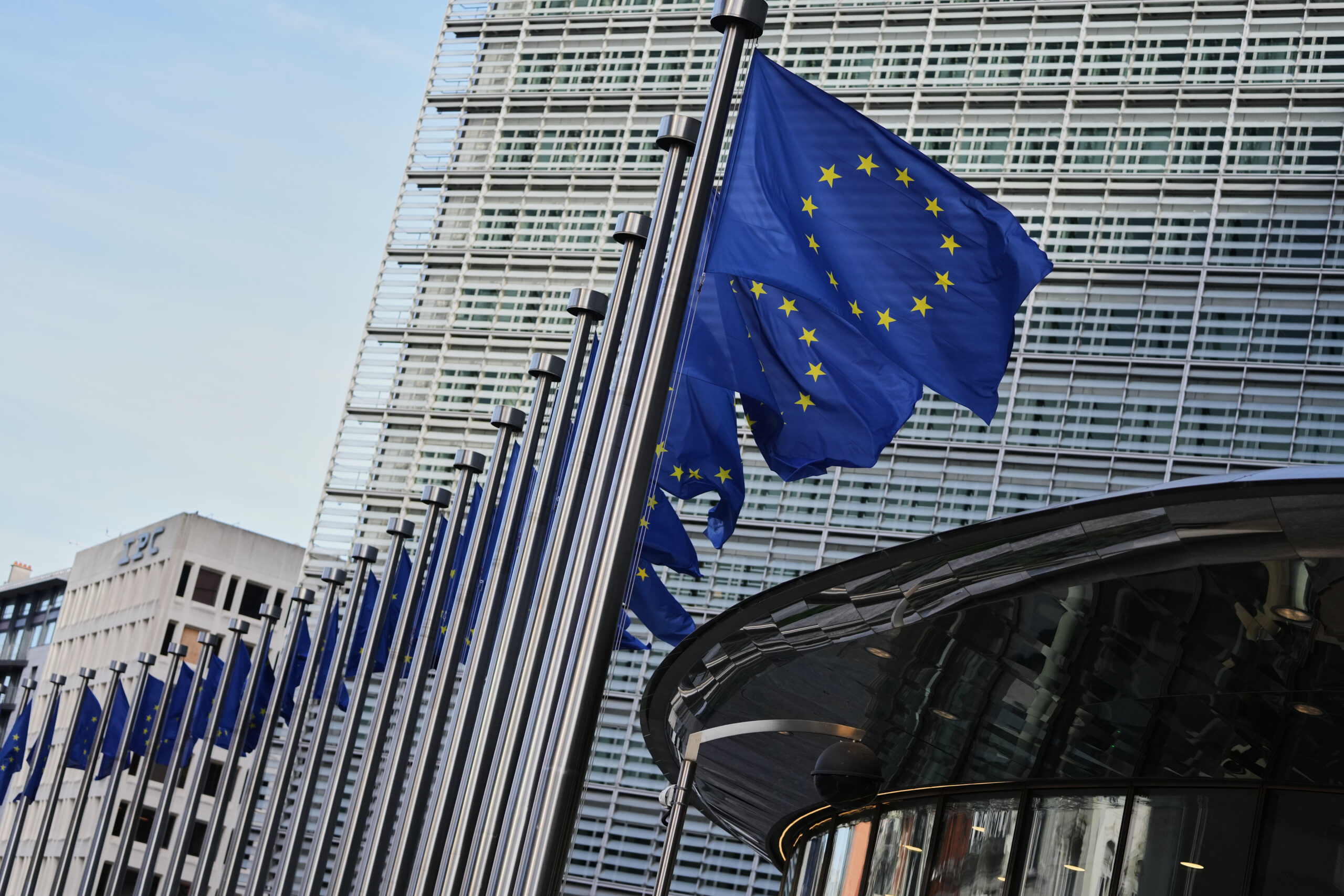
European Union flags flap in the wind outside of EU headquarters in Brussels.
The initial reaction from Europe focused on renewed upheaval and confusion regarding costs facing businesses exporting to the US.
The European Commission had reached a deal with the Trump administration capping tariffs on European imports at 15%. The deal gave businesses certainty that helped them plan, a factor credited with helping the 21 countries that use the euro currency skirt a recession last year.
“Uncertainty remains high for German enterprises doing business in the US,” said the German Chamber of Commerce and Industry. “Because there are other instruments for trade limitations in the hands of the US administration that German companies must prepare themselves for.”
Trump could resort to laws permitting more targeted tariffs that could hit pharmaceuticals, chemicals and auto parts, said Carsten Brzeski, global head of macro at ING bank: “Europe should not be mistaken, this ruling will not bring relief. … The legal authority may be different, but the economic impact could be identical or worse.”
— Associated Press
// Timestamp 02/20/26 3:08pm
Supreme Court ruling the beginning of a long legal battle
Among those following the issue, the Supreme Court ruling was “widely expected,” said Villanova University professor of international business Jonathan Doh.
In oral hearings, the Trump administration had argued that the tariffs were necessary due to trade disputes that constituted an emergency, said Doh, who had served as a trade policy negotiator during the 1990s.
However, the administration then touted the tariffs’ revenue-generating capacity — saying they’ve raised about $175 billion, Doh said. Supreme Court justices took notice of this when they weighed whether this was really an emergency.
“The justices spent as much time arguing about whether the remedy [for the trade dispute] was tariffs,” Doh said.
The 6-3 decision is having immediate effects, Doh said. Importers can no longer collect tariffs through this act. Companies are already looking for ways to recoup what they paid from the federal government. And the Trump administration has already announced it plans to implement “temporary” tariffs through another legal mechanism.
This “shifting playing field” only adds uncertainty to a business community that’s been watching tariffs closely since the start of Trump’s second term, Doh said. All of this will play out in legal battles in the lower courts.
“The decision was extremely significant, but it’s not the end of the story,” Doh said. “In some ways it’s just the beginning.”
Shapiro calls on Trump to ‘listen’ to the Supreme Court
Speaking to reporters on Friday, Gov. Josh Shapiro said he agreed with the Supreme Court’s decision to strike down Trump’s tariffs.
“I have made no bones about the fact that these tariffs are really harming,” the governor said. “I spend a lot of time on farmlands in our commonwealth. Farmers are getting killed by this.”
“We are hearing from folks in our rural communities sort of questioning why would the president do this,” Shapiro continued. “At the same time we’re seeing grocery prices go up, consumer goods go up, and there is a direct line connecting those price increases to the president pushing the tariff.”
Inflation reports show Trump’s tariffs inflated prices across household consumer items by as much as 5% at times.
Shapiro concluded by taking a jab at the president.
“I think the Supreme Court got it right. I say that as a former attorney general, and I say that as someone who actually follows the law,” he said. “And I think the president needs to actually listen to the Supreme Court and drop this and stop the pain for Pennsylvania and stop the pains for the Americans who are dealing with rising prices directly as a result of his tariffs.”
Bucks County Republican Rep. Brian Fitzpatrick ‘applauds’ Supreme Court decision
U.S. Rep. Brian Fitzpatrick (R., Pa.) is a moderate who represents Bucks County.
Casey-Lee Waldron, a spokesperson for U.S. Rep. Brian Fitzpatrick (R., Bucks), said in a statement Friday the lawmaker “applauds” the high court’s decision, “which validates the Congressman’s opposition to blanket and indiscriminate tariffs that are not narrowly tailored, and that do not lower costs for the American consumer.”
Waldron added that Fitzpatrick, a moderate who represents purple Bucks County, supports enforcing trade laws but that “This should always be done in a collaborative manner with a bipartisan, bicameral majority in Congress.”
Rep. Mary Gay Scanlon, a Delaware County Democrat, joined the chorus of lawmakers applauding the decision Friday afternoon.
In a post to X she called the decision a “win for the American people.”
“If the President stands by his disastrous tariff policy, it’s because he doesn’t care about lowering costs for American families,” Scanlon wrote.
Trump says he’ll impose a 10% tariff on all countries using untested statute
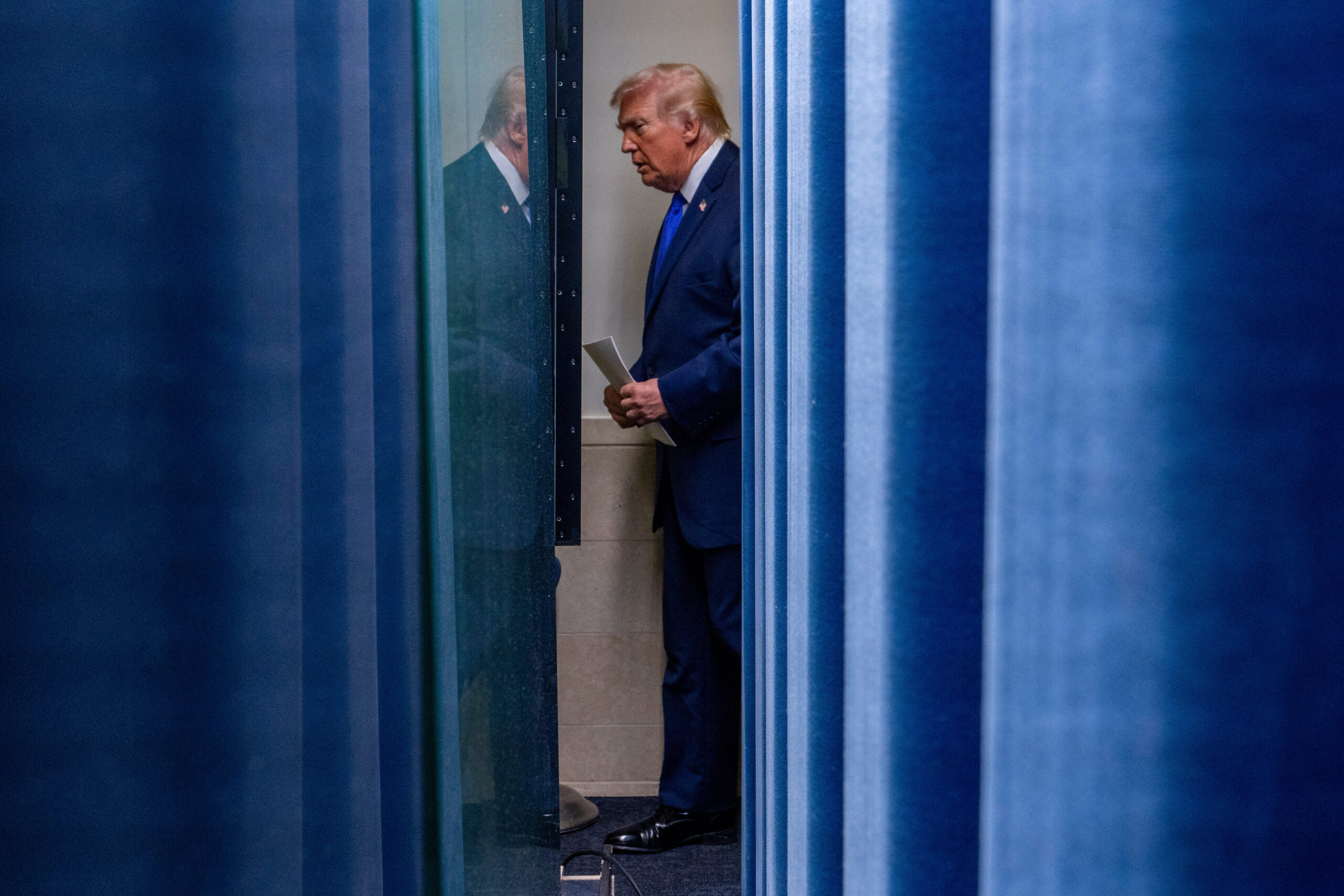
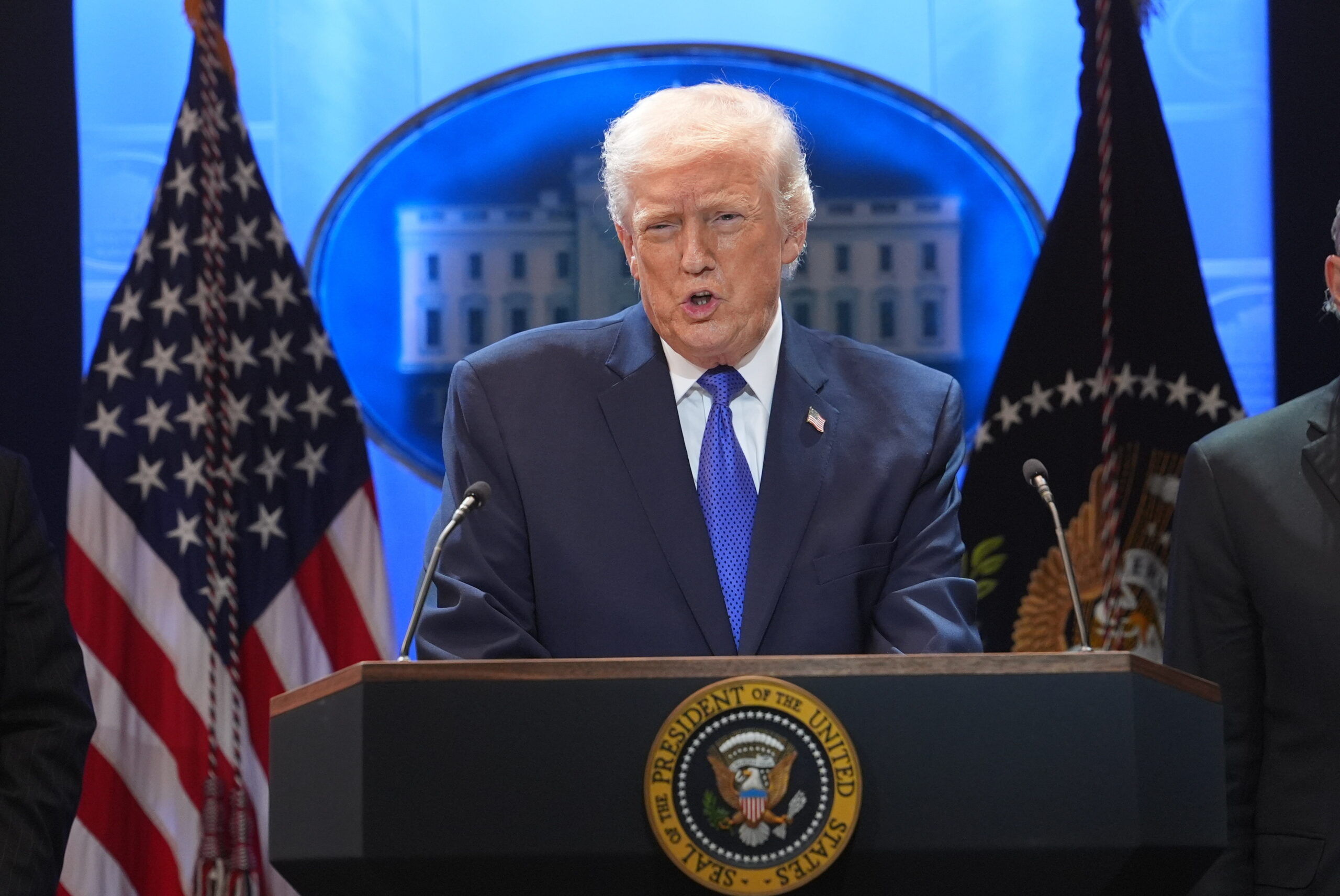
President Donald Trump speaks with reporters Friday.
President Donald Trump told reporters he plans to sign an executive order enacting 10% global tariffs following the Supreme Court’s decision.
“Today, I will sign an order to impose a 10% global tariff under Section 122, over and above our normal tariffs already being charged,” Trump said Friday. “And we’re also initiating several section 301, and other investigations to protect our country from unfair trading practices of other countries and companies.”
Section 122, a statute created by the 1974 Trade Act, allows the president to impose temporary tariffs on countries to address issues with international payments. The statute, which has never been invoked by a president, limits tariffs to 150 days.
National Association of Manufacturers president: U.S. trade policy needs ‘clarity and durability’
Jay Timmons, president of the National Association of Manufacturers, said he and other leaders of the 14,000-member manufacturers’ group share President Trump’s goal of “ushering in the greatest manufacturing era.” But, he added, the court decision “underscores the importance of clarity and durability in U.S. trade policy.”
Timmons was in Philadelphia Friday morning to meet with leaders from the port, shipyard, Chamber of Commerce, and others in industry.
Stable tariffs and policies boost investment and hiring, but “legal and policy uncertainty make it more difficult” for American companies to compete, Timmons added in a statement. Since the court has ruled, “now is the time for policymakers to work together to provide a clear and consistent framework for trade.”
In the future, tariffs should be limited, according to the NAM leader. Timmons said punitive tariffs should target “specific unfair trade practices,” especially in “nonmarket” nations where government controls production.
NAM has pledged to work with Congress and the Trump administration on “durable” solutions to boost U.S. manufacturing and factory workers, he concluded.
‘Fools and lapdogs’: Trump says Republican-appointed Supreme Court justices lacked loyalty in tariff ruling
President Donald Trump speaks to reporters Friday.
President Donald Trump slammed three Republican-appointed Supreme Court justices for voting in favor of striking down his tariffs on foreign goods.
Two justices Trump nominated — Neil Gorsuch and Amy Coney Barrett — joined with chief justice John Roberts in ending Trump’s central economic policy.
Speaking to reporters at the White House Friday, Trump said he was “ashamed” the three justices — two of whom he nominated — didn’t have “the courage to do what’s right for our country.”
Trump also went after the court’s three Democratic appointees, calling them “automatic no” votes on any of his policies that make their way to the Supreme Court.
“You can’t knock their loyalty,” Trump said. “It’s one thing you can do with some of our people … They’re just being fools and lapdogs for the RINOs and radical-left Democrats.”
“Trump’s tariffs are FAR from over,” says Gene Marks, small business columnist for The Inquirer and founder of small-business consulting firm Marks Group in Bala Cynwyd.
Marks notes, “As Karoline Leavitt said back in June ‘we can walk and chew gum at the same time’ and as Scott Bessent said in December: ‘The administration will be able to replicate tariffs even if the SCOTUS rules against.’”
Some ways it could do so, Marks added, include:
The 1930 Smoot Hawley Act allows the U.S. to impose tariffs up to 50% on imports from countries that “discriminate” against U.S. goods through unfair duties, taxes, or regulations. But it requires congressional approval.
Section 122 of the Trade Act of 1974 gives the president “balance-of-payments” authority. This has a 150-day limit unless extended by Congress, and a 15% maximum rate.
Section 232 of the Trade Expansion Act of 1962/Section 301 of the Trade Act of 1974 allow tariffs on sectors or industries. These would require investigations and public comment.
“The only thing certain about tariffs in 2026 is that there will be a lot of uncertainty,” Marks said.
Tariffs had been impacting business at the Port of Philadelphia
Cranes at the Packer Avenue Marine Terminal in South Philadelphia.
Tariffs have slowed business at the Port of Philadelphia lately, with cargo volume down across the board — containers, steel, automobiles, and other commodities.
Philly is a major gateway for produce, bringing in more fresh fruit than any other U.S. port, largely from Central and South America. The port saw record container volume last year, handling almost 900,000 units, up 6% over 2024. About two-thirds of that cargo was refrigerated — fruit and meat, for example.
But the year got off to a slow start. “The story is increased competition and tariffs,” Sean Mahoney, marketing director at the Philadelphia Regional Port Authority (PhilaPort), said during the agency’s board meeting on Wednesday.
Container volume in January was down 14% over the year-earlier period. Auto imports fell 17%, and breakbulk cargoes (steel, paper, lumber) fell too. (Tariffs weren’t the only factor; Mahoney noted that ports in early 2025 happened to see more cargo than usual in part because shippers ordered more goods amid labor negotiations between employers and unions representing dockworkers.)
Shapiro hails Supreme Court decision to stop Trump’s ‘reckless approach’
Pennsylvania Gov. Josh Shapiro has been a vocal opponent of Trump’s tariffs.
Gov. Josh Shapiro, who has been a frequent critic of the tariffs, posted to X Friday applauding the Supreme Court’s decision.
“Donald Trump’s tariffs have been a disaster — wreaking havoc on Pennsylvania farmers, small business owners, and families who are just trying to make ends meet,” Shapiro wrote.
He urged Trump to follow the court’s ruling and “drop this reckless approach to economic policy that has done nothing but screw over Americans.”
New Jersey import-export company doesn’t expect it will be easy to get refunds
Now that the Supreme Court has made its decision, one big question for companies is whether they’ll be able to get refunds for the additional tariffs they’ve paid since “liberation day” 10 months ago, said Tim Avanzato, vice president of international sales at Lanca Sales Inc.
The New Jersey-based import-export company should be eligible for as much as $4 million in tariff refunds, Avanzato said. But getting that money is far from guaranteed.
“It’s going to create a paperwork nightmare for importers,” he said, and he doesn’t expect the Trump administration to make it easy.
He’ll also be on the lookout for other ways the Trump administration may implement tariffs, further complicating the matter.
Avanzato said President Trump was right when he said that other countries have been taking advantage of the U.S. with their tariffs — and in principle, the president was right to apply his own.
“He should have done more with a scalpel than with a bomb,” Avanzato said.
Though companies may be able to recoup some of what they lost, the same won’t go for consumers, he noted.
“Companies are not very good at passing on savings,” Avanzato said. “Nobody is going to rush to drop their prices.”
Supreme Court ruling brings uncertainty to Pennsylvania businesses
Canada is Pennsylvania’s biggest export market, with the state sending more than $14 billion in goods there in 2024.
The Supreme Court’s decision may be welcome news for U.S. businesses that pay the import taxes, but one immediate effect is more uncertainty as firms weigh whether to hire and make investments.
Not all of President Donald Trump’s tariff increases came through the use of the International Emergency Economic Powers Act and therefore some will remain in place, said Julie Park, a partner at London-based tax and business advisory firm Blick Rothenberg.
“This decision brings further uncertainty for businesses,” she said in a statement. That’s in part because Trump could seek to reimpose tariffs through other legal tools, leaving “businesses in limbo about if they will get refunded.”
U.S. exporters will also be closely following what happens next, since the fate of Trump’s tariffs will likely affect whether other countries like Canada keep their retaliatory measures in place. Canada is Pennsylvania’s biggest export market, with the state sending more than $14 billion in goods there in 2024. Top exports included machinery, cocoa, iron, and steel.
Pennsylvania’s dairy industry has also been caught in the middle of the global trade war, as China and Canada imposed extra taxes on those goods in response to U.S. tariffs.
President Donald Trump will hold a news briefing at 12:45 p.m. to address the Supreme Court’s ruling, White House Press Secretary Karoline Leavitt announced on social media.
// Timestamp 02/20/26 12:17pm
Gov. Mikie Sherrill, other New Jersey officials celebrate Supreme Court ruling
New Jersey Gov. Mikie Sherrill, seen here in November.
New Jersey Gov. Mikie Sherrill celebrated the court ruling on President Donald Trump’s tariffs, which she said have raised costs by $1,700 per New Jersey family and had a negative impact on small businesses and jobs.
“I’m thrilled that folks and businesses will start to see the relief they deserve – with no thanks to the president,” she added.
The new governor ran on a message combining affordability and fighting Trump. She took particular aim at his tariffs and visited small businesses in South Jersey to discuss their impact on local economies in the state.
Sen. Andy Kim, a South Jersey Democrat, said the Supreme Court’s decision is “a step” in righting wrongs by Trump’s administration, but that there’s “so much more to go.”
Calling the tariffs “unpopular and illegal,” the senator said the president cost Americans “a lot of money.”
“Trump 2.0: You pay for his tariffs, tax breaks for his billionaire donors, & insane corruption for his friends and family,” he added in a social media post.
Sen. Cory Booker, a North Jersey Democrat, lauded the Supreme Court for ruling “what we’ve all known: this administration cannot ignore the rule of law and Congress’ role to protect America’s economy from reckless and chaotic tariffs.”
“For nearly a year, Trump abused our trade tools to curry favors with foreign officials and exact revenge on his rivals, all while America’s working families and small businesses paid the price,” Booker said on social media. “Trump raised the cost on everything from the food we eat to the clothes we wear, and also failed to bring back good-paying jobs or fix our broken economy.”
Philly Rep. Dwight Evans calls on Congress to reassert its constitutional power
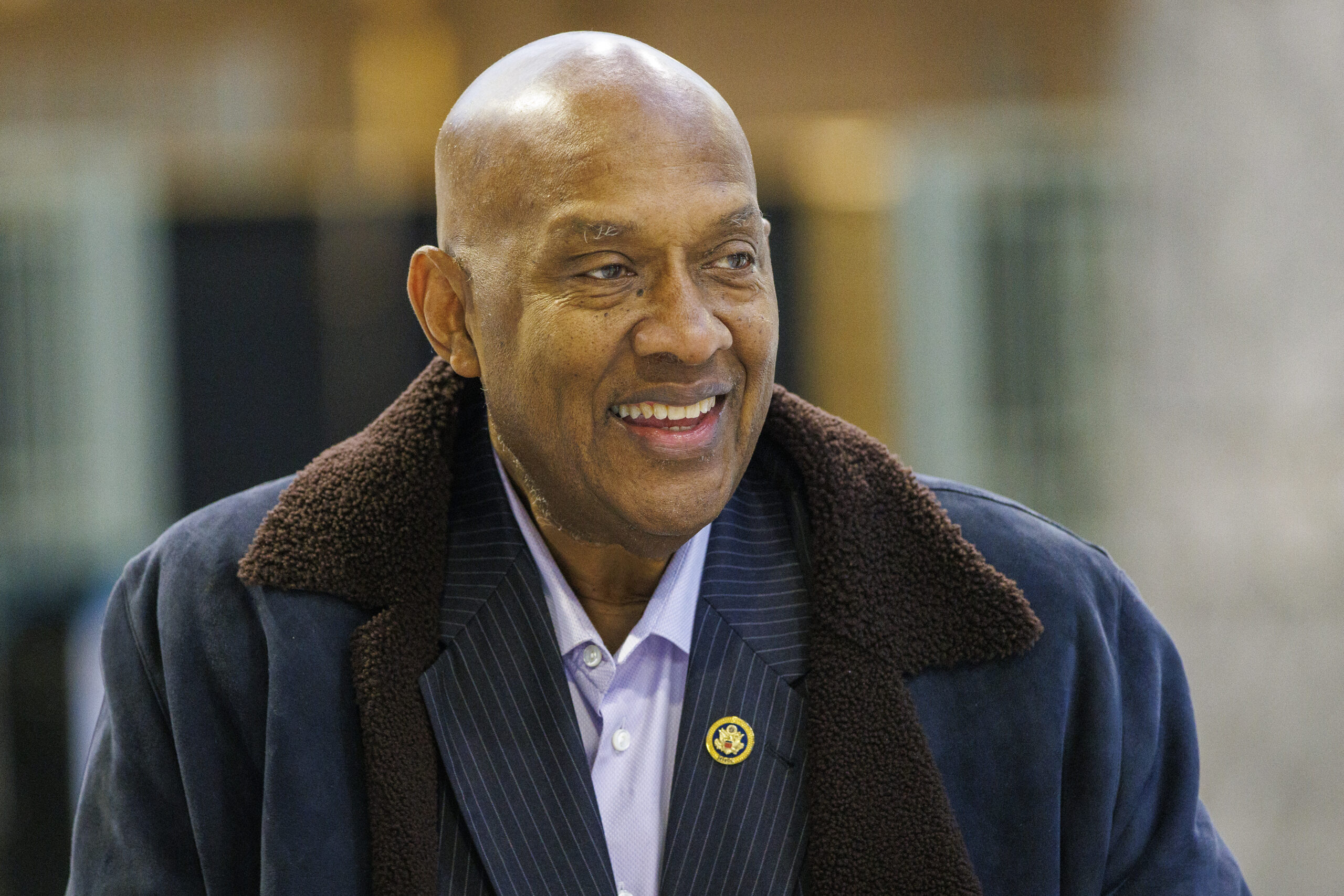
Congressman Dwight Evans, seen here in 2025.
U.S. Rep. Dwight Evans (D., Pa.), who represents parts of Philadelphia, called the ruling a win for the wallets of Americans and called on Congress to reassert its power over the country’s economy.
“The Constitution is clear — only Congress has the power to levy tariffs and other taxes,” Evans wrote on social media. “I’m a co-sponsor of legislation to return this power to Congress — it’s long past time Republicans work with Democrats to pass it!”
The bill, which has no chance of passing in the Republican-controlled House, would require congressional approval for all new tariffs and the reversal of tariffs imposed on Mexico and Canada enacted through the United States-Mexico-Canada Agreement.
His call was echoed by Sen. Chuck Grassley, an Iowa Republican who serves as the chairman of the Senate Judiciary Committee.
In a statement, Grassley wrote, “I’ve made clear Congress needs to reassert its constitutional role over commerce, which is why I introduced prospective legislation that would give Congress a say when tariffs are levied in the future.”
President Trump described the Supreme Court decision as “a disgrace” when he was notified in real time during his morning meeting with several governors.
That’s according to someone with direct knowledge of the president’s reaction, who spoke on the condition of anonymity to discuss the private conversation. Trump was meeting privately with nearly two dozen governors from both parties when the decision was released.
— Associated Press
// Timestamp 02/20/26 11:03am
Brendan Boyle celebrates Supreme Court ruling as ‘good news’ for consumers
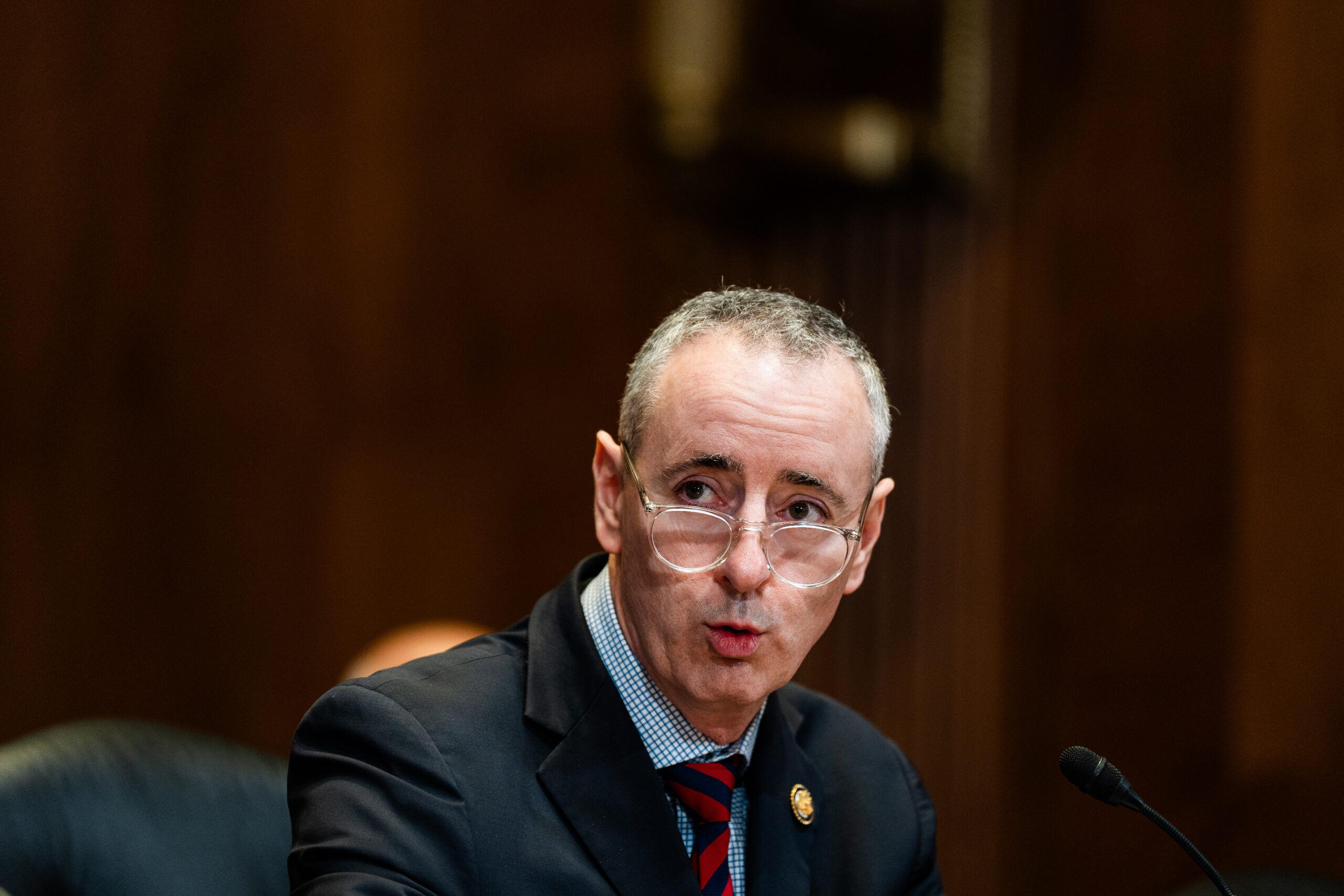
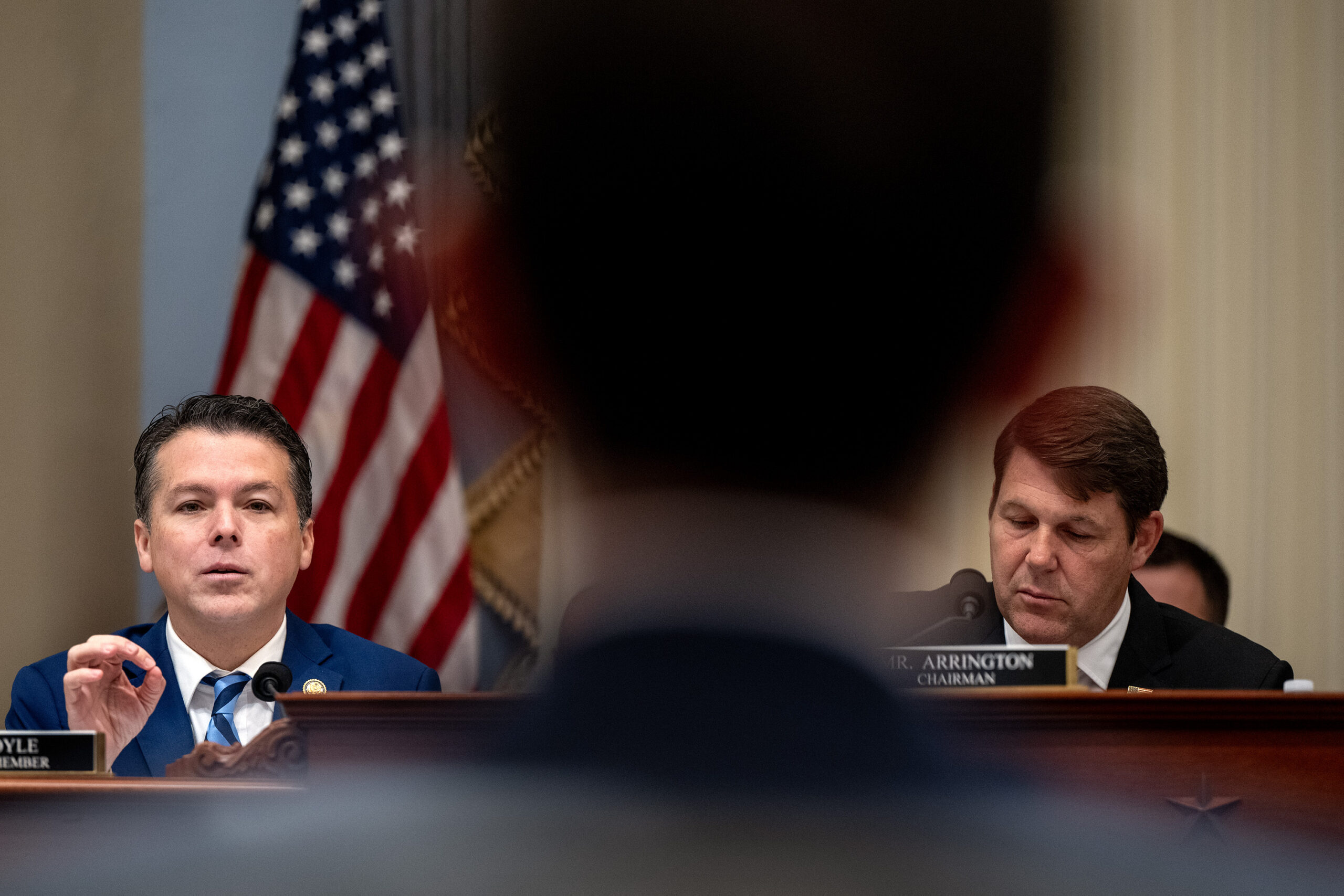
U.S. Rep. Brendan Boyle during a hearing on Capitol Hill in Washington, D.C., in November.
The decision is “the first piece of good news that American consumers have gotten in a very long time,” said U.S. Rep. Brendan Boyle (D., Philadelphia), the ranking member of the House Budget Committee, said in an interview Friday.
Boyle noted that the public will eventually see prices go down, but it remains unclear what will happen to tariff revenue that’s already been collected. But Pennsylvania lawmakers, including Boyle, are pushing for Congress to reassert its power to control the country’s purse strings.
“As the Supreme Court validated this morning, Congress has the authority to levy taxes and tariffs,” Boyle said. “It’s time now for us to finally reclaim that authority and bring some certainty and rationality to our tariff policy, which under Donald Trump has been all over the map and changes day by day, even hour by hour.”
Boyle and U.S. Rep. Dwight Evans (D., Philadelphia) have cosponsored a bill that would require congressional approval for all new tariffs and the reversal of tariffs imposed on Mexico and Canada enacted through the United States-Mexico-Canada Agreement. It’s unlikely that it will pass the Republican-controlled U.S. House.
Will businesses get refunds? One Supreme Court justice says the process will be a ‘mess’
Supreme Court Justice Brett Kavanaugh, who was one of three who ruled against striking down the tariffs.
Companies have collectively paid billions in tariffs. Many companies, including the big-box warehouse chain Costco, have already lined up for refunds in court, and Justice Brett Kavanaugh noted the process could be complicated.
“The Court says nothing today about whether, and if so how, the Government should go about returning the billions of dollars that it has collected from importers. But that process is likely to be a ‘mess,’ as was acknowledged at oral argument,” Kavanaugh wrote in the dissent.
We Pay the Tariffs, a coalition of more than 800 small businesses that has been advocating against the tariffs, said a process for refunding the tariffs is imperative.
“A legal victory is meaningless without actual relief for the businesses that paid these tariffs,” executive director Dan Anthony said in a statement. “The administration’s only responsible course of action now is to establish a fast, efficient, and automatic refund process that returns tariff money to the businesses that paid it.”
— Associated Press
// Timestamp 02/20/26 10:36am
The Supreme Court strikes down Trump’s tariffs
The Supreme Court struck down President Donald Trump’s far-reaching global tariffs on Friday, handing him a significant loss on an issue crucial to his economic agenda.
The 6-3 decision centers on tariffs imposed under an emergency powers law, including the sweeping “reciprocal” tariffs he levied on nearly every other country.
It’s the first major piece of Trump’s broad agenda to come squarely before the nation’s highest court, which he helped shape with the appointments of three conservative jurists in his first term.
The majority found that the Constitution “very clearly” gives Congress the power to impose taxes, which include tariffs. “The Framers did not vest any part of the taxing power in the Executive Branch,” Chief Justice John Roberts wrote.
Justices Samuel Alito, Clarence Thomas, and Brett Kavanaugh dissented.
“The tariffs at issue here may or may not be wise policy. But as a matter of text, history, and precedent, they are clearly lawful,” Kavanaugh wrote in the dissent.
The economic impact of Trump’s tariffs has been estimated at some $3 trillion over the next decade, according to the Congressional Budget Office. The Treasury has collected more than $133 billion from the import taxes the president has imposed under the emergency powers law, federal data from December shows. Many companies, including the big-box warehouse chain Costco, have already lined up in court to demand refunds.
— Associated Press
// Timestamp 02/20/26 10:34am
Trump could still impose tariffs under other laws
The Supreme Court’s tariffs decision doesn’t stop President Donald Trump from imposing duties under other laws.
While those have more limitations on the speed and severity of Trump’s actions, top administration officials have said they expect to keep the tariff framework in place under other authorities.
“It’s hard to see any pathway here where tariffs end,” said Georgetown trade law professor Kathleen Claussen. “I am pretty convinced he could rebuild the tariff landscape he has now using other authorities.”
The Constitution gives Congress the power to levy tariffs. But the Trump administration argued that a 1977 law allowing the president to regulate importation during emergencies also allows him to set tariffs. Other presidents have used the law dozens of times, often to impose sanctions, but Trump was the first president to invoke it for import taxes.
Trump set what he called “reciprocal” tariffs on most countries in April 2025 to address trade deficits that he declared a national emergency. Those came after he imposed duties on Canada, China, and Mexico, ostensibly to address a drug trafficking emergency.
A series of lawsuits followed, including a case from a dozen largely Democratic-leaning states and others from small businesses selling everything from plumbing supplies to educational toys to women’s cycling apparel.
The challengers argued the emergency powers law doesn’t even mention tariffs and Trump’s use of it fails several legal tests, including one that doomed then-President Joe Biden’s $500 billion student loan forgiveness program.
— Associated Press
Two Trump Supreme Court appointees ruled against his tariffs
Chief Justice John Roberts wrote the court’s majority opinion, joined by Justices Neil Gorsuch and Amy Coney Barrett, two of Trump’s three Supreme Court picks. The three liberal justices were also part of the majority.
Justice Brett Kavanaugh, Trump’s other appointee, wrote the main dissent, joined by Justices Clarence Thomas and Samuel Alito.