Category: News

Latest breaking news and updates

  • Four years after Russian invasion, Ukrainians around Philadelphia are thankful for support, wary of future

    Four years after Russian invasion, Ukrainians around Philadelphia are thankful for support, wary of future

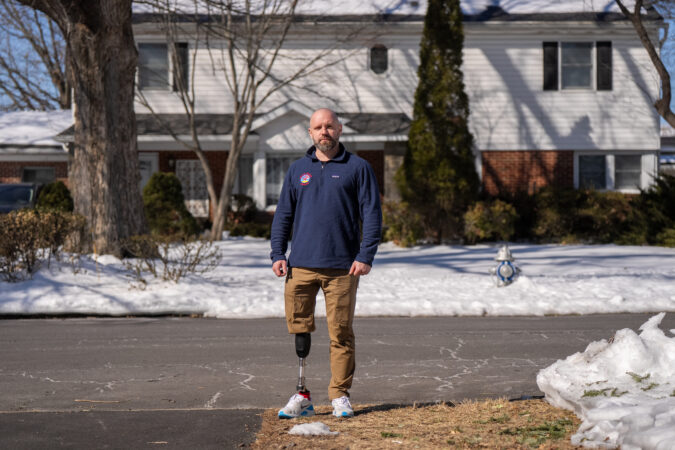
    To explain his journey from Ukraine to Huntingdon Valley in Montgomery County, Ukraine army veteran Illia Haiduk first must explain one of the worst days of his life.

    On Nov. 3, 2023, Haiduk and about 70 other Ukrainian soldiers were at an outdoor awards ceremony in Zaporizhzhia, near the war’s front line. After an enemy drone spotted the gathering, the Russians launched an Iskander-M ballistic missile.

    “You hear nothing,” Haiduk said. “It just hits immediately.”

    Haiduk awoke on the ground. To his left, people were moving. To his right was “a mess, fire, and smoke.”

    He tried to get up. That was when he realized shrapnel had mangled his lower right leg.

    Haiduk belted a tourniquet around his thigh and tried to crawl to another soldier from his unit, the 128th Mountain Division. “I wanted to get to him. And there was this hole in his chest. Nothing could save him. He was the same age as me,” the 35-year-old said.

    The attack killed at least 19 soldiers and wounded dozens more, according to news reports.

    Haiduk’s injury sent him on a long path of healing that ultimately brought him to the Philadelphia area. But more than two years later, the attack is just one incident in a war that has claimed an estimated 2 million lives.

    Vladislaw Romanenko (left) and Ilia Haiduk in a community-living home where veterans of the war in Ukraine support each other through their medical journeys, in Philadelphia, Feb. 13, 2026.

    Four years after Russia invaded Ukraine, the war’s effects can be found throughout the region, among refugees and veterans seeking support services and the advocates helping them. Many are concerned about the future.

    “In 2022, support and donations poured, but every year they become smaller and smaller,” said Roman Vengrenyuk of Philadelphia, who helps run the Revived Soldiers Ukraine program that brought Haiduk to the U.S. “A lot of nonprofits closed.”

    Vengrenyuk said he has no expectation that the war will end this year. The Trump administration has failed to provide Ukraine with the weapons it needs to win, he said. Meanwhile, the bloodshed has left 60,000 Ukrainians in need of amputations, overwhelming hospitals in Ukraine and Europe.

    Though it has gotten harder to get attention for their cause, an alliance of healthcare providers, nonprofits, and advocates across Philadelphia has continued to help wounded veterans and refugees. And for that, Vengrenyuk said, he is grateful.

    “The Philadelphia community of doctors really stepped in,” Vengrenyuk said.

    Life after war

    After recovering from his injury, Haiduk went home and attempted to return to civilian life, but he felt depressed. That changed, however, in 2025, when he traveled to Canada to compete in the Invictus Winter Games, a multisport event for disabled veterans. He won a bronze medal in the skeleton race, and he found purpose and fellowship with others who had similar experiences.

    “We can talk really freely, because we know that this man will understand me,” Haiduk said of his fellow veterans.

    Vladyslaw Romanenko at a community-living home where veterans of the war in Ukraine support each other through their medical journeys, in Philadelphia, Feb. 13, 2026.

    Later that year, Revived Soldiers Ukraine sent Haiduk to Orlando , where he received a prosthetic lower leg.

    Haiduk got more involved with the Florida-based nonprofit. He has since helped numerous disabled veterans who were routed to the Philadelphia region for medical care.

    One is 30-year-old Vladyslav Romanenko, a former engineering student from Kharkiv who joined the army in 2022 and lost his lower arms in a drone strike last May. Romanenko is one of six Ukrainian war veterans living together at two homes in Huntingdon Valley.

    Revived Soldiers Ukraine flew Romanenko and his partner to Philadelphia. At Wills Eye Hospital, a Ukrainian-speaking doctor, Michael Klufas, helped to restore vision in his right eye. Then, Prosthetic Innovations in Eddystone, Delaware County, outfitted him with bionic arms. “I’m very grateful to the Ukrainian and American doctors,” Romanenko said in Ukrainian, as Haiduk translated.

    Oleksii Kondratenko at a community-living home where veterans of the war in Ukraine support each other through their medical journeys, in Philadelphia, Feb. 13, 2026.

    Haiduk said Romanenko’s story is typical of the soldiers he works with: men from a wide range of professions and ages, who signed up to save their people. “I would never have joined the army, but because the war started, it was my responsibility to join, for my country,” Romanenko said.

    Haiduk said people in the U.S., and most of the world, support the Ukrainian cause of “democracy and humanity.” However, more pressure needs to be put on Russia, he said.

    “There is support, but it isn’t enough support to end this war,” Haiduk said.

    Paying to stay in the U.S.

    As an American-born Ukrainian whose parents were displaced after World War II, 71-year-old Mary Kalyna said, she considers it her mission to help those in “the Ukrainian diaspora.” The fluent Ukrainian speaker from Mount Airy said the situation has gotten worse for Ukrainian refugees since last year.

    “Even though Ukraine is not in the news as much, I believe people still support Ukraine,” Kalyna said. “The problem is our government has changed. Now we have a government that is less supportive of Ukraine.”

    The Konoshchuk family has lunch Sunday, Feb. 15, 2026. The family, from Ukraine, lives in Delaware County.

    She criticized President Donald Trump for welcoming Russian President Vladimir Putin and holding peace talks where Ukraine was expected to cede land to Russia.

    To her, Trump administration policy is working against local efforts from churches and communities that have embraced Ukrainians.

    “There are many, many screws being tightened,” Kalyna said.

    She provided an example: Due to one provision in Trump’s “One Big Beautiful Bill,” thousands of Ukrainians who previously had been invited to the U.S. through the federal United for Ukraine program have to pay $1,000 per family member to maintain their humanitarian parole status.

    On a Sunday afternoon at an apartment in Norwood, Delaware County, Kalyna met with one family who received such a notice at the end of December. Yurii Konoshchuk, 43, explained that he and his wife and four children came to the U.S. in May 2023. His 9-year-old daughter, Milana, has leukemia and is receiving treatment at Children’s Hospital of Philadelphia.

    “We don’t have any safe place in Ukraine,” Konoshchuk said. “It is so important for us to be here. We thank God that we’re in Philadelphia.”

    Though Konoshchuk works full-time at the Barry Callebaut chocolate factory in Eddystone, and has a supportive community at the nearby Living Hope Ukrainian Baptist Church, money has been tight. Then, he got a bill from the federal government to pay $6,000 or risk his family being deported.

    As Kalyna prayed with the family and shared in the Sunday dinner they had prepared, she was brought to tears when asked about the money. Kalyna said that after people in the Northwest Regional Refugee and Immigrant Network sent out emails, they raised $6,000 within a few hours.

    “People really want to give,” she said. “They understand.”

    Milana Konoshchuk smiles for a portrait between her parents, Yurii (left) and Anna on Sunday, Feb. 15, 2026. Refugees from Ukraine, the Konoshchuks are living in Delaware County while their daughter receives medical treatment for leukemia at CHOP.

    At the dinner table, the Konoshchuk family recounted their journey. Katie Konoshchuk, 14, remembered going weeks without school, and having to evacuate to the school basement during air raids. Each child had to carry a flashlight. Her 13-year-old sister, Ohli, said they used to hope that if the bombs came, they would come on a day they had to take a test.

    “People adjust to the situation that they’re in,” their mother, Anna Konoshchuk, said.

    Yurii Konoshchuk said he saw missiles flying so low overhead that he could read the words written on them. “It’s good then, because you think it will not fall on you, but you don’t know about next time, and you don’t know who it did fall on.”

    One of the missiles struck an electric power station less than a mile away, he said, and over the winter of 2022-23, it was a regular occurrence to rush from their home to the air-raid shelter in a city without light.

    “We never in the city saw such bright stars,” he said. “It was beautiful on the heaven, but not on the earth.”

    Yurii Konoshchuk struggled to predict what will happen next. “We are thankful, first to God, and to American nation, to give us the possibility of treatment here,” he said.

    When they came to the U.S., Anna Konoshchuk said, she told her children life would be better, more peaceful. “But we’re treating it as an experience,” she said. “We don’t know how long America will allow us to stay. We’re being flexible.”


  • U.S. economic growth weaker than thought in fourth quarter with government shutdown, consumer pullback

    U.S. economic growth weaker than thought in fourth quarter with government shutdown, consumer pullback

    WASHINGTON — U.S. economic growth slowed in the final three months of last year, dragged down by the six-week shutdown of the federal government and a pullback in consumer spending.

    The nation’s gross domestic product — the total output of goods and services — increased at a 1.4% annual rate in the fourth quarter, the Commerce Department reported Friday, down from 4.4% in the July-September quarter and 3.8% in the quarter before that.

    The figures point to what could be a more modest pace of growth in the coming quarters, as consumers have taken on more debt and saved less to maintain their spending, a process that may be difficult to sustain. Business investment, other than data centers and equipment dedicated to artificial intelligence, grew at only a moderate pace.

    Still, a measure of underlying growth that focuses on consumer and business spending was mostly healthy at 2.4%, economists said. The sharp slowdown in government outlays because of the shutdown shaved a full percentage point from growth.

    Consumers and companies spent at a “reasonably solid” pace, said Martha Gimbel, executive director of the Budget Lab at Yale and former economist in the Biden White House. “This is not a disastrous report.”

    Also Friday, the Supreme Court struck down many of President Donald Trump’s tariffs, which have lifted inflation slightly and likely discouraged many companies from hiring by raising their costs. At a news conference, Trump quickly promised to reimpose the tariffs under different laws than the one the court invalidated.

    Consumer spending also rose 2.4% in the fourth quarter, a solid increase but notably below the third quarter’s healthy 3.5% gain. Federal government outlays plunged nearly 17% amid the shutdown. That decline should mostly reverse in the coming quarters, however.

    The outsize growth last summer and fall — when the economy expanded at about a 4% annual pace — partly reflected sharply lower imports. Companies ramped up imports in the first quarter of last year to get ahead of President Donald Trump’s tariffs. After boosting growth in the second and third quarters, trade had little impact at the end of last year.

    Diane Swonk, chief economist at KPMG, said the report reflected a “one-legged” economy boosted mostly by artificial intelligence, which is fueling business spending and has also lifted wealth for those households that own stocks and have benefited from rising share prices.

    Many households, however, have had to take on more debt to fuel their spending. The saving rate dropped to just 3.6% in the fourth quarter, the second-lowest figure since August 2008, when the economy was mired in the Great Recession.

    “The economy looks golden on paper, but beneath the surface is lead,” Swonk said.

    Early Friday, before the figures were released, Trump attacked congressional Democrats for shutting down the government last fall. He also reiterated his criticism of Federal Reserve Chair Jerome Powell for not cutting interest rates more quickly.

    “The Democrat Shutdown cost the U.S.A. at least two points in GDP,” Trump posted on his social media site. “That’s why they are doing it, in mini form, again. No Shutdowns! Also, LOWER INTEREST RATES. “Two Late” Powell is the WORST!!!”

    A separate report Friday showed that inflation, according to the Fed’s preferred measure, accelerated in December, as the cost of goods such as furniture, clothes, and groceries picked up. That makes it less likely the Fed will reduce its key interest rate in the coming months.

    Earlier this month, Trump predicted a blowout gain in GDP of more than 5% even if the government shutdown was factored into the figures. Trump has been trying to claim that the economy is at its strongest point in history, even though the new data shows that growth slowed, compared with 2024, following his return to the White House.

    The data arrives before Trump delivers the State of the Union address on Tuesday, where he is expected to say that the economy is booming.

    The report also underscores an odd aspect of the U.S. economy: It is growing steadily, but without creating many jobs. Growth was a solid 2.2% in 2025, yet a government report last week showed that employers added less than 200,000 jobs last year — the fewest since COVID struck in 2020.

    Economists point to several possible reasons for the gap: The Trump administration’s crackdown on immigration has sharply slowed population growth, reducing the number of people available to take jobs. It’s one reason that the unemployment rate rose only slightly — to 4.3% from 4% — last year, even with the nearly non-existent hiring.

    Some businesses may also be holding back on adding jobs out of uncertainty about whether artificial intelligence will enable them to produce more without finding new employees. And the cost of tariffs has reduced many companies’ profits, possibly leading them to cut back on hiring.

    The economy is also unusual right now because growth is solid, inflation has slowed a bit, and unemployment is low, but surveys show that Americans are generally gloomy about the economy. In January, a measure of consumer confidence fell to its lowest level since 2014, yet consumers have kept spending, propelling growth.

    Some of that spending may be disproportionately driven by upper-income consumers, in a phenomenon known as the “K-shaped” economy. Yet data from many large banks suggests lower-income consumers are still raising their spending, even if by not as much.

  • A World Cup FanFest that had been planned near the Statue of Liberty is canceled

    A World Cup FanFest that had been planned near the Statue of Liberty is canceled

    NEW YORK — The New York and New Jersey World Cup host committee has canceled its fan festival that had been planned to be held at Liberty State Park in Jersey City.

    The committee scrapped plans for the weekslong festival that would have been held about 15 miles (24 kilometers) from MetLife Stadium in East Rutherford, where the final will be played on July 19.

    The FanFest was announced in February 2025 by Tammy Murphy, wife of then-New Jersey Gov. Phil Murphy and chair of the New York/New Jersey host committee’s directors, who said it would be open for all 104 matches of the tournament, which starts June 11.

    The committee said in a statement Friday an “expanded network of fan zones and community celebrations across 21 counties in New Jersey will serve as a cornerstone of the region’s official fan engagement program.”

    Mikie Sherrill, Murphy’s successor as governor, announced a $5 million initiative Thursday to fund community World Cup initiatives.

    Tickets for the FanFest had been put on sale in December.

    Plans for a FanFest in New York City’s Corona Park in Queens did not move forward. One is now planed for the U.S. Tennis Association’s Billie Jean King National Tennis Center in Queens from June 17-28 and a fan village is scheduled for Manhattan’s Rockefeller Center from July 4-19.

    Fan fests with large video screens have been a part of each World Cup’s organization since 2006.

    FIFA is running the World Cup itself unlike in the past, when a local organizing committee was in charge of logistics. The host committees are limited to sponsorship agreements in categories not reserved by FIFA.

  • Former ‘Jersey Shore’ star Snooki says she has cervical cancer

    Former ‘Jersey Shore’ star Snooki says she has cervical cancer

    FLORHAM PARK, N.J. — Nicole “Snooki” Polizzi said Friday that she has cervical cancer.

    The former “Jersey Shore” star said in a video posted to TikTok that a biopsy had revealed the stage one cancer.

    “Obviously not the news that I was hoping for,” she said, sitting in her car between medical appointments. “But also not the worst news, just because they caught it so early, thank freaking God.”

    She urged her followers to get Pap smears, and said she is likely to have a hysterectomy after her initial treatment.

    “So 2026 is not panning out how I wanted it to,” she said.

    Polizzi became one of the breakout stars of “Jersey Shore” from its debut on MTV in 2009. She was on the reality show for six seasons and appeared in the later spinoffs “Snooki & JWoww” and “Jersey Shore: Family Vacation.”

    Now 38, she still lives in New Jersey, has been married for 11 years and has three children.

  • Trump administration doesn’t need to restore more President’s House exhibits for now, appeals court says

    Trump administration doesn’t need to restore more President’s House exhibits for now, appeals court says

    President Donald Trump’s administration won its first court victory in the President’s House case Friday afternoon, when a federal appeals judge paused the injunction ordering the restoration of the slavery exhibits to the site.

    Third Circuit Judge Thomas M. Hardiman, a George W. Bush appointee, overruled a district judge’s order just an hour before the government’s deadline to comply with the injunction.

    The National Park Service does not need to restore the exhibits for the the moment, the order said, but is enjoined from damaging the exhibits and required to take “all necessary steps” to ensure they are not harmed.

    The order further prohibits the federal government from making any other changes to the site, including setting up replacement exhibits, which the Department of Interior said would have been installed “in the coming days” if not for the injunction.

    “[The Department of Interior and National Park Service] are to preserve the status quo as to the President’s House as of the entry of this order,” Hardiman wrote.

    The order is not accompanied by an opinion or memorandum explaining which of the government’s arguments Hardiman found compelling.

    Hardiman’s ruling landed an hour before the deadline District Judge Cynthia M. Rufe set for the administration to restore the site to its condition before the Jan. 22 abrupt removal of the exhibits.

    Park Service staff began reinstalling exhibits Thursday.

    In a legal filing Friday, U.S. attorneys said National Park Service staff had begun planning to reinstall the exhibits once they received the Feb. 16 order to restore the site.

    On Thursday, 16 of 17 glass panels were reinstalled, with the remaining one needing repairs. Prior to the Third Circuit order, National Park Service employees on Friday restored panels around the site’s glass-enclosed archaeological dig, the wayside panel identifying the site, and four functioning video monitors, the federal government said.

    The federal government also had not reinstalled 13 metal panels, but was in the process of doing so prior to the stay, according to the filing.

    The city declined to comment on Hardiman’s order. The National Park Service did not immediately respond to a request for comment.

    The government argued to the Third Circuit that Rufe misunderstood the difference between the laws and agreements that govern the 55-acre Independence Hall National Historic Park and the stricter rules regarding Independence Hall National Historic Site, the city-owned block between Chestnut and Walnut Streets.

    The President’s House, on the corner of Sixth and Market Streets, sits on federal land and the law “imposes no restriction on the government’s removal of the President’s House exhibit,” the filing said.

    The city failed to demonstrate harm from the removal of the exhibits, the administration argued, because it has other avenues to promote the history of slavery in the President’s House.

    But an injunction forcing the restoration of the exhibits violates the federal government’s free-speech rights, the stay request argued.

    “It requires the display and operation of expressive exhibits — at a marquee national historic site in the run-up to the nation’s 250th anniversary — when the government has chosen not to display those exhibits,” the court filing said.

    The city responded to the request in a letter in which it expressed confusion about what the administration was asking for. After all, the government already began restoring the exhibits.

    “It is not clear whether the United States is asking the court for permission to re-remove the panels that were just reinstalled yesterday, or whether they are asking to be relieved of the duty to reinstall the remaining panels, or whether they are asking for more time to restore the remaining panels because today’s deadline is not feasible,” the city’s letter said.

    Either way, the city reiterated its opposition to a stay.

    Philadelphia’s lawsuit was the first in the nation challenging the removal of exhibits from national parks in accordance with Trump’s March executive order, which instructed the Interior Department to remove any content or displays that “inappropriately disparage Americans past or living.”

    Advocates celebrated the return of the exhibits commemorating the nine enslaved people who lived in George Washington’s house in a Thursday afternoon rally.

    The site will see no further changes for now. Hardiman placed the injunction appeal on an expedited track. With the current deadlines set by the judge, a ruling on the injunction is unlikely before May.

  • Measles exposure in a Delaware children’s hospital emergency room

    Measles exposure in a Delaware children’s hospital emergency room

    People visiting the emergency room at Nemours Children’s Hospital in Wilmington on Wednesday might have been exposed to measles, according to the Delaware Division of Public Health.

    Officials are working on contact tracing to notify those who could be affected, and to verify their vaccination status, provide educational resources, and recommend quarantine if needed.

    A highly contagious illness, measles can infect 90% of exposed unvaccinated people. Delaware residents can check their vaccine status at the DelVAX Public Portal or through their healthcare provider.

    The Delaware Division of Public Health recommends a dose of the measles, mumps, and rubella vaccine within 72 hours of exposure. Pharmacies and primary care providers can help access the vaccine.

    As an airborne virus, measles can be spread through coughs, sneezes, and saliva particles. Those particles can linger in the air and nearby surfaces for more than two hours, exposing anyone who might have been in the room.

    Officials urge people to keep a 21-day watch on their symptoms — which could include high fever, cough, runny nose, and a red rash — until March 11.

    Measles can be particularly dangerous for immunocompromised people, such as organ-transplant and chemotherapy patients, people living with HIV/AIDS, and children under 5.

    No matter their vaccination status, pregnant people who might have been exposed are encouraged to go to the emergency room as soon as possible for a checkup and possible treatment.

    Delaware is not the only state dealing with a measles comeback.

    Last week, a possible measles exposure was detected at Philadelphia International Airport. And on Feb. 5, five cases were confirmed in Lancaster County, according to the Pennsylvania Department of Health. All patients were young adults and school-age children, marking the first outbreak of the year.

    Meanwhile, South Carolina is currently dealing with a large outbreak that doctors call the worst in 30 years, Reuters reported.

    The illness can lead to pneumonia, brain infection, and death. Of every 1,000 children infected with measles, between one and three will die, according to the Philadelphia Department of Public Health.

    People who have been vaccinated, those who have already had measles, or were born before 1957 are considered immune.

  • Supreme Court strikes down Trump’s sweeping tariffs, sparking fierce pushback and vow of new levies

    Supreme Court strikes down Trump’s sweeping tariffs, sparking fierce pushback and vow of new levies

    WASHINGTON — The Supreme Court struck down President Donald Trump’s far-reaching global tariffs on Friday, handing him a stinging loss that sparked a furious attack on the court he helped shape.

    Trump said he was “absolutely ashamed” of some justices who ruled 6-3 against him, calling them “disloyal to our Constitution” and “lapdogs.” At one point he even raised the specter of foreign influence without citing any evidence.

    The decision could have ripple effects on economies around the globe after Trump’s moves to remake post-World War II trading alliances by wielding tariffs as a weapon.

    But an unbowed Trump pledged to impose a new global 10% tariff under a law that’s restricted to 150 days and has never been used to apply tariffs before.

    “Their decision is incorrect,” he said. “But it doesn’t matter because we have very powerful alternatives.”

    The court’s ruling found tariffs that Trump imposed under an emergency powers law were unconstitutional, including the sweeping “reciprocal” tariffs he levied on nearly every other country.

    Trump appointed three of the justices on the nation’s highest court during his first term, and has scored a series of short-term wins that have allowed him to move ahead with key policies.

    Tariffs, though, were the first major piece of Trump’s broad agenda to come squarely before the Supreme Court for a final ruling, after lower courts had also sided against the president.

    The majority found that it is unconstitutional for the president to unilaterally set and change tariffs because taxation power clearly belongs to Congress. “The Framers did not vest any part of the taxing power in the Executive Branch,” Chief Justice John Roberts wrote.

    Justices Brett Kavanaugh, Samuel Alito, and Clarence Thomas dissented.

    “The tariffs at issue here may or may not be wise policy. But as a matter of text, history, and precedent, they are clearly lawful,” Kavanaugh wrote. Trump praised his 63-page dissent as “genius.”

    The court majority did not address whether businesses could get refunded for the billions they have collectively paid in tariffs. Many companies, including the big-box warehouse chain Costco, have already lined up in lower courts to demand refunds. Kavanaugh noted the process could be complicated.

    “The Court says nothing today about whether, and if so how, the Government should go about returning the billions of dollars that it has collected from importers. But that process is likely to be a ‘mess,’ as was acknowledged at oral argument,” he wrote.

    The Treasury had collected more than $133 billion from the import taxes the president has imposed under the emergency powers law as of December, federal data show. The impact over the next decade has been estimated at some $3 trillion.

    The tariffs decision doesn’t stop Trump from imposing duties under other laws. Those have more limitations on the speed and severity of Trump’s actions, but the president said they would still allow him to “charge much more” than he had before.

    Vice President JD Vance called the high court decision “lawlessness” in a post on X.

    Questions about what Trump can do next

    Still, the ruling is a “complete and total victory” for the challengers, said Neal Katyal, who argued the case on behalf of a group of small businesses.

    “It’s a reaffirmation of our deepest constitutional values and the idea that Congress, not any one man, controls the power to tax the American people,” he said.

    It wasn’t immediately clear how the decision restricting Trump’s power to unilaterally set and change tariffs might affect trade deals with other countries.

    “We remain in close contact with the U.S. Administration as we seek clarity on the steps they intend to take in response to this ruling,” European Commission spokesman Olof Gill said, adding that the body would keep pushing for lower tariffs.

    The Supreme Court ruling comes after victories on the court’s emergency docket have allowed Trump to push ahead with extraordinary flexes of executive power on issues ranging from immigration enforcement to major federal funding cuts.

    The Republican president had long been vocal about the tariffs case, calling it one of the most important in U.S. history and saying a ruling against him would be an economic body blow to the country. But legal opposition crossed the political spectrum, including libertarian and pro-business groups that are typically aligned with the GOP. Polling has found tariffs aren’t broadly popular with the public, amid wider voter concern about affordability.

    While the Constitution gives Congress the power to levy tariffs, the Trump administration argued that a 1977 law allowing the president to regulate importation during emergencies also allows him to set import duties. Other presidents have used the law dozens of times, often to impose sanctions, but Trump was the first president to invoke it for tariffs.

    “And the fact that no President has ever found such power in IEEPA is strong evidence that it does not exist,” Roberts wrote, using an acronym for the International Emergency Economic Powers Act.

    Trump set what he called “reciprocal” tariffs on most countries in April 2025 to address trade deficits that he declared a national emergency. Those came after he imposed duties on Canada, China, and Mexico, ostensibly to address a drug trafficking emergency.

    A series of lawsuits followed, including a case from a dozen largely Democratic-leaning states and others from small businesses selling everything from plumbing supplies to women’s cycling apparel.

    The challengers argued the emergency powers law doesn’t even mention tariffs and Trump’s use of it fails several legal tests, including one that doomed then-President Joe Biden’s $500 billion student loan forgiveness program.

    Justices reject use of emergency powers for tariffs

    The three conservative justices in the majority pointed to that principle, which is called the major questions doctrine. It holds that Congress must clearly authorize actions of major economic and political significance.

    “There is no exception to the major questions doctrine for emergency statutes,” Roberts wrote. The three liberal justices formed the rest of the majority, but didn’t join that part of the opinion.

    The Trump administration had argued that tariffs are different because they’re a major part of Trump’s approach to foreign affairs, an area where the courts should not be second-guessing the president.

    But Roberts, joined by Justices Neil Gorsuch and Amy Coney Barrett, brushed that aside, writing that the implications for international relations don’t change the legal principle.

    Small businesses celebrated the ruling, with the National Retail Federation saying it provides “much needed certainty.”

    Illinois toy company Learning Resources was among the businesses challenging the tariffs in court. CEO Rick Woldenberg said he expected Trump’s new tariffs but hoped there might be more constraint in the future, both legal and political. “Somebody’s got to pay this bill. Those people that pay the bill are voters,” he said.

    Ann Robinson, who owns Scottish Gourmet in Greensboro, N.C., said she was “doing a happy dance” when she heard the news.

    The 10% baseline tariff on U.K. goods put pressure on Robinson’s business, costing about $30,000 in the fall season. She’s unsure about the Trump administration’s next steps, but said she’s overjoyed for now. “Time to schedule my ‘Say Goodbye to Tariffs’ Sale!”

  • Cuba’s healthcare system pushed to the brink by U.S. fuel blockade, Cuban minister says

    Cuba’s healthcare system pushed to the brink by U.S. fuel blockade, Cuban minister says

    HAVANA — Cuba’s debilitated healthcare system has been pushed to the brink of collapse by the U.S. blockading the country’s oil supply, a Cuban official said Friday.

    The country’s medical system was already perpetually crisis-stricken along with the island’s economy, with lack of supplies, staff, and medicine long being the norm. But the turmoil has reached a new extreme in recent weeks. Ambulances are struggling to find fuel to respond to emergencies. Persistent outages have plagued deteriorated hospitals. Flights bringing vital supplies have been suspended as Cuba’s government says it’s now unable to refuel airplanes in its airports.

    Experts and some leaders of other countries have warned that the island could be on the verge of a humanitarian crisis.

    In an interview with the Associated Press, Cuba’s Health Minister José Ángel Portal Miranda said that U.S. sanctions are no longer just crippling the island’s economy, they’re threatening “basic human safety.”

    “You cannot damage a state’s economy without affecting its inhabitants,” Portal said. “This situation could put lives at risk.”

    According to Portal, 5 million people in Cuba living with chronic illnesses will see their medications or treatments affected. This includes 16,000 cancer patients requiring radiotherapy and another 12,400 undergoing chemotherapy.

    Cardiovascular care, orthopedics, oncology, and treatment for critically ill patients who require electrical backup are among the most impacted areas, he said. Kidney disease treatments and emergency ambulance services have also been added to the list of impacted services.

    The energy crisis Cuba has been grappling with for years entered new extremes last month when President Donald Trump signed an executive order that would impose a tariff on any country that sells or provides oil to Cuba. It came just weeks after Trump deposed Venezuelan President Nicolás Maduro and announced no more Venezuelan oil would go to Cuba.

    Cuba, which produces only 40% of its own fuel and largely depends on oil to power the island, has long relied on allies like Venezuela, Mexico, and Russia to fill its energy deficit. But those shipments have now dried up.

    Trump has openly said that his larger hope is to push regime change in Cuba by intensifying economic pressure on the island, which has already struggled to cope with decades of U.S. sanctions.

    Cuban people — who the U.S. government has said it seeks to defend — are the ones feeling the harsh ripple effects of the U.S. fuel blockade as hardship mounts every day. Buses have slashed routes, gas has been put under strict rationing and is only being sold in foreign currency, and endemic blackouts have reached a new extreme.

    “There’s been a drastic change since January,” said Aniliet Rodríguez, a 25-year-old pregnant woman who was admitted that month to a maternal care center for an extreme case of anemia. “There’s no bread, no milk for nutrition … . There are no medicines.”

    Cuba’s healthcare system follows a universal and free model, providing local clinics on nearly every block and state subsidized medicine. But it’s also entered a state of crisis in recent years, especially since the COVID-19 pandemic. Thousands of doctors being paid state wages that can hardly afford them a carton of eggs have emigrated from the country and hospitals have rapidly deteriorated.

    Medicine shortages have forced many to buy them on the black market instead.

    Such problems are expected to worsen in the coming weeks even though Cuba’s government has struggled to adjust to the new reality, Portal said. Solar panels have been installed in clinics while authorities prioritize care to children and the elderly.

    But he also said they have placed restrictions on some more energy-reliant technologies like CT scans and laboratory tests, noting doctors will have to rely on more basic methods to treat patients, effectively cutting many off from high levels of care.

    “We are facing an energy siege with direct implications for the lives of Cubans, for the lives of Cuban families,” Portal said.

  • House Speaker Mike Johnson denies request for Rev. Jesse Jackson to lie in honor in U.S. Capitol

    House Speaker Mike Johnson denies request for Rev. Jesse Jackson to lie in honor in U.S. Capitol

    WASHINGTON — The late Rev. Jesse Jackson will not lie in honor in the United States Capitol Rotunda after a request for the commemoration was denied by the House Speaker Mike Johnson’s office due to past precedent.

    Johnson’s office said it received a request from the family to have Jackson’s remains lie in honor at the Capitol, but the request was denied, because of the precedent that the space is typically reserved for former presidents, the military, and select officials.

    The civil rights leader died this week at the age of 84. The family and some House Democrats had filed a request for Jackson to be honored at the U.S. Capitol.

    Amid the country’s political divisions, there have been flare-ups over who is memorialized at the Capitol with a service to lie in state, or honor, in the Rotunda. During such events, the public is generally allowed to visit the Capitol and pay their respects.

    Recent requests had similarly been made, and denied, to honor Charlie Kirk, the slain conservative activist, and former Vice President Dick Cheney.

    There is no specific rule about who qualifies for the honor, a decision that is controlled by concurrence from both the House and Senate.

    The Jackson family has announced scheduled dates for memorial services beginning next week that will honor the late reverend’s life in Chicago, Washington, D.C., and South Carolina. In a statement, the Jackson family said it had heard from leaders in both South Carolina, Jackson’s native state, and Washington offering for Jackson to be celebrated in both locations. Talks are ongoing with lawmakers about where those proceedings will take place. His final memorial services will be held in Chicago on March 6 and 7.

    Typically, the Capitol and its Rotunda have been reserved for the “most eminent citizens,” according to the Architect of the Capitol’s website. It said government and military officials lay in state, while private citizens in honor.

    In 2020, Rep. John Lewis, another veteran of the Civil Rights movement, was the first Black lawmaker to lie in state in the Capitol Rotunda after a ceremony honoring his legacy was held outside on the Capitol steps due to pandemic restrictions at the time.

    Later that year, then-House Speaker Nancy Pelosi allowed services for Supreme Court Justice Ruth Bader Ginsburg at the Capitol’s Statuary Hall after agreement could not be reached for services in the Capitol’s Rotunda.

    It is rare for private citizens to be honored at the Capitol, but there is precedent — most notably Civil Rights icon Rosa Parks, in 2005, and the Rev. Billy Graham, in 2018.

    A passionate civil rights leader and globally-minded humanitarian, Jackson’s fiery speeches and dual 1984 and 1988 presidential campaigns transformed American politics for generations. Jackson’s organization, the Rainbow PUSH Coalition, became a hub for progressive organizers across the country.

    His unapologetic calls for a progressive economic agenda and more inclusive policies for all racial groups, religions, genders and orientations laid the groundwork for the progressive movement within the Democratic Party.

    Jackson also garnered a global reputation as a champion for human rights. He conducted the release of American hostages on multiple continents and argued for greater connections between civil rights movements around the world, most notably as a fierce critic of the policies of Apartheid South Africa.

  • All truckers and bus drivers will be required to take commercial driver’s license tests in English

    All truckers and bus drivers will be required to take commercial driver’s license tests in English

    All truckers and bus drivers will have to take their commercial driver’s license tests in English as the Trump administration expands its aggressive campaign to improve safety in the industry and get unqualified drivers off the road.

    Transportation Secretary Sean Duffy announced the latest effort Friday to ensure that drivers meet the federal requirements to understand English well enough to read road signs and communicate with law enforcement officers. Florida already started administering its tests in English.

    Currently, many states allow drivers to take their license tests in other languages even though they are required to demonstrate English proficiency. California offered tests in 20 other languages. Duffy said that a number of states have hired other companies to administer commercial driver’s licenses tests, and those companies aren’t enforcing the standards that drivers are supposed to meet to demonstrate their driving and English skills.

    These latest enforcement efforts come just days after the Transportation Department said 557 driving schools should close because they failed to meet basic safety standards. The department has been aggressively going after states that handed out commercial driver’s licenses to immigrants who shouldn’t have qualified for them ever since a fatal crash in August.

    A truck driver who Duffy says wasn’t authorized to be in the U.S. made an illegal U-turn and caused a crash in Florida that killed three people. Other fatal crashes since then, including one in Indiana that killed four members of an Amish community earlier this month, have only heightened concerns.

    Duffy says truckers should be well qualified

    States are expected to ensure drivers can speak English before giving them a commercial license, and then law enforcement is supposed to check driver’s language skills during any traffic stops or inspections. Drivers who can’t communicate effectively are supposed to be pulled off the road. A recent federal effort involving 8,215 inspections led to nearly 500 drivers being disqualified because of their English skills. California initially resisted enforcing the English rules, but the state recently pulled more than 600 drivers off the highways.

    Duffy said every American wants drivers who get behind the wheel of a big rig to be well-qualified to handle those vehicles. But he said that for too long the problems in the trucking industry were “allowed to rot and no one’s paying attention to it for decades.”

    “Once you start to pay attention, you see that all these bad things have been happening. And the consequence of that is that Americans get hurt,” Duffy said. “When we get on the road, we should expect that we should be safe. And that those who drive those 80,000-pound big rigs, that they are well-trained, they’re well-qualified, and they’re going to be safe.”

    More efforts to crack down on fraudulent companies

    The campaign will also now expand to prevent fraudulent trucking companies from getting into the business while continuing to go after questionable schools and ensure states are complying with all the regulations for handing out commercial licenses.

    Duffy said that the registration system and requirements for trucking companies will be strengthened while Federal Motor Carrier Safety Administration inspectors conduct more spot checks of trucks and commercial driver’s license schools.

    Officials are also trying to make sure that the electronic logging devices drivers use are accurate, and that states are following all the regulations to ensure drivers are qualified to get commercial licenses.

    ‘Chameleon carriers’ avoid enforcement

    Currently, companies only have to pay $300 and show proof of insurance to get registered to operate, and then they might not be audited until a year or more later. And even then the audits might be done virtually, which makes it less likely to identify fraudulent companies.

    That has made it easy for fraudulent companies that are known in the industry as “chameleon carriers” to register multiple times under different names and then simply switch names and registration numbers to avoid any consequences after crashes or other violations.

    Dan Horvath, who is the chief operating officer for the American Trucking Associations trade group, said this longstanding problem has made it far too easy for companies that have been ordered to shut down to just change their name and registration number and keep operating the same way.

    “What we think at ATA has happened over the years is that we have a lack of true enforcement and intervention with motor carriers that are in operation,” Horvath said. Only a small fraction of trucking companies ever undergo a full compliance review with an in-person inspection, he said.

    Past enforcement efforts

    After that Indiana crash, the Federal Motor Carrier Safety Administration knocked the company that employed the driver out of service and pulled the DOT numbers assigned to two other companies that were linked to AJ Partners. Tutash Express and Sam Express in the Chicago area were also disqualified, and the Aydana driving school that the trucker involved in the crash attended lost its certification.

    Immigration authorities arrested that driver because they said the 30-year-old from Kyrgyzstan entered the country illegally. Authorities say he pulled out and tried to go around a truck that had slowed in front of him, and his truck slammed into an oncoming van.

    In December, the Federal Motor Carrier Safety Administration took action to decertify up to 7,500 of the 16,000 schools nationwide, but that included many defunct operations.

    Duffy said the companies involved in that Indiana crash were all registered at the same apartment. In other cases, there might be hundreds of these chameleon companies registered at a single address.