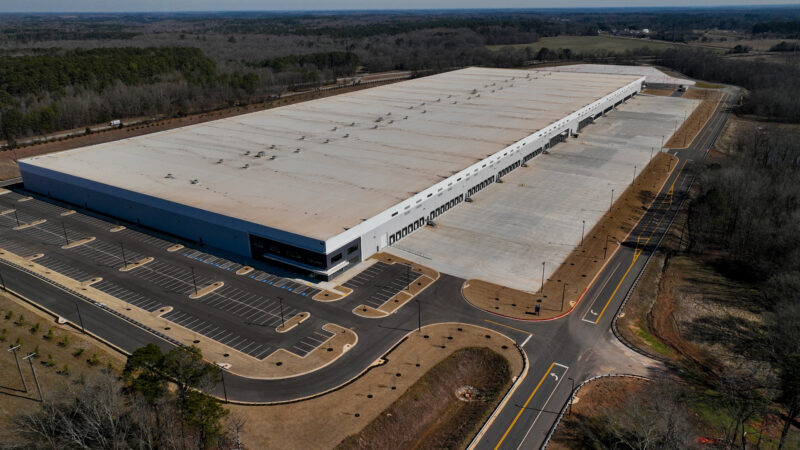
SOCORRO, Texas — In a Texas town at the edge of the Rio Grande and a tall metal border wall, rumors swirled that federal immigration officials wanted to purchase three hulking warehouses to transform into a detention center.
As local officials scrambled to find out what was happening, a deed was filed showing the Department of Homeland Security had already inked a $122.8 million deal for the 826,000-square-foot warehouses in Socorro, a bedroom community of 40,000 people outside El Paso.
“Nobody from the federal government bothered to pick up the phone or even send us any type of correspondence letting us know what’s about to take place,” said Rudy Cruz Jr., the mayor of the predominantly Hispanic town of low-slung ranch homes and trailer parks, where orchards and irrigation ditches share the landscape with strip malls, truck stops, recycling plants, and distribution warehouses.
Socorro is among at least 20 communities with large warehouses across the U.S. that have become stealth targets for Immigration and Customs Enforcement’s $45-billion expansion of detention centers.
As public support for the agency and President Donald Trump’s immigration crackdown sags, communities are objecting to mass detentions and raising concerns that the facilities could strain water supplies and other services while reducing local tax revenue. In many cases, mayors, county commissioners, governors, and members of Congress learned about ICE’s ambitions only after the agency bought or leased space for detainees, leading to shock and frustration even in areas that have backed Trump.
“I just feel,” said Cruz, whose wife was born in Mexico, “that they do these things in silence so that they don’t get opposition.”
Communities scramble for information
ICE, which is part of DHS, has purchased at least seven warehouses in Arizona, Georgia, Maryland, Pennsylvania, and Texas, signed deeds show. Other deals have been announced but not yet finalized, though buyers scuttled sales in eight locations.
DHS objected to calling the sites warehouses, stressing in a statement that they would be “very well structured detention facilities meeting our regular detention standards.”
The process has been chaotic at times. ICE this past week acknowledged it made a “mistake” when it announced warehouse purchases in Chester, N.Y., and Roxbury, N.J. Roxbury then announced Friday that the sale there had closed.
DHS has confirmed it is looking for more detention space but hasn’t disclosed individual sites ahead of acquisitions. Some cities learned that ICE was scouting warehouses through reporters. Others were tipped off by a spreadsheet circulating online among activists whose source is unclear.
It wasn’t until Feb. 13 that the scope of the warehouse project was confirmed, when the governor’s office in New Hampshire, where there is backlash to a planned 500-bed processing center, released a document from ICE showing the agency plans to spend $38.3 billion to boost detention capacity to 92,000 beds.
Since Trump took office, the number of people detained by ICE has increased to 75,000 from 40,000, spread across more than 225 sites.
ICE could use the warehouses to consolidate and to increase capacity. The document describes a project that includes eight large-scale detention centers, capable of housing 7,000 to 10,000 detainees each, and 16 smaller regional processing centers. The document also refers to the acquisition of 10 existing “turnkey” facilities.
Those contracts allow a lot of secrecy and for DHS to move quickly without following the usual processes and safeguards, said Charles Tiefer, a professor emeritus of law at the University of Baltimore Law School.
Socorro facility could be among the largest
In Socorro, the ICE-owned warehouses are so large that 4½ Walmart Supercenters could fit inside, standing in contrast to the remnants of the austere Spanish colonial and mission architecture that defines the town.
At a recent city council meeting, public comments stretched for hours. “I think a lot of innocent people are getting caught up in their dragnet,” said Jorge Mendoza, an El Paso County retiree whose grandparents immigrated from Mexico.
Many speakers invoked concerns about three recent deaths at an ICE detention facility at the nearby Fort Bliss Army base.
Communities fear a financial hit
Even communities that backed Trump in 2024 have been caught off guard by ICE’s plans and have raised concerns.
In rural Pennsylvania’s Berks County, commissioner Christian Leinbach called the district attorney, the sheriff, the jail warden, and the county’s head of emergency services when he first heard ICE might buy a warehouse in Upper Bern Township, 3 miles from his home.
No one knew anything.
A few days later, a local official in charge of land records informed him that ICE had bought the building — promoted by developers as a “state-of-the art logistics center” — for $87.4 million.
“There was absolutely no warning,” Leinbach said during a meeting in which he raised concerns that turning the warehouse into a federal facility means a loss of more than $800,000 in local tax dollars.
ICE has touted the income taxes its workers would pay, though the facilities themselves will be exempt from property taxes.
Georgia center could house twice the population of town
In Social Circle, Ga., which also strongly supported Trump in 2024, officials were stunned by ICE’s plans for a facility that could hold 7,500 to 10,000 people after first learning about it through a reporter.
The city, which has a population of just 5,000 and worries about the infrastructure needs for such a detention center, only heard from DHS after the $128.6 million sale of a 1-million-square-foot warehouse was completed. Like Socorro and Berks County, Social Circle questioned whether the water and sewage system could keep up.
ICE has said it did due diligence to ensure the sites don’t overwhelm city utilities. But Social Circle said the agency’s analysis relied on a yet-to-be built sewer treatment plant.
“To be clear, the City has repeatedly communicated that it does not have the capacity or resources to accommodate this demand, and no proposal presented to date has demonstrated otherwise,” the city said in a statement.
And in the Phoenix suburb of Surprise, Ariz., officials sent a scathing letter to Homeland Security Secretary Kristi Noem after ICE without warning bought a massive warehouse in a residential area about a mile from a high school. Arizona Attorney General Kris Mayes, a Democrat, raised the prospect of going to court to have the site declared a public nuisance.
Crowds wait to speak in Socorro
Back in Socorro, people waiting to speak against the ICE facility spilled out of the city council chambers, some standing beside murals paying tribute to the World War II-era Braceros Program that allowed Mexican farmworkers to be guest workers in the U.S. The program stoked Socorro’s economy and population before President Dwight D. Eisenhower’s administration in the 1950s began mass deportations aimed at people who had crossed the border illegally.
Eduardo Castillo, formerly an attorney for the U.S. Department of Justice, told city officials it is intimidating but “not impossible” to challenge the federal government.
“If you don’t at least try,” he said, “you will end up with another inhumane detention facility built in your jurisdiction and under your watch.”
TEL AVIV, Israel — Arab and Muslim nations on Saturday sharply condemned comments by the U.S. ambassador to Israel, Mike Huckabee, who said Israel has a right to much of the Middle East.
Huckabee made the comments in an interview with conservative commentator Tucker Carlson that aired Friday. Carlson said that according to the Bible, the descendants of Abraham would receive land that today would include essentially the entire Middle East, and asked Huckabee if Israel had a right to that land.
Huckabee responded: “It would be fine if they took it all.” Huckabee added, however, that Israel was not looking to expand its territory and has a right to security in the land it legitimately holds.
His comments sparked immediate backlash from neighboring Egypt and Jordan, the Organization of Islamic Cooperation, and the League of Arab States, which in separate statements called them extremist, provocative, and not in line with the U.S. position.
Egypt’s foreign ministry called Huckabee’s comments a “blatant violation” of international law, adding that “Israel has no sovereignty over the occupied Palestinian territory or other Arab lands.”
“Statements of this nature — extremist and lacking any sound basis — serve only to inflame sentiments and stir religious and national emotions,” the League of Arab States said.
There was no immediate comment from Israel or the United States.
Since its establishment in 1948, Israel has not had fully recognized borders. Its frontiers with Arab neighbors have shifted as a result of wars, annexations, ceasefires, and peace agreements.
During the six-day 1967 Mideast war, Israel captured the West Bank and east Jerusalem from Jordan, Gaza and the Sinai Peninsula from Egypt, and the Golan Heights from Syria. Israel withdrew from the Sinai Peninsula as part of a peace deal with Egypt following the 1973 Mideast war. It also unilaterally withdrew from Gaza in 2005.
Israel has attempted to deepen control of the occupied West Bank in recent months. It has greatly expanded construction in Jewish settlements, legalized outposts, and made significant bureaucratic changes to its policies in the territory. U.S. President Donald Trump has said he will not allow Israel to annex the West Bank and has offered strong assurances that he’d block any move to do so.
Palestinians have for decades called for an independent state in the West Bank and Gaza with east Jerusalem its capital, a claim backed by much of the international community.
Huckabee has long opposed the idea of a two-state solution for Israel and the Palestinian people. In an interview last year, he said he does not believe in referring to the Arab descendants of people who had lived in British-controlled Palestine as “Palestinians.”
In the latest interview, Carlson pressed Huckabee about his interpretation of Bible verses from the book of Genesis, where he said God promised Abraham and his descendants land from the Nile to the Euphrates.
“That would be the Levant, so that would be Israel, Jordan, Syria, Lebanon. It would also be big parts of Saudi Arabia and Iraq,” Carlson said.
Huckabee replied: “Not sure we’d go that far. I mean, it would be a big piece of land.”
Israel has encroached on more land since the start of its war with Hamas in Gaza.
Under the current ceasefire, Israel withdrew its troops to a buffer zone but still controls more than half the territory. Israeli forces are supposed to withdraw further, though the ceasefire deal doesn’t give a timeline.
After Syrian President Bashar Assad was ousted at the end of 2024, Israel’s military seized control of a demilitarized buffer zone in Syria created as part of a 1974 ceasefire between the countries. Israel said the move was temporary and meant to secure its border.
And Israel still occupies five hilltop posts on Lebanese territory following its brief war with Hezbollah in 2024.
WASHINGTON — President Donald Trump said Saturday that he was raising the global tariff he wants to impose to 15%, up from 10% he had announced a day earlier.
Trump said in a social media post on that he was making the decision “Based on a thorough, detailed, and complete review of the ridiculous, poorly written, and extraordinarily anti-American decision on Tariffs issued yesterday,” by the U.S. Supreme Court.
After the court ruled he didn’t have the emergency power to impose many sweeping tariffs, Trump signed an executive order on Friday night that enabled him to bypass Congress and impose a 10% tax on imports from around the world. The catch is that those tariffs would be limited to just 150 days, unless they are extended legislatively.
Trump’s post significantly ratcheting up a global tax on imports to the U.S. yet again was the latest sign that despite the court’s check, the Republican president was intent on continuing to wield in an unpredictable manner his favorite tool to for the economy and to apply global pressure. Trump’s shifting announcements over the last year that he was raising and sometimes lowering tariffs with little notice jolted markets and rattled nations.
Saturday’s announcement seemed to a be a sign that Trump intends to use the temporary global tariffs to continue to flex.
“During the next short number of months, the Trump Administration will determine and issue the new and legally permissible Tariffs, which will continue our extraordinarily successful process of Making America Great Again,” Trump wrote on his Truth Social media network.
Under the order Trump signed Friday night, the 10% tariff was scheduled to take effect starting Feb. 24. The White House did not immediately respond to a message inquiring when the president would sign an updated order.
In addition to the temporary tariffs that Trump wants to set at 15%, the president said Friday that he was also pursuing tariffs through other sections of federal law which require an investigation by the Commerce Department.
Trump made an unusually personal attack on the Supreme Court judges who ruled against him in a 6-3 vote, including two of those he appointed during his first term, Justices Neil Gorsuch and Amy Coney Barrett. Trump, at a news conference on Friday, said of the two justices: “I think it’s an embarrassment to their families.”
He was still seething Friday night, posting on social media complaining about Gorsuch, Coney Barrett, and Chief Justice John Roberts, who ruled with the majority and wrote the majority opinion. On Saturday morning, Trump issued another post declaring that his “new hero” was Justice Brett Kavanaugh, who wrote a 63-page dissent. He also praised Justices Clarence Thomas and Samuel Alito, who were in the minority, and said of the three dissenting justices: “There is no doubt in anyone’s mind that they want to, MAKE AMERICA GREAT AGAIN!”
The Bucks County District Attorney’s Office is investigating the Quakertown Borough Police Department’s response to a high school student protest against federal immigration enforcement.
On Friday, a Quakertown High School student walkout protesting U.S. Immigration and Customs Enforcement (ICE) escalated into a confrontation with adults that left at least one teenager bloodied and in handcuffs.
“Our office is conducting an independent investigation into the police response during this incident,” said Manuel Gamiz Jr., a spokesperson for Bucks County District Attorney Joe Khan. “To ensure a thorough and transparent review, we are seeking the community’s assistance and encourage anyone with information, including video footage or photos, to contact the Bucks County detectives at 215-348-6354.”
Bystander video footage showed police, adults, and what appear to be teenagers, at times fighting, on a sidewalk along Front Street. In a widely shared video, teens were seen scuffling with a man who put a girl in a chokehold. Several news organizations have reported that the man, who was not wearing a police uniform, was Quakertown Police Chief Scott McElree. Quakertown police and McElree did not respond to requests for comment Saturday morning.
Quakertown police said Friday that five or six minors and one adult were taken into custody. Police have not provided details on who was arrested and said that the students had been acting violently.
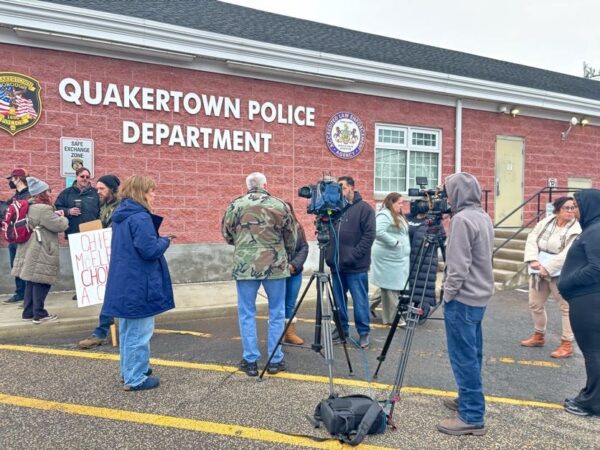
Standing outside the Quakertown police station Saturday morning, parents and leaders from local civil rights groups called on police to provide answers.
Adrienne King, president of the Bucks County NAACP, said that when young people are involved in a police encounter, “the standard for care, restraint, and adherence to policy are high and must be adhered to.”
“Video circulating publicly has raised serious questions in our community,” King said. “Those questions deserve answers, and we are here to ask for those answers today. Transparency is not optional in situations like this.”
Family members of one of the girls in police custody provided a written statement Saturday.
“We are looking for answers and accountability from the Quakertown police department and school district as well as justice for our daughter and the other children. We offer solidarity with the other families affected and hope to have our children home immediately.”
A winter storm warning is in effect for Sunday — a blizzard warning for the Jersey Shore — and Sunday into Monday Philly’s snow has a shot at doubling the amount that fell on Jan. 25, the National Weather Service says.
“At this point, that’s certainly possible,” Zachary Cooper, meteorologist with the National Weather Service said Saturday. The official forecast is calling for just over a foot in the city, with the potential for the total reaching 18 inches.
Blizzard warnings up for the Shore, where onshore winds are forecast to howl past 35 mph, with moderate to major flooding possible.
While it wasn’t in the official language, the weather service on a Saturday morning might well have included a supermarket stampede warning.
The actual winter storm warning is in effect from 7 a.m. Sunday until 6 p.m. Monday.
Witha surprising level of agreement computer models and their interpreters Saturday were seeing the storm as being inevitable. It was forecast to affect the I-95 corridor from Washington to Boston — a rarity in recent winters.
The weather service listed a 25% chance that totals could approach two feet in the city.
“It’s going to be a long-duration event,” said Cody Snell, meteorologist with NOAA’s Weather Prediction Center in College Park, Md.
On the plus side, this will not have the staying power of the 9.3 punitive inches that accumulated on Jan. 25 and spent a three-week vacation in the region. No ice is in the forecast, and daytime temperatures above freezing and the February sun likely will erase most it by the end of the workweek.
(function () {window.addEventListener(‘message’, function (e) { var message = e.data; var els = document.querySelectorAll(‘iframe[src*=”‘ + message.id + ‘”]’); els.forEach(function(el) { el.style.height = message.height + ‘px’; }); }, false); })();
What time would the snow begin in Philly?
Precipitation is expected to begin Sunday morning, said Snell, possibly as a mix of snow and rain that becomes all snow.
Snow may have a hard time sticking during the day, said Tom Kines, senior meteorologist with AccuWeather Inc., since temperatures will be near or slightly above freezing and the late-winter sun will be a factor, even it’s just a rumor in the sky.
Plus the ground won’t be especially cold after a Saturday in which the temperature may approach 50 degrees.
However, the upper air is going to be quite cold, Snell said, and when the snow is falling heavily, as it is expected to do Sunday night, “it will cool the column.”
He said areas that get caught in heavy snow “bands” would see the highest amounts.
What would be so different about this storm?
The storm is forecast to mature into a classic nor’easter, so named for the strong winds generated from the Northeast.
Nor’easters are the primary source of heavy snows along I-95, but the ones that produce heavy snow from Washington to Boston have been scarce lately.
“Over the past several years, they’ve been few and far between,” Kines.
The Jan. 25 storm was not a nor’easter per se, said Snell, but more of a case of the “overrunning” of warm air over cold air producing the snow and sleet.
John Gyakum, an atmospheric scientist at McGill University in Montreal and a winter storm specialist, said he anecdotally has seen a trend of coastal storms intensifying too far north to have much of an impact on the Philly region.
If that were the case, it could be a symptom of global warming, said Steve Decker, meteorology professor at Rutgers University. Storms form where cold and warm meet, and that may have been happening farther north lately.
In any event that evidently won’t be the case Sunday.
What could go wrong with the forecasts?
Are you new around here?
The storm consists of multiple moving parts, and as it bounds off the Southeast coast, it is due to intensify rapidly over the warm Atlantic waters.
Meteorologists advised it was still unclear precisely how intense it would become and what path it would take.
Forecast busts have been known to happen, including a famous one 25 years ago. On a Friday, the weather service warned of a storm of “historic” proportions to begin that Sunday.
What Philly got was about an inch of snow that fell over three uneventful hours.
In 2015, the head of the Mount Holly weather service office publicly apologized for a busted forecast.
However, in recent years, the region hasn’t had all that many serious snow scares.
In this case, expect details to jump around even as the precipitation is falling, but Snell said “confidence is growing” that substantial snow is going to happen.
Inquirer staff writer Stephen Stirling contributed to this article.
We’ll show you a photo taken in the Philly-area, you drop a pin where you think it was taken. Closer to the location results in a better score. This week is all about Lunar New Year of the Horse! Good luck!
Round #21
Question 1
Where is this lion grazing?
Loading…
ClickTap on map to guess the location in the photo
ClickTap again to change your guess and hit submit when you're happy
You will be scored at the end. The closer to the location the better the score
Margo Reed / Staff Photographer
Pretty good/Not bad/Way off! Your guess was from the location.Spot on! Your guess was exactly at the location. Here's also where a random selection of Inquirer readers guessed.
The lion dance, most often performed by two dancers in a single costume, is a traditional Chinese ceremonial dance performed during festive occasions such as Lunar New Year. The dance, along with firecrackers and fireworks that are set off during the celebrations, is thought to bring prosperity and ward off malevolent spirits.
Quiz continues after ad
Question 2
Another lion! Where’s this one?
Loading…
Jessica Griffin / Staff Photographer
Pretty good/Not bad/Way off! Your guess was from the location.Spot on! Your guess was exactly at the location. Here's also where a random selection of Inquirer readers guessed.
These lion dancers were performing outside Bo De Temple, a Vietnamese Buddhist temple at 13th and Washington that is a center of Vietnamese life in South Philadelphia. Lunar New Year is celebrated by many East and Southeast Asian cultures, including but not limited to the Chinese, Vietnamese, and Korean communities across Philadelphia.
Quiz continues after ad
Question 3
Not a lion but a horse! Where is it?
Loading…
Steven M. Falk / Staff Photographer
Pretty good/Not bad/Way off! Your guess was from the location.Spot on! Your guess was exactly at the location. Here's also where a random selection of Inquirer readers guessed.
It’s the Year of the Horse, after all! The Chinese zodiac follows a 12-year cycle based on the lunar calendar, with each year represented by a different animal. This horse is Freeway, who lives at the Fletcher Street Urban Riding Club in Strawberry Mansion. Freeway made news two years ago when he escaped his residence and ended up galloping down I-95.
Your Score
ARank
🧨 A crackling job! A result worth celebrating.
BRank
🧧 B is a job well done. An auspicious start of the year.
CRank
🐎 C is a passing, stable grade, but you could do better.
DRank
🐴 D isn’t great, best saddle up to do better next time!
FRank
We don’t want to say you failed, but you were definitely horsing around.
You beat % of other Inquirer readers.
We’ll be back next Saturday for another round of Citywide Quest.
There are two architects of Philadelphia’s chicken-bone temple. One has whiskers. The other has hands.
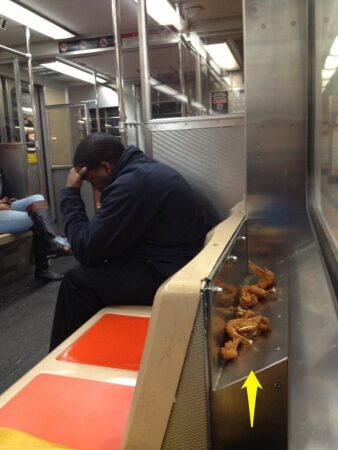
Curious Philly asked why there were so many chicken bones on the streets of our city. Turns out it’s a whole circle of life testament to gross urban living. Rats rip into trash bags, raccoons drag leftovers into the street, and yes, sometimes humans just … drop them.
Somewhere in Philly, a squirrel is dragging a drumstick across a crosswalk like it just led the Mummers Parade down Broad. A raccoon is performing minor surgery on a Hefty bag. And a rat is simply responding to the opportunity. Philadelphia is the eighth-rattiest city in America (which feels relevant here), and twice-weekly trash pickup means an extra day of opportunity. A ripped bag on the curb is an open invitation.
Meanwhile, dog owners are performing full-contact tug-of-war in the middle of the Gayborhood because their shih tzu refuses to give up a chicken bone that is just as likely to choke them to death.
So please, put a tight lid on the trash cans. Until then, the sidewalk wing night continues.
Homer (Dan Castellaneta) eats a cheesesteak in South Philly in an upcoming episode of ‘The Simpsons.’
They covered the obvious beats. Rocky, Wawa, cheesesteaks, the whole “wooder” universe. That’s low-hanging fruit.
But tucked into the background of the episode was a joke that wasn’t obvious, wasn’t tourist-friendly, and absolutely wasn’t generic: a fictional dog park called Michael Vick Reparation Park, “the best dog park in the world.” That’s a deep-cut, morally messy, and very-Philly sports memory.
Vick arrived here after serving prison time for running a dogfighting ring. His signing split the fan base and forced years of uncomfortable conversations about redemption, talent, and how much winning smooths things over. He rebuilt his career in Eagles green. Some fans forgave, while others never did. The tension is the punchline.
It works because it’s The Simpsons. And it lands because this episode wasn’t written by someone skimming Wikipedia. It was written by Christine Nangle, Oxford Circle-raised, Penn-educated, and still passionately Philly. You don’t make that joke unless you remember how complicated that era was.
The episode even found space to include a nod to the late Dan McQuade in the Roots concert scene. Blink and you’d miss it, but it’s a tribute that meant something if you knew.
So the moral of the story is anyone can animate the Liberty Bell. It takes a local to slip in a joke that sharp and trust the audience to understand it.
Bruce Springsteen and Max Weinberg performing during the Bruce Springsteen and the E Street Band 2024 World Tour at Citizens Bank Park in Philadelphia on Wednesday, August 21, 2024.
As in, windows-open, water-ice-in-hand, skyline-glowing, baseball-season May.
And instead of Citizens Bank Park, where he played two summers ago under actual sky, the “Land of Hope and Dreams” tour is landing at Xfinity Mobile Arena.
Indoors.
This is not anti-arena slander, but May in Philadelphia is outdoor concert weather. It’s built for a ballpark.
The tour includes 19 arena dates and one baseball stadium finale in Washington. Which makes it feel even more criminal that Philly — a city that will scream every word to “Born to Run” — is getting the indoor version.
(We’ll still go, obviously.)
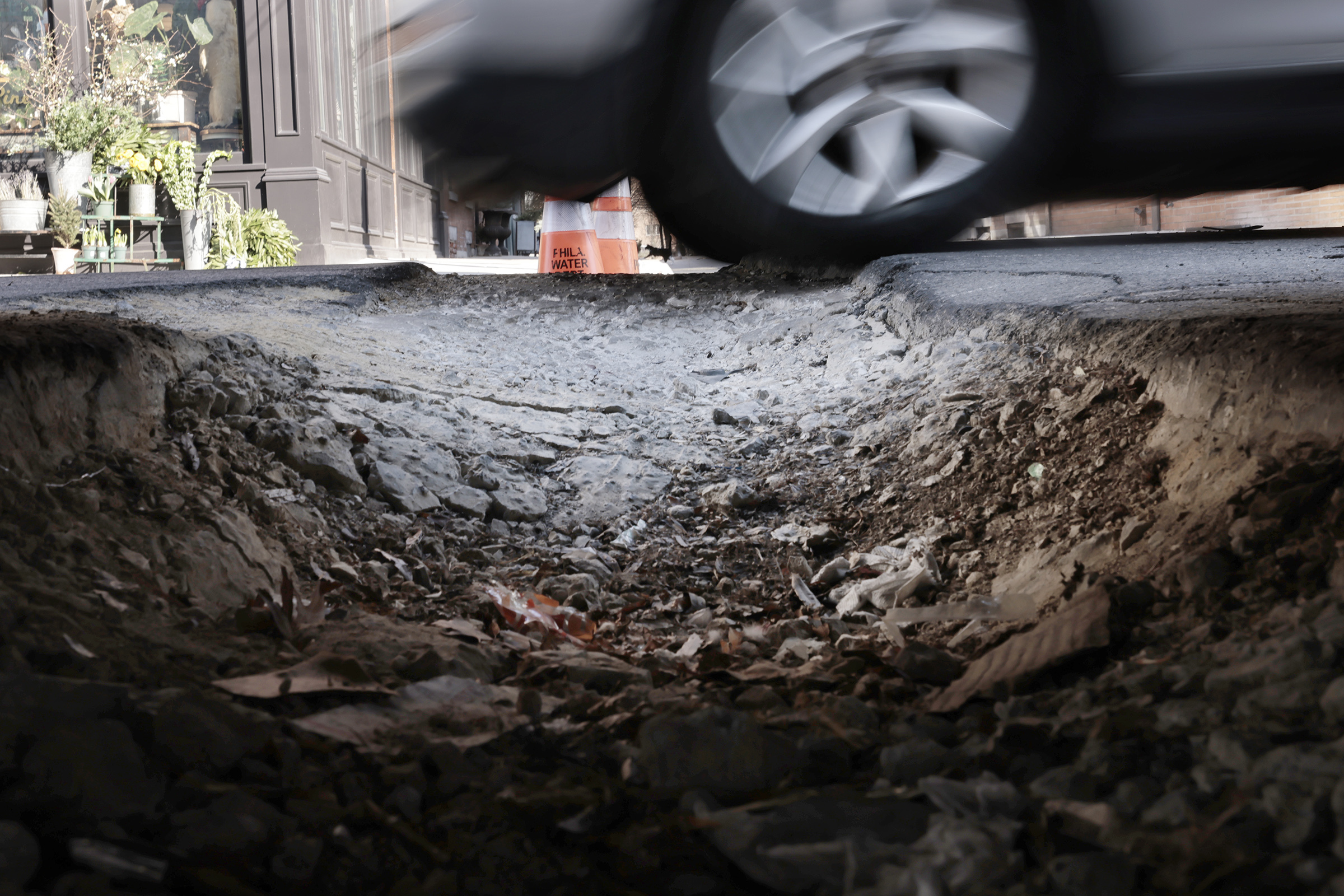
A car slams into the edge of a large pothole on the 700 block of South 4th Street in Philadelphia on Wednesday, March 12, 2025.
Pothole season officially begins: F
The snow is melting, which means two things in Philadelphia. People are wearing shorts in 42 degrees and the roads are about to betray us.
As the ice pulls back, the damage reveals itself. Broad Street suddenly looks like it survived a minor asteroid shower. A harmless bump from January is now a cavity. That thin crack you ignored all winter? Now you slow down for it instinctively.
You can tell the season has arrived by the driving alone. Traffic doesn’t flow in straight lines anymore, it zigzags. Group texts start circulating with hyper-specific intersection warnings. A single traffic cone materializes in the middle of the street and quietly becomes semi-permanent infrastructure.
Some craters get patched fast. Others linger long enough to earn neighborhood lore. “Turn left at the one that swallowed the Camry.”
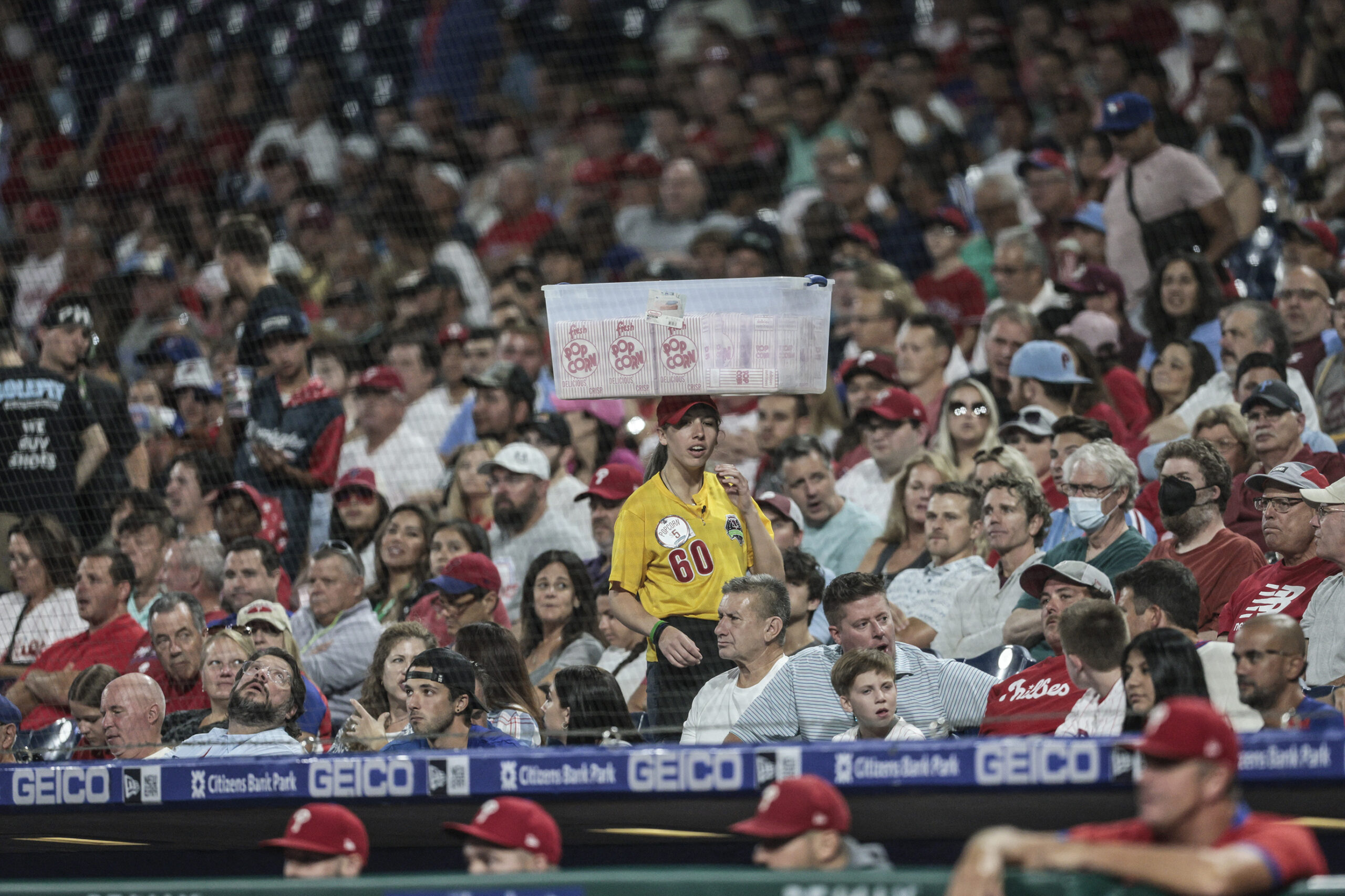
Samantha DiMarco, a popcorn vendor at Citizen Bank Park sells popcorn by balancing the box on her Tuesday, September 20, 2022
Citizens Bank Park without Sam the Popcorn Girl: F
The Phillies will still play. The popcorn will still be sold.
But one of the ballpark’s most recognizable faces won’t be in the aisles for most of the season.
Sam the Popcorn Girl is a minor celebrity at Citizen’s Bank Park, balancing popcorn on her head, popping up on Phanavision, and playfully sparring with Mets fans.
Over the last decade, she’s become an essential part of the atmosphere at the ballpark. Sure, she’s not on the roster, but she was part of the team. And this summer, she’ll be working on a Carnival cruise ship instead.
It’s temporary, and she promises she’ll be back. But this is Philadelphia. We’ve seen how this goes. First it’s a cruise contract. Next thing you know, the bullpen collapses in June.
Remove one of the ballpark’s regulars and suddenly everything feels off, and it’s way too early to be testing the baseball gods.
Booking the Shore before the snow melts: A-
There are still snowbanks clinging to street corners in Philadelphia.
And yet Margate agents are fielding multiple rental calls before lunchtime.
Last year, people waited, booking shorter stays and trying to read the market. This year, they’re locking in weeks while there’s still salt on the sidewalk.
The Shore has always been a seasonal reset button. But booking it in February (before anyone has even vacuumed the sand out of last year’s trunk) feels like a quiet shift.
After a few summers of sticker shock, people are now less afraid of being priced out then they are of being too late.
Soon we’ll be arguing over beach tags and debating Avalon vs. Sea Isle. Soon someone will be panic-buying Wawa hoagies on the Parkway.
We thought it was still winter. But summer, apparently, starts when the snow is still melting.
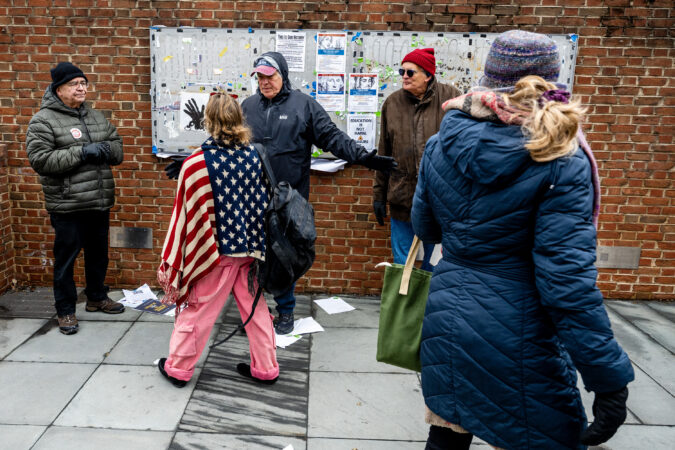
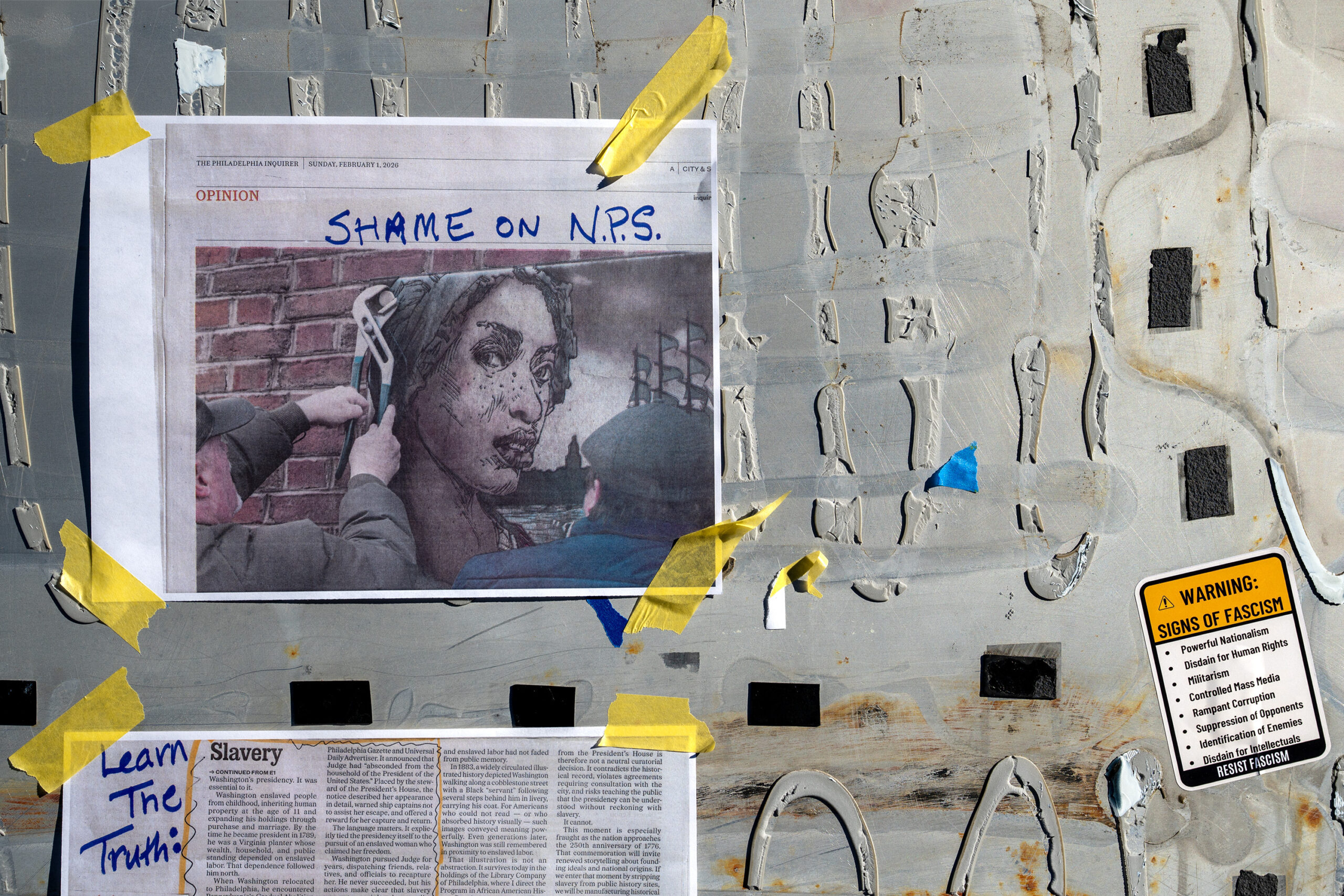
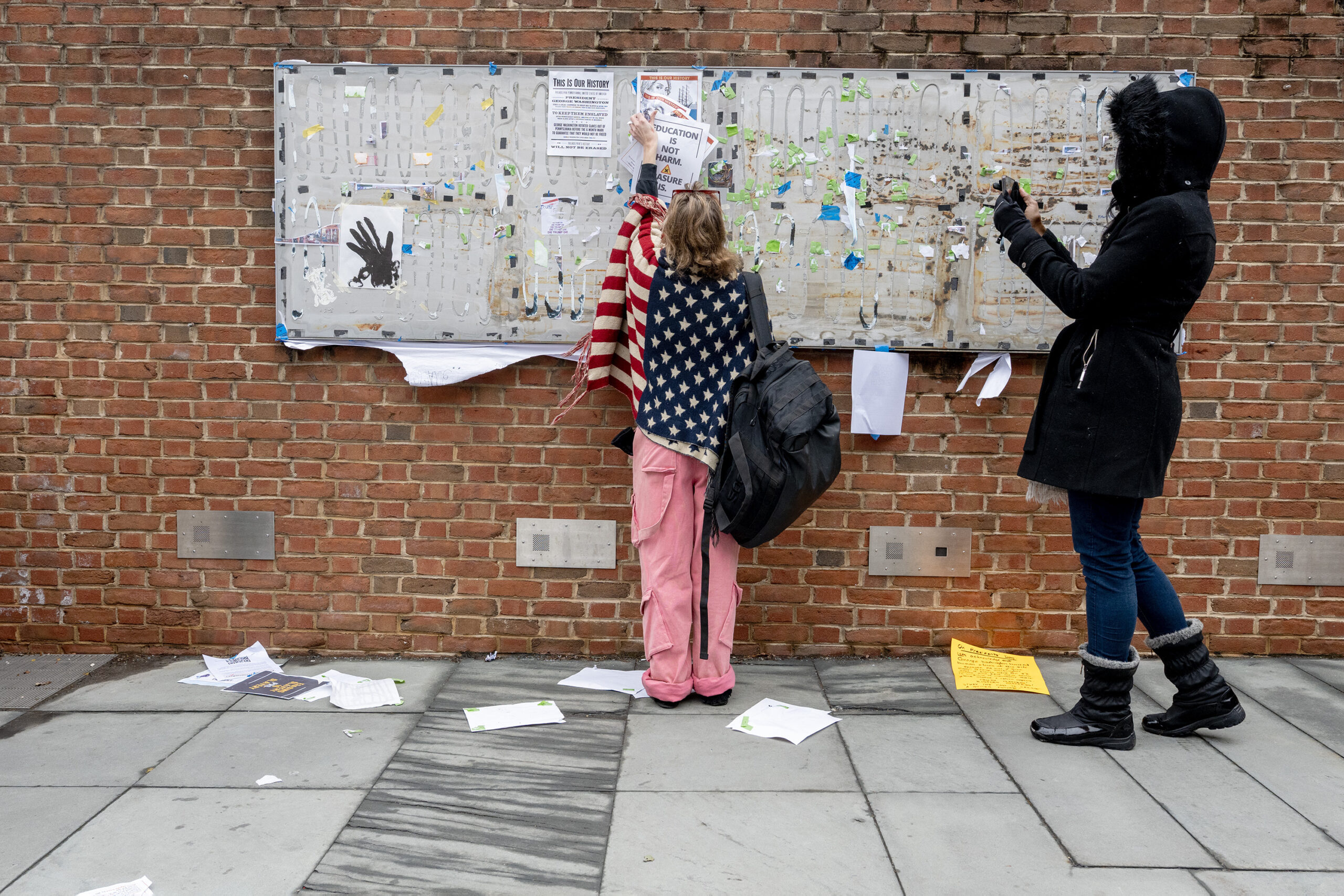
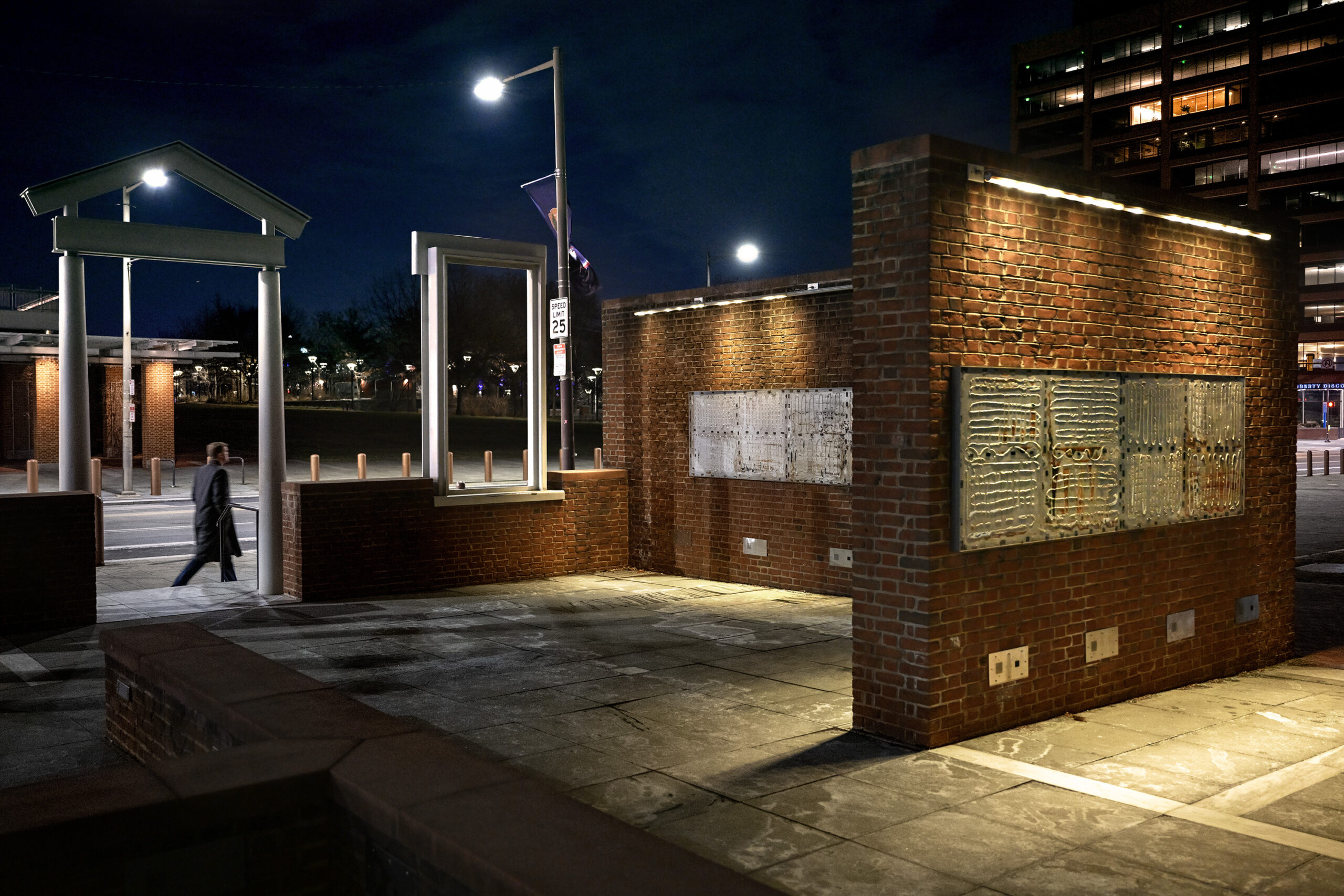
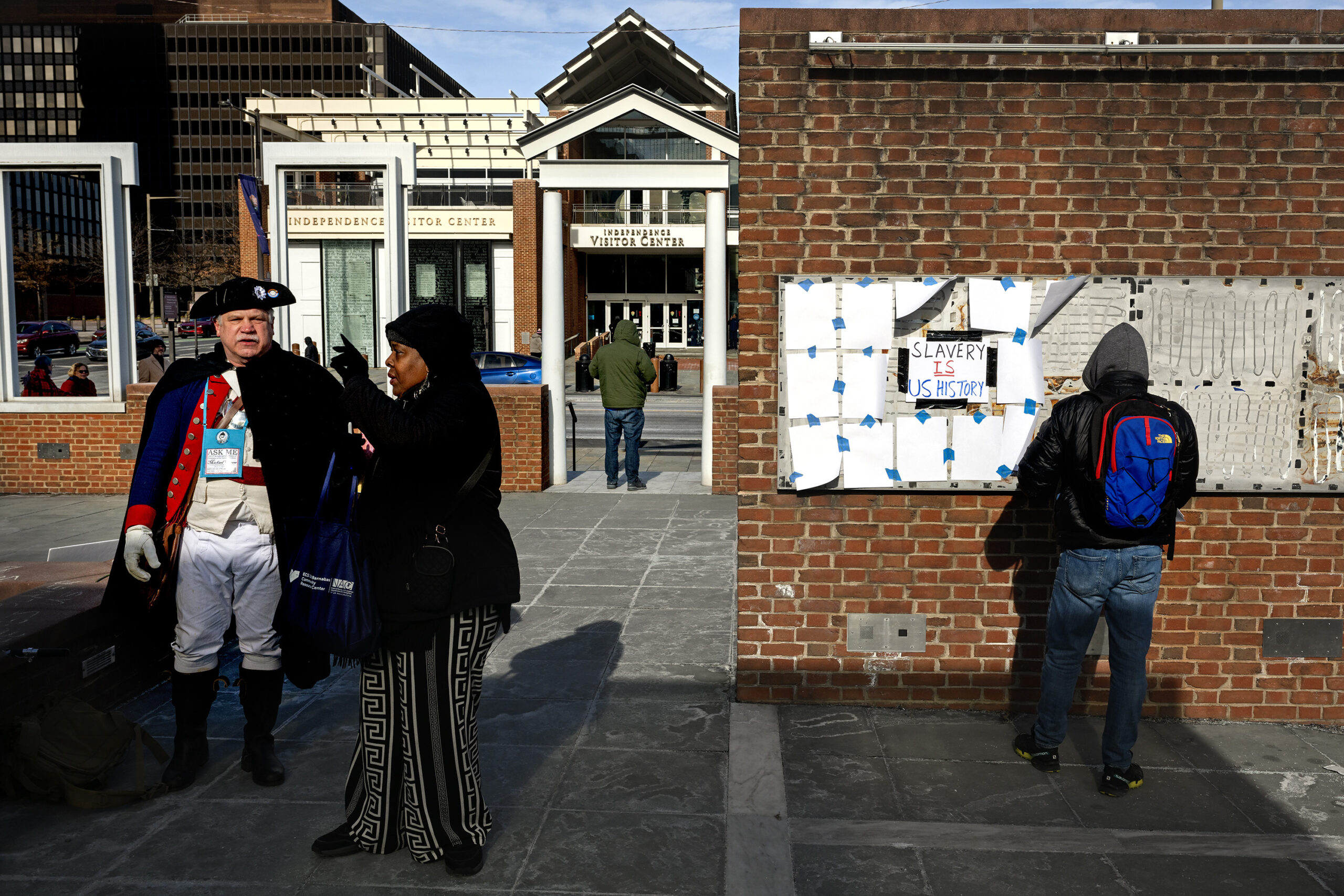
The brief confrontation came this week in front of the empty frames where visitors had been taping informal signs to fill the void where the original panels hung at the President’s House, after President Donald Trump’s administration removed the slavery exhibits last month.
Signs and notes placed by visitors at the President’s House in Independence National Historical Park.
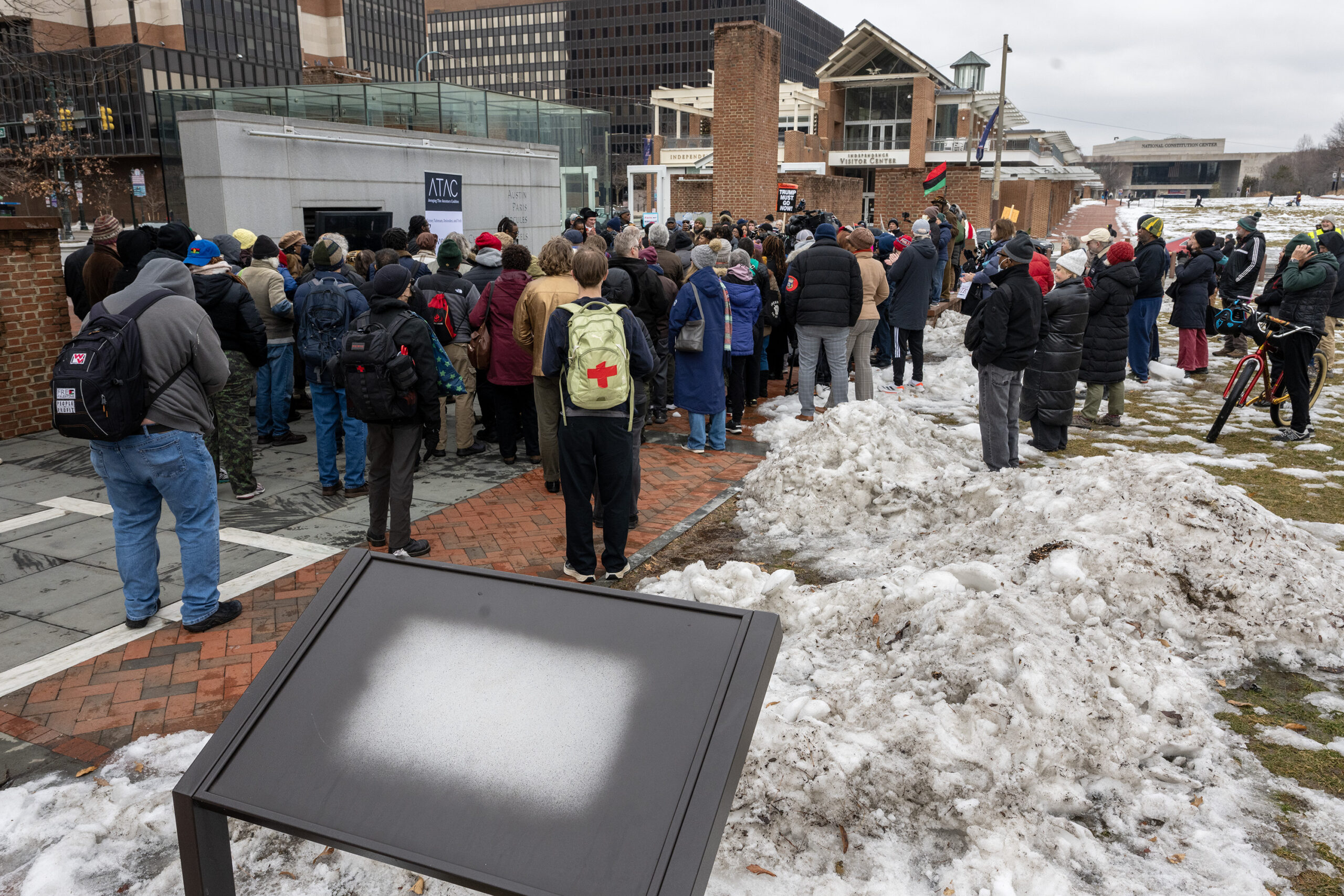
Glenn Bergman and his wife Dianne Manning were just arriving at the Avenging the Ancestors Coalition’s annual Presidents’ Day observance. They had earlier attended the weekly ICE vigil a few blocks away. Bystanders yelled at the woman to stop as she declared it was her “First Amendment right” while tearing off the notes.
Bergman stepped in to block her, saying later, he “had to do something.” After a few seconds everyone stepped away, accusing her of “littering.”
She grabbed the papers off the ground and left abruptly, shouting “George Washington made this country great… for white people.”
The entire interaction lasted less than three minutes — and unfolded right on the other side of the wall from where the main advocacy organization leading the fight to protect the President’s House was gathered.
The Avenging the Ancestors Coalition holds their annual Presidents’ Day observance at the President’s House Monday, Feb. 16, 2026. The empty frame in the foreground held a panel about slavery that was removed.
As the week of Presidents’ Day ends, I’m moving that presidential apostrophe back a letter and remembering my time photographing at the President’s House.
It is almost a year since our current President signed Executive Order #14253, titled “Restoring Truth and Sanity to American History,” on Mar. 27, 2025.
In addition to requiring the Secretary of the Interior to develop a plan to improve Independence National Historical Park in preparation for our 250th birthday, he directed National Park Service staff to identify language and historical depictions that “inappropriately disparage Americans past or living.”
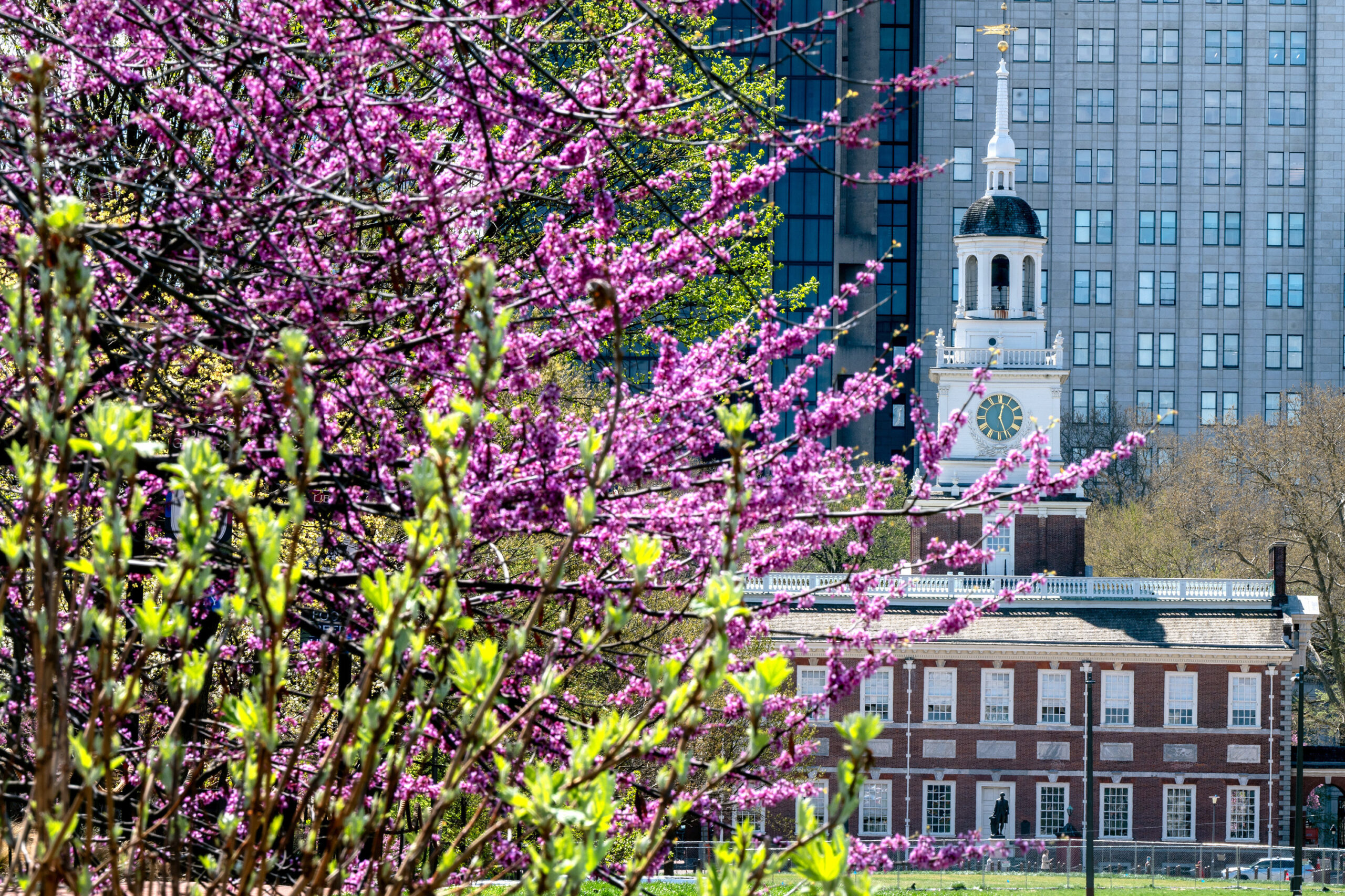
Flowering trees by Independence Hall in spring, 2025.
In May, Interior Secretary Doug Burgum issued an order that signs be posted in all National Park asking employees and visitors to report any negative information.
A sign and QR code located in Independence National Historical Park inviting the public to submit feedback on repairs, improvements, and content that is “negative about either past or living Americans.”
In July, President Donald Trump’s administration started taking steps to review or remove materials key to understanding the history of race in America.
But it didn’t happen until last month.
I was on another assignment nearby when the newspaper received a tip workers were on the site “with tape measures.”
They weren’t talking to our reporter, already on the site, when I arrived to find park service workers indeed examining the panels. So I just assumed if they would be dismantling the exhibits it would happen in the middle of the night — like when the statue of former Mayor Frank Rizzo was “disappeared” and his Italian Market mural was erased under cover of darkness in 2020.
I made a few photos then left to edit and upload, only to get a text, “it’s happening now.”
It was awkward as the workers asked me to “give us a break,” while I hovered around — not right on top of them — watching every move. I replied we were both doing our jobs.
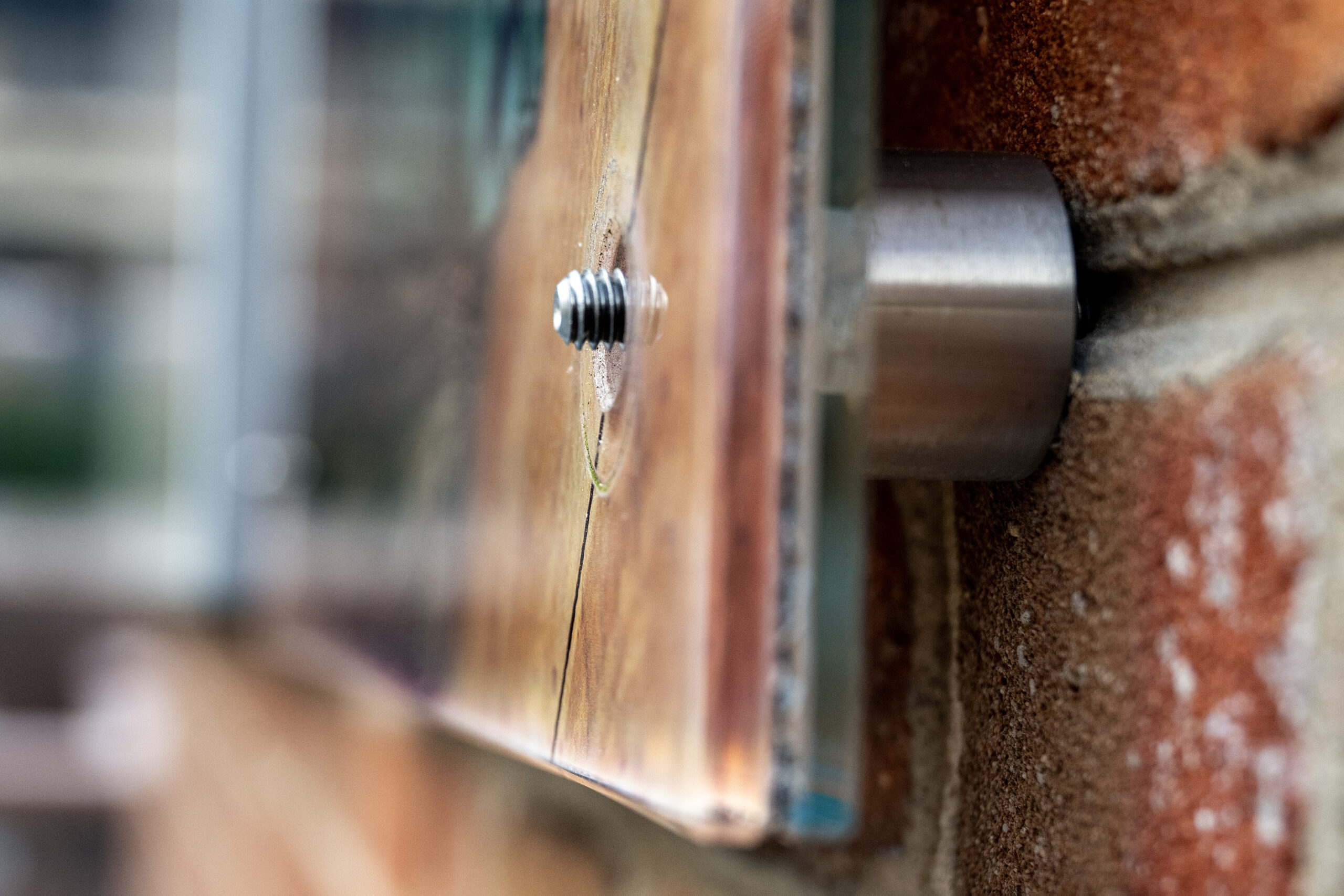
Bolts are removed from Interpretive panels as the exhibits are taken off the walls in Independence National Historical Park Thursday, Jan. 22, 2026.
It wasn’t long before other news media arrived, and I continued to document the entire removal. I was joined by photographer Elizabeth Robertson who made a photo from our newsroom overlooking the site. Later that evening, I returned to a much quieter scene.
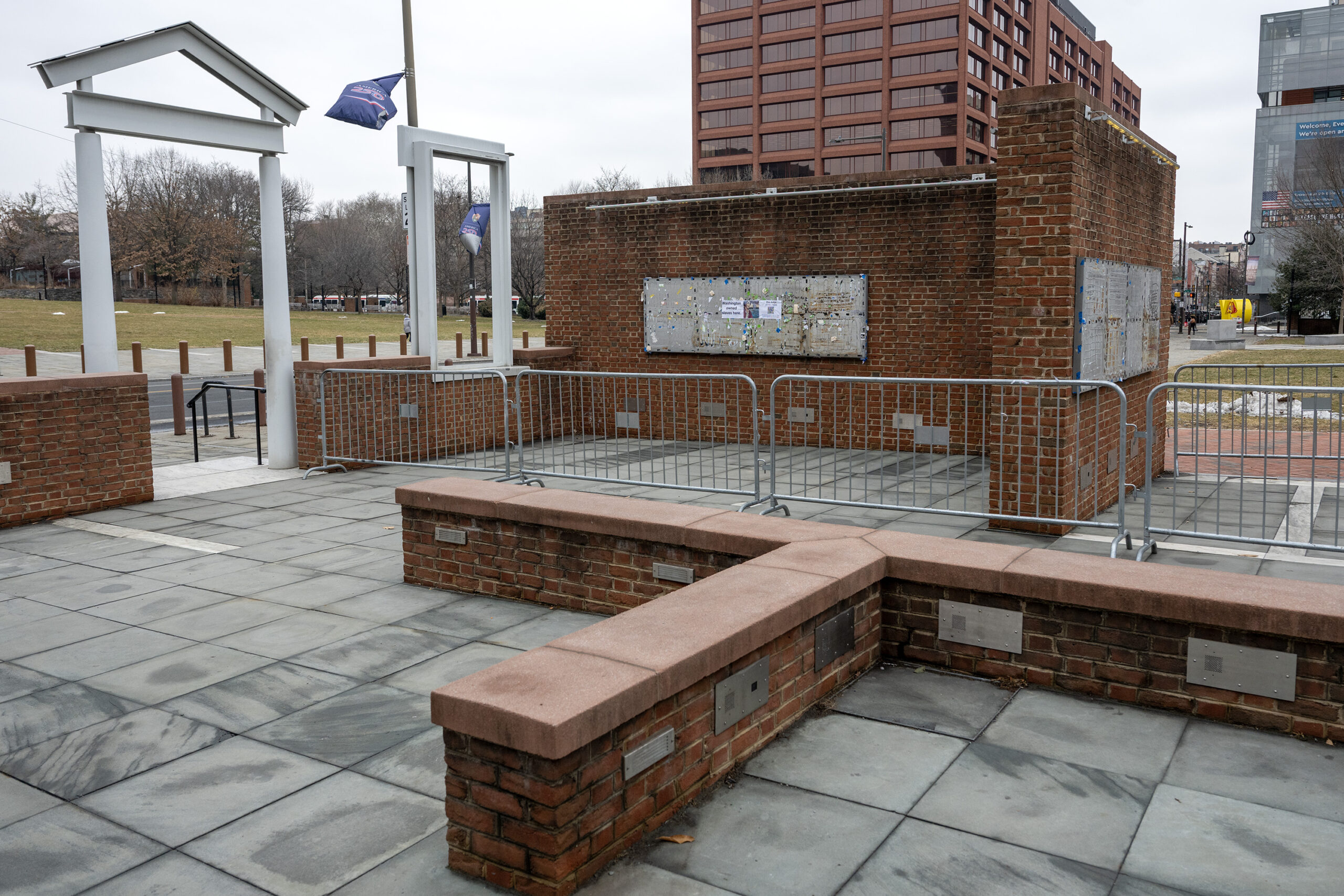
The President’s House Historical Park Jan. 22, 2026, after all historical exhibits were removed. The site, a reconstructed “ghost” structure titled “Freedom and Slavery in the Making of a New Nation” (2010), serves as a memorial to the nine people George Washington enslaved there during the founding of America.
That wasn’t the end of it. Protests continued…
Historical interpreter Michael Carver talks with visitors while he and other members of the Association of Philadelphia Tour Guides host “History Matters” offering “Free Talks with Tour Guides” Jan. 24, 2026 at the President’s House site two days after more than a dozen educational displays about slavery were removed from the site.
… and the City of Philadelphia sued the National Park Service and Department of Interior. District Judge Cynthia M. Rufe inspected the removed panels in storage for herself, visited the President’s House site, then ordered the federal government “restore the President’s House Site to its physical status as of January 21, 2026,” which is the day before the exhibits were removed.
Trump administration officials appealed her ruling calling it “unnecessary judicial intervention” and on Presidents’ Day, when Glenn Bergman and Dianne Manning of Mt. Airy were attending the Avenging the Ancestors Coalition rally, Judge Rufe issued an injunction that required the federal agencies to restore the interpretive panels.
So we all waited to see what happened next. The “what’s next?” was two days later the federal judge, citing the agencies’ “failure to comply” set a deadline of 5 p.m. Friday.
A spokesperson for the White House defended their inaction saying removal of the exhibits is not final because the Department of the Interior is “engaged in an ongoing review of our nation’s American history exhibits in accordance with the President’s executive order to eliminate corrosive ideology, restore sanity, and reinstate the truth.”
A cleaded up and power-washed President’s House site the day after a federal judge ordered the Trump administration to restore the slavery exhibits that the National Park Service removed from the President’s House in January.
Upon hearing the news I thought, “Friday is my day off. I will just have to read what my excellent reporting colleagues Fallon Roth, Maggie Prosser, and Abraham Gutman write about it. And live vicariously through the photos by whichever of my photo co-workers gets the assignment.“
I just couldn’t stay away, so I returned to the site early Thursday morning, just to “babysit.”
After about 30 minutes and only seeing two visitors, a park service worker arrived with a 5-gallon Lowe’s plastic blue bucket ($4.95, lid sold separately) and another, plain white plastic pail full of rags. More prep work for Friday, my day off, I figured.
When he returned with a six-foot Little Giant ladder ($255.99, King Kombo), I asked “so you’re not just doing more cleaning, right?”
I alerted my newsdesk, and spent the next six hours there.
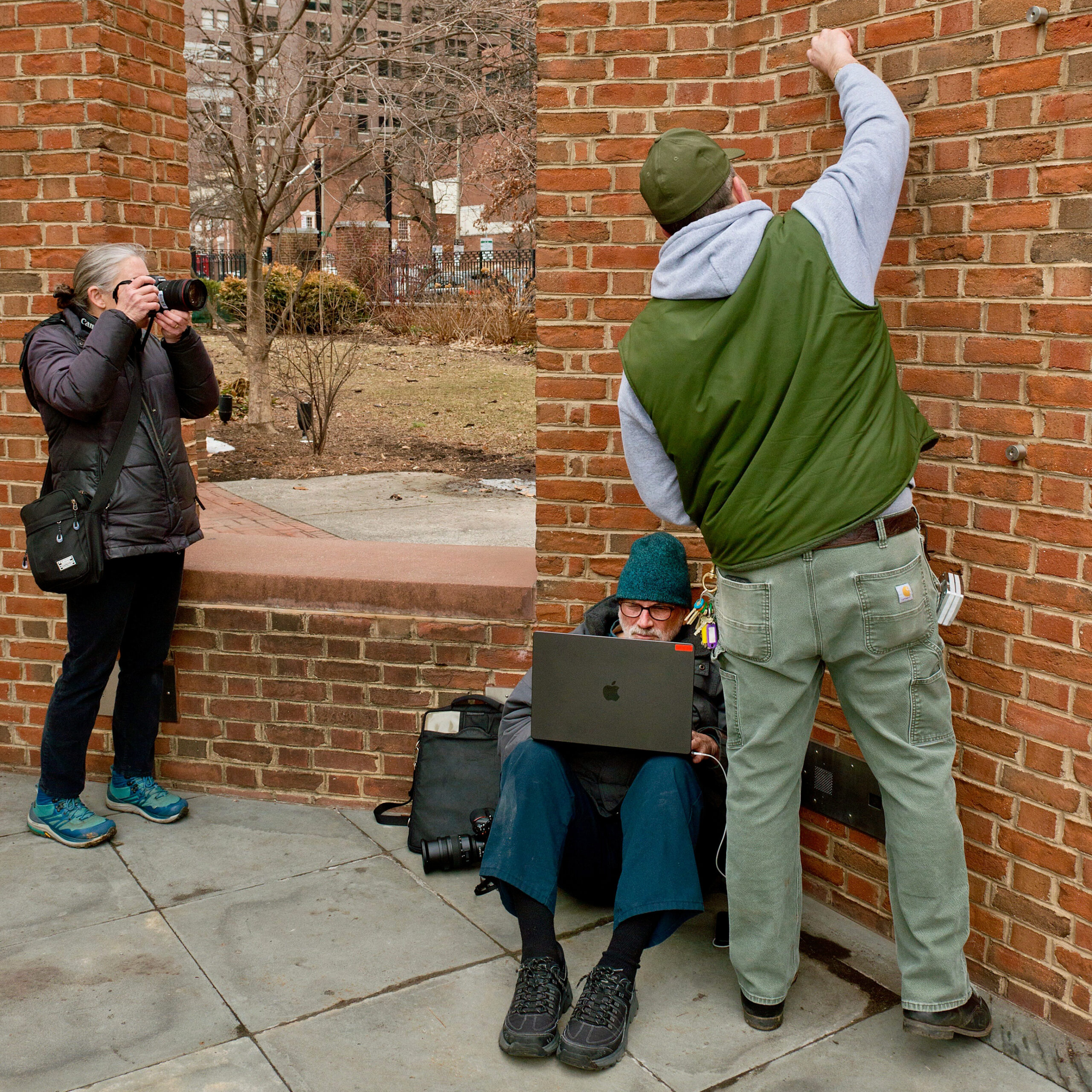
Philadelphia Inquirer staff photographer Tom Gralish edits his news photos at the President’s House site in Independence National Historical Park Thursday, Feb, 19, 2026 as park service workers restore the slavery exhibits that were removed in January. Gralish had met and talked with the NPS employee earlier in the morning before other news media arrived at the site, and hadn’t noticed a panel would be going back up later where he was sitting. “You’re okay,” the worker said, “you were here first.”
Since 1998 a black-and-white photo has appeared every Monday in staff photographer Tom Gralish’s “Scene Through the Lens” photo column in the print editions of The Inquirer’s local news section. Here are the most recent, in color:
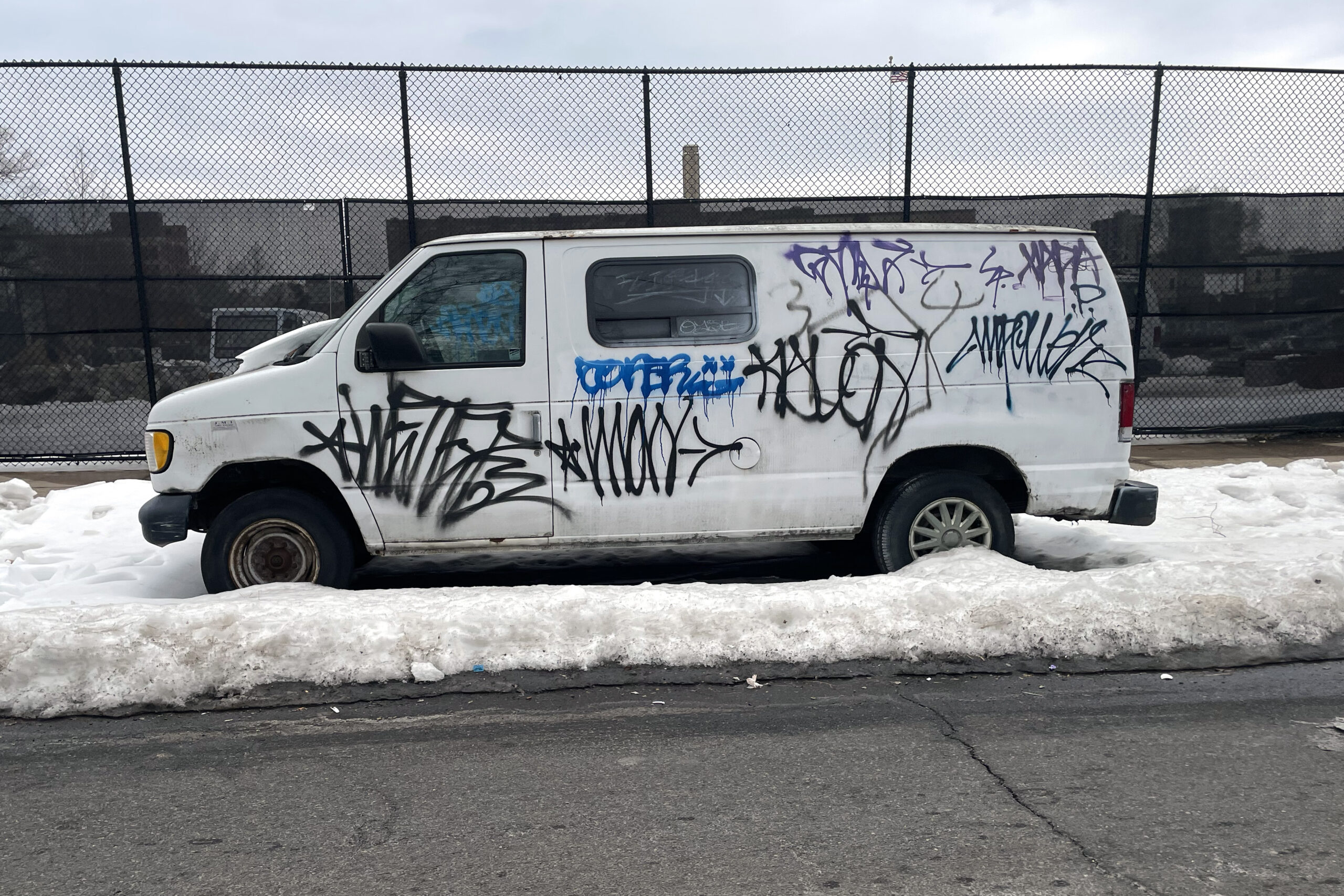
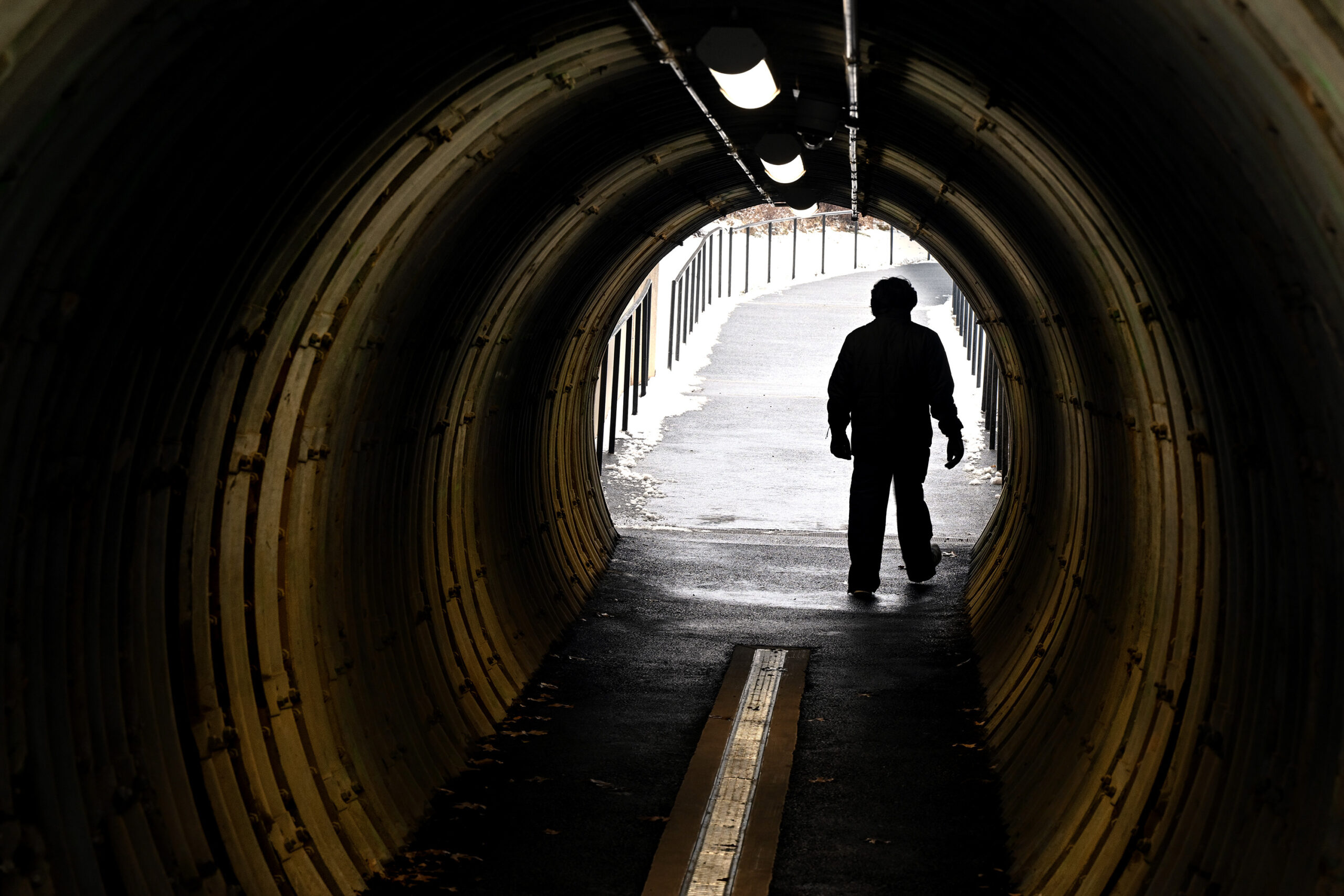
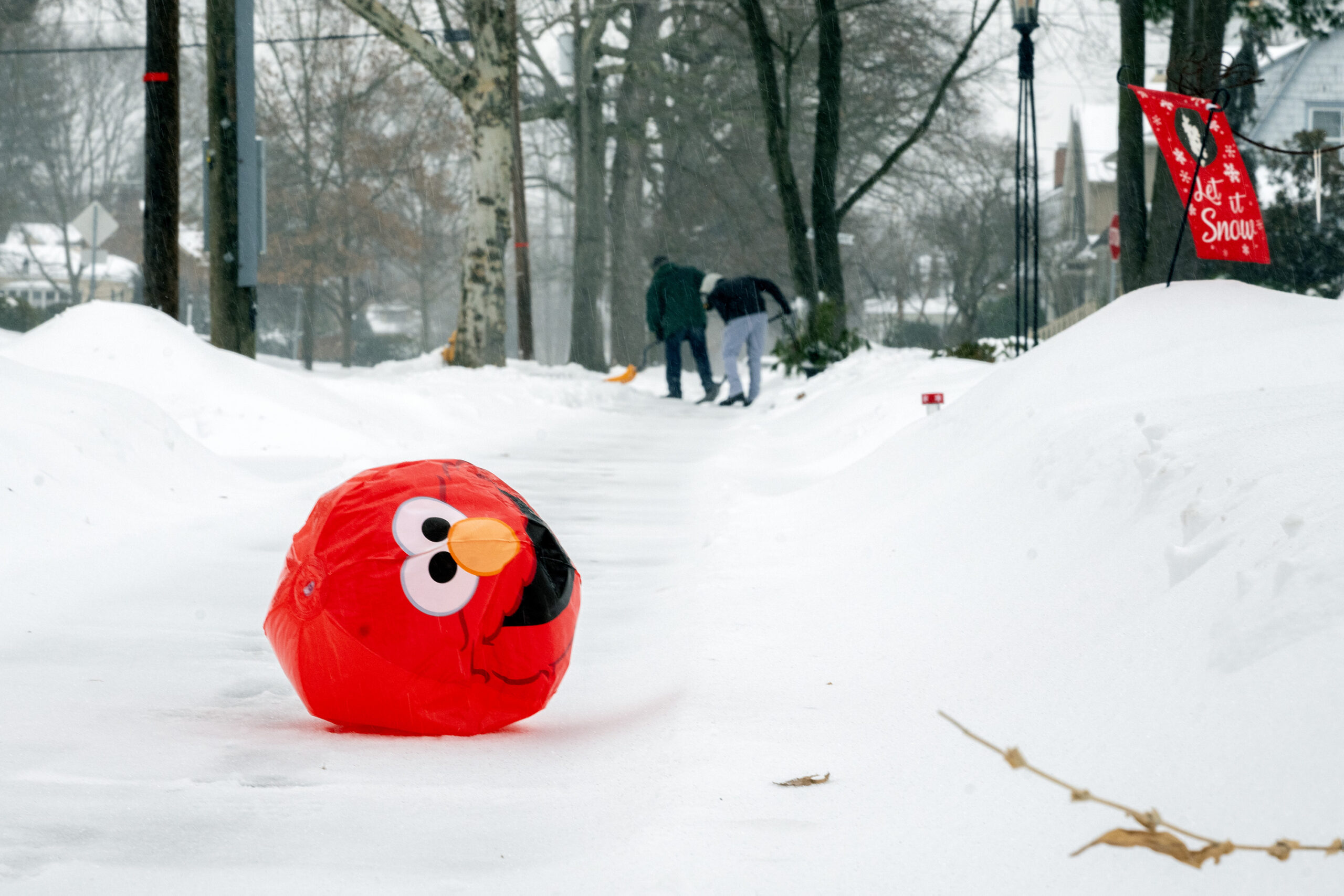
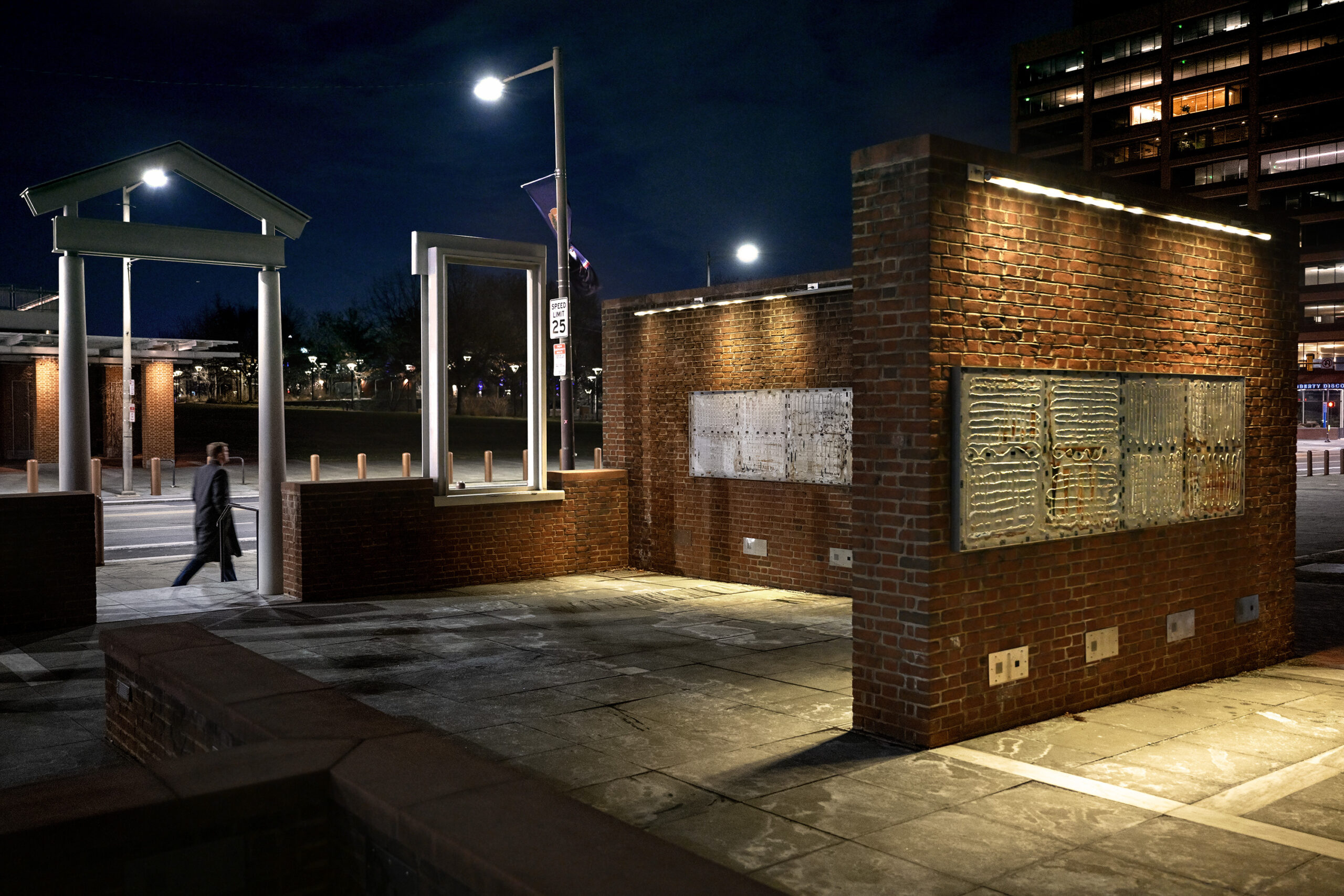
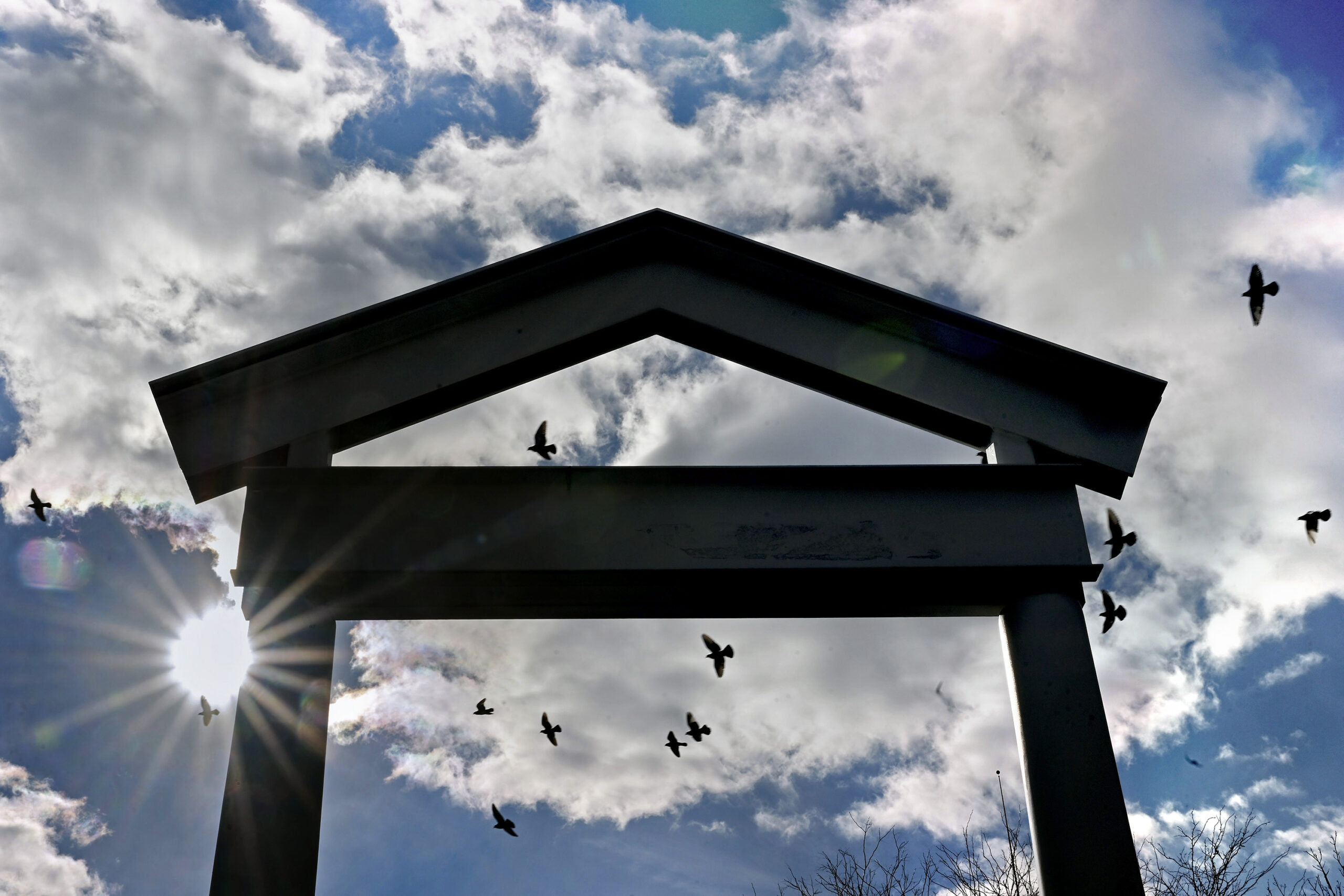
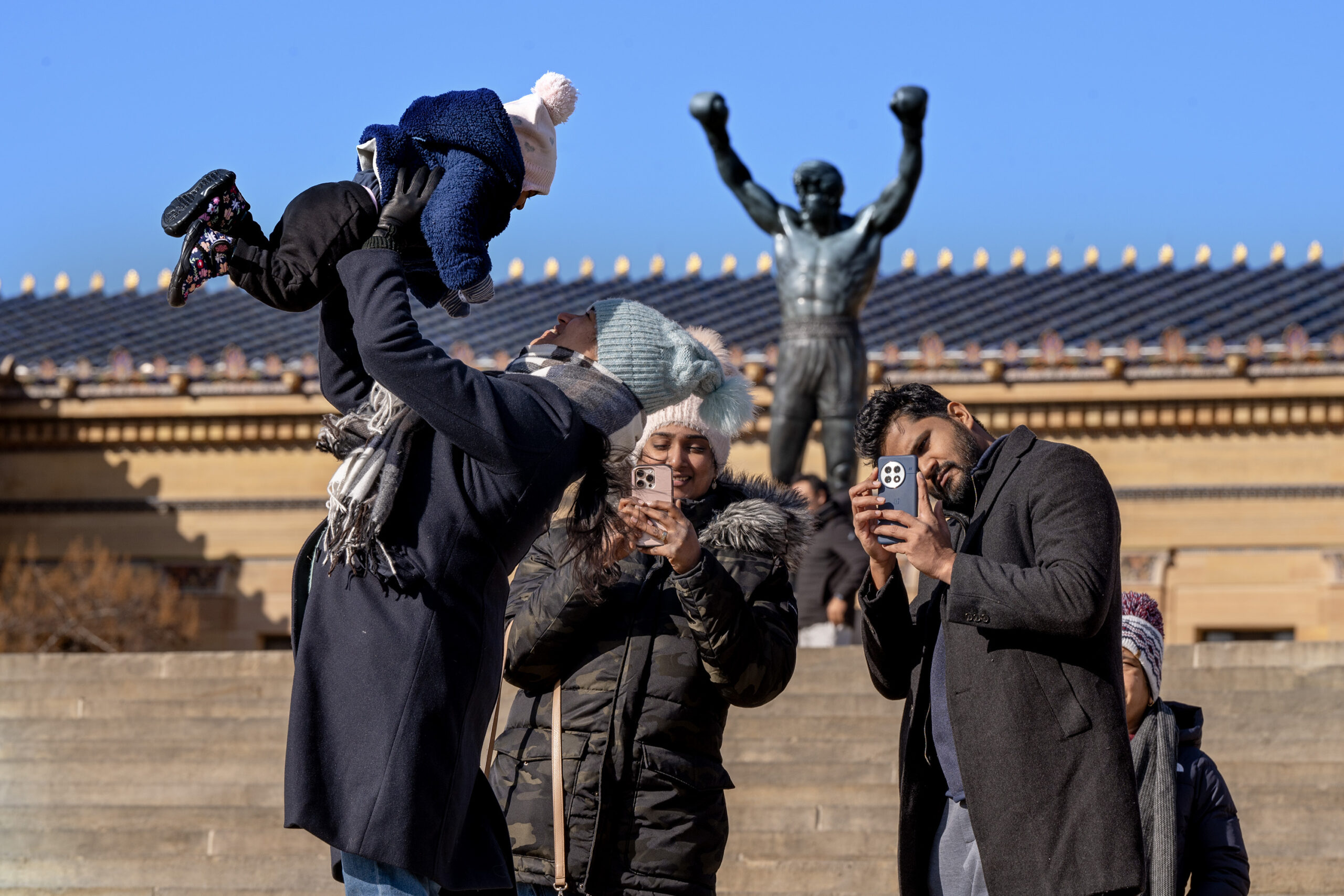
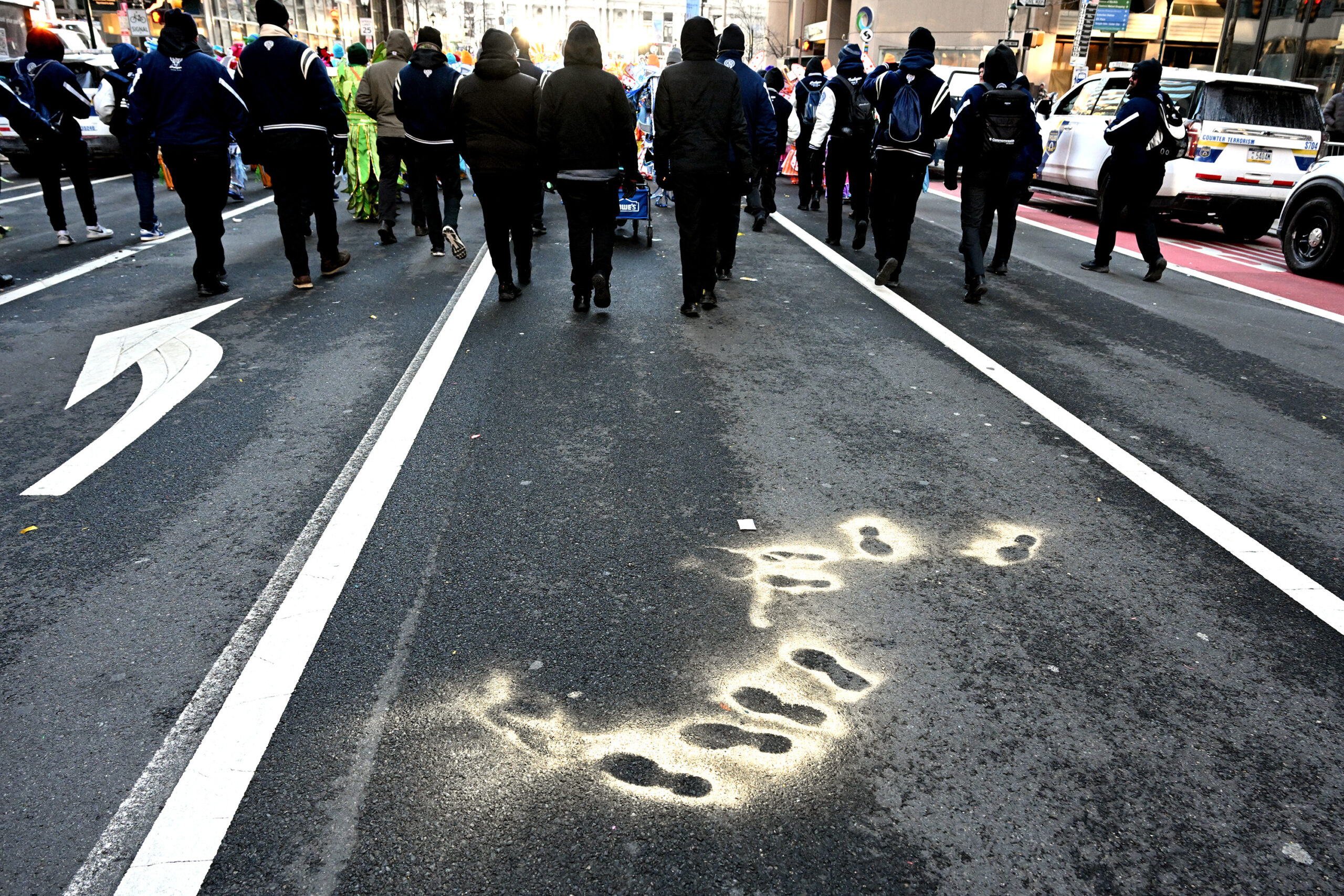
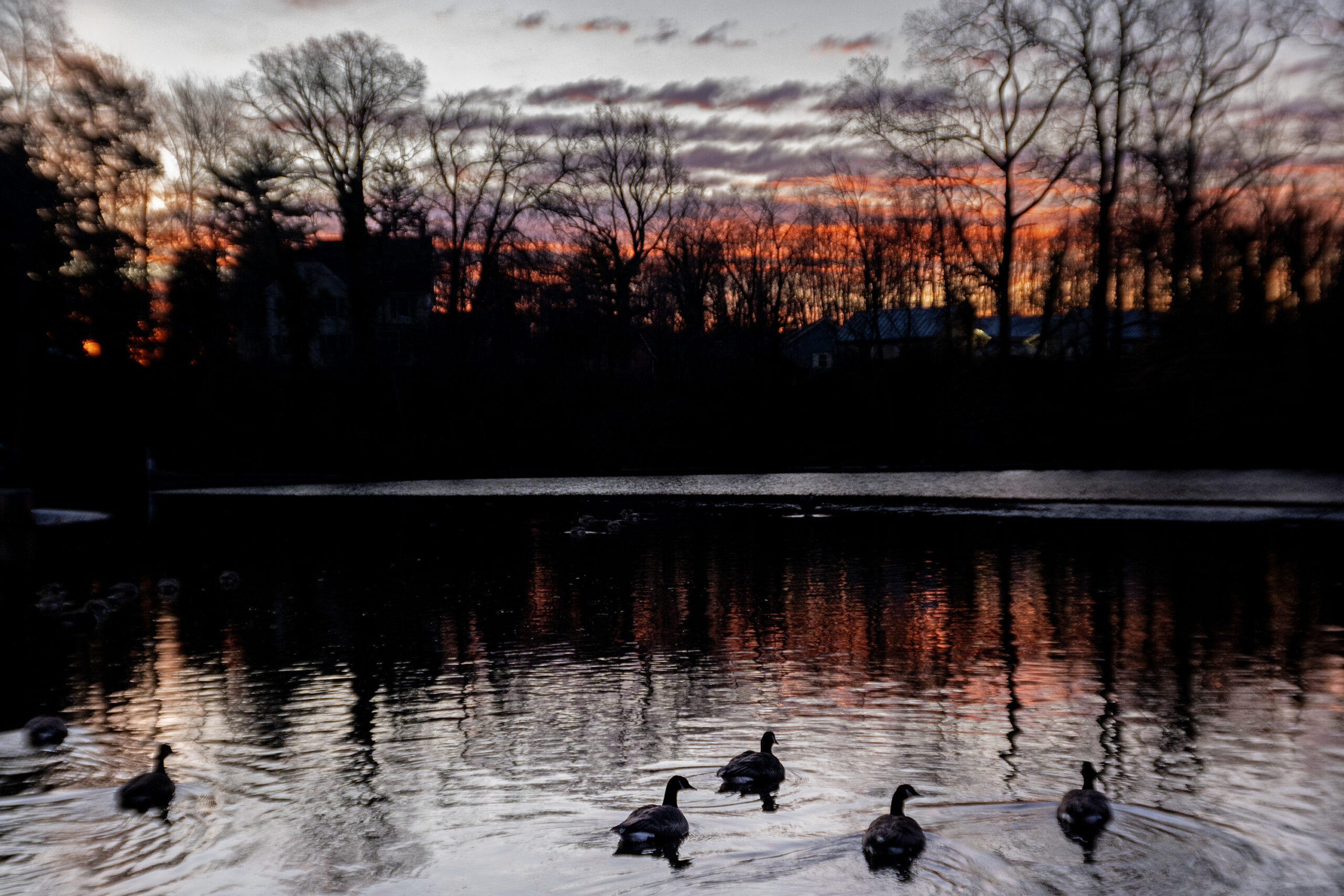
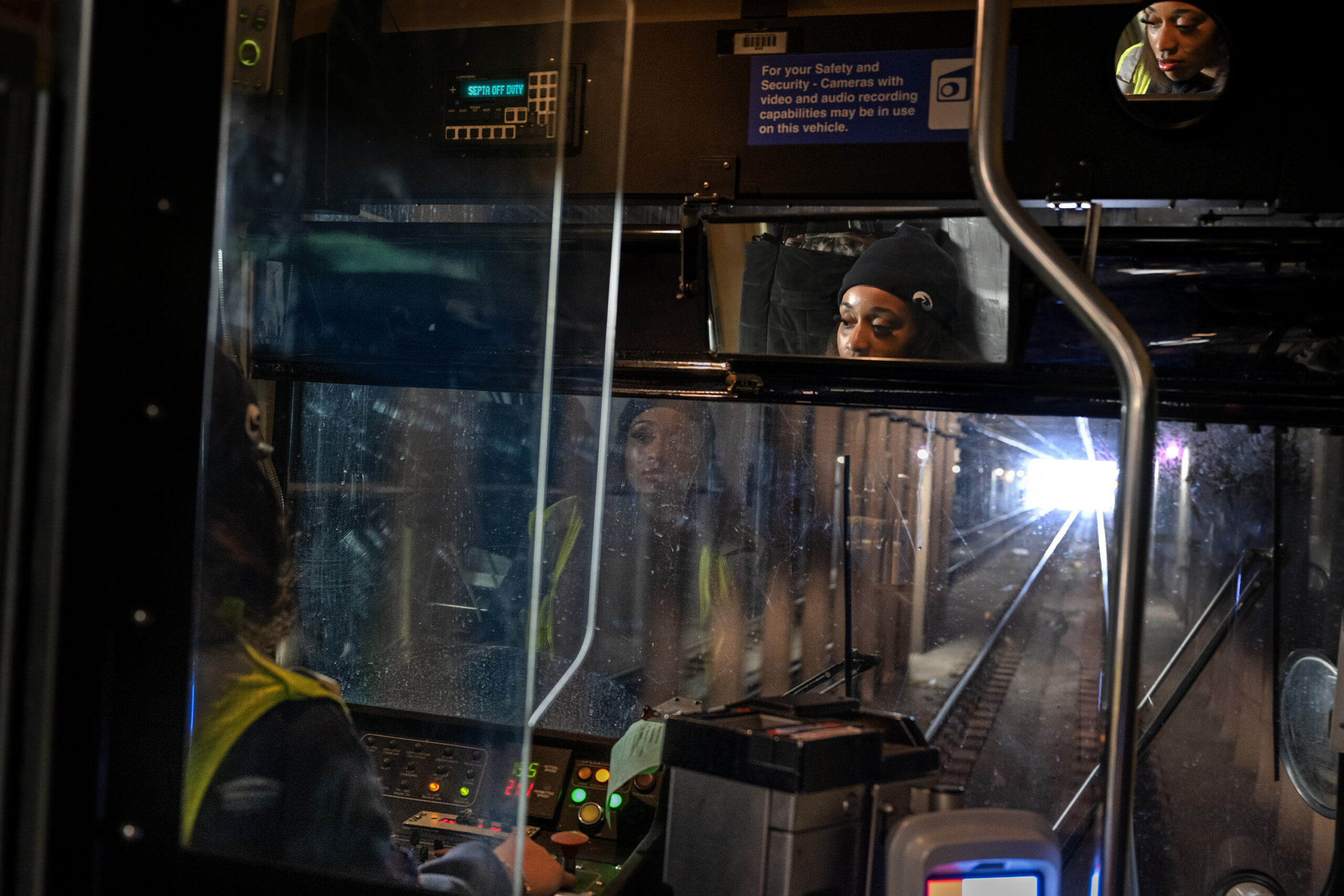
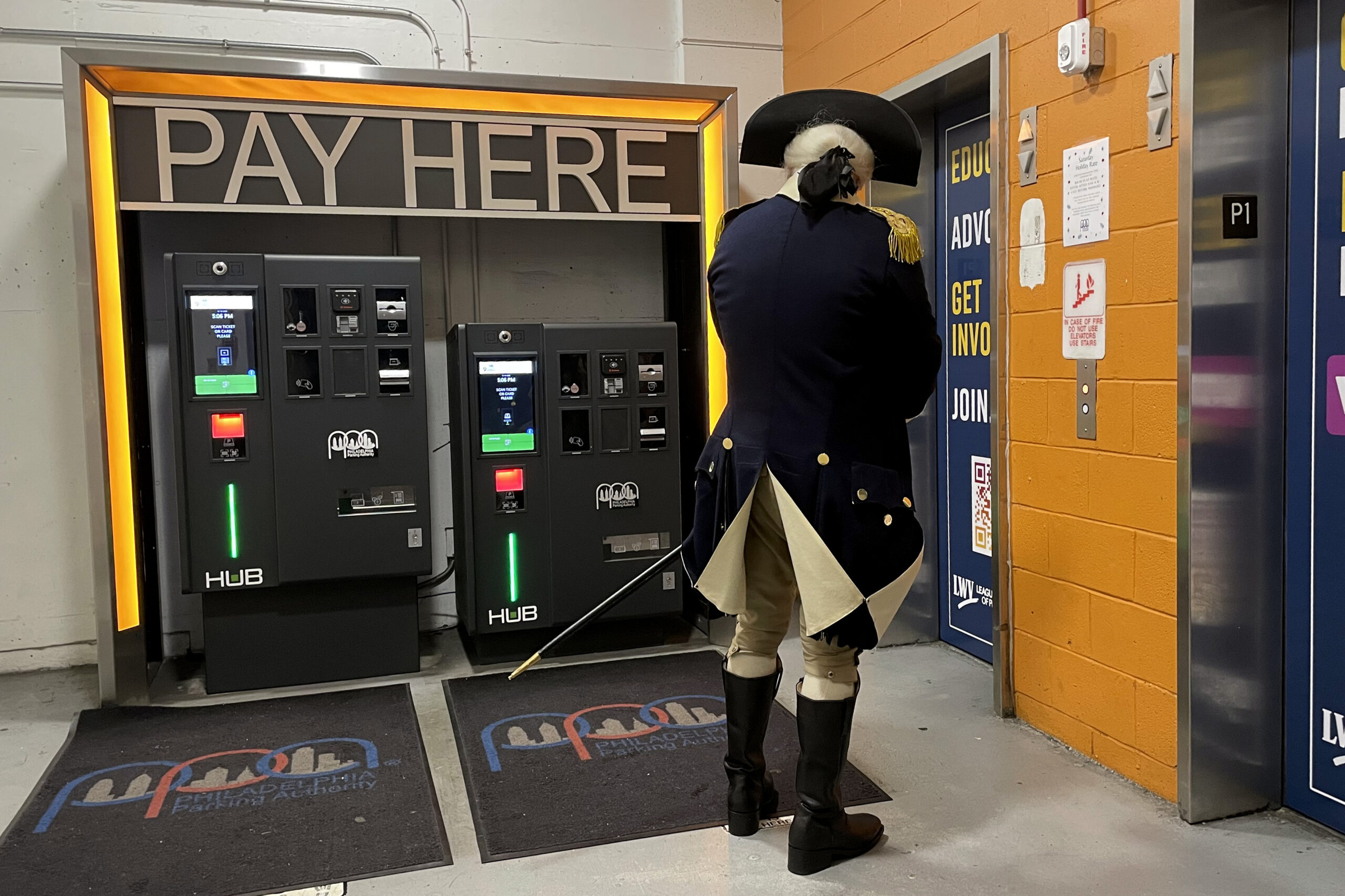
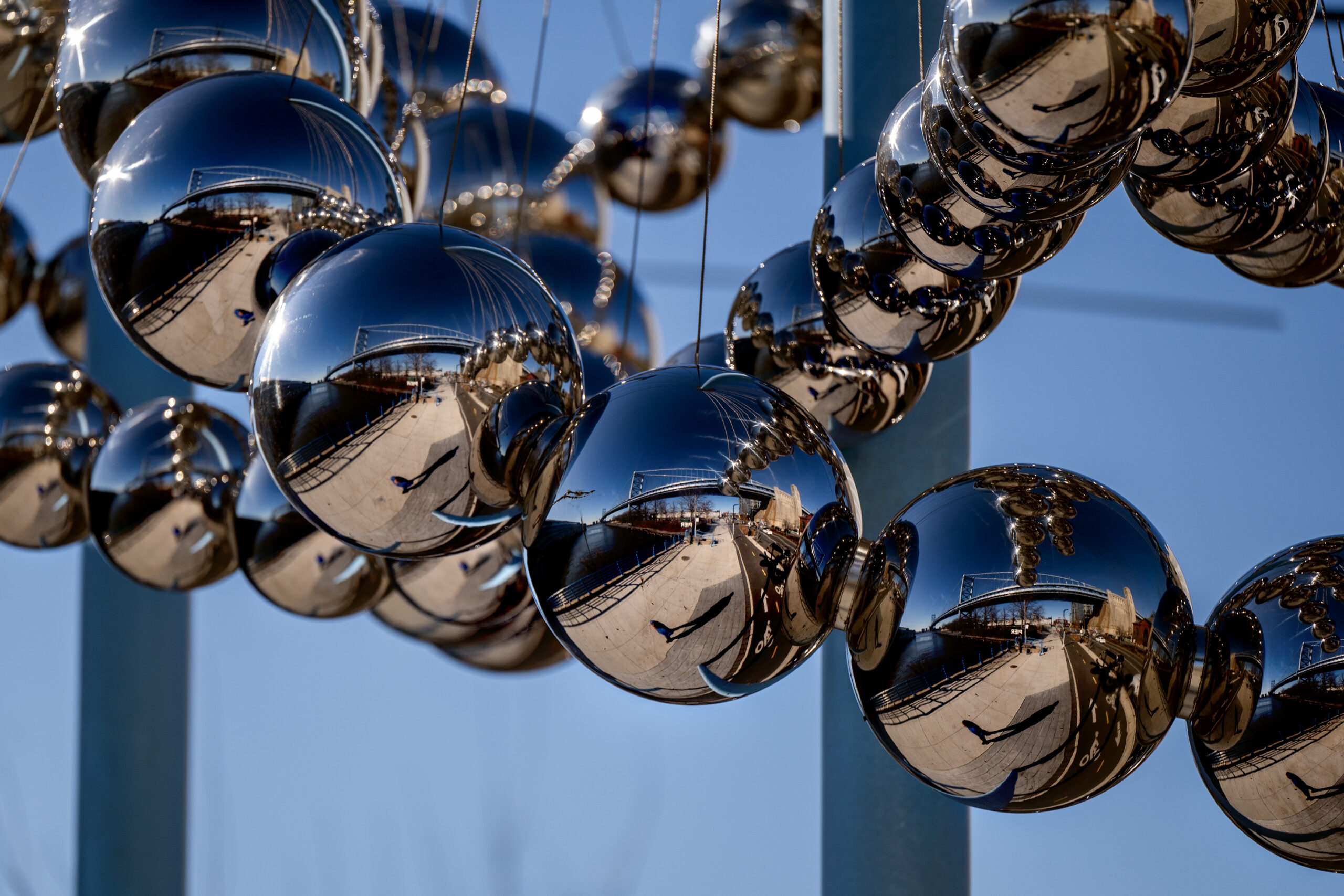
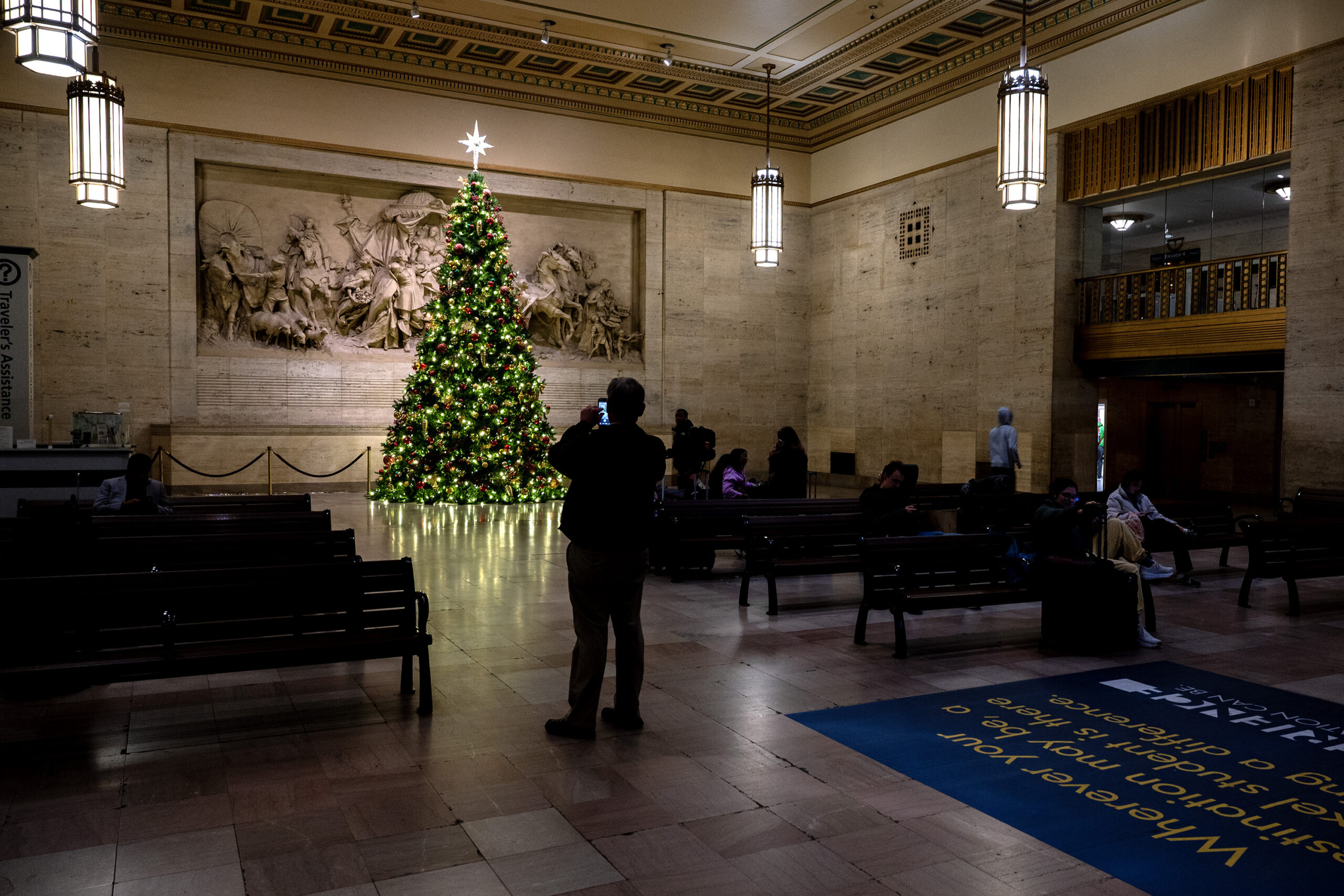
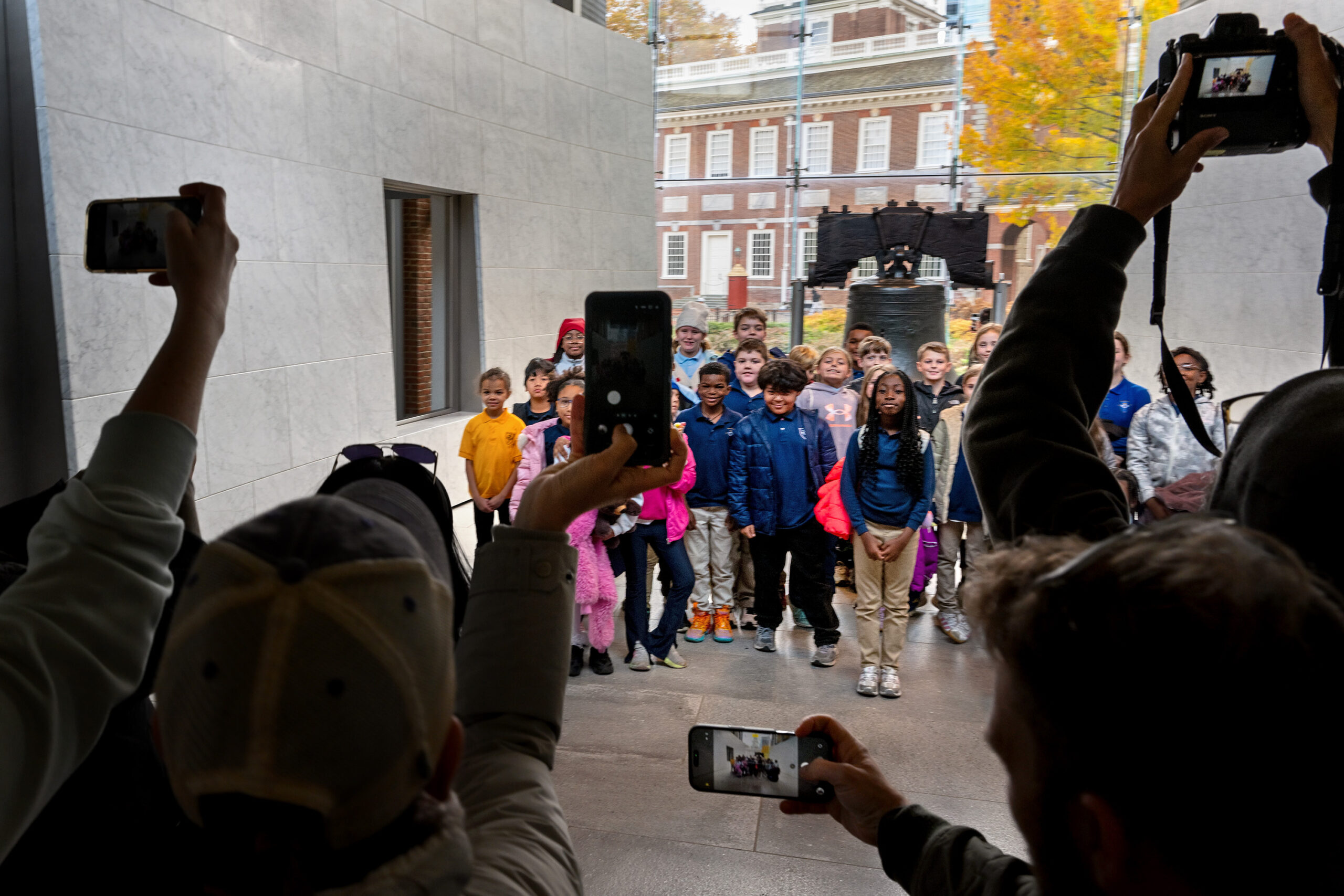
February 16, 2026: What came first? The dirty snowpacked berm of frozen slush or the graffiti? February 9, 2026: Walking through a corrugated metal culvert called the “Duck Tunnel,” a pedestrian navigates the passageway under the SEPTA tracks on the Swarthmore College campus. February 2, 2026: A light-as-air Elmo balloon rolls along a sidewalk in Haddonfield, propelled by the wind as Sunday’s heavy snow starts to turn to ice and sleet. January 26, 2026: The President’s House in Independence National Historical Park hours Jan, 22, after all historical exhibits were removed following President Trump’s Executive Order last March that the content at national parks that “inappropriately disparage” the U.S. be reviewed. The site, a reconstructed “ghost” structure titled “Freedom and Slavery in the Making of a New Nation” (2010), serves as a memorial to the nine people George Washington enslaved there during the founding of America.January 19, 2026: A low-in-the-sky winter sun is behind the triangular pediment of the “front door” of the open-air President’s House installation in Independence National Historical Park. The reconstructed “ghost” structure with partial walls and windows of the Georgian home known in the 18th century as 190 High St. is officially titled, “Freedom and Slavery in the Making of a New Nation” (2010). It is designed to give visitors a sense of the house where the first two presidents of the United States, George Washington and John Adams, served their terms of office. The commemorative site designed by Emanuel Kelly, with Kelly/Maiello Architects, pays homage to nine enslaved people of African descent who were part of the Washington household with videos scripted by Lorene Cary and directed by Louis Massiah. Deepika Iyer holds her niece Ira Samudra aloft in a Rockyesque pose, while her parents photograph their 8 month-old daughter, in front of the famous movie prop at the top of the steps at the Philadelphia Art Museum. Iyer lives in Philadelphia and is hosting a visit by her mother Vijayalakshmi Ramachandran (partially hidden); brother Gautham Ramachandran; and her sister-in-law Janani Gautham who all live in Bangalore, India.January 5, 2026: Parade marshals trail behind the musicians of the Greater Kensington String Band heading to their #9 position start in the Mummers Parade. Spray paint by comic wenches earlier in the day left “Oh, Dem Golden Slippers” shadows on the pavement of Market Street. This year marked the 125th anniversary of Philly’s iconic New Year’s Day celebration.Dec. 29, 2025: Canada geese at sunrise in Evans Pond in Haddonfield, during the week of the Winter Solstice for the Northern Hemisphere. December 22, 2025: SEPTA trolley operator Victoria Daniels approaches the end of the Center City Tunnel, heading toward the 40th Street trolley portal after a tour to update the news media on overhead wire repairs in the closed tunnel due to unexpected issues from new slider parts.December 15, 2025: A historical interpreter waits at the parking garage elevators headed not to a December crossing of the Delaware River, but an event at the National Constitution Center. General George Washington was on his way to an unveiling of the U.S. Mint’s new 2026 coins for the Semiquincentennial, December 8, 2025: The Benjamin Franklin Bridge and pedestrians on the Delaware River Trail are reflected in mirrored spheres of the “Weaver’s Knot: Sheet Bend” public artwork on Columbus Boulevard. The site-specific stainless steel piece located between the Cherry Street and Race Street Piers was commissioned by the City’s Public Art Office and the Delaware River Waterfront Corporation and created and installed in 2022 by the design and fabrication group Ball-Nogues Studio. The name recalls a history that dominated the region for hundreds of years. “Weaver’s knot” derives from use in textile mills and the “Sheet bend” or “sheet knot” was used on sailing vessels for bending ropes to sails. November 29, 2025: t’s ginkgo time in our region again when the distinctive fan-shaped leaves turn yellow and then, on one day, lose all their leaves at the same time laying a carpet on city streets and sidewalks. A squirrel leaps over leaves in the 18th Century Garden in Independence National Historical Park Nov. 25, 2025. The ginkgo (Ginkgo biloba) is considered a living fossil as it’s the only surviving species of a group of trees that existed before dinosaurs. Genetically, it has remained unchanged over the past 200 million years. William Hamilton, owner the Woodlands in SW Phila (no relation to Alexander Hamilton) brought the first ginkgo trees to North America in 1785.November 24, 2025: The old waiting room at 30th Street Station that most people only pass through on their way to the restrooms has been spiffed up with benches – and a Christmas tree. It was placed there this year in front of the 30-foot frieze, “The Spirit of Transportation” while the lobby of Amtrak’s $550 million station restoration is underway. The 1895 relief sculpture by Karl Bitter was originally hung in the Broad Street Station by City Hall, but was moved in 1933. It depicts travel from ancient to modern and even futuristic times. November 17, 2025: Students on a field trip from the Christian Academy in Brookhaven, Delaware County, pose for a group photo in front of the Liberty Bell in Independence National Historical Park on Thursday. The trip was planned weeks earlier, before they knew it would be on the day park buildings were reopening after the government shutdown ended. “We got so lucky,” a teacher said. Then corrected herself. “It’s because we prayed for it.”
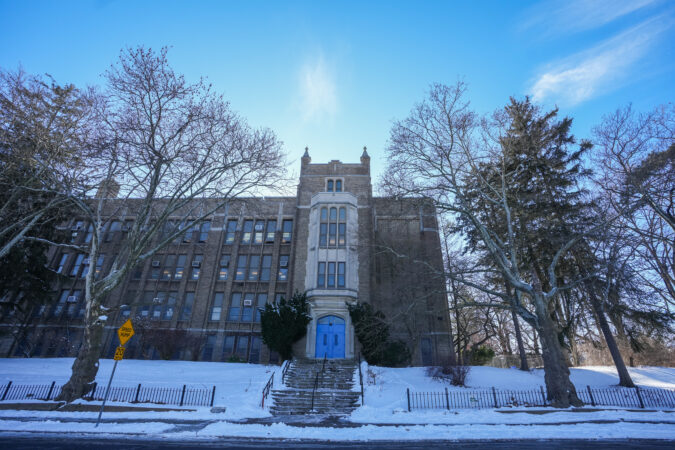
For nearly a century, the Samuel Pennypacker School has survived — a three-story brick anchor of the West Oak Lane neighborhood in Northwest Philadelphia.
Now it faces the threat of extinction.
ThePhiladelphia School District says the school’s building score is “unsatisfactory” and modernizing it would cost more than $30 million. District officials are calling for shutteringPennypacker following the 2026-27 school year, funnelingits students to nearby Franklin S. Edmonds or Anna B. Day schools— part of a citywide proposal to close20 district schools.
The recommendation, district officials say, is no reflection of the “incredible teachers, community, [and] students” at Pennypacker. Rather, it is an attempt by the district to optimize resources and equity for students.
Like many district schools, Pennypacker, which serves students in kindergarten through eighth grade, is aging and outdated, having opened in 1930. At just over 300 students, it is among the city’s smaller schools — and operating at about64% of building capacity.
Yet, it is those same qualities — its size and longevity — that represent some of its greatest strengths, say those in the school community who are not happy about the proposed closure.
It’s a school, they say, that is more than the sum of its aging parts.
On the school’s walls are pocks of chipped paint, yes, but also the colorful detritus of a small but vibrant student population: a poster composed of tiny handprints in honor of Black History Month; a “Blizzard of Positivity” — handwritten messages reading “Smile” and “Hugs” and “Help your friends when they fall.”
It’s where Wonika Archer’s children enrolled soon after the family emigrated from Guyana — the first school they had ever known.
“A lot of firsts,” Archer said. “Their first friends, their first teachers outside of their parents.”
It’s where, since 1992, Andreas Roberts’ youth drill team has been allowed to practice. The team, which includessome Pennypacker students, recently participated in its first competition andwon first place.
“Pennypacker has been very, very useful to us,” he said. “We have nowhere else to practice for the kids.”
It’s where Christine Thorne put her kids through school, her son and her daughter, and where her grandchildren now go. Around the school, they call her “Grandmama.”
“I feel as if my household is being destroyed,” she said recently.
For students, news of the imminent closure has been no less jarring.
When Janelle Pearson’s fourth-grade students learned recently that their school was poised to be shuttered under the district’s plan, they took it as a grim reflection on themselves.
“It makes them feel like, ‘What did we do wrong that they want to close our school?’” said Pearson, who has taught at Pennypacker for abouta decade. “That’s the part that tugs at your heart.”
Unwilling to go down without a fight, the fourth graders resolved to do what they could. Soon, a poster took shape, in marker and crayon, a series of pleas addressed to Philadelphia Superintendent Tony B. Watlington Sr.
“Pennypacker is our home.”
“Don’t uproot our education.”
“Our neighborhood depends on this school!”
The poster was presented to district officials earlier this month at a community meeting held in the school’s wood-seated auditorium.
At that meeting, representatives from the district did their best to explain the reasoning for the proposed closures. They presented a tidy PowerPoint and talked of student retention and program alignment, of building capacity and neighborhood vulnerability scores.
It stood in stark contrast to the parents and teachers and staffers who, one by one, held a microphone and spoke of love and family and community, of teachers and staffers who routinely went above and beyond to make their children feel safe. To make them feel special.
“It’s not just about a building,” said Richard Levy, a onetime Pennypacker teacher who now works at St. Joseph’s University. “The challenges here aren’t reasons to close the school — they’re reasons to strengthen it.”
Whether their appeals might affect the district’s decision remains to be seen. Other schools in the district slated for closure have mounted efforts of their own, and, despite a recent grilling by City Council members, it seems all but certain that several schools will ultimately shutter.
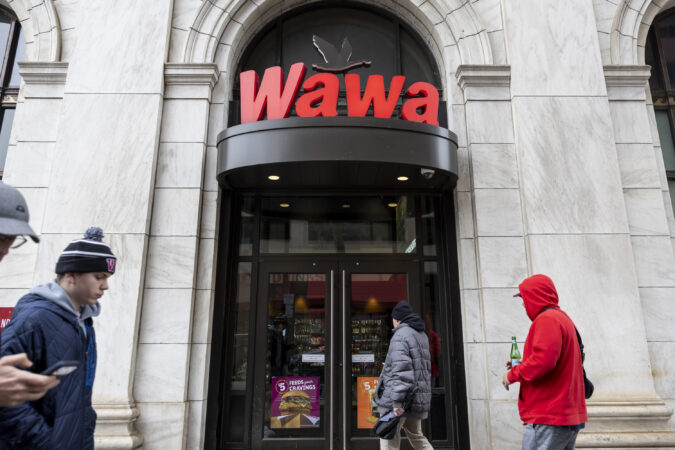
Wawa customers have been able to order roasted chicken on sandwiches, salads, burritos, and more since summer 2024. Hoagie-loving Philadelphians may scroll past the high-protein option on Wawa’s trademarked built-to-order screens, while others tap its icon instinctively in their rush to order lunch.
Wawa CEO Chris Gheysens said he sees the chicken breast differently.
From idea to inception, “that was a labor of love for quite a long time,” Gheysens said in a recent interview. “It’s 37 grams of protein, something consumers are really looking for today.”
And, he added, “it’s still highly customizable, which our customers love doing at Wawa.”
To Gheysens, the menu addition shows how the Delaware County-based company responds to consumer demand. Just as it did decades ago when Philly-area store managers began brewing coffee for customers on the go, and in 1996, when Wawa executives decided to start selling gasoline.
Even now, with nearly 1,200 stores in 13 states and Washington, D.C., Wawa is still listening to consumer feedback, Gheysens said. And despite expanding as far away as Florida and Kentucky, the CEO said, the convenience-store giant remains especially in tune with its hometown fans.
“For a lot of people, it’s their daily routine,” said Gheysens, a South Jersey native. “It becomes a part of their neighborhood. It’s a relationship that’s built on consistency, on trust” — and on getting customers out the door in five minutes or less, depending on the time of day.
(function() { var l = function() { new pym.Parent( ‘wawa-stats__graphic’, ‘https://media.inquirer.com/storage/inquirer/ai2html/wawa-stats/index.html’); }; if(typeof(pym) === ‘undefined’) { var h = document.getElementsByTagName(‘head’)[0], s = document.createElement(‘script’); s.type = ‘text/javascript’; s.src = ‘https://pym.nprapps.org/pym.v1.min.js’; s.onload = l; h.appendChild(s); } else { l(); } })();
Customers say they are drawn to the homegrown chain for its convenience, consistency, quality, and wide-ranging menu of grab-and-go and made-to-order items (even though some miss the old Wawa delis where lunch meat was sliced on the spot).
In Runnemede, 78-year-old Barbara MacCahery said she goes to her local Wawa at least a couple of times a week — “sometimes for breakfast, sometimes for a sandwich, a lot of times for coffee.”
In MacCahery’s mind, she said, the chain has proven itself time and time again for decades: “It’s very rare that you’ll have a bad experience.”
Wawa’s ‘secret sauce’ for success
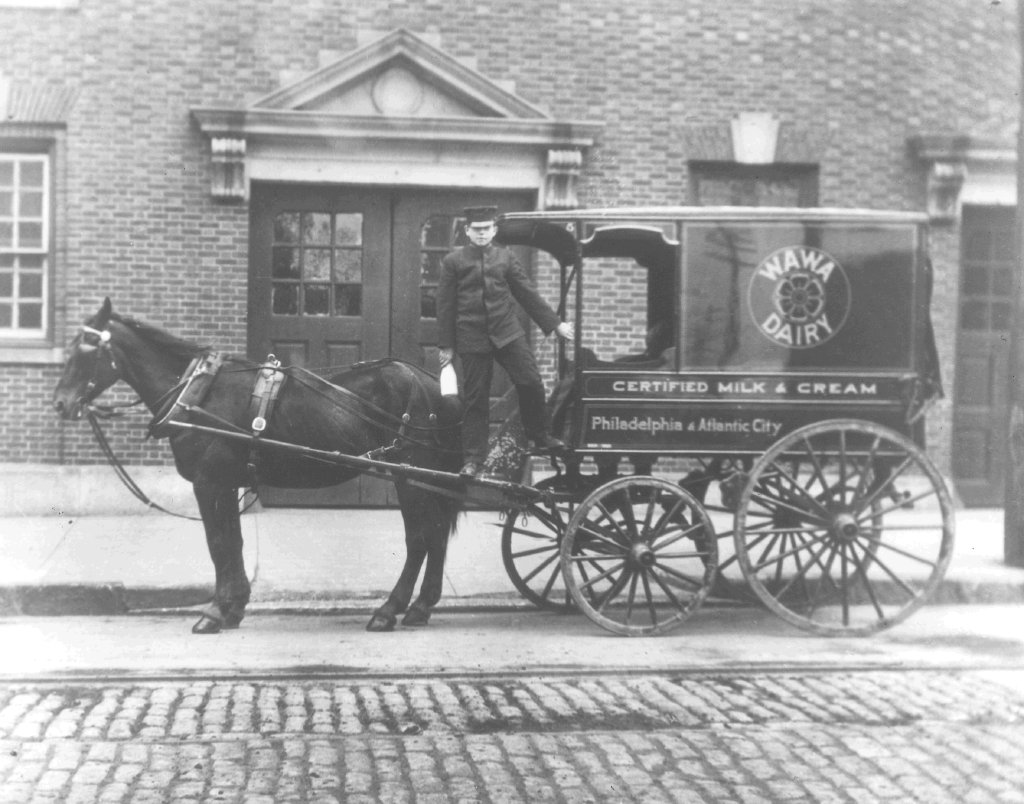
More than 100 years ago, Wawa started out as a dairy, delivering milk to Philadelphia-area households.
Wawa has set a national standard for success in the convenience-store industry, said Z. John Zhang, a marketing professor at the Wharton School of the University of Pennsylvania.
“It really is some kind of a secret sauce,” said Zhang, who studies retail management. “For many people, Wawa has become a destination store,” one that combines “speed, customization, and perceived high quality” with near-constant availability — many Wawa stores are open 24/7.
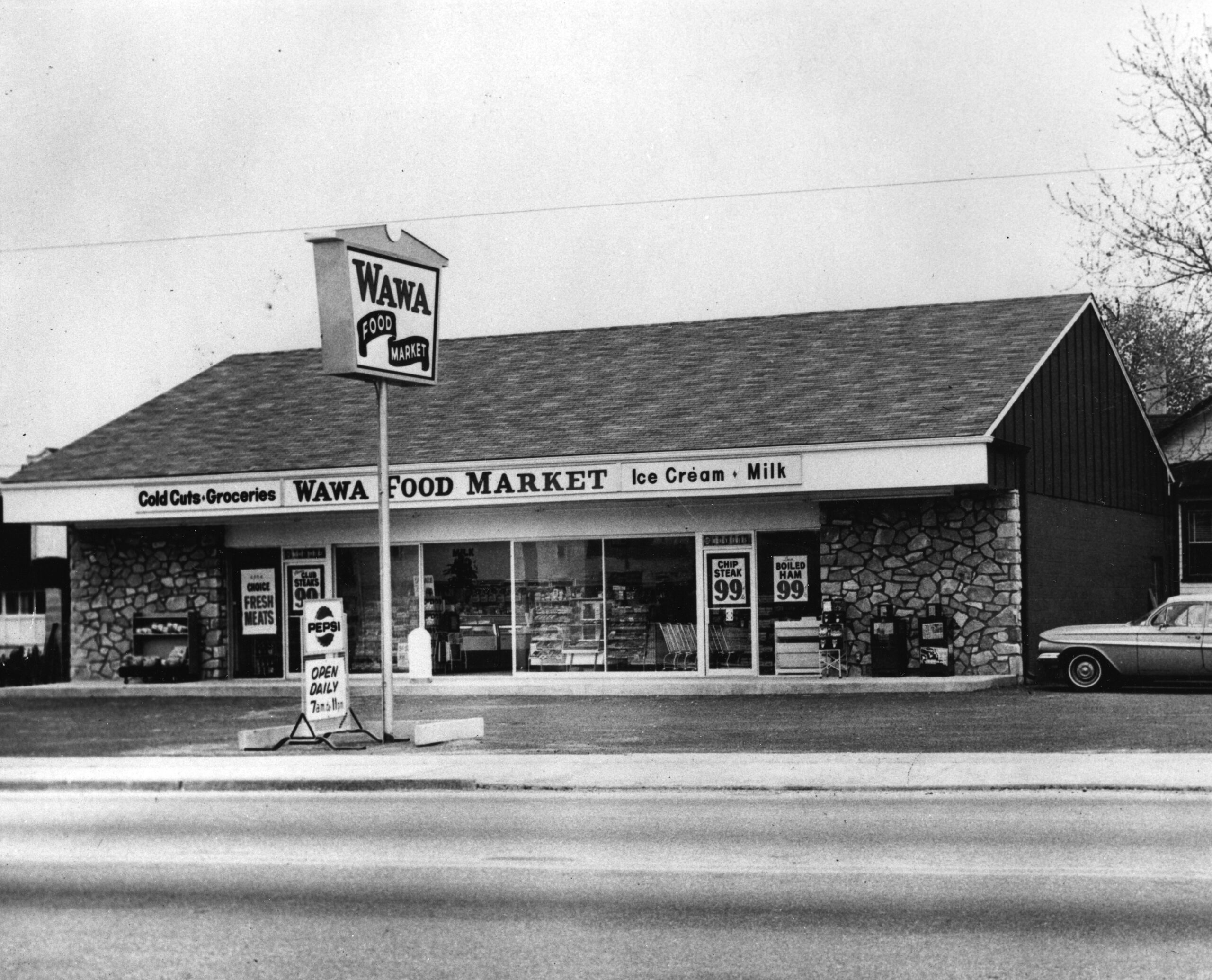
The company got its start as a dairy, delivering milk to Philly-area households. In 1964, it opened its first store in Folsom. Soon, the family-owned company expanded into New Jersey and Delaware, and established a reputation for quality and speed, with slogans like “People on the Go — Go to Wawa Food Markets.”
Wawa’s first convenience store opened in Folsom, Delaware County in 1964.
Wawa is privately held, owned in part by workers who get a percentage of their earnings contributed to an employee stock-ownership plan. Zhang said this program likely leads to more-invested employees who provide better customer service.
Because Wawa is not public, it is not required to disclose its finances, and company executives declined to discuss them.
But by many appearances, Wawa seems to be doing well: Over the last decade, the company has increased its store count by about 65% and doubled its workforce to about 50,000 associates.
Philly-area Wawas are often crowded, too, which is key to making money in the convenience-store industry.
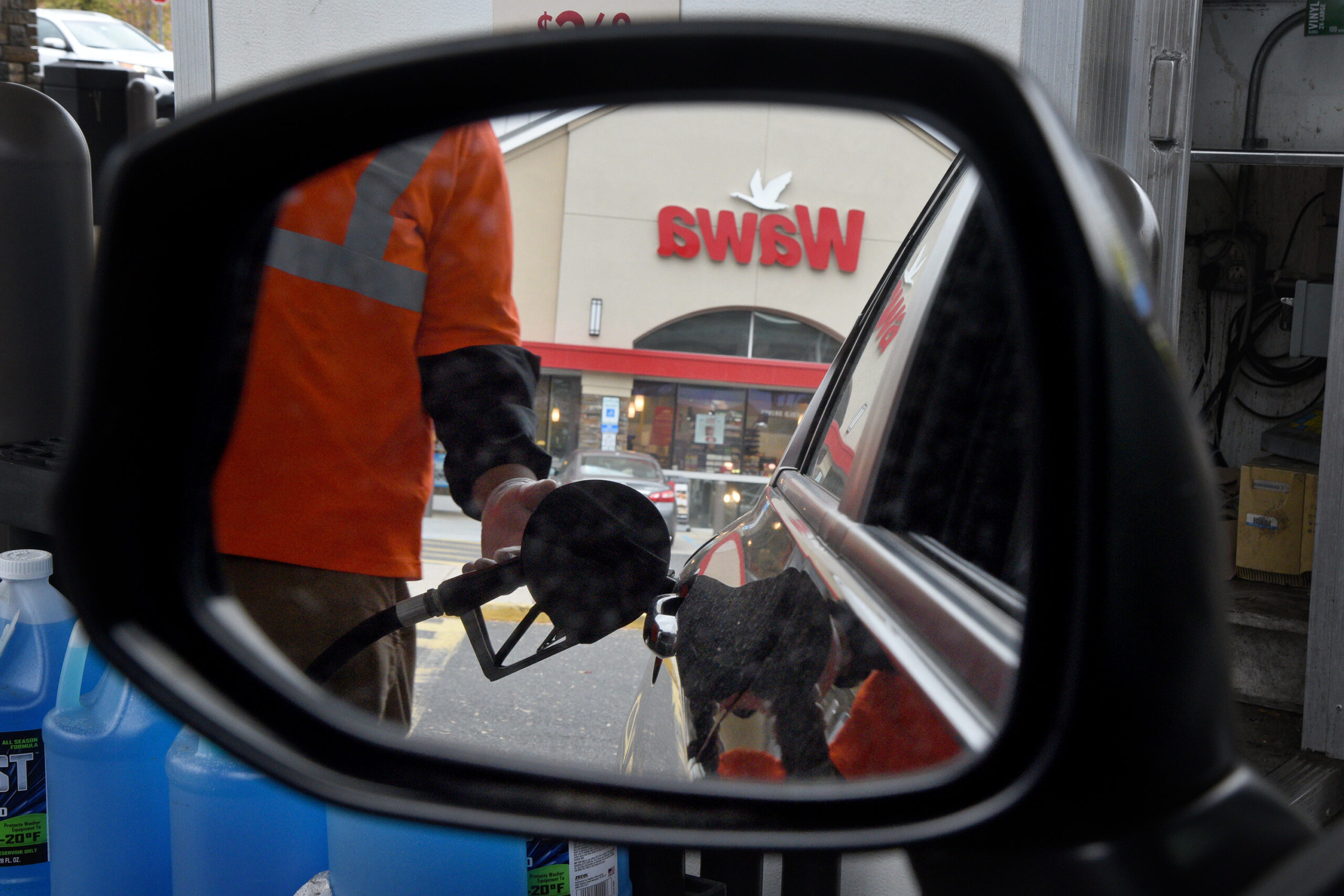
A gas attendant fills up a customer’s tank at a Wawa in Pennsauken in 2020.
“We think it’s high-impulse, but 80% of all people who walk into a convenience store pretty much know what they want,” said Zelinski, who consults with retailers. (He declined to discuss specific companies and said he has never worked for Wawa.)
Successful operators have encouraged customers to spend more by adding seating and improving their food service, Zelinski said. And stores with better food see higher profit margins.
“Once you have somebody that’s addicted to your food service program, they’re more likely to come back to your store vs. a competing store,” he said.
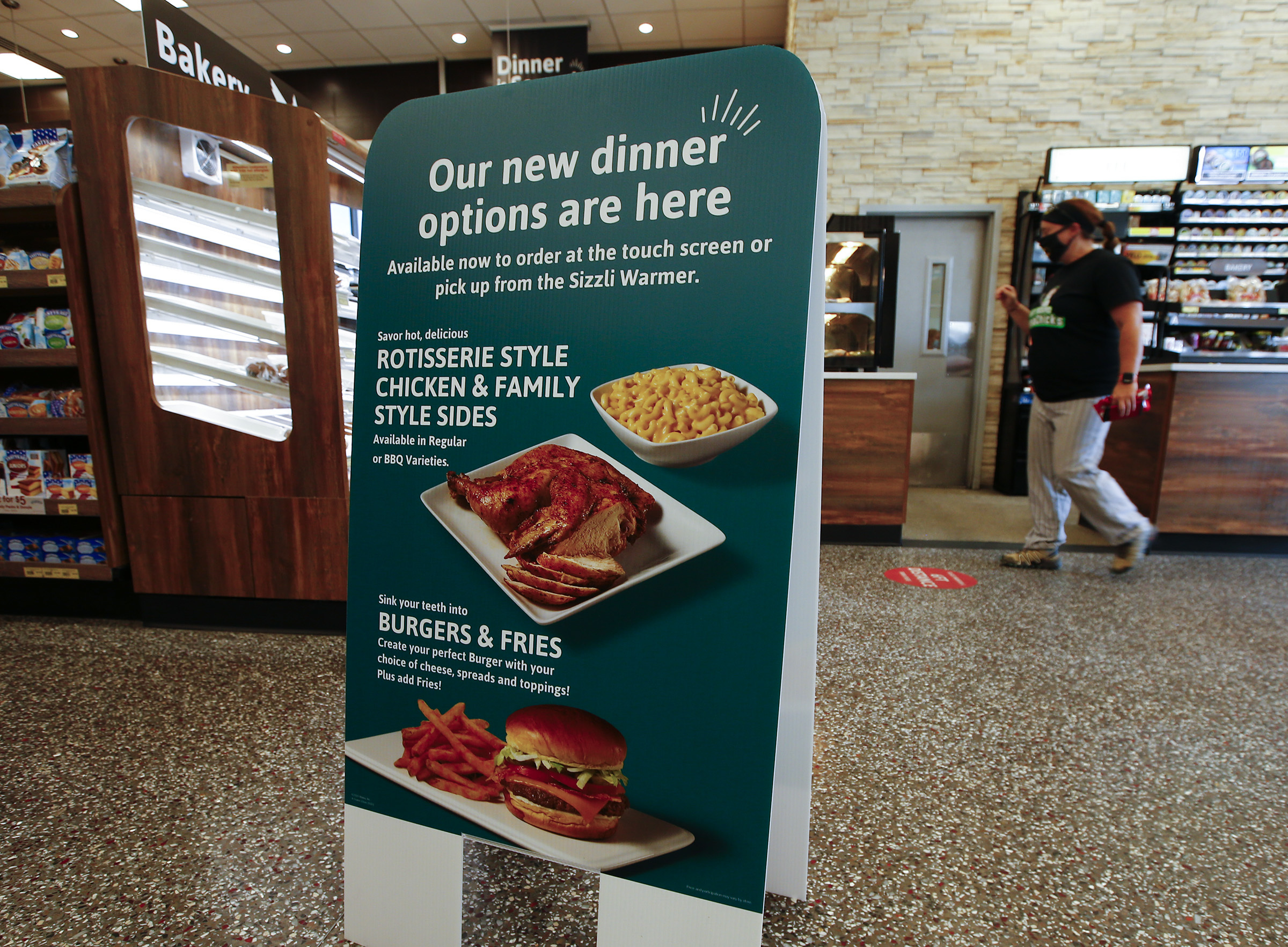
In 2020, Wawa debuted new menu offerings, including hamburgers, pot roast, rotisserie chicken, pasta alfredo, and kids meals, at a tasting in Media.
Wawa has certainly gotten people hooked on their coffee, hoagies, and ever-expanding menu, Zhang said. Options added in recent years include pizza, wraps, protein-packed “power meals,” limited-edition coffee flavors, and smoothies “boosted” with protein, vitamins, and minerals.
This older Wawa in Cherry Hill closed in 2024. The township has six remaining Wawas.
Despite Wawa’s best efforts, not all stores thrive, Gheysens said. But “luckily for us, we’re still in growth mode, and don’t have to worry about closures in a broad way.”
Gheysens said he sees room for more Wawas in the Philadelphia market — even as convenience-store competitors like Maryland-based Royal Farms and Altoona-based Sheetz have opened new stores in the region.
Wawa executives want “to make sure that we are the number-one convenience store in the area, that’s important to us,” Gheysens said. “These are our hometown counties.”
What keeps Philly-area consumers going to Wawa
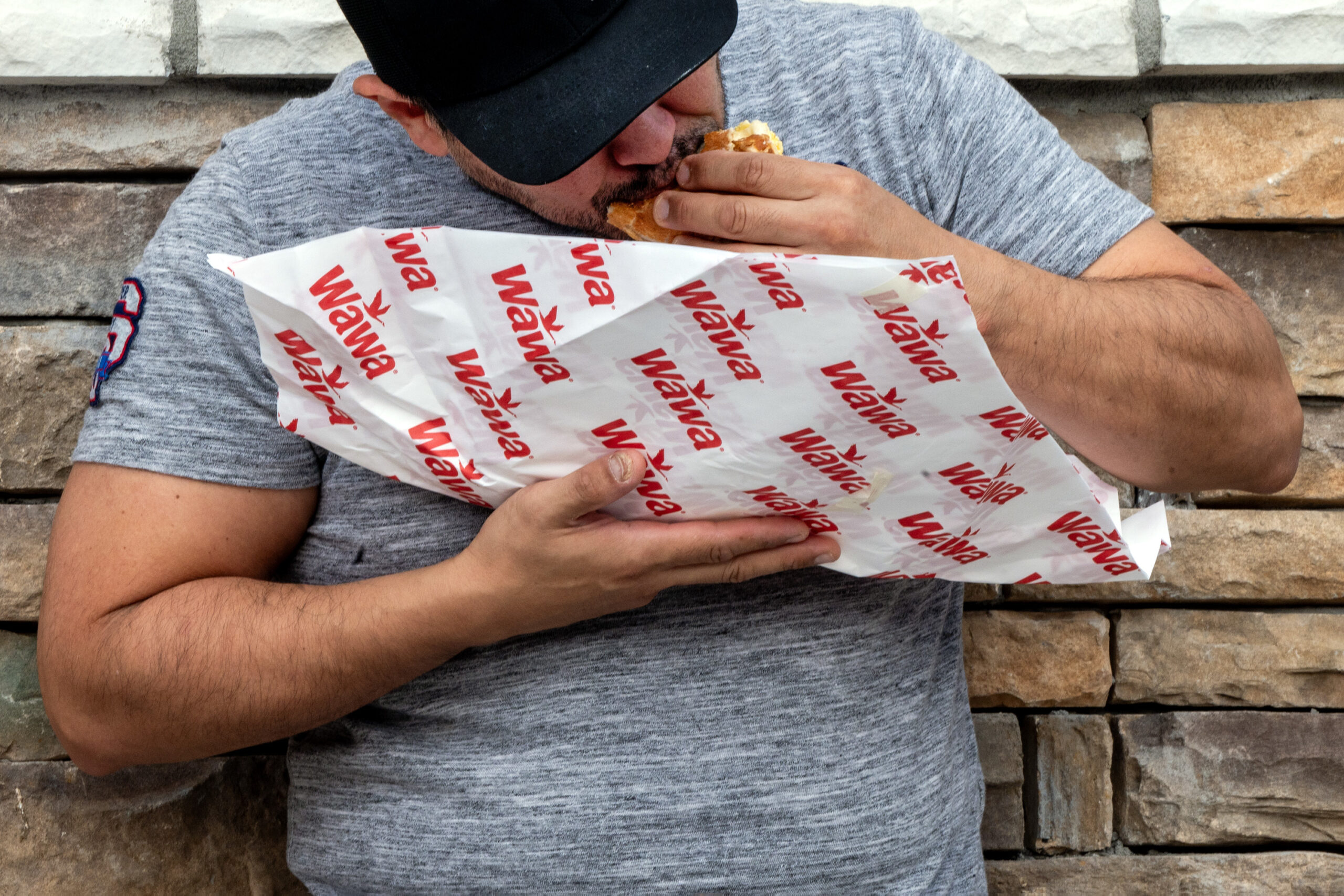
A Wawa customer eats a breakfast Sizzli during the 2024 grand opening of the company’s first central Pennsylvania store.
Many Philly-area consumers grew up alongside Wawa.
In interviews with nearly a dozen of them, some were quick to reminisce about early memories of their local stores, such as the distinct smell of coffee and deli meat or the excitement of a Wawa run with high school friends. Others bemoan what has changed with the company’s expansion, including more congested parking lots.
Most have a quick answer when asked what their Wawa order is.
Rick Gunter, 45, of Royersford, misses the Wawa of his youth. Back in the day, he said, the Wawa hoagies “hit different,” with lunch meat fresh off the slicer.
Contrary to some customers’ beliefs, most stores still bake Amoroso rolls — a custom recipe made exclusively for Wawa — fresh in store multiple times a day, Gheysens said. As for the deli meat, the CEO said that was another decision rooted in customer preference.
When customers have participated in blind tests of the pre-sliced meat Wawa uses today against a fresh-sliced alternative, “they can’t tell the difference,” Gheysens said. “They would choose our pre-sliced meats, because of what we’ve done in terms of quality and the supply chain and the ability to deliver them at such a pace.”
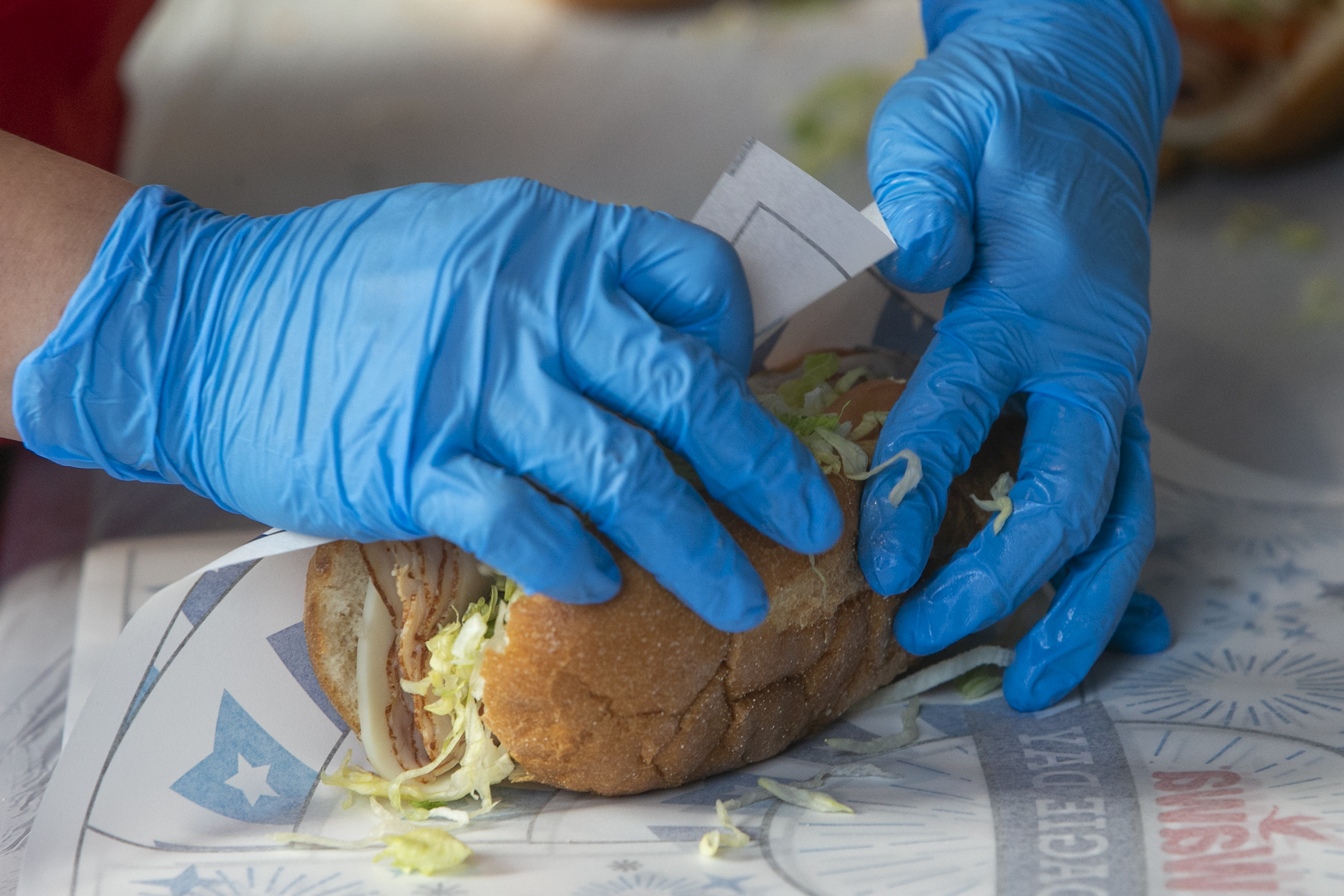
A sandwich maker at Wawa wraps a hoagie with turkey, provolone, tomato, and lettuce in this 2020 file photo.
Some customers disagree.
“It was way better when it was kind of also a deli. Now they try to make everything for everybody,” said Bill Morgan, 79, of East Coventry Township. “I’m within five miles of three Wawas, but I rarely eat their food. Only under extreme duress.”
Morgan acknowledged he must be in the minority, given how crowded Wawas are at lunchtime. And despite his distaste for much of their food, he said he still gets gas there and loves their coffee. And he can’t help but admire their business model.