Category: News

Latest breaking news and updates

  • Dilys E. Blum, senior curator emeritus at the Philadelphia Art Museum, has died at 78

    Dilys E. Blum, senior curator emeritus at the Philadelphia Art Museum, has died at 78

    Dilys E. Blum, 78, of Philadelphia, senior curator emeritus of costume and textiles at the Philadelphia Art Museum, author, lecturer, mentor, and world traveler, died Saturday, Dec. 27, of complications from cancer at Thomas Jefferson University Hospital.

    For 38 years, from 1987 to her retirement in 2025, Ms. Blum served as the museum’s curator of costume and textiles. In that role, she organized the museum’s vast treasure trove of textile artifacts, traveled the world to research noted fashion designers and eclectic collections, and created more than 40 memorable exhibitions about Renaissance velvets, contemporary fashion, Asian textiles, carpets, African American quilts, and dozens of other curios.

    Among her most popular presentations were 1997’s “Best Dressed: 250 Years of Style,” 2011’s “Roberto Capucci: Art into Fashion,” and 2025’s “Boom: Art and Design in the 1940s.” She organized two displays simultaneously in 2007, and The Inquirer said: “One exhibit is elegant, one’s eccentric, both are impressive.”

    She was cited as the world’s foremost authority on avant-garde Italian fashion designer Elsa Schiaparelli, and her 2003 exhibition “Shocking! The Art and Fashion of Elsa Schiaparelli” drew 83,000 visitors. Francesco Pastore, the heritage and cultural projects manager at the House of Schiaparelli in Paris, said: “Her remarkable research, her generosity in sharing knowledge, and her contribution to fashion studies have deeply enriched our field.”

    Ms. Blum (right) and colleague Monica Brown tend to a museum exhibit in 2011.

    In a recent tribute, former museum colleagues marveled at her “technical expertise and cultural insight,” and credited her for reinvigorating the once-neglected textiles collection. Daniel Weiss, director and chief executive officer of the museum, said: “She transformed this museum’s costume and textiles department into a program respected around the world.”

    She told The Inquirer in 1990: “We wanted to remind them that we were here.”

    Before Philadelphia, Ms. Blum was a textile conservator at the Chicago Conservation Center and the Brooklyn Museum, and senior assistant keeper of the costume and textile department at the Museum of London. She earned a bachelor’s degree in art history at Connecticut College and studied afterward at the University of Manchester in England and the Courtauld Institute of Art at the University of London.

    “She was fearless in her pursuit of perfection in her work,” said her sister Galen. Her sister Sydney said: “She was dedicated to her craft and scholarship.”

    Ms. Blum (left) was close to her sisters Sydney (center) and Galen.

    An avid reader and writer, Ms. Blum wrote and cowrote several books about textiles and designers, and 2021’s Patrick Kelly: Runway of Love, coauthored with former colleague Laura L. Camerlengo, earned a 2023 honorable mention publication award from the Costume Society of America. She also wrote essays for exhibition catalogs, served on editorial boards for journals, lectured around the world, and was active with the International Council of Museums, the Association of Art Museum Curators, and other groups.

    In 2025, to celebrate Ms. Blum’s retirement, Camerlengo praised her “deep knowledge, creative vision, and contagious passion for the field.” She said: “Dilys is one of the most influential figures in the world of fashion and textile arts.”

    Ms. Blum’s work and fashion viewpoints were featured often in The Inquirer. In 1997, she said: “People don’t dress up anymore.” In 1999, she said: “I think we’ve lost the joy in dressing. There’s this trend away from clutter in dress and decorating. It’s pared down to the point of visual boredom.”

    In 2001, she said it was easy to differentiate between New Yorkers and Philadelphians. “New Yorkers,” she said, “will invariably be wearing the accessory of the moment, a pashmina shawl, a Kate Spade bag, a Prada loafer.”
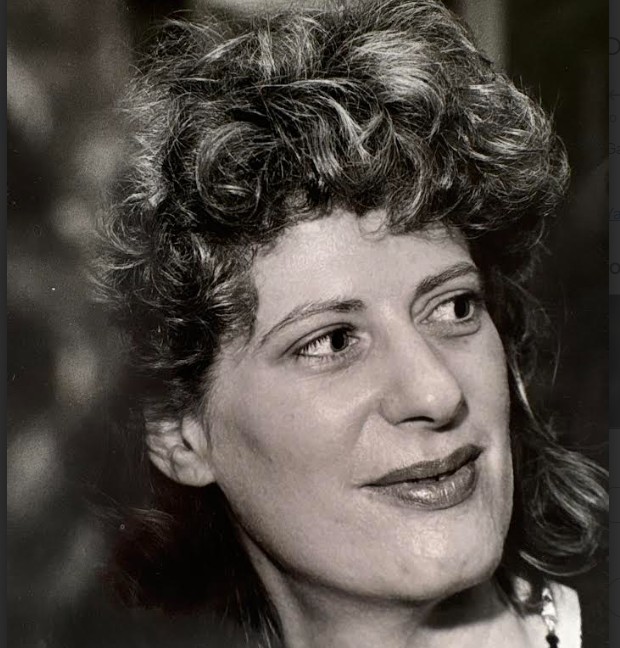
    Ms. Blum left “an enduring legacy woven through the art museum and the generations of scholars and visitors who now see costumes and textiles as central to the story of art,” former museum colleagues said.

    Dilys Ellen Blum was born July 11, 1947, in Ames, Iowa. She and her parents moved to Hamilton, N.Y., when she was 1, and the family traveled with her father, an economics professor at Colgate University, on teaching sabbaticals abroad. When she was 12, Ms. Blum spent a year with her parents and sisters living in Norway and touring Europe in a Volkswagen Beetle.

    Her mother was an artist and seamstress, and she and Ms. Blum spent many nights poring over clothes patterns on their dining room table. She enjoyed reading murder mysteries and traveling the world in search of new museum-worthy artifacts.

    She lived in South Philadelphia, was diagnosed with cancer three years ago, and talked often with her sisters on the telephone. “I admired her seriousness and humility,” Sydney said. Galen said: “From my perspective, I was in awe of her.”

    In addition to her sisters, Ms. Blum is survived by a niece, Juniper, and other relatives.

    A memorial service is to be held later.

    Former museum colleagues said Ms. Blum’s writing “consistently amplified the makers and wearers of extraordinary objects, and their intertwined relationships.”
  • Press freedom advocates worry that raid on Washington Post journalist’s home will chill reporting

    Press freedom advocates worry that raid on Washington Post journalist’s home will chill reporting

    If the byproduct of a raid on a Washington Post journalist’s home is to deter probing reporting of government action, the Trump administration could hardly have chosen a more compelling target.

    Hannah Natanson, nicknamed the “federal government whisperer” at the Post for her reporting on President Donald Trump’s changes to the federal workforce, had a phone, two laptops, and a Garmin watch seized in the Wednesday search of her Virginia home, the newspaper said.

    A warrant for the raid said it was connected to an investigation into a government contractor accused of illegally retaining classified government materials, said Matt Murray, the Post’s executive editor, in an email to his staff. The Post was told that Natanson and the newspaper are not targets of the investigation, he said.

    In a meeting Thursday, Murray told staff members that “the best thing to do when people are trying to intimidate you is not be intimidated — and that’s what we did yesterday.”

    The Reporters Committee for Freedom of the Press said Thursday it has asked the U.S. District Court in Virginia to unseal the affidavit justifying the search of Natanson’s home.

    Attorney General Pam Bondi said that the search was done at the request of the Defense Department and that the journalist was “obtaining and reporting classified and illegally leaked information from a Pentagon contractor.”

    “If the attorney general can describe the justification for searching a reporter’s home on social media, it is difficult to see what harm could result from unsealing the justification that the Justice Department offered to this court,” the Reporters Committee said in its application.

    Government raids to homes of journalists highly unusual

    Jameel Jaffer, executive director of the Knight First Amendment Institute at Columbia University, has been working on press freedom issues for a decade and said a government raid on a journalist’s home is so unusual he couldn’t remember the last time it happened. He said it can’t help but have a chilling effect on journalism.

    “I strongly suspect that the search is meant to deter not just that reporter but other reporters from pursuing stories that are reliant on government whistleblowers,” Jaffer said. “And it’s also meant to deter whistleblowers.”

    In a first-person piece published by the Post on Christmas Eve, Natanson wrote about how she was inundated with tips when she posted her contact information last February on a forum where government employees were discussing the impact of Trump administration changes to the federal workforce.

    She was contacted by 1,169 people on Signal, she wrote. The Post was notably aggressive last year in covering what was going on in federal agencies, and many came as a result of tips she received — and was still getting. “The stories came fast, the tips even faster,” she wrote.

    Natanson acknowledged the work took a heavy toll, noting one disturbing note she received from a woman she was unable to contact. “One day, a woman wrote to me on Signal, asking me not to respond,” she wrote. “She lived alone, she messaged, and planned to die that weekend. Before she did, she wanted at least one person to understand: Trump had unraveled the government, and with it, her life.”

    Natanson did not return messages from the Associated Press. Murray said that “this extraordinary, aggressive action is deeply concerning and raises profound questions and concern around the constitutional protections for our work.”

    The action “signals a growing assault on independent reporting and undermines the First Amendment,” said Tim Richardson, journalism and disinformation program director at the advocacy group PEN America. Like Jaffer, he believes it is intended to intimidate.

    Sean Spicer, Trump’s press secretary at the beginning of his first term, said the concerns are premature. If it turns out that Natanson did nothing wrong, then questions about whether the raid was an overreach are legitimate, said Spicer, host of the political news show The Huddle on streaming services.

    “If Hannah did something wrong, then it should have a chilling effect,” he said.

    A law passed in 1917 makes it illegal for journalists to possess classified information, Jaffer said. But there are still questions about whether that law conflicts with First Amendment protections for journalists. It was not enforced, for example, when The New York Times published a secret government report on U.S. involvement in Vietnam in 1971.

    “It’s the government’s prerogative to pursue leakers of classified material,” the Post said in an editorial. “Yet journalists have First Amendment rights to gather and publish such secrets, and the Post also has a history of fighting for those freedoms.”

    Not the first action taken against the press

    The raid was made in context of a series of actions taken against the media during the Trump administration, including lawsuits against The New York Times and the BBC. Most legacy news organizations no longer report from stations at the Pentagon after they refused to sign on new rules restricting their reporting set by Defense Secretary Pete Hegseth. Funding for public broadcasting has been choked off due to Trump’s belief that its news coverage leaned left.

    Some news outlets have also taken steps to be more aligned with the administration, Jaffer said, citing CBS News since its corporate ownership changed last summer. The Washington Post has shifted its historically liberal opinion pages to the right under owner Jeff Bezos.

    The Justice Department over the years has developed, and revised, internal guidelines governing how it will respond to news media leaks. In April, Bondi issued new guidelines saying prosecutors would again have the authority to use subpoenas, court orders and search warrants to hunt for government officials who make “unauthorized disclosures” to journalists.

    The moves rescinded a policy from President Joe Biden’s Democratic administration that protected journalists from having their phone records secretly seized during leak investigations.

    “Leaking classified information puts America’s national security and the safety of our military heroes in serious jeopardy,” White House press secretary Karoline Leavitt said in a post on X. “President Trump has zero tolerance for it and will continue to aggressively crack down on these illegal acts moving forward.”

    The warrant says the search was related to an investigation into a system engineer and information technology specialist for a government contractor in Maryland who authorities allege took home classified materials, the Post reported.

    The worker, Aurelio Perez-Lugones, is accused of printing classified and sensitive reports at work, and some were found at his Maryland home, according to court papers. He was arrested last week on a charge of unauthorized removal and retention of classified documents.

    Perez-Lugones made a brief appearance in a Baltimore courtroom on Thursday. His attorney said they weren’t prepared to proceed with a hearing to determine whether he should remain jailed until a trial.

  • Trump announces outlines of healthcare plan he wants Congress to consider

    Trump announces outlines of healthcare plan he wants Congress to consider

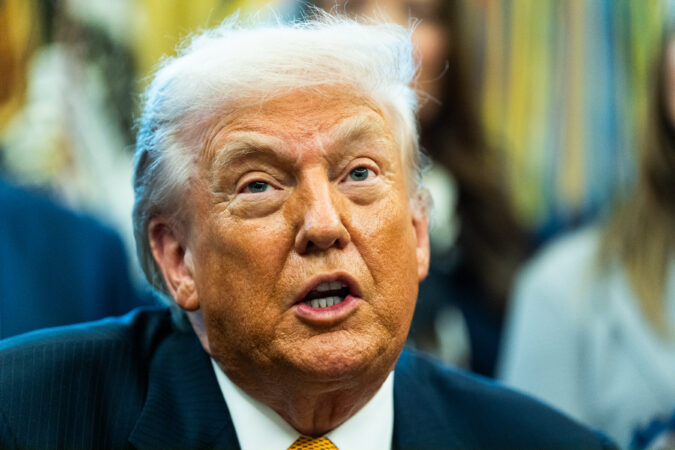
    WASHINGTON — President Donald Trump on Thursday announced the outlines of a healthcare plan he wants Congress to take up as Republicans have faced increasing pressure to address rising health costs after lawmakers let subsidies expire.

    The cornerstone is his proposal to send money directly to Americans for health savings accounts so they can handle insurance and health costs as they see fit. Democrats have rejected the idea as a paltry substitute for the tax credits that had helped lower monthly premiums for many people.

    “The government is going to pay the money directly to you,” Trump said in a taped video the White House released to announce the plan. “It goes to you and then you take the money and buy your own healthcare.”

    Trump’s plan also focuses on lowering drug prices and requiring insurers to be more upfront with the public about costs, revenues, rejected claims and wait times for care.

    Trump has long been dogged by his lack of a comprehensive healthcare plan as he and Republicans have sought to unwind former President Barack Obama’s signature legislation, the Affordable Care Act. Trump was thwarted during his first term in trying to repeal and replace the law.

    When he ran for president in 2024, Trump said he had only “concepts of a plan” to address healthcare. His new proposal, short on many specifics, appeared to be the concepts of a plan.

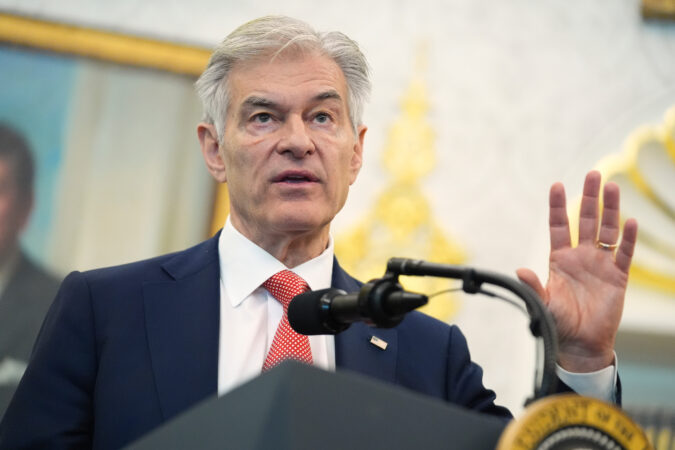
    Mehmet Oz, administrator of the Centers for Medicare and Medicaid Services, described it to reporters on a telephone briefing as a “framework that we believe will help Congress create legislation.”

    It was not immediately clear if any lawmakers in Congress were working to introduce the Republican president’s plan. A White House official who was not authorized to speak publicly and described some details on condition of anonymity said the administration had been discussing the proposal with allies in Congress, but was unable to name any lawmakers who were working to address the plan.

    Few specifics on health savings accounts

    The White House did not offer any details about how much money it envisioned being sent to consumers to shop for insurance, or whether the money would be available to all “Obamacare” enrollees or just those with lower-tier bronze and catastrophic plans.

    The idea mirrors one floated among Republican senators last year. Democrats largely rejected it, saying the accounts would not be enough to cover costs for most consumers. Currently, such accounts are used disproportionately by the wealthiest Americans, who have more income to fund them and a bigger incentive to lower their tax rate.

    White House press secretary Karoline Leavitt was asked at her briefing Thursday whether the president could guarantee that under his plan, people would be able to cover their health costs. She did not directly answer, but said, “If this plan is put in place, every single American who has health care in the United States will see lower costs as a result.”

    Enhanced tax credits that helped reduce the cost of insurance for the vast majority of Affordable Care Act enrollees expired at the end of 2025 even though Democrats had forced a 43-day government shutdown over the issue.

    Sen. Bernie Moreno (R., Ohio) has been leading a bipartisan group of 12 senators trying to devise a compromise that would extend those subsidies for two years while adding new limits on who can receive them. That proposal would create the option, in the second year, of a health savings account that Trump and Republicans prefer.

    The White House official denied that Trump was closing the door completely on those bipartisan negotiations, and said the White House preferred to send money directly to consumers.

    Plan follows massive cuts to health programs

    Trump’s plan comes months after the Republicans’ big tax and spending bill last year cut more than $1 trillion over a decade in federal healthcare and food assistance, largely by imposing work requirements on those receiving aid and shifting certain federal costs to the states.

    Democrats have blasted those cuts as devastating for vulnerable people who rely on programs such as Medicaid for their healthcare. The GOP bill included an infusion of $50 billion over five years for rural health programs, an amount experts have said is inadequate to fill the gap in funding.

    The White House said Trump’s new proposal will seek to bring down premiums by fully funding cost-sharing reductions, or CSRs, a type of financial help that insurers give to low-income ACA enrollees on silver-level, or mid-tier plans.

    From 2014 until 2017, the federal government reimbursed insurance companies for CSRs. In 2017, the first Trump administration stopped making those payments. To make up for the lost money, insurance companies raised premiums for silver-level plans. That ended up increasing the financial assistance many enrollees got to help them pay for premiums.

    As a result, health analysts say that while restoring money for CSRs would likely bring down silver-level premiums, as Trump says, it could have the unwelcome ripple effect of increasing many people’s net premiums on bronze and gold plans.

    Lowering drug prices is a priority

    Oz said Trump’s plans also seeks to have certain medications made available over the counter instead of by prescription if they are deemed safe enough. He mentioned higher-dose nonsteroidal anti-inflammatory drugs and peptic ulcer drugs as two examples.

    It was unclear whether the White House is asking Congress to take steps to make more prescription drugs available over the counter. For decades, the Food and Drug Administration has had the ability to do that.

    The heartburn drug Prilosec, as well as numerous allergy medications, are among those the FDA has approved for over-the-counter sales. The FDA only approves such changes if studies show patients can safely take the drug after reading the package labeling. Companies must apply for the switch.

    The White House said Trump’s plan would also codify his efforts to lower drug prices by tying prices to the lowest price paid by other countries.

    Trump has already struck deals with a number of drugmakers to get them to lower the prices. As part of that, the drugmakers have agreed to sell pharmacy-ready medicines directly to consumers who can shop online at the White House’s website for selling drugs directly to consumers, TrumpRx.gov.

    TrumpRx did not yet have any drugs listed on Thursday. Oz said drugs will be available on the website at the end of the month.

  • Court ruling jeopardizes freedom for pro-Palestinian activist Mahmoud Khalil

    Court ruling jeopardizes freedom for pro-Palestinian activist Mahmoud Khalil

    A federal appeals panel on Thursday reversed a lower court decision that released former Columbia University graduate student Mahmoud Khalil from an immigration jail, bringing the government one step closer to detaining and ultimately deporting the Palestinian activist.

    The three-judge panel of the Third U.S. Circuit Court of Appeals in Philadelphia didn’t decide the key issue in Khalil’s case: whether the Trump administration’s effort to throw Khalil out of the U.S. over his campus activism and criticism of Israel is unconstitutional.

    But in its 2-1 decision, the panel ruled a federal judge in New Jersey didn’t have jurisdiction to decide the matter at this time. Federal law requires the case to fully move through the immigration courts first, before Khalil can challenge the decision, they wrote.

    “That scheme ensures that petitioners get just one bite at the apple — not zero or two,” the panel wrote. “But it also means that some petitioners, like Khalil, will have to wait to seek relief for allegedly unlawful government conduct.”

    The law bars Khalil, 31, “from attacking his detention and removal in a habeas petition,” the panel added.

    Ruling won’t result in immediate detention

    It was not clear whether the government would seek to detain Khalil, a legal permanent resident, again while his legal challenges continue.

    Thursday’s decision marked a major win for the Trump administration’s sweeping campaign to detain and deport noncitizens who joined protests against Israel.

    Tricia McLaughlin, a Homeland Security Department spokesperson, called the ruling “a vindication of the rule of law.”

    In a statement, she said the department will “work to enforce his lawful removal order” and encouraged Khalil to “self-deport now before he is arrested, deported, and never given a chance to return.”

    In a statement distributed by the American Civil Liberties Union, Khalil said the appeals ruling was “deeply disappointing, but it does not break our resolve.”

    He added: “The door may have been opened for potential re-detainment down the line, but it has not closed our commitment to Palestine and to justice and accountability. I will continue to fight, through every legal avenue and with every ounce of determination, until my rights, and the rights of others like me, are fully protected.”

    Baher Azmy, one of Khalil’s lawyers, with the Center for Constitutional Rights, said the ruling was “contrary to rulings of other federal courts.” He noted the panel’s finding concerned a “hypertechnical jurisdictional matter,” rather than the legality of the Trump administration’s policy.

    “Our legal options are by no means concluded, and we will fight with every available avenue,” he added, saying Khalil would remain free pending the full resolution of all appeals, which could take months or longer.

    The ACLU said the Trump administration cannot lawfully re-detain Khalil until the order takes formal effect, which won’t happen while he can still immediately appeal.

    Khalil has multiple options to appeal

    Khalil’s lawyers can request the active judges on the Third Circuit hear an appeal, or they can go to the U.S. Supreme Court.

    An outspoken leader of the pro-Palestinian movement at Columbia, Khalil was arrested on March 8, 2025. He then spent three months detained in a Louisiana immigration jail, missing the birth of his firstborn.

    Federal officials have accused Khalil of leading activities “aligned to Hamas,” though they have not presented evidence to support the claim and have not accused him of criminal conduct. They have also accused Khalil, 30, of failing to disclose information on his green card application.

    The government has justified the arrest under a seldom-used statute that allows for the expulsion of noncitizens whose beliefs are deemed to pose a threat to U.S. foreign policy interests.

    In June, a federal judge in New Jersey ruled that justification would likely be declared unconstitutional and ordered Khalil released.

    President Donald Trump’s administration appealed that ruling, arguing the deportation decision should fall to an immigration judge, rather than a federal court.

    Khalil has dismissed the allegations as “baseless and ridiculous,” framing his arrest and detention as a “direct consequence of exercising my right to free speech as I advocated for a free Palestine and an end to the genocide in Gaza.”

    Dissenting judge says Khalil has right to fight detention

    Judge Arianna Freeman dissented Thursday, writing that her colleagues were holding Khalil to the wrong legal standard. Khalil, she wrote, is raising “now-or-never claims” that can be handled at the district court level. He does not have a final order of removal, which would permit a challenge in an appellate court, she wrote.

    Both judges who ruled against Khalil, Thomas Hardiman and Stephanos Bibas, were Republican appointees. President George W. Bush appointed Hardiman to the Third Circuit, while Trump appointed Bibas. President Joe Biden, a Democrat, appointed Freeman.

    The majority opinion noted Freeman worried the ruling would leave Khalil with no remedy for unconstitutional immigration detention, even if he later can appeal.

    “But our legal system routinely forces petitioners — even those with meritorious claims — to wait to raise their arguments, the judges wrote. “To be sure, the immigration judge’s order of removal is not yet final; the Board has not affirmed her ruling and has held the parties’ briefing deadlines in abeyance pending this opinion. But if the Board ultimately affirms, Khalil can get meaningful review.”

    The decision comes as an appeals board in the immigration court system weighs a previous order that found Khalil could be deported. His attorneys have argued that the federal order should take precedence.

    That judge has suggested Khalil could be deported to Algeria, where he maintains citizenship through a distant relative, or Syria, where he was born in a refugee camp to a Palestinian family.

    His attorneys have said he faces mortal danger if forced to return to either country.

  • Jewish students and faculty at Penn ask that their names not be turned over in federal antisemitism investigation

    Jewish students and faculty at Penn ask that their names not be turned over in federal antisemitism investigation

    Several groups at the University of Pennsylvania representing Jewish students, faculty, and staff are seeking to protect their names and personal information from being turned over to the U.S. Equal Employment Opportunity Commission, which is suing Penn for the data.

    The EEOC filed suit in November after the Ivy League university refused to comply with a subpoena seeking information for an investigation it began in 2023 over the school’s treatment of Jewish faculty and other employees regarding antisemitism complaints.

    In its quest to find people potentially affected, the commission demanded a list of employees in Penn’s Jewish Studies Program, a list of all clubs, groups, organizations, and recreation groups related to the Jewish religion — including points of contact and a roster of members — and names of employees who lodged antisemitism complaints.

    In a legal filing in federal court this week, several groups argued that their personal information should be kept private.

    “In effect, these requests would require Penn to create and turn over a centralized registry of Jewish students, faculty, and staff — a profoundly invasive and dangerous demand that intrudes deeply into the freedoms of association, religion, speech, and privacy enshrined in the First Amendment,“ the groups charged in the filing.

    The motion was filed on behalf of the American Academy of Jewish Research — the oldest organization of Jewish studies scholars in North America — Penn Carey Law School’s Jewish Law Students Association, the national and Penn chapters of the American Association of University Professors, and the Penn Association of Senior and Emeritus Faculty. All the groups include Jewish students, faculty, and staff whose information could be affected, according to lawyers involved in filing the motion.

    No matter the EEOC’s motives, “creating a list of Jews in an era where data security is questionable, against the backdrop of rising antisemitism … and white supremacy, is terrifying,“ Amanda Shanor, a Penn associate professor of legal studies and business ethics and one of the lawyers who filed the motion, said in an interview.

    The groups argued that providing the personal information to the commission could harm future membership.

    “The prospect that the subpoena or a similar future subpoena could be enforced will chill the Jewish community members’ willingness to join and participate in these organizations for years to come,” the filing said.

    And while Penn has resisted compliance, the groups worry that could change if President Donald Trump’s administration applies financial or other pressure, according to the filing.

    Penn last summer entered into an agreement with the Trump administration over transgender athletes after $175 million in federal funding was paused. Penn agreed to apologize to members of its women’s swim team who were “disadvantaged” by transgender swimmer Lia Thomas’ participation on the team in the 2021-22 season and remove Thomas’ records, giving them instead to swimmers who held the next-best times. The school also agreed to abide by Title IX — the civil rights law that prohibits sexual harassment and discrimination — “as interpreted by the Department of Education” in regard to athletics and state that all its practices, policies, and procedures in women’s athletics will comply with it.

    Lawyers for the groups in the EEOC case pointed to that settlement in their filing.

    “The proposed intervenors cannot leave their rights to chance and must be permitted to protect their rights,” lawyers for the groups said in their filing this week.

    Shanor said while Penn “has been very firm on this in a way that I am very struck by and impressed with,” it is important for the faculty and students to “assert those interests directly and explain to the court from the people who actually would be harmed by this why this is unconstitutional.”

    Steven Weitzman, a professor of religious studies at Penn, said he got involved in part because the EEOC was seeking the names of faculty and staff who participated in confidential listening sessions as part of Penn’s task force on antisemitism.

    “We promised the participants it would be confidential,” said Weitzman, who, as a member of the task force, helped set up the listening sessions.

    Penn provided notes from the sessions, but not participants’ identities, he said.

    As part of the Jewish studies program, his information also would have been vulnerable to the EEOC’s demand. He said even though Penn did not provide the information, the commission somehow got his personal cell number and called last week. He does not intend to call back, he said.

    Asking the university to compile a list of Jewish faculty and staff is wrong, he said.

    “Even if their motives are perfectly benign, they can’t guarantee they will always control that information, and it’s setting a dangerous precedent,” he said.

    Penn declined to comment on the groups’ filing, but in a statement in November, the school said it had cooperated extensively with the EEOC, including providing more than 100 documents and over 900 pages.

    But the private university refused to disclose the personal information.

    “Violating their privacy and trust is antithetical to ensuring Penn’s Jewish community feels protected and safe,” Penn said.

    Penn provided information on employees who complained and agreed to be contacted, the school said, and offered to reach out to employees and make them aware of the EEOC’s request to speak with them.

    The original complaint was launched by EEOC Commissioner Andrea Lucas, now chair of the body, on Dec. 8, 2023, two months after Hamas’ attack on Israel that led to unrest on college campuses, including Penn, and charges of antisemitism. It was also just three days after Penn’s then-president, Liz Magill, had testified before a Republican-led congressional committee on the school’s handling of antisemitism complaints; the testimony drew a bipartisan backlash and led to Magill’s resignation days later.

    Lucas, whom Trump appointed chair last year, also brought similar antisemitism charges against Columbia University that resulted in the school paying $21 million for “a class settlement fund.”

    EEOC complaints typically come from those who allege they were aggrieved. Lucas, according to the complaint, made the charge in Penn’s case because of the “probable reluctance of Jewish faculty and staff to complain of harassing environment due to fear of hostility and potential violence directed against them.“

    The EEOC’s investigation ensued after Lucas’ complaint to the commission’s Philadelphia office that alleged Penn was subjecting Jewish faculty, staff, and other employees, including students, “to an unlawful hostile work environment based on national origin, religion, and/or race.”

    The allegation, the complaint said, is based on news reports, public statements made by the university and its leadership, letters from university donors, board members, alumni, and others. It also cited complaints filed against Penn in federal court and with the U.S. Department of Education over antisemitism allegations and testimony before a congressional committee.

    “Penn has worked diligently to combat antisemitism and protect Jewish life on campus,” Penn said in its November statement about the EEOC lawsuit.

  • Judicial district says decisions on ICE presence at Philly courthouse are the sheriff’s ‘sole responsibility’

    Judicial district says decisions on ICE presence at Philly courthouse are the sheriff’s ‘sole responsibility’

    The judicial district that oversees the Philadelphia court system says that the authority for managing ICE’s controversial presence at the Criminal Justice Center rests on Sheriff Rochelle Bilal and that decisions around that are her “sole responsibility.”

    That follows a Wednesday morning news conference where the sheriff joined local elected and community leaders who suggested that court officials or legislators needed to address the ongoing turmoil around courthouse immigration arrests. They called for meetings with court leaders to discuss how to set guardrails on ICE activity.

    The First Judicial District responded with a statement late Wednesday:

    “The First Judicial District is always willing to discuss matters of mutual concern with our justice partners, but managing security in court buildings ― which includes managing ICE’s presence ― is the sole responsibility of the sheriff. These decisions are the sheriff’s to make.”

    The Philadelphia Sheriff’s Office responded Thursday that it was “ready to execute all lawful judicial orders.”

    “To be clear,” its statement said, “security inside court facilities is the responsibility of the Sheriff’s Office. … Areas outside of court facilities are public spaces, where individuals retain their First Amendment rights, including the right to assemble and protest. Those areas are not under the operational control of the Sheriff’s Office.”

    The sheriff’s office added that it is committed to maintaining order and safety while upholding the rights of all who enter, and that it remains open to dialogue to ensure “clarity, coordination, and public safety.”

    The sheriff has said her office does not cooperate with ICE, does not assist in ICE operations, and does not share information with the agency. She has not directly addressed whether she believes she has authority to bar ICE agents from the property.

    Her supporters have defended the sheriff by insisting that she does not have that power, that she could only carry out orders issued by a judge or legislature.

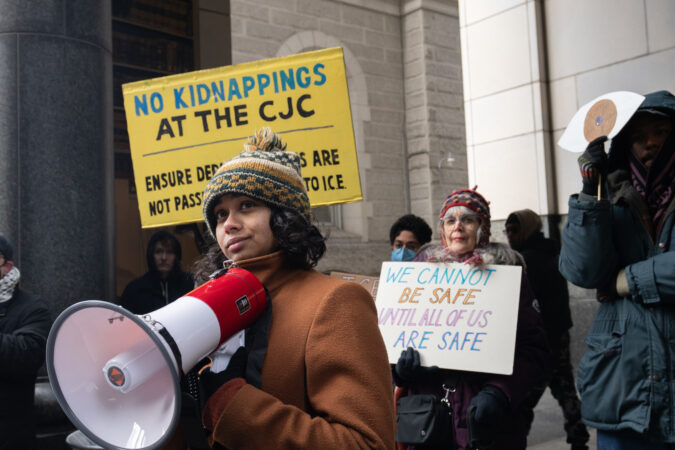
    Meanwhile, the presence of ICE in and around the Criminal Justice Center has provoked demonstrations and controversy, with activists charging that the sheriff has allowed ICE to turn the property into a “hunting ground” for immigrants.

    U.S. Immigration and Customs Enforcement officials did not reply to a request for comment on Thursday.

    The group No ICE Philly has castigated the sheriff, saying that by not barring ICE — as judges and lawmakers in some other jurisdictions have done — she has helped enable the arrest of 114 immigrants who were trailed from the courthouse and arrested on the sidewalk.

    That group and others say ICE agents have been allowed to essentially hang out at the Center City courthouse, waiting in the lobby or scouring the hallways, then making arrests outside.

    Many people who go to the courthouse are not criminal defendants ― they are witnesses, victims, family members, and others in diversionary programs. But they have been targeted and arrested by ICE, immigration attorneys and government officials say, causing witnesses and victims to stay away from court and damaging the administration of justice in Philadelphia.

    Aniqa Raihan, a No ICE Philly organizer who has helped lead courthouse protests, said she was not encouraged by the First Judicial District’s statement.

    “We already know that Sheriff Bilal is not doing all she can to protect people at the courthouse,” she said Thursday. “However, the First Judicial District is not powerless. The court can make its own policy, like the court in Chicago did, barring civil arrests on and around the courthouse. … What we’re seeing is a lot of blame-shifting and finger-pointing from our leaders at a time when we desperately need teamwork.”

    The issue around ICE access is complicated by the fact that courthouses are public buildings, generally open to everyone. And sidewalks outside the buildings are generally considered public property.

    Last week the sheriff garnered national headlines ― and condemnation ― for calling ICE “fake, wannabe law enforcement” and for sending a blunt warning to agency officers.

    “If any [ICE agents] want to come in this city and commit a crime, you will not be able to hide,” Bilal said in viral remarks. “You don’t want this smoke, ’cause we will bring it to you. … The criminal in the White House would not be able to keep you from going to jail.”

    On Wednesday, at the news conference at the Salt and Light Church in Southwest Philadelphia, Bilal said her office follows the law and would obey judicial orders and legislative statutes around courthouse security.

    District Attorney Larry Krasner ― whose office led the event, and who reiterated his pledge to prosecute ICE agents who commit crimes ― said victims and witnesses are not showing up for cases due to fear of ICE.

    About half a dozen elected officials and community leaders gathered, with some calling for ICE to get out of Philadelphia.

    They asked for the court system to establish rules and protections for immigrants seeking to attend proceedings at the Criminal Justice Center, and for state court administrators to meet with the district attorney, the sheriff, the chief public defender, City Council members, and others.

    Krasner said Thursday that his office and the other parties “look forward to meeting with the leadership of the courts to discuss lawfully regulating ICE activity in and around the Criminal Justice Center. We will be corresponding with the courts to schedule monthly meetings immediately.”

    At the same time, “we will continue to do all we can to prioritize safety and justice for victims, witnesses, and families who are navigating the criminal justice system,” he said. “Unlawful and unnecessary ICE activity in and around the CJC is deeply traumatizing to those who are already navigating pain and unfortunate circumstances.”

  • Trump threatens to use the Insurrection Act to ‘put an end’ to protests in Minneapolis

    Trump threatens to use the Insurrection Act to ‘put an end’ to protests in Minneapolis

    MINNEAPOLIS — President Donald Trump on Thursday threatened to invoke the Insurrection Act and deploy troops to quell persistent protests against the federal officers sent to Minneapolis to enforce his administration’s massive immigration crackdown.

    The threat comes a day after a man was shot and wounded by an immigration officer who had been attacked with a shovel and broom handle. That shooting further heightened the fear and anger that has radiated across the city since an Immigration and Customs Enforcement agent fatally shot Renee Good in the head.

    Trump has repeatedly threatened to invoke the rarely used federal law to deploy the U.S. military or federalize the National Guard for domestic law enforcement, over the objections of state governors.

    “If the corrupt politicians of Minnesota don’t obey the law and stop the professional agitators and insurrectionists from attacking the Patriots of I.C.E., who are only trying to do their job, I will institute the INSURRECTION ACT, which many Presidents have done before me, and quickly put an end to the travesty that is taking place in that once great State,” Trump said in social media post.

    Presidents have indeed invoked the Insurrection Act more than two dozen times, most recently in 1992 by President George H.W. Bush to end unrest in Los Angeles. In that instance, local authorities had asked for the assistance.

    Minnesota Attorney General Keith Ellison responded to Trump’s post by saying he would challenge any deployment in court. He’s already suing to try to stop the surge by the Department of Homeland Security, which says it has made more than 2,000 arrests in the state since early December. ICE is a DHS agency.

    Protests, tear gas, and another shooting

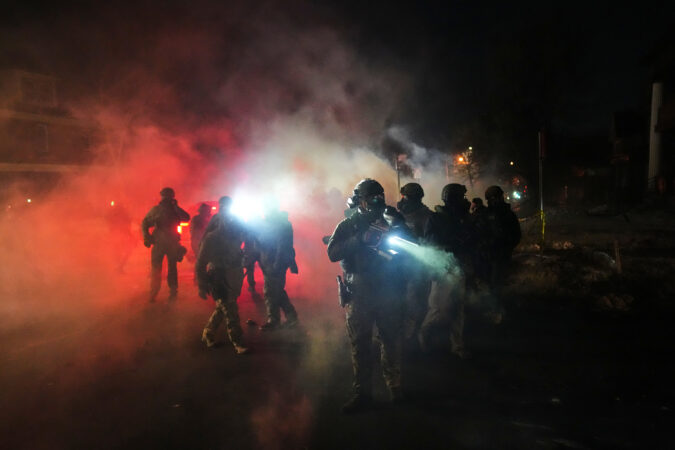
    In Minneapolis, smoke filled the streets Wednesday night near the site of the latest shooting as federal officers wearing gas masks and helmets fired tear gas into a small crowd. Protesters responded by throwing rocks and shooting fireworks.

    Demonstrations have become common in Minneapolis since Good was fatally shot on Jan. 7. Agents who have yanked people from their cars and homes have been confronted by angry bystanders demanding they leave.

    “This is an impossible situation that our city is presently being put in and at the same time we are trying to find a way forward to keep people safe, to protect our neighbors, to maintain order,” Minneapolis Mayor Jacob Frey said.

    Frey said the federal force — five times the size of the city’s 600-officer police force — has “invaded” Minneapolis, and that residents are scared and angry.

    The American Civil Liberties Union of Minnesota filed a lawsuit on behalf of three people who said they were questioned or detained in recent days. The lawsuit says two are Somali and one is Hispanic; all three are U.S. citizens. The lawsuit seeks an end to what the ACLU describes as a practice of racial profiling and warrantless arrests. The government did not immediately comment.

    Shooting followed chase

    Homeland Security said in a statement that federal law enforcement officers on Wednesday stopped a driver from Venezuela who is in the U.S. illegally. The person drove off then crashed into a parked car before fleeing on foot, DHS said.

    Officers caught up, then two other people arrived and the three started attacking the officer, according to DHS.

    “Fearing for his life and safety as he was being ambushed by three individuals, the officer fired a defensive shot to defend his life,” DHS said. The confrontation took place about 4.5 miles from where Good was killed.

    Police chief Brian O’Hara said the shot man was being treated for a non-life-threatening injury. The two others are in custody, DHS said. O’Hara’s account of what happened largely echoed that of Homeland Security.

    Earlier Wednesday, Gov. Tim Walz described Minnesota said what’s happening in the state “defies belief.”

    “Let’s be very, very clear: this long ago stopped being a matter of immigration enforcement,” he said. “Instead, it’s a campaign of organized brutality against the people of Minnesota by our own federal government.”

    Clashes in court as well

    Earlier Wednesday, a judge gave the Trump administration time to respond to a request to suspend its immigration crackdown in Minnesota, while the Pentagon looked for military lawyers to join what has become a chaotic law enforcement effort in the state.

    “What we need most of all right now is a pause. The temperature needs to be lowered,” state Assistant Attorney General Brian Carter said during the first hearing in a lawsuit filed by Minnesota and the cities of Minneapolis and St. Paul.

    Local leaders say the government is violating free speech and other constitutional rights with the surge of law enforcement. U.S. District Judge Katherine Menendez gave the U.S. Justice Department until Monday to file a response to a request for a restraining order.

    Justice Department attorney Andrew Warden suggested the approach set by Menendez was appropriate.

    The judge is also handling a separate lawsuit challenging the tactics used by Immigration and Customs Enforcement and other federal officers when they encounter protesters and observers. A decision could be released this week.

    During a televised speech before Wednesday’s shooting, Gov. Tim Walz described Minnesota as being in chaos, saying what’s happening in the state “defies belief.”

    “Let’s be very, very clear, this long ago stopped being a matter of immigration enforcement,” he said. “Instead, it’s a campaign of organized brutality against the people of Minnesota by our own federal government.”

    Military lawyers may join the surge

    CNN, citing an email circulating in the military, says Defense Secretary Pete Hegseth is asking the military branches to identify 40 lawyers known as judge advocate general officers or JAGs, and 25 of them will serve as special assistant U.S. attorneys in Minneapolis.

    Pentagon spokesperson Kingsley Wilson appeared to confirm the CNN report by posting it on X with a comment that the military “is proud to support” the Justice Department.

    The Pentagon did not immediately respond to emails from The Associated Press seeking more details.

    It’s the latest step by the Trump administration to dispatch military and civilian attorneys to areas where federal immigration operations are taking place. The Pentagon last week sent 20 lawyers to Memphis, U.S. Attorney D. Michael Dunavant said.

    Mark Nevitt, an associate professor at Emory University School of Law and a former Navy JAG, said there’s concern that the assignments are taking lawyers away from the military justice system.

    “There are not many JAGs but there are over one million members of the military, and they all need legal support,” he said.

    An official says the agent who killed Good was injured

    Jonathan Ross, the Immigration and Customs Enforcement officer who killed Good, suffered internal bleeding to his torso during the encounter, a Homeland Security official told The Associated Press.

    The official spoke to AP on condition of anonymity in order to discuss Ross’ medical condition. The official did not provide details about the severity of the injuries, and the agency did not respond to questions about the extent of the bleeding, exactly how he suffered the injury, when it was diagnosed or his medical treatment.

    There are many causes of internal bleeding, and they vary in severity from bruising to significant blood loss. Video from the scene showed Ross and other officers walking without obvious difficulty after Good was shot and her Honda Pilot crashed into other vehicles.

    She was killed after three ICE officers surrounded her SUV on a snowy street a few blocks from her home.

    Bystander video shows one officer ordering Good to open the door and grabbing the handle. As the vehicle begins to move forward, Ross, standing in front, raises his weapon and fires at least three shots at close range. He steps back as the SUV advances and turns.

    Homeland Security Secretary Kristi Noem has said Ross was struck by the vehicle and that Good was using her SUV as a weapon — a self-defense claim that has been deeply criticized by Minnesota officials.

    Chris Madel, an attorney for Ross, declined to comment on any injuries.

    Good’s family, meanwhile, has hired a law firm, Romanucci & Blandin, that represented George Floyd’s family in a $27 million settlement with Minneapolis. Floyd, who was Black, died after a white police officer pinned his neck to the ground in the street in May 2020.

    The firm said it would conduct its own investigation and publicly share what it learns.

  • Trump’s promised manufacturing boom is a bust so far

    Trump’s promised manufacturing boom is a bust so far

    Introducing the highest U.S. tariffs since the Great Depression, President Donald Trump made a clear promise in the spring: “Jobs and factories will come roaring back into our country.”

    They haven’t.

    Manufacturing employment has declined every month since what Trump dubbed “Liberation Day” in April, saying his widespread tariffs would begin to rebalance global trade in favor of American workers. U.S. factories employ 12.7 million people today, 72,000 fewer than when Trump made his Rose Garden announcement.

    The trade measures that the president said would spur manufacturing have instead hampered it, according to most mainstream economists. That’s because roughly half of U.S. imports are “intermediate” goods that American companies use to make finished products, like aluminum that is shaped into soup cans or circuit boards that are inserted into computers.

    So while tariffs have protected American manufacturers like steel mills from foreign competition, they have raised costs for many others. Auto and auto parts employment, for example, has dipped by about 20,000 jobs since April.

    “2025 should have been a good year for manufacturing employment, and that didn’t happen. I think you really have to indict tariffs for that,” said economist Michael Hicks, director of the Center for Business and Economic Research at Ball State in Muncie, Indiana.

    Small- and midsize businesses have found Trump’s on-again, off-again tariffs especially vexing. Fifty-seven percent of midsize manufacturers and 40 percent of small producers said they had no certainty about their input costs in a November survey by the Federal Reserve Bank of Richmond. Only 23 percent of large manufacturers shared that complaint.

    Smaller companies also were more than twice as likely to respond to tariffs by delaying investments in new plants and equipment, the survey found. One reason could be that taxes on imports raise the price of goods used in production much more than they do with typical consumer items, according to a study by the San Francisco Fed.

    Industries producing more technologically complex goods such as aircraft and semiconductors also are paying an outsize price, according to Gary Winslett, director of the international politics and economics program at Middlebury College. Makers of semiconductors, for example, shed more than 13,000 jobs since April.

    “They’re the ones who need the imported inputs. Really advanced manufacturing is actually what’s getting hit the hardest,” he said.

    Trump’s tariffs, however, are not the industrial sector’s only headache. Factory payrolls began their post-pandemic decline in early 2023, almost two years before Trump returned to the White House.

    High interest rates and a shift in consumer spending patterns are hurting the nation’s manufacturers, economists said. Business loans are more than twice as expensive as they were four years ago, with banks charging their most creditworthy borrowers interest rates of 6.75 percent. That discourages businesses from expanding operations and hiring additional workers.

    After bingeing during the height of the pandemic on durable goods, consumers have gradually redirected their spending to in-person services. Money that once went to makers of furniture, televisions and exercise machines now goes instead to restaurants and entertainment venues.

    In Indiana, the spending switch can be glimpsed in the fortunes of the recreational vehicle industry, a local mainstay. RV shipments soared to a record 600,400 in 2021 as consumers trapped at home by the pandemic hit the road. But by 2024, the work-from-home era was over, and sales fell by nearly half. Thor Industries, the largest RV manufacturer, laid off several hundred workers last year, as demand flagged.

    Once Trump returned to the White House, manufacturers responded by over-ordering imports to beat the anticipated tariffs. That’s left many producers with more inventory than they need, suggesting cuts lie ahead, according to Hicks.

    “The manufacturing job losses that we see now are really just the beginning of what will be a pretty grim couple of quarters as manufacturing adjusts to a new lower level of demand,” he said.

    Modest numbers of manufacturing jobs have been trimmed throughout the economy. In December, Westlake Corp., a Houston-based producer of industrial chemicals, said it would idle four production lines at facilities in Louisiana and Mississippi, putting 295 employees out of work. Speaking on an investor call, company executives blamed excess global capacity and weak demand for the move.

    While the jobs that Trump promised have not materialized, factory output rose in 2025, reaching its highest mark in almost three years, according to Federal Reserve data, and administration officials said it is only a matter of time before the full benefits of the president’s plan are felt.

    Trump’s tariffs and jawboning encourage CEOs to invest in new U.S. plants. Provisions in the president’s signature fiscal legislation permitting companies to quickly write off the full expense of new investments in equipment and research and development expenses will spur modern manufacturing, they said.

    “It also encourages the build-out of high-precision manufacturing here at home, which will lead to high-paying construction and factory jobs,” Treasury Secretary Scott Bessent said in a speech this month.

    Companies are spending more than three times as much on constructing new factories as they did when Trump was first inaugurated, though less than during the Biden-era peak. The White House last fall hailed recent investment announcements by companies such as Stellantis and Whirlpool. Last month, T. RAD North America, a subsidiary of a Japanese manufacturer, announced plans for a new auto parts plant in Clarksville, Tennessee, which would employ 928 workers.

    Nick Iacovella, a spokesman for the Coalition for a Prosperous America, which backs Trump’s manufacturing policies, said the roughly 1 percent shrinkage in factory employment last year was less significant than the uptick in business investment.

    “We saw a significant increase in capital expenditures, which is the earliest signal that reindustrialization is taking hold. Those investments take time to permit, build and staff before they show up in employment data,” he said.

    The president’s hopes of increasing manufacturing employment defy decades of experience in the United States and other advanced economies. American factory jobs peaked at 19.5 million in the summer of 1979 and have been sliding ever since, largely because of the introduction of machinery that can do the job of several workers.

    As two presidents sought to revive domestic production over the past decade, manufacturing employment rode a roller coaster. Factory jobs increased by 421,000 during Trump’s first term before sinking by more than 1 million during the pandemic. President Joe Biden used government subsidies to encourage hiring, especially for green energy projects, and manufacturing payrolls rose more than 100,000 above Trump’s highest mark.

    But those gains evaporated by the end of 2024.

    On Tuesday, the president addressed the Detroit Economic Club, touting “the strongest and fastest economic turnaround in our country’s history.” He boasted about growth, productivity, investment, incomes, inflation and the stock market.

    “The Trump economic boom is officially begun,” the president said.

    All that’s missing now are the jobs.

    GRAPHIC

  • Winter is about to return in Philly. Will snow join the party?

    Winter is about to return in Philly. Will snow join the party?

    As it approaches halftime, the meteorological winter around here so far has been about as inconsistent as the Philadelphia Eagles’ offense, but it is about to get decidedly colder, if not snowier.

    Temperatures on Thursday are due to hover around freezing with a brisk westerly wind gusting up to 30 mph (sympathies to all bikers and runners and those who are navigating those Center City wind tunnels), and then drop into the 20s after sunset with windchills in the teens.

    Then, after a modest warmup Friday and Saturday, the forecast turns decidedly colder and potentially more intriguing, as computer models have been going back and forth on snow potential for the Philly region.

    Philly’s coldest stretch of the winter so far to begin Sunday

    Readings are expected to warm into the 40s on Saturday, but then drop off dramatically during the holiday weekend and may not reach freezing again until Thursday.

    They may not get out of the 20s on Tuesday — when wind chills could fall to 0 in Philly — and Wednesday, with overnight lows in the teens.

    This is called January.

    Will the cold lock in a snow cover?

    A few alarm bells went off Wednesday afternoon when the main U.S. computer model suggested potential major snowstorms along the coast all the way to the I-95 corridor on Sunday.

    However, other computer guidance wasn’t buying it, nor were forecasters. The computer food fight continued Thursday.

    The U.S. model, said Paul Pastelok, longtime seasonal forecast specialist with AccuWeather Inc., “goes wacky all the time.” Maybe not all the time, but a subsequent run of the European model kept the storm offshore.

    “We’re kind of in a waiting game,” said Pastelok.

    Opined the National Weather Service Office in Mount Holly in its afternoon forecast discussion, the potential system has “high-end potential but also could end up being nothing.”

    In other words, situation normal.

    The winter so far in Philly and United States

    Oddly, the raw stats for the first half of the meteorological winter — that’s the Dec. 1-Feb. 28 period — are not too far from normal for snowfall and temperature.

    But that’s the result of quite a cold start to an eventful December, followed by a benign and uneventful January around here.

    December temperatures finished at 3.6 degrees below normal at Philadelphia International Airport. And in the first two weeks of 2026, they were 3.6 degrees above normal. Snowfall in December was about an inch above average, but with a paltry 0.3 inches so far this month, the 4.8 total is very close to where it should be.

    The early season coolness in Philly and much of the rest of the East was a surprise, said Owen Shieh, warning coordination meteorologist with NOAA’s Weather Prediction Center, in College Park, Md. The West, conversely, was quite warm.

    The contrasts were the result of “pattern persistence,” said Tony Fracasso, a weather center meteorologist.

    In the East, “This winter started quite strong,” he added, compared with recent winters. “It was not record cold,” but, “it sure felt cold for us.”

    What’s ahead the rest of the winter of 2025-26

    That likely will be the case early next week, and NOAA’s Climate Prediction Center has chances favoring below normal temperatures and above-normal precipitation in the Jan. 22-28 period.

    Pastelok said that upper-air patterns are aligning in such a way that favors importing cold air from northwestern Canada.

    The Climate Center’s Laura Ciasto said she does not see a major invasion of the polar vortex in the next few weeks. The vortex circles the Arctic, imprisoning the planet’s coldest air. But on occasion, the winds weaken, the freezer opens, and the contents spill southward.

    She said the vortex winds are slightly weaker than normal but are expected to strengthen.

    It is possible that lobes of the vortex may stretch on occasion, resulting in short-lived periods of cold in the Northeast, said Judah Cohen, research scientist with the Massachusetts Institute of Technology.

    A period to watch would be the first week in February, when a significant disruption of the vortex is possible, Pastelok said.

    A sudden stratospheric warming in the high atmosphere in the Arctic, which can lead to cold outbreaks in the contiguous United States “is not out of the question” late in the winter, Ciasto said.

    Philadelphia’s peak snow season typically occurs in late January through mid-February.

    Of the 10 biggest snowfalls in the city’s history, only three have occurred before Jan 22.

  • Lawmakers propose $2.5B agency to boost production of rare earths and other critical minerals

    Lawmakers propose $2.5B agency to boost production of rare earths and other critical minerals

    WASHINGTON — A bipartisan group of lawmakers have proposed creating a new agency with $2.5 billion to spur production of rare earths and the other critical minerals, while the Trump administration has already taken aggressive actions to break China’s grip on the market for these materials that are crucial to high-tech products, including cellphones, electric vehicles, jet fighters and missiles.

    It’s too early to tell how the bill, if passed, could align with the White House’s policy, but whatever the approach, the U.S. is in a crunch to drastically reduce its reliance on China, after Beijing used its dominance of the critical minerals market to gain leverage in the trade war with Washington. President Donald Trump and Chinese President Xi Jinping agreed to a one-year truce in October, by which Beijing would continue to export critical minerals while the U.S. would ease its export controls of U.S. technology on China.

    The Pentagon has shelled out nearly $5 billion over the past year to help ensure its access to the materials after the trade war laid bare just how beholden the U.S. is to China, which processes more than 90% of the world’s critical minerals. To break Beijing’s chokehold, the U.S. government is taking equity stakes in a handful of critical mineral companies and in some cases guaranteeing the price of some commodities using an approach that seems more likely to come out of China’s playbook instead of a Republican administration.

    The bill that Sen. Jeanne Shaheen (D., N.H.) and Sen. Todd Young (R., Ind.) introduced Thursday would favor a more market-based approach by setting up the independent body charged with building a stockpile of critical minerals and related products, stabilizing prices, and encouraging domestic and allied production to help ensure stable supply not only for the military but also the broader economy and manufacturers.

    Shaheen called the legislation “a historic investment” to make the U.S. economy more resilient against China’s dominance that she said has left the U.S. vulnerable to economic coercion. Young said creating the new reserve is “a much-needed, aggressive step to protect our national and economic security.”

    Rep. Rob Wittman (R., Va.) introduced the House version of the bill.

    New sense of urgency

    When Trump imposed widespread tariffs last spring, Beijing fought back not only with tit-for-tat tariffs but severe restrictions on the export of critical minerals, forcing Washington to back down and eventually agree to the truce when the leaders met in South Korea.

    On Monday, in his speech at SpaceX, Defense Secretary Pete Hegseth revealed that the Pentagon has in the past five months alone “deployed over $4.5 billion in capital commitments” to close six critical minerals deals that will “help free the United States from market manipulation.”

    One of the deals involves a $150 million of preferred equity by the Pentagon in Atlantic Alumina Co. to save the country’s last alumina refinery and build its first large-scale gallium production facility in Louisiana.

    Last year, the Pentagon announced it would buy $400 million of preferred stock in MP Materials, which owns the country’s only operational rare earths mine at Mountain Pass, California, and entered into a $1.4-billion joint partnership with ReElement Technologies Corp. to build up a domestic supply chain for rare earth magnets.

    On Wednesday, Trump announced in a proclamation that the U.S. is “too reliant” on foreign-sourced critical minerals and directed his administration to negotiate better deals. He said possible remedies would include minimum import prices for certain critical minerals.

    “Reshoring manufacturing that’s critical to our national and economic security is a top priority for the Trump administration,” said Kush Desai, a White House spokesperson.

    The drastic move by the U.S. government to take equity stakes has prompted some analysts to observe that Washington is pivoting to some form of state capitalism to compete with Beijing.

    “Despite the dangers of political interference, the strategic logic is compelling,” wrote Elly Rostoum, a senior fellow at the Washington-based research institute Center for European Policy Analysis. She suggested that the new model could be “a prudent way for the U.S. to ensure strategic autonomy and industrial sovereignty.”

    Companies across the industry are welcoming the intervention from Trump’s administration.

    “He is playing three-dimensional chess on critical minerals like no previous president has done. It’s about time too, given the military and strategic vulnerability we face by having to import so many of these fundamental building blocks of technology and national defense,” NioCorp’s Chief Communications Officer Jim Sims said. That company is trying to finish raising the money it needs to build a mine in southeast Nebraska.

    Relying on allies for help

    In addition to trying to boost domestic production, the Trump administration has sought to secure some of these crucial elements through allies. In October, Trump signed an $8.5 billion agreement with Australia to invest in mining there, and the president is now aggressively trying to take over Greenland in the hope of being able to one day extract rare earths from there.

    On Monday, finance ministers from the G7 nations huddled in Washington over their vulnerability in the critical mineral supply chains.

    Treasury Secretary Scott Bessent, who has led several rounds of trade negotiations with Beijing, urged attendees to increase their supply chain resiliency and thanked them for their willingness to work together “toward decisive action and lasting solutions,” according to a Treasury statement.

    The bill introduced on Thursday by Shaheen and Young would encourage production with both domestic and allied producers.

    Past efforts to bolster rare earths production

    Congress in the past several years has pushed for legislation to protect the U.S. military and civilian industry from Beijing’s chokehold. The issue became a pressing concern every time China turned to its proven tactics of either restricting the supply or turned to dumping extra critical minerals on the market to depress prices and drive any potential competitors out of business.

    The Biden administration sought to increase demand for critical minerals domestically by pushing for more electric vehicle and windmill production. But the Trump administration largely eliminated the incentives for those products and instead chose to focus on increasing critical minerals production directly.

    Most of those past efforts were on a much more limited scale than what the government has done in the past year, and they were largely abandoned after China relented and eased access to critical minerals.