Category: News

Latest breaking news and updates

  • Former officer describes finding a ‘sniper pad’ on nearby rooftop after Charlie Kirk assassination

    Former officer describes finding a ‘sniper pad’ on nearby rooftop after Charlie Kirk assassination

    PROVO, Utah — A former campus police officer testified Monday that he found an apparent “sniper pad” on a rooftop near where Charlie Kirk was assassinated, as prosecutors sought to convince a state judge they have enough evidence to put a Utah man on trial for murder.

    Former Utah Valley University Officer Christopher Bagley said he witnessed Kirk’s shooting as the conservative activist spoke to a crowd of thousands last year. Soon after, he went to a nearby gravel rooftop, where it appeared someone had been lying prone with a clear sightline to Kirk’s location, Bagley said.

    “It looks like a sniper pad,” Bagley said, adding, “you’ve got markings of elbows, knees, and feet.”

    The testimony came as Kirk’s parents, Kathryn and Robert, and widow, Erika, were in the courtroom for the first time since the case began, along with Donald Trump Jr., President Donald Trump’s son.

    Prosecutors are seeking the death penalty for defendant Tyler Robinson. A five-day preliminary hearing that began Monday marks the most significant presentation of evidence to date in the case.

    Robinson’s parents also were present, sitting a few rows behind the Kirks as the hearing began. The 23-year-old defendant is charged with aggravated murder in the Sept. 10 assassination of Kirk, a conservative activist and ally of the president, at Utah Valley University. Robinson turned himself in the day after the shooting.

    Prosecutors allege he confessed in a note left for his roommate, who was also his romantic partner, that read: “I had the opportunity to take out Charlie Kirk and I’m going to take it.”

    Robinson has not yet entered a plea, and his attorneys have not commented on his guilt or innocence. They have, however, sought to get the death penalty taken off the table, so far unsuccessfully.

    A low threshold for prosecutors

    Robinson sat quietly between his attorneys on Monday, looking at the prosecution’s exhibits on a monitor and occasionally taking notes. He wore a gray suit, and his wrists were shackled to a chain around his waist.

    Charlie Kirk’s parents and widow walked out of the courtroom when a police officer started testifying about Kirk’s arrival on campus the day he was shot. They later returned.

    The proceeding resembles a minitrial, but prosecutors need only demonstrate that there are reasonable grounds to believe Robinson killed Kirk. The standard is lower than for a trial, where prosecutors must prove guilt “beyond a reasonable doubt.”

    Prosecutors as a result should have little trouble advancing their case, said Mark Kouris, a former prosecutor and state judge in Salt Lake City.

    “This standard is extremely low and the chances of them not getting through it are, quite frankly, almost nothing,” said Kouris, now an adjunct professor at the University of Utah’s S.J. Quinney College of Law.

    Bagley, the prosecution’s first witness, said he could see the right side of Charlie Kirk’s body as Kirk spoke on campus. Kirk was answering a question when Bagley heard a gunshot.

    “I saw him go to the left … I could no longer see the right side of his body,” Bagley said. “Then everybody started getting up and started to run, more of a chaos situation.”

    Defense attorney Kathryn Nester asked Bagley about finding an empty pistol holster on the ground after the crowd fled. Bagley acknowledged he never took custody of the holster and didn’t know if it was fingerprinted.

    Nester repeatedly objected to evidence introduced by prosecutors, but was overruled by the judge. Any evidence from this week’s hearing would have to be reintroduced again to be used at trial.

    Roommate’s recorded testimony could be focal point

    Prosecutors can use secondhand information, or hearsay, to help present their case. They expect to present between 40 and 50 exhibits during this week’s hearing.

    Chief Deputy Utah County Attorney Chad Grunander told state District Judge Tony Graf that the exhibits will include several videos of the Sept. 10 shooting, which occurred as Kirk was addressing a crowd of thousands at Utah Valley University. The videos will be shown on a courtroom monitor that is being set up so that it won’t be captured by the press videographer in the courtroom, said Graf.

    Prosecutors have said they plan to present DNA evidence linking Robinson to the suspected murder weapon, autopsy findings, witness statements, and video of Kirk’s killing. They are also expected to argue the shooting endangered others at Kirk’s campus event — an aggravating circumstance that could make the crime punishable by death under Utah law.

    Once the hearing is finished, Graf must determine whether there is enough evidence for the case to proceed to trial.

    Robinson’s roommate is not expected to testify in person during the hearing. Still, the roommate’s recorded testimony could be a focal point for prosecutors.

    In addition to the alleged confession note, Robinson reportedly texted his roommate that he targeted Kirk because he “had enough of his hatred,” prosecutors have said.

    Erika Kirk says court proceedings are a ‘painful reminder’

    Before his death, Kirk and the organization he co-founded, Turning Point USA, galvanized the conservative youth vote to help Trump win a second term.

    The Republican president has said he hopes Robinson receives the death penalty.

    Erika Kirk said during her husband’s memorial service that she forgives Robinson.

    Ahead of Monday’s hearing, she thanked supporters in a statement for their kindness and prayers.

    “Every court proceeding serves as a painful reminder of his death,” she wrote, “and the loss that has irrevocably impacted our lives and the lives of his children.”

    She added that the public outpouring “has sustained us during the darkest days of our lives.”

  • CEO of Welcome America is leaving the organization after the city took over Philly’s Fourth of July show

    CEO of Welcome America is leaving the organization after the city took over Philly’s Fourth of July show

    The president and CEO of Welcome America Inc. has resigned. While the reasons were unclear for the departure, Monday’s announcement followed the city’s decision to take over Philly’s Fourth of July concert and fireworks from the group that has been involved with organizing the event since 1993.

    In a statement, Michael DelBene said this year’s celebration of America’s 250th birthday — interrupted by a storm that pushed back the fireworks finale to the early hours of Sunday morning — “was a spectacular accomplishment. … I am humbled by what we have accomplished together, and excited about what lies ahead for the organization.”

    DelBene had held the role since 2019. In a post to his LinkedIn account on Monday evening, DelBene said he was stepping down, and “as for what’s next? I don’t know yet. And I find that completely exhilarating!”

    Fireworks fill the sky at the One Philly: Unity Concert for America on the Benjamin Franklin Parkway early Sunday morning.

    Welcome America is a public-private partnership that receives city and state funding as well as corporate sponsorships. Mayor Cherelle L. Parker and Councilmember Mark Squilla are board members.

    It was uncertain when Welcome America plans to name its next president and CEO. DelBene was the organization’s longest serving CEO, and the only one whose tenure spanned multiple mayoral administrations. DelBene has had a busy summer — he also has been working as an executive producer with FIFA World Cup 26 Philadelphia, overseeing the Fan Festival in Lemon Hill and other parts of the fan experience.

    Despite planning Welcome America’s days of programming leading up to the nation’s 250th celebration, DelBene was not involved in the final signature event. This year, Parker’s administration took control of the city’s free concert on July Fourth from Welcoming America, rebranded it as the “One Philly: Unity Concert for America” in reference to her “One Philly: A United City” slogan, and spent significantly more taxpayer dollars in the process.

    Will Smith performs at the One Philly: Unity Concert for America.

    The city hired ESM Productions to put on the 250th anniversary fireworks show and concert for $15.5 million, which cost Welcome America only about $3 million to produce last year.

    ESM’s pay was almost triple Welcome America’s $6.6 million budget in 2024, of which $5.3 million came from government grants, according to its federal nonprofit disclosure.

    Despite a lengthy storm delay, Philly’s Fourth of July celebration went forward with performances from Will Smith, the Roots, and Meek Mill, and a fireworks show that technically began and ended on July 5 — coincidentally just a few minutes shy of 2:50 a.m.

  • Russia’s missile and drone attacks on Ukraine kill at least 22

    Russia’s missile and drone attacks on Ukraine kill at least 22

    KYIV, Ukraine — Russia unleashed waves of missiles and drones at Ukraine early Monday, killing at least 22 people in attacks that exposed widening gaps in the country’s air defenses more than four years into Moscow’s full-scale invasion, authorities said.

    All of the ballistic missiles launched by Russia struck their targets, underscoring Kyiv’s need for more U.S.-made Patriot interceptor missiles — a point Ukrainian President Volodymyr Zelensky will likely reiterate at a NATO summit in Ankara, Turkey, this week.

    Fifteen people were killed in the capital of Kyiv, which was Russia’s main target, and 56 were injured, according to administrative head Tymur Tkachenko. Another seven people were killed in the wider Kyiv region and 29 were injured, according to Ukraine’s emergency service.

    Emergency workers searched for survivors in the rubble of residential high-rises in two locations that suffered direct hits.

    Moscow has stepped up attacks on Kyiv in retaliation for Ukraine’s recent long-range strikes, according to the Russian Defense Ministry. Those Ukrainian attacks have caused severe fuel shortages and put pressure on President Vladimir Putin.

    On Thursday, a Russian strike killed 31 people in Kyiv, the deadliest attack in the capital this year.

    Ukraine’s advances in drone technology have given it an edge in recent months, analysts and Western officials say, striking supply routes behind the front line, stripping the Russian army of momentum on the battlefield, and slowing its advance.

    But Russia now is exploiting vulnerabilities in Ukraine’s air defenses, which remain heavily reliant on the Patriot missile systems to intercept ballistic missiles it can rarely shoot down. The war in the Middle East has strained the global supply of Patriot interceptors — a shortage now felt keenly in Ukraine.

    Zelensky notes gaps in stopping ballistic missiles

    Ukraine’s air force said Russia fired 351 drones and 68 missiles overnight, targeting mainly Kyiv, and all 29 ballistic missiles struck their targets.

    “To intercept ballistics, we need the means for interception,” air force spokesperson Yurii Ihnat said on national television. “Russians are certainly using the fact that there is a serious deficit of interceptor missiles now, in Ukraine and the world.”

    Ahead of the NATO summit in Turkey, Zelensky said Ukrainian forces had performed well against drones and cruise missiles but not against ballistic missiles — a shortfall he blamed on insufficient supplies of interceptors. He urged U.S. and European partners at the summit to bolster Ukraine’s air defense and protect civilians.

    “As long as Patriot missiles remain in our allies’ stockpiles, Russia is only encouraged to keep ‘vanquishing’ residential buildings. The United States and Europe have enough strength to stop this terror,” he said on X following the attack.

    Russia’s Defense Ministry said any increase in the supply of drones, missiles, and ammunition produced in the West “will not go unnoticed and will be countered by a corresponding increase in the number and power of retaliatory strikes by the Russian armed forces on Ukrainian territory.”

    Ukraine’s Defense Minister Mykhailo Fedorov said Russia is deliberately ramping up ballistic missile attacks on a scale unseen before, exploiting the acute shortage of Patriot interceptors. “Fewer such missiles are produced worldwide each month than the enemy fires at Ukraine in that same period,” he said.

    Russia’s Defense Ministry said the attack targeted weapons factories in Kyiv, including sites it said produce drones, armored vehicles, and missiles, as well as facilities repairing air defense systems and fuel and energy infrastructure in the capital and surrounding region. The claims could not be independently verified.

    Russia’s attacks have repeatedly hit civilian areas. More than 16,000 Ukrainian civilians have been killed in the war, according to the United Nations.

    “These are residential buildings. Places where people slept and lived their ordinary lives,” Tkachenko said in a post on Telegram.

    A residential building in the Podilskyi district partially collapsed, he said. In the Darnytsia district, several multistory buildings were damaged and people were believed to be buried in the rubble.

    In Kyiv’s suburb of Vyshneve, about 600 residents were evacuated due to the risk of unexploded munitions, Ukraine’s Emergency Service said.

    Witnesses recount their harrowing escapes

    Khrystyna Piatetska, 20, a resident of Kyiv’s Darnytskyi district, said she began screaming after the first strike, which was followed by a second blast that blew out the windows in her apartment building.

    The lights went out, a burning smell filled the air, and the stairwell was thick with smoke, she said.

    “When we were leaving the building, bodies were lying there,” Piatetska said. “When we got downstairs, cars started exploding, and we came out from under the rubble straight into the fire.”

    Halina Ivanivna, 61, said she was awakened by the first strike about 2 a.m. Moments later, her apartment building began collapsing around her.

    “Everything was falling down,” she said. Water poured through the building as smoke filled the air while emergency crews rushed to evacuate residents.

    About five minutes after the initial impact, a second strike hit, she said.

    Ukrainian strikes reach from Russian-held Crimea to Siberia

    Russia’s Defense Ministry said its air defenses downed 613 of 625 Ukrainian drones overnight.

    Ukraine’s military said its Special Operations Forces struck the Omsk oil refinery in western Siberia, nearly 1,550 miles from Ukraine’s border. That appeared to be the farthest oil refinery in Russia’s east that Ukraine has ever struck, and added to a long list of key refineries hit in recent months.

    Omsk regional Gov. Vitaly Khotsenko confirmed a Ukrainian attack on the refinery in a Telegram post but provided no details, saying only that “most of the drones” targeting the facility were destroyed and that there were no casualties.

    The Omsk refinery is Russia’s largest, boasting a capacity of around 460,000 barrels a day, said Gary Peach, oil markets analyst at Energy Intelligence. As of the end of June, it was producing close to capacity, accounting for 12% of all Russian refining output, Peach said.

    “Depending on the extent of the damage, a sustained outage of even part of Omsk’s capacity will exacerbate Russia’s woes on the domestic fuel market and make the need to find import replacements even more urgent,” he said.

    Russia has been grappling with a widespread fuel crisis from Ukraine’s repeated strikes on refineries and other infrastructure inside the country. Gasoline shortages and fuel rationing have been reported in multiple regions, with drivers waiting for hours to fill their tanks.

    In Crimea, which Russia illegally annexed in 2014, an energy provider reported a blackout across the peninsula following Ukrainian attacks early Monday. The Moscow-appointed head of the city of Sevastopol, Mikhail Razvozhayev, said the attacks cut power that was restored with backup equipment.

    Ukraine’s military confirmed it struck several Russian energy and military facilities used to supply Russia’s armed forces with fuel and support its war efforts.

    In the Russian city of Yaroslavl, two people were wounded in an attack in which over 70 Ukrainian drones were downed, according to regional Gov. Mikhail Yevrayev. He didn’t say if any facilities were damaged, but the Astra online news outlet said they caused a fire at an oil refinery.

    Ukrainian drone attack on the Leningrad region north of Moscow damaged unspecified infrastructure at the Luga training ground, as well as in the areas of Baltic Sea ports of Ust-Luga and Vysotsk, Gov. Alexander Drozdenko said.

  • Democrats invoke ‘big, beautiful bill’ far more than Republicans as midterms near

    Democrats invoke ‘big, beautiful bill’ far more than Republicans as midterms near

    Republicans’ sprawling One Big Beautiful Bill Act was meant to be their party’s crowning legislative achievement heading into the 2026 midterms. But Democrats are bringing up the legislation much more frequently on the campaign trail, saying its constrictions on the social safety net make it a liability for the GOP despite the tax cuts it delivered.

    Congressional Democrats talk about the law twice as often as Republicans, according to a Washington Post analysis of public statements and social media posts. The legislation has emerged as a central talking point for the Democratic Party, with candidates deriding it as the “Big Ugly Bill” and tying the changes it brought to Medicaid and food assistance programs to voters’ anxieties about the cost of living.

    In California, for instance, Rep. Derek Tran has blasted the legislation as jeopardizing benefits for the Supplemental Nutrition Assistance Program, formerly known as food stamps. In Florida, Rep. Kathy Castor has said the law is killing clean energy projects necessary to meet rising energy demands and protect the environment. In Nevada, Rep. Susie Lee derided the legislation as the “largest transfer of wealth from working families to the rich in history.”

    Republicans have largely retreated from talking about the law by name, as they did more often earlier last year —opting instead to focus on the tax cuts under it. Democrats assert that the shift is a sign of the Republican Party’s acknowledgment of the law’s low overall approval.

    “Instead of boosting GOP midterm prospects, the bill has turned into a political albatross and vulnerable House Republicans are stuck defending this disastrous legislation in an already brutal midterm environment,” the Democratic Congressional Campaign Committee wrote in a memo last week advising Democratic House candidates to lean heavily into some of the law’s provisions.

    But Republicans haven’t entirely abandoned their biggest legislative win of President Donald Trump’s second term. GOP candidates regularly discuss individual provisions of the law that poll favorably, such as tax cuts on tipped wages, during campaign events.

    In Wisconsin, for instance, Rep. Derrick Van Orden has toured manufacturing centers to tout the tax cuts for working voters. In California, Reps. David G. Valadao and Vince Fong held a roundtable focused on healthcare that featured the $50 billion rural hospital fund established by the law. And in New York, Rep. Mike Lawler and Trump have praised the law’s temporarily raised deduction caps on state and local taxes.

    The legislation is Republicans’ marquee accomplishment in the current Congress, featuring the lion’s share of Trump’s legislative priorities. It extends the tax cuts included in Trump’s 2017 Tax Cuts and Jobs Act and creates stricter work requirements for Medicaid and food assistance programs. Those priorities polled well among voters when the law was being negotiated.

    Failing to extend the 2017 tax cuts would have led to one of the largest tax increases in U.S. history, and new tax cuts, including credits for tipped wages and overtime, also landed well among voters. Republicans continue to defend the legislation for saving taxpayers an average of almost $2,300 per filer, according to estimates by the nonpartisan Tax Foundation.

    “I don’t care what you call it. It’s what delivers for America,” said House Republican Conference Chair Lisa McClain (Mich.), who ticked off several provisions in the legislation, including the Trump Accounts, a program that allows parents to open investment accounts for children born during Trump’s second term and receive $1,000 from the government.

    “That legislation resonates for real people,” said McClain, who has taken the lead in framing advice on how her party talks about the legislation.

    The dynamic illustrates the challenge of controlling the narrative around massive catchall legislation, which often polls more poorly as a whole than on its individual parts.

    McClain acknowledged that the sheer scale of the legislation — spanning more than 900 pages and touching on issues as varied as transgender athletes, border security, and student loans — could distract from the tax provisions.

    Democrats had similar difficulty selling the benefits of what they dubbed the Inflation Reduction Act during the 2022 midterm elections. That law sought to lower prescription drug costs, invest in clean energy production, and raise corporate taxes, among other provisions.

    “These bills just become conglomerations in people’s minds. Like, nobody knows what’s in these bills,” said Neera Tanden, who directed the Domestic Policy Council in President Joe Biden’s White House. Republicans rebranded Democrats’ marquee legislation, which included the largest ever investment in combating climate change, as driving up gas prices by disincentivizing fossil fuel production.

    But Tanden said Republicans have a unique challenge in selling their catchall legislation because there are visible and immediate impacts to voters’ access to healthcare.

    The nonpartisan Congressional Budget Office predicted that the legislation’s changes to Medicaid, including new 80-hour-per-month work requirements, would result in around 10 million Americans losing healthcare coverage by 2034. Numerous lawmakers, including several Republicans who wound up voting for the legislation, voiced concerns while it was being negotiated that a provision related to Medicaid funding could lead to more hospital closures, particularly in rural areas.

    Some of those outcomes are already becoming reality, Democrats say. Iowa state senator Sarah Trone Garriott, a Democrat running to unseat Rep. Zach Nunn (R) in a competitive race, said a number of health clinics have closed or announced plans to close in her district, citing federal funding and policy changes to Medicaid that she said added to long-standing financial difficulties.

    “Here in Iowa, healthcare was already hanging by a thread, and then when Medicaid was cut, those cuts were so significant that hospital systems are already making changes to try to anticipate the impact,” Trone Garriott said. “My congressman said that it was a myth that it was going to close rural hospitals. It is already happening.”

    Nunn disputed that the closures were directly caused by the changes to Medicaid and noted his community opened a major health clinic that will be aided by the rural hospital fund included in the Trump law. He added that “work requirements for able-bodied adults are how we prevent fraudsters from stealing billions and keep Medicaid strong for the Iowans who truly need it.”

    Several Republicans in vulnerable seats warned last year that proposals in the legislation affecting Medicaid and food assistance could make reelection difficult. The anxiety led to fierce conflicts between moderates, who wanted stronger protections for Medicaid, and deficit hawks, who placed a greater emphasis on curbing spending, that nearly derailed the entire package.

    “Communities like ours won us the majority, and we have a responsibility to deliver on the promises we made,” a dozen Republicans in swing districts wrote in a letter to GOP leadership in April last year. All of the signatories eventually voted for the legislation after securing compromises that could cushion some of the political pushback, including the $50 billion fund for rural hospitals that could see funding dry up because of Medicaid changes.

    A number of components of the legislation don’t go into effect until after the midterms, including the Medicaid work requirements, which start in January. Democrats accused Republicans of delaying the provision to avoid backlash during the November elections.

    “That is so conniving,” said Marni von Wilpert, a Democrat running for a competitive open seat around San Diego. Von Wilpert said that she encounters Medicaid recipients who are unaware of the coming work requirements and that conveying them to voters has been a challenge.

    McClain said the changes to Medicaid and other social safety programs were aimed at gutting fraud and abuse, a concern that she said voters continue to cite in internal Republican polling.

    Republicans have also combated Democrats’ attempt to cast the legislation by rebranding it. Their new preferred name for the law: the “Working Family Tax Cuts Act.”

  • Obamacare rolls shrank dramatically in many states over the past year, new federal data shows

    Obamacare rolls shrank dramatically in many states over the past year, new federal data shows

    NEW YORK — States across the country saw steep drops in the number of people covered by the Affordable Care Act over the past year, with Ohio and Oklahoma each losing nearly one-third of enrollees, according to new federal data that provides the first complete 50-state breakdown of sharp enrollment declines following the January expiration of enhanced subsidies.

    The data, posted in late June by the Trump administration and first reported on by the Associated Press, reveals how changes in each state’s insured population led to around 2.6 million fewer Americans having Obamacare plans in February compared with the same time last year.

    It captures not only how many people signed up for or were automatically reenrolled in plans in 2026, but how many paid their first monthly premiums to keep coverage, according to Cynthia Cox, a vice president and director of the ACA program at the healthcare research nonprofit KFF, who reviewed the dataset. She said it accounts for people who were retroactively removed from coverage after a nonpayment grace period ended.

    “This is the first time we’ve seen state-level data that shows how much ACA marketplace enrollment truly fell,” Cox said. “It’s in line with our expectations, but it does show a very steep drop in the number of people with ACA coverage.”

    Healthcare affordability is a central issue to voters

    Health analysts have kept a close eye on changes in ACA enrollment since the expiration of so-called enhanced premium tax credits caused many Americans’ monthly health insurance fees to double or triple, forcing some to forgo coverage entirely. The subsidies had been at the center of a bitter fight in Congress last fall, with Democrats and some Republicans calling for their renewal.

    Health insurance costs have been rising across ACA and other health insurance programs at a time when voters in the approaching November elections say affordability is among their top concerns.

    In a report released last week, the U.S. Department of Health and Human Services suggested the significant drop in enrollment this year could be attributed to a federal crackdown on fraudulent or “phantom” enrollment. But analysts have said it was more likely related to the Jan. 1 expiration of federal subsidies, and other changes, including tightened requirements on which immigrants could access subsidized plans.

    Ohio, Oklahoma, Arizona saw the most significant drop-offs

    An AP analysis of the data finds that Ohio and Oklahoma each saw a more than 32% decline in ACA enrollment over the past year. They lost larger shares of their covered populations than any other state.

    Following closely behind, and losing more than a fourth of their enrollees, were Arizona, South Carolina, Minnesota, Indiana, Michigan, Mississippi, Louisiana, and Missouri.

    Florida, a state that relies highly on ACA insurance in part because it did not expand Medicaid and is home to many gig workers and entrepreneurs, still has more residents in the marketplace than any other state, at nearly 4 million. But it also saw the highest number of enrollees drop coverage this year — around 443,000.

    The data doesn’t show whether people who dropped ACA health insurance this year found coverage elsewhere, and chances are some of them became insured through employer plans or other options. But Cox said most people who left the marketplace are likely going without insurance, because it is typically a “place of last resort” to get health coverage for people who aren’t eligible elsewhere.

    Some of the states that saw the largest enrollment declines were the same ones that saw the biggest enrollment gains after the federal government introduced enhanced subsidies during the COVID-19 pandemic. Cox said that isn’t surprising, because those states likely had large numbers of people who enrolled only because the enhanced subsidies made coverage much more affordable.

    Only one state saw an increase in its covered population. New Mexico gained some 14% more enrollees in the government health insurance program compared with the same time last year. It was the only state in the nation that fully replaced the lost federal subsidies using its own funds.

    Federal marketplace states saw biggest enrollment losses

    About three in five states use the federal marketplace Healthcare.gov, while the rest operate their own state-based marketplaces for ACA insurance.

    The new data shows that federal marketplace states overall lost larger shares of enrollees than states with state-based exchanges.

    One reason for that could be that many states with their own marketplaces took steps to offset costs for their residents when the enhanced subsidies expired in January.

    New Mexico, which saw double-digit enrollment gains, is the most extreme example of that. In a special legislative session last fall, lawmakers in the state approved a plan to use state funds to make up for the missing subsidies through mid-2026. In March, the state’s governor signed a bill to continue making up the difference through mid-2027.

  • A new ICE facility could speed up deportations for families and kids

    A new ICE facility could speed up deportations for families and kids

    NEW ORLEANS — The Trump administration plans to open a 528-bed holding facility for migrant families and unaccompanied children next to an airport hub, positioning itself to speed up deportations.

    The location in Alexandria, La., would remove logistical headaches caused by wrangling children from foster homes and shelters across the country and not having anywhere to put them during final preparations for flight. Those obstacles were apparent last year when Guatemalan children were awoken at night and given almost no time to get to Harlingen, Texas, where they waited on an airport tarmac for hours.

    A federal judge prevented their deportation, but the chaotic episode illustrated the challenges authorities face because they don’t have anywhere to put families and children near the airport. U.S. Immigration and Customs Enforcement is calling the Alexandria facility a “staging area,” not a detention center, and says people would only be there a few days at most.

    However, several immigration advocates expressed concern that children could be held at the new facility for weeks or months, which has happened at other federal immigration holding sites. These advocates are also concerned about oversight, and say the facility represents a departure from how the government manages those children.

    “It’s an expansion of the deportation system in ways we haven’t seen before,” said Leecia Welch, chief legal counsel at the nonprofit Children’s Rights. “There’s just so much that could go wrong with this facility.”

    ICE taps private prison company to run deportation facility

    Unaccompanied children who are in the U.S. without parents or close relatives are not taken to facilities overseen by ICE. Instead, the law says they must be swiftly placed in the care of state-licensed shelters and foster care programs.

    Those are run by the Office of Refugee Resettlement in the Department of Health and Human Services. However, that agency isn’t involved in the Alexandria facility’s operation, according to a spokesperson at the airfield where it’s being built.

    Instead, the facility would be run by a nonprofit arm of LaSalle Corrections, a private prison contractor, according to Ralph Hennessy, executive director of the England Airpark Authority. He said it could be operational as early as August.

    ICE officials signed a contract late last month to build the facility at the former military base near Alexandria International Airport, roughly 175 miles northwest of New Orleans, Hennessy said.

    It would operate as a 72-hour holding center for migrants awaiting deportation, according to records obtained by the Associated Press.

    Compass Connections, a Texas-based nonprofit that runs shelters for unaccompanied immigrant children, had originally been tapped to help operate the facility and laid out plans during a public presentation in February.

    But the company’s president, Sonya Thompson, told the AP last week that it was no longer involved. She did not elaborate.

    Officials have said facility is for “self-deporting” families

    In public board meetings, airpark officials said the facility is a “humanitarian effort” for families that are “self-deporting.” Immigration advocates say families and unaccompanied children sometimes make that decision under pressure or because they don’t understand their options.

    “These are people that are volunteering to go back home and they’re going back home as a family unit,” Hennessy told the AP.

    The facility would sit next to the nation’s largest hub for deportations. More than 4,400 immigration enforcement flights came into and out of the Alexandria International Airport in 2025, according to data from the ICE Flight Monitor, an initiative of Human Rights First. ICE planning documents say families and children at the facility “are in the legal custody of ICE and can only be released at the direction of ICE.”

    The agency has instructed contractors that families at the facility cannot be referred to as prisoners, detainees, or inmates, records show. The agency ordered contractors to not use bars or cages when transporting families and unaccompanied children. The facility will not be required to engage in headcounts and should allow families to “wear their own clothes,” the agency added.

    Private prison company runs other ICE detention centers

    Louisiana-based LaSalle Corrections runs a range of private prisons and federal immigration detention centers throughout the South, including the “Louisiana Lockup” inside the state’s maximum-security prison in Angola.

    The official contractor for the new ICE holding facility will be the company’s nonprofit arm, the LaSalle Family Foundation. According to its tax records, the nonprofit provides chaplain services and educational programming in correctional facilities.

    However, LaSalle Corrections itself will be involved in operating the holding facility and ensuring compliance, the company’s chief financial officer, Tim Kurpiewski, wrote in an email reviewed by the AP.

    LaSalle spokesperson Scott Sutterfield declined to comment.

    The deaths of two detainees have been reported since April at a LaSalle-run ICE facility in the state.

    Winn Correctional Center was also found in June to have violated standards governing environmental health and safety, food service, use of force, medical care, and other subjects, according to the Department of Homeland Security’s Office of Inspector General.

  • Northeast Philly mosque damaged in arson attack, authorities say

    Northeast Philly mosque damaged in arson attack, authorities say

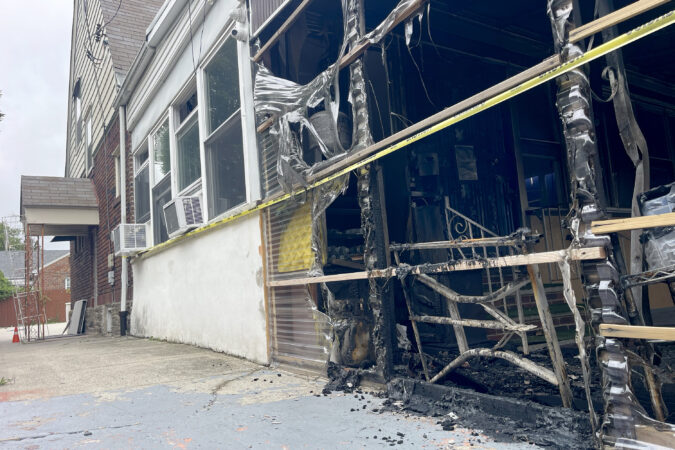
    A Northeast Philadelphia mosque was damaged in an arson attack early Sunday morning, authorities said, rattling the city’s Islamic community.

    The attack took place around 2 a.m. at the Northeast Philadelphia Islamic Center in the city’s Castor Gardens neighborhood, according to police.

    Fire crews responded to the mosque, located on the 1400 block of Tyson Avenue, and extinguished a blaze in the building’s enclosed front porch that morning.

    The mosque was unoccupied and no one was injured, police said.

    Fire marshals soon determined that the fire had been set intentionally. They are investigating the incident alongside the police department, which had not identified a suspect in the case as of Monday afternoon.

    Meanwhile, local Islamic leaders are hoping members of the public will come forward with information about the attack, as they urge law enforcement to investigate whether the perpetrator was motivated by religious bias or hate.

    “Our mosque is more than a place of worship,” said Masukul Islam Khan, the mosque’s president. “It is a welcoming community center that has served families, neighbors, and people of all backgrounds for many years.”

    “Any act of violence or hatred directed at a house of worship is an attack on the values of safety, religious freedom, and unity that our city cherishes,” he added.

    The local chapter of the Council on American-Islamic Relations, or CAIR, is offering a $2,500 reward for information leading to the arrest and conviction of anyone involved with the attack.

    CAIR on Monday released a video taken in the aftermath of the blaze that shows the mosque’s porch damaged, covered in ash and soot.

    The group also released surveillance footage that shows a man wearing a black hooded sweatshirt approaching the mosque, located outside the frame, before quickly walking away.

    “An attack on any house of worship is an attack on the constitutional promise of religious freedom that belongs to every American,” said Ahmet Tekelioglu, executive director of CAIR. “It’s additionally saddening that this attack came just as the nation commemorated the 250th year of its founding.”

    The Northeast Philadelphia Islamic Center was established in 2004 and has grown from a small place of worship to a bustling community where hundreds attend weekly prayers gatherings.

    The arson comes as the mosque’s leadership seeks to construct a new, $2.8 million facility on a neighboring lot to accommodate an increase in membership.

    In 2025, CAIR’s national office released a report documenting more than 8,600 anti-Muslim bias complaints from that year, the highest amount since the organization began tracking such information in 1996.

  • Ebola deaths in Congo top 500 as health workers threaten to strike

    Ebola deaths in Congo top 500 as health workers threaten to strike

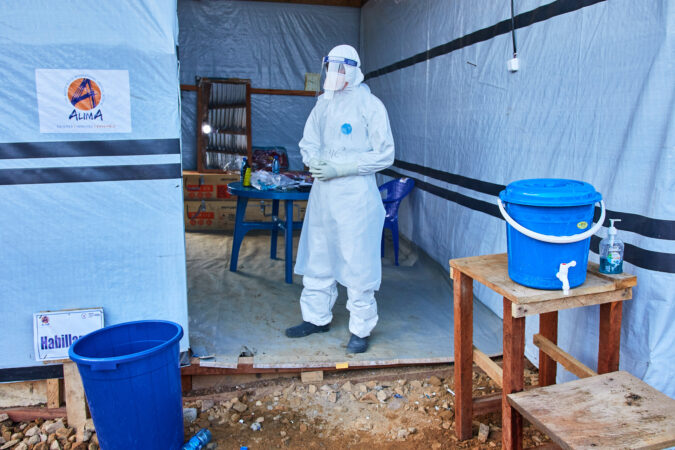
    BUNIA, Congo — At least 500 people have died out of over 1,500 confirmed cases in Congo’s Ebola outbreak, authorities said, as front line workers threatened to go on strike on Monday over unpaid benefits and poor working conditions.

    The outbreak has recorded 1,561 cases, including 506 deaths, since it was declared on May 15 as the spread continues to outpace response, Congo’s Ministry of Health said in its latest update on Sunday night.

    Front line workers deployed in Ituri province, the epicenter of the outbreak, issued a 24-hour notice on Sunday threatening to strike if authorities fail to pay them and improve their working conditions.

    The workers include mostly health professionals who have been laboring with little rest as they battle attacks from angry residents and widespread skepticism about the virus.

    In the notice to the government, a copy of which was seen by the Associated Press, the workers both in and outside hospitals said they had not been paid benefits since the outbreak began and they do not have adequate supplies for their work.

    They also complained of poor salaries, the “arrogance” of teams sent from Congo’s capital of Kinshasa, and the “excessive” use of labor from other provinces without prioritizing local labor in Ituri, as well as the lack of adequate equipment.

    The strike threats come just days after enrollment for clinical trials started, raising concerns in the epicenter about its possible impact. Any strike could also hamper efforts to slow the spread of the outbreak, which is now confirmed in three eastern provinces including North Kivu and South Kivu.

    The lack of approved vaccines or treatments for the Bundibugyo virus, which is responsible for the latest Ebola outbreak, has complicated response efforts. The more common Zaire virus, for which there is a vaccine, was responsible for most of Congo’s past 16 outbreaks of the disease.

    Officials are yet to identify the outbreak’s patient zero and still need to trace possibly tens of thousands of people who have come in contact with infected individuals.

    The first month of this Ebola outbreak was already the worst on record, the World Health Organization has said.

  • Hundreds of thousands attend ayatollah’s funeral procession

    Hundreds of thousands attend ayatollah’s funeral procession

    Hundreds of thousands of mourners amassed in the Iranian capital, Tehran, on Monday to commemorate Ayatollah Ali Khamenei, the Iranian supreme leader, who ruled his country for decades with an iron fist before he was killed in the war with the United States and Israel.

    The ayatollah’s body was carried through the city in a public procession, part of a period of ceremonies and mourning strictly choreographed by the Iranian government. Later this week, it will be taken to several cities in Iran and neighboring Iraq that are significant to Shiite Muslims, before the late ayatollah is buried in his hometown, Mashhad, in northeastern Iran.

    Some of the top ranks of Iran’s current and former leadership were among the sea of mourners. In a video shared by Iranian state television, President Masoud Pezeshkian was seen walking down the street, shaking hands with members of the crowd.

    Though he was exalted by many Iranians, Khamenei was also despised by others for presiding over an authoritarian state that crushed dissent. In January, Iranian security forces violently suppressed mass anti-government protests, killing thousands, according to Iranian officials and human rights groups.

    For Iran’s leaders, the mass funeral has served in part as a show of national unity. But the late supreme leader’s son and successor, Mojtaba Khamenei, has been conspicuously absent from the ceremonies.

    Mojtaba Khamenei has not been seen in public since succeeding his father, who was killed when Israeli forces bombarded Ali Khamenei’s compound on the first day of the war in late February. His absence from the funeral ceremonies has become a point of scrutiny for Iran’s leadership as they seek to project stability and continuity.

    Mahmoud Ahmadinejad, a former Iranian president, was among the senior officials who attended the funeral ceremonies Monday. According to U.S. officials, Ahmadinejad was injured in an Israeli strike in February intended to free him from house arrest. The New York Times later reported on a failed Israeli plan to install Ahmadinejad at the helm of a postwar Iran.

    The talks between Iran and the United States have been paused until after the funeral ceremonies. They have failed to prevent new bouts of fighting or to fully reopen shipping in the crucial Strait of Hormuz, let alone bring the two sides closer to resolving myriad thornier issues that were not covered by the countries’ ceasefire.

    The New York Times was granted access to the funeral ceremonies by Iran’s government, which determined the ceremonies our reporters could attend, accompanied by a government-provided translator and a guide. The views expressed by people interviewed at these events may not be representative of many Iranians, while others may have felt unable to speak freely.

    This article originally appeared in the New York Times.

  • Hamas dissolves its government in Gaza to transfer power to a U.N.-backed committee

    Hamas dissolves its government in Gaza to transfer power to a U.N.-backed committee

    DEIR AL-BALAH, Gaza Strip — The Hamas militant group said Monday it had dissolved its government in Gaza and is preparing to transfer power to a technical committee backed by the United Nations as part of a U.S.-brokered ceasefire deal.

    Hamas did not say whether it planned to take the crucial step of disarming or handing over security to an international force, but described its decision as evidence of its commitment to Gaza’s reconstruction after years of war.

    It was unclear if the move, announced by a lower-level official, would lead to any meaningful change on the ground.

    The Board of Peace, the new entity led by President Donald Trump with the mandate of governing and rebuilding Gaza, said it was aware of the Hamas announcement but would assess the impact based on “actions, not promises.” The board stressed in a statement on X that the technocratic committee must control all weapons in Gaza, as laid out in the ceasefire agreement.

    At a news conference Monday, Ismail al-Thawabta, general director of the Hamas-run Government Media Office, said “only technical and professional staff” would remain in their positions to run the Palestinian enclave’s day-to-day affairs.

    “All employees working in service provision are ‘state employees’ and are fully prepared to work under the National Committee for the Administration of Gaza,” al-Thawabta said during a news conference in the courtyard of Al-Aqsa Hospital in Deir al-Balah. Hamas spokesperson Hazem Qassem called it “a positive step forward on the path to implement the ceasefire deal.”

    Israeli Foreign Minister Gideon Saar dismissed the move, saying it was designed to avoid disarmament. “As long as Hamas retains its weapons, any civilian government will of course operate as Hamas dictates,” he wrote on X.

    The committee of technocrats, which is based in Cairo, is chaired by Ali Shaath, a Gaza-born engineer and former official with the Palestinian Authority. It has a mandate to restore essential services and oversee civilian affairs under the supervision of the U.N. and the Board of Peace.

    In a statement on X, Shaath acknowledged the Hamas announcement Monday and said that in order for the committee to function effectively, there must be “a single governing authority operating under one legal framework” and “a unified security apparatus accountable to that authority.”

    Nine months after the ceasefire was signed, negotiations between Israel and Hamas remain largely deadlocked over the implementation of its second phase, including the disarmament of Hamas and the reconstruction of Gaza.

    Hamas has insisted on implementing the first phase before moving to discuss its weapons.

    The Oct. 7, 2023, attack by Hamas-led militants that sparked the war killed some 1,200 people in Israel and saw 251 others taken hostage. Israel’s retaliatory offensive in Gaza has killed 73,098 Palestinians, according to Gaza’s Health Ministry.

    The ministry, part of the Hamas-led government, is staffed by medical professionals and maintains detailed records viewed as generally reliable by U.N. agencies and independent experts. It does not distinguish between civilians and militants but says women and children make up around half of all fatalities.

    Israeli strikes have lessened considerably since the ceasefire took effect on Oct. 10, but they continue almost daily. Israel’s military says it targets Hamas and other militants, often asserting they were planning attacks. The strikes have also killed many civilians.

    On Monday, Israeli strikes killed at least five people in Gaza, including three in Khan Younis in the south and two in an apartment in Gaza City, health officials said.

    The Israeli military said it targeted a Hamas operative in the Gaza City strike and a militant from the Palestinian Islamic Jihad militant group in the attacks in Khan Younis.

    Militants have carried out shooting attacks against Israeli troops in Gaza, and five Israeli soldiers have been killed since the ceasefire.