DAMASCUS, Syria — Explosions rocked Damascus on Tuesday as France’s president met with his Syrian counterpart in a landmark visit, wounding at least 18 people, Syria’s Interior Ministry said.
Emmanuel Macron was inside the presidential palace when the explosions happened, and Macron’s office said he was safe and that the meeting with Syrian President Ahmad al-Sharaa continued.
“Nothing can smother the aspiration of Syrian women and men to live in a fully sovereign, safe, pluralistic, and united Syria,” Macron said in a post on X hours after the deadly explosions. “This morning I met Syria in all its diversity. I saw dignity, courage and determination.”
A large plume of smoke could be seen from the site of the explosion near the Four Seasons Hotel, where Syrian media reported Macron was staying. Footage widely circulated on social media showed a van and a motorcycle on fire and blood stains on the street in the area on a busy street near the headquarters of the Tourism Ministry and the Damascus National Museum.
The explosions represent a challenge to al-Sharaa, who came to power after leading an insurgency that ousted Bashar Assad in 2024 and ending the country’s 14-year uprising turned-civil war. Assad’s dynasty ruled Syria with an iron fist for half a century.
Al-Sharaa has since pushed to assert full control over and bring stability to war-torn Syria, appeal to minorities skeptical of his Islamist-led rule, and win the support of Western governments who were concerned about his past leadership of the formerly al-Qaeda-linked Hayat Tahrir al-Sham group. His government has promised political and economic reform after decades of autocratic rule.
Macron is the first major Western leader to visit Syria since al-Sharaa came to power and his visit comes before he is set to head to Ankara, Turkey later Tuesday for a NATO summit. Macron also plans to hold a joint news conference with his Syrian counterpart. The official spoke on condition of anonymity to discuss Macron’s whereabouts and security.
The French head of state played a major role in pushing Europe and the United States to drop most sanctions on Syria. He arrived in the country Monday night with an economic delegation, and is scheduled to sign memorandums of understanding with his counterpart as the battered country tries to lure investors to help it rebuild after 14 years of war.
The Interior Ministry in a statement reported by Syrian state media said that the two blasts in the heart of the capital were caused by explosive devices, one placed in a garbage bin and the other in a parked car. It added that four of the wounded were police officers, and no deaths were immediately reported.
An investigation is currently taking place at the scene of the attack. No group immediately claimed responsibility.
Macron arrived in the country Monday night with an economic delegation, and is scheduled to sign memorandums of understanding with his counterpart as the battered country tries to lure investors to help it rebuild after the war.
While Syria’s new rulers have wrestled with violence involving different groups in the country as they work to assert control, the capital has largely been peaceful during the turbulent period.
The conflict in Syria killed nearly half a million people and displaced millions. Syria’s infrastructure lies in ruins, and while other nations and businesses have made large investment pledges, the country still needs hundreds of billions of dollars to rebuild and lift millions out of poverty.
Before arriving at the presidential palace, Macron met with members of Syrian civil society, though his office did not give details on who.
The Cherry Hill Mall is soon set to welcome five new stores that have committed to more than 25,000 square feet of retail space at the South Jersey mall.
The additions include Aritzia, the viral women’s clothing brand, which is set to open a store at the 1.3 million-square-foot Camden County mall by spring 2027. The complex is also adding legacy brands such as Timberland and True Religion, according to executives with PREIT, which owns the mall.
“Retailers at this level are choosing their next locations very carefully right now, and the fact that six of them chose Cherry Hill Mall in the same leasing period speaks volumes,” Paula Charles, PREIT’s senior vice president of leasing, said in a statement.
“For shoppers, it means more of the brands they want in one place and an experience that keeps getting better every time they visit,” Charles added.
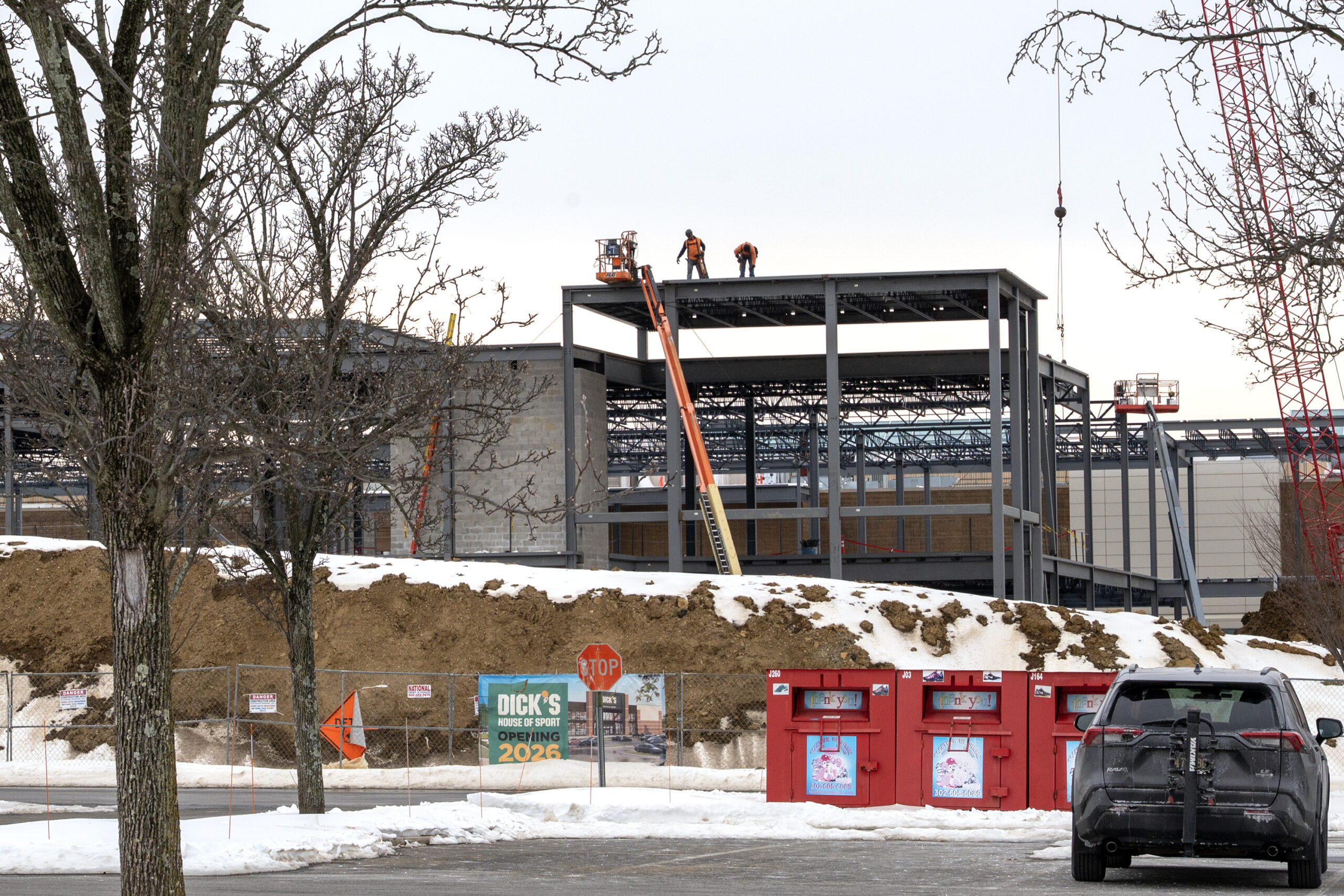
One of dozens of Dick’s House of Sport outposts, it will be represent “the largest single-tenant addition to Cherry Hill Mall in more than a decade,” PREIT executives said.
The new retailers will also join Crocs, which last month opened a 2,000-square-foot store near the future Dick’s House of Sport, and DoneRight Doner Kebab, a fast-casual Mediterranean food spot that mall executives said will open later this summerin the food court.
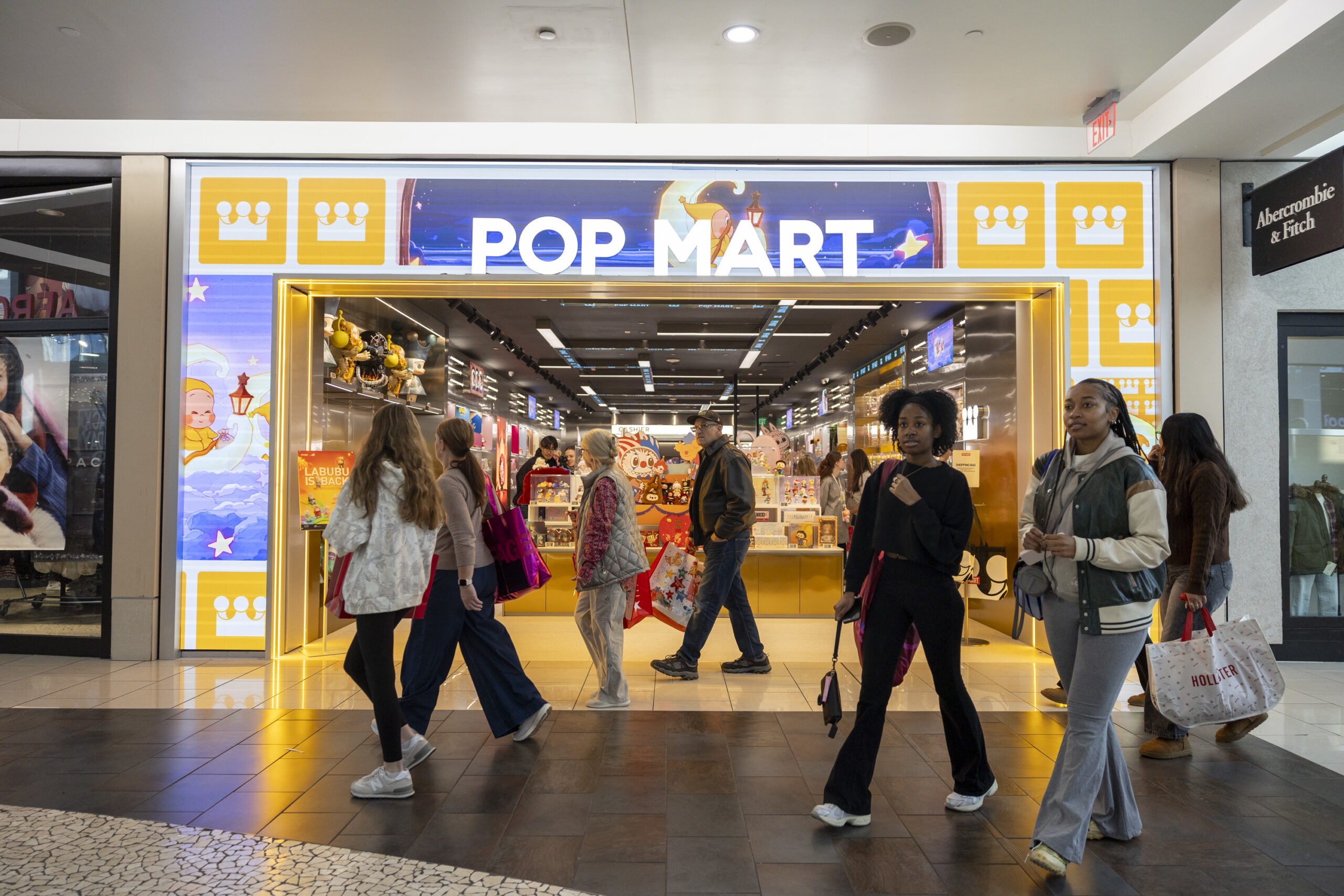
People walk by a new store, Pop Mart, at Cherry Hill Mall on Black Friday 2025.
But higher-end complexes like Cherry Hill and King of Prussia seem to be thriving. King of Prussia Mall, in Montgomery County, also just announced a slate of new openings.
Here’s what to know about the new shops coming soon to the Cherry Hill Mall:
Timberland: The boots and outdoor-wear company is set to open an 1,800-square-foot store later this summer. It will be near Dick’s House of Sport.
Indochino: The custom-suit-maker is set to open a 1,200-square-foot store before the 2026 holiday season. It will be off the Grand Court, near American Eagle and Pop Mart.
Aritzia: Set to occupy more than 20,000 square feet in the central Grand Court, its space will include not only a clothing store but also an A-OK Cafe, the brand’s in-house coffee shop. It is on track to open in spring 2027.
True Religion: The denim company is set to open a 2,230-square-foot store sometime early next year near Dick’s House of Sport.
Also at the mall, Pandora and Spencer’s recently moved into larger storefronts, and Lululemon is set to relocate into an expanded space in the Grand Court before the 2026 holiday season.
Cynthia Martini of Mantua Township visits Mood’s Farm Market every year to pick blueberries. During a typical summer, she collects 40 pounds of them. She used to bring her kids, but now that they’re older, she goes solo.
Her routine on June 30 didn’t look much different from the last 25 years. On a hot morning, she picked two Tupperware containers of blueberries in paint-streaked shorts.
“In an hour I picked 10 pounds,” Martini said. “So not bad.”
But rather than harvesting in the farm’s designated pick-your-own area, Martini kept to to an area typically reserved for staff.
Mood’s, a 180-acre fruit farm in Elk Township, Gloucester County, opened the off-limits fields as one strategy to survive the summer after a spring crop freeze destroyed about two-thirds of its blueberries and all its cherries, plums, nectarines, pears, and peaches. The farm will likely have only a handful of healthy apples come fall. That means no apple hayrides, even though pick-your-own operations are one of its primary revenue streams. A skeleton crew is working the land rather than a full staff, and it’s taking workers longer to pick fruit since there’s less on the bush.
After picking her own blueberries, Cynthia Martini (right) of Mantua talks with owners Richard Mood and daughter Patti Mood at Mood’s Farm in Gloucester County on June 30.
But South Jersey farms like Mood’s are getting creative to survive a summer with depleted income and damaged crops. From promoting frozen fruit to temporary closures to raising prices, here’s how farms are keeping on.
Spend less and plant more
Rowand’s Farm, a 20-acre sweet and sour cherry orchard in Glassboro, Gloucester County, is going through unprecedented circumstances.
Stephen Rowand, the farm’s third-generation owner, said he’s usually excited when a spring frost arrives, since the cold weather thins out the fruit and produces larger cherries.
“This season is unique for us as a first with NO CROP at all,” Rowand said via Facebook Messenger. “No income.”
Rowand decided to close the farm, but that hasn’t meant time off. To ensure the orchard blooms next season, the farm still needs mowing, irrigation, fertilizer, and trimming, and without the ability to hire farmworkers. Rowand, 60, is doing all that work himself through extreme heat. He said he’s currently living off his retirement savings and might have to get a job in the offseason next fall. He’s trying to stay frugal by avoiding vacations and eating out.
But Rowand has managed to find some solutions to survive.
To make sure they stay fed, his family planted a bigger garden of tomatoes, string beans, eggplants, cucumbers, greens, and herbs for their personal diets after figuring out the freeze had eliminated their income. He said he will likely apply for a loan from the USDA’s Farm Service Agency to pay bills, and a GoFundMe, which has raised $25,000 so far, has helped pay for some of Rowand’s farm expenses.
“It’s really helping keep the farm from going into debt,” Rowand said, “which is usually what puts a farm out of business in the end.”
Duffield’s Farm Market in Sewell, Gloucester County, like Mood’s, won’t have peach picking this summer and is still considering whether it’ll apply for loans. Since the freeze halved their apple crop, the farm won’t offer apple picking trips for local schools this fall, either. To ensure people have enough to pick in the fall, owner Tracy Duffield said, farmers planted a field of pumpkins early.
As for labor, without peaches to pit, Duffield said there’s less to do, which means reducing hours for the farm’s migrant workers from Puerto Rico.
“It’s not just us. Everybody is kind of in the same boat,” Duffield said. “Just support your local farm. We’ll recover.”
‘A silver lining’
South Jersey farmers say the natural laws of supply and demand mean fruit prices will rise this year. Mood said their farm’s blueberry prices have doubled, while Duffield’s increased the cost about 50 cents per pound.
“We still have a business to run, and we have to support the families involved with the business,” Duffield said. “They just have to understand for this year, anyway, that things are going to be a bit higher.”
Blueberries for sale at the farm stand at Mood’s Farm in Gloucester County.
Anthony DiMeo owns DiMeo Farms and Blueberry Plants Nursery, which has a large pick-your-own blueberry operation in Hammonton, Atlantic County. With significant damage to his crop, DiMeo said, he anticipates the season to end a couple of weeks early.
“But there’s a silver lining to this, and that is the price is very high,” DiMeo said. “Even for blueberries that might not be the biggest or might not be the best, the price is exceptional.”
DiMeo, though, said he decided not to significantly raise prices this year, keeping blueberries at $2.50 per pint, a cheaper price than most grocery stores and farm markets. The choice to eat the losses was influenced by the price consumers are already paying to get through life right now.
“They’re spending enough as it is with gas and tolls and everything else,” DiMeo said.
‘Just luck’
Bob Fralinger of Fralinger Orchards, a fifth-generation peach and nectarine farm in Bridgeton, Cumberland County, said it was “just luck” that some of his peaches survived the freeze.
His farm sits along the Cohansey River, and the heat emitting from the water kept the temperature a couple of degrees warmer for the crops. Fralinger said he still lost about half his peaches, but since nearby South Jersey farmers weren’t quite as lucky, nearly 100 farm markets, some hours away, have come to him for fruit. Duffield’s and Mood’s are on that list.
The increased interest has meant Fralinger has to make sure he has enough peaches for everyone, including his typical wholesalers. And even though Fralinger is having no problem selling, the reduced harvest means he worries that the revenue won’t be enough to pay next year’s bills.
“Your margins are so close that you can’t survive from one year to the next unless you do things just right, and that’s the problem,” Fralinger said.
Like Fralinger, Robson’s Farm in Wrightstown, Burlington County, also managed to salvage some peaches from the harvest this year, but not nearly enough to meet the summer demand.
Customers travel from out of state for Robson’s peaches, fourth-generation farmer Rose Robson said, and many will be disappointed to arrive to find no peaches in sight.
But once she overcame her initial grief over the lost crops, Robson said, she quickly hatched a plan to adapt to a potentially peachless summer on the farm.
“Just because the farm is really sad and not great in one way doesn’t mean the whole summer has to be,” Robson said. “This could be a really fun opportunity to be creative and to bring some new people to the farm and still have a really great summer.”
Robson had already started developing ways to boost business during the farm’s offseason in the fall, like a walking club on the farm, she said. The spring freeze just forced her to consider starting sooner and making it active year-round.
Plus, Robson’s is focusing on what they can still offer customers.
“We doubled up on our U-pick cut flowers,” Robson said, “which has been growing over the years anyway, so that’s kind of fun.”
But more than anything, Robson said her priority has remained the same: “making the farm as grand an experience as we can possibly make it,” she said.
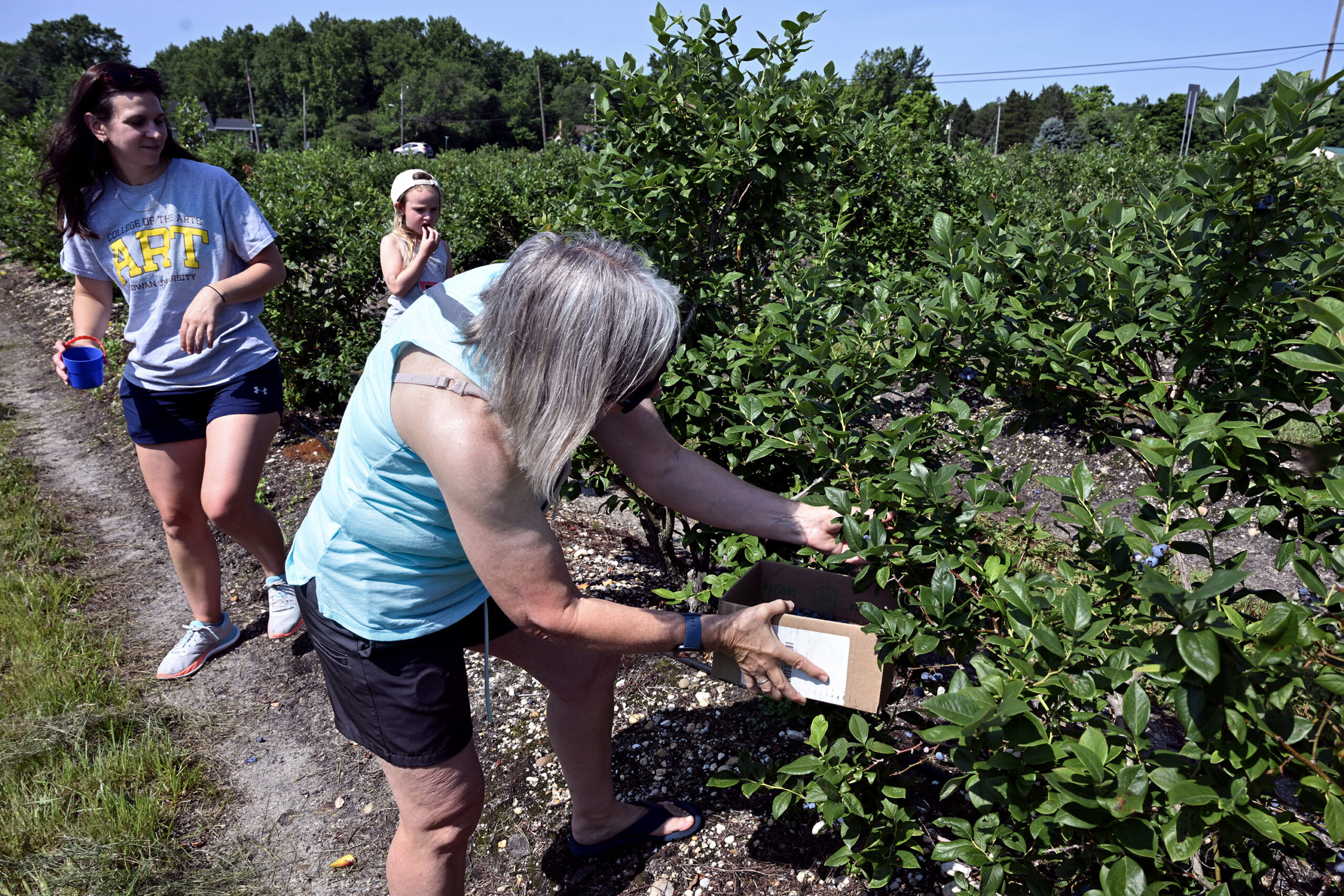
Sandy Trifiletti (front) of Glassboro and her daughter Hope Welch and granddaughter Rosie, 6, of Pitman, pick their own blueberries June 30 at Mood’s Farm in Gloucester County.
As farms scramble to adapt, South Jersey residents, whether they’re in the market for fresh fruit or flowers, continue to support their local markets.
Back at Mood’s Farm, Hope Welch of Pitman picked blueberries with her two children and her mother, Sandy Trifiletti. The Welches have visited Mood’s for years.
Hope Welch, whose son spoke some of his first words during an annual Apple Festival, asked Mood about the fate of this year’s event. Mood said one would still happen, but it probably wouldn’t revolve around apples, since they won’t have very many.
“That hurts my heart,” Welch said. “We’ll be back for the fall festival. Whatever it’s called.”
Sen. Mitch McConnell has been hospitalized for more than three weeks, and his office still will not say what sent the 84-year-old Kentucky Republican there, his latest condition, or when he might return.
McConnell, who has served in the Senate since 1985 and led Senate Republicans from 2007 until 2025, has not cast a vote since June 11. His absence comes as Republicans are navigating a narrow Senate majority. It has helped stall spending bills in the Appropriations Committee and added uncertainty around a senator already in the final months of his career.
Here’s what we know about his health.
What happened to McConnell?
McConnell was admitted to the hospital on the morning of June 14, according to a statement from his office that said that he was “receiving excellent care.”
EMS dispatch audio from the morning of June 14 suggests that emergency medical personnel were sent to McConnell’s home to attend to an unconscious person in cardiac arrest.
According to the dispatch audio, a call went out at 8:36 a.m. for an “unconscious” person at McConnell’s address, and an ambulance was sent with an advanced life support crew. Six minutes later a medic radioed that CPR was “in progress.” At 8:43 a.m., a dispatcher relayed the emergency as a “cardiac arrest.” McConnell is named nowhere in the recording, though the address is his.
The next day, Senate Majority Leader John Thune (R., S.D.) and Senate Majority Whip John Barrasso (R., Wyo.) — the top two Senate Republicans — told reporters that they had spoken to McConnell.
What else do we know?
McConnell’s office has been quiet on his condition in the weeks since and has not provided additional information on his treatment or the cause for his hospitalization.
On June 22, eight days after McConnell was hospitalized, his office said that he wouldn’t be voting that week “as he continues his recovery.”
Thune, on the same day, told reporters that he spoke with McConnell “toward the end of last week” and that McConnell “sounded good and was anxious to get back.”
A July 2 statement from McConnell’s office provided little new information but said he was still in the hospital.
“The Senator continues to improve, and is working closely with his staff on Kentucky and Senate matters while the Senate is out of session,” his office said.
His office has not provided additional information since and did not respond to a request for comment on Monday.
What does his continued absence mean?
Any extended absence for McConnell could make matters more difficult for Republicans to pass legislation this year, as it would temporarily shrink their majority to 52-47 in the chamber.
McConnell’s absence also further complicates matters for the Senate Appropriations Committee, which is already running behind schedule. The committee has not advanced any spending bills for the 2027 fiscal year due to disagreements over defense funding.
Without McConnell, the Senate Appropriations committee is split evenly between Republicans and Democrats. This could prevent Republicans from advancing their spending priorities if all Democrats vote against them, as any vote within the committee that splits evenly along party lines would fail.
The committee already had postponed plans to mark up spending bills during the week of June 22 due in part to McConnell’s absence, according to a Republican aide who spoke on the condition of anonymity.
McConnell did not run for reelection this year and is set to retire from the Senate in January at the end of his term.
What health issues has McConnell faced before?
McConnell’s health has drawn repeated attention in recent years.
McConnell had polio as a child and has long had difficulty climbing stairs.
In March 2023, he was hospitalized after falling at a Washington hotel and was away from the Senate floor for several weeks. Months later, he had two highly public episodes in which he stopped speaking during news conferences and had to be helped by others.
He was injured again in December 2024 after tripping outside a Senate Republican lunch, and earlier this year, he spent more than a week in the hospital after his office said he had flulike symptoms.
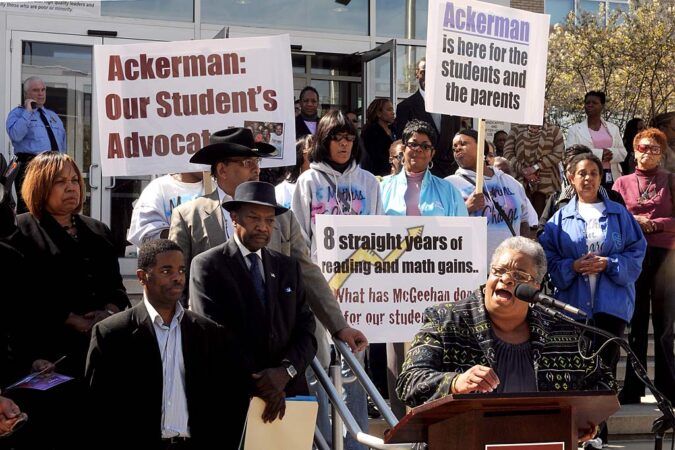
Pennsylvania elected officials are mourning the death of former State Sen. Shirley Kitchen, the second Black woman to serve in the state Senate and a champion for progressive issues who represented parts of North Philadelphia for more than two decades. She died Saturdayat 79. A cause of death was not immediately clear.
Kitchen represented the 3rd Senatorial District, composed of parts of North Philadelphia, for 20 years. She is remembered by her former colleagues as a pillar and matriarch of her community who worked tirelessly to improve the lives of low-income people, even after she retired.
“She did so many things for so many people. Now that I’m old enough to appreciate it, I’m not quite sure how she did it — and she did it with such force,” said State Sen. Anthony H. Williams (D., Philadelphia), who served alongside Kitchen in the Senate and had known her for decades. Kitchen was elected to the state Senate in 1996 and served five terms before retiring in 2016.
Her former colleagues, some through tears, credited many of Pennsylvania’s recent criminal justice reforms as being born under Kitchen’s leadership, with her early legislative proposals paving the way for their passage years later. For example, Kitchen authored early drafts of what is now known as the Clean Slate Act, which automatically seals some nonviolent convictions after 10 years, hiding them from most employer and landlord background checks. She first introduced similar legislationin Harrisburg years earlier and it failed. In 2018, two years after Kitchen retired, the Clean Slate Act became law in Pennsylvania and was heralded as a first-in-the-nation model for criminal justice reform.
Elected officials across the city shared their condolences, remembering Kitchen as an advocate who cared deeply for her community.
Mayor Cherelle L. Parker in a social media post on Sunday recalled Kitchen as “fighting for people who often had no one else to fight for them,” and as a trailblazer for Black women in politics.
“Shirley Kitchen cared about working people, and she cared about Philadelphia,” said Parker, the city’s first Black female mayor and a former state representative.
City Council President Kenyatta Johnson said in a statement that Kitchen “never forgot who she was fighting for,” dedicating her life to making people’s lives better.
State Rep. Joanna McClinton (D., Philadelphia), Pennsylvania’s first Black female speaker of the House, wrote in a social media post that Kitchen was “a mentor and her service in the state House and Senate inspired me greatly.”
Williams added that Kitchen also sought to elevate other Black politicians, like himself, to elected office — and laid the groundwork for much of the city’s current political progressivism.
“The reality is that a lot of the infrastructure that helps them, Shirley had everything to do with it, and more,” Williams said, noting her advocacy and experience during the Civil Rights Movement. “I would hope the progressives in this generation would tip their hat to a generation that really created the progressive movement.”
State Sen. Sharif Street (D., Philadelphia) had known Kitchen since he was a child, and said she helped him see the power a Senate seat has in improving the lives of his neighbors. When she decided to retire, Kitchen encouraged Street, who was on her staff at the time, to run to fill the vacancy in the 3rd District following her fifth and final term in the state Senate.
Williams and Street recalled Kitchen as a fair but demanding mentor.
“If she told you to do something, you better do it,” Williams said, with a laugh.
For Street, Kitchen “didn’t limit her advice. She had opinions about everything in my life, including when my wife was right and I needed to listen to her.”
Street said he spoke with Kitchen weekly, and Williams said he remained in touch with her as recently as last month. She often had ideas or issues she wanted the senators to take up. Street spoke with her last week about a forthcoming Registered Community Organization meeting that she was leading about a new proposed development nearby, emblematic of her continued involvement in her community.
Prior to her election to the state Senate, Kitchen was involved in the National Welfare Rights Movement, which was a progressive advocacy group for the dignified treatment of women and children, largely led by Black women, during the 1960s and 1970s, Williams said.
Kitchen served as the minority chair of the Senate Public Health and Welfare committee, in which she often leaned on her social work experience to inform her legislative proposals.
A Democrat in a time where Republicans controlled the state legislature, she served her entire tenure in the minority party, but was still able to garner bipartisan support for some of her legislative proposals.
“This image of her being an urban Black woman from Philadelphia would limit her ability to get stuff done in the Senate just wasn’t true,” Williams added. “She could analyze people and figure out what way to approach them with exceptional skill.”
Born in 1946 in Augusta, Ga., Kitchen attended the Philadelphia School District and graduated from Antioch University in 1979 with a bachelor’s degree in human services, according to her Senate Library biography. She went on to work for former Philadelphia Mayor John Street, Sharif Street’s father, before she was elected to the state House in a special election in 1987. After she lost reelection to the seat in 1989, Kitchen returned to Harrisburg a decade later after her election to represent the 3rd Senatorial District.
“She was a transformational figure that loved her community and understood that the purpose of those of us holding elected power is to be able to make a difference in the lives of the people we serve, in a way that they can feel and see,” Sharif Street added.
Funeral services will be announced in the coming days, he said.
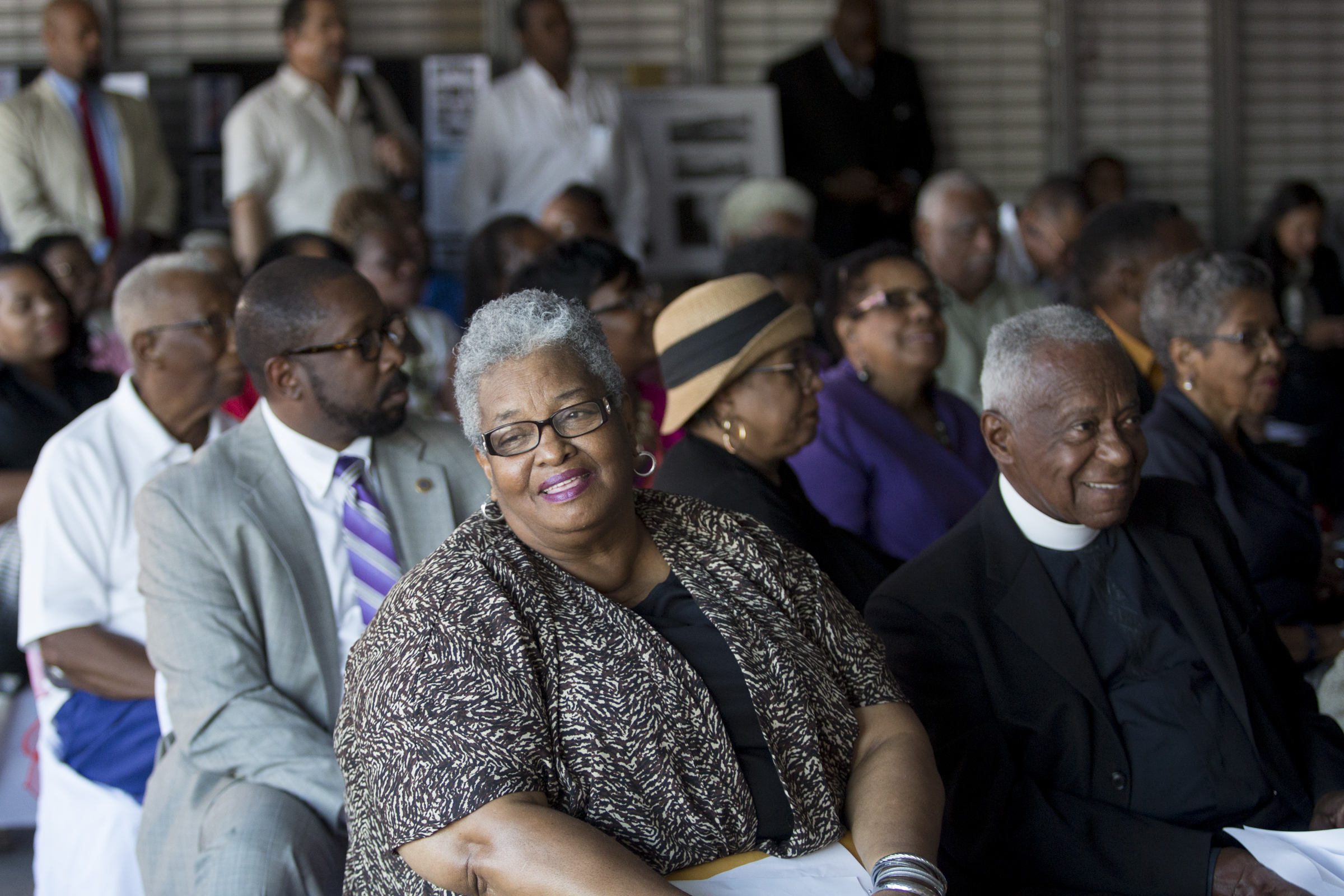
Senator Shirley Kitchen in the audience during speeches in honor of the historical marker that was unveiled at Sullivan Progress Plaza September 14, 2016. The plaza was the first black-owned and operating shopping center in America. Wednesday, Sept. 14, 2016.
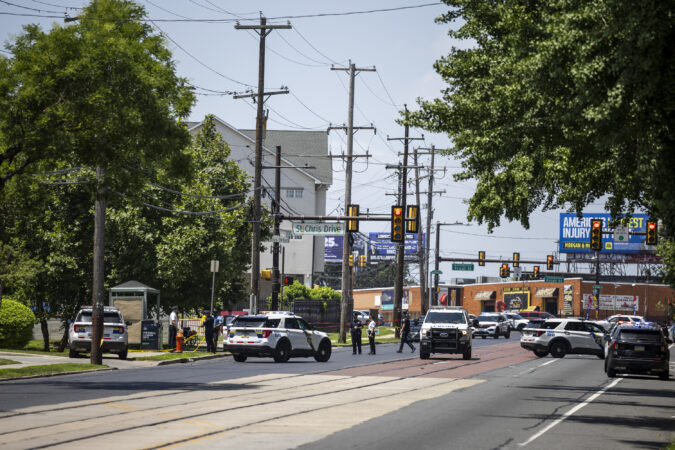
Philadelphia police on Monday identified both the officer and the 32-year-old man he fatally shot last week during a confrontation outside St. Christopher’s Hospital for Children.
Joseph Smithers allegedly pulled a Smith and Wesson handgun from his waistband at a bus stop on Erie Avenue when he was shot multiple times by Officer Azieme Lindsey, the police department said.
A 29-year-old woman, identified last week by Police Commissioner Kevin Bethel as Smithers’ girlfriend, sustained a graze wound to her neck. She was taken to Temple University Hospital to be treated. Bethel said Thursday evening that she was in good condition.
Lindsey and a second responding officer both had body-worn cameras that were activated during the encounter, the department said Monday.
Lindsey, 28, was placed on administrative duty while the shooting was being investigated by the police department and the Philadelphia District Attorney’s Office.
Just after 10:20 a.m. Thursday, two police officers responded to the area of St. Christopher’s after being dispatched for a report of a person with a weapon, the department said Monday.
It was later determined that the original 911 caller, described as a family member, had contacted police out of concern that Smithers was experiencing a mental health crisis and was suicidal, the department said.
It was also later determined that around the time of the 911 call from the family member, Smithers had been told by security that he was not allowed in the hospital because he had been asked to leave the day before and was no longer permitted on the property, the department said.
No explanation has been given for why Smithers was asked to leave on Wednesday, but Bethel said last week that Smithers was there because his son was at the hospital.
Smithers was “left without incident” when hospital security turned him away on Thursday, the department said.
“The hospital was at no time under threat,” Bethel said Thursday evening.
When Lindsey and the second officer — who were in full uniform and in a marked police vehicle — arrived at the hospital, they were met by a security officer who directed them to the nearby bus stop where Smithers was last seen, the department said.
As Lindsay exited the patrol vehicle, Smithers allegedly began moving backward while also pulling the gun, the department said. Lindsay then fired, striking Smithers multiple times.
Smithers was transported to Temple hospital, where he was pronounced dead at 10:44 a.m. Thursday.
The department said the handgun was legally possessed by Smithers, who had a permit to carry a concealed firearm.
A former strength coach at Bucknell University was charged Monday with criminal hazing in the 2024 death of Calvin “CJ” Dickey Jr., an 18-year-old freshman football player with a known medical condition who collapsed after being required to perform drills until he passed out, Pennsylvania Attorney General Dave Sunday said.
Mark Kulbis, 34, who worked for Bucknell at the time, surrendered to authorities late Monday morning and was arraigned on the charges, Sunday said. Bail for Kulbis was set at $10,000 unsecured.
Dickey, originally from Florida, was participating in the first day of freshman football practice for the university in Lewisburg, Pa., on July 10, 2024, “when he was directed to do extensive calisthenics, which put him in risk of death due to his sickle cell trait,” the attorney general’s office said.
Kulbis allegedly “subjected Dickey to the hazing, even after being made aware of Dickey’s medical condition and receiving training from the university on sickle cell trait and state law and NCAA standards regarding hazing,” Sunday’s office said.
Dickey was required to perform 100 “up-downs” and several full-body plank drills: “both considered extraneous calisthenic exercises. This was done in spite of training and direction from other coaches that such exercises were not appropriate or safe for use as part of training,” the attorney general’s office said.
Dickey, who was recruited to play lineman positions, “was visibly struggling with the exercises and Kulbis, the only coach in the training room, did not summon help until Dickey passed out,” Sunday’s office said.
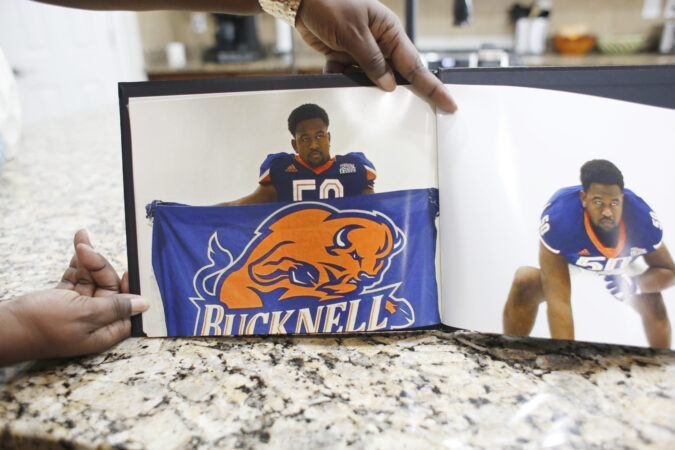
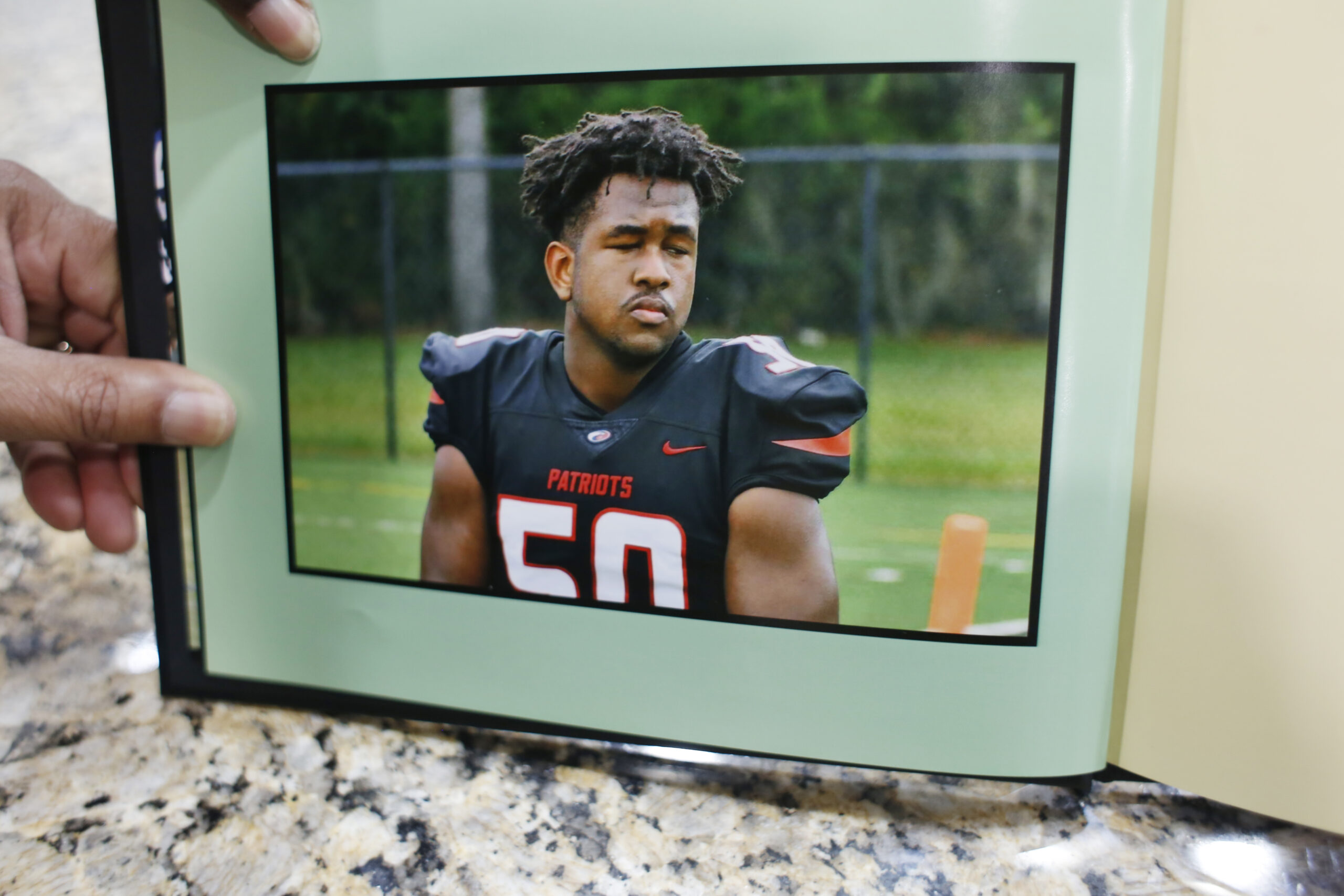
Photo of Calvin “CJ” Dickey Jr. The 18-year-old died in 2024 after collapsing on the first day of freshman football practice for Bucknell University.
Dickey was hospitalized, but died on July 12, 2024. An autopsy determined that Dickey’s death “was caused by Kulbis subjecting Dickey to the exercises in combination with Dickey’s Sickle Cell trait, body weight, and exertional rhabdomyolysis,” the attorney general’s office said.
“This is an extraordinary tragedy, worsened by the fact that C.J.’s death was preventable,” Sunday said in a statement.
The sickle cell trait can make intense exercise dangerous in certain situations. It used to be the leading cause of death in college football, but the rate of death associated with it among Division I football players dropped by nearly 90% after the NCAA began requiring testing and education in 2010, according to a report published in Sports Health Journal.
NCAA guidelines say coaches should allow student athletes to set their own pace, build up slowly while training, and rest and recover between intense bouts of exercise.
The criminal case was referred to state prosecutors last year by the Union County District Attorney, Sunday said. The campus in Lewisburg, located about a hour north of Harrisburg, is located in Union County.
In an emailed statement, Bucknell University said Monday that university officials were aware of the criminal charges announced against Kulbis.
“Bucknell has cooperated with the Pennsylvania Attorney General’s Office throughout its investigation,” the university said.
“Because this is now an active criminal matter, and related civil litigation remains pending, the university will not comment on the allegations or legal proceedings,” the university said.
“We continue to remember Calvin ‘CJ’ Dickey, Jr. and extend our deepest sympathies to his family and friends,” Bucknell said.
Barbara Zemlock, an attorney for Kulbis, could not be reached for comment. ESPN reported that Zemlock provided a statement defending Kulbis.
“While the death of Calvin Dickey is tragic, Mark Kulbis did not contribute to it and is not responsible for it,” Zemlock told ESPN.
“The strength and conditioning program that was implemented was appropriate and in accordance with the training that Mr. Kulbis received, and with applicable standards.”
Zemlock added: “There are facts and other circumstances surrounding this matter that, once presented at the appropriate time, will demonstrate that Mr. Kulbis did not commit the crimes charged,” and that “we intend to vigorously defend the charges.”
Late last month, a federal judge allowed a lawsuit to proceed against Bucknell University filed by Dickey’s parents.
Kulbis was charged with felony aggravated hazing and misdemeanor counts of involuntary manslaughter, reckless endangerment, and hazing. Sunday said.
The aggravated hazing charge was made into Pennsylvania law in response to the 2017 hazing death of Penn State University student Tim Piazza.
“This law exists because it recognizes what hazing is: criminal conduct that, in the best possible scenario, humiliates and dehumanizes an individual — and at its worst, takes lives and leaves families and friends forever devastated,” Sunday said.
Mayor Victor Carstarphen said no fatalities or injuries have been reported, but by Monday afternoon, Camden City had received about 90 service calls reporting damages following more than 4 inches of rainfall, and he expected Camden to get more calls as people return home from work to potential flooding.
“Today, the rainfall exceeded what our stormwater system is designed to handle in such a short period of time,” Carstarphen said.
Countywide, Camden received about 1,000 911 calls just in the stretch of the morning storm, said Dan Keashen, Camden County’s public affairs director.
It will take a while for the county to determine how many homes were impacted and the estimated cost of damages. Public assistance teams from the state will work with the city and county to assess damages home by home in affected areas, said Morgan Callan, external communications manager for Camden County.
Dave Balog of Mullica Hill makes his way to his truck in the flooded parking lot at the Ferry Avenue PATCO station in Camden Monday, July 6, 2026, as a flash flood threat continues for the region. Balog said there were no warnings about a storm when he parked there four hours earlier for an appointment in Center City Philadelphia. His truck did start as it was not in the deepest area of the lot.
Flooding left vehicles stranded on roadways throughout the county, including two police vehicles and a fire department apparatus in Camden City, Keashen said. But most of the water has receded, according to a press release Monday afternoon.
Both city pools in Camden will be closed this week, Carstarphen said.
Camden City residents with damage to their properties can call the city emergency operations center at (856) 757-7132 or (856) 757-7139. Calling in those damages will allow city officials to report them to the state, which then could unlock regional and state disaster aid for residents.
Residents of other Camden County municipalities can report property damages to their respective offices of emergency management.
Carstarphen couldn’t confirm the timeline for how long it would take officials to visit properties to assess damages, but he said he encourages residents to file claims with their property insurance providers in the meantime.
On Sunday morning, the doors of Fellowship Alliance Chapel were open for prayer on schedule despite a fire in the Medford church’s worship center less than 48 hours earlier.
“Just the heartfelt praise, the worship, the prayer time that we had together — it was just wonderful praising God for all his goodness. So many things could have really been much worse than they were,” Fellowship Alliance vice chairman Dave Gutekunst said.
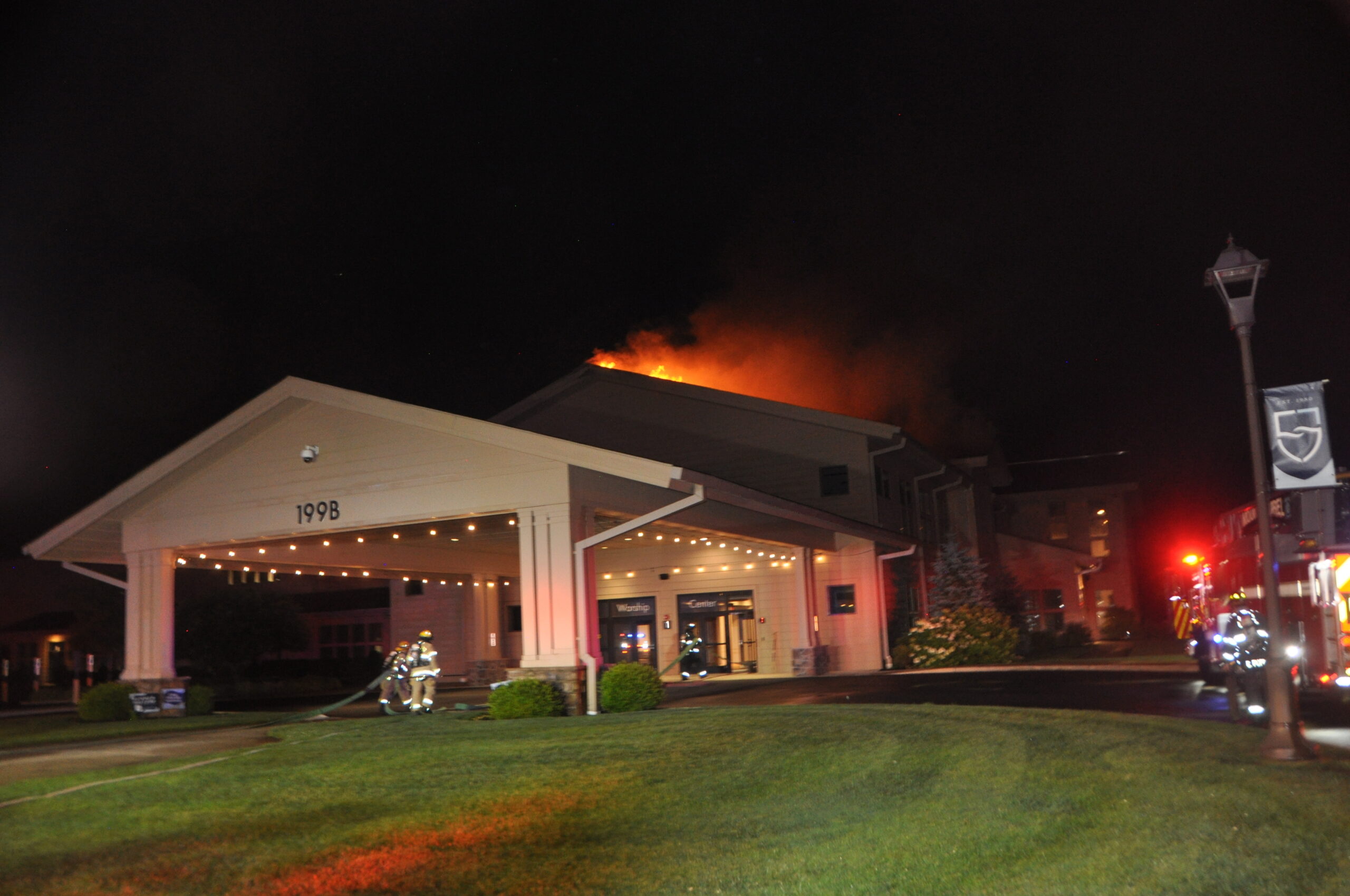
No one was in the building when church officials say lighting struck the building’s roof around 9 p.m. Friday and no one was injured.
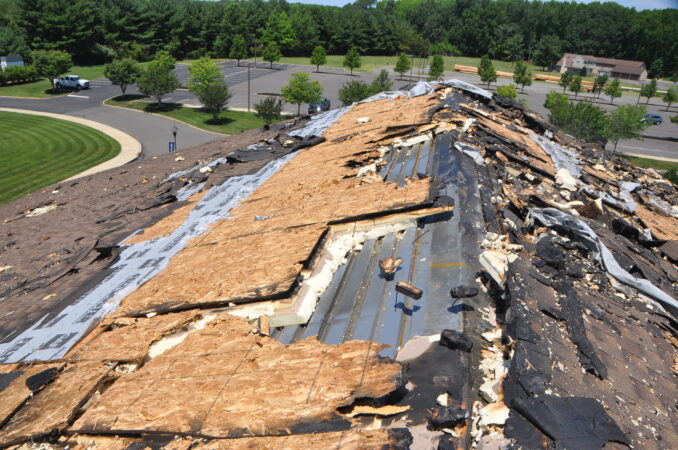
The fire was contained between the roof and the ceiling of the worship center, limiting the scope of damage inside the church to smoke and water, Gutekunst said.
“We just felt really blessed and I think people have had a renewed sense of hope that this is just one in a long list of many chapters of the history of our church,” he said. “God sustained us through trials and tribulations before and he’ll continue to sustain us and carry us through this one.”
The roof of Fellowship Alliance Chapel was damaged by a fire on Friday, July 3, 2026.
Gutekunst also expressed his gratitude for the dozens of firefighters who responded to the scene during the peak of the weekend heat wave.
It’s still too early for a clear timeline for repairs, he said, but the church is forming a team of experts to spearhead recovery. In the meantime, services will continue to be held in the temporary worship space that was set up in another building on the church’s campus after the fire.
While church leaders believe the fire was sparked by a lightning strike, the Medford fire marshal has not determined an official cause of the fire and it is still under investigation, according to Medford manager Robert Dovi.
Per protocol, the Bureau of Alcohol, Tobacco, Firearms and Explosives has also been notified because the fire occurred at a house of worship, Dovi said.
But lightning-caused fires aren’t uncommon in this area, Dovi said.
“This is a common occurrence for our area due to the large trees and open space,” Dovi said. “This weekend due to the severe nature of the storms there were a number of fires potentially related to lightning strikes.”
DAMASCUS, Syria — French President Emmanuel Macron arrived Monday in Syria, making him the first major western leader to visit the war-torn country since the ouster of Bashar al-Assad in 2024.
Ukrainian President Volodymyr Zelensky visited in April but Macron is the first leader from western Europe or North America to do so.
The French president’s visit comes during a period of relative calm in the Middle East after the monthslong war in Iran and Lebanon. He will travel next to Ankara, Turkey, for the NATO summit, where Syrian President Ahmad al-Sharaa is also expected to attend and hold a high-profile meeting with U.S. President Donald Trump.
Syria’s state-run SANA news agency said Macron would visit with a business delegation to discuss regional security as well as business and investment opportunities.
The French president was greeted at Damascus airport by Syrian Foreign Minister Asaad al-Shibani.
“I have come to express France’s commitment to the Syrian people. For a sovereign Syria, united in its diversity and at peace with its neighbors,” Macron said in a post on X. “Together, let us open a new chapter of stability and peace.”
France supports all those who can “contribute to build a new Syria” in line with the aspirations expressed since the 2011 Arab Spring, Macron’s office said, referring to a period of widespread uprisings across the Middle East that called for political change and reform.
Macron will meet with al-Sharaa at the presidential palace and “engage directly with diverse Syrian people,” his office said.
The French president’s meetings are scheduled throughout Tuesday, beginning with members of Syrian civil society, his office said, though no details were disclosed. Macron will then meet with al-Sharaa, before holding economic talks and signing memorandums of understanding. The two leaders will hold a joint news conference afterward.
Macron hosted al-Sharaa in Paris in May 2025, where he urged European and U.S. leaders to lift longstanding sanctions on Damascus. Most of those sanctions have since been lifted.
Paris supported Syria’s new leadership even at a time where others were skeptical of al-Sharaa’s Islamist-led rule and former role as the head of the Hayat Tahrir al-Sham militant group, previously linked to al-Qaida.
Western governments were especially concerned about the treatment and inclusion of women and minorities, and whether Syria’s new government would transition into a more democratic rule.
Syria has managed to sidestep the region’s recent conflicts, but the country is still battered from 13 years of war that left much of it in ruins, drove millions into poverty, and will cost hundreds of billions of dollars to rebuild. While Syria has signed memorandums of understanding with states and large companies for large investment projects, they have not yet come to fruition.