Category: News

Latest breaking news and updates

  • Pokémon card worth $24,000 stolen using fake cryptocurrency in Marlton

    Pokémon card worth $24,000 stolen using fake cryptocurrency in Marlton

    A Philadelphia man has been charged after authorities said he conducted a fraudulent cryptocurrency purchase for a valuable Pokémon card in Marlton.

    After arranging the sale through Facebook Marketplace, Christian Elam, 26, allegedly met the seller at the Evesham Township Police Department Safe Exchange Zone, located in the lobby of police headquarters, Evesham police said in a statement posted to social media Monday.

    Elam allegedly paid the seller for a Pokémon card worth $24,200 using cryptocurrency, which was later determined to be fraudulent, the department said.

    Elam was charged with third-degree theft by deception and second-degree computer-related theft. He was being held at the Burlington County Jail awaiting a pre-indictment hearing scheduled for Aug. 26, according to the court docket.

    The police department is encouraging residents to continue taking advantage of the 24-hour safe transaction zone but to remain diligent about potential scams.

    “While the zone provides a well-lit, video-monitored location for in-person exchanges, residents are reminded to independently verify payment before transferring property, especially when cryptocurrency, electronic payments, or high-value items are involved,” the department said.

    Cyber-enabled crimes are on the rise across the United States. The Internet Crime Complaint Center received more than 1 million complaints in 2025, a 17% increase from the previous year, with total reported losses of nearly $21 billion, according to an April report from the FBI.

    Cryptocurrency crimes are often the costliest, with more than 181,565 complaints totaling more than $11 billion in losses in 2025 alone.

  • A 13-year-old boy has died after getting trapped beneath an overturned tractor in Gloucester County

    A 13-year-old boy has died after getting trapped beneath an overturned tractor in Gloucester County

    A 13-year-old boy in Franklin Township died after getting trapped underneath an overturned farm tractor Monday night, according to officials.

    A statement released by Franklin Township police Tuesday morning said officers from Franklin and Elk Townships responded to the 1100 block of Swedesboro Road around 5:35 p.m. and found the teen unconscious and unresponsive beneath the tractor.

    Officers began lifesaving measures once the tractor was lifted, and the teen was taken to Cooper University Hospital, where he died of his injuries, according to the police statement.

    An initial investigation showed that the teen was helping a family member dig a hole with the tractor. While riding the equipment with an adult male, the tractor overturned, trapping the teen underneath and leaving the adult with minor injuries. The adult was treated at a local hospital.

    The adult who rode the tractor is a family member of the teen, though Police Chief Matthew DeCesari declined to share more about their relationship.

    “The incident remains under investigation by the Franklin Township Police Department and the Gloucester County Prosecutor’s Office,” the police statement said. “The investigation is ongoing, and any potential criminal charges will be determined upon its conclusion.”

  • Platner should drop out of Maine’s U.S. Senate race after sexual assault allegation, Sanders says

    Platner should drop out of Maine’s U.S. Senate race after sexual assault allegation, Sanders says

    PORTLAND, Maine — Sen. Bernie Sanders on Tuesday became the latest and most notable lawmaker to pull support for Maine Democratic U.S. Senate nominee Graham Platner following an allegation of sexual assault, adding to a chorus of calls for him to step aside as party leaders scramble to determine the next steps.

    Sanders, a Vermont independent who caucuses with Democrats, has long backed Platner in the high-stakes race against Republican Sen. Susan Collins, but he said in a statement that he spoke with the candidate and “in light of these very serious allegations, I have recommended that he step aside.”

    Platner, who denies the allegation, has not heeded the wave of calls to resign as the nominee. Instead, he posted a video on Monday saying he’s considering the next steps for his campaign while canceling town hall events.

    Platner posted the video after reports that a woman who previously dated the first-time candidate said he drunkenly forced her to have sex after she told him to stop.

    The allegation is the latest in a string a controversies Platner has faced and so far weathered since the oyster farmer and Marine veteran entered the race. But the seriousness of the assault claim has put the Maine contest — and Democrats’ ability to win control of the Senate — at risk, with even some of his strongest supporters questioning whether Platner should continue his campaign.

    A Platner voter is ‘heartbroken’

    Joanie Monteith, a passionate supporter from the southern Maine town of York who organized a trivia night about Platner in March, said through tears Tuesday that she was “numb” and “heartbroken” at the news. She was waiting for another public statement from Platner before making a decision about whether she could keep supporting him.

    “I’m in tears. I’m numb and I’m waiting for what Graham has to say. I’m trying not to be a part of this public trial. And I’m heartbroken. And I’m heartbroken for him and his wife.”

    She added she believes the allegations are serious.

    “I’m not going to blame a victim. Because if this is true I feel very bad for the woman,” she said. “You just don’t know how to feel.”

    Jenny Racicot, who lives in Maine, told Politico that Platner entered her home in 2021 while drunk and assaulted her. Racicot said she had been in an on-and-off relationship with Platner, but she cut off contact with him after that night and told him the incident wasn’t consensual. She said in a CNN interview on Monday evening that she opted not to fight back for fear of Platner, a former Marine, becoming more violent.

    Another Maine voter, Lee Holman, said she wants Platner to stay in the race.

    “I feel like the people of Maine have spoken,” the Democrat said. “If they wanted Janet Mills, they could have voted for her.”

    She said the allegation against Platner may be legitimate, but she questions the timing. Democrats, she added, can be too quick to “throw the baby out with the bathwater” by calling on politicians facing allegations to resign.

    “Every time we think we have a chance to snatch our democracy back, something gets in the way,” she said.

    Replacing Platner may further divide Democrats

    The pressure for Platner to withdraw from the Senate race has only increased given the short deadlines Maine law allows for replacing general election candidates. There is no mechanism for Democrats to remove Platner from the ballot, meaning Platner must first opt to drop out of the general election before a replacement can be selected. The deadline to withdraw is 5 p.m. on July 13.

    Just who should replace Platner if he drops out appeared to already be further splintering Democrats. Some argued the next Democrat should echo Platner’s progressive messaging, pointing to his success at rallying voters across the state. Others cautioned that having ties to Platner will only doom an already uphill campaign against Collins.

    Joe Baldacci, a Democratic state senator, said he’s concerned about what the latest allegations will do to the voter excitement over the past year.

    “I think the major concern, even with a nominee, a new replacement, is that person is going to start very much behind the eight ball,” Baldacci added.

    Gov. Janet Mills, who sought the Democratic nomination but dropped out before the June 9 primary, could be considered as a nominee. Mills was supported by Democratic Senate leader Chuck Schumer but abandoned her campaign, saying she couldn’t raise the money needed to compete.

    Another possible replacement is Troy Jackson, Maine’s former state senate president, who unsuccessfully ran to be the Democratic gubernatorial nominee earlier this year with the backing of Platner and Sanders.

    While he hasn’t publicly said he’d run for the Maine Senate seat, U.S. Rep. Ro Khanna threw out his name as someone who stands up for “progressive values” after the California Democrat withdrew his support for Platner.

    Other names include Nirav Shah, the former director of Maine’s Center for Disease Control and Prevention. Shah came in second in this year’s Maine Democratic gubernatorial primary, where he was considered more moderate compared with Jackson.

    In a statement Tuesday, Shah said he’s “evaluating” whether he should enter the race should Platner step aside.

    Other potential replacements include Shenna Bellows, the current Maine Secretary of State; Dan Kleban, founder of Maine Beer Company; Maine U.S. Rep. Jared Golden, who is not running for reelection; and Hannah Pingree, currently Maine’s Democratic gubernatorial nominee.

  • Chester County roadwork to watch out for this week

    Chester County roadwork to watch out for this week

    Roadwork continues on several major thoroughfares throughout Chester County this week, including Route 30. Elsewhere, other projects will get underway, including a monthslong update to Conestoga Road in East Nantmeal Township that will result in a lane closure.

    Here are all the possible delays and detours you need to know, starting July 7:

    • Birmingham Township: Weather depending, expect roadwork and a closure on Old Wilmington Pike between Knolls and Birmingham Roads through Friday as Peco undertakes tree removal.
    • Coatesville; Caln, East Fallowfield, and West Bradford Townships; and South Coatesville: Overnight paving work from 7 p.m. to 5 a.m. will cause a lane closure on Hazelwood Avenue between Marshallton Thorndale Road and First Avenue through Friday.
    • East Nantmeal Township: Fairview Road will be closed between Little Conestoga and Conestoga Roads from 7 a.m. to 5 p.m. through Friday. Starting Wednesday and continuing through July 15, Fairview Road will be closed between Conestoga Road and Pottstown Pike, also from 7 a.m. to 5 p.m. Starting Tuesday, expect a lane closure on Conestoga Road between Nantmeal and Moores Roads that will continue from 7 a.m. to 3 p.m. through the end of September.
    • East Pikeland Township: Starting Monday and running through July 24, Spring Hollow Road will be closed between Route 724 and Spring Lane.
    • Franklin Township: Roadwork continues on Church Hill Road near Hilltop Road, resulting in an ongoing lane closure. Work is expected to continue throughout the summer and into the fall as the township undertakes stability repairs and partial roadway reconstruction.
    • Honey Brook Township: There will be a lane closure on Cambridge Road between Horseshoe Pike and the Lancaster County line from 6 p.m. to 6 a.m. through July 14, followed by milling and paving through July 21.
    • North Coventry Township: There will be a lane closure as resurfacing of eastbound Route 422 between its interchanges with Route 100 and Armand Hammer continues 9 to 5 a.m. through Thursday.
    • West Chester: South Church Street will be closed between Price and West Barnard Streets for utility work through Friday. The 200 block of Linden Street and the 600 block of Maple Alley will be closed from 7 a.m. to 3 p.m. through Friday for sewer line work.
    • West Pikeland Township: The driveway for Pine Creek Park will be repaved on Thursday and Friday, resulting in the park’s temporary closure.
    • West Sadsbury Township: Route 30 will have an overnight lane closure between Octorara Trail and the Lancaster County line from 7 p.m. to 5 a.m. through Friday.

    This roundup will be updated every Tuesday.

    This suburban content is produced with support from the Leslie Miller and Richard Worley Foundation and The Lenfest Institute for Journalism. Editorial content is created independently of the project donors. Gifts to support The Inquirer’s high-impact journalism can be made at inquirer.com/donate. A list of Lenfest Institute donors can be found at lenfestinstitute.org/supporters.

  • U.S. gave Tehran details on Iranian asylum seekers, lawsuit alleges

    U.S. gave Tehran details on Iranian asylum seekers, lawsuit alleges

    A lawsuit filed Tuesday in Washington alleges the Trump administration violated U.S. law by providing Iran’s government with confidential information detailing the asylum applications for Iranians it planned to deport.

    The extraordinary claim, outlined in court papers submitted by the Iranian American Legal Defense Fund and Public Citizen Litigation Group, contends that the materials it alleges were shared with the Iranian government could jeopardize the lives of pro-democracy protesters along with members of religious minorities and the LGBTQ community and their families.

    An annual State Department report on human rights in Iran, released last year under the Trump administration, called the situation in Iran “severe” and worsening, with political protest movements and religious minorities targeted by authorities. Previous U.S. administrations have reported that Iranian authorities have targeted LGBTQ people for prosecution and subjected them to humiliating treatment.

    “The law couldn’t be more clear that information in asylum applications is protected,” said Michael Kirkpatrick, a Public Citizen attorney involved with the complaint. He called the case “potentially a matter of life and death” for Iranian asylum seekers who end up deported back to Iran.

    Since returning to office last year, immigration hard-liners in the Trump administration have taken several steps that opponents say has eroded the United States’ established practice of allowing migrants who say they are fleeing persecution to seek asylum in the country. The administration and its allies have argued that the asylum system had become overwhelmed and, in some cases, abused by individuals making dubious claims.

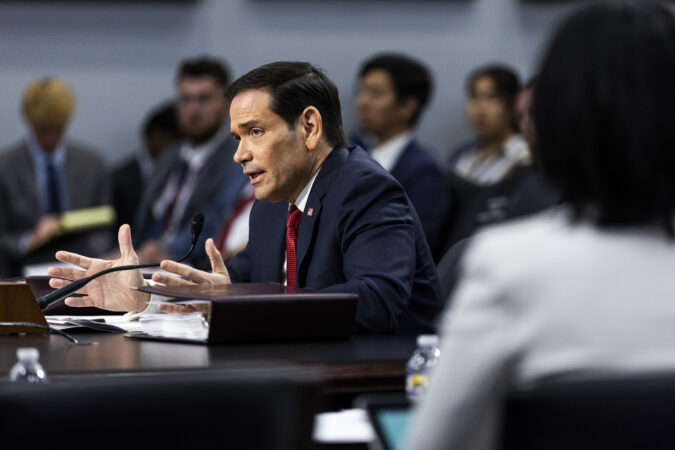
    The lawsuit names as defendants Secretary of State Marco Rubio, Homeland Security Secretary Markwayne Mullin, and acting director of U.S. Immigration and Customs Enforcement (ICE) David Venturella, along with the agency each leads.

    Spokespeople for the three agencies did not provide comment. The Iranian Mission to the United Nations did not respond to a request for comment.

    The lawsuit seeks an end to the alleged practice and to require that the U.S. government notify anyone whose personal information was shared with the Iranian government without their consent. It is not immediately clear how the government might respond or whether the case would succeed.

    Despite long-running tensions between the U.S. and Iranian governments, which escalated into all-out warfare in February, the Trump administration has deported more than 100 Iranians back to the country since President Donald Trump’s return to office in 2025, according to advocate groups that track deportations and reports in the Iranian news media.

    Iranian officials said last year that they had reached an agreement with the Trump administration to accept approximately 400 Iranian deportees. More recently, the administration included at least one Iranian national among a group of people deported from the United States to the Central African Republic, lawyers for the group have said.

    The lawsuit filed Tuesday in U.S. District Court in D.C. includes accounts of alleged secret meetings between officials from the Trump administration and representatives of the Iranian government dating to March 2025.

    Because the United States does not have diplomatic relations with Iran, the government in Tehran is represented in Washington by the Iranian Interests Section at the Embassy of Pakistan.

    Kirkpatrick told the Washington Post that the allegations contained in the lawsuit are based, in part, on the account of an Iranian government official who is assigned to the Pakistani Embassy and accounts from deportees who have said that Iranian officials knew details from their applications seeking asylum in the United States.

    The lawsuit does not identify the Iranian government officials or the deportees to whom attorneys spoke. The Pakistani Embassy did not respond to a request for comment.

    At the initial meeting in March 2025, the lawsuit alleges, State Department officials met with representatives of the Iranian Interests Section in Washington. The lawsuit alleges that the discussion encompassed the Trump administration’s desire to deport Iranians to Iran, with the administration officials handing over a list of roughly 150 names. The lawsuit does not identify by name any of the meeting’s participants.

    After this encounter, the lawsuit alleges, it was agreed that officials from ICE and the Iranian government representatives would hold monthly meetings so that the administration could share information about Iranians in U.S. custody.

    ICE falls under the Department of Homeland Security, which at that time was led by Kristi L. Noem. Mullin took over as secretary in March after Trump removed Noem from the post. Noem now serves as the special envoy to the Shield of the Americas, a State Department position. The State Department did not respond when asked if she wanted to comment.

    The lawsuit also alleges that while in-person meetings between ICE officials and Iranian officials were halted after Feb. 28, when the U.S. and Israel started the war with Iran, ICE officials continued to send documentation to the Iranians.

    Roughly 115 Iranian nationals are believed to have been sent back to Iran on three U.S. deportation flights, according to advocacy organizations that track the deportations. The most recent is said to have occurred Jan. 26, only weeks after anti-government protests there were met with a severe response that is estimated to have left thousands dead.

    Trump had earlier this year expressed sympathy with the protesters, telling them on Jan. 13 that “help is on the way.”

    It is not clear how many of those deported back to Iran had asylum claims pending before the U.S. government. Lawyers for some of the deported Iranians have said that people from at-risk groups were among those deported on the flights.

  • British military says second ship hit in Strait of Hormuz

    British military says second ship hit in Strait of Hormuz

    DUBAI, United Arab Emirates — The British military says a second ship has been hit in the Strait of Hormuz.

    The United Kingdom Maritime Trade Operations center made the announcement Tuesday, hours after it said a tanker traveling off the coast of Oman in the strait was struck by a projectile and caught fire. It was the latest attack targeting a vessel moving through the narrow mouth of the Persian Gulf.

    The agency said the second ship was believed to have sustained structural damage, but no one was injured.

    Iranian state television said the first ship, a liquefied natural gas tanker, came under attack after ignoring warnings but did not directly claim the assault.

    Tehran, which has repeatedly declared that only its approved route through the strait is safe, is suspected of attacking other ships that have used another route close to the Omani shore.

    The U.S. is eager to press ahead with negotiations with Iran aimed at fully reopening the strait, rolling back Tehran’s disputed nuclear program and reaching a permanent end to the war launched Feb. 28. Previous attacks in the strait have sparked retaliatory strikes by the U.S. Iran then attacked Gulf Arab states.

    In peacetime, a fifth of all traded oil and natural gas passed through the channel.

    Meanwhile, talks between Iran and the U.S. appeared to be on hold until after the burial of Iran’s Supreme Leader Ayatollah Ali Khamenei, who was killed at the beginning of the war. Mourners at his funeral have called for the death of U.S. President Donald Trump.

    Authorities flew Khamenei’s body to the Shiite seminary city of Qom, where mourners honored him Tuesday.

    Tanker struck in latest attack in strait

    The United Kingdom Maritime Trade Operations center said the tanker was hit near Limah, Oman, in the strait. The UKMTO said the projectile hit the port side of the vessel as it tried to travel south out of the strait toward the Gulf of Oman.

    The agency said there were no environmental effects from the strike and that authorities were investigating.

    Iranian state TV, quoting anonymous sources, implied that Tehran carried out the assault on a tanker it said was carrying natural gas from Qatar. However, there was no official claim from the Islamic Republic for the attack.

    Majed Al-Ansari, a spokesperson for the Qatari Foreign Ministry, said targeting the Qatari tanker, Al Rekayyat, in the strait was an “unacceptable attack” on international navigation and global energy security. He called it a “serious and explicit violation” of international law.

    In a post on X, he said Qatar holds Iran “fully legally responsible” for the attack.

    Iran’s joint military command warned last Thursday that all oil tankers moving through the strait must use its approved routes. It also said that interference by U.S. forces in the strait “will be met with a rapid and decisive reaction.”

    But the Joint Maritime Information Center, a multinational body overseen by the U.S. Navy, told shippers Monday that the route around Oman “has been expanded and remains available for all traffic.”

    Speaking Monday at the White House, Trump warned Iran that it would need to “make a deal, or we’re going to finish the job.”

    “I’d rather make a deal, because I don’t want to affect 91 million people,” Trump said. “We can knock down their bridges in one hour. We can knock out their energy supply.”

    Iran and the United States agreed as part of an interim deal to allow ships to pass without paying charges for 60 days. But Tehran insisted it must control the routes of the vessels and later charge fees for passage, which would upend decades of practice in the waterway.

    The U.S. and many Gulf Arab states say they will not agree to Iran charging for passage through the strait. An effort by Oman and a United Nations agency to launch a new route near Oman’s shore earlier sparked attacks across the Mideast.

    The data firm Kpler reported that over last weekend at least 108 ships crossed through the strait using various routes.

    Mourners gather in Qom for Khamenei’s funeral

    Iranian state television early Tuesday aired live images from a helicopter of hundreds of thousands of people walking toward Jamkaran Mosque, just south of Qom, for a funeral service for Khamenei. Shiites believe the mosque once hosted the Muhammad al-Mahdi, the 12th and last Shiite imam, who disappeared in the 9th century and will one day reappear to bring justice to the world.

    Images of Khamenei and his son, Iran’s new Supreme Leader Ayatollah Mojtaba Khamenei, were displayed on banners and posters held by mourners. Mojtaba Khamenei has yet to make an appearance in the funeral ceremonies, which are unfolding over several days. He is believed to be in hiding after reportedly being wounded in the airstrike that killed his father.

    At the height of the war, before an April ceasefire, Israel targeted top Iranian leaders, in at least one case likely using their public appearances to fix their position. It has also threatened to kill the younger Khamenei.

    Authorities have shut down streets, airspace and daily life for the mourning, which began Saturday and will end Thursday as Khamenei is buried at the Imam Reza shrine in Mashhad, his birthplace. Khamenei was 86.

  • NATO unveils billions in arms deals to prove its firepower as Trump arrives in Ankara

    NATO unveils billions in arms deals to prove its firepower as Trump arrives in Ankara

    ANKARA, Turkey — President Donald Trump arrived in Ankara Tuesday afternoon for the NATO summit, as the transatlantic military alliance was announcing billions in arms deals in an attempt to appease the mercurial U.S. leader.

    Trump was expected to head first to the presidential compound of Turkish leader Recep Tayyip Erdoğan, a close ally who is hosting this year’s gathering.

    Just before Air Force One touched down in Ankara, NATO showcased a series of military projects worth billions of dollars — an investment that the alliance’s secretary-general, Mark Rutte, called “money well spent.” An energized Rutte was speaking to government ministers and defense industry officials at a forum billed as NATO’s “big reveal,” to the thrum of techno music and a slick video display.

    NATO as an organization does not own any weapons — these are the property of the 32 member countries — but it does have a fleet of 14 AWACS early warning radar surveillance planes that are about 50 years old, along with some newer surveillance drones.

    A deal to replace the aging planes was announced Tuesday. Swedish manufacturer Saab will be supplying up to 10 new GlobalEye surveillance aircraft for a 10-nation consortium, Swedish Prime Minister Ulf Kristersson announced.

    “It’s a moment of great pride,” he said, noting that the twin-engine aircraft would be “made within the alliance for all the alliance.”

    Some of the projects will be paid for with funds from a system of cheap loans for defense purposes set up by the European Union, comprising up to $170 billion raised on capital markets.

    “We need to ensure that we are translating our economic might into military capabilities, putting the cash to work from defense plans to drones, from money to missiles and interceptors,” Rutte said.

    Trump has branded NATO a “paper tiger” that would cease to function without American arms and leadership. At the forum on Tuesday, Michael Duffy, a U.S. undersecretary of defense, said “the reality is that we need production increases across the board.”

    “We will be looking to increase our exports to those who are looking to buy our equipment, and we’ll also be looking to partner with the expansion of production capacity here in Europe,” he said.

    Defense sales announced

    Representatives from 15 nations shook hands and patted shoulders on a vast podium under the NATO logo as they announced a multinational effort to buy air-to-air refueling and transport planes from Airbus.

    Then Rutte announced a four-country effort to purchase as many as five new Triton surveillance drones to add to NATO’s small fleet.

    “It is genuinely made in NATO, and creating jobs on both sides of the Atlantic,” he said.

    Rutte told reporters on the eve of the military alliance’s two-day summit in Turkey that “we will announce tens of billions in new contracts that will provide the crucial kit we need to deter and defend.”

    However, at Tuesday’s event, no dollar figures were given and the display included some projects long since agreed.

    The defense industry splash comes a few weeks after Rutte tried to ease U.S. concerns about military spending at NATO with a new pitch using a chart labeled “The Trump Trillion” — showing $1.2 trillion in spending by European allies and Canada since 2017.

    Far from being impressed, Trump appeared unmoved, saying he was still disappointed at some NATO allies’ refusal to join the Iran war, which he had launched alongside Israel without consulting them.

    “We don’t need their money — we don’t need anything,” Trump said. “I just want loyalty.”

    Debate over jet sales to Turkey

    The summit is being held in President Recep Tayyip Erdogan’s sprawling palace compound in Ankara, and Trump has suggested he would come bearing gifts for the Turkish leader.

    Speaking Monday on the morning show “Fox & Friends,” Israeli Prime Minister Benjamin Netanyahu urged the U.S. not to sell F-35 fighter jets to Turkey, saying that Erdogan “calls openly for the annihilation of Israel.”

    Turkey and Israel have acrimonious relations. Erdogan frequently accuses Israel of committing genocide in its war in Gaza, triggered by the deadly Oct. 7, 2023, Hamas-led attack on southern Israel.

    Turkey was barred from the F-35 program in 2019 after it purchased Russian-made S-400 missile defense systems. However, Trump, who has warm relations with Erdogan, has hinted ahead of his planned visit to Ankara that the sales could soon resume.

    Netanyahu said selling Turkey F-35s would “upset the power balance in the Middle East, which is ultimately guaranteed by Israeli air superiority and also, I think, by America’s posture in the Middle East.”

    Israel’s Air Force depends on hundreds of U.S. fighter jets, including F-35s, F-16s and F-15s.

    Turkey beefed up security and banned protests in Ankara during the summit, but a small group of demonstrators gathered on Tuesday in the capital. They were quickly surrounded by police, and a legal association said 22 students affiliated with the leftist Turkish Workers Party and three lawyers had been detained.

    Seeking a stronger Europe for a stronger NATO

    The focus of the summit is a stronger Europe for a stronger NATO. The Trump administration has warned the allies that they must handle Europe’s security alone as the United States focuses on China and the Indo-Pacific region.

    The Pentagon wants a reboot and is promoting what it calls “NATO 3.0,” a vision of the alliance in which Europe assumes greater responsibility for its own defense, freeing the U.S. to concentrate on other priorities.

    But hiking defense spending means increasing taxes or diverting resources from other priorities. U.K. Defense Secretary John Healey unexpectedly quit last month, saying the British government was not willing to spend at a time of rising threats.

    Concern is mounting among some northern and central eastern countries that Russia might be preparing a hybrid attack — a combination of conventional warfare with tactics like cyberattacks — on the continent as Russian President Vladimir Putin struggles to secure victory in Ukraine.

    Keir Starmer’s office said the British leader will be “focused on building a stronger and more European NATO” on what is likely to be his last foreign trip as prime minister.

    Starmer, who announced his resignation June 22, has faced criticism from military leaders, opposition politicians and some in his center-left party for the slow rate of increase in U.K. military spending.

    His government has committed to reach the NATO budget target of spending 3.5% of gross domestic product on defense by 2035 but does not have a concrete plan to get there. Its current spending plan will see that spending hit 2.7% of GDP by 2029.

  • The demand for purity in Trump’s GOP comes from the death of the party’s moderate wing

    The demand for purity in Trump’s GOP comes from the death of the party’s moderate wing

    With the 2026 midterm elections shaping up to be one of the most consequential in recent memory, President Donald Trump has gone on offense — not only against Democrats, but also against Republicans who he has accused of disloyalty. In fact, in recent primary elections, Trump has targeted candidates in his own party, from those running for state office to U.S. senators seeking reelection, including John Cornyn and Bill Cassidy.

    Most of those targeted by Trump have lost, which has sent a clear message: there is no longer room for debate within the GOP; only complete allegiance to MAGA orthodoxy — and by extension to Trump himself — is acceptable. This is a far cry from the GOP of yesteryear, which comfortably included staunch conservatives like Barry Goldwater and Ronald Reagan, as well as a robust moderate-to-liberal wing centered in the Northeast, upper Midwest and on the West Coast. In Pennsylvania and New Jersey alone, moderate Republicans like Hugh Scott Jr., Arlen Specter, Thomas Kean Sr. and Christie Whitman, routinely won Senate and gubernatorial elections into the 21st century.

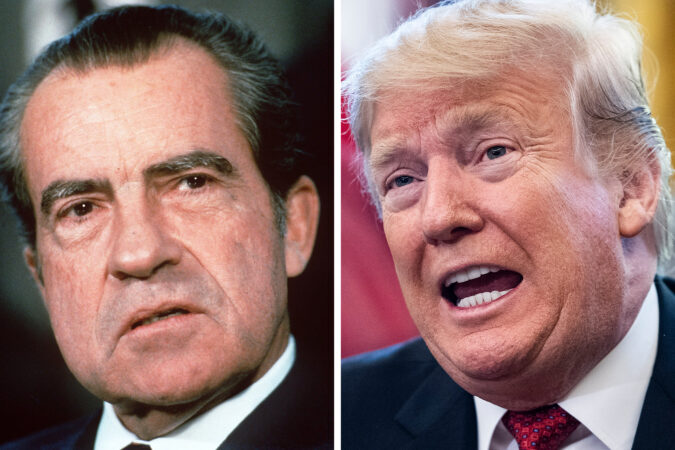
    In fact, an often-forgotten chapter in the career of Richard Nixon — the president most often compared with Trump — vividly illustrates that the ideological boundaries in the GOP were once quite malleable. Nixon regularly shapeshifted and operated across multiple wings of the GOP as he rose from congressman to senator to vice president, and finally, to president. Yet, as Republicans have become more ideologically rigid, such moves have become increasingly difficult, replaced by debates over who qualifies as a “real Republican” — and who is a Republican in Name Only (RINO).”

    The Richard Nixon who embarked on a political career in 1945 was nothing like the figure who resigned the presidency in disgrace three decades later. When he launched his first campaign in California’s 12th Congressional District, Nixon pledged to local Republicans that he would wage an “aggressive, vigorous campaign on a platform of practical liberalism” to defeat the popular incumbent congressman, Jerry Voorhis.

    At this time, Nixon modeled himself on Republican Harold Stassen, the former “boy wonder” governor of Minnesota. Stassen had built a national reputation in the late 1930s for his bipartisan “middle way” approach to governance, which blended fiscal discipline, civil service reform and bipartisan labor legislation. By 1943, when he resigned from the governorship to serve in the Navy during World War II, Stassen had become one of the country’s most prominent progressive Republicans.

    In Stassen’s success, Nixon saw a model for how a newcomer could win over liberal and independent voters in California. He wrote to the Minnesotan, “I have been very interested in following your campaign to liberalize the Republican Party because I feel strongly that the party must adopt a constructive progressive program in order to merit the support of voters.” Key to this program was retooling the principles of Democrat Franklin D. Roosevelt’s vaunted New Deal instead of rejecting them outright like many conservative Republicans did.

    This formula included accepting popular New Deal programs like Social Security — and even bolstering them. It also involved advocating against American isolationism and in favor of increased international cooperation. On labor rights — another thorny issue — Nixon, like Stassen, sought a middle ground: he supported arbitration to avoid strikes, while balancing the interests of workers and management. In a campaign speech, Nixon claimed that he “would not be a candidate if he were not strongly in favor of unions and small business.”

    This platform proved successful for Nixon, who the Minneapolis Star Tribune dubbed a “Stassen Candidate.”

    Shortly after he upset Voorhis and became the representative-elect for the 12th District, a former Whittier College classmate wrote to Nixon to offer “hearty congratulations” — despite being a Democrat who hadn’t voted for him. Nixon’s progressive message resonated with his former classmate, who expressed hope not only for Nixon’s success but “for the success of the progressive and liberal elements” within the Republican Party.

    In the coming years, Nixon would dash this hope as he illustrated the ease with which politicians moved between ideological camps in the GOP. During his early years in Congress, Nixon hung his hat not on the progressive vision of Stassen, but on staunch anti-Communism and red baiting. In 1947, Nixon joined the House Un-American Activities Committee (HUAC), where his pursuit of former State Department official Alger Hiss generated national attention. The case helped transform Nixon from an anonymous freshman congressman into one of the nation’s most prominent anticommunists.

    In 1950, Nixon further cemented his anti-Communist reputation during a successful Senate campaign against Rep. Helen Gahagan Douglas, who he portrayed as soft on Communism by repeatedly linking her voting record to that of left-wing Congressman Vito Marcantonio.

    Nixon’s reputation as an anti-Communist crusader compelled Dwight Eisenhower to select him for the 1952 GOP ticket as an olive branch to disgruntled conservatives after he beat their preferred candidate for the nomination, Ohio Sen. Robert Taft.

    Eisenhower’s election was a victory for progressive Republicans as he promised an era of “Modern Republicanism” — which paired a commitment to free enterprise with a belief that the government had an obligation to improve society and provide a basic social safety net.

    The GOP’s right flank derided this philosophy, and Nixon often spent time mediating between the two wings of the party. His ability to move comfortably between the camps reflected the ideological flexibility that still characterized the Republican Party during the 1950s.

    Made By History sponsors. FOR USE ON MADE BY HISTORY STORIES ONLY.

    Yet, even as he tried to reassure conservatives, Nixon embraced Modern Republicanism; he represented the Eisenhower administration abroad, including during his highly publicized exchanges with Soviet Premier Nikita Khrushchev. This engagement reflected the desire to contain communism through diplomacy and alliances, and the administration’s internationalist approach.

    Domestically, Nixon served as the administration’s point man on civil rights, supporting measures such as the Civil Rights Act of 1957 and overseeing efforts to combat employment discrimination through his leadership of the President’s Committee on Government Contracts. In 1958, Martin Luther King Jr. expressed his belief that “Nixon would have done much more to meet the present crisis in race relations than President Eisenhower has done.”

    In 1960, Nixon embarked on his first presidential campaign. During an October question-and-answer session at the University of Southern California, the vice president turned to the question of whether he considered himself a liberal or a conservative.

    He started by offering a definition of liberalism from Roosevelt. “A liberal is a man who wants to build bridges over the chasms that separate humanity from a better life,” Nixon explained. To him that meant, “we’re all liberals … We all want a better life.” Nixon concluded his answer by describing himself as a “practical progressive” — an echo of the “practical liberalism” he embraced during his 1946 campaign.

    Nixon went on to lose that race narrowly. But in 1968, he rebounded, by once again successfully navigating the party’s competing factions. He appealed to conservatives with his Southern Strategy and rhetorical emphasis on “law and order,” while reassuring moderates that he remained an experienced and pragmatic Republican.

    As president, he did some things that were progressive by today’s standards, including enacting the first federal affirmative action program and signing the Clean Air and Clean Water Acts. Simultaneously, however, he tangled with the liberal wing of his party over Vietnam and several Supreme Court appointments, and he vetoed legislation to provide federally funded daycare for children.

    Nixon is typically remembered for helping to usher in the populist conservative tide that would eventually sweep GOP politics. Today, he’s often compared with Trump because of his embrace of white grievance politics, his demands for personal loyalty and his abuse of power.

    Yet, his career also highlights how the Republican Party once had a vibrant and popular progressive and moderate wing. When Nixon launched his career, the idea of branding someone a RINO would have been far-fetched because the GOP comfortably managed to include staunch conservatives like Taft, as well as progressives like Stassen. The progressive or moderate wing of the party survived into the 1990s and 2000s; in Pennsylvania, Specter won the first of five Senate terms in 1980, while in New Jersey, Kean and Whitman both served as governors in the 1980s and 1990s.

    Yet, their careers tell the story of what happened as the brand of populist conservatism that Nixon capitalized on to win the presidency gained steam: In 2009, Specter switched parties and became a Democrat for his last years in the Senate, and Whitman is now a national co-chair of the Forward Party, and has endorsed Democrats in the last three presidential elections.

    Their departures reflected the rise of a new hard-line conservative Republican base with little tolerance for moderation or compromise. The collapse of the GOP’s liberal wing made today’s battles of who counts as a “real Republican” not just possible, but inevitable.

    Gaetano V. Della Torre is a New Jersey-based historian and educator. His article “Nixon’s Practical Liberalism: How Richard Nixon Tapped Harold Stassen’s Progressive Vision in 1946” is forthcoming in the Southern California Quarterly.

    Made by History takes readers beyond the headlines with articles written and edited by professional historians. Opinions expressed do not necessarily reflect the views of The Inquirer.

  • Democrats begin pulling Platner endorsements after Maine candidate faces sexual assault allegation

    Democrats begin pulling Platner endorsements after Maine candidate faces sexual assault allegation

    A woman who previously dated Maine Democratic Senate candidate Graham Platner said he drunkenly forced her to have sex after she told him to stop, according to a Politico report released Monday, leading prominent supporters to pull their endorsements and throwing a must-win race for the party into turmoil.

    Platner denied the allegation, but said he would be considering next steps for his campaign.

    “Regardless of the inaccuracy of the reporting but mindful of the political reality it will inflict, we’re taking the time to reflect on the best path forward,” he said in a video released on social media.

    Jenny Racicot, who lives in Maine, told Politico that Platner entered her home in 2021 while drunk and assaulted her. Racicot said she had been in an on-and-off relationship with Platner, but she cut off contact with him after that night and told him the incident wasn’t consensual. A voicemail left at a number listed for Racicot seeking comment did not receive an immediate response, but she said in a CNN interview on Monday evening that she opted not to fight back for fear of Platner, a former Marine, becoming more violent.

    “He violated multiple layers of consent that night,” Racicot said.

    Platner’s campaign did not immediately respond to an email and phone message from The Associated Press seeking comment.

    “Any accusation of non-consensual behavior is categorically false,” Platner said in his video.

    Uproar in the Democratic Party

    Platner won the Democratic nomination last month, setting himself up to face Republican Sen. Susan Collins, who has beaten back previous attempts to dislodge her from the seat that she’s held for nearly three decades.

    Although Platner has long been controversial, the sexual allegation sparked a flight away from the candidate, who canceled a handful of town hall events. The main campaign arm of Senate Democrats called on Platner to drop out and said it would spend no money on the race, which is considered critical to control of the chamber, if he is the nominee.

    “Graham Platner needs to immediately withdraw as the Democratic nominee for Senate and allow Maine Democrats the opportunity to choose a new candidate who can defeat Susan Collins,” Kirsten Gillibrand, chair of the Democratic Senatorial Campaign Committee, and Chuck Schumer, the top Senate Democrat, said in a joint statement.

    The Democratic National Committee sent out an email soliciting money for Senate races hours after the Politico report posted, but Maine was not one of them. Ken Martin, the party chair, said, “Maine Democrats should select a new nominee.”

    Rep. Ro Khanna, a California Democrat who stood by Platner even as the candidate faced previous controversies, said Monday’s allegation was enough. “I’ve been very clear that sexual assault or violence against women is a red line,” Khanna said. “These allegations are very serious and credible. Graham Platner should drop out from the race. I am withdrawing my endorsement.”

    Arizona Sen. Ruben Gallego and Massachusetts Sen. Elizabeth Warren announced they were pulling their endorsements and called on Platner to drop out. The Democratic leaders of Maine’s legislature and top officials at the state Democratic Party did the same.

    “This Senate race comes at a pivotal moment in the struggle against a government, supported by Senator Collins, that serves the interests of the wealthy and powerful at the expense of ordinary Maine people. It is essential that we refocus this campaign on that struggle,” party chair Charlie Dingman, vice chair Imke Schessler and executive director Devon Murphy-Anderson said in a joint statement.

    Collins issued only a brief statement.

    “These allegations are appalling,” she said. “Nevertheless, it is not up to me to choose the Democratic nominee for Senate.”

    State law allows Platner to be replaced on the ballot if he withdraws by July 13. The replacement candidate must be named by July 27.

    The Associated Press generally does not name victims of sexual assault, but in this case Racicot spoke in an interview with Politico.

    A succession of campaign controversies

    Platner had never before held elected office, and Democratic leaders in Washington preferred Gov. Janet Mills in the primary. However, Mills, 78, dropped out as Platner, 41, consolidated support with help from progressive leaders at a time when Democratic voters have grown disenchanted with the party establishment.

    While some Democrats came around to support him after his commanding primary win, Platner’s controversial history had already left others openly despairing of their chances of winning the race. A veteran who also worked for a private security contractor, Platner has a chest tattoo recognized as a Nazi symbol, reportedly sexted with other women shortly after getting married and had a history of inflammatory comments on social media.

    In 2013, Platner posted on Reddit that people shouldn’t get so drunk “they wind up having sex with someone they don’t mean to” and that sexual assault victims should “just take some responsibility for themselves.” He’s since apologized for the post and says he no longer holds those beliefs.

    The New York Times also reported that Platner had volatile relationships with previous girlfriends, one of whom said an argument became physical. Platner denied the allegation.

    Hasan Piker, a leftist commentator and streamer who backed Platner, seemed to reverse himself Monday following the Politico report.

    “If new evidence presents itself, I’m going to change my perspective — it’s that simple,” Piker said during a livestream on Twitch, adding: “This is a clear-cut instance of verifiable sexual assault allegations. It’s completely irredeemable.”

    Our Revolution, a progressive organization founded by Sen. Bernie Sanders of Vermont, said Platner should withdraw because the allegations “are too serious to treat as a distraction from the campaign or the issues.”

    It also hinted at the potential battle over who would replace Platner.

    “Whoever leads this movement forward must be someone who has actually lived the fight Graham Platner ran on: a record with working people, with unions, against corporate money, already tested and trusted by the same base that delivered this result,” said a statement from Joseph Geevarghese, executive director of Our Revolution.

    Platner had pitched himself as a blue-collar oysterman and veteran who could reach disaffected voters. But as controversies mounted, some state Democrats had heartburn, embodied by Mills’ refusal to endorse Platner after she dropped out of the primary. Chatter circulated about possible replacements, including former state senator and logger Troy Jackson and Secretary of State Shenna Bellows.

    “I’ve known this has been coming,” said Marie Follayttar, a Democrat and community organizer in Maine, talking about the growing whispers inside the state’s small population that had been bracing for yet another revelation surrounding Platner. “I’ve been scared and I’ve been sick waiting.”

    Mike Connelly, a business owner and Democrat in Brunswick, Maine, said in an interview that he wants Platner to drop out after the latest allegations. But Connelly said he’d vote for him if he stays in.

    “I would vote for a comatose Democrat before I would vote for Susan Collins,” Connelly said.

  • US support for Israel slips as Democrats grow more critical, AP-NORC poll finds

    US support for Israel slips as Democrats grow more critical, AP-NORC poll finds

    NEW YORK — After decades of reliable bipartisan backing for Israel, a new AP-NORC poll reveals a dramatic erosion of support for the longtime U.S. ally, with rising opposition from Democrats and signs of division among Republicans.

    The survey by The Associated Press-NORC Center for Public Affairs Research arrives at a moment when a once-consensus foreign policy issue is increasingly polarizing Americans along partisan and generational lines, driven by criticism for Israel’s conduct nearly three years after the outbreak of its latest war with Hamas in Gaza.

    About one-third of U.S. adults — including roughly half of Democrats — believe that Israel has committed genocide against Palestinians during the war in Gaza, an accusation that’s been leveled by some human rights organizations and vehemently denied by Israel and the U.S. government. About 2 in 10 Americans say Israel has not and the rest, about half, don’t know enough to say.

    A similar share, 30%, of Jewish adults say Israel has committed genocide, although about half, 49%, say it has not.

    Harold Kalmus, a 69-year-old Democrat from Arden, Delaware who describes himself as Jewish by birth, said he remembers being proud of Israel when he was younger. Not anymore.

    “I realize that there is a threat from Hamas. And I realize they’re in a very difficult situation, but what they have done is just an unspeakable horror,” he said of Israel’s military action against the Palestinians. “They’re trying to wipe out a civilization as far as I’m concerned.”

    The findings show sharply eroded views of Israel in the U.S., nearly three years after Hamas’ attack on Oct. 7, 2023, which left 1,200 people dead in Israel, mainly civilians, while 251 hostages were taken back to Gaza. More than 73,000 Palestinians have died in Gaza according to the Hamas-run Gaza Health Ministry, which doesn’t distinguish between civilian and militant deaths, including more than 1,000 killed since the beginning of the latest ceasefire. American sympathies had been shifting toward the Palestinians and away from the Israelis since around 2020, according to other polling, but has nose-dived since the latest war in Gaza began.

    Many Americans, about 4 in 10, don’t know enough to say whether Israel’s immediate military response to Hamas’ attack or its ongoing military operations were justified. Among those who did have an opinion in each case, most say the initial retaliation was justified — but a majority think its current actions are not.

    About three-quarters of Jewish adults said Israel’s initial response was justified, but only about 4 in 10 believe that about its ongoing operations.

    Only about one-third of U.S. adults view Israel as an “extremely” or “very” important issue to them personally. But it’s been a searing topic in American politics as the relationship between the two countries remains tense, just four months before high-stakes midterm elections determine the balance of power in Congress for President Donald Trump’s final two years in office. Vice President JD Vance recently criticized Israeli leaders who have expressed frustration with Trump, while vocal critics of Israel recently defeated establishment-backed Democrats in New York and Colorado primaries.

    Democrats’ support for Israel drops

    The AP-NORC poll reveals a decisive shift within the Democratic Party.

    About 58% of Democrats now say the U.S. is “too supportive” of the Israelis, up from 45% in an AP-NORC poll from January 2024 when former President Joe Biden was in office. That includes 51% of Jewish Democrats in the new poll.

    Roughly 6 in 10 Democrats, 62%, say the U.S. is “not supportive enough” of the Palestinians, up from 49% in 2024. Younger Democrats — those 45 and younger — are still more likely than older ones to say that the United States is “not supportive enough” of the Palestinians, but older Democrats are catching up to their younger counterparts. About 57% of older Democrats now say the U.S. should do more for the Palestinians, up from 39% two years ago.

    Joy Jennik, a 73-year-old Democrat from Brookfield, Wisconsin, said she didn’t have strong opinions about the U.S. relationship with Israel until after Hamas’ Oct. 7 attack.

    Now, she believes Israel is guilty of genocide.

    “The Gaza Strip, there’s not a lot left of it. Those poor people are barely living,” said Jennik, a retired home economics teacher.

    GOP stays behind Israel, but less so among young Republicans

    Just a sliver of Republicans, 13%, describe Israel’s actions as genocide, although there is an apparent age gap. About 2 in 10 Republicans under 45 say Israel has committed genocide, while about 1 in 10 Republicans ages 45 and older say the same.

    Overall, 60% of Republicans describe the U.S. support for Israel as “about right.” Only about 2 in 10 Republicans say that the United States is “too supportive” of the Israelis, although Republicans under 45 are more likely to say this.

    The share of Republicans overall who say the U.S. is “too supportive” of Israel has not changed meaningfully since 2024, but the share who say the U.S. is “not supportive enough” has shrunk from 39% to 15%.

    Mike Cardona, a 70-year-old Republican from suburban Phoenix, said he’s pleased with the level of support that the U.S. is giving Israel and rejects the notion that Israel has committed genocide.

    “I wish they’d gone in harder and better,” Cardona, a retired industrial supply salesperson said of Israel’s military action in Gaza. “Unfortunately, some innocents will be hurt, but Hamas and Hezbollah never took that into consideration when they were killing children and women in Israel.”

    Netanyahu is broadly unpopular, while views of Mamdani are split

    In interviews, several respondents emphasized that their criticism of Israel was focused on its leaders, especially Prime Minister Benjamin Netanyahu, who is perceived as closely aligned with Trump after repeated clashes with Democratic presidents.

    Overall, only 20% of U.S. adults have a favorable view of the Israeli prime minister, while about twice as many, 38%, have an unfavorable view. About 41% don’t know enough to have an opinion.

    Netanyahu is particularly unpopular among Jewish adults: about 6 in 10 view him unfavorably, while about one-third see him positively.

    Younger adults, regardless of party, are more likely than older adults to say they don’t have an opinion about Netanyahu. But while older Republicans see Netanyahu more positively than negatively, younger Republicans’ views tilt unfavorably.

    New York City Mayor Zohran Mamdani has gained prominence as an outspoken critic of Israel, and 27% of U.S. adults have a favorable opinion of the 34-year-old democratic socialist. Another 28% of U.S. adults have an unfavorable opinion, while 44% don’t know enough to say.

    Jewish adults, who overwhelmingly identify as Democrats, have a more positive view of Mamdani than of Netanyahu, with 44% viewing the New York City mayor positively, 39% viewing him negatively, and 17% saying they don’t know enough to say.

    About half of Democrats overall have a favorable impression of Mamdani and only about 1 in 10 have an unfavorable view of him, while the rest, about 39%, don’t have an opinion.

    Meanwhile, the U.S.-Israel relationship is not top of mind for many Americans as they think about the upcoming midterm elections.

    For people like Michael Ripka, a 34-year-old stage hand from Casper, Wyoming who typically votes Republican, the economy is by far the most important thing on his mind.

    “Everything is mad expensive,” he said. The conflicts in the Middle East, he added, is “100% a very big distraction.”