Category: News

Latest breaking news and updates

  • The accused is in court but conspiracy theories still swirl around Kirk case

    The accused is in court but conspiracy theories still swirl around Kirk case

    PROVO, Utah — Outside the state District Court where the preliminary hearing for a man charged with shooting Charlie Kirk was about to begin its first day, Houston-based podcaster Keli Rabon laughed sheepishly when asked if that man, Tyler Robinson, was guilty.

    “You’re going to think I’m crazy,” Rabon replied, “but I think Charlie’s still alive.”

    Robinson, she went on, “was at most a spotter” at the scene of the crime at Utah Valley University last September. Rabon suggested that Kirk, a 31-year-old conservative activist, was currently at an undisclosed location and that he, along with his wife, President Donald Trump, and other government officials, were potentially involved in the “psy-op.”

    Rabon is one of several conspiracy theorists at the Provo courthouse. Camping out overnight to be the first member of the public allowed into the courtroom, Selena Armitage, too, had questions. A true-crime enthusiast living 45 miles away in West Valley City, Armitage said of Kirk’s killing, “I don’t think we’ve even scratched the surface.”

    The proceeding this week to weigh evidence against Robinson will seek to impose judicial norms on a case that seems likely to test those standards to the breaking point. Kirk’s death, after all, is the first assassination of a prominent American political figure in the internet age. Any straightforward prosecution of Robinson will require navigating a parallel universe of conspiracy theories turbocharged by social media.

    The cramped district courtroom has just 14 seats available to the public, and some will be occupied by people including Rabon and Armitage, who are of the view that the state’s case is far from the complete picture. They will be reinforced by untold watchers of the hearing’s livestream.

    The shooting was, in effect, nationally televised. The moment a bullet pierced Kirk’s neck was captured on mobile phones and posted in real time.

    As straightforward as the horrific footage was, internet sleuths were not taking it at face value: Where is the exit wound? Where is the blood? Who are the adults in the campus audience? Is one of them gesturing just before the shot? Why do some of the staff members of Turning Point USA, Kirk’s political organization, seem to react without alarm to his slumping body? Why are several men in the crowd wearing maroon shirts?

    The first two days of testimony have offered additional fodder. The prosecution’s opening witness, a former Utah Valley special officer named Chris Bagley, testified Monday that his body camera’s battery died while he was investigating the rooftop where police say Robinson fired his lethal shot.

    Under cross-examination by defense attorney Kathryn Nester, Bagley also acknowledged that his report did not include any mention of a rifle case that surveillance video showed the shooter carrying. Nor had he identified a plainclothes officer with a badge who had accompanied Bagley to the rooftop. Nor had he secured an empty pistol holster that he saw lying abandoned on the grassy area near where Kirk was killed.

    On Tuesday morning, Nester elicited from the lead investigator in the case, David Hull from the State Bureau of Investigation, the facts that no shell casings had been found on the rooftop, while at least two other firearms were discovered at the crime scene below. Hull also admitted that he had not interviewed two individuals who claimed that their own rooftop video featured an individual whose clothing and build did not match those of Robinson.

    Such vagaries are common in criminal investigations. Evidence is rarely conclusive, eyewitness accounts seldom 100% reliable, confessions not always ironclad. But such nuance can be lost on the judges and juries of social media.

    Right-wing social media influencers have foraged on Kirk’s assassination with particular zeal, chief among them Candace Owens, a former Turning Point USA star turned antagonist who has devoted dozens of podcast episodes to the subject.

    “I feel confident stating that Tyler Robinson did not murder Charlie Kirk,” Owens said recently. In her view, Robinson was “a total patsy” who was not even on campus that day.

    Owens has at various times implicated the victim’s widow, Erika Kirk, Turning Point USA staff, and even the Israeli government, but only with tantalizing questions and dots for her audience to connect, not a true alternative scenario.

    Erika Kirk and other Turning Point officials have expressed outrage, but privately, they have acknowledged the far right’s susceptibility to such theories, owing to a suspicion of traditional news sources and hostility toward the left.

    Kirk himself regularly argued that the 2020 presidential election was stolen and that Democrats were purposely opening the border to reshape the electorate.

    Such theories may lack evidence, but they have an audience. By far the biggest media presence at the Utah preliminary hearing is Fox News Channel, which has more than a dozen employees in Provo. And as Rabon acknowledged outside the courtroom, conspiracy theories are popular — some more than others. Her podcast was eight months old and already had 7,500 YouTube subscribers, a figure that she said would be higher if she were to embrace a more alluring conspiracy theory, such as the belief that Kirk was killed by an incendiary device in his microphone.

    “I’m doing ‘fake death,’” Rabon said. “If I was doing ‘exploding microphone,’ the algorithms would like me better.”

    This article originally appeared in the New York Times.
  • Explosions rock Syria’s capital as French President Macron visits

    Explosions rock Syria’s capital as French President Macron visits

    DAMASCUS, Syria — Explosions rocked Syria’s capital on Tuesday and injured at least 18 people as France’s president met with his counterpart in a landmark visit to the country rebuilding from years of civil war, Syria’s Interior Ministry said.

    It was the second attack in Damascus in a week and a setback for President Ahmad al-Sharaa as he welcomed the first major Western leader to visit since the ouster of longtime dictator Bashar Assad by insurgent groups in late 2024. Syria’s new rulers have wrestled with outbreaks of violence as they assert control, but the capital had been largely peaceful.

    French President Emmanuel Macron was in the presidential palace when the explosions happened. An official from the Elysee Palace said he was safe and the meeting with al-Sharaa continued, speaking on condition of anonymity to discuss Macron’s security.

    No group immediately claimed responsibility.

    “Nothing can smother the aspiration of Syrian women and men to live in a fully sovereign, safe, pluralistic, and united Syria,” Macron said on X hours later. “This morning I met Syria in all its diversity. I saw dignity, courage and determination.”

    Later, al-Sharaa and Macron announced they have agreed to reappoint ambassadors after more than a decade, marking a major restoration of diplomatic ties.

    “Our meeting marks a historical milestone,” al-Sharaa said. France had closed its embassy in 2012 but symbolically reopened it in early 2025.

    Macron, who played a major role in pushing Europe and the United States to drop most sanctions that were imposed on Syria under Assad, was in Damascus before heading to Ankara, Turkey, later Tuesday for a NATO summit that al-Sharaa also would attend.

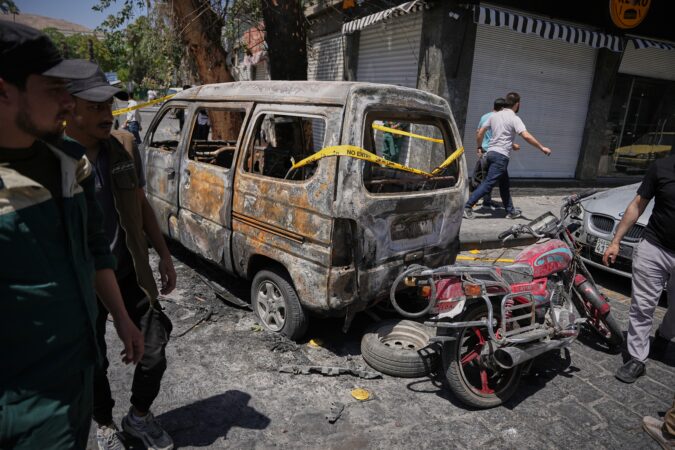
    A large plume of smoke was seen at the site of the blast near the Four Seasons Hotel, where Syrian media reported Macron was staying. Footage on social media showed a van and a motorcycle on fire and bloodstains on a busy street near the headquarters of the Tourism Ministry and the Damascus National Museum.

    The Interior Ministry in a statement reported by Syrian state media said one bomb had been placed in a garbage bin and the other in a parked car. It said four of the wounded were police officers, and no deaths were immediately reported.

    On Thursday, an explosive device detonated in a cafe near the Justice Palace, killing at least 10 people and wounding more than 20.

    Syria’s government sees Macron’s visit and the signing of over a dozen agreements with Paris and large French companies as a major boost for the country’s new authorities in their bid to rebuild the country battered by a 14-year uprising-turned-civil war under Assad.

    One agreement was to kick off the process of returning some 51 million euros ($58.3 million) in illicit assets that belonged to Rifaat Assad, the late uncle of Assad. Other agreements included rebuilding the destroyed water and electricity infrastructure in the city of Homs, providing technical assistance to Syria’s Central Bank as it undergoes financial reforms and bolstering cargo infrastructure at the Damascus airport.

    “The outcome of this visit confirms that Syria is steadily moving toward a new phase of international partnerships based on shared interests and mutual respect,” a Syrian foreign ministry official told the Associated Press, saying the perpetrators of the attack will be brought to justice. “Attempts to destabilize the country will not alter this trajectory.” The official spoke on condition of anonymity in line with regulations.

    The explosions represent a challenge for al-Sharaa, who has pushed to assert full control over Syria, appeal to minorities skeptical of his Islamist-led rule, and win the support of Western governments who were concerned about his past leadership of the formerly al-Qaida-linked Hayat Tahrir al-Sham group. His government has promised political and economic reform after decades of autocratic rule.

    The conflict in Syria killed nearly half a million people and displaced millions. Infrastructure lies in ruins. While other nations and businesses have made large investment pledges, the country still needs hundreds of billions of dollars to rebuild and lift millions out of poverty.

    Before arriving at the presidential palace, Macron met with members of Syrian civil society, though his office did not give details.

  • Le Pen says she’ll run for French presidency next year despite court-ordered monitor

    Le Pen says she’ll run for French presidency next year despite court-ordered monitor

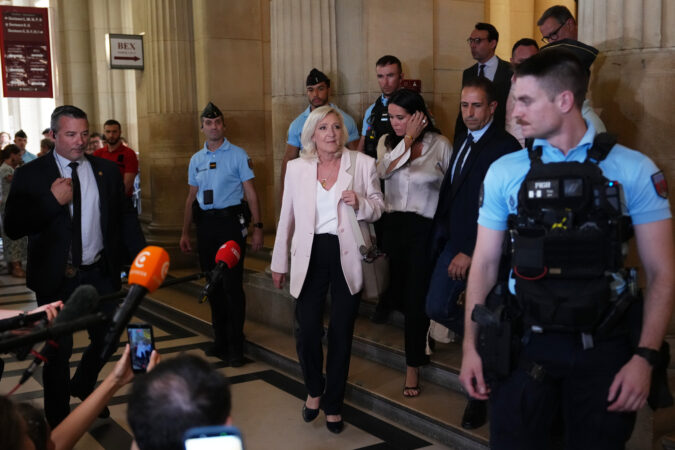
    PARIS — Far-right leader Marine Le Pen says she’ll run for the French presidency next year despite being sentenced Tuesday to wear a court-ordered electronic monitor for embezzlement.

    The decision by the 57-year-old veteran of three presidential races sets up a fourth campaign like no other: potentially seeking votes while subject to the monitoring and a judge’s determination of how, and for how long, the punishment is applied.

    Le Pen said she will appeal the ruling to France’s highest court and that the process will suspend the sentence that she wear the monitor for a year.

    “I will therefore campaign without an electronic bracelet,” she said in a television interview Tuesday night. “Tonight, I am a candidate for the presidential election.”

    The appeals court ruling cleared the way for Le Pen to run again by shortening a ban handed down by a court last year that kept her from seeking public office for five years.

    But the appeals court also said she must wear an electronic monitor. Le Pen previously said that campaigning while wearing one wouldn’t be possible. But she made clear Tuesday night that she now believes that she won’t be subjected to monitoring at all, and that she’ll be vindicated in her appeal to the Cour de Cassation.

    “My hands are clean,” she said.

    The Court of Cassation previously said it would be able to rule before the presidential election. Its first round is in April.

    The appeals court ruled that Le Pen oversaw years of misuse by her National Rally party of European Parliament funds by paying staff with money intended for European Union parliamentary assistants. She had denied criminal wrongdoing but said during the trial that the party had made a “mistake.”

    Both prison sentence and ban have been shortened

    The appeals court upheld guilty verdicts for all 11 accused, including Le Pen and other party members. The party itself also was declared guilty.

    However, the court scaled back the punishments handed down by a lower court last year.

    From five years handed down in March 2025, the ban was cut to 45 months, with two-thirds of it suspended. Le Pen has already served 15 months of the ban, meaning that the potential obstacle is effectively removed.

    Le Pen previously said that not being able to make a fourth run in 2027 would amount to “political death.”

    The verdict also cut her prison sentence from four years, two of them suspended, to three years with two suspended.

    How often Le Pen will be allowed to go out wearing the monitor, and other details about the monitoring, aren’t yet known. Conditions will be determined by another judge in the coming weeks or months.

    After at least six months of wearing it, the judge could allow Le Pen to remove it as a reward for good behavior that would include her paying the 100 million euro ($114 million) fine the appeals court included in her sentence.

    Le Pen went straight to her party’s office

    From the courthouse, Le Pen went to the National Rally’s headquarters in Paris, where her protege Jordan Bardella was seen earlier in the day. The party faces a potentially difficult decision choosing which among the two might be better placed to run in 2027.

    Bardella, a European Parliament lawmaker, lacks Le Pen’s experience and it would be his first presidential election campaign.

    A Le Pen has been on the ballot papers at every presidential election since 1988: four times for her father and three times for her.

    The party was called the National Front when her father, Jean-Marie Le Pen, founded it in 1972. It ditched that name in 2018, part of Marine Le Pen’s efforts to broaden her appeal by moving away from her polarizing father’s legacy. His associations with people who collaborated with France’s Nazi occupiers in World II and his multiple hate-speech convictions, including Holocaust denial, made the National Front anathema to many voters.

    Le Pen has steered her party’s growth in popularity as it sought to become more mainstream. It has been the largest single party in parliament’s National Assembly since 2024, although it doesn’t have a majority in that sharply divided lower house.

    But her embezzlement conviction would leave her open to criticism from potential election opponents.

    The court noted ‘the principle of freedom to stand for election’

    The court said Le Pen’s party embezzled 2.8 million euros ($3.2 million) over more than 11 years.

    “The facts are serious,” said the chief judge, Michèle Agi.

    But the court, in written notes detailing the verdict, pointed out “the voter’s freedom of choice” and said the 15 months of ban from seeking elected office that Le Pen has served have repaired harm done to public integrity by her wrongdoing.

    “Disregarding this would undermine the principle of freedom to stand for election, an essential condition for the democratic expression of universal suffrage,” the court said.

    The judge had been expected to spend several hours reading out the full verdict. Instead, the proceedings were over in less than 40 minutes in the courtroom without air-conditioning, on a day when Paris temperatures surpassed 86 Fahrenheit. Table fans provided a slight breeze.

  • Judge dismisses Prince Harry’s privacy invasion lawsuit against publisher of Daily Mail

    Judge dismisses Prince Harry’s privacy invasion lawsuit against publisher of Daily Mail

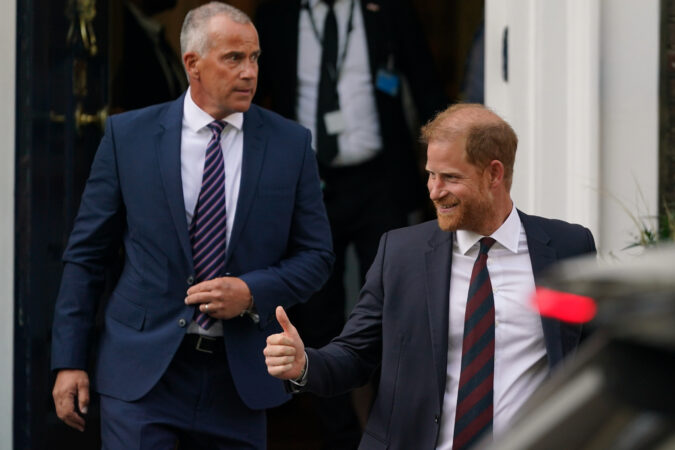
    LONDON — Prince Harry’s final lawsuit aimed at taming the British tabloids ended in defeat Tuesday as a judge said he failed to prove his privacy invasion claims against the publisher of the Daily Mail.

    Justice Matthew Nicklin rejected the broad inferences the Duke of Sussex relied on to try to show that Associated Newspapers Ltd. engaged in unlawful activities. He said there was a shortage of evidence to support the claims and found a possibility that the reporting came from legitimate sources.

    “In substance, the claimants’ case invites the Court to conclude that, because the information was private and because Associated cannot positively explain how it was sourced, the article must have been unlawfully sourced,” Nicklin wrote. “That is not a permissible approach.”

    The ruling scuttles a bid by Harry and six others, including singer Elton John and actor-model Elizabeth Hurley, seeking substantial damages but could leave them with massive legal bills. ANL put the legal costs for both sides above 50 million pounds ($67 million) for years of case preparation and an 11-week trial.

    The publisher called it an “overwhelming victory” and a “magnificent vindication” of the Mail’s journalism.

    The newspapers had denied the allegations as “preposterous,” insisting the roughly 50 articles at issue were based on lawful sources including friends, royal aides, and publicists who offered information to reporters.

    Harry said the court had denied him the justice and accountability he sought.

    “It is a complete and obvious whitewash, but sadly not altogether unexpected,” Harry said in a joint statement with another claimant, anti‑racism activist Doreen Lawrence. “However, the lengths to which the court has gone to exonerate the Mail is as shocking as it is totally unwarranted.”

    Harry’s campaign against the press yields mixed results

    The 436-page decision leaves a mixed legacy for Harry’s trio of lawsuits accusing tabloid publishers of using unlawful tactics, such as phone hacking or hiring private detectives to dig up dirt on his life.

    Harry won a judgment in 2023 that condemned the publishers of the Daily Mirror for “widespread and habitual” phone hacking. Last year, Rupert Murdoch’s flagship U.K. tabloid, the Sun, made an unprecedented apology for intruding on his life for years and agreed to pay substantial damages to settle his privacy invasion lawsuit.

    Mark Stephens, a media lawyer not involved in the case, said Harry’s first significant loss was due to a lack of evidence such as admissions of culpability that he had in previous lawsuits.

    “This was always a mosaic case where little inferences from different things were being put together by the lawyers for Prince Harry,” Stephens said. “Associated Newspapers’ lawyers cleverly rearranged the tiles to show an innocent picture as opposed to the culpable picture that the claimants’ lawyers were trying to demonstrate.”

    The verdict, released remotely with no court hearing, coincided with Harry’s visit home to the United Kingdom, which has been dominated by headlines over his latest efforts to repair a rift with his father, King Charles III.

    Harry has said his litigation — in which he broke with royal family tradition to seek relief in the courts — was a primary source of his falling out with his father and brother, Prince William.

    His grudge with the tabloids runs deep and his legal actions are part of his larger quest to reform the news media that he says damaged his relationships and made him “paranoid beyond belief.”

    He blames the press for the death of his mother, Princess Diana, who was killed in a car crash in 1997 while being pursued by paparazzi in Paris, and for attacks on his wife, Meghan, Duchess of Sussex, that led the couple to abandon royal life and move to the United States in 2020.

    “They continue to come after me, they have made my wife’s life an absolute misery,” he testified as he choked back tears in the witness box during the trial in January.

    Newspaper editor says Harry is a hypocrite

    Associated Newspapers’ editor-in-chief Paul Dacre called Harry “a confused and angry young man” and said he felt sorry he had been drawn into the case. He mocked Harry’s tell-all memoir, Spare, which included details of drug use, losing his virginity, and dishing dirt on his kin.

    “There isn’t a laundry in the cosmos big enough to wash all the dirty linen he has aired about his own family,” Dacre said. “For him to complain about his privacy being invaded takes not just the biscuit but the whole tin. Poor Harry.”

    Attorney David Sherborne said at trial that the Daily Mail and its sister publication, Mail on Sunday, used their journalists, freelance reporters, and private eyes for “clear, systematic and sustained use of unlawful information gathering” to snoop on his clients.

    Defense lawyer Antony White said Harry was inclined to see unlawful evidence gathering everywhere but the more likely source of stories about him came from “ordinary, legitimate journalism.”

    Other claimants in the case were actor Sadie Frost, former politician Simon Hughes, and John’s husband, David Furnish.

    The Mail trial played out differently from the Mirror case, with journalists parading to court to defend their work. Some Mail reporters pointed to official mouthpieces, such as a palace spokesperson, and others named their sources to dispute Harry’s assertion that his “social circles were not leaky.”

    “They were not all tight-lipped,” Katie Nicholl, a former Mail on Sunday editor, said about Harry’s associates. “I had very good sources in the inner circle.”

  • Manhattan high-rise is still unstable after columns buckle, forcing evacuations

    Manhattan high-rise is still unstable after columns buckle, forcing evacuations

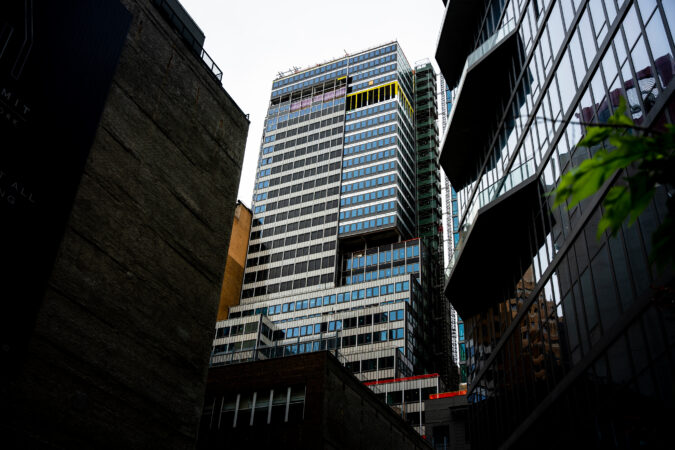
    NEW YORK — An under-renovation high-rise in Manhattan was still unstable Tuesday after buckling columns and sagging floors raised fears of a collapse, forcing the tower and other nearby buildings to be evacuated, officials said.

    The 1970s-era office building is being converted to luxury apartments, and is the former global headquarters of pharmaceutical giant Pfizer. Initial reports of falling bricks at around 8 a.m. sent firefighters rushing to the busy corridor near Grand Central train station and the landmark Chrysler Building.

    New York City officials were using drones to monitor the building to avoid having to send people inside. A nearby school that has 400 students was among the evacuated buildings, Mayor Zohran Mamdani said.

    “The building remains unstable,” Mamdani said at a news conference at the scene. “This is an extremely serious situation.”

    Fire Chief John Esposito said the way the steel-framed building is constructed, “it would not be a total collapse, it would be more of a localized collapse.”

    Ahmed Tigani, the city’s building commissioner, said officials had not seen evidence that debris fell off the building. Nevertheless, nearby streets remained closed to people and vehicles. Mamdani said there were no reports of injuries.

    The office-to-residential conversion would add more than a dozen stories and redesign an adjoining tower, according to Gensler, the architectural firm leading the project. With more than 1,600 units, it has been billed as the largest conversion in the city’s history, Gensler says.

    A spokesperson for Gensler did not return a voicemail and email seeking comment.

    Officials found two columns had buckled on the 21st and 22nd floors and floors were sagging between the 21st and 26th floors.

    First responders and city officials were working closely with the project engineer to develop plans to shore up the impacted flooring, Mamdani said. If it’s deemed to be secure, engineers will enter and begin making repairs.

    “This is a minute-by-minute assessment,” the mayor said.

    The building commissioner said workers will need to add emergency beams and columns to stabilize the compromised ones.

    “Our top priority right now,” the mayor said Tuesday morning, “is the safety of those who live in this area and the safety of those who work in this area.”

  • U.S. resumes strikes on Iran after 3 tankers hit in Strait of Hormuz,

    U.S. resumes strikes on Iran after 3 tankers hit in Strait of Hormuz,

    DUBAI, United Arab Emirates — The U.S. military launched a series of strikes against Iran early Wednesday, hours after three merchant ships were struck in the waters off Oman in the Strait of Hormuz.

    The renewed attacks from both sides threaten the interim deal reached last month, with the U.S. and Iran both saying the strikes violate that initial agreement. The fresh assaults will add to the difficulty of the negotiations aimed at fully reopening the strait, rolling back Tehran’s disputed nuclear program, and reaching a permanent end to the war launched Feb. 28.

    In a statement posted to social media, U.S. Central Command said American forces launched the strikes “to impose heavy costs for targeting and attacking commercial shipping crewed by innocent civilians in an international waterway.”

    “Iran’s demonstrated aggression was unwarranted, dangerous, and a clear violation of the ceasefire,” the command said in their statement.

    The latest exchange followed a similar spate of Iranian attacks on shipping and U.S. retaliation that occurred late last month.

    Hours after the three tankers were struck by projectiles, the United States revoked a license that had authorized the sale of Iranian oil as part of the interim deal to end the fighting between the U.S. and Iran.

    The new assaults in the fuel-shipping waterway were the most in a single day since late April, according to the U.N. International Maritime Organization. The fresh attacks threatened to choke off the flow of traffic in the strait just as countries hoped to restore normal shipping practices and ease the global economic strain of the war.

    A U.S. official said the license was revoked because Iran’s actions in the strait were unacceptable and needed to be met with consequences. The official spoke with the Associated Press on the condition of anonymity to share insight into the reasoning behind the move.

    The Iranian mission to the United Nations did not immediately respond to a request for comment.

    One tanker caught fire after getting hit

    One tanker was traveling off the coast of Oman when it was hit and caught fire, the United Kingdom Maritime Trade Operations center said. Iranian state television said the liquefied natural gas tanker came under attack after ignoring warnings but did not directly claim the assault.

    The other two ships sustained some damage, but no one was injured, and both continued on their way, the U.K. maritime agency said.

    Tehran, which has repeatedly declared that only its approved route through the strait is safe, is suspected of attacking other ships that have used another route close to the Omani shore.

    Location details provided by the U.K. agency showed that all three attacks occurred off the coast of Oman or the neighboring United Arab Emirates, making it likely that the ships were using the route near Oman.

    Talks between U.S. and Iran are on hold

    The U.S. is eager to press ahead with negotiations with Iran aimed at fully reopening the strait, rolling back Tehran’s disputed nuclear program and reaching a permanent end to the war launched Feb. 28.

    Previous attacks in the strait have sparked retaliatory strikes by the U.S. Iran then attacked Gulf Arab states.

    In peacetime, a fifth of all traded oil and natural gas passed through the channel.

    The license issued by the U.S. authorized the production, delivery and sale of Iranian oil through Aug. 21. U.S. Vice President JD Vance said at the time that lengthy talks with senior Iranian officials in Switzerland created a “good foundation for a successful final deal” to end the war.

    U.S. sanctions on the purchase of Iranian oil had been in place since the 1979 Iranian Revolution. After the U.S. and Israel launched the war, and after the closure of the strait, the U.S. had authorized the temporary sale of Iranian oil at least twice as an incentive toward a deal.

    Meanwhile, talks between Iran and the U.S. appeared to be on hold until after the burial of Iran’s Supreme Leader Ayatollah Ali Khamenei, who was killed at the beginning of the war.

    Qatar calls attack a violation of international law

    One tanker was carrying liquid natural gas south through the strait near Limah, Oman, when a projectile hit the left-side engine room and sparked a fire, the U.K. Maritime Trade Operations center said.

    Majed Al-Ansari, a spokesperson for the Qatari Foreign Ministry, said the Qatari tanker Al Rekayyat was targeted in an “unacceptable attack” on international navigation and global energy security. He called it a “serious and explicit violation” of international law.

    In a post on X, he said Qatar holds Iran “fully legally responsible.”

    Later Tuesday, the U.K. maritime agency reported that an oil tanker was hit on its left side as it exited the strait near the Omani-Emirati border. A third tanker was struck by a drone off Oman, the agency said.

    The Joint Maritime Information Center, a multinational body overseen by the U.S. Navy, told shippers Monday that the route around Oman “has been expanded and remains available for all traffic.”

    Ships going to the north on the Iranian route must register with Tehran. Those going south work with Oman and the U.S.

    Iran and the United States agreed as part of an interim deal to allow ships to pass without paying charges for 60 days. But Tehran insisted it must control the vessels’ routes and later charge fees for passage, which would upend decades of practice in the waterway.

    The U.S. and many Gulf Arab states say they will not agree to Iran charging for passage through the strait.

    The data firm Kpler reported that at least 108 ships crossed through the strait last weekend using various routes.

    Mourners gather in Qom for Khamenei’s funeral

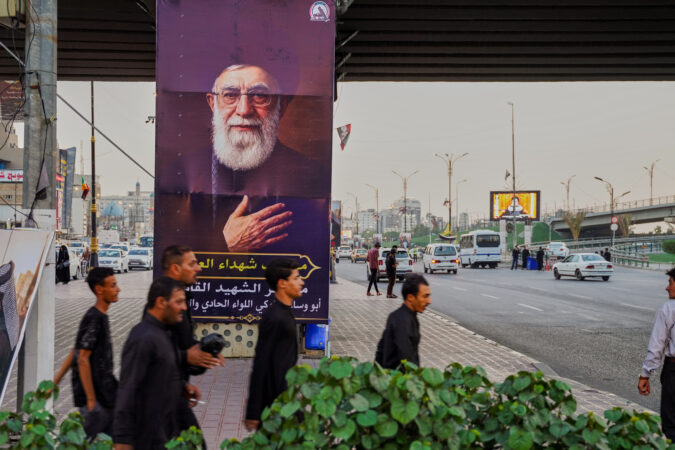
    Authorities flew Khamenei’s body to the Shiite seminary city of Qom, where mourners honored him Tuesday.

    Iranian state television aired live images of hundreds of thousands of people walking toward Jamkaran Mosque, just south of Qom, for the funeral service. Shiites believe the mosque once hosted Muhammad al-Mahdi, the 12th and last Shiite imam, who disappeared in the 9th century and is supposed to one day reappear to bring justice to the world.

    Khamenei’s son, Iran’s new Supreme Leader Ayatollah Mojtaba Khamenei, has yet to make an appearance at the ceremonies, which began Saturday in Tehran. He is believed to be in hiding after reportedly being wounded in the airstrike that killed his father.

    Khamenei’s body arrived late Tuesday in Najaf, Iraq, where it was received by senior officials from both countries. Processions are planned for Wednesday in Najaf and Karbala, the two holy cities of Iraqi Shiism. Iraq has a sizable Shiite population and is home to major Shiite religious sites and centers of learning.

    Khamenei, who was 86, will then be returned to Iran to be buried Thursday at the Imam Reza shrine in Mashhad, his birthplace.

  • Farage says he will resign as U.K. lawmaker to trigger a special election

    Farage says he will resign as U.K. lawmaker to trigger a special election

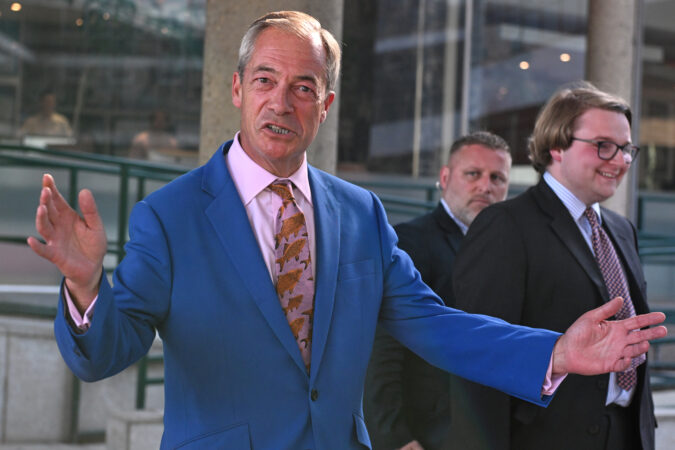
    LONDON — Nigel Farage, the leader of the populist right-wing Reform UK party, on Tuesday said he would resign his seat in Parliament and run for reelection in his Clacton seat to answer criticism of his financial affairs.

    The unexpected move comes after recent revelations about gifts and financial support received by Farage, both from a cryptocurrency billionaire and from a political ally who was once convicted of fraud in the United States.

    “I have decided that the people of Clacton should be the judges of my actions,” Farage said in a statement that was broadcast on his party’s YouTube channel. “This will be a ‘people versus the establishment’ by-election,” he added, referring to a special parliamentary election.

    The success of Farage, whose anti-immigration party has led in opinion polls for more than a year, was instrumental in destabilizing Prime Minister Keir Starmer, who announced his resignation last month.

    But Farage has suffered several setbacks lately amid growing scrutiny of his financial affairs.

    In May, it emerged that he had received an undisclosed gift of 5 million pounds (about $6.7 million) from a cryptocurrency billionaire, Christopher Harborne, a Briton who lives in Thailand.

    Farage argues that the gift was unconditional, was made before he won a seat in Parliament in the general election in 2024, and there was no requirement to declare it. However, Daniel Greenberg, Parliament’s standards commissioner, has opened an investigation into whether the money should have been made public under rules that require new lawmakers to declare some financial benefits received in the 12 months before their election.

    Over the weekend, the Sunday Times of London reported that Farage had separately failed to declare benefits provided by a political ally, George Cottrell, a convicted fraudster who served prison time in the United States.

    According to the newspaper, Cottrell’s support included providing social media staff members who worked for Farage in the year before he was elected, as well as the use of a property rented by Cottrell near Buckingham Palace.

    Farage has insisted he followed all of the rules and has accused journalists of “despicable behavior” and of hounding his family.

    However, in his statement Tuesday, Farage suggested that the Sunday Times article had now triggered a second investigation, saying that, “Despite the fact that many of the things that were written in the article were inaccurate or irrelevant, yet another standards investigation is underway.”

    If Greenberg finds that the gift from Harborne should have been declared, Farage might, under British parliamentary rules, have been suspended from Parliament and forced to fight for reelection in his parliamentary constituency of Clacton, in eastern England. So the announcement Tuesday effectively preempts that possible outcome, although it would not stop the findings being published.

    Farage, a highly effective campaigner and a longtime disrupter of British politics, will likely be confident of winning the seat again, having achieved a majority of 8,405 votes in the 2024 general election. Polling suggests he remains popular in the area.

    However, even a convincing victory there would not guarantee an end to the scrutiny of Farage and his finances as he attempts to convince the country he should become its next prime minister. The next general election must take place by 2029.

    Reform UK has recently faced competition on its right flank from a far-right party called Restore Britain, which was founded by Rupert Lowe, once an ally of Farage, after a bitter public rift with him.

    Despite Reform’s success in May in local elections in Wales, Scotland, and British municipalities in England, the party has also suffered some reverses. Last month it lost a crucial special parliamentary election in Makerfield, in northwest England, which was won by Andy Burnham, who is expected to succeed Starmer.

    Earlier this year, it lost in another special election in nearby Gorton and Denton to an insurgent Green Party. And last year, it suffered a similar fate in Caerphilly in Wales, in a special election to the Welsh parliament, which was won by the center-left nationalist Plaid Cymru party.

    In national polls, Reform’s support has fallen from about 30% last year to about 25% now, with Labour and the Conservatives around 20% each.

    This article originally appeared in the New York Times.
  • Frontier fills Spirit Airlines’ void left at Philadelphia airport with new flight

    Frontier fills Spirit Airlines’ void left at Philadelphia airport with new flight

    Frontier Airlines has begun new nonstop daily service between Philadelphia International Airport and Detroit, taking over a route formerly operated by discount carrier Spirit Airlines.

    The service began Sunday, the airline said, adding that it is offering a special introductory one-way fare of $79 between the two cities.

    Frontier and other budget airlines such as Allegiant Air have moved to fill gaps in service since Spirit, a pioneer of cheap fares, ran out of cash and shut down May 2.

    “We are pleased to grow our service at PHL, ensuring low-cost travel options remain available for consumers,” Josh Flyr, vice president of network and operations design at Frontier, said in a statement.

    The airline is touting other new products, including UpFront Plus seating, an option with extra leg and elbow room in the first two rows of the aircraft, the airline said. UpFront Plus customers are guaranteed an empty middle seat.

    Frontier carried about 3.1 million passengers into and out of PHL during 2025, ranking second after American, the airport’s dominant carrier, with over 20 million passengers last year.

    It operates primarily from 17 gates in Terminal E.

    The promotional $79 tickets must be bought before 11:59 p.m. July 12. They apply to select nonstop flights for travel between Aug. 3 and Sept. 2, according to Frontier.

    Spirit Airlines had been in chapter 11 bankruptcy and was seeking a $500 million federal bailout to keep going. No deal was reached, so it closed and liquidated its fleet of planes. Spirit had high debt and was struggling under the weight of rising costs, especially of fuel.

  • AP-NORC poll: About 3 in 10 US adults believe Israel has committed genocide against Palestinians

    AP-NORC poll: About 3 in 10 US adults believe Israel has committed genocide against Palestinians

    NEW YORK — After decades of reliable bipartisan backing for Israel, a new AP-NORC poll reveals a dramatic erosion of support for the longtime U.S. ally, with rising opposition from Democrats and signs of division among Republicans.

    The survey by the Associated Press-NORC Center for Public Affairs Research arrives at a moment when a once-consensus foreign policy issue is increasingly polarizing Americans along partisan and generational lines, driven by criticism for Israel’s conduct nearly three years after the outbreak of its latest war with Hamas in Gaza.

    About one-third of U.S. adults — including roughly half of Democrats — believe that Israel has committed genocide against Palestinians during the war in Gaza, an accusation that’s been leveled by some human rights organizations and vehemently denied by Israel and the U.S. government. About 2 in 10 Americans say Israel has not and the rest, about half, don’t know enough to say.

    A similar share, 30%, of Jewish adults say Israel has committed genocide, although about half, 49%, say it has not.

    Harold Kalmus, a 69-year-old Democrat from Arden, Del., who describes himself as Jewish by birth, said he remembers being proud of Israel when he was younger. Not anymore.

    “I realize that there is a threat from Hamas. And I realize they’re in a very difficult situation, but what they have done is just an unspeakable horror,” he said of Israel’s military action against the Palestinians. “They’re trying to wipe out a civilization as far as I’m concerned.”

    The findings show sharply eroded views of Israel in the U.S., nearly three years after Hamas’ attack on Oct. 7, 2023, which left 1,200 people dead in Israel, mainly civilians, while 251 hostages were taken back to Gaza. More than 73,000 Palestinians have died in Gaza according to the Hamas-run Gaza Health Ministry, which doesn’t distinguish between civilian and militant deaths, including more than 1,000 killed since the beginning of the latest ceasefire. American sympathies had been shifting toward the Palestinians and away from the Israelis since around 2020, according to other polling, but has nose-dived since the latest war in Gaza began.

    Many Americans, about 4 in 10, don’t know enough to say whether Israel’s immediate military response to Hamas’ attack or its ongoing military operations were justified. Among those who did have an opinion in each case, most say the initial retaliation was justified — but a majority think its current actions are not.

    About three-quarters of Jewish adults said Israel’s initial response was justified, but only about 4 in 10 believe that about its ongoing operations.

    Only about one-third of U.S. adults view Israel as an “extremely” or “very” important issue to them personally. But it’s been a searing topic in American politics as the relationship between the two countries remains tense, just four months before high-stakes midterm elections determine the balance of power in Congress for President Donald Trump’s final two years in office. Vice President JD Vance recently criticized Israeli leaders who have expressed frustration with Trump, while vocal critics of Israel recently defeated establishment-backed Democrats in New York and Colorado primaries.

    Democrats’ support for Israel drops

    The AP-NORC poll reveals a decisive shift within the Democratic Party.

    About 58% of Democrats now say the U.S. is “too supportive” of the Israelis, up from 45% in an AP-NORC poll from January 2024 when former President Joe Biden was in office. That includes 51% of Jewish Democrats in the new poll.

    Roughly 6 in 10 Democrats, 62%, say the U.S. is “not supportive enough” of the Palestinians, up from 49% in 2024. Younger Democrats — those 45 and younger — are still more likely than older ones to say that the United States is “not supportive enough” of the Palestinians, but older Democrats are catching up to their younger counterparts. About 57% of older Democrats now say the U.S. should do more for the Palestinians, up from 39% two years ago.

    Joy Jennik, a 73-year-old Democrat from Brookfield, Wis., said she didn’t have strong opinions about the U.S. relationship with Israel until after Hamas’ Oct. 7 attack.

    Now, she believes Israel is guilty of genocide.

    “The Gaza Strip, there’s not a lot left of it. Those poor people are barely living,” said Jennik, a retired home economics teacher.

    GOP stays behind Israel, but less so among young Republicans

    Just a sliver of Republicans, 13%, describe Israel’s actions as genocide, although there is an apparent age gap. About 2 in 10 Republicans under 45 say Israel has committed genocide, while about 1 in 10 Republicans ages 45 and older say the same.

    Overall, 60% of Republicans describe the U.S. support for Israel as “about right.” Only about 2 in 10 Republicans say that the United States is “too supportive” of the Israelis, although Republicans under 45 are more likely to say this.

    The share of Republicans overall who say the U.S. is “too supportive” of Israel has not changed meaningfully since 2024, but the share who say the U.S. is “not supportive enough” has shrunk from 39% to 15%.

    Mike Cardona, a 70-year-old Republican from suburban Phoenix, said he’s pleased with the level of support that the U.S. is giving Israel and rejects the notion that Israel has committed genocide.

    “I wish they’d gone in harder and better,” Cardona, a retired industrial supply salesperson, said of Israel’s military action in Gaza. “Unfortunately, some innocents will be hurt, but Hamas and Hezbollah never took that into consideration when they were killing children and women in Israel.”

    Netanyahu is broadly unpopular, while views of Mamdani are split

    In interviews, several respondents emphasized that their criticism of Israel was focused on its leaders, especially Prime Minister Benjamin Netanyahu, who is perceived as closely aligned with Trump after repeated clashes with Democratic presidents.

    Overall, only 20% of U.S. adults have a favorable view of the Israeli prime minister, while about twice as many, 38%, have an unfavorable view. About 41% don’t know enough to have an opinion.

    Netanyahu is particularly unpopular among Jewish adults: about 6 in 10 view him unfavorably, while about one-third see him positively.

    Younger adults, regardless of party, are more likely than older adults to say they don’t have an opinion about Netanyahu. But while older Republicans see Netanyahu more positively than negatively, younger Republicans’ views tilt unfavorably.

    New York City Mayor Zohran Mamdani has gained prominence as an outspoken critic of Israel, and 27% of U.S. adults have a favorable opinion of the 34-year-old democratic socialist. Another 28% of U.S. adults have an unfavorable opinion, while 44% don’t know enough to say.

    Jewish adults, who overwhelmingly identify as Democrats, have a more positive view of Mamdani than of Netanyahu, with 44% viewing the New York City mayor positively, 39% viewing him negatively, and 17% saying they don’t know enough to say.

    About half of Democrats overall have a favorable impression of Mamdani and only about 1 in 10 have an unfavorable view of him, while the rest, about 39%, don’t have an opinion.

    Meanwhile, the U.S.-Israel relationship is not top of mind for many Americans as they think about the upcoming midterm elections.

    For people like Michael Ripka, a 34-year-old stage hand from Casper, Wyo., who typically votes Republican, the economy is by far the most important thing on his mind.

    “Everything is mad expensive,” he said. The conflicts in the Middle East, he added, is “100% a very big distraction.”

  • Rahm Emanuel to tell Israel its alliance with the U.S. cannot ‘survive as it has been’

    Rahm Emanuel to tell Israel its alliance with the U.S. cannot ‘survive as it has been’

    Rahm Emanuel, the former Chicago mayor and potential Democratic presidential candidate, plans to use a speech in Tel Aviv on Wednesday to warn that America’s relationship with Israel is “not sustainable” unless the Israeli government sharply changes course.

    Emanuel, according to draft remarks provided to the Washington Post, plans to offer criticism of all parties involved in the decades-long conflict between Israel and its Arab neighbors — warning that Israel has become a “pariah” under Prime Minister Benjamin Netanyahu, calling out “the corruption of the Palestinian leadership” and challenging the “unconditional support” the United States has offered Israel.

    Emanuel, who is Jewish and whose father was born in Jerusalem, plans to tell the Israeli audience that the relationship between the United States and Israel is “at a crossroads” and cannot “stand or survive as it has been,” given the country’s harsh treatment of Palestinians in the Gaza Strip and the West Bank.

    “The United States cannot continue to finance and support that cynicism in silence,” Emanuel plans to tell the audience at Tel Aviv University. “You cannot fight indefinitely against a world that has stopped believing you have the right to fight. You must instead find a new sustainable path to peace, security, and economic prosperity.”

    The debate over Israel and Palestinian territories is causing enormous upheaval in the Democratic Party, where negative views of Israel have shot up since its lethal invasion of Gaza following the Hamas attacks of Oct. 7, 2023.

    Democratic lawmakers in New York and Colorado suffered primary defeats recently against political newcomers critical of their past backing of Israel, while Democrats weighing 2028 presidential runs are already facing tough questions on the Middle East. Party leaders have yet to find a way to navigate between those who still fundamentally support Israel, most of whom nonetheless criticize the Netanyahu government, and those who want to end all economic and military cooperation.

    Emanuel may be in a particularly sensitive spot because his connections to Israel are notable. His uncle is buried in Jerusalem, and he served as a civilian volunteer for the Israeli military during the 1991 Gulf War. He also worked on Arab-Israeli peace as a top aide to presidents Bill Clinton and Barack Obama.

    Emanuel said in an interview that he opted to “come and be frank” by speaking in Israel, rather than “shooting spitballs from across the Atlantic.” In a possible shot at other Democrats considering presidential runs, he added, “I don’t think it takes a lot of courage to criticize Israel from the opinion pages of any publication or from the floor of the Senate.”

    In his prepared remarks, the former congressman says the push for a “Greater Israel,” one that includes Gaza and the West Bank, is as “self-destructive and fanatical” as the demands for a Palestine stretching “from the river to the sea.”

    Emanuel also plans to outline a three-part proposal: full diplomatic relations between Israel and its Arab neighbors, who will be responsible for standing up a credible Palestinian authority; economic investment to deepen connections between Israel and its Arab neighbors; and an end to the “American taxpayer’s subsidy of Israel’s defense budget.”

    But the tone of his speech could be as important as the content. “Hear me now: Israel will be alone if its leaders choose to attempt to annex the West Bank and pursue the fantasy of a Greater Israel,” he plans to say. “America will not and cannot be complicit or complacent in that endeavor.”

    In the interview, Emanuel said his central message is that the status quo cannot continue.

    “I happen to think the alliance, if done right, serves American interests. But if it doesn’t, I’m going to say, ‘This is going to change,’” Emanuel said. “And if it doesn’t change, it can’t stay as is. This is not sustainable for the United States.”

    Netanyahu comes in for particular criticism. “The prime minister and his government have led Israel into a dead end,” Emanuel plans to say.

    Emanuel and Netanyahu have a tangled history. While working as Obama’s chief of staff, Emanuel challenged the prime minister on new housing in the West Bank, leading to headlines in Israel that Netanyahu called Emanuel and Obama adviser David Axelrod “self-hating Jews.”

    Emanuel now wields that insult like a badge of honor, given Netanyahu’s low standing among Democrats. “I didn’t need a war to know that what he was going to do was going to lead to perpetual war. That’s what I said to him in 2009,” Emanuel said in the interview. “If there was a prediction I wanted to be wrong on, that was it.”

    Still, the speech reads like a statement of tough love from a friend, one that finds the former mayor leaning on his connections to the nation to deliver blunt criticism. Emanuel plans to open by noting his uncle’s grave site on Jerusalem’s Mount of Olives and his father’s service in the Irgun, a Jewish underground militia, during the 1948 Arab-Israeli War.

    “The most important thing a true friend can do is to tell the truth even when it’s painful,” he plans to say. “And today is a day for truth.”

    Emanuel, unlike many critics of Israel, contends in his speech that Israel over the years has repeatedly offered the Palestinians sovereignty in exchange for security, only to be rebuffed.

    Emanuel said his trip to Israel is part of a broader strategy to mount a nontraditional presidential campaign, should he “decide to take the dive into the deep end.”

    “I’m not going to do a campaign the traditional way,” Emanuel said, adding that if he chooses to run, he will not make any announcement until after the 2026 midterms.

    The dramatic shift in Democrats’ position on Israel began in the Biden administration. President Joe Biden, a traditional pro-Israel Democrat, flew to Israel to show support in October 2023 after Hamas militants surged over the Gaza border and killed some 1,200 people.

    As Israel mounted an aggressive retaliatory military campaign that ultimately killed more than 70,000 Palestinians, Biden was increasingly besieged by progressive protesters at his events hurling chants of “Genocide Joe.”

    Even with the 2028 election more than two years away, potential Democratic hopefuls are already facing questions about their stance toward Israel.

    California Gov. Gavin Newsom in March referred to Israel as “sort of an apartheid state,” a remark he later walked back under pressure. Illinois Gov. JB Pritzker was sharply critical of AIPAC, the influential pro-Israel group, after it spent lavishly on political campaigns in his state.

    Kentucky Gov. Andy Beshear, asked in a Politico interview in March whether Israel was guilty of genocide in Gaza, responded, “That’s becoming one of those new litmus tests that we said we would never do as a party again.”

    He added that he supports Israel and its right to exist but disapproves of Netanyahu’s handling of the Gaza war.