Category: News

Latest breaking news and updates

  • ‘He snapped’: Lawyers offer differing accounts of fatal stabbing of Bucks woman

    ‘He snapped’: Lawyers offer differing accounts of fatal stabbing of Bucks woman

    The trial of a 25-year-old Bucks County man charged with stabbing his former girlfriend to death in front of a police officer last year began Tuesday with differing accounts from lawyers about what happened on that February day.

    Prosecutors say Trevor Christopher Weigel, of Churchville, broke into the Yardley home of 19-year-old Jaden Battista in February 2024 with the goal of stabbing the young woman to death.

    The couple had broken up months before, prosecutors said, and Weigel became enraged after learning that Battista had blocked his phone number.

    In all, prosecutors say Weigel stabbed Battista 13 times throughout her upper body, leaving her bleeding outside the home just as police arrived.

    “If he couldn’t have her, nobody was going to have her — and he made sure of it,” Assistant District Attorney A.J. Garabedian told jurors Tuesday in a Bucks County courtroom.

    Garabedian said prosecutors have a variety of evidence showing Weigel broke into the house, where Battista was on a FaceTime call with her friend at the time. The friend called 911, spurring Lower Makefield police to respond while Weigel led Battista to his car, prosecutors said. With the passenger door open, prosecutors said, Weigel began chasing Battista and stabbed her repeatedly.

    A police officer captured Battista’s final breaths on a body-worn camera, they said.

    Meanwhile, Weigel ran away, and another officer chased him on foot to the nearby Interstate 295 freeway as the young man repeatedly stabbed himself in the neck. Police used a Taser to subdue and apprehend him.

    Prosecutors later charged Weigel with first-degree murder, burglary, attempted kidnapping, and related crimes.

    Weigel’s defense lawyers, meanwhile, disputed the prosecution contention that the couple had split. Lead defense attorney Brian McBeth told jurors Weigel had not left his house that morning planning to kill Battista. Rather, he said, Weigel had acted in response to the “soul-crushing” realization that the young woman had cheated on him.

    McBeth said that did not excuse Weigel’s actions. But he urged jurors to question prosecutors’ suggestion that the crime was premeditated and consider whether Weigel had committed involuntary manslaughter, a lesser crime that does not carry the same penalties as first-degree murder.

    In prosecutors’ telling, Weigel had left his job at a Warminster manufacturing plant that afternoon with a clear intent to kill.

    They said Battista, still on a video call with her friend when Weigel arrived, became distressed as he banged on the door and demanded to be let inside. The friend told Battista to run and hide, prosecutors said.

    Weigel lied to Battista, prosecutors continued, telling her he wanted to come inside to collect belongings he had left there after their two-month relationship ended late in 2023.

    Once inside, Weigel forcefully led Battista outside to his red Ford Mustang, prosecutors said. Garabedian told jurors they would hear from a neighbor who described Battista as barefoot and not wearing clothing suited for winter.

    “She’s not going willingly,” Garabedian said.

    Defense attorneys strongly disputed that account.

    McBeth said Weigel and Battista had gotten back together in early February, even going out to dinner together on Valentine’s Day.

    Over the following days, however, Battista stopped responding to Weigel’s calls and texts in which he asked whether she was OK, McBeth said.

    McBeth said Weigel left work early because he was worried about Battista, who he said had previously struggled with depression and self-harm. The young woman let Weigel inside the home willingly, he said, and an argument began when Weigel noticed hickeys on the girl’s neck.

    “She told him she cheated, and he snapped,” McBeth said.

    Proceedings are set to continue in the courtroom of Bucks County Judge Charissa J. Liller over the next week.

  • A historic Black church was vandalized with racist graffiti over the weekend

    A historic Black church was vandalized with racist graffiti over the weekend

    Union Trinity AME Church, one of Philadelphia’s historic Black religious institutions and known as “The Friendly Church,” was vandalized with racist graffiti over the weekend.

    Pastor Tianda Smart-Heath was informed of the vandalism shortly after Sunday service, where she found racist slogans invoking the name of God and enslaved people sprayed onto the exterior walls of the more than 200-year-old church, according to the Philadelphia Police Department.

    The newly merged church, Union Trinity AME in North Philadelphia, hasn’t welcomed congregants inside the historic building since 2020, and it is currently under construction, according to Fox 29. In that time, church service has been held at the Beckett Life Center next door.

    Smart-Heath told local media that the church has been vandalized before, including trespassing and theft, but never with racist hate speech. Police responded to the vandalism on Sunday to photograph the scene and conduct a follow-up investigation. The case is overseen by PPD Central Detectives.

    A police officer photographs damaged stained glass at Mother Bethel AME Church on Feb. 20, 2024.

    African Methodist Episcopal (AME) churches are part of a vast network of independent Black Christian churches that was started in Philadelphia two centuries ago, when Richard Allen founded Mother Bethel AME in 1787.

    In a separate incident, which was not a hate crime, a vandal broke three windows at Mother Bethel AME almost two years ago, including precious stained-glass windows. More than 400 donors stepped in to fund repairs.

    The vandalism at Union Trinity AME closely follows a separate hate crime at Roxborough High School, where a masked vandal spray-painted racist and antisemitic epithets across the school building. Police have released a description and video of the suspect in the hate crime.

    A screenshot of a surveillance video captures the suspect in a recent vandalism incident, where an unknown white male painted racist and antisemitic slogans on the exterior walls of Roxborough High School on Jan. 4, 2026. Police describe the suspect as a white male, wearing an orange scarf/wrap, green and black winter hat, gray hooded jacket, gray pants, and a gray and black backpack.

    Hate crimes have more than tripled in Pennsylvania since 2020, according to the most recent “No Hate in Our State” report from the Pennsylvania Human Relations Commission (PHRC). The most prevalent form of hate crime in Pennsylvania, according to FBI reports, is anti-Black or anti-African American hate crimes, accounting for more than one out of every four hate crimes committed in the state in the last five years.

    “Any attack on the Black Church as one of the historical foundations of the African American community needs to be condemned and looked at through the lens of a potential hate crime,” said PHRC executive director Chad Dion Lassiter. “We can no longer be silent in this moment of outward hatred and rage toward any institution of faith.”

  • Fewer Americans sign up for Affordable Care Act health insurance as costs spike

    Fewer Americans sign up for Affordable Care Act health insurance as costs spike

    NEW YORK — Fewer Americans are signing up for Affordable Care Act health insurance plans this year, new federal data shows, as expiring subsidies and other factors push health expenses too high for many to manage.

    Nationally, around 800,000 fewer people have selected plans compared to a similar time last year, marking a 3.5% drop in total enrollment so far. That includes a decrease in both new consumers signing up for ACA plans and existing enrollees re-upping them.

    The new data released Monday evening by the Centers for Medicare and Medicaid Services is only a snapshot of a continuously changing pool of enrollees. It includes sign-ups through Jan. 3 in states that use Healthcare.gov for ACA plans and through Dec. 27 for states that have their own ACA marketplaces. In most states, the period for shopping for plans continues through Jan. 15 for plans that start in February.

    But even though it’s early, the data builds on fears that expiring enhanced tax credits could cause a dip in enrollment and force many Americans to make tough decisions to delay buying health insurance, look for alternatives or forgo it entirely.

    Experts warn that the number of people who have signed up for plans may still drop even further, as enrollees get their first bill in January and some choose to cancel.

    Healthcare costs at the center of a fight in Congress

    The declining enrollment comes as Congress has been locked in a partisan battle over what to do about the subsidies that expired at the start of the new year. For months, Democrats have fought for a straight extension of the tax credits, while Republicans have insisted larger reforms are a better way to root out fraud and abuse and keep costs down overall. Last week, in a remarkable rebuke of Republican leadership, the House passed legislation to extend the subsidies for three years. The bill now sits in the Senate, where pressure is building for a bipartisan compromise.

    Up until this year, President Barack Obama’s landmark health insurance program had been an increasingly popular option for Americans who don’t get health coverage through their jobs, including small business owners, gig workers, farmers, ranchers and others.

    For the 2021 plan year, about 12 million people selected an Affordable Care Act plan. Enhanced tax credits were introduced the following year and four years later enrollment had doubled to over 24 million.

    This year’s sinking sign-ups — sitting at about 22.8 million so far — mark the first time in the past four years that enrollment has been down from the previous year at this point in the shopping window.

    The loss of enhanced subsidies means annual premium costs will more than double for the average ACA enrollee who had them, according to the healthcare research nonprofit KFF. But extending the subsidies would also be expensive for the country. Ahead of last week’s House vote, the nonpartisan Congressional Budget Office estimated that extending the subsidies for three years would increase the nation’s deficit by about $80.6 billion over the decade.

    Americans begin looking for other options

    Robert Kaestner, a health economist at the University of Chicago, said some of those who abandon ACA plans may have other options, such as going on a partner’s employer health plan or changing their income to qualify for Medicaid. Others will go without insurance at least temporarily while they look for alternatives.

    “My prediction is 2 million more people will lack health insurance for a while,” Kaestner said. ”That’s a serious issue, but Republicans would argue we’re using government money more efficiently, we’re targeting people who really need it and we’re saving $35 billion a year.”

    Several Americans interviewed by The Associated Press have said they’re dropping coverage altogether for 2026 and will pay out of pocket for needed appointments. Many said they are crossing their fingers that they aren’t affected by a costly injury or diagnosis.

    “I’m pretty much going to be going without health insurance unless they do something,” said 52-year-old Felicia Persaud, a Florida entrepreneur who dropped coverage when she saw her monthly ACA costs were set to increase by about $200 per month. “It’s sort of like playing poker and hoping the chips fall and try the best that you can.”

  • Democrats seek answers on donor access tied to Trump’s White House ballroom

    Democrats seek answers on donor access tied to Trump’s White House ballroom

    Senate Democrats are asking the nonprofit group that is managing donations to the White House ballroom to explain how much money has been raised and whether donors have been promised any special access or influence in exchange for supporting the estimated $400 million project, a top priority of President Donald Trump.

    “You owe Congress and the public answers about your role in managing funds for President Trump’s ballroom,” Sen. Elizabeth Warren (D., Mass.) and colleagues wrote in a letter Tuesday to the Trust for the National Mall that was shared with the Washington Post. The lawmakers gave the group two weeks to respond.

    Democrats say limited public disclosure has made it impossible to assess whether safeguards are in place to prevent donors from gaining access or influence through the project. The concerns are heightened, they argue, by Trump’s personal involvement in both the project’s design and fundraising.

    The White House has said private donors will entirely cover the ballroom addition’s cost but has declined to share basic details about the value of those gifts, or whether donors were offered meetings, access or other consideration in return. Publicly identified donors, such as Amazon, Google and Lockheed Martin, collectively have billions of dollars in contracts before the administration. (Amazon founder Jeff Bezos owns the Washington Post.)

    The Trust for the National Mall, which has managed past fundraising campaigns to restore the Washington Monument and other projects, has largely referred questions to the White House and the National Park Service since its role in the ballroom project was announced last year. The group also is expected to retain a small percentage — about 2.5% — of donations to the ballroom project for its own use, Democrats wrote. The Trust did not immediately respond to a request for comment.

    Administration officials have said the Trust could receive hundreds of millions of dollars in donations tied to the ballroom project, placing the group at the center of a fundraising effort unlike any it has previously managed.

    Trump administration officials have shared few details about the project, the most significant change to the White House grounds in decades, including the building’s final design. The lack of disclosure has also drawn legal scrutiny. Historic preservationists last month sued the Trump administration, arguing that the ballroom construction is illegal because the project did not undergo required review by two federal panels and Congress did not appropriate funding. The White House has denied the allegations. A hearing in the case is tentatively scheduled for Jan. 29 in U.S. District Court in Washington.

    Trump administration officials made their first public presentation on the ballroom Thursday, justifying their rapid teardown of the White House’s East Wing annex last fall as a financial decision.

    “The cost analysis proved that demolition and reconstruction provided the lowest total cost ownership and most effective long-term strategy,” Joshua Fisher, a senior White House official who is helping manage the project, said at a meeting of the National Capital Planning Commission, a review board set to weigh in on the ballroom’s design.

    Trump has also steadily increased the project’s planned seating capacity and estimated cost since announcing the ballroom in July. Officials now say the ballroom will seat about 1,000 people.

    “I started off with a building half of the seats … and then it just kept growing and growing, and the money kept pouring in and pouring in,” the president told the New York Times last week, adding that he would make the ballroom “bigger” if he could.

    Shalom Baranes, the architect Trump tapped to lead the project, told the National Capital Planning Commission last week that the ballroom would not grow further.

    In their letter to the Trust for the National Mall, Warren and her colleagues asked the group to explain whether it has internal controls or has undertaken other steps to ensure that donors are not given preferential treatment by the Trump administration.

    “This leaves open the question of whether the Trust is being misused to facilitate special-interest access and influence,” the senators wrote. They also asked whether Meredith O’Rourke, a longtime Trump fundraiser who has been coordinating donations, is employed by the Trust or otherwise affiliated with the group. O’Rourke referred questions about her role with the Trust to the White House, which did not immediately respond.

    Warren’s office also shared letters the senator received from companies that have donated to the project, which offered varied explanations for how they expected their gift to be used. Comcast, for instance, said its donation “included no specific limitations or conditions,” while Microsoft said its gift would go toward construction. Trump has also said several companies have pledged to cover specific aspects of the project, such as Carrier offering to cover an estimated $17 million in air-conditioning and heating costs.

  • 93-year-old, Mummer-obsessed Welsh grandma was banned from Instagram, part of a growing fight with Meta’s use of AI

    93-year-old, Mummer-obsessed Welsh grandma was banned from Instagram, part of a growing fight with Meta’s use of AI

    Avril Davidge, a 93-year-old Welsh grandmother, captured the hearts of Philadelphians on New Year’s Day as she lived out a yearslong dream to see a Mummers Parade in person.

    During her visit, Davidge posed with the string band captains from her wheelchair, collected an assortment of beads, made a TV appearance, had lunch at Marathon Grill, and drove by the Philadelphia Art Museum to see the Rocky statue.

    “I fell in love with Philadelphia and would love to go back,” she said from her Swansea flat, marveling at how total strangers stopped her during the parade asking if she was “the grandma from Wales.”

    “I will never ever forget it and I would love to go back tomorrow,” she said.

    Still, Davidge’s granddaughter, Fiona Smillie-Hedges, reports not all is well back home. Davidge’s Instagram account, “grandmas.adventures,” was suspended for allegedly failing to follow the platform’s “community standards on account integrity.”

    The family has inadvertently found itself among thousands of people who claim to have been erroneously banned thanks to faulty and overzealous artificial intelligence models. Like so many before her, Smillie-Hedges has not been able to get hold of a human.

    At stake for the grandmother, who jokes about never leaving her flat and the possibility of death with the slightest illness, is her window to the world, specifically Philadelphia. She had amassed about 400 followers who shared her passion for the Mummers.

    Meta, the company that owns Facebook and Instagram, did not respond to requests for comment.

    The whole ordeal has been a blow to the family. Instagram was how the family was able to connect with Mummers in the first place and touch base with other Philadelphians who offered parade advice.

    “She wouldn’t have been in the paper, or gone to the Mummers Museum, or met [Quaker City String Band captain] Jimmy Good, or had any of the other captains,” Smillie-Hedges said. “It would have been a completely different trip.”

    The family doesn’t know how to broach the subject with Davidge, though they feel they can’t keep her in the dark much longer. While Davidge doesn’t know how to navigate the platform, she likes to hear what people are saying and have her niece respond to comments. For now, she’s still responding to her TikTok followers.

    Smillie-Hedges doesn’t want to tarnish the Philadelphia experience and she doesn’t know how to relay Instagram’s reason for the ban. She’s not quite sure she understands herself.

    “We don’t allow people on Instagram to pretend to be someone well known or speak for them without permission,” read a standard explanation from Instagram, which also said no one would be able to see the account and Davidge’s information would be permanently deleted.

    The only peccadillo Smillie-Hedges can think of is calling Davidge “Queen Mumm” on some posts, a nickname given to her by Jim Donio, host of the String Band Sessions podcast. To the British, Queen Mum can be a reference to Queen Elizabeth, who was also known as the Queen Mother, and is long dead.

    While the stakes are somewhat low for Davidge and her granddaughter, they have found themselves in what Reddit forums claim is becoming a growing problem. Meta artificial intelligence models are inaccurately flagging and disabling accounts with little recourse for users.

    Smillie-Hedges can’t get past the automated responses to request another review of the decision.

    According to the BBC, paying for Meta Verified is one way to speak to a human, but even that is not a surefire way to address account issues.

    Businesses have reported losing thousands of followers after years of building their platform and in extreme cases, parents report being banned and accused of violating Meta’s child sexual exploitation policies.

    Reports of the bans extend to Meta’s other platforms Facebook and WhatsApp. A Change.org petition with more than 54,000 signatures demands the tech company address the AI banning issues across its platforms.

    For now, Smillie-Hedges made a quick post on TikTok telling people about the suspension and letting fans know the family was trying to get it back. She also began uploading some of Davidge’s videos on Facebook as an additional way to connect with people.

    “I was worried people were going to think something bad had happened,” Smillie-Hedges said. “Some people are really invested in her.”

    Donio, who first connected with Smillie-Hedges and Davidge on Instagram and made much of the VIP visit to Philly possible, said he has tried to spread the word of the account mishap. He can now communicate with Smillie-Hedges and Davidge through email and video calls but he understands their frustration.

    “I think the frustration that a lot of people feel is if you do something wrong or if you’ve miscommunicated something and then you want to resolve it, it’s virtually impossible to try to resolve it and explain your situation to a live person,” he said.

    Smillie-Hedges is still hopeful that something can be done to change Meta’s mind about the account. In the meantime, she and her grandmother continue to reminisce and upload snippets of video from the visit.

    Of the highlights there are many. There was the moment she met Good, who leads the Quaker City String Band. He surprised her while she visited the Mummers Museum.

    Davidge woke up in her Center City hotel overlooking Broad Street just in time to greet 2026. Down below she saw two children play-fighting with Mummers umbrellas.

    Then there was the parade itself, where Davidge was treated like a VIP. Though the string band competition was postponed because of heavy winds that led to performer injuries, she still got to see bands show off their costumes and perform. The string bands were the main draw when Davidge discovered the Mummers weeks after her longtime husband’s death. She felt it was something they would have enjoyed together.

    And who could forget the freezing cold, joked Davidge, adding people could hardly see her face because she was bundled deep in layers of blankets at certain points.

    “I wouldn’t have missed it for the world,” she mused. “What a wonderful opportunity to be able to go there and see it myself.”

  • Camden’s planned 25-story Beacon Building could get a boost from new N.J. tax credit bill

    Camden’s planned 25-story Beacon Building could get a boost from new N.J. tax credit bill

    New Jersey lawmakers on Monday approved a bill that would make it easier for development projects in Camden to qualify for hundreds of millions of dollars in tax credits.

    That could be a boon to the Beacon Building — a planned 25-story office tower downtown whose backers have said they intend to seek state incentives — among other projects, according to the bill’s supporters.

    Under current law, most commercial real estate developers must show their projects would generate more dollars in economic activity than they would receive in subsidies in order to qualify for tax credits under New Jersey’s gap-financing program, known as Aspire.

    The new legislation — which was introduced late last month and approved by the Democratic-led Legislature days before Democratic Gov. Phil Murphy is to leave office — would exempt certain projects from the program’s so-called net benefit test.

    Lawmakers on Monday also passed a bill increasing the cap on the size of the Aspire tax-credit program from $11.5 billion to $14 billion and authorized $300 million in tax breaks to renovate the Prudential Center in Newark, home of the New Jersey Devils hockey franchise. The team is owned by Harris Blitzer Sports & Entertainment, which also owns the Philadelphia 76ers.

    ‘Competitive market’

    Supporters of the Camden bill, A6298/S5025, said it would make South Jersey more competitive in the Philadelphia market, while critics contended it would weaken a provision of a 2020 economic development law signed by Murphy that was intended to ensure fiscal prudence.

    The test has impeded big projects in South Jersey, said Assembly Majority Leader Louis Greenwald (D., Camden), a sponsor of the bill. Since the law was signed, the region hasn’t attracted a single “transformative project” — a designation in the Aspire program for developments that have a total cost of $150 million and are eligible for up to $400 million in incentives over 10 years, Greenwald said.

    “We started to ask people, what’s the barrier?” he said. “And when you look at the competitive market of what [developers] can get in Philadelphia or Pennsylvania compared to other areas in the state that don’t have to compete with that, that net operating loss test, that net benefits test, is a barrier.”

    The legislation was not drafted with a specific project in mind, Greenwald said, but he acknowledged that one that might benefit is Beacon, which would feature 500,000 square feet of office space.

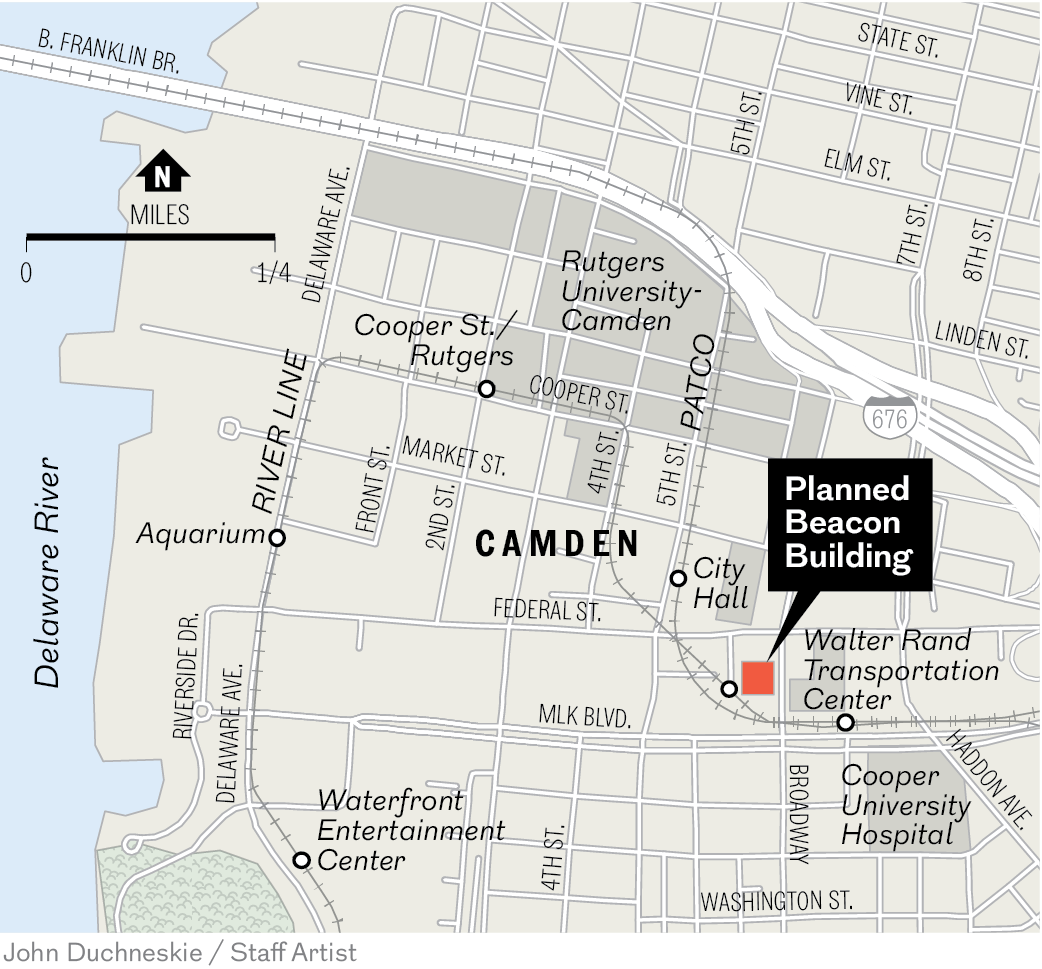
    Developer Gilbane is leading the project with the Camden County Improvement Authority at a vacant site on the northwest corner of Broadway and Martin Luther King Boulevard across the street from the Walter Rand Transportation Center and Cooper University Hospital.

    Map of the planned Beacon Building in Camden.

    “The goal is to attract projects, maybe like Beacon Tower, to capitalize off of the growth that we’ve seen in Camden city,” Greenwald said.

    Any project seeking Aspire subsidies must apply to the Economic Development Authority.

    Camden County officials have said they expect tenants to include Cooper University Health Care, which has said it needs additional office space to accommodate its $3 billion expansion. They also hope to entice civil courts to relocate there.

    County Commissioner Jeff Nash said last year that tenants had yet to commit, in part because the development team was still working on an application for Aspire tax credits.

    The incentives will help determine rent, he told the Cherry Hill Sun. The land is owned by the Camden Parking Authority, and Nash has said officials are still trying to determine who will own the site and the building going forward, according to Real Estate NJ.

    County spokesperson Dan Keashen said that those talks remain ongoing and that the improvement authority may issue a request for proposals for a new developer. Gilbane, the current master developer, didn’t respond to a request for comment.

    Wendy Marano, a spokesperson for Cooper University Health Care, said she didn’t have an immediate answer to a question about whether the hospital network planned to obtain an equity stake in the development.

    In 2014 the state awarded $40 million in tax credits to incentivize Cooper Health’s relocation of suburban office jobs to Camden, and Cooper later bought a stake in the development.

    The possible new state investment in Camden comes after Murphy’s administration separately allocated $250 million to renovate the state-owned Rand center — which serves two dozen NJ Transit bus lines and the River Line, and includes PATCO’s Broadway station.

    Construction on the transit center is expected to begin soon, according to county officials. While that renovation is underway, the Beacon site will serve as a temporary bus shelter, Keashen said, adding that possible construction on an office tower is still years away.

    Fast track

    Critics of the bill said that it was rushed through the Legislature with minimal public input and outside the normal budget process, and that it appeared to be designed to benefit specific projects. The bill passed the Assembly, 48-25, and the Senate, 24-14. It now heads to Murphy’s desk. The governor’s second term ends on Jan. 20, when he is to be succeeded by fellow Democrat Mikie Sherrill.

    The legislation applies to redevelopment projects located in a “government-restricted municipality” — language included in the Aspire program’s statute — “which municipality is also designated as the county seat of a county of the second class.” The project must also be located in “close proximity” to a “multimodal transportation hub,” an institution of higher education, and a licensed healthcare facility that “serves underrepresented populations.”

    “I say to you that there’s going to be one project that fits all those criteria,” Assemblyman Jay Webber (R., Morris) said on the floor of the chamber during debate Monday.

    “The net benefits test was put in as an accountability measure to make sure these projects were at least by some measure benefiting the taxpayer,” Webber added in an interview.

    “And now apparently one or more projects can’t meet that test,” he said. “And so rather than stick to the rules that they agreed to and pull the credits, they’re going to change the rules, lower the bar so that somebody can step over it. It’s wrong.”

    Greenwald said the legislation has “nothing to do with [Beacon] in particular,” adding that he hopes it is one of many projects that could benefit. Possible developments in Trenton and New Brunswick could also qualify for incentives under the bill, he said.

    Assembly Majority Leader Louis Greenwald in 2019.

    The net benefit test

    The test relies on economic modeling based on data such as projected jobs and wages. Under current law, most commercial projects seeking Aspire credits must demonstrate a minimum net benefit to New Jersey of 185% of the tax credit award — meaning, for instance, an applicant that receives $100 million in credits must generate $185 million in economic activity.

    The credits can be sold to the state Treasury Department for 85 cents on the dollar.

    Projects located in “government-restricted municipalities” — a half-dozen cities, including Camden, selected by the Legislature — already face a lower threshold of 150%, according to the state Economic Development Authority.

    Some projects, including residential and certain healthcare centers, are exempt from the net benefit test.

    The test was strengthened in the Economic Recovery Act of 2020, signed by Murphy, because “we saw in previous iterations of the tax credit program that if the guardrails weren’t strong enough … then companies could simply not meet the test, or, you know, not follow through on their promises, and nonetheless collect the funds,” said Peter Chen, senior policy analyst at New Jersey Policy Perspective, a liberal-leaning think tank.

    The 2020 law changed that, he said. “It’s one of the most important guardrails of the entire corporate tax credit program,” Chen said in an interview last week. “So exempting any project from the net benefit test requires a pretty large, pretty strong reason for doing so, and in this case, no reason was given.”

    Criminal case

    The renewed push for tax credits in South Jersey comes as a criminal case involving an earlier round of corporate subsidies continues to play out in court.

    Democratic power broker George E. Norcross III — founder of a Camden-based insurance brokerage and chairman of Cooper Health — and five codefendants were indicted in 2024 on racketeering charges related to development projects on the city’s waterfront.

    A judge dismissed the charges last year, and the state Attorney General’s Office is appealing the decision. Norcross has denied wrongdoing. He and his allies say state incentives have helped revitalize the city.

    During his floor speech on Monday, Webber alluded to “incredible allegations of corruption” in the earlier economic development program and noted that Murphy had previously championed reform of the system.

    The governor’s spokesperson, Tyler Jones, declined to comment on pending legislation.

  • Greenland official calls it ‘unfathomable’ that the U.S. is considering taking over the island

    Greenland official calls it ‘unfathomable’ that the U.S. is considering taking over the island

    NUUK, Greenland — A senior Greenland government official said Tuesday it’s “unfathomable” that the United States is discussing taking over a NATO ally and urged the Trump administration to listen to voices from the Arctic island’s people.

    Naaja Nathanielsen, Greenland’s minister for business and mineral resources, said people in Greenland are “very, very worried” over the administration’s desire for control of Greenland.

    She spoke a day before a key meeting in Washington between foreign ministers of the semi-autonomous Danish territory and Denmark and top U.S. officials, at a time of increased tensions between the allies over the stepped-up U.S. rhetoric.

    “People are not sleeping, children are afraid, and it just fills everything these days. And we can’t really understand it,” Nathanielsen said at a meeting with lawmakers in Britain’s Parliament.

    Earlier, a Danish government official confirmed that Denmark provided U.S. forces in the east Atlantic with support last week as they intercepted an oil tanker for alleged violations of U.S. sanctions.

    The official, who was not authorized to comment publicly on the sensitive matter and spoke on the condition of anonymity, declined to provide details about what the support entailed.

    The U.S. interception in the Atlantic capped a weeks-long pursuit of the tanker that began in the Caribbean Sea as the U.S. imposed a blockade in the waters of Venezuela aimed at capturing sanctioned vessels coming in and out of the South American country.

    The White House and Pentagon did not immediately respond to requests for comment. Danish support for the U.S. operation was first reported by Newsmax.

    Vice President JD Vance and Secretary of State Marco Rubio will meet with the foreign ministers of Denmark and Greenland on Wednesday at the White House to discuss Trump’s interest in acquiring Greenland, according to a U.S. official and two sources familiar with the plans who spoke on condition of anonymity because the meeting has not yet been formally announced.

    Denmark’s foreign minister, Lars Løkke Rasmussen, said earlier that Vance would host a meeting with him and his Greenlandic counterpart, Vivian Motzfeldt, in Washington this week, with Rubio in attendance.

    At a joint news conference with Danish Prime Minster Mette Frederiksen in Copenhagen, Greenlandic Prime Minister Jens-Frederik Nielsen reiterated that Greenland isn’t for sale, Danish media reported. Nielsen said Greenland doesn’t want to be owned or ruled by the U.S.

    Frederiksen also underlined Denmark’s willingness to invest in Arctic security. She said it hasn’t been easy to stand up to unacceptable pressure from a close ally and there are many indications that the most difficult part lies ahead.

    Nathanielsen, the minister, said of Greenland’s people: “We have no intentions of becoming American … but we have worked towards more collaboration with the Americans for many, many years.”

    “We feel betrayed. We feel the rhetoric is offensive,” she added, “but also bewildering.”

    NATO Secretary-General Mark Rutte refused to be drawn into the dispute, insisting that it was not his role to get involved.

    “I never, ever comment when there are discussions within the alliance,” Rutte said, at the European Parliament in Brussels. “My role has to be to make sure we solve issues.”

    He said that the 32-nation military organization must focus on providing security in the Arctic region, which includes Greenland. “When it comes to the protection of the High North, that is my role.”

    Tensions have grown this month as Trump and his administration push the issue and the White House considers a range of options, including military force, to acquire Greenland. Trump reiterated his argument that the U.S. needs to “take Greenland,” otherwise Russia or China would, in comments aboard Air Force One on Sunday.

    He said he’d rather “make a deal” for the territory, “but one way or the other, we’re going to have Greenland.”

    Nathanielsen said Greenlanders understand that the U.S. sees Greenland as part of its national security sphere.

    “We get it. We want to work with it,” she said, adding that “we understand the need for increased monitoring in the Arctic as a consequence of the growing geopolitical insecurity.”

    Nathanielsen said Greenland understands the need to “shake things up, to make things different … But we do believe that it can be done without the use of force.”

    She said “it is just unfathomable to understand” that Greenland could be facing the prospect of being sold or annexed.

    A bipartisan U.S. congressional delegation is headed to Copenhagen for meetings on Friday and Saturday in an attempt to show unity between the United States and Denmark.

    Nathanielsen said she thinks the people of Greenland have a say in their own future.

    “My deepest dream or hope is that the people of Greenland will get a say no matter what,” she said. ”For others this might be a piece of land, but for us it’s home.”

  • Clinton fails to show for Epstein deposition, threatened with contempt of Congress

    Clinton fails to show for Epstein deposition, threatened with contempt of Congress

    House Oversight Committee Chairman James Comer (R., Ky.) threatened Tuesday to hold Bill Clinton in contempt of Congress after the former president declined to appear before the panel for a closed-door deposition related to its investigation of convicted sex offender Jeffrey Epstein.

    “I think it’s very disappointing,” Comer told reporters Tuesday. ” … We will move next week in the House Oversight Committee … to hold former president Clinton in contempt of Congress.”

    Clinton, along with his wife, former secretary of state Hillary Clinton, were among 10 individuals the panel voted in July to subpoena for testimony related to crimes committed by Epstein and his former girlfriend Ghislaine Maxwell. Hillary Clinton is scheduled to testify Wednesday but does not plan to appear.

    Neither Clinton has been accused of any wrongdoing in connection with Epstein, and both have said they have no knowledge related to the investigation. A spokesman for the former president has previously said he met Epstein several times and took four trips on his airplane, but knew nothing about Epstein’s crimes. Bill Clinton has appeared in Epstein-related photographs released by Congress and the Justice Department.

    The Clintons called the subpoenas from the panel “invalid and legally unenforceable” in a letter obtained and published by the New York Times.

    In the letter, the Clintons noted that they had provided Comer with sworn statements similar to those he had accepted from other subpoenaed individuals, who were later excused from testifying before the committee.

    “We are confident that any reasonable person in or out of Congress will see, based on everything we release, that what you are doing is trying to punish those who you see as your enemies and to protect those you think are your friends,” the Clintons wrote.

    Contempt of Congress is punishable by up to a year in prison. If Comer’s committee moves forward with a contempt finding, the full House would next vote whether to refer the matter to the Justice Department for possible prosecution.

    Comer initially issued subpoenas for the testimony of both Clintons in August, according to aides, who said the committee had made several attempts to accommodate both of their schedules.

    Both were first scheduled for appearances in October, which were later moved to December. Those dates were moved again after the Clintons said they planned to attend a funeral, according to committee aides. Both Clintons declined to suggest alternative dates in January, the aides said.

  • Penn graduate student workers could strike next month

    Penn graduate student workers could strike next month

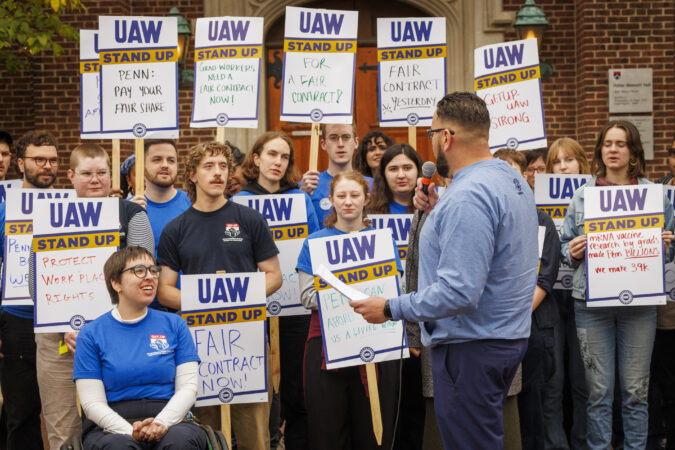
    The union that represents about 3,400 University of Pennsylvania graduate student workers says they will go on strike Feb. 17 if they do not reach a contract deal with the university by then.

    “We love our jobs, but Penn’s administration is leaving us no choice but to move forward with a strike,” said Nicolai Apenes, a Ph.D. candidate and research assistant in immunology, in a statement shared by the union Tuesday. “We are ready to stand up and demand that our rights are respected.”

    Penn’s graduate student workers voted to unionize in 2024. The union has been negotiating with the university since October 2024 for a first contract, and some tentative agreements have been reached on a number of issues.

    Sticking points in bargaining include wages, healthcare coverage, and more support for international student workers.

    In November the teaching and research assistants voted to authorize a strike if called for by the union, which is known as Graduate Employees Together-University of Pennsylvania (GET-UP) and is part of the United Auto Workers (UAW).

    A spokesperson for the University of Pennsylvania said in a statement Tuesday that Penn has engaged in good faith negotiations with the union, and has reached 23 tentative agreements through 39 bargaining sessions with additional sessions planned.

    “We believe that a fair contract for the Union and Penn can be achieved without a work stoppage, but we are prepared in the event that the Union membership strikes,” said the Penn spokesperson. “Efforts are underway to ensure teaching and research continuity, and the expectation is that classes and other academic activities will continue in the event of a strike.”

    “While we hope that Penn comes to the table and negotiates a fair contract for these essential workers, we know that these workers are a powerful force that Penn cannot break,” said Daniel Bauder, Philadelphia AFL-CIO president, in a statement Tuesday. “We are proud to stand with them and the broader Coalition of Workers at Penn as they fight the biggest employer in the region and bring union power to the University of Pennsylvania.”

    Penn, the largest employer in Philadelphia, has seen a wave of student-worker organizing in recent years, including resident assistants, graduate students, postdocs and research associates, as well as training physicians in the University of Pennsylvania Health System.

    The region has also seen a couple other university strikes in recent years. In 2023 graduate workers at Temple University walked off the job for 42 days amid contract negotiations, and in a separate action at Rutgers University, educators, researchers, and clinicians went on strike for a week.

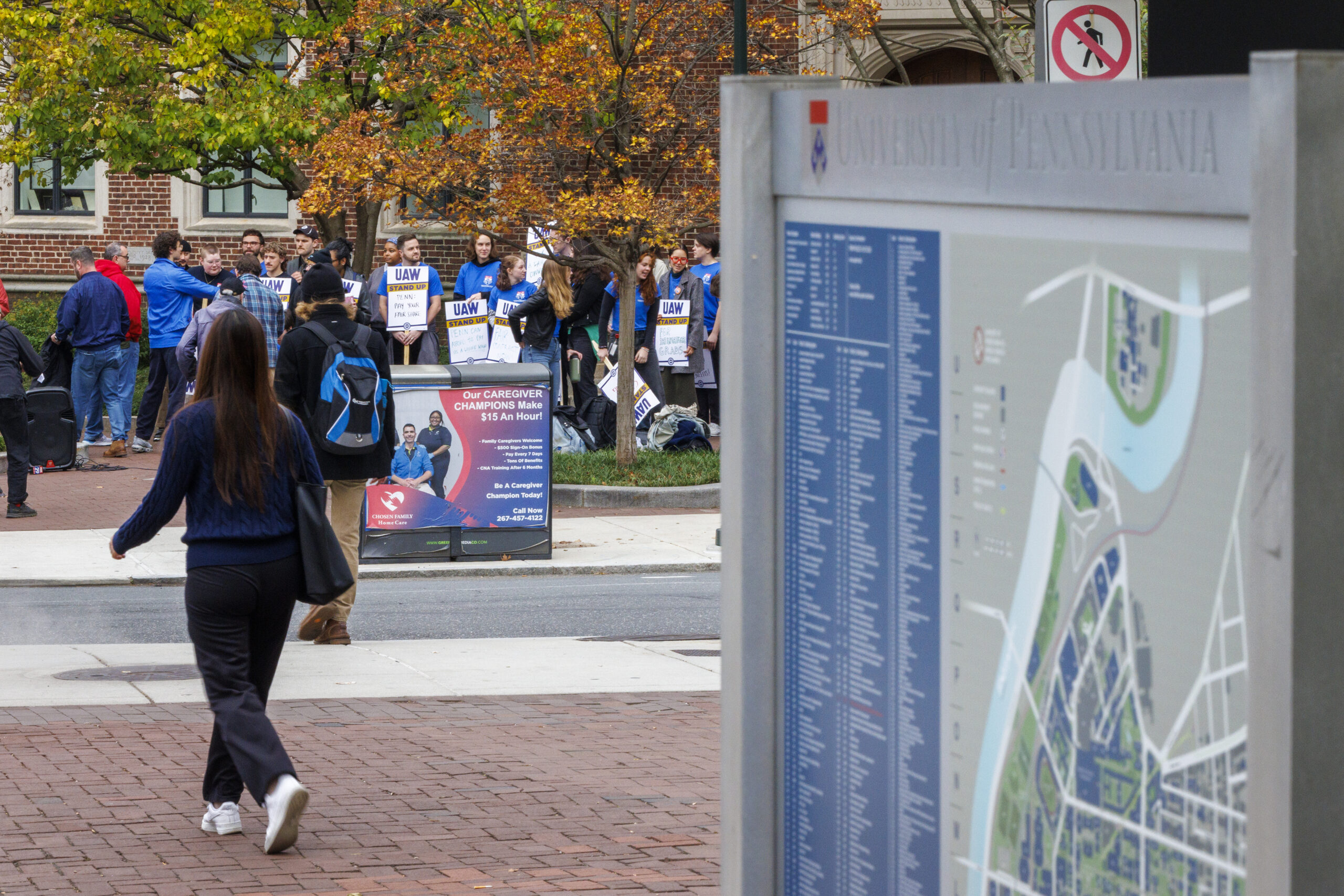
    University of Pennsylvania graduate students hold a press conference and rally calling for a strike vote against the university at the corner of South 34th and Walnut Street, Monday, Nov. 3, 2025.
  • Scott Adams, the ‘Dilbert’ creator who poked fun at bad bosses, dies at 68

    Scott Adams, the ‘Dilbert’ creator who poked fun at bad bosses, dies at 68

    Scott Adams, who became a hero to millions of cubicle-dwelling office workers as the creator of the satirical comic strip Dilbert, only to rebrand himself as a digital provocateur — at home in the Trump era’s right-wing mediasphere — with inflammatory comments about race, politics, and identity, died Jan. 13. He was 68.

    His former wife Shelly Miles Adams announced his death in a live stream Tuesday morning, reading a statement she said Mr. Adams had prepared before his death. “I had an amazing life,” the statement said in part. “I gave it everything I had.”

    Mr. Adams announced in May 2025 that he had metastatic prostate cancer, with only months to live. In a YouTube live stream, he said he had tried to avoid discussing his diagnosis (“once you go public, you’re just the dying cancer guy”) but decided to speak up after President Joe Biden revealed he had the same illness.

    “I’d like to extend my respect and compassion for the ex-president and his family because they’re going through an especially tough time,” he said. “It’s a terrible disease.”

    Mr. Adams was working as an engineer for the Pacific Bell telephone company when he began doodling on his cubicle whiteboard in the 1980s, dreaming of a new, more creatively fulfilling career as a cartoonist. Before long, he was amusing colleagues with his drawings of a mouthless, potato-shaped office worker: an anonymous-looking man with a bulbous nose, furrowed pate, and upturned red-and-white striped tie.

    His doodles evolved into Dilbert, a syndicated comic strip that debuted in 1989 and eventually appeared in more than 2,000 newspapers around the world, rivaling Peanuts and Garfield in popularity.

    Years before the film comedy Office Space and TV series The Office satirized the workplace on-screen, Dilbert poked fun at corporate jargon, managerial ineptitude, and the indignities of life in the cubicle farm.

    In one strip, the title character is awarded a promotion “with no extra pay, just more responsibility,” because “it’s how we recognize our best people.” In another, he’s presented with an “employee location device” — a dog collar.

    Other Dilbert cartoons could be crassly funny. Seeking to improve the company’s image, Dilbert’s pointy-haired boss hires an ad agency that uses a computer program to come up with a new “high-tech name” for the firm, using random words from astronomy and electronics. Their suggestion: “Uranus-Hertz.”

    Mr. Adams proved adept at growing his audience during the tech boom of the 1990s, creating a Dilbert website long before most other cartoonists took to the internet. He also became the first major syndicated cartoonist to include his email address in his comic strip, an innovation that allowed readers to contact him directly with ideas. Their feedback convinced him to focus the cartoon entirely on the workplace, after some of the strip’s early installments explored Dilbert’s home life.

    Interviewed by the Wall Street Journal in 1994, Mr. Adams observed that “the universal thread” uniting the strip’s readers “is powerlessness. Dilbert has no power over anything.”

    By the end of the decade, Dilbert seemed to be everywhere, appearing on the cover of business magazines and in book-length compendiums. Mr. Adams signed off on the creation of a Dilbert Visa card and a Ben & Jerry’s ice cream flavor, branded as Totally Nuts; licensed his cartoon characters for commercials; and partnered with Seinfeld writer Larry Charles to develop an animated Dilbert television series, which aired for two seasons on the now-defunct UPN network.

    Capitalizing on the cartoon’s success, he also put out a shelfful of satirical business books, beginning with the 1996 bestseller The Dilbert Principle. Inspired by the Peter Principle, a management concept in which employees are said to be promoted to their level of incompetence, Mr. Adams argued that “the most ineffective workers are systematically moved to the place where they can do the least damage: management.”

    He wasn’t entirely joking. As he saw it, the people who spouted inane ideas, sucked up to management and pretended they knew more than they did were the ones who got promoted. The workplace was a mess, he suggested, but by calling out bosses’ bad behavior, Dilbert could be a force for good.

    “I heard from lots of people who told me, ‘My boss started to say something that was ridiculous — management fad talk, buzzwords — but he stopped himself and said, “OK, this sounds like it came out of a Dilbert comic,’ and then started speaking in English again.’

    “There is a fear of being the target of humor,” Mr. Adams told the Harvard Business Review.

    Companies such as Xerox incorporated the character into communications and training programs. But some critics found the cartoon’s sarcasm more corrosive than entertaining. Author and progressive activist Norman Solomon, who wrote a book-length critique of the comic, argued that Dilbert was hardly subversive, saying that it offered more for bosses than workers.

    Dilbert does not suggest that we do much other than roll our eyes, find a suitably acid quip, and continue to smolder while avoiding deeper questions about corporate power in our society,” Solomon wrote.

    Mr. Adams scoffed at the criticism, lampooning Solomon by name in his books and comic strips. “My goal is not to change the world,” he told the Associated Press in 1997. “My goal is to make a few bucks and hope you laugh in the process.”

    In interviews, he was often self-deprecating, declaring that his comic strip was “poorly drawn” and noting that long before he made Dilbert he “failed at many things,” including computer games he attempted to program and sell. His other failures included the Dilberito, a line of vitamin-filled veggie wraps that ended up making people “very gassy,” and his short-lived attempt at managing an unprofitable restaurant, Stacey’s at Waterford, that he owned in the Bay Area.

    “Certainly I’m an example of the Dilbert Principle,” he told the New York Times in 2007, a few months into his stint as a restaurant boss. “I can’t cook. I can’t remember customers’ orders. I can’t do most of the jobs I pay people to do.” (Employees told the newspaper that Mr. Adams was loyal and kind, yet totally clueless. “I’ve been in this business 23 years, and I’ve seen a lot of things,” the head chef said. “He truly has no idea what he’s doing.”)

    On the side, Mr. Adams blogged about fitness, politics, and the art of seduction — drawing, he said, on his training as a certified hypnotist, which he learned before becoming a cartoonist. He also wrote about his struggles with focal dystonia, a neurological disorder, which caused spasms in his pinkie finger that made it difficult to draw. Mr. Adams said he developed tricks to get around the issue, holding his pen or pencil to the paper for just a few seconds at a time, and underwent experimental surgery to treat a related condition, spasmodic dysphonia, that hindered his ability to speak.

    Politically, he cast himself as an independent, saying he didn’t vote and was not a member of any party. But he also veered into far-right political terrain on his blog, including in a 2006 post in which he questioned “how the Holocaust death total of 6 million was determined.” A few years later, writing about “men’s rights,” he compared society’s treatment of women to its treatment of children and people with mental disabilities.

    “You don’t argue with a 4-year old about why he shouldn’t eat candy for dinner. You don’t punch a mentally handicapped guy even if he punches you first. And you don’t argue when a woman tells you she’s only making 80 cents to your dollar. It’s the path of least resistance,” he wrote.

    Mr. Adams made headlines with his prediction that Donald Trump, whom he considered a master of persuasion, would win the 2016 presidential election. He was later invited to the White House after publishing the 2017 nonfiction book Win Bigly: Persuasion in a World Where Facts Don’t Matter. (The book’s cover art featured an orange-hued drawing of Dogbert, Dilbert’s megalomaniacal pet dog, with a Trumplike swoosh of hair.)

    “He was a fantastic guy, who liked and respected me when it wasn’t fashionable to do so,” Trump said Tuesday in a Truth Social post, referring to Mr. Adams as “the Great Influencer.” “My condolences go out to his family, and all of his many friends and listeners.”

    Amid a national reckoning on race in the 2020s, Mr. Adams sparked a backlash for his criticisms of diversity, equity, and inclusion programs, and for social media posts in which he joked that he was “going to self-identify as a Black woman” after President Joe Biden vowed to nominate an African American woman to the Supreme Court. In 2022, he introduced Dilbert’s first Black character, an engineer named Dave who announces to colleagues that he identifies “as white,” ruining management’s plan to “add some diversity to the engineering team.”

    The following year, Dilbert was dropped by hundreds of newspapers, including The Philadelphia Inquirer and Daily News, after Mr. Adams delivered a rant that was widely decried as hateful and racist. Appearing on his YouTube live-stream show, Real Coffee With Scott Adams, he discussed a controversial Rasmussen poll asking people if they agreed with the statement “It’s OK to be white,” a slogan associated with the white supremacist movement. About a quarter of Black respondents said “no.”

    Mr. Adams was appalled by the results. He declared that African Americans were “a hate group,” adding: “I don’t want to have anything to do with them. And I would say, based on the current way things are going, the best advice I would give to white people is to get the hell away from Black people.”

    Within a week his syndicate and publisher, Andrews McMeel Universal, cut ties with the cartoonist. Mr. Adams defended his comments, saying he had meant the remarks as hyperbole, and found support from conservative political activists as well as billionaire Tesla executive Elon Musk.

    In a follow-up show on YouTube, he disavowed racism against “individuals” while also telling viewers that “you should absolutely be racist whenever it’s to your advantage.” Weeks later, he relaunched Dilbert on the subscription website Locals, vowing that the comic would be “spicier” — less “PC” — “than the original.”

    “Only the dying leftist Fake News industry canceled me (for out-of-context news of course),” he tweeted in March 2023. “Social media and banking unaffected. Personal life improved. Never been more popular in my life.”

    From bank teller to cartoonist

    Scott Raymond Adams was born in Windham, N.Y., a ski town in the Catskills, on June 8, 1957. His father was a postal clerk, and his mother was a real estate agent who later worked on a speaker-factory assembly line.

    Growing up, Mr. Adams copied characters out of his favorite comic strips, Charles M. Schulz’s Peanuts and Russell Myers’ Broom-Hilda. He applied for a correspondence course at the Famous Artists School but was rejected, he said, because he was only 11. The minimum age was 12.

    Mr. Adams eventually took a drawing course at Hartwick College in Oneonta, an hour’s drive from his hometown. He received the lowest grade in the class and decided to focus instead on economics, receiving a bachelor’s degree in 1979. He moved to San Francisco, got a job as a bank teller at Crocker National Bank and, in his telling, was twice robbed at gunpoint while working behind the counter.

    At night, he took business classes at the University of California at Berkeley. He earned an MBA in 1986 and joined PacBell as an applications engineer, though he found himself deeply unhappy. “About 60 percent of my job at Pacific Bell involved trying to look busy,” he wrote in a 2013 book, How to Fail at Almost Everything and Still Win Big: Kind of the Story of My Life.

    After watching a public television series, Funny Business: The Art in Cartooning, he decided he had found his calling. Mr. Adams struck up a correspondence with the show’s host, cartoonist John “Jack” Cassady, who encouraged him to submit to major magazines like Playboy and the New Yorker.

    All his cartoons were rejected. But with Cassady’s encouragement, Mr. Adams continued to draw, waking up at 4 a.m. and sitting down with a cup of coffee to work on doodles of Dilbert and other characters. He stayed motivated in part by writing an affirmation: “I, Scott Adams, will become a famous cartoonist.”

    Even after he signed a contract to publish Dilbert through United Feature Syndicate, Mr. Adams continued to work at his day job, making $70,000 a year and gathering ideas for his strip while sitting at cubicle No. 4S700R. He left the company in 1995, and two years later he won the National Cartoonists Society’s highest honor, the Reuben Award for cartoonist of the year.

    Mr. Adams was twice married and divorced, to Shelly Miles and Kristina Basham. Information on survivors was not immediately available.

    Looking back on his career, Mr. Adams said he was especially proud of two novellas he had written, God’s Debris (2001) and the sequel The Religion War (2004). The latter was set in 2040 and revolved around a civilizational clash between the West and a fundamentalist Muslim society in the Middle East.

    Discussing the plot in a 2017 interview with Bloomberg Businessweek, Mr. Adams said that the Muslim extremists are defeated after the hero builds a wall around them and “essentially kills everybody there.”

    “I have to be careful, because I’m talking about something pretty close to genocide, so I’m not saying I prefer it, I’m saying I predict it,” he added.

    The magazine reported that Mr. Adams believed the novellas, not Dilbert, would be his ultimate legacy.