Category: News

Latest breaking news and updates

  • Federal judge orders Trump administration to restore slavery exhibits to the President’s House

    Federal judge orders Trump administration to restore slavery exhibits to the President’s House

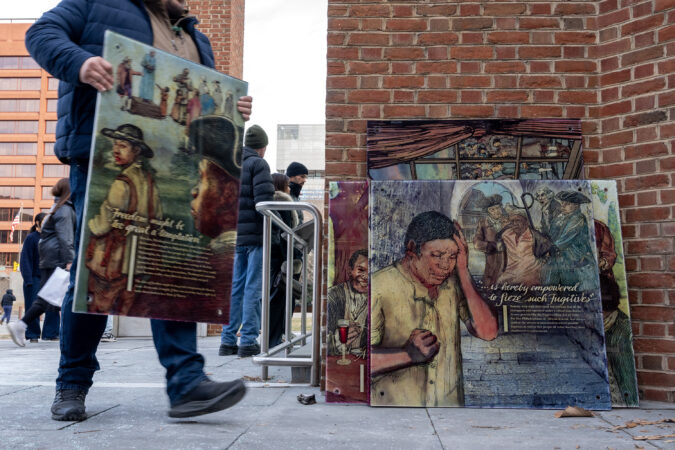
    A federal judge ordered President Donald Trump’s administration to restore the slavery exhibits that the National Park Service removed from the President’s House last month.

    U.S. District Judge Cynthia M. Rufe issued a ruling Monday requiring the federal government to “restore the President’s House Site to its physical status as of January 21, 2026,” which is the day before the exhibits were removed.

    The order does not give the government a deadline for the restoration of the site. It does require that the National Park Service take steps to maintain the site and ensure the safety of the exhibits, which memorialize the enslaved people who lived in George Washington’s Philadelphia home during his presidency. The exhibits were abruptly removed in January following months of scrutiny by the Trump administration.

    Rufe, a George W. Bush appointee, compares the federal government’s argument that it can unilaterally control the exhibits in national parks to the Ministry of Truth in George Orwell’s 1984, a novel about a dystopian totalitarian regime.

    “As if the Ministry of Truth in George Orwell’s 1984 now existed … this Court is now asked to determine whether the federal government has the power it claims — to dissemble and disassemble historical truths when it has some domain over historical facts,” Rufe wrote. “It does not.”

    Mayor Cherelle L. Parker’s administration filed a federal lawsuit against Interior Secretary Doug Burgum and acting National Park Service Director Jessica Bowron, and their respective agencies, the day the exhibits were dismantled. The complaint argued dismantling the exhibits was an “arbitrary and capricious” act that violated a 2006 cooperative agreement between the city and the federal government.

    The federal government has the option to appeal the judge’s order. The Interior Department and National Park Service did not immediately comment on the ruling, which fell on Presidents’ Day, a federal holiday. The U.S. Attorney’s Office for the Eastern District of Pennsylvania declined to comment.

    During a hearing last month, Rufe called the federal government’s argument that a president could unilaterally change the exhibits displayed in national parks “horrifying” and “dangerous.” She ordered the federal government to ensure the panels’ safekeeping after an inspection and a visit to the President’s House earlier this month.

    Monday’s ruling follows an updated injunction request from the city that asked for the full restoration of the site — not merely that the exhibits be maintained safely — and a brief from the federal government arguing the National Park Service has discretion over the exhibits and that the city’s lawsuit should be dismissed on procedural grounds.

    The federal government’s brief also argued there could be no irreparable harm from the removal of the exhibits because they are documented online and replacement panels would cost $20,000.

    But the judge found the city is likely to prove its case that the removal was unlawful, and the panels should be restored while the litigation continues.

    “If the President’s House is left dismembered throughout this dispute, so too is the history it recounts, and the City’s relationship to that history,” Rufe wrote.

    The judge also found that the cooperative agreement between Philadelphia and the National Park Service remains in “full force,” even though the contract is technically expired.

    Rufe’s memo named the nine enslaved Africans owned by Washington, and noted that two — Oney Judge and Hercules Posey — escaped. The removed displays recognize their struggles and the nation’s “progress away from the horrors of slavery,” the judge wrote.

    “Each person who visits the President’s House and does not learn of the realities of founding-era slavery receives a false account of this country’s history,” the judge wrote.

    The injunction does not resolve the underlying lawsuit, and is in effect for the duration of the litigation. In a January hearing, Rufe said she wouldn’t let the case drag into the summer, recognizing the 250th anniversary celebration being planned for Independence Mall.
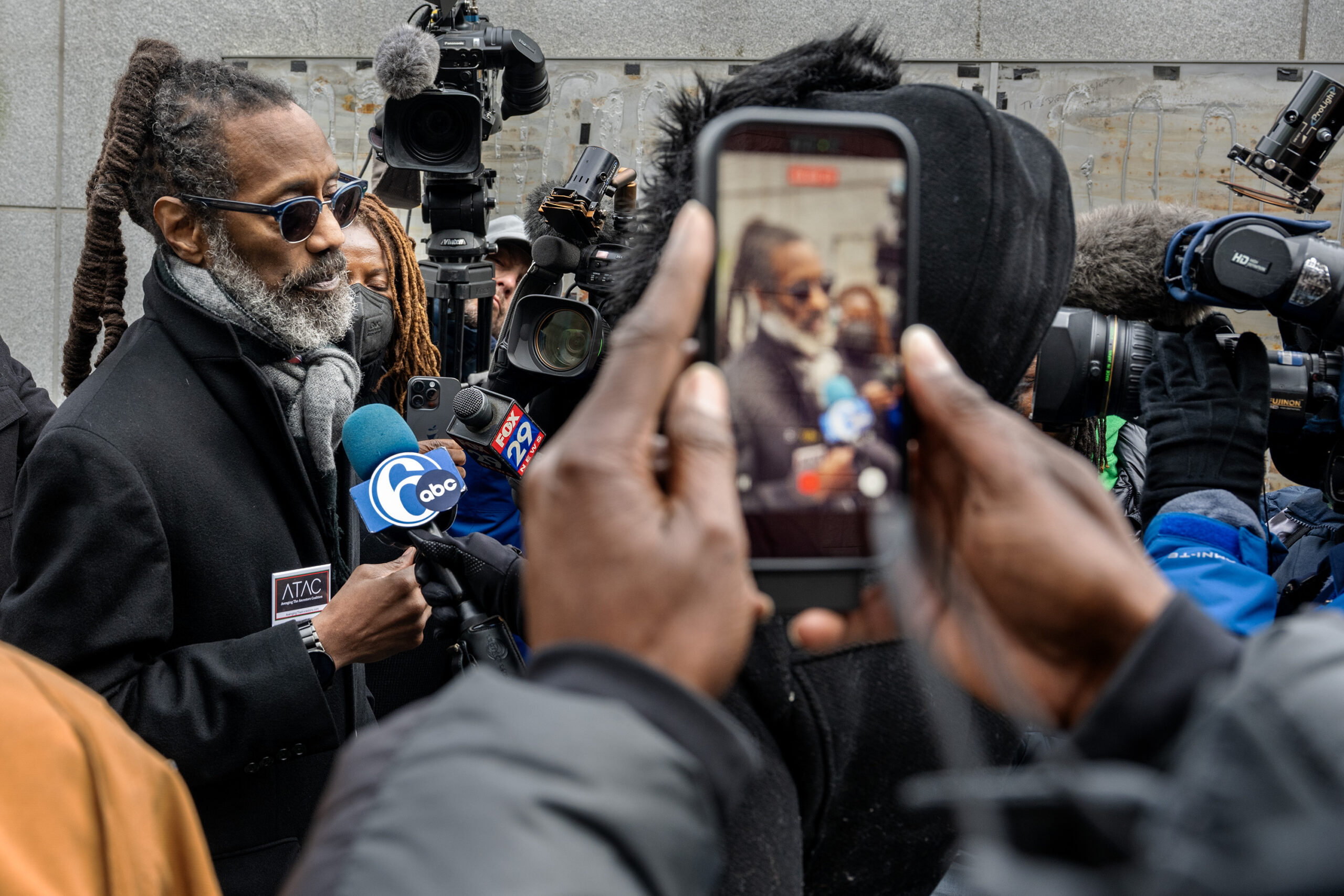
    Attorney Michael Coard, leader of the Avenging the Ancestors Coalition, speaks with the news media Monday after a federal judge ordered the Trump administration to restore the slavery exhibits that the National Park Service removed from the President’s House last month. The group was on the site for an annual gathering for a Presidents’ Day observance when they learned of the order.

    The timing of the ruling underscored its significance to the Philadelphians pushing for the exhibits’ return.

    Avenging the Ancestors Coalition, the main advocacy organization leading the fight to protect the President’s House, was less than an hour into its Presidents’ Day event at the site when leaders got wind of their victory.

    The group’s leaders, excited and completely in shock, congregated behind the site’s Memorial Wall to soak in the news before announcing it.

    Moments later, Michael Coard, an attorney and the coalition’s leader, emerged before the crowd of about 100 people and told them: “Thanks to you all, your presence and your activism, I have great news: We just won in federal court.”

    The crowd erupted in cheers and chants of “When we fight, we win!” and “We have won!”

    Coard told reporters there was “no other blessing that we could have gotten today.”

    The coalition has led dozens of rallies and town halls meant to energize the public in opposing the Trump administration’s ongoing scrutiny of the President’s House. The Black-led advocacy group helped develop the site in the early 2000s before it opened in 2010.

    Dana Carter, the group’s head organizer, said she was in disbelief when she heard about the ruling.

    “After we figured out that it really was the truth, I am just moved. My heart is overflowing with love for the judge who made the ruling, as well as the people who have been with us since the beginning … and also the people who have joined us in this fight to restore the President’s House,” Carter said.

    But the fight is not over, advocates said, with Coard expecting the Trump administration to appeal or ignore rulings.

    “This is a lawless administration. The people are going to have to take over to force them to do the right thing,” Coard said.

    The Trump administration’s attempt to alter the President’s House was part of a wider initiative to remove content from national parks that “inappropriately disparage Americans past or living,” following an executive order from Trump. For instance, Park Service employees removed signage about the mistreatment of Native Americans from the Grand Canyon.

    The fate of the President’s House exhibits was in limbo for months until they were removed by Park Service employees with wrenches and crowbars on Jan. 22. Meanwhile, advocacy groups and creatives behind the President’s House cultivated support for their cause to protect the site. Philadelphia City Council issued a resolution condemning the censorship of the exhibit.

    “Judge Cynthia Rufe made it clear that historical truth cannot be dismantled or rewritten, and that the federal government does not have the authority to erase or alter facts simply because it has control over a national site. … We can not let President Donald Trump whitewash African-American history. Black history is American history,” City Council President Kenyatta Johnson said in a statement Monday.
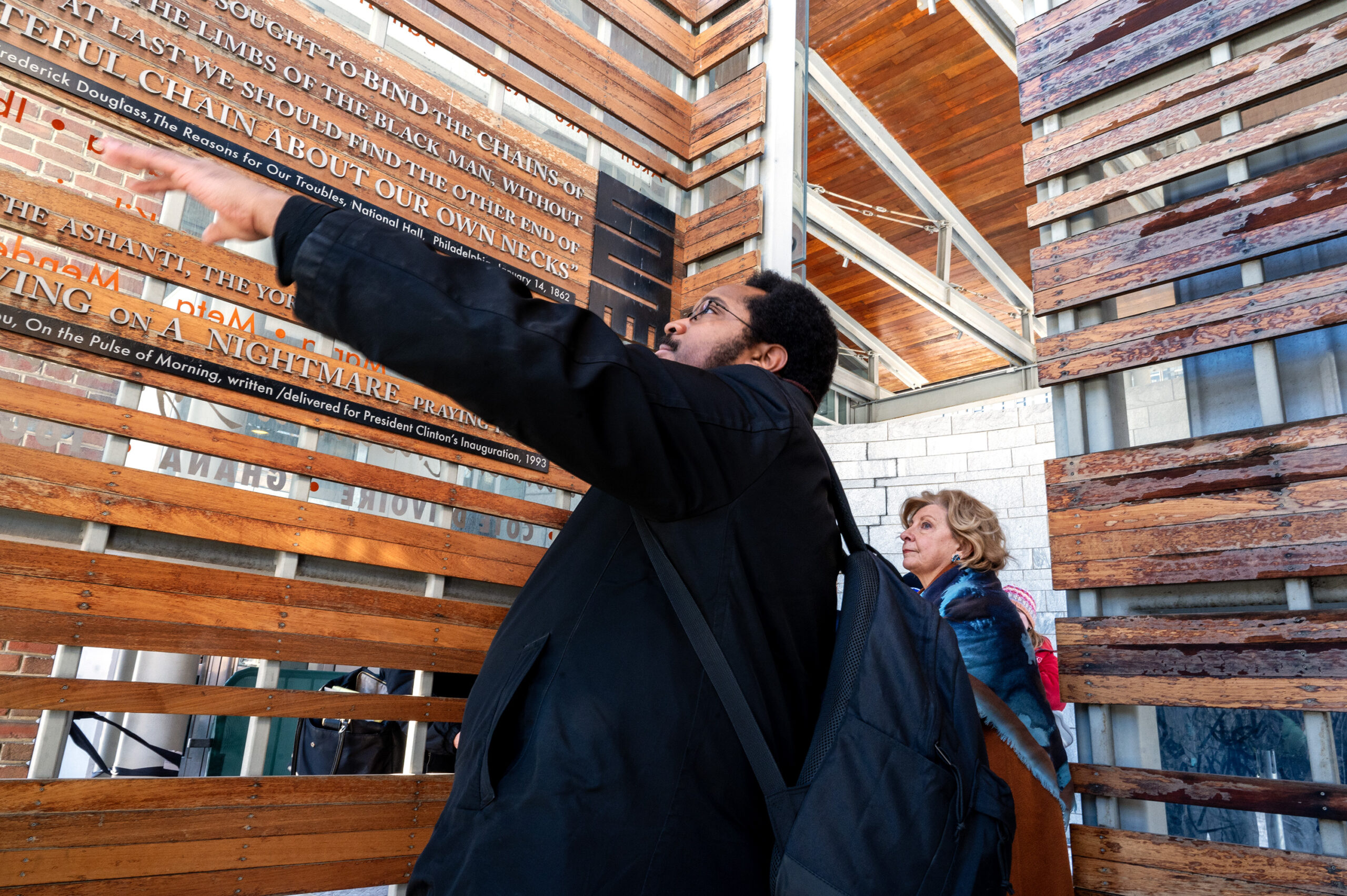
    Mijuel Johnson (left), a tour guide with The Black Journey: African-American Walking Tour of Philadelphia, leads Judge Cynthia Rufe (right) as she visits the President’s House in Independence National Historical Park on Feb. 2.

    Attendees at Monday’s event were invigorated by the ruling.

    Mijuel Johnson, a tour guide leader with the Black Journey who led Rufe through the site earlier this month, said he was “enjoying the moment for now” but then he would be back to work.

    “This is a great win for this movement,” Johnson said.
  • China grants U.K. and Canada visa-free entry, raising total to 79 countries

    China grants U.K. and Canada visa-free entry, raising total to 79 countries

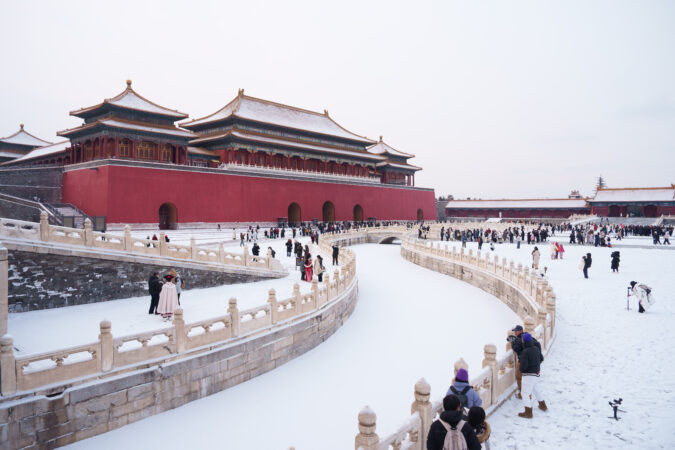
    BEIJING — British and Canadian citizens can enter China without a visa starting Tuesday, bringing to 79 the number of countries granted visa-free access in a bid to boost tourism and business.

    China has expanded eligibility for the program significantly in the last two years. Visitors can stay for up to 30 days for business, tourism, and exchange programs and to visit family and friends.

    Most Europeans qualify for visa-free entry, along with some from select countries in other regions including Latin America, Southeast Asia, and the Middle East.

    Citizens of a few other countries, including the United States and Indonesia, can enter for 10 days if they are in transit — meaning they have a ticket departing for a different country than they arrived from.

    Business executives and tourists have welcomed the change, as the China visa application process can be a relatively cumbersome one.

    The U.K. and Canada are being added following visits to China last month by their prime ministers, Keir Starmer and Mark Carney. Both are relatively new leaders who are trying to revamp ties with Beijing after a downturn in recent years.

    For most countries, the visa-free access expires at the end of this year, but it has been extended in the past.

  • What 42 massive and decaying presidential heads say about America

    What 42 massive and decaying presidential heads say about America

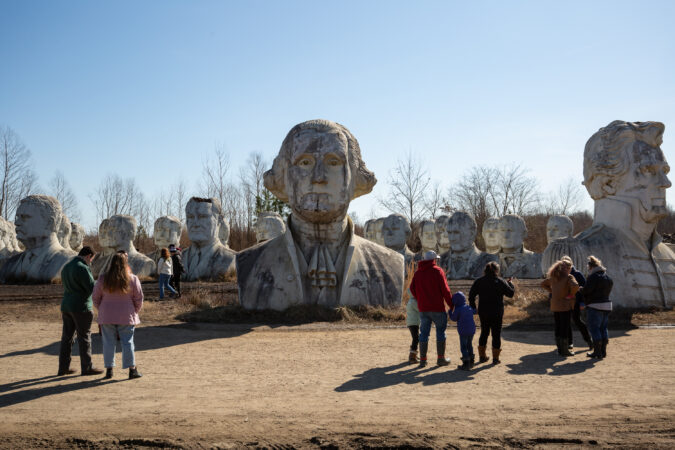
    CROAKER, Va. — George Washington’s chin is crumbling. His cheeks are streaked with sooty grime. His blackened nose is peeling, an apparent victim of frostbite and sunburn. Still, America’s first leader looks nicer than usual. In the winter months, wasps aren’t nesting in his eyes.

    “Just beautiful,” observed Cesia Rodriguez, a 32-year-old massage therapist gazing up at the Founding Father — or what remained of him.

    She’d pulled on rain boots, driven about an hour and trudged through the mud of what her tour guide called “an industrial dump” early Saturday with dozens of other tourists to see “The Presidents Heads,” a private collection of every ex-POTUS’s sculpted likeness from Washington to George W. Bush. They’re arranged in haphazard rows, with Andrew Jackson occupying a prime front spot simply because the owner likes his hair. The vibe is Stonehenge-meets-The Walking Dead.

    Before they started sinking into the ground, the busts fashioned from concrete, plaster, and rebar — was that Styrofoam poking through some cranial holes? — stood about twice the height of a basketball hoop. They each weighed at least 5 tons. Time has not been kind. Chester A. Arthur’s entire jaw is missing. Ulysses S. Grant has lost a chunk of his right eyebrow. And Franklin D. Roosevelt was “scalped” in transit, the tour guide noted, by a Route 199 overpass.

    These commanders in chief weren’t supposed to spoil. They were carved with patriotic love by a Texas sculptor who studied in Paris under a French modern master. They were the polished centerpieces of a $10 million park that in 2010 went bankrupt after six years. Not enough admirers wanted to see them back when they were pristine.

    Now the wait list stretches into the hundreds. Demand didn’t spike, their owner said, until the heads were rotting. Not that their misfortune attracted haters. Quite the opposite. In the wreckage, guests said they could see their country and themselves with more tenderness than judgment. “That one’s me,” a 20-something chirped at jawless Arthur.

    Rodriguez didn’t mull the symbolism when she learned about the spectacle on Facebook. Seeing spooky historical art, she figured, was a fun way to spend Presidents’ Day weekend. Up close, though, the oddities stirred something familiar.

    She thought of the America she loved: her clients, who came from everywhere with stiff necks and bad backs. The nurses, teachers, soldiers, and everyone else on her massage table, resting up to go at it again.

    “It’s the imperfections, for me,” she said.

    The late sculptor, David Adickes, was an Army veteran who’d wanted his stony visages to gleam. On an early-aughts trip to Mount Rushmore, he’d contemplated the granite mugs of Washington, Jefferson, Roosevelt, and Lincoln and thought: Why stop at four?

    Adickes, who died last year at 98, hoped the 42 statues he chiseled at his Houston studio would land in the nation’s capital, he said on a 2022 podcast, but real estate was too costly. So in 2004, he and a business partner settled on a plot near Colonial Williamsburg, aiming to draw history buffs and stroller-pushing families. The Great Recession, overpriced tickets, and poor marketing dashed that vision.

    After the busts went bust, a rental car company purchased Presidents Park and hired local builder Howard Hankins to help flatten it into a parking lot.

    “I just couldn’t see crushin’ ’em,” Hankins recalled.

    Instead, he loaded the abandoned dignitaries onto a fleet of flatbed trucks and escorted them (minus their pedestals) to his farm-slash-industrial dump. Storing them in a muddy field was meant to be temporary, he insisted. A presidential fanatic, Hankins envisioned building a new museum. But the 11-mile move alone cost him $50,000, he said. A decade and a half later, the idea exists only on drawings.

    By 2019, Virginia photographer John Plashal caught wind of what was disintegrating on Hankins’ out-of-the-way acres. He pitched himself as a tour guide to the introverted contractor, and the two hatched a fresh back-road attraction. A few times per year, guests can pay $28.35 to marvel at what the website deems “neglect and decay.” As word spread on social media, Ozzy Osbourne stopped by. So did producers of a certain hit zombie series (though they filmed nothing on site). And the heads just kept deteriorating.

    “Now they look like they’ve got leprosy,” Plashal told the Saturday crowd. “In the summer, they all have an active wasp nest in their eyeballs.”

    Yet the place, he continued, has only grown more popular. Nearly 600 people showed up over the weekend, coming from as far as Germany and the Dominican Republic.

    So what, he asked the group, is the rationale for rolling in now?

    Up shot the arm of 10-year-old Evelyn Price.

    “Because they are falling apart,” the Norfolk fourth-grader offered, “but, um, life is kind of like that.”

    Mess is part of our heritage, her mother added, so wading through muck to engage with the past felt right.

    “America is really, really good at getting things very, very wrong,” mused 41-year-old Treloar Price, a clinical psychologist, “and then working hard to try to fix it.”

    The behemoth noggins reflected the transience of American power to Doug Tempest, a 46-year-old Navy veteran from Richmond.

    Dictators overseas have clung to power for decades, but here, so far — though our current leader has riffed about a third term — no president has defied the Constitution or the will of voters to stay in the White House. Every four years, a new victor can shake things up, while the old Oval Office occupant’s influence tends to fade.

    “One of the superpowers that our country has is we can change direction,” Tempest said.

    For Caren Bueshi, a 62-year-old retired teacher from Naples, Fla., witnessing the sculptures sag into the dirt conjured what she feared the nation was losing. Constitutional literacy, for one. Recent reports of federal agents detaining immigrants with the right papers and clean criminal records disturbed her.

    “We’re forgetting the foundation,” she said, wandering past Jackson’s splintering mane. “It’s a challenging time.”

    “It always is,” interjected her mother, 91-year-old Pat Duke, clutching her arm. “From the beginning.”

    Mom leaned right. Daughter leaned left. But they didn’t want to get into politics. The nonagenarian looked at the presidents and saw men. She saw mortality.

    “My life is getting short now,” she said, “so I’m just enjoying it.”

    A few heads over, Andrea Cote, a 44-year-old consultant, tried to turn the eerie scene into a history lesson for her 9-year-old daughter, June.

    “This is Chester A. Arthur missing his jaw,” she said, pausing in front of the gaping mouth. The rebar inside looked like rusted braces without teeth.

    “Scary,” June said.

    “And Thomas Jefferson was the one who didn’t like to publicly speak,” Cote deadpanned.

    Jokes aside, the derelict skulls touched her. So many families braved the chill that day, she noticed, for a glimpse at American history, no matter what shape it was in. They were interested. They cared. They were coming together.

    So Cote smiled when a fellow tourist with a fancy camera approached.

    “If you squat right here,” he told her kid, “you can get a picture of the sun coming right through his mouth.”

    June grabbed her mom’s phone and aimed it just so.

    “Whoa!” she squealed.

    “See,” he said, “now there’s something positive.”

  • Ukraine detains ex-energy minister as high-level corruption case widens

    Ukraine detains ex-energy minister as high-level corruption case widens

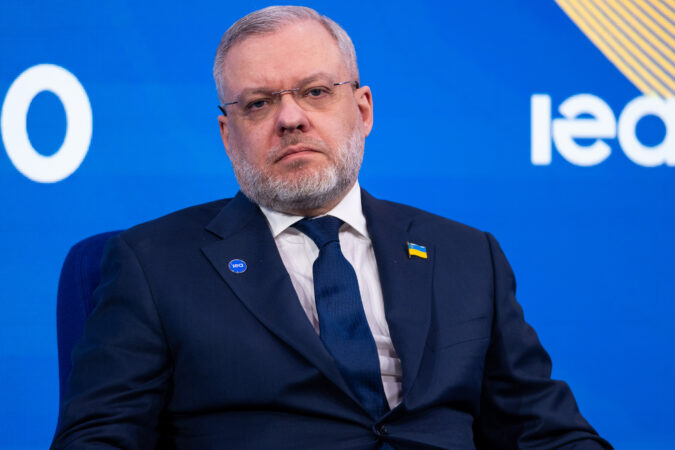
    KYIV — Ukrainian authorities opened a criminal case against the country’s former energy minister German Galushchenko one day after he was caught at the border trying to flee the country — the latest charges in a $100 million corruption probe that has ensnared some of Ukraine’s highest-ranking officials and shaken the office of President Volodymyr Zelensky.

    Galushchenko, who served as energy minister for four years before becoming justice minister for a short period last year, was arrested Sunday by anti-corruption authorities on the Ukrainian-Polish border. On Monday, authorities said he was charged on suspicion of “money laundering and participation in a criminal organization.”

    The arrest is part of an investigation into high-level graft, code-named “Midas.” Other suspects include Timur Mindich, a close friend and former business partner of Zelensky, and Oleksiy Chernyshov, a former deputy prime minister. Authorities allege the group ran a kickback scheme tied to contracts signed with Ukraine’s state nuclear energy company, Energoatom.

    Zelensky’s top aide, Andriy Yermak, resigned in November, hours after authorities searched his home and office as part of the corruption probe. However, Yermak has not been charged, officials said.

    The investigation has placed the issue of Ukraine’s seemingly never-ending battle with corruption front and center, and it has rattled Kyiv’s European supporters as the country struggles to defend against Russia’s invasion, which will reach its fourth anniversary next week.

    Corruption in the country’s energy sector is a particularly sensitive subject, as millions of Ukrainians are enduring frigid, dark apartments this winter because of Russia’s campaign of missile and drone strikes against the power grid.

    On Monday, Ukraine’s air force said Russian forces attacked locations throughout the country overnight with more than 60 drones and six missiles. At least one missile and nine drones pierced air defenses, the air force said in a social media statement.

    Some 1,500 buildings in Kyiv are without heat, of which more than 1,000 are expected to remain so until the end of winter because of significant damage to the power grid, Kateryna Pop, spokesperson for the Kyiv military administration, said on Ukrainian television on Monday.

    In November, investigators at Ukraine’s two main anti-graft bodies, the National Anti-Corruption Bureau and the Specialized Anti-Corruption Prosecutor’s Office — or NABU and SAPO — said they had uncovered a sprawling kickback scheme at Energoatom.

    At that point, NABU and SAPO officials said they had worked for 15 months on the case and compiled evidence that included some 1,000 hours of audio recordings. The alleged scheme involved a 10% to 15% surcharge on Energoatom contracts “to avoid blocking payments for services rendered … or to avoid losing their status as suppliers,” an NABU statement said.

    Members of the group adopted aliases for their communications such as “Che Guevara,” “The Professor,” “Rocket,” and “Sugarman.”

    Some of the contracts involved building installations to protect energy facilities from Russian air attacks, investigators said.

    NABU and SAPO detectives searched Galushchenko’s home in November. Shortly after, Zelensky called for the resignations of Galushchenko and Svitlana Grynchuk, who served as his deputy energy minister and succeeded him when he moved to the Justice Ministry. At the time of the search, officials filed no charges against Galushchenko.

    He has not issued any statements since his arrest. Other suspects in the case have denied their guilt.

    Mindich, 46, fled the country in November and was filmed by the Ukrainian Truth news outlet in Israel. Sunday’s arrest of Galushchenko, 52, prevented him from doing the same. Under martial law, Ukrainian men under the age of 60 are barred from leaving the country without special permission.

    NABU and SAPO did not name Galushchenko in a statement posted on their Telegram channels, but referred to the suspect in the case as “the former energy minister (2021-2025)” — the years that Galushchenko led the ministry.

    The statement said that the suspects of the “criminal organization” uncovered by the Midas operation had registered “a fund” in February 2021 on the island of Anguilla, a self-governing British protectorate in the Caribbean.

    “The fund was headed by a longtime acquaintance of the participants,” the statement said, “a citizen of the Seychelles and Saint Kitts and Nevis,” who laundered the proceeds. The statement did not name the fund head.

    In total, some $112 million was siphoned off from the energy sector while Galushchenko served as energy minister and the money “legalized through various financial instruments, including cryptocurrency and ‘investment’ in the fund,” NABU and SAPO alleged.

    Galushchenko and his family received some $12 million of the money, NABU and SAPO said.

    “Part of these funds were spent on paying for children’s education in prestigious institutions in Switzerland and placed in the accounts of his ex-wife,” the statement said. “The rest was placed on a deposit, from which the high-ranking official’s family received additional income and spent it on their own needs.”

  • Rubio seeks to boost Hungary’s Orban as he faces tough election

    Rubio seeks to boost Hungary’s Orban as he faces tough election

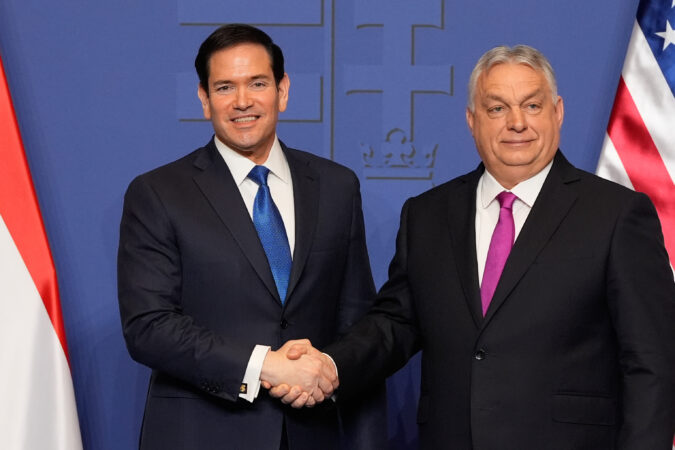
    BUDAPEST — Secretary of State Marco Rubio sought to throw Viktor Orban a political lifeline on Monday, as the Hungarian prime minister trails in most polls ahead of an election this spring that could see Europe’s most pro-Russian and longest-ruling prime minister voted out of power.

    The top U.S. diplomat praised Orban’s leadership, signed a civilian nuclear cooperation agreement with his government, and defended issuing Hungary an exemption from U.S. sanctions despite Orban’s decision to continue buying Russian energy.

    “We want this country to do well,” said Rubio standing alongside Orban during a news conference in Budapest, “especially as long as you’re the prime minister and the leader of this country.”

    “President Trump is deeply committed to your success, because your success is our success,” Rubio added.

    Rubio’s support for Orban marks the latest example of the Trump administration working to keep in power right-wing populist leaders who have praised President Donald Trump and are seen as ideologically aligned. In summer, political neophyte Karol Nawrocki narrowly won a presidential runoff in Poland after being invited to the White House by Trump.

    In a post on Truth Social last week, Trump endorsed Orban for the April elections and called him a “truly strong and powerful Leader” and “a true friend, fighter, and WINNER.”

    Whether the efforts by Trump and Rubio will help Orban prevail in the election remains far from clear in part because Orban’s opponent, Peter Magyar, is also conservative and has gained traction with an anti-corruption message.

    Most polling shows Magyar’s party with a significant lead. “We’re standing on the threshold of victory with 56 days left to go,” Magyar said Sunday, as he formally launched his party’s election campaign in Budapest, vowing to crack down on corruption, return Hungary to its Western European orientation, and end Orban’s nearly 16-year reign.

    Magyar took control of the center-right Tisza party in 2024, the same year the party won about 30% of the vote in European Parliamentary elections. Before he pivoted to the center, he belonged to Orban’s Fidesz party.

    Orban and his Fidesz party are considered by a growing cohort of U.S. conservatives as the intellectual vanguard of policies they seek to replicate in the United States, including hard-line immigration policies and Christian nationalism.

    U.S. conservatives have praised Orban for establishing a fence on Hungary’s southern border in 2015 to keep out refugees fleeing from the Middle East and Africa. They have also praised him for cracking down on LGBTQ+ rights, such as banning the Budapest Pride celebration and approving facial recognition technology to identify scofflaws of the ban.

    Hungary regularly plays host to U.S. conservatives at its Conservative Political Action Conference events, which will again convene in March.

    Orban and the prime minister of neighboring Slovakia, whom Rubio visited on Sunday, are lonely voices in Europe in offering enthusiastic praise for Trump, who has angered traditional U.S. allies by imposing tariffs on them, threatening to take Greenland by force, and attacking European digital regulations.

    Both Hungary and Slovakia have hailed Trump’s efforts to engage Russia and have expressed skepticism about Western support for Ukraine. Orban underscored that point on Monday, using the same hypothetical scenario Trump routinely brings up in his own remarks.

    “If Donald Trump had been the president of the United States, this war would never have broken out,” Orban said. “And if he were not the president now, then we would not even stand the chance to put an end to the war.”

    Rubio expressed exasperation that Washington’s efforts, criticized in some parts of Europe for prioritizing Moscow’s demands over Kyiv’s, weren’t being hailed more widely.

    “This is one of the few wars I’ve ever seen where some people in the international community condemn you for trying to help end a war, but that’s what we’re going to do as long as our role and engagement is a positive one,” Rubio said.

    Orban also thanked the Trump administration for allowing Hungary to continue purchasing “cheap energy” from Russia despite significant efforts by the European Union to stop purchasing Russian oil and gas following the country’s full-scale invasion of Ukraine.

    Critics of Trump’s rapprochement with Hungary question how it serves U.S. interests.

    “Hungary now buys a greater percentage of its oil from Russia than it did at the start of the invasion,” said Jeff Rathke, the president of American-German Institute and a former State Department official. “So it is unclear how Orban contributes to any U.S. objectives aside from the ideological project of supporting right-wing, anti-European, would-be autocrats.”

    When asked about Hungary’s deepening business ties with China and Russia, Rubio said it shouldn’t surprise anyone that Budapest is pursuing its own national interests and emphasized the importance of Orban’s personal relationship with Trump.

    “I’m going to be very blunt with you,” Rubio said. “The prime minister and the president have a very, very close personal relationship and working relationship, and I think it has been incredibly beneficial to the relationship between our two countries.”

  • U.S. troops arrive in Nigeria to help train its military, officials say

    U.S. troops arrive in Nigeria to help train its military, officials say

    ABUJA, Nigeria — About 100 U.S. troops plus equipment have arrived in Nigeria to help train soldiers in the West African country as the government fights against Islamic militants and other armed groups, the Nigerian military announced Monday.

    The arrival followed a request by the Nigerian government to the U.S government for help with training, technical support, and intelligence-sharing, the military said in a statement.

    The deployment follows an easing of tensions that flared between the U.S. and Nigeria when U.S. President Donald Trump said the country wasn’t protecting Christians from an alleged genocide. The Nigerian government has rejected the accusation, and analysts say it simplifies a very complicated situation in which people are often targeted regardless of their faith.

    Maj. Gen. Samaila Uba, spokesperson for Nigeria’s Defense Headquarters, previously has said that the U.S. troops won’t engage in combat or have a direct operational role, and that Nigerian forces will have complete command authority.

    In December, U.S. forces launched airstrikes on Islamic State group-affiliated militants in northwestern Nigeria. Last month, following discussions with Nigerian authorities in Abuja, the head of U.S. Africa Command confirmed a small team of U.S. military officers were in Nigeria, focused on intelligence support.

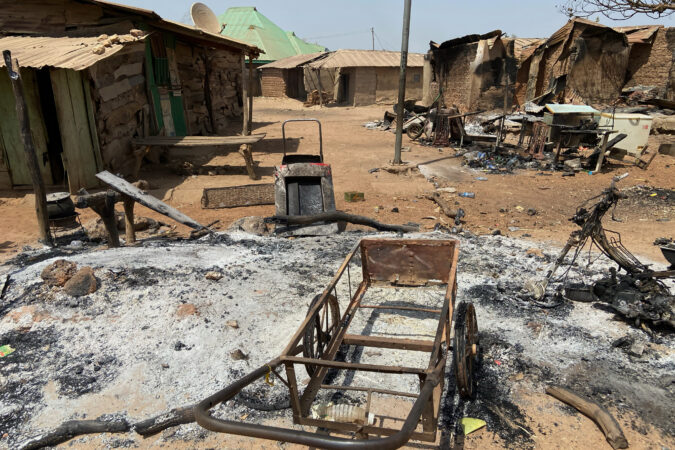
    Nigeria is facing a protracted fight with dozens of local armed groups increasingly battling for turf, including Islamic sects like the homegrown Boko Haram and its breakaway faction Islamic State West Africa Province. There is also the IS-linked Lakurawa, as well as other “bandit” groups that specialize in kidnapping for ransom and illegal mining.

    Recently, the crisis has worsened to include other militants from the neighboring Sahel region, including the Jama’at Nusrat al-Islam wal-Muslimin, which claimed its first attack on Nigerian soil last year. Several thousand people in Nigeria have been killed, according to data from the United Nations. Analysts say not enough is being done by the government to protect its citizens.

    While Christians have been among those targeted, analysts and residents say the majority of victims of the armed groups are Muslims in Nigeria’s Muslim-dominated north, where most attacks occur.

  • Taylor Swift concert attack plot leads to terrorism charges against 21-year-old man

    Taylor Swift concert attack plot leads to terrorism charges against 21-year-old man

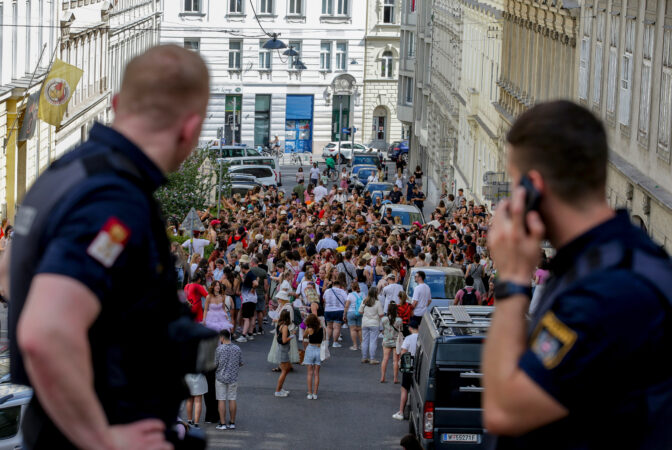
    VIENNA — Austrian public prosecutors filed terrorism-related charges Monday against a 21-year-old defendant who they say planned to carry out an attack on one of superstar singer Taylor Swift’s concerts in Vienna in August 2024.

    Vienna public prosecutors said in a statement that the unnamed defendant had declared allegiance to the Islamic State group by sharing propaganda material and videos via various messaging services.

    Vienna prosecutors also accuse the defendant of having “obtained instructions on the internet for the construction of a shrapnel bomb based on the explosive triacetone triperoxide” typically used by IS, and of having produced a small amount of the explosive.

    Prosecutors also say that the defendant had made “several attempts” to buy weapons illegally outside the country and to bring them to Austria.

    Vienna public prosecutors plan to proceed with a criminal case against the unnamed suspect in Wiener Neustadt, a town near the Austrian capital.

    The spokesperson for the Vienna public prosecutors office confirmed to the Associated Press that the defendant is in custody. Austrian media identified the suspect as Beran A. and said he was arrested in August 2024.

    Austrian authorities canceled three planned Taylor Swift shows in Vienna in August 2024 after they said they foiled an apparent plot to target the performances.

    The U.S. provided intelligence that fed into the decision to cancel the concerts.

    “The United States has an enduring focus on our counterterrorism mission. We work closely with partners all over the world to monitor and disrupt threats. And so as part of that work, the United States did share information with Austrian partners to enable the disruption of a threat to Taylor Swift’s concerts there in Vienna,” then-White House national security spokesperson John Kirby said in August 2024.

  • Looking for gluten-free baked goods on the Main Line? Flakely is open for business in Bryn Mawr.

    Looking for gluten-free baked goods on the Main Line? Flakely is open for business in Bryn Mawr.

    Gluten-free bakery Flakely has opened its doors in Bryn Mawr, bringing its signature pastries to the Main Line after five years of doing business out of a commercial kitchen in Manayunk. The cross-river move marks a major expansion for Flakely, which, for years, has sold most of its pastries in a frozen take-and-bake form because of space constraints.

    Now, Flakely is giving Main Line customers a rare opportunity to buy fresh gluten-free baked goods, namely its acclaimed croissants, which are a notoriously difficult item to make without gluten.

    Lila Colello owner of Flakely a gluten free bakery. She is rolling a plain croissant at her new location on Lancaster Avenue, Bryn Mawr, PA, Friday, Feb. 13, 2026.

    Flakely’s new Bryn Mawr headquarters is located at 1007 W. Lancaster Ave. in the former Grand Middle East hookah lounge (though one would never guess the storefront’s previous identity given all of the pastel pink decor that now adorns the walls).

    On the morning of Flakely’s soft opening last week, bakery staff bustled around the open concept kitchen. A glass display case of treats, including sweet and savory croissants and elegantly decorated cupcakes, shimmered in the early morning light.

    The move to the Main Line is “a homecoming” of sorts for owner Lila Colello, who grew up in Ardmore and attended the Shipley School. Colello worked her way up in Philadelphia’s dessert world, staging at the Ritz Carlton and serving as a pastry chef at Wolfgang Puck Catering. When she was diagnosed with celiac disease, an inflammatory autoimmune disorder triggered by eating gluten, in 2010, she feared her days in the pastry world were numbered.

    But instead, Colello mastered the art of the gluten-free pastry. She started Flakely in 2017 as a wholesale operation and moved into the commercial kitchen in Manayunk in 2021.

    Flakely was voted one of the best gluten-free bakeries in the country in 2024 by USA Today, and Inquirer restaurant critic Craig Laban said Colello had “found the secret” to making laminated pastry, like croissants.

    The Manayunk kitchen helped put Flakely on the map, but it also constrained Colello. Because there was so little foot traffic, Flakley couldn’t make fresh goods for fear of having to throw out large quantities at the end of the day.

    A box of gluten free pastries from Flakely, Lancaster Avenue, Bryn Mawr, PA, Friday, Feb. 13, 2026. Clockwise, Heart Shaped Twix, Plain Croissant and Vanilla Cupcake with Raspberry Curd and Whipped Honey Lemon Mascarpone Buttercream.

    Colello’s new storefront has given her the space to hire a larger staff, expand her fresh pastry offerings, and give patrons a true bakery experience.

    “I don’t know another place, maybe outside of New York, that has gluten-free croissants that you can even have fresh,” Colello said.

    “It’s a totally different experience,” she added.

    Demand for gluten-free goods is high in Lower Merion, Colello said. Many Main Line patrons used to make the trek to Manayunk to buy Colello’s take-and-bake goods and are happy to have a gluten-free option closer to home.

    Flakely joins a small contingent of gluten-free bakeries in the Philly suburbs, including The Happy Mixer, which has locations in Wayne, Chalfont, and Newtown, and Laine’s Gluten Free Bakery in Berwyn.

    Colello said Flakely is still figuring out its hours, but she plans to be open from 10 a.m. to 3 p.m., Tuesday through Friday, and from 10 a.m. to 2 p.m. on Saturday. For more information, you can visit Flakely’s Facebook or Instagram, where Colello will post weekly hours and menus.

    This suburban content is produced with support from the Leslie Miller and Richard Worley Foundation and The Lenfest Institute for Journalism. Editorial content is created independently of the project donors. Gifts to support The Inquirer’s high-impact journalism can be made at inquirer.com/donate. A list of Lenfest Institute donors can be found at lenfestinstitute.org/supporters.

  • NAACP asks judge to protect against ‘misuse’ of voter data seized by FBI in Georgia’s Fulton County

    NAACP asks judge to protect against ‘misuse’ of voter data seized by FBI in Georgia’s Fulton County

    ATLANTA — The NAACP and other organizations are asking a judge to protect personal voter information that was seized by the FBI from an elections warehouse just outside Atlanta.

    Georgia residents entrusted the state with their “sensitive personal information” when they registered to vote, and the Jan. 28 seizure of ballots and other election documents from the Fulton County elections hub “breached that guarantee, infringed constitutional protections of privacy, and interfered with the right to vote,” the organizations said in a motion filed late Sunday.

    The motion asks the judge to “order reasonable limits on the government’s use of the seized data” and to prohibit the government from using the data for purposes other than the criminal investigation cited in the search warrant affidavit. That includes prohibiting any efforts to use it for voter roll maintenance, election administration, or immigration enforcement.

    They also want the judge to order that the government disclose an inventory of all documents and records seized, the identity of anyone who has accessed the records outside of those involved in the criminal investigation, any copying of the records, and all efforts to secure the information.

    The Department of Justice did not immediately respond Monday to a request for comment on the motion.

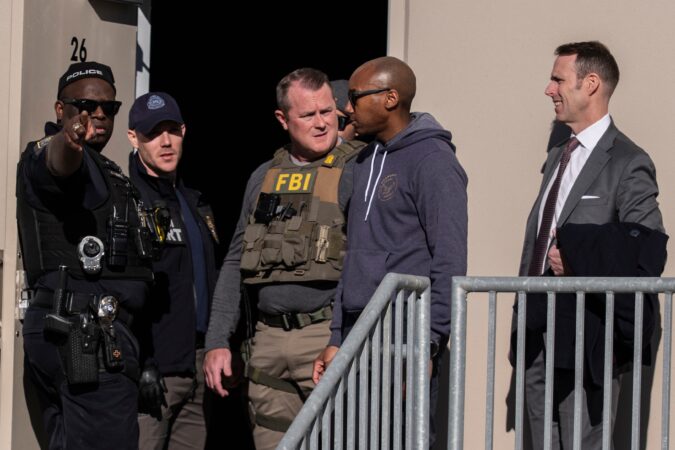
    FBI agents arrived at the elections hub just south of Atlanta with a search warrant seeking documents related to the 2020 election in Fulton County, including: all ballots, tabulator tapes from the scanners that tally the votes, electronic ballot images created when the ballots were counted and then recounted, and all voter rolls. The county has filed a motion seeking the return of the seized materials.

    President Donald Trump has fixated on Fulton, a Democratic stronghold and the most populous county in the state, asserting without evidence that widespread voter fraud there cost him victory in Georgia in 2020.

    An FBI agent’s affidavit presented to a magistrate judge to obtain the search warrant says the criminal investigation began with a referral from Kurt Olsen, who advised Trump as he tried to overturn his 2020 election loss and now serves as Trump’s director of election security and integrity with a mission to investigate Trump’s loss.

    The motion was filed by the Lawyers’ Committee for Civil Rights Under Law on behalf of the NAACP, Georgia and Atlanta NAACP organizations, and the Georgia Coalition for the Peoples Agenda. It notes that the seizure happened as the Justice Department has been seeking unredacted state voter registration rolls.

    The Justice Department has sued at least 23 states and the District of Columbia to try to get them to hand over detailed voter information. The agency has said it is seeking the data as part of an effort to ensure election security, but Democratic officials and other critics worry that federal officials want to use the sensitive data for other purposes. Federal courts in several states have rejected the Justice Department’s attempts to get the records.

    “These repeated efforts to access 2020 election records, including by the entity that now has custody of them, heightens concerns about the privacy and security of sensitive voter data and exacerbates the chill on voting rights,” the motion says.

  • Aliens are ‘real,’ Obama says, and Washington shrugs

    Aliens are ‘real,’ Obama says, and Washington shrugs

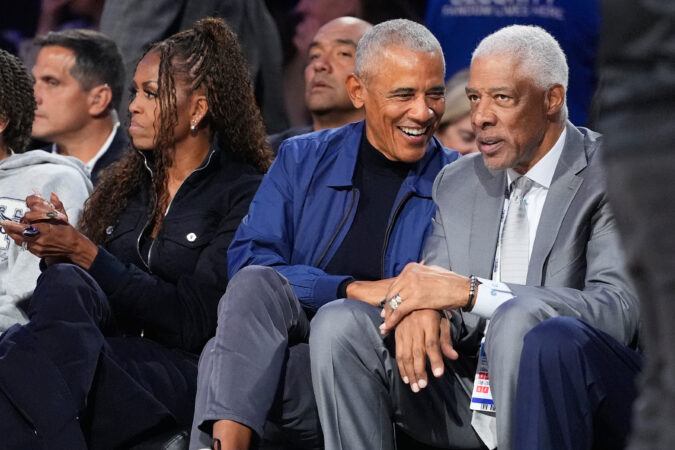
    Former President Barack Obama this weekend appeared to drop an otherworldly bombshell: Extraterrestrials exist.

    “They’re real, but I haven’t seen them,” Obama said in a podcast released Saturday. “There’s no underground facility, unless there’s this enormous conspiracy, and they hid it from the president of the United States.”

    The comments — coming in the 44th minute of a 47-minute interview with a popular liberal podcaster — sparked an outsize reaction on social media, including from UFO believers convinced the truth is out there and that government leaders have spent decades concealing it.

    It was also notable what didn’t happen, at least in official Washington. Political pundits didn’t discuss Obama’s comments on Sunday’s roster of talk shows. His foes didn’t rush to mock or condemn him; his allies didn’t jump to support him. Many mainstream media outlets initially ignored his comments on aliens while transcribing his other podcast remarks.

    In interviews, lawmakers and Capitol Hill staff members offered an explanation: The paranormal has become normal. They pointed to mounting political attention given to unidentified aerial phenomena, or UAPs — the term that has replaced UFOs — and polls that show a growing belief in extraterrestrials. Fifty-six percent of Americans believe that aliens exist, according to a November poll conducted by YouGov.

    Obama on Sunday night largely walked back his unearthly remarks, suggesting that he was offering a pithy response in the spirit of the podcast’s “lightning round” and that he was simply performing cosmic math.

    “Statistically, the universe is so vast that the odds are good there’s life out there,” Obama wrote on Instagram. “But the distances between solar systems are so great that the chances we’ve been visited by aliens is low, and I saw no evidence during my presidency that extraterrestrials have made contact with us. Really!”

    Not long ago, the former president’s 24-hour dalliance with E.T.s would have represented a political earthquake, liability, or both. When Dennis Kucinich, a former Democratic congressman from Ohio, affirmed at a 2007 presidential debate that he believed he had seen an unidentified flying object, Time magazine dubbed the comments one of the “screwups” of that political campaign cycle. Debate moderator Tim Russert then asked whether Obama, at the time a Democratic senator from Illinois, believed in extraterrestrial life, too.

    “I don’t know, and I don’t presume to know,” Obama responded, quickly pivoting from the question. “What I know is there is life here on Earth, and that we’re not attending to life here on Earth.”

    At the time, about a third of Americans believed in UFOs, according to an Associated Press/Ipsos poll released that month.

    But the political conversation has steadily shifted. Beginning in 2017, the New York Times and other media outlets have run reports on secret federal programs that have studied unusual, seemingly inexplicable phenomena. Government agencies have released videos of aircraft that appeared to defy the laws of physics.

    It’s a “legitimate question now,” former President Bill Clinton said in a 2022 appearance on The Late Late Show with James Corden.

    That curiosity is bipartisan. The GOP-led House Oversight Committee in 2024 held a hearing on “exposing the truth” about unidentified aerial phenomena, citing reports by naval aviators and government officials who claim to have witnessed or received reports of strange vehicles. Marco Rubio, the nation’s secretary of state and national security adviser, is among the now-dozens of officials and lawmakers who have demanded more information.

    “We have people with very high jobs in the U.S. Government that are either (a) liars; (b) crazy; or (c) telling the truth, and two of those three options are not good,” Rubio said in a Fox News interview in December, commenting on statements that he said he had heard while serving in the U.S. Senate. “I don’t know the answer.”

    Officials across multiple administrations have said they are unaware of proof of celestial beings.

    “I certainly wasn’t privy to any intelligence about alien life forms and believe me, I asked about it!” Sean Savett, the spokesperson for the White House National Security Council during the Biden administration, wrote in a text message on Sunday.

    Obama in 2021 said that he prioritized finding answers about extraterrestrial life as president, alluding to the conspiracy theories about Area 51 — a military base in Nevada that has been depicted in Hollywood productions as harboring alien technology and even alien beings.

    “When I came into office, I asked … ‘Is there the lab somewhere where we’re keeping the alien specimens and space ship?’ And, you know, they did a little bit of research and the answer was no,” Obama said in a 2021 appearance on The Late Late Show with James Corden.

    The current occupant of the Oval Office has been less publicly curious about interstellar matters. President Donald Trump told ABC News in 2019 that he had a “brief meeting” on UFOs during his first administration and that he didn’t particularly believe in aliens.

    While the White House press office did not respond to questions Sunday about Obama’s comments or whether Trump had updated his views, current staff members said they weren’t aware of Trump discussing the topic.

    “While POTUS often talks about things outside of my orbit, he’s never talked about things outside Earth’s orbit,” a White House official texted Sunday.