Category: News

Latest breaking news and updates

  • Former Penn president Liz Magill will lead Georgetown’s law school

    Former Penn president Liz Magill will lead Georgetown’s law school

    Former University of Pennsylvania president Liz Magill has been named the new executive vice president and dean of Georgetown University’s law school in Washington, D.C.

    The move comes a little more than two years after Magill resigned from Penn following a bipartisan backlash over her testimony to a congressional committee about the campus’ handling of antisemitism.

    “I am honored to join Georgetown Law, one of this country’s great law schools, and the university, an exceptional and distinctive research institution,” Magill said in an announcement posted Friday on the Jesuit institution’s website.

    Magill did not immediately return a request for comment.

    Magill, a lawyer and academic, previously served as dean of Stanford’s law school from 2012 to 2019 and had been executive vice president and provost of the University of Virginia before joining Penn. She resigned from Penn in December 2023 — just 18 months after she started the job — but has remained a faculty member at Penn Carey Law.

    She starts at Georgetown Aug. 1.

    “Liz Magill brings the experience and leadership that we need to lead Georgetown Law,” Thomas A. Reynolds, chair of Georgetown’s board of directors, said in the school’s announcement. “Her ability to connect with others, her humility and her unwavering belief in higher education will make her an exceptional next dean.”

    Three of Magill’s siblings have degrees from Georgetown Law School, the announcement noted.

    Magill became Penn’s president July 1, 2022, following the record-setting 18-year tenure of Amy Gutmann. Tensions began to mount about a year into her tenure, and her departure from Penn followed a tumultuous semester, marked by near-weekly student protests and complaints from deep-pocketed donors over the school’s response to antisemitism following Hamas’ attack on Israel in October 2023. There was also unrest over the school’s allowing the Palestine Writes Literature Festival to be held on campus in September of that year.

    Then, during her congressional testimony, U.S. Rep. Elise Stefanik (R., N.Y.) asked her about whether calling for the genocide of Jewish people would violate Penn’s code of conduct. “It is a context-dependent decision,” Magill had answered.

    Less than a week later, she stepped down. Scott L. Bok, then chair of the board of trustees, also resigned. And former Harvard president Claudine Gay, who also testified that day, resigned, too, less than a month later.

    “I provided this 30-second sound bite that went viral and just swamped everything else about what I’d said and my record at Penn,” Magill said last May when she and Bok talked about their experiences at the New York Public Library following the publication of Bok’s book that discussed the controversy. “And I really regret that. It hurt Penn. It hurt Penn’s reputation, and my job was to protect the institution that I led.”

  • Mitch McConnell is taking a beating in the race to replace him

    Mitch McConnell is taking a beating in the race to replace him

    One Republican candidate to succeed Sen. Mitch McConnell introduced himself with an ad that shows a cardboard cutout of the longtime Senate majority leader in the trash.

    Allies for a rival hit back with ads that noted the first candidate gave McConnell money.

    And Daniel Cameron, the former Kentucky attorney general once considered a McConnell protégé, is now keeping his distance.

    “I’m my own man,” Cameron said in an interview, later suggesting McConnell donors prefer one of his opponents.

    The Senate primary to replace 83-year-old McConnell shows how profoundly the GOP base in his home state has soured on one of the most powerful and significant political figures in Kentucky history. McConnell drew low approval ratings for years but fended off challengers by flexing his raw clout and ability to deliver for his state.

    While he at times expressed frustration or anger with President Donald Trump, McConnell used his political muscle to cement much of the president’s first-term legacy, including a 6-3 conservative majority on the Supreme Court that has helped pave the way for an even more disruptive second term.

    But many in the MAGA movement still view him as the embodiment of the GOP establishment that sought to hold Trump back. Three former interns for McConnell have distanced themselves while running to succeed him, pitching themselves as “America First” Republicans in Trump’s mold.

    Cameron says voters don’t want a candidate who is “just bashing an old man” — a rebuke of his opponent Nate Morris, a businessman backed by national MAGA stars whose vociferous attacks on McConnell have alienated some Republicans in the state. Many operatives argued his initial assault went too far.

    Still, it’s clear that ambitious Republicans have diverged from the towering conservative figure, who is set to retire next year after four decades in Congress.

    “This is a fight for the future of the Republican Party … Donald Trump’s Republican Party,” said Morris, a friend of Vice President JD Vance, in an interview. “And certainly, if you’re with Mitch McConnell, you’re not part of that future.”

    Terry Carmack, McConnell’s chief of staff, said the senator has secured more than $65 billion in extra federal funding for Kentucky over his career — for military bases, hospitals, law enforcement and more — and added that the state “deserves a Senator who will fill those shoes.”

    “As Kentucky’s longest-serving Senator and the nation’s longest-serving Senate leader, Senator McConnell’s job stayed the same: ensuring Kentucky always punched above its weight,” Carmack said in a statement.

    The primary is effectively a three-way race between Morris, Cameron and Rep. Andy Barr, who touts that he was the Kentucky chairman of Trump’s 2024 campaign. Whoever wins the May 19 GOP contest is likely to represent the solidly red state.

    The fact that all three have ties to McConnell reflects how much in Kentucky GOP politics traces back to the senator. The state Republican Party headquarters bears his name, and he has helped many other GOP officeholders over the years.

    “I challenge anybody who takes this seat to do what he’s done,” said Frank Amaro, the GOP vice chair for Kentucky’s 1st Congressional District.

    The campaign jabs at McConnell have been frustrating to many who have worked with him over the years and say he deserves respect, pointing to his hardball tactics that pushed the courts nationwide to the right and the money he has steered toward Kentucky. The state got nearly $2.6 billion in extra federal funding this fiscal year, according to McConnell’s office.

    “You don’t have to like someone for them to be your go-to to deliver results,” said Iris Wilbur Glick, a former political director for McConnell who called candidates’ positioning on the senator “very disappointing.”

    But many Republicans are critical — especially of his relationship with Trump. Trump has repeatedly attacked him. McConnell held Trump “practically and morally responsible” for the mob that stormed the U.S. Capitol on Jan. 6, 2021, though his vote against impeachment helped enable Trump’s comeback.

    After Trump won in 2024 and McConnell stepped down as majority leader, he opposed some of Trump’s most controversial Cabinet picks — casting the only GOP vote against Robert F. Kennedy Jr. for secretary of health and human services.

    A December Economist-YouGov poll found that 21 percent of Republicans nationally had a favorable view of McConnell, while 55 percent had an unfavorable view. In interviews, Kentucky voters often knew little about the Senate race or the candidates — but knew they didn’t like McConnell.

    “I want him out of there,” said Julie Jackson, a 56-year-old Republican.

    Cameron, who once worked as McConnell’s legal counsel and rose in politics with his mentorship, launched his Senate campaign last year with an attempt to separate himself. Days after announcing, he put out a video rebuking McConnell for opposing Trump’s Cabinet picks.

    “What we saw from Mitch McConnell in voting against Pete Hegseth, Tulsi Gabbard and RFK was just flat-out wrong,” Cameron said in the video. “You should expect a senator from Kentucky to vote for those nominees to advance the America First agenda.”

    A year later, one of Cameron’s biggest challenges is raising money — a struggle some Republicans in the state attribute in part to his break with McConnell.

    “Daniel Cameron relied heavily on his connections to McConnell-world in his previous races for fundraising, and that’s simply not an avenue that’s available to him for this race, and it shows in his fundraising reports,” said Tres Watson, a Republican strategist in Kentucky.

    Cameron notes that some McConnell donors have backed Barr — who leads the pack on fundraising. Attack ads on Barr from a group affiliated with the conservative Club for Growth featured old footage of Barr calling McConnell a “mentor.”

    Barr has kept his distance from McConnell, too, however, tying himself to Trump.

    “Thank you for giving me a chance to work with this president to make America great again,” he said to close his speech at recent GOP dinner. His team declined an interview request.

    Trump has stayed out of the Senate race and often avoids weighing in on primaries absent a personal grudge or clear polling leader. But prominent Trump allies have lined up behind Morris, the businessman and friend of Vance. Morris said the vice president called him last year encouraging him to jump into the Senate race, saying that “we’re going to need somebody in that seat that’s not going to stab our president in the back.” Vance allies work on Morris’s campaign and a supportive super PAC.

    Charlie Kirk, the late conservative activist, endorsed Morris before he was killed in September. Morris “is not going to be beholden to the McConnell machine,” said Andrew Kolvet, a spokesman for Kirk’s group Turning Point, who called McConnell a “relic.”

    Elon Musk, the billionaire tech CEO who has become a major force in GOP politics, rocked the primary by putting $10 million behind Morris this year after a meeting where he came away impressed in part by Morris’s anti-McConnell message, according to a person familiar with the matter who spoke on the condition of anonymity to discuss private conversations.

    “[McConnell] has had a stranglehold on Kentucky for 40 years, and it is not the easiest thing to challenge the McConnell mafia right here in the Bluegrass State,” Morris said last month on the podcast of Trump’s eldest son, Donald Trump Jr. — where he also launched his campaign. “But we’ve done it and we’ve gone straight for the jugular of Mitch and his cronies.”

    The message hasn’t always gone over well. Morris was roundly booed last year at an annual Kentucky political picnic where the former garbage company CEO declared he would “trash Mitch McConnell’s legacy.”

    “A lot has changed in politics, but you still have to introduce yourself, and he started out just attacking people,” said Adam Koenig, a former GOP state lawmaker.

    Morris dialed back his attacks at a recent event in northern Kentucky, mentioning McConnell only in passing. But he made his antipathy clear.

    “We cannot go back to what we’ve had the last 40 years,” he said.

  • No, George Washington didn’t have wooden teeth. Yes, he led the Siege of Boston.

    No, George Washington didn’t have wooden teeth. Yes, he led the Siege of Boston.

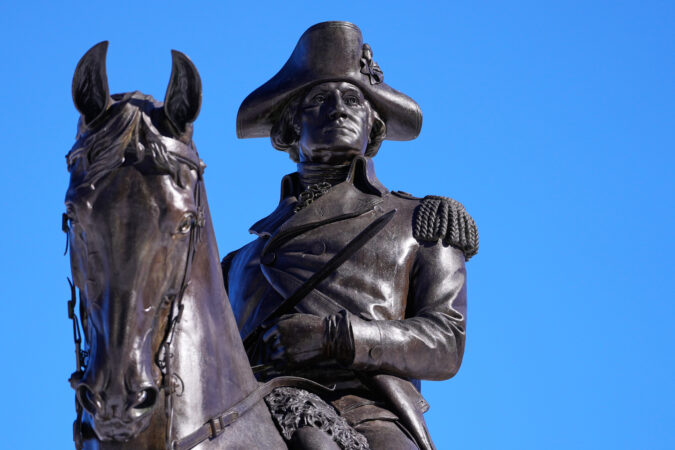
    BOSTON — More than a decade before he became the country’s first president, George Washington was leading a critical campaign in the early days of the American Revolution. The Siege of Boston was his first campaign as commander-in-chief of the Continental Army and, in many ways, set the stage for his military and political successes — celebrated on Presidents Day.

    Following the Battles of Lexington and Concord, militias had pinned down the British in Boston in April 1775. The Continental Congress, recognizing the need for a more organized military effort, selected Washington to lead the newly formed army.

    The Siege of Boston and its significance

    On this day 250 years ago, Washington would have been nearing the end of an almost yearlong siege that bottled up as many as 11,000 British troops and hundreds more loyalists. The British were occupying Boston at the time, and the goal of the siege was to force them out.

    A critical decision made by Washington was sending Henry Knox, a young bookseller, to Fort Ticonderoga in New York to retrieve dozens of cannons. The cannons, transported hundreds of miles in the dead of winter, were eventually used to fire on British positions. That contributed to the decision by the British, facing dwindling supplies, to abandon the city by boat on March 17, 1776.

    Historians argue that the British abandoning their positions, celebrated in Boston as Evacuation Day, rid the city of loyalists at a critical time, denied the British access to an important port and gave patriots a huge morale boost.

    “The success of the Siege of Boston gave new life and momentum to the Revolution,” Chris Beagan, the site manager at Longfellow House in Cambridge, a National Historic Site that served as Washington’s headquarters during the American Revolution. “Had it failed, royal control of New England would have continued, and the Continental Army likely would have dissolved.”

    How the siege shaped Washington

    The siege was also a critical test for Washington. A surveyor and farmer, Washington had been out of the military for nearly 20 years after commanding troops for the British during the French and Indian War. His successful campaign ensured Washington remained the commander-in-chief for the remainder of the revolution.

    Doug Bradburn, president of George Washington’s Mount Vernon, said Washington took the first steps to creating a geographically diverse army that included militiamen from Massachusetts to Virginia and, by the end of the war, a fighting force with significant Black and Native American representation. It was the most integrated military until President Harry S. Truman’s desegregated the armed forces in 1948, he said.

    Washington, a slave owner who depended on hundreds of slaves on his Mount Vernon estate, was initially opposed to admitting formerly enslaved and free Black soldiers into the army. But short of men, Washington came to realize “there are free Blacks who want to enlist and he needs them to keep the British from breaking out” during the siege, Bradburn said.

    Ridding Boston of the British also turned Washington into one of the country’s most popular political figures.

    “He comes to embody the cause in a time before you have a nation, before you have a Declaration of Independence, before you’re really sure what is the goal of this struggle,” Bradburn said. “He becomes the face of the revolutionary movement.”

    Commanding the military for more than eight years also prepared Washington for the presidency, Pulitzer Prize-winning military historian Rick Atkinson said. “Perhaps most important, it gave him a sense that Americans could and should be a single people, rather than denizens of thirteen different entities.”

    Myths of Washington

    His rise to prominence also led to plenty of myths about Washington, many which persist to this day.

    One of the most popular is the cherry tree myth. It was invented by one of Washington’s first biographers, according to George Washington’s Mount Vernon, who created the story after his death. Supposedly, a 6-year-old Washington took an ax to a cherry tree and admitted as much when caught by his father, famously saying “I cannot tell a lie … I did cut it with my hatchet.”

    The second one is the wooden teeth myth. It was rumored that Washington had wooden dentures and scholars, well into the 20th century, were quoted as saying his false teeth were made from wood. Not true. He never wore wooden dentures, instead using those with ivory, gold and even human teeth.

    More than a statesman

    During his lifetime, Washington had myriad pursuits. He was known as an innovative farmer, according to the George Washington’s Mount Vernon, and an advocate for Western expansion, buying up to 50,000 acres of land in several Mid-Atlantic states. After returning to Mount Vernon, he built a whiskey distillery that became one of the largest in the country.

    His connection to slavery was complicated. He advocated for ending slavery, and his will called for freeing all the slaves he owned after the death of his wife, Martha Washington. But he didn’t own all the slaves at Mount Vernon so he couldn’t legally free all of them.

    Celebrating Presidents Day

    For fans of George Washington, Presidents Day is their Super Bowl. Originated to celebrate Washington’s birthday, which falls on Feb. 22, the holiday has become associated with good deals at the mall. Still, there are plenty of places celebrating all things Washington on this day.

    There will be a wreath-laying ceremony at Washington’s tomb at Mount Vernon, and there will be a Continental Army encampment. There will be a parade honoring Washington in Alexandria, Virginia, and, in Laredo, Texas, a monthlong celebration features a carnival, pageants, an air show and jalapeno festival.

  • Iran’s top diplomat met with the head of the U.N. nuclear watchdog ahead of a second round of U.S. talks

    Iran’s top diplomat met with the head of the U.N. nuclear watchdog ahead of a second round of U.S. talks

    GENEVA — Iran’s top diplomat met with the head of the U.N. nuclear watchdog agency on Monday, ahead of a second round of negotiations with the United States over Tehran’s nuclear program.

    Iranian Foreign Minister Abbas Araghchi met with Rafael Grossi, director-general of the International Atomic Energy Agency, and said he would also meet with Foreign Minister Badr al-Busaidi of Oman, which is hosting the U.S.-Iran talks in Geneva on Tuesday.

    “I am in Geneva with real ideas to achieve a fair and equitable deal,” Araghchi wrote on X. “What is not on the table: submission before threats.”

    As U.S. President Donald Trump ordered an additional aircraft carrier to the region, Iran on Monday launched a second naval drill in weeks, state TV reported. It said the drill would test Iran’s intelligence and operational capabilities in the Strait of Hormuz, the Persian Gulf and the Gulf of Oman.

    Iran’s drills take place against the U.S. military buildup

    Just before the talks, Iran announced its paramilitary Revolutionary Guard started the drill early Monday morning in the waterways that are crucial international trade routes through which 20% of the world’s oil passes.

    Separately, EOS Risk Group said sailors passing through the region received by radio a warning that the northern lane of the Strait of Hormuz, in Iranian territorial waters, likely would see a live-fire drill Tuesday. Iranian state TV did not mention the live fire drill.

    This is the second time in recent weeks sailors have received warning about an Iranian live fire drill. During the previous exercise, announced at the end of January, the U.S. military’s Central Command issued a strongly worded warning to Iran and the Revolutionary Guard. While acknowledging Iran’s “right to operate professionally in international airspace and waters,” it warned against interfering or threatening American warships or passing commercial vessels.

    On Feb. 4, tensions between the Iranian and U.S. navies rose further after a U.S. Navy fighter jet shot down an Iranian drone that was approaching the aircraft carrier USS Abraham Lincoln in the Arabian Sea. Iran also harassed a U.S.-flagged and U.S.-crewed merchant vessel that was sailing in the Strait of Hormuz, the U.S. military reported.

    Iran open to compromise in exchange for sanctions relief

    On Sunday, Iran’s Deputy Foreign Minister Majid Takht-Ravanchi signaled that Tehran could be open to compromise on the nuclear issue, but is looking for an easing of international sanctions led by the United States.

    “The ball is in America’s court. They have to prove they want to have a deal with us,” Takht-Ravanchi told the BBC. “If we see a sincerity on their part, I am sure that we will be on a road to have an agreement.”

    “We are ready to discuss this and other issues related to our program provided that they are also ready to talk about the sanctions,” he added.

    Oman hosted a first round of indirect talks between the U.S. and Iran on Feb. 6.

    Similar talks last year between the U.S. and Iran about Iran’s nuclear program broke down after Israel launched what became a 12-day war on Iran, that included the U.S. bombing Iranian nuclear sites.

    The U.S. is also hosting talks between envoys from Russia and Ukraine in Geneva on Tuesday and Wednesday, days ahead of the fourth anniversary of the all-out Russian invasion of its neighbor.

    U.S. keeps military pressure high

    Trump initially threatened to take military action over Iran’s bloody crackdown on nationwide protests last month, but then shifted to a pressure campaign in recent weeks to try to get Tehran to make a deal over its nuclear program.

    Secretary of State Marco Rubio, visiting Budapest, reiterated on Monday that the U.S. hopes to achieve a deal with Iran, despite the difficulties. “I’m not going to prejudge these talks,” Rubio said. “The president always prefers peaceful outcomes and negotiated outcomes to things.”

    Trump said Friday the USS Gerald R. Ford, the world’s largest aircraft carrier, was being sent from the Caribbean to the Mideast to join other military assets the U.S. has built up in the region. He also said a change in power in Iran “would be the best thing that could happen.”

    Iran has said if the U.S. attacks, it will respond with an attack of its own.

    The Trump administration has maintained that Iran can have no uranium enrichment under any deal. Tehran says it won’t agree to that.

    Iran has insisted its nuclear program is for peaceful purposes. However, its officials increasingly threaten to pursue a nuclear weapon. Before the June war, Iran had been enriching uranium up to 60% purity, a short, technical step away from weapons-grade levels.

    The direct meeting with Grossi is a significant step after Iran suspended all cooperation with the IAEA following the June war with Israel. The two also met briefly on the sidelines of the United Nations General Assembly in September. The IAEA said it has been unable to verify the status of Iran’s near weapons-grade uranium stockpile since the war. Iran has allowed IAEA some access to sites that were not damaged, but has not allowed inspectors to visit other sites.

    Iran’s stockpile of uranium enriched to 60% could allow Iran to build as many as 10 nuclear bombs, should it decide to weaponize its program, Grossi previously told The Associated Press. He added that it doesn’t mean that Iran has such a weapon.

    Israeli Prime Minister Benjamin Netanyahu rushed to Washington last week to urge Trump to ensure that any deal to include steps to neutralize Iran’s ballistic missile program and end its funding for proxy groups such as Hamas and Hezbollah.

  • These Philly schools are slated for big upgrades as the district works to modernize buildings

    These Philly schools are slated for big upgrades as the district works to modernize buildings

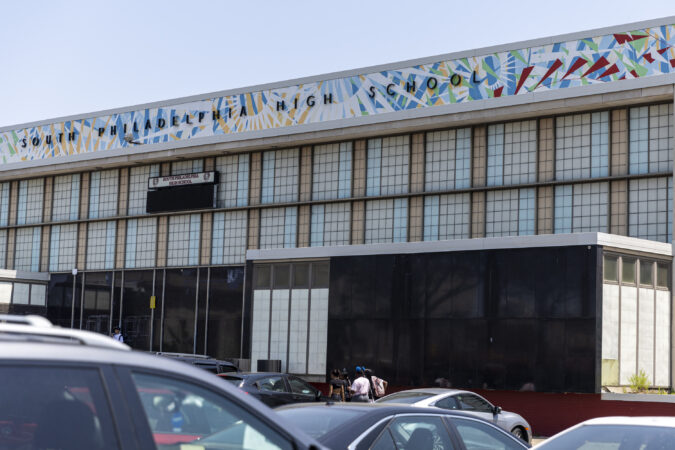
    Nearly $58 million for South Philadelphia High School. Over $27 million for Forrest Elementary in the Northeast. Almost $55 million for Bartram High in Southwest Philadelphia.

    Ahead of a Tuesday City Council hearing on the Philadelphia School District’s proposed facilities master plan, district officials have dangled the carrot that would accompany the stick of 20 school closings.

    The district released Monday morning how much it would spend on modernization projects at schools in each City Council District if Superintendent Tony B. Watlington Sr.’s plan is approved by the school board this winter.

    The totals range from $443 million in the 9th District — which includes parts of Olney, East and West Oak Lane, Mount Airy, and Oxford Circle — to nearly $56 million for the 6th District in lower Northeast Philadelphia, including Mayfair, Bridesburg, and Wissinoming.

    The district’s announcement comes as the plan has already raised hackles among some Council members, and City Council President Kenyatta Johnson has said he’ll hold up the district’s funding “if need be” if concerns are not answered to Council’s satisfaction.

    Tailoring the release to Council districts — including highlighting one major project per district — appears to be an effort to calm opposition ahead of Tuesday’s hearing.

    Details on every school that would get upgraded under Watlington’s plan — 159 in total — have not yet been released.

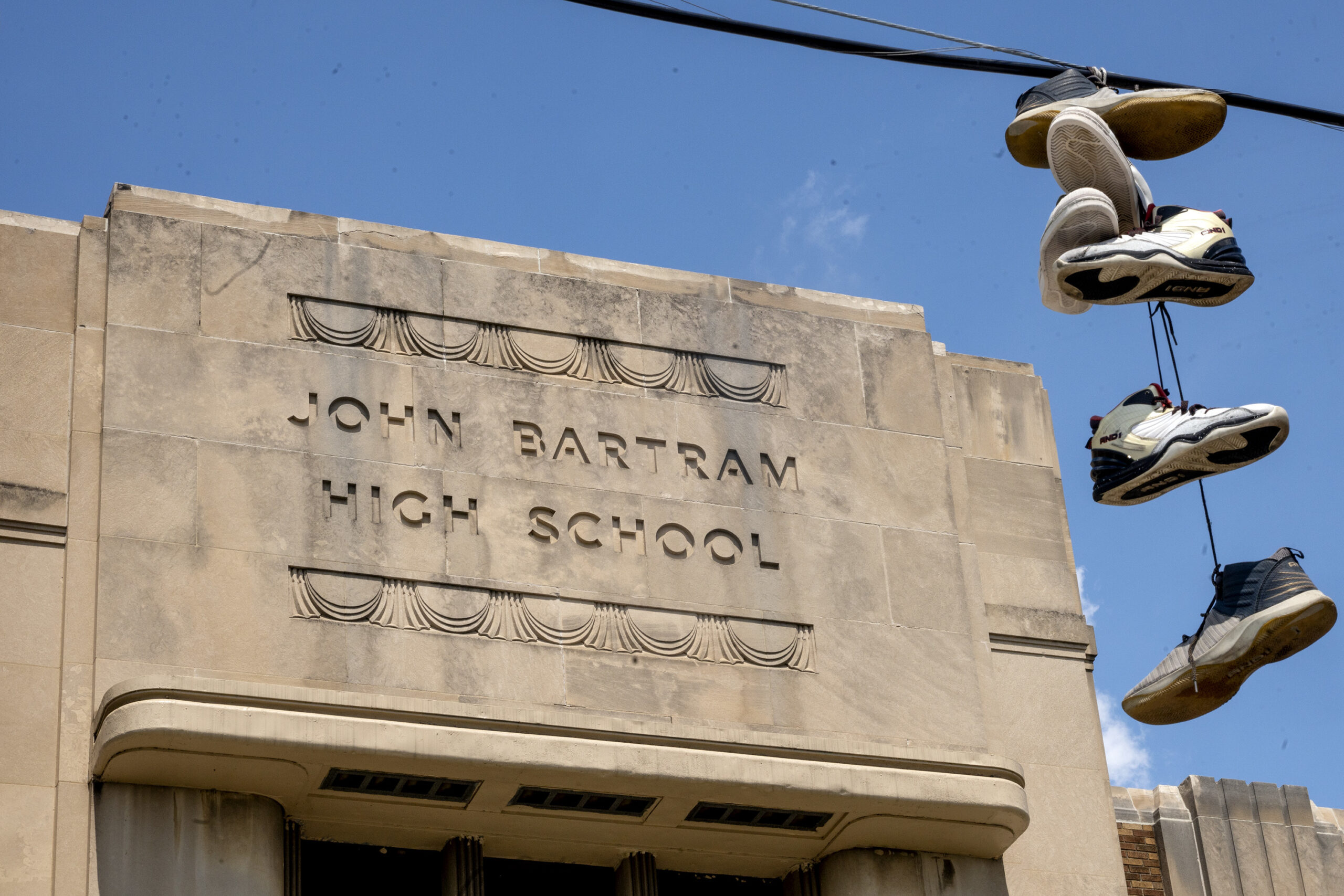
    John Bartram High School at 2401 S. 67th St in Southwest Philadelphia.

    Watlington has stressed that the point of the long-range facilities plan is not closing schools, but solving for issues of equity, improving academic programming, and acknowledging that many buildings are in poor shape, while some are underenrolled and some are overenrolled.

    “This plan is about ensuring that more students in every neighborhood have access to the high-quality academics, programs, and facilities they deserve,” Watlington said in a statement. “While some of these decisions are difficult, they are grounded in deep community engagement and a shared commitment to improving outcomes for all public school children in every ZIP code of Philadelphia.”

    But at community meetings unfolding at schools across the city that are slated for closure, Council members have expressed displeasure about parts of the plan — a preview, perhaps, of Tuesday’s meeting.

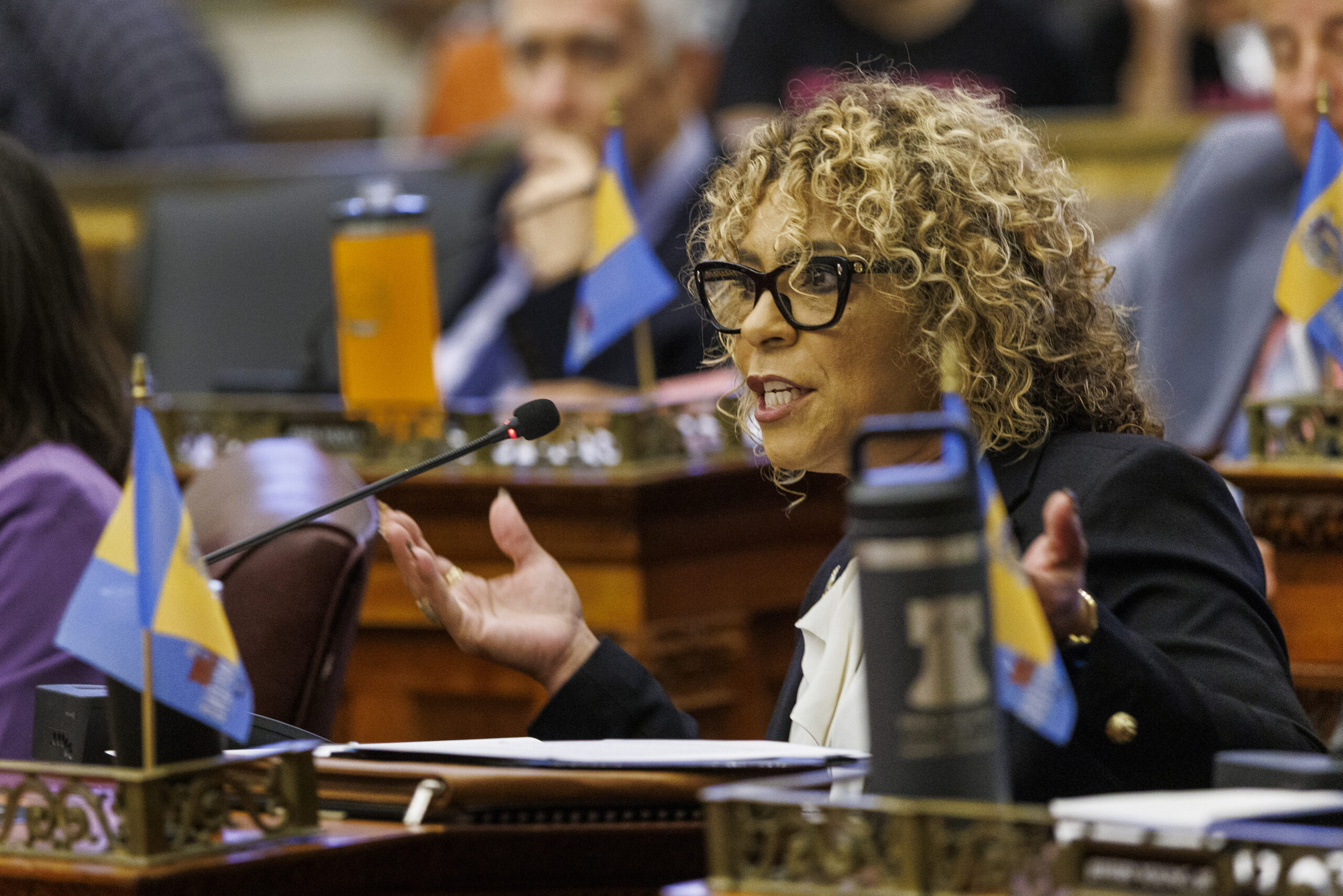
    Councilmember Quetcy Lozada, represents the 7th District, including Kensington, Feltonville, Juniata Park, and Frankford. Four schools in her district — Stetson, Conwell, Harding, and Welsh — are on the chopping block.

    “The fact that they are being considered for closure is very concerning to me,” Lozada said at a meeting at Stetson Middle School on Thursday.

    Councilmember Quetcy Lozada is shown in a 2025 file photo.

    Councilmember Cindy Bass, speaking at a Lankenau High meeting, objected to closing schools that are working well. (Three schools in Bass’ 8th District, Fitler Elementary, Wagner middle school, and Parkway Northwest High School, are proposed for closure. Lankenau is in Curtis Jones Jr.’s district but has citywide enrollment.)

    “I do not understand what the logic and the rationale is that we are making these kinds of decisions,” said Bass.

    While Council members will not have a direct say on the proposed school closures or the facilities plan, Council wields significant control over the district’s budget. Funding for the district is included in the annual city budget that Council must approve by the end of June.

    Local revenue and city funding made up about 40% of the district’s budget this year, or nearly $2 billion. Most of that is the district’s share of city property taxes which, unlike other school systems in Pennsylvania, are levied by the city and then distributed to the district.

    (function() {
    var l2 = function() {
    new pym.Parent(‘schools_districts2’,
    ‘https://media.inquirer.com/storage/inquirer/projects/innovation/arcgis_iframe/schools_districts2.html’);
    };
    if (typeof(pym) === ‘undefined’) {
    var h = document.getElementsByTagName(‘head’)[0],
    s = document.createElement(‘script’);
    s.type = ‘text/javascript’;
    s.src = ‘https://pym.nprapps.org/pym.v1.min.js’;
    s.onload = l2;
    h.appendChild(s);
    } else {
    l2();
    }
    })();

    Where will the money go?

    Despite city and schools officials saying in the past that the district has more than $7 billion in unmet facilities needs, Watlington has said the district could complete its plan — including modernizing 159 schools — for $2.8 billion.

    Officials said further details about modernization projects and the facilities plan will be released before the Feb. 26 school board meeting, where Watlington is expected to formally present his proposal to the school board.

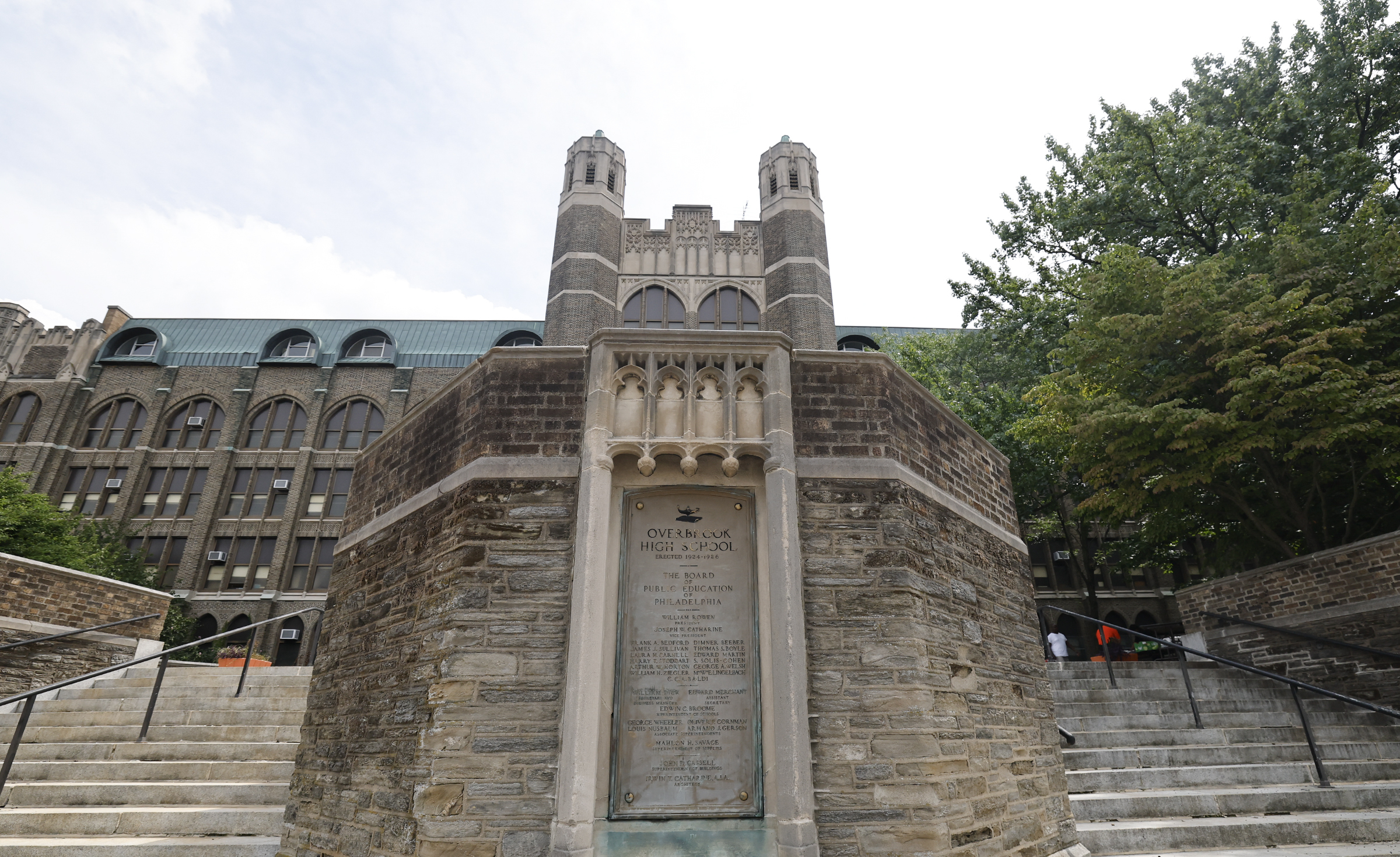
    Overbrook High School, in West Philadelphia, will get major renovations in preparation for The Workshop School, a small, project-based district school, colocating inside the building.

    Here are the total proposed dollar amounts per Council district and the 10 big projects announced Monday:

    • 1st District: $308,049,008. Key project: $57.2 million for South Philadelphia High, turning the school into a career and technical education hub and modernizing electrical, lighting, and security systems.
    • 2nd District: $302,284,081. Key project: $54.6 million for Bartram High, to renovate the school and grounds, career and technical education spaces, restroom and accessibility renovations, new painting, and new athletic fields and facilities (on the site of nearby Tilden Middle School, which is slated to close). Motivation High School would close and become an honors program inside Bartram.
    • 3rd District: $204,947,677. Key project: $19.6 million for the Sulzberger site, which currently houses Middle Years Alternative and is proposed to house Martha Washington Elementary. (It currently houses MYA and Parkway West, which would close.) Improvements would include heating and cooling and electrical systems, classroom modernizations, and the addition of an elevator and a playground.
    • 4th District: $216,819,480. Key project: $50.2 million for Overbrook High School, with updates including new restrooms, accessibility improvements, and refurbished automotive bays. (The Workshop School, another district high school, is colocating inside the building.)
    • 5th District: $290,748,937. Key project: $8.4 million for Franklin Learning Center, with updates including for exterior, auditorium, and restroom renovations, security cameras, accessibility improvements, and new paint.
    • 6th District: $55,769,008. Key project: $27.2 million for Forrest Elementary, including modernizations that will allow the school to grow to a K-8, and eliminate overcrowding at Northeast Community Propel Academy.
    • 7th District: $388,795,327. Key project: $32.3 million at John Marshall Elementary in Frankford to add capacity at the school, plus a gym, elevator, and schoolwide renovations.
    • 8th District: $318,986,215. Key project: $42.9 million at Martin Luther King High in East Germantown for electrical and general building upgrades and accommodations for Building 21, a school that will colocate inside the King building.
    • 9th District: $442,934,244. Key project: $42.2 million at Carnell Elementary for projects including an addition to expand the school’s capacity, restroom renovations, exterior improvements, and stormwater management projects.
    • 10th District: $275,829,539. Key project: at Watson Comly Elementary in the Northeast, an addition to accommodate middle grade students from Loesche and Comly, and building modernizations. District officials did not give the estimated cost of the Comly project.

    What’s next?

    The facilities Council hearing is scheduled for 10 a.m. Tuesday at City Hall. It will also be livestreamed.

    Members of the public also have the opportunity to weigh in on the facilities plan writ large at three community town halls scheduled for this week: Tuesday at Benjamin Franklin High from 4:30 to 6:30 p.m., Friday at Kensington CAPA from 4:30 to 6:30 p.m., and a virtual meeting scheduled for 2 p.m. on Sunday.

    Meetings at each of the schools proposed for closure continue this week, also; the full schedule can be found on the district’s website.

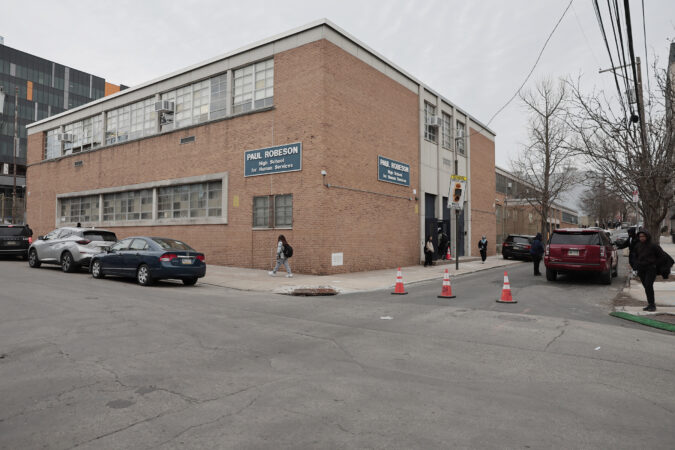
  • The Philly School District tried to close Paul Robeson HS before. Now, it’s back on the chopping block.

    The Philly School District tried to close Paul Robeson HS before. Now, it’s back on the chopping block.

    In 2022, the governor of Pennsylvania stood on a stage at Paul Robeson High in West Philadelphia and hailed the small school as “a model for what can happen in Pennsylvania.

    But four years later, the Philadelphia School District has recommended closing Robeson, suggesting its small size limited students’ opportunities. Superintendent Tony B. Watlington Sr. wants its students to attend Sayre High, where Robeson would become an honors program, losing its separate identity, administration, and staff.

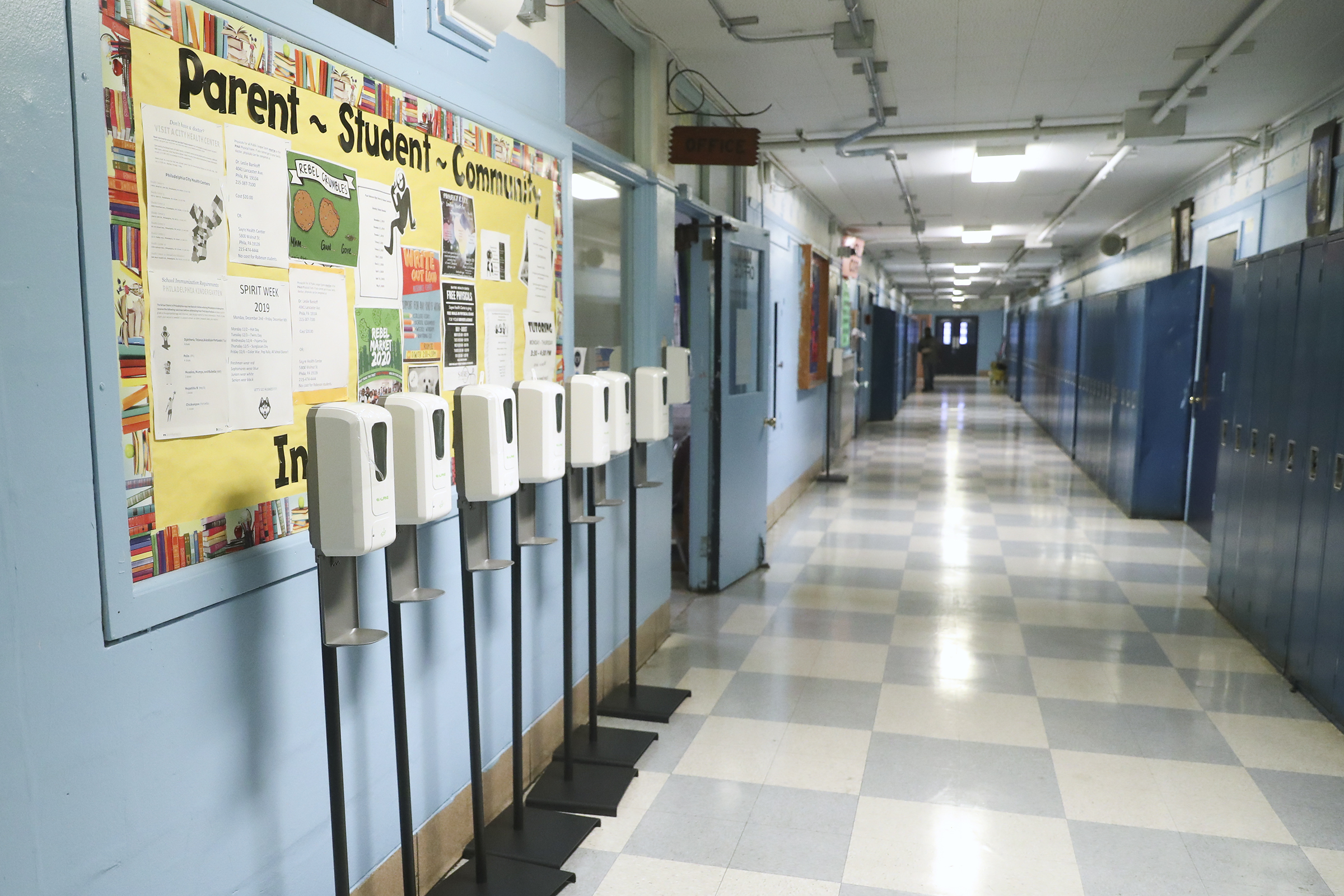
    A hallway at Paul Robeson High School, which the district is attempting to close for the second time.

    Having Robeson listed among 20 schools slated for closure was the worst kind of déjà vu for some in the Robeson community: In the last round of large-scale Philadelphia school closures, district officials recommended closing Robeson and sending students to Sayre, which is about two miles away.

    “This is the exact same plan,” said Andrew Saltz, who helped organize the Robeson community against closure in 2013 and who is doing it again 13 years later. “We need a different plan.”

    The community is speaking out, hoping to persuade the school board to save Robeson again when it votes on Watlington’s recommendations later this winter.

    An upward trajectory

    Robeson soared after successfully fending off its last attempted shutdown.

    By 2017, it was named the district’s most-improved high school. It built upon its core of dedicated teachers and students; though most Robeson students come from its own West Philadelphia neighborhood, it is a citywide school, meaning they have to apply to be there.

    Robeson expanded existing partnerships and formed new ones that gave students opportunities to get onto nearby college campuses. Richard Gordon, who came to lead the school in 2013, was recognized as national principal of the year. (Gordon has since been promoted to assistant superintendent in the district.)

    Multiple Robeson teachers have been honored as among the district’s best.

    The school sent a student to Harvard, a coup for any district high school, let alone one without strict academic criteria. Its students successfully pushed to get their school air-conditioned. School staff secured outside funding to renovate the cafeteria.

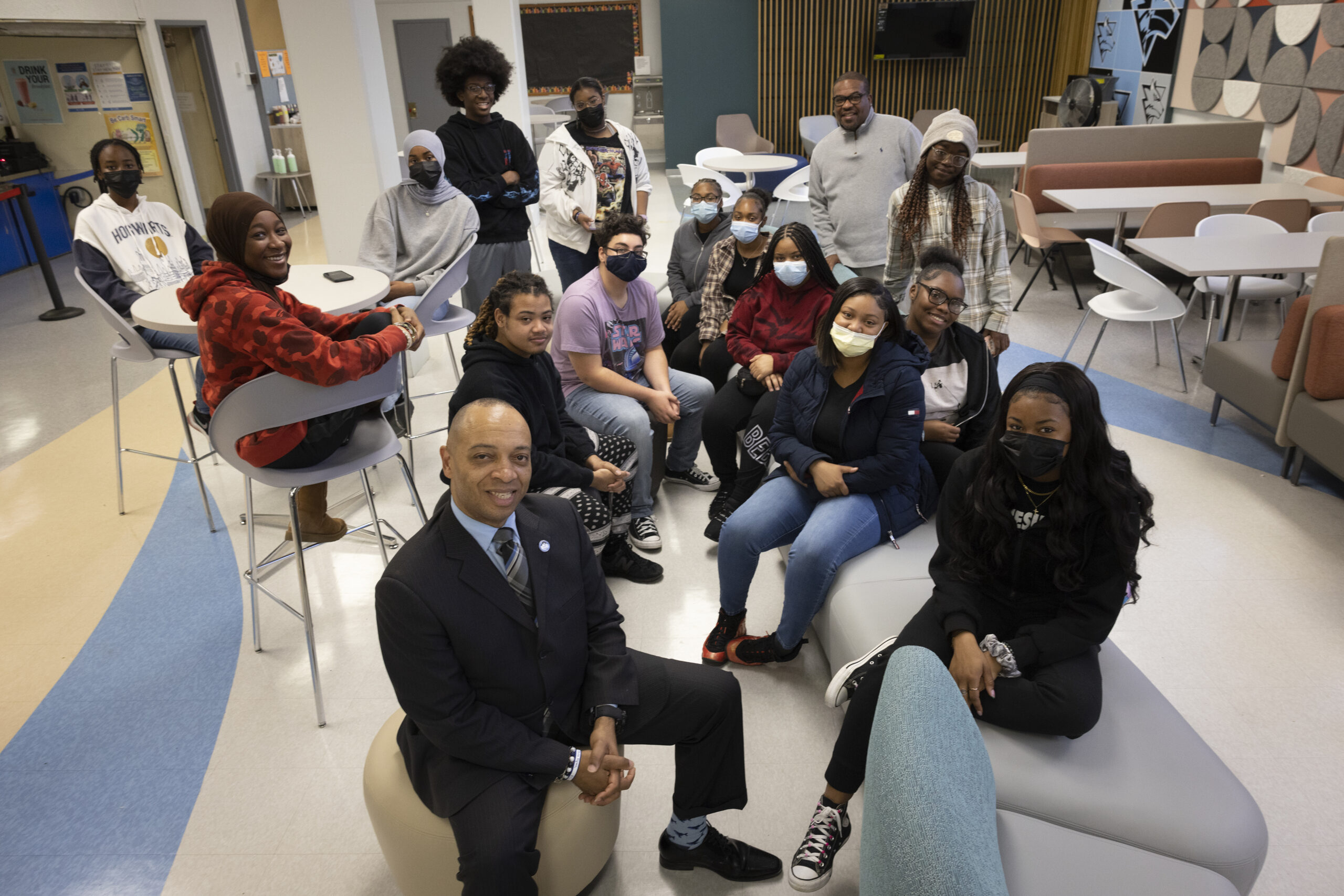
    Then-Principal Richard Gordon (front, tie), then-assistant principal Lawrence King (rear, gray sweater) and members of the Robeson High student body in the newly renovated cafeteria in this 2022 file photo.

    Then-Mayor Jim Kenney visited Robeson to tout its success. So did then-Gov. Tom Wolf.

    Elana Evans, a beloved Robeson teacher and the school’s special education compliance monitor, has already weathered one school shutdown — she taught at the old University City High School, closed in 2013

    That loss was brutal, Evans said. But she is proud of what the community has built at Robeson.

    “It’s an amazing story that continues to stay amazing because we still keep growing,” Evans said. “To say, ‘OK, you’re going to merge with this school, and your name is just going to fade to nothing,’ is, to me, disrespectful.”

    District officials are pitching Robeson’s closure — and the closings writ large — as a move to expand opportunities for all students.

    Sayre, with Robeson as a part of it, would get modernized career and technical rooms and equipment in the facilities plan, Sarah Galbally, Watlington’s chief of staff, told the Robeson community. Sayre would get more accessibility features; renovated stormwater management, roof, and restrooms; and new paint.

    But that didn’t convince Evans.

    “You say one thing, ‘This is how it’s going to look like,’ but for real for real, stop gaslighting me,” Evans said.

    ‘They needed something small’

    Samantha Bromfield homeschooled her twins for seven years, and was wary when she enrolled her children in public school — until Robeson made her believe.

    The move to shut the school frustrated and saddened her, Bromfield said. She and many other Robeson parents said they would not send their children to Sayre.

    “If you as a board choose to close Paul Robeson, I choose to pull my children from the public school system,” Bromfield said at meeting held at Robeson on Saturday. “They needed something small. They needed a family. They needed someone who could hold their arms around the children and say, ‘Hey, are you having a bad day?’”

    Multiple parents echoed Bromfield’s statements.

    The district is choosing to invest in some schools but not others under the facilities proposal, they said.

    Cassidy got a new school, why not us?” one parent told district officials, referring to a $62.1 million new building for a West Philadelphia elementary school.

    ‘Y’all don’t know’

    Ahrianna DeLoach, a Robeson ninth grader, struggled in middle school but is soaring at Robeson, she said, because of the nature of a place where teachers know every student’s name.

    “I don’t want it to close down,” DeLoach said. “I was looking forward to graduating from this school. It would devastate me if I couldn’t.”

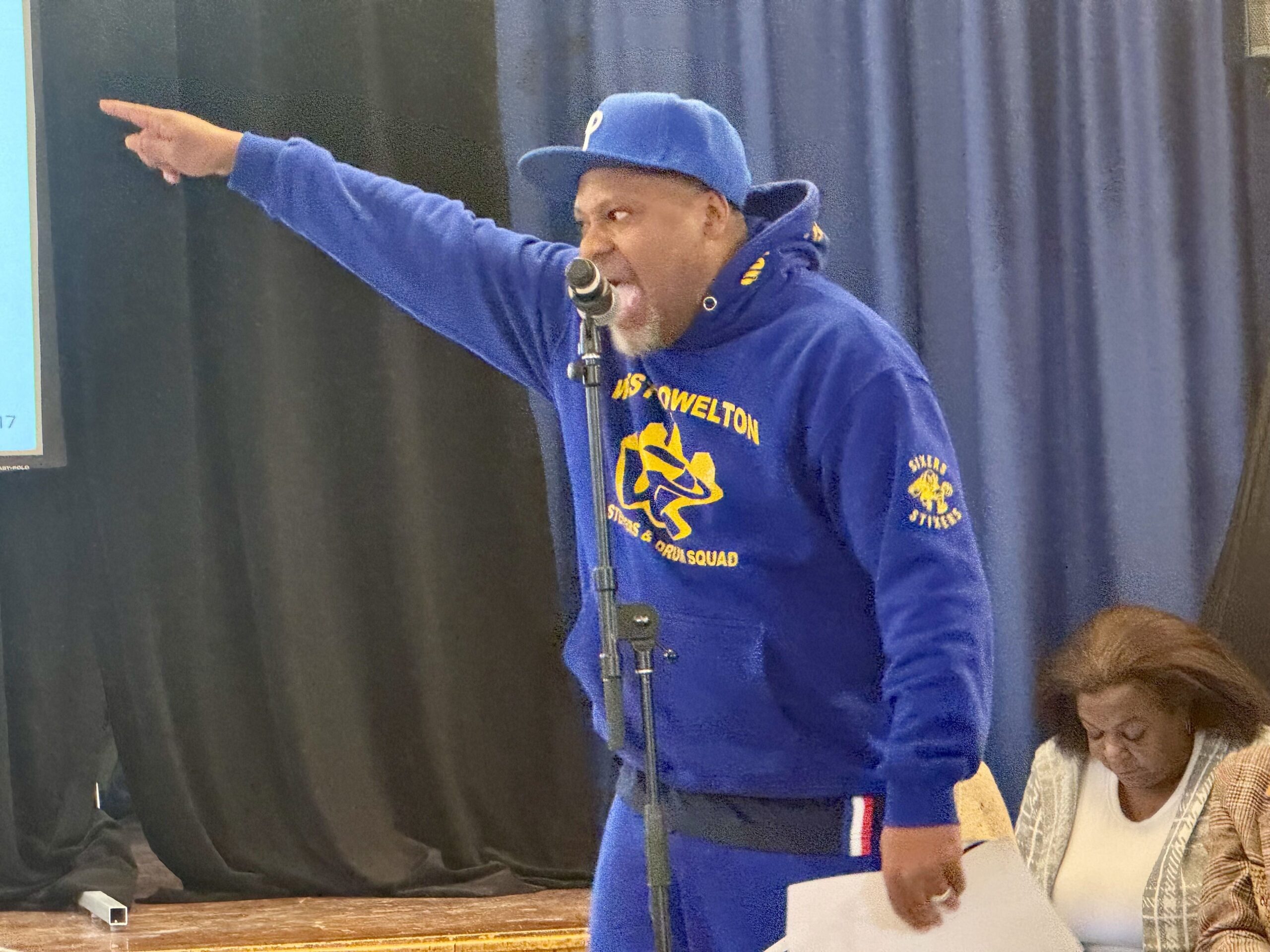
    Antoine Mapp Sr., a West Philadelphia resident, expresses frustration that the Philadelphia School District is attempting to close Paul Robeson High School. Mapp spoke at a district meeting on the subject.

    West Philadelphia resident Antoine Mapp Sr. graduated from University City High, but has been spending time at Robeson since he was 11. Mapp’s West Powelton Steppers and Drum Squad rehearses inside the Robeson gymnasium.

    It feels especially cruel to lose Robeson as gentrification creeps in, Mapp said, and with gun violence still plaguing Philadelphia. He worries about the routes children would have to take to get to Sayre, and about neighborhood rivalries.

    “You guys don’t understand what it’s like living in the community or our neighborhood, or what we go through,” Mapp said. “Y’all don’t know how hard it is just to go to the store in our community. Y’all don’t know what it’s like trying to go to an activity in our neighborhood. We have none of those things. Now you want to take this school away from us and send our kids to different communities. I want you to know that the crime rate and the murders are going to increase and there’s nothing y’all can do about it.”

  • FBI: DNA recovered from glove found near Guthrie home that appears to match glove worn by suspect

    FBI: DNA recovered from glove found near Guthrie home that appears to match glove worn by suspect

    A glove containing DNA found about two miles from the house of “Today” show host Savannah Guthrie’s mother appears to match those worn by a masked person outside her front door in Tucson the night she vanished, the FBI said Sunday.

    The glove, discovered in a field beside a road, was sent for DNA testing. The FBI said in a statement that it received preliminary results Saturday and was awaiting official confirmation. The development comes as law enforcement gathers more potential evidence as the search for Guthrie’s mother heads into its third week. Authorities had previously said they had not identified a suspect.

    On Sunday night, Savannah Guthrie posted an Instagram video in which she issued an appeal to whoever abducted her mother or anyone who knows where she is being kept. “It is never too late to do the right thing,” Guthrie said. “And we are here. And we believe in the essential goodness of every human being, that it’s never too late.”

    Nancy Guthrie, 84, was last seen at her Arizona home on Jan. 31 and was reported missing the following day. Authorities say her blood was found on the front porch. Purported ransom notes were sent to news outlets, but two deadlines for paying have passed.

    The discovery was revealed days after investigators had released surveillance videos of the masked person outside Guthrie’s front door. A porch camera recorded video of a person with a backpack who was wearing a ski mask, long pants, jacket and gloves.

    On Thursday, the FBI called the person a suspect. It described him as a man about 5 feet, 9 inches tall with a medium build. The agency said he was carrying a 25-liter “Ozark Trail Hiker Pack” backpack.

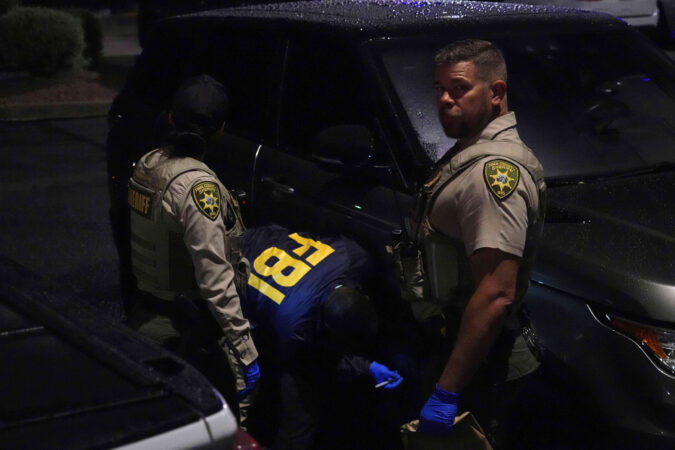
    Late Friday night, law enforcement agents sealed off a road about two miles (3.2 kilometers) from Guthrie’s home as part of their investigation. A series of sheriff’s and FBI vehicles, including forensics vehicles, passed through the roadblock.

    The investigators also tagged and towed a Range Rover SUV from a nearby restaurant parking lot late Friday. The sheriff’s department later said the activity was part of the Guthrie investigation but no arrests were made.

    On Tuesday, sheriff deputies detained a person for questioning during a traffic stop south of Tucson. Authorities didn’t say what led them to stop the man but confirmed he was released. The same day, deputies and FBI agents conducted a court-authorized search in Rio Rico, about an hour’s drive south of the city.

    Authorities have expressed concern about Nancy Guthrie’s health because she needs vital daily medicine. She is said to have a pacemaker and have dealt with high blood pressure and heart issues, according to sheriff’s dispatcher audio on broadcastify.com.

    Earlier in the investigation, authorities had said they had collected DNA from Nancy Guthrie’s property which doesn’t belong to Guthrie or those in close contact with her. Investigators were working to identify who it belongs to.

    The FBI also has said approximately 16 gloves were found in various spots near the house, most of which were searchers’ gloves that had been discarded.

  • There was possible measles exposure at Philadelphia International Airport last week

    There was possible measles exposure at Philadelphia International Airport last week

    A person infected with measles traveled through Philadelphia International Airport last week, city health officials are warning.

    The infected person spent time in Terminal E of the airport between 1:35 and 4:30 p.m. Thursday.

    Measles is highly contagious and spreads via airborne particles when an infected person coughs, sneezes, or talks. The virus can linger in the air for up to two hours after the infected person moves.

    Palak Raval-Nelson, Philadelphia’s health commissioner, said he believed there was no threat to the general public, but encouraged those who are not protected against measles to take action.

    Children under a year old, pregnant people without immunity, and those with a weakened immune system who were exposed and who develop symptoms through March 5 should call their doctor immediately. They’re also asked to call their local health department and Philadelphia’s Health Department if they live outside the city.

    Symptoms of the disease are fever, runny nose, cough, and watery, red eyes — as well as a rash.

    Those who have immunity do not need to do anything. Those with immunity include people born before 1957, those who have already had measles, and those who have received two doses of the measles, mumps, and rubella vaccine.

    Measles, in some cases, can lead to pneumonia, brain infection, and death, health officials say.

    Measles cases are on the rise both internationally and throughout the United States. There’s a large outbreak currently in South Carolina.

  • A service honoring Absalom Jones took on added meaning this year for his church

    A service honoring Absalom Jones took on added meaning this year for his church

    This year’s celebration of African Episcopal Church of St. Thomas’ founder, the Rev. Absalom Jones, was intrinsically political.

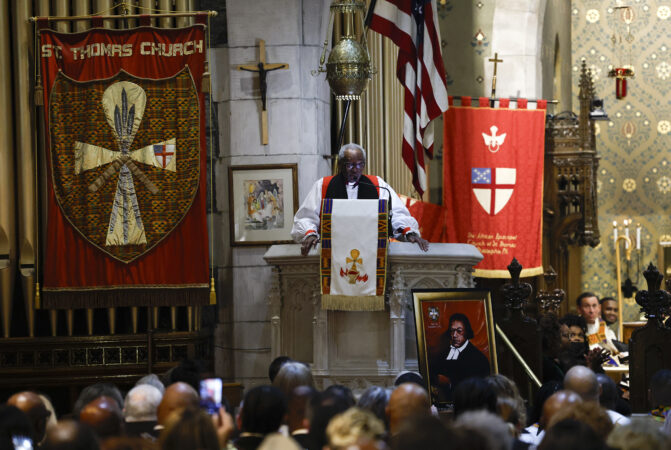
    Parishioners on Sunday overwhelmed the pews at the Overbrook Farms church for the annual event honoring Jones, the first Black ordained Episcopal priest. But this year’s service took on new meaning after Jones’ legacy was stripped from the President’s House historical site on Independence Mall, the church’s rector said.

    Last month, the National Park Service dismantled the exhibit memorializing the lives of nine people enslaved at the nation’s first presidential mansion. The illustrative displays chronicled the Atlantic slave trade and President George Washington’s dogged support for the institution. They also elevated early influential Black Philadelphians, like Jones and contemporary Richard Allen. The site was a casualty of President Donald Trump’s push to remove all content that “inappropriately disparages Americans past or living” from federal land — what many have called an attempt to sanitize history by omitting the brutality of slavery from the narrative.

    The 35-minute sermon, delivered by the visiting Rt. Rev. Michael Curry, ran the gamut: From Bad Bunny’s Super Bowl halftime performance, to unrest in Minnesota over Trump’s immigration crackdown, the detention of 5-year-old Liam Conejo Ramos, and dysphoria spreading throughout the country.

    But Curry’s prevailing message was clear: Fight through the vicissitudes. Curry, former presiding bishop and primate of the Episcopal Church, is the first African American presiding bishop in the country.

    “If you want to taste freedom, if you want America to be just again,” Curry said, “if you want an America where every person is a child of God, where there is freedom and justice — not just for some — but for all … don’t you quit. Keep going, keep going.”

    Curry later added: “If we love America, change America.”

    The late afternoon service also featured young singers from Minnesota, faith leaders from other prominent Philadelphia institutions, and descents of the Rev. Allen.

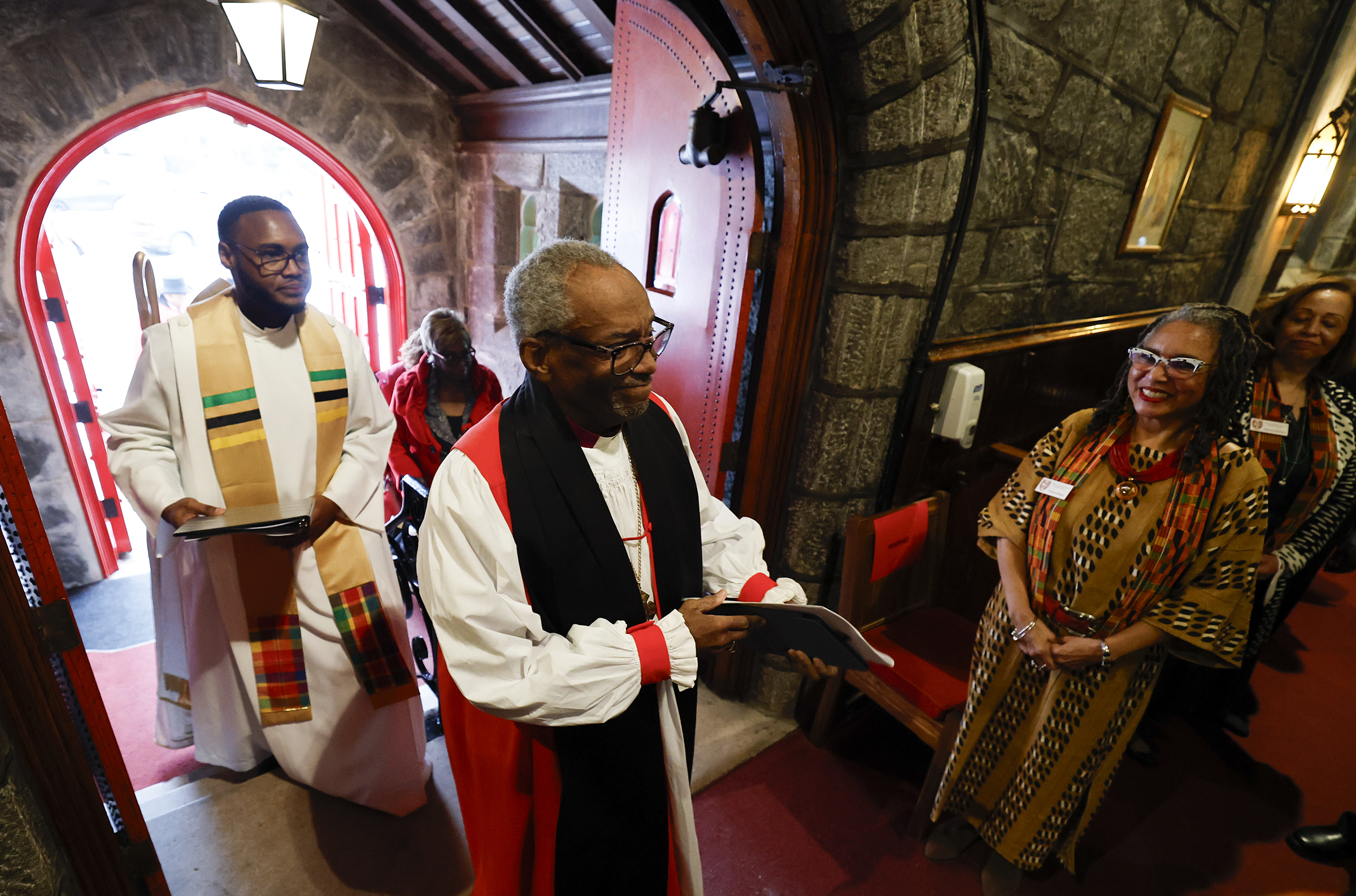
    The Rt. Rev. Michael B. Curry (center) walks into the African Episcopal Church of St. Thomas before providing the sermon in the celebration of the life and ministry of the Rev. Absalom Jones on Sunday.

    Jones and Allen, former slaves who became lay preachers in the 18th century and together created the benevolent Free African Society, were forced out of St. George’s Methodist Church general congregation and forced to worship in segregated pews. Jones went on to form St. Thomas, while Allen built Mother Bethel A.M.E. Church.

    The men’s names and history were invoked throughout the President’s House Site. A panel titled “How Did Enslaved People Become Free?” discussed Jones’ and Allen’s experience at St. George’s, their respective parishes, and how they organized against slavery.

    The erasure of the site — which captured the somber paradox of a young America that exalted freedom for some but deprived others — comes ahead of the country’s Semiquincentennial celebrations putting Philadelphia in the national spotlight.

    The city has filed lawsuits intervening, arguing that the removal of the exhibits is unlawful. A federal judge ordered that the exhibits be kept safe while the court proceedings are ongoing.

    “It brings a totally different emphasis and focus on the celebration this year at the church,” the Rev. Martini Shaw, St. Thomas’ rector, told Episcopal News Service. “But while some want to erase history, we in the church are prepared to celebrate history.”

  • ‘Justice, finally’: Family and friends remember Iriana DeJesus

    ‘Justice, finally’: Family and friends remember Iriana DeJesus

    Lizasuain DeJesus, 65, had received many calls from Philadelphia homicide Detective Joseph Bamberski since her daughter Iriana disappeared in 2000. But Thursday’s call was different: He was calling to tell her that the police had made an arrest in Iriana’s case.

    DeJesus called her daughter Iyanna Vazques, 34, to deliver the news. “It was like a weight lifted off my shoulders,” Vazques said. She was 8 years old when her little sister disappeared, the week of her birthday.

    “I lost my best friend and I remember it like it was yesterday,” Vazques said. She could recall what her sister was wearing and how her hair was done the day she disappeared. An arrest in the case felt “like a dream,” she added.

    Iriana DeJesus was playing outside her home on the 3900 block of North Fairhill Street on July 29, 2000, when she went missing. She was 5 years old.

    A family friend told police at the time she saw Iriana walking with a stranger.

    The Daily News covers the announcement of Alexis Flores as the suspect in Iriana DeJesus’ murder in March 2007.

    On Aug. 3, 2000, her body was found covered by a green trash bag. Iriana had been raped and strangled to death about a block from her home, in a second-floor apartment above a vacant store on the 3900 block of North Sixth Street.

    At the time, police described the perpetrator as a “drifter,” but not much else was known about him.

    Authorities launched a national manhunt. But it was not until March 2007 that federal officials issued a warrant for the arrest of Alexis Flores. He had been identified through a DNA database that allowed investigators to name him as a suspect years after a November 2004 arrest on a felony forgery charge in Phoenix.

    On Thursday, FBI Director Kash Patel announced Flores had been apprehended.

    “After more than 25 years on the run, this arrest proves time and distance do not shield violent offenders from justice,” Patel wrote on social media.

    Flores was detained on Wednesday in Honduras, Fox News reported. He was wanted for crimes including unlawful flight to avoid prosecution, murder, kidnapping, and indecent assault in connection with the Iriana DeJesus case, according to the FBI.

    Vazques said she is choosing to focus on the love their community has provided over the long years of not knowing what happened.

    “We are always going to be from this block,” DeJesus said. “These people are the reason I’m still strong, because a lot of them never gave up on us, on my baby.”

    DeJesus said she still sees Iriana in many corners of her block, in the faces of little girls with pigtails playing outside, and it gives her hope. “Iriana, I love you and I will never stop loving you; you will always be in my heart.”

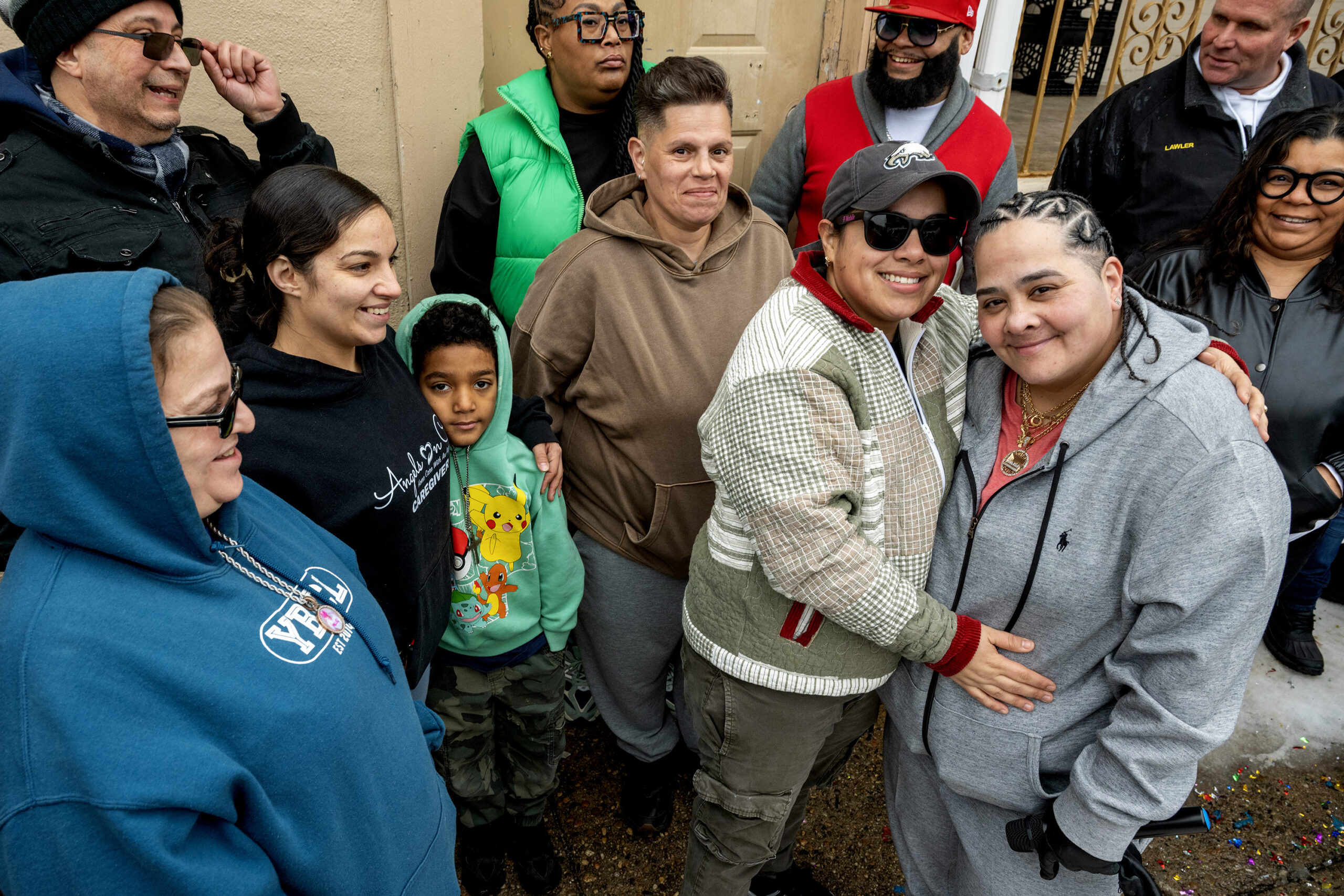
    Lizasuain DeJesus (right) is with her daughter Iyanna Vazques, surrounded by friends and family, following a balloon release in memory of her daughter Iriana.

    Zoraida Reyes, 65, still remembers the frenzy her Hunting Park neighborhood lived through when Iriana disappeared.

    “She was a beautiful girl, happy, calm; we went mad looking for her,” Reyes said. Since then, the neighborhood has changed, she said. But people still support one another, and Iriana was never forgotten.

    On Sunday, as about 100 neighbors gathered at Sixth and Pike Streets for a balloon release in Iriana’s memory, Vazques and DeJesus felt grateful. “There is nothing that will beat this feeling,” DeJesus said, as neighbors lined up to hug her. A picture of Iriana in her pigtails, with a bright smile was handed to attendees with a message: “Justice, finally.”

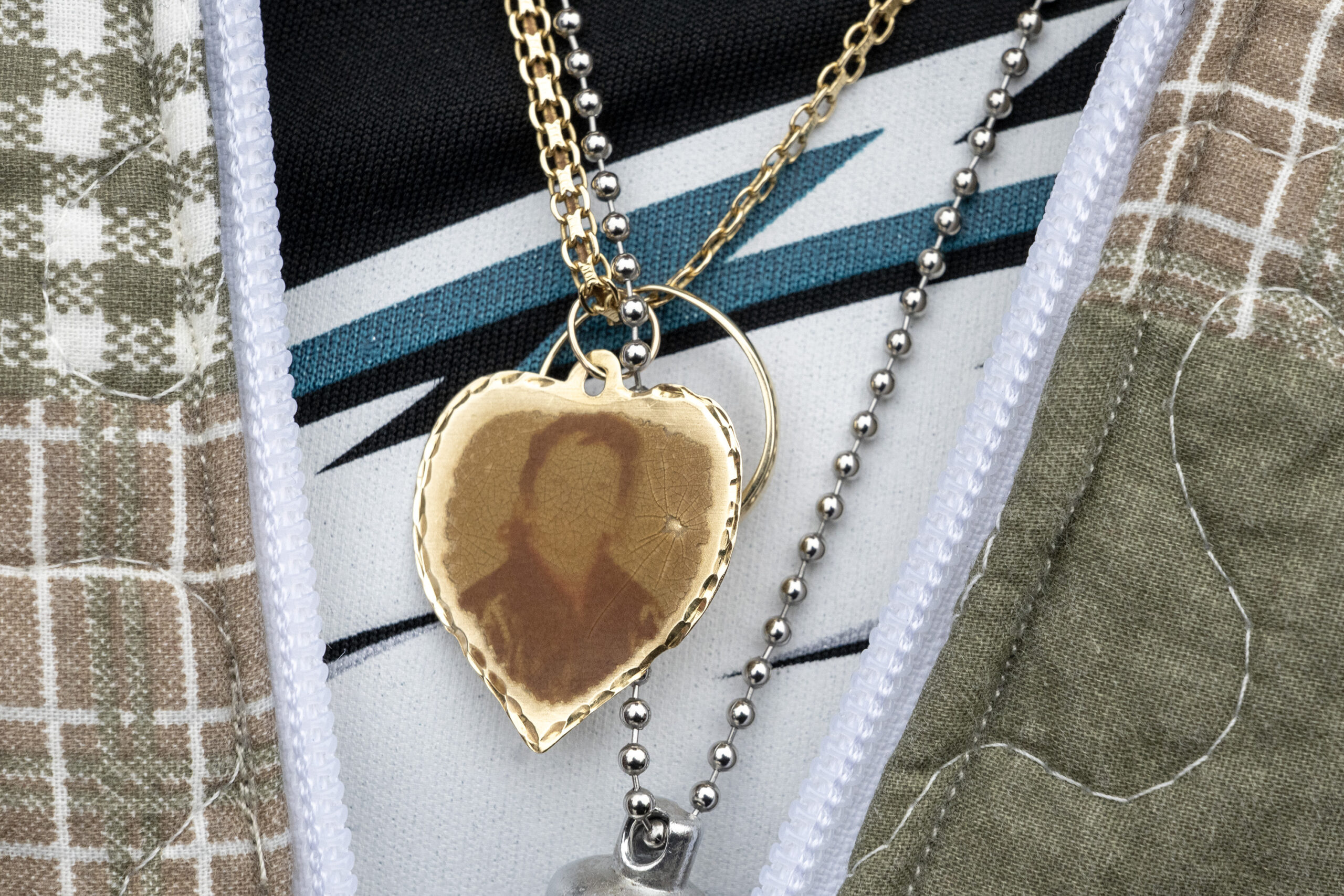
    Vasques, wearing a matching Eagles shirt and hat, held on to a necklace with a now-faded picture of Iriana that her mom gave her in the ninth grade.

    “I don’t take it off, it’s my everything,” Vazques said. “It reminds me of how much of a sweet soul she was.”

    Iyanna Vazques wears a locket with a faded photo of her sister Iriana DeJesus during a balloon release in her memory Sunday, Feb. 15, 2026. Five-year-old Iriana was kidnapped and killed in 2000. A man has been arrested in the case after two decades on the FBI’s most-wanted list.

    Staff writer Nick Vadala contributed to this article.