Category: News

Latest breaking news and updates

  • U.S. military launches strikes in Syria against Islamic State fighters after American deaths

    U.S. military launches strikes in Syria against Islamic State fighters after American deaths

    WASHINGTON — The Trump administration launched military strikes Friday in Syria to “eliminate” Islamic State group fighters and weapons sites in retaliation for an ambush attack that killed two U.S. troops and an American interpreter almost a week ago.

    A U.S. official described it as “a large-scale” strike that hit 70 targets in areas across central Syria that had IS infrastructure and weapons. Another U.S. official, who also spoke on condition of anonymity to discuss sensitive operations, said more strikes should be expected.

    The attack was conducted using F-15 Eagle jets, A-10 Thunderbolt ground attack aircraft, and AH-64 Apache helicopters, the officials said. F-16 fighter jets from Jordan and HIMARS rocket artillery also were used, one official said.

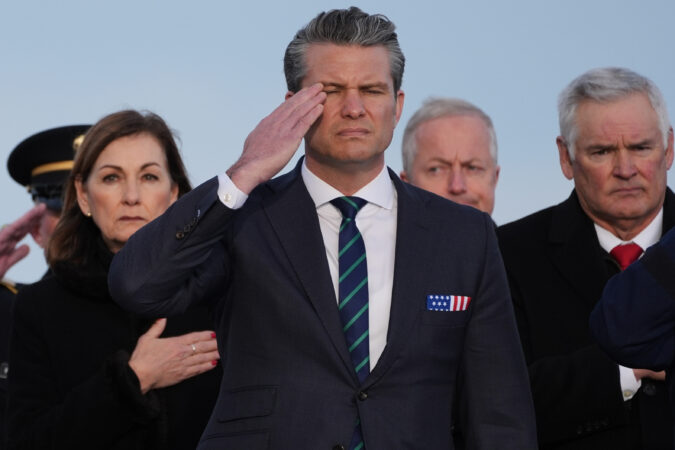
    “This is not the beginning of a war — it is a declaration of vengeance. The United States of America, under President Trump’s leadership, will never hesitate and never relent to defend our people,” Defense Secretary Pete Hegseth said on social media.

    President Donald Trump had pledged “very serious retaliation” after the shooting in the Syrian desert, for which he blamed IS. The troops were among hundreds of U.S. troops deployed in eastern Syria as part of a coalition fighting the terrorist group.

    Trump in a social media post said the strikes were targeting IS “strongholds.” He reiterated his support for Syrian President Ahmad Al-Sharaa, who he said was “fully in support” of the U.S. effort to target the militant group.

    Trump also offered an all-caps threat, warning the group against attacking U.S. personnel again.

    “All terrorists who are evil enough to attack Americans are hereby warned — YOU WILL BE HIT HARDER THAN YOU HAVE EVER BEEN HIT BEFORE IF YOU, IN ANY WAY, ATTACK OR THREATEN THE U.S.A.,” the president added.

    The attack was a major test for the warming ties between the United States and Syria since the ouster of autocratic leader Bashar Assad a year ago. Trump has stressed that Syria was fighting alongside U.S. troops and said al-Sharaa was “extremely angry and disturbed by this attack,” which came as the U.S. military is expanding its cooperation with Syrian security forces.

    Syria’s foreign ministry in a statement on X following the launch of U.S. strikes said that last week’s attack “underscores the urgent necessity of strengthening international cooperation to combat terrorism in all its forms” and that Syria is committed “to fighting ISIS and ensuring that it has no safe havens on Syrian territory and will continue to intensify military operations against it wherever it poses a threat.”

    IS has not claimed responsibility for the attack on the U.S. service members, but the group has claimed responsibility for two attacks on Syrian security forces since, one of which killed four Syrian soldiers in Idlib province. The group in its statements described al-Sharaa’s government and army as “apostates.” While al-Sharaa once led a group affiliated with al-Qaida, he has had a long-running enmity with IS.

    Syrian state television reported that the U.S. strikes hit targets in rural areas of Deir ez-Zor and Raqqa provinces and in the Jabal al-Amour area near Palmyra. It said they targeted “weapons storage sites and headquarters used by ISIS as launching points for its operations in the region.”

    Trump this week met privately with the families of the slain Americans at Dover Air Force Base in Delaware before he joined top military officials and other dignitaries on the tarmac for the dignified transfer, a solemn and largely silent ritual honoring U.S. service members killed in action.

    The guardsmen killed in Syria last Saturday were Sgt. Edgar Brian Torres-Tovar, 25, of Des Moines, and Sgt. William Nathaniel Howard, 29, of Marshalltown, according to the U.S. Army. Ayad Mansoor Sakat, of Macomb, Mich., a U.S. civilian working as an interpreter, was also killed.

    The shooting nearly a week ago near the historic city of Palmyra also wounded three other U.S. troops as well as members of Syria’s security forces, and the gunman was killed. The assailant had joined Syria’s internal security forces as a base security guard two months ago and recently was reassigned because of suspicions that he might be affiliated with IS, Interior Ministry spokesperson Nour al-Din al-Baba has said.

    The man stormed a meeting between U.S. and Syrian security officials who were having lunch together and opened fire after clashing with Syrian guards.

    When asked for further information, the Pentagon referred AP to Hegseth’s social media post.
  • CCP board approves a contract for new president

    CCP board approves a contract for new president

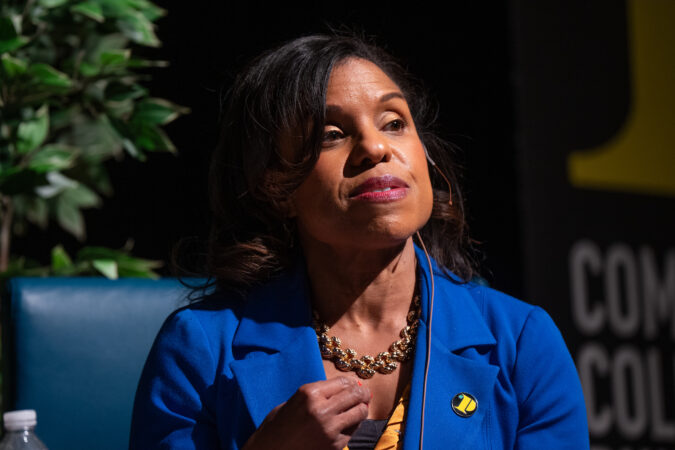
    Alycia Marshall will earn $295,000 as the new president of the Community College of Philadelphia under terms of a contract approved by the board of trustees Friday.

    Marshall, 52, had been serving as interim president since April when longtime president Donald Guy Generals was forced out. Her salary is similar to what Generals earned before he left.

    In October, the board selected Marshall for the permanent post from among four finalists and said it would negotiate a contract with her.

    The new contract, commencing Jan. 1, is for three years and six months and after that would renew on an annual basis.

    “This is a great birthday present,” Marshall said following the unanimous vote on her contract at the brief board meeting. “Today is my birthday. Thank you so much for your support. … It’s been a pleasure serving as the interim and I’m excited to move into the next chapter.”

    Under the contract, she will be eligible for a bonus of up to 15% of her base pay annually and will receive a $2,000-per-month housing allowance and a $650-per-month car allowance.

    Marshall, who has maintained a residence in Maryland, is required to move her primary residence to Philadelphia within six months under the contract terms. She would face termination if she failed to do so, the contract states. Marshall has said she intended to move to Philadelphia if she got the permanent job.

    Marshall had served as CCP’s provost and vice president for academic and student success for nearly three years before stepping into the interim role at the college, which had an enrollment of 12,400 credit students and 1,381 noncredit students last spring.

    She received her bachelor’s in mathematics from the University of Maryland Baltimore County, her master’s in teaching from Bowie State University, and her doctorate in mathematics education from the University of Maryland.

    A native of Maryland, she started her career as an adjunct professor at Anne Arundel Community College in Maryland, near Annapolis, and later became a full tenured professor and chair of the mathematics department. She was promoted to associate vice president there and founded the African American Leadership Institute and spent a total of nearly 23 years at the Maryland community college.

  • Rep. Elise Stefanik says she’s suspending her campaign for New York governor, won’t seek reelection

    Rep. Elise Stefanik says she’s suspending her campaign for New York governor, won’t seek reelection

    ALBANY, N.Y. — Rep. Elise Stefanik announced Friday that she is suspending her campaign for New York governor and will not seek reelection to Congress, bowing out of the race in a surprise statement that said “it is not an effective use of our time” to stay in what was expected to be a bruising Republican primary.

    Stefanik, a Republican ally of President Donald Trump, said in a post on X that she was confident of her chances in the primary against Bruce Blakeman, a Republican county official in New York City’s suburbs. But she said she wanted to spend more time with her young son and family.

    “I have thought deeply about this and I know that as a mother, I will feel profound regret if I don’t further focus on my young son’s safety, growth, and happiness — particularly at his tender age,” she said.

    Stefanik has been an intense critic of incumbent Democratic Gov. Kathy Hochul, who is also seeking reelection but faces a primary challenge from her own lieutenant governor, Antonio Delgado.

    The announcement marks an abrupt end, at least for now, for a once-promising career for Stefanik. She was the youngest woman ever elected to Congress when she won her first campaign in 2014 at just 30 years old, representing a new generation of Republicans making inroads in Washington. She ultimately rose to her party’s leadership in the House when she became the chair of the House Republican Conference in 2021.

    First viewed as a moderate when she came to Washington, Stefanik became far more conservative as Trump began to dominate the party. Once someone who refused to say Trump’s name, she became one of his top defenders during his first impeachment inquiry. She would go on to vote against certifying the 2020 election results, even after a violent mob stormed the Capitol on Jan. 6.

    Stefanik was expected to have a bitter Republican primary against Blakeman, who also counts himself as an ally of Trump. The president had so far seemed keen on avoiding picking a side in the race, telling reporters recently: “He’s great, and she’s great. They’re both great people.”

    Stefanik’s decision follows a clash with Speaker Mike Johnson, whom she accused of lying before embarking on a series of media interviews criticizing him. In one with The Wall Street Journal, she called Johnson a “political novice” and said he wouldn’t be reelected speaker if the vote were held today.

    The tumultuous early December episode appeared to cool when Johnson said he and Stefanik had a “great talk.”

    “I called her and I said, ‘Why wouldn’t you just come to me, you know?’” Johnson said. “So we had some intense fellowship about that.”

    Still, Stefanik, the chairwoman of the House Republican leadership, has not fully walked back her criticisms. A Dec. 2 social media post remains online in which, after a provision she championed was omitted from a defense authorization bill, Stefanik accused Johnson of falsely claiming he was unaware of it, calling it “more lies from the Speaker.”

    State Republican Chairman Ed Cox said the party respected Stefanik’s decision and thanked her for her efforts.

    “Bruce Blakeman has my endorsement and I urge our State Committee and party leaders to join me,” Cox said in a prepared statement. “Bruce is a fighter who has proven he knows how to win in difficult political terrain.”

  • Justice Department releases limited set of files tied to Epstein sex trafficking investigation

    Justice Department releases limited set of files tied to Epstein sex trafficking investigation

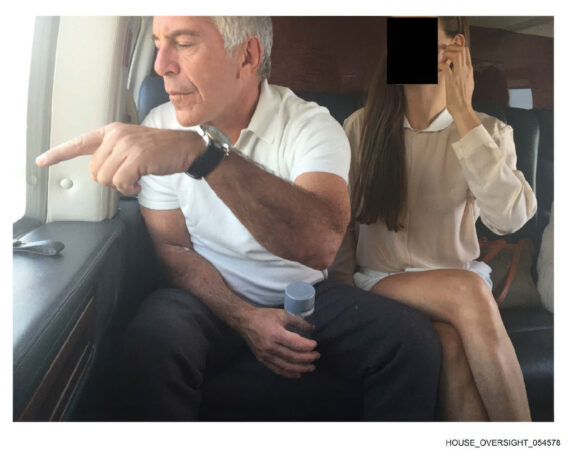
    WASHINGTON — The Justice Department released thousands of files Friday about convicted sex offender Jeffrey Epstein but the incomplete document dump did not break significant ground about the long-running criminal investigations of the financier or his ties to wealthy and powerful individuals.

    The files included a small number of photos of President Donald Trump, sparing the White House for now from having to confront fresh revelations about an Epstein relationship that the administration for months has tried in vain to push past.

    It did, however, feature a series of never-before-seen photos of Bill Clinton from a trip that the former president appears to have take with Epstein decades ago.

    Reaction to the disclosures broke along mostly partisan lines. Democrats and some Republicans seized on the limited release to accuse the Justice Department of failing to meet a congressionally set deadline to produce the Epstein files. White House officials on social media gleefully promoted a photo of Clinton in a hot tub with a person with a blacked-out face. The Trump administration touted the release as a show of its commitment to transparency, ignoring the fact that the Justice Department just months ago said no more files would be released. Congress then passed a law mandating it.

    The records, consisting largely of pictures but also including call logs, grand jury testimony, interview transcripts, and other documents, arrived amid extraordinary anticipation that they might offer the most detailed look yet at nearly two decades worth of government scrutiny of Epstein’s sexual abuse of young women and underage girls. Their release has long been demanded by a public hungry to learn whether any of Epstein’s associates knew about or participated in the abuse. Epstein’s accusers have also sought answers about why federal authorities shut down their initial investigation into the allegations in 2008.

    Yet the release, replete with redactions. seemed unlikely to satisfy the public clamor for information given how many investigative records the department indicated it was continuing to withhold.

    In a letter to Congress obtained by The Associated Press, Deputy Attorney General Todd Blanche wrote that the Justice Department was continuing to review files in its possession and expected additional disclosures by the end of the year. The department also said it was withholding some documents under exemptions allowed in the law and was redacting names of victims. The department expects to complete its document production by the end of the year, Blanche said.

    Bowing to political pressure from fellow Republicans, Trump on Nov. 19 signed a bill giving the Justice Department 30 days to release most of its files and communications related to Epstein, including information about the investigation into his death in a federal jail. The law’s passage, which set a deadline for Friday, was a remarkable display of bipartisanship that overcame months of opposition from Trump and Republican leadership.

    Limited details about Trump

    The released files include a small number of photos of Trump, which appear to have been known for decades, including two in which Trump and Epstein are posing with now-first lady Melania Trump in February 2000 at an event at Trump’s Palm Beach club, Mar-a-Lago, before the pair’s friendship ruptured.

    Trump was friends with Epstein for years before the two had a falling-out. Neither he nor Clinton has ever been accused of wrongdoing in connection with Epstein, and the mere inclusion of someone’s name in files from the investigation does not imply otherwise.

    Attorney General Pam Bondi said last month that she had ordered a top federal prosecutor to investigate Epstein’s ties to Trump’s political foes, including Clinton. Bondi acted after Trump pressed for such an inquiry, though he did not explain what supposed crimes he wanted the Justice Department to investigate.

    In July, Trump dismissed some of his own supporters as “weaklings” for falling for “the Jeffrey Epstein hoax.” But both Trump and House Speaker Mike Johnson (R., La.) failed to prevent the legislation from coming to a vote.

    Trump did a U-turn on the files once it became clear that congressional action was inevitable. He insisted that the Epstein matter had become a distraction to the Republican agenda and that releasing the records was the best way to move on.

    After nearly two decades of court action and prying by reporters, a voluminous number of records related to Epstein had already been public well before Froday, including flight logs, address books, email correspondence, police reports, grand jury records, courtroom testimony, and transcripts of depositions of his accusers, his staffers and others.

    New photos of Clinton

    Senior Trump White House aides took to X to promote photos in the Epstein files that show Clinton with women whose faces are redacted.

    Karoline Leavitt, the White House press secretary, wrote “Oh my!” and added a shocked face emoji in response to a photo of Clinton in a hot tub with a woman whose face was redacted.

    “They can release as many grainy 20-plus-year-old photos as they want, but this isn’t about Bill Clinton,” Clinton spokesman Angel Ureña said in a statement.

    “There are two types of people here,” he said. “The first group knew nothing and cut Epstein off before his crimes came to light. The second group continued relationships after that. We’re in the first. No amount of stalling by people in the second group will change that.”

    The Epstein investigations

    Police in Palm Beach, Fla., began investigating Epstein in 2005 after the family of a 14-year-old girl reported she had been molested at his mansion. The FBI joined the investigation, and authorities gathered testimony from multiple underage girls who said they had been hired to give Epstein sexual massages.

    Ultimately, though, prosecutors gave Epstein a deal that allowed him to avoid federal prosecution. He pleaded guilty to state prostitution charges involving someone under age 18 and was sentenced to 18 months in jail.

    Epstein’s accusers then spent years in civil litigation trying to get that plea deal set aside. One of those women, Virginia Giuffre, accused Epstein of arranging for her to have sexual encounters, starting at age 17, with numerous other men, including billionaires, famous academics, U.S. politicians, and Andrew Mountbatten-Windsor, then known as Britain’s Prince Andrew. Mountbatten-Windsor denied ever having sex with Giuffre, but King Charles III stripped him of his royal titles this year after Giuffre’s memoir was published after she died.

    Prosecutors never brought charges in connection with Giuffre’s claims, but her account fueled conspiracy theories about supposed government plots to protect the powerful. Giuffre died by suicide at her farm in Western Australia in April at age 41.

    Federal prosecutors in New York brought new sex trafficking charges against Epstein in 2019, but he killed himself in jail a month after his arrest. Prosecutors then charged Epstein’s longtime confidant, British socialite Ghislaine Maxwell, with recruiting underage girls for Epstein to abuse.

    Maxwell was convicted in late 2021 and is serving a 20-year prison sentence, though she was moved from a low-security federal prison in Florida to a minimum-security prison camp in Texas after she was interviewed over the summer by Blanche. Her lawyers argued that she never should have been tried or convicted.

    The Justice Department in July said it had not found any information that could support prosecuting anyone else.

  • Soaked ground and 60-mph wind gusts could cause outages and commuting woes around Philly

    Soaked ground and 60-mph wind gusts could cause outages and commuting woes around Philly

    What’s left of the season’s first snowfall is all but gone with the wind — and the heftiest rains since October. And having done its best to disrupt Friday’s morning commute, the weather evidently is executing an afternoon encore.

    After backing off for a few hours, the winds came back with a vengeance Friday afternoon. A thunderstorm gust of 62 mph was recorded at Philadelphia International Airport at 2:35 p.m.

    The weather service’s wind advisory for the entire region remains in effect until 1 a.m. Saturday, and conspiring with snow melt to saturate the soils, SEPTA is particularly concerned about the potential for uprooted trees along its Regional Rail lines, said media relations director Andrew Busch.

    “The recipe for problems is there,” he said. “We will have crews stationed across the system to respond quickly.”

    Peco heard the rumors, and while the utility is “not expecting impacts, we’re going to continue to monitor conditions,“ said Candice Womer, senior communications specialist.

    The deciduous trees are mostly bare, so winds can sail through branches that are not weighed down with leaves, but the weather service advises that “some power outages” are possible.

    About 16,500 outages were reported at midafternoon.

    An additional concern was the predicted wind shift during the day, from southerly in the morning to westerly in the afternoon, and how that might stress vulnerable trees, Womer said.

    The strongest winds will occur during the afternoon

    The gusts are likely to be “widespread” during the afternoon, said Paul Fitzsimmons, a lead meteorologist at the weather service’s Mount Holly office. That would be after the rain-producing front crosses through the region and winds become westerly, peaking in time for the afternoon commute. Gusts to 50 mph are possible.

    Rain totals in the Philly area are expected to be in the 1-to-1.5-inch range, Fitzsimmons said.

    No stream flooding is anticipated, however, as levels are quite low. Despite the snow and a decent soaking on Dec. 2, precipitation the last two months is only about 75% of normal throughout the region, according to the National Oceanic and Atmospheric Administration’s Middle Atlantic River Forecast Center.

    How dry we’ve been

    The gusts aside — not a trivial omission — this system should produce a “beneficial rain,” the weather service notes.

    A drought warning remains in effect for all of New Jersey.

    Water levels are so low that computer models show only about a 10% chance of streams reaching even the preflood “action” phase.

    In the interagency U.S. Drought Monitor map posted Thursday morning, most of Philadelphia, adjacent South Jersey, and Chester County were in the “severe drought” category, along with portions of Bucks, Delaware, and Montgomery Counties.

    Most of Pennsylvania and New Jersey were in at least “abnormally dry” conditions.

    The forecast for the weekend

    After the winds die down Friday evening, the region should be in for a dry but chilly weekend.

    Temperatures during the day Friday are forecast to dive from a high in the 50s in the morning to the 30s by nightfall, and they won’t get out of the 30s on Saturday.

    Sunday’s forecast high in the mid-40s would be close to normal for the date.

    Peeking ahead, the prospects of a white Christmas are not especially promising.

    The region may have to settle for a wet one. Rain is possible Christmas Day with highs in the 40s. That’s not quite what Irving Berlin had in mind.

  • Have that nasty stomach bug? It hit one South Jersey school hard. Here’s how to avoid it.

    Have that nasty stomach bug? It hit one South Jersey school hard. Here’s how to avoid it.

    A South Jersey school was hit with an outbreak of gastrointestinal illness last week, as cases of norovirus, a common stomach bug, recently surged nationwide.

    Camden County officials could not definitively say the illness was norovirus, since no lab testing has been done. However, they noted it was a candidate.

    “The symptoms, infectious period, and incubation periods seem to be consistent with norovirus,” said Caryelle Vilaubi, director of the Camden County Department of Health and Human Services.

    The school in Haddonfield, which officials declined to identify further, first reported a spike in gastrointestinal symptoms among students on Dec. 10, followed by an increase the next day.

    Cases have since fallen dramatically, Vilaubi said, as outbreak control measures — including use of disinfectants, sending sick students home, and promoting proper hand hygiene — have been put into place.

    They’re hoping to end the outbreak in the school community as early as next week, if they can go without new cases for four days, she said.

    A variety of sources can cause gastrointestinal illness, including viruses, bacteria, and parasites. Norovirus is one of the common culprits this time of year.

    “We typically see a spike from November through April, not just in Camden County, but throughout the state, and often throughout much of the country,” Vilaubi said.

    The highly contagious virus can spread through close contact with an infected person or with contaminated food, water, and surfaces. Symptoms usually include nausea, vomiting, diarrhea, and stomach pain, and start 12 to 48 hours after exposure.

    Most people will feel better after one to three days.

    Here’s what to know about the virus:

    How can you protect yourself against norovirus?

    Norovirus is a “hardy and resistant virus,” Vilaubi noted, making it especially hard to clean off. Hand sanitizers are not effective against it.

    People should instead wash their hands frequently with soap and water, and use bleach-based disinfectants (or any Environmental Protection Agency-registered disinfecting product against norovirus) on hard surfaces, according to the Centers for Disease Control and Prevention.

    How long does norovirus stay on surfaces?

    Norovirus can survive on surfaces for weeks.

    It is also relatively resistant to heat, able to survive temperatures up to 145°F.

    People should make sure to regularly disinfect high-touch surfaces such as doorknobs, keyboards, and light switches.

    How long does norovirus last in adults?

    Though people will usually feel better after one to three days, they are still highly contagious for a few days after.

    “If your child begins to show symptoms, please keep them home until at least 48 hours after symptoms resolve to prevent further spreading the illness,” Virginia Betteridge, liaison to the Camden County Department of Health and Human Services, said in a Dec. 12 news release.

    Those infected with norovirus should avoid contact with others as much as possible during this period.

    How to treat norovirus at home?

    There is no cure or specific treatment for norovirus. The advice generally is to let the virus run its course.

    To ward off dehydration, people should make sure to drink lots of fluids to replace what’s lost from vomiting and diarrhea. Taking small sips of water and sucking on ice chips may be easier on an upset stomach.

    People can also consider drinking clear broths, noncaffeinated sports drinks, and oral rehydration solutions, which are available over the counter.

    Drinks that contain a lot of sugar, including soft drinks and certain fruit juices, can make diarrhea worse and should be avoided.

    How does norovirus spread from person to person?

    Norovirus is considered highly contagious, as only a small amount of virus is needed to infect someone.

    People contract it by accidentally touching tiny particles of stool or vomit — where the virus is primarily shed — from an infected person and getting them in their mouths.

    These particles easily contaminate hands, surfaces, food, or water.

  • Rubio is hopeful about Russia-Ukraine and Gaza peace efforts but clear about the challenges

    WASHINGTON — Secretary of State Marco Rubio was hopeful but clear about the challenges facing the Trump administration’s Russia-Ukraine and Israel-Hamas peace efforts and defended increasing U.S. military pressure on Venezuela during a marathon end-of-year news conference Friday.

    In a freewheeling exchange with reporters running more than two hours, Rubio offered no predictions for timing or success on any of those three issues. He also said he was proud of President Donald Trump’s radical overhaul in foreign assistance and that the administration was working to reach a humanitarian ceasefire in Sudan in time for the new year.

    Rubio’s rare and lengthy appearance in the State Department briefing room came as key meetings on Gaza and Russia-Ukraine are being held in Miami on Friday and Saturday after a tumultuous year in U.S. foreign policy. Rubio has assumed the additional role of national security adviser and emerged as a staunch defender of Trump’s “America First” priorities on issues ranging from visa restrictions to a shakeup of the State Department bureaucracy.

    Talks on Ukraine and Gaza are planned

    Rubio spoke about peace efforts as national security officials from Britain, France, and Germany were taking part in talks in Florida with Ukraine’s lead negotiator, Rustem Umerov, and envoys Steve Witkoff and Jared Kushner to discuss the latest iteration of Trump’s Ukraine-Russia peace proposal.

    A White House official, who spoke on condition of anonymity because of the sensitivity of the matter, said Witkoff and Kushner, who is Trump’s son-in-law, also would see Egyptian, Turkish, and Qatari officials Friday for talks on how to get to the next phase of Trump’s plan to end the Israel-Hamas war in Gaza.

    Progress on Trump’s Gaza ceasefire plan has moved slowly since it was announced in October. U.S. officials have been pushing to get the plan implemented by setting up a “Board of Peace” that would oversee the territory after two years of war and create an international stabilization force that would police the area.

    “I think we owe them a few more answers before we get there,” Rubio said when asked about contributions to the stabilization force. After establishing the Board of Peace and a Palestinian technocratic group to govern Gaza, “that will allow us to firm up the stabilization force, including how it’s going to be paid for, what the rules of engagement are, what their role will be in demilitarization.”

    In a whirlwind of diplomacy, Witkoff and Kushner are also set to meet Saturday with Russian President Vladimir Putin’s adviser Kirill Dmitriev in Miami, officials said. Rubio, who will be at his home in Florida for the holidays, said he would probably attend the meeting.

    But he said there would be no peace deal unless both Ukraine and Russia can agree to the terms, making it impossible for the U.S. to force a deal on anyone. Instead, the U.S. is trying to “figure out if we can nudge both sides to a common place.”

    “We understand that you’re not going to have a deal unless both sides have to give, and both sides have to get,” Rubio said. “Both sides will have to make concessions if you’re going to have a deal. You may not have a deal. We may not have a deal. It’s unfortunate.”

    The U.S. proposal has been through numerous versions with Trump seesawing back and forth between offering support and encouragement for Ukraine and then seemingly sympathizing with Putin’s hard-line stances by pushing Ukrainian President Volodymyr Zelensky to agree to territorial concessions. Kyiv has rejected that concession in return for security guarantees intended to protect Ukraine from future Russian incursions.

    Rubio defends U.S. policy toward Venezuela

    On Venezuela, Rubio has been a leading proponent of military operations against suspected drug-running vessels targeted in the Caribbean Sea and eastern Pacific Ocean since early September. The actions have ramped up pressure on leftist Venezuelan President Nicolás Maduro, who has been charged with narcoterrorism in the U.S.

    Rubio defended Trump’s prerogatives on Venezuela and said the administration believes “nothing has happened that requires us to notify Congress or get congressional approval or cross the threshold into war.” He added, “We have very strong legal opinions.”

    In an NBC News interview Friday, Trump would not rule out a war with Venezuela. Rubio and Defense Secretary Pete Hegseth have publicly maintained that the current operations are directed at “narcoterrorists” trying to smuggle deadly drugs into the United States. Maduro has insisted the real purpose is to force him from office.

    Rubio sidestepped a direct question about whether the U.S. wants “regime change in 2026” in the South American country.

    “We have a regime that’s illegitimate, that cooperates with Iran, that cooperates with Hezbollah, that cooperates with narcotrafficking and narcoterrorist organizations,” Rubio said, “including not just protecting their shipments and allowing them to operate with impunity, but also allows some of them to control territory.”

    Other peacemaking efforts at risk

    Trump has spoken of wanting to be remembered as a “peacemaker,” but ceasefires his administration helped craft are already in trouble due to renewed military action between Cambodia and Thailand as well as Rwanda and Congo. Rubio, however, said those deals created a list of commitments that can now be used to push the parties back to peace.

    “Those commitments today are not being kept,” Rubio said of the Thailand-Cambodia conflict, which now threatens to reignite following Thai airstrikes. “The work now is to bring them back to the table.”

    In a departure from his predecessors who often limited questions to just four, Rubio responded to queries, including a handful in Spanish, from nearly every reporter seated in the 59-seat briefing room, which has not been used since the State Department ended its twice-weekly press briefings in August.

    Since taking over the department, Rubio has moved swiftly to implement Trump’s “America First” agenda, helping dismantle the U.S. Agency for International Development and reducing the size of the diplomatic corps through a significant reorganization. Previous administrations have distributed billions of dollars in foreign assistance over the past five decades through USAID.

    Critics have said the decision to eliminate USAID and slash foreign aid spending has cost lives overseas, although Rubio and others have denied this, pointing to ongoing disaster relief operations in the Philippines, the Caribbean and elsewhere, along with new global health compacts being signed with countries that previously had programs run by USAID.

    “We have a limited amount of money that can be dedicated to foreign aid and humanitarian assistance,” Rubio said. “And that has to be applied in a way that furthers our national interest.”

  • Kennedy Center adds Trump’s name to building

    Kennedy Center adds Trump’s name to building

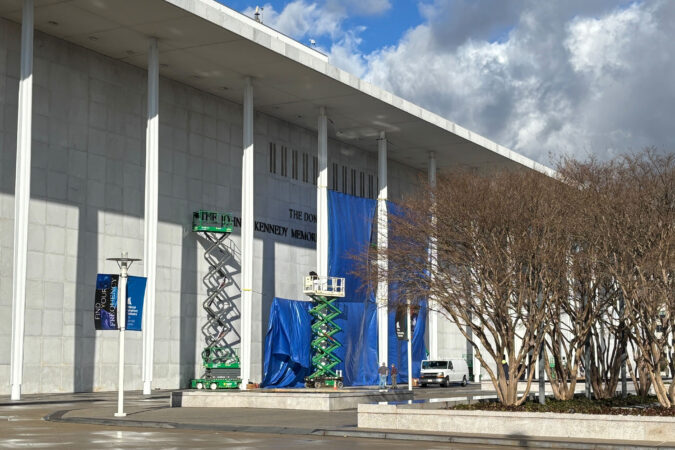
    The Kennedy Center began updating signage on the exterior of the building Friday morning, a day after its board voted to rename the institution “The Donald J. Trump and The John F. Kennedy Memorial Center for the Performing Arts.”

    A blue tarp was stretched across a portion of the building as a small team on scaffolding started the work. Loud drilling could be heard nearby. Inside the building, large letters spelling “Trump” could be seen on the floor of the entry hall, according to a photograph obtained by the Washington Post. Signage elsewhere around the exterior of the institution remained unchanged.

    Thursday’s vote by the board of trustees marked a dramatic change to a building established as a “living memorial” to a slain president. The announcement drew swift condemnation from Kennedy family members and Democratic leaders, who called it illegal and said only Congress could change the center’s name.

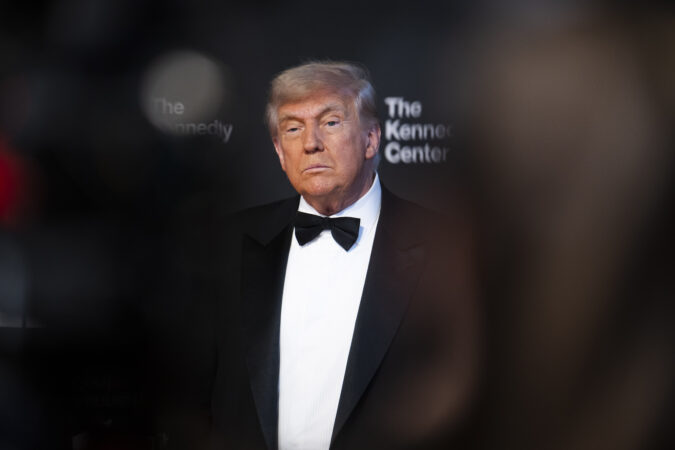
    For months, Trump had repeatedly joked about the name change, including at the Kennedy Center Honors earlier this month. The center has seen a year of upheaval since Trump overhauled the institution in February, sparking a wave of firings and resignations. Ticket sales have fallen sharply, according to an October analysis by The Post, and many artists have said they will no longer perform there. The new leadership has boasted of hefty fundraising tallies and has begun to ramp up bookings for Christian and right-wing events.

    “The Trump Kennedy Center shows a bipartisan commitment to the Arts,” Kennedy Center President Richard Grenell wrote Thursday on X. Officials did not cite an authority for the board’s ability to change the institution’s name.

    The current board consists of loyalists to Trump following a purge of trustees appointed by former President Joe Biden. They met Thursday in Palm Beach, Florida.

    This is not the only building to which Trump’s name has been added in recent weeks in Washington. Earlier this month, his administration renamed the building that houses the U.S. Institute of Peace downtown, emblazoning “Donald J. Trump” in several areas of the structure.

    “Boy, that is beautiful,” Trump said at the time, thanking Secretary of State Marco Rubio for putting his name on the building.

  • Hunger monitor says Gaza is still seeing acute malnutrition but not famine

    Hunger monitor says Gaza is still seeing acute malnutrition but not famine

    JERUSALEM — The Gaza Strip is no longer facing famine in any of its regions after humanitarian and commercial food deliveries surged following an October ceasefire between Israel and Hamas, but more than three-quarters of the population, or 1.6 million people, still experience acute food insecurity and malnutrition, the global authority on hunger said Friday.

    The report from the Integrated Food Security Phase Classification (IPC) was the first to be published since the international group of experts declared in August that the Gaza City region was experiencing “man-made” famine as a result of two years of war, displacement, and harsh Israeli restrictions on food and other aid. Although the IPC had projected that by September, more than 600,000 people would experience Phase 5, or “catastrophic” levels of starvation and malnutrition, that figure dropped to 100,000 by the end of November after Israel began loosening the flow of aid as part of an Oct. 10 ceasefire agreement brokered by the United States, according to the latest report.

    Israel has come under intense international criticism this year for choking the flow of humanitarian aid, which Israeli officials said was being stolen by Hamas fighters and resold, prolonging the conflict. In a statement Friday, the Israeli government said the latest report showed “even the IPC had to admit that there is no famine in Gaza” and criticized the group’s findings as based on incomplete data.

    Between “600 and 800 aid trucks enter the Gaza Strip every day, 70% of them carrying food — nearly five times more than what the IPC itself said was required for the Strip,” the Israeli Foreign Ministry said in a statement that criticized the latest IPC report as “deliberately distorted.”

    The IPC said that although the nutrition situation has improved since its August report, acute malnutrition is considered “critical,” or Phase 4 in its five-tier classification, in Gaza City and “serious,” or Phase 3, in the Deir al-Balah and Khan Younis regions. North Gaza is also believed to be suffering from malnutrition, the report warned, adding that conditions remain severe for the most vulnerable populations.

    “Over the next 12 months, across the entire Gaza Strip, nearly 101,000 children aged 6-59 months are expected to suffer from acute malnutrition and require treatment, with more than 31,000 severe cases,” the report found. “During the same period, 37,000 pregnant and breastfeeding women will also face acute malnutrition and require treatment.”

  • Trump’s predecessors would be unsettled by his naming obsession

    Trump’s predecessors would be unsettled by his naming obsession

    It is becoming increasingly clear that Donald Trump and his most ardent supporters view the U.S. presidency as a golden opportunity for branding.

    On Thursday, the White House announced that the John F. Kennedy Center for the Performing Arts would be renamed the Trump Kennedy Center, after what was reported to be a unanimous vote by the board of trustees that the president himself installed there. Trump is the board’s chairman.

    The move was roundly denounced by Democrats and by members of the Kennedy family.

    “Perhaps the board isn’t aware that the Kennedy Center is THE memorial to the president of the United States, John F. Kennedy,” JFK’s nephew Tim Shriver wrote on Instagram. “Would they rename the Lincoln Memorial? The Jefferson? That would be an insult to great presidents. This too is an insult to a great president.”

    Workers install Donald J. Trump above the current signage on the Kennedy Center on Friday, Dec. 19, 2025, in Washington. (AP Photo/Jacquelyn Martin)

    It is also questionable whether it could be done without Congress’s approval, given that the center was established by statute. But the new name was already being affixed to the building on Friday — a move very much in line with other actions taken recently by the Trump administration.

    It freshly rechristened the U.S. Institute of Peace to be the Donald J. Trump Institute of Peace. Tax-deferred investment vehicles for children that are coming in 2026 will be called “Trump accounts.” And a new government website to help people shop for lower-priced drugs can be found at TrumpRx.com.

    This month, the National Park Service added Trump’s June 14 birthday to its list of free-admission days. The president’s birthday coincides with Flag Day. But the Park Service simultaneously dropped its policies of not charging admission on Martin Luther King Jr. Day and Juneteenth, which unlike Flag Day are federal holidays.

    U.S. Treasurer Brandon Beach confirmed in October that the U.S. Mint was drafting $1 coins featuring the image of Trump on both sides to commemorate the 250th anniversary of the nation’s founding.

    Trump’s image is not among the designs for the semiquincentennial coins and medals coin unveiled by the Mint thus far, however — the idea possibly impeded for now by a law that presidents cannot appear on coins until two years after their deaths.

    In 2003, there was a move among Republicans in Congress to replace Franklin D. Roosevelt on the dime with an image of Ronald Reagan. The former president was suffering from Alzheimer’s disease and unable to speak for himself, but his wife, Nancy, put a stop to the effort.

    “While I can understand the intentions of those seeking to place my husband’s face on the dime, I do not support this proposal and I am certain Ronnie would not,” she said. “When our country chooses to honor a great president such as Franklin Roosevelt by placing his likeness on our currency, it would be wrong to remove him and replace him with another.”

    Though the impulse of a real estate developer is to slap his name on everything around him, the nation’s past chief executives, with rare exceptions, have refrained from doing so while in office.

    Perhaps the most notable of those exceptions was naming the capital city in 1791 after George Washington, the nation’s first president, who had selected the site for the federal district. The decision on what to call it was made by a three-member commission to oversee the city’s development that was appointed by Washington.

    Moves to christen institutions and landmarks after history’s most well-regarded presidents have often risen from the ground up and reflected the wishes of local communities. Across the map, there are countless counties and towns, schools and libraries, streets and squares called George Washington, Thomas Jefferson, and Abraham Lincoln.

    Sometimes, the way former presidents have been honored for their historic achievements has gone against their wishes. In 1941, Roosevelt put his hand on his presidential desk in the Oval Office, where he had signed the legislation that made the New Deal a reality, and told Supreme Court Justice Felix Frankfurter precisely what kind of monument he would like to see to his presidency.

    “If any memorial is erected to me, I know exactly what I should like it to be. I should like it to consist of a block about the size of this and placed in the center of that green plot in front of the Archives Building,” Roosevelt said. “I don’t care what it is made of, whether limestone or granite or whatnot, but I want it plain without any ornamentation, with the simple carving, ‘In Memory of ____’.”

    Indeed, that modest block of stone was put into place on Pennsylvania Avenue in 1965. But a little more than three decades later, the largest and most grandiose of all presidential monuments was dedicated in Roosevelt’s honor. It stretches across 7.5 acres along the southwest side of the Tidal Basin.

    And there is irony in the gargantuan Ronald Reagan Building and International Trade Center — a federal building eclipsed only by the Pentagon in size — given the 40th president’s aversion to big government.

    A special poignancy led to the naming of the Kennedy Center. The concept of a national cultural center had been kicking around for decades and was a project embraced by Kennedy’s Republican predecessor, Dwight D. Eisenhower. Kennedy and first lady Jacqueline Kennedy were enthusiasts, and helped raise money, but still couldn’t get it off the ground.

    In a speech at Amherst College less than a month before his 1963 assassination, Kennedy said: “If sometimes our great artists have been the most critical of our society, it is because their sensitivity and their concern for justice, which must motivate any true artist, makes him aware that our nation falls short of its highest potential.”

    “I see little of more importance to the future of our country and our civilization than full recognition of the place of the artist,” he added.

    After his death, his widow asked that the center become a reality and a “living memorial” to her husband. There was still a furious fight in Congress over appropriating government money to the project — $15.5 million in federal dollars to match private donations. Republicans in particular decried it as frivolous.

    But where patronage of the arts has usually been the province of the wealthy, this idea caught on with ordinary Americans.

    “A great number of people throughout the United States have sent in small contributions to the Treasury and to the White House, in denominations of $1 to $25,” Rep. James C. Auchincloss of New Jersey, one of the few Republicans to support providing federal funds for the center, argued on the House floor.

    The measure passed two months after Kennedy’s assassination, on Jan. 23, 1964. President Lyndon B. Johnson broke ground for the center in December.

    “Pericles said, ‘If Athens shall appear great to you, consider then that her glories were purchased by valiant men, and by men who learned their duty,’” Johnson said. “As this center comes to reflect and advance the greatness of America, consider then those glories were purchased by a valiant leader who never swerved from duty — John Kennedy. And in his name I dedicate this site.”