The head of the U.S. agency for enforcing workplace civil rights posted a social media call-out urging white men to come forward if they have experienced race or sex discrimination at work.
“Are you a white male who has experienced discrimination at work based on your race or sex? You may have a claim to recover money under federal civil rights laws,” U.S. Equal Employment Opportunity Commission Chair Andrea Lucas, a vocal critic of diversity, equity and inclusion, wrote in an X post Wednesday evening with a video of herself. The post urged eligible workers to reach out to the agency “as soon as possible” and referred users to the agency’s fact sheet on “DEI-related discrimination” for more information.
Lucas’ post, viewed millions of times, was shared about two hours after Vice President JD Vance posted an article he said “describes the evil of DEI and its consequences,” which also received millions of views. Lucas responded to Vance’s post saying: “Absolutely right @JDVance. And precisely because this widespread, systemic, unlawful discrimination primarily harmed white men, elites didn’t just turn a blind eye; they celebrated it. Absolutely unacceptable; unlawful; immoral.”
She added that the EEOC “won’t rest until this discrimination is eliminated.”
A representative for Vance did not respond to a request for comment. Lucas said Thursday evening that “the gaslighting surrounding what DEI initiatives have entailed in practice ends now. We can’t attack and remedy a problem if we refuse to call it out for what it is — race or sex discrimination — or acknowledge who is harmed.”
She added that “the EEOC’s doors are open to all,” and Title VII of the Civil Rights Act of 1964 “protects everyone, including white men.”
Since being elevated to acting chair of the EEOC in January, Lucas has been shifting the agency’s focus to prioritize “rooting out unlawful DEI-motivated race and sex discrimination,” aligning with President Donald Trump’s own anti-DEI executive orders. Trump named Lucas as the agency’s chair in November.
Earlier this year, the EEOC along with the Department of Justice issued two “technical assistance” documents attempting to clarify what might constitute “DEI-related Discrimination at Work” and providing guidance on how workers can file complaints over such concerns. The documents took broad aim at practices such as training, employee resource groups and fellowship programs, warning such programs — depending on how they’re constructed — could run afoul of Title VII of the Civil Rights Act, which prohibits employment discrimination based on race and gender.
David Glasgow, executive director of the Meltzer Center for Diversity, Inclusion, and Belonging at the NYU School of Law, said Lucas’s latest social media posts demonstrate a “fundamental misunderstanding of what DEI is.”
“It’s really much more about creating a culture in which you get the most out of everyone who you’re bringing on board, where everyone experiences fairness and equal opportunity, including white men and members of other groups,” Glasgow said.
The Meltzer Center tracks lawsuits that are likely to affect workplace DEI practices, including 57 cases of workplace discrimination. Although there are instances in which it occurs on a case-by-case basis, Glasgow said he has not seen “any kind of systematic evidence that white men are being discriminated against.”
He pointed out that Fortune 500 CEOs are overwhelmingly white men, and that relative to their share of the population, the demographic is overrepresented in corporate senior leadership, Congress, and beyond.
“If DEI has been this engine of discrimination against white men, I have to say it hasn’t really been doing a very good job at achieving that,” Glasgow said.
Jenny Yang, a former EEOC chair and now a partner at law firm Outten & Golden, said it is “unusual” and “problematic” for the head of the agency to single out a particular demographic group for civil rights enforcement.
“It suggests some sort of priority treatment,” Yang said. “That’s not something that sounds to me like equal opportunity for all.”
On the other hand, the agency has done the opposite for transgender workers, whose discrimination complaints have been deprioritized or dropped completely, Yang said.
The EEOC has limited resources, and must accordingly prioritize which cases to pursue. But treating charges differently based on workers’ identities goes against the mission of the agency, she said.
“It worries me that a message is being sent that the EEOC only cares about some workers and not others,” Yang said.
PHOENIX — Erika Kirk, widow of Turning Point USA founder Charlie Kirk and the organization’s new leader, endorsed a potential presidential bid by Vice President JD Vance on the opening night of the conservative youth group’s annual conference.
After telling the cheering crowd that Turning Point would help keep Congress in Republican hands next year, she said, “We are going to get my husband’s friend JD Vance elected for 48 in the most resounding way possible.”
Vance would be the 48th president if he takes office after President Donald Trump.
Kirk’s statement on Thursday is the most explicit backing of Vance’s possible candidacy by a woman who has been positioned as a steward to her late husband’s legacy. Charlie Kirk had become a powerbroker and bridge builder within the conservative movement before he was assassinated in September.
Vance was close with Charlie Kirk, whose backing helped enable his rapid political rise. After the assassination, Vance and his wife joined Erika Kirk in Utah to fly her husband’s remains home to Arizona aboard Air Force Two.
Vance is set to speak to Turning Point on Sunday, the conference’s last day. The convention has featured the usual spectacle and energy that have characterized the organization’s events, but the proceedings have also been marred by intense infighting among conservative commentators and estranged allies who have turned on each other in the wake of Kirk’s death.
As Trump’s vice president, Vance is well-positioned to inherit the movement that remade the Republican Party and twice sent Trump to the White House. But it would be no small task for him to hold together the Trump coalition, which is built around personal loyalty to him more than shared political goals.
Various wings of the conservative movement already are positioning to steer the party after Trump’s presidency, a skirmish that’s becoming increasingly public and pointed.
Turning Point, with its thousands of young volunteers, would provide a major boost for Vance in a fractious primary. Now 41, Vance would be the first Millennial president if elected, a natural fit for the organization built around mobilizing youth.
Trump has repeatedly mused about running for a third term despite a constitutional prohibition. However, he’s also speculated about a 2028 ticket featuring Vance and Secretary of State Marco Rubio.
Although Rubio previously ran for president in 2016, he has said he would support Vance as Trump’s successor.
MOSCOW — Russian President Vladimir Putin told Europe it was out of step with the new priorities of the United States and painted a picture of the world in which America was closer to Russia than its traditional Western allies, during his marathon year-end call-in show Friday.
Over the course of several hours, Putin answered questions from journalists and the public, playing up the economy, expressing confidence on the Ukraine war and denying responsibility for the massive human casualties taking place. He also blamed the West for the invasion.
He ridiculed NATO Secretary General Mark Rutte’s warning this month that Russia could attack a NATO country in the next five years by saying such sentiment contradicted the new U.S. National Security Strategy, which does not identify Russia as an adversary to the U.S. and instead seeks “strategic stability.”
“The United States is the creator of NATO, its main sponsor. All the main resources come from the U.S. — money, military technology, weapons, ammunition, everything,” Putin said. “And in the new U.S. National Security Strategy, Russia is not named as an enemy or a target. Yet the NATO secretary general is preparing for war with us. What is that? Can’t you read?”
The Kremlin said earlier this month that the security document, which alarmed U.S. allies in Europe, was “largely consistent” with Russia’s vision.
Putin said that the conflict between U.S. President Donald Trump and European leaders was because “European political elites openly supported the Democratic Party” and its 2024 presidential candidate Kamala Harris, and said these same elites were hoping Republican losses in the midterm elections would put pressure on Trump.
The combined-format event, blending a large news conference with a “Direct Line” call-in from citizens that often runs for four hours, marks Putin’s most significant public address this year and one of his rare moments of engagement with the public. He skipped the traditional state-of-the-nation speech, normally held in the spring.
While Putin did say he was ready for peace with Ukraine and would compromise to end the conflict, he still repeated his well-worn lines blaming Kyiv for refusing to end the war — although it was Russia that invaded Ukraine. He also said Ukrainian forces were retreating “in all directions.”
Putin, who has taken a hard line on peace negotiations in recent days, said that Russia was ready for peace — on terms suitable to Moscow that eliminated what the Kremlin calls “the root causes” of the conflict, which would see a Ukraine subservient to its Russian neighbor.
Putin denied responsibility for human casualties in the war, “as we did not start that war.”
He said that he had told Trump that Russia was willing to compromise in peace talks when he met him in Alaska in August, although the Russian leader this week insisted that Russia would take more Ukrainian territory — which he called Russia’s “historical lands” — through military force if it failed to gain these through negotiations.
“When I arrived in Anchorage, I said these would not be easy decisions for us. But we agree to the compromises being proposed,” Putin said, adding that “to say that we reject anything is absolutely incorrect and has no basis.”
“The ball is entirely in the court of our opponents, so to speak, and, first and foremost, the leaders of the Kyiv regime and their, in this case, and above all, European sponsors,” Putin said.
Asked by the BBC whether there would in future be new “special military operations,” the Kremlin’s euphemism for the war — Putin said: “Western leaders created this situation themselves and continue fanning the flames by saying they are preparing for war with Russia,” adding it was “nonsense” that Russia wanted to go to war with Europe.
During the conference questions from Russians flashed up on screens in the hall, including one that suggested that Russian elections were “a fiction” and another that asked why ordinary Russians lived so badly.
“When you will return the ‘normal internet?’ It’s impossible to even send a question to the president!” one asked. Another asked, “Are you going to nominate yourself to run for president in 2030?”
When the Levada Center independent polling agency asked Russians last month what questions they had for Putin, 21% wanted to know when the war would end, and 16% wanted to ask when pensions and benefits would increase.
Putin adopted a triumphalist tone, boasting that Russia would have new military successes before year’s end. “I have no doubt that you and I will witness new successes of our armed forces, our troops on the contact line before the end of this year. That’s the plan.”
Putin also rolled out a list of statistics to show the economy was doing well, including an unemployment rate of just 2.2% and a national debt that he boasted is among the lowest of developed countries. While growth this past year was only 1%, he maintained it was deliberate.
“This was done in the course of targeting inflation,” he said. Inflation has dropped from nearly 10 percent down to 5.7%, he said. He added that anincrease in sales tax on Jan. 1 from 20% to 22% was needed to balance the budget and would not be permanent.
But in a sign that Western sanctions are taking a real toll on Russia’s economy, questions addressed high prices of chicken and other essential items, as well as a shortage of fish.
“Stop price increases!” said a message from one Russian displayed on the screens in the hall.
“There really isn’t enough fish on people’s tables. We’re not meeting the standard here,” Putin admitted.
A question from a child was read out asking, “Why the pastries in the cafeteria rise but my parents salary does not?”
The press marathon comes amid a burst of diplomatic activity as Trump pushes for a deal to settle the conflict in Ukraine. Trump’s special envoy, Steve Witkoff, and his son-in-law Jared Kushner are expected in Miami this weekend for talks with Kirill Dmitriev, Putin’s key investment envoy and a central figure in back-channel discussions, Axios and Politico reported.
On Thursday, the Kremlin confirmed Russia is preparing for American contacts to clarify details from recent U.S. consultations with Ukraine and Europeans held in Berlin earlier this week.
Putin’s address comes after European leaders agreed Friday to give Kyiv nearly $105 billion in a loan backed by the bloc’s budget, after the failure of a last-ditch effort to tap Russia’s $246 billion in frozen assets to finance Ukraine’s state and army. Putin called the attempt to tap the assets “open robbery” during the event.
Moscow had stepped up anti-European rhetoric and vowed retaliation against any seizure, warning that without fresh funding, Kyiv’s resources could dry up within months.
The Kremlin said about 3 million questions had been received by Friday, according to spokesman Dmitry Peskov. Putin’s approval rating remains steady at 84%, according to a Levada poll in October and November published last month.
But as the Ukraine war — planned by the Kremlin to last just a few days — approaches its fourth year, war fatigue has set in, with casualties skyrocketing as Russia presses on with limited territorial gains.
More than 65% of people surveyed by Levada in mid-November believed it was time for peace talks instead of continued military action, a four-percentage-point increase over the previous month. Tellingly, 55% in a separate Levada poll the previous month said they would not want a family member to sign a military contract to fight in Ukraine, 14% higher than in May 2023.
According to the recent Levada poll, 65% of Russians believe the country is heading in the right direction, down from 74% in March, while 21% feel Russia is on the wrong path, compared with 16% in March.
With Russia’s economy under intense pressure amid sanctions, declining oil prices and high interest rates, dozens of Russian companies have laid off workers or cut wages, while residents grapple with inflation and a rising cost of living. According to the poll, 25% said their life had gotten worse in the past year.
In the lead-up to Putin’s question session, residents in villages and towns across Russia recorded videos complaining of local issues: a lack of heating in their homes; terrible roads; public transport failures; odorous smoke from local landfills; and other matters that will probably be featured during the event.
Dixon reported from Riga, Latvia. Natalia Abbakumova in Riga, Latvia contributed to this report.
Claudio Neves Valente, 48, a former Brown student and Portuguese national, was found dead Thursday night from a self-inflicted gunshot wound, said Col. Oscar Perez, the Providence police chief.
Investigators believe he is responsible for fatally shooting two students and wounding nine other people in a Brown lecture hall last Saturday, then killing MIT professor Nuno F.G. Loureiro two days later at his home in the Boston suburbs, nearly 50 miles (80 kilometers) from Providence. Perez said as far as investigators know, Neves Valente acted alone.
Portugal’s top diplomat said Friday that the government was taken aback by revelations that a Portuguese man is the main suspect in the mass shooting at Brown and the killing of an MIT professor who was of the same nationality. Police said they were contacted by U.S. authorities Thursday once Neves Valente was named.
Foreign Minister Paulo Rangel said Portugal has provided “very broad cooperation” in the case. He said in comments to the national news agency Lusa that “the investigation is far from over.”
Brown University President Christina Paxson said Neves Valente was enrolled there as a graduate student studying physics from the fall of 2000 to the spring of 2001.
“He has no current affiliation with the university,” she said.
Neves Valente and Loureiro attended the same academic program at a university in Portugal between 1995 and 2000, U.S. attorney for Massachusetts Leah B. Foley said. Loureiro graduated from the physics program at Instituto Superior Técnico, Portugal’s premier engineering school, in 2000, according to his MIT faculty page. The same year, Neves Valente was let go from his temporary student support and faculty liaison position at the Lisbon university, according to an archive of a termination notice from the school’s then-president in February 2000.
Neves Valente, who was born in Torres Novas, Portugal, about 75 miles (121 kilometers) north of Lisbon, had come to Brown on a student visa. He eventually obtained legal permanent resident status in September 2017, Foley said. It wasn’t immediately clear where he was between taking a leave of absence from the school in 2001 and getting the visa in 2017. His last known residence was in Miami.
After officials revealed the suspect’s identity, President Donald Trump suspended the green card lottery program that allowed Neves Valente to stay in the United States.
There are still “a lot of unknowns” in regard to motive, Rhode Island Attorney General Peter Neronha said. “We don’t know why now, why Brown, why these students and why this classroom,” he said.
Tip helps investigators connect the dots
The FBI previously said it knew of no links between the Rhode Island and Massachusetts shootings.
Police credited a person who had several encounters with Neves Valente for providing a crucial tip that led authorities to him.
After police shared security video of a person of interest, the witness — known only as “John” in a Providence police affidavit — recognized him and posted his suspicions on the social media forum Reddit. Reddit users urged him to tell the FBI, and John said he did.
John said he encountered Neves Valente about two hours before the attack in a bathroom in the engineering building, which was where the shooting occurred, and noticed he was wearing inappropriate clothing for the weather, according to the affidavit. Still before the attack, he again bumped into Neves Valente a couple blocks away and saw him suddenly turn away from a Nissan sedan when he saw John.
“When you do crack it, you crack it. And that person led us to the car, which led us to the name,” Neronha said.
His tip pointed investigators to a Nissan Sentra with Florida plates. That enabled Providence police to tap into a network of more than 70 street cameras operated around the city by surveillance company Flock Safety. Those cameras track license plates and other vehicle details.
After leaving Rhode Island, Providence officials said Neves Valente stuck a Maine license plate over his rental car’s plate to help conceal his identity.
Investigators found footage of Neves Valente entering an apartment building near Loureiro’s in a Boston suburb. About an hour later, Neves Valente was seen entering the Salem, New Hampshire, storage facility where he was found dead, Foley said. He had with him a satchel and two firearms, Neronha said.
Victims include renowned physicist, political organizer and aspiring doctor
Loureiro, a 47-year-old physicist and fusion scientist, joined MIT in 2016 and was named last year to lead the school’s Plasma Science and Fusion Center, one of its largest laboratories. The scientist from Viseu, Portugal, had been working to explain the physics behind astronomical phenomena such as solar flares.
In Lisbon, he was remembered as a highly regarded researcher and instructor for “all the contributions he gave and what he could still have given, all the equations left unwritten,” said Professor Bruno Gonçalves, head of the Institute for Plasmas and Nuclear Fusion at Instituto Superior Técnico.
Gonçalves added, “It is difficult to imagine in what context someone would want to harm someone that works in this field.”
The two Brown students killed during a study session for final exams were 19-year-old sophomore Ella Cook and 18-year-old freshman MukhammadAziz Umurzokov. Cook was active in her Alabama church and served as vice president of the Brown College Republicans. Umurzokov’s family immigrated to the U.S. from Uzbekistan when he was a child, and he aspired to be a doctor.
As for the wounded, three had been discharged and six were in stable condition Thursday, officials said.
Although Brown officials say there are 1,200 cameras on campus, the attack happened in an older part of the engineering building that has few, if any, cameras. And investigators believe the shooter entered and left through a door that faces a residential street bordering campus, which might explain why the cameras Brown does have didn’t capture footage of the person.
___
Associated Press reporters Barry Hatton and Helena Alves in Lisbon, Portugal, Mark Scolforo in Harrisburg, Pennsylvania, Audrey McAvoy in Honolulu, Hallie Golden in Seattle and Matt O’Brien in Providence contributed.
Berndt, 43, was a part of an online chat group in which people discussed and shared videos of tortured animals, according to Department of Justice court filings. Among the chat’s participants, Berndt’s “focus on the most grotesque forms of torture was unsurpassed.”
“Over and over again, Berndt expressed a desire for more extreme torture that resulted in more pain, experienced over a longer period of time,” prosecutors told the judge.
Messages from the chat are included in DOJ’s sentencing memo, and show Berndt’s enthusiasm over a video of a rat burning. Despite calling the footage “awesome,” he had suggestions on how to make the torture even crueler.
“Like I want to see them maimed and miserable,” Berndt wrote under the alias Requiem Rhythm. “Killing them is great, of course, but it puts an end to it while I want them to suffer longer.”
When the group discussed monkeys, Berndt expressed his desire for the tormentors to inflict more pain and focus on the primates’ genitalia.
Berndt and his chat-mates actively commissioned footage of the torture. They’d contact so-called videographers, usually in Indonesia, who would torture monkeys following specific requests — some for as little as $10 a video.
The monkeys in videos reviewed by DOJ were long-tailed macaques, which are native to Southeast Asia.
Berndt and a co-conspirator even discussed the possibility of buying a baby monkey that was advertised for sale, DOJ said in court filings. The two daydreamed about meeting up to torture the youngster together in real life.
“Hahah you would be welcome to visit and hang out,” Berndt said in a message to his co-conspirator, according to court records. “Like watching surgical theater.”
The baby monkey that Robert Berndt and his co-conspiracy discussed purchasing to torture.
Prosecutors from DOJ’s Environment and Natural Resources Division indicted Berndt in April and he pleaded guilty in May to a felony count of conspiring to create and distribute in videos depicting animal crush videos, the legal term for causing a non-human mammal serious bodily injury. Five other co-conspirators from the chat group were indicted, at least two of whom were sentenced to serve time in prison.
Berndt’s attorney and DOJ did not immediately respond to a request for comment.
Ahead of his sentencing, Berndt’s family members pleaded with the judge to not exceed the sentencing guidelines. which provide a range of 37 to 46 months of imprisonment.
The letters and Berndt’s attorney’s sentencing memo paint a picture of a man who loved animals and was dependable whenever his loved ones needed him in the past. But Berndt changed following a sexual assault and opioid addiction, the filings say.
Family members say that Berndt became manic and treated those who loved him as enemies. He became isolated, paranoid, and drank alcohol excessively.
By 2021, most of Berndt’s social interactions were through online chat rooms, according to his attorney’s memo. He sought the approval of his new friends by escalating his rhetoric.
“His acceptance and sense of validation with the group seemed to increase when he said more and more violent and troubling things,” his attorney told the judge.
But DOJ prosecutors rebuffed the idea that Berndt was merely a follower, and note that he only stopped his engagement in the groups after he was contacted by law enforcement in 2024.
“Berndt was personally responsible for creating some of the groups, establishing the rules of behavior within the groups, and then enforcing those rules after perceived violations,” prosecutors said in a sentencing memo.
Judge Edmund Sargus Jr., of the Southern District of Ohio, sentenced Berndt to 38 months of imprisonment followed by three years of probation.
TEL AVIV, Israel — The spread of famine has been averted in the Gaza Strip, but the situation remains critical with the entire Palestinian territory still facing starvation, the world’s leading authority on food crises said Friday.
The new report by The Integrated Food Security Phase Classification, or IPC, comes months after the group said famine was occurring in Gaza City and likely to spread across the territory without a ceasefire and an end to humanitarian aid restrictions.
There were “notable improvements” in food security and nutrition following an October ceasefire and no famine has been detected, the report said. Still, the IPC warned that the situation remains “highly fragile” and the entire Gaza Strip is in danger of starvation with nearly 2,000 people facing catastrophic levels of hunger through April.
In the worst-case scenario, including renewed conflict and a halt of aid, the whole Gaza Strip is at risk of famine. Needs remain immense, and sustained, expanded and unhindered aid is required, the IPC said.
Palestinians wait to receive donated food at a community kitchen in Gaza City on Thursday, Oct. 23.
The Israeli military agency in charge of coordinating aid to Gaza, known as COGAT, said Friday that it strongly rejected the findings.
The agency adheres to the ceasefire and allows the agreed amount of aid to reach the strip, COGAT said, noting the aid quantities “significantly exceed the nutritional requirements of the population” in Gaza according to accepted international methodologies, including the United Nations.
The Israeli Foreign Ministry said Friday that it also rejects the findings, saying the IPC’s report doesn’t reflect reality in Gaza and more than the required amount of aid was reaching the territory. The ministry said the IPC ignores the vast volume of aid entering Gaza, because the group relies primarily on data related to U.N. trucks, which account for only 20% of all aid trucks.
The IPC said that the report totals include commercial and U.N. trucks and its information is based on U.N. and COGAT data.
Israel’s government has rejected the IPC’s past findings, with Israeli Prime Minister Benjamin Netanyahu calling the previous report an “outright lie.”
Palestinians grab sacks of flour from a moving truck carrying World Food Programme aid as it drives through Deir al-Balah in central Gaza on Nov. 15.
Ceasefire offsets famine
The report’s findings come as the shaky U.S.-brokered ceasefire between Israel and Hamas reaches a pivotal point as Phase 1 nears completion, with the remains of one hostage still in Gaza. The more challenging second phase has yet to be implemented and both sides have accused the other of violating the truce.
The IPC in August confirmed the grim milestone of famine for the first time in the Middle East and warned it could spread south to Deir al-Balah and Khan Younis. More than 500,000 people in Gaza, about a quarter of its population, faced catastrophic levels of hunger, with many at risk of dying from malnutrition-related causes, the August report said.
Friday’s report said that the spread of famine had been offset by a significant reduction in conflict, a proposed peace plan and improved access for humanitarian and commercial food deliveries.
There is more food on the ground and people now have two meals daily, up from one meal each day in July. That situation “is clearly a reversal of what had been one of the most dire situations where we were during the summer,” Antoine Renard, the World Food Program’s director for the Palestinian territories, told U.N. reporters in a video briefing from Gaza City Thursday.
Food access has “significantly improved,” he said, warning that the greatest challenge now is adequate shelter for Palestinians, many of whom are soaked and living in water-logged tents. Aid groups say nearly 1.3 million Palestinians need emergency shelter as winter sets in.
Aid is still not enough
Displacement is one of the key drivers behind the food insecurity, with more than 70% of Gaza’s population living in makeshift shelters and relying on assistance. Other factors such as poor hygiene and sanitation as well as restricted access to food are also exacerbating the hunger crisis, the IPC said.
While humanitarian access has improved compared with previous analysis periods, that access fluctuates daily and is limited and uneven across the Gaza Strip, the IPC said.
To prevent further loss of life, expanded humanitarian assistance including food, fuel, shelter and health care is urgently needed, according to the group’s experts, who warned that over the next 12 months, more than 100,000 children between the ages of 6 months and 5 years are expected to suffer from acute malnutrition and require treatment.
Figures recently released by Israel’s military suggest that it hasn’t met the ceasefire stipulation of allowing 600 trucks of aid into Gaza each day, though Israel disputes that finding. American officials with the U.S.-led center coordinating aid shipments into Gaza also say deliveries have reached the agreed upon levels.
Aid groups say despite an increase of assistance, aid still isn’t reaching everyone in need after suffering two years of war.
“This is not a debate about truck numbers or calories on paper. It’s about whether people can actually access food, clean water, shelter and health care safely and consistently. Right now, they cannot,” said Bushra Khalidi, Oxfam’s policy lead for Israel and the occupied Palestinian territory.
People must be able to rebuild their homes, grow food and recover and the conditions for that are still being denied, she said.
Even with more products in the markets, Palestinians say they can’t afford it. “There is food and meat, but no one has money,” said Hany al-Shamali, who was displaced from Gaza City.
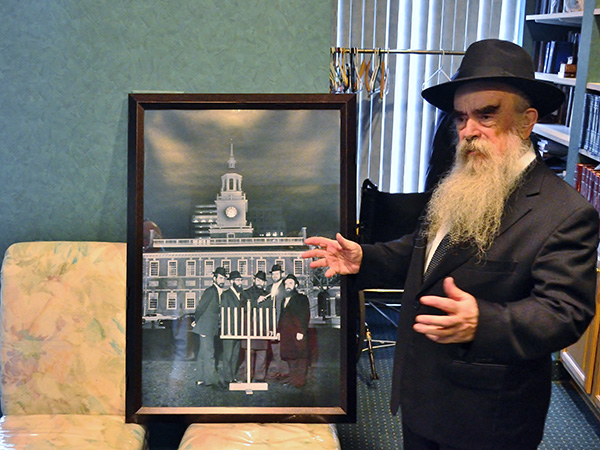
Outside the front door of Independence Hall, amid a wet and mild December in Philadelphia, a handful of devoutly orthodox Jews decided to add their light to the world.
Four men of the Lubavitcher sect of Hasidic Judaism, including renowned Rabbi Abraham Shemtov, gathered on Independence Mall on Dec. 14, 1974. Together they lit what is believed to be the first menorah, or Hanukkah candelabrum, ever illuminated on public property.
And together they watched their light spread.
“Philadelphia is where we started,” the now-88-year-old Rabbi Shemtov told The Inquirer in 2014. “Now it’s everywhere, in too many places to count.
“So, the idea caught fire,” he said, smiling through his long, gray beard.
Hanukkah is the Jewish celebration of light over darkness, and of faith and freedom over oppression and persecution. While it’s not the biggest holiday in the Jewish faith, its themes of perseverance and hope have been as synonymous with the winter solstice as any Christian tradition.
The most obvious reason that menorahs were traditionally not lit outside was because the flame would go out.
So on that breezy evening in mid-December, the flame stayed lit against all odds. Some might even call it divine intervention.
“What you need to understand,” Shemtov explained, is that Jewish tradition dictated that the candelabrum be lit at home, and placed “at the spot the house shares with the outside,” typically at the front door.
“Our sages say outside is better,” he said with a shrug. “So, we brought it outside a step further.”
In the years since, public menorahs havesprouted up across Europe and North America, from Revolution Square in Moscow to the White House in Washington.
“The simple lighting ceremony in Philadelphia,” wrote The Inquirer’s longtime religion reporter David O’Reilly, “became the foundational story of public menorahs for most of the world’s Jews.”
For centuries, menorah lighting had at times been a covert domestic ritual.
“We lit the first candle. There was some singing and dancing. It was a private event in public,” Shemtov said in 2014. “But even so, in concept we were sharing the thing with the world.”
“Do you realize you are going to end my life by doing this?”
Eliana Chernyakhovsky said she asked the question through an interpreter over and over again to the Pennsylvania Department of Human Services last week, after her 24-hour, state-funded care was cut off without warning. Her meal provider was also cut off. How would she feed herself? What if her oxygen tank ran out?
“Fear had risen in my heart,” Chernyakhovsky said in Russian during an interview through an interpreter on Wednesday. “I was genuinely afraid.”
Chernyakhovsky, 73, of Northeast Philadelphia, was born with spina bifida and has a number of physical disabilities associated with the condition, and uses a wheelchair to get around. She is among the Pennsylvania residents who say they have lost their government-funded services because a state-contracted mail vendor failed to deliver a month’s worth of agency mail.
That breakdown resulted in 3.4 million letters never getting sent, 1.7 million of which were from the Pennsylvania Department of Human Services — the agency that oversees SNAP food assistance and Medicaid and is tasked with serving the state’s most vulnerable populations.
Millions of letters from state agencies — including notices of health and SNAP benefit renewal, driver’s license and vehicle registration renewal invitations, vehicle registration cards, and more — were never sent by a mail presort vendor, who was contracted by the state to tray and sort agency mail in order to save money on postage. The failure went undetected for a month until early December, when Gov. Josh Shapiro’s administration fired Harrisburg-based Capitol Presort Services and hired another vendor on a $1 million emergency contract to work through the backlog.
In Chernyakhovsky’s case, a letter dated Nov. 6 said she had failed to submit a renewal packet to continue receiving in-home care, said her attorney, Louise Hayes of Community Legal Services. Chernyakhovsky had 15 days to appeal to continue receiving services, or else her services would be shut off on Nov. 21.
But due to the monthlong lapse in state agency mail, Chernyakhovsky did not receive the letter until last week, after funding for her in-home nurses and foodservices had already been cut off, she said.
Chernyakhovsky’s home health aides opted to continue her care without pay, and with no assurance they would get paid for the time when her care was restored, because her needs are so great.
Her services restarted last week thanks to efforts by Community Legal Services while her appeal works its way through the system. As of this week, one of her home health agencies has still not received payment from her insurance company.
Alexander Aybinder, her day-shift nurse, said Wednesday it was still unclear when he would get paid. But he said he would still come to Chernyakhovsky’s home, no matter what.
“I will come tomorrow, because she cannot stay without service. I will work,” he said. “She’s absolutely helpless.”
DHS: Extended deadlines and ‘additional flexibility’
DHS spokesperson Brandon Cwalina said in a statement Thursday the agency will extend deadlines for appeals and provide “additional flexibility for affected Pennsylvanians.” Residents affected by the mail issue will receive notice of their appeal options and deadline extensions, Cwalina said.
Medicaid, CHIP, and TANF cash assistance recipients whose benefits were reduced or cut off during the mail delay will have their cases reopened, he added. These cases will be again reviewed to determine if the recipients received the necessary notification of a change in benefits. Renewals for the programs, originally due in December, are now due in January.
DHS cannot extend renewal deadlines for SNAP benefits due to federal guidelines, but affected SNAP recipients who submit the necessary documentation within 30 days of losing their benefits will be able to have them reopened and backdated, Cwalina said.
At least two dozen affected so far, with more expected
At least two dozen Community Legal Services clients have had problems with receiving their benefits because of the mail delay, said Maripat Pileggi, a supervising attorney at CLS. The delay affected state agency letters dated Nov. 3 through Dec. 3, officials have said, and all unsent mail should be received by residents in a few days.
And as the nonprofit legal agency has tried to help restore critical services to some of its most vulnerable clients, CLS attorney Lydia Gottesfeld said, legal advocates have struggled to reach the departments in DHS that could help them, with phone lines going unanswered or hour-long wait times.
“It’s been very difficult to get information about these delays,” she added.
Cwalina said Thursday that any DHS appeal hearings that were missed due to the mail disruption are being reopened and rescheduled, and the agency maintains that its callback system is accessible to recipients.
Cases like Chernyakhovsky’s are among the first and most urgent that CLS has identified since the state said that a month’s worth of agency mail to residents from DHS and the Pennsylvania Department of Transportation was never sent. Residents like Chernyakhovsky who receive care through the Medicaid-funded home and community-based services program often have the most acute health issues and significant needs, meaning a loss in healthcare services can be catastrophic.
Gottesfeld expects that more residents will realize in the coming weeks that they lost services — such as food assistance or health insurance — because of missed hearings or deadlines the next time they visit the doctor or grocery store.
When people lose state-funded services, it is not usually because they suddenly no longer need them, Gottesfeld said. Rather, it is usually due to failing to submit paperwork properly, resulting in a loss of food assistance, healthcare, or other services.
Questions remain
It remains unclear how the state agency mail piled up for more than a month before officials noticed, how the backlog was discovered, or where the millions of agency letters were located after the vendor stopped sorting them.
The reported loss of benefits stemming from the mail delay also comes after several tumultuous months for people who receive public benefits, following a federal government shutdown that cut food assistance, new work requirements to maintain benefits, and future uncertainty under federal cuts passed earlier this year. Shapiro was at the forefront of Democratic opposition to federal cuts to Medicaid and SNAP, and was a vocal critic when the department withheld benefits during the federal shutdown.
On Thursday, a group of 15 state Senate Republicans, including top legislative leaders, sent a letter to the Pennsylvania Department of General Services citing The Inquirer’s reporting and requesting more information about how the mail delivery failure was discovered, why it took a month to find the backlog, and more.
“Given the broad scope of this mail delivery failure, it is critical to ensure every effort is made to minimize the impact on our constituents and the disruption it may cause in their lives,” the senators wrote.
Shapiro’s administration is “exploring all legal options” against the fired vendor, Capitol Presort Services, Cwalina said.
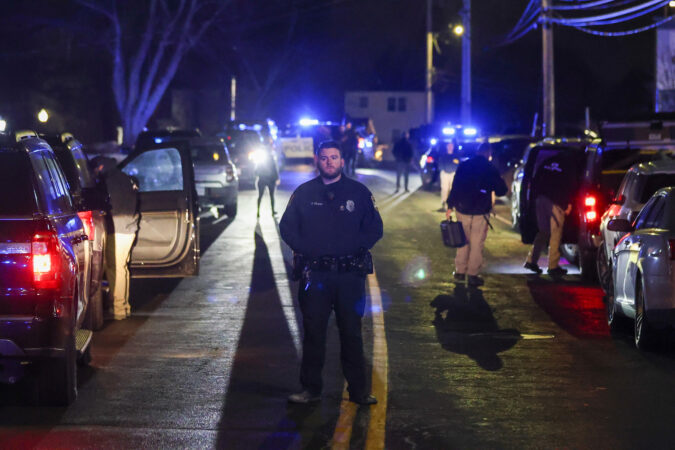
Deputies from the Philadelphia Sheriff’s Office appear to have made serious tactical errors while attempting to apprehend a wanted man at his workplace in North Philadelphia on Monday morning, which enabled him to speed away in his car,according to experts in fugitive apprehension.
Moments later, Joseph Cini, while fleeing the deputies in his Nissan Maxima, plowed into a Jeep Patriot at Ninth Street and Girard Avenue, police say, killing an Uber passenger and seriously injuring her driver.
Cini, 35, ran from the scene but turned himself in to police Tuesday night. He is facing a slew of new charges, including homicide by vehicle.
Sheriff Rochelle Bilal has declined to answer any questions about the botched arrest. She released a short statement offering her office’s condolences to the family of Angela Cooper, the 63-year-old woman who was killed.
The Inquirer, however, was able to partially reconstruct what happened based on statements the deputies have provided to Philadelphia police.
The six-person operation by the sheriff’s office turned deadly when deputies from its warrant unit approached Cini, who was wanted for a probation violation, while he was still behind the wheel — rather than waiting until he got out of his vehicle.
Cini then backed up and, because the deputies had failed to box him in, started barreling down Girard Avenue. One member of the warrant unit, in fact, told police that he moved his unmarked vehicle to make way for the suspect’s vehicle to get by.
Four experts consulted by The Inquirer said the deputies’ statements could serve as a road map of what not to do during an apprehension. Such high-risk tactics, according to those experts, put the deputies and the public in more danger than was necessary.
“A vehicle is like a gun, almost. It can be a two-ton weapon.” said Craig Caine, a retired inspector with the U.S. Marshals Service. “And it proved to be true in this case.”
A plan gone wrong
Before sunrise Monday morning, a team of four deputies and two sergeants from the sheriff’s warrant unit laid an ambush for Cini. They had received a tip he was working at a low-slung plumbing business next to a three-way intersection on the 900 block of Watts Street, just south of Girard.
After surveilling the business, the team learned that Cini was set to arrive around 7 a.m. A sheriff’s sergeant and a deputy were outside the plumbing business, waiting to get a positive ID as others moved to block Cini’s escape paths, according to statements they later provided to police.
But when the deputies received confirmation that Cini was approaching the business, they sprang the trap before he stepped out of the car.
One deputy told police she activated the emergency lights on her car, then she and another deputy approached Cini and told him to exit his vehicle.
A sheriff’s sergeant on the team provided a similar account, telling police that the warrant unit closed in on Cini while he was still in the Maxima.
Instead of getting out of the car, Cini threw it in reverse and headed north on Watts.
As Cini backed up, a sheriff’s sergeant quickly moved his own vehicle onto Cambridge, a cross street, to avoid a collision with Cini on Watts, he later told police.
The warrant unit regrouped and began heading after Cini, but he crashed into the Jeep only five blocks away, according to the deputies.
Stephen Thompson, 51, a pastor in Kensington who was driving the Jeep for Uber, was injured in the crash and is being treated at Temple University Hospital.
The impact pinned Cooper, a Peco employee who did homeless outreach, in the back seat of the Jeep. A deputy checked her pulse and found none. She was pronounced dead at 7:24 a.m.
Days later, debris from the crash remained in the middle of Girard Avenue.
At a news conference Thursday, District Attorney Larry Krasner described Cooper as a “remarkable person” who was active with her church and “was always sacrificing for others.”
“We want the families and surviving victim to know our office will do everything we can to get justice and hold this defendant properly accountable for this terrible act,” Krasner said.
Experts on fugitive tracking and apprehension say the crash was likely preventable.
Robert Almonte, who served as U.S. marshal for the Western District of Texas during President Obama’s administration, said it is unusual for a warrant unit to confront a wanted man while he is in a car if the officers had information on where he is going to be.
“I would have waited for him to go into work and grab him there,” Almonte said. “Or, if the boss didn’t want that to happen, I’d go to Plan B: Let him walk toward the front door and grab him. But don’t let him get back to the vehicle.”
Caine, who worked on a fugitive task force in New York and New Jersey, agreed. A foot pursuit, he said, is much less dangerous than a car chase.
“Wait for him inside. Don’t have any suspicious vehicles within eyesight,” Caine said, speaking generally about best practices. “Take him at the door, or wait until he gets deeper into the building. Usually we were at the door. He comes in, boom, he’s on the ground, in handcuffs, and we take him away, no danger.”
If you have to confront a fugitive in a car, Caine said, make sure he has nowhere to go, if at all possible.
“Surround the car. Box him in nice and tight,” he said.
Krasner said Thursday that Cini may have somehow “figured out” he was about to be arrested, and then decided to flee. The deputies’ accounts to police, however, make no mention of that.
Regardless, Chris Burbank, an adviser to the Center for Policing Equity and the former police chief in Salt Lake City, said the operation was a failure that put lives at risk.
“It’s Law Enforcement Tactics 101,” Burbank said. “There is absolutely no reason to do anything while he’s mobile. This was unnecessary.”
Why was Cini wanted?
Since Monday, Philadelphia police and the sheriff’s office have provided only vague explanations of why sheriff’s deputies were attempting to arrest Cini in the first place.
Cini has a lengthy criminal history, racking up at least 24 priors in Pennsylvania and New Jersey between 2001 and 2022, including for theft, robbery, assault, and domestic abuse, according to police records.
The sheriff’s office statement on Monday said only that “deputies were attempting to serve a lawful warrant.” A police department news release on Monday described it as a “warrant for domestic assault,” leaving the impression Cini was wanted for a crime not yet prosecuted.
But two members of the warrant unit told police that they were planning to arrest Cini for a probation violation.
The Philadelphia District Attorney’s Office confirmed Thursday that Cini was being sought in connection with a 2018 casein which he had already been sentenced to jail time and probation.Assistant District Attorney Bob Wainwright said Cini was “on probation at the time for a domestic violence strangulation case” and had open warrants associated with that case.
Philadelphia law enforcement agencies have been under increased scrutiny about how they handle domestic abuse cases following the October killing of Kada Scott, allegedly by a former romantic partner.
At aCity Council hearing this month, Bilal said her office was prioritizing cases linked to domestic violence.
“We are no longer operating as a passive service agency,” she said. “We are now an active coordinator and a public safety partner in the city’s domestic violence response network.”
On Thursday, however, Bilal declined to discuss what went wrong in the Cini case.
“At this time, we cannot comment on the initial findings as the matter remains under active investigation,” Teresa Lundy, a department spokesperson, said in an email.
“Our office is conducting its own review,” Lundy said, “and will await the conclusion of the Philadelphia Police Department’s investigation before providing any further response.”
Think you know your news? There’s only one way to find out. Welcome back to our weekly News Quiz — a quick way to see if your reading habits are sinking in and to put your local news knowledge to the test.
Question 1 of 10
In Steven Spielberg’s upcoming film, Disclosure Day, which filmed in parts of New Jersey earlier this year, Emily Blunt’s character has this occupation:
CorrectIncorrect. XX% of other readers got this question right.
The trailer shows Blunt as a meteorologist who shudders as she experiences some sort of encounter live on air. It includes all the other good stuff: crop circles, deer who are absolutely shook by whatever extraterrestrial activity they’re dealing with, car chases, you know the deal.
Question 2 of 10
A performance artist from Baltimore stood nearly naked, in socks and boxers, outside the Liberty Bell last week with a sign that said:
CorrectIncorrect. XX% of other readers got this question right.
The man, who goes by Ham, said he’s been doing the underwear in cold cities routine for about two years and recently added the sign, “engagement ring savings fund,” as a way to combat people repeatedly asking him his motives.
Subscribe to The Philadelphia Inquirer
Our reporting is directly supported by reader subscriptions. If you want more journalism like this story, please subscribe today.
During her first interview on Stephen Colbert’s The Late Show, Taylor Swift referenced a photo from 2001, at age 11, performing at this local spot:
CorrectIncorrect. XX% of other readers got this question right.
“You know when you are like 11 and you have that one outfit that you just know … goes so hard … when you just put this on and it’s like I’m sorry. I’m unstoppable today,” the Berks County native said about her American flag Limited Too shirt and red duster. She rocked that outfit while performing the National Anthem at a Sixers game.
Question 4 of 10
A new South Philly crime drama, Not for Nothing, recently debuted on the big screen and Amazon Prime. The brothers who conceptualized and wrote the show owned a music venue on Ninth Street called:
CorrectIncorrect. XX% of other readers got this question right.
Back in 2006, when they first opened a live music venue on Ninth Street, Connie’s Ric Rac, Frankie and Joe Tartaglia — and their best friend and business partner, Peter Pelullo — would sit for hours after closing, spitballing script ideas. The brothers wanted to tell a South Philly story that captured the neighborhood they knew and that could make their dreams real.
Question 5 of 10
Late actor and filmmaker Rob Reiner got his start in this Pennsylvania theater as an apprentice at age 17:
CorrectIncorrect. XX% of other readers got this question right.
Reiner apprenticed at the Bucks County Playhouse in 1964, the same year Liza Minelli appeared at the Playhouse and Arthur Godfrey was in Our Town.
story continues after advertisement
Question 6 of 10
An Eagles fan went viral after his self-defeating joke on Facebook prompted a police wellness check. Where does the fan live?
CorrectIncorrect. XX% of other readers got this question right.
Jake Beckman is an Eagles fan living in St. Louis. When the Eagles won the Super Bowl last season, he and his wife made the 14-hour drive to attend the parade.
Question 7 of 10
Which book was the most checked-out print title of the year across all of Philly’s library branches?
CorrectIncorrect. XX% of other readers got this question right.
The most checked-out print book of the year across all Philly’s library branches — in any genre — was Liz Moore’s 2024 The God of the Woods, a propulsive thriller about a girl who goes missing from a summer camp in 1975, eerily mirroring the disappearance of her brother from the same place 14 years earlier. Moore is based in South Philly.
Question 8 of 10
South Philly author Liz Moore’s “The God of the Woods” has been ordered for a TV series adaptation by which streamer?
CorrectIncorrect. XX% of other readers got this question right.
Netflix announced it has ordered a series adaptation of “The God of the Woods,” a multigenerational mystery drama set in the Adirondacks. Moore will serve as a co-showrunner, writer, and executive producer, Netflix said. It marks the author’s second book that has been adapted for TV.
Question 9 of 10
Comedian Jake Shane said he had the best meal of his life at this Philly spot:
CorrectIncorrect. XX% of other readers got this question right.
“The best meal I’ve ever had in my life at Her Place in Philly,” Shane told his TikTok fans. Her Place earned one Michelin star this year.
Question 10 of 10
Why did this former Eagles fan sue the team?
CorrectIncorrect. XX% of other readers got this question right.
Jalen Hurts gave diehard Eagles fan Paul Hamilton a touchdown ball in MetLife Stadium in December 2022. Then team, NFL, and security officials accosted the Eagles fan, according to a lawsuit.
Your Results
You have skipped .
You scored XX out of 10.
The average reader scored XX out of 10
Seems like you’ve been skimming more than reading there, buddy. There’s always next week.
You’ve read some articles (or made some educated guesses) but we wouldn’t come to you first for our local news recaps. Better luck next week!
Do you work here? You’re a local news stan with the latest updates on Philly happenings. Your friends definitely ask you for summaries on what’s going on and it shows.