Category: News

Latest breaking news and updates

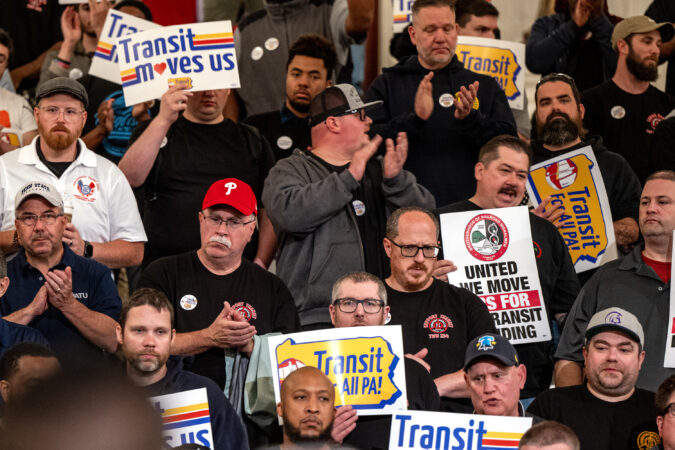
  • SEPTA’s board approves 2-year contract with transit agency’s largest union

    SEPTA’s board approves 2-year contract with transit agency’s largest union

    SEPTA’s board on Thursday approved a new contract with the transit agency’s largest union, Transport Workers Union Local 234, and a second smaller union representing vehicle operators in the suburbs of Philadelphia.

    Members of TWU Local 234 voted Wednesday night to approve a two-year contract that will deliver a 3.5% pay raise, bolster the union’s pension funds, and expand health benefits for new employees.

    SMART Local 1594, which represents approximately 350 operators, reached a deal with the transit agency earlier this month.

    “These contracts are fair to our hardworking frontline employees and fiscally responsible to our riders and the taxpayers who fund SEPTA,” said SEPTA General Manager Scott A. Sauer.

    For TWU Local 234, the two-year contract disrupts a pattern of three consecutive one-year contracts. TWU president Will Vera said that with the FIFA World Cup, MLB All-Star Game, and America’s 250th birthday coming to Philadelphia in 2026, both parties agreed to a two-year contract so as not to interrupt service during these global events.

    The union represents 5,000 operators, mechanics, cashiers, maintenance people, and custodians who work on SEPTA’s buses, subways, and trolleys. Before this latest deal, TWU members were working without a contract since Nov. 7, and members voted unanimously on Nov. 16 to authorize leaders to call a strike if contract negotiations didn’t go as planned.

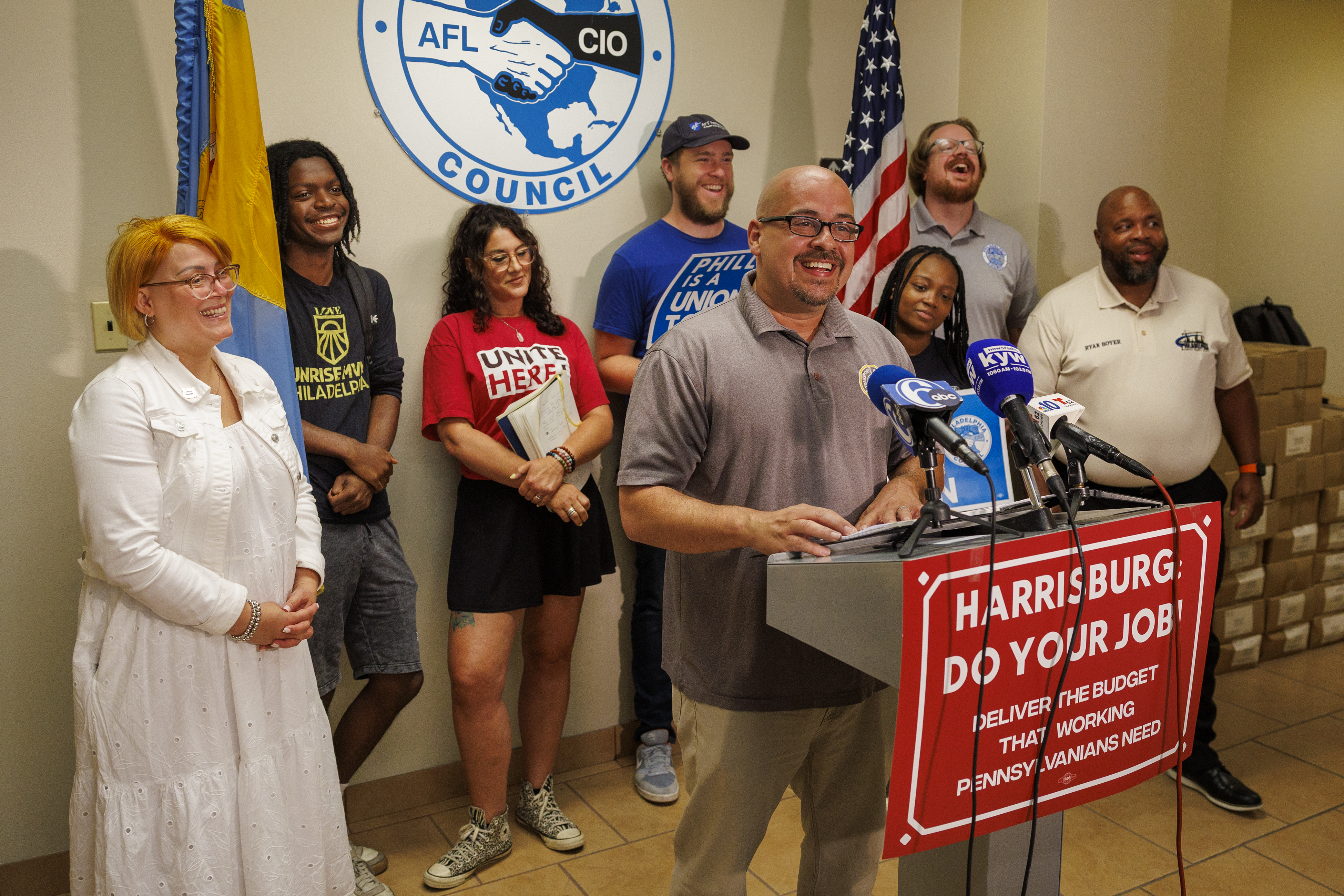
    Will Vera, vice president TWU Local 234, urged lawmakers in Harrisburg to deliver a budget during a speech in July at the AFL-CIO headquarters in Philadelphia.

    However, Vera said that this contract is a major win, especially for attracting new hires. Before this, new employees could not begin receiving dental and vision care until they completed 15 months on the job. The new contract shrinks that time down to 90 days.

    “I really got tired of explaining to the new hires for 15 months that they just have to clean their teeth,” Vera said. “I wanted this to be a retention contract, to not only keep people here, but to make this an attractive place to come work for SEPTA.”

    Philly’s transit unions don’t hesitate to strike if needs aren’t met. SEPTA unions have struck 12 times since 1975, earning SEPTA the title of one of the most strike-prone agencies in the country. Its last strike was a six-day effort in 2016 that ended one day before the presidential election.

    The negotiations come on the heels of SEPTA’s worst financial period in its history, the agency said. SEPTA isn’t alone, though. Transit agencies throughout the country are in funding crises as inflation rises, federal funding shrinks, and state subsidies fail to increase each year.

    Sauer, SEPTA’s general manager, added: “I am grateful to Governor [Josh] Shapiro and his team for their efforts to help us resolve differences and reach an agreement. Securing two-year contracts provides important stability as we approach the major events coming to Philadelphia in 2026.”

  • A Guide to the 2026 Philadelphia Mummers Parade

    A Guide to the 2026 Philadelphia Mummers Parade

    This year marks the 125th anniversary of the Philadelphia Mummers Parade, that colorful, boisterous procession that has come to define New Year’s Day in the city.

    The festivities kick off at 9 a.m. on Thursday, Jan. 1, as more than 10,000 performers take to the streets for a daylong celebration USA Today readers recently hailed as the nation’s best holiday parade.

    From parking to road closures to how to go about watching, here’s everything you need to know ahead of time.

    Kasey McCullough kisses her son Finn, 5, after his appearance with Bill McIntyre’s Shooting Stars during their performance in the Fancy Brigade Finale at the Convention Center Wednesday, Jan. 1, 2025, part of the Philadelphia Mummers New Year’s Day parade. Their theme is “Legends of the Secret Scrolls.” Finn’s dad, Jim McCullough also performed, his 40th year with the Mummers. They are from Washington Twp.Washington Township, N.J.

    Mummers Parade route

    The mile-and-a-half route begins at City Hall, before heading south down Broad Street to Washington Avenue in South Philadelphia.

    How to watch the 2026 Mummers Parade

    Watch the Mummers Parade in person

    The parade is free to attend. Those hoping for a more intimate experience, however, have a few options:

    • Reserved bleacher seats located near the judging stand just west of City Hall are available for $25 at visitphilly.com.
    • Additionally, tickets to the Fancy Brigade Finale — held at 11:30 a.m. and 5 p.m. inside the Convention Center — range from $28 to $43. Tickets are available at visitphilly.com or during business hours at the Independence Visitor Center.

    Watch the Mummers Parade from home

    The parade will be broadcast from 9 a.m. to 5 p.m. on:

    Members of the Saints wench brigade step to the judges’ stand during the 124th Mummers Parade on Wednesday, Jan. 1, 2025.

    What is the Mummers Parade?

    In short, it’s the longest continuously running folk parade in the country. Some 10,000 elaborately dressed performers take part in the celebration each year, part of dozens of groups spread across several divisions.

    • Fancies: Painted faces and elaborate costumes.
    • Comics: Satirical comedy skits aimed at public figures, institutions, and current events.
    • Wench Brigades: Known for traditional Mummers costumes, including dresses, bloomers, and bonnets.
    • Fancy Brigades: Theatrical performances. (The Fancy Brigade Finale takes place on New Year’s Day with a pair of ticketed performances at the Convention Center at 11:30 a.m. and 5 p.m.)
    • String Bands: Marching musicians playing an assortment of string and reed instruments.

    Mummers Parade performers

    Fancy Division

    • Golden Sunrise

    Wench Brigade Division

    • Froggy Carr
    • Pirates
    • Americans
    • Cara Liom
    • MGK
    • O’Malley
    • Oregon
    • Saints
    • Riverfront
    • Bryson
    • Comic Division

    Mother Club: Landi Comics NYA

    • Philadelphia Pranking Authority
    • Mayfair Mummers
    • Barrels Brigade
    • The Jacks

    Mother Club: Rich Porco’s Murray Comic Club

    • Holy Rollers NYB
    • Vaudevillains NYB
    • Trama NYB
    • Wild Rovers NYB
    • Mollywoppers NYB
    • Merry Makers NYB
    • Misfits NYB
    • Fitzwater NYB
    • Funny Bonez NYB
    • Top Hat NYB
    • Fiasco NYB
    • Golden Slipper NYB
    • B. Love Strutters
    • Madhatters NYB
    • Tankie’s Angels NYB
    • The Leftovers NYB
    • Finnegan NYB

    Mother Club: Goodtimers NYA

    • SouthSide Shooters NYA
    • Jokers Wild NYB
    • Hog Island NYA
    • Pinelands Mummers NYB
    • Happy Tappers NYB
    • Two Street Stompers NYB
    • Gormley NYB
    • Jesters NYB
    • Lobster Club NYB
    • South Philly Strutters NYB
    • Jolly Jolly Comics NYB

    String Band Division

    • Duffy String Band
    • Durning String Band
    • Quaker City String Band
    • Fralinger String Band
    • Uptown String Band
    • Avalon String Band
    • South Philadelphia String Band
    • Aqua String Band
    • Greater Kensington String Band
    • Woodland String Band
    • Polish American String Band
    • Ferko String Band
    • Hegeman String Band
    • Jersey String Band
    Members of Froggy Carr chant as they strut to Market Street during the 124th Philadelphia Mummers Parade on Wednesday, Jan. 1, 2025.

    Mummers Parade-day hacks

    Navigating the heavily attended event can require a bit of planning, with entire Reddit threads devoted to parade-day tips — including the best places to park and how to access elusive public restrooms throughout the day.

    A few things to keep in mind: The parade is accessible through SEPTA Regional Rail, bus, subway, and trolley lines. And though parking is free because of the holiday, it’s expected to be scarce.

    While the heart of the action takes place near City Hall and Dilworth Park, performance areas will also be located along the parade route — at Broad Street at Sansom, Pine, and Carpenter Streets.

    Starting at 11 a.m., meanwhile, parade attendees can gather at the staging area for the string bands to watch the performers prepare. (The staging areas are located at Market Street between 17th and 21st Streets and JFK Boulevard between 17th and 20th Streets.)

    Also good to remember? Dress warm, bring a lawn chair (they’re permitted), and pace yourself — it has the potential to be a very long day.

    Ferko String Band tenor sax players Renee Duffy of Deptford (left) and Tom Garrity of Berlin take a break from the parade as they ride in the bands truck on South Broad Street during the Mummers Parade in Philadelphia on New Year’s Day, Wednesday, Jan. 1, 2025.

    Mummers Parade road closures and parking restrictions

    Friday, Dec. 26, 2025

    No parking from 6 p.m. on Dec. 26 through 6 p.m. on Jan. 2, on the east curb lane of 15th Street from JFK Boulevard to South Penn Square.

    Saturday, Dec. 27, 2025

    No parking from 6 p.m. on Dec. 27 through 7 a.m. on Jan. 2, on the west side of 15th Street from Arch Street to Ranstead Street. Street and sidewalk vendors will also not be permitted to park in this area.

    Monday, Dec. 29, 2025

    15th Street will be closed to southbound traffic at JFK Boulevard. Closure begins at 8 a.m. on Dec. 29 and runs through 7 a.m. Jan. 2.

    Market Street eastbound will be closed to traffic at 16th Street from 8 a.m. on Dec. 29 through 7 a.m. on Jan. 2.

    Tuesday, Dec. 30, 2025

    No parking on the following streets from 4 a.m. on Dec. 30 through 6 p.m. on Jan. 1:

    •  Market Street from 15th Street to 21st Street (both sides)
    • JFK Boulevard from Juniper Street to 20th Street (both sides)

    15th Street will be closed to southbound traffic at JFK Boulevard. Closure begins at 7 a.m. on Dec. 30 and runs through 7 a.m. Jan. 2.

    Wednesday, Dec. 31, 2025

    Market Street will be closed to vehicle traffic from 15th Street to 21st Street from 10 a.m. to 3 p.m. on Dec. 31. Market Street will reopen at 3 p.m. and traffic will be permitted to travel eastbound on Market Street to 15th Street and continue southbound on 15th Street.

    Thursday, Jan. 1, 2026

    The following streets will be closed to vehicle traffic beginning at 3 a.m. on Jan. 1 through the parade’s conclusion:

    • 15th Street from Arch Street to Chestnut Street
    • Market Street from 15th Street to 21st Street

    These streets will be closed to vehicle traffic beginning at 6 a.m. on Jan. 1 through the conclusion of the parade:

    • Benjamin Franklin Parkway from 16th Street to 20th Street
    • North Broad Street from Cherry Street to JFK Boulevard
    • 16th Street from Chestnut Street to Race Street
    • 17th Street from Benjamin Franklin Parkway to Ludlow Street
    • 18th Street from Ludlow Street to Race Street
    • 19th Street from Benjamin Franklin Parkway to Chestnut Street
    • 1500 block of Ranstead Street
    • 1300 block of Carpenter Street
    • 1000 block of South 13th Street
    • Chestnut Street from 15th Street to 18th Street (north side)
    • Cherry Street from 15th Street to 17th Street
    • Arch Street from 15th Street to 17th Street
    • Washington Avenue from 12th Street to 18th Street

    Broad Street will be closed to vehicle traffic from South Penn Square to Washington Avenue on Thursday, Jan. 1, beginning at 7 a.m. through the conclusion of the parade.

    Vehicle traffic will not be permitted to cross Broad Street during the parade.

    Additional Parking Restrictions

    No parking from 2 a.m. to 6 p.m. on Thursday, Jan. 1 (on both sides of street unless otherwise noted):

    • Broad Street from Cherry Street to Ellsworth Street
    • Juniper Street from JFK Boulevard to East Penn Square
    • South/East Penn Square from 15th Street to Juniper Street
    • Benjamin Franklin Parkway from 16th Street to 20th Street
    • Logan Circle (north side)
    • 16th Street from Chestnut Street to Race Street
    • 17th Street from Benjamin Franklin Parkway to Ludlow Street
    • 18th Street from Ludlow Street to Race Street
    • 19th Street from Benjamin Franklin Parkway to Chestnut Street
    • 1500 block of Ranstead Street
    • 1300 block of Carpenter Street
    • 1000 block of South 13th Street
    • Chestnut Street from 15th Street to 18th Street (north side)
    • Cherry Street from 15th Street to 17th Street
    • Arch Street from 15th Street to 17th Street
    • Washington Avenue from 12th Street to 18th Street

    SEPTA detours

    SEPTA hasn’t updated their schedule for the parade yet, but bus detours, alerts, and information can be found on SEPTA’s website.

    A brief history of the Mummers Parade

    What began in 1901 as a way to corral the city’s annual New Year’s debauchery has transformed into one of its most beloved traditions.

    Inspired by traditions brought to Philly by Swedish, Finnish, Irish, German, English, and African immigrants, the annual event has grown to feature thousands of costumed performers competing in a colorful, unique, and family-friendly daylong affair.

    Despite past funding issues and occasional controversy, the Mummers Parade today stands as one of the city’s quintessential events, celebrated by locals and embraced by Philly royalty; former Eagle Jason Kelce memorably donned a traditional Mummers outfit for the team’s Super Bowl parade in 2018, and actor Kevin Bacon, along with brother Michael, has helped fundraise for the event.

  • A state board has plans to improve college affordability and increase the number of people who complete degrees

    A state board has plans to improve college affordability and increase the number of people who complete degrees

    Pennsylvania’s fledgling State Board of Higher Education on Thursday rolled out its first strategic plan, setting goals addressing affordability, increased degree attainment, the state’s workforce and economic development needs, and the fiscal health of colleges.

    The board voted unanimously to post the 10-year plan for public comment. It will consider adoption in February.

    “The plan will strengthen partnerships, break down silos, and enable effective reinvestment in the sector,” Cynthia Shapira, chair of the board, said in a statement introducing the plan.

    It comes as the sector faces perhaps its greatest challenge in decades. Both private and public universities have been losing enrollment as the number of high school graduates falls — with another dip beginning next year and a 12% decline expected in Pennsylvania by 2037. Public trust in colleges has faltered, while concerns about cost and student debt have mounted.

    They are also facing scrutiny from President Donald Trump’s administration and a forecasted gap in workers who require a postsecondary credential in essential areas, such as healthcare, teaching, and advanced manufacturing.

    The Pennsylvania State System of Higher Education, which oversees the state’s 10 universities, endorsed the plan’s emphasis on collaboration across private and public colleges and universities.

    “Within our own system, we have learned that when universities work together, they can innovate, overcome challenges and better serve students and the Commonwealth,” the system said in a statement. Shapira is also the chair of PASSHE’s board.

    What is the board and what’s in its plan?

    The 21-member higher education board includes college presidents, administrators, legislators, and students. It was formed in 2024 by the governor and General Assembly to help public and private colleges work more cohesively and better serve students and the state’s workforce needs. The plan rollout follows public hearings that drew comments from more than 1,200 people, the board said.

    The plan outlines the challenges facing the higher education sector including another coming decline in the high school population, financial constraints, and the lack of coordination among institutions. Student debt averages more than $40,000 per student in Pennsylvania, the plan notes.

    “Multiple comparative state-level analyses … place Pennsylvania at or near the bottom in terms of affordability, attainment, and state investment per capita,” the report stated. “Adding to these challenges are a large and growing postsecondary workforce credential gap, and a range of closures and mergers that threaten to reduce access to postsecondary education.”

    In the Philadelphia region, Cabrini University and the University of the Arts closed in 2024 and Rosemont College announced earlier this year that it would cease operations in 2028 and that Villanova University would purchase its campus. Salus University was merged into Drexel University. Six of Pennsylvania’s state universities were merged into two entities in 2022, and St. Joseph’s University absorbed the University of the Sciences the same year.

    Other local colleges have struggled with enrollment declines and deficits. Temple University, for example, has gone from more than 40,000 students in 2017 to less than 30,000 this year.

    What are the specific goals in the plan?

    The new plan set six goals:

    1. Increase postsecondary attainment.
    2. Ensure affordable pathways to postsecondary credentials.
    3. Support the economic development needs of the state.
    4. Support the workforce development needs of the state.
    5. Ensure accountability and efficient use of state funds.
    6. Strengthen the fiscal health and stability of the higher education sector.

    How will the board work toward those goals?

    To meet the goals, the board proposes a “strategic communications plan” that touts the benefits of postsecondary education and how it impacts employment outcomes.

    It also emphasizes expanding funding for dual credit programs and enrollment in those programs to streamline the path from high school to college and allow students to accumulate more credits before they graduate high school. In addition, the plan proposes studying how to improve retention rates and focusing on reenrolling adults who started college but didn’t finish; there are more than 1.1 million Pennsylvanians with some college experience.

    Among its plans for addressing affordability are support of policies that “expand financial aid and forgive debt for in-demand, high-quality credentials,” take advantage of new federal Pell grants for workforce programs, and boost access to “open educational resources” to reduce the cost of course materials.

    The report also discusses the intent to “maximize the impact of research universities,” recruit out-of-state students to broaden the talent pool, and increase access to paid work experiences for students.

    To promote fiscal health, the plan recommends identifying and promoting best practices for fiscal efficiency and cost savings, and developing resources and an advisory group to help financially struggling colleges.

    “If institutions decide to close or merge, tools and expertise to assist in this process will help maximize savings, retain access to critical academic programming, and mitigate negative effects on students and communities,” the plan states.

    Another advisory group is recommended to help communities where colleges close maintain access to postsecondary education.

    What comes next?

    After the public comment period and the plan’s final adoption, the board intends to report annually on progress toward the goals and to consider revisions to the plan every five years.

  • House Democrats release more photos from Epstein’s estate

    House Democrats release more photos from Epstein’s estate

    WASHINGTON — House Democrats released several dozen more photos Thursday from the estate of the convicted sex offender Jeffrey Epstein, showing his associations with the rich and famous, as the Department of Justice faces a deadline to release many of its case files on the late financier by the end of the week.

    The photos released Thursday were among more than 95,000 that the House Oversight Committee has received after issuing a subpoena for the photos that Epstein had in his possession before he died in a New York jail cell in 2019. Congress has also passed, and President Donald Trump has signed, a law requiring the Justice Department to release its case files on Epstein, and his longtime girlfriend and confidant Ghislaine Maxwell, by Friday. Anticipation about what those files will show is running high after they have been the subject of conspiracy theories and speculation about his friendships with Trump, former President Bill Clinton, the former Prince Andrew, and others.

    House Democrats have already released dozens of photos from Epstein’s estate showing Trump, Clinton and Andrew, who lost his royal title and privileges this year amid scrutiny of his relationship with the wealthy financier. The photos released Thursday showed Epstein cooking with Sultan Ahmed bin Sulayem, an Emirati businessman. The photos also include the billionaire Bill Gates and images of a 2011 dinner of notable people and wealthy philanthropists hosted by a nonprofit group. The committee made no accusations of wrongdoing by the men in the photos.

    There were also images of passports, visas and identification cards from Russia, the Czech Republic, Ukraine, South Africa, and Lithuania with personally identifying information redacted, as well as photos of Epstein with women or girls whose faces were blacked out. The committee has said it is redacting information from the photos that may lead to the identity of victims being revealed.

    Rep. Robert Garcia, the top Democrat on the oversight panel, said in a statement that the “new images raise more questions about what exactly the Department of Justice has in its possession. We must end this White House cover-up, and the DOJ must release the Epstein files now.”

  • A 2-year-old girl was beaten to death in South Philadelphia, police say. Her mother’s boyfriend is under arrest.

    A 2-year-old girl was beaten to death in South Philadelphia, police say. Her mother’s boyfriend is under arrest.

    A 2-year-old girl was beaten to death in South Philadelphia last week, authorities say, and three people have been charged in connection with the crime.

    The girl, Key’Monnie Bean, may have been subjected to abuse before the fatal beating on Dec. 8, Assistant District Attorney Ashley Toczylowski said at a news conference Thursday.

    “There are indications this was an ongoing situation this little girl had to endure,” she said.

    That night, police were called to a home in the 2100 block of South Beechwood Street for a report of an unresponsive child. When officers arrived, they found the girl lying on the floor of the basement, police said. She was not breathing, and bruises covered her body, Toczylowski said.

    Efforts to revive the child were unsuccessful, said Deputy Commissioner Frank Vanore. She was pronounced dead shortly before 10 p.m. at Children’s Hospital of Philadelphia.

    Prosecutors are still awaiting a medical examiner’s report, Toczylowski said, but preliminary evidence suggests the child may have been beaten with objects and her airway restricted, causing suffocation. Her death has been ruled a homicide.

    Sean Hernandez, also known as Raafi Gorham, the boyfriend of the toddler’s mother, was arrested Wednesday and charged with murder, police said. Gorham, 21, lives at the house where the girl was found, Toczylowski said.

    Gorham’s cousin, Anthony Lowrie, 21, and Alycia McNeill, 20, were also arrested Wednesday and charged with obstruction and lying to police, Toczylowski said. Lowrie is additionally charged with giving police a fake identification. Toczylowski said the two provided conflicting and false accounts of what occurred that evening. Both live in West Passyunk.

    “Everyone in that house was very reluctant” to speak with police, she said, though someone in the house had called 911.

    Key’Monnie’s mother was home at the time of the alleged beating, Toczylowski said, but has not been charged in the incident.

    The girl’s father, TaShaun Walls, declined to comment Thursday, citing his grief.

    In a public Facebook post, Walls wrote: “I love you so much [and] miss you so much already just wish I would has been there faster but I’ll never forget you.”

  • Two Philly men accused of ‘fraud tourism’ in a Minnesota scandal that has drawn criticism from President Donald Trump

    Two Philly men accused of ‘fraud tourism’ in a Minnesota scandal that has drawn criticism from President Donald Trump

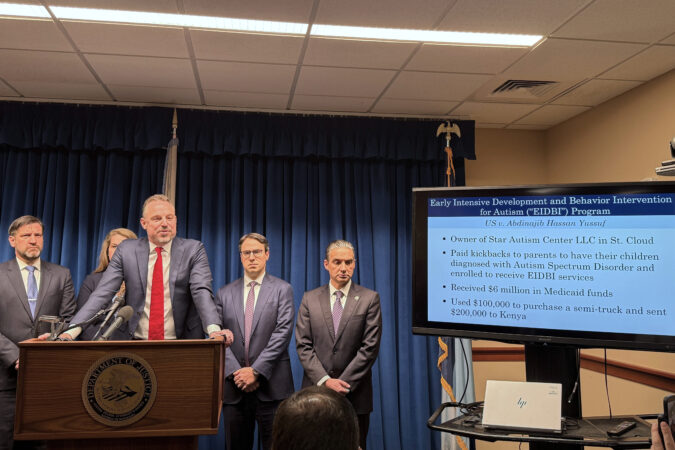
    Two Philadelphia men are facing federal charges in Minnesota after authorities said the men had learned of the state’s lax controls around a government-funded housing program, then traveled there to learn how to exploit it — the latest development in a long-running fraud scandal that has enveloped Minnesota and drawn the ire of President Donald Trump.

    Anthony Waddell Jefferson, 37, and Lester Brown, 53, were accused of fraudulently obtaining more than $3.5 million in government proceeds — funds that should have gone to Minnesota’s Housing Stabilization Services Program, prosecutors said, but were instead diverted to two companies the men oversaw in Philadelphia.

    Jefferson and Brown “came [to Minnesota] not to enjoy our lakes, our beautiful summers, or our warm people,” Joseph H. Thompson, Minnesota’s first assistant U.S. attorney, said Thursday. “They came here because they knew and understood that Minnesota was a place where taxpayer money could be taken with little risk and few consequences.”

    Jefferson and Brown each face one count of wire fraud and were charged by information, prosecutors said, which typically means a defendant intends to plead guilty.

    Court records for their cases were not immediately available, and it was not clear if either man had retained an attorney.

    Thompson cast their case as a novel twist in a scandal that he said was “swamping Minnesota” and had likely bilked taxpayers out of hundreds of millions of dollars intended for daycares, hunger programs, autism support, and other endeavors.

    The state had become such a magnet for fraudsters, Thompson said, that Jefferson and Brown had effectively performed “fraud tourism,” visiting the state purely to learn how to take advantage of its reputation for having programs that were ripe for abuse.

    The broader issues over the state’s lax disbursements have burst into national view in recent months as Trump and other Republicans have taken interest in the situation. Trump on social media called Minnesota a “hub of fraudulent money laundering activity” and, because many of those charged have ties to Minneapolis’ Somali community, said “Somali gangs are terrorizing the people of that great state.”

    Republicans have also blamed Minnesota Gov. Tim Walz — the 2024 Democratic vice presidential nominee — for allowing the situation to unfold on his watch. And right-wing groups have questioned whether some funds were being disbursed to terrorist groups in Somalia or elsewhere in Africa.

    Thompson said Thursday that he did not believe that was being done at a large scale, but that the exploitation of the programs was troubling and a phenomenon that had become uniquely common in Minnesota.

    Fraud scandals targeting government programs date back at least a decade in that state. But they received renewed attention in 2022, when the FBI raided the offices of Feeding Our Future, a food relief nonprofit that had rapidly expanded through pandemic relief efforts.

    Investigators later pointed to about $250 million in federal funding the group had received as part of the Department of Human Services’ Child Nutrition Program, some of which had allegedly been funneled into fraudulent claims for the Medicaid-backed meals program.

    Prosecutors did not have evidence to show exactly how much they said had been misspent, but said last month 78 people had been charged in connection with the scheme, which they called one of the largest pandemic-related frauds in the country.

    The Feeding Our Future investigation is just one of several schemes that have been fueling discourse over Minnesota’s government disbursements. The discussion has taken a dark turn in recent weeks, as Trump used the situation to insult Walz with a slur for people with intellectual disabilities, and to lash out at Somali immigrants, saying, “I don’t want them in our country.” During a speech in Pennsylvania this month, he called Somalia “about the worst country in the world.”

    As for the Philadelphia defendants, prosecutors said the men created two companies — Chozen Runner LLC and Retsel Real Estate LLC — in order to submit “fake and inflated bills” for housing services that were never provided. The program they ripped off was intended to create housing for people with disabilities or substance abuse issues, prosecutors said.

    Jefferson and Brown “repeatedly flew together from Philadelphia to Minneapolis,” purportedly to recruit beneficiaries for their LLCs from Section 8 housing or shelters, prosecutors said. But Jefferson and his employees created fake paperwork, sometimes listing bogus employees, to dupe insurance companies into reimbursing them.

    In all, prosecutors said, they submitted $3.5 million worth of claims for services they said they provided to 230 people.

    Thompson said the men and their companies had virtually no connections to Minnesota other than viewing the state housing funds as “easy money.”

    Jefferson, a Brewerytown resident according to voter registration data, describes himself in social media profiles and an online biography as a serial entrepreneur — selling a line of perfumes, working as a gospel musician, while also serving as the CEO of “The Housing Guys,” a group that says it provides housing stabilization services. In a photo posted to social media last summer, Jefferson was pictured being presented with an honorary citation from City Council President Kenyatta Johnson.

    Contacted Thursday by an Inquirer reporter, Jefferson hung up.

    He was pursued earlier this year in Philadelphia courts over a $103,000 federal tax lien.

    Brown formed Retsel — “Lester” spelled backward — in 2021, according to Pennsylvania corporate documents, using a mailing address in the West Oak Lane neighborhood.

    Attempts to reach Brown for comment Thursday were unsuccessful.

  • Police are investigating link between Brown shooting and killing of MIT professor, AP sources say

    Police are investigating link between Brown shooting and killing of MIT professor, AP sources say

    PROVIDENCE, R.I. — Authorities said Thursday that they’re looking into a connection between last weekend’s mass shooting at Brown University and one two days later near Boston that killed a professor at another elite school, the Massachusetts Institute of Technology.

    That is according to three people familiar with the matter who were not authorized to discuss an ongoing investigation and spoke on condition of anonymity. Two of the people said investigators had identified a person of interest in the shootings and were actively seeking that individual.

    The attacker at Brown on Saturday killed two students and wounded nine others in a classroom in the school’s engineering building before getting away.

    About 50 miles north, MIT professor Nuno F.G. Loureiro was gunned down in his home Monday night in the Boston suburb of Brookline. The 47-year-old physicist and fusion scientist died at a hospital the next day.

    The FBI previously said it knew of no links between the cases.

    This undated photo provided by the Massachusetts Institute of Technology in December 2025 shows Nuno Loureiro.

    How is the Brown investigation going?

    It’s been nearly a week since the shooting at Brown. There have been other high-profile attacks in which it took days or longer to make an arrest or find those responsible, including in the brazen New York City sidewalk killing of UnitedHealthcare’s CEO last year, which took five days.

    But frustration is mounting in Providence that the person behind the attack managed to get away and that a clear image of their face has yet to emerge.

    “There’s no discouragement among people who understand that not every case can be solved quickly,” the state attorney general, Peter Neronha, said at a news conference Wednesday.

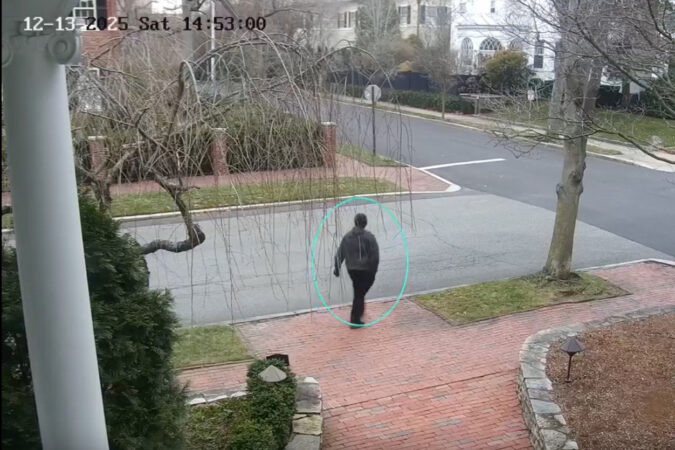
    Authorities have scoured the area for evidence and pleaded with the public to check any phone or security footage they might have from the week before the attack, believing the shooter might have cased the scene ahead of time.

    Investigators have released several videos from the hours and minutes before and after the shooting that show a person who, according to police, matches witnesses’ description of the shooter. In the clips, the person is standing, walking and even running along streets just off campus, but always with a mask on or their head turned.

    Although Brown officials say there are 1,200 cameras on campus, the attack happened in an older part of the engineering building that has few, if any, cameras. And investigators believe the shooter entered and left through a door that faces a residential street bordering campus, which might explain why the cameras Brown does have didn’t capture footage of the person.

    Providence Mayor Brett Smiley said Wednesday that the city is doing “everything possible” to keep residents safe. However, he acknowledged that it is “a scary time in the city” and that families likely were having tough conversations about whether to stay in town over the holidays.

    “We are doing everything we can to reassure folks, to provide comfort, and that is the best answer I can give to that difficult question,” Smiley said when asked if the city was safe.

    What can be learned from past investigations?

    Although it’s not unheard of for someone to disappear after carrying out such a high-profile shooting, it is rare.

    In such targeted and highly public attacks, the shooters typically kill themselves or are killed or arrested by police, said Katherine Schweit, a retired FBI agent and expert on mass shootings. When they do get away, searches can take time.

    “The best they can do is what they do now, which is continue to press together all of the facts they have as fast as they can,” she said. “And, really, the best hope for solutions is going to come from the public.”

    In the 2013 Boston Marathon bombing, it took investigators four days to catch up to the two brothers who carried it out. In a 2023 case, Army reservist Robert Card was found dead of an apparent suicide two days after he killed 18 people and wounded 13 others in Lewiston, Maine.

    The man accused of killing conservative political figure Charlie Kirk in September turned himself in about a day and a half after the attack on Utah Valley University’s campus. And Luigi Mangione, who has pleaded not guilty to murder charges in the killing of UnitedHealthcare CEO Brian Thompson in Manhattan last year, was arrested five days later at a McDonald’s in Altoona, Pa.

    Felipe Rodriguez, a retired New York police detective sergeant and adjunct professor at the John Jay College of Criminal Justice, said it’s clear that shooters are learning from others who were caught.

    “Most of the time an active shooter is going to go in, and he’s going to try to commit what we call maximum carnage, maximum damage,” Rodriguez said. “And at this point, they’re actually trying to get away. And they’re actually evading police with an effective methodology, which I haven’t seen before.”

    Investigators have described the person they are seeking as about 5 feet, 8 inches tall and stocky. The attacker’s motives remain a mystery, but authorities said Wednesday that none of the evidence suggests a specific person was being targeted.

    MIT mourns the loss of an esteemed professor

    Loureiro, who was married, joined MIT in 2016 and was named last year to lead the school’s Plasma Science and Fusion Center, where he worked to advance clean energy technology and other research. The center, one of MITl’s largest labs, had more than 250 people working across seven buildings when he took the helm. He was a professor of physics and nuclear science and engineering.

    He grew up in Viseu, in central Portugal, and studied in Lisbon before earning a doctorate in London, according to MIT. He was a researcher at an institute for nuclear fusion in Lisbon before joining MIT, the university said.

    “He shone a bright light as a mentor, friend, teacher, colleague and leader, and was universally admired for his articulate, compassionate manner,” Dennis Whyte, an engineering professor who previously led MIT’s Plasma Science and Fusion Center, told a campus publication.

    Loureiro had said he hoped his work would shape the future.

    “It’s not hyperbole to say MIT is where you go to find solutions to humanity’s biggest problems,” Loureiro said when he was named to lead the plasma science lab last year. “Fusion energy will change the course of human history.”

  • Atlantic City Mayor Marty Small Sr. found not guilty on all counts of abusing his teenage daughter

    Atlantic City Mayor Marty Small Sr. found not guilty on all counts of abusing his teenage daughter

    Atlantic City Mayor Marty Small Sr. was acquitted of child endangerment and related crimes Thursday after being accused of repeatedly assaulting his teenage daughter.

    Small, 51, faced charges stemming from a handful of incidents in late 2023 and early 2024 in which prosecutors said he and his wife abused and assaulted the teen. The couple said the incidents stemmed from their disapproval of their daughter’s relationship with a young man, leading to escalating tension and arguments in the family home.

    The jury delivered its verdict at 12 p.m. after deliberating for two days. They found Small not guilty of endangering the welfare of a child, aggravated assault, making terroristic threats, and witness tampering.

    “Thank you, Jesus! Thank you, jury!” Small said as the verdict was announced and broke into tears.

    Speaking to reporters outside the courthouse, Small said he and his family were prepared to “put this chapter behind us, in peace.”

    “It’s a lot of political forces out here that are against the leadership of my wife and I,” Small said. “But guess what? The people of Atlantic City want us, the people of Atlantic City need us, and the people of Atlantic City deserve us.”

    Had Small been convicted of any of the crimes, he would have been required by state law to cede his office.

    Those stakes were evident as the mayor’s friends and supporters packed into the courtroom for nearly two weeks of the trial. Supporters surrounded Small and broke into cheers outside the courthouse, celebrating a political career whose future had depended on the opinion of jurors.

    Small said he had been heavily scrutinized for more than a year after news of the allegations broke in spring 2024. He said he and his wife had since been “drug through the mud” and cast as child abusers by the media.

    Small’s defense attorney, Louis Barbone, said the verdict was “absolute proof that our justice system works” and that “honest men like Marty Small are vindicated.”

    Atlantic County Prosecutor William Reynolds said he and his office “respectfully disagree with the verdict.”

    “We acted based upon the complaints of the victim,” Reynolds told reporters. “The trial in this case was truly to give the victim a voice — the jury chose not to believe that voice.“

    Prosecutors said Small, a Democrat who was reelected this year amid his legal struggles, punched his daughter and beat her with a belt. In an incident central to their case against the mayor, prosecutors said, Small struck her in the head with a broom multiple times, knocking her unconscious.

    Jurors heard a conversation the teen recorded on her phone, in which Small told the girl he would “earth slam” her down the staircase. And prosecutors said that after the girl reported the abuse and investigators stepped in, Small encouraged his daughter to “twist up” her account of the events to minimize his involvement.

    Over the course of the trial, Small and his wife, La’Quetta — who also faces charges of abusing the teen — looked on as prosecutors described the mayor’s actions as criminal. Prosecutors presented photos of the teen’s bruises and listened to testimony from a pediatrician who said the injuries did not appear accidental.

    Small’s defense team, by contrast, told jurors that the teen had lied to investigators and exaggerated the extent of her injuries, and that she and her boyfriend had conspired against her father.

    Barbone had called the trial “extortion by child.” He said the mayor was a caring father who was only attempting to discipline an out-of-control child, and presented jurors with more than 40 character witnesses on his behalf.

    Small also testified and said he loved his daughter. He denied abusing her in the manner she described, telling jurors: “I did not hit my daughter with a broom.”

    The girl, now 17, took the stand last week and described being punched in the legs by her father in his “man cave” after her parents found out she had sneaked her boyfriend into the family home to have sex.

    “He said some words and put his hands on me,” the teen testified. Her father, she said, “was punching me in my legs and he hit me with a belt.”

    Prosecutors said the girl’s decision to testify was one of the most challenging things a teenager could do, and they rebuffed Barbone’s suggestion that the girl was a liar who sought retribution against her politically powerful father.

    As for the broom incident, Barbone said, the mayor had not hit the girl but was wrestling the broom out of her hands when she fell and hit her head.

    Prosecutors showed jurors photos of marks on the girl’s face. But a nurse who treated the teen at a hospital several days after the girl complained of headaches said she had not been able to find signs of injury.

    Jurors asked to review multiple pieces of evidence during their deliberation, including video of Small’s testimony about the broom incident.

    Again they watched the mayor recall the morning he urged his daughter to get ready to attend a peace walk in January 2024 following a spate of killings in Atlantic City.

    The teen refused, cursing at Small before ripping his shirt and throwing laundry detergent on him, the mayor testified. A scuffle broke out when she picked up a butter knife and the broom, he said.

    Mentioning the hospital examination, the mayor asked: “Where is the bruise, where is the bump, where is the bleeding?”

    In less than half an hour, jurors returned their verdict.

    Small, in his post-verdict remarks, described his daughter as “lost” and vowed to right the course of his family life.

    “I’m gonna get my daughter back,” Small said. “In the Bible, it says, ‘Father, forgive her, for she know not what she do.’ And that’s what we’re gonna do.”

    Prosecutors declined to comment on what would happen to the girl, who is still a minor and does not currently live with her family.

    Small’s wife, La’Quetta, is scheduled to stand trial in January on charges of endangering the welfare of a child and simple assault. La’Quetta Small, the superintendent of Atlantic City public schools, is accused of repeatedly beating her daughter.

    Also facing a forthcoming trial is Constance Days-Chapman, the principal of the Smalls’ daughter’s high school. Prosecutors say when the teen reported her parents’ abuse, Days-Chapman failed to notify child welfare authorities and instead told the couple of the report.

    Days-Chapman, who is Marty Small’s former campaign manager, was later charged with official misconduct and related crimes.

    Reynolds, the county prosecutor, said his office would hold an internal meeting to discuss the charges against La’Quetta Small and Days-Chapman. They will also meet with the Smalls’ daughter, he said.

    “We need to get the victim in here and have a discussion with her before any decisions are made — and that’s out of respect for her,” Reynolds said.
  • U.S. announces massive package of arms sales to Taiwan valued at more than $10 billion, angering China

    U.S. announces massive package of arms sales to Taiwan valued at more than $10 billion, angering China

    WASHINGTON — President Donald Trump’s administration has announced a massive package of arms sales to Taiwan valued at more than $10 billion that includes medium-range missiles, howitzers, and drones, drawing an angry response from China.

    The State Department announced the sales late Wednesday during a nationally televised address by the Republican president, who made scant mention of foreign policy issues and did not speak about China or Taiwan. U.S.-Chinese tensions have ebbed and flowed during Trump’s second term, largely over trade and tariffs but also over China’s increasing aggressiveness toward Taiwan, which Beijing has said must reunify with the mainland.

    If approved by Congress, it would be the largest-ever U.S. weapons package to Taiwan, exceeding the total amount of $8.4 billion in U.S. arms sales to Taiwan during President Joe Biden’s Democratic administration.

    The eight arms sales agreements announced Wednesday cover 82 high-mobility artillery rocket systems, or HIMARS, and 420 Army Tactical Missile Systems, or ATACMS — similar to what the U.S. had been providing Ukraine during the Biden administration to defend itself from Russia — worth more than $4 billion. They also include 60 self-propelled howitzer systems and related equipment worth more than $4 billion and drones valued at more than $1 billion.

    Other sales in the package include military software valued at more than $1 billion, Javelin and TOW missiles worth more than $700 million, helicopter spare parts worth $96 million, and refurbishment kits for Harpoon missiles worth $91 million.

    The eight sales agreements amount to $11.15 billion, according to Taiwan’s Defense Ministry.

    The State Department said the sales serve “U.S. national, economic, and security interests by supporting the recipient’s continuing efforts to modernize its armed forces and to maintain a credible defensive capability.”

    “The proposed sale(s) will help improve the security of the recipient and assist in maintaining political stability, military balance, and economic progress in the region,” the statements said.

    China’s Foreign Ministry attacked the move, saying it would violate diplomatic agreements between China and the U.S.; gravely harm China’s sovereignty, security and territorial integrity; and undermine regional stability.

    “The ‘Taiwan independence’ forces on the island seek independence through force and resist reunification through force, squandering the hard-earned money of the people to purchase weapons at the cost of turning Taiwan into a powder keg,” said Foreign Ministry spokesperson Guo Jiakun.

    “This cannot save the doomed fate of ‘Taiwan independence’ but will only accelerate the push of the Taiwan Strait toward a dangerous situation of military confrontation and war. The U.S. support for ‘Taiwan Independence’ through arms will only end up backfiring. Using Taiwan to contain China will not succeed,” he added.

    Under federal law, the U.S. is obligated to assist Taiwan with its self-defense, a point that has become increasingly contentious with China, which has vowed to take Taiwan by force, if necessary.

    Taiwan’s Defense Ministry in a statement Thursday expressed gratitude to the U.S. over the arms sale, which it said would help Taiwan maintain “sufficient self-defense capabilities” and bring strong deterrent capabilities. Taiwan’s bolstering of its defense “is the foundation for maintaining regional peace and stability,” the ministry said.

    Taiwan’s Foreign Minister Lin Chia-lung similarly thanked the U.S. for its “long-term support for regional security and Taiwan’s self-defense capabilities,” which he said are key for deterring a conflict in the Taiwan Strait, the body of water separating Taiwan from China’s mainland.

    The arms sale comes as Taiwan’s government has pledged to raise defense spending to 3.3% of the island’s gross domestic product next year and to reach 5% by 2030. The boost came after Trump and the Pentagon requested that Taiwan spend as much as 10% of its GDP on its defense, a percentage well above what the U.S. or any of its major allies spend on defense. The demand has faced pushback from Taiwan’s opposition KMT party and some of its population.

    Taiwanese President Lai Ching-te last month announced a special $40 billion budget for arms purchases, including to build an air defense system with high-level detection and interception capabilities called Taiwan Dome. The budget will be allocated over eight years, from 2026 to 2033.

    The U.S. boost in military assistance to Taiwan was previewed in legislation adopted by Congress that Trump is expected to sign shortly.

    Last week, the Chinese embassy in Washington denounced the legislation, known as the National Defense Authorization Act, saying it unfairly targeted China as an aggressor. The U.S. Senate passed the bill Wednesday.

  • Trump signed an order to reclassify marijuana as a less-dangerous drug. It’s not full legalization.

    Trump signed an order to reclassify marijuana as a less-dangerous drug. It’s not full legalization.

    President Donald Trump announced he would advise federal agencies to reschedule marijuana from a Schedule I controlled substance to Schedule III, easing federal restrictions on the plant.

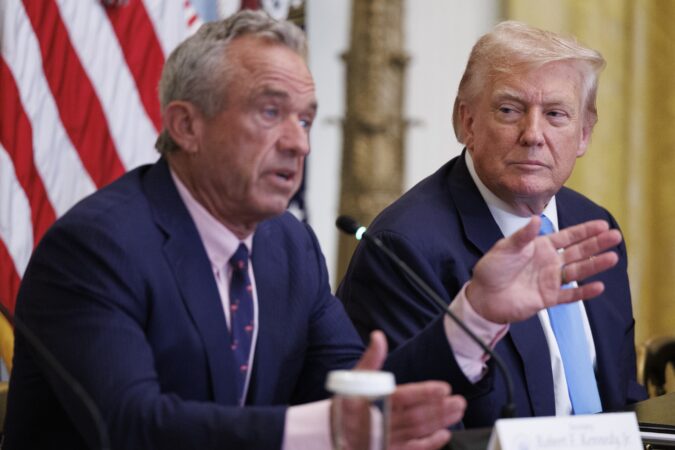
    Trump announced the executive order Thursday in the Oval Office, alongside Health and Human Services Secretary Robert F. Kennedy Jr. and a line of medical workers in white coats and scrubs. The president does not have the direct authority to reschedule marijuana but can request his federal agencies to do so.

    Jeff Hodgson smokes a pre-roll at his home in Cape May, NJ on Thursday, May 2, 2024. Hodgson mostly uses medical marijuana to help him sleep.

    Marijuana has been a Schedule I controlled substance since the 1970 Controlled Substances Act, meaning the federal government considers marijuana to have no accepted medical use, with a high risk of abuse. Schedule I drugs, such as heroin, cocaine, and LSD, are illegal and strictly regulated, making medical research on these drugs, including cannabis, nearly impossible.

    A reclassification would be the most significant reform on marijuana in more than half a century, opening the doors for medical research. But it would not be full legalization, said Adam Smith, executive director of the Marijuana Policy Project. It could also pave the way to federal intervention in the state-run medical and recreational marijuana industries, something stakeholders fear.

    “There is a possibility that in moving cannabis to Schedule III, instead of opening up access, what it will do is incentivize federal agencies to clamp down control on the availability of cannabis,” Smith said. “Treating it as other Schedule III substances, which virtually all require prescriptions, is not how this works in medical cannabis and could really create chaos and a lot of economic pain in the industry.”

    Frank Burkhauser of Woodbury displays the legal marijuana purchase that he just made at Cannabist in Deptford, N.J. on April 21, 2022. Burkhauser said he has been working for the legalization of marijuana since the early 90’s.

    Smith said stakeholders are unsure what this might mean for the wider industry but remain optimistic, as rescheduling of marijuana has been a priority for decades.

    Former President Joe Biden’s administration had moved to reschedule marijuana as a Schedule III drug; however, those plans stalled in bureaucratic limbo.

    This executive order has plenty of positives, said Joshua Horn, a Philadelphia cannabis lawyer at Fox Rothschild. Loosening restrictions could clear the way for the IRS to allow cannabis businesses to deduct business expenses (which they currently cannot do). Additionally, more traditional banking options might become available to entrepreneurs.

    “It could also rectify the criminal injustice that has been ongoing since the passage of the Controlled Substances Act, where people of color have been disproportionately impacted by the ‘war on drugs,’” Horn said. “In the end, rescheduling should reinvigorate these businesses out of their current tax and financial struggles.”

    This federal rescheduling of marijuana would come on the heels of Congress’ banning all intoxicating hemp products, which are derived from cannabis plants. While this may seem like a policy flip-flop, Smith said, these are two different issues at hand.

    Hemp products photographed at the Philadelphia Inquirer, November 21, 2025.

    “The hemp ban is the result of the fact that the market was chaotic and, in many cases, unsafe. Without regulation, that market was rife with pesticides, heavy metals, and products that should not be on shelves,” Smith said.

    But he contends there is a movement to push back against wider marijuana legalization. “There’s always pushback when there’s big change,” Smith said. “But also because of the instability created when we have state-regulated markets operating in a federally illegal area.”

    Industry folks are hoping this move better aligns the federal government and state markets, opens the doors to research, and provides better clarity to states that are hesitant to legalize marijuana, Smith said.

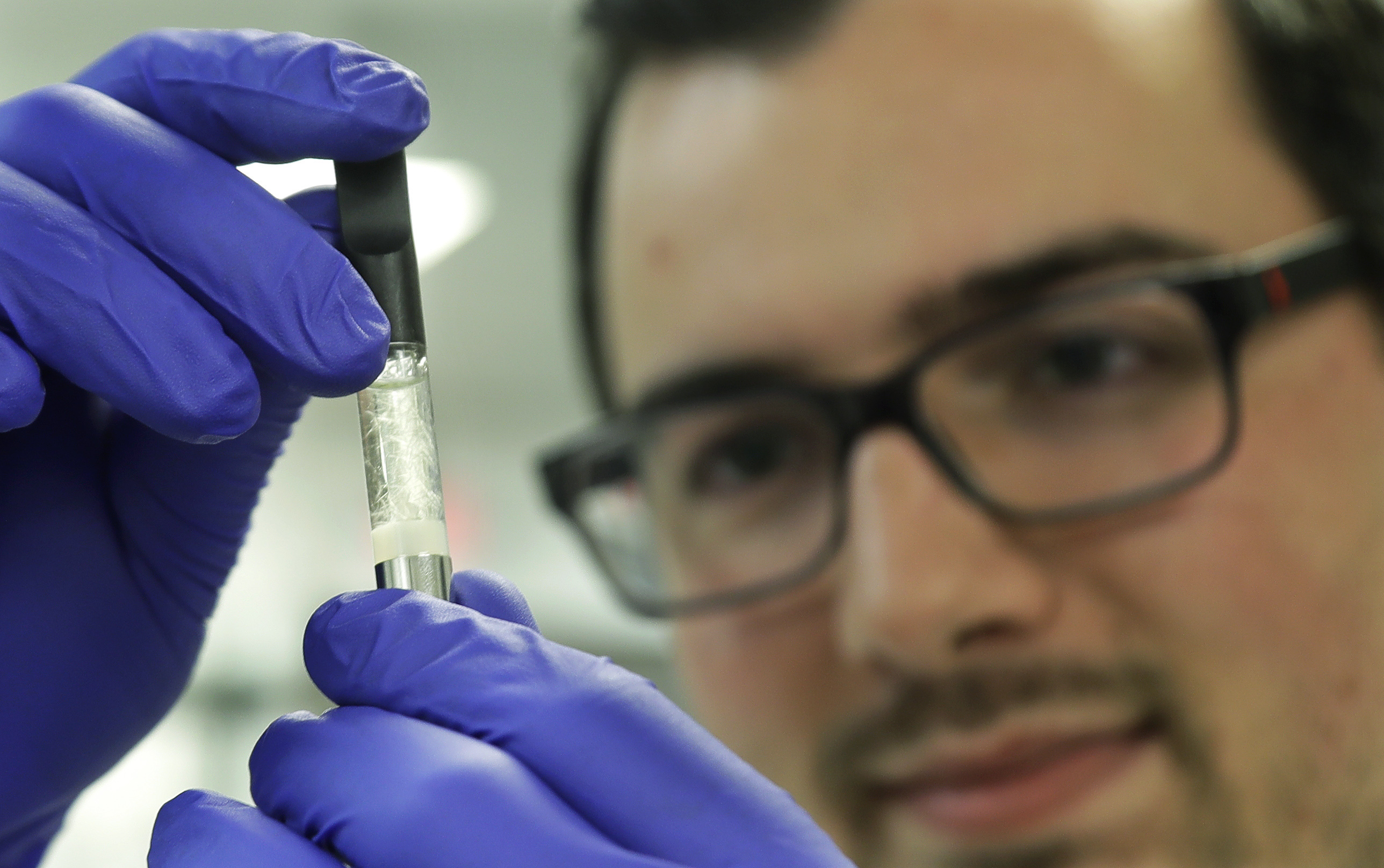
    In this July 19, 2019, file photo, Pierce Prozy examines a Yolo! brand vape oil cartridge marketed as a CBD product at Flora Research Laboratories in Grants Pass, Ore.

    Reducing restrictions on commercially available cannabis is “a key missing ingredient toward making clinical breakthroughs,” said Stephen Lankenau, director of Drexel University’s Medical Cannabis Research Center.

    “A key issue is that any reclassification efforts need to reduce restrictions for university-based researchers to have access to cannabis-derived THC — commercially available products in particular — for clinical studies, whether laboratory or human subjects,” Lankenau said.

    Researchers now are only able to examine hemp-derived nonpsychoactive cannabinoids like CBD or CBC. However, Lankenau said, it is unclear whether Trump’s proposal would give them the green light.