Ikea has opened its first Delaware County location, though it doesn’t look like its massive stores in Conshohocken and South Philly.
The home design company’s “plan and order point” in Media opened Wednesday. At less than 4,000 square feet, the outpost is a fraction of the size of its typical stores, with square footage in the hundreds of thousands.
Ikea, which has its U.S. headquarters in Conshohocken, said in a statement this fall that the location would provide design consultation services for more complex projects like kitchens, bedrooms, and bathrooms. But the space doesn’t contain inventory. Instead, customers can order items for delivery or on-site pickup.
For some Delaware County residents, the new location means “no more trekking through that notorious I-476 ‘Blue Route’ traffic” to get to the Conshohocken or South Philly stores, Ikea U.S. market manager George Holtkamp said in an October statement.
But if those customers get a craving for the popular Ikea meatballs, they’ll still have to make the longer trip, as the Media site does not have an in-store Swedish bistro.
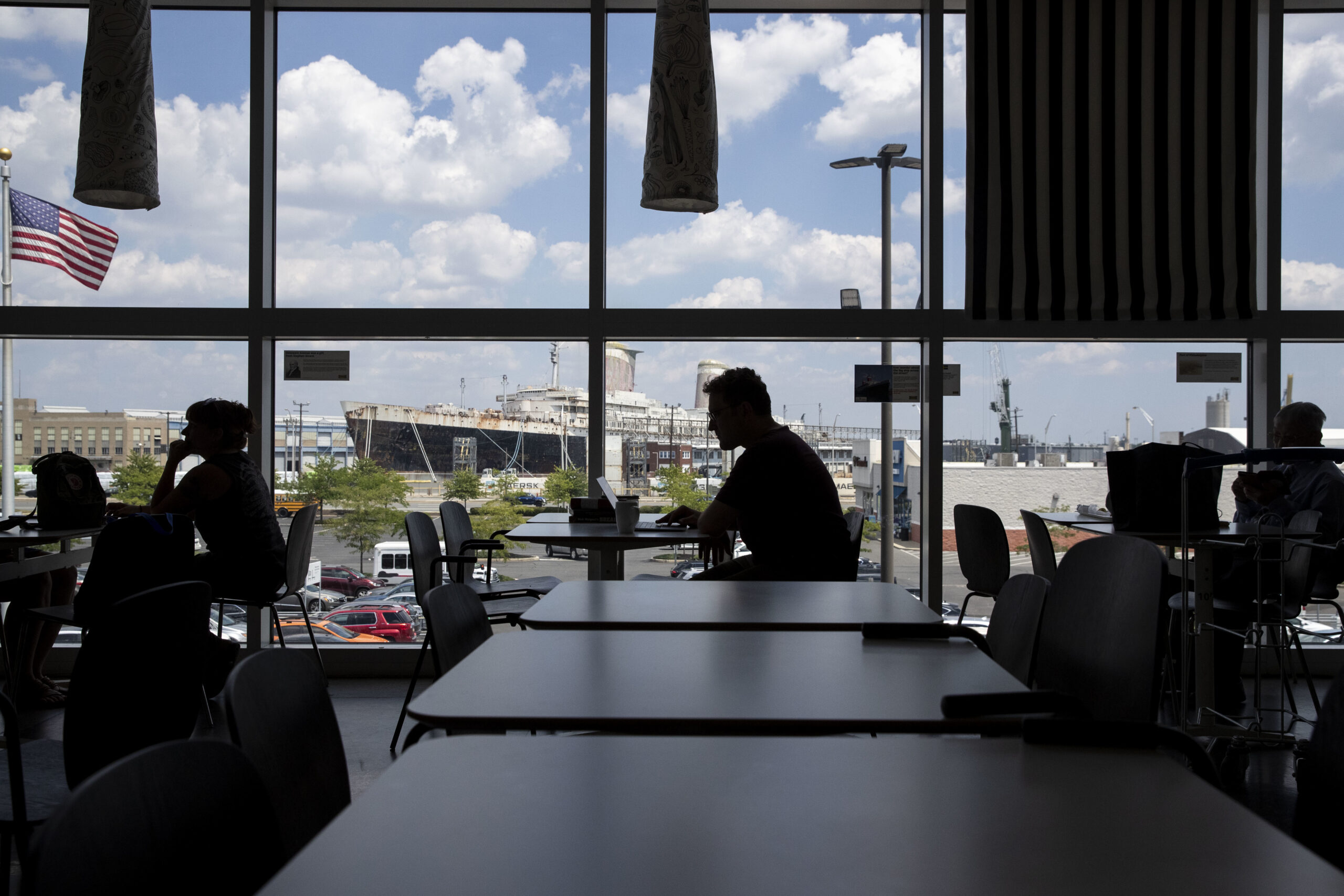
People worked in the cafeteria of the 300,000-square-foot Ikea in South Philly in 2022.
Ikea has been adding more locations after its U.S. arm reported $5.3 billion in sales last year, the majority of which were made in-person. Over the same period, about 61 million people visited its physical stores, while more than 457 million people browsed the website.
In Media, Ikea joins Michaels, TJ Maxx, Kohl’s, Boscov’s, and a slate of other stores that occupy the 830,000-square-foot retail section of the Promenade at Granite Run. The complex exemplifies how struggling malls can be reborn.
After the Granite Run Mall closed in 2015, BET Investments spent more than $100 million to demolish the building and build the open-air town center in its place, according to president Michael Markman. Along with an array of retailers, the complex now contains 400 luxury apartments, as well as several restaurants and medical offices.
An aerial photo shows the Promenade at Granite Run in June 2022.
Markman said in April that the retail portion of the complex is almost fully leased.
“Its only gotten better since we originally tenanted it,” Markman said at the time. “We signed a Nordstrom Rack. We signed a small-scale Ikea.”
DUBAI, United Arab Emirates — The United States launched new airstrikes against Iran early Thursday, and Tehran responded by targeting U.S.-allied Mideast countries in an exchange of fire that threatened an interim deal intended to help end the war in the Middle East.
Back-and-forth attacks, including a day earlier, have repeatedly threatened the ceasefire. But Thursday’s appeared bigger all around, with sirens sounding at least three times in Bahrain, home to the U.S. Navy’s 5th Fleet headquarters, and missiles targeting Kuwait and Qatar.
Sirens sounded Thursday afternoon in Jordan as well, where the U.S. has stationed troops and aircraft.
An Iranian official accused the U.S. of launching an airstrike later Thursday targeting the area around Iran’s sole nuclear power plant, and other explosions were reported elsewhere in the country during the afternoon.
The strikes came hours after President Donald Trump said recent Iranian attacks on ships in the Strait of Hormuz signaled the end of a fragile ceasefire and threatened to escalate the conflict if they didn’t stop. That raised concerns that the region could tip back into a war that would engulf several countries and could halt energy shipments through the strait that are crucial for the global economy.
In Iran, the two days of American airstrikes have killed at least 14 people and wounded another 78, Iran’s Health Ministry said Thursday. Most were reportedly members of the armed forces.
In Kuwait, the military said falling debris wounded one person as the nation shot down three ballistic missiles, a cruise missile and 10 drones. Bahrain said it shot down incoming fire, without elaborating, and Jordanian government spokesman Mohammad al-Momani said all incoming fire from Iran had been intercepted. Iranian state TV said the country’s paramilitary Revolutionary Guard fired missiles at a U.S. base in Jordan.
There was no immediate word of damage in Qatar.
U.S. strikes hit more targets
The U.S. military’s Central Command said it hit 90 targets across Iran, releasing black-and-white footage of what appeared to be strikes on an airport runway and missile launchers.
The U.S. said the strikes were intended to “further degrade” Iran’s ability “to threaten freedom of navigation” in the strait, through which a fifth of the world’s traded oil and natural gas passed before the war began with U.S. and Israeli attacks on Feb. 28.
Traffic has picked up somewhat since a tentative deal last month included opening the waterway. Maritime data company Lloyd’s List Intelligence said Thursday that preliminary data showed at least 576 ships passed through the strait in June, compared to 233 in May. More than 3,100 transited the strait in June 2025.
Attacks on ships — and the threat of such strikes — virtually halted traffic in the waterway during the conflict, making oil prices skyrocket and raising the cost of food and other basic goods far beyond the region.
Iranian state media reported explosions in several locations, including Bushehr, home to Iran’s nuclear power plant complex, and southern port cities. The state-run IRNA news agency quoted Ehsan Jahanian, a local official in Bushehr, as accusing the U.S. of striking near the plant around noon, hours after the U.S. military’s Central Command said it had ended its latest round of strikes on Iran. Asked for comment on Bushehr, Central Command referred to a press release that detailed targets but made no mention of the nuclear power plant.
During the war, several strikes hit the area around the plant but didn’t damage it.
For the first time since April, U.S. strikes also appeared to target Iranian bridges. State media reported a strike on a railway bridge in Iran’s northeastern Golestan province, and the Revolutionary Guard said two bridges were attacked on the route to Mashhad, where officials plan to bury the late Ayatollah Ali Khamenei on Thursday.
Trump warns of attacks on shipping
After leaving a NATO summit in Turkey, Trump posted several videos on his social media site of what he said were explosions in Iran and issued another warning to the Islamic Republic.
“This is in retribution for yesterday’s bombing of ships by Iran. If it happens again, it will get much worse!” Trump wrote Wednesday, a day after three tankers were attacked in the Strait of Hormuz.
Trump said the latest back-and-forth fighting would not result in lengthy military action.
Trump also renewed his past threats to hit Iran’s civilian infrastructure, including electric and desalination plants, and to seize Kharg Island, through which some 90% of Iranian oil exports pass.
Parliament Speaker Mohammad Bagher Qalibaf, a key negotiator in talks seeking a permanent end to the war, was defiant in a post on X on Thursday morning: “America still hasn’t learned that bullying and breaking promises are no longer cost-free. Let me put it plainly: If you strike, you’ll get hit.”
Meanwhle, Iranian Foreign Minister Abbas Araghchi said he spoke by phone with his Saudi, Turkish and Omani counterparts and with Pakistan’s army chief, Field Marshal Asim Munir, who has been one of the main mediators in the war. The diplomatic outreach suggested efforts may be underway to reduce tensions.
In a post on Telegram, Araghchi repeated Iran’s assertion that the U.S. has violated the interim peace deal reached last month. The U.S. says Iran breached the agreement by firing on commercial ships in the strait.
Strikes raise fear that war could resume
Trump fueled concerns that the war could restart by saying Wednesday that the interim agreement to pause the fighting was “over.” He added that he would allow negotiations to continue but thought negotiators were “wasting their time.”
Iranian Deputy Foreign Minister Kazem Gharibabadi, also a top negotiator, retorted on X that Trump’s remarks “are not a sign of power but an admission of the failure” of U.S. policy toward Iran.
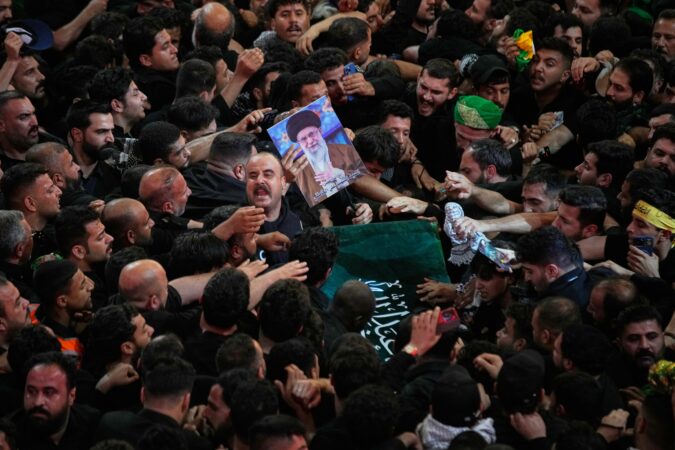
Negotiations to reach a final deal were due to start after the dayslong funeral for Khamenei, who was killed in the war’s first moments. He was to be laid to rest Thursday.
The talks are meant to focus on the toughest matters, including fully reopening the strait and rolling back Tehran’s disputed nuclear program.
Federal prosecutors on Thursday formally indicted Eugene Albert Horsch, the Olney man at the center of a widening investigation into the disappearance of at least two women, on charges that he illegally possessed firearms and fake federal law enforcement credentials.
The two-count indictment accuses Horsch, 44, of possessing two loaded firearms despite having been convicted of a prior felony, which bars him from having guns. It also alleges that he had “fraudulent identification documents” that appeared to have been issued by the Drug Enforcement Administration and the Federal Bureau of Investigation, but that neither agency had produced.
The indictment stems from Horsch’s arrest on June 19. On that day, U.S. Park Police officers recovered two loaded firearms — a .38 Special revolver with an obliterated serial number and a Taurus .40-caliber semiautomatic pistol — from beneath a front seat of his black BMW, which was parked in a restricted area near Independence Hall in Center City, according to court records.
Officers said they also recovered counterfeit DEA credentials from the vehicle. And later, during a search of Horsch’s home in the 400 block of West Chew Avenue, federal and local authorities uncovered fraudulent FBI credentials and a desktop computer that may have been “used to facilitate” the fake documents, according to the indictment.
Horsch has remained in federal custody since his initial appearance in U.S. District Court last month, after a magistrate judge ordered him detained pending a trial.
Horsch’s attorney, Jerome Brown, said this week: “We believe Mr Horsch is innocent.”
The federal case has unfolded alongside a broader investigation that began after Horsch’s arrest. Authorities searching his deteriorating twin home found another firearm, equipment used to grow marijuana, barrels of chemicals, ashes of least one relative, documents connected to two women who have been missing for years, and an unsigned, handwritten letter describing violence and referencing serial killer Ted Bundy, officials have said.
Investigators have said they have not found human remains at the property, but found a “significant” amount of blood. They have continued examining evidence recovered from the home as they search for any possible links between Horsch and the disappearances of Blair Tonzelli, who was reported missing in 2023, and Amy McHale, his father’s former wife, who was last heard from at the Olney property in 2016.
Brown previously said he did not believe his client had harmed either woman.
“I’d be shocked if [police] found any harm related to those missing persons at that location,” Brown said after Horsch’s detention hearing.
Staff writer Ryan W. Briggs contributed to this article.
A Colwyn woman and her boyfriend took on the responsibility of caring for the woman’s 20-year-old cousin after her previous caregiver died, Delaware County prosecutors said Thursday.
But instead of providing the woman, who has Down syndrome, with a safe environment, they fed her table scraps, beat her whenever she attempted to sate her hunger, and ultimately kicked her out of their home, into freezing April rain, for eating their Goldfish crackers.
Yahnae Clegg-Brown taunted the woman, whom police did not name in court filings, as she stood, rain-soaked, begging to be let back inside, according to the affidavit of probable cause for her arrest. Naiyr Sanders, Clegg-Brown’s boyfriend, demanded that she leave the property, according to the affidavit, then punched her in the head and pushed her down the house’s front steps.
A concerned neighbor called 911 after seeing the woman shivering and calling for help after a night spent outside, the affidavit said. When officers took the woman to Mercy Fitzgerald Hospital for treatment, she weighed just 80 pounds.
Clegg-Brown, 35, and Sanders, 31, have been charged with neglect of a care-dependent person, abuse of a care-dependent person, and related crimes. They remained in custody with bail set at 10% of $250,000. There was no indication they had hired attorneys.
District Attorney Tanner Rouse, in announcing the charges, said the case was heartbreaking and beyond comprehension.
“Those entrusted with another person’s care have a responsibility to protect them,” he said. “My office will continue to stand up for victims who cannot always stand up for themselves and will work tirelessly to hold those responsible accountable.”
Investigators said the woman began living with Clegg-Brown in November 2023 after the death of Clegg-Brown’s father, who had been caring for her.
The woman’s living conditions at Clegg-Brown’s home on Ellis Avenue were spartan, according to police: She was sleeping in an upstairs bedroom on a “deteriorating mattress” with no bed linens, the affidavit said.
Clegg-Brown had placed a surveillance camera on top of the refrigerator in the home’s kitchen, which she later told police was used to make sure her cousin was not “stealing” her food. Investigators noted in the affidavit that the woman was receiving regular government-assistance benefits, and that the money was supposed to be spent on her living expenses.
Clegg-Brown never took her cousin to her scheduled doctor’s appointments, and did not enroll her in school, the affidavit said. During meal time, she forced her cousin to sit on the floor and fed her leftovers or ramen noodles and oatmeal. As a result, the woman developed type 2 diabetes from malnutrition, according to the affidavit.
Clegg-Brown told investigators the “final straw” came on April 25, when she found her cousin hiding in her bedroom, eating a package of Goldfish crackers.
She and Sanders forced the woman outside, placed her clothes and bedding in trash bags that were too heavy for the woman to carry, and locked the door behind her, the affidavit said.
Clegg-Brown told the woman she was tired of dealing with her, and told her to find somewhere else to live, according to the affidavit.
Since her hospitalization, the woman has been placed in a new home with a different caregiver, police said, recovered to a healthy weight, and is now attending school.
Secretary of State Marco Rubio has invited senior ministers from more than 60 countries to a meeting next week about what the Trump administration views as a major peril: the “resurgence of transnational far-left terrorism,” according to documents reviewed by The Washington Post.
The meeting has prompted consternation among career and political U.S. officials, some European allies, and independent analysts who do not see the threat in the same terms. Some U.S. officials told The Post that they worry it is part of a Trump administration effort to use powerful counterterrorism tools to crack down on U.S. activists they view as left-wing extremists.
The administration’s counterterrorism czar, Sebastian Gorka, has had discussions with colleagues about using foreign terrorism labels for antifa to justify going after Americans with links to the movement, a loosely knit association of far-left activists who militantly oppose fascism and right-wing ideologies, three current and former U.S. officials said.
A linkage to foreign terrorist groups “can unlock certain investigative tools,” such as surveillance, said one U.S. counterterrorism official, who like several other officials interviewed for this article spoke on the condition of anonymity to describe internal discussions and to avoid retribution.
Gorka did not respond to a request for comment.
State Department spokesman Tommy Pigott said the event was organized because far-left terrorism is “an old threat re-emerging with strong transnational links and new convergences.”
“Because this threat has not been adequately addressed in the past, each engagement, designation, or security assistance program creates a compounding effect supporting countermeasures at home and abroad,” Pigott said in a statement.
Some Trump administration officials fear that a future Democratic administration could use the tactic against conservative activists, one administration official said.
“The idea is you’re setting a precedent for a future Gavin Newsom administration to turn these authorities on conservatives,” the official said, referring to the California governor who is widely expected to make a 2028 White House run.
The use of these tactics has raised concerns among career and political officials inside the Justice Department and the White House Counsel’s Office, the administration official said, adding that some U.S. officials have decided not to attend the July 16 event at the State Department.
Asked for comment, a White House official said that the characterization of such concerns does “not represent the prevailing feeling in the White House” and accused Democrats of having weaponized national security tools against their conservative political opponents.
The White House official pointed to a passage in the Trump administration’s counterterrorism strategy‚ released in May, which states: “We will not permit the weaponization of America’s unparalleled CT capabilities for partisan purposes.”
That document also states that “our counterterrorism powers will not be used to target our fellow Americans who simply disagree with us.”
Like Gorka, White House Deputy Chief of Staff Stephen Miller is among those who have shown enthusiasm for taking a hard-line approach to left-wing extremists in the United States. During a White House roundtable last fall, he expressed support for designating antifa a foreign terrorist organization.
“It’s true,” Miller said when the president asked for his opinion, “there are extensive foreign ties. I think that would be a very valid step to take.”
But achieving that status for antifa would be a stretch, experts say.
U.S. law requires a group be foreign to be designated. “If it has any significant domestic presence, it cannot be designated,” said Jason Blazakis, who ran the State Department’s designation process for 10 years before leaving in 2018.
Elsewhere in the government, discomfort with the administration’s direction is such that at meetings of national security officials from various agencies, some intelligence analysts have declined to brief on antifa because they do not regard antifa as a serious counterterrorism threat, according to one person familiar with the matter.
Officials from some foreign governments, speaking on the condition of anonymity to avoid being seen as criticizing the administration, expressed dismay about the Rubio invitation, citing what they call its vague aims and the short notice. The invitation, a copy of which was shown to The Post, was issued last week with RSVPs due this Friday, they said. Several told The Post that their country’s foreign minister or interior minister was unlikely to attend, citing the busy diplomatic schedule over summer, which includes an annual security conference next week in Aspen, Colo.
Some said, too, they were unsure why they had been invited. “We don’t have antifa,” said one European diplomat.
“I don’t think we can find any reason why we would be interested in attending such an event,” said another.
“Our law enforcement authorities have not focused on left-wing terrorism because this is not considered a high priority threat in our country,” said a third.
The invitation list, reviewed by The Post, included most European nations, larger Latin American countries and several Asian states, including India, Indonesia, and Singapore. The State Department did not respond to a request seeking to understand how the list of invitees was drawn up.
President Donald Trump has made no secret of his disdain for antifa, going so far as to issue an executive order in the fall branding it a “domestic terrorist organization,” a rhetorical label that experts say carries no legal weight.
Trump issued the order after the killing of conservative activist Charlie Kirk, whose mobilization of the youth vote helped propel Trump back to the White House. Legal proceedings began this week in the case of Kirk’s alleged killer.
The order was followed by the issuance of National Security Presidential Memorandum 7, which directed the Justice Department to “investigate and disrupt networks, entities and organizations that foment political violence.” The document states that Kirk’s alleged killer engraved the bullets used in the killing with “so-called ‘anti-fascist’ rhetoric.”
That led to a criminal investigation that culminated last month in lengthy prison sentences given to several members of what prosecutors called an “antifa cell” — one defendant received 100 years — for their roles last summer in a protest outside an Immigration and Customs Enforcement facility in Texas during which a police officer was shot. The person sentenced to 100 years was convicted of attempted murder. The others received prison terms of 30 to 70 years on charges such as rioting, providing support to terrorists and conspiracy to use and carry explosives.
Defense attorneys called the prosecution politically motivated.
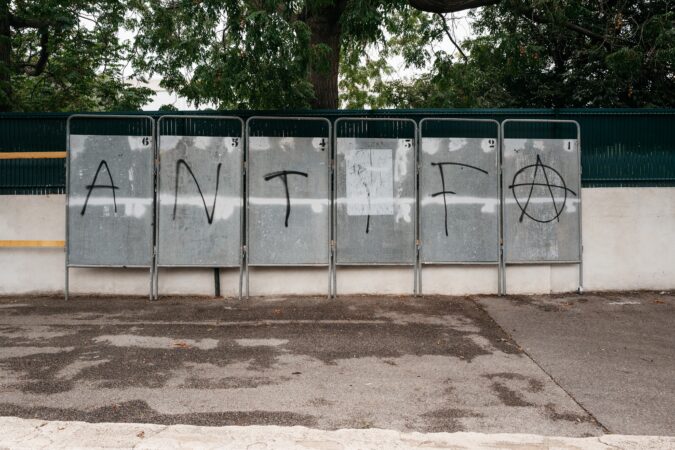
Antifa, short for “anti-fascist,” is a decentralized movement without a clear command structure or leader, reflecting a range of ideologies mostly on the political left, from anarchism to communism and everything in between. Unlike left-wing extremist groups of the 1960s and 1970s, such as Weather Underground, antifa does not issue manifestos or claim responsibility for actions.
Analysts say it can be difficult to categorize left-wing violence. (Is the killing of a healthcare executive over perceived corporate greed — as the suspect Luigi Mangione is alleged to have done — a “left wing” act?) And though there is some upswing of political violence in the United States, “to date left-wing violent extremism has typically been less lethal than other forms of terrorism,” said Bruce Hoffman, senior fellow for counterterrorism at the Council on Foreign Relations.
A “concept note” sent to invitees and U.S. diplomats this week and reviewed by The Post characterizes next week’s event as a ministerial on the “resurgence of political terrorism.” But it makes clear that the focus is on “far-left terrorists” who, the note says, are “increasingly turning to organized, deadly violence to advance their political objectives.”
The ministerial is an opportunity to strengthen cooperation in intelligence-sharing and law enforcement, the note says.
But terrorism experts said that such framing inflates the threat posed by left-wing extremists and underestimates the true scope of the challenge in combating terrorism broadly.
“This is the politicization of intelligence, and it’s dangerous because what they’re doing is basically playing partisan politics with counterterrorism, and only looking at a sliver of the overall threat,” said Colin P. Clarke, executive director of the Soufan Center, who has testified before Congress on numerous occasions as an expert witness on terrorism issues.
Several current and former counterterrorism officials across Republican and Democratic administrations, as well as Europeans themselves, say the Trump administration’s emphasis is misapplied.
“The Europeans were much more concerned about right-wing terrorism than left-wing terrorism” in the first Trump administration and the Biden administration, said one former official who worked in both.
That is still where most Europeans are, according to U.S. and European officials.
In late May, the State Department held a meeting in The Hague on antifa and left-wing terrorism, convening law enforcement and counterterrorism officials from mostly European countries, according to two people familiar with the event. The Dutch declined to co-host, so it took place at the U.S. Embassy there, one person said.
The event, according to these people, fell flat. Many of the invitees’ view was “we don’t see it quite the way you do,” said one of the people.
That was followed in early June by a gathering at the U.S. Institute of Peace to try to convince State Department personnel that “far-left political terrorists” were a growing threat to the country, but that event apparently was also a “dud,” according to Puck News. About an hour into the event, organizers sent out an email blast telling people they could still join, if they wanted, Puck reported.
Undeterred, the State Department in mid-June sent a cable to more than 20 U.S. embassies — from Argentina and Mexico to Italy and Albania — seeking information on far-left extremist groups, according to two people familiar with the matter. Several have responded, but none has indicated they concur with the administration’s assessment of the threat, one person said.
In November, the State Department announced the designations of four European groups as foreign terrorist organizations, including a militant group in Germany that calls itself antifa Ost. Two more were in Greece and one in Italy.
Designation, which is done by the secretary of state, is based on criteria that include the assessment that the group poses a direct threat to U.S. national security interests.
The designations of the four groups were met with skepticism among experts.
“They’re very peculiar,” said Blazakis, who is now a professor at Middlebury Institute and teaches about violent extremism. “Those groups have carried out acts of vandalism. They’ve harmed individuals. But they don’t have a casualty to their name.”
Authorities in Germany also did not see a significant threat. “The security authorities’ assessment is that the potential threat posed by the group has recently decreased significantly,” an Interior Ministry spokesperson told reporters in November, noting that antifa Ost leaders and particularly violent members were either in custody or already convicted.
European governments have largely declined to label antifa as a terrorism organization, despite pressure from far-right parties. In the Netherlands, the center-right government rejected a parliamentary motion to designate antifa, with the country’s justice minister telling parliament in May that it did not meet the legal threshold because there was no evidence it was an organization rather than an amorphous movement.
That month, a State Department official told reporters that the agency had taken “unprecedented steps to dismantle transnational far-left and anarchist terrorism, including antifa-aligned groups,” asserting that the number of incidents involving these groups had increased “sharply” over the past decade in the United States and Europe.
The official, who spoke on the condition of anonymity under rules set by the department, said the administration had heard from foreign partners that they were seeing “different groups starting to converge.”
The administration’s rhetoric is consistent with the language of its counterterrorism strategy, which calls for the “rapid identification and neutralization of violent secular political groups whose ideology is anti-American, radically pro-transgender, and anarchist.”
The strategy directs the use of all tools “constitutionally available to us to map them at home, identify their membership, map their ties to international organizations like Antifa, and use law enforcement tools to cripple them operationally before they can maim or kill the innocent.”
It does not, as did the 2018 counterterrorism strategy issued in Trump’s first term, mention nationalist neo-Nazi groups with “anti-Western views” that have attacked Muslims and left-wing groups.
“We have to be objective about identifying threats, not politically selective,” Hoffman said.
“If I were to rack and stack priorities, left-wing terrorists wouldn’t be in my top three,” Clarke said.
KYIV, Ukraine — Ukrainian drones hit more Russian oil facilities and set two oil tankers ablaze in the Sea of Azov on Thursday, a day after President Donald Trump pledged to grant Kyiv a license to manufacture the Patriot air defense systems to protect its cities.
A top Ukrainian official, meanwhile, cautioned that it could take a year or more for the country to produce Patriot interceptor missiles.
The Kremlin said the license deal reflected what it called Washington’s “ambivalence” but noted it appreciated Trump’s efforts to help broker a peace deal to end the war, which Russia launched over four years ago.
Ukraine’s drone strikes on oil refineries and other infrastructure across Russia have triggered a widespread fuel crisis with gasoline shortages and rationing in multiple regions and motorists waiting for hours to fill their tanks. Moscow has responded by intensifying its bombardment on Kyiv and other cities, exposing Ukraine’s vulnerability to ballistic missile strikes.
Ukrainian President Volodymyr Zelensky described the latest strikes on Russia’s infrastructure as part of Kyiv’s campaign of “long-range sanctions” carried out in response to Moscow’s refusal to halt the fighting.
“We have long proposed that Russia end this war, and every day of delay should bring the feeling of war to where it all began — to Russia,” Zelensky said.
Ukraine hits oil depots in western Russia and tankers at sea
A Ukrainian drone strike triggered a fire at an oil depot in the western Russian city of Tver, according to acting Gov. Vitaly Korolyov.
Oil reservoirs also were set ablaze by drones in Vyazniki, in the southern Stavropol region, said Gov. Vladimir Vladimirov, forcing the evacuation of several apartment buildings near the facility.
In the Sea of Azov, Ukrainian drones set two oil tankers on fire, according to Rostov Gov. Yuri Slusar, who said one of the ships was still burning and its crew evacuated.
The attack was the latest in a series of strikes on oil tankers in the area in recent days, part of Ukraine efforts to cut fuel supplies to the Crimean Peninsula, which Russia illegally annexed in 2014.
In addition to strikes on oil facilities in Stavropol and Tver, Zelensky said Ukrainian forces hit fuel infrastructure deep inside Russia, including one in Ufa, as well as an oil-loading terminal in the Rostov region closer to Ukraine.
Russia’s Defense Ministry said its defenses downed 73 Ukrainian drones from late Wednesday into early Thursday.
Ukraine’s air force said Russia fired 94 long-range strike drones and two ballistic missiles. While 72 drones were jammed or intercepted, 19 drones and both missiles damaged 13 locations, it said.
Ukraine says Patriot production will take months
During Wednesday’s meeting with Zelensky on the sidelines of the NATO summit in Turkey, Trump said the U.S. will meet a longstanding request from Ukraine and give it a license to make the Patriot air defense systems. He also praised Zelenskyy for doing “an amazing job” — a sharp change in tone from past criticisms of the Ukrainian leader.
But setting up domestic production of the mobile, surface-to-air systems will take many months, said Serhii Beskrestnov, an adviser to Ukraine’s defense minister.
A production license would typically come with technical process documentation, training for specialists, supplier contacts and foreign consultants to help launch manufacturing, Beskrestnov wrote on his Telegram messaging app.
The main obstacle would be time, rather than Ukraine’s technical or organizational capacity, he added.
Recent media reports pointed to two likely bottlenecks: the long production cycle for some subcontracted components, which could take 12 to 24 months, and limited global output of key parts, including components supplied by Boeing and L3Harris, Beskrestnov added.
The Pentagon had signed contracts to expand production capacity, he said, but added that the timeline for those contracts to translate into increased output remained unclear.
Germany also has a license to produce Patriot systems, and in 2022, Raytheon and MBDA Deutschland announced they planned to manufacture Patriot GEM-T missiles in the country, according to a news release at the time. The goal was to produce them in a German facility and ultimately provide them to other European allies.
The facility is expected to open in September with its first missiles scheduled to be delivered next year, with Ukraine as the first recipient, according to Defense Express, an online Ukrainian military-oriented publication.
Kremlin: Ukrainian strikes won’t hasten peace
Commenting on Trump’s statement about the Patriot missile licenses, Kremlin spokesman Dmitry Peskov offered a vague response, saying Moscow is aware of the U.S. military support for Ukraine but appreciates Washington’s declared commitment to help achieve peace.
“The U.S. position is somewhat ambivalent,” Peskov said in a call with reporters. “Still, unlike the Europeans, the United States maintains a desire to facilitate a move toward a peace process. They may be misguided or mistaken at times, but we see that desire as sincere. We welcome it, and we hope that once the Americans manage to resolve the situation regarding Iran despite the significant complications involved their efforts on the Ukrainian track will resume.”
Asked about Trump’s comment that Ukrainian attacks deep inside Russia could hasten a peace settlement, Peskov reaffirmed that the more strikes Kyiv launches, the broader “security zone” Moscow will seek to carve out in Ukraine via what the Kremlin calls its “special military operation.”
“It’s a mistake to think that escalation and military pressure could pave the way to a peaceful settlement,” Peskov said. “Further escalation may prolong the special military operation, we can’t say precisely to what extent, but it will force us to create a larger security zone, a larger buffer zone. Therefore, inciting tensions and taking escalatory action will in no way contribute to the peace process.”
Ukraine has urged the U.S. and other allies to provide binding security guarantees as part of any prospective peace deal, including the deployment of NATO forces. Russia has strongly warned against the presence of any NATO troops in Ukraine, saying it would view them as legitimate targets.
Asked Wednesday if he would be ready to enact a no-fly zone over Ukraine as part of security guarantees, Trump responded by saying “if it’s necessary, yeah,” but he argued that it might not be needed if a peace deal is reached.
“When we have a deal, we’re going to have a deal, security guarantee or no security guarantee,” Trump said as he sat next to Zelensky.
Commenting on the issue, Peskov warned that an attempt to establish a no-fly zone would amount to “NATO military forces being active on the territory of Ukraine — exactly what the special military operation is being waged against.”
Peskov said President Vladimir Putin is “open to dialogue” and ready for another phone call with Trump.
A sampling of retailers, takeout businesses, pharmacies, convenience stores, and food stores shows half are violating Philadelphia’s ordinance that bans plastic bags and requires a fee on paper bags.
That’s according to the PennEnvironment Research & Policy Center, which sent members to purchase items in 80 stores across the city and in neighborhoods with varying demographics.
The nonprofit advocacy group’s survey found:
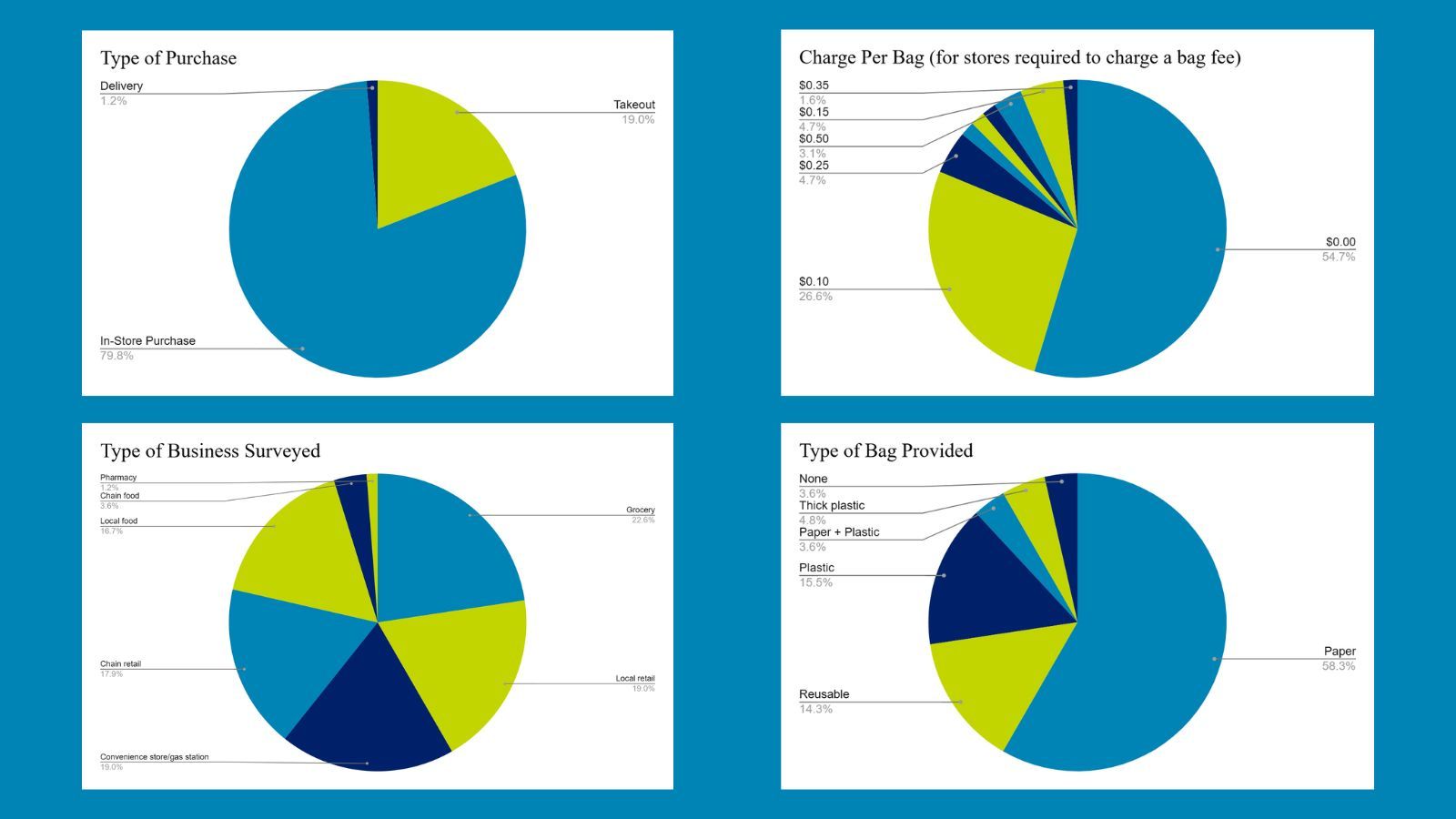
55% of businesses violated at least one key provision of the law.
50% of businesses failed to charge a 10-cent fee on paper or reusable bags.
20% of businesses provided plastic bags that have been illegal for years.
Faran Savitz, a zero-waste advocate for PennEnvironment, said during a news conference Thursday outside City Hall that the group didn’t just scrutinize chain stores like Wawa, although those larger operations were generally compliant.
He said the 80 stores surveyed were chosen to represent multiple types in all neighborhoods, although they amount to only a fraction of businesses in the city,
“We wanted to look at as many different types of businesses and hit as many different neighborhoods in the city as possible, so we could get a sense of is this concentrated on one neighborhood or is it spread geographically everywhere,” Savitz said. “We found that this is a pretty widespread problem.”
Charts from a survey of stores conducted by the nonprofit advocacy group PennEnvironment show what the report calls widespread noncompliance of Philadelphia’s revised plastic bag law that went into effect in January 2026.
Savitz said that chain stores tend to know the law and its requirements. Many small businesses remain unaware.
However, the survey did highlight some positive momentum. Currently, three-quarters of surveyed businesses no longer distribute plastic bags. That’s a significant improvement from the group’s previous investigations that caught half of all stores providing them.
The city’s updated bag ordinance
Philadelphia’s original plastic bag law, introduced by Councilmember Mark Squilla, was passed in 2019 but was phased in slowly. It went into full effect in 2021.
After that, paper bag usage skyrocketed, said Squilla, who represents the 1st District, including parts of South Philadelphia, Center City, and the River Wards. Although paper bags are biodegradable, they require more energy to produce and the cutting down of trees.
Squilla introduced an updated bag ordinance last year, which was approved by City Council, and went into effect in January. It required a 10-cent fee on paper bags.
The goal of the fee, Squilla said, is to change shoppers’ behavior and get them to bring reusable bags to the store.
Squilla called the violations found by PennEnvironment “disappointing,” but said he knew compliance would be a challenge.
“Our goal is to end single-use plastic bags in our waste stream and in the city of Philadelphia,” Squilla said.
To close the compliance gap, PennEnvironment is urging Licenses and Inspections to improve education and enforcement, and asking residents to report noncompliant businesses to the city’s 311 system.
Faran Savitz (left) of PennEnvironment Research & Policy Center and Philadelphia Councilmember Mark Squilla, at lectern, discuss PennEnvironment’s findings outside City Hall on July 9.
Plastic bags
Ryan Rabenold, environmental program coordinator at the Pennsylvania Resources Council, said the city’s law is key to reducing waste, noting that most reusable plastic bags do not get recycled.
Plastic bags contribute to litter, require fossil fuels to produce, and become microplastics in the environment when they break down.
“They either get lost in the system, are contaminated with food or grease, which makes them unrecyclable, or they simply get blown away when we’re trying to collect them,” Rabenold said. “When they do end up in our recycling system … they contaminate materials that are recyclable and force them to be removed from the system.”
Rabenold noted that microplastics have been detected in human blood and tissue.
“We are feeling the impacts of something that we may not be able to see, Rabenold said.
“It’s better for our health and the environment to use one thing 1,000 times,” Rabenold said of reusable bags, “rather than use 1,000 things once.”
The developer of a 1.5 million-square-foot data center project proposed for an East Whiteland Superfund site has again returned to the township requesting changes to the plan — even as they’ve already started preparing for construction.
But on Wednesday, the developers asked for a “field change,” requesting permission to put into place some of the changes that would have been included in those amended plans.
The changes — which include the ambitions they’ve had since January — would remove the cooling towers, eliminate water cooling for the computer equipment, and install air-chilled units on the building’s roofs. These changes are permitted under the Land Development Agreement, Township Manager Steve Brown told the community at the meeting. But they require the board’s approval.
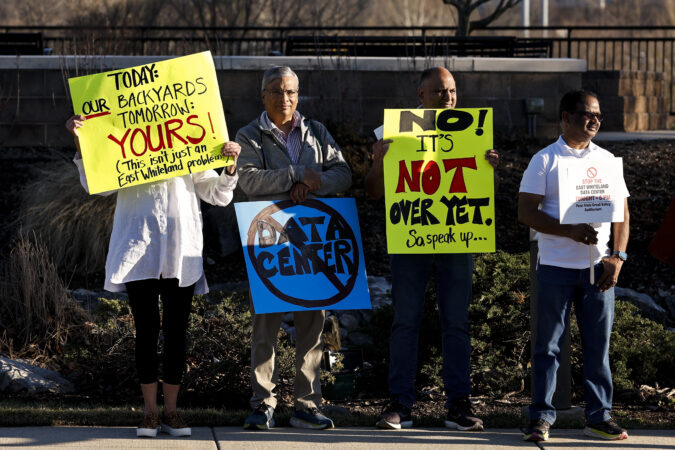
The request drew ire from community members who have for months been opposed to the project, fearing the data center’s impact on health and the environment. They’ve also raised concerns that it will rest atop the former Foote Mineral Co., a contaminated industrial site that landed on the federal list of hazardous places.
The board voted, 2-1, to table approval of the proposed changes; chairman Scott Lambert and supervisor Clinton Smith said there were still too many questions. Supervisor Peter Fixler cast the dissenting vote.
“What’s been presented to us this week, as I said before, I think is a gift. … What’s in front of me now is a data center that’s a third the size of their original proposal,” Fixler said ahead of the vote. “It would, I feel, be environmentally irresponsible to not approve this plan. I know that doesn’t sound popular.”
The developer said the reason for the change is water conservation, Brown said. The approved plan would use more than 3 million gallons of water a day, vs. the proposed plan, which would use air chillers.
Separately, the developer proposed slashing the size of the buildings, down from a sprawling 1.5 million square feet total build-out — with two data center buildings roughly 772,000 square feet each — down to a total of 536,000 square feet. It would strike a basement in the current plans, and also reduce the height of the building. These changes don’t necessitate board approval, Brown said.
In an email Thursday, Lou Colagreco, the attorney representing the developers, said they would respond to any of the board’s questions “that may still be outstanding.”
“At the end of the day, this is a simple question: Will we use a cooling system that consumes millions of gallons of water a day, as approved, or not?” he said. “We believe this is a very easy decision. We are at a moment in the job where we have no choice but to move forward with whatever path provides us certainty of execution. If the Board wants us to build with evaporative water cooling, we will continue to do so.”
As he discussed his decision, board chairman Lambert told residents that “we could get a call tomorrow from the developer, and he may say, ‘That 536,000 square foot offer we put out there to make it smaller, it’s gone.’”
On Wednesday, the community called for the rejection of the plans, saying that it was too big a transformation to be considered a field change.
“This isn’t moving a pipe from five feet away to have some mud moved on top of it. This is a half-a-million-square-foot change,” resident Tony Gianino said. “This is crazy. This is a completely new project. I’ve been saying this since the beginning. This is a substantial change. If not this, then what counts as substantial?”
Jeff Katz, another resident, said that the plans looked like those initially presented to the township in the spring, which were ultimately withdrawn.
“Bringing substantially the same changes back tonight … looks like an attempt to get through the back door of what could not be brought through the front,” he said.
This suburban content is produced with support from the Leslie Miller and Richard Worley Foundation and The Lenfest Institute for Journalism. Editorial content is created independently of the project donors. Gifts to support The Inquirer’s high-impact journalism can be made at inquirer.com/donate. A list of Lenfest Institute donors can be found at lenfestinstitute.org/supporters.
Mount Laurel public schools will start the next academic year with a new leader at the helm.
Neil Burti will take over as superintendent of schools starting Aug. 1, succeeding George Rafferty, who is retiring after leading the district for a decade.
After an extensive search, “Dr. Burti distinguished himself as the candidate whose experience, leadership style, and vision best aligned with the needs of the Mount Laurel School District,” Danielle Stuffo, president of the Mount Laurel Board of Education, said in an email.
Burti has more than 25 years of experience as an educator and administrator and is a longtime employee of the Cherry Hill Public Schools. While there, he served at all levels of leadership and was most recently the director of secondary education for the district.
Earlier this year, Burti also stepped in to handle the principal responsibilities during the second half of the school year at Cherry Hill High School East following a period of administrative upheaval in the school district.
The shake-up came after a lawsuit filed last September alleged that East’s former principal, alongside the Cherry Hill Board of Education and two other top administrators, subjected a former assistant principal to discrimination and retaliation.
“We are confident [Burti] will build upon the district’s many strengths, work collaboratively with our staff and community, and continue our focus on providing an exceptional educational experience for every student,” Stuffo said.
Stuffo said the district’s goals will largely remain the same under new leadership.
Like other districts, Stuffo said, Mount Laurel will work to continuously improve student experience and outcomes while adapting to evolving educational needs — and doing so within an increasingly limited budget.
“Fortunately, Mount Laurel is well positioned, with excellent staff and strong systems already in place. As Dr. Burti becomes familiar with the district, he will have the opportunity to evaluate our organizational structure and administrative leadership and, if appropriate, make recommendations to the Board for consideration,” she said in the email.
Burti was named the 2024 New Jersey Secondary School Principal of the Year during his time leading Cherry Hill’s John A. Carusi Middle School.
Burti holds a bachelor’s degree in movement studies and exercise science from East Stroudsburg University, a master’s degree in educational leadership from Temple University, and a doctorate in innovation and leadership from Wilmington University.
HANCOCK, Maine — They told him that he was “the guy.”
Last July, in a small town in coastal Maine, three progressive, self-styled recruiters of economic populists showed up at the blue-shingled house of Graham Platner, a little-known oyster farmer and Marine veteran who lived largely off government benefits.
They knew his name from local labor organizers and activists, and they had watched a video on the internet of him talking about oysters. Struck by his left-leaning ideology, his working-class affect and his gravelly voice, they became convinced that he could win a Senate seat in Maine — and quickly persuaded Platner of the same.
The recruiters — Dan Moraff, Leanne Fan and Morris Katz — told Platner he was “the one,” a “hero of the movement,” “a historical figure” who could be “leading a revolution,” according to half a dozen people with knowledge of their conversations.
But a clutch of people who cared about Platner were telling him something else. They worried about his mental health, amid his ongoing efforts to heal from post-traumatic stress disorder after tours in Iraq and Afghanistan. They feared this trio of out-of-state operatives was a dangerous combination of inexperienced and overconfident. The worst-case scenario, they thought, wasn’t running for Senate and losing — it was destroying the life he worked hard to build.
Until recently, Platner had seemed to prove the worriers wrong. His campaign was pumping out viral videos and broadcasting scenes from crowded town halls. He easily pushed a sitting governor out of the Democratic primary as voters embraced his message of economic populism and overlooked his checkered past. Progressives across the country heralded him as a new left-wing hero and saw him as their best opportunity to defeat Sen. Susan Collins, a Republican, in a race that could decide control of the Senate.
But behind the scenes, his campaign was messy, disorganized and haphazardly run. Platner did not disclose explosive, politically damaging secrets to key members of his team. And he was guarded by an insular and zealously protective inner circle of advisers who did not always seem to grasp the seriousness — or strangeness — of what quickly became a steady drip of scandal, according to party strategists, Democratic officials and former staff members.
Repeatedly, Platner promised there was nothing else damaging from his past to come. And each time, he was wrong.
Platner, said Ronald Holmes III, his former national finance director, was “seriously flawed.” But he faulted Platner’s team for failing to “ask the right questions and get honest answers.”
In a statement, the campaign disputed the idea that there was a lack of planning or infrastructure as “simply false,” and said that the team “built the operation, strategy, and organization needed to create one of the strongest grassroots campaigns Maine has ever seen.”
This report is based on interviews with more than 30 people who interacted with the campaign or Platner, many of whom were granted anonymity to discuss sensitive matters.
In June, as rumors swirled about a damaging story coming from The New York Times featuring several of Platner’s ex-girlfriends, Katz called a top national Democratic strategist, insisting that there were no issues in Platner’s past concerning his treatment of women, according to a person with direct knowledge of the conversation.
Katz said he had asked Platner directly and repeatedly whether anyone had made sexual assault allegations against him and the candidate had said no, according to two people familiar with the discussion who described it on the condition of anonymity.
“It’s been a slow-rolling disaster instead of all happening at once — it’s been really drawn out and painful and difficult to watch,” added Holmes, who resigned last fall after raising concerns about the professionalism of the campaign’s senior leadership. “It’s like we’ve been watching a mile-long train derail at four miles an hour.”
That train finally crashed this week, when a woman who had dated Platner accused him of rape. He denied the allegation, but released a video saying he was taking time to “reflect” on his path forward.
Within roughly 24 hours, Democrats at every level had called for him to withdraw, and the Maine Democratic Party was on a war footing with its own nominee. Ambitious politicians were taking steps to try to succeed him on the ticket. And Democrats across the country wondered how one of their best chances to flip a Senate seat had imploded.
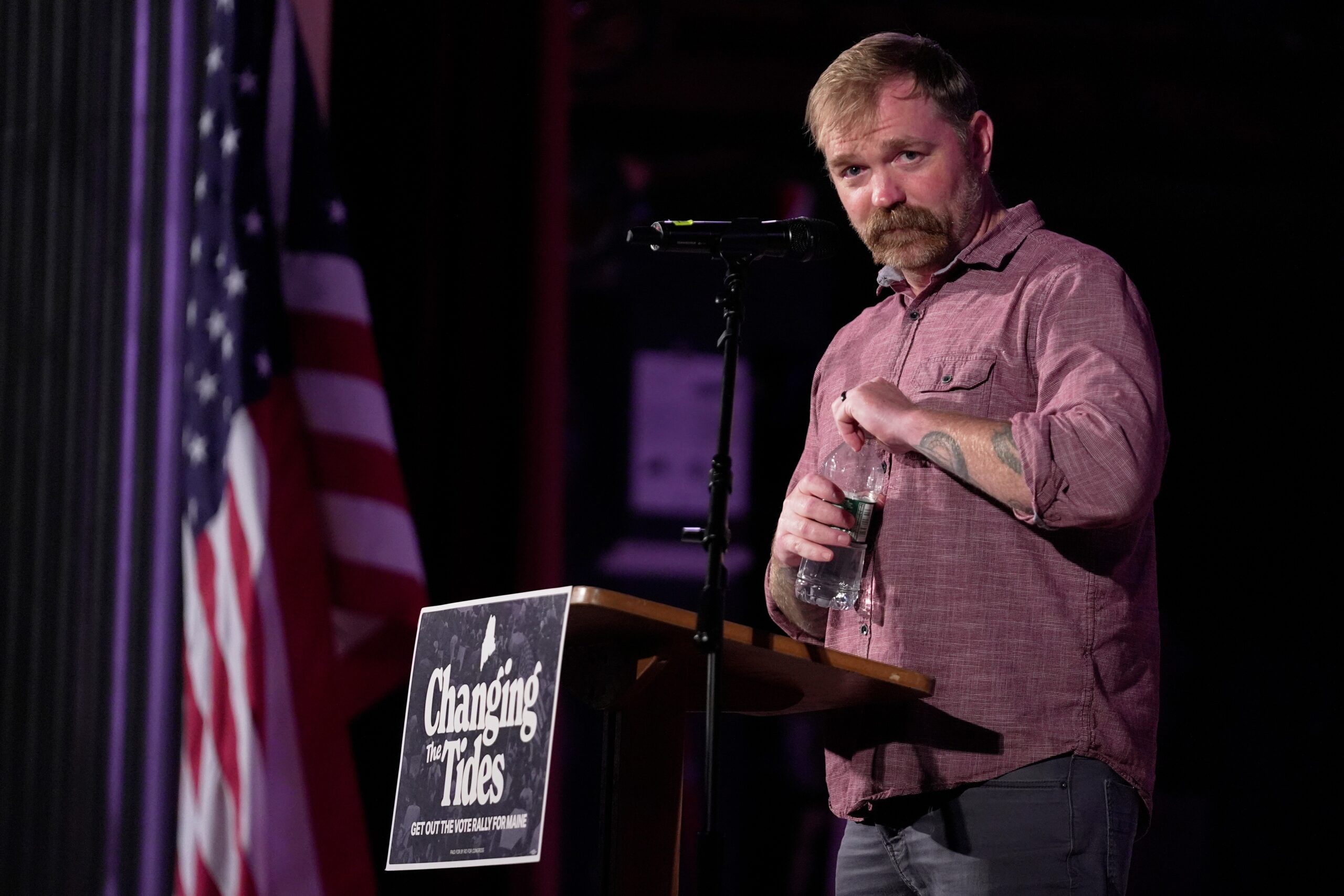
Graham Platner, Democratic candidate for U.S. Senate, speaks at a campaign event Friday, June 5, 2026, in Bar Harbor, Maine.
A ‘Totenkopf’ tattoo
Before Platner became the Democrats’ biggest headache, his most ardent supporters spoke about him in strikingly lofty terms.
As his campaign was getting off the ground, Moraff likened him to Barack Obama in conversations with senior Democratic officials, according to two people with knowledge of the private conversations.
But there were early signs that Platner had serious political liabilities. Less than two weeks after he announced his bid, his wife, Amy Gertner, approached a top campaign aide. She wanted to disclose that Platner had been exchanging sexual messages with multiple women.
Platner was about to hold a campaign event with Sen. Bernie Sanders, his first major endorser and a personal hero. Gertner told Genevieve McDonald, then the campaign’s political director, that she worried Sanders would think less of her husband if he later found out about the exchanges with other women, McDonald recalled.
Was that the extent of the controversy in Platner’s personal life or was there more to worry about? Campaign officials appeared not to know.
A top Platner adviser had promised a national Democratic strategist that they would not launch a campaign without completing a full investigation of Platner’s background. But, according to two people familiar with the campaign’s operations, no extensive effort was undertaken in one of the marquee races of the midterm cycle.
Instead, they conducted an expedited review, resulting in a short risk-assessment memo.
Platner’s campaign said that a research firm produced a vetting memo of nearly 50 pages that included searches of news reports, social media posts and public documents. They did not do exhaustive interviews with Platner.
“I said, ‘None of this will or should stop him from becoming a U.S. senator,’” Moraff told The Wall Street Journal.
But others had access to significantly more damaging information about Platner’s past.
In Northern Virginia, Lyndsey Fifield, a former girlfriend of Platner’s, texted a private group chat of friends last summer about a tattoo on his chest widely recognized as a Nazi symbol. He had gotten it while serving in the military and referred to it, she has said, as “my Totenkopf.”
The “Nazi tattoo on his chest,” Fifield suggested, was going to be a problem.
The existence of the tattoo, however, did not immediately become public. In the meantime, Platner’s campaign began to find an audience. He drew bigger and bigger crowds, crisscrossing the state for events and spending hours gabbing on podcasts.
Yet controversies kept arising. In October, CNN and other news outlets uncovered a trove of incendiary online posts that Platner had written between 2009 and 2021, which included dismissive comments about rape and sexual assault in the military.
Platner apologized, and has urged the public not to judge him for his worst moments on the internet.
The lack of disclosure about his past made McDonald, a former state legislator and lobbyist, uncomfortable. She quit the campaign in October.
Around the same time, photos of Platner’s tattoo from his wife’s Facebook account began leaking to news organizations.
The Platner team, hoping to defuse the potential damage, released video footage of a shirtless Platner with the tattoo visible to Pod Save America, a liberal podcast that supported his bid.
In a friendly interview, Platner dismissed the issue as little more than pearl-clutching by his opponents. “I am not a secret Nazi,” he said. “Lifelong opponent.”
At the time, Platner said in a statement that he did not know that his tattoo resembled a Nazi symbol until it became a campaign issue.
More staffers, including Holmes, left the campaign.
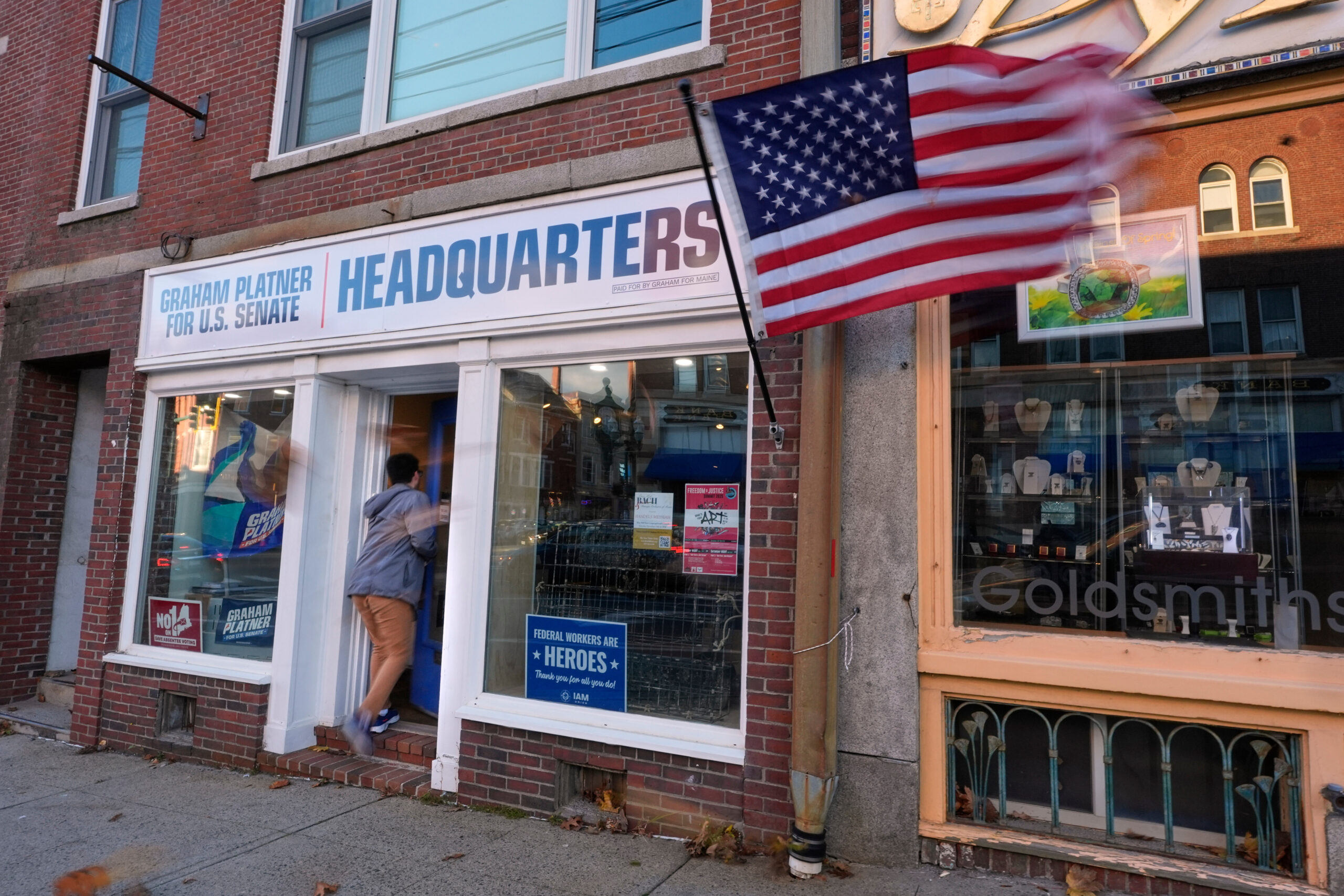
FILE – A worker enters the campaign headquarters for US Senate candidate Graham Platner, Tuesday, Nov. 4, 2025, in Ellsworth, Maine.
‘It’s not that complicated’
For months, there was little indication that any of the controversy was seriously hurting his candidacy.
As Platner’s star rose through the winter and early spring, Katz was privately promoting him as a future presidential candidate for as soon as 2028, if he won his Senate bid.
When Janet Mills, his chief Democratic primary opponent, produced tough ads featuring his comments about women and rape, it did little to change the trajectory of the race. Poll after poll showed Platner leading Mills, a two-term governor who was supported by national Democratic leaders, by double-digits.
Platner built a movement-like following, emerging as one of his party’s most powerful online fundraisers. His campaign constructed an image of a working-class combat veteran who had returned to Maine to rebuild his life, who spoke movingly about the failings of U,S, foreign policy and rallied voters with his promises to take on a political system dominated by corporations and billionaires. Democrats flocked to his town hall meetings.
Publicly, at least, the candidate expressed nothing but bravado.
In an April interview, he dismissed any jitters about going up against Mills — a former prosecutor — in a series of planned public debates.
Platner had debated before, he said, in college classes. His preparations, he said, were “standard run-of-the mill debate prep.”
“Honestly, I’ve seen enough and read enough about politics that it looks and sounds very much like what debate prep usually looks like,” he said.
He added: “Standing up and talking about the things you believe in, it’s not that complicated.”
Platner’s theory about debating would never be tested. The next morning, Mills dropped out the race, saying she lacked the funds to compete.
But by June, Platner was trailing far behind Collins in campaign funds. Platner’s campaign had just $1.3 million in the bank when he exited the race, a fraction of Collins’ $9.7 million war chest as of late May. A person familiar with the campaign’s finances said the amount of cash available to spend was even lower — under $100,000.
The campaign raised nearly $9 million last quarter, said a campaign official, more than doubling the previous quarter’s haul. While the campaign successfully focused on attracting small-dollar donations, it struggled to recruit and retain big-dollar donors.
Campaign aides told top Democratic strategists that donors kept raising concerns about the tattoo and his other controversies. Their requests for help assuaging donors’ concerns were met with silence from the national committee, according to three people familiar with discussions.
Last week, Platner kicked off a call with a new national finance committee — a first, if belated, step to bundle checks from wealthy donors, according to an invitation seen by the Times. And the campaign took its worries about money public, warning on a call with reporters that he was being swamped on the airwaves.
Estimates showed they were set to be outspent by 2-to-1 on advertising by Collins and her allies through Election Day, according to data from the media tracking firm AdImpact.
“I was training with my jujitsu buddies at my kids’ class yesterday,” Ben Chin, Platner’s campaign manager, told reporters. “There were these radio ads that were coming on as we were listening, and people were starting to give me a hard time, like, ‘Oh, where are your radio ads?’”
A campaign in crisis
The campaign’s money troubles were exacerbated by a series of even more damaging revelations about his personal conduct and treatment of women. In May, the Journal and the Times published stories detailing sexual text exchanges with women that had worried McDonald and Gertner nearly 10 months earlier.
In early June, Platner found himself in a private meeting in Washington facing questions from senators about whether more damaging revelations were yet to come. He promised that there was nothing else, according to a person familiar with the discussion.
But it became clear that Platner and his team were in crisis mode. He flew home to Maine, and frantically dialed ex-girlfriends to find people who would testify to his good character.
He called Rep. Ro Khanna, an early supporter from California, to warn him that the Times was going to publish a story that would detail his “toxic relationships.” He was a “terrible boyfriend” and made misogynistic comments, he said, according to someone familiar with the discussion, but nothing worse.
Days later, the Times published accounts from three women who had been in romantic relationships with Platner for years. They said he could be demeaning to women and, in at least one case, even physically threatening.
In the immediate aftermath, many activists and politicians went to their partisan corners.
“There are no saints in the United States Senate,” Sanders said.
But other prominent Democrats started speaking out more bluntly. In private meetings, even strong supporters began raising concerns.
“I look forward to the day where I am not answering every single week a question about bad behavior by another dude,” said an exasperated Sen. Elissa Slotkin, D-Mich., in an interview on MS Now.
By late June, Platner found what he hoped would be a powerful answer to critics: an endorsement by Planned Parenthood Action Fund at a splashy rally, portraying him as a champion of abortion rights.
Planned Parenthood officials knew their endorsement was a political risk, according to someone familiar with internal discussions. But they desperately wanted to defeat Collins.
Before they offered their endorsement, Alexis McGill Johnson, the chief executive of the group’s political arm, had posed to Platner the question that so many others had asked: Was there anything else that would come out about him?
Again, he said no. She responded with an ultimatum. If anything worse were to come out about him, he should not expect the women’s groups to clean up after him.
On Monday evening, as news that he had been accused of rape ricocheted across the country, the group quickly withdrew its support.
By midweek, as Democratic officials pushed for Platner to rapidly exit the race, the besieged candidate and a handful of aides, including Katz, hunkered down in his blue-shingled house and tried to challenge establishment politics one last time. Journalists trailed them to the local convenience store, where “The Graham,” a roast beef and pepper-jack sub, has been a popular deli counter order.
On Wednesday night, his campaign released a video in which Platner suspended his campaign and blamed his loss on the “corporate media system” and “political establishment.”
“We did it the right way,” he said. “And we won and now they are not going to let us have it. Not if it’s me.”