Category: News

Latest breaking news and updates

  • Southwest Philly-raised Raina J. León is the city’s new poet laureate

    Southwest Philly-raised Raina J. León is the city’s new poet laureate

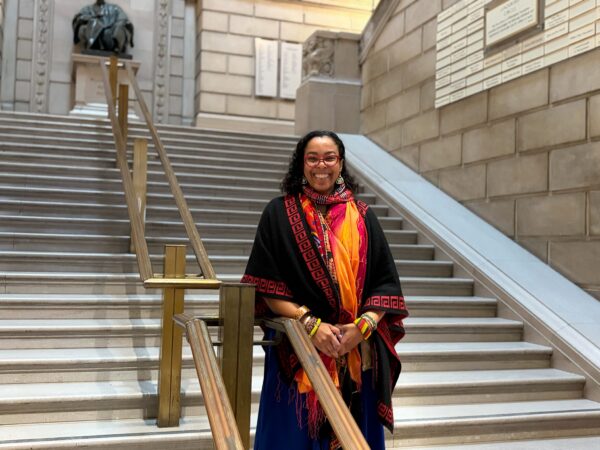
    Norma Thomas had been keeping a secret since mid-January. At Saturday’s Passing the Pen ceremony, she was ready to shout it from the Central Library rooftop:

    “My daughter, Raina León, is the poet laureate of Philadelphia,” Thomas said, chest puffed out and brimming with pride. “She is effervescent, outgoing, and loves the city of Philadelphia.”

    Raina J. León, 44, was one of 32 applicants citywide, the largest number of candidates the city has had for the role, said Adam Feldman, the Free Library of Philadelphia department head of art and literature, and a poet laureate governing committee member.

    Born in Upper Darby, León is a Black, Afro Boricuan poet, writer, educator, and cultural worker raised in Southwest Philadelphia. She speaks English, Spanish, and Italian, and believes in a world where diversity can strengthen communities.

    Still unable to believe her achievement, the University of Southern Maine professor recalled lighting candles nervously, hoping to get the email bearing the news.

    “I keep thinking, ‘Maybe this isn’t my time,’” León said. “But, no, DéLana would want me to dream big and to walk on assurance of my voice having a space,” she added, remembering her late friend, the poet DéLana R.A. Dameron, who died in November.

    Creating a space where people feel that their voices are welcome is the legacy León wants to leave during her two-year tenure as poet laureate.

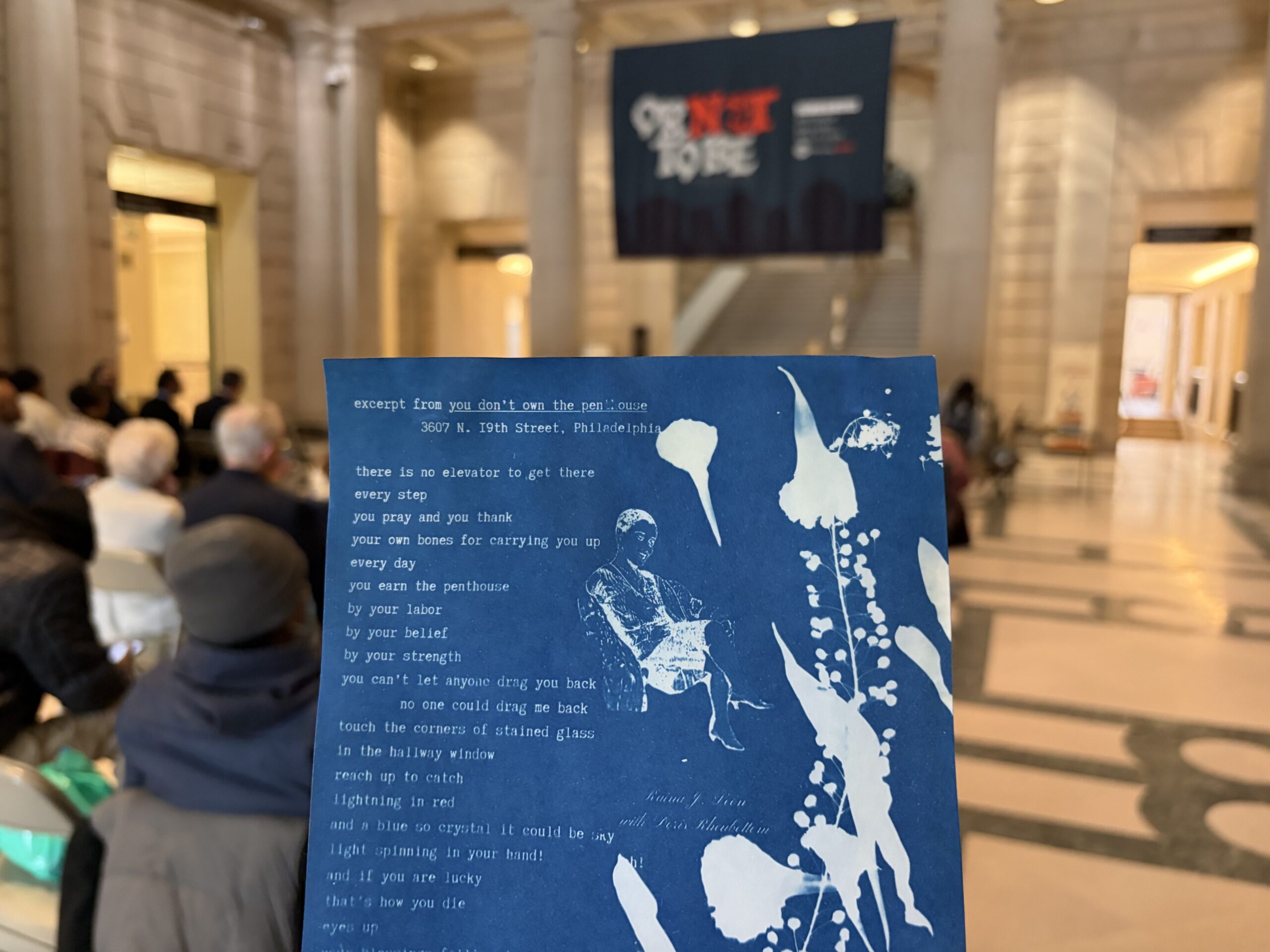
    An extract from Raina León’s poem “you don’t own the penthouse.”

    The poet laureate is an ambassador for poetry in the city, participating in community engagement, speaking at events, and mentoring the youth poet laureate, Rashawn Dorsey. But what excites León the most is helping Philadelphians see storytelling as a liberating practice.

    “Poetry is all around you. Even if you are like, ‘I don’t understand poetry’ — it understands you,” León said. “In these times of great volatility, with attacks on history and attacks on communities, there is a desire to preserve oneself by becoming numb, and poetry says, ‘No, you can’t be numb in life. You can’t be numb and observe the world.’”

    The poet laureate role comes with a $5,000 stipend, paid in two installments. But León says she isn’t in it for the money. She wants to provide language access to amplify Philadelphia’s diverse community of voices.

    She plans on holding open hours once a month at the Central Library of the Free Library for people to work on writing with her. For those who cannot come in person, León also wants to do online workshops.

    More importantly, she wants to work on writing projects across multiple languages, including American Sign Language, to ensure diversity opens doors in Philadelphia.

    “It’s like Bad Bunny said during the ‘Benito Bowl,’ what matters is that we are alive and we should be pouring [love] into one another and caring for one another,” León said. “Only love counters hate, and that is a revolutionary thing that is activating this, something that changes and pushes back on the nihilistic threat.”

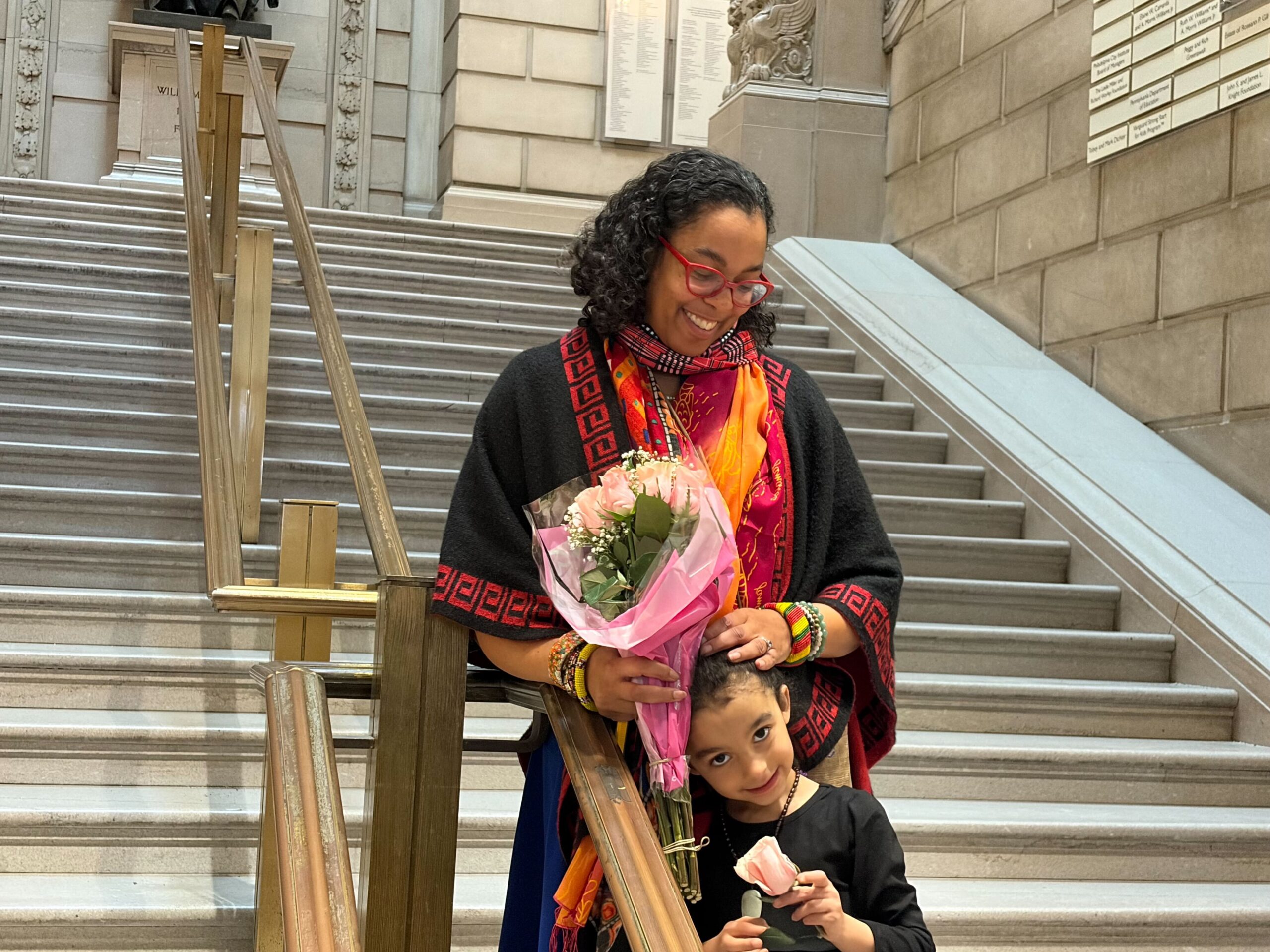
    Raina León and her daughter at the Passing the Pen ceremony, in the Parkway Central Library on Saturday, Feb. 14, 2026.
  • All-Star reliever Elroy Face, 97, who saved 3 games for Pirates in 1960 World Series, has died

    All-Star reliever Elroy Face, 97, who saved 3 games for Pirates in 1960 World Series, has died

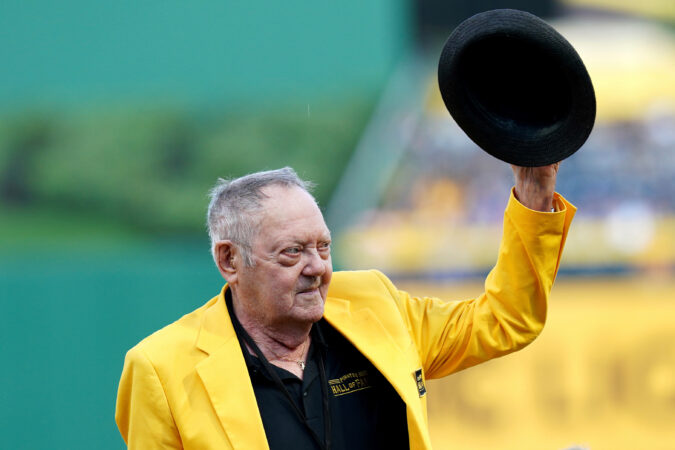
    PITTSBURGH — Elroy Face, an All-Star reliever for the Pittsburgh Pirates who saved three games in the 1960 World Series to help them upset the New York Yankees, has died. He was 97.

    In a news release Thursday, the Pirates announced they confirmed Mr. Face’s death. Team historian Jim Trdinich said the club was contacted by Mr. Face’s son, Elroy Jr., and informed the former pitcher died earlier in the day at an independent senior living facility outside Pittsburgh in North Versailles, Pa.

    No cause of death was provided. Mr. Face was eight days shy of his 98th birthday.

    “It is with heavy hearts and deep sadness that we mourn the passing of Pirates Hall of Famer Elroy Face, a beloved member of the Pirates family,” team chairperson Bob Nutting said in a statement.

    “Elroy was a pioneer of the modern relief pitcher — the ‘Baron of the Bullpen’ — and he played a critical role in our 1960 World Series championship.”

    Selected to six All-Star teams, Mr. Face went 104-95 with a 3.48 ERA in 16 major league seasons with Pittsburgh (1953-68), Detroit (1968), and Montreal (1969). He pitched in 848 games, starting only 27, and compiled 191 career saves — although saves didn’t become an official statistic until 1969.

    The 5-foot-8 right-hander holds the National League record for wins in relief with 96 and the major league mark for relief wins in one season after going 18-1 with a 2.70 ERA in 1959.

    He topped the National League with 68 appearances and 61 games finished in 1960, when the underdog Pirates stunned Mickey Mantle, Yogi Berra, and the mighty Yankees on Bill Mazeroski’s famous home run that won Game 7 of the World Series at Forbes Field in Pittsburgh.

    Mr. Face made four relief appearances in the Series, posting a 5.23 ERA in 10⅓ innings. He closed out Pirates wins in Games 1, 4, and 5.

    Inducted into the Pirates Hall of Fame in 2023, he is the club’s career leader in appearances with 802. And the team noted that if saves had been an official stat before 1969, he also would hold that franchise record with 188.

    Mr. Face was born in Stephentown, N.Y., on Feb. 20, 1928. He is survived by his three children, Michelle, Valerie, and Elroy Jr., and his sister Jacqueline, the Pirates said.

  • Seven couples tied the knot at Reading Terminal Market for a very Philly Valentine’s Day

    Seven couples tied the knot at Reading Terminal Market for a very Philly Valentine’s Day

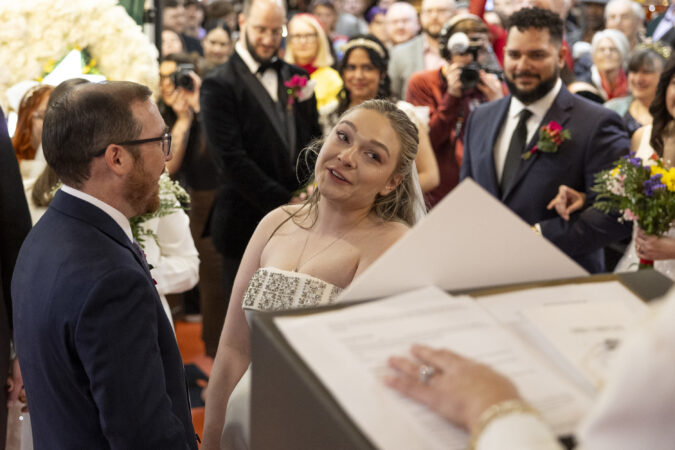
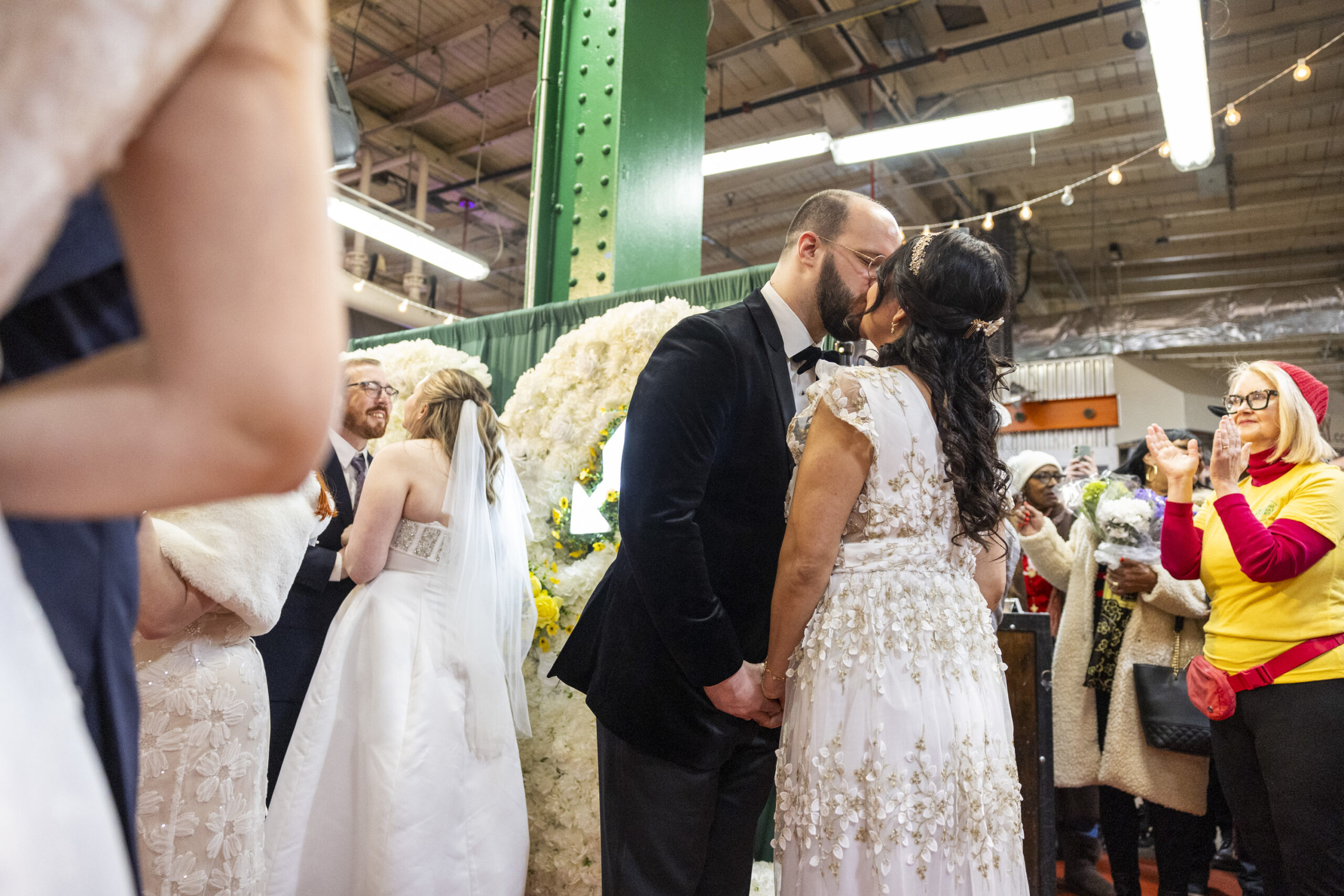
    Tucked in between a fish market, a bakery, and a honey stand, seven couples tied the knot among family, friends, and perfect strangers on Saturday.

    “It’s amazing,” said Beth Esposito-Evans, who officiated the ceremony. “What could be more Philly than Reading Terminal Market?”

    Esposito-Evans, a vendor at the market, said she helped relaunch the “Married at the Market” Valentine’s Day wedding last year after she became an ordained minister.

    It was her second year officiating a group ceremony that blended traditional elements — two couples broke a glass, for example — with plenty of love for the market.

    Minister Elizabeth R. Esposito-Evans officiates and leads the wedding ceremony at the Reading Terminal Market’s Married at the Market on Valentine’s Day in Philadelphia, Pa., on Saturday, Feb. 14, 2026.

    “Love is timeless,” Esposito-Evans said, “regardless of destination or background.”

    For bride Daysi Morales, the market is a place full of fond memories. Her father, Juan Morales, worked there as a security guard. He died of cancer in September 2024.

    “So there’s a sentimental aspect,” Morales said. “It’s a place where I can feel my dad’s presence.”

    David Skillman, kisses his bride, Daysi Morales, during their wedding day at the Reading Terminal Market’s Married at the Market on Valentine’s Day in Philadelphia, Pa., on Saturday, Feb. 14, 2026.

    In an interview a few days before the ceremony, Morales, 36, and her partner, David Skillman, 35, finished each other’s sentences as they told their love story, which started as a Tinder date during the winter of 2021.

    They first met at Craft Hall, a sports bar in Old City, chosen because of its outdoor seating, which many people preferred during the worst days of the COVID-19 pandemic.

    They decided to go inside anyway, Skillman said, and there the conversation flowed and the connection was immediate. Morales was born in Honduras, he noted, where he had done medical missionary work as a registered nurse.

    “I think we dated for a couple weeks, then made [our relationship] official,” Morales said.

    They moved in together into her apartment in West Philly.

    After Morales’ father, Juan, fell ill, Skillman provided medical care for him during one of his shifts at the Hospital of the University of Pennsylvania Pavilion emergency department..

    “David was such a rock, not just for me, but for my family,” Morales said.

    In December 2024, they got engaged.

    The Reading Terminal Market offered couples a chance to get “Married at the Market” on Valentine’s Day in Philadelphia, Pa., on Saturday, Feb. 14, 2026.

    For the couple, who now live in South Philly, there was also a practical aspect to having a scaled-down, low-cost wedding.

    “I want to buy a house,” Skillman said. “And buying a house and having a big wedding aren’t both feasible.”

    Morales said she worked for the U.S. Department of Housing and Urban Development before being laid off last year.

    “Especially in this economy, I think micro weddings are becoming more and more popular,” Morales said.

    That didn’t stop them from having a special wedding with some of their favorite Philly attractions — including Okie Dokie Donuts, an after-party at Sardine Bar, specialty cocktails, and a cake made by Morales’ family.

    Luigi Nicolae performs some music for families, friends, and guests attending the Reading Terminal Market’s Married at the Market on Valentine’s Day in Philadelphia, Pa., on Saturday, Feb. 14, 2026.

    “It feels so special, to be in the market where my dad worked,” said Daysi Morales’ older sister Esther.

    Reading Terminal Market, at 12th and Arch Streets, is a magnet for tourists and a regular destination for residents. Housed in a National Historic Landmark building dating to 1893, the market has 72 food vendors, including a produce market, an oyster bar, Pennsylvania Dutch traditional food, and a wide range of other offerings.

    Fifty-seven couples applied for “Married at the Market,” according to event promoter London Faust. The seven lucky couples selected were treated to decor, a violin player, and the location, all paid for by Reading Terminal Market.

    Faust said “the Reading Terminal team began an outreach process loosely prioritizing those who had strong ties to the market in their love story.” The celebration is free of charge for those accepted.

    “We kind of needed something like this,” groom Joey Kathan said before the ceremony. “We’ve been engaged two years.”

    Megan Keane hugs Maurie Kathan, sister to Joey Kathan of Fishtown, the groom, at the Reading Terminal Market’s Married at the Market on Valentine’s Day in Philadelphia, Pa., on Saturday, Feb. 14, 2026.

    Kathan’s bride, Megan Keane, described them as a “COVID couple” who met on Bumble Washington and bonded over hiking trips before moving to Philadelphia a few years ago.

    “This was crazy,” Keane said. “We couldn’t believe we were accepted.”

    There were even some last-minute guests of honor. Dorothy and Terry White were at the market Saturday when one of the housekeepers introduced them to Esposito-Evans. She asked them to join the celebration.

    “We got married here, 21 years ago today,” Dorothy White triumphantly told the crowd.

  • LaMonte McLemore, 90, 5th Dimension singer and Jet photographer, has died

    LaMonte McLemore, 90, 5th Dimension singer and Jet photographer, has died

    Touring the world with the 5th Dimension, LaMonte McLemore liked to say he had a microphone in one hand and his camera in the other.

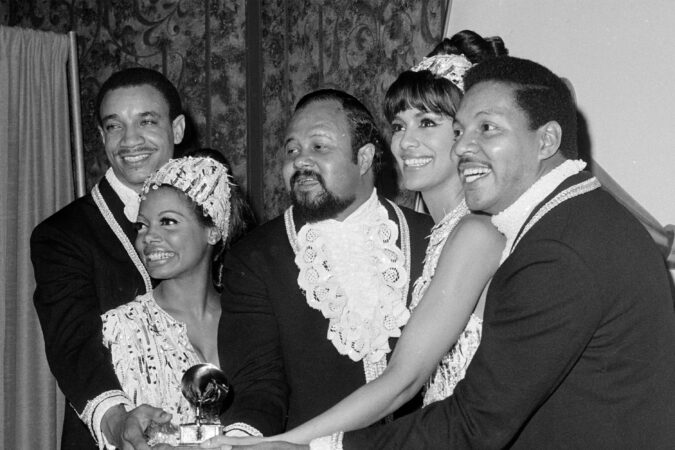
    Mr. McLemore, who died Feb. 3 at age 90, was best known as a founding member of the 5th Dimension, the genre-blending vocal group behind cheery, chart-topping hits like 1969’s “Aquarius/Let the Sunshine In,” a medley from the rock musical Hair. In an era of political violence and racial unrest, he and his fellow singers honed a fizzy style they called “champagne soul,” reaching a post-hippie audience — “This is the dawning of the Age of Aquarius,” they sang — while fusing jazz, pop, and R&B.

    Between 1967 and 1973, the group won six Grammy Awards, landed 20 songs on the Top 40 of the Billboard Hot 100, and performed in Las Vegas with Frank Sinatra and at the White House for President Richard M. Nixon. Mr. McLemore was a key part of that run, singing bass on hits like “One Less Bell to Answer” and “(Last Night) I Didn’t Get to Sleep at All,” in addition to serving as an occasional emcee, introducing his bandmates onstage by their zodiac sign.

    He was the only Virgo of the bunch.

    “LaMonte would be the first to tell you he may not have been our group’s strongest lead singer,” his former bandmates Marilyn McCoo and Billy Davis Jr. said in a statement. Yet it was Mr. McLemore “who brought us all together,” they said, adding that it was also Mr. McLemore who helped keep the group whole for 10 years, persuading the singers to postpone solo careers that ultimately led the original lineup to split apart in 1975.

    “Every time you hear a 5th Dimension harmony, every time you hear an Original 5th Dimension melody, pause and give thanks for our beloved friend,” McCoo and Davis said. “Without his grace, the egos of everyone else might have kept that dream from ever coming true.”

    Mr. McLemore, a onetime medical photographer for the Navy, toured with the 5th Dimension even as he pursued his other vocation, photography. He took pictures of fellow musicians including Marvin Gaye and Stevie Wonder; contributed to Harper’s Bazaar, where he was said to be the first Black photographer the magazine ever hired; and freelanced for publications including Ebony, Playboy, and People.

    For more than four decades, his photos were also a mainstay of Jet magazine, which once reached more than 1 million print subscribers each week. Mr. McLemore photographed more than 500 women — most of them nonprofessional models — for the publication’s “Beauty of the Week” feature, a reader favorite designed to showcase Black style and beauty from around the world.

    “LaMonte had a good eye. He was a sure shot,” said Sylvia Flanagan, a former Jet senior editor who worked with Mr. McLemore for 35 years. “And I knew that if LaMonte was shooting it, it was going to be perfect.”

    That was partly because Mr. McLemore was able to put his subjects at ease, Flanagan said. It was also because Mr. McLemore knew the assignment: “If a person was more voluptuous on the top, not so much on the bottom, LaMonte would put them in water. Because that magnifies everything.”

    Jet’s “Beauty of the Week” subjects were everyday women — college students, nurses, postal workers — confidently posing in a swimsuit or stockings. A brief caption identified them by name, noting their profession and hobbies along with their measurements.

    “They looked like someone whom you might catch a glimpse of at the Jersey Shore one day,” Jennifer Wilson wrote in the New Yorker in 2024, in an essay that praised the column for having “democratized the thirst trap.” “’Hey, did I see you in Jet?’ was a pickup line someone once tried on my aunt.”

    According to Flanagan, some of Mr. McLemore’s subjects were women he encountered while on tour with the 5th Dimension. Others were more personal: Mr. McLemore photographed his daughter, Ciara McLemore, 23 years after he photographed her mother, Lisa Starnes, wearing the same leopard-print swimsuit.

    Many of his Jet photographs were collected in a 2024 book, Black Is Beautiful, which he prepared with Washington gallerist Chris Murray. Artist Mickalene Thomas, who cited Mr. McLemore as an inspiration, wrote in an introductory essay that the pictures “served as a radical depiction of the Black female body as both effortlessly beautiful and exceedingly powerful.” Mr. McLemore’s images also “provided a much-needed space for Black women to see themselves represented as desirable,” she wrote.

    “To me, women are the miracle of life,” Mr. McLemore told Ebony in a 1989 interview. “As mysterious as they are, I got tired of trying to figure out the mystery. It’s better enjoyed than understood.”

    ‘A rare mixture’

    The first of four children, Herman LaMonte McLemore was born in St. Louis on Sept. 17, 1935. His first love was baseball, although he sang doo-wop ever since he was a boy, harmonizing on street corners with friends.

    When Mr. McLemore was 5, his father, a janitor and sometime musician, left the family. He was raised by his mother and maternal grandmother, who taught him a lesson that Mr. McLemore adopted as his motto: “We are only in this world to help one another.”

    After graduating from high school, Mr. McLemore enlisted in the Navy, buying his first 35 mm camera while stationed in Alaska. He went on to play minor league baseball, pitching in the Los Angeles Dodgers’ farm system before breaking his arm in a car crash, he said.

    In the offseason, he took pictures, working as a freelance photographer whenever he could. His assignments took him to the Miss Bronze California beauty pageant, where he photographed two contestants, McCoo and Florence LaRue, who became founding members of the 5th Dimension.

    Formed in 1965, the group was originally known as the Versatiles, and also included two of Mr. McLemore’s friends from St. Louis, Billy Davis Jr. and Ron “Sweets” Townson.

    “I pulled them together as friends,” Mr. McLemore told the Stuart News of Florida in 2004. “Ron happened to sing opera, Billy sang rock and roll, me and Marilyn were singing jazz and Florence was singing pop. It was just a rare mixture, but it blended.”

    The group had success almost immediately, scoring their first Top 40 hit with a cover of the Mamas & the Papas’ “Go Where You Wanna Go.” Later in 1967, they released their first million-selling record, “Up — Up and Away,” written by Jimmy Webb, a rising songwriter and pianist who backed them in the studio. The song’s title, usually rendered with a comma instead of a dash, became a national catchphrase, and the group went on to find repeated success with Webb and songwriter Laura Nyro, who crafted their hits “Stoned Soul Picnic” and “Wedding Bell Blues,” which went to No. 1.

    Their music resonated even behind the Iron Curtain. When the 5th Dimension embarked on a State Department cultural tour in 1973, performing in Eastern Europe and Turkey, they stopped to chat with admiring fans at embassies and elementary schools. “A lot of soul in Czechoslovakia,” Mr. McLemore observed on his return.

    His death — at his home in Henderson, Nev., a few years after suffering a stroke — was confirmed by Murray and by Robert-Allan Arno, who co-wrote Mr. McLemore’s memoir, From Hobo Flats to the 5th Dimension.

    In addition to his daughter, Ciara, survivors include his wife, the former Mieko Tone, whom he married in 1995; a son, Darin; a sister; and three grandchildren.

    Mr. McLemore and the 5th Dimension received renewed attention in 2021, when they were featured in Summer of Soul (… Or, When the Revolution Could Not Be Televised), Questlove’s Oscar-winning documentary about the 1969 Harlem Cultural Festival.

    Intended to promote Black pride and unity, the concert series featured acts including Nina Simone and Sly & the Family Stone. The 5th Dimension headlined the series’s first weekend, though, as the film noted, the singers had a mixed reputation among Black audiences. Hearing echoes of pop and folk rock acts like the Mamas & the Papas, some listeners mistakenly assumed that Mr. McLemore and his bandmates were white.

    Ebony magazine summed up the confusion in a 1967 cover story headlined, “The Fifth Dimension: White sound in a black group.”

    “Black people, when we first started … they didn’t understand what we were doing at all,” Mr. McLemore told an interviewer in 2017. He and his fellow singers were put off — “We said, ‘How can you color a sound? This is our sound. And it’s different and we ain’t gonna change it’” — but were gratified when the mood began to shift, just as the group notched its first No. 1 hit with “Aquarius.”

    “All of a sudden,” he said, “all the Black people came up and said, ‘We were with y’all all along!’”

  • Iran’s crown prince says survival of Tehran government ‘sends a clear signal to every bully’

    Iran’s crown prince says survival of Tehran government ‘sends a clear signal to every bully’

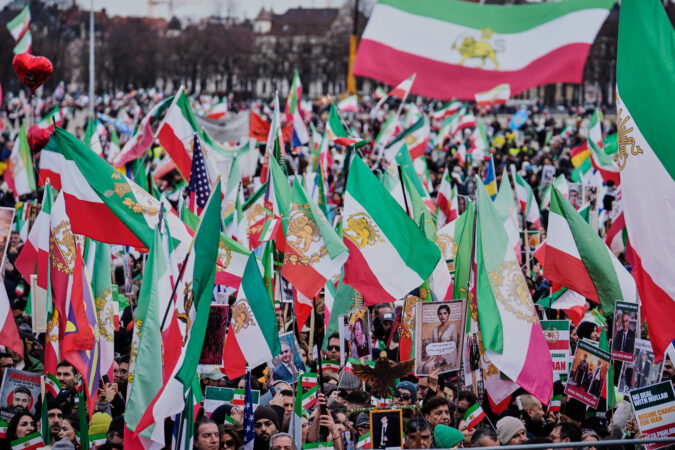
    MUNICH — Some 200,000 people demonstrated Saturday against Iran’s government on the sidelines of a gathering of world leaders in Germany, police said, answering a call from Iran‘s exiled Crown Prince Reza Pahlavi for cranked-up international pressure on Tehran.

    Banging drums and chanting for regime change, the giant and boisterous rally in Munich was part of what Pahlavi described as a “global day of action” to support Iranians in the wake of deadly nationwide protests. He also called for demonstrations in Los Angeles and Toronto. The police estimate of 200,000 protesters in Munich was reported by German news agency dpa and was higher than organizers had expected.

    “Change, change, regime change” the huge crowd chanted, waving green-white-and-red flags with lion and sun emblems. Iran used that flag before its 1979 Islamic Revolution that toppled the Pahlavi dynasty.

    At a news conference on the sidelines of a security conference in Munich, Pahlavi warned of more deaths in Iran if “democracies stand by and watch” following Iran’s deadly crackdown on protesters last month.

    “We gather at an hour of profound peril to ask: Will the world stand with the people of Iran?” he asked.

    He added that the survival of Iran’s government “sends a clear signal to every bully: Kill enough people and you stay in power.”

    At the Munich rally, demonstrators sported “Make Iran Great Again” red caps, mimicking the MAGA caps worn by U.S. President Donald Trump‘s supporters. Many waved placards showing Pahlavi, some that called him a king. The son of Iran’s deposed shah has been in exile for nearly 50 years but is trying to position himself as a player in Iran’s future.

    The crowd chanted “Pahlavi for Iran” and “democracy for Iran” as drums and cymbals sounded.

    “We have huge hopes and (are) looking forward that the regime is going to change hopefully,” said Daniyal Mohtashamian, a demonstrator who traveled from Zurich, Switzerland, to speak for protesters inside Iran who faced repression.

    “There is an internet blackout and their voices are not going outside of Iran,” he said.

    About 500 protesters also rallied outside the presidential palace in Nicosia, Cyprus, with many holding up banners with slogans against Iran’s government and in favor of Pahlavi.

    On Saturday night in Iran’s capital, Tehran, witnesses said they heard people chanting against the country’s theocracy. The cries included “death to the dictator” and “long live the shah.” The protest came after calls from Pahlavi for people to chant against the government from their homes over the weekend.

    Meanwhile, Iranian Foreign Minister Abbas Araghchi criticized the Munich conference, saying it was “sad to see the usually serious Munich Security Conference turned into the ‘Munich Circus’ when it comes to Iran.”

    The U.S.-based Human Rights Activists News Agency says at least 7,005 people were killed in last month’s protests, including 214 government forces. It has been accurate in counting deaths during previous rounds of unrest in Iran and relies on a network of activists inside Iran to verify deaths.

    Iran’s government offered its only death toll on Jan. 21, saying 3,117 people were killed. Iran’s theocracy in the past has undercounted or not reported fatalities from past unrest.

    The Associated Press has been unable to independently assess the death toll, given authorities have disrupted internet access and international calls in Iran.

    Iranian leaders are facing renewed pressure from Trump, who has threatened U.S. military action. Trump wants Iran to further scale back its nuclear program. He suggested Friday that regime change in Iran “would be the best thing that could happen.”

    Iran was also the focus of protests in Munich on Friday, the opening day of an annual security conference in the city gathering European leaders and global security figures. Supporters of the Iranian opposition group People’s Mujahedeen Organization of Iran, also known as the Mujahedeen-e-Khalq, demonstrated.

  • L.A. Olympics leader Wasserman will sell talent agency in wake of Epstein emails discovery

    L.A. Olympics leader Wasserman will sell talent agency in wake of Epstein emails discovery

    LOS ANGELES — Casey Wasserman, the chairperson of the 2028 Los Angeles Olympics organizing committee, is selling his eponymous talent agency in the wake of the release of emails between himself and Ghislaine Maxwell.

    Wasserman’s emails with Maxwell were revealed by his appearance in recently released government files on Jeffrey Epstein. Wasserman, whose agency represents some of the top pop music artists in the world, has not been accused of any wrongdoing.

    The recently released documents revealed that in 2003 he swapped flirtatious emails with Maxwell, who would years later be accused of helping Epstein recruit and sexually abuse his victims. Wasserman said in a Friday evening memo to his staff that he has begun the process of selling the company, according to a company spokesperson who provided the memo to the Associated Press.

    Wasserman’s memo to staff said that he felt he had become a distraction to the company’s work.

    “During this time, Mike Watts will assume day-to-day control of the business while I devote my full attention to delivering Los Angeles an Olympic Games in 2028 that is worthy of this outstanding city,” the memo stated.

    The memo arrived days after the LA28 board’s executive committee met to discuss Wasserman’s appearance in the Epstein files. The committee said it and an outside legal firm conducted a review of Wasserman’s interactions with Epstein and Maxwell with Wasserman’s full cooperation.

    The committee said in a statement: “We found Mr. Wasserman’s relationship with Epstein and Maxwell did not go beyond what has already been publicly documented.” The statement also said Wasserman “should continue to lead LA28 and deliver a safe and successful games.”

    Wasserman has said previously that he flew on a humanitarian mission to Africa on Epstein’s private plane at the invitation of the Clinton Foundation in 2002. Exchanges between Wasserman and Maxwell in the files include Wasserman telling Maxwell: “I think of you all the time. So, what do I have to do to see you in a tight leather outfit?”

    His agency, also called Wasserman, has lost clients over the Maxwell emails. Singer Chappell Roan and retired U.S. women’s soccer legend Abby Wambach are among them.

    Wasserman said in his memo to staff that his interactions with Maxwell and Epstein were limited and he regrets the emails.

    “It was years before their criminal conduct came to light, and, in its entirety, consisted of one humanitarian trip to Africa and a handful of emails that I deeply regret sending. And I’m heartbroken that my brief contact with them 23 years ago has caused you, this company, and its clients so much hardship over the past days and weeks,” the memo said.

  • Another partial government shutdown has started. Why is this one different? Here’s what we know.

    Another partial government shutdown has started. Why is this one different? Here’s what we know.

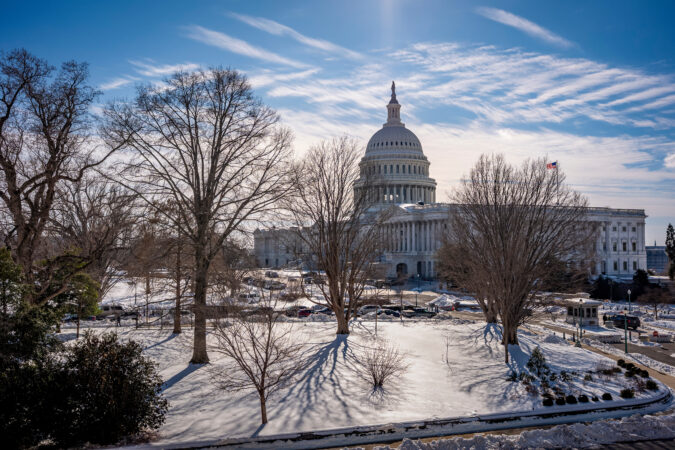
    Another partial government shutdown began Saturday, with lawmakers at an impasse. But this one is different.

    With congressional Democrats refusing to approve funding for the Department of Homeland Security, the last of that agency’s funding has run out.

    It all stems from party-line disagreements surrounding ICE and immigration enforcement.

    When a funding lapse triggered a partial government shutdown on Jan. 31, Congress made a compromise: It approved spending bills for all agencies, except for DHS.

    DHS received two weeks of funding to give Congress more time to negotiate Immigration and Customs Enforcement changes, a push Senate Democrats have repeatedly made after federal immigration and border agents fatally shot two U.S. citizens in Minneapolis last month.

    Now those two weeks are up and Congress is still in a standoff. Democrats want to see more guardrails regarding how ICE agents identify themselves, barring them from wearing masks, and requiring name badges. But Republicans say those practices would add too much risk to the job.

    Since all other government agencies have already been funded, DHS is the only one affected by the shutdown.

    Here’s what that means.

    What’s a partial government shutdown?

    A partial government shutdown happens when Congress has funded only certain federal agencies, leaving others in limbo. Some parts of the government close while others keep operating.

    In this case, it comes down to who has funding and who doesn’t. DHS is the only agency without approved funding. The agency’s fiscal year ends Sept. 30, meaning it currently stands without funding for seven months or until Congress reaches an agreement.

    When did government funding expire?

    Funding for DHS expired Friday at midnight. A shutdown began Saturday at 12:01 a.m. after Congress and President Donald Trump’s administration failed to reach an agreement.

    What changes with the partial shutdown?

    Not much in the eyes of the general public, according to CNN.

    Nearly all DHS workers remain on the job, but many won’t get paid until the shutdown ends.

    But DHS officials who testified before a House panel on Wednesday warned that a funding disruption could mean delays to states seeking reimbursements for disaster relief costs, delays in cybersecurity response, and missed paychecks for agents who screen bags at airports, which could lead to unplanned absences and longer wait times.

    DHS is home to agencies including the Transportation Security Aadministration, Coast Guard, and Federal Emergency Management Agency, which are all affected.

    What have Pennsylvania politicians said?

    Sen. John Fetterman (D., Pa.) said he “absolutely” expected a shutdown. He broke with most Senate Democrats, voting to approve funding and avoid a shutdown in a measure that failed, and arguing that delaying funding DHS won’t impact ICE since the agency has received separate funding.

    Earlier this month, some members of the Pennsylvania delegation to the U.S. House of Representatives, including Chris Deluzio, Chrissy Houlahan, Brendan Boyle, Madeleine Dean, Mary Gay Scanlon, Dwight Evans, and Summer Lee, penned a letter to Fetterman and Sen. Dave McCormick (R., Pa.) asking them to vote against passing the spending bill unless ICE reform is secured. (Both senators voted in favor, but it failed.)

    Houlahan, a Democrat from Chester County, criticized ICE last week and emphasized a need for immigration reform.

    “We are a nation of immigrants, but ICE is clearly not reform. ICE is undertrained. ICE is vastly, vastly overfunded,” she said. “They have a budget that is larger than many countries’ entire defense budgets.”

    Where does Congress stand right now?

    The House had already done its part and approved funding. The chamber is in recess until Feb. 17. But Senate Democrats are pushing back on its approval without immigration reforms. That leaves the Senate with few options if it cannot pass the current measures.

    The Senate adjourned Thursday for a Presidents’ Day recess after a motion to advance DHS funding failed 52-47, mostly along party lines. Democrats also blocked an attempt to extend funding for another two weeks.

    Lawmakers left town, some traveling to the Munich Security Conference in Germany, others to meetings nationwide and overseas.

    The chambers are not scheduled to return until Feb. 23, though that could change if a deal is reached in the meantime. But senators on each side say bipartisanship during an election year seems unlikely.

    So in short: We could be here for a while.

  • Rubio says U.S., Europe ‘belong together,’ despite rifts over Trump policies

    Rubio says U.S., Europe ‘belong together,’ despite rifts over Trump policies

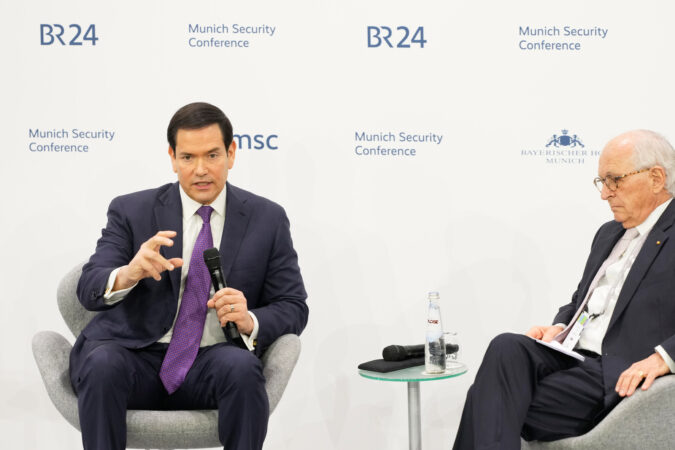
    MUNICH — Secretary of State Marco Rubio declared that the United States and Europe “belong together” in a speech Saturday aimed at unifying the Western alliance, while condemning hallmarks of globalization, open borders, unfettered free trade, “deindustrialization,” and mass migration.

    Rubio’s message, in a keynote address at the annual Munich Security Conference, received applause from a demoralized audience of European leaders who are deeply distressed about divisions with the United States stoked by President Donald Trump’s punitive tariffs, territorial ambitions for Greenland, and disagreements over how to end Russia’s war in Ukraine.

    “We are bound to one another by the deepest bonds that nations could share, forged by centuries of shared history, Christian faith, culture, heritage, language, ancestry, and the sacrifices our forefathers made together,” Rubio said.

    But even as he appealed to those ties, Rubio promoted several Trump administration positions that are deeply controversial among the United States’ closest traditional allies. He showed disdain for policies to reduce carbon emissions, staunchly criticized the United Nations — which many in Europe view as critical to protecting smaller states’ sovereignty — and lauded unilateral U.S. military action in Latin America and the Middle East.

    “On the most pressing matters before us, [the U.N.] has no answers and has played virtually no role,” Rubio said.

    Compared, however, to Vice President JD Vance’s blistering speech in Munich last year, which left the audience stunned by his seeming contempt for Europe, Rubio’s appeal to strengthen the alliance was received as more constructive.

    “Our home may be in the Western Hemisphere, but we will always be a child of Europe,” Rubio said.

    The moderator of the event, Wolfgang Ischinger, called the remarks a “sigh of relief” and a message of “reassurance” and “partnership.”

    Europe’s top leaders descended on the Bavarian capital this weekend, proclaiming the need to overhaul the relationship with the U.S. that has spurred economic prosperity and guaranteed security since World War II.

    European leaders promised to chart their own course and forge a version of the Western alliance in which they depend less on the United States.

    “In today’s fractured world, Europe must become more independent — there is no other choice,” European Commission President Ursula von der Leyen said in a speech early Saturday, to applause.

    As European and American politicians issue post-mortems for the world order in Munich, officials from each side of the Atlantic said it was high time for Europe to pay its own way for security. On that point, European and U.S. leaders appeared in sync.

    For the Europeans, the call to take charge of the continent’s defense is about more than addressing U.S. demands: It could also provide the ability to stand up to Washington and an administration with which they concede they do not share some interests.

    Rubio’s remarks about Europe were softer than Vance’s criticism of the suppression of far-right parties — and, in his characterization, free speech — or Trump’s threats to seize Greenland from NATO ally Denmark.

    But European leaders know well that a crisis with the administration could still erupt on an array of issues, including Greenland, negotiations with Russia over Ukraine, and regulation of hate speech and Big Tech.

    The leaders of Europe’s political and economic powerhouses, France and Germany, stressed that a more powerful Europe could shield itself from the whims of Washington and Moscow, and they delivered a stern rebuke of Trump’s foreign policy gyrations including on trade and climate.

    French President Emmanuel Macron, speaking at the conference Friday night, said Europe had been unjustly “vilified” as a continent of unfettered immigration and repression — an apparent reference to Vance’s speech and to a recent U.S. National Security Strategy that said Europe was facing “civilizational erasure.”

    “Everyone should take their cue from us, instead of criticizing us or trying to divide us,” Macron said. He called for “derisking vis-à-vis all the big powers,” not just in defense, but also in the economy and technology.

    “Europe is rearming, but we must now go beyond,” he added. “Europe has to learn to become a geopolitical power.”

    German Chancellor Friedrich Merz, in his welcoming remarks on Friday, said: “The culture wars of MAGA in the U.S. are not ours.”

    Merz also said that the U.S. claim to global leadership was being “challenged” in an era of great power rivalry, including rising Chinese influence, and he warned that Washington will need allies.

    “Even the United States will not be powerful enough to go it alone,” he said. “Dear friends, being a part of NATO is not only Europe’s competitive advantage. It is also the United States’ competitive advantage.”

    British Prime Minister Keir Starmer said that “we shouldn’t get in the warm bath of complacency. He said the U.K. must reforge closer ties with Europe to help the continent “stand on our own two feet” in its own defense, and said there needs to be investment that “moves us from overdependence to interdependence.”

    Hanno Pevkur, the defense minister of EU and NATO member Estonia, said it was “quite a bold statement to say that America is ‘a child of Europe’.”

    “It was a good speech, needed here today, but that doesn’t mean that we can rest on pillows now,” he told The Associated Press. “So still a lot of work has to be done.”

    A meeting on Greenland

    Rubio didn’t mention Greenland. After last month’s escalation over Trump’s designs on the Arctic island, the U.S., Denmark, and Greenland started technical talks on an Arctic security deal.

    The Secretary of State met briefly in Munich on Friday with the Danish and Greenlandic leaders, a meeting Danish Prime Minister Mette Frederiksen described as constructive.

    But Frederiksen suggested Saturday that although the dispute has cooled, she remains wary. Asked whether the crisis has passed, she replied: “No, unfortunately not. I think the desire from the U.S. president is exactly the same. He is very serious about this theme.”

    Asked whether she can put a price on Greenland, she responded “of course not,” adding that “we have to respect sovereign states … and we have to respect people’s right for self-determination. And the Greenlandic people have been very clear, they don’t want to become Americans.”

  • TSA agents are working without pay at U.S. airports due to another shutdown

    TSA agents are working without pay at U.S. airports due to another shutdown

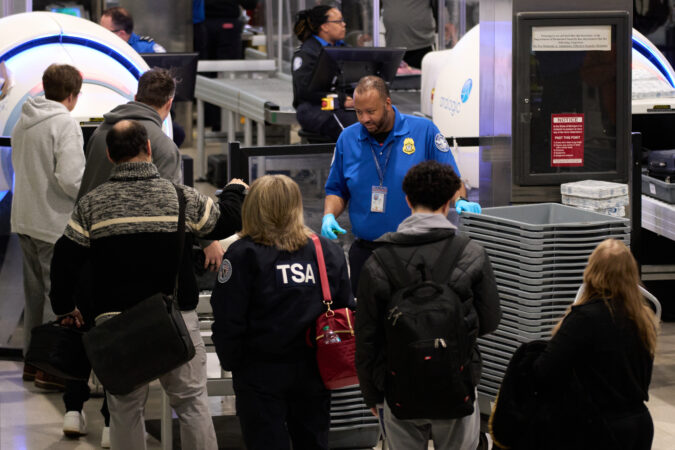
    A shutdown of the U.S. Department of Homeland Security that took effect early Saturday impacts the agency responsible for screening passengers and bags at airports across the country. Travelers with airline reservations may be nervously recalling a 43-day government shutdown that led to historic flight cancellations and long delays last year.

    Transportation Security Administration officers are expected to work without pay while lawmakers remain without an agreement on DHS’ annual funding. TSA officers also worked through the record shutdown that ended Nov. 12, but aviation experts say this one may play out differently.

    Trade groups for the U.S. travel industry and major airlines nonetheless warned that the longer DHS appropriations are lapsed, the longer security lines at the nation’s commercial airports could get.

    Here’s what to know about the latest shutdown and how to plan ahead.

    What’s different about this shutdown?

    Funding for Homeland Security expired at midnight Friday. But the rest of the federal government is funded through Sept. 30. That means air traffic controllers employed by the Federal Aviation Administration will receive paychecks as usual, reducing the risk of widespread flight cancellations.

    According to the department’s contingency plan, about 95% of TSA workers are deemed essential personnel and required to keep working. Democrats in the House and Senate say DHS won’t get funded until new restrictions are placed on federal immigration operations.

    During past shutdowns, disruptions to air travel tended to build over time, not overnight. About a month into last year’s shutdown, for example, TSA temporarily closed two checkpoints at Philadelphia International Airport. That same day, the government took the extraordinary step of ordering all commercial airlines to reduce their domestic flight schedules.

    On Saturday afternoon, the Philadelphia airport’s website showed all checkpoints open with normal brief wait times of 10 minutes or less.

    John Rose, chief risk officer for global travel management company Altour, said strains could surface at airports more quickly this time because the TSA workforce also will be remembering the last shutdown.

    “It’s still fresh in their minds and potentially their pocketbooks,” Rose said.

    What is the impact on travelers?

    It’s hard to predict whether, when, or where security screening snags might pop up. Even a handful of unscheduled TSA absences could quickly lead to longer wait times at smaller airports, for example, if there’s just a single security checkpoint.

    That’s why travelers should plan to arrive early and allow extra time to get through security.

    “I tell people to do this even in good times,” Rose said.

    Experts say flight delays also are a possibility even though air traffic controllers are not affected by the DHS shutdown.

    Airlines might decide to delay departures in some cases to wait for passengers to clear screening, said Rich Davis, senior security adviser at risk mitigation company International SOS. Shortages of TSA officers also could slow the screening of checked luggage behind the scenes.

    What travelers can do to prepare

    Most airports display security line wait times on their websites, but don’t wait until the day of a flight to check them, Rose advised.

    “You may look online and it says 2½ hours,” he said. ”Now it’s 2½ hours before your flight and you haven’t left for the airport yet.”

    Passengers should also pay close attention while packing since prohibited items are likely to prolong the screening process. For carry-on bags, avoid bringing full-size shampoo or other liquids, large gels or aerosols, and items like pocketknives in carry-on bags.

    TSA has a full list on its website of what is and isn’t allowed in carry-on and checked luggage.

    At the airport, Rose said, remember to “practice patience and empathy.”

    “Not only are they not getting paid,” he said of TSA agents, “they’re probably working with reduced staff and dealing with angry travelers.”

    Will the shutdown drag on?

    The White House has been negotiating with Democratic lawmakers, but the two sides failed to reach a deal by the end of the week before senators and members of Congress were set to leave Washington for a 10-day break.

    Lawmakers in both chambers were on notice, however, to return if a deal to end the shutdown is struck.

    Democrats have said they won’t help approve more DHS funding until new restrictions are placed on federal immigration operations after the fatal shootings of Alex Pretti and Renee Good in Minneapolis last month.

    In a joint statement, U.S. Travel, Airlines for America, and the American Hotel & Lodging Association warned that the shutdown threatens to disrupt air travel as the busy spring break travel season approaches.

    “Travelers and the U.S. economy cannot afford to have essential TSA personnel working without pay, which increases the risk of unscheduled absences and call outs, and ultimately can lead to higher wait times and missed or delayed flights,” the statement said.

  • CIA, Pentagon investigated secret ‘Havana syndrome’ device in Norway

    CIA, Pentagon investigated secret ‘Havana syndrome’ device in Norway

    Working in strict secrecy, a government scientist in Norway built a machine capable of emitting powerful pulses of microwave energy and, in an effort to prove such devices are harmless to humans, in 2024 tested it on himself. He suffered neurological symptoms similar to those of “Havana syndrome,” the unexplained malady that has struck hundreds of U.S. spies and diplomats around the world.

    The bizarre story, described by four people familiar with the events, is the latest wrinkle in the decadelong quest to find the causes of Havana syndrome, whose sufferers experience long-lasting effects including cognitive challenges, dizziness, and nausea. The U.S. government calls the events Anomalous Health Incidents.

    The secret test in Norway has not been previously reported. The Norwegian government told the CIA about the results, two of the people said, prompting at least two visits in 2024 to Norway by Pentagon and White House officials.

    Those aware of the test say it does not prove AHIs are the work of a foreign adversary wielding a secret weapon similar to the prototype tested in Norway. One of them noted that the effects suffered by the Norwegian researcher, whose identity was not disclosed by the people familiar, were not the same as in a “classic” AHI case. All spoke on the condition of anonymity because of the subject’s sensitivity.

    But the events bolstered the case of those who argue that “pulsed-energy devices” — machines that deliver powerful beams of electromagnetic energy such as microwaves in short bursts can affect human biology and are probably being developed by U.S. adversaries.

    “I think there’s compelling evidence that we should be concerned about the ability to build a directed-energy weapon that can cause a variety of risk to humans,” said Paul Friedrichs, a retired military surgeon and Air Force general who oversaw biological threats on the White House National Security Council under President Joe Biden. Friedrichs declined to comment on the Norway experiment.

    The Trump administration took office promising to pursue the AHI issue aggressively. But there has been little apparent movement. A review ordered by Director of National Intelligence Tulsi Gabbard is expected to focus mostly on the Biden administration’s handling of the issue, and its release has been delayed, people familiar with the issue said.

    In a separate development that has become public in recent weeks, the U.S. government covertly purchased at the end of the Biden administration a different foreign-made device that produces pulsed radio waves and which some experts suspect could be linked to AHI incidents, according to two people familiar with the matter.

    The device is being tested by the Defense Department. It has some Russian-origin components, but the U.S. government still has not determined conclusively who built it, said one of the people.

    The U.S. acquisition of the device was first reported last month by independent journalist Sasha Ingber and CNN, which said it had been purchased for millions of dollars by Homeland Security Investigations, part of the Department of Homeland Security.

    The device that the scientist constructed in Norway was not identical to the one that the U.S. government covertly acquired, one of the people familiar with the events said. The Norwegian device was built based on “classified information,” suggesting it was derived from blueprints or other materials stolen from a foreign government, this person said.

    At about the same time the U.S. became aware of the two pulsed-energy machines, two spy agencies altered their previous judgment and concluded that some of the incidents involving AHIs could be the work of a foreign adversary, delivering that verdict in an updated U.S. intelligence assessment issued in January 2025 during the Biden administration’s final weeks.

    “New reporting,” the assessment said, led the two agencies “to shift their assessments about whether a foreign actor has a capability that could cause biological effects consistent with some of the symptoms reported as possible AHIs.”

    One was the National Security Agency, which intercepts and decodes foreign electronic communications, several people familiar with the issue said. The other, said two of those people, was the National Ground Intelligence Center, a U.S. Army intelligence agency in Charlottesville that produces intelligence on foreign adversaries’ scientific, technical, and military capabilities.

    The majority of U.S. intelligence agencies, including the CIA and four others, said they continued to judge it “very unlikely” that the attacks were the result of a foreign adversary or that a foreign actor had developed a novel weapon. In conversations intercepted by U.S. spy agencies, American adversaries were heard expressing their own surprise at the AHI incidents and denying involvement, U.S. officials have said.

    The CIA declined to comment on the Norwegian test or how it impacted the agency’s analysis. Norway’s embassy in Washington did not respond to a request for comment.

    Some former officials and AHI victims have pointed to Russia as the prime suspect in the AHI incidents because of its decades of work in directed-energy devices. So far, no conclusive proof has publicly emerged, and Moscow has denied involvement.

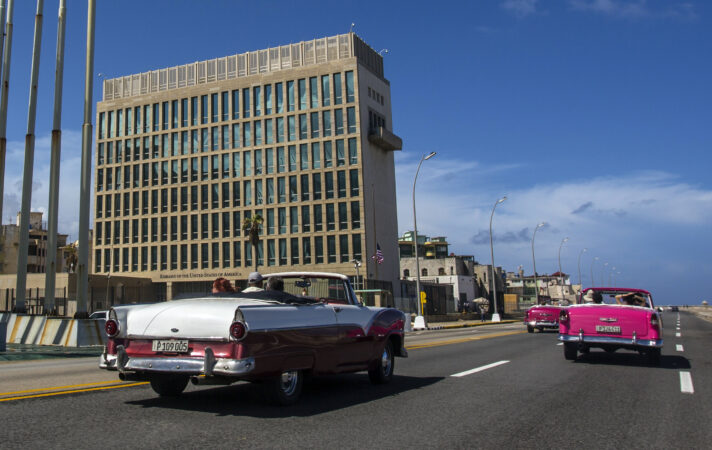
    Taken together, the two known directed-energy devices along with other research appear to have prompted a reconsideration by some of the causes of Havana syndrome, so named because of the mysterious 2016 outbreak of symptoms reported by personnel at the U.S. Embassy in Havana.

    In subsequent years, U.S. personnel reported hundreds of cases globally, in China, Eastern Europe, and elsewhere. A top aide to then-CIA Director William J. Burns reported symptoms while traveling in India in 2021.

    At a conference in Philadelphia earlier this month, retired Air Force Lt. Col. Chris Schlagheck, at times his voice breaking, said he was hit five times in 2020 in his home in Northern Virginia, where a Russian family lived across the street. It was not until last year that a doctor told him his symptoms were the same as those reported from Havana a decade earlier.

    Much about the Norway test remains obscured by its highly classified nature. People familiar with the events declined to identify the scientist or the Norwegian government agency he worked for.

    The results were all the more shocking because the Norwegian researcher had earned a reputation as a leading opponent of the theory that directed-energy weapons can cause the type of symptoms associated with AHIs, those familiar with the events said. Trying to dramatically prove his point, with himself as a human guinea pig, he achieved the opposite.

    “I don’t know what possessed him to go and do this,” one of the people said. “He was a bit of an eccentric.”

    A delegation of Pentagon officials traveled to Norway in 2024 to examine the device. In December of that year, a group of intelligence and White House officials also went to Norway to discuss the issue, those familiar with the events said.

    In January 2022, the CIA produced an interim assessment that concluded a foreign country was probably not behind Havana syndrome. It emerged weeks before a major panel of government and nongovernment experts produced a report commissioned by the director of national intelligence and deputy CIA director that came to a markedly different conclusion.

    That panel concluded in February 2022 that pulsed electromagnetic energy, particularly in the radio-frequency range, ‘’plausibly explains the core characteristics of reported AHIs,” although it acknowledged many unknowns. “Information gaps exist,” it reported.

    The conclusion marked the first time a report issued publicly by the U.S. government acknowledged that the symptoms could be caused by human-made, external events.

    The IC Experts Panel, as it was known, interviewed several people who had suffered accidental exposure to electromagnetic energy, said David Relman, a Stanford University microbiologist who chaired the panel.

    But the CIA interim assessment overshadowed the expert panel’s report. Then, in March 2023, the full intelligence community issued an assessment that unanimously concluded that it was unlikely that a foreign adversary was behind the incidents. “There is no credible evidence that a foreign adversary has a weapon or (intelligence) collection device that is causing AHIs,” the unclassified version of their report said, citing secret intelligence data and open-source information about foreign weapons and research programs.

    U.S. intelligence agencies “essentially ignored” the experts panel’s work, Relman told the conference in Philadelphia. The agencies, particularly the CIA, “had developed a very firm set of conclusions, world view that caused them I think to become dug in,” he said.

    By late 2024, senior White House officials in the Biden administration had come to question the absolutist position taken by U.S. intelligence agencies in their 2023 assessment.

    There were some officials, including within the intelligence community, who insisted that “there was nothing here” — that every reported case could be explained by some environmental or medical factor, said one person familiar with the administration’s views.

    The more “responsible” view, the person said, was to admit “we don’t know the answers” and that it was “plausible that pulsed electromagnetic energy could account for some subset of cases.”

    After the November 2024 election, White House officials who were working on an AHI brief for the incoming Trump administration invited several victims to a meeting to offer their input. The officials also wanted to reassure the victims that they realized the intelligence community assessment called into question the very real health issues they experienced and what caused them.

    At one point, an official turned to the victims who were gathered in the Situation Room and said, “We believe you.” The White House wasn’t yet certain it was a foreign actor but believed it was plausible that the symptoms had been caused by external factors, said the person familiar with the administration’s views.

    Marc Polymeropoulos, a former CIA officer and AHI victim who attended the unclassified meeting, said, “It was clear to the victims, but also unsaid, that new information had come into the NSC that had caused them to make such a statement.”