Category: News

Latest breaking news and updates

  • Lumberton mayor indicted for endangering her child while allegedly driving under the influence

    Lumberton mayor indicted for endangering her child while allegedly driving under the influence

    The mayor of Lumberton Township, who was charged earlier this year with driving under the influence, has been indicted on charges of failing to protect her then-2-year-old son who was in the car at the time of the incident, Burlington County Prosecutor LaChia L. Bradshaw said Thursday.

    Gina LaPlaca, 46, was charged by a grand jury with second-degree endangering the welfare of a child and fourth-degree child abuse, Bradshaw said. LaPlaca is scheduled to be arraigned Monday.

    She previously was charged with several offenses, including child endangerment.

    LaPlaca, who was still listed on the township’s website as mayor of Lumberton Thursday, could not be reached for comment.

    On her Facebook account, LaPlaca posted as recently as Wednesday promoting Lumberton’s holiday tree lighting celebration set for Friday evening.

    After her March arrest, LaPlaca was censured by the township’s committee for alleged ethical violations, one of the committee members said, including allegedly driving under the influence, asking for Lumberton’s police chief while she was being arrested, and endangering her child.

    The arrest has been widely viewed on video taken from police body cameras.

  • Philly principals get raises; some defend educators in the crosshairs of a congressional investigation: school board roundup

    Philly principals get raises; some defend educators in the crosshairs of a congressional investigation: school board roundup

    Philadelphia’s principals are getting raises and, for the first time, paid parental leave.

    Members of CASA — the Commonwealth Association of School Administrators, Teamsters Local 502 — overwhelmingly approved the new four-year deal on Wednesday night, and the school board sealed the deal at its meeting Thursday night.

    Nearly 1,000 district principals, assistant principals, climate managers, and other administrators will get 3% raises every year, plus a $1,500 bonus this year and a $1,500 bonus in 2029.

    They’ll also get five weeks’ paid parental leave, a new benefit also achieved by the Philadelphia Federation of Teachers earlier this year, and more: a take-home vehicle stipend and incentives for principals who work at hard-to-staff schools.

    CASA’s contract expired in August, and its leadership and members expressed public displeasure with the pace of contract talks as recently as a few weeks ago. Robin Cooper, CASA’s president, said the district stepped up recently.

    “We didn’t get everything we wanted, but we are leaving feeling heard, and we are leaving with a what we believe to be a fair contract, and it was never our goal to try to break the bank or not be fiscally responsible,” Cooper said.

    Cooper had concerns going into the contract about little differentiation in the salary scale between new administrators and veteran ones. Adjustments to the salary schedule will help, she said.

    Principals at the top of the pay scale now make $167,608 annually; at the end of the contract, they will be paid $187,720. The union’s lowest-paid workers, school safety supervisors, now start at $40,256 annually. In 2029, a brand-new school safety supervisor will make $45,087 per year.

    School board members and district administrators were full of praise for Cooper and CASA.

    “You and your team are always strong advocates for all of your members and deeply committed to improving the lives of students, families, and employees,” chief financial officer Mike Herbstman said. “We appreciate all that you and all of the CASA administrators do.”

    Defending Ridgeway and Jimenez

    Several supporters also turned out at the board meeting to defend Keziah Ridgeway and Ismael Jimenez, two district educators alluded to in a recent order for a congressional investigation of alleged antisemitism in the district.

    In November, U.S. Rep. Tim Walberg (R., Mich.) said that the House Education and Workforce Committee — which he chairs — would probe “disturbing reports of Jewish students being harassed and subjected to open antisemitism in their classrooms and hallways” in three school systems: Berkeley Unified in California, Fairfax County in Virginia, and Philadelphia.

    Ridgeway is a high school teacher and Jimenez is director of social studies curriculum and has been targeted by activist groups in the past.

    Ridgeway, who testified Thursday night, is suing the school district over alleged civil rights violations. She was suspended and ultimately disciplined after allegations of antisemitism and violations of the district’s social media policy surfaced, but is now back teaching at a district school.

    “All I’ve ever wanted was to protect students in the ways that I wasn’t protected from the racism and discrimination that permeates the SDP schools,” she told the board. “While recently the district has addressed antisemitism, it has not addressed racism, Islamophobia, and anti-Palestinian discrimination with the same rigor.”

    The district in late 2024 reached a settlement with the U.S. Department of Education’s Office for Civil Rights requiring school officials to hold training on antidiscrimination policies and educate thousands of students about racial and ethnic discrimination.

    Ridgeway said the district “is at a crossroads right now, with a national spotlight looming.” She wondered whether it will “capitulate to McCarthyism tactics” or “channel the spirit of Harriet [Tubman] and Martin [Luther King Jr.] … our Black children deserve better. Our Muslim children deserve better. Our Palestinian children deserve better. Will you give it to them or will you disappoint them?”

    Alex Volin Avelin, a district educator and member of Jewish Voice for Peace Philadelphia, called the congressional investigation “political theater. It’s government overreach. It is not about protecting students. It’s about intimidating and silencing teachers.”

    Volin Avelin and Thomas Quinn, another district teacher, urged the district to learn from history. In the 1950s, the House Un-American Activities Committee singled out Philadelphia teachers for alleged communist ties. Twenty-six were ultimately fired.

    “Looking back, we can all see the injustice and cowardice in the district’s choice to capitulate,” Volin Avelin said. “I urge the board today to learn from this shameful history and stand up for educators teaching critical content.”

    Streater and Andrews stay on in leadership positions

    The board, in its final action meeting of the year, also formally reorganized, setting meeting dates for 2026 and naming leaders.

    Reginald Streater and Sarah-Ashley Andrews held on to their president and vice-president positions. Every board member supported Andrews’ candidacy; Streater won 8-0, with board member Crystal Cubbage abstaining. She gave no reason for the abstention.

    Streater complimented his fellow board members for their work in the past year.

    “We have demonstrated that steady leadership, not reactionary swings, produces real results,” Streater said.

    The board has an enormous job in front of it in the next year: the facilities master planning process, which will bring school closures that will surely be unpopular.

    “The responsibility is not lost on me,” Streater said, “and I gratefully accept.”

  • Holiday season kicked off at City Hall with tree lighting

    Holiday season kicked off at City Hall with tree lighting

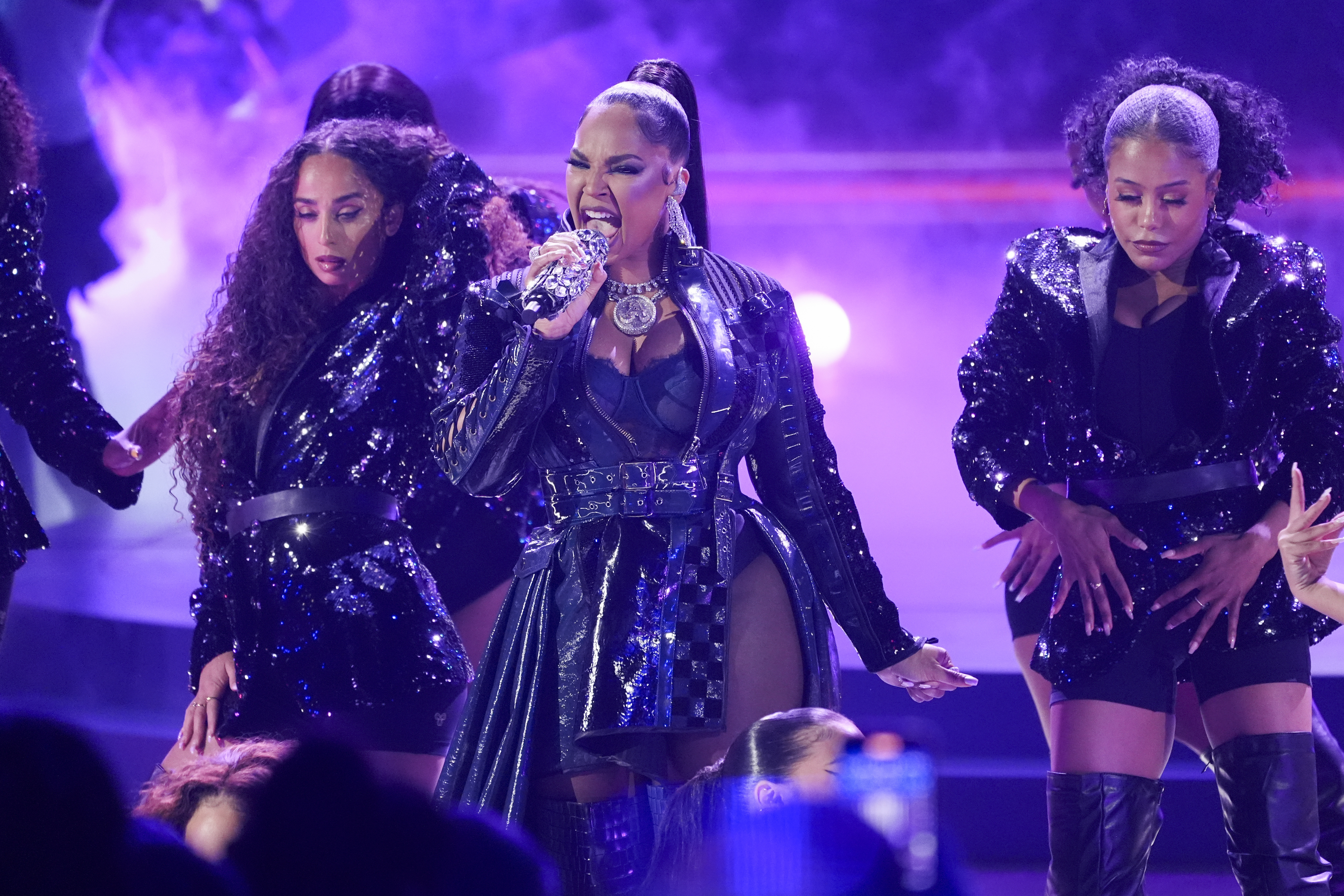
    The holiday season at City Hall was kicked off Thursday night with a lighting ceremony for what is officially called the “Philly Holiday Tree,” followed by live musical performances by Grammy-winning artists Ashanti and Lalah Hathaway.

    The 50-foot-tall, 75-year-old Concolor Fir, sourced from Stutzman Farms in New York, will be displayed on the north side of City Hall through Jan. 1. The tree is bigger and brighter this year, with a reimagined base that serves as a centerpiece and more than 6,000 lights.

    Mayor Cherelle Parker smiles alongside Santa during the annual City of Philadelphia Holiday Tree Lighting ceremony at City Hall on Thursday, Dec. 4, 2025.
    Attendees wait in line for drinks during the annual City of Philadelphia Holiday Tree Lighting ceremony at City Hall on Thursday, Dec. 4, 2025.
    Attendees with Grinch hats gather for the annual City of Philadelphia Holiday Tree Lighting ceremony at City Hall on Thursday, Dec. 4, 2025.
    Ashanti performs at the annual City of Philadelphia Holiday Tree Lighting ceremony at City Hall on Thursday, Dec. 4, 2025.

    Ashanti performs a medley during the BET Awards on Monday, June 9, 2025, at the Peacock Theater in Los Angeles.

    Mayor Cherelle L. Parker struck a replica Liberty Bell with a large hammer at 7:05 p.m. to signal the lighting of the tree.

    Cassie Donegan, the current Miss America, sang “White Christmas” and “Rockin’ Around the Christmas Tree.” The show was broadcast live on 6abc.

    The annual city-run event is part of a wider event schedule to ring in the holiday season in Philadelphia, organized by Welcome America LLC, which also organizes the Wawa Welcome America festival on July 4.

    There will be a free photo opportunity with Santa Claus at the Comcast Center on Dec. 13 from 11 a.m. to 4 p.m.

    Staff writer Robert Moran contributed to this article.

  • Grand jury rejects new mortgage fraud indictment against New York Attorney General Letitia James

    Grand jury rejects new mortgage fraud indictment against New York Attorney General Letitia James

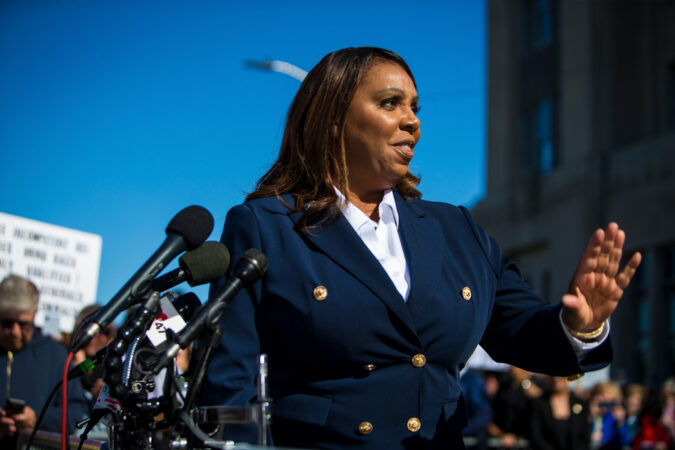
    NORFOLK, Va. — The Justice Department failed Thursday to secure a new indictment against New York Attorney General Letitia James after a judge dismissed the previous mortgage fraud prosecution encouraged by President Donald Trump, according to people familiar with the matter.

    Prosecutors went back to a grand jury in Virginia after a judge’s ruling halting the prosecution of James and another longtime Trump foe, former FBI Director James Comey, on the grounds that the U.S. attorney who presented the cases was illegally appointed. But grand jurors rejected prosecutors’ request to bring charges.

    It’s the latest setback for the Justice Department in its bid to prosecute the frequent political target of the Republican president.

    Prosecutors are expected to try again for an indictment, according to one person familiar with the matter who spoke on the condition of anonymity because they were not authorized to publicly discuss the case.

    James was initially charged with bank fraud and making false statements to a financial institution in connection with a home purchase in Norfolk, Va., in 2020. Lindsey Halligan, a former White House aide and Trump lawyer, personally presented the case to the grand jury in October after being installed as U.S. attorney for the Eastern District of Virginia amid pressure from Trump to charge Comey and James.

    James has denied any wrongdoing and accused the administration of using the justice system to seek revenge against Trump’s political opponents. In a statement Thursday, James said: “It is time for this unchecked weaponization of our justice system to stop.”

    “This should be the end of this case,” her attorney, Abbe Lowell, said in a statement. “If they continue, undeterred by a court ruling and a grand jury’s rejection of the charges, it will be a shocking assault on the rule of law and a devastating blow to the integrity of our justice system.”

    The allegations related to James’ purchase of a modest house in Norfolk, where she has family. During the sale, she signed a standard document called a “second home rider” in which she agreed to keep the property primarily for her “personal use and enjoyment for at least one year,” unless the lender agreed otherwise.

    Rather than using the home as a second residence, James rented it out to a family of three, allowing her to obtain favorable loan terms not available for investment properties, prosecutors alleged.

    It’s the latest example of pushback by grand jurors since the beginning of the second Trump administration. It’s so unusual for grand jurors to refuse to return an indictment that it was once said that prosecutors could persuade a grand jury to “indict a ham sandwich.” But the Justice Department has faced setbacks in front of grand juries in several recent cases.

    Even if the charges against James are resurrected, the Justice Department could face obstacles in securing a conviction against James.

    James’ lawyers separately argued the case was a vindictive prosecution brought to punish the Trump critic who spent years investigating and suing the Republican president and won a staggering judgment in a lawsuit alleging he defrauded banks by overstating the value of his real estate holdings on financial statements. The fine was later tossed out by a higher court, but both sides are appealing.

    The defense had also alleged “outrageous government conduct” preceding her indictment, which the defense argued warrants the case’s dismissal. The judge hadn’t ruled on the defense’s arguments on those matters before dismissing the case last month over the appointment of Lindsey Halligan as U.S. attorney.

    U.S. District Judge Cameron McGowan Currie took issue with the mechanism the Trump administration employed to appoint Halligan to lead one of the Justice Department’s most elite and important offices.

    Halligan was named as a replacement for Erik Siebert, a veteran prosecutor in the office and interim U.S. attorney who resigned in September amid Trump administration pressure to file charges against both Comey and James.

    The following night, Trump said he would be nominating Halligan to the role of interim U.S. attorney and publicly implored Attorney General Pam Bondi to take action against his political opponents, saying in a Truth Social post that, “We can’t delay any longer, it’s killing our reputation and credibility” and “JUSTICE MUST BE SERVED, NOW!!!”

    Comey was indicted three days after Halligan was sworn in by Bondi, and James was charged two weeks after that.

    The Justice Department had defended Halligan’s appointment but has also revealed that Bondi had given Halligan a separate position of “Special Attorney,” presumably as a way to protect the indictments from the possibility of collapse. But Currie said such a retroactive designation could not save the cases.

  • California activist gets jail time for taking chickens from Perdue Farms plant

    California activist gets jail time for taking chickens from Perdue Farms plant

    SANTA ROSA, Calif. — A California animal welfare activist who took four chickens from a major Perdue Farms poultry plant was sentenced to 90 days in jail after being convicted of felony conspiracy, trespassing and other charges.

    Zoe Rosenberg, 23, did not deny taking the animals from Petaluma Poultry but argued she wasn’t breaking the law because she was rescuing the birds from a cruel situation. A jury found her guilty in October after a seven-week trial in Sonoma County, an agricultural area of Northern California.

    Rosenberg was sentenced on Wednesday and ordered to report to the Sonoma County Jail on Dec. 10. She will serve the 90 days, but 60 of those may involve jail alternates, such as house arrest, the county’s district attorney’s office said. Rosenberg will also have two years of probation, and she is ordered to stay away from all Perdue facilities in the county.

    The activist with Direct Action Everywhere, or DxE, a Berkeley-based animal rights group, has said she does not regret what she did.

    “I will not apologize for taking sick, neglected animals to get medical care,” Rosenberg said following her conviction.

    The group named the birds — Poppy, Ivy, Aster, and Azalea — and placed them in an animal sanctuary.

    Petaluma Poultry has said that DxE is an extremist group that is intent on destroying the animal agriculture industry. The company maintains that the animals were not mistreated and said Wednesday’s sentencing upholds the rule of law.

    “We’re grateful that DxE has been held to account for its unlawful campaign –- training and paying staff to carry out dangerous, unauthorized intrusions onto private property,” Herb Frerichs, general counsel for Petaluma Poultry, said in a statement Thursday. “DxE’s actions show a reckless disregard for employee safety, animal welfare, and food security.”

    Rosenberg testified that she disguised herself as a Petaluma Poultry worker using a fake badge and earpiece to take the birds, and then posted a video of her actions on social media.

    Petaluma Poultry is a subsidiary of Perdue Farms — one of the United States’ largest poultry providers for major grocery chains.

    The co-founder of DxE was convicted two years ago for his role in factory farm protests in Petaluma.

  • Supreme Court lets Texas use congressional map favored by Trump

    Supreme Court lets Texas use congressional map favored by Trump

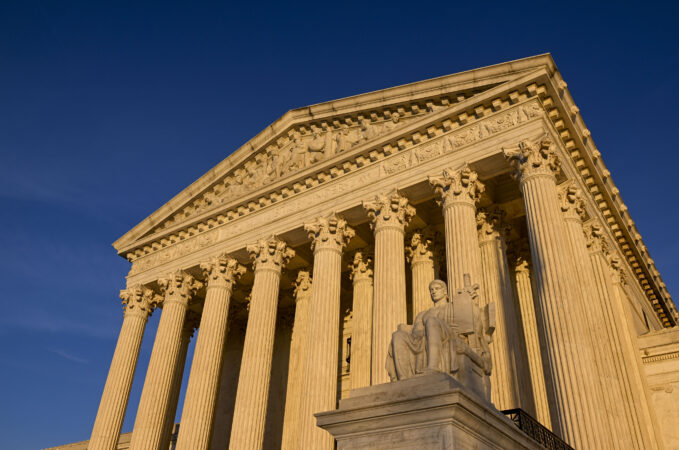
    WASHINGTON – Texas can use a congressional map drawn to give President Donald Trump and Republicans an advantage in the 2026 midterm elections, the Supreme Court said Dec. 4 in a decision that may help the GOP keep control of the U.S. House.

    An ideologically divided court paused a lower court’s ruling that the map likely discriminates against racial minorities by diluting the voting power of Hispanic and Black Texans.

    That opinion, which replaces a temporary freeze on the ruling issued by Justice Samuel Alito on Nov. 21, keeps the map in place for the midterm elections as litigation over the boundaries continues.

    The court said the order blocking the map from being used next year was improper because it came too close to the election.

    “The District Court improperly inserted itself into an active primary campaign, causing much confusion and upsetting the delicate federal-state balance in elections,” the majority wrote in a brief, unsigned opinion.

    The court’s three liberal justices dissented.

    Texas started redistricting push

    At the urging of the Trump administration, the GOP-controlled Texas legislature drew new district lines midway through the usual 10-year redistricting cycle, setting off a race among states to get in the game. Some of those other efforts are also being challenged in court.

    Despite the uncertainty about what the playing field will look like, Democrats remain favored to flip the House next year, according to nonpartisan handicappers at the University of Virginia’s Center for Politics.

    That could change, however, if the Supreme Court issues a ruling in a pending case from Louisiana that could open the door to more redistricting attempts in southern states. Depending on what the court says and how quickly the justices rule, Republicans could create multiple districts they’d be expected to win, analyst Kyle Kondik estimates.

    The new Texas map was designed to help Republicans win five more seats, although that’s not a sure thing.

    Republicans currently hold 25 of the state’s 38 seats in the U.S. House, where they have a slim majority. If Democrats seize control, they can block Trump’s legislative agenda and launch investigations into his administration.

    Racial gerrymandering?

    In redistricting battles, the Supreme Court has said federal courts can review whether race was improperly used to draw new lines, but not whether partisan politics was a factor.

    Civil rights groups and others challenging Texas’ new map argue it has fewer districts where Hispanic and Black voters together make up the majority, diminishing their voting power.

    “This is as stark a case of racial gerrymandering as one can imagine,” lawyers for some of the challengers said in a filing.

    A three-judge panel in Texas that reviewed the map ruled 2-1 that Texas Republican Gov. Greg Abbott directed the legislature to use race to redraw the lines following a demand from the Trump administration that discussed the racial makeup of some districts.

    “The public perception of this case is that it’s about politics. To be sure, politics played a role in drawing the 2025 Map. But it was much more than just politics,” Judge Jeffrey Brown, who was appointed to the federal bench by Trump in 2019, wrote. “Substantial evidence shows that Texas racially gerrymandered the 2025 Map.”

    In an irate and unusually personal dissent, Judge Jerry Smith – who was appointed by former President Ronald Reagan – called the decision “the most blatant exercise of judicial activism that I have ever witnessed.”

    Texas says race wasn’t main factor

    Texas’ attorneys told the Supreme Court that partisanship – not race – drove the redistricting. And the lower court’s ruling has caused chaos because candidates have already gathered signatures and filed applications to run in the new districts, they argued.

    Weighing in on behalf of Texas, the Justice Department told the Supreme Court that the lower court “misconstrued” the direction the administration gave the state.

    “Indeed, the record here affirmatively shows that the 2025 map was drawn in a race-blind manner,” the Justice Department wrote in a filing.

    The civil rights groups and voters challenging the map said the lower court’s decision was based on a nine-day hearing that included dozens of witnesses and hours of footage of legislators and Abbott discussing their motives.

    The challengers also said the impending December 8 filing deadline for Texas candidates running in the spring primary is not a reason to allow the new map to be used.

    Texas created its own emergency by unnecessarily choosing to create new maps, they told the Supreme Court, and “can’t insulate unconstitutional conduct from judicial review by deliberately timing that conduct close to an election.”

  • Protesters decry ICE arrests at Philly courthouse as sheriff’s backers say she’s been unfairly blamed

    Protesters decry ICE arrests at Philly courthouse as sheriff’s backers say she’s been unfairly blamed

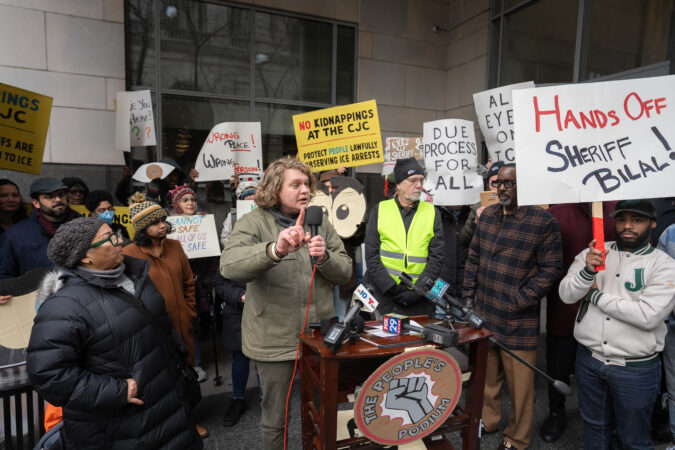
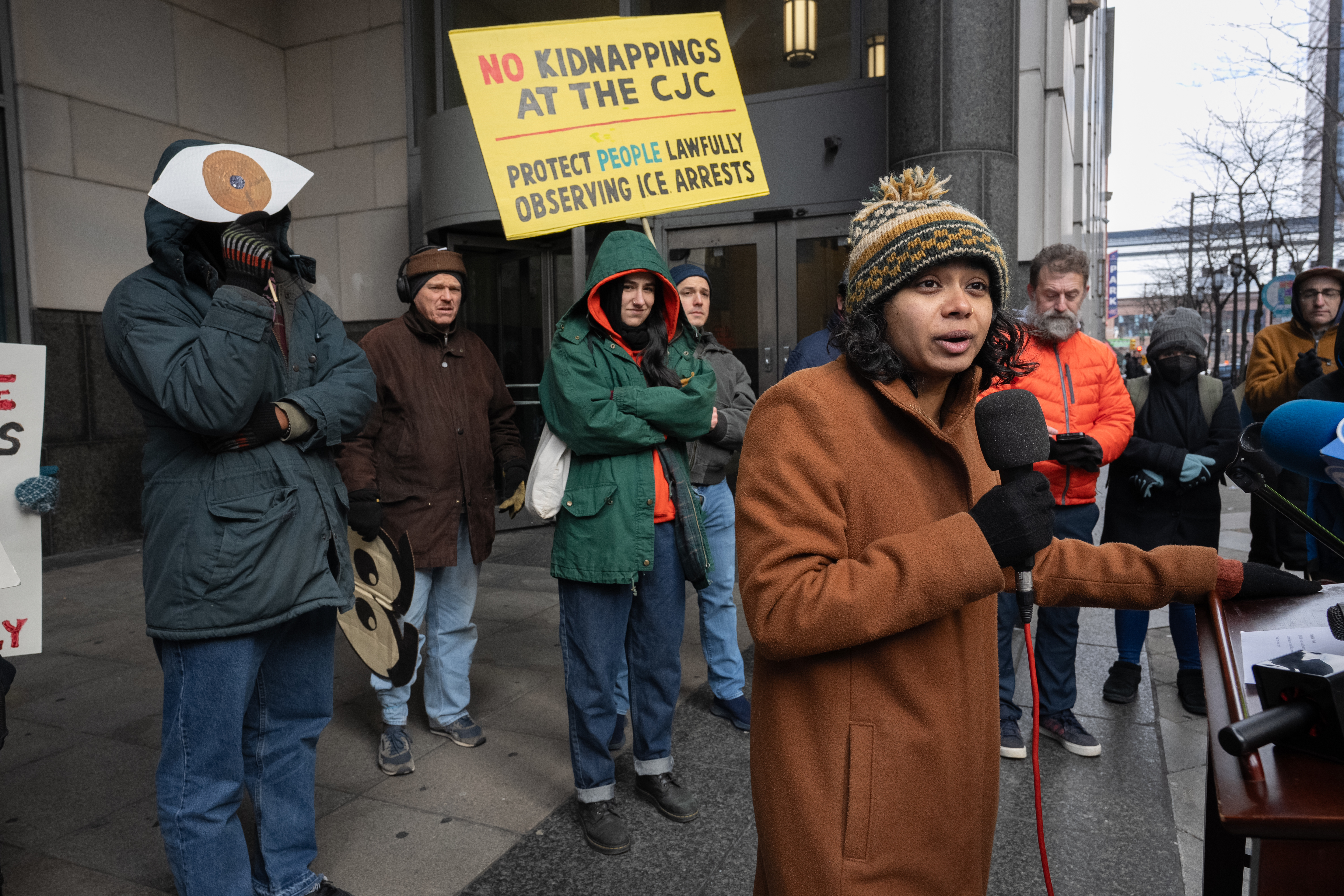
    Immigration activists carried a worn wooden lectern to the Criminal Justice Center on Thursday, demanding that Sheriff Rochelle Bilal step up and explain why she allows ICE agents in the courthouse.

    She didn’t appear, and after a few minutes lead protest speaker Aniqa Raihan stepped away from the microphone, highlighting the sheriff’s absence by leaving the podium empty, save for the recorded chirps of crickets.

    The quiet didn’t last.

    As Raihan resumed speaking, she was quickly interrupted by counterdemonstrators, supporters of the sheriff who said No ICE Philly had unfairly maligned her. Her supporters said the sheriff could bar ICE from the courthouse only upon a judge’s order ― initiating a testy debate.

    “It’s the judges that have to actually give the order,” said Andy Pierre, CEO of Fox & Lion Communication, who said he helped run the sheriff’s campaign for office. ”Her coming down here, and taking time away from managing her office, to come down here for this show …”

    Other Bilal backers, at least one wearing a campaign shirt, also accused the immigration advocates of targeting the wrong person, holding up signs that said, “Hands off Sheriff Bilal!”

    Aniqa Raihan, an organizers with No ICE Philly, speaks at a protest Thursday at the Criminal Justice Center.

    The No ICE Philly demonstrators responded that the sheriff is in charge of courthouse security. And that she does not report to Philadelphia judges.

    No ICE Philly has castigated Bilal, saying that by not barring U.S. Immigration and Customs Enforcement from the property — as judges and lawmakers in some other jurisdictions have done — she has helped enable the arrest of at least 90 immigrants who were trailed from the courthouse and arrested on the sidewalk outside.

    Three more people were arrested this week, activists said.

    “Sheriff Bilal, we are watching,” Raihan said.

    Conflicting views at Philly courthouse

    In response to a request for comment ahead of the protest, the sheriff’s office said in a statement that Bilal had already made her position clear:

    “The Sheriff’s Office does not cooperate with ICE, does not assist in ICE operations, and does not share information with ICE. That policy has not changed and will not change.”

    The statement reiterated that deputies are prohibited from assisting ICE in courthouse arrests. The department’s priority is the safety of immigrants, residents, observers, and everyone entering the court system, it said.

    Meanwhile, the statement said, the office would continue to protect the public, enforce its policies, and ensure that “no one is targeted or harmed because of their immigration status.”

    Protesters say that is exactly what has been happening, that the sheriff has allowed ICE to turn the Criminal Justice Center into “a hunting ground.”

    The issue has spurred contention between activists and lawyers who say the courthouse must be a place to seek and render justice ― not to target immigrants ― and federal authorities who insist that making arrests there is legal, safe, and logical.

    No ICE Philly says agents have been allowed to essentially hang out at the Center City courthouse, waiting in the lobby or scouring the hallways, then making arrests outside, a pattern they say has been repeated dozens of times since President Donald Trump took office in January.

    Asked for comment, an ICE spokesperson in Philadelphia said: “ICE respects the rights of individuals to peacefully protest.”

    Contention over courthouses

    Activists noted that many people who go to the courthouse are not criminal defendants ― they are witnesses, crime victims, family members, and others who are already in diversionary programs.

    Other jurisdictions have acted to bar or restrict ICE activity at their courthouses.

    In Connecticut last month, state lawmakers passed a bill to bar most civil immigration arrests at courthouses. In Chicago, the top Cook County judge barred ICE from arresting people at courthouses. And in New York, a federal judge dismissed a Trump administration challenge to a law that barred the immigration arrests of people going into and out of courthouses.

    Nearly 11 months into Trump‘s second presidency, courthouses have become disputed territory as his administration pursues ever-more-aggressive arrest and deportation policies.

    Under President Joe Biden, ICE agents were allowed to take action at or near a courthouse only if the situation involved a threat to national security, an imminent risk of death or violence, the pursuit of someone who threatened the public safety, or a risk of destruction of evidence.

    The Biden restrictions on ICE were nullified the day after Trump took office. New guidance said agents could conduct enforcement actions in or near courthouses ― period.

    The only conditions were that agents must have credible information that their target would be present and that the local jurisdiction had not passed laws barring such enforcement.

    ‘We want to keep our city’

    On Thursday, about 60 demonstrators gathered outside the Center City courthouse, where they said Bilal must do more to protect immigrants.

    The demand comes as ICE has dramatically expanded its presence and visibility in the Philadelphia region and across the United States. More than 65,000 immigrants are now being held in federal detention, up dramatically since Trump took office.

    “We want to keep our city, not a city of fear, but a city of love,” said Elena Emelchin Brunner, immigrant rights organizer with Asian Americans United.

    Imam Salaam Muhsin, a community leader, stepped up to speak as No ICE Philly opened the lectern to all. He said the climate around ICE had become “terrorizing” and must be addressed.

    “What we’re doing right here, we’re doing it in a kind of ugly way,” he said. “And I say ugly because we haven’t come together. We still are stigmatizing one person, and that’s the sheriff. That’s unfair to her.”

  • Speaker Johnson pleads with Republicans to keep concerns private after tumultuous week

    Speaker Johnson pleads with Republicans to keep concerns private after tumultuous week

    WASHINGTON — House Speaker Mike Johnson is imploring his fellow Republicans to stop venting their frustrations in public and bring their complaints to him directly.

    “They’re going to get upset about things. That’s part of the process,” Johnson told reporters Thursday. “It doesn’t bother me. But when there is a conflict or concern, I always ask all members to come to me, don’t go to social media.”

    Increasingly, they’re ignoring him.

    Cracks inside the GOP conference were stark this week as a member of Johnson’s own leadership team openly accused him of lying, rank-and-file Republicans acted unilaterally to force votes and a leadership-backed bill faltered. It’s all underscored by growing worries that the party is on a path towards losing the majority next year.

    “I certainly think that the current leadership and specifically the speaker needs to change the way that he approaches the job,” GOP Rep. Kevin Kiley of California said on Thursday.

    Kiley, who has grown vocally critical of Johnson after the GOP’s nationwide redistricting campaign backfired in California, said that the speaker has been critical of rank-and-file Republicans, so “he needs to be prepared to accept any criticism that comes with the job.”

    “And I think, unfortunately, there’s been ample reason for criticism,” he added.

    ‘Why do we have to legislate by discharge petitions?’

    For the first part of 2025, Johnson held together his slim Republican majority in the House to pass a number of President Donald Trump’s priorities, including his massive spending and tax cut plan.

    But after Johnson kept members out of session for nearly two months during the government shutdown, they returned anxious to work on priorities that had been backlogged for months — and with the reality that their time in the majority may be running out.

    First was a high-profile discharge petition to force the vote on releasing the Jeffrey Epstein files, which succeeded after it reached the 218-signature threshold. Other lawmakers are launching more petitions, a step that used to be considered a major affront to party leadership.

    “The discharge petition, I think, always shows a bit of frustration,” said GOP Rep. Dusty Johnson.

    Another discharge petition on a bill that would repeal Trump’s executive order to end collective bargaining with federal labor unions reached the signature threshold last month, with support from seven Republicans.

    And this week, GOP Rep. Anna Paulina Luna of Florida brought a long-anticipated discharge petition for a bill to bar members of Congress from trading stock. A number of Republicans have already signed on, in addition to Democrats.

    “Anxious is what happens when you get nervous. I’m not nervous. I’m pissed,” Luna wrote on social media late Thursday, responding to leadership comments that she was overly anxious.

    GOP Rep. Nancy Mace of South Carolina signed both Luna’s petition and the one to release the Epstein files. She told reporters Thursday that she expressed her frustrations directly to Johnson in a phone call, and also in what she described as “a deeply personal, deeply passionate letter, that we are legislating by discharge petition.”

    “We have a very slim majority, but I want President Trump’s executive orders codified,” Mace said. “I want to see his agenda implemented. Why do we have to legislate by discharge petitions?”

    Johnson’s own leadership team going after him

    At the center of Johnson’s pleas for members to bring concerns to him privately instead of on social media is the chairwoman of House Republican leadership, New York Rep. Elise Stefanik.

    Angered that a provision she championed wasn’t included in a defense authorization bill, Stefanik blasted Johnson’s claims that he wasn’t aware of the provision as “more lies from the Speaker.” She conducted a series of media interviews criticizing Johnson, including one with The Wall Street Journal in which she said he was a “political novice” who wouldn’t be re-elected speaker if the vote were held today.

    Johnson told reporters Thursday that he had a “great talk” with Stefanik the night before.

    “I called her and I said, ‘why wouldn’t you just come to me, you know?’” Johnson said. “So we had some intense fellowship about that.”

    Asked if she had apologized for calling him a liar, Johnson said: “Um, you ask Elise about that.”

    Illinois GOP Rep. Mary Miller released a statement Thursday providing support for Johnson, saying that while there are differences among members “our mission is bigger than any one individual or headline.”

    Democrats, who have had leadership criticisms of their own, have reveled in the GOP’s disarray. House Republican leaders attempted to muscle through an NCAA-backed bill to regulate college sports after the White House endorsed it, before support within Republican ranks crumbled. Some GOP lawmakers pointedly said they had bigger priorities before the end of the year.

    “It’s not that Congress can’t legislate, it’s House Republicans that can’t legislate. It’s the gang that can’t legislate straight. They continue to take the ‘my way or the highway’ approach,” said House Democratic Leader Hakeem Jeffries.

    Underlying GOP unease about 2026

    All eyes in the U.S. House were on a special election Tuesday night in a Tennessee district that a Republican had won in 2024 by nearly 21 percentage points, with Trump carrying the area by a similar margin.

    Republicans hoped the contest would help them regain momentum after losing several marquee races across the country in November. Democrats, meanwhile, argued that keeping the race close would signal strong political winds at their backs ahead of next year’s midterms, which will determine control of both chambers.

    Republican Matt Van Epps ultimately won by nearly 9 percentage points.

    “I do think to have that district that went by over 20 points a year ago be down to nine, it should be a wake up call,” said GOP Rep. Don Bacon of Nebraska.

    He argued that Republicans need “to get some economic progress, like immediately,” adding that “the president and his team have got to come to grips” that tariffs are not driving the economic growth Americans are feeling.

    “I just feel like they’re going to have to get out of their bubble,” Bacon said of the White House. “Get out of your bubble. The economy needs improving. Fix Ukraine and we do need a temporary health care fix.”

    Bacon is among a growing number of House Republicans who have announced they will retire after this term. Republican Rep. Marjorie Taylor Greene abruptly declared last month that she would resign in January, citing multiple reasons, including that “the legislature has been mostly sidelined” this year.

    Those retirements add to the GOP’s challenge in holding the House, as the party must now defend more open seats. Republicans have also seen a redistricting battle — sparked by Trump’s pressure on Texas Republicans and then more states — backfire in part. In November, California voters handed Democrats a victory by approving a new congressional map.

    “That’s living in a fantasy world if you think that this redistricting war is what’s going to save the majority,” said Kiley, now at risk of losing his seat after redistricting in California.

    He added: “I think what would make a lot bigger impact is if the House played a proactive role in actually putting forward legislation that matters.”

  • National Guard can stay in D.C. for now, appeals court says

    National Guard can stay in D.C. for now, appeals court says

    The Trump administration will be allowed to continue its National Guard deployment in D.C. at least temporarily, pending another appeals court decision, a panel of U.S. Court of Appeals judges said Thursday.

    The ruling means the deployment of troops to the nation’s capital could persist beyond Dec. 11, the date a lower-court judge had previously set as a deadline for the administration to halt the mission.

    Judges with the D.C. Circuit of the U.S. Court of Appeals granted an administrative stay in the case, meaning the drawdown of troops in the capital will be delayed at least until the appeals court makes an additional ruling. The court emphasized that Thursday’s decision had nothing to do with the merits of the Trump administration’s arguments in the case.

    “The purpose of this administrative stay is to give the court sufficient opportunity to consider the motion for stay pending appeal and should not be construed in any way as a ruling on the merits of that motion,” the judges wrote.

    The appeals court ruling comes the week after an attack in which prosecutors say a man targeted National Guard members, killing one and critically injuring another in a busy downtown area of D.C. blocks from the White House. For Trump administration officials, the attack – allegedly carried out by a lone gunman who was resettled in the United States from his native Afghanistan after work for a CIA-backed counterterrorism squad – only deepened their resolve to keep the troops in the capital city.

    Trump called for an additional 500 troops; South Carolina’s governor said this week he would send up to 300 members of his state’s National Guard in response.

    “Our warriors are strong and we will not back down until our capital and our cities are secure,” Pentagon press secretary Kingsley Wilson said at a news briefing Tuesday.

    For D.C. Attorney General Brian Schwalb, who sued the Trump administration in September over the National Guard deployment, the shooting and its aftermath offered further proof that the deployment of troops was ill-advised and unsafe. D.C. police officers have since paired up with National Guard troops for the troops’ safety, potentially diverting officers from other public safety tasks, he said in a court filing this week.

    “The deployment impinges on the District’s home rule, requires the diversion of scarce police resources, and exposes both the public and Guard members to substantial public safety risks, as Defendants themselves acknowledged at the outset of the deployment, and as the horrific attack on two National Guard members last week tragically underscored,” Schwalb wrote.

    President Donald Trump deployed the D.C. National Guard to city streets on Aug. 11 as part of a broader crime crackdown he initiated in the city. He also took temporary control of the D.C. police department and launched a surge of federal law enforcement into D.C. neighborhoods. Multiple Republican governors heeded Trump’s call for reinforcements and sent troops from their National Guards to the District. As of Wednesday, about 2,300 National Guard members were stationed in the city – about 100 more than the previous day.

    The National Guard members have stood watch at Metro stations and picked up trash at national parks. They also carry weapons and have been instructed to use them only as a last resort.

    Unlike in states, where governors control their National Guards, the president is commander in chief of the D.C. National Guard – a role the administration argues gives Trump vast power over the deployment and legally authorizes his actions in the District. But Schwalb, in his lawsuit, has argued that the president’s power over the Guard has limits. Schwalb also has alleged that the troops in D.C. have been illegally engaged in law enforcement, in violation of a federal law that prohibits military troops from engaging in domestic policing.

    In November, U.S. District Judge Jia M. Cobb sided with D.C. in a preliminary ruling, writing that the National Guard deployment was illegal and that Trump lacked the authority to activate the Guard for the mission. Cobb ordered the Trump administration to halt the deployment in D.C. while litigation continued over whether the troops should be permanently withdrawn. However, she delayed her order from going into effect until Dec. 11 to give the Trump administration time to appeal.

    In response, the administration asked an appeals court for an emergency ruling to allow the deployment to continue while litigation continues, arguing in court documents that Cobb’s order “impinges on the President’s express statutory authority as Commander-in-Chief of the D.C. National Guard and impermissibly second-guesses his successful efforts to address intolerably high crime rates in the Nation’s capital.” The appeals court on Thursday did not rule on that request; the administrative stay means the deployment can continue while the appeals court considers it.

    The Trump administration has argued that the troops have not been engaged in city law enforcement and merely deter crime through their presence, freeing up police for other tasks.

    Questions of the mission’s safety implications have taken on new weight in the aftermath of last week’s attack, but each party in the lawsuit has argued that the city would be safer if the court sided with them.

    A group of retired senior military officers and the Vet Voice Foundation, a nonpartisan, nonprofit organization representing veterans and their supporters, filed a brief in the appeals court that they said was “in support of neither party.” They argued that the use of the National Guard in D.C. “threatens to undermine the apolitical reputation of the military as an institution, places service members in situations for which they are not specifically trained, and pulls the Guard away from its critical missions.”

    But attorneys general from 24 Republican-led states – including some that sent their troops to D.C. – argued that crime is high in D.C. and while the mission “has already produced strong results,” there is more to be done. Violent crime is down 28 percent in D.C. compared to last year, although crime in the city began to fall steeply well over a year before Trump surged federal law enforcement in August.

    “Danger still lingers,” the states’ attorneys general wrote in their brief, filed in support of the Trump administration. “Just last week, an Afghani national committed a heinous terror attack, shooting two National Guardsmen at close range and murdering one.”

    In arguing that the Guard troops should stay, they also cited a few actions that Guard members had taken to keep the city safe.

    “National Guard troops have stopped at least one fight near the metro,” they wrote, “helped provide first aid to elderly residents of the district, and aided in the successful search for a missing child.”

  • Library Company shareholders have voted for its merger with Temple University

    Library Company shareholders have voted for its merger with Temple University

    The proposed merger of Temple University and the Library Company of Philadelphia moved closer to reality this week with a nod from the library’s shareholders.

    Shareholders voted Tuesday 174 to 33 in favor of the deal, and the action was followed Thursday with approval by the executive committee and finance and investment committees of Temple’s board of trustees.

    Its new name will be the Library Company of Philadelphia at Temple University, a division of Temple Libraries.

    But for that to happen, they must get approval for the merger from the Pennsylvania attorney general’s office and Philadelphia Orphans’ Court.

    “We are delighted to help preserve one of Philadelphia’s most important educational and historical institutions through this partnership,” Temple President John Fry said in a statement. “This will help bring stability to the Library Company while also ensuring that its legacy does not just live on but also thrives. For Temple, this is also an opportunity to further enrich our academic and research resources.”

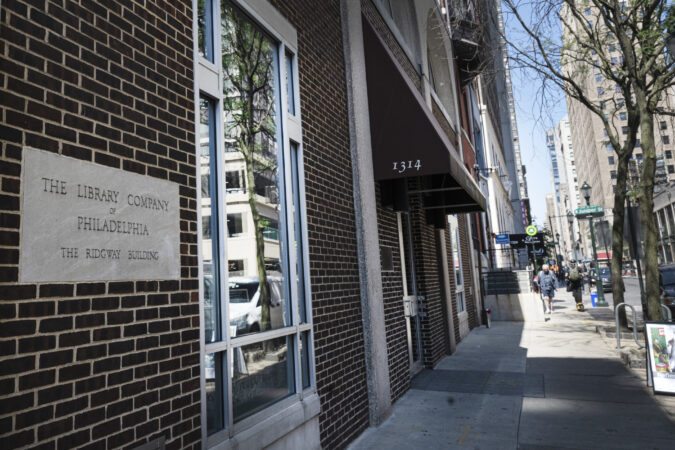
    Not much will change for the Library Company’s day-to-day operations, at least immediately. It will remain at its 1314 Locust Street location in Center City and keep its collections, staff, identity, mission and programming, Temple said. It will operate as its own division within Temple Libraries and maintain its own board of visitors.

    The Library Company will gain access to Temple’s research arm, grant-writing help, facilities and administrative functions, the university said.

    “The Library Company has been an important resource for Philadelphians for nearly 300 years, ever since Benjamin Franklin first envisioned a shared library as a tool for advancing the self-education of his circle of artisans and tradesmen,” John Van Horne, Library Company director, said in a statement. “I am certain that Franklin would heartily approve of our expanded education mission over the last few centuries, and I have no doubt that he would also approve of this partnership with a university dedicated to serving his city and beyond.”

    The move comes after the Library Company, faced with a string of operating deficits, began exploring merger possibilities with a number of other institutions. Financial data given to shareholders showed substantial operating deficits for most years since 2017, as well as projections for deficits continuing into 2030.

    Officials estimated that in order to remain independent, the company would need to raise $23 million to add to existing endowment.

    Van Horne previously said that raising that kind of money would be “an incredibly steep hill to climb, and probably unrealistic.”

    The library houses more than 500,000 rare books, manuscripts, prints, photographs, works of art, ephemera, and other objects. It boasts items once owned by Benjamin Franklin and William Penn, and has a concentration in African American and women’s history.

    Some shareholders strongly preferred that the library ― founded in 1731 as the first subscription library in the U.S. ― would have remained independent, even as they recognized the current financial bind.

    Shareholder Joel Gardner was philosophical about the merger.

    “I think it’s the only solution the Library Company could find. We all have to keep our fingers crossed that it works out,” he said while declining to add how he voted.

    It didn’t seem likely that the Library Company would be able to raise the money required to remain independent, he said, “in a city that is not notable for having a large number of philanthropists and depends on just a few of them.”

    Michelle Flamer, a shareholder who in an Inquirer opinion piece mourned the impending loss of the company’s “historical identity,” said Thursday that the deal “seemed like it was a fait accompli, and there was not very much we could do about it.”

    The Library Company also will be incorporated into the university’s fundraising plans, Temple said, though the merger agreement made no promises. It calls for including the Library Company in Temple’s upcoming capital campaign, “with the goal of raising $25 million in new endowed funds to permanently and exclusively support the LCP Division.”

    “This is especially significant as the Library Company will soon celebrate its 300th anniversary in 2031, which presents a major opportunity for fundraising,” the university said in its announcement.