Category: News

Latest breaking news and updates

  • Director of Penn State Cancer Institute resigns after Spotlight PA investigation about chemo errors, ‘toxic’ leadership

    Director of Penn State Cancer Institute resigns after Spotlight PA investigation about chemo errors, ‘toxic’ leadership

    This story was produced by the State College regional bureau of Spotlight PA, an independent, nonpartisan newsroom dedicated to investigative and public-service journalism for Pennsylvania. Sign up for Talk of the Town, a daily newsletter of local stories that dig deep, events, and more from north-central PA, at spotlightpa.org/newsletters/talkofthetown.

    Raymond Hohl, the director of the Penn State Cancer Institute, resigned Friday following a Spotlight PA investigation into his care of patients and leadership of the center.

    Hohl made the decision “thoughtfully and with the best interests of the Institute in mind,” according to an internal email, which was signed by Karen Kim, dean of the Penn State College of Medicine, and Michael Kupferman, CEO of Penn State Health. The email says he will remain a faculty member of the university’s medical college.

    Hohl started as director in 2014 with the goal of achieving National Cancer Institute designation, a prestigious federal recognition, for the center based in the Milton S. Hershey Medical Center. The university invested hundreds of millions of dollars in the cancer center in pursuit of designation, records show.

    A Spotlight PA investigation published Nov. 20 found that Hohl was the subject of a series of damning internal reviews between early 2022 and mid-2023. The reviews found a series of problems with Hohl’s care of at least 10 patients. His sloppy recordkeeping caused multiple errors. Several of Hohl’s patients received extra doses of chemotherapy by accident. Others faced unexplained delays in changing their treatment, or having scans done to check whether their cancer had progressed, according to documents obtained by the newsroom.

    Penn State’s reviews also concluded that Hohl perpetuated a toxic culture of fear and mistrust that chewed up doctors and researchers, who left the organization in droves during this time period. Getting federal designation was Hohl’s top priority, but after nearly a decade under his leadership and some $410 million invested, the cancer institute was “significantly behind where it needs to be,” a December 2022 review found. Records show that Hohl disputed the findings and offered a rosier assessment at the time.

    Penn State Health’s former chief executive officer and former chief operating officer, as well as the hospital’s then-chief medical officer and two medical school deans, including Kim, had extensive knowledge of these problems, records show.

    In 2023, leaders privately considered removing Hohl as director of the cancer institute, internal records show. The doctor kept his position and was placed on a two-month performance improvement plan, under which he was asked to adhere to national guidelines for cancer treatment, demonstrate active listening skills, and show that he was a team player, among other goals.

    In May 2024, Penn State quietly removed Hohl’s oversight of clinical care, a move the Penn State Health spokesperson declined to explain in September 2025. Hohl was still seeing patients as of early 2025.

    Following publication of Spotlight PA’s investigation, Penn State Health said in a statement: “We believe the reporting by this outlet is based almost entirely on materials more than two years old and it does not provide an accurate representation of Penn State Cancer Institute (PSCI) as it exists today. During the last two years — we have made significant changes to PSCI’s leadership, staffing, operations, clinical capabilities and research processes.”

    According to the internal announcement, institute deputy director Jeff Peters will be the interim director of the cancer center.

    SUPPORT THIS JOURNALISM and help us reinvigorate local news in north-central Pennsylvania at spotlightpa.org/donate. Spotlight PA is funded by foundations and readers like you who are committed to accountability and public-service journalism that gets results.
  • What brings customers to Philly’s live poultry stores

    What brings customers to Philly’s live poultry stores

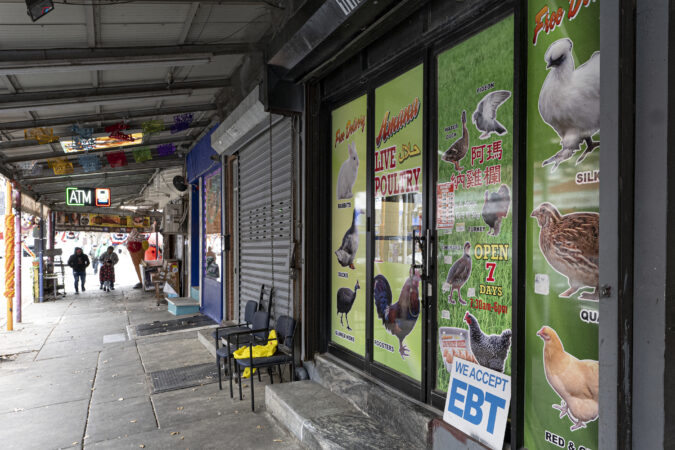
    The sounds of clucks and tiny eyes looking through metal cages are part of the Italian Market background, as some stores sell live poultry.

    Citywide, chickens, ducks, quails, and other animals are kept alive until purchase, only leaving the store when becoming someone’s food source.

    Struggling to understand the dynamics of the live poultry business, a reader asked Curious Philly, The Inquirer’s forum for questions about the city and region: Who is buying these live chickens, where do they come from, and where are they slaughtered?

    » ASK US: Have something you’re wondering about the Philly region? Submit your Curious Philly question here.

    The Pennsylvania Department of Agriculture oversees what is called the live bird marketing system, a structure that involves farms, distributors, and stores.

    About 500,000 birds weekly are sent to live poultry stores across Pennsylvania, New York, and New Jersey, according to an article published in the Delaware Journal of Public Health in 2021.

    Statewide there are 17 live bird markets, according to the Pennsylvania Department of Agriculture. Most are in the Philly area, but there is no state registry of the markets.

    In the city, the health department licenses and inspects these facilities. The birds are subjected to the same regulations to curb the transmission of avian influenza as all poultry producers in Pennsylvania, a spokesperson for the Pennsylvania Department of Agriculture said.

    As the public health journal noted, live poultry markets are more common in areas like Philadelphia with significant and growing immigrant populations.

    Alex Lemus, 29, and Juan Amador work at one of South Philadelphia’s live poultry stores. They weren’t authorized to speak for their workplace, but said they put effort into making the chickens feel as comfortable as they can.

    “We take good care of them; we give them corn, and they grow up free-range,” said Lemus, who has been working in the live poultry industry for seven years.

    The birds sell fast, he said, pointing to 16 long metal cages, each with at least 10 chickens and ducks inside. “At least 80 people per day come to buy, mostly Asian and Latino, and that is not counting the holidays,” Amador said.

    Among quacks and clucks, longtime customer Nu Aing walked into the store. Stepping over a lone feeder and some light brown liquid residue on the floor, she selected six chickens.

    As one worker swept the floor, another weighed the chosen chickens and placed them into a box for Amador to take to the back room. The chickens clucked loudly.

    Aing drove an hour and a half from the suburbs because, she said, the chickens here are tender and better for recreating her family’s Vietnamese cuisine.

    “Meat is better than the grocery store for soup, but they are good in anything,” Aing said. Around the Vietnamese New Year, “a lot of people are here; the line is long.”

    In the back room, the chickens were killed and their bodies plucked and placed in white plastic bags, at Aing’s request.

    “It is killed inside in 30 seconds,” Lemus said. “This part of the job was horrible when I started, but you get used to it over time.”

    Within 20 minutes, the store is packed with at least 15 people waiting for their orders.

    Guatemalan native Carlos Baten, 42, sent pictures of the birds to his family to help him pick the best option. He asked for his chicken to be cut into pieces for a chicken and vegetable soup that would feed three people.

    “The freshness of the meat is unmatched,” Baten said. “They just feel like they are healthier and fed with fewer chemicals.”

    The idea of eating a healthier type of meat also brought Guatemalan native Mayra González, 35, to the store with her 2-year-old daughter. But as soon as González placed her order, she fled to wait outside.

    “I don’t like the scent inside, it smells like chicken feed,” González said. But the meat is “way better than the one at the grocery store,” she said.

    To her, live poultry meat feels “silky,” and can feed more people for less. The cost of each chicken depends on the weight, but two chickens are enough to feed 11 people, González said.

    “I feel bad for them, but since you can’t see when they are sacrificed, it’s the same as when you buy them at the grocery store,” González said.

  • Landlord Phil Pulley transferred ownership of West Philly apartments days before suspected arson, records show

    Landlord Phil Pulley transferred ownership of West Philly apartments days before suspected arson, records show

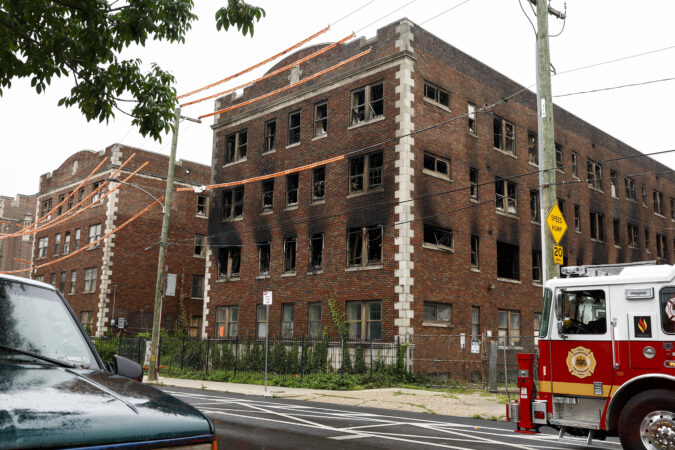
    Two days before an apartment complex once hailed as a shining example of Philadelphia’s urban renewal went up in flames, its owner, embattled city landlord Phil Pulley, transferred the vacant property to a New York investment firm.

    Federal investigators are treating the fire as arson.

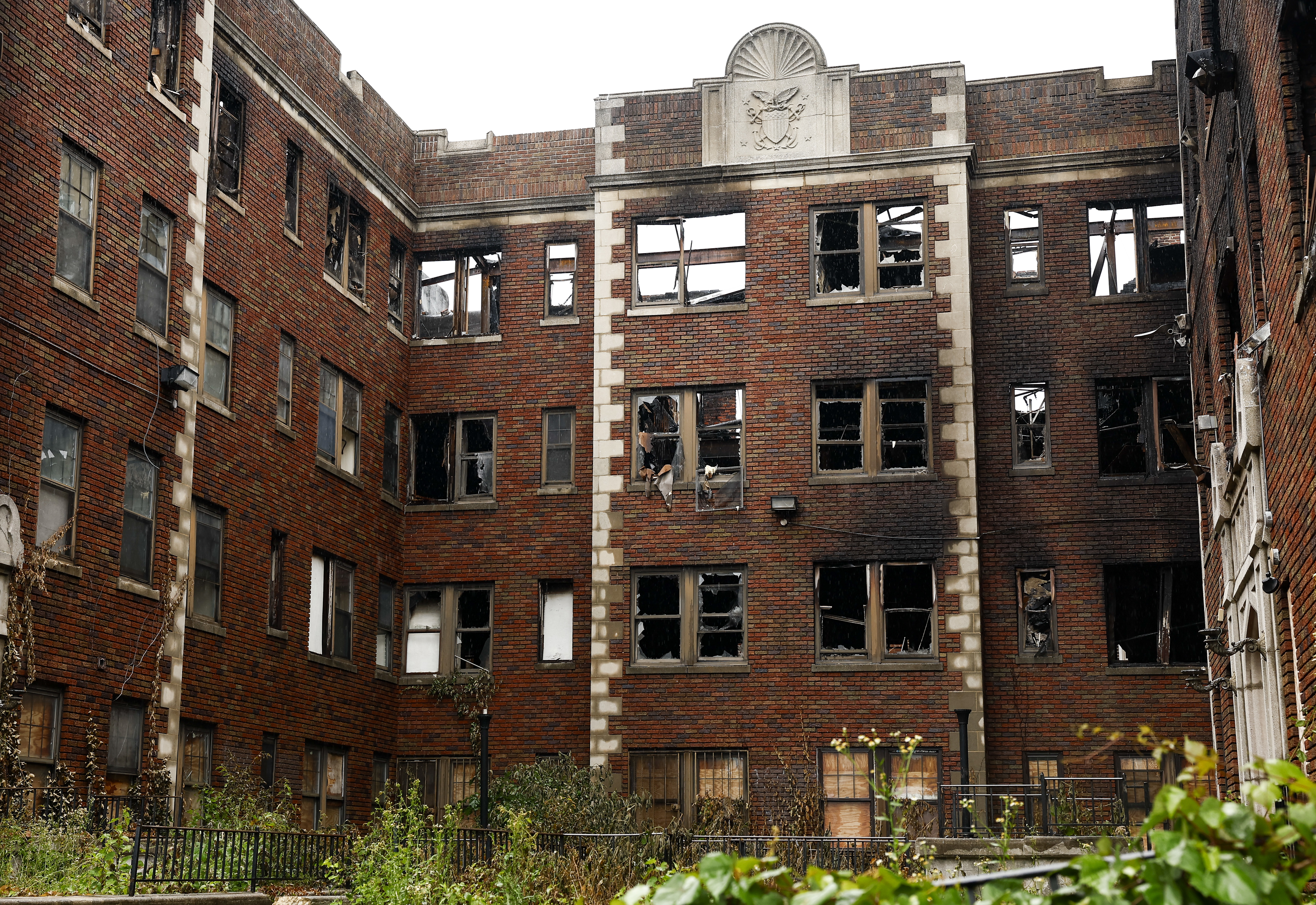
    The property’s new owner, Aureus Special Asset Management, which records show is linked to investors in South Korea and Saudi Arabia, is now demolishing the West Philadelphia structure, known as Admiral Court.

    Earlier this year, Pulley faced a $29.4 million foreclosure over unpaid debts linked to a fizzled redevelopment of Admiral Court and an adjacent complex, Dorsett Court. Instead of seeing investors foreclose on the property, he agreed to transfer both apartment complexes to his lenders.

    Pulley signed the deed for that transaction on June 5. Less than 48 hours later, a fire broke out at the vacant building at 48th and Locust Streets, drawing more than 150 firefighters and support personnel to the scene. About 750 neighbors temporarily lost power. No injuries were reported.

    The deed transfer for Admiral Court did not become a public record until late September, when it was sent to the Philadelphia Records Department and finalized.

    West Philadelphia Councilmember Jamie Gauthier, who in June called Pulley a “slumlord” and blamed him for allowing the buildings to rot, on Friday blasted the deal.

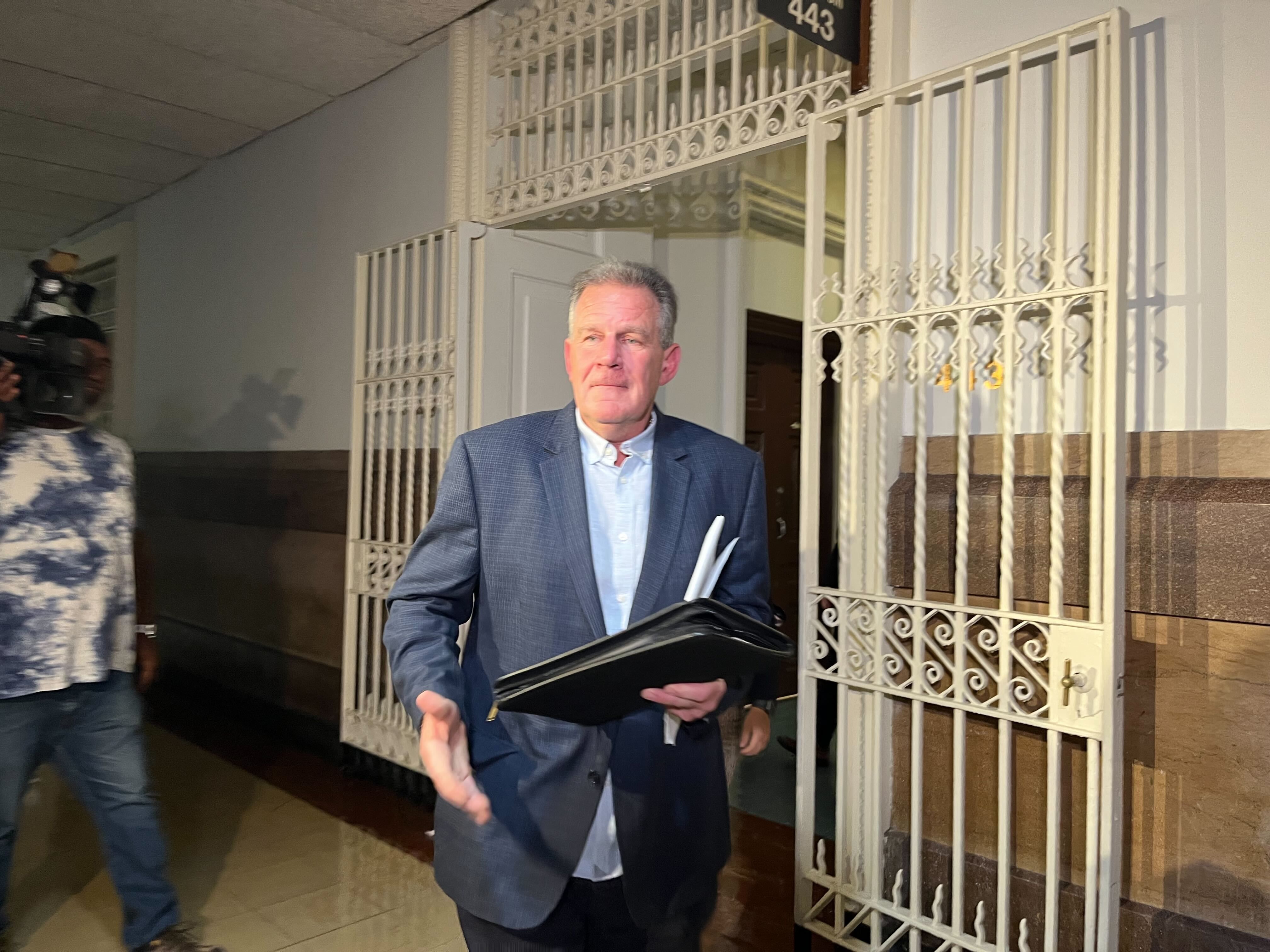
    Phil Pulley outside a courtroom in September 2022 following the partial collapse of one of his buildings, Lindley Towers, in the city’s Logan section.

    “The Admiral and Dorsett Court buildings could have provided affordable housing in one of West Philly’s most desirable neighborhoods. Instead, landlord Phil Pulley ignored repeated safety violations, leading to a devastating four-alarm fire,” Gauthier said in a statement. “The new owner appears to be a shell corporation with little transparency, and I’m deeply concerned that demolishing Admiral Court will create new blight and safety hazards.”

    Crews started tearing down the building last week.

    Pulley’s checkered history includes millions in unpaid taxes, hundreds of building code violations, and voter fraud. Two of his other apartment complexes have partially collapsed in recent years.

    Pulley did not respond to requests for comment about the fire or deed transfer.

    The circumstances of the blaze are now being investigated by the Bureau of Alcohol, Tobacco, Firearms and Explosives, along with Philadelphia police and fire investigators. Ben Benson, a spokesperson for the ATF’s Philadelphia field office, said the agency had “determined that this was an intentionally set incendiary fire, and no accident.” He declined to comment further.

    The aftermath of a large fire at the Admiral Court apartment building at 48th and Locust Streets on Sunday, June 8, 2025 in Philadelphia.

    This month, the new owner of the charred four-story apartment building, Aureus Special Asset Management, obtained a permit to demolish it, according to Philadelphia records.

    Aureus does not have a digital footprint. It shares a Madison Avenue mailing address with the New York City offices of Pacific General, an investment firm specializing in “transactions covering the United States, South Korea, and the Kingdom of Saudi Arabia.”

    Pacific General’s corporate officers also signed documents for Descartes Specialty Finance, a Cayman Islands company that took over the mortgage for the troubled renovation of the West Philadelphia complexes. The company took Pulley to court in 2024 over the $25 million default, adding on millions in fees.

    Reached at an office number for Pacific General, an individual who declined to be identified refused to comment. An attorney for Descartes did not respond to requests for comment.

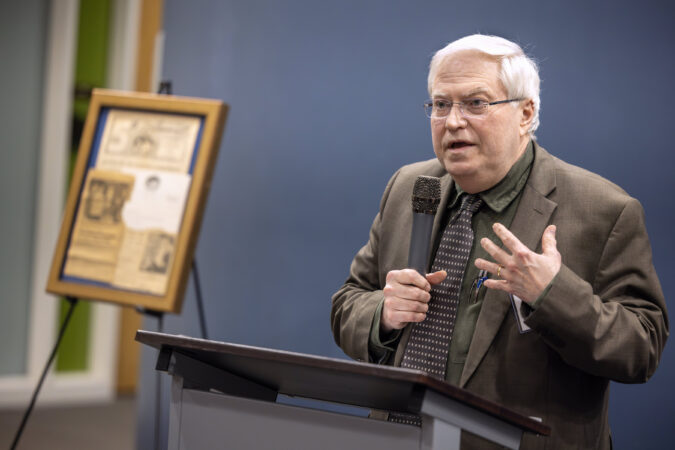
    Ed Nordskog, a former arson investigator with the Los Angeles County Sheriff’s Department, said uncovering possible fraud connected to an arson is often a painstaking process. It can involve obscure insurance policies, construction loans, or hard-to-trace schemes.

    “If it’s a fraud case, that can take months, if not years, to sort through the paperwork,” Nordskog said. “They are really difficult cases for local investigators.”

    A history of troubled buildings

    In 1989, then-U.S. Sen. John Heinz toured Admiral Court after the crumbling apartment building had been rehabbed with federal affordable-housing tax credits. He hailed the project as a symbol of Philadelphia’s revitalization.

    Roughly 15 years later, Pulley acquired the building and neighboring Dorsett Court, along with a string of other affordable apartment complexes across the city.

    The buildings quickly fell back into decay.

    Both West Philadelphia properties have been vacant since 2018, when Pulley evicted dozens of families — many of them low-income — to make way for a planned renovation and sale.

    While some work was done on Dorsett Court, on Locust Street next to Henry C. Lea Elementary School, progress stopped without explanation.

    Admiral Court alone was cited 33 times by building inspectors since 2018, including several fire code violations in 2022.

    “To watch them just sitting there vacant was heartbreaking for everyone involved,” said Phil Gentry, who has one child attending Lea and another who graduated. “It seems crazy, in the middle of this thriving neighborhood that desperately needs more housing, these nice-looking buildings are falling apart, catching on fire, or sitting vacant.”

    Tenants have long complained about conditions in Pulley’s buildings. Two have partially collapsed in recent years.

    Meanwhile, the city has continued to pursue Pulley in court over other properties.

    In 2022, the facade of another Pulley complex — Lindley Towers, in Logan — collapsed, exposing a large section of the upper floors. The building was rendered uninhabitable, displacing about 100 residents. The city took Pulley to court, seeking millions to cover emergency repairs and other costs. That case is pending.

    In October 2024, the Darrah School Apartments — which was also run by Pulley’s main property management company, SBG Management — partially collapsed, raining debris onto a Francisville side street. No injuries were reported. The building had been cited by city inspectors more than a dozen times.

    This year, the city filed a fresh lien against Pulley’s company, citing $51,000 in unpaid gas bills. The city also launched a petition seeking a court-ordered sequestrator at yet another complex in West Philadelphia owned by Pulley’s company, the Winchester Apartments. That order would empower a third party to collect rent on SBG’s behalf in order to satisfy outstanding tax and utility bills.

    Pulley is also facing an ongoing consumer-protection lawsuit filed in 2023 by the Pennsylvania Attorney General’s Office. It accuses Pulley and a network of affiliated companies of mistreating tenants and a range of other “deplorable conduct.”

    In January, Pulley was sentenced to three years’ probation and 100 hours of community service for casting ballots in several different counties in the 2020 and 2022 elections. He also pleaded guilty in May to voting in both Philadelphia and Montgomery County in 2021 and 2023.

    Staff writers Jake Blumgart and Abraham Gutman contributed to this article.

  • What’s open and closed on Thanksgiving Day in the Philly area: Grocery stores, liquor stores, trash pickup, and more

    What’s open and closed on Thanksgiving Day in the Philly area: Grocery stores, liquor stores, trash pickup, and more

    Thanksgiving is almost here, and whether you’re putting the turkey in early, running out for last-minute butter, or realizing you forgot to buy wine (again), knowing what’s open — and what’s not — can save you a scramble.

    From grocery stores and pharmacies to transit, trash pickup, and big-box retailers, here’s what’s open and closed in the Philadelphia region on Thanksgiving.

    Grocery stores

    Acme Markets

    ✅ Acme Markets locations will be open from 7 a.m. to 4 p.m. Check your local store’s hours at local.acmemarkets.com.

    Whole Foods

    ✅ Most Whole Foods locations will be open on Thanksgiving from 7 a.m. to 1 p.m. Check your local store’s hours at wholefoodsmarket.com/stores.

    Giant Food Stores

    ✅ Giant locations will be open between 6 a.m. to 2 p.m. Check your local store’s hours at giantfoodstores.com/store-locator.

    South Philly Food Co-op

    ✅ South Philly Food Co-op will be open from 8 a.m. to 3 p.m.

    Sprouts Farmers Market

    ✅ Sprouts will be open from 7 a.m. to 2 p.m.

    Trader Joe’s

    ❌ Trader Joe’s stores will be closed on Thanksgiving.

    Aldi

    ❌ Aldi will be closed on Thanksgiving.

    Reading Terminal Market

    ❌ Reading Terminal Market will be closed.

    Liquor stores

    Fine Wine & Good Spirits

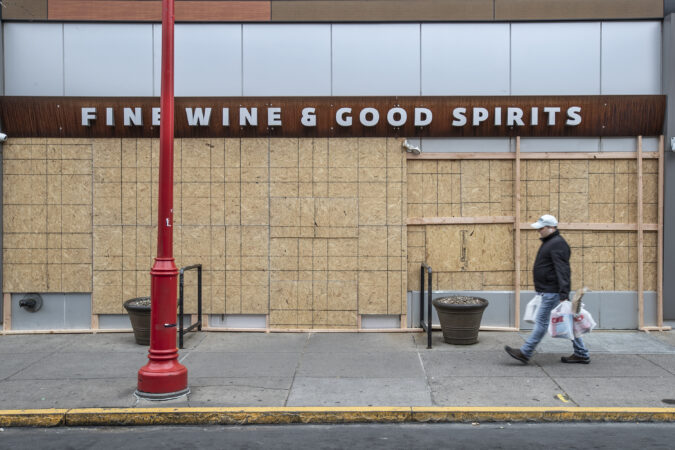
    ❌ If you need wine for dinner, make sure to get it before Thanksgiving Day. Fine Wine & Good Spirits will be closed on Thursday, Nov. 27.

    Mail and packages

    U.S. Postal Service

    ❌ Post offices are closed on Thanksgiving Day.

    UPS, FedEx, and DHL

    UPS, FedEx, DHL are closed on Thanksgiving Day.

    Banks

    ❌ Most, if not all, banks including TD Bank, Bank of America, Wells Fargo, Chase Bank, and PNC Bank will be closed on Thanksgiving Day.

    Transit

    SEPTA

    ✅ SEPTA buses, trains, and trolleys will run on a Sunday schedule on Thanksgiving. You can follow real-time updates on the agency’s System Status website, via TransitView on the SEPTA app, or on Bluesky at @SEPTA_Bus.

    For more detailed information about route detours, check SEPTA’s System Status Page at septa.org.

    PATCO

    ✅ PATCO will be running on a holiday schedule, which you can view at ridepatco.org.

    Pharmacies

    CVS

    ✅ All non-24-hour CVS locations will close early on Thanksgiving. Call your local store before visiting or view hours at cvs.com/store-locator/landing.

    Walgreens

    ❌ All non-24-hour Walgreens locations will be closed for Thanksgiving Day. Check your local store’s hours at walgreens.com/storelocator.

    Trash collection

    ❌ There is no trash or recycling pickup during Thanksgiving or Black Friday. Trash pickup will resume two days later than scheduled. To find your trash and recycling collection day, go to phila.gov.

    Big-box retail

    Costco

    ❌ Costco will be closed on Thanksgiving Day, but reopen at 9 a.m. on Black Friday. Check your local Costco for Black Friday hours.

    Target

    ❌ Target will be closed on Thanksgiving Day, but reopen at 6 a.m. on Black Friday.

    Lowe’s

    ❌ Lowe’s stores will be closed on Thanksgiving Day, but reopen at 6 a.m. on Black Friday.

    Home Depot

    ❌ Home Depot locations will be closed on Thanksgiving Day, but reopen at 6 a.m. on Black Friday.

    Walmart

    ❌ Walmart locations will be closed on Thanksgiving Day, but reopen at 6 a.m. on Black Friday.

    Shopping malls

    ❌ The Shops at Liberty Place will be closed on Thanksgiving and reopen at 7 a.m. on Black Friday.

    ❌ Fashion District Philadelphia won’t be opening on Thanksgiving, but will reopen on Black Friday at 10 a.m.

    ❌ Franklin Mall, King of Prussia Mall, and Cherry Hill Mall will be closed on Thanksgiving. On Black Friday, Franklin Mall will open at 10 a.m., King of Prussia Mall will open at 6 a.m., and Cherry Hill Mall will open at 7 a.m.

  • Trump is changing the way aid goes to cities. Philly stands to lose tens of millions of dollars for housing.

    Trump is changing the way aid goes to cities. Philly stands to lose tens of millions of dollars for housing.

    Philadelphia stands to lose tens of millions of dollars in federal funds intended to fight homelessness under a plan issued by the Trump administration that advocates say could significantly disrupt permanent housing programs and return formerly homeless people to the streets.

    The U.S. Department of Housing and Urban Development released the plan earlier this month, saying it would “restore accountability” and promote “self-sufficiency” in people by addressing the “root causes of homelessness, including illicit drugs and mental illness.”

    Nationwide, advocates say, the HUD plan could displace 170,000 people by cutting two-thirds of the aid designated for permanent housing.

    The number of individuals in Philadelphia at risk of losing stable housing hasn’t been tallied because the city’s Office of Homeless Services (OHS) is still reviewing the plan’s impact, said Cheryl Hill, the agency’s executive director.

    Overall, there are 2,330 units of permanent housing, many of them financed by $47 million the city received from HUD last year, according to city officials.

    The new strategy comes as Mayor Cherelle L. Parker attempts to move ahead with an ambitious plan to increase the supply of affordable housing in the city. Parker declined to comment on the Trump administration’s policy shift.

    A preliminary analysis by HopePHL, a local anti-homelessness nonprofit, estimates around 1,200 housing units with households of various sizes would lose federal aid and no longer be accessible to current residents, all of whom are eligible for the aid because they live with a physical or mental disability.

    HUD plans to funnel most of the funding for permanent housing into short-term housing programs with requirements for work and addiction treatment. The agency also said that it’s increasing overall homelessness funding throughout the United States, from $3.6 billion in 2024 to $3.9 billion.

    “This new plan is disastrous for homelessness in Philadelphia,” said Eric Tars, the senior policy director of the National Homelessness Law Center, who lives and works in Philadelphia. “The biggest immediate harm would be that those who were once homeless but are now successfully living in apartments will be forced out of their homes.”

    Other critics say the policy is based on a failed model that strips away civil liberties and doesn’t address what scholars and people who run anti-homelessness agencies say is the main reason Americans are homeless: the dearth of affordable housing.

    “We have broad concerns about what we’re seeing,” said Candice Player, vice president of Advocacy, Public Policy and Street Outreach for Project HOME, the leading anti-homelessness nonprofit in Philadelphia. “We are all in a very difficult position here.”

    Amal Bass, executive director of the Homeless Advocacy Project, which provides legal services to those experiencing homelessness, agreed, saying the city is “bracing for homelessness to increase in Philadelphia as a result of these policy choices.”

    The need to house thousands of people suddenly made homeless would force cities, counties, and states to spend money they may not have, according to a statement from the National Alliance to End Homelessness.

    Asked for comment, a HUD spokesperson sent a statement saying the agency seeks to reform “failed policies,” and refutes claims that the changes will result in increased homelessness.

    HUD hopes that current permanent housing shift to transitional housing will include “robust wraparound support services for mental health and addiction to promote self-sufficiency.”

    The agency added that it wants to encourage the “12,000 religious organizations in Pennsylvania to apply for funding to help those experiencing homelessness.”

    New restrictions on ‘gender ideology extremism’

    The federal government funds local governments to address homelessness through so-called Continuums of Care (CoC), local planning bodies that coordinate housing and other services. In Philadelphia, the CoC is staffed by the city’s Office of Homeless Services, and governed by an 18-member board, including homeless and housing service providers, and physical and behavioral health entities.

    In its plan, HUD will require the local planning bodies to compete for funding, and will attach ideological preconditions that could affect how much money a community like Philadelphia receives.

    For example, the new HUD plan “cracks down on DEI,” essentially penalizing a local board for following diversity, equity, and inclusion guidelines. HUD would also limit funding to organizations that support “gender ideology extremism“ — programs that “use a definition of sex other than as binary in humans.” And HUD will consider whether the local jurisdiction“prohibits public camping or loitering,” an anti-encampment mandate that advocates such as the Legal Defense Fund say criminalizes homelessness.

    Funding for programs that keep people in permanent housing could be cut off as early as January, according to HUD documents.

    Philly an early adopter of Housing First

    The new HUD policy dovetails with the views of President Donald Trump, who signed an executive order in July that sought to make it easier to confine unhoused people in mental institutions against their will.

    Trump has also said he wants municipalities to make urban camping illegal, helping to clear homeless encampments from streets and parks. He’s expressed a preference for moving people who are homeless from municipalities to “tent cities.”

    Planners in Utah are working toward creating such a facility known as an “accountability center” that would confine people who are experiencing homelessness and force them to be treated for drug addiction or behavioral health issues.

    HUD’s new direction is a repudiation of Housing First, which gives people permanent housing and offers services without making them stay in shelter and mandating treatment for drug abuse or behavioral health issues. Philadelphia was an early adopter and was the first U.S. city to use it specifically for people with opioid disorders, according to Project HOME, which was cofounded by Sister Mary Scullion, an early proponent of Housing First.

    Time and again it’s been proven that “offering, rather than requiring, services to help those who are homeless, has greater effect,” said Michele Mangan, director of Compliance and Evaluation at Bethesda Project, which provides shelter, housing, and case management services to individuals experiencing homelessness in Philadelphia.

    The administration’s move toward transitional housing and required treatment hasn’t worked before, according to Dennis Culhane, a social policy professor at the University of Pennsylvania who’s an expert in homelessness and assisted housing.

    The people most in need of help couldn’t comply with clean and sober requirements and were evicted, he said.

    “It’s a misguided approach that blames the victim and fails to address the lack of affordable housing,” Culhane said. On the other hand, Housing First has had an 85% success rate in helping to lead people out of homelessness, Culhane said.

    He added that he “distrusts the administration’s motivation. It just wants people out of sight and moved into fantastical facilities with tents and alleged care because they’re seen as a nuisance.”

    Ultimately, said Gwen Bailey, HopePHL’s vice president of programs, it’s not clear whether the Trump administration “thinks it’s doing the right thing. I don’t know their data.

    “But in Philadelphia right now, today, I see all kinds of people facing frightening situations.”

    Staff writer Sean Collins Walsh contributed to this article.

  • Your guide to Philly’s 2025 Thanksgiving Day Parade

    Your guide to Philly’s 2025 Thanksgiving Day Parade

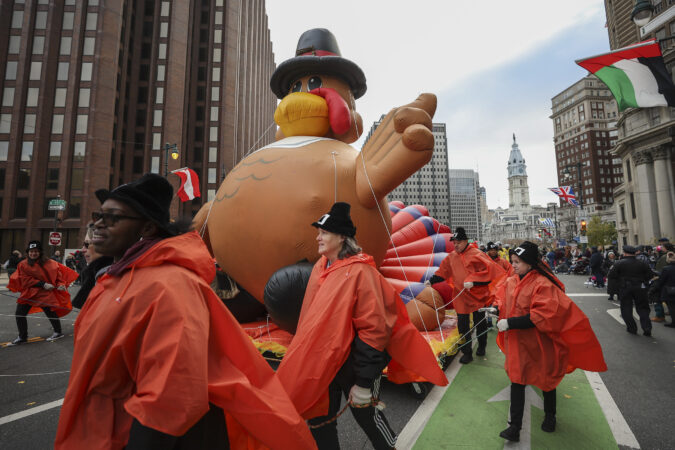
    When you think of a Thanksgiving parade do you immediately picture the Macy’s Thanksgiving Day Parade in New York City? Well, you shouldn’t! Not when Philadelphia has its very own parade that happens to be the oldest Thanksgiving parade in the country. New York City may have Snoopy, but we have Red Fraggle from Fraggle Rock, OK? And if that’s not hip enough for you, we also have Peppa friggin’ Pig. Take that, Charlie Brown.

    Now in its 106th year, the 2025 6abc Dunkin’ Thanksgiving Day Parade will be stacked with performers and stars like Kelly Ripa and, did we already mention, Red Fraggle from Fraggle Rock? The cast of Abbott Elementary will be there too.

    Whether you plan on attending in person, or catching it on television, here is everything you need to know about the nation’s first (and best) Thanksgiving Day parade. Happy Thanksgiving, Philly.

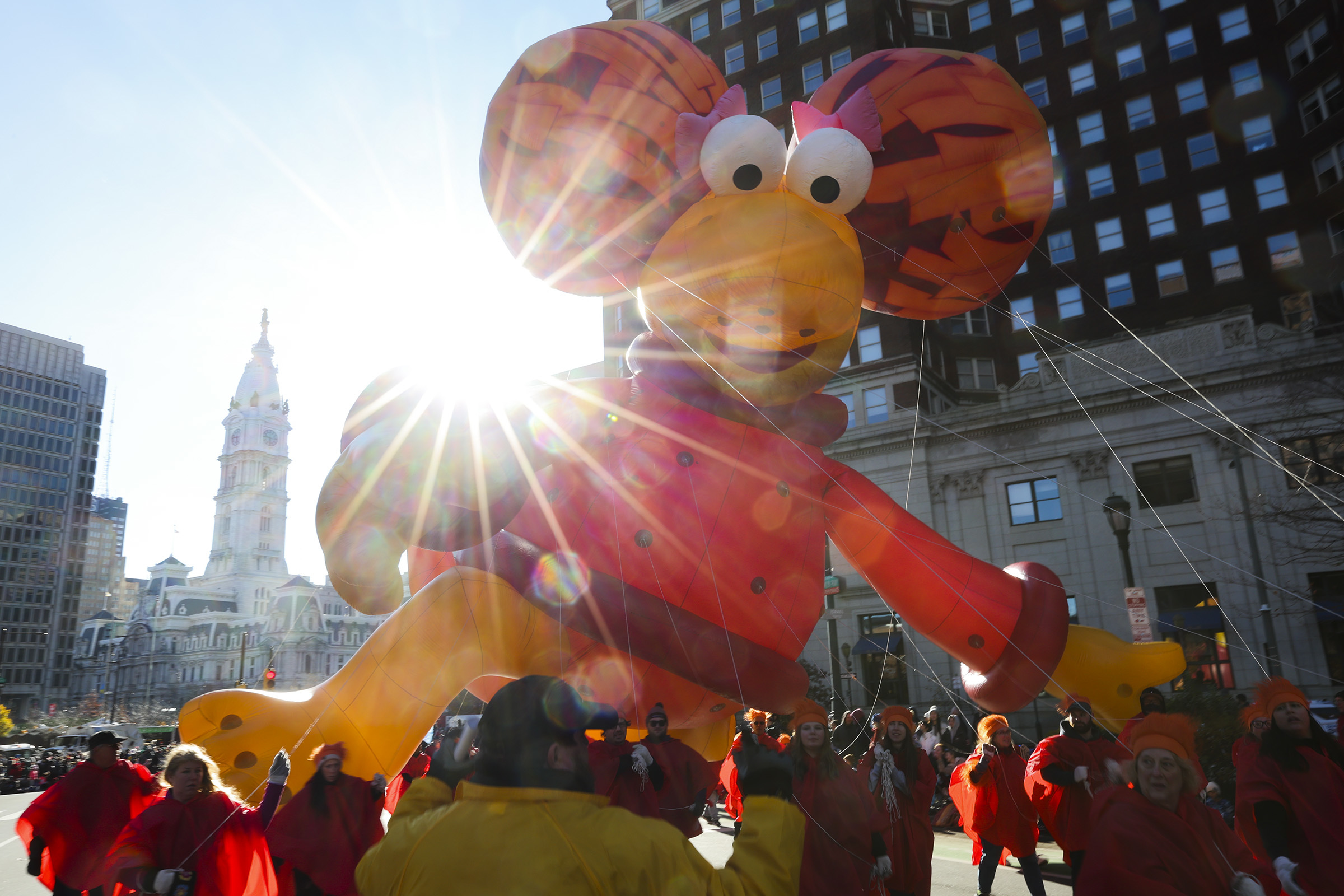
    Red Fraggle from the hit TV show “Fraggle Rock ” makes her way down 16th Street toward the Parkway during the 6abc Dunkin’ Thanksgiving Day Parade in 2023.

    Parade route

    This year’s 6abc Dunkin’ Thanksgiving Day Parade broadcast starts at 8:30 a.m., with the parade kicking off at 9 a.m.

    The route starts at 20th Street and John F. Kennedy Boulevard and heads east toward 16th Street, where it turns left and heads north to the Benjamin Franklin Parkway. From there, the parade follows the Parkway west to Eakins Oval and the Philadelphia Art Museum, where it concludes. The parade is free to attend.

    Weather

    Thanksgiving is still a few days away, but early reports from Weather.com are calling for partly cloudy skies with highs hovering in the mid-40s and lows in the 30s.

    Make sure to check the National Weather Service the day before Thanksgiving for the most accurate forecast.

    Thanksgiving parade road closures

    The following street closures will be in effect on Thursday, Nov. 27:

    Midnight to noon

    • 20th Street between JFK Boulevard and Market Street

    2 a.m. to 11 a.m.

    • 20th Street between the Ben Franklin Parkway and Race Street

    5 a.m. to noon

    • 20th Sreet between JFK Boulevard and Arch Street

    6 a.m. to noon

    • 20th Street between Market Street and the Ben Franklin Parkway

    7:30 a.m. until the end of the parade

    Full parade route, including:

    • JFK Boulevard from 30th Street to 16th Street
    • 20th Street from Market Street to the Ben Franklin Parkway
    • 16th Street from JFK Boulevard to the Ben Franklin Parkway
    • Ben Franklin Parkway to the Art Museum

    Parking

    There will be “Temporary No Parking” signs posted in areas on and around the parade route starting Wednesday, Nov. 26, at 6 p.m., the Office of Special Events said. Cars parked in prohibited parking areas will be relocated. If you believe your car has been relocated, The Inquirer has a guide on what to do when you’ve been “courtesy towed.”

    Metered parking elsewhere in the city is free on Thanksgiving. Additionally, you can check the Philadelphia Parking Authority’s website for a list of parking garages and parking lots around the parade route.

    SEPTA service

    The parade route is blocked off to traffic, impacting SEPTA’s bus service from 2 a.m. until 5 p.m. on Thursday, Nov. 27.

    Routes affected during this time include Route 2, Route 7, Route 17, Route 27, Route 31, Route 33, Route 38, Route 43, Route 44, Route 48, Route 49, Route 124, Route 125, L1 OWL.

    For detailed information about route detours, check SEPTA’s System Status Page at septa.org. You can also follow real-time updates on the agency’s System Status website, via TransitView on the SEPTA app, or on X at @SEPTA_Bus.

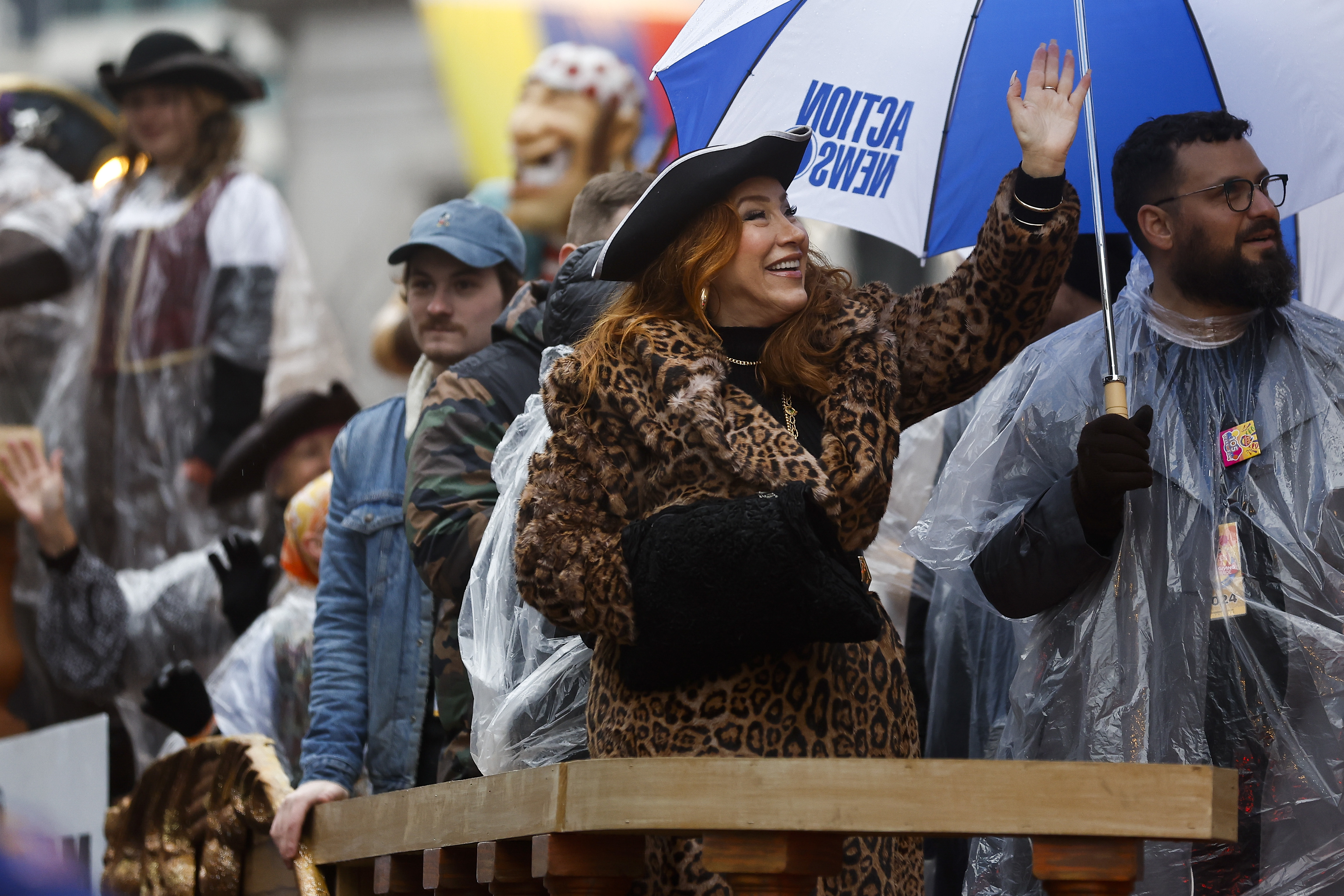
    Actor Lisa Ann Walter, from “Abbott Elementary,” waves to the crowd during the 105th Thanksgiving Day Parade in 2024 in Philadelphia.

    Parade floats and performers

    Guests this year include the aforementioned Kelly Ripa and Mark Consuelos, Ryan Seacrest, Vanna White from Wheel of Fortune, former NFL quarterback Troy Aikman, and Good Morning America weather forecaster Sam Champion. There will also be performances from the iconic funk group Cameo and Motown legends the Four Tops.

    As for the floats, you saw our note about Red from Fraggle Rock, right? What more could you want?

    Where to watch

    If you’re looking to attend the parade, you can watch from anywhere along its route, for free.

    Some favorite spots to watch include the Franklin Institute, the Philadelphia Museum of Art, Eakins Oval, and Logan Circle.

    How to watch from home

    The parade will air live from 8:30 a.m. until noon on 6abc and can be streamed via the station’s website, the 6abc Philadelphia News App, or on Disney+ and ABCNewsLive beginning at 9 a.m.

  • New Jersey teen charged in murder of his mother

    New Jersey teen charged in murder of his mother

    A 17-year-old in Mays Landing, N.J., was charged with the murder of his mother, 49-year-old Julissa Serrano, on Saturday, the Atlantic County Prosecutor’s Office said in a statement.

    Prosecutors said the Hamilton Township Police Department received a 911 call on Saturday evening about a young man with a knife at Meadowbrook Condos in Mays Landing. When officers arrived, they found Serrano with multiple stab wounds. She died from her injuries after being transported to a nearby medical center, the prosecutor’s office said, and her cause of death is pending an autopsy.

    Officials did not release the name or any other details about the 17-year-old. He was charged with murder, possession of a weapon for unlawful purpose, and unlawful possession of a weapon, the prosecutor’s statement said. He is now in custody at the Harborfields Atlantic Youth Center.

    Attempts to reach Serrano’s relatives and next-door neighbors were not immediately successful.

    The Atlantic County Prosecutor’s Office Major Crimes Unit and the Hamilton Township Police Department are leading the investigation, and ask that anyone with information about Serrano’s death call the Major Crimes Unit at 609-909-7666.

  • The green bean casserole, an iconic Thanksgiving side dish with a N.J. connection, turns 70 this year

    The green bean casserole, an iconic Thanksgiving side dish with a N.J. connection, turns 70 this year

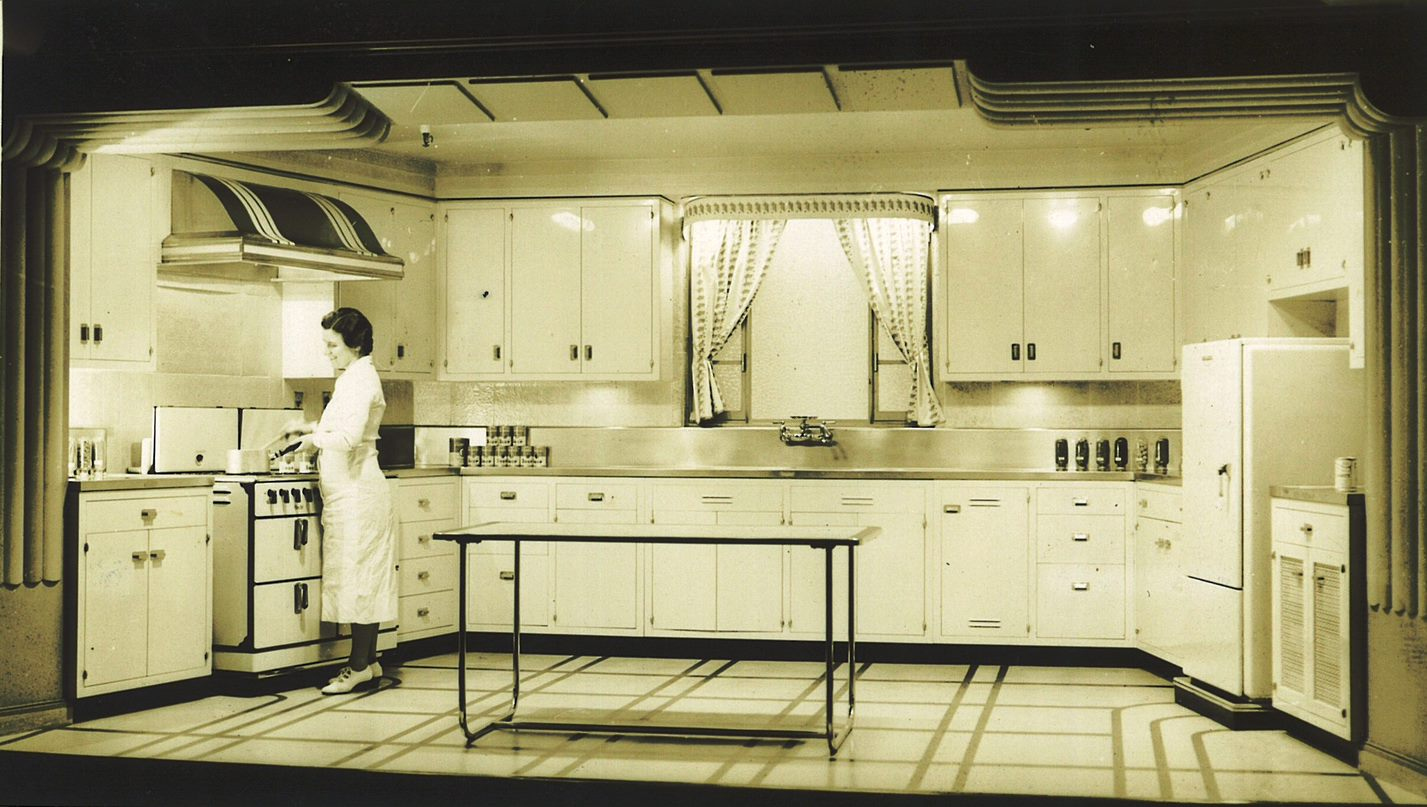
    In 1955, Dorcas Bates Reilly of Haddonfield was tinkering with her team in the home economics department at the Campbell Soup Co., trying to recreate a casserole recipe that a manager had tasted somewhere. The team had been tasked with using ingredients most American families would already have on hand.

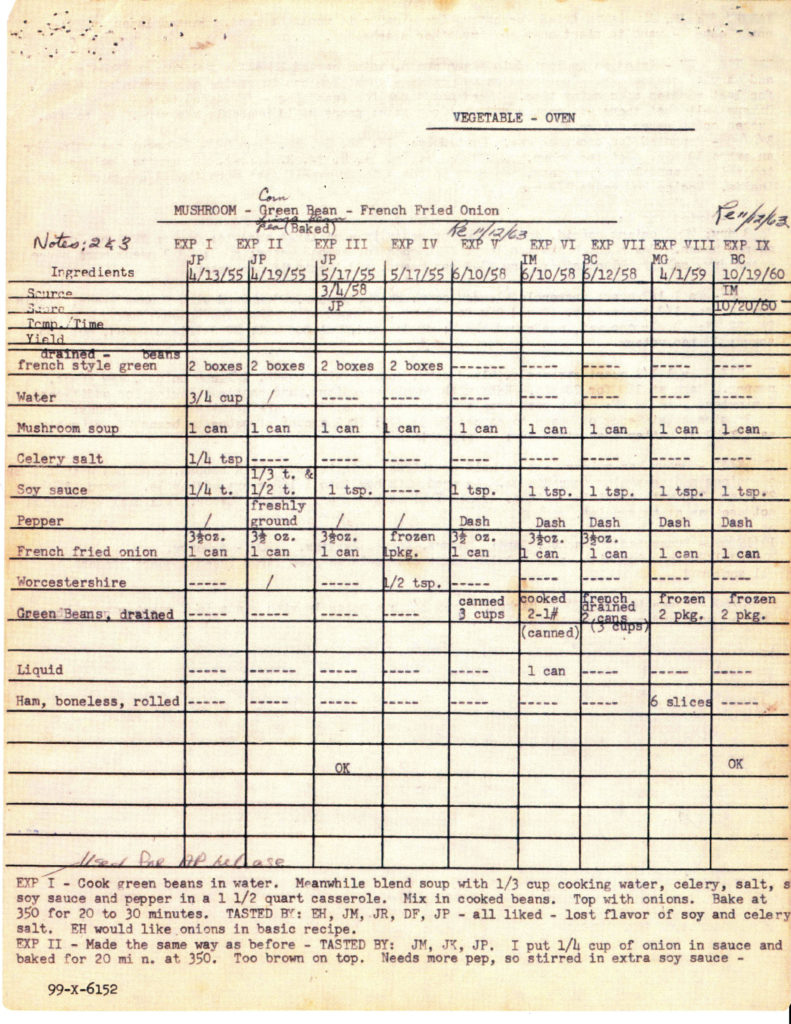
    After a series of experiments, documented on a typed recipe card that is now part of the National Inventors Hall of Fame, Reilly, who was 29 at the time, hit upon the six-ingredient winner.

    Now known as green bean casserole, the dish that has become a Thanksgiving icon turns 70 this year.

    The original green bean casserole recipe card in the National Inventors Hall of Fame.

    The “Green Bean Bake,” as it was called at the time, mainly relied on green beans and Campbell’s condensed cream of mushroom soup, along with a splash of milk, soy sauce, and black pepper. Crispy fried onions topped it off.

    “It was such a rewarding feeling when your recipe was published,” Reilly told Drexel University’s alumni spotlight when she visited the campus years later. She had graduated from Drexel’s Home Economics program in 1947.

    She never knew her careful experimentation (“onions too salty, beans lack freshness, too many onions,” she wrote in an early version of the recipe) would become a national star.

    “How would she know of the thousands of recipes she worked on over all those years that there was one that stood out?” Reilly’s daughter, Dorcas R. Tarbell, 64, asked.

    Before settling on the final ingredients, Reilly had played around with adding Worcestershire and slices of ham. Campbell’s began printing Reilly’s recipe on the back of its cream of mushroom soup can labels in 1960.

    Dorcas Reilly, on the set of live TV commercials that were filmed in the late 1940s atop the original Campbell’s plant in Camden. Reilly was a Campbell’s Soup kitchen supervisor in 1955 when she combined green beans and cream of mushroom soup, topped with crunchy fried onions. It is the most popular recipe ever to come out of the corporate kitchen at Campbell’s.

    Tarbell said her mother had not known how popular the dish was until 1995, 40 years after its creation.

    That was when Campbell’s marketing team studied sales data and found that cream of mushroom soup sales spiked in October and November, and dropped in January. They told Reilly that her recipe was the company’s most-requested ever.

    After that, Reilly became “the ambassador of the green bean casserole,” Tarbell said. Each year, she talked to radio stations and newspapers, and traveled to stockholder meetings to talk about the dish.

    Reilly died in 2018 and was celebrated in obituaries across the country as the “grandmother of the green bean casserole.”

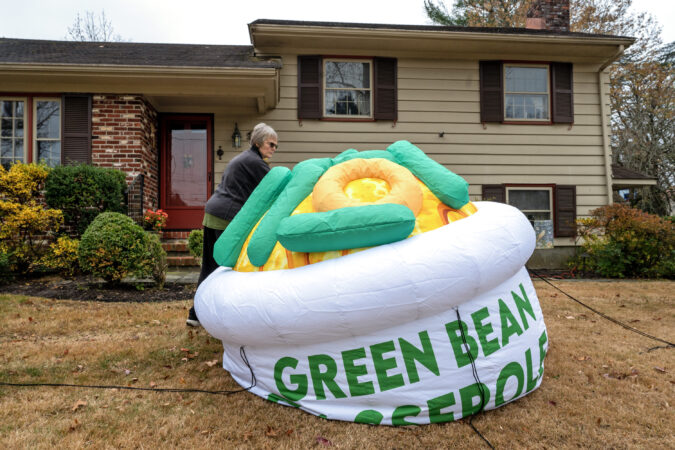
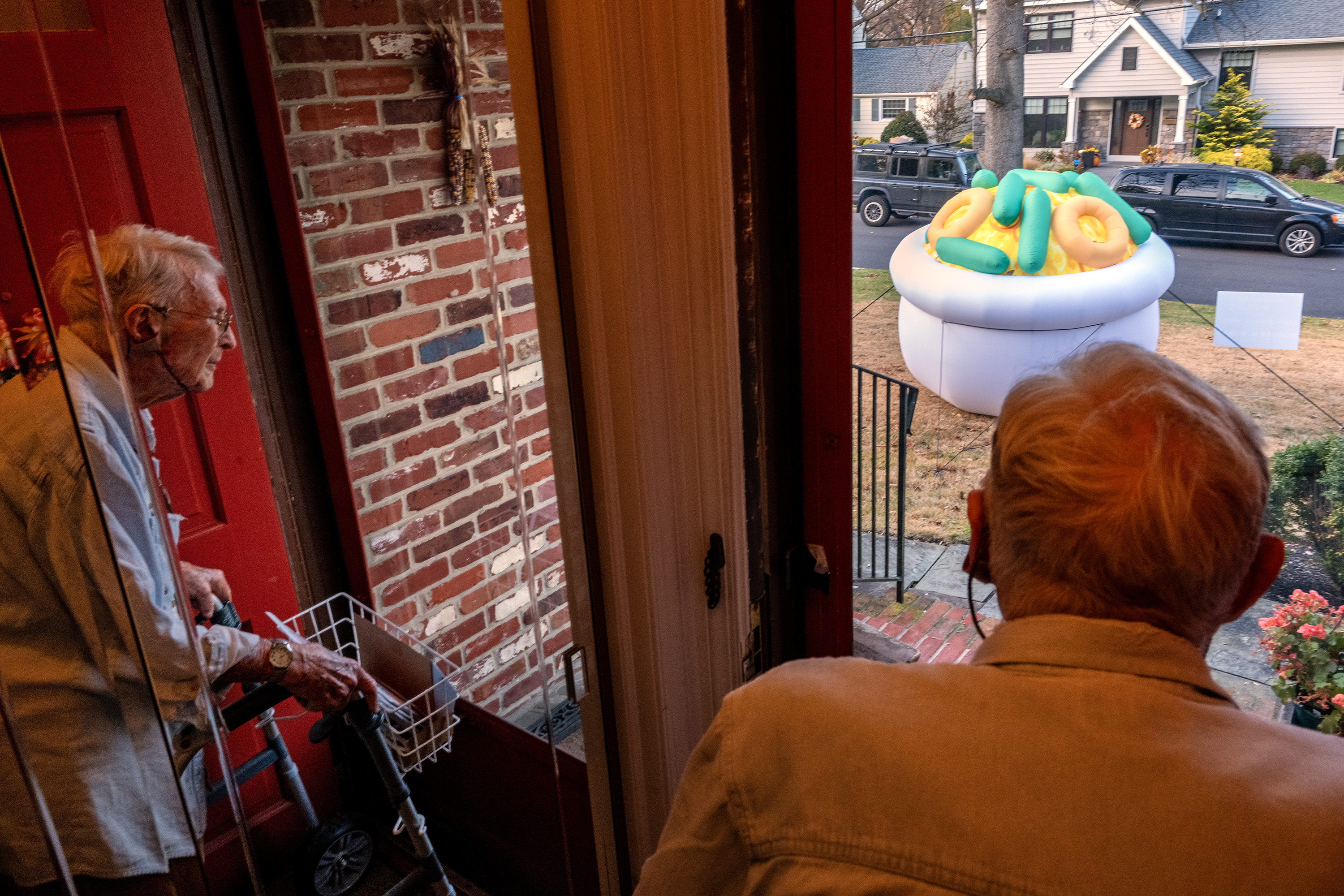
    Thomas H. Reilly, 99 years old, is reflected in his foyer mirror as he looks out the front door of his home in Haddonfield at the giant inflatable green bean casserole his daughter ordered to celebrate the 70th anniversary of the famous dish.

    This year, to celebrate the anniversary of her mother’s famous dish, Tarbell ordered an enormous, custom-made, inflatable green bean casserole to bedeck the lawn of her 99-year-old father and Reilly’s widower, Thomas H. Reilly.

    “I thought, what better gift can I give than to honor the love of his life through the green bean casserole?” Tarbell, who lives down the street, said. “At this point, you have to have humor in life.”

    In a town full of yards featuring inflatable Thanksgiving turkeys and pilgrims (and a few early Santas and snowmen), the six-foot side dish stands out.

    Also in honor of the 70th anniversary, Reilly’s niece, Evelynne Bates Stoklosa, who is 80, established a research grant in honor of her aunt through Phi Upsilon Omicron, a national honor society for the Family and Consumer Sciences, the modern name for home economics. The research focus for the next two years will be “areas representing culinary arts, food science, nutrition, and dietetics.”

    As for her mother’s dish — which is especially popular in the Midwest — it will likely appear on more than half of Thanksgiving tables nationwide this week, Campbell said.

    Growing up, Tarbell said the family never ate green bean casserole. But after they realized Reilly had created a star dish, the family embraced it.

    “Of course, we have green bean casserole at Thanksgiving,” Tarbell said, adding, “We have it at Christmas. We have it at Easter.”

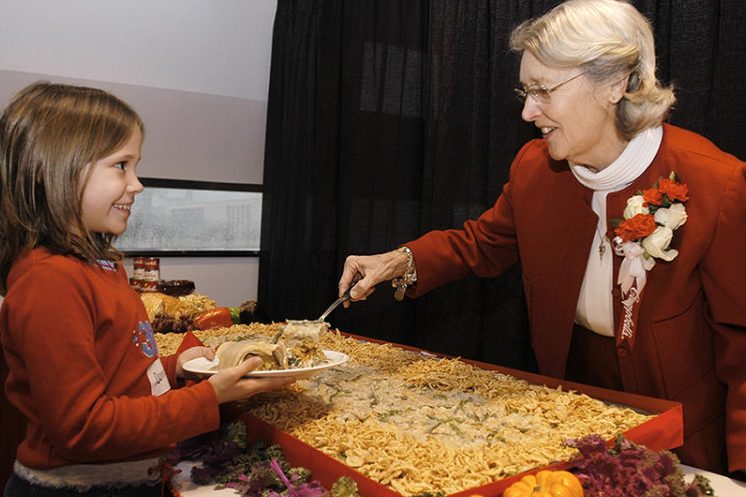
    Dorcas Reilly and a small unnamed admirer, with the iconic green bean casserole Mrs. Reilly invented.
  • Philadelphia’s Ukrainian American community rebukes proposed Russia-Ukraine peace plan

    Philadelphia’s Ukrainian American community rebukes proposed Russia-Ukraine peace plan

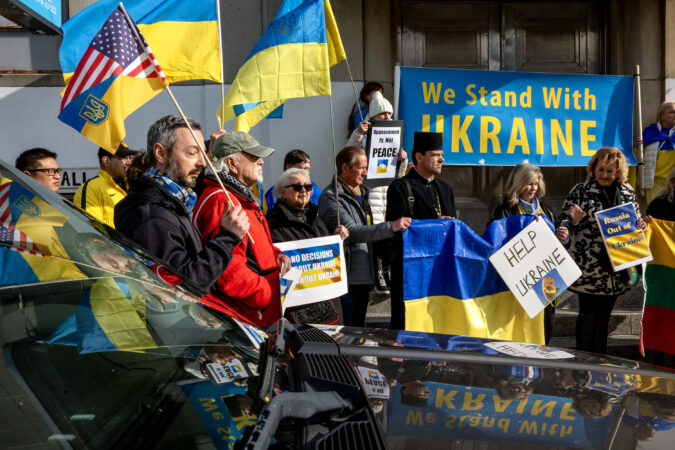
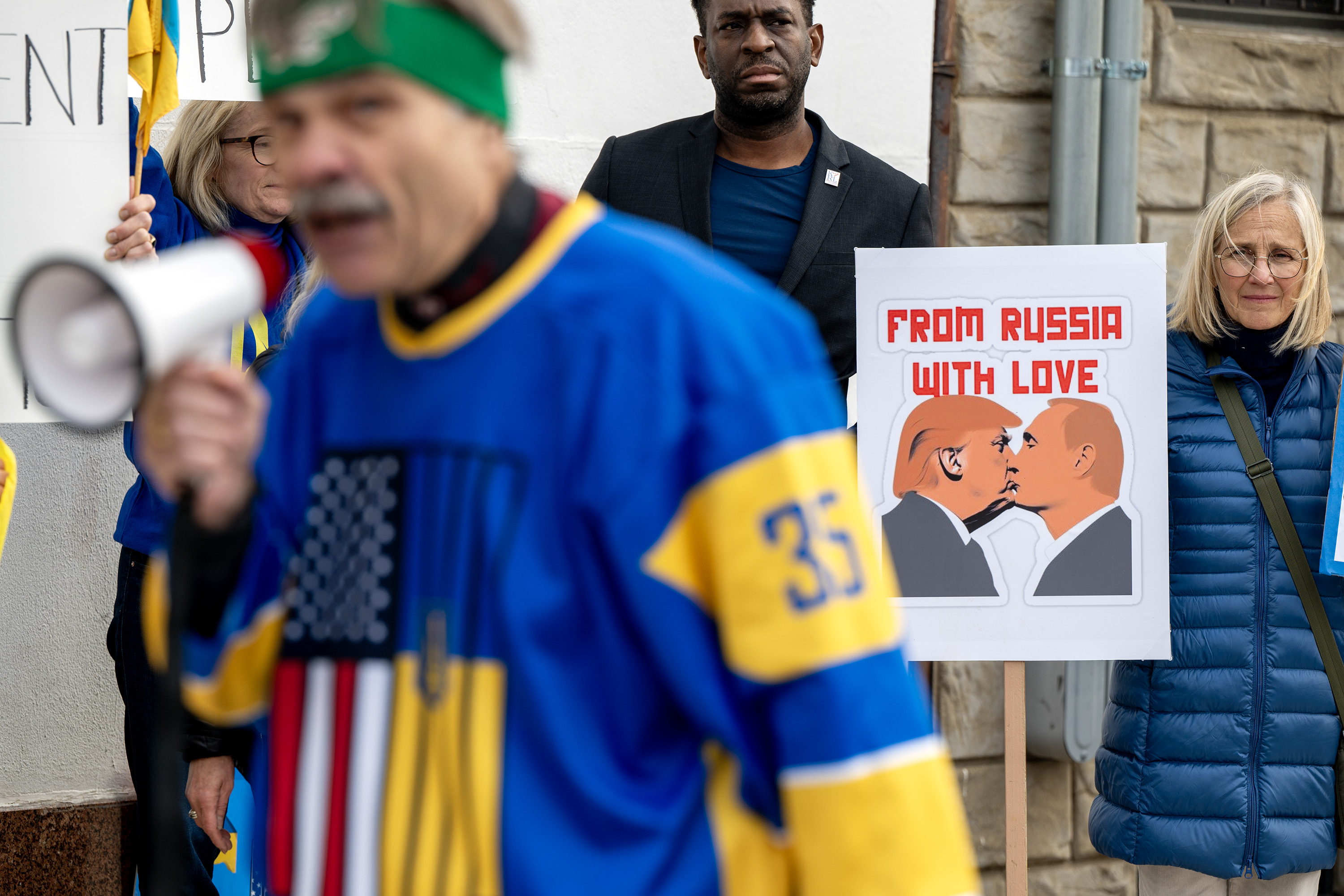
    About 60 people gathered at a North Philadelphia Ukrainian American club on Sunday afternoon to condemn a U.S.-brokered proposal to end Russia’s war in Ukraine.

    Waving Ukrainian flags and hoisting signs that read, “Appeasement Isn’t Peace,” demonstrators outside the Ukrainian American Citizens’ Association described the plan as a laughable, “copy-and-paste” of Russia’s demands, signaling America’s willingness to capitulate to the Kremlin.

    The peace deal put together by Washington and Moscow calls for Ukraine to cede territory, reduce its military, and give up on NATO membership — stipulations that Ukrainian President Volodymyr Zelensky has categorically rejected in the past.

    “Nobody in their right mind would ask a country to give up its territory,
its military, its freedoms,” said Ulana Mazurkevich, president of the Philadelphia-based Ukrainian Human Rights Committee. “They do not know Ukrainians. … We will not give up — we fight, we fight, we fight.”

    The 28-point blueprint to end the nearly four-year war may force Ukraine to choose between standing up for its sovereignty and preserving American allyship, Zelensky said last week when the proposal was leaked. Simultaneously on Sunday, world leaders convened in Geneva, Switzerland, to discuss the contentious plan. (Trump has pushed Ukrainian officials to accept the plan by Thanksgiving.)

    “We will rebuild but it won’t be the same, and I just feel such pain and anger at how much they have taken from us over and over and over again,” the rally’s co-organizer Mary Kalyna said. “It’s not just dirt, there are people there.”

    Kalyna added: “It’s like a reward for the aggression, which we will not stand for. We cannot stand for it.”

    Olena Chymch (right), from Germantown, joins other Ukrainians and Ukrainian Americans at an emergency rally Sunday Nov. 23, 2025, to protest the 28-point “peace plan” for Ukraine.

    While Russia would make almost no concessions, the plan would severely weaken an already decimated Ukraine; in return, Kyiv — which has said it was not involved in the drafting of the peace proposal — would receive international security guarantees and reconstruction assistance.

    Bucks County U.S. Rep. Brian Fitzpatrick, a longtime defender of Ukraine and member of the Ukraine Caucus, called the plan “Russian-drafted propaganda” on social media.

    “This moment requires Peace Through Strength, not appeasement,” the Republican congressman wrote on X.

    Between renditions of the Ukrainian national anthem and “Glory to Ukraine” salutes, protesters on Sunday also rebuked the plan’s amnesty agreement, which would likely mean Russian officials and soldiers could not be prosecuted for war crimes. “The rapists, the murderers, the genocidal maniacs … are all supposed to be forgiven — absolutely no prosecutions,” said Ukrainian American Eugene Luciw.

    “That’s what America stands for? Does America stand for justice?”

    This article contains information from the Associated Press.

  • ‘Philly will eat you alive’: Runners brave the deceptively challenging route of the city’s marathon

    ‘Philly will eat you alive’: Runners brave the deceptively challenging route of the city’s marathon

    Feet blistered, toenails were lost.

    Some chafed in places unimaginable.

    Others questioned it all as they attacked the hill leading to the Manayunk portion of the race.

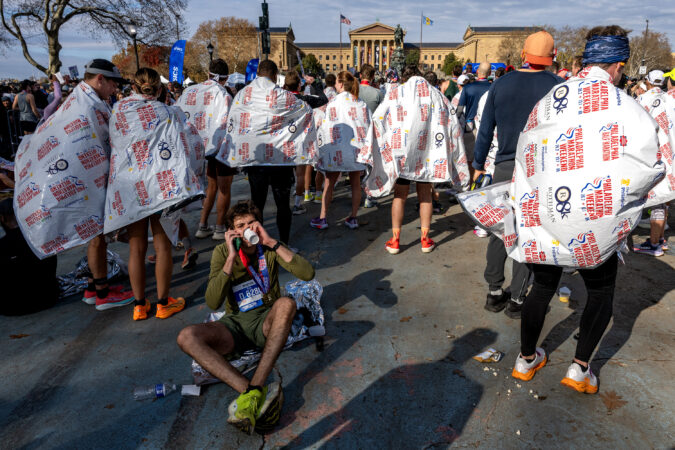
    For the thousands of runners who crossed the Philadelphia Marathon finish line Sunday, the view of the Philadelphia Art Museum steps capped a blissful, sometimes brutal, 26.2-mile run.

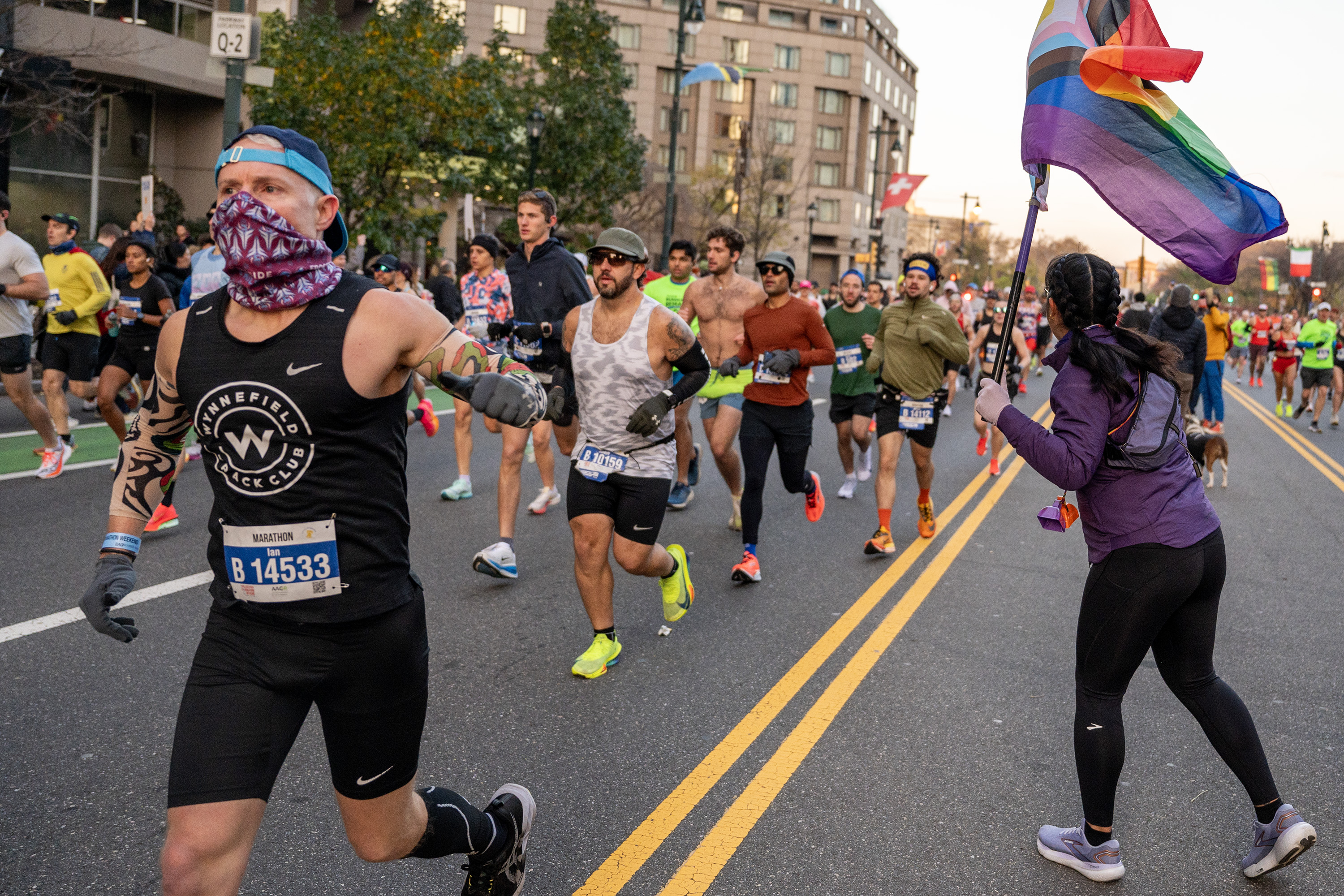
    Whether they ran for personal bests or charity, the roughly 17,000 registrants couldn’t have asked for better weather, which largely remained in what studies say is the sweet spot of 39 to 50 degrees. No brutal winds to report, either.

    The fine weather was a stroke of luck for runners and spectators alike.

    Philadelphia resident Latasha Clark, 47, and her daughter Brianna, 23, began waiting at Eakins Oval around 6:30 a.m., when it was much colder, with a homemade sign that read “you go girl” with carefully cut out letters.

    Clark expected her daughter Trinity to finish around 11 a.m. but she wanted to secure a visible spot along the final mile. Philadelphia would mark her daughter’s first marathon and she trained for it while juggling classes at Arcadia University. Clark didn’t want to miss the photo finish and she wasn’t taking any chances.

    “She would run every morning before class,” said Clark, beaming with pride. “She would call and wake me up and say, ‘I’m ready to run.’”

    The crowd turnout did not go unnoticed.

    First-time marathoner Charlie Marquardt, 31, said the spectators “really helped out” and he was ultimately able to run the race he wanted thanks to the weather and motivation. A new father as of March, Marquardt said he was likely going to take it easy for a bit and try to do the Broad Street run in May.

    Caroline Kellner, 31, was also grateful for the crowds. The Ewing, N.J., resident couldn’t believe how many people were out cheering so early in the morning, calling it “the most spirited marathon” she’s participated in. There isn’t a huge running community in Ewing, said Kellner, making training runs somewhat lonely.

    “Here I feel like the first 10 to 15 miles, you just feel so good,” she said of the spectators. “Then, you know, you hit mile 20, and it’s hanging on for dear life.”

    The Philadelphia Marathon course is often billed in running circles as a relatively flat race. But there are some hills, and the one that leads to Manayunk’s boisterous Main Street is a bit of a cruel tease in timing.

    Before the Manayunk crowds appear, toting shots of beer and doling out pastries and high fives, there’s a stretch of road where all you hear is the echo of sneakers bouncing off a wall — it’s tough for spectators to gather there.

    It’s around the 18-mile mark that marathoners will sometimes hit “the wall,” a sign that a runner’s store of carbohydrates has slowly been depleted and calories are in need of replenishing. Still, the famous wall is as much psychological as it is physical.

    Sharon Tejada (right), a co-leader of Queer Run, encourages the roughly 17,000 runners heading out on the Benjamin Franklin Parkway at the start of the annual Philadelphia Marathon on Sunday, Nov. 23, 2025.

    New York City runner Mitch Kapler, 43, might be in the minority, but said he enjoyed the silence in a moment when his energy was drained and he needed to focus.

    “Especially in the back part, there’s an element of not wanting to see as many people,” he said, adding that he appreciated that the course offered a taste of the city as well as a hint of scenic foliage.

    In a way relatable to many long-distance runners, Kellner joked that she “blacked out” the memory of the lead-up to Manayunk, choosing to remember the effervescent crowds instead.

    Burlington Township, N. J., resident Brooks Sanders, 42, said that the final section of the race is what, in his mind, makes Philly harder than the New York City Marathon.

    “Philly will eat you alive,” said Sanders, who said people tend to underestimate the course difficulty. “In New York, you can rely on a crowd.”

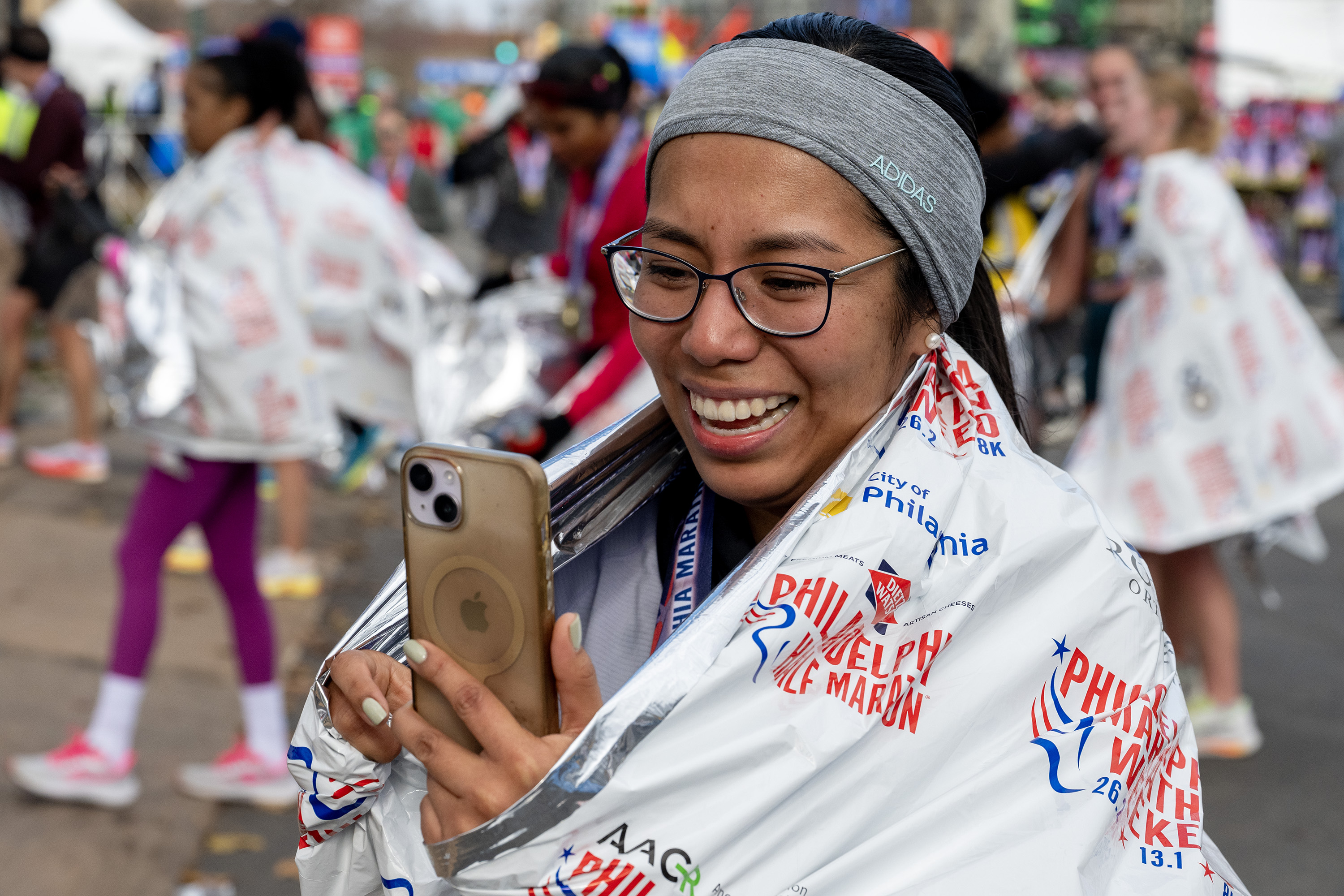
    For this race, that motivation has to come from the runner in the Kelly Drive stretches, where there aren’t a lot of people. And sometimes, runners like Kapler and Sanders fall short of personal goals. Wrapped in a Mylar blanket, Kapler was already planning his Philly Marathon “revenge tour” and Sanders, who was a few minutes shy of qualifying for the Boston Marathon, similarly planned his return.

    Sanders said even the setback was part of the journey. He began running in 2021 when the love of his life and mother of his two children was diagnosed with stage 4 metastatic breast cancer. Running became therapeutic and he appreciated that the Philadelphia Marathon had close ties with the American Association of Cancer Research. By raising money for a possible cure, he felt he was doing something.

    Though Sanders’ wife died last year before he ran the New York City Marathon and the Philadelphia Marathon, he remains a devout supporter of the AACR, the weekend’s title sponsor, whose runners collectively fundraised more than $800,000.

    Between the amount raised for charity and the uncontrollable, such as weather, race organizers were pleased with the weekend’s turnout for the 8K, half marathon, and Sunday’s full marathon.

    Kathleen Titus, Philadelphia Marathon Weekend race director, said even with last-minute dropouts, organizers expect close to 17,000 runners to have hit the road Sunday after pulling from a 3,000-person wait list.

    Iris Annais, from Mexico City, talks to her mother, Rosa Gonzalez, back at home after finishing the Philadelphia Marathon on Sunday, Nov. 23, 2025. It was her fifth marathon.

    One striking note from Sunday, said Titus, was the rise in first-time marathoners. The top female runner, 26-year-old Anna Oeser from Connecticut, ran her first marathon at 2:34:55. People who took up running during COVID-19 lockdowns have graduated from their 5K, 10K, and half-marathon races.

    “Over the past couple of years, we have seen the surge in participation in sport,” Titus said. “But people who maybe got their toes wet during the COVID period are now taking to the streets.”

    It wasn’t all first-timers on the course, however, with South African professional runner Melikhaya Frans, 35, winning the male category with 2:13:57. He was a last-minute addition to the race after the Sanlam Cape Town Marathon, a major, was canceled due to weather.

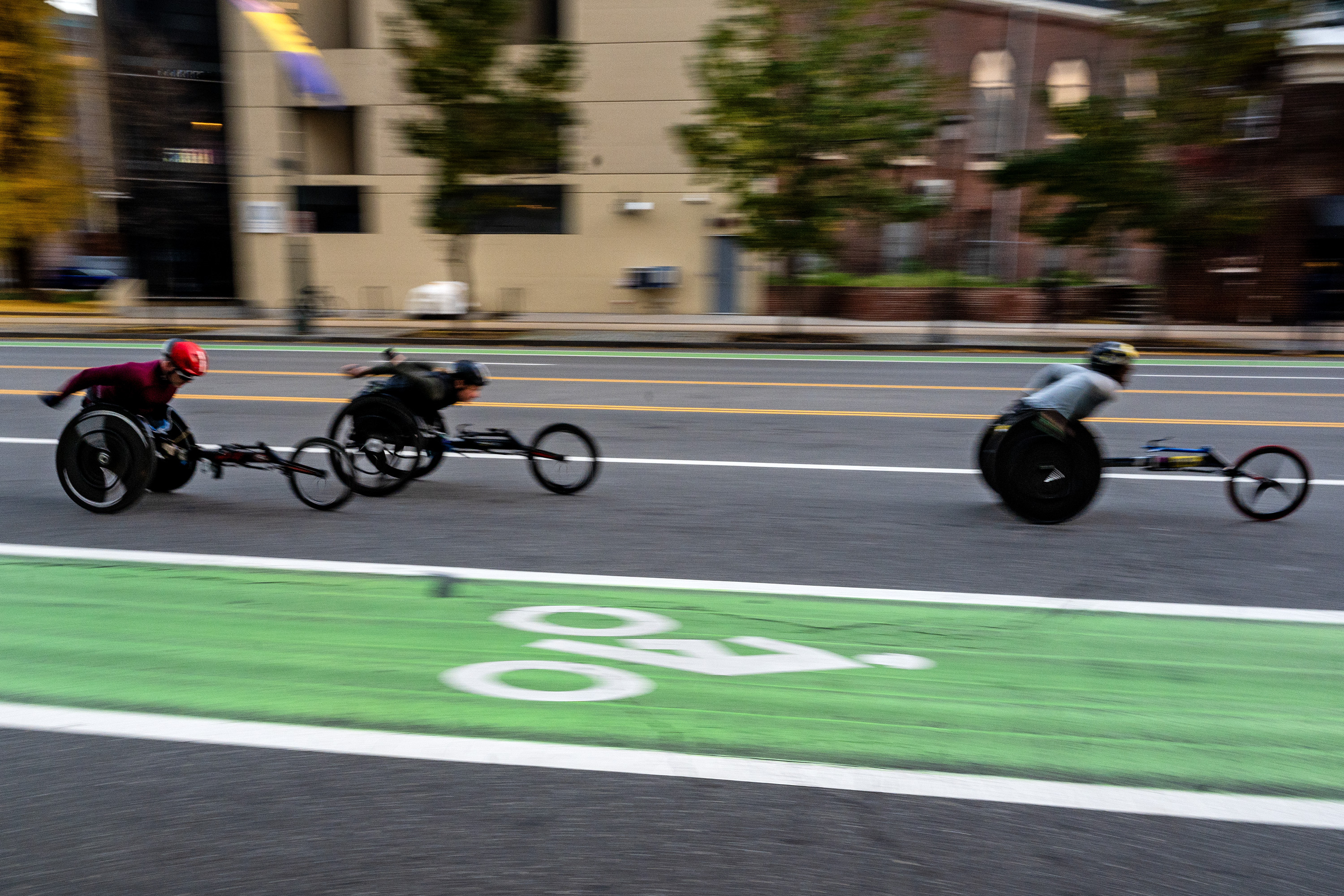
    The top male in the wheelchair category was Miguel Vergara of California at 1:44:22. Hannah Babalola of Illinois won the female wheelchair category at 2:15:21.

    The push rim wheelchairs head out on the Benjamin Franklin Parkway at the start of the annual Philadelphia Marathon on Sunday, Nov. 23, 2025.

    Close to the finish line, families waited for their loved ones with changes of clothes and slippers.

    Joanna Campo, 50, a triathlete all too familiar with this particular feat of endurance, waited for her 17-year-old nephew from Rhinebeck, N. Y., to finish his first marathon, ready to provide some levity.

    “I’ve been training for months to hold this sign,” read Campo’s poster board of encouragement.

    The teen’s mother, Concetta Ferrari, 43, hoped to squeeze in some Philadelphia sightseeing but figured they’d probably let her son “soak in a bathtub and sleep.”