The adage goes, “If mom says, ‘No,’ call grandma.” So if grandma says, “No,” do you call a lawyer?
Popular D.C. bagel chain Call Your Mother is doing just that after claiming that a shop in Long Branch, N.J., is cramping their style, filing a trademark lawsuit within the U.S. District Court for the District of New Jersey.
Call Your Bubbi, a beach town cafe and kosher-certified bagel shop, opened last year within the Wave Resort and offers your classic bagel fare.
Andrew Dana and Daniela Moreira, the married couple behind Call Your Mother, say the Jersey cafe is intentionally using a “confusingly similar” name and branding, which can harm their nearly six-year-old company that has about 25 locations, in the Washington area and six in Colorado. The dispute has quickly gone viral within the food scene and bagel-loving communities.
“I cannot believe how this has blown up,” Dana said. “It has taken on a life we never expected.”
Call Your Bubbi owner David Mizrahi did not respond to multiple requests for comment from The Inquirer.
Dana said the couple first found out about the Long Branch cafe when a neighbor texted a photo of its storefront, asking if Call Your Mother had expanded to New Jersey. From there, they looked at Call Your Bubbi’s online and social media presence.
Dana and Moreira own the trademark for the phrase call your mother for use as a deli, cafe, or restaurant, according to court documents. They’ve also trademarked their logo, a rotary phone (which mimics the shape of a bagel). In its branding suite, the Call Your Mother text often circles around the rotary graphic.
Call Your Bubbi also uses a round image with its name similarly circling around its bagel logo. According to the Washingtonian, the cafe also at one point used a rotary phone motif on its merch. Both shops use hues of pink and blue in their branding.
“People might think we’re sort of hunting this stuff out — that’s not the case at all,” Dana said. “It looks just like our logo. We tried for months and months to get in touch with the owner. We got hung up on. We didn’t know what else to do.”
At one point, Dana told the Washington Post that he noticed a tagline on the top of Call Your Bubbi’s website: If Mom says, “No,” call your Bubbi.” He told the Post, “I just felt like they were goading us.”
In August, the couple sent Mizrahi a cease-and-desist letter, court documents show. They say they never heard back or saw a change in the cafe’s branding. Last Tuesday, they officially filed the lawsuit.
Call Your Mother is being represented by Philadelphia-based attorney Matthew Homyk, a partner in the intellectual property group of Blank Rome LLP. Homyk didn’t respond for comment as of publication time.
“In Jewish culture, the terms ‘mother’ and ‘bubbi’ both denote a caring and nurturing Jewish matriarch,” the lawsuit says. “Both marks evoke the same core idea — a warm and loving (but also somewhat instructive or scolding) prompt to call your mother or grandmother, and to go grab some coffee and bagels while you’re at it.”
The suit noted that Mizrahi‘s original incorporation in March 2024 was for “Bubbies Bagels,” but that “sometime thereafter,” he began using the Call Your Bubbi label instead.
The Jersey Shore cafe appears to use a blend of both names as of publication time. On Yelp, it’s Call Your Bubbi. On Google Maps, it’s billed as “Bubbi Bagels @ Wave Resort,” but its phone line and merch still identify it as “Call Your Bubbi.”
The shop’s web domain is bubbibagels.com, but the top of its website says Call Your Bubbi. Similarly, its Instagram username is @bubbibagels, but its icon is the contested Call Your Bubbi round logo.
Dana said they saw no issue with the cafe going by “Bubbi Bagels,” or something similar.
“He can call it Bubbi’s, he can call it Mother’s, I don’t really care. But Call Your Bubbi is so close, we had to sort this out,” Dana said. Still, Dana says, Mizrahi won’t return his calls.
Josh Gerben, a trademark attorney not affiliated with the litigation, says the suit makes for a captivating case study. He posted his own analysis of the brand dispute on LinkedIn and says he believes Call Your Mother has a strong case for trademark infringement.
“As a trademark attorney who grew up in a Jewish family, I can tell you that those two names draw from the same emotional well,” he said. “If this case goes to trial, the judge or jury will have to determine whether an average consumer would think these brands are owned by the same company.”
Restaurant-related trademark disputes aren’t new. In Philly, Chickie’s & Pete’s has a grip on the use of crabfriesthanks to owner Pete Ciarrocchi registering the phrase as a trademark back in 2007. Since then, his lawyers have sent cease-and-desist letters to restaurants nationwide for using the phrase.
(It has also sparked some cheeky clapbacks, like Betty’s Seafood Shack in Margate, which now calls its version of the fries “For ‘Pete’s’ Sake.“)
The lawsuit is asking for the court to rule that Call Your Bubbi illegally used Call Your Mother’s trademark materials and engaged in unfair competition and to order that they permanently stop using the name or anything similar.
They also want all infringing materials destroyed, a report proving compliance, and financial remedies, including Call Your Bubbi’s profits, along with damages, interest, attorney fees, and other appropriate penalties.
“We want him to be able to have his business and us to have ours,” Dana said. “The last thing we want to do is spend money on legal or focus on this. We want to focus on making bagels — and figure out how to finish this quickly.”
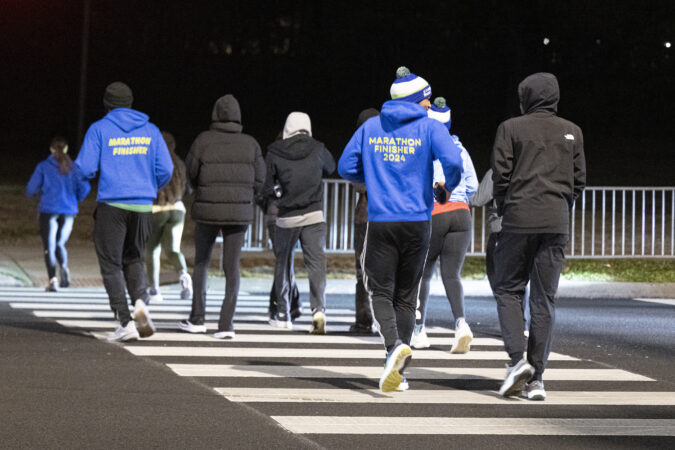
Before the start of Tuesday’s team practice on Boathouse Row, a couple of teenagers filmed their own TikTok dances. The boy was sheepish about showing his adult coaches the final product on his phone, while a group of girls compared hairstyles. After a quick warmup in the cold air, with some students moving more enthusiastically than others, the group went off on its three-mile run.
It was one of the last steps remaining for the teenagers to get their criminal records expunged.
On Saturday, the group of mostly high schoolers will complete their program by running the 13.1 miles of the Philadelphia Half Marathon.
They are members of MileUp, a juvenile diversion program operated by the nonprofit Students Run Philly Style in partnership with the Philadelphia District Attorney’s Office and Drexel University’s Center for Nonviolence and Social Justice. MileUp gives youth ages 11 to 17 who are charged with certain offenses the opportunity to learn and practice distance running to clear their criminal records.
MileUp intends to teach the students about accountability and responsibility through running, while creating a supportive community. According to Students Run Philly Style, about 92% of MileUp students have completed the program since 2020, which puts them on the path toward having their records expunged.
“You see young people change their mindset over how much control they have over what’s ahead of them,” said Students Run Philly Style executive director Lauren Kobylarz
“This is a chance to let that choice that maybe wasn’t the best … to leave that behind you and move forward,” she said.
This weekend, 128 Students Run Philly Style youth will run the half marathon, including eight from MileUp, and others will do the marathon or 8K, all wearing the same SRPS T-shirts.
For students, the program starts with a referral from the district attorney’s office, where the teenagers are identified as candidates for diversion programming. Some of the most common charges for MileUp students include auto theft, assault, and vandalism. For most, it is their first offense.
The teenagers are given their choice of diversion program. Under District AttorneyLarry Krasner, the officehas expanded the initiative to about 30 programs in sports, arts, and trades.
MileUp has cohorts in the fall and spring, where students meet for practice three times per week for 12 weeks with Students Run Philly Style staff, trained adult volunteers, and peer mentors, who are program graduates paid for their work.
District Attorney Larry Krasner has expanded the use of juvenile diversion programs since coming into office in 2018.
For the fall cohort, milestone runsinclude a 5K, the All-City 10 Miler, and the half marathon.
After the first race, they earn restitution fees associated with their case, which can often be a financial burden.
Afterthe second, the charges get dropped, as long as they ultimately complete the program.
And for a student who finishes the final race, writes a reflection, and is not arrested within six months, the case is expunged, erasing all records of it.
“These are honestly great students … they’re not beat down by what’s happened to them,” said volunteer Juan Batista, 25, whose mother works for The Inquirer in human resources. He said he fell in love with running after he began participating in Students Run Philly Style’s standard program when he was 12.
Batista grew up in Juniata under similar circumstances to many of the MileUp students, and started working with them after he finished college. Their shared background helps them connect, Batista said. He noticed that, in many cases, it has been just a matter of wrong place, wrong time.
“Sometimes bad things happen, and that could be on your record for the rest of your life,” he said.
Second chances
When Lucas from Northeast Philly joined MileUp two years ago, he struggled. It wasn’t fun, and the 16-year-old,whose full name is not being used because he is a juvenile, said that he had been treating his body poorly up to that point. But he showed up to nearlyevery practice, and felt himself maturing as he got stronger as a runner. His record was expunged, and he said having his restitution fees paid was a major help.
“It’s really worth it,” he said.
Now, Lucas is back with MileUp as a peer mentor. He enjoys serving as an example for the other teenagers, and said it feels good to encourage and give advice to those who need it. Lucas said that lots of kids don’t have enough people they can rely on.
“It’s good to have people you can go to for help,” he said.
MileUp diversion program participants have already completed a 5k and 10 mile race together. Their last milestone is the Philadelphia Half-Marathon on Saturday, Nov. 22.
He arrived at Tuesday’s practice with Na’Sean, another 16-year-old from Northeast Philly who is also being identified only by his first name because he is a juvenile. Na’Sean is a current MileUp student who said he came back from a family trip to learn there was a warrant for his arrest, stemming from a years-ago incident.
His focus at the half marathon will be on keeping a steady pace, without starting too fast. It happened to him during the 10-miler and he struggled near the end, but said one of the adult leaders helped him push through. He said he valued the support he has gotten and will miss the group after the program ends.
Na’Sean appreciated how his future remains wide open, and how his ability to get a good job one day won’t be limited by something he may have done when he was a young teenager.
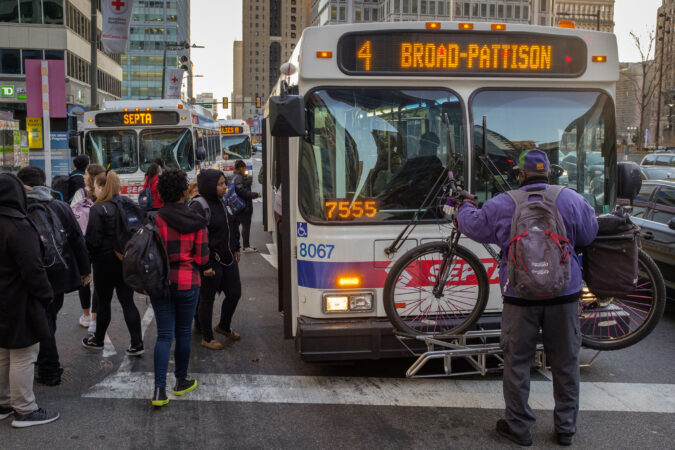
SEPTA’s21.5% increase in transit fares and service cuts fell hardest on disadvantaged Philadelphians this year, showing an urgent need to make the city’s Zero Fare program permanent, CityCouncilmember Nicolas O’Rourke argues.
He touted his proposal to dedicate 0.5% of the city budget each year to pay for the initiative that provides free SEPTA passes to people living in poverty.
O’Rourke’s proposedTransit Access Fund would be written into the City Charter “so it can’t be yanked away at a moment’s notice when somebody wants to shift something around in the budget,” hetold about 150 people in a town hall at the Friends Center on Cherry Street.
O’Rourke, Democratic State Sen. NikilSaval, and the advocacy group Transit Forward Philadelphia called the meeting to push for affordable public transportation and ways to sustainably fund SEPTA after Harrisburg’s failure to provide new state money for mass transit agencies.
A broad coalition and patience are needed in Pennsylvania, Saval said. ” Every major political win comes from months, years, sometimes decades, of work,” he said.
“We pushed back hard,” said O’Rourke, a member of the Working Families Party. “People with the least income are paying a larger share of their money just to get around. That’s upside down.”
Funding is not guaranteed after June 30, when the current budget expires, however.
If enacted, a Transit Access Fund would generate an estimated $34 million in the 2026-2027 fiscal year, O’Rourke’s office calculates.
That would generateenough money — between $20 million to $25 million, according to managers of the Zero Fare program —to give free SEPTA passes to 60,000 Philadelphians at or below the federal poverty standard.
O’Rourke and his staff also are considering usingthe remaining $10 million to $14 million for matching grants to help businesses, landlords and housing developments to join the SEPTA Key Advantage program, which provides subsidized transit passes.
People living at or below the federal poverty standard are eligible for the Zero FareSEPTA passes. For 2025, that is $15,650 for an individual and $32,150 for a family of four.
Philadelphia’s poverty rate was 19.7% in 2024, the latest figure available, according to the U.S. Census.
“When we’re made to feel like we’re on opposite sides of the fight, our numbers become smaller and we focus on the wrong targets,” said Saval.
“It’s not the person in Schuylkill County frustrated about potholes and road conditions that’s to blame for lack of transit funding” he said. “That person deserves to get safely where they need to go, too.”
At the King of Prussia Mall, you can add some slime (the fun kind) to your holiday shopping experience this year.
Fresh off the opening of the first-ever Netflix House, the Montgomery County mall this week welcomed the Sloomoo Institute’s first Philly-area location. The sensory slime experience’s latest outpost is called a Sloomoo MiniMoo, and it’s a scaled-down, 3,000-square-foot version of its flagship stores.
For between $24 and $26 a person, King of Prussia Sloomoo customers can design their own slime, choosing from different textures, colors, scents, and charms. They can also smush slime onto the wall, send it flying through the air with a slingshot, go elbow-deep in vats of slime, and take slime-making classes.
Guests can also browse slime toys and other squishy, sensory gifts at the Sloomoo retail store, no ticket required.
“King of Prussia is a playground for families,” cofounder Sara Schiller said in a statement, “and we’re bringing a world of slime designed to spark curiosity and pure, unfiltered joy.”
Customers play with slime at another Sloomoo Institute location. The King of Prussia Mall opened a Sloomoo MiniMoo experience this week.
They opened their first location in New York in 2019, went viral on TikTok during the pandemic, and then expanded nationwide, opening outposts in Atlanta, Chicago, Houston, and Los Angeles. A Sloomoo MiniMoo also recently opened in Boston.
Earlier this year, the founders told CNBC that Sloomoo brings in as much as $4.3 million a month in revenue from ticket sales alone.
A look inside the King of Prussia Mall’s Sloomoo MiniMoo experience, which opened this week ahead of Black Friday and the holiday shopping season.
At King of Prussia, Sloomoo MiniMoo welcomed its first customers last weekend, but it will celebrate its grand opening this Saturday, when the first 200 ticketed customers will receive a complimentary hot chocolate and “limited-edition Philly Cheesesteak-themed slime,” according to company officials. The first 100 guests on Saturday will get a bag charm.
Aside from Sloomoo, the mall has welcomed several other new stores, restaurants, and interactive experiences since August. A few retailers, including Lululemon, Abercrombie & Fitch, and Mejuri, have also expanded or relocated.
As holiday shopping season kicks into high gear, customers can check out the following new additions:
Shoppers sit with their bags at the King of Prussia Mall on Black Friday 2022.
If you’re doing holiday shopping later in the season, or taking a trip to the mall between Christmas and New Year’s, you might be able to visit the following stores. All of them are set to open their first Philadelphia-area locations this December:
In early 2026, Adidas and Columbia Sportswear are set to open stores in the King of Prussia Mall. Exact locations for those stores have yet to be announced.
The final defendant in a sweeping corruption probe that uncovered a series of bribes being lavished upon an Amtrak manager during a renovation project at 30th Street Station was sentenced Friday to two months in prison.
Khaled Dallo was an employee at an Illinois-based masonry firm and helped provide a series of extravagant gifts to the Philadelphia-based project manager, Ajith Bhaskaran, including vacations to India and Ecuador, a Tourneau watch, expensive dinners in Center City, a German shepherd puppy, and cash.
In all, prosecutors said, Dallo and supervisors at his company, Mark 1 Restoration, provided Bhaskaran with nearly $330,000 in bribes, and Bhaskaran in turn helped approve tens of millions of dollars in expenses for Mark 1, nearly doubling the cost of restoring the train station’s historic facade.
Dallo, 69, said in court that he was sorry for his misconduct, and that it stood in contrast with how he has tried to live the rest of his life.
“I knew it was wrong,” he said, “and chose to do it anyway.”
His sentencing represents the final chapter in a saga that saw federal prosecutors indict six people connected to the restoration project — four from Mark 1, and two from another contractor.
All of the Mark 1 employees have since been sentenced to prison. Dallo received the shortest term, with prosecutors crediting him for being the first person to plead guilty and saying he served a more subordinate role in the scheme.
Bhaskaran, the Amtrak manager, was charged with unrelated wire fraud, but died of heart failure in 2019.
The renovation project Bhaskaran oversaw at 30th Street was announced in 2015, when the railroad agency signed a $58 million contract with Mark 1 to repair and clean the station’s limestone facade.
Bhaskaran controlled the project’s purse strings, and prosecutors said Mark 1 employees quickly came to realize their conditions on the job site could be improved if he was happy.
About a year into the project, prosecutors said, Bhaskaran began requesting gifts, despite Amtrak rules that bar employees from receiving them. Executives at Mark 1 knew Bhaskaran’s requests were improper, prosecutors said, but went on to fulfill them anyway — in part because Bhaskaran had the ability to approve additional business on the project.
Dallo was among the Mark 1 employees who provided Bhaskaran with dinners at steakhouses, limousine rides, a $5,600 watch, the paid vacations, and a nearly $5,000 check to an Illinois breeder of German shepherds.
Over that same time frame, Mark 1 continued to receive additional funding for its work at 30th Street. In total, prosecutors said, Bhaskaran helped secure the company $52 million in new contracts, about $2 million of which was considered fraudulent overbilling.
The scheme began to fall apart in 2018, when an anonymous tipster sent a letter to Amtrak’s inspector general about Bhaskaran’s suspicious behavior. That led to an investigation involving the FBI and Amtrak’s inspector general.
Dallo acknowledged his wrongdoing about a year later, as soon asfederal agents confronted him, prosecutors said.
Still, U.S. District Wendy Beetlestone told Dallo that his actions were not a onetime lapse in judgment, but a “considered, yearslong” effort that led to taxpayer money being spent on graft.
WASHINGTON — The Supreme Court is meeting in private Friday with a key issue on its agenda — President Donald Trump’s birthright citizenship order declaring that children born to parents who are in the United States illegally or temporarily are not American citizens.
The justices could say as soon as Monday whether they will hear Trump’s appeal of lower court rulings that have uniformly struck down the citizenship restrictions. They have not taken effect anywhere in the United States.
If the court steps in now, the case would be argued in the spring, with a definitive ruling expected by early summer.
The birthright citizenship order, which Trump signed on the first day of his second term in the White House, is part of his administration’s broad immigration crackdown. Other actions include immigration enforcement surges in several cities and the first peacetime invocation of the 18th century Alien Enemies Act.
The administration is facing multiple court challenges, and the high court has sent mixed signals in emergency orders it has issued. The justices effectively stopped the use of the Alien Enemies Act to rapidly deport alleged Venezuelan gang members without court hearings, while they allowed the resumption of sweeping immigration stops in the Los Angeles area after a lower court blocked the practice of stopping people solely based on their race, language, job or location.
The justices also are weighing the administration’s emergency appeal to be allowed to deploy National Guard troops in the Chicago area for immigration enforcement actions. A lower court has indefinitely prevented the deployment.
Birthright citizenship is the first Trump immigration-related policy to reach the court for a final ruling. Trump’s order would upend more than 125 years of understanding that the Constitution’s 14th Amendment confers citizenship on everyone born on American soil, with narrow exceptions for the children of foreign diplomats and those born to a foreign occupying force.
In a series of decisions, lower courts have struck down the executive order as unconstitutional, or likely so, even after a Supreme Court ruling in late June that limited judges’ use of nationwide injunctions.
While the Supreme Court curbed the use of nationwide injunctions, it did not rule out other court orders that could have nationwide effects, including in class-action lawsuits and those brought by states. The justices did not decide at that time whether the underlying citizenship order is constitutional.
But every lower court that has looked at the issue has concluded that Trump’s order violates or most likely violates the 14th Amendment, which was intended to ensure that Black people, including former slaves, had citizenship.
The U.S. Court of Appeals for the 9th Circuit in San Francisco ruled in July that a group of states that sued over the order needed a nationwide injunction to prevent the problems that would be caused by birthright citizenship being in effect in some states and not others.
Also in July, a federal judge in New Hampshire blocked the citizenship order in a class-action lawsuit including all children who would be affected.
The American Civil Liberties Union, leading the legal team in the New Hampshire case, urged the court to reject the appeal because the administration’s “arguments are so flimsy,” ACLU lawyer Cody Wofsy said. ”But if the court decides to hear the case, we’re more than ready to take Trump on and win.”
Birthright citizenship automatically makes anyone born in the United States an American citizen, including children born to mothers who are in the country illegally, under long-standing rules. The right was enshrined soon after the Civil War in the first sentence of the 14th Amendment.
The administration has asserted that children of noncitizens are not “subject to the jurisdiction” of the United States and therefore not entitled to citizenship.
“The lower court’s decisions invalidated a policy of prime importance to the president and his administration in a manner that undermines our border security,” Solicitor General D. John Sauer wrote in urging the high court’s review. “Those decisions confer, without lawful justification, the privilege of American citizenship on hundreds of thousands of unqualified people.”
When Lauren Vaughn, a kindergarten assistant in South Carolina, saw reports that right-wing influencer Charlie Kirk had been shot at an event in Utah, she opened Facebook and typed out a quote from Kirk himself.
Gun deaths, Kirk said in 2023, were unfortunate but “worth it” if they preserved “the Second Amendment to protect our other God-given Rights.” Following the quote, Vaughn added: “Thoughts and prayers.”
Vaughn, a 37-year-old Christian who has taken missionary trips to Guatemala, said her call for prayer was sincere. She said she hoped reading Kirk’s words in the context of the shooting might prompt her friends to rethink their opposition to gun control.
“Maybe now they’ll listen,” she recalled thinking.
A few days later, Vaughn lost her job. She was one of more than 600 Americans fired, suspended, placed under investigation or disciplined by employers for comments about Kirk’s September 10 assassination, according to a Reuters review of court records, public statements, local media reports and interviews with two dozen people who were fired or otherwise disciplined.
Some were dismissed after celebrating or mocking Kirk’s death. At least 15 people were punished for allegedly invoking “karma” or “divine justice,” and at least nine others were disciplined for variations on “Good riddance.” Other offending posts appeared to exult in the killing or express hope that other Republican figures would be next. “One down, plenty to go,” one said.
Others, like Vaughn, say they simply criticized Kirk’s politics.
In the pro-Kirk camp, at least one academic was put on administrative leave after threatening to “hunt down” those celebrating the assassination.
This account is the most comprehensive to date of the backlash against Kirk’s critics, tracing how senior officials in President Donald Trump’s administration, local Republican lawmakers and allied influencers mobilized to enforce the Trump movement’s views. The story maps the pro-Trump machinery of retaliation now reshaping American political life, detailing its scale and tactics, ranging from shaming on social media to public pressure on employers and threats to defund institutions. Earlier reports by Reuters have documented how Trump has purged the federal government of employees deemed opponents of his agenda and cracked down on law firms defending people in the administration’s crosshairs.
Americans sometimes lose their jobs after speaking out in heated political moments. Twenty-two academics were dismissed in 2020, the year George Floyd was murdered by a Minneapolis police officer, most for comments deemed insensitive, according to the Foundation for Individual Rights and Expression, a free-speech advocacy group. In 2024, the first full year following the outbreak of the latest Israel-Gaza war, more than 160 people were fired in connection with their pro-Palestinian advocacy, according to Palestine Legal, an organization that protects the civil rights of American supporters of the Palestinian cause.
The backlash over comments about Kirk’s shooting stands apart because of its reach and its public backing from Trump, Vice President JD Vance and other top government officials. It represents a striking about-face for Republicans, who for years castigated the left for what they called “cancel culture” — the ostracism or punishment of those whose views were deemed unacceptable.
Supporters of the firings say that freedom of speech is not freedom from consequence. Standards of behavior should be high for people like doctors, lawyers, teachers or emergency workers who are in positions of public trust, they said.
In a statement, White House spokesperson Abigail Jackson said: “President Trump and the entire Administration will not hesitate to speak the truth – for years, radical leftists have slandered their political opponents as Nazis and Fascists, inspiring left-wing violence. It must end.” She added: “no one understands the dangers of political violence more than President Trump” after he survived two assassination attempts.
Turning Point USA, the youth movement Kirk founded in 2012, said in a statement that it supported the right to free speech, “including that of private employers to determine when a bright line has been crossed and an employee deserves to be terminated.” The organization, however, cautioned that while celebrating or gloating over Kirk’s death was “evil and disqualifying behavior, respectfully disagreeing with his ideas, statements, or values is every American’s right.”
Vaughn is challenging her dismissal in a federal lawsuit filed September 18, seeking reinstatement. As part of the case, she submitted a letter she received from the Spartanburg County School District superintendent that described her remarks as “inflammatory, unprofessional, and inappropriate.” Responding to the lawsuit, the district said Vaughn’ s post “appeared to endorse Mr. Kirk’s murder or indicate that it was ‘worth’ him losing his life to protect Americans’ constitutional rights.”
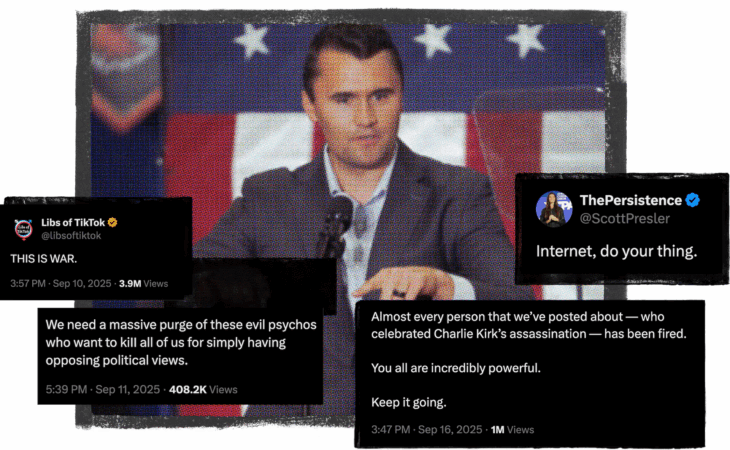
The punishments have often been driven by social media campaigns that circulate screenshots of the offending remarks, along with the names and phone numbers of employers, and appeals such as, “Internet, do your thing.” What typically follows are hundreds of angry or threatening messages, Reuters found. Several individuals who were targeted said in interviews they were inundated with phone calls. One recalled receiving a call every minute for an entire day. At least two said the harassment was so intense they plan to sell their homes.
Julie Strebe, a sheriff’s deputy in Salem, Missouri, lost her job after posting comments on Facebook about the shooting, including “Empathy is not owed to oppressors.” She later said she viewed Kirk as an oppressor because, in her words, he sought to marginalize vulnerable groups and used his platform to rally conservative white Christians behind “racist, sexist, hateful views.” She said her bosses were besieged with calls for her dismissal and that, at one point, a hand-drawn sign appeared across from her home reading, “Julie Strebe Supports the Assassination of Charles Kirk.”
Strebe said she installed five surveillance cameras at her home and now fuels her car only at night to avoid neighbors. Moving from Salem would mean leaving extended family, but she said the small city has grown too hostile to stay. “I just don’t feel like I could ever let my guard down,” she said in an interview. Strebe’s former employer, the Dent County Sheriff’s Office, declined to comment.
Many Republican officials have embraced the punitive campaign. Some have proposed extraordinary measures, including lifetime bans from social media for those deemed to be reveling in Kirk’s death. The U.S. State Department revoked visas for six foreigners who the agency said “celebrated the heinous assassination of Charlie Kirk.”
Speaking on a special episode of Kirk’s podcast on September 15, Vice President JD Vance urged his listeners to inflict consequences on those celebrating Kirk’s death.
“Call them out, and, hell, call their employer,” Vance said. Vance’s office pointed Reuters to comments made earlier this year in which the vice president said, “where I draw the line is encouraging violence against political opponents.”
Some academics compared the backlash to the “Red Scare,” the anti-Communist purge that peaked in the 1950s, when officials, labor leaders and Hollywood figures were accused of Communist ties. Thousands were investigated in a climate of fear that shaped U.S. politics and culture for a generation. There are “very disturbing parallels,” said Landon Storrs, a University of Iowa history professor.
Several prominent Republicans have voiced unease at the clampdown, especially after the Federal Communications Commission openly pressured broadcaster ABC to suspend talk show host Jimmy Kimmel following a monolog in which he suggested that Kirk’s assassin hailed from the political right. Police haven’t fully detailed the findings of their investigation into suspect Tyler Robinson and his motives. Robinson hasn’t entered a plea to the murder and other charges against him.
Republican Senator Ted Cruz warned on his podcast that letting government decide “what speech we like and what we don’t” sets a dangerous precedent. Silencing voices like Kimmel’s might feel good, he said, but “when it’s used to silence every conservative in America, we will regret it.” His spokesperson declined further comment.
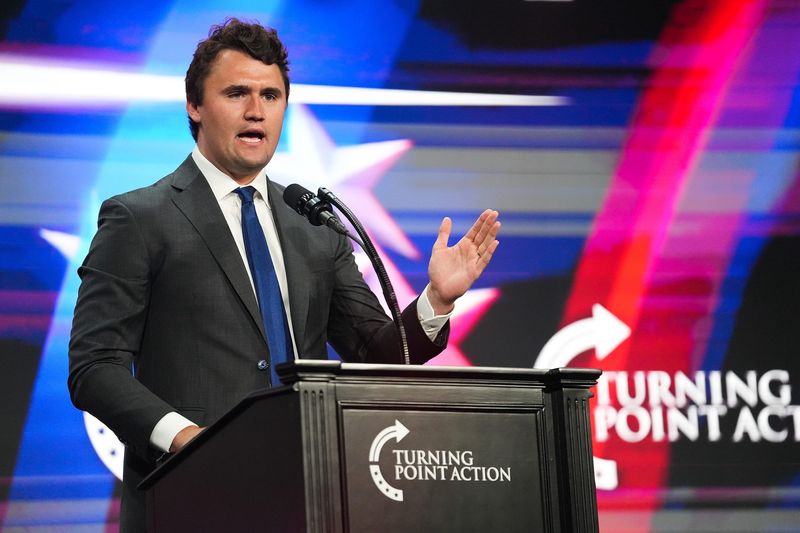
Charlie Kirk, founder of Turning Point USA, speaks in 2022.
‘Massive purge of these evil psychos’
The campaign to punish Kirk’s critics began almost immediately.
About 30 minutes after Trump’s announcement that Kirk had died, right-wing influencers mobilized. Among the first was Chaya Raichik, operator of the widely followed Libs of TikTok account, which had posted on X, “THIS IS WAR,” before highlighting a Massachusetts teacher who had written: “Just a reminder, We’re NOT offering sympathy.”
By night’s end, Libs of TikTok had published or reposted the professional details of 37 individuals, often accompanied by commentary such as “absolutely vile,” “Your tax dollars pay her salary,” or “Would you want him teaching your kids?”
“It’s actually terrifying how many of them are teachers, doctors and military members,” Libs of TikTok wrote the next day. “We need a massive purge of these evil psychos who want to kiII all of us for simply having opposing political views.”
In the week after the shooting, Libs of TikTok shared the names and profiles of at least 134 people accused of celebrating violence or mocking Kirk’s memory, frequently tagging Trump administration officials including Defense Secretary Pete Hegseth and Attorney General Pam Bondi. At times, the influencer posted disciplinary actions taken against specific government employees.
“BREAKING: This marine was fired,” Libs of TikTok posted on September 12, a day after calling out a Marine Corps captain. The officer had responded to Kirk’s death by posting an emoji of clinking beer mugs, according to a screenshot the influencer shared with followers. Reuters could not verify the authenticity of the beer-mug post; the captain declined to comment. Libs of TikTok also reported similar disciplinary actions involving an Army Reserve officer and an Army colonel who had commented on the death on social media.
The Pentagon and the Justice Department issued statements condemning celebrations of Kirk’s death but did not address questions about their relationship with Libs of TikTok.
Right-wing influencer Scott Presler began posting screenshots of Kirk commentary, too.
“Take a screenshot of EVERY single person celebrating today,” he told his followers on September 10. “You bet your behind we will make them infamous.” Over the next week, Presler shared posts on X about 70 people who had commented on the killing, and wrote in one message: “Almost every person we’ve posted about — who celebrated Charlie Kirk’s assassination — has been fired.” Presler didn’t respond to requests for comment.
For many on the right, outraged by celebratory reactions from the left, the wave of firings became a form of catharsis.
“It’s good that they are shamed and humiliated and must live with the repercussions for the rest of their lives,” right-wing podcaster Matt Walsh told his audience as he discussed the firings. “It’s good if they wake up every day until they die wishing they had not said what they said.” Asked for comment, Walsh emailed back: “f**k off.”
On YouTube, video blogger and recovery coach JD Delay expressed glee as he read aloud names of those who had lost their jobs over their remarks.
“I’m having fun! This is so much fun!” he shouted, raising his hands in excitement. Delay told Reuters that he believes in “accountability and consequences” and that “if you publicly say abhorrent things and get fired from your job, I’m going to laugh at you.”
The punishment campaign sometimes veered off course. In at least five cases, people were wrongly blamed for comments made by others. In another case, a website that drew up a blacklist called “Expose Charlie’s Murderers” vanished after taking in tens of thousands of dollars in cryptocurrency donations. Attempts to identify and seek comment from the site’s creators were unsuccessful.
President Donald Trump takes the stage during a memorial service honoring conservative activist Charlie Kirk in Glendale, Arizona, on Sept. 21, 2025.
Several online influencers said they received hundreds — sometimes thousands — of tips from individuals seeking to get Kirk’s detractors fired. Reuters was unable to verify those figures. But at various points, Presler, Libs of TikTok and other right-wing personalities publicly urged tipsters to be patient as they worked through the volume of submissions.
“Can’t keep up with all of you,” Presler wrote on X on September 12. “Post your submissions below & I’ll go through them as I can.”
A day later, the post had drawn more than 2,700 replies.
The tally of more than 600 people punished for criticizing Kirk is likely an undercount. Many companies and government organizations haven’t publicly disclosed terminations or suspensions.
Those punished came from at least 45 states and represented a cross-section of society, from soldiers and pilots to doctors, nurses and police officers.
In Michigan, an Office Depot employee was fired after being filmed refusing to print a poster memorializing Kirk. In Ohio, a Starbucks barista lost her job after she was accused of writing an anti-Kirk message on a cup of mint tea.
Reuters couldn’t determine the identities of the Office Depot worker or the barista. Office Depot and Kroger — the grocery store chain that runs the Ohio Starbucks — condemned the anti-Kirk incidents and said the people involved were no longer employees.
Requests to 21 federal agencies — including Homeland Security, Veterans Affairs and the Defense Department — for the number of suspensions or dismissals tied to the Kirk assassination were either ignored or declined. When the Office of the Director of National Intelligence was contacted, its deputy chief of staff responded on social media, accusing Reuters of trying to generate sympathy “for the ghouls who celebrate his death.”
Educators among the main targets
Teachers, academics and university administrators were among those most frequently punished for criticizing Kirk. More than 350 education workers were fired, suspended or investigated in the days following the assassination, including 50 academics and senior university administrators, three high school principals, two cheerleading coaches and a theology instructor.
The prominence of educators in the backlash may stem from several factors. As leaders tasked with shaping young minds, teachers have long been cast by some conservatives as ideologues who aim to pull their students left. Their status as taxpayer-funded employees made any perceived partisan commentary especially combustible.
In interviews and public statements, at least six teachers cited another reason for speaking out: concern over the frequency of gun violence at schools nationwide — and anger at those, like Kirk, who have championed widespread access to firearms.
Vaughn, the South Carolina kindergarten assistant, said that was front of mind when she went to Facebook to quote Kirk’s 2023 remark dismissing some fatal shootings as the price to pay to protect gun rights. Like other teachers across the country, she said she regularly practiced active-shooter drills at her elementary school and saw fear on her five-year-olds’ faces as they learned how to hide from a gunman.
As she defended her post on the day of Kirk’s death, she told a Facebook friend that she felt “no satisfaction” at the assassination. “Just heartbreak for everyone and anyone affected by gun violence and the hope that one day, enough will be enough.” Speaking to Reuters later, she said, “The one thing I want people to know is that my message was out of concern for the kids.”
Many educators did celebrate Kirk’s death, including a Virginia teacher who wrote, “I hope he suffered through all of it,” and a Texas middle school intern who said the shooting “made me giggle.” Screenshots of both posts were circulated by right-wing influencers. Reuters could not locate the original posts, which may have been deleted or made private. The Virginia teacher was suspended and the Texas intern was fired. Neither could be reached for comment.
While schools that suspended or fired educators cited disruptions to the learning environment, some private employers pointed to a violation of company values or safety concerns as the basis for terminations. Corporations caught up in the backlash gave a variety of explanations: Delta Air Lines CEO Ed Bastian said in a statement some employees’ comments were in “stark contrast” to the company’s values and violated its social media policy, while a United Airlines statement said the company had “zero tolerance for politically motivated violence or any attempt to justify it.”
At least a dozen Kirk critics who took pains to condemn the shooting also found themselves out of jobs or suspended, sometimes after Republican lawmakers got involved.
In the wake of Kirk’s death, Joshua Bregy, a climate scientist at Clemson University in South Carolina, shared another user’s Facebook post that read, in part: “No one should be gunned down — not a school child, not an influencer, not a politician — no one. But am I going to allow people to make a martyr out of a flawed human being whose rhetoric caused notable damage? Not a chance.”
The Clemson College Republicans reposted part of his message, labeling him “ANOTHER leftist professor” and calling for his termination. The post was amplified by right-wing influencers and Republican state lawmakers who threatened to defund the public university unless Bregy was fired.
Clemson initially pledged in a September 12 statement to “stand firmly on the principles of the U.S. Constitution, including the protection of free speech.”
The next day, Trump himself reposted a state lawmaker’s call to “Defund Clemson.” On September 16, after South Carolina’s House speaker and Senate president sent a letter to Clemson’s trustees demanding they “take immediate and appropriate action,” the school fired Bregy. Bregy’s Facebook post was “blatantly unprofessional” and “seriously prejudicial to the university,” Clemson said in a letter informing Bregy he had been dismissed.
Bregy is suing Clemson in a South Carolina federal court in a bid to be reinstated. His lawyer, Allen Chaney, said the academic would have kept his job “but for the really aggressive, coercive tactics of elected officials in South Carolina.”
Clemson, State House Speaker Murrell Smith and Senate President Thomas Alexander did not respond to requests for comment. Clemson has yet to file a response to Bregy’s suit.
In at least six other cases, Republican officials publicly threatened to deprive universities and schools of taxpayer funds unless specific critics of Kirk were fired.
Chaney, who serves as legal director of the South Carolina chapter of the American Civil Liberties Union, said the threats to defund Clemson and others crossed a constitutional line. “The government can’t police speech by pressuring third parties,” he said. Last year, the Supreme Court unanimously held that government officials cannot use their authority to “attempt to coerce” private parties into punishing or suppressing speech they dislike.
The threats to defund schools that resist firing Kirk’s critics were “stunning,” said Paul McGreal, a constitutional law professor at Creighton University Law School in Nebraska. “Government officials are threatening speakers with punishment because they disagree with what they’re saying. These are core First Amendment protections that they’re violating.”
Kirk praised as Christ’s ‘13th disciple’
Since Kirk’s assassination, many Republicans have cast him as a saintly champion of free expression. Evangelical figures have likened him to Saint Stephen, revered as Christianity’s first martyr. One Republican lawmaker told Congress “he’d have been the 13th disciple” had he lived in Biblical times. Trump compared Kirk to the ancient Greek philosopher Socrates, slain President Abraham Lincoln and assassinated civil rights icon Martin Luther King Jr. when posthumously awarding him the Presidential Medal of Freedom.
Kirk’s legacy is complicated, however. He gained fame for debating college students as part of his work with Turning Point. Kirk also advocated criminalizing expression – such as pornography – that clashed with his Christian views. When Black football players started kneeling during the national anthem in protest at police brutality, he backed Trump’s call to strip the National Football League of taxpayer subsidies. The White House later said Trump was making a statement, not a proposal.
Kirk repeatedly denigrated minorities, calling transgender people an “abomination,” warning of “prowling Blacks” in cities, accusing wealthy Jews of stoking “hatred against Whites,” and declaring Islam incompatible with Western civilization. He also dismissed Pope Francis as a Marxist.
Some of those who spoke out against Kirk after his death said they were disturbed by the hagiography.
“I just felt compelled to remind people who he was and what he stood for,” Kimberly Hunt, a human resources worker in Arizona, said in an interview. She had posted a video captioned, “Save your tears for his victims, not him.”
In the video, Hunt cited Kirk’s record of using derogatory language about transgender people and Muslims, before adding that his children “are better off without him.” Hunt was fired soon after. Her employer, an Arizona construction firm, did not respond to requests for comment.
Hunt told Reuters she understood her words sounded harsh but stood by them. She said they reflected Kirk’s stance in a debate last year that if he had a 10-year-old daughter who was impregnated through rape, “the baby would be delivered.”
The retaliation has silenced many voices. Scores of people who posted anti-Kirk comments have since scrubbed or locked their accounts, Reuters found. Others said in interviews that they are pushing back.
Hunt said she has raised more than $88,000 from a GoFundMe campaign titled, “Doxxed, Fired, but Not Silenced.” She said she wants to use the money to further her education, become a content creator, and keep calling out people like Kirk.
“It’s definitely just emboldened me,” she said.
At least 19 lawsuits have been filed against employers who punished Kirk critics, state and federal court records show. At least two plaintiffs have succeeded, including an academic in South Dakota who got his teaching job back.
Karen Leader, an associate professor at Florida Atlantic University, took to social media after Kirk’s death to protest a narrative that he “was a shining inspiration to youth and a noncontroversial figure who just wanted to have open and civil dialog,” she said. “Anyone who’s in higher education knows that it’s not that simple.”
She noted that Turning Point rose to prominence through its Professor Watchlist, a site that encouraged students to report faculty for allegedly holding “radical left” views or being a “terror supporter.”
Kirk had described the Watchlist as an awareness tool, not a blacklist. Those on it have said in interviews, social media posts and public forums that it fostered harassment and intimidation. In 2023, a Turning Point reporter was accused of assaulting an Arizona professor who was on the watchlist after confronting him on camera about his sexuality and shoving him to the ground. The reporter admitted to harassment, assault and disorderly conduct and was ordered to complete a diversion program. A Turning Point cameraman admitted to harassment in the case.
On September 10, Leader began posting Kirk’s past statements on X. She said she made a mistake by incorrectly accusing Kirk of having uttered an ethnic slur and then deleted it. The rest of her posts she said she stands behind, including one highlighting Kirk’s claim that Black Americans were “better” during Jim Crow.
“None of it was me encouraging violence,” Leader said. “I was sharing evidence.”
Jordan Chamberlain, a former staffer of Florida Governor Ron DeSantis, shared screenshots of several of Leader’s posts and tagged her university, asking if it approved of the content. Libs of TikTok shared Leader’s faculty headshot. The university’s president announced she had been put on administrative leave. Her address and phone number appeared online, and menacing messages followed.
In one voicemail reviewed by Reuters, the caller said: “We’re coming to get you. Karen Leader, we know where you work. We’re gonna come to your home as soon as we have your location.” Leader said she has rarely left her apartment since.
She reported the threats to Boca Raton police, which referred the case to campus officers, according to a police report. Florida Atlantic University police said their report could not be released because of an active criminal investigation.
Florida Atlantic University confirmed Leader was one of three academics who were on leave pending investigations. It declined further comment. Chamberlain also didn’t return an email seeking comment.
“Whether my career is over or not, I don’t know,” Leader said. “But my life has changed.”
Pennsylvania State Police say three people are dead after a vehicle fled from a traffic stop and crashed in Chester County early Friday.
Around 1:20 a.m., state police troopers saw the silver Toyota sedan violate traffic laws near East Third Street and Garner Drive in New Garden Township, according to police.
When officers tried to conduct a traffic stop, “the vehicle failed to stop and a pursuit ensued,” police said.
“Soon after the pursuit ensued, the fleeing vehicle crashed, and the three occupants of the fleeing vehicle are deceased,” state police said in a news release.
No police officers were injured. State police were working to identify the deceased and notify their families.
Early-morning TV news reports showed a mangled car next to a tree and a fence. The crash happened in Avondale on Gap Newport Pike between Sharp Road and Limestone Road, according to news reports.
President Donald Trump may no longer be a fan of Shane Gillis after listening to the comedian’s most-recent podcast.
Gillis, a Mechanicsburg, Pa., native, joked about the possibility 79-year-old Trump is beginning to show signs of mental decline on the most-recent episode of Matt and Shane’s Secret Podcast, which he co-hosts with fellow comedian Matt McCuster.
While Gillis expressed some sympathy for Lucey, he also joked about whether she deserved to be corrected by Trump and how awkward the plane flight must have been following the exchange.
“Think if you were next to her and hated her,” Gillis said.
Watch (caution: strong language):
Lucey, who has not spoken publicly about the matter, spent 12 years as a reporter at the Philadelphia Daily News covering everything from police corruption to local news. She left in 2012 and spent time reporting for the Associated Press and the Wall Street Journal before joining Bloomberg in March.
“Our White House journalists perform a vital public service, asking questions without fear or favor,” a Bloomberg News spokesperson told the Guardian. “We remain focused on reporting issues of public interest fairly and accurately.”
White House press secretary Karoline Leavitt defended Trump’s insult of Lucey, telling reporters Thursday the president “calls out fake news when he sees it and gets frustrated with reporters who spread false information.”
There’s no indication Lucey was spreading false information while asking Trump about the Epstein files.
After being fired by Saturday Night Live in 2019, Gillis has risen to fame in part thanks to his unflattering yet sympathetic portrayal of Trump. Gillis has amassed a huge audience of MAGA fans, including the president himself.
Gillis, an Eagles fan, met with Trump at the Super Bowl in New Orleans alongside country music star Zach Bryan.
At the Super Bowl, Trump meets comedian Shane Gillis and country star Zach Bryan. Both are big Eagles fans. pic.twitter.com/tHlKH03zpq
“Well, he’s a very good … I mean, on our side, right?” Trump later said in an interview with the Spector editor Ben Domenech, with the president adding he was a fan of Gillis and likes “everybody that’s on my side.”
Gillis recalled the meeting during an episode of his podcast, describing the room as “intense” thanks to the heavy presence of Secret Service agents.
“I finally had the moment — quick handshake,” Gillis said, though adding that Trump “has no idea who I am.”
Joe Rogan and Theo Von not-so-quietly cooling their support of Trump
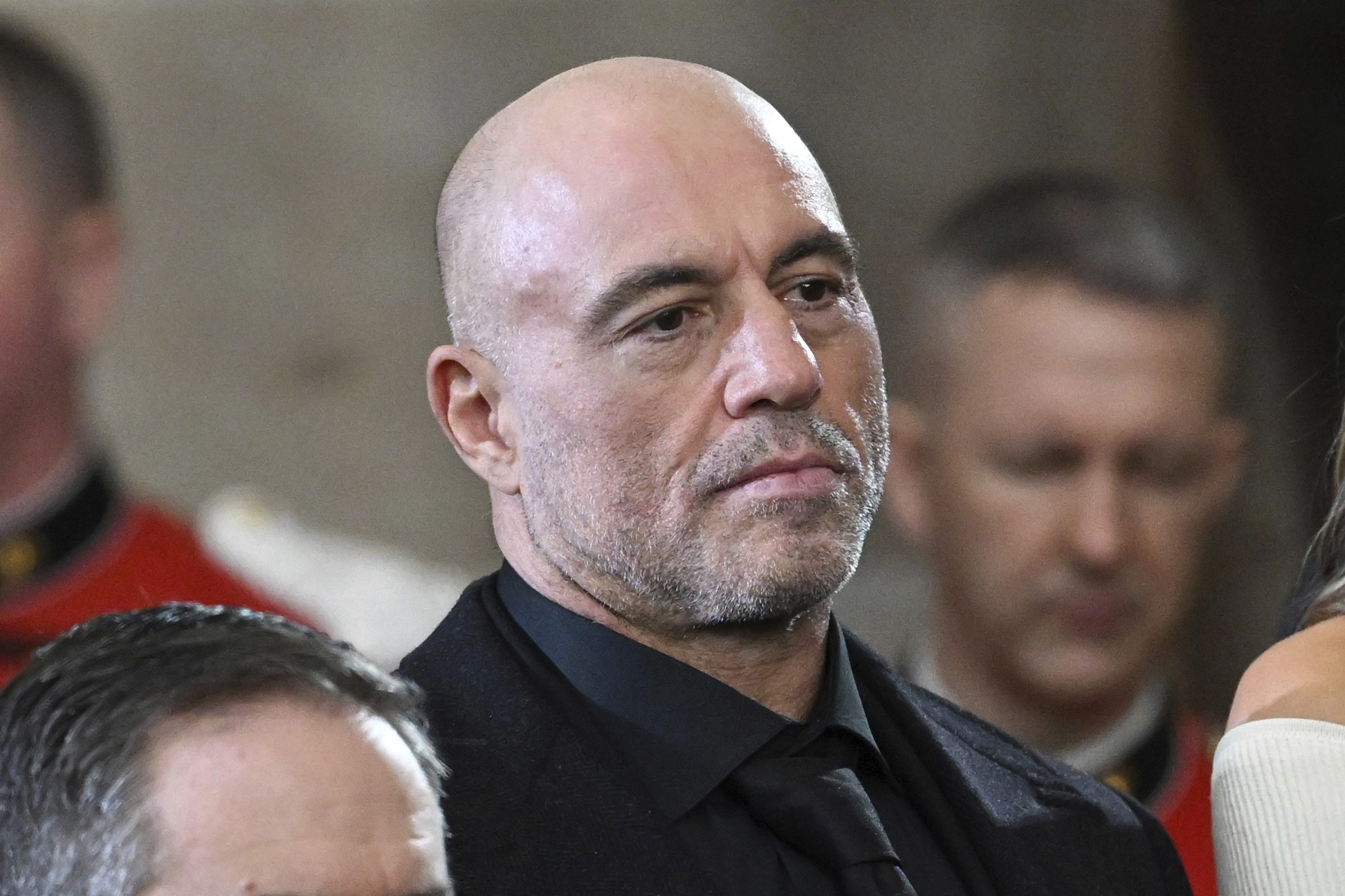
Joe Rogan at President Donald Trump’s inauguration in January.
Gillis is just the latest comedian within the so-called “manosphere” to begin to peel back their support of Trump.
Joe Rogan, host of the popular The Joe Rogan Experience podcast, mocked Trump over his handling of the Epstein files.
“I heard ‘there’s no files,’ I heard ‘it’s a hoax,’ ” Rogan said on the most-recent episode of his podcast. “And then all of a sudden, he’s going to release the files. Well, I thought there was not files.”
Rogan famously endorsed and interviewed Trump ahead of the 2024 election, with the episode reportedly drawing over 40 million listeners. He also attended Trump’s inauguration but recently has been criticizing the president over everything from U.S. Immigration and Customs Enforcement raids and mass deportations to his continued lies about the 2020 election.
“I feel like if you say that, you’ve got to have some, like, really good evidence that you could give out,” Rogan said on his podcast earlier this month about the 2020 election. “Either you don’t have any evidence that they stole the election, or you have evidence and you’re not telling me. Why would you not tell me? Why would you not tell me?”
Theo Von at Trump’s inauguration.
Theo Von, host of the This Past Weekend podcast, also interviewed Trump and attended his inauguration, but called out his administration after the Department of Homeland Security took a joke out-of-context and used it in a pro-deportation social media video that was later deleted.
“My father immigrated here from Nicaragua. One of my prized possessions is I have his immigration papers from when he came here. I have them in a frame,” Von said on his podcast last month.
The package was mailed from New Jersey, which should have been the first clue.
Inside was a cigar box rigged to resemble a bomb, and it was delivered on the afternoon of Nov. 21, 1960, to the office of TV host Dick Clark.
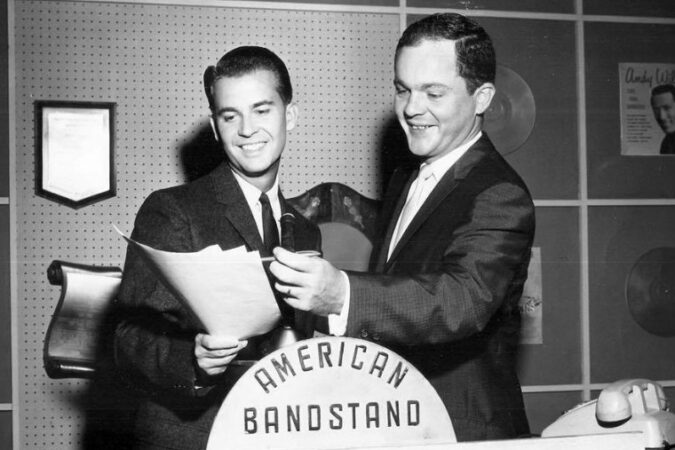
Clark, a week away from his 31st birthday, was the star of the nationally televised ABC program American Bandstand, which was filmed at WFIL-TV studios at 46th and Market Streets. He was filming his afternoon program when the parcel arrived shortly after 3 p.m.
His secretary received the package, and as she started to untie the brown-paper wrapping, the cigar box became visible. One side of the box had been removed, and she spotted a net of wires and a five-inch piece of copper tubing.
Police quickly arrived and inspected the device, and took it to their headquarters for further evaluation. And while it looked like a crudely constructed explosive device, police and postal leaders told The Inquirer that it was missing two key components: powder and a fuse.
There were no actual explosives in the box, and the device couldn’t have set any off.
It contained what at first appeared to be a blasting cap, but after closer examination was identified as a piece of tree bark.
“The package was obviously the work of a crank,” the officials told The Inquirer.
Philly Police, the U.S. Postal Service, and the FBI took part in the investigation, but no culprit was ever publicly identified.
TV staffers were still jumpy a few weeks later when an unmarked gift package that resembled the faux bomb arrived at Clark’s office.
Responding police, taking no chances, carried it across the street and into the middle of Drexel University’s athletic field.
When they finally got the courage to open it, out popped a shaggy, stuffed dog.
All packages from then on, The Inquirer quipped, should carry a notation: