Category: News

Latest breaking news and updates

  • The city spent millions to grow one anti-violence nonprofit. Instead, it nearly imploded.

    The city spent millions to grow one anti-violence nonprofit. Instead, it nearly imploded.

    Philadelphia and state officials awarded more than $6 million in taxpayer funds over the last five years to a politically connected but financially unstable anti-violence nonprofit, despite repeated warnings from city grant managers about improper spending and mismanagement, an Inquirer investigation has found.

    The group — New Options More Opportunities, or NOMO Foundation — received city and state anti-violence grants and locally administered federal dollars to expand its youth programs and launch a new affordable housing program. The money fueled NOMO’s rapid rise from a small, grassroots outfit into a sprawling nonprofit that took on expenses it ultimately could not afford.

    Mayor Cherelle L. Parker has publicly touted NOMO’s work in the community, and she further boosted its profile by naming its director to her transition team upon taking office. But behind the scenes, Parker administration staffers watched NOMO face mounting financial pressures over the last two years.

    In that time, the organization has been hit with multiple eviction filings and an IRS tax lien, and had to lay off staff and suspend programming. Most significantly, NOMO had to terminate its housing initiative last year — displacing all 23 low-income households that had been its tenants.

    The warning signs were evident years earlier. Records obtained under Pennsylvania’s Right to Know Law show that city grant managers expressed concerns as far back as 2021 about NOMO’s lack of financial controls, incomplete balance sheets, and chronic inability to provide basic documents. As recently as last year, the city was unaware who sat on the group’s board.

    Yet records show city officials kept propping up the group with more funds, without successfully putting in place the kind of structural support that might have kept it from foundering. Last year, the city sought to award a $700,000 federal homelessness prevention contract to NOMO, but the nonprofit was unable to meet the conditions of the contract and the funds were never disbursed. Officials also proposed writing more funding to NOMO into last year’s city budget as a last-minute line item. That effort failed.

    In a September interview, NOMO executive director Rickey Duncan blamed city officials for funding delays.

    “I was breaking my back to make sure those young people were getting housed,” Duncan said. “We built a tab that was so big we couldn’t pay no more, because the city didn’t pay.”
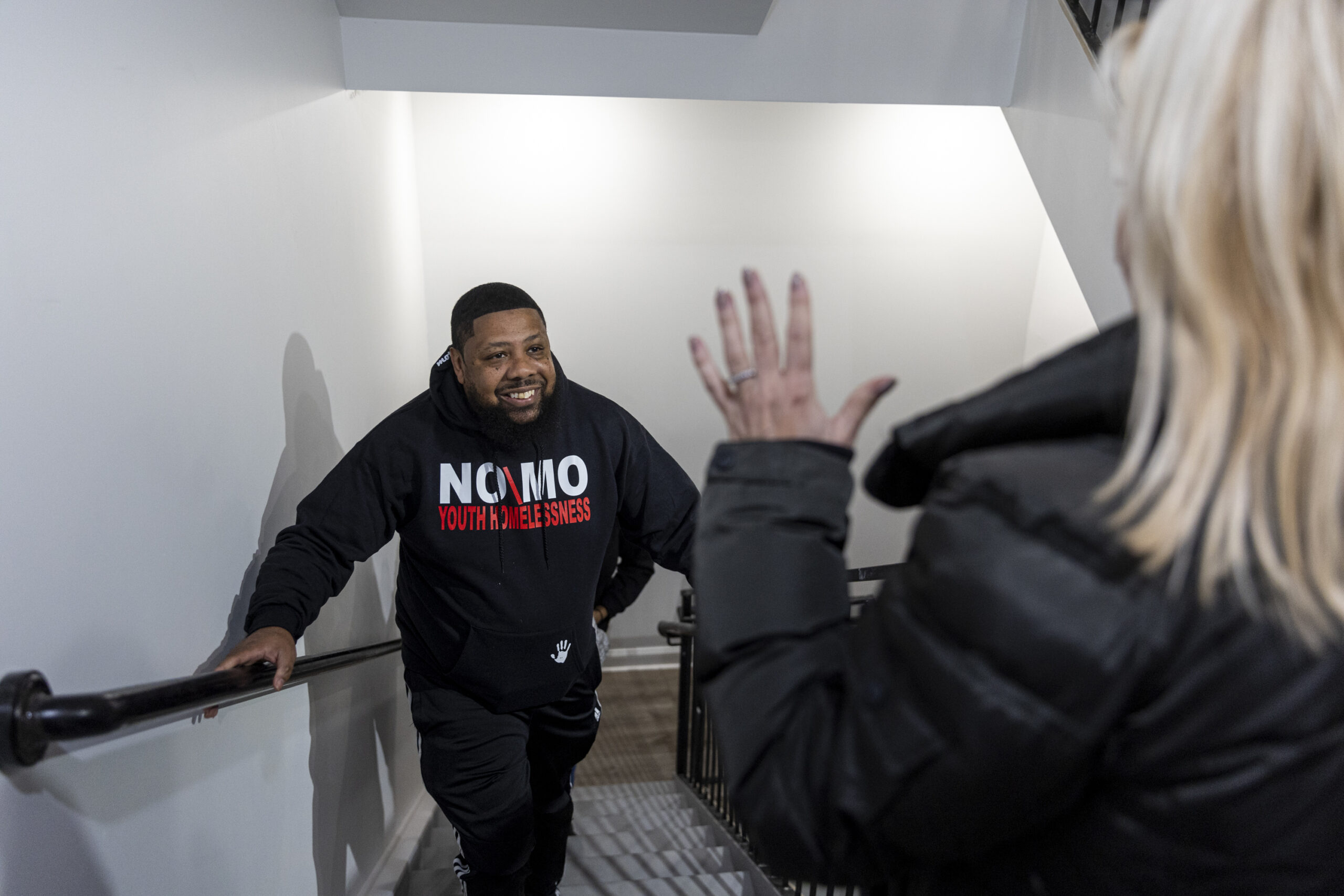
    Rickey Duncan surprised a group of young women with apartments in a December 2022 file photograph. Last year, NOMO gave up the leases for the apartments citing a lack of funding.

    Much of the money awarded to NOMO came via Philadelphia’s Community Expansion Grant (CEG) program, launched in 2021 to respond to record gun violence and support alternatives to policing. NOMO was one of only two initial grantees to receive the maximum $1 million award, which was meant to help the group scale up its operations and serve more at-risk youth.

    A series of Inquirer investigations has shown that the CEG program’s politicized selection process awarded grants to fledgling nonprofits sometimes ill-equipped to manage the funds. The city controller in 2024 corroborated many of The Inquirer’s findings, and late last year the Philadelphia District Attorney’s Office charged nine police officers with conspiracy and theft of CEG funds.

    NOMO’s financial records detail spending that quickly led to trouble after it received the first city grant, starting with the decision to devote most of the funds to launching a costly housing initiative while opening sprawling new youth centers to expand its after-school programs to new neighborhoods.

    Duncan signed annual building leases totaling $750,000, and increased his own salary from $48,000 in 2021 to $144,000 the next year. (Duncan said that his pay — now $165,000, according to the most recent tax filing — is below average for an organization of NOMO’s size and was previously lower because he was volunteering half his time.)

    The records contain no evidence that city grant managers questioned the lease expenses or conducted an evaluation of whether the upstart housing program was an appropriate addition to the organization’s core mission of offering after-school programming.

    By the start of last year, a tax lien and lawsuits over unpaid rent threatened NOMO’s existence. Still, Duncan asked the city in January 2025 to reimburse the roughly $9,000 cost of two Sixers season tickets he purchased a year earlier. He explained in a memo that the tickets were “an innovative tool for workforce development.”

    “Season tickets to the Sixers are not an acceptable programmatic expense,” the grant program manager responded in an email.

    Records show that city officials discovered in April that a $35,000 IRS lien, filed four months earlier, had rendered NOMO ineligible for grant funding. Grant administrators sent an email to NOMO staffers with a warning written in all-caps: “CEASE ALL SPENDING.”

    Duncan said that the lien was the result of a missing signature on a tax form, and that it was eventually resolved at no cost. But in a June email to Public Safety Director Adam Geer and other city officials, he accused the city of pushing his organization to the brink of collapse.

    “I am respectfully requesting a written response detailing how a tax [lien] escalated into a comprehensive investigation into the NOMO Foundation’s financial health,” Duncan wrote. “NOMO has been disrespected, attacked, and harassed, by members of this office on this and previous occasions.”

    The funding was eventually restored last August.

    Duncan and his nonprofit have maintained support from the city’s top elected leaders. Parker name-checked NOMO in her first-ever budget address, and City Council President Kenyatta Johnson appointed Duncan last year to an anti-violence task force.
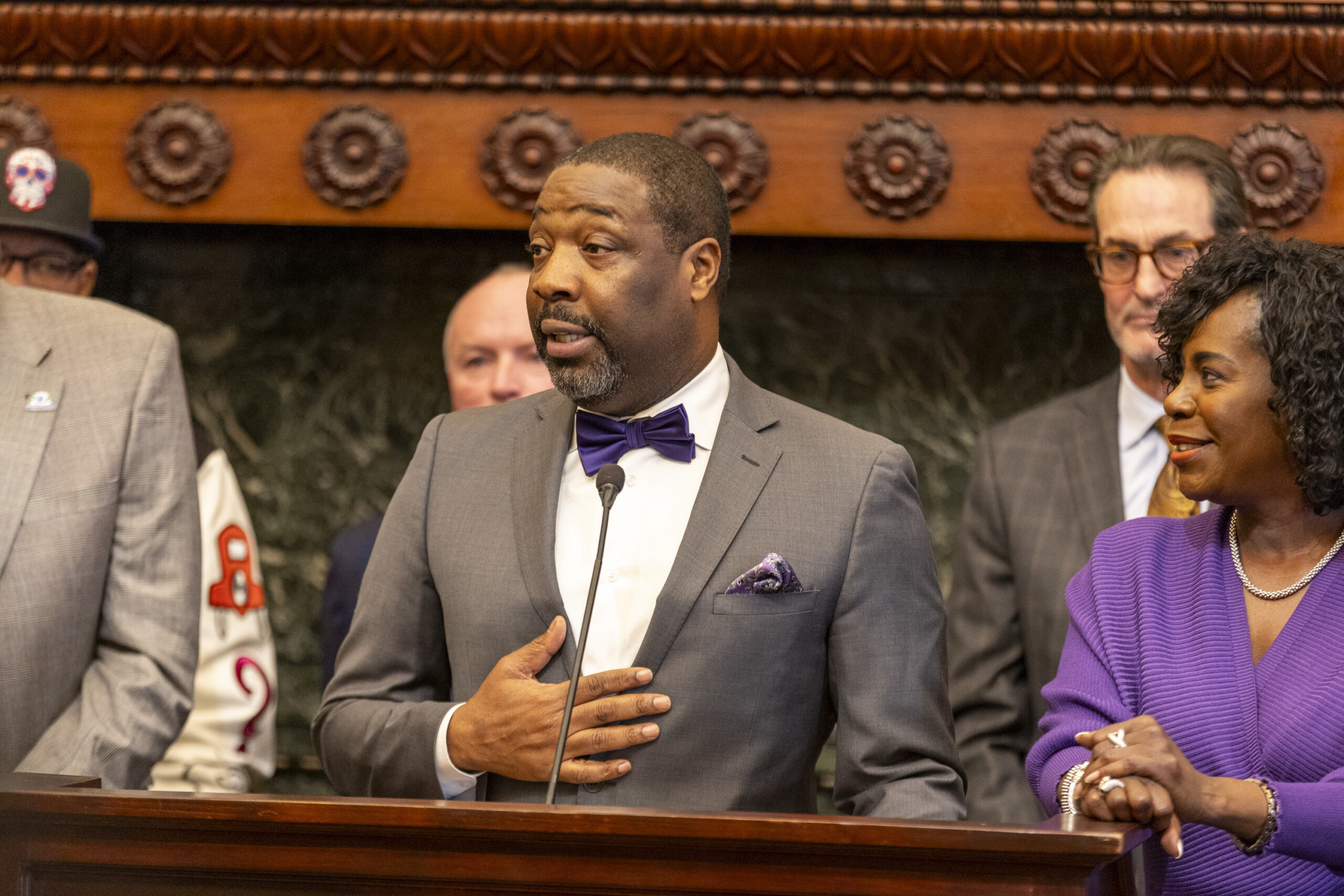
    City Council President Kenyatta Johnson, speaking on Jan. 20. Regarding NOMO, he says, “It is crucial that any concerns are taken seriously.”

    In a statement responding to The Inquirer’s findings, Johnson praised NOMO and credited the organization with “working with children throughout Philadelphia, intervening in cycles of violence, and literally saving lives in our community.”

    Johnson, who was listed as a reference on the group’s most recent grant application, added: “Regarding any allegations raised against Mr. Duncan and NOMO, I am confident that the City of Philadelphia’s Office of Public Safety will review these matters thoroughly, fairly, and professionally. It is crucial that any concerns are taken seriously and examined through the proper channels, with facts guiding the outcome.”

    A spokesperson for Parker referred questions to the Philadelphia Office of Public Safety, which manages CEG grants.

    In a written response, a spokesperson for the department, Jennifer Crandall, praised NOMO’s efforts.
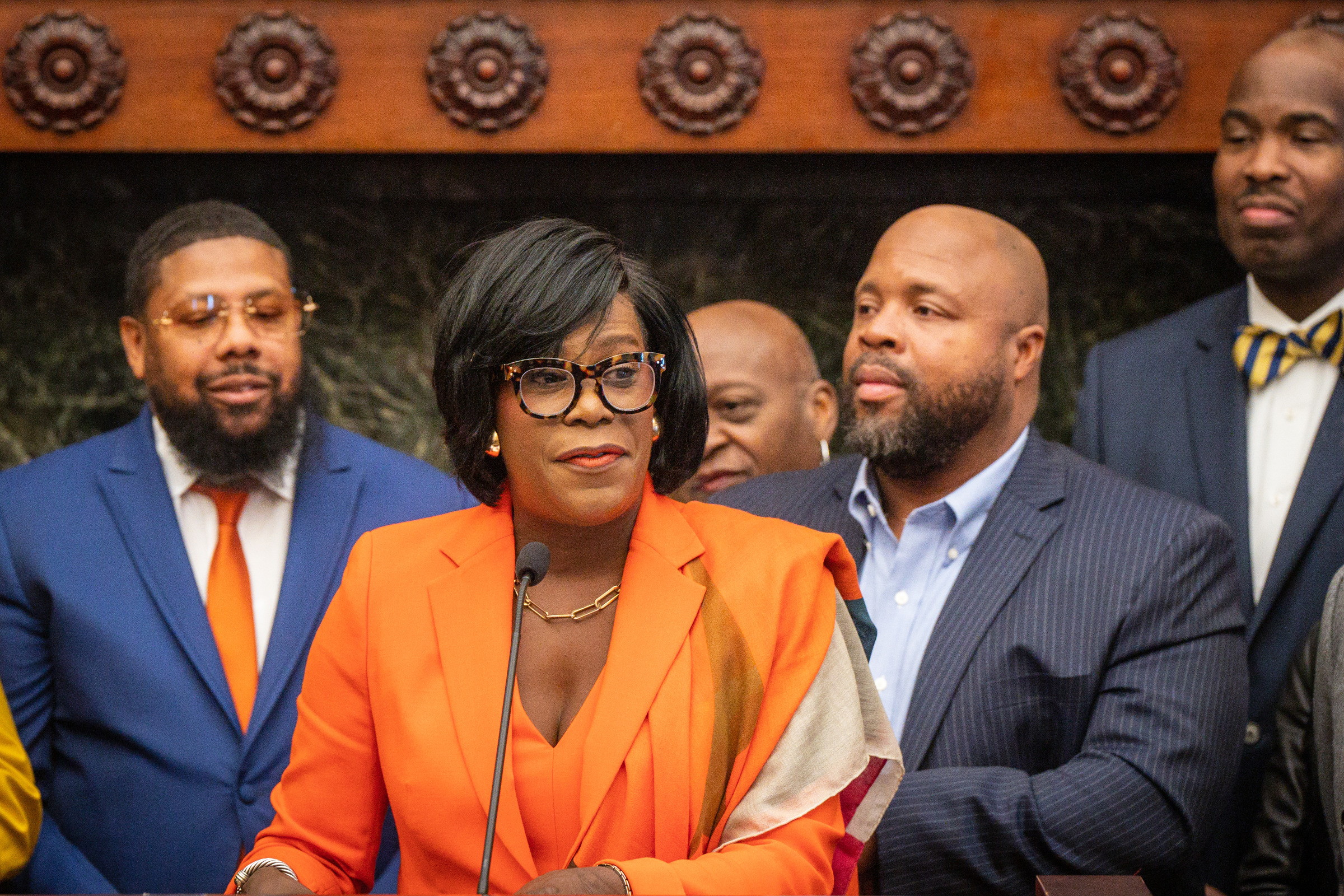
    Rickey Duncan (left) and then Mayor-elect Cherelle Parker at a news conference that outlined Parker’s transition team and the plans that she had for her administration on Nov. 9, 2023.

    “Not only has NOMO delivered on grant-funded programs, it has become an important partner on city initiatives like interventions with at-risk youth,” Crandall wrote. She cited evaluations by an unnamed third party that credited NOMO for providing “holistic support to participants … beyond the immediate program activities” and “addressing the broader social determinants of violence.”

    Crandall did not respond to a follow-up request for the evaluation.

    Duncan gave The Inquirer a 2023 report prepared by four nonprofit partners that evaluated CEG recipients in their first year, with the intention of documenting program goals and activities. The report states that the evaluation was based on a single site visit, interviews with staff, and a youth focus group, and that it was then too soon to evaluate impact. It noted that NOMO had retained more than half its participants over the grant cycle and had created “an environment that is welcoming and comfortable, so that participants willingly show up.”

    The assessment did not address the viability of the housing program, nor did it cite any metrics that might be used to gauge whether NOMO’s programs had reduced community violence.

    Duncan also sent The Inquirer written statements from two landlords indicating that their court cases against him had been resolved, and that they support NOMO’s mission.

    He says NOMO is now financially stable, despite three years of tax returns showing the nonprofit in the red. He said NOMO’s programs now serve about 140 children a year across its three locations — about the same as when it was operating in just one location in 2019 and before the city awarded the expansion grants.

    Laura Otten, a nonprofit consultant and former director of La Salle University’s Nonprofit Center, said it was clear the city’s grant awards to NOMO had not fulfilled their stated goals.

    “It obviously didn’t work if they ended up having to evict people,” she said. “Where is the evidence that this grant has improved the capacity of the organization?”

    Dawan Williams (left), vice president of restorative justice for the Nomo Foundation, and Rickey Duncan, Nomo CEO and executive director, in one of the student spaces at the foundation on South Broad Street on April 13, 2023.

    ‘Significant weaknesses noted’

    When Parker laid out her priorities in her first budget address before City Council in spring 2024, she mentioned Duncan and NOMO by name as she praised the grassroots anti-violence organizations “working each day to lessen the pain and the trauma caused by gun violence.” She also promised to reward the various groups with an additional $24 million in grant funding.

    It was another highlight of Duncan’s well-documented redemption story. By his own account, he dropped out of South Philadelphia High School in 1994 to sell drugs and promote concerts, earning the nickname “Rickey Rolex” for his flashy style. He was arrested the next year for robbery and spent more than a decade in prison. After he was released in 2015, Duncan began volunteering with NOMO, then a fledgling nonprofit, and eventually took the reins.

    “My vision started off, to be honest, just wanting to help kids and give back to a city that I took from,” Duncan said in a 2023 interview with The Inquirer.

    NOMO began as a largely volunteer-run effort operating in borrowed space on less than $50,000 a year, tax returns show.

    In 2019, the tiny nonprofit submitted a grant application to Philadelphia Works, the city’s workforce development board, which was tasked with distributing about $6 million in federal Temporary Assistance for Needy Families (TANF) grants. NOMO proposed after-school programs that would teach up to 125 kids everything from neuroscience to software development to road construction.

    Philadelphia Works awarded NOMO $209,000, skipping the standard financial review in order to disburse funds that would have otherwise expired.

    “It breathed life into us,” Duncan said.

    Rickey Duncan speaks with kids at a NOMO after-school program in a 2021 file photograph.

    By 2021, NOMO was receiving half a million dollars annually in TANF money — enough to lease a 7,000-square-foot office space on North Broad Street and support programs for more than 100 young people. And Duncan’s star was rising as a charismatic and credible voice who came up from the same streets that he and others were working to rid of violence. Elected officials and news media alike turned to him for quotes and photo ops amid a surge in shootings.

    In December 2021, then-Mayor Jim Kenney announced a $155 million investment in gun violence prevention funding. The plan included a $22 million grant program, with more than half that focused on “supporting midsized organizations with a proven track record” to “expand their reach, deepen their impact, and achieve scale.”

    Duncan’s scrappy, homespun nonprofit was exactly the type of group city officials had in mind when they created the CEG program, and his grant application cited support from State Reps. Danilo Burgos and Elizabeth Fiedler. Although 30 other nonprofits received funding, NOMO was one of only two organizations awarded the maximum grant of $1 million — a transformative sum that would roughly triple NOMO’s operating budget.

    In his first application for the CEG funds, Duncan pledged to expand his “trauma informed” after-school program to South Philadelphia by offering paid work experience, academic support, and intensive case management. The $1.4 million proposed budget projected the organization would spend about $1 million annually on staff salaries and participation incentives for teens, while spending $94,000 a year to cover added lease costs.

    NOMO devoted just one sentence of its 15-page grant application to describing a new affordable housing initiative “to combat youth homelessness.” The proposal did not include what metrics would be used to judge that program’s success.

    Despite the brief mention, the housing initiative would become the organization’s largest single budget item, by far.

    After securing the city grant money, NOMO took on a $552,000 annual lease for a newly built 27,000-square-foot West Philadelphia apartment complex near 40th Street and Lancaster Avenue. It also signed a $192,000-per-year lease for a 17,000-square-foot former culinary school on South Broad Street.

    The deals left NOMO with youth centers in North, South, and West Philly, each with large event spaces that could host its programming. Duncan also planned to market the venues for private events — such as weddings and Eagles watch parties — to generate additional revenue.

    NOMO students bounced a basketball in the ballroom at the nonprofit’s South Broad Street youth center. The space is offered for event rentals, which Duncan said can generate crucial unrestricted income.

    If city officials had concerns about NOMO’s costly expansion strategy or the viability of his plan to lease out the youth centers for parties, they are not reflected in the available records.

    However, staffers at the Urban Affairs Coalition — a nonprofit the city had contracted to manage the first round of the grant program — flagged NOMO’s general lack of financial controls in a December 2021 fiscal assessment of prospective grantees.

    “Significant weaknesses noted,” an Urban Affairs staffer wrote of NOMO in an email to then-anti-violence director Erica Atwood and other city officials. “No audited financials. No balance sheets presented even in the [IRS Form] 990s. Separation of Authority: Basically non-existent.”

    That month, the city instructed Urban Affairs to proceed with the scheduled grant advance of $200,000 and to work with NOMO to establish a remediation plan. Instead, grant administrators wrote that they were reassured after NOMO installed a new chief operating officer — who left the organization the following year.

    By the end of the grant cycle, Duncan was able to deliver a public relations win for NOMO. He appeared on Good Day Philadelphia in December 2022 to launch the housing plan with a surprise giveaway of the first of 23 brand-new apartments for young women, many of them single mothers.

    Duncan said NOMO’s housing program would cover 70% of rent costs for 18 to 24 months while enrollees seek employment and eventually move out on their own.

    “They’ll be getting their credit together so they can prepare to become a homeowner,” he told Fox 29. “We need money to finish doing this.”
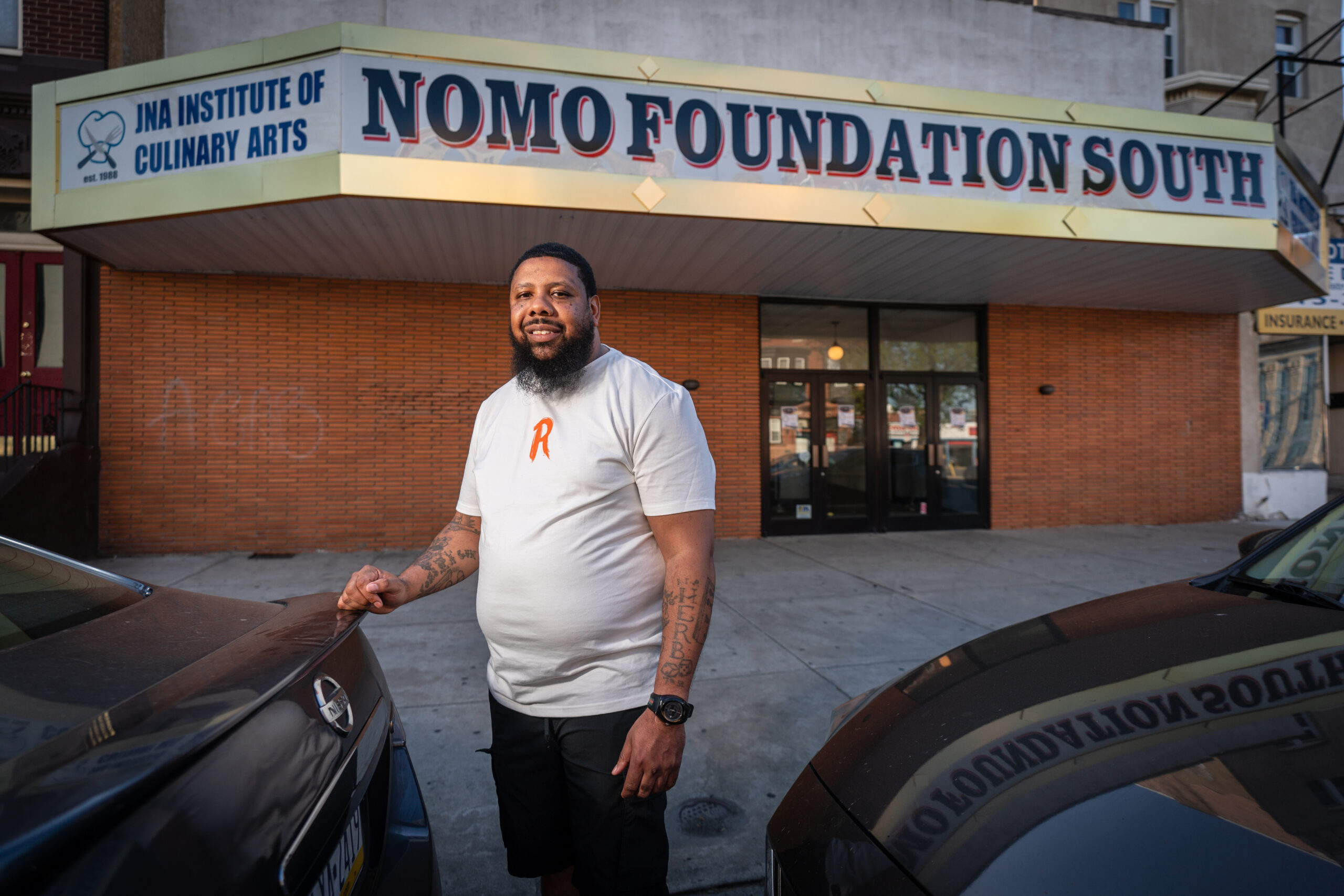
    Rickey Duncan, CEO and executive director, at Nomo on South Broad Street on April 13, 2023.

    Billion-dollar dream

    The city renewed NOMO’s grant in January 2024, this time for $850,000. But a tax return the same year showed the organization was already $710,000 in the red.

    Months later, the nonprofit faced its first eviction suit, targeting its North Broad headquarters, and had to cut a check for $275,000 in back rent — the equivalent of one-third of its city grant money for that year.

    By the fall of 2024, records show NOMO had spent only about 5% of the $150,000 initially budgeted for youth incentives, outside activities, equipment, or program supplies. The city withheld most of NOMO’s fourth-quarter grant funding, reducing the nonprofit’s award by $170,000 to a total of $680,000 for that year.

    Still, the city re-upped the group for a third grant in 2025, this time for $600,000.

    By January 2025, financial records show NOMO had virtually stopped spending on youth programming. It laid off most of its staff as landlords for all three youth centers took legal action against the nonprofit over hundreds of thousands of dollars of back rent.

    NOMO sought to justify the expense of Sixers season tickets with a narrative submitted to the city, which denied the expense. Duncan said the majority of the tickets went to youth participants and members of the community.

    Around then, NOMO received an infusion of support in the form of a $950,000 grant from the Pennsylvania Commission on Crime and Delinquency. But the TANF funds had run out, and the organization’s problems continued. City officials had NOMO submit a formal “performance enhancement plan” last July.

    Duncan said in September that NOMO had cut costs, hired a new accounting firm, and was working toward “full financial stability.” It resolved two eviction cases by reducing its real estate footprint — downsizing its North Philly headquarters into basement offices and terminating its affordable housing program. Duncan said the former tenants moved in with family members or were transferred to the nonprofit Valley Youth House, which provides transitional housing.

    After The Inquirer asked Duncan about the most recent lawsuit over back rent, this one for $312,000, his landlord filed notice in court that the matter was resolved. Duncan said keeping three youth centers and marketing the NOMO spaces for special events are key parts of his business plan as the organization continues to settle its debts.

    The spate of lawsuits has not dampened the city’s enthusiasm for Duncan’s nonprofit. Crandall, the spokesperson for the Philadelphia Office of Public Safety, said NOMO remains eligible to receive funds when a new round of grants are awarded this year.

    And with the housing initiative scrapped, NOMO is left pursuing its original mission — anti-violence programming for city youth. The organization’s renegotiated leases for its three youth centers now total $360,000 a year, roughly half what NOMO had been paying.

    In a 2023 interview, Duncan acknowledged that he underestimated the financial demands of running an organization on a citywide scale.

    “As a kid you think, … ‘If I can get a million dollars, I’ll be rich.’ And then you’re broke again,” he said then. “I had a billion-dollar dream. I didn’t realize it was a billion-dollar dream.”
    ACKNOWLEDGMENT
    The Inquirer’s journalism is supported in part by The Lenfest Institute for Journalism and readers like you. News and Editorial content is created independently of The Inquirer’s donors. Gifts to support The Inquirer’s high-impact journalism can be made at inquirer.com/donate. A list of Lenfest Institute donors can be found at lenfestinstitute.org/supporters.

  • Shooter in British Columbia, Canada, killed 9 people at a school and home, police say

    VANCOUVER, British Columbia — A shooting at a school in remote northern British Columbia left seven people dead, while two more were found dead at a nearby home, Canadian authorities said Tuesday. A woman believed by police to be the shooter was also found dead, apparently from a self-inflicted wound.

    The Royal Canadian Mounted Police said more than 25 people were wounded, including two who were airlifted to hospital with life-threatening injuries, after the shooting at Tumbler Ridge Secondary School.

    School shootings are rare in Canada, which has strict gun control laws.

    The town of Tumbler Ridge in the Canadian Rockies is more than 1,000 kilometers (600 miles) northeast of Vancouver, near the provincial border with Alberta. The provincial government website lists Tumbler Ridge Secondary School as having 175 students from Grades 7 to 12.

    British Columbia Premier David Eby told reporters that police officers reached the school within two minutes.

    A video showed students walking out of the school with their hands raised as police vehicles surrounded the building and a helicopter circled overhead.

    Police found six people dead, a statement said. A seventh person died while being transported to a hospital, and two more were found dead at a residence the authorities believe was connected to the attack. A suspect appeared to have died of a “self-inflicted injury.”

    RCMP Superintendent Ken Floyd told reporters that investigators had identified a female suspect but would not release a name, and that the shooter’s motive remained unclear. He added that police are still investigating the connection between the shooter and the victims.

    Tumbler Ridge Mayor Darryl Krakowka said the whole community is grieving.

    “I broke down,” he said, saying it was “devastating” to learn how many had died in the community of 2,700, which he called a “big family.”

    “I have lived here for 18 years,” Krakowka said. “I probably know every one of the victims.”

    The Rev. George Rowe of the Tumbler Ridge Fellowship Baptist Church went to the recreation center where the victims’ families were awaiting more information.

    “It was not a pretty sight. Families are still waiting to hear if it’s their child that’s deceased and because of protocol and procedure, the investigating team is very careful in releasing names,” Rowe said. “The big thing tonight was my having to walk away and the families still waiting to find out. It is so difficult. Other pastors and counselors are there, so they are not alone.”

    Rowe once taught at the high school and his three children graduated from there.

    “To walk through the corridors of that school will never be the same again,” he said.

    Canadian Prime Minister Mark Carney said in a social media post that he was devastated by the shooting.

    “I join Canadians in grieving with those whose lives have been changed irreversibly today, and in gratitude for the courage and selflessness of the first responders who risked their lives to protect their fellow citizens,” he wrote.

    Carney’s office said he is suspending a planned trip to Halifax, Nova Scotia and Munich, Germany. He was set to announce a long-awaited defense industrial strategy in Halifax on Wednesday before heading to Europe for the Munich Security Conference.

    Eby, the province’s premier, told reporters he had spoken to Carney after what he called the “unimaginable tragedy.”

    “I know it’s causing us all to hug our kids a little bit tighter tonight,” he said. “I’m asking the people of British Columbia to look after the people of Tumbler Ridge tonight.”

    Canada’s government has responded to previous mass shootings with gun control measures, including a recently broadened ban on all guns it considers assault weapons.

    Tuesday’s shootings were Canada’s deadliest rampage since 2020, when a gunman in Nova Scotia killed 13 people and set fires that left another nine dead.

  • A person has been detained for questioning in the disappearance of Nancy Guthrie, AP sources say

    A person has been detained for questioning in the disappearance of Nancy Guthrie, AP sources say

    TUCSON, Ariz. — A person has been detained for questioning in the disappearance of Nancy Guthrie, according to two people familiar with the matter.

    The people said the person was detained in an area south of Tucson on Tuesday. They did not immediately provide additional details, and it wasn’t clear if the person being questioned is the person captured on surveillance video from outside Guthrie’s house released earlier Tuesday.

    The people were not authorized to discuss details of an ongoing investigation and spoke to The Associated Press on condition of anonymity.

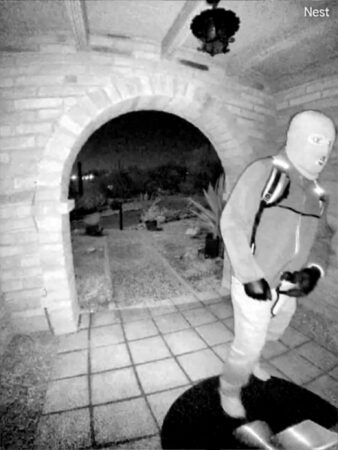
    The FBI released surveillance images of a masked person with a handgun holster outside Guthrie’s front door the night she vanished, offering the first major break in a case that has gripped the nation for more than a week.

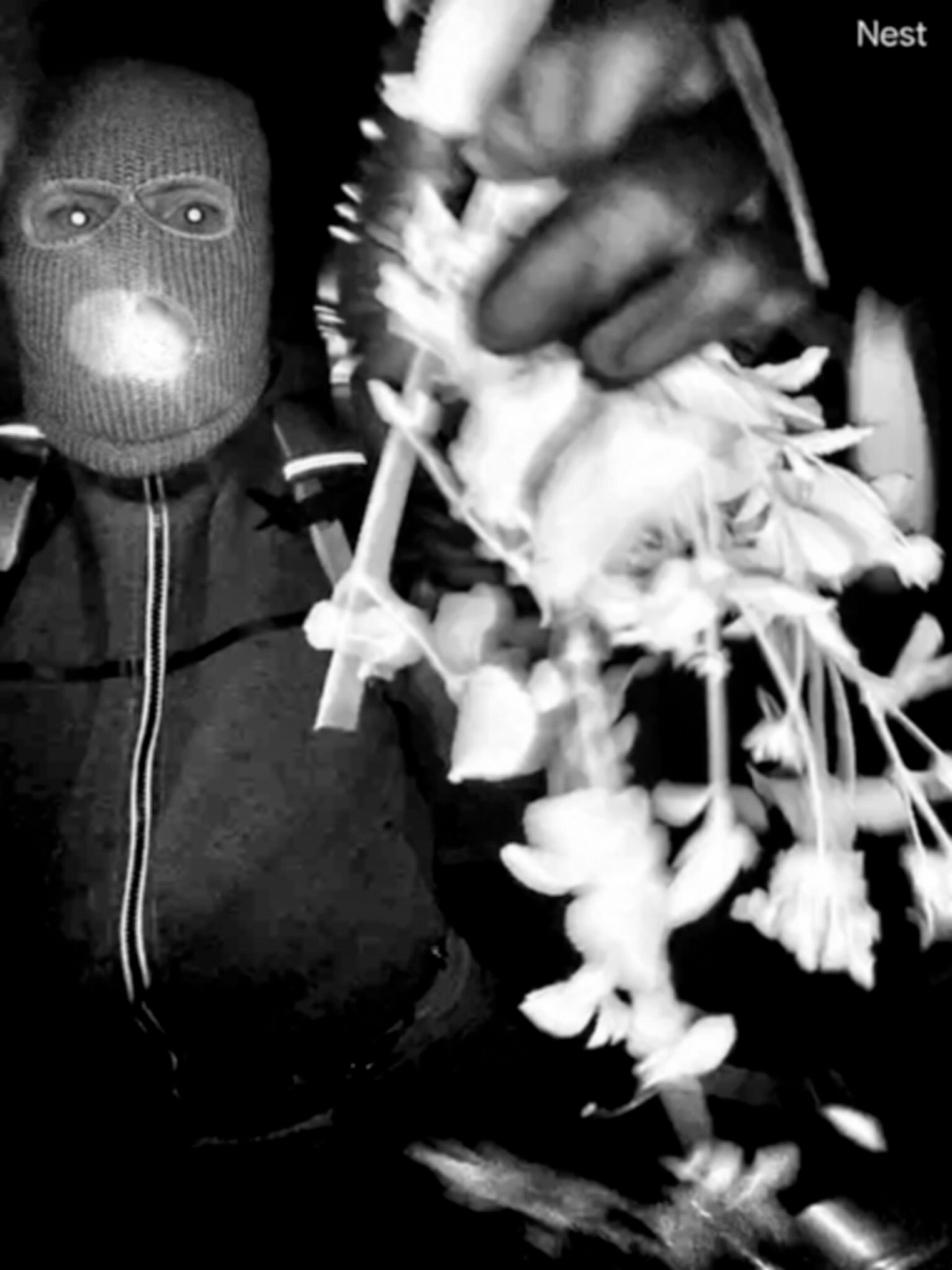
    The person wearing a backpack and a ski mask can be seen in one of the videos tilting their head down and away from a doorbell camera while nearing an archway at the home of the mother of “Today” show host Savannah Guthrie.

    The footage shows the person holding a flashlight in their mouth and trying to cover the camera with a gloved hand and part of a plant ripped from Nancy Guthrie’s yard.

    The videos — less than a combined minute in length — gave investigators and the public their first glimpse of who was outside Nancy Guthrie’s home just outside Tucson, but the images did not show what happened to her or help determine whether the 84-year-old is still alive.

    FBI Director Kash Patel said the “armed individual” appeared to “have tampered with the camera.” It was not entirely clear whether there was a gun in the holster.

    The videos were pulled from data on “back-end systems” after investigators spent days trying to find lost, corrupted or inaccessible images, Patel said.

    “This will get the phone ringing for lots of potential leads,” said former FBI agent Katherine Schweit. “Even when you have a person who appears to be completely covered, they’re really not. You can see their girth, the shape of their face, potentially their eyes or mouth.”

    By Tuesday afternoon, authorities were back near Nancy Guthrie’s neighborhood, using vehicles to block her driveway. A few miles away, law enforcement was going door-to-door in the area where daughter Annie Guthrie lives, talking with neighbors as well as walking through a drainage area and examining the inside of a culvert with a flashlight.

    Investigators have said for more than a week that they believe Nancy Guthrie was taken against her will. She was last seen at home Jan. 31 and reported missing the next day. DNA tests showed blood on her porch was hers, authorities said.

    She has high blood pressure and issues with mobility and her heart, and she needs daily medication, officials have said.

    This image provided by the FBI shows surveillance images at the home of Nancy Guthrie the night she went missing in Tucson, Ariz. (FBI via AP)

    Authorities initially could not pull images from camera

    Until now, authorities have released few details, leaving it unclear if ransom notes demanding money with deadlines already passed were authentic, and whether the Guthrie family has had any contact with whoever took Nancy Guthrie.

    Savannah Guthrie posted the new surveillance images on social media Tuesday, saying the family believes Nancy Guthrie is still alive and offering phone numbers for the FBI and county sheriff. Within minutes, the post had thousands of comments.

    Investigators had hoped cameras would turn up evidence right away about how Nancy Guthrie disappeared from her home in an secluded neighborhood.

    But the doorbell camera was disconnected early on Feb. 1. While software recorded movement at the home minutes later, Nancy Guthrie did not have an active subscription, so Pima County Sheriff Chris Nanos had initially said none of the footage could be recovered. Officials continued working to get the footage.

    Savannah Guthrie expressed desperation a day ago

    Heartbreaking messages by Savannah Guthrie and her family shifted from hopeful to bleak as they made pleas for whoever took Nancy Guthrie. In a video just ahead of a purported ransom deadline Monday, Savannah Guthrie appeared alone and spoke directly to the public.

    “We are at an hour of desperation,” she said. “We need your help.”

    Much of the nation is closely following the case involving the longtime anchor of NBC’s morning show.

    White House press secretary Karoline Leavitt said President Donald Trump watched the new surveillance footage and was in “pure disgust,” encouraging anyone with information to call the FBI.

    The FBI this week began posting digital billboards about the case in major cities from Texas to California.

    Connor Hagan, a spokesperson for the FBI, said Monday that the agency was not aware of ongoing communication between Guthrie’s family and any suspected kidnappers. Authorities also had not identified any suspects, he said.

    Videos from Guthrie siblings appealed directly to whoever took their mom

    Three days after the search began, Savannah Guthrie and her two siblings sent their first public appeal to whoever took their mother, saying, “We want to hear from you, and we are ready to listen.”

    In the recorded video, Guthrie said her family was aware of media reports about a ransom letter, but they first wanted proof their mother was alive. “Please reach out to us,” they said.

    The next day, Savannah Guthrie’s brother again made a plea, saying, “Whoever is out there holding our mother, we want to hear from you. We haven’t heard anything directly.”

    Then over the past weekend, the family posted another video — one that was more cryptic and generated even more speculation about Nancy Guthrie’s fate.

    “We received your message, and we understand. We beg you now to return our mother to us so that we can celebrate with her,” said Savannah Guthrie, flanked by her siblings. “This is the only way we will have peace. This is very valuable to us, and we will pay.”

  • Local leaders and activists demand the return of slavery exhibits to the President’s House Site

    Local leaders and activists demand the return of slavery exhibits to the President’s House Site

    The Black activists and community members who brought the President’s House Site into being are not letting its history be removed quietly.

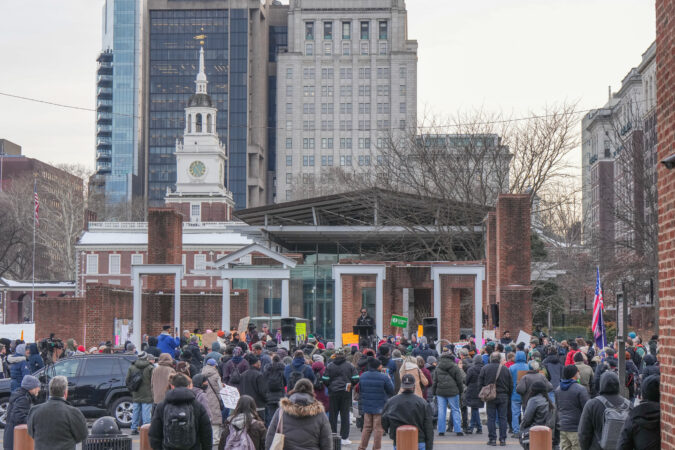
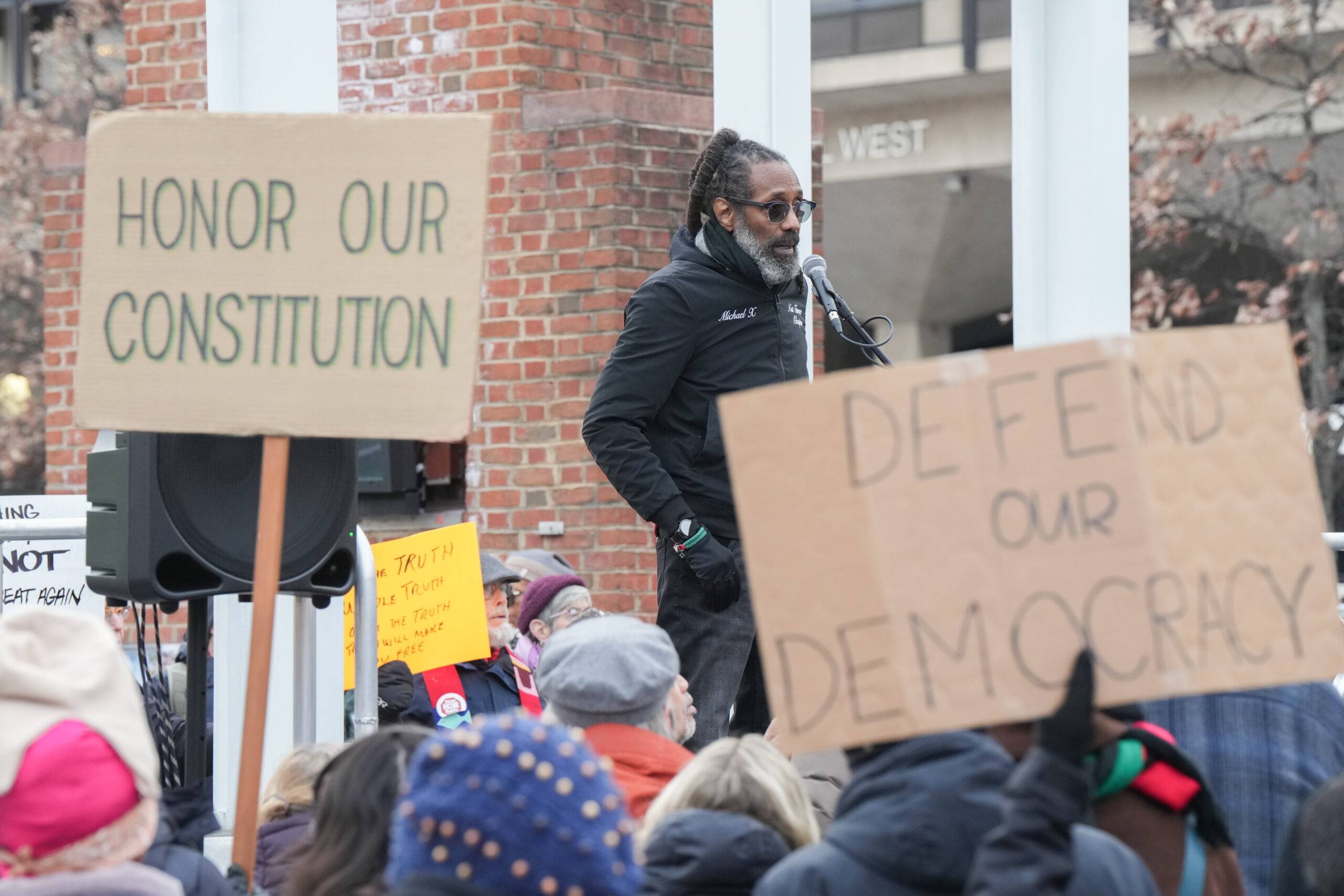
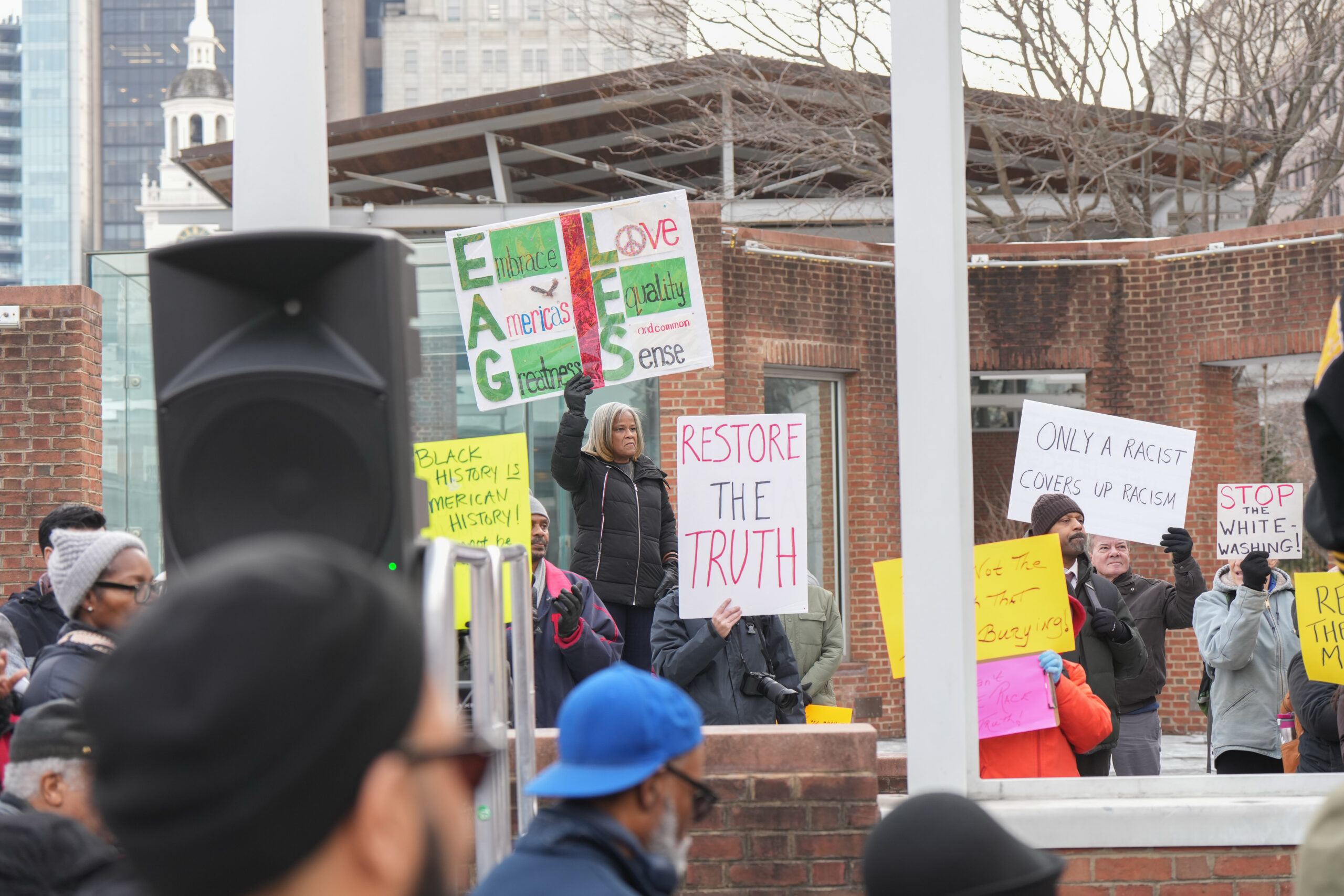
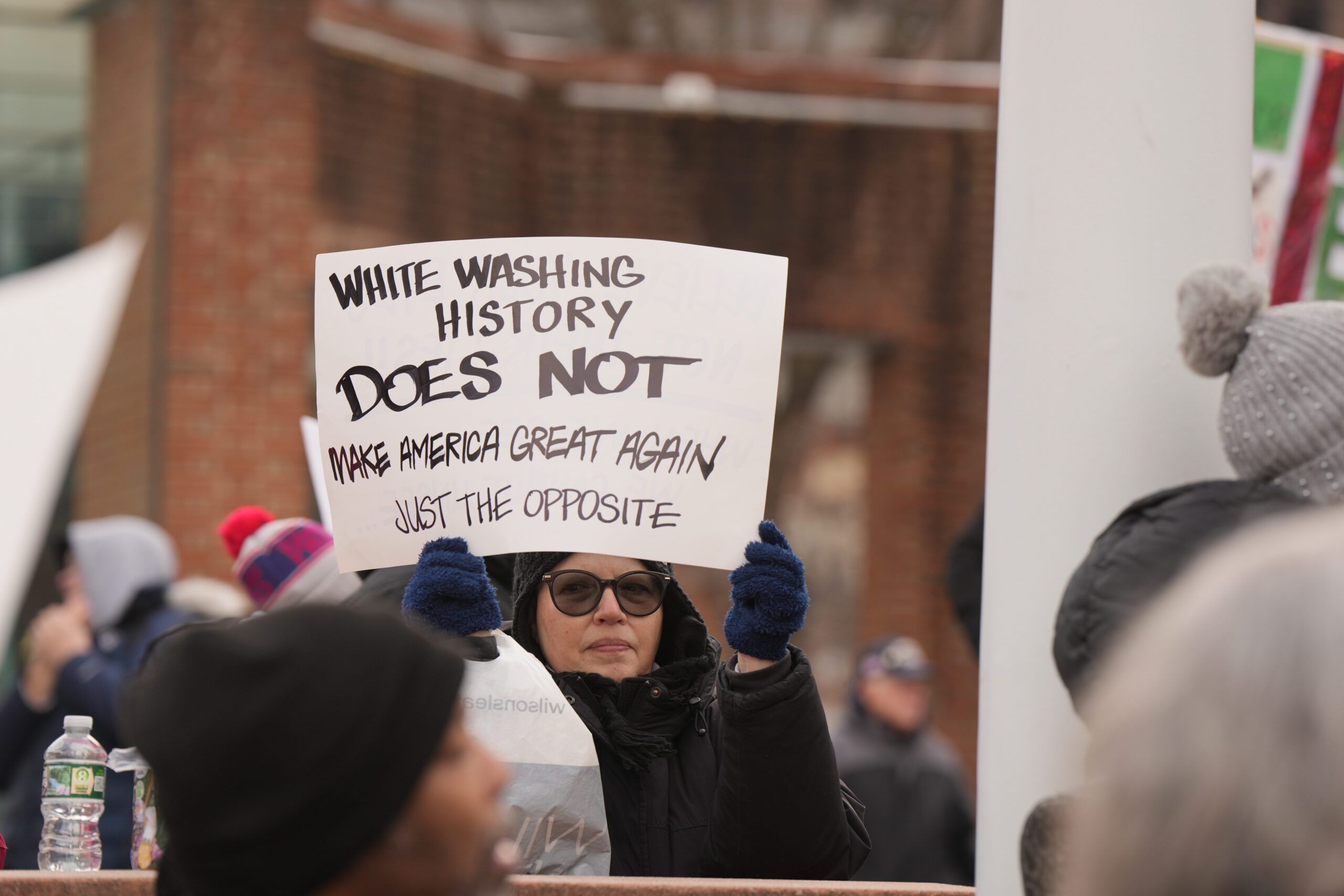
    A couple of hundred supporters and local leaders organized by the Avenging the Ancestors Coalition rallied at the President’s House Site on Tuesday afternoon to demand the restoration of its slavery memorial after the National Park Service removed all of its informational and educational materials last month.

    “History is not merely a collection of celebrated moments,” said Catherine Hicks, president of the NAACP Philadelphia Branch. “This action is a disservice to our city, our nation and denies future generations in the chance to learn from our history, fostering an environment of ignorance rather than understanding.”

    “This site is historic, holy ground,” said Michael Coard, an attorney and founding member of ATAC. “So now what? Now, we fight the good fight.”

    Lawyer Michael Coard speaks at a rally at the President’s House Site in response to the removal of the President’s House exhibit.

    ATAC was instrumental to the creation of President’s House on Independence Mall in 2010, a site that honors the nine people enslaved by George Washington while he lived at the precursor to the White House. The structure at Sixth and Market Streets featured video displays, illustrations and text-filled panels about the Atlantic slave trade and life under slavery, and detailed Washington’s dogged support for the institution.

    Those exhibits were dismantled on Jan. 22, following directives from President Donald Trump’s administration to review and remove displays in National Parks that “inappropriately disparage Americans past or living.”

    Thirteen exhibits from the President’s House were flagged for review this summer.

    Mayor Cherelle L. Parker’s administration filed a federal lawsuit against Interior Secretary Doug Burgum and acting National Park Service Director Jessica Bowron, and their respective agencies, on the day the panels were removed. The complaint argues that dismantling the exhibits was an “arbitrary and capricious” act that violated a 2006 cooperative agreement between the city and the federal government.

    Following a Jan. 30 hearing in which District Judge Cynthia M. Rufe called the federal government’s argument that a president can unilaterally change the exhibits displayed in national parks “horrifying” and “dangerous,” and after a Feb. 2 inspection of the removed panels, as well as the President’s House site, the court ordered that the exhibits be kept safe.

    The city filed an updated lawsuit with a new injunction request for the restoration of all the exhibits to the President’s House as they were the day before their removal. The federal government has until the end of the week to respond to the new filings, and another courtroom showdown is expected to follow.

    Philadelphia’s collar counties filed on Monday a joint brief in support of the city’s lawsuit, joining previous briefs by Gov. Josh Shapiro, Democrats in Pennsylvania’s state Senate, and the advocacy groups who pushed for the creation of the exhibit.

    “Attempts to unilaterally rewrite history will deprive residents and visitors” of the collar counties “of the full and accurate picture of the nation’s founding to which they are entitled,” the brief says.

    The panels are currently being held in a storage facility owned by the National Park Service that is adjacent to the National Constitution Center, according to a legal filing by the Trump administration.

    People gather for a rally at the President’s House Site in response to the removal of the President’s House exhibit in Old City.

    Can’t hide the truth

    Ever since the panels were taken down with crowbars and wrenches, there has been an outpouring of support for the memorial to be restored, and outrage toward the Trump administration.

    “If you want to hide the truth of slavery in Philadelphia, you might as well tear down the whole city because it was built on the blood of my people. You cannot hide the truth,” said Solomon Jones, a radio host and columnist for The Inquirer.

    “To erase slavery is to erase American history. That would be to erase Mount Vernon, to erase Wall Street … because those structures were built by enslaved labor,” said Yvonne Studevan, a seventh-generation descendant of Mother Bethel AME’s Bishop Richard Allen.

    Judy Butler, a South Philadelphia resident, said she was both heartbroken and angry once she learned that the President’s House exhibits were going to be removed.

    “I felt violated, disrespected,” she said.

    Butler, 66, said she’s been inspired watching from afar as people in Minnesota have braved the frigid temperatures to protest, observe and resist ICE’s occupation of the Minneapolis area. Coming to ATAC’s rally was something she felt she had to do.

    “They’re taking down our history. … How deplorable is that?” she said.

    People gather for a rally at the President’s House Site in response to the removal of the President’s House exhibit in Old City.
  • 2 Philly men convicted in 3 gang-related fatal shootings

    2 Philly men convicted in 3 gang-related fatal shootings

    Two Philadelphia men on Tuesday were convicted of first-degree murder for gang-related shootings that left three dead and five others wounded, including a man who was paralyzed after being shot 19 times, Pennsylvania Attorney General Dave Sunday said.

    Chris Byard, 27, was found guilty by a jury of three counts of first-degree murder and related offenses, and was sentenced to serve three consecutive life terms, Sunday said.

    Daquan Bishop, 28, was found guilty of two counts of first-degree murder and related offenses, and was sentenced to serve two consecutive life terms.

    Byard and Bishop were members of the “6600” gang and they were trying to shoot members of another gang, Sunday said. The other gang was called “Greatah,” KYW reported in 2023 after both men were arrested and charged.

    Byard and Bishop were found guilty of the Nov. 27, 2021, killing of 24-year-old Angel Rivera, who was gunned down on the 500 block of West Duncannon Avenue.

    Both men were also found guilty of fatally shooting 23-year-old Tymir Johnson on the 3100 block of Barnett Street on Dec. 15, 2021. Two other men were wounded in that shooting.

    Byard was also convicted of the Jan. 11, 2022, killing of 21-year-old Rashaan Frazier, who was gunned down on the 4000 block of Aldine Street. Two other men were wounded.

    In the Frazier killing, Byard and others were targeting another man and killed Frazier by mistake.

    Byard was involved in a fourth shooting that left a man paralyzed from the waist down after being hit 19 times by bullets, Sunday said.

    Another defendant, 27-year-old Daquan Bethea, pleaded guilty in October to attempted murder and related crimes and was sentenced to up to 15 years in prison.

  • FBI cited debunked claims to obtain warrant for Fulton County vote records, documents show

    FBI cited debunked claims to obtain warrant for Fulton County vote records, documents show

    The FBI relied heavily on previously debunked claims of widespread election irregularities in Georgia as it persuaded a federal judge last month to sign off on plans to seize scores of 2020 voting records from the state’s most populous county, court documents unsealed Tuesday show.

    In a pair of Jan. 28 search warrant affidavits, authorities said they were seeking evidence that would determine whether “deficiencies” in the vote tabulation in Fulton County, home to Atlanta, were the result of intentional wrongdoing that could constitute a crime.

    But many of the irregularities they raised — including claims of duplicate ballots and missing ballot images — have been previously explained by county officials as the types of routine errors that frequently occur, are typically corrected in the moment, and are not significant enough to sway the outcome of an election. Independent reviews have backed up that conclusion.

    The affidavits cited previously aired theories from several prominent election deniers whose names were redacted in the documents unsealed Tuesday but whose descriptions align with publicly known details about those who advanced conspiracy theories about the election.

    The documents also revealed that the FBI’s investigation was prompted by a referral from former Trump campaign lawyer and prominent election denier Kurt Olsen, who was recently appointed to a White House position tasked with monitoring election integrity.

    “Some of those allegations have been disproven while some of those allegations have been substantiated, including through admissions by Fulton County,” FBI Special Agent Hugh Raymond Evans wrote in the affidavits, which sought court authorization to search the county’s primary election warehouse and the office of the county’s clerk of courts.

    He added, “If these deficiencies were the result of intentional action, it would be a violation of federal law,” whether or not any of them were significant enough to affect the outcome of the race.

    Evans’s affidavits were made public Tuesday after Fulton County officials and a coalition of news outlets, including The Washington Post, urged a federal judge to release the typically sealed court filing. The Justice Department did not oppose the request.

    The assertions laid out in the 23-page documents are likely to stoke alarm among county officials and democracy advocates who have condemned the investigation as an attempt by the Justice Department to substantiate Trump’s long-held grievances about his 2020 election loss to Joe Biden.

    Multiple audits, nearly a dozen court rulings and former Trump attorney general William P. Barr have found no evidence of widespread fraud sufficient enough to affect the outcome of the race in Georgia.

    More broadly, Trump’s critics have raised concerns that the criminal probe of Fulton County officials could pose a threat to state-level control of voting and the future of independent elections.

    Dozens of agents descended on Fulton County’s election warehouse last month and spent several hours combing through the county’s records under supervision from FBI Deputy Director Andrew Bailey. They left with more than 700 boxes of material, including all physical ballots from the 2020 race.

    A copy of the search warrant, previously obtained by The Post, revealed that the search was part of a criminal inquiry into possible violations of two federal laws: one requiring officials to retain voting records and the other criminalizing efforts to defraud voters through denying them an impartially conducted election.

    But until the public release Tuesday of the affidavit underlying the warrant, the exact focus of the investigation — and the evidence agents cited to persuade a judge to sign off on the search — was unknown.

    Federal authorities did not have to prove any claims laid out as the basis for the warrant. They were required only to demonstrate a substantial likelihood that a crime occurred and that evidence of that crime could be found at the two locations they sought to search.

    U.S. Magistrate Judge Catherine M. Salinas in Atlanta found the Justice Department had met that threshold and signed off on the warrant Jan. 28 — just hours before agents arrived at the warehouse.

    Since the search, FBI Director Kash Patel has waved off concern expressed by Trump’s critics over the bureau’s investigation, describing the search as “just like one we would do anywhere else.”

    “We did the same thing there we do in any criminal case or investigation,” Patel told Fox News in an interview last week. “We collected evidence, we presented that evidence to a federal magistrate judge, who made a finding of probable cause.”

    Fulton County officials have urged a different federal judge — Trump appointee J.P. Boulee — to order the return of all material seized by the FBI.

    “Claims that the 2020 election results were fraudulent or otherwise invalid have been exhaustively reviewed and, without exception, refuted,” Fulton County Attorney Y. Soo Jo wrote in a recent filing. “Eleven different post-election lawsuits, challenging various aspects of Georgia’s election process, failed to demonstrate fraud.”

    Boulee has yet to rule on that request.

    — — –

    Aaron Schaffer and Mark Berman contributed to this report.

  • Pa. company pleads guilty in illegal video gambling scheme, but charges have been dropped against the owners

    Pa. company pleads guilty in illegal video gambling scheme, but charges have been dropped against the owners

    A Pennsylvania company has pleaded guilty to a crime stemming from its work installing hundreds of illegal video gambling devices across the state — but its owners appear to be off the hook.

    Schuylkill County-based Deibler Brothers Novelty Co. pleaded guilty Friday to corrupt organizations, a first-degree felony, and was ordered by a judge to forfeit $3 million to the state in cash and assets, according to the office of Pennsylvania Attorney General Dave Sunday.

    The company is owned by brothers Arthur Deibler, 34, and Donald Deibler, 33, and their friend Joel Ney, 35, each of whom was charged in 2024 with multiple felonies, including corrupt organizations and conspiracy.

    Court records show the charges were withdrawn Tuesday. Sunday’s office said that was part of the plea agreement, which also required the company to pay the asset forfeiture up front.

    “We expect those charges to be dismissed by the attorney general,” said defense lawyer William J. Brennan, who represents the Deibler brothers along with Michael T. van der Veen.

    Prosecutors say Deibler Brothers marketed its illegal devices as legal skill games — the slot machine-style games that have proliferated across Pennsylvania — and paid kickbacks to an executive at a device vendor.

    State lawmakers have repeatedly pledged, but so far failed, to tax and regulate the games. The Pennsylvania Attorney General’s Office has argued that the games are illegal slot machines — essentially unregulated casino games — but courts have thus far disagreed.

    “For many years, the legal status of games of chance has been a ping-pong ball in the court system,” Brennan said. “From day to day, it’s hard to follow what the current state of the law is. This corporation has done everything it can to try to remain compliant in a changing legal landscape. This result allows all the parties to move on and put this matter behind them.”

    Sunday, a Republican, said in a statement Monday that the plea resolution “secures a substantial forfeiture of assets to the commonwealth.”

    “This company was warned time and time again and continued to snub its nose at state regulations by flooding Pennsylvania counties with illegal gambling machines,” he said.

    A grand jury presentment accused Deibler Brothers of supplying thousands of illegal video gambling devices — modified slot machines — to convenience stores, bars, and gas stations across more than a dozen counties.

    From April 2021 through November 2023, the company received more than $1 million a month from the distribution and operation of the machines, according to the presentment from the 50th Statewide Investigating Grand Jury.

    In an effort to “disguise” its use of illegal slot machines, Deibler Brothers also paid $150,000 in illegal kickbacks to an executive at device vendor Pace-O-Matic, the presentment said.

    The executive — Ricky Goodling, a retired Pennsylvania State Police corporal and Pace-O-Matic’s former director of national compliance — pleaded guilty last week to state money laundering charges. He also pleaded guilty to federal tax evasion charges.

    Deibler Brothers sought to commingle its illegal games with legal Pace-O-Matic machines to try to “dupe” law enforcement authorities and store owners into thinking they were the same, the presentment says.

    Pennsylvania courts have ruled that Pace-O-Matic games are legal games of skill, not chance, because they include a memory component that distinguishes them from casino-style slot machines. But most of the machines distributed by the Deibler Brothers had no such secondary element and were therefore illegal, the presentment said.

    Goodling used his authority at Pace-O-Matic to quash complaints about Deibler Brothers and another firm that paid him kickbacks, according to the grand jury.

  • Gov. Tim Walz says federal immigration crackdown in Minnesota could end within days

    Gov. Tim Walz says federal immigration crackdown in Minnesota could end within days

    MINNEAPOLIS — Gov. Tim Walz said Tuesday that he expects the federal immigration crackdown in Minnesota will end in “days, not weeks and months,” based on his recent conversations with top Trump administration officials.

    The Democratic governor said at a news conference that he spoke Monday with border czar Tom Homan and with White House chief of staff Susie Wiles on Tuesday morning. Homan took over the Minnesota operation in late January after the second fatal shooting by federal officers and amid growing political backlash and questions about how the operation was being run.

    “We’re very much in a trust but verify mode,” Walz said. He added that he expected to hear more from the administration “in the next day or so” about the future of what he said has been an “occupation” and a “retribution campaign” against the state.

    While Walz said he’s hopeful at the moment because “every indication I have is that this thing is winding up,” he added that things could change.

    “It would be my hope that Mr. Homan goes out before Friday and announces that this thing is done, and they’re bringing her down and they’re bringing her down in days,” Walz said. “That would be my expectation.”

    Officials with the Department of Homeland Security did not immediately reply to a request for comment on the governor’s remarks.

    Walz said he has no reason not to believe Homan’s statement last week that 700 federal officers would leave Minnesota immediately, but the governor added that still left 2,300 on Minnesota’s streets. Homan at the time cited an “increase in unprecedented collaboration” resulting in the need for fewer federal officers in Minnesota, including help from jails that hold inmates who could be deported.

    The governor also indicated that he expects the state will get “cooperation on joint investigations” into the shooting deaths of Renee Good and Alex Pretti by federal officers, but gave no details. That’s been a point of friction between federal authorities and state investigators, who complain that they have been frozen out of those cases so far with no access to evidence.

    Walz called the news conference primarily to denounce the economic impact of the enforcement surge. He spoke at The Market at Malcolm Yards, a food hall where owner Patty Wall said the entire restaurant sector of the local economy has become “collateral damage” from the surge.

    Matt Varilek, the governor’s employment and economic development commissioner, said Malcolm Yards would normally be bustling, but is now struggling because employees and customers are afraid to come due to the crackdown.

    “So it is great news, of course, that the posture seems to have changed at the federal level toward their activities here in Minnesota,” Varilek said. “But, as the governor said, it’s a trust-but-verify situation. And frankly, the fear that has been sown, I haven’t really noticed any reduction in that.”

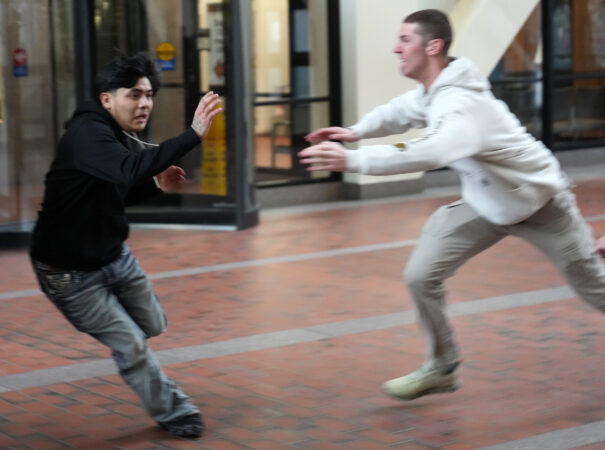
    Even as Walz was expressing optimism that the crackdown would end soon, federal officers made a highly visible arrest inside the lobby of the main county building in downtown Minneapolis.

    After a short foot chase, ICE officers grabbed a man who had arrived for a court appearance on charges of possessing over 50 pounds of methamphetamine.

    The county’s top prosecutor, Hennepin County Attorney Mary Moriarty, protested that the arrest was “disruptive and disturbing to many” and left staffers in the building afraid to leave their offices for fear of being racially profiled.

    The man could go unpunished on the state drug charges if he’s deported first.

    “Using local government courthouses for federal civil immigration enforcement interferes with the administration of justice, prevents witnesses from testifying and robs victims of their opportunity to seek justice,” Moriarty said in a statement. She has also objected to earlier arrests by ICE officers of people making court appearances there.

  • A burst pipe at the Tasker-Morris SEPTA station left a geyser of ice hanging from ceiling and covering floor

    A burst pipe at the Tasker-Morris SEPTA station left a geyser of ice hanging from ceiling and covering floor

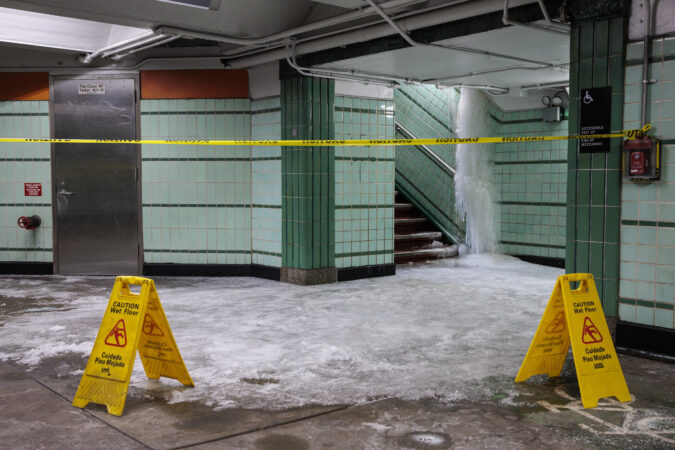
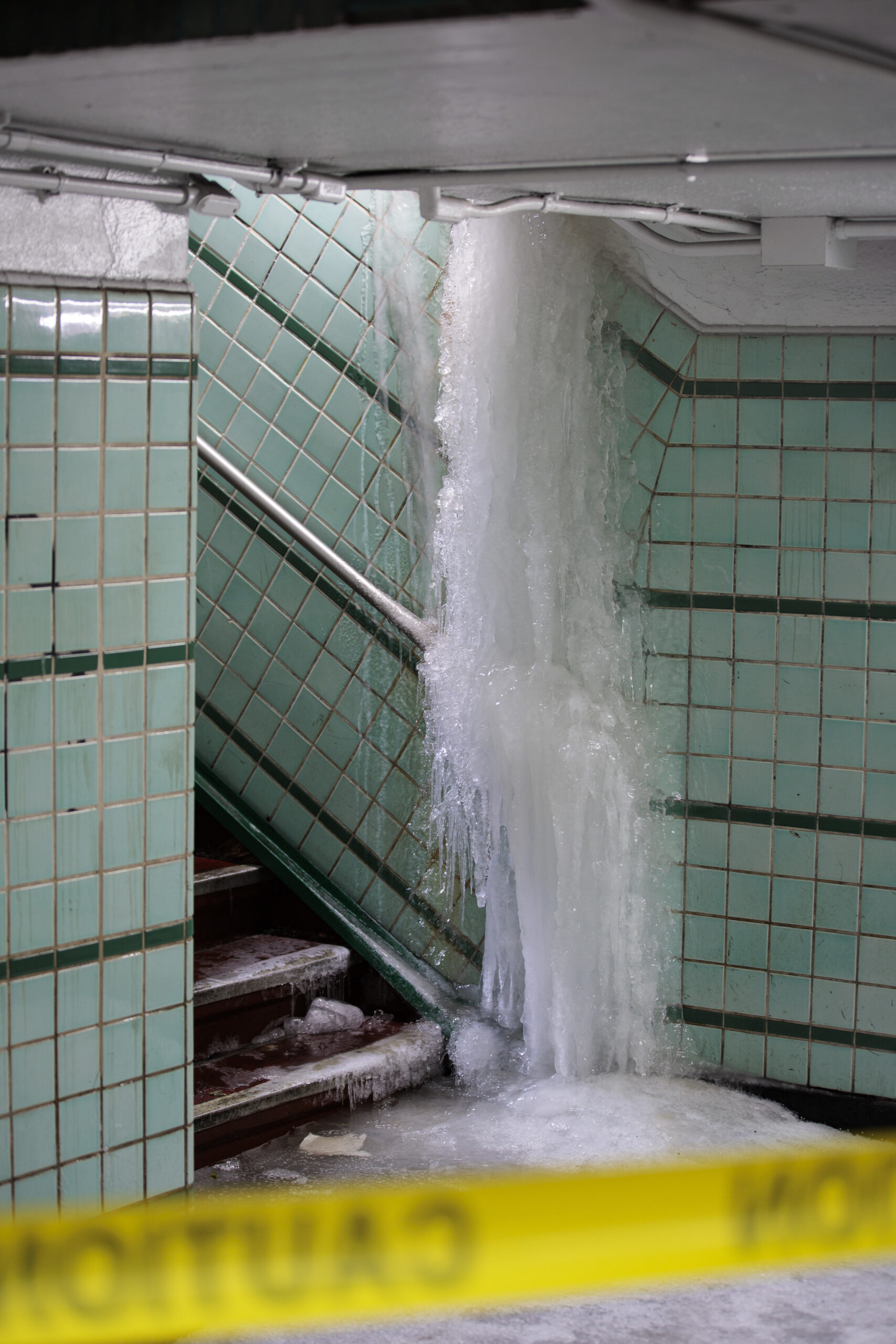
    An enormous block of ice extended from the ceiling and covered the floor at the east-side entrance to the Tasker-Morris Station on SEPTA’s Broad Street Line on Tuesday afternoon after a pipe burst outside the station late Monday.

    The pipe belonged to the Philadelphia Water Department, SEPTA spokesperson Andrew Busch said. It was being repaired and crews were continuing to clean up the damage, Busch said Tuesday afternoon.

    The damage did not affect train service, he said.

    The transit authority has been dealing with a number of burst pipes the last few weeks, only some of which are theirs. Some belong to other property owners, such as the one that burst at the Convention Center and flooded Jefferson Station on Monday night.

    Ice covers the Tasker Street east-side entrance/exit at the Tasker-Morris SEPTA Station on the Broad Street Line on Tuesday, Feb. 10, 2026 in Philadelphia.

    “When we have these deep freezes and then it warms up, and it’s happening all over, that causes problems with the pipes,” Busch said. “In many cases the best we can do is make sure that we have crews ready to respond to it and then work on cleaning up.”

    Over the last two weeks, SEPTA has recorded about 10 incidents of water main breaks or burst pipes leading to flooding in stations or water from SEPTA structures flooding streets, Busch said. In about half those cases, the pipes belonged to SEPTA.

    Many of these issues have occurred along the eastern edge of the Market-Frankford Line from near Spring Garden to the Frankford Transportation Center, Busch said. That is the oldest part of the line and some sections of the pipes are exposed.

    SEPTA is planning a winterization project starting this summer. The project will likely include installing new valves on the water lines, replacing pipe insulation, and upgrading strips in the pipes that heat them. Busch said SEPTA expects that project to be done by around the start of next year. No full cost estimate is available yet, Busch said.

  • Norristown police officer who struck a naked man with his patrol vehicle has been charged with assault, authorities say

    Norristown police officer who struck a naked man with his patrol vehicle has been charged with assault, authorities say

    A Norristown police sergeant who struck a naked, unarmed man with his patrol SUV last week has been charged with assault, official oppression, and related crimes, prosecutors said Tuesday.

    Sgt. Daniel DeOrzio, 52, used unnecessary force in the Feb. 4 incident, Montgomery County District Attorney Kevin Steele said. He was placed on administrative leave after the encounter.

    Prosecutors said officers had been dispatched to the intersection of West Airy and Stanbridge Streets after reports that the naked man was yelling and damaging cars in the intersection. DeOrzio was among several officers who responded and, according to investigators, he positioned his police SUV behind a gray pickup truck blocking the roadway.

    After ordering the truck removed, authorities said, DeOrzio accelerated and struck the man, who was standing in the intersection with his hands on his hips.

    The impact sent the man airborne before he slammed onto the pavement, prosecutors said. He was taken to Main Line Health Paoli Hospital and released two days later.

    Investigators concluded that DeOrzio, the highest-ranking officer at the scene, used unnecessary force and failed to attempt basic de-escalation tactics, including verbal commands, before resorting to violence, the district attorney said.

    “This was not a necessary use of deadly force in this response incident,” Steele said in a statement.

    The incident drew criticism at a public meeting last week, where Norristown Police Chief Mike Trail fielded questions from residents upset over the officer’s actions. Trail said he would like to form a mental health co-responder program that would pair officers with mental health experts to de-escalate future situations.

    “People experiencing mental health behavioral episodes are more likely to … be subject to use of force by responding law enforcement officers because they lack the tools and the sophisticated training necessary to de-escalate,” he said.

    DeOrzio turned himself in Tuesday morning and was arraigned. District Judge Cathleen Kelly Rebar set his bail at $100,000. DeOrzio could not be immediately reached for comment.