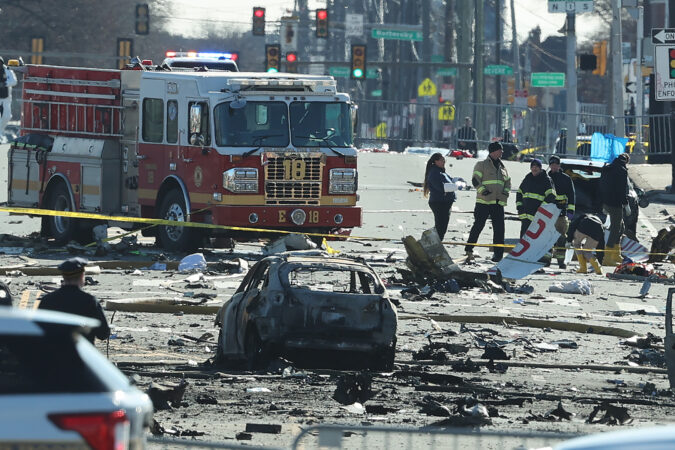
The families of two Mexican nationals killed in a Northeast Philly jet crash have filed a wrongful-death suit against a medical airline, alleging its negligence was responsible for the Jan. 31. disaster that killed eight people, seriously injured at least 20 more, and devastated a neighborhood.
The complaint, filed Monday in Philadelphia’s Court of Common Pleas, was brought by the estates of Raul Meza Arredondo and Lizeth Murillo Osuna against Med Jets, a Mexican air carrier that operates specialized airplanes for medical transport.
Osuna was homebound for Tijuana following her young daughter’s successful medical treatment at Shriner’s Hospital when the Learjet 55 abruptly dove about a minute after takeoff from Northeast Philadelphia Airport and slammed into Cottman Avenue.
Osuna and her daughter, 11-year-old Valentina Guzman Murillo, were killed instantly, along with the pilot, co-pilot, a paramedic, and Arredondo, a pediatrician.
The suit broadly accuses Med Jets of “carelessness, negligence, and recklessness” for failing “to ensure the aircraft was in a safe and operable condition.”
It notes details from a still-ongoing federal investigation — which revealed that the “black box” and other components on the jet were inoperable — and an earlier fatal crash involving a Med Jet plane in Mexico. It leaves open the possibility that the Tijuana-bound plane could have crashed due to pilot error.
“Today’s filing is an important step on behalf of the victims of this tragedy to hold those responsible for this deadly crash fully accountable,” said Jeffrey P. Goodman, an attorney with Saltz Mongeluzzi & Bendesky, who represents the estates of two families. “Unfortunately, given the lack of functioning onboard recording systems, much remains to be determined as to the cause of this crash.”
The complaint, which seeks unspecified compensatory damages, also names as defendants still-unidentified people “responsible for inspection, maintenance, repairs” of aircraft operated by Med Jets, and corporations involved in the manufacture of Learjet components.
A spokesperson for Med Jets did not immediately respond to a request for comment.
The crash occurred after 6 p.m. on a Friday. After plummeting 1,650 feet at more than 235 miles per hour, the jet left a crater that the suit says resembled one created by heavy military artillery. The black box was buried eight feet in the ground.
A 37-year-old Mount Airy motorist was killed when the jet’s fuel set his car ablaze.A passenger in the same vehicle was critically injured and succumbed to her injuries in April. The driver’s 9-year-old son also suffered serious burns, requiring extensive medical treatment.
The scope of damage to nearly six blocks of rowhouses and businesses near the Roosevelt Mall has already led aMexican insurer for Med Jets, which also does business as Jet Rescue Air Ambulance, to preemptively file an action in federal court, pleading that claims related to the incident would far exceed a $10 million limit on the carrier’s policy.
The city of Philadelphia alone reported more than $2.5 million in damages related to the local emergency response effort, and the case has already drawn dozens of other claimants. The insurer has requested that a federal judge oversee distribution of the limited funds.
The defective black box, referenced in the lawsuit, left National Transportation Safety Board investigators with few clues as to what occurred on board in the moments leading up to the crash.
Their efforts were further frustrated by the sheer force of the impact and an ensuing blaze, which incinerated much of the plane wreckage.
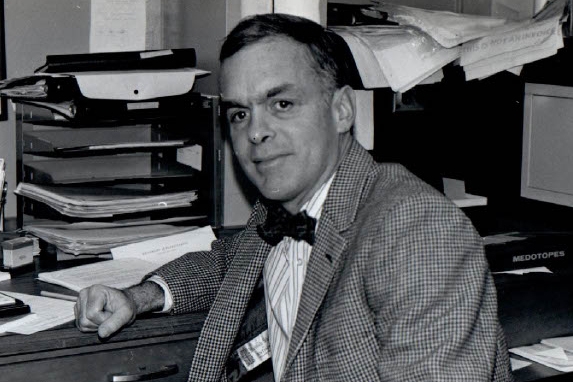
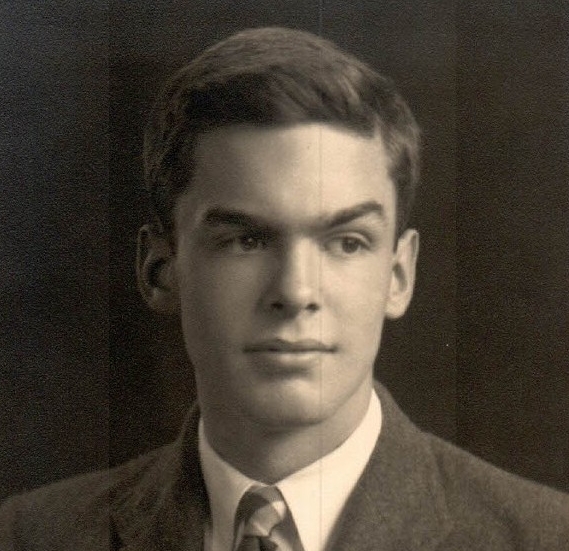
William L. Elkins, 93, of Coatesville, pioneering research immunologist at what is now the University of Pennsylvania’s Perelman School of Medicine, associate professor emeritus of pathology and laboratory medicine, innovative longtime Angus cattle rancher in Chester County, avid sailor, and veteran, died Tuesday, Nov. 11, of complications from pneumonia at Chester County Hospital.
The great-great-grandson of Philadelphia business tycoon William Lukens Elkins, Dr. Elkins fashioned his own distinguished career as a scientist, medical researcher, and professor at Penn from 1965 to 1985, and owner of the Buck Run Farm cattle ranch in Coatesville for the last 39 years.
At Penn, Dr. Elkins conducted pioneering research on how the human immune system fights infection and disease. He collaborated with colleagues in Philadelphia and elsewhere around the country to provide critical new research regarding bone marrow transplants and pediatric oncology.
His work contributed to new and more effective medical procedures at Penn, Children’s Hospital of Philadelphia, and elsewhere, and he instructed students and residents at Penn. But his lifelong love of the fields and rolling hills he roamed as a boy in Chester County never faded, he told Greet Brandywine Valley magazine in 2023.
Dr. Elkins was a lifelong outdoorsman.
“Farming is in my blood,” he said. “So even when I went to medical school and all that, the enthusiasm never left, and I wanted to go back to it.”
So he retired from medicine at 53, and he and his wife, Helen, bought nearly 300 acres of the old King Ranch on Doe Run Church Road in Coatesville. She kept the books and looked after the business. He became an expert on breeding cattle and growing the high-energy grass they eat.
Wearing floppy hats and riding a colorful ATV from field to field, Dr. Elkins worked his land for decades. He mended fences and tended daily to his 120 cows, heifers, and prize bulls.
He championed holistic regenerative farming and used new scientific systems to feed his cattle. He rejected commercial fertilizer and knew all about soil composition, grass growing, and body fat in cattle.
Dr. Elkins and his wife, Helen, married in 1966.
In a 1995 Inquirer story, he said: “Cattle are just like anyone else. If you just turn a few cattle out in a great big field, they will wander around, eat the grass they like best, and leave what they don’t want. That means the less desirable grasses tend to predominate.”
He traveled the country to confer with other cattlemen and helped found the Southeast Regional Cattlemen’s Association in 1994. He sold his beefsteaks, patties, jerky sticks, and kielbasa grillers to private customers online and to butchers and restaurants.
At least one local chef featured an item on the menu called Dr. Elkins’ Angusburger. Lots of folks called him Doc.
He earned his medical degree at Harvard University in 1958 and served two years in the Navy at the hospital in Bethesda, Md. He was a surgical intern in New York and discovered that he preferred the research lab. Before Penn, he worked at the Wistar Institute of biomedical research.
Dr. Elkins graduated from St. Mark’s School in Massachusetts in 1950.
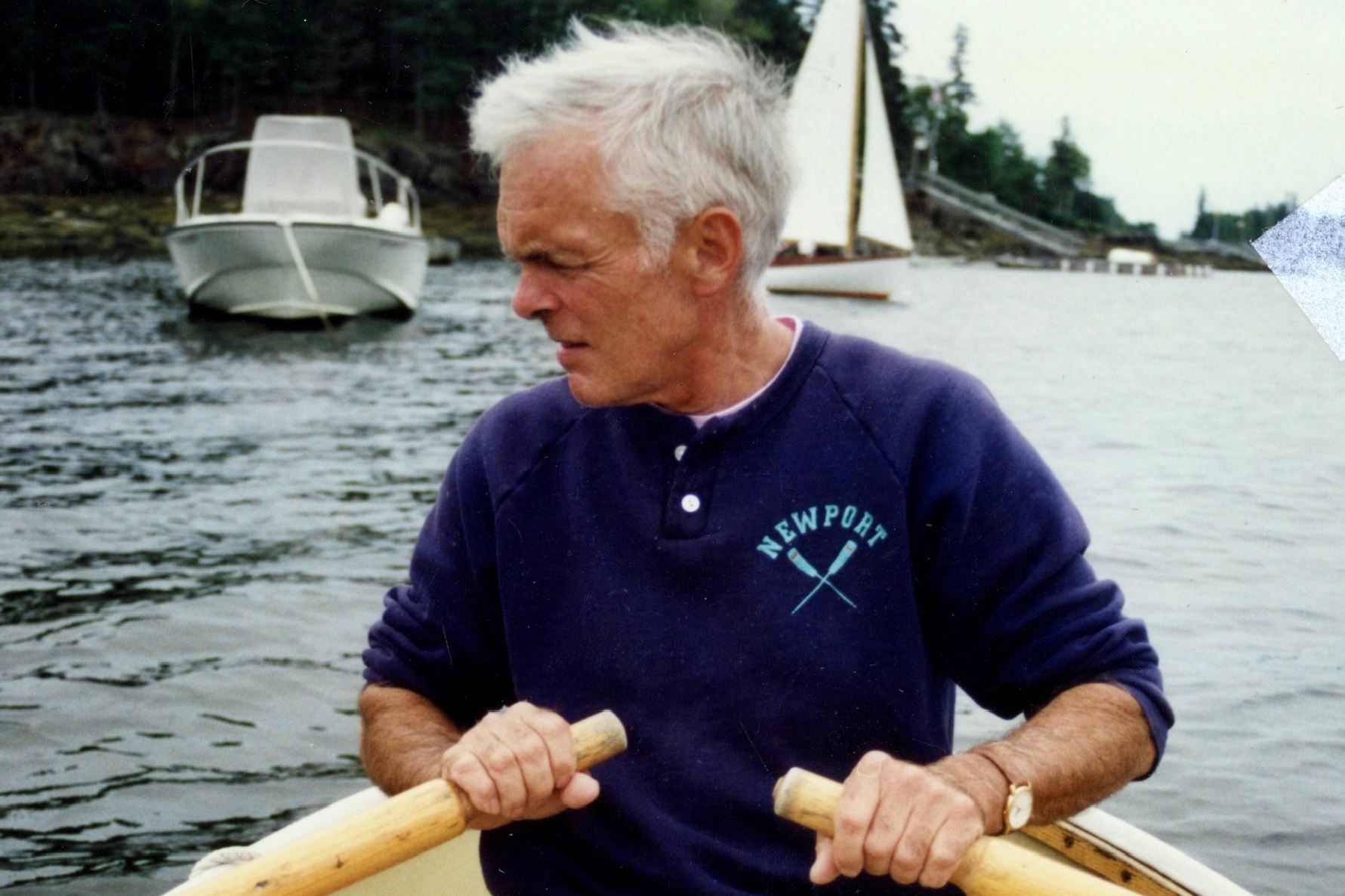
Away from the lab, Dr. Elkins was an ocean sailor, expert navigator, and former boat club commodore. He was active with the Brandywine Conservancy, Natural Lands, and other groups, and was lauded by national organizations for his wide-ranging conservation and wildlife efforts.
He made his farm a haven again for the bobolink grassland songbird and other migratory birds and butterflies that had dwindled. “Buck Run Farm is more about growing grass and trees than beef,” he told Greet Brandywine Valley. “We’re blessed by the land.”
William Lukens Elkins was born Aug. 2, 1932, in Boston. He lived on the family dairy farm in Pocopson, Chester County, when he was young, went to boarding school in Massachusetts for four years, and earned a bachelor’s degree in biology at Princeton University.
He met Helen MacLeod at a party in Washington, and they married in 1966 and had a daughter, Sheila, and a son, Jake. They lived in Center City, Society Hill, and Villanova before moving to the farm. “He was easy to be with,” his wife said.
Dr. Elkins enjoyed sailing and fishing.
Dr. Elkins loved nature, fishing, and baseball, and he followed the Phillies, the Flyers, and other sports teams. “He had a wonderful bedside manner,” his daughter said. “He was a great listener. He really knew how to support people.”
His son said: “He was unassuming and direct. He spoke his mind. He connected with so many different people. He was curious about the world around him.”
His wife said: “He was thoughtful and always concerned about people. He had good humor. He was fun.”
In addition to his wife and children, Dr. Elkins is survived by five grandchildren and other relatives. A sister died earlier.
This article about Dr. Elkins and his ranch appeared in The Inquirer in 1995.
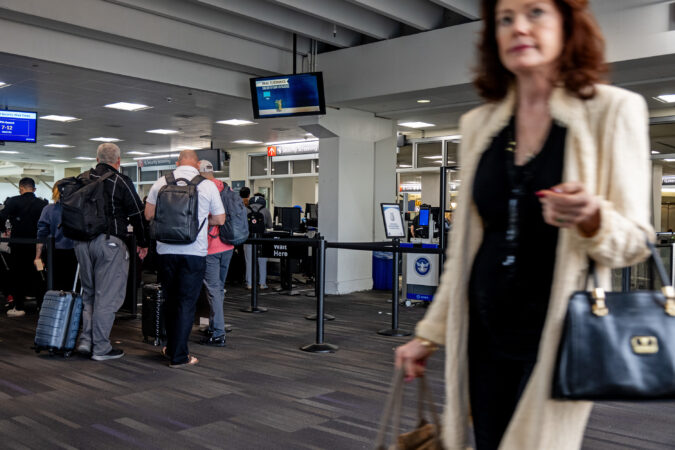
Flight schedules should soon return to normal across major U.S. airports, including Philadelphia, after the FAA lifted government shutdown-related flight restrictions for airlines.
The Federal Aviation Administration retracted its order at more than 40 airports on Sunday night. Transportation Secretary Sean Duffy initially told airlines to eliminate 10% of their scheduled flights starting on Nov. 7 in response to “concerning data” that showed pressure on the national aviation system and on air traffic controllers who were experiencing staffing shortages amid the federal government shutdown.
“Today’s decision to rescind the order reflects the steady decline in staffing concerns across the National Airspace System and allows us to return to normal operations,” FAA Administrator Bryan Bedford said in a statement. “I am grateful for the hard work of the FAA safety and operations teams and for their focus on the safety of the traveling public.”
Air traffic at the Philadelphia International Airport on Nov. 6.
American Airlines, which operates 75% of the flights in and out of Philadelphia International Airport, is ready to bounce back swiftly after flight restrictions are lifted, a spokesperson said.
“American is ready for business, and we are serving customers with a full schedule in advance of the Thanksgiving and year-end holidays,” said Bri Harper, American Airlines’ spokesperson for the Northeast region.
Recovering from the FAA-ordered flight reductions won’t be a huge task, said Mike Taylor, J.D. Power’s practice lead for travel, and will likely be resolved in a matter of days.
“A matter of two or three days is generally all it takes,” Taylor said. “So I think they want to get that ball rolling well in advance of holiday travel so that there’s less hassle when holiday travel picks up in a week and a half from now.”
PHL’s major airlines, including American, United, and Delta, don’t expect any major hiccups associated with restoring flights after the FAA-ordered flight reductions.
United CEO Scott Kirby lauded employees during the chaotic period of cancellations in a LinkedIn post. While Nov. 8 and 9 set records in staffing shortage-driven cancellations and delays at the FAA, he wrote, Kirby said United customers gave the airline their fourth- and fifth-highest satisfaction scores of the year on those days.
Delta CEO Ed Bastian told CBS, “The system should return to normal by the weekend.”
Tensions are flaring at Frankford High over the school’s cell phone policy and its ability to keep students’ property safe.
After two fights — including one where a student was so badly injured that city EMTs responded and transported the student to a hospital — a few dozen students took to the school’s hallways Friday, vocally demanding their phones back.
“We just want to have a say in where our property goes, where our phones go,” said one student, who asked not to be named for fear of being targeted.
Frankford, like many schools in Philadelphia and across the country, has recently moved to get cellphones out of students’ hands during the school day.
At first, Frankford used Yondr pouches to secure students’ phones, but those were easily broken, and the costs of the pouches rose.
Last year, the school installed lockers outside the building, requiring students to deposit phones before the school day started. Students could purchase locks from the school for $5.00, or bring their own locks.
But “there’s been issues,” said one Frankford staffer, who asked not to be identified for fear of reprisal. “The area where the lockers are floods; it’s not monitored.”
(School officials said they have alerted district officials about the drainage issue.)
Some students didn’t love the idea of the lockers, but it wasn’t until last week that significant tensions began simmering after several phones were stolen. School officials said in an email to Frankford staff that five phones were stolen, two from a locker with no lock on it.
“That caused some serious issues in the building,” the staffer said. “A lot of the students said, ‘You’re forcing us to put our phones there, but you’re not protecting them.’”
Believing they knew who stole the phones, some students targeted the alleged thief, spurring a fight inside the school. That student was assaulted — beaten so badly that EMTs transported the student to a hospital, according to multiple people with firsthand knowledge.
“It was so scary,” said the student who spoke on condition they would not be identified.
Michael Calderone, the school’s principal, addressed the issue with parents in a letter sent home Friday.
“Two wrongs do not make a right,” Calderone wrote. “This type of retaliation and violent behavior are not tolerated here at Frankford.”
Another fight happened the next day outside of school — with some students and some nonstudents — but Frankford officials say it was unconnected to the stolen cellphones. (The student and staffer, however, say the general anger at the school over the phone policy has ratcheted up student issues generally.)
A peaceful student protest planned for Friday turned into a town hall with Calderone. But some at the meeting weren’t satisfied and ultimately a few did protest, walking around the school and chanting about wanting their phones back.
“It was students screaming in the hallways,” the student said. “They were saying they felt unsafe; they were saying they were unhappy about the phone lockers.”
Calderone, in the letter sent to families Friday, vowed action.
“No member of our school community should ever have to worry about their items being taken, especially when the belongings are locked up,” Calderone wrote.
The principal told parents that the school would provide stronger locks, at no cost to students, andwill increase patrols and video surveillance by school security officers. He said he has requested locking gates for either side of the phone lockers.
‘Students don’t feel safe’
The Frankford student said they and others were frustrated by a lack of protection for their phones and poor communication.
The Friday town hall, the student said, yielded little information. Some students were unruly, the student said, but many were respectful and just wanted answers from the administration. (Calderone described the meeting as productive, and not unruly.)
Calderone, according to the student, “said he wasn’t able to put the phone lockers inside the building because he didn’t have enough security and kids could just get to their phones if they were inside. That happens anyway with the phones outside.”
Frankford is a good school where students have opportunities, the student said. But it feels restless over the phone issue.
“Students don’t feel safe going outside to get their phones,” the student said. “There’s such a big buildup that if you bump into the wrong kid, he’s going to hit you. The fights are just people getting their anger out. We feel like they’re not listening to us.”
Phones are a distraction, the student said; they feel like learning has improved since phone access was removed during the school day.
“But the school district says it isn’t responsible for lost, damaged, or stolen goods, and if your mom worked for a year to get you a brand new iPhone 17 and it gets stolen, they’re not buying you a new one,” the student said.
“Philadelphia is a dangerous place — we need our phones going to school, going home.”
Following a cybersecurity breach at the University of Pennsylvania last month, an anonymous hacker claimed that they had compromised data for some 1.2 million students, donors, and alumni — a figure that the school now says is inaccurate.
The university said that a forensic investigation into the breach remains ongoing and that a “precise number” for the amount of records that were improperly accessed was not yet available.
A timeline of when that investigation would be concluded was not provided, with the school noting that analysis of the breach would “take time to complete.”
“While our investigation is ongoing, we do not currently have evidence to indicate that information involved in this incident has been used for the purposes of fraud,” the university said.
The incident was reported Oct. 31, when students and alumni received what the school called a “fraudulent” email crudely criticizing Penn’s hiring practices. The message, which also called on recipients to stop donating money to the university, appeared to come from Penn’s Graduate School of Education.
“We have terrible security practices and are completely unmeritocratic,” the email said.
The breach, the university said, came as a result of “sophisticated identity impersonation commonly known as social engineering,” which is a hacking technique in which “bad actors deceive individuals into giving up confidential information.”
Systems accessed included “Penn’s Customer Relationship Management (CRM) system (Salesforce), file repositories (SharePoint and Box), a reporting application (Qlikview), as well as Marketing Cloud,” the school added.
Electronic medical records from Penn Medicine do not appear to have been accessed in the breach. In its update Friday, the university said that it would notify individuals whose information had been accessed once its analysis of the incident was complete.
The data, according to the Daily Pennsylvanian, Penn’s student newspaper, included memos about donors and their families, receipts of bank transactions, and personal information. The DP said that it reviewed documents released by the alleged hacker on LeakForum and that the perpetrator claimed to have accessed data on 1.2 million Penn students, alumni, and donors.
The Verge, a technology publication, reported that among the items obtained was personal information about former President Joe Biden, whose granddaughter had been a student at Penn. The hacker claiming responsibility for the breach told the outlet that they planned to sell some of the data before releasing it publicly.
Beyond disputing the 1.2 million figure, Penn has not commented on what information was accessed.
Following news of the breach, more than a dozen proposed class-action lawsuits were filed against the university in federal and state courts alleging that Penn failed to secure the personal information of those affected.
The litigation is still in its early stages, and Penn hasn’t yet responded to the allegations in court filings. On Monday, attorneys who filed 10 of the 14 federal lawsuits in the Eastern District of Pennsylvania asked the court to consolidate the cases.
On its information page about the incident, Penn warned school community members to “be wary of suspicious calls or emails that could be phishing attempts,” as well as “any embedded links in emails that you are not familiar with.”
It also advised concerned individuals to take steps such as reviewing their credit reports and activating fraud alerts with major credit bureaus.
“We recognize the severity of this incident and are working diligently to address it,” the university said.
Staff writers Abraham Gutman and Susan Snyder contributed to this article.
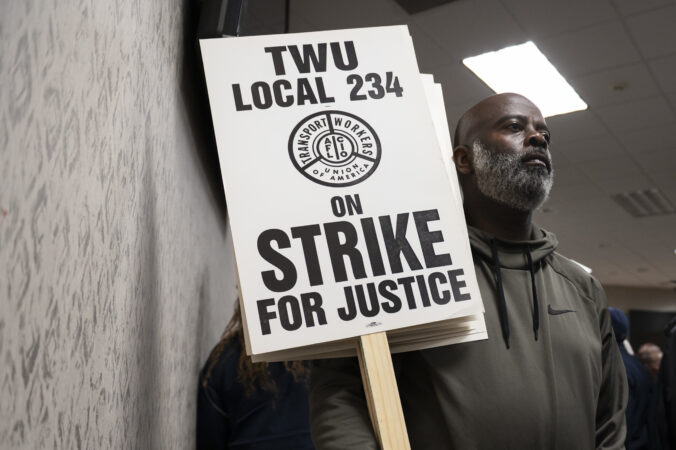
Members of the Transport Workers Union Local 234 on Sunday, Nov. 16 voted to authorize a strike if union and SEPTA negotiators can’t reach an agreement on a new contract.
Shortly before the current contract ran out at 11:59 p.m. on Nov. 7, TWU’s new president, Will Vera, urged union members to stay on the job. In an unusual move, he delayed a strike vote at the time of contract expiration, saying he had hope that a deal could be reached without the usual brinksmanship.
“We’re asking you to please continue to come to work and put money aside. We want you to be prepared in case we have to call a work stoppage,” he told members in a video at the time.
Local 234 leaders say they’re prioritizing a two-year deal with raises and changes to what the union views as onerous work rules, including the transit agency’s use of a third party that Vera said makes it hard for members to use their allotted sick time.
In a statement, SEPTA said it was aware of the authorization vote and is committed “to continue to engage in good-faith negotiations, with the goal of reaching a new agreement that is fair.”
2023 Fraternal Order of Transit Police Lodge 109 (three days)
SEPTA police officers walked off the job after bargaining with the transit agency for almost nine months, largely over the timing of a 13% pay raise for members. The agreement, partially brokered by Gov. Josh Shapiro, came amid heightened fears about safety on public transit and a funding crisis for SEPTA.
TWU Local 234 walked off the job for six days; the biggest issue was retirement benefits. SEPTA’s contributions toward union members’ pensions did not rise in tandem with wages when workers made more than $50,000. Managers’ pension benefits were not capped. The union also wanted to reduce out-of-pocket health-care costs and win longer breaks for bus, trolley, and subway operators between shifts and route changes.
SEPTA and the union reached an agreement Nov. 7, the day before the general election. Democrat Hillary Clinton’s presidential campaign was worried about voter turnout, and the city sought an injunction to end the strike. It proved unnecessary.
Talk about leverage. TWU was ready to strike just before the first home game of the World Series between the Phillies and the New York Yankees. Gov. Ed Rendell pushed the two sides to continue talking, and the transit workers waited to walk out until three hours after the end of Game 5, the last in the series played at Citizens Bank Park.
It was a bitter strike, coming just a year after the stock market’s meltdown started the Great Recession. TWULocal 234 President Willie Brown called himself “the most hated man” in Philadelphia. Mayor Michael Nutter was harshly critical. Brown called him “Little Caesar.”
The strike was settled Nov. 7 with a deal on a five-year contract. Transit workers got a $1,250 bonus, a 2.5% raise in the second year, a graduated increase in SEPTA pension contributions from 2% to 3.5%, and the maximum pension benefit was raised to $30,000 from $27,000.
2005: TWU Local 234 and United Transportation Union Local 1594 (seven days)
Negotiations collapsed mostly over SEPTA’s insistence that workers pay 5% of medical insurance premiums. At that point, the authority paid 100% of the workers’ premiums for family coverage.
In the end, it was solved by Gov. Rendell, a Democrat who had been Philadelphia mayor in the 1990s. He agreed to give promised state money to SEPTA early, so it could pay premiums in advance, reducing its costs.
In the resulting four-year deal, the unions had to pay for 1% of their medical premiums. They also received 3% yearly raises.
Pedestrians and cars in a chaotic dance at the intersection of Market and 30th Streets during the afternoon commute on the first day of the SEPTA city workers’ strike Nov. 1, 2016.
1998: TWU Local 234 (40 days)
City transit workers’ contract expired in March, but they did not strike until June — and then stayed out for 40 days. The two sides reached an agreement in July, but it fell apart. TWU members had returned to their jobs and kept working under an extension of their old contract. A final agreement was signed Oct. 23.
The union agreed to SEPTA’s demand that injured-on-duty benefits be limited. The old contract gave them full pay and benefits while on leave after a work injury. SEPTA wanted to hire an unlimited number of part-time workers. The union agreed to 100 part-timers to drive small buses.
SEPTA’s chief negotiator was David L. Cohen, famous for reining in unions representing city workers during Philadelphia’s bankruptcy in 1992, as Rendell’s mayoral chief of staff.
A two-week strike stilled city buses, trolleys and subways until an agreement was reached April 10. Transit workers would get 3% raises per year over the three-year span of the new contract, as well as increases in pension benefits and sick pay.
The union agreed to several cost-reduction measures, including a restructuring of SEPTA’s workers compensation policies.
Mayor Ed Rendell, a villain to many in labor for winning givebacks from city unions in 1992, pushed SEPTA to offer more generous terms to TWU than it had initially. Cohen, who was his chief of staff, crunched the numbers to make it work. Three years later, out of the city administration and working as a lawyer, he was hired as SEPTA’s chief negotiator.
1986: TWU Local 234 (four days) and UTU Local 1594 (61 days)
When TWU struck the city transit division in March 1986 over a variety of economic issues and work rules, some bus drivers pulled over mid-route and told passengers to dismount, The Inquirer reported.
Members were particularly incensed at what they considered SEPTA’s draconian disciplinary procedures. Union leaders said the issue was a basic lack of respect. The strike was settled in four days.
Drivers for 23 suburban bus routes, two trolley lines in Delaware County and the Norristown High-Speed Line — all members of the United Transportation Union — struck for just over two months, affecting about 30,000 passengers a day.
Employees in what was then known as SEPTA’s Red Arrow Division — after the private transit company that used to own the routes and lines — made considerably less than their city counterparts and had weaker pension benefits. They won raises and pension changes that brought them closer to parity.
1983: Regional Rail (108 days)
Thirteen separate unions walked off the job on the commuter rail lines that SEPTA had taken over at the beginning of the year from Conrail, successor to the bankrupt Pennsylvania and Reading Railroads.
In addition to wages, a key issue was SEPTA’s demand that union train conductors accept pay cuts. The authority had already cut the number of those workers by more than half.
Eventually SEPTA reached deals with a dozen of the unions. The 13th local, which represented 44 railroad signalmen, held out longer. Main issue: Whether SEPTA had the right to contract with outside firms for some types of signal work.
The Regional Rail strike remains SEPTA’s longest work stoppage since 1975.
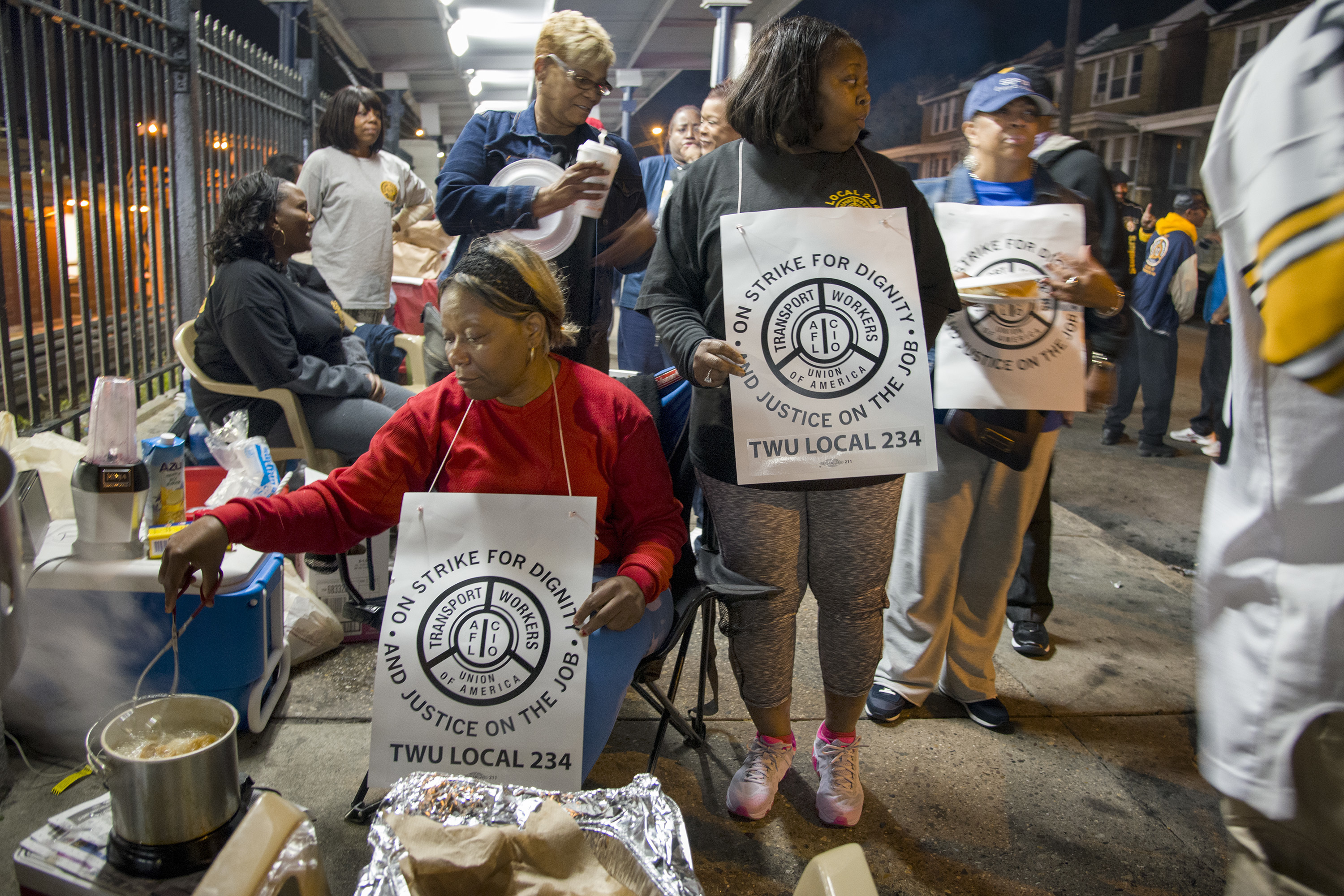
Joyce Woodford (center), a 25-year veteran cashier on SEPTA’s Broad Street Line, serves up fried fish for her fellow striking cashiers outside the Fern Rock Transportation Center during dinnertime on the third day of the SEPTA strike in 2016.
1982: TWU Local 234 (34 days)
About 36 suburban bus drivers and mechanics operating routes primarily in Montgomery County, and some routes in Bucks, won an 8.5% wage increase over three years.
The bus routes were the descendants of the Schuylkill Valley Lines and the Trenton-Philadelphia Coach Lines, which SEPTA acquired in 1976 and 1983, respectively. Service has grown, and the collection of bus routes is known as the Frontier Division today.
1981: TWU Local 234 (19 days) and UTU Local 1594 (46 days)
Transit workers shut down buses, trolleys and subways in the city on March 15, seeking job security in the form of a no-layoff clause, wage increases and a bar on SEPTA hiring part-time workers.
And the Red Arrow division went out for 46 days seeking higher wages and better medical benefits. SEPTA also backed down a demand for permission to hire private contractors for some work on the suburban buses, trolleys, and the Norristown High Speed Line.
1977: TWU Local 234 (44 days)
After a bitter strike, union members who run the city transit division got higher wages and more benefits, after rejecting an arbitrator’s proposed contract that was portrayed in news reports as generous.
A furious Mayor Frank Rizzo told reporters the strike “can last 10 years for all I care.” He said of the union’s rejection of the earlier offer: “It is outrageous, and I hope the people won’t forget it.”
1975: TWU Local 234 (11 days)
Transit workers, concerned about the ravages of inflation, wanted a clause giving them cost-of-living increases and enhancements to health-care benefits. Those were granted after Rizzo agreed to add $7.5 million to the city’s annual SEPTA contribution. Perhaps that’s one reason the mayor was so annoyed two years later.
Staff writer Erica Palan contributed to this article.
Angelica Javier was sitting at home on a Saturday evening last month when her son’s uncle called in a panic.
Xzavier, her 16-year-old, had been shot, he said — one of the teen’s friends had called and told him, but he knew nothing else.
Javier, 32, frantically checked a news website and saw a brief story mentioning that a man was shot and killed in Northeast Philadelphia.
That could not be her son, she told herself. Xzavier was only a boy, she said — tall but lanky, with the splotchy beginnings of a mustache just appearing on his upper lip.
She called around to hospitals without success. Xzavier’s father, Cesar Gregory, drove to Jefferson Torresdale Hospital, desperate for information.
Then, just before 10 p.m., she said, a homicide detective called to say their eldest child, their only son, had been shot and killed that afternoon near Teesdale and Frontenac Streets.
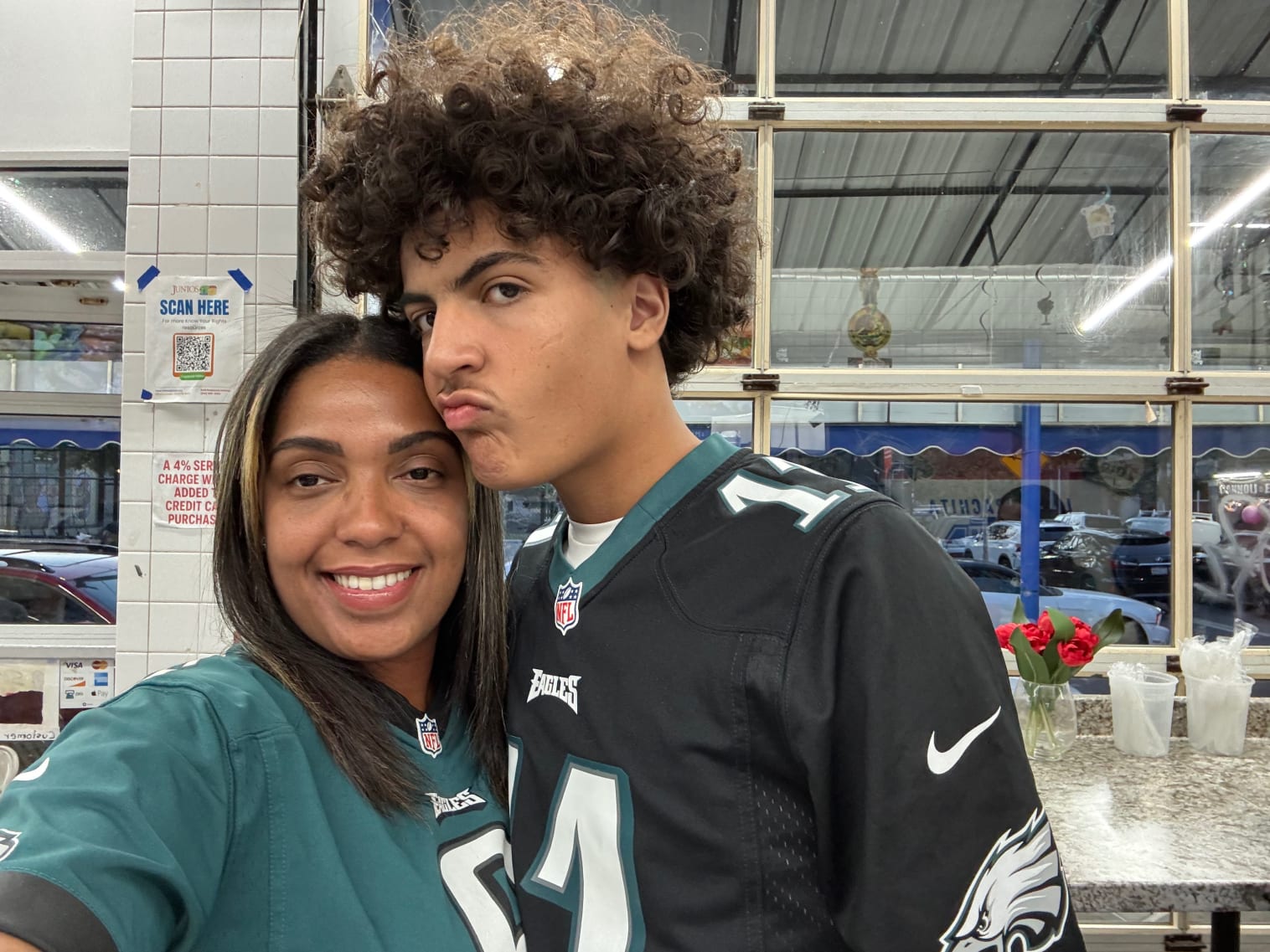
Angelica Javier (left) and her 16-year-old son, Xzavier Gregory, getting tacos after watching the Eagles beat the Los Angeles Rams earlier this year.
The shooting, police said, stemmed from a dispute among teens at the Jardel Recreation Center, just blocks away, earlier in the week. Xzavier’s parents said the detective told them that one of their son’s friends may have slapped a young woman that day.
On Oct. 11, they said, police told them that Xzavier and his friends stopped by the young woman’s house shortly before 4 p.m. to talk with her, apologize, and resolve the conflict. They shook hands, the parents said, and started to walk away.
Then, police said, the girl’s 17-year-old boyfriend, Sahhir Mouzon, suddenly came out of the house with a gun and started shooting down the block at them. Someone shot back, police said, but it was not Xzavier. In total, 45 bullets were fired.
An 18-year-old woman walking by the teens was wounded in the leg.
Xzavier was struck in the chest and died within minutes.
Mouzon has been charged with murder and related crimes.
Javier and Gregory have been left to navigate life without their “Zay” and to reckon with a loss that comes even as gun violence in the city reaches new lows — but which still persists among young people and brings pain to each family it touches.
They don’t understand how a 17-year-old had a gun, they said, or why a seemingly minor — and potentially resolved — conflict had to escalate.
But mostly, they said, they want Philadelphia to know and remember their child: a goofy junior at Northeast High. An avid Eagles fan. A lover of Marvel movies and spicy foods.
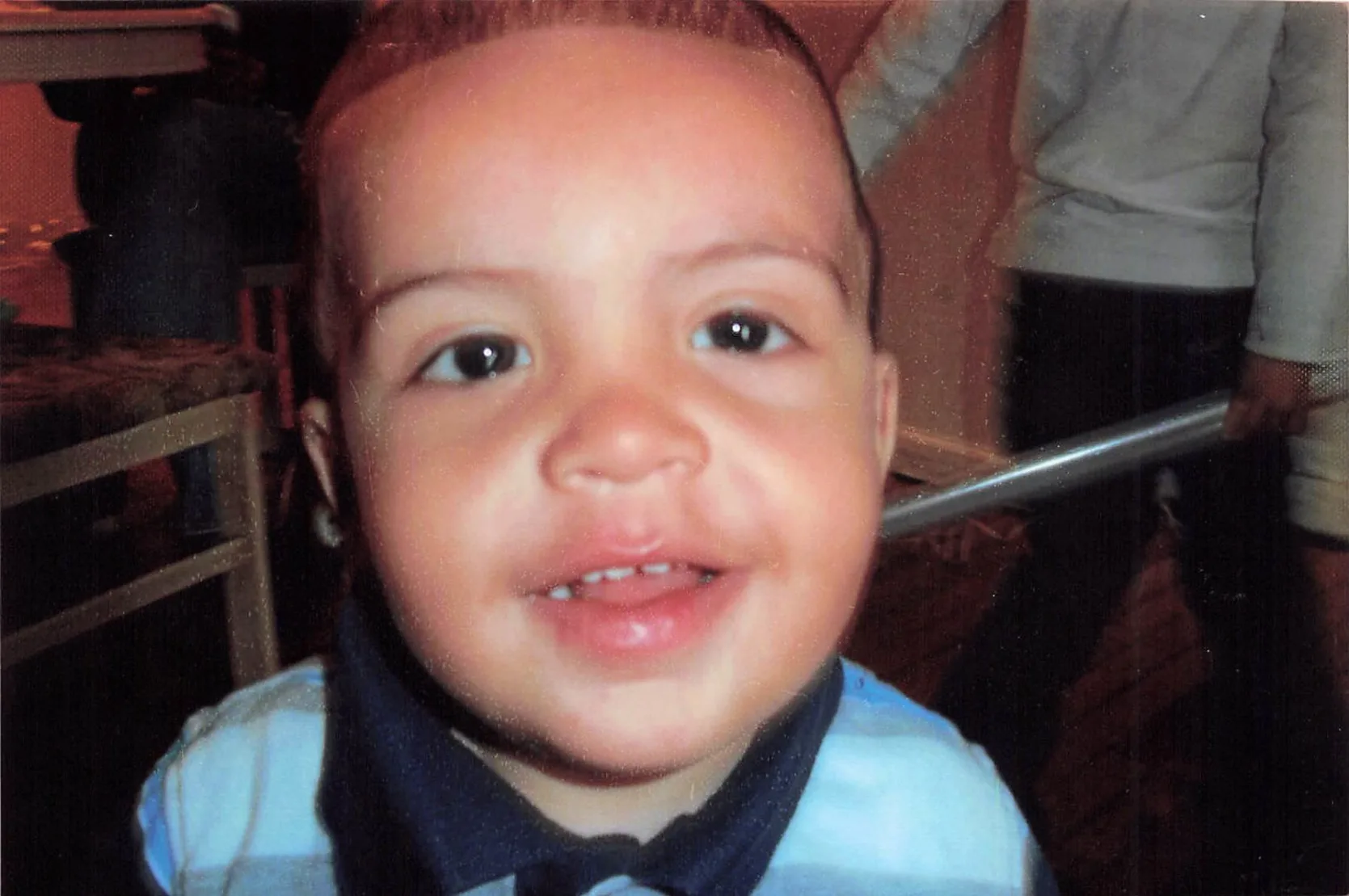
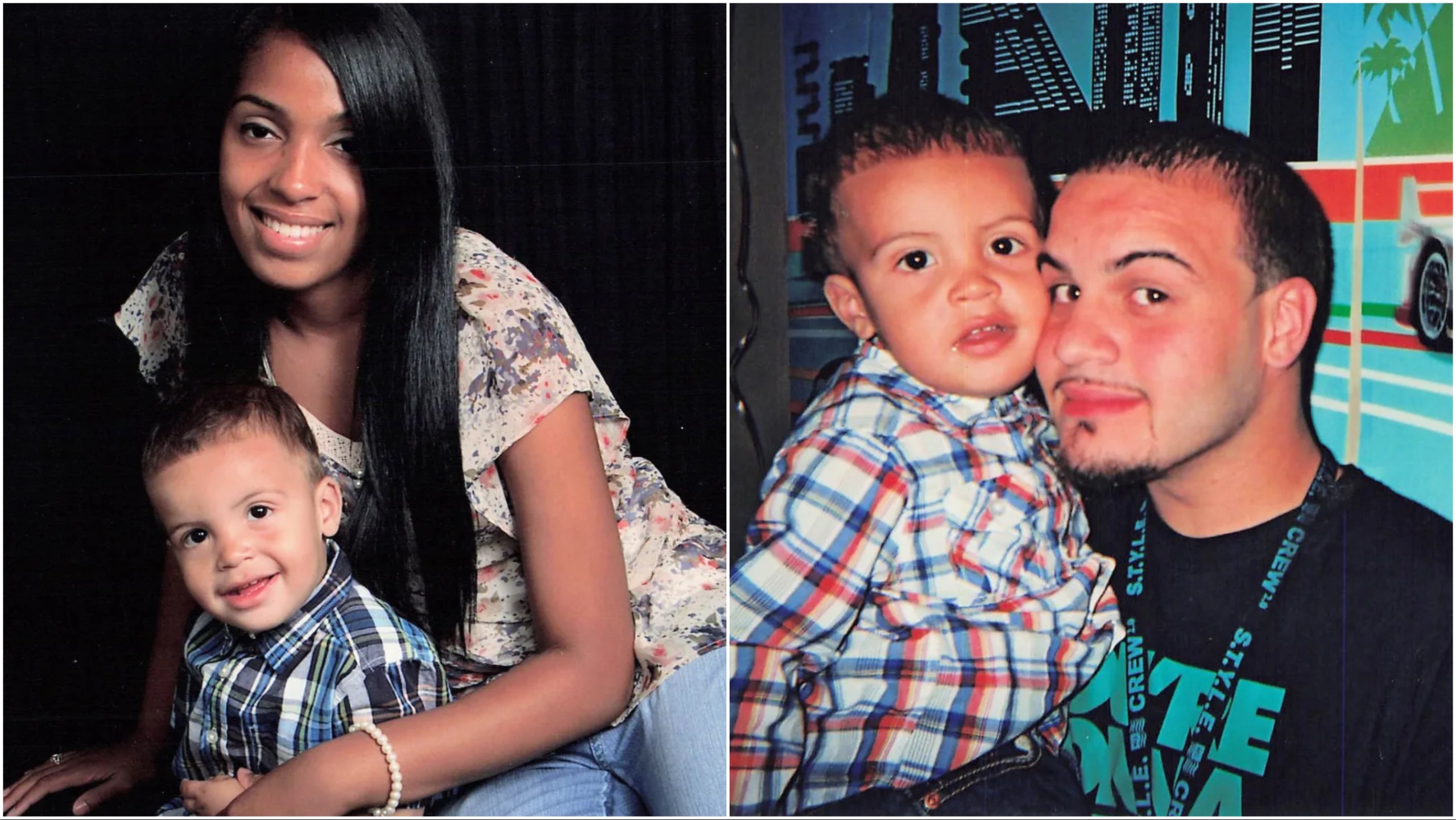
Xzavier Gregory was born in Philadelphia. His parents loved his chubby cheeks.Xzavier Gregory was born Sept. 20, 2009, to Angelica Javier and Cesar Gregory.
Xzavier Giovanni Gregory was born Sept. 20, 2009, at Temple University Hospital in North Philadelphia. His parents, just teens at the time, were immediately taken by his chubby cheeks, which he kept until his teenaged years.
He lived in Kensington until he was about 10 years old, his mother said, when they moved to the Northeast. He attended Louis H. Farrell School, then spent his freshman year at Father Judge High before moving to Northeast High.
He loved traveling, and often visited family in Florida and the Dominican Republic, attended football camps in Georgia and Maryland, and tagged along on weekends to New York with his mother as part of her job managing federal after-school programs.
He played football for the Rhawnhurst Raiders, typically as an offensive or defensive lineman, and had a natural skill for boxing, his parents said.
Philadelphia sports were in his blood — particularly the Eagles. DeVonta Smith and A.J. Brown, his father said, were his favorite players. (Before his death, he agreed that Brown should be included in more plays this year, Gregory said.)
Some of Gregory’s favorite memories with his son revolve around the Eagles. Sitting front row at the Linc on his 13th birthday. Erupting in cheers as the team won its first Super Bowl in 2018. Embracing in tears when they won a second this year.
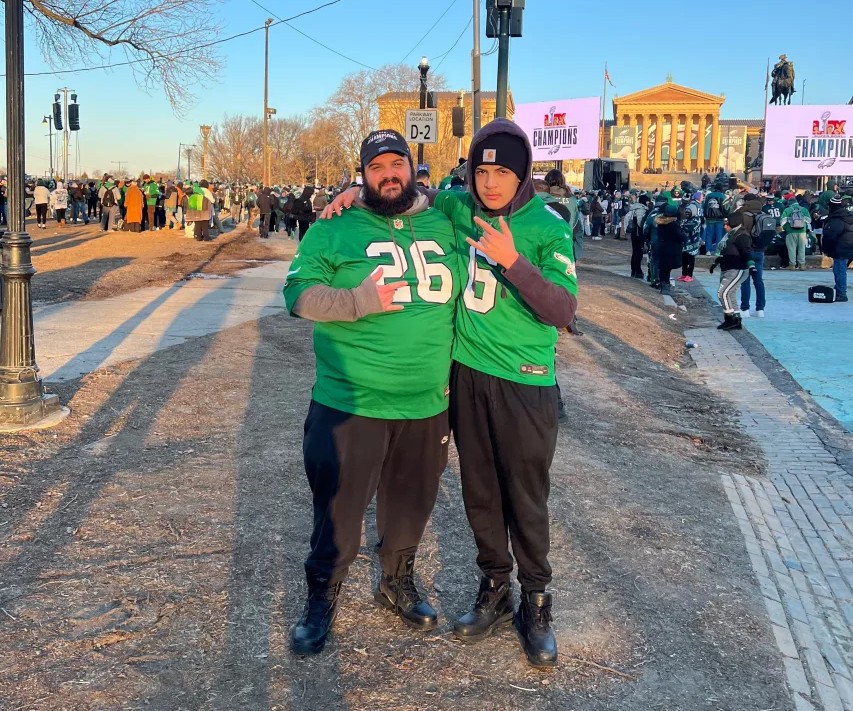
Cesar Gregory (left) and son Xzavier at the Eagles Super Bowl parade near the Art Museum in February. It is a day with his son that the father said he will never forget.
Xzavier was the oldest of three children. His sisters are still too young too fully understand what happened, the parents said.
“He went to heaven,” Javier told 7-year-old Kennedy.
The number of kids shot peaked in 2021 and 2022, when violence citywide reached record highs and guns became the leading cause of death among American children. So far this year, 105 kids under 18 have been shot — a sharp drop from three years ago, but still higher than pre-pandemic levels, according to city data.
Xzavier is one of at least 11 children killed by gunfire this year.
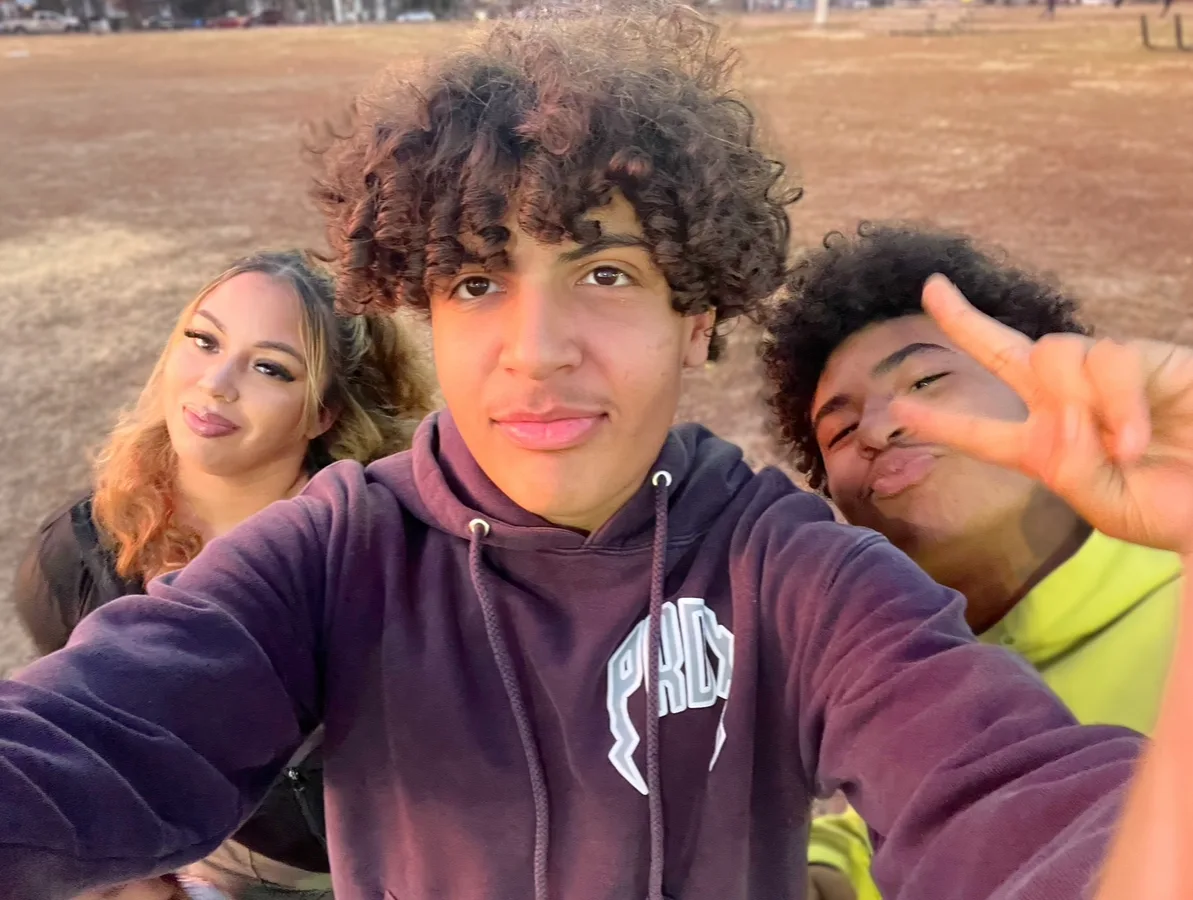
Xzavier Gregory (center) was a goofy teen who attended Northeast High School, his parents said.
Javier and Gregory said some relatives are considering leaving Philadelphia, shaken by Xzavier’s killing and a feeling that teens don’t fear consequences.
But the parents said they will stay. They want to be near Magnolia Cemetery, where Xzavier is buried, and to feel closer to the memories that briefly unite them with him.
On harder days, they said, they go into his bedroom, which is just as he left it, a relic of a teenage boy.
His PlayStation controller sits in the middle of his bed, and a photo of him and his mother hangs on the wall above it. His Nike sneakers are scattered. His black backpack rests on the floor, and a Spider-Man mask sits on the corner of his bedframe.
On Thursday, his parents stood in the room they used to complain was too messy, that smelled like dirty laundry.
“Now, I come in just to smell it,” Javier said.
She took a deep breath.
Staff writer Dylan Purcell contributed to this article.
The undergraduateclass at the University of Pennsylvania vigorously discussed the use of affirmative action in college admissions, half the room charged with arguing one side and half the other.
Their task, informed by the 2023 U.S. Supreme Court decision that ended the use of race-conscious college admissions, was to brief and advise a popular governor of a swing state who had not yet taken a position on the issue.
“Guess who is the governor?” said their professor, Amy Gutmann. “I am the governor.”
And for 90 minutes, the entirety of the class period, Gutmann guided a lively discussion in which students talked as much as she did.
While never a governor, Gutmann has quite the leadership portfolio. She was president of Penn for a record 18 years, leaving in 2022 to become U.S. ambassador to Germany under former President Joe Biden, a post she held until 2024. She is also a Harvard-educated political scientist who cowrote the book The Spirit of Compromise and in 2018 was called one of the world’s 50 greatest leaders by Fortune magazine.
Now, for the first time in about 25 years — since she was a politics professor at Princeton — Gutmann is back in the classroom teaching a full course this semester in the Annenberg School for Communication. Sarah Banet-Weiser, dean of Annenberg, who initially came up with the idea for the course, is her co-teacher.
For students, the professorial star power was hard to pass up. There was a waiting list for the class.
“It’s kind of a power duo,” said Evan Humphrey, 21, a senior communications major from Seattle. “Got to take that class.”
Senior Evan Humphrey said she was drawn to enroll in the class because of the two professors and their distinguished careers.
Focusing on teaching — the heart of a university — has been especially meaningful to Gutmann, and to Banet-Weiser, too, at a time when higher education has had its federal funding threatened and its approaches attacked.
“It literally gives me life every week,” Banet-Weiser said.
Gutmann, 75,who said she aspired to be a teacher since she was 5, said it has made her feel productive “in a way that goes to the heart of what a university is about.”
“We should never lose sight of that heart of the university and how valuable it is,” she said.
The goal of the class, called “The Art and Ethics of Communication in Times of Crisis,” is “to learn how and why to communicate with greater insight and understanding across differences,” while creating space “for free and open dialogue about controversial issues.”
Seniors Luiza Louback (left) and Sarah Usandivaras (right) participate in the class discussion.
It could be a primer for the politically divided nation.
“My pitch is that you can’t really know what you believe if you don’t know what people who disagree with you believe and what their reasons are,” Gutmann said in an interview. “I always say I don’t care what your position is. I care that you can give reasons for it and understand the strongest arguments on the other side.
“That’s the method to search for truth, and it’s the way we serve a democracy.”
Bringing experience to the classroom
During class, Gutmann frequently drew on her experiences as a first-generation college student, a young professor at Princeton, a college president, and an ambassador.
When she got her first teaching job, a male colleague congratulated her, but later she learned he told someone she got the job because she was a woman.
“Did I take that as a compliment? Mm-mm,” Gutmann told the class.
Humphrey said she especially likes hearing about Gutmann’s vast experiences.
“She’s like, ‘Well, when I was the president here, this is something I dealt with,’” Humphrey said. “It’s really interesting knowing the experience she has and her background and the perspective she brings.”
Amy Gutmann (center), president emerita of the University of Pennsylvania and former U.S. ambassador to Germany, is presented with the Weitzman National Museum of American Jewish History’s Only in America® Award during a gala at the museum this month. The award recognizes “Jewish Americans who have made enormous contributions to our world … often despite facing antisemitism and prejudice.” Among those posing with her are Ramanan Raghavendran (far right), chair of Penn’s board of trustees, veteran journalist Andrea Mitchell (next to Raghavendran), Penn President J. Larry Jameson, (to the immediate left of Gutmann), and David Cohen, former Penn board chair, (next to Jameson.)
Gutmann’s life outside class continues to be full, too. After class Wednesday, Gutmann, whose father fled Nazi Germany, flew to Berlin to receive the Prize for Understanding and Tolerance from the Jewish Museum Berlin.
Having returned to Philadelphia to live after leaving Germany, Gutmann said it wasn’t hard to find her stride again in the classroom. She had given one-off lectures as Penn’s president.
“I have a lot of muscle memory on teaching,” she said.
Her style has changed from her early days at Princeton, where she worked from 1976 to 2004. She said readinga student’s notebook left behind and open after one of her ethics and public policy lectures was a major turning point.
“‘That’s not what I said,’” Gutmann thought. “And I realized it’s not what you teach them, it’s what they learn. At that point, I realized I needed feedback.
“So I changed from doing the 45-minute [lecture] thing to doing five or 10 minutes, max, and then asking them questions. Then I got them to argue with one another, and once I found that, I found what I really discovered worked for learning.”
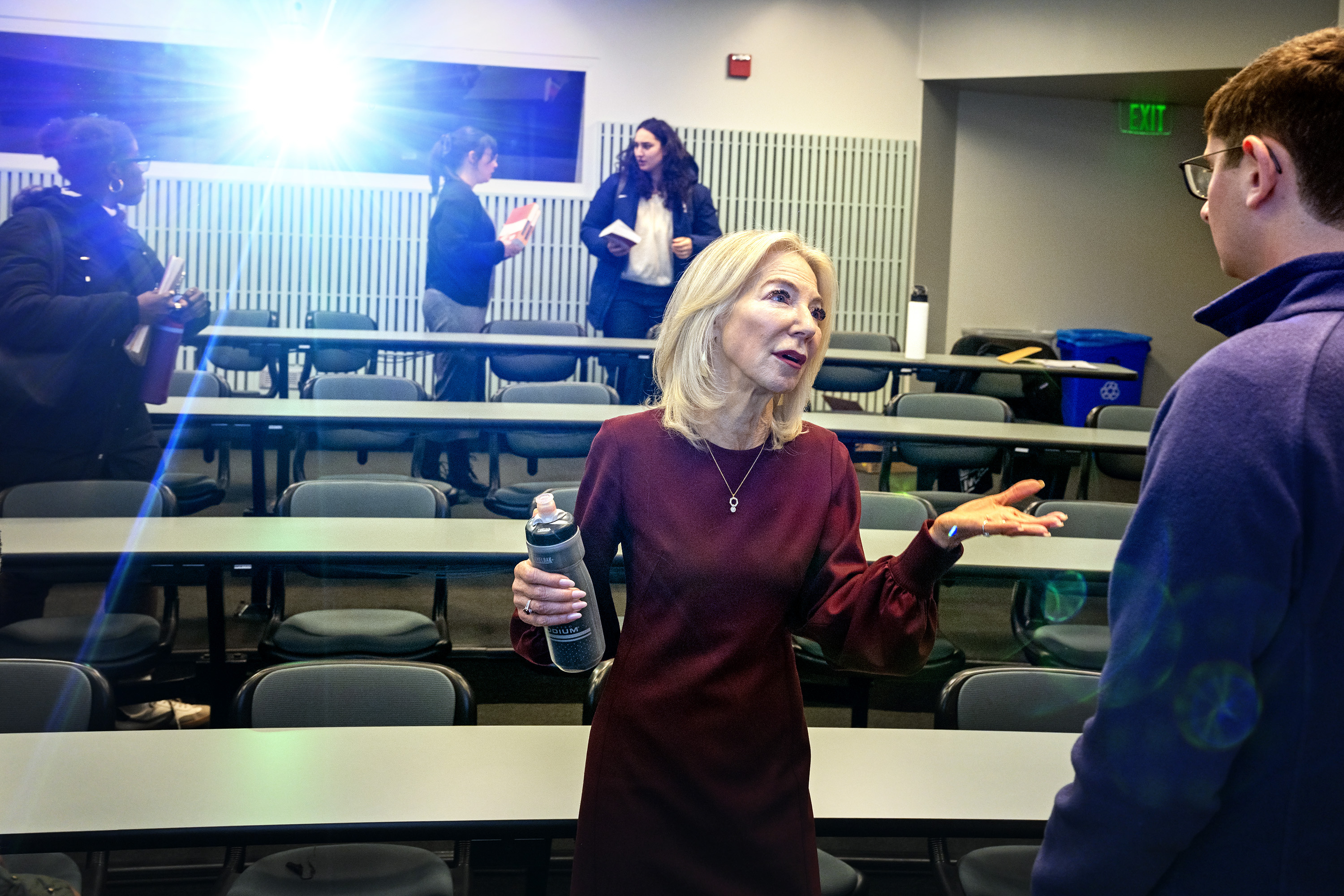
Amy Gutmann talks with sophomore Brian Barth (right) at the end of class she co-teaches at Penn’s Annenberg School for Communication.
Gutmann said she spends Fridays and weekends preparing for the class, which meets twice a week.
“It’s a ton of work,” she said. “I’m really delighted to be doing it.”
The class comes against the backdrop of fraught times for colleges. Penn earlier this year scrubbed its website of diversity initiatives after President Donald Trump’s administration threatened funding to schools employing diversity, equity, and inclusion efforts. In the summer, the school struck an agreement with the administration over the past participation of former transgender swimmer Lia Thomas, and Penn was one of nine schools originally asked to sign a compact that would have given the school preferential consideration for federal funding in exchange for complying with certain mandates affecting admissions, hiring, and other university operations. Penn declined.
‘One-of-a-kind’ discussions
Gutmann and Banet-Weiser do not allow laptops, phones, or any electronic devices in class so that students completely focus on the conversation. To prepare for the affirmative action discussion, students were assigned related readings and review of the court cases.
The two professors interacted with each other and prompted discussion among students with deep questions: Is treating people equal the same as treating them equally? Is it right to use affirmative action for only one racial group? What about other forms of affirmative action or preference, including for athletes, low-income students, and legacies whose parents attended the university?
The approach resonated with students.
“I wanted to take a class where I would really be encouraged to step out of my comfort zone and be able to learn not only how to understand my own beliefs and values but understand the beliefs and values of others,” said Sarah Usandivaras, 21, a senior communications and political science major who was born in New York and grew up in Paraguay.
She found it in Gutmann and Banet-Weiser’s classroom.
“It’s a one-of-a-kind,” she said.
Ariana Zetlin, a doctoral student in Penn’s Graduate School of Education, is auditing the class to observe its approach.
“The discussion and the debates are so much deeper and stronger than what I’m seeing in classrooms that don’t necessarily have these structures,” said Zetlin, 30, who is from New York.
During class, those on both sides found common ground.
Senior Angele Diamacoune said she was learning from the day’s lesson.
“So I’m hearing agreement that diversity is a good thing but disagreement on how you get it,” Gutmann said.
She asked students how many believed that having low-income and racially diverse students in class contributed to their learning. Every hand went up.
“That to me is really striking,” Gutmann said. “There aren’t that many things that we can get unanimity on.”
She asked students how they would advise colleges to teach the issue.
“It would be good to teach with activities like this,” said Angele Diamacoune, 21, a senior communications major from Allentown.
On Oct. 16, Rian Andrianzah walked into a Philadelphia office of U.S. Citizenship and Immigration Services for what he thought was a routine biometrics appointment. He expected to be fingerprinted and photographed and sent on his way.
Instead, while his wife waited in an outer room, he was arrested by ICE ― and now faces deportation in a case that has angered the city’s Indonesian community.
Andrianzah, 46, is among a growing number of immigrants whose families say they showed up for in-person appointments or check-ins, only to be suddenly handcuffed and spirited into detention.
Green-card applicants, asylum-seekers, and others who have ongoing legal or visa cases have been unexpectedly taken, part of a Trump administration strategy, lawyers and advocates say, to boost the number of immigration arrests and to deport anyone who can possibly be deported.
“ICE was waiting for him,” said Philadelphia immigration attorney Christopher Casazza, who represents Andrianzah and his family. “In 15 years, I have never once seen somebody arrested at their biometrics appointment ― except in the past few months.”
Andrianzah legally entered the United States on a visitor’s visa in February 2000, but did not return to Indonesia. He was placed in removal proceedings in 2003, and a judge issued a final order of deportation in November 2006. His appeal was denied two years later.
The removal order was never enforced, as had been common for what the government thensaw as low-priority immigration violators. Some people with final orders have lived in the U.S. for decades.
In the ensuing years, Andrianzah worked factory and warehouse jobs ― and married Siti Rahayu, 44, also of Indonesia. They made a home in South Philadelphia, parents to two U.S.-citizen children, a son, age 8, and a daughter, 15.
Andrianzah and his wife went to USCIS that day as part of her application for a T visa, available to people who have been victims of human trafficking. In an interview with The Inquirer,Rahayu said she was sent to the U.S. in 2001 by relatives who saw her as a means to pay off a debt, delivering her to an underground organization that puts people in low-paying jobs, then keeps them working indefinitely.
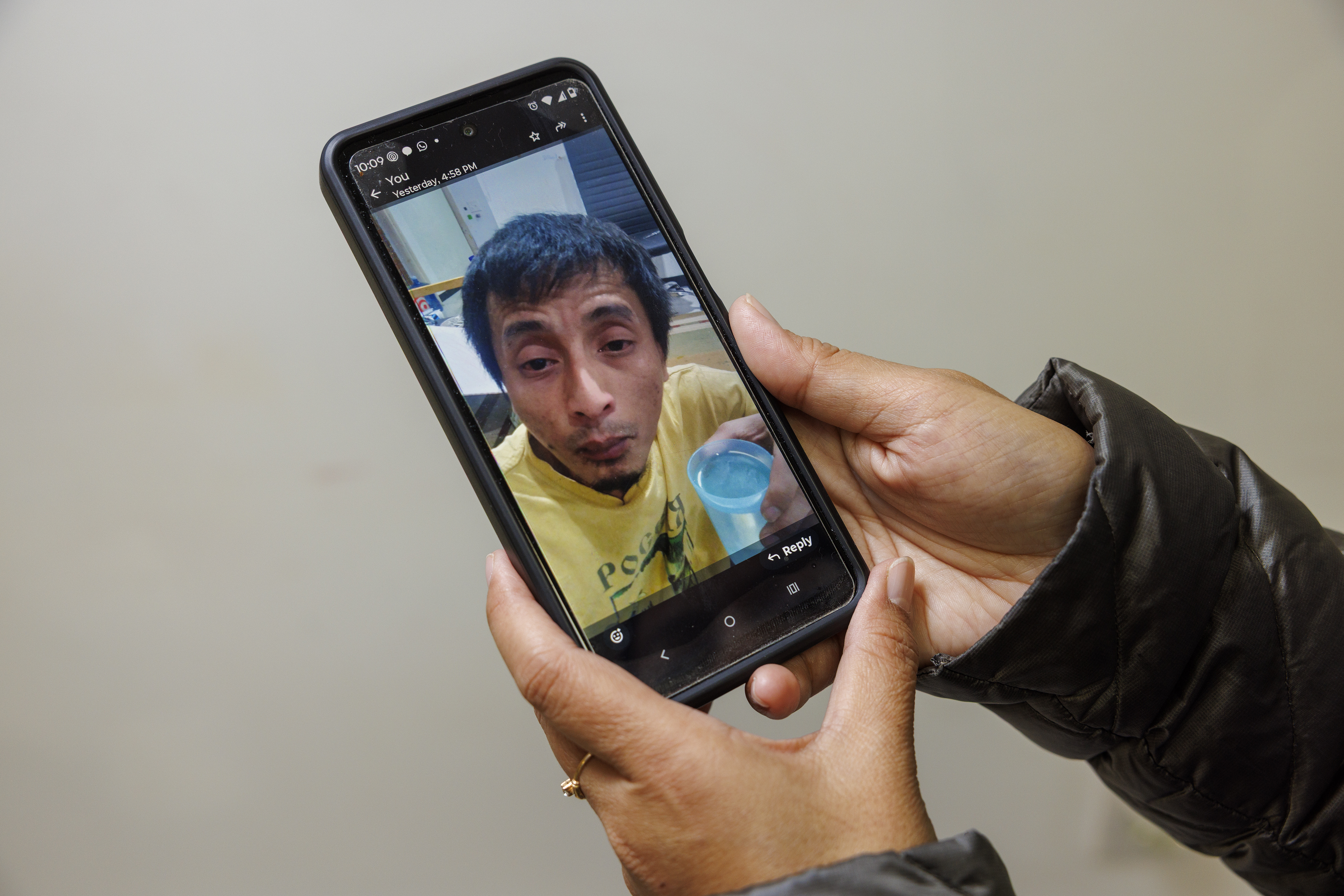
Siti Rahayu of Philadelphia, here on Thursday, November 6, 2025. Her husband Rian Andrianzah walked into United States Citizenship and Immigration Services office for a routine visit but he was sent to Moshannon detention center to await deportation.
Casazza, of the Philadelphia firm Palladino, Isbell & Casazza LLC, said Rahayu has a strong case for a T visa, which offers permission to live in the U.S. and a path to permanent residency and citizenship.
As her husband, Andrianzah would receive those same benefits under her visa.
That’s why, Casazza said, it makes no sense for ICE to confine and deport him. Once his wife’s visa was approved, Andrianzah would be able to legally live in the United States, the attorney said.
Asked about Andrianzah’s arrest and the couple’s situation, a U.S. Immigration and Customs Enforcement spokesperson in Philadelphia said in a statement: “Due to privacy issues, we are not authorized to discuss this case.”
Andrianzah is being held at the Moshannon Valley Processing Center, an ICE detention facility in Clearfield County, Pa.
As President Donald Trump presses his deportation agenda, what were routine meetings with federal authorities have now become risky for immigrants. Advocates say many of those arrested were following the rules and doing what the government asked:
On May 27, the wife of a Marine Corps veteran was detained in Louisiana after meeting with USCIS about her green-card application, CBS News reported. Paola Clouatre, 25, said she came to the U.S. as a child with her mother, but was abandoned as a teenager and unaware that the government had ordered them deported. She spent about eight weeks in custody before being fitted with an ankle monitor and released.
On June 3, federal agents in New York City arrested at least 16 immigrants who showed up for check-ins, after a private contractor working with ICE summoned them to urgent appointments, The City, a news organization, reported.
On Oct. 22, a 21-year-old California college student was arrested by ICE at an appointment at a USCIS office in San Francisco, Newsweek reported. Government officials said Esteban Danilo Quiroga-Chaparro, a Colombian national and green-card applicant, had missed mandatory meetings, though his husband said that was untrue.
On Oct. 23, a Venezuelan couple pursuing asylum were arrested during a check-in at the ICE office in downtown Milwaukee, Urban Milwaukee reported. Diego Ugarte-Arenas and Dailin Pacheco-Acosta sought protection after fleeing their homeland in 2021. An ICE spokesperson told the news agency that “all aliens who remain in the U.S. without a lawful immigration status may be subject to arrest and removal.”
“There’s a lot of risks right now,” said Ana Ferreira, who serves on the executive board of the Philadelphia chapter of the American Immigration Lawyers Association.
Some clients went intoimmigrationappointments knowing there was a possibility they could be detained, she said. Others were shocked to be taken.
“None of this would have happened years ago,” Ferreira said. “It’s a completely different landscape.”
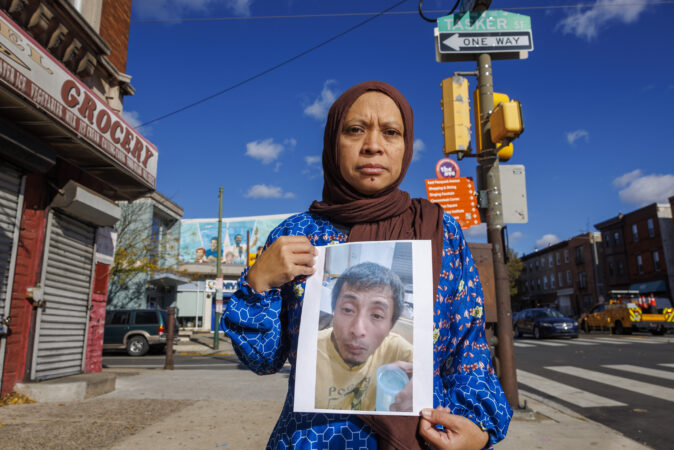
Siti Rahayu of Philadelphia holds a photograph of her husband, Rian Andrianzah. He walked into a United States Citizenship and Immigration Services office for what he thought would be a routine visit but was sent to the Moshannon detention center to await deportation. Photograph taken on Thursday, November 6, 2025.
Rahayu said that on Oct. 16, she completed her own biometrics appointment, then grew concerned when her husband did not appear. She asked the staff what was happening.
“They [said they] don’t know anything, and they say this is new for them,” Rahayu said.
Finally someone told her: He’s gone. Rahayu fears for her husband’s health in custody because he suffers from diabetes, which impairs his vision.
The local Indonesian American community reacted immediately, supported by Asian Americans United, the advocacy group. An estimated 2,000 Indonesians live in Philadelphia, the 10th-largest community in the nation.
Andrianzah said through his wife that he wished to thank everyone who has tried to help him and his family, that he is grateful for their care and concern. Supporters have raised about $13,000.
Each year thousands of people physically report to ICE or related immigration agencies for mandatory check-ins.
Some immigrants are required to appear every couple of weeks, some once a month, others once a year. The appointments help immigration officials keep track of people who in the past have been low priorities for deportation, allowed to live freely as they pursue legal efforts to stay in the United States.
Biometrics appointments are usually brief sessions, perhaps half an hour, at which the government captures fingerprints, a passport-style photo, and a signature. The immigrant may also be asked to provide information like height and weight.
Despite the fresh risk of being arrested on the spot, immigrants have little option except to show up. Many types of immigration applications require in-person appearances. And failure to appear for a required ICE appointment can by itself result in an order for removal.
“They’re trying to grab everybody, wherever they can,” and that included Andrianzah, Casazza said. “ICE is going to do their best to deport him.”
Late in the afternoon on Nov. 7, a Friday, the Philadelphia Police Department announced that nine current and former police officers had been charged with conspiring to defraud the city by using a grant-funded youth boxing program to pad their salaries.
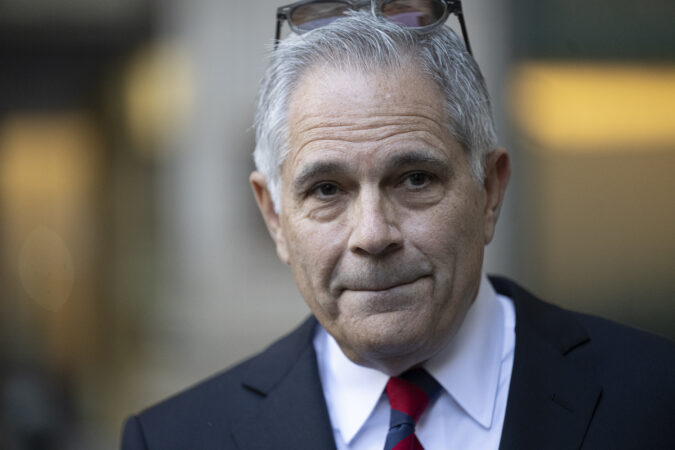
It was the largest number of Philly officers charged together with misconduct in nearly 40 years — a seemingly splashy case for District Attorney Larry Krasner, a progressive prosecutor who has made charging cops a cornerstone of his two terms in office.
Yet Krasner has been unusually quiet about it.
The district attorney was traveling in Switzerland for a conference when the charges became public. His office declined to comment, held no news conference, and issued no public statements — in stark contrast to his trumpeting of police misconduct cases in the past.
Krasner has charged dozens of police officers since taking office in 2018. But he did not publicly acknowledge his largest booking to date until The Inquirer approached him at an unrelated news conference, nearly a week after these most-recent charges were filed.
And even then, he was reluctant to talk about it.
“We had probable cause that they committed the crimes,” Krasner said Thursday. “Having said that, I wanna be very clear: There are a lot of great cops in the city. … I don’t think that this group of nine should in any way taint the rest of them.”
Prosecutors accuse Nashid Akil, former captain of the 22nd District in North Philadelphia, and eight of his officers of stealing $44,576 in taxpayer-funded anti-violence grant money between January and September 2022, according to charging documents.
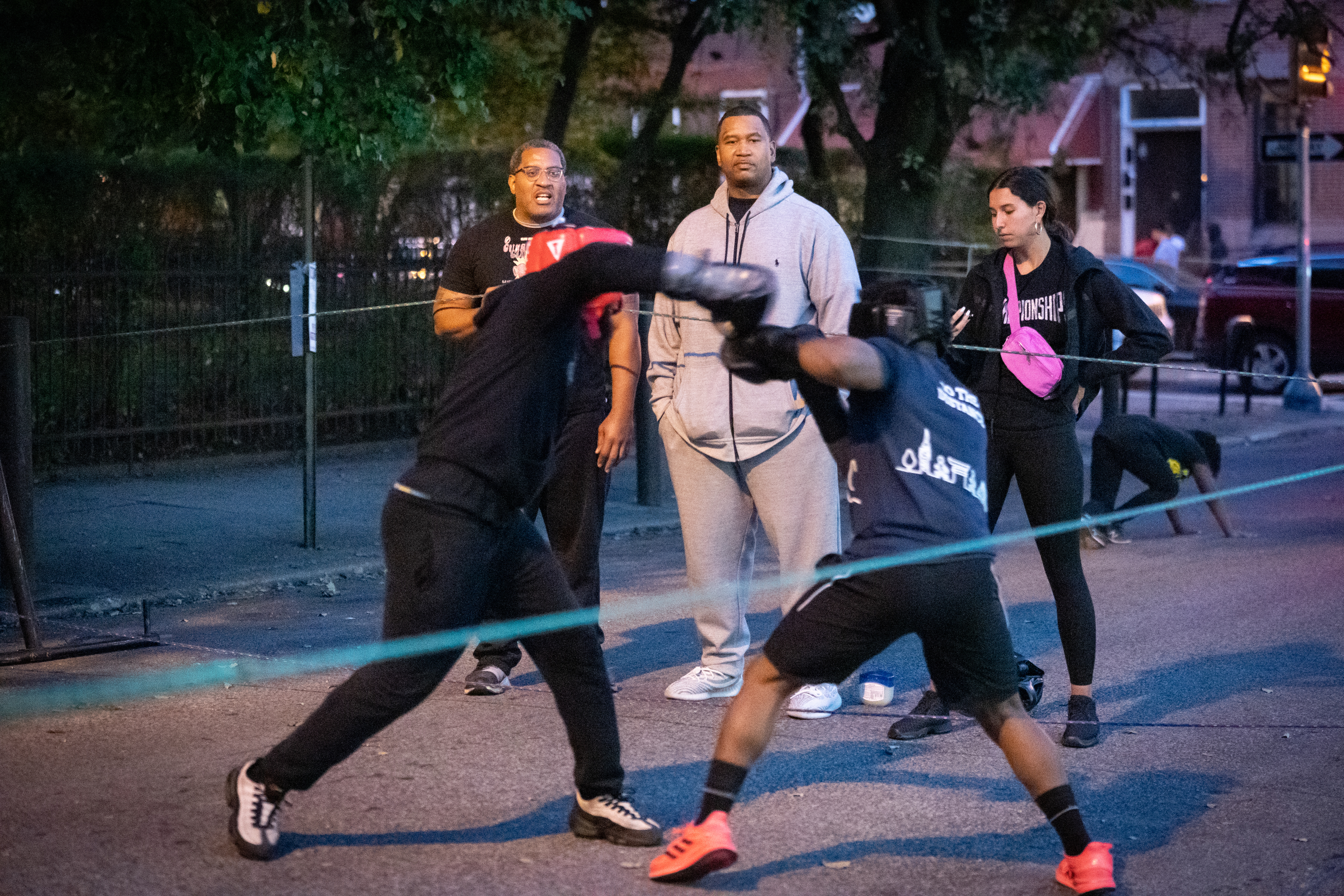
Those funds came from a $392,000 city grant awarded to Epiphany Fellowship Church to support Guns Down, Gloves Up, a boxing and youth mentorship program that Akil founded at his nearby district building. No one from the church was charged, and Krasner said Thursday the church should not be “tainted” by the allegations against police.
Former Captain Nashid Akil, shown here while at the boxing program Guns Down Gloves Up, at the 22nd District, in Philadelphia, Friday, October 7, 2022.
City employees are prohibited from receiving grant dollars. Yet after vowing in the grant application that police time would be volunteered, Akil, using the church as a pass-through, allegedly paid himself and eight district officers for their work as boxing instructors, an arrangement that came to light through an Inquirer investigation in 2023.
Police now say some officers were paid during their scheduled shift hours.
A law enforcement source familiar with the case said the district attorney’s office concluded its probe into the grant scheme months ago. Krasner did not approve the charges until Oct. 31, according to a police department spokesperson. That was days before the Nov. 4 election, when Krasner was handily reelected to a third term. The defendants began surrendering to authorities three days later.
Police Commissioner Kevin Bethel issueda statement after the arrests saying he was “deeply troubled” by the officers’ alleged actions and “particularly disappointed by the involvement of a former commanding officer.”
But neither Krasner nor his spokesperson responded at the time to repeated requests for comment.
On Thursday, Krasner attributed the timing of the charges to logistical issues with bringing in the nine codefendants.
Akil was forced to resign in February 2023 after The Inquirer’s reporting on the boxing program, and three other officers who allegedly took the money had since resigned. Bethel has moved to fire the five active officers.
Only one of the nine officers listed an attorney in court records, and that lawyer could not be reached for comment.
Officials at Epiphany Fellowship Church did not respond to a request for comment.
An unusual silence
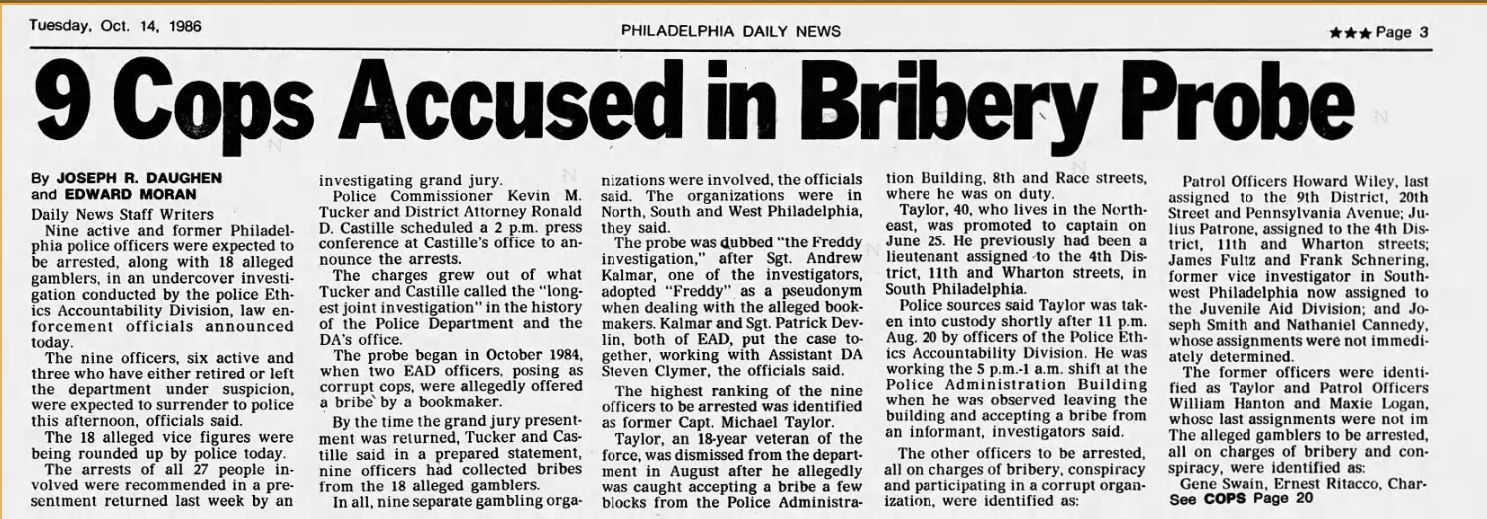
The last time nine officers were charged together in Philadelphia was in 1986, for taking bribes to conceal an underground gambling ring.
An Oct. 14, 1986 article in the Philadelphia Daily News shows the last time nine current and former Philadelphia police officers were charged following a single investigation.
Since the charges were filed in the boxing program scandal, Krasner’s office has put out ninenews releases — but nothing on the nine officers charged.
It’s a departure from how the typically loquacious district attorney has handled previous allegations of police misconduct.
In 2021, for example, when The Inquirer was reporting on widespread abuse of the department’s injured-on-duty program, Krasner said he believed some officers were “gaming the system, and in my opinion, committing crimes by engaging in fraudulent practices to stay home.” The disability system was reformed and hundreds of officers returned to work, but no criminal charges were filed.
The next year, Krasner issued a lengthy news release after the arrest of Officer Daniel Levitt on perjury and related charges, stemming from an allegedly illegal search that led to the recovery of a handgun. The charges against Levitt were initially dismissed but have since been refiled.
In 2023, Krasner was again out front in announcing the arrest of former Officer Patrick Henon for sexually assaulting young girls. Henon pleaded guilty.
In May, Krasner called a news conference after a jury convicted two former detectives convicted of making false statements about DNA evidence.
A month later, when Donald Suchinsky, a former homicide detective, was sentenced to prison for sexually assaulting relatives of murder victims, Krasner appeared outside the Criminal Justice Center to condemn Suchinsky’s conduct and urge any other victims to come forward.
And in July, Krasner again held a news conference to criticize what he called a lenient sentence of former Officer Mark Dial, who was paroled following his voluntary manslaughter conviction in the shooting of Eddie Irizarry.
“I am deeply disappointed with a verdict that I think makes people lose faith in the criminal justice system,” Krasner said.
A sensitive issue
In contrast, when approached by reporters Thursday, Krasner requested an advance list of questions about the alleged grant misappropriation, then huddled privately with two of his top prosecutors for several minutes before offering littlecomment.
Asked about his reticence toward this case compared with past cases, Krasner alluded to outside concerns.
“We have to do certain things in court in a certain kind of way, and we have to operate with our partners, and that’s what we’re going to do,” he said.
He declined further questions.
Krasner’s uncharacteristic silence has not gone unnoticed by nearly a dozen communications consultants, lawyers, and law enforcement officials, who spoke with The Inquirer on the condition that they not be named.
They speculated that Krasner might be downplaying the arrests due to political sensitivities or because — unlike in cases of wrongful arrests and shootings — there is not a clear victim in this case, outside of city taxpayers. Some acknowledged that there could also be legal reasons why Krasner would decline to draw additional attention to the arrests.
Carl Day, a pastor who runs Culture Changing Christians, noted that Krasner is allied with Black clergy members who have supported his political campaigns. Day suggested that the district attorney might be trying to avoid further scrutiny into the church that was in charge of the grant.
“My hope and belief is that it’s a level of respect,” Day said. “In this work, you become scrutinized a ton and placed under microscopes, especially when you are a Black-led organization and getting government money.”
The boxing program scandal is one of several incidents that have raised concern about the city’s oversight of millions of anti-violence grants, scores of which have been awarded to small nonprofits in the Black community.
Day said nonprofit leaders need to be held accountable for misspent funds, but he argued that Black-led nonprofits, many of which do not have the financial resources of large organizations that typically get city grants, face heightened scrutiny.
If that is the case, Day said, he is puzzled why Krasner wouldn’t come out and say so.