WASHINGTON — The heads of the agencies carrying out President Donald Trump’s mass deportation agenda are testifying in Congress Tuesday and faced questions over how they are prosecuting immigration enforcement inside American cities.
Trump’s immigration campaign has been heavily scrutinized in recent weeks, after the shooting deaths in Minneapolis of two protesters at the hands of Homeland Security officers. The agencies have also faced criticism for a wave of policies that critics say trample on the rights of both immigrants facing arrest and Americans protesting the enforcement actions.
Todd Lyons, the acting director of U.S. Immigration and Customs Enforcement, Rodney Scott, who heads U.S. Customs and Border Protection, and Joseph Edlow, who is the director of U.S. Citizenship and Immigration Services, will speak in front of the House Committee on Homeland Security.
This is the first time all three have appeared in Congress since the department received a huge infusion of money from Congress last summer and since immigration enforcement operations intensified across the country. The officials are speaking at a time of falling public support for how their agencies are carrying out Trump’s immigration vision.
Under Lyons’ leadership, ICE has undergone a massive hiring boom and immigration officers have deployed in beefed-up enforcement operations in cities across the country designed to increase arrests and deportations. The appearance in Congress comes as lawmakers are locked in a battle over whether DHS should be funded without restraints placed over its officers’ conduct.
The administration says that activists and protesters opposed to its operations are the ones ratcheting up attacks on their officers, not the other way around, and that their immigration enforcement operations are making the country safer by finding and removing people who’ve committed crimes or pose a threat to the country.
Lyons is likely to face questioning over a memo he signed last year telling ICE officers that they didn’t need a judge’s warrant to forcibly enter a house to arrest a deportee, a memo that went against years of ICE practice and Fourth Amendment protections against illegal searches.
During Scott’s tenure, his agency has taken on a significant role in arresting and removing illegal immigrants from inside the country. That increased activity has become a flashpoint for controversy and marks a break from the agency’s traditional job of protecting borders and controlling who and what enters the country.
Under commander Gregory Bovino, a group of Border Patrol agents hopscotched around the country to operations in Los Angeles, Chicago, Charlotte, and New Orleans where they were often accused of indiscriminately questioning and arresting people they suspected were in the country illegally. Bovino says his targets are legitimate and identified through intelligence and says that if his officers use force to make an arrest, it’s because it’s warranted.
A Border Patrol agent and Customs and Border Protection officer both opened fire during the shooting death of Alex Pretti, one of two protesters killed in Minneapolis in January. The other protester, Renee Good, was shot and killed by an ICE officer.
After the Pretti shooting, Bovino was reassigned and Trump sent his border czar Tom Homan to Minneapolis to assume control.
USCIS has also faced criticism for steps it has taken including subjecting refugees already admitted to the U.S. to another round of vetting and pausing decisions on all asylum cases.
Three leading social media companies have agreed to undergo independent assessments of how effectively they protect the mental health of teenage users, submitting to a battery of tests announced Tuesday by a coalition of advocacy organizations.
The platforms will be graded on whether they mandate breaks and provide options to turn off endless scrolling, among a host of other measures of their safety policies and transparency commitments. Companies that reviewers rate highly will receive a blue shield badge, while those that fair poorly will be branded as not able to block harmful content. Meta — which operates Facebook and Instagram — TikTok and Snap are first three companies to sign up for the process.
“I hope that by having this new set of standards and ratings it does improve teens’ mental health,” said Dan Reidenberg, managing director of the National Council for Suicide Prevention, who oversaw the development of the standards. “At the same time, I also really hope that it changes the technology companies: that it really helps shape how they design and they build and they implement their tools.”
Teenagers represent a coveted demographic for social media sites and the new standards come as the tech industry faces increasing pressure to better protect young users.
A wave of lawsuits alleges that leading firms have engineered their platforms to be addictive. Congress is weighing a suite of bills designed to protect children’s safety online. And state lawmakers have sought to impose age limits on social apps.
But those efforts have borne little fruit. Some legal experts argue teens and their families may face difficulty in court cases proving the connection between social media use and their struggles. Officials in Washington, meanwhile, have been unable to agree on how to regulate the industry and laws passed by the states have run into First Amendment challenges.
The voluntary standards represent an alternative approach. Reidenberg said in an interview that the ratings are not a substitute for legislation but will be a helpful way for teenagers and parents to decide how to engage with particular apps. The project is backed by the Mental Health Coalition, an advocacy group founded by fashion designer Kenneth Cole.
Cole said in a statement that the standards “recognize that technology and social media now play a central role in mental health — especially for young people — and they offer a clear path toward digital spaces that better support well-being.”
There is still no scientific consensus on whether social media is on the whole harmful for children and teenagers. While some research has found that the heaviest users have worse mental health, studies have also found that young people who are not online can also struggle. But teenagers themselves have reported becoming more uneasy about the time they spend online, with girls in particular telling pollsters at the Pew Research Center in 2024 that apps were affecting their self-confidence, sleep patterns, and overall mental health.
Reidenberg said it’s clear that in some cases young people’s time online becomes problematic. He said the system was developed without funding from the tech industry, but companies will have to volunteer to participate.
Antigone Davis, Meta’s global head of safety, said the standards will “provide the public with a meaningful way to evaluate platform protections and hold companies accountable.” TikTok’s American arm said it looked forward to the ratings process. Snap called the Mental Health Coalition’s work “truly impactful.”
Organizers compared the process to how Hollywood assigns age ratings to movies or the government assesses the safety of new cars. Companies will submit internal polices and designs for review by outside experts who will develop their ratings. In all, the companies’ performance will be measured in about two dozen areas covering their policies, app design, internal oversight, user education, and content.
Many of the standards specifically target users’ exposure to content about suicide and self harm. But one also targets the sheer length of time that some people spend scrolling, crediting platforms for offering either voluntary or mandatory “take-a-break” features.
The standards are being launched at an event in Washington on Tuesday. Sen. Mark R. Warner (D., Va.) said in a statement that he welcomed the standards but they weren’t a substitute for regulatory action.
“Congress has a responsibility to put lasting, enforceable guardrails in place so that every platform is held accountable to the young people and families who use them,” he added.
President Donald Trump has threatened to block the opening of a bridge between Michigan and Ontario, claiming Canada is trying to “take advantage of America” and calling for compensation in the latest flash point in the simmering tensions between the United States and its northern neighbor.
The Gordie Howe International Bridge — a six-lane bridge between Detroit and Windsor, Ontario, that has cost about $4.7 billion to build — has been under construction since 2018 and is due to open early this year, according to the organization behind it.
On Monday, Trump said he “will not allow” it to open in a post on Truth Social, saying Canada had treated the U.S. “very unfairly for decades” and that the U.S. would not benefit from the project.
“I will not allow this bridge to open until the United States is fully compensated for everything we have given them, and also, importantly, Canada treats the United States with the Fairness and Respect that we deserve,” he said. It was unclear how Trump would be able to delay or block the project from opening.
“We will start negotiations, IMMEDIATELY. With all that we have given them, we should own, perhaps, at least one half of this asset,” he said, adding that the revenue generated from the project “will be astronomical.”
The bridge, named after Canadian ice hockey legend Gordie Howe, who played for the Detroit Red Wings, has been labeled a “once-in-a-generation undertaking” by the Windsor-Detroit Bridge Authority, the Canadian government entity responsible for delivering it. It is set to have U.S. and Canadian entry ports and an interchange connecting to Michigan’s road network.
The bridge is financed by the Canadian government but is publicly owned by the governments of Canada and Michigan, with terms outlined in a 2012 Crossing Agreement. The agreement stated all iron and steel used in the project must be produced in the U.S. or Canada.
Canada will recoup the costs of funding the bridge from toll revenue, the Canadian government said in 2022.
Candace Laing, president and CEO of the Canadian Chamber of Commerce, said regardless of whether Trump’s threat is real or an attempt at creating uncertainty, “blocking or barricading bridges is a self-defeating move.”
“The path forward isn’t deconstructing established trade corridors, it’s actually building bridges,” she said in an emailed statement.
The complaint is the latest in a string of blows he has leveled at Canada and Prime Minister Mark Carney, rupturing the traditionally close relationship between the two allies.
Last month, Trump threatened to decertify and impose tariffs on Canadian-built aircraft in a move that sparked fears of wide ramifications for U.S. air travel. He also traded barbs with the Carney on the world stage at the World Economic Forum in Davos, and later revoked his invitation for Canada to join the Board of Peace, an entity that Trump has claimed will resolve global conflicts.
The latest comments mark a sharp contrast to Trump’s previous support for the project. In a February 2017 statement with then-Canadian Prime Minister Justin Trudeau, Trump highlighted the closeness of the two countries and praised the bridge as a “vital economic link.”
The Gordie Howe International Bridge is set to absorb traffic from the nearby Ambassador Bridge between Detroit and Windsor, which is owned by Detroit’s Moroun family and responsible for about a quarter of all trade between the U.S. and Canada. The owners have appealed to Trump to stop construction of the new bridge and sued the Canadian government for approving it, claiming it will infringe on their right to collect revenue.
Windsor Mayor Drew Dilkens told the Canadian Broadcasting Corporation that Trump’s post was “insane,” noting that U.S. steel was used in construction on the Michigan side of the bridge.
“I really can’t believe what I’m reading,” Dilkens said. “The faster we can get to the midterms and hopefully see a change, the better for all of us.”
He also mocked Trump’s suggestion — made in the social media post without any supporting evidence — that if Canada makes a trade deal with China, China would “terminate” Canadian ice hockey and eliminate the Stanley Cup.
“Thankfully the bridge was named after Gordie Howe before China terminates hockey and eliminates the Stanley Cup!” Dilkens quipped on X.
U.S. Sen. Elissa Slotkin (D., Mich.) said Trump’s threats to tank the bridge project meant he was “punishing Michiganders for a trade war he started.”
“The only reason Canada is on the verge of a trade deal with China is because President Trump has kicked them in the teeth for a year,” she wrote in a post on X.
“The President’s agenda for personal retribution should not come before what’s best for us. Canada is our friend — not our enemy. And I will do everything in my power to get this critical project back on track.”
The Canadian government, the Windsor-Detroit Bridge Authority and the White House did not immediately respond to requests for comment early Tuesday.
After indirect fallout from the Jeffrey Epstein files sparked a dramatic day of crisis that threatened to topple him, the U.K. prime minister was saved by a pugnacious fightback and hesitation among his rivals inside the governing Labour Party about the consequences of a leadership coup.
Energy Secretary Ed Miliband said Tuesday that Labour lawmakers had “looked over the precipice … and they didn’t like what they saw.”
“And they thought the right thing was to unite behind Keir,” Miliband told the BBC.
Starmer’s authority over his center-left party has been battered by aftershocks from the publication of files related to Epstein — a man he never met and whose sexual misconduct hasn’t implicated him.
But it was Starmer’s decision to appoint veteran Labour politician Peter Mandelson, a friend of Epstein, as U.K. ambassador to Washington in 2024 that has led many to question the leader’s judgment and call for his resignation.
Starmer has apologized, saying Mandelson had lied about the extent of his ties to the convicted sex offender. And he vowed to fight for his job.
“I will never walk away from the mandate I was given to change this country,” Starmer said Tuesday as he visited a community center in southern England. “I will never walk away from the people that I’m charged with fighting for and I will never walk away from the country that I love.”
Starmer’s risky decision to appoint Mandelson – who brought extensive contacts and trade expertise but a history of questionable ethical judgment – backfired when emails were published in September showing that Mandelson had maintained a friendship with Epstein after the financier’s 2008 conviction for sex offenses involving a minor.
Starmer fired Mandelson, but a new trove of Epstein files released last month by the U.S. government contained more revelations. Mandelson is now facing a police investigation for potential misconduct in public office over documents suggesting that he passed sensitive government information to Epstein. He’s not accused of any sexual offenses.
Simmering discontent
The Mandelson scandal may be the final straw that finishes Starmer’s premiership. But it follows discontent that has built since he led Labour to a landslide election victory 19 months ago.
Some of Starmer’s problems stem from a turbulent world and a gloomy economic backdrop. He has won praise for rallying international support for Ukraine and persuading U.S. President Donald Trump to sign a trade deal easing tariffs on U.K. goods. But at home, he has struggled to bring down inflation, boost economic growth and ease the cost of living.
Despite a huge parliamentary majority that should allow the government easily to implement its plans, Starmer has been forced to make multiple U-turns on contentious policies including welfare cuts and mandatory digital ID cards.
Starmer has been through two chiefs of staff, four directors of communications and multiple lower-level staff changes in Downing Street. The prime minister’s powerful chief of staff, Morgan McSweeney, resigned Sunday over the decision to appoint Mandelson. Communications director Tim Allan left the next day.
Scottish Labour leader Anas Sarwar then held a news conference on Monday and called for Starmer to resign. If other senior party figures had followed, the pressure would have been impossible for Starmer to resist.
But none did. Instead, Starmer’s Cabinet and parliamentary colleagues posted apparently choreographed messages of support. They included former Deputy Prime Minister Angela Rayner and Health Secretary Wes Streeting, considered the two most likely challengers for the top job.
Then, came a highly charged meeting with Labour members of Parliament, where Starmer impressed many with his sense of resolve. Lawmakers in the room said that the mood, initially skeptical, became supportive.
“It was clear he was up for the fight,” said Chris Curtis, one of more than 200 Labour lawmakers elected in the 2024 Starmer landslide.
Temporary reprieve
Starmer appears to have more political lives than Larry the cat, who has outlasted five prime ministers during 15 years as “chief mouser” in Downing Street.
But his respite is likely to be temporary. Many Labour lawmakers remain worried about their reelection chances if the party’s dire opinion poll ratings don’t improve.
Some female party members feel particularly disappointed by Mandelson’s appointment. The Labour leader of Wales, First Minister Eluned Morgan, called revelations about Mandelson “deeply troubling, not least because, once again, the voices of women and girls were ignored.
“That failure must be acknowledged and confronted honestly,” she said, while offering support for Starmer.
Labour faces potential electoral setbacks at a Feb. 26 special election in what was once a party stronghold in northwest England, and in May’s elections for legislatures in Scotland and Wales and local councils in England.
And rivals are still plotting. The Guardian reported that an “Angela for leader” website backing Rayner briefly went live last month by accident. Streeting, whose genial relationship with Mandelson is now a weakness, released messages he’d exchanged with Mandelson before and after the ambassadorial appointment, seemingly in an attempt to show the men weren’t close friends.
The exchanges include implicit criticism of Starmer, with Streeting writing that the government had “No growth strategy at all.”
Tim Bale, professor of politics at Queen Mary University of London, said that Starmer had “bought himself some time” and challengers were “keeping their powder dry” for the moment.
“It’s very difficult to image after the shellacking that the party will presumably face in May, him continuing to lead the party much beyond this summer,” Bale said.
Though in British politics, nothing is impossible.
“There are problems with the other candidates,” Bale said. ”It’s never an ideal situation for any party to be choosing a prime minister in midterm, and it may be that the Labour Party decides, better the devil you know. I suspect that Keir Starmer will go, but who knows?”
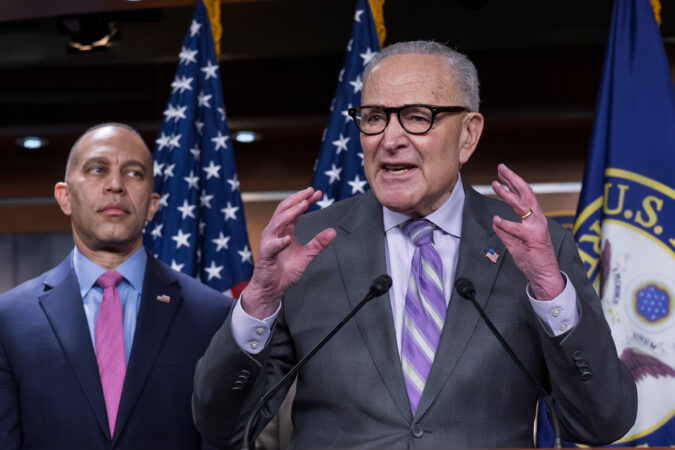
WASHINGTON — Congressional leaders said Tuesday that a deal was still possible with the White House on Homeland Security Department funding before it expires this weekend. But the two sides were still far apart as Democrats demanded new restrictions on President Donald Trump’s immigration crackdown.
After federal agents fatally shot two protesters in Minneapolis last month, Democrats say U.S. Immigration and Customs Enforcement needs to be “dramatically” reined in and are prepared to let Homeland Security shut down if their demands aren’t met. On Tuesday, Senate Democratic Leader Chuck Schumer and House Democratic Leader Hakeem Jeffries said they had rejected a White House counteroffer that “included neither details nor legislative text” and does not address “the concerns Americans have about ICE’s lawless conduct.”
“We simply want ICE to follow the same standards that most law enforcement agencies across America already follow,” Schumer said Tuesday. “Democrats await the next answer from our Republican counterparts.”
The Democrats’ rejection of the Republican counteroffer comes as time is running short, with a shutdown of the Homeland Security Department threatening to begin Saturday. Among the Democrats’ demands are a requirement for judicial warrants, better identification of DHS officers, new use-of-force standards and a stop to racial profiling.
Finding agreement on the charged, partisan issue of immigration enforcement will be exceedingly difficult. But even as lawmakers in both parties were skeptical, a White House official said that the administration was having constructive talks with both Republicans and Democrats. The official, granted anonymity to speak about ongoing deliberations, stressed that Trump wanted the government to remain open and for Homeland Security services to be funded.
Senate leaders also expressed some optimism.
“There’s no reason we can’t do this” by the end of the week, Senate Democratic Leader Chuck Schumer said after meeting with his caucus on Tuesday.
Senate Majority Leader John Thune, R-S.D., said there have been “some really productive conversations.”
Democratic demands
Schumer and Jeffries have said they want immigration officers to remove their masks, to show identification and to better coordinate with local authorities. They have also demanded a stricter use-of-force policy for the federal officers, legal safeguards at detention centers and a prohibition on tracking protesters with body-worn cameras.
Among other asks, Democrats say Congress should end indiscriminate arrests, “improve warrant procedures and standards,” ensure the law is clear that officers cannot enter private property without a judicial warrant and require that before a person can be detained, it’s verified that the person is not a U.S. citizen.
Democrats made the demands for new restrictions on ICE and other federal law enforcement after ICU nurse Alex Pretti was shot and killed by a U.S. Border Patrol officer in Minneapolis on Jan. 24, and some Republicans suggested that new restrictions were necessary. Renee Good was shot by ICE agents on Jan. 7.
Many Democrats said they won’t vote for another penny of Homeland Security funding until enforcement is radically scaled back.
“Dramatic changes are needed at the Department of Homeland Security before a DHS funding bill moves forward,” Jeffries said. “Period. Full stop.”
Republican counterproposal
Jeffries said Tuesday that the White House’s offer “walked away from” their proposals for better identification of ICE agents, for more judicial warrants and for a prohibition on excessive use of force. Republicans also rejected their demand for an end to racial or ethnic profiling, Jeffries said.
“The White House is not serious at this moment in dramatically reforming ICE,” Jeffries said.
Republican lawmakers have also pushed back on the requests. Oklahoma Sen. Markwayne Mullin, a close ally of Trump, said Tuesday that he’s willing to discuss more body cameras and better training — both of which are already in the Homeland spending bill — but that he would reject the Democrats’ most central demands.
“They start talking about judicial warrants? No. They start talking about demasking them? No, not doing that. They want them to have a photo ID with their name on it? Absolutely not,” Mullin said.
Republicans have said ICE agents should be allowed to wear masks because they are more frequently targeted than other law enforcement officials.
“People are doxing them and targeting them,” said House Speaker Mike Johnson, R-La., on Monday. “We’ve got to talk about things that are reasonable and achievable.”
Some Republicans also have demands of their own, including the addition of legislation that would require proof of citizenship before Americans register to vote and restrictions on cities that they say do not do enough to crack down on illegal immigration.
At a House hearing on Tuesday, the acting director of ICE, Todd Lyons, said his agency is “only getting started” and would not be intimidated as his officers carry out Trump’s mass deportation agenda.
Trump deals with Democrats
Congress is trying to renegotiate the DHS spending bill after Trump agreed to a Democratic request that it be separated out from a larger spending measure that became law last week and congressional Republicans followed his lead. That package extended Homeland Security funding at current levels only through Feb. 13, creating a brief window for action as the two parties discuss new restrictions on ICE and other federal officers.
But even as he agreed to separate the funding, Trump has not publicly responded to the Democrats’ specific asks or suggested any areas of potential compromise.
White House press secretary Karoline Leavitt said late last week that the Trump administration is willing to discuss some items on the Democrats’ list, but “others don’t seem like they are grounded in any common sense, and they are nonstarters for this administration.”
Thune said Tuesday that “there are certain red lines that I think both sides have, things they are not going to negotiate on, but there are some things they are going to negotiate on, and that’s where I think the potential deal space is here.”
It was, so far, unclear what those issues were.
“We are very committed to making sure that federal law enforcement officers are able to do their jobs and to be safe doing them,” Thune said of Republicans.
Consequences of a shutdown
In addition to ICE and U.S. Customs and Border Protection, the homeland security bill includes funding for the Federal Emergency Management Agency and the Transportation Security Administration, among other agencies. If DHS shuts down, Thune said last week, “there’s a very good chance we could see more travel problems” similar to the 43-day government closure last year.
Thune has said Republicans will try to pass a two- to four-week extension of the Homeland Security funding while negotiations continue.
Many Democrats are unlikely to vote for another extension. But Republicans could potentially win enough votes in both chambers from Democrats if they feel hopeful about negotiations.
“The ball is in the Republicans’ court,” Jeffries said Monday.
A burst water pipe caused SEPTA to close a section of Jefferson Station in Center Cityon Monday night, but Regional Rail trains were still making stops there for commuters, an agency spokesperson said.
The water started flooding into Section A of the station around 6 p.m., and the water was shut off shortly after 7 p.m., said SEPTA spokesperson Andrew Busch.
Section A closed Monday night for cleanup but opened in time for the morning rush Tuesday, Busch said.
All trains were still running with boardings and exits at other platforms, Busch said.
“We believe the pipe burst was likely due to the change in temperature,” Busch said in an email Monday. “We also had one at the Allegheny subway station today, and a few last week on the days it got above freezing.”
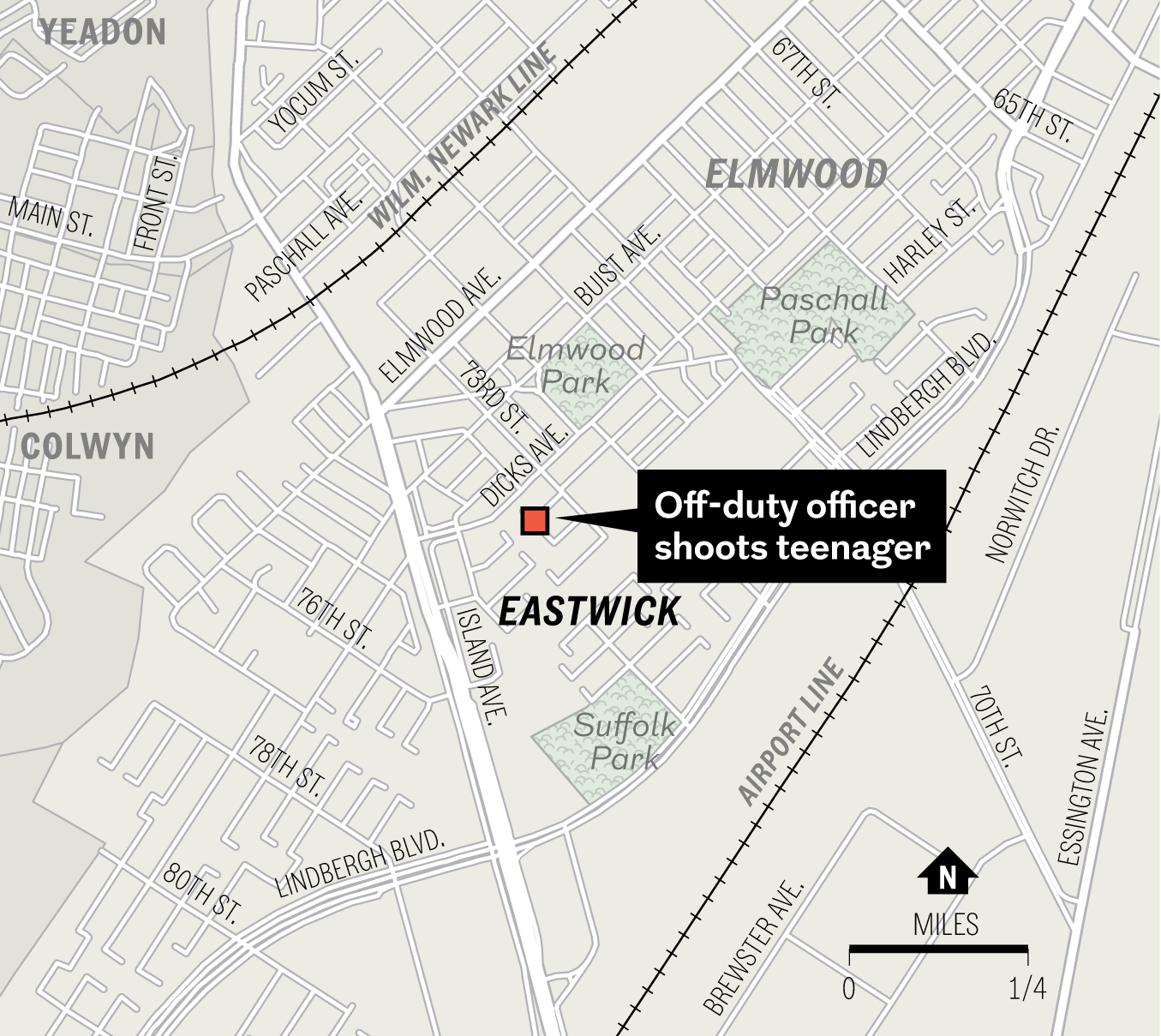
An off-duty sheriff’s officer shot a 17-year-old in Southwest Philadelphia early Tuesday morning.
Philadelphia Police Chief Inspector Scott Small told reporters the off-duty officer saw the teenager,who has not been identified, breaking into his private vehicle around 3:32 a.m. on the 7300 block of Bunting Place.
“For reasons unknown at this time,” the officer, and a member of the officer’s family, fired their guns at the teen inside the car, Small told reporters.
Philadelphia police crime scene unit gathers evidence at shooting by off-duty sheriff at 7300 block of Bunting Place, early Tuesday, Feb. 10, 2026. An off-duty Philadelphia sheriff’s deputy and a family member shot a teen, allegedly trying to steal their car, a Honda Accord.
Four shots total were fired, according to Small, before the teen fled the scene.
Around 20 minutes later,a teenager was transported by a private vehicle to Presbyterian Medical Center, where the officer involved in the shooting identified the wounded teen. The teenager was placed in stable condition.
Map of where an off-duty sheriff’s officer shot a 17-year-old in Southwest Philadelphia on Feb. 10.
Small noted that the teen was in possession of commonly used car theft tools, like a screwdriver, extra key fob, and other items. He told reporters at the scene that investigators found four spent shell casings and newly broken locks on the car’s doors.
The teenager was placed in custody at the hospital with charges pending.
The off-duty sheriff’s officer and their family member are uninjured and cooperating with the investigation. The family member involved in the incident had a license to carry the firearm used in the shooting, Small said.
Lankenau High’s 11th-grade class is tiny — just 25 students.
That’s one of the reasons why closing the school is for the best, Philadelphia School District Associate Superintendent Tomás Hanna said at a community meeting last week.
At small schools, Hanna said, programming options are limited and “what’s left behind is very difficult environment for young people.”
The district proposes merging Lankenau into Roxborough High as an honors program — a move that officials say will maximize opportunities for students at both schools. That proposal has been met with fierce opposition from the Lankenau community, whose members say stripping the school of its identity and removing it from its unique location on 400 wooded acres is unjustifiable.
When the school system dramatically revamped its special-admissions process in 2021, moving to a centralized lottery from a system where principals had discretion over who got into the district’s 37 criteria-based schools, enrollment dropped at some magnets.
For the 2022-23 school admissions cycle, Lankenau, Motivation, Parkway West, and Parkway Northwest — four of the 20 schools tagged to close — had dozens of unfilled seats in their ninth-grade classes.
window.addEventListener(“message”,function(a){if(void 0!==a.data[“datawrapper-height”]){var e=document.querySelectorAll(“iframe”);for(var t in a.data[“datawrapper-height”])for(var r,i=0;r=e[i];i++)if(r.contentWindow===a.source){var d=a.data[“datawrapper-height”][t]+”px”;r.style.height=d}}});
The district setacademic standards for admission to those schools, and stopped allowing schools to admit students who were close to meeting academic requirements and who demonstrated they would be a good fit for the individual schools, as had been done in the past. (Officials said they wanted to centralize admissions to avoid demographic imbalances at schools; those four magnets did not have a history of them.)
The district’s using Lankenau’s tiny now-junior class to justify closings infuriated many, including Matthew VanKouwenberg, a science teacher at the school.
Lankenau’s size “is a district-designed and district-created problem,” VanKouwenberg said. Though the lottery was begun for equity reasons, “the result is disastrous.”
But Tonya Wolford, the district’s chief of evaluation, research, and accountability, said Lankenau, Motivation, Parkway West, and Parkway Northwest had declining numbers of students applying prior to the lottery changes.
And for years, those schools accepted large numbers of students who didn’t meet the district’s criteria, Wolford said.
Dramatic enrollment drops after district orders
The data are clear: After the district pushed changes to the admissions process, the four schools all saw dramatic drops in enrollment — and some of them never recovered.
Motivation, in West Philadelphia, had a freshman class of 83 students and a total enrollment of 336 in 2022-23. It saw a 77% drop in its ninth- grade class — just 19 freshman in 2023-24. The school now has 151 students, and the district wants to close it and make it an honors program inside Sayre High School. It is operating at only 15% of its full capacity.
The Lankenau Environmental Science Magnet High School in Roxborough.
Lankenau, in Upper Roxborough, had 91 freshman in 2022-23, then 31 in 2023-24, a 66% decline. It now enrolls 225 students. The school is using 49% of its capacity.
Parkway Northwest had 77 ninth graders in 2022-23, then dropped to 30 in 2023-24, a 61% decrease, and is 60% full. It’s got 248 students this year, and the district wants to close it and make it an honors program of Martin Luther King High.
And Parkway West had 54 freshman in 2022-23, then 19 the following year, a 65% decrease. It now has just 140 students, and is using 40% of available seats. It’s proposed to close and become part of Science Leadership Academy at Beeber.
A staffer who worked at Parkway West as the special-admissions process changes rolled out said they were devastating to the school, which typically filled three-quarters of its slots for incoming ninth graders with students who qualified on every measure, and a quarter by feel.
Parkway West High School, in West Philadelphia, is proposed to close under a Philadelphia School District facilities proposal.
“We found kids who maybe missed one criteria, but they were good kids, and had strong recommendations,” said the staffer, who asked not to be identified because they were not authorized to speak to a reporter.
When Parkway West lost that ability, its enrollment tumbled, and never recovered.
Lankenau community members say interest in their unique school has never waned, but the size of their incoming classes continues to be limited by the district — even beyond the admissions changes.
For the applicant class set to start high school in the fall, 107 students listed Lankenau as their first choice, staff said, and 95 have accepted Lankenau’s school board offer.
But since 2022-23, district officials have limited Lankenau to two sections of ninth graders, and with class sizes capped at 33. So despite having interest and students enough for 99 freshmen, it won’t have staff for more than 66.
In the last few years, staffers said, more than 66 students show up at the start of the school year. But with only enough teachers for 66, classes are overcrowded and some students end up transferring out.
“That is the only reason we lose enrollment,” said Erica Stefanovich, a Lankenau teacher. “We wouldn’t be in this situation if they hadn’t put us in it. This is an artificial problem.”
But, Wolford said the trend lines were clear for Lankenau and other schools.
In 2019-20, for instance, the prior to the district’s admissions changes just 34 students met Lankenau’s criteria, but 81 students accepted offers for the ninth-grade class, Wolford said. That same year, eight students qualified for Parkway Northwest on paper, but 34 were admitted, according to district data.
Schools like Lankenau and Parkway Northwest “were existing without following the criteria,” said Wolford.
Trees, bees, and a Lorax
Lankenau is putting up a spirited battle to stay open.
Last week, an overflow crowd — more than 100 students, staff, parents, representatives from Lankenau’s many partner organizations, and community members — packed the school for a student showcase and district-led meeting about the closure. Some students dressed as trees, bees, and a Lorax, the Dr. Seuss character who “speaks for trees” — to emphasize the importance of their school’s setting amid 400 acres of woods.
Community members at Lankenau High School applaud a student telling district officials why the school should not close. Lankenau is one of 20 Philadelphia School District schools proposed for closure.
First, Lankenau students wowed visitors with presentations — about their study of natural resources, about the experience of foraging for ingredients to brew their own artisan teas — and then, it was down to business. Lankenau is too small, officials said, and the district must find ways to offer a more equitable experience for all students.
“I don’t discount that there is magic inside of these walls,” Deputy Superintendent Oz Hill said. “What I’m sharing with you is if we can take that magic and enhance it with more extracurricular activities, more expanded academic programming, the sky’s the limit.”
The parents, students, and staff in the audience weren’t having it.
Lankenau was just certified to become the state’s only three-year agriculture, food, and natural resources career and technical education program — a designation that took years to achieve, and cannot transfer to a new building.
Officials are proposing closing Lankenau a year and a half from now; that’s not enough time for the district to reapply for the designation for a new Lankenau-inside-Roxborough CTE program.
District officials said at the meeting that they believe their “close relationship” with the state education department will give them enough time to get a new Roxborough program certified in time for the Lankenau closing.
Multiple parents told district leaders they would not send their children to Roxborough High.
And Akiraa Phillips, a Lankenau ninth grader, said she couldn’t imagine attending school in another setting.
In Lankenau’s current setting, “learning doesn’t stop at the desk. Our campus is the classroom,” Akiraa said. “We learn science by being in it. Here, we don’t just talk about ecosystems, climate, and sustainability, we walk through it. That kind of learning sticks with you. You can’t stick this into any random building and expect it to work.”
The community turned out in full force, but politicians and other decision-makers were in the room, too. Three school board members, including president Reginald Streater, attended the meeting.
State Sen. Sharif Street (D., Philadelphia), the front-runner to replace U.S. Rep. Dwight Evans in Congress, said he “was against closing the school,” but noted that the decision didn’t rest with him, and said the state needed to better fund schools “because we have not met our obligation to fully fund the program.”
And Councilmember Cindy Bass said she was particularly incredulous that the district was attempting to close a successful magnet — Lankenau has a 100% graduation rate.
“If it works, why are you breaking it?” Bass said. “I do not understand what the logic and the rationale is that we are making these kinds of decisions. We’re not just closing a school, we’re disrupting the lives of young people.”
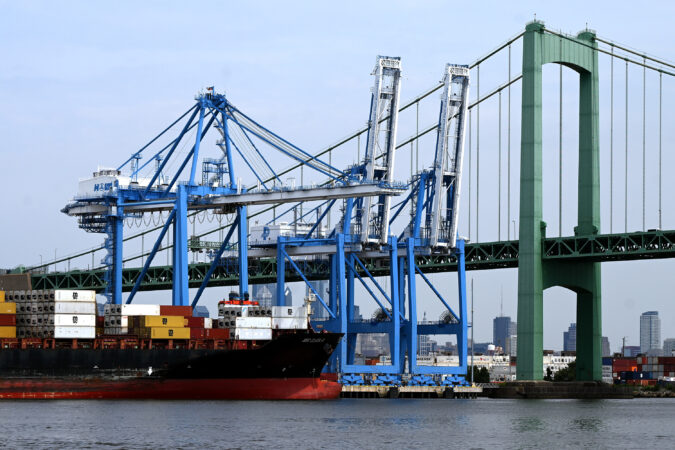
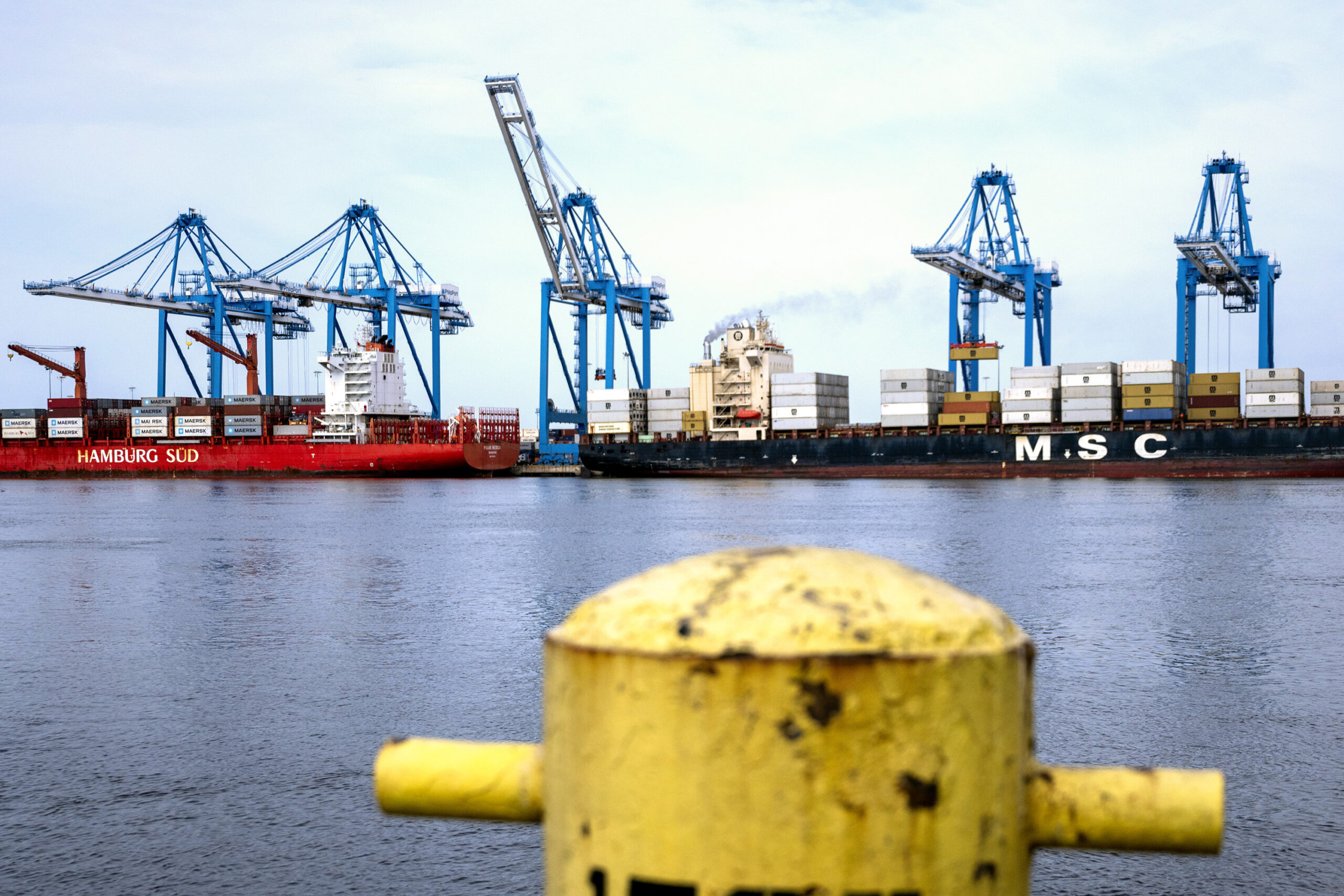
In an effort to reduce air pollution and modernize U.S. ports, the Biden administration in 2024 announced $3 billion in grants for zero-emission equipment — including tens of millions earmarked for Philadelphia’s port to buy two new electric cranes to help unload ships.
Ports have embraced the clean energy push, but some have run into a problem. U.S. law requires federally funded infrastructure projects to use American-made products. But according to industry groups, no U.S. firm makes the giant ship-to-shore gantry cranes like the ones Philly is hoping to buy.
Those rules — included in a 2021 law that had bipartisan support in Congress — reflect a push under both Republican and Democratic administrations to revive American manufacturing, especially in industries such as semiconductor production and shipbuilding, where continued U.S. deference to China is seen as a potential security risk.
In the case of the cranes, PhilaPort says that even if it could procure them in the U.S., it would still face risks because of a lack of “a reliable domestic supply chain for spare parts and service.”
The Environmental Protection Agency said it is reviewing PhilaPort’s application.It might not be a slam dunk: President Donald Trump’s administration has slashed billions of dollars in funding for Biden-era clean energy initiatives — and early last year, PhilaPort’s grant appeared to be briefly suspended.
Yet Trump has also expressed support for union dockworkers like the ones who would operate new cranes at Tioga Marine Terminal in Port Richmond. The International Longshoremen’s Association has celebrated the initiative, known as the Clean Ports Program, saying it protects jobs against automation.
If the EPA doessign off on the request, the port authority will have to navigate a geopolitical minefield.
Grant recipients are prohibited from using the funds to buy equipment made in China, whose state-owned Shanghai Zhenhua Heavy Industries Co. Ltd. (ZPMC) produces 70% of the world’s ship-to-shore cranes, including the vast majority in use at U.S. ports.
American reliance on Chinese-made critical port infrastructure has raised national security concerns, magnified by the FBI’s 2021 discovery of “intelligence gathering equipment” onboard a ship that was delivering ZPMC cranes to Baltimore’s port, according to a congressional investigation.
Only three companies outside China, two in Europe and one in Japan, make ship-to-shore cranes available for international buyers, according to the American Association of Port Authorities. Each firm’s cranes would likely be subject to tariffs imposed by the Trump administration.
Another wrinkle: As PhilaPort has sought support for the waiver from Pennsylvania’s congressional delegation, some lawmakers have expressed reservations that even cranes made by a non-Chinese manufacturer might include parts made in China. Limiting that exposure could be challenging, given China’s dominance in these intermediate goods.
It remains to be seen whether lawmakers will ultimately back the request. Labor unions such as United Steelworkers have broadly opposed exemptions from domestic production requirements. A spokesperson for United Steelworkers said the union is “still reviewing the specifics of this case.”
U.S. Rep. Brendan Boyle (D., Pa.) said he “fought hard” to include the Build America Buy America provision in the 2021 law. “So I’m naturally quite concerned any time an entity is attempting to circumvent these important provisions that protect American jobs and industries,” he said in a statement.
“PhilaPort’s management needs to do a much better job explaining why a waiver in this case is absolutely necessary,” said Boyle, whose district includes the Tioga terminal.
Spokespeople for U.S. Sens. John Fetterman (D., Pa.) and Dave McCormick (R., Pa.) did not respond to messages seeking comment.
Those restrictionswill likely increase the cost. Of the $80 million awarded to PhilaPort by the EPA, the port authority had budgeted $47 million for two cranes at Tioga Marine Terminal.
Now, “it’s unclear if we can do two [cranes] for that price,” said Ryan Mulvey, the port authority’s director of government and public affairs.
Replacing diesel-powered cranes
The 2022 Inflation Reduction Act passed by Congress and signed by President Joe Biden presented an opportunity for PhilaPort’s Tioga Marine Terminal, which was built in the 1960s and until recently was still using two diesel-powered cranes that had been installed in the late ‘60s and early ’70s.
The cranes reached the end of their useful life and were recently dismantled, and the port authority has installed electrical infrastructure to support zero-emission equipment at Tioga, which handles cargoes such as forest products, containers, and steel.
President Joe Biden speaks at PhilaPort’s Tioga Marine Terminal in Philadelphia on Oct. 13, 2023.
Cranes can lift two 20-ton cargo containers off a ship at a time. Without them, “it really restricts the amount of cargo you can put through the terminal,” said Andrew Sentyz, president of operator Delaware River Stevedores, which leases the terminal from the port authority.
About 100 to 200 union longshoremen work at the site, depending on cargo volumes, he said.
When PhilaPort started reaching out to vendors, at least three — Konecranes of Finland, Phoenix-based Stafford Crane Group, and Swiss-German firm Liebherr’s U.S. affiliate — indicated they were working toward making ship-to-shore cranes that would meet domestic content requirements under the Build America, Buy America Act, a provision of Biden’s 2021 bipartisan infrastructure law. (Stafford is a new entrant in the STS crane market.)
But when the port authority proceeded to bid for the project last spring, four potential bidders said they were not able to deliver cranes meeting PhilaPort’s technical specifications within its schedule or budget, according to the application it filed with the EPA in September.
One firm said Buy America rules would increase the cost of the project as much as threefold. It would take three to five years to build the manufacturing facilities needed to comply with the law and a further 36 months to complete production. By comparison, cranes that are not subject to those rules can be completed within 28 months, the vendor said.
“In the absence of continuing federal incentives toward onshore crane manufacturing, the vendor advised there is not sufficient market demand to continue to scale up its domestic manufacturing of cranes,” PhilaPort’s application says.
Another vendor told the port authority that “the low volume of current demand for BABA-compliant cranes makes domestic manufacturing currently uneconomical.”
To comply with Buy America regulations, more than 55% of the totalcost of components in a manufactured product must be from U.S.-made parts.
The EPA has acknowledged the limited domestic production of zero-emission port equipment and in 2024 temporarily lowered that requirement to 25% for certain items. But to take advantage of that reduced threshold, installation of the STS cranes would have to begin by the end of the year — a timeline PhilaPort says is not realistic.
‘Nonexistent for decades’
PhilaPort’s findings were consistent with broader industry research.
Barriers to reviving domestic industry include a shortage of welders and the fact that “American steel is significantly more expensive than European or Asian alternatives,” Davis said.
Holt Logistics Corp. cranes lift containers off vessels docked at the Packer Avenue Marine Terminal in South Philadelphia.
Likewise, the National Association of Waterfront Employers told the Biden administration in 2024 that domestic crane manufacturing is years, “if not decades, away from being a reality.”
The EPA is aware of the industry input, and as part of its review of PhilaPort’s application, the agency is now conducting its own market research to assess the availability of American-made cranes, a spokesperson said.
There have been signs of some incremental progress toward diversifying supply chains. In September, California-based PACECO Corp., a subsidiary of Japanese firm Mitsui E&S, said it had secured a contract to supply two ship-to-shore cranes to a terminal at the Port of Long Beach in California. The cranes will be built in Japan, the companies said, and include “American-made components supplied by U.S. companies.”
“This order underscores the shift now underway in the U.S. container handling market,” Troy Collard, general manager of sales at PACECO, said in a news release announcing the order. He said the order shows there are “reliable alternatives” to Chinese manufacturers “that both meet the needs of U.S. ports and support broader national security and supply chain resilience goals.”
Scrutiny of China
The focus on domestic production comes as Congress and federal law enforcement have in recent years stepped up scrutiny of potential security risks associated with Chinese equipment at U.S. ports.
China’s ZPMC built about 80% of the ship-to-shore cranes in use at U.S. ports — including several bought by PhilaPort for the Packer Avenue Marine Terminal in South Philadelphia. The firm has close ties to the Chinese Communist Party, according to two Republican-led House committees that investigated the company.
ZPMC cranes were installed at Packer Avenue Marine Terminal in 2018.
In 2024, three years after the FBI’s discovery in Baltimore, the committees said their investigation found that ZPMC had installed communication devices on crane components and other maritime infrastructure at two U.S. seaports. These cellular modems, not included in contracts with U.S. ports, were “intended for the collection of usage data on certain equipment,” constituting “a significant backdoor security vulnerability that undermines the integrity of port operations,” the investigation found.
But under Beijing’s “highly acquisitive data governance regime and comparatively high levels of control over PRC firms,” Chinese-made equipment and software in port systems enable surveillance and “may cause delay or disruption to the critical operations of U.S. maritime transport systems,” Isaac Kardon, senior fellow for China Studies at Carnegie Endowment for International Peace, told Congress last year.
It is not easy to completely remove China from the supply chain, however. In response to a request from lawmakers, PhilaPort asked prospective bidders if they could produce the cranes without Chinese parts, Mulvey said. Only one firm said it could source “100% without Chinese components,” he said.
PhilaPort noted in the waiver application that it is considered by the Pentagon as one of 14 “strategic military seaports.” During the Iraq War, that enabled the port to handle Army shipments.
“These cranes enable the efficient handling of heavy, oversized, and mission-critical military cargo, directly supporting the Department of Defense’s logistical and deployment capabilities,” the application says.
In June 1776, before the Declaration of Independence was signed, a group of leaders from Philadelphia and its surrounding 10 counties — Bucks, Berks, Chester, Lancaster, York, Cumberland, Bedford, Northampton, Northumberland, and Westmoreland — met in Carpenters Hall for the Pennsylvania Provincial Conference. There, the Commonwealth of Pennsylvania was born.
Carpenters Hall, a hidden landmark just two blocks from Independence Hall in Philadelphia’s Old City, is the true birthplace of Pennsylvania, where the state declared its independence from Britain — jump-starting the framework of the state’s influential constitution that would serve as a model for the U.S. Constitution.
Now, the little-known and privately owned historic site is celebrating Pennsylvania’s 250th birthday — which coincides with America’s Semiquincentennial — by holding commemorative events across the state to reflect on Pennsylvania’s history and ask residents how the state constitution should be strengthened in 2026 and beyond.
“It’s the piece of the story we should own and celebrate and use as a platform for civic engagement,” said Michael Norris, the executive director of Carpenters Hall.
Executive director Michael Norris makes remarks at the reopening ceremony at Carpenters Hall on July 3, 2023.
Last week, Norris and others from Carpenters Hall traveled from Philadelphia — the state’s first capital— to Harrisburg to announce their yearlong schedule of events celebrating Pennsylvania’s founding, including those about the state’s constitution and its past and future.
At a news conference last week, Rep. Mary Isaacson (D., Philadelphia) noted that she occupies the seat once held by former Pennsylvania House Speaker Benjamin Franklin. She said she sees the Carpenters Hall events as “more than learning about a key moment in Pennsylvania history.”
“It’s also about exploring the vital importance of our state constitution in our democracy today and what citizens can do to engage,” she added.
The commemorative events include an interactive town hall series hosted in Philadelphia, Pittsburgh, Harrisburg, and Erie to discuss the importance of the Pennsylvania Provincial Conference in the United States’ founding. The group will also host several events at Carpenters Hall, including the installation of a blue historical marker outside the hall on June 18, in addition to a three-part virtual lecture series on Pennsylvania’s constitution.
The events, funded by America 250 PA and the Landenberger Family Foundation, are open to the public and intended to reach Pennsylvania’s “lifelong learners” who are interested in history and civics,as well as the legal community, who will be eligible for Continuing Legal Education credits for attending the virtual lectures, Norris said.
“To me, 250 is about reflection and engagement,” Norris said. “It’s not about parties and buildings. It’s really a moment to reflect and say, ‘What are we doing here? Do we still want this democracy, and how do we protect it and keep it going?’”
The Carpenters’ Company — the nation’s oldest craft guild, which built and still owns Carpenters Hall — will also conduct polling about how Pennsylvania’s constitution, as well as the U.S. Constitution, should be changed to better represent citizens in a modern time, Norris said. The poll results will be made public at an in-person event in Philadelphia on Sept. 28, the 250th anniversary of when the state constitution was ratified.
Historic flags are displayed outside at the reopening ceremony at Carpenters Hall on July 3, 2023. The building opened for the first time to the public since April 2022.
Rhode Island was the first colony to declare independence from England in May 1776, and Delaware became the first state in December 1787. Pennsylvania followed days after, and its constitution influenced the country’s founding documents. Pennsylvania’s expansive constitution — viewed as radical at the time — focused on personal freedoms and liberties in its “Declaration of Rights,” after which the Bill of Rights was modeled.
Carpenters Hall was the nation’s first privately owned historic landmark, and remains owned by the Carpenters’ Company today, which offers free admission for 150,000 visitors each year. Because it is privately owned, it is not overseen by the National Park Service, which has in recent weeks dismantled exhibits about slavery at the nearby President’s House Site in Independence National Park thatPresident Donald Trump’s administration contends “inappropriately disparage” the United States.