Category: News

Latest breaking news and updates

  • Venezuela’s top prosecutor orders the arrest of opposition leader’s ally, hours after his release

    Venezuela’s top prosecutor orders the arrest of opposition leader’s ally, hours after his release

    CARACAS, Venezuela — Venezuela’s top prosecutor said on Monday that his office had requested the arrest of one of the closest allies of opposition leader María Corina Machado, less than 12 hours after his release from a detention facility as part of a government move to free those facing politically motivated accusations.

    The attorney general’s statement did not say whether Juan Pablo Guanipa was rearrested, or give indication of his whereabouts. The government had released him along with several other prominent opposition members on Sunday following lengthy politically motivated detentions.

    Attorney General Tarek William Saab’s office posted on social media that it had “requested the competent court to revoke the precautionary measure granted to Juan Pablo Guanipa, due to his non-compliance with the conditions imposed by the aforementioned court.”

    It did not elaborate on what conditions Guanipa, a former governor for the opposition, violated during the hours he was free, but said authorities were seeking house arrest.

    Guanipa’s son, Ramón, told reporters Monday that authorities have not yet notified him of his father’s whereabouts and their decision to place him on house arrest. He said his father did not violate the two conditions of his release — monthly check-ins with a court and no travel outside Venezuela — and showed reporters the court document listing them.

    Abducted by ‘heavily armed men’

    Earlier on Monday, Machado announced Juan Pablo Guanipa had been “kidnapped” by “heavily armed men, dressed in civilian clothes” who “arrived in four vehicles and violently took him away” in a neighborhood in the capital, Caracas.

    The development marked the latest twist in the political turmoil in Venezuela in the wake of the U.S. military’s seizure on Jan. 3 of Nicolás Maduro and his wife, Cilia Flores, from a military base compound in Caracas in a stunning operation that landed them in New York to face federal drug trafficking charges.

    The government of Venezuela’s acting President Delcy Rodríguez has faced mounting pressure to free hundreds of people whose detentions months or years ago have been linked to their political activities. The releases also followed a visit to Venezuela of representatives of the U.N. High Commissioner for Human Rights.

    Rodríguez was sworn in as Venezuela’s acting president after Maduro’s Jan. 3 capture and her government began releasing prisoners days later.

    Some of those freed Sunday joined families waiting outside detention facilities for their loved ones. They chanted, “We are not afraid! We are not afraid!” and marched a short distance.

    “I am convinced that our country has completely changed,” Guanipa told reporters after his release. “I am convinced that it is now up to all of us to focus on building a free and democratic country.”

    Guanipa had spent more than eight months in custody at a facility in Caracas.

    “My father cannot be a criminal … simply for making statements,” Ramón Guanipa said. How much longer will speaking out be a crime in this country?”

    Venezuelan-based prisoners’ rights group Foro Penal confirmed the release of at least 30 people Sunday.

    Several members of Machado’s political organization were among the released Sunday, including attorney Perkins Rocha and local organizer María Oropeza, who had in 2024 livestreamed her arrest by military intelligence officers as they broke into her home with a crowbar.

    Alfredo Romero, president of Foro Penal, expressed serious concern over Juan Pablo Guanipa’s disappearance.

    “So far, we have no clear information about who took him,” he said on X. “We hope he will be released immediately.”

    Long detentions for political activities

    Guanipa was detained in late May and accused by Interior Minister Diosdado Cabello of participating in an alleged “terrorist group” that was plotting to boycott that month’s legislative election. Guanipa’s brother Tomás rejected the accusation, and said the arrest was meant to crack down on dissent.

    Rodríguez’s government announced Jan. 8 that it would free a significant number of those arrested — a central demand of the country’s opposition and human rights organizations with backing from the United States — but families and rights watchdogs have criticized authorities for the slow pace of the releases.

    The ruling party-controlled National Assembly last week began debating an amnesty bill that could lead to the release of hundreds. The opposition and nongovernmental organizations have reacted with cautious optimism as well as with suggestions and demands for more information on the contents of the proposal.

    National Assembly President Jorge Rodríguez on Friday posted a video on Instagram showing him outside a detention center in Caracas and saying that “everyone” would be released no later than next week, once the amnesty bill is approved.

    Rodríguez, the acting president, and Volker Türk, the U.N. High Commissioner for Human Rights, spoke by phone in late January. His spokesperson, Ravina Shamdasani, in a statement said he sent a team to the country and “offered our support to help Venezuela work on a roadmap for dialogue and reconciliation” in which human rights should be centered.


  • In new video, Savannah Guthrie says family is ‘at an hour of desperation’

    In new video, Savannah Guthrie says family is ‘at an hour of desperation’

    TUCSON, Ariz. — The FBI said Monday it is unaware of any continued communication between Savannah Guthrie’s family and suspected kidnappers more than a week after the Today show host’s mom went missing.

    The FBI has still not identified any suspects or persons of interest in the mysterious disappearance of 84-year-old Nancy Guthrie, said Connor Hagan, a spokesperson for the FBI.

    Savannah Guthrie said the family was “at an hour of desperation” in a video released Monday, just hours before a purported ransom deadline apparently set by her mom’s abductors.

    Savannah Guthrie didn’t mention the deadline in the video, saying her family continues to believe their 84-year-old mother is out there and hearing everyone’s prayers.

    “She was taken and we don’t know where and we need your help,” Guthrie said in the video posted on Instagram that urged people nationwide to be on the lookout. “No matter where you are, even if you’re far from Tucson, if you see anything, if you hear anything.”

    The mysterious disappearance and search has riveted the U.S. — from President Donald Trump, who spoke with Savannah Guthrie last week, to the online sleuths who’ve flooded social media with tips, theories, and rumors.

    The FBI is now asking for the public’s help on digital billboards up in several major cities in Texas, California, Arizona, and New Mexico. The FBI has offered a $50,000 reward for information.

    Multiple press outlets have received alleged ransom letters during the past week. At least one letter made monetary demands and set deadlines for receiving the money. The first deadline passed last Thursday but a second one was set for Monday evening.

    Law enforcement officials declined to affirm that the letters were credible but said all tips were being investigated seriously.

    Authorities say they have growing concerns about Nancy Guthrie’s health because she needs daily medication. She is said to have a pacemaker and has dealt with high blood pressure and heart issues, according to sheriff’s dispatcher audio on broadcastify.com.

    Investigators returned to Nancy Guthrie’s Arizona neighborhood several times over the weekend.

    Savannah Guthrie said over the weekend that the family was prepared to pay for her mother’s return.

    “We beg you now to return our mother to us so that we can celebrate with her,” she said in a video posted Saturday. “This is the only way we will have peace. This is very valuable to us, and we will pay.”

    Authorities believe Nancy Guthrie was taken against her will from her home just outside Tucson. She was last seen there on Jan. 31 and reported missing the next day after not attending church services. DNA tests showed blood on Guthrie’s front porch was a match to her and her doorbell camera was disconnected in the early hours of Sunday morning, Pima County Sheriff Chris Nanos has said.

    Outside the home on Monday, neighbors strolled by on their morning jogs and walks, while a county sheriff’s deputy remained stationed out front.

    Detectives and agents carried out follow-up work at multiple locations over the weekend as part of the investigation, the Pima County Sheriff’s Department said Sunday. “Investigators have not identified any suspects, persons of interest, or vehicles connected to this case,” the department said.

    Investigators on Saturday were inside daughter Annie Guthrie’s home, about 4 miles from Nancy Guthrie’s house. On Sunday, an investigator was seen using a pole to search an underground tank behind Nancy Guthrie’s home.

  • Philadelphia man charged with killing woman who reported him for sexual assault, officials say

    Philadelphia man charged with killing woman who reported him for sexual assault, officials say

    A Philadelphia man was charged with murder after fatally shooting his girlfriend in Levittown this weekend, shortly after she told police he had sexually assaulted her, authorities said.

    Yujun Ren, 32, turned himself in to police in Middletown Township Sunday and told them he had been trying to scare the woman, Yuan Yuan Lu, when the firearm he carried accidentally discharged, killing her.

    Investigators believe otherwise, according to the affidavit of probable cause for Ren’s arrest.

    In addition to murder, prosecutors charged Ren with stalking and a gun crime. He is being held without bail.

    Bristol Township police discovered Lu’s body shortly after noon Sunday in the driver’s seat of a white Hyundai in a residential neighborhood, according to the affidavit.

    Lu had been shot in the head. Police found that the driver’s side window had been struck by gunfire, and they recovered an expended shell casing from a small caliber handgun.

    In Ren’s interview with investigators, he told them that Lu had said “hurtful things and took their cats and dogs,” the affidavit said, leading him to pull the handgun in an attempt to scare her.

    A day earlier, Lu had told Philadelphia police that Ren had sexually assaulted her at his home on South Orianna Street in Pennsport.

    The assault, which Lu said happened around 1 p.m. Saturday, led her to end the relationship and pack her things to leave while Ren was at work, according to the affidavit. Lu told police she was afraid of Ren and said “he had a firearm he carried everywhere,” the document said.

    Ren legally owned a Mossberg MC20 9mm pistol, investigators found.

    The day Ren turned himself in, a woman who told police that she was Ren’s aunt turned that firearm over to Middletown Township authorities, according to the affidavit.

    Bucks County District Attorney Joe Khan said in a statement that the killing was a “sobering reminder of the lethal nature of domestic violence.”

    “Our investigation revealed a chilling course of conduct,” said Khan, adding that investigators recovered evidence showing Ren stalked Lu in the early morning hours before shooting her.

    Ren is set to appear in district court Tuesday for a preliminary hearing.

  • British PM Starmer vows to fight for his job after furor about former ambassador’s Epstein ties

    British PM Starmer vows to fight for his job after furor about former ambassador’s Epstein ties

    LONDON — British Prime Minister Keir Starmer vowed Monday to fight for his job as revelations about the relationship between the former U.K. ambassador to Washington and Jeffrey Epstein spiraled into a full-blown crisis for his 19-month-old government.

    The prime minister’s authority with his own Labour Party has been battered by fallout from the publication of files related to Epstein — a man he never met and whose sexual misconduct has not implicated Starmer.

    Some lawmakers in Starmer’s center-left Labour Party have called on him to resign for his judgment in appointing Peter Mandelson to the high-profile diplomatic post in 2024 despite Mandelson’s ties to the convicted sex offender. The leader of the Labour Party in Scotland, Anas Sarwar, joined those calls Monday, saying “there have been too many mistakes” and “the leadership in Downing Street has to change.”

    Starmer’s chief of staff and his communications director have also quit in quick succession. But Starmer insisted he will not step down.

    “Every fight I have ever been in, I’ve won,” he told Labour lawmakers at a meeting in Parliament.

    “I’m not prepared to walk away from my mandate and my responsibility to my country,” he added.

    After Sarwar spoke, senior colleagues — including those tipped as potential challengers — rallied to support Starmer. Deputy Prime Minister David Lammy wrote on X: “We should let nothing distract us from our mission to change Britain and we support the Prime Minister in doing that.”

    Foreign Secretary Yvette Cooper posted: “At this crucial time for the world, we need his leadership not just at home but on the global stage.” Former Deputy Prime Minister Angela Rayner, a potential successor, said Starmer “has my full support.”

    Supportive lawmakers said Starmer won over a restive crowd when he addressed scores of Labour members of Parliament Monday evening behind closed doors.

    “Of course, there were tough moments,” legislator Chris Curtis said. “But he really brought the room round.”

    Starmer has apologized

    Starmer fired Mandelson last September after emails were published showing that he maintained a friendship with Epstein after the financier’s 2008 conviction for sex offenses involving a minor. Critics say Starmer should have known better than to appoint Mandelson in the first place. The 72-year-old Labour politician is a contentious figure whose career has been tarnished with scandals over money or ethics.

    A new trove of Epstein files released by authorities in the United States last week revealed more details about the relationship and put new pressure on Starmer.

    Starmer apologized last week to Epstein’s victims and said he was sorry for “having believed Mandelson’s lies.”

    He promised to release documentation related to Mandelson’s appointment, which the government says will show that Mandelson misled officials about his ties to Epstein. But publication of the documents could be weeks away. They must be vetted on national security grounds and for potential conflicts with a police investigation.

    Police are investigating Mandelson for potential misconduct in public office over documents suggesting he passed sensitive government information to Epstein a decade and a half ago. The offense carries a maximum sentence of life in prison.

    Mandelson has not been arrested or charged, and he does not face any allegations of sexual misconduct.

    Chief of staff took the fall

    Starmer’s chief of staff, Morgan McSweeney, took the fall for the decision to give Mandelson the job by quitting on Sunday. He said he “advised the prime minister to make that appointment, and I take full responsibility for that advice.”

    McSweeney has been Starmer’s most important aide since he became Labour leader in 2020 and is considered a key architect of Labour’s landslide July 2024 election victory. But some in the party blame him for a series of missteps since then.

    Some Labour officials hope that his departure will buy the prime minister time to rebuild trust with the party and the country.

    Senior lawmaker Emily Thornberry said McSweeney had become a “divisive figure” and his departure brought the opportunity for a reset.

    She said Starmer is “a good leader in that he is strong and clear. I think that he needs to step up a bit more than he has.”

    Others say McSweeney’s departure leaves Starmer weak and isolated.

    Opposition calls to resign

    Opposition Conservative Party leader Kemi Badenoch said Starmer “has made bad decision after bad decision” and “his position now is untenable.”

    Since winning office, Starmer has struggled to deliver promised economic growth, repair tattered public services, and ease the cost of living. He pledged a return to honest government after 14 years of scandal-tarred Conservative rule, but has been beset by missteps and U-turns over welfare cuts and other unpopular policies.

    Labour consistently lags behind the hard-right Reform UK party in opinion polls, and its failure to improve had sparked talk of a leadership challenge, even before the Mandelson revelations.

    Under Britain’s parliamentary system, prime ministers can change without the need for a national election. If Starmer is challenged or resigns, it will trigger an election for the Labour leadership. The winner would become prime minister.

    The Conservatives went through three prime ministers between national elections in 2019 and 2024, including Liz Truss, who lasted just 49 days in office.

    Starmer was elected on a promise to end the political chaos that roiled the Conservatives’ final years in power.

    Labour lawmaker Clive Efford said Starmer’s critics should “be careful what you wish for.”

    “I don’t think people took to the changes in prime minister when the Tories were in power,” he told the BBC. “It didn’t do them any good.”

  • Ghislaine Maxwell declines to answer questions from a House committee, offers testimony for clemency

    Ghislaine Maxwell declines to answer questions from a House committee, offers testimony for clemency

    WASHINGTON — Ghislaine Maxwell, the former girlfriend of Jeffrey Epstein, declined to answer questions from House lawmakers in a deposition Monday, but indicated that if President Donald Trump ended her prison sentence, she was willing to testify that neither he nor former President Bill Clinton had done anything wrong in their connections with Epstein.

    The House Oversight Committee had wanted Maxwell to answer questions during a video call to the federal prison camp in Texas where she’s serving a 20-year sentence for sex trafficking, but she invoked her Fifth Amendment rights to avoid answering questions that would be self-incriminating. She’s come under new scrutiny as lawmakers try to investigate how Epstein, a well-connected financier, was able to sexually abuse underage girls for years.

    Amid a reckoning over Epstein’s abuse that has spilled into the highest levels of businesses and governments around the globe, lawmakers are searching for anyone who was connected to Epstein and may have facilitated his abuse. So far, the revelations have shown how both Trump and Clinton spent time with Epstein in the 1990s and early 2000s, but they have not been credibly accused of wrongdoing.

    During the closed-door deposition Monday, Maxwell’s attorney David Oscar Markus said in a statement to the committee that “Maxwell is prepared to speak fully and honestly if granted clemency by President Trump.”

    He added that both Trump and Clinton “are innocent of any wrongdoing,” but that ”Ms. Maxwell alone can explain why, and the public is entitled to that explanation.”

    Maxwell’s appeal hits pushback

    Democrats said that was a brazen effort by Maxwell to have Trump end her prison sentence.

    “It’s very clear she’s campaigning for clemency,” said Rep. Melanie Stansbury, a New Mexico Democrat.

    Another Democratic lawmaker, Rep. Suhas Subramanyam of Virginia, described Maxwell’s demeanor during the short video call as “robotic” and “unrepentant.”

    Asked Monday about Maxwell’s appeal, the White House pointed to previous remarks from the president that indicated the prospect of a pardon was not on his radar.

    And other Republicans push backed on the notion quickly after Maxwell made the appeal.

    “NO CLEMENCY. You comply or face punishment,” Republican Rep. Anna Paulina Luna of Florida wrote on social media. “You deserve JUSTICE for what you did you monster.”

    Maxwell has also been seeking to have her conviction overturned, arguing that she was wrongfully convicted. The Supreme Court rejected her appeal last year, but in December she requested that a federal judge in New York consider what her attorneys describe as “substantial new evidence” that her trial was spoiled by constitutional violations.

    Maxwell’s attorney cited that petition as he told lawmakers she would invoke her Fifth Amendment rights.

    Family members of the late Virginia Giuffre, one of the most outspoken victims of Epstein, also released a letter to Maxwell making it clear they did not consider her “a bystander” to Epstein’s abuse.

    “You were a central, deliberate actor in a system built to find children, isolate them, groom them, and deliver them to abuse,” Sky and Amanda Roberts wrote in the letter addressed to Maxwell.

    Maxwell was moved from a federal prison in Florida to a low-security prison camp in Texas last summer after she participated in two days of interviews with Deputy Attorney General Todd Blanche.

    The Republican chairperson of the committee, Rep. James Comer of Kentucky, had also subpoenaed her at the time, but her attorneys have consistently told the committee that she wouldn’t answer questions. However, Comer came under pressure to hold the deposition as he pressed for the committee to enforce subpoenas on Bill Clinton and former Secretary of State Hillary Clinton. After Comer threatened them with contempt of Congress charges, they both agreed to sit for depositions later this month.

    Comer has been haggling with the Clintons over whether that testimony should be held in a public hearing, but Comer reiterated Monday that he would insist on holding closed-door depositions and later releasing transcripts and video.

    Lawmakers review unredacted files

    Meanwhile, several lawmakers visited a Justice Department office in Washington Monday to look through unredacted versions of the files on Epstein that the department has released to comply with a law passed by Congress last year. As part of an arrangement with the Justice Department, lawmakers were given access to the over 3 million released files in a reading room with four computers. Lawmakers can only make handwritten notes, and their staff are not allowed in with them.

    Rep. Jamie Raskin, the top Democrat on the House Judiciary Committee, spent several hours in the reading room Monday morning. He told reporters as he returned to the Capitol that even if all the House members who triggered the vote on releasing the files “spent every waking hour over at the Department of Justice, it would still take us months to get through all of those documents.”

    Democrats on Raskin’s committee are looking ahead to a Wednesday hearing with Attorney General Pam Bondi, where they are expected to sharply question her on the publication of the Epstein files. The Justice Department failed to redact the personal information of many victims, including inadvertently releasing nude photos of them.

    “Over and over we begged them, please be careful, please be more careful,” said Jennifer Freeman, an attorney representing survivors. “The damage has already been done. It feels incompetent, it feels intimidating and it feels intentional.”

    Democrats also say the Justice Department redacted information that should have been made public, including information that could lead to scrutiny of Epstein’s associates.

    Rep. Thomas Massie, a Kentucky Republican who sponsored the legislation to force the release of the files, said that after reviewing the unredacted versions for several hours, he had found the names of six men “that are likely incriminated by their inclusion.” He called on the Justice Department to pursue accountability for the men, but said he could potentially name them in a House floor speech, where his actions would be constitutionally protected from lawsuits.

    Massie, along with California Democratic Rep. Ro Khanna, said they also came across a number of files that still had redactions. They said that was likely because the FBI had turned over redacted versions of the files to the Justice Department.

    Khanna said “it wasn’t just Epstein and Maxwell” who were involved in sexually abusing underage girls.

    Release of the files has set in motion multiple political crises around the world, including in the United Kingdom, where Prime Minister Keir Starmer is clinging to his job after it was revealed his former ambassador to the U.S. had maintained close ties to Epstein. But Democratic lawmakers bemoaned that so far U.S. political figures seem to be escaping unscathed.

    “I’m just afraid that the general worsening and degradation of American life has somehow conditioned people not to take this as seriously as we should be taking it,” Raskin said.

  • Ernest P. Richards, lifelong urban cowboy, musician, and contractor, has died at 85

    Ernest P. Richards, lifelong urban cowboy, musician, and contractor, has died at 85

    Ernest P. Richards, 85, of Philadelphia, lifelong urban cowboy, musician, singer, building contractor, mentor, veteran, and volunteer, died Monday, Jan. 12, of cancer at the Philadelphia VA Medical Center.

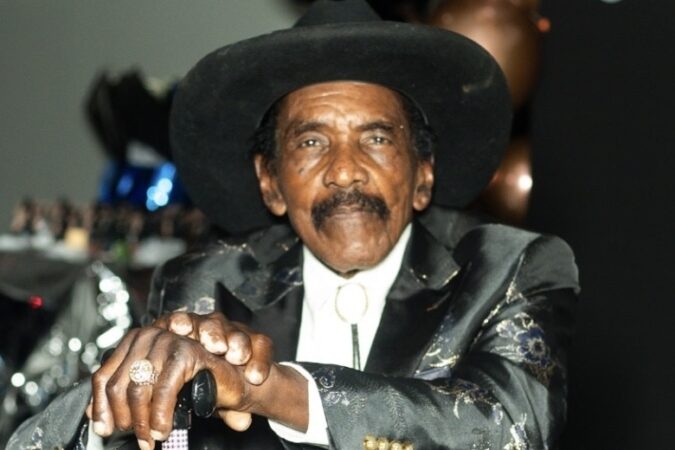
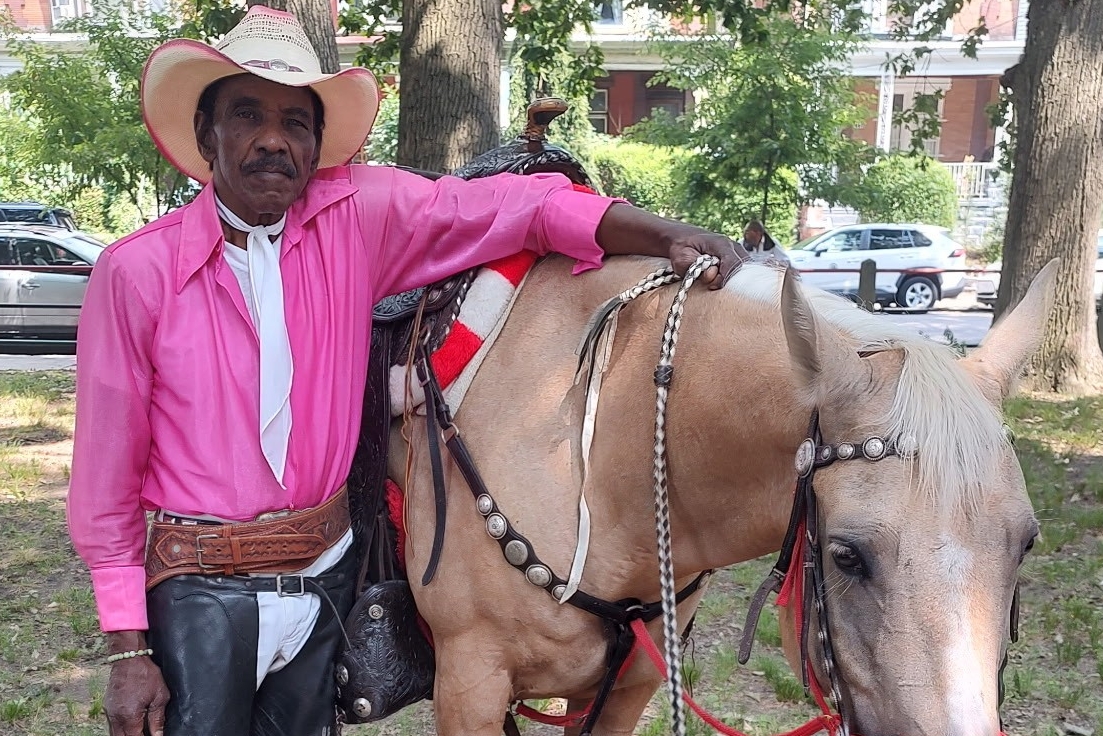
    Mr. Richards fell in love with horses when he was a youth in South Philadelphia and went on to own four of his own: Lucky, Jaheel, Pretty Girl, and Dancer. He became an expert in horsemanship and grooming, and dressed daily in cowboy hats, bolo ties, and western boots. He shined his collection of saddles as brightly as any car in the neighborhood.

    “He loved animals, period,” said his wife, Sheila, “and horses are strong. He liked that.”

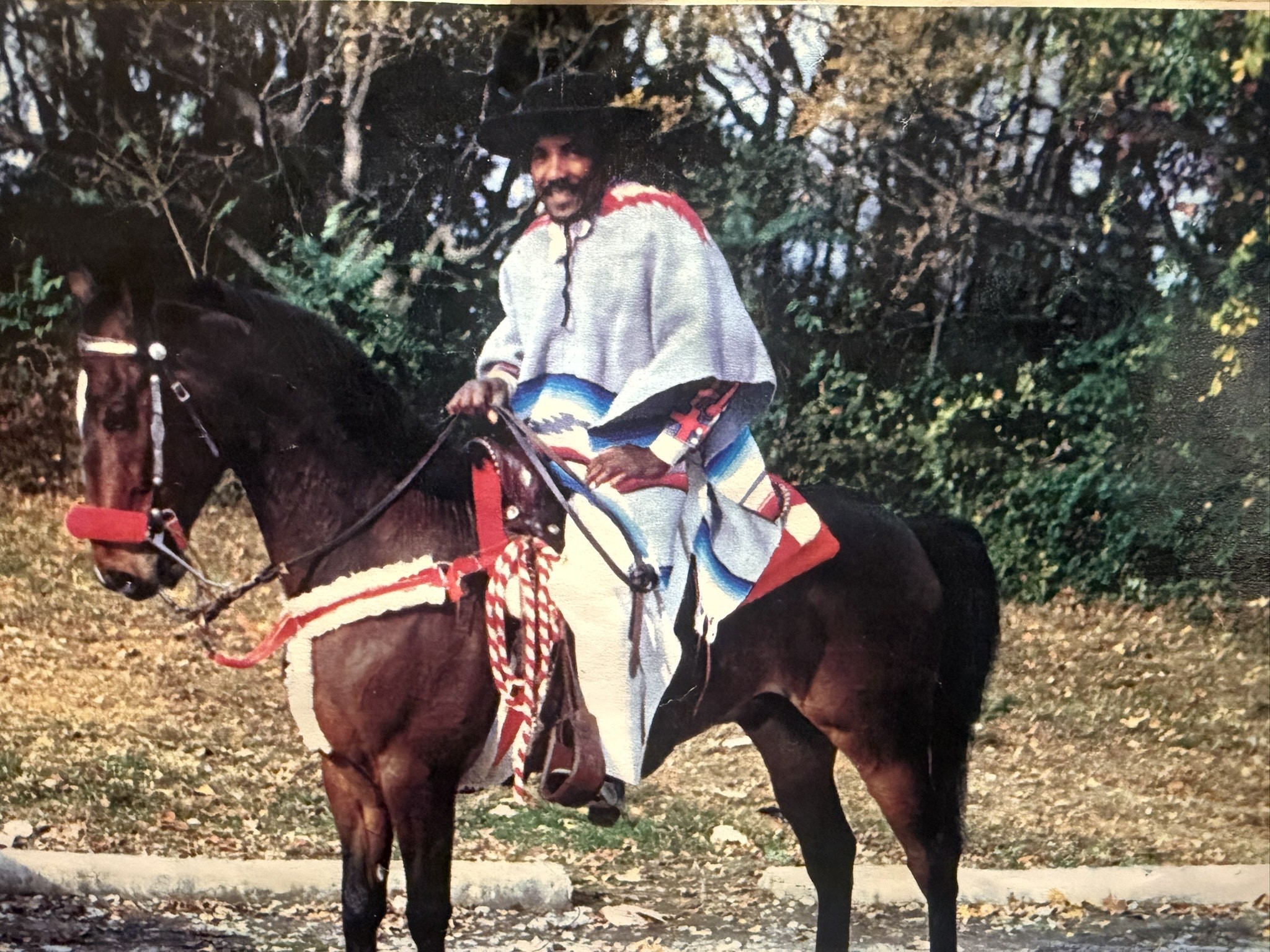
    Over the years, Mr. Richards adorned his mounts in colors that matched his eye-catching outfits and rode in parades, on local trails, and elsewhere around the city and South Jersey. He started out supervising 25-cent pony rides at a farm in South Philadelphia as a teenager and later stabled his horses most often at a farm near the Cowtown Farmers Market in Pilesgrove Township, Salem County.

    Mr. Richards was known for his distinctive western attire.

    He became such a good rider, and his horses were so expressive, his family said, that he often led other concrete cowboys in holiday parades on Broad and 52nd Streets. “He was the star of the show,” said his daughter Passion. “My dad was sharp.”

    Mr. Richards enjoyed watching John Wayne westerns and the TV show Bonanza, and he took his family on a memorable trip to a rodeo in Maryland. He taught his children, grandchildren, and anyone else who was interested how to safely ride and care for horses.

    Out of the saddle, Mr. Richards was a gifted singer and guitar player. He formed a band, Fire and Rain, after he returned to Philadelphia from two years in the Army, and they played at the Apollo Theater in New York and at clubs all over Philadelphia for decades.

    He specialized in love songs and covered many made popular by Teddy Pendergrass and Harold Melvin and the Blue Notes. “He was a romantic,” his wife said.

    Mr. Richards (right) was an accomplished singer and guitar player.

    He also had an eye for design and beauty, and a knack for construction. He built decks, repaired roofs, refurbished basements, and raised other buildings, sometimes from the ground up.

    He constructed a barn and stalls for the horse farm he frequented in Salem County, and mentored young men in West Philadelphia who wanted to learn the construction skills he had picked up from his mentors and while in the Army.

    “He loved to beautify things,” his wife said. “He was a beautiful person.”

    Ernest Patrick Richards was born Feb. 25, 1940, in Philadelphia. He graduated from Edward Bok Technical High School in 1958 and spent two years in the Army.

    Mr. Richards often dressed his horse to match his oufit when they rode in parades.

    He met singer Sheila Sampson when she auditioned to sing with Fire and Rain, and they married in 1985 and had daughters Passion, Keshia, Tammy, and Sparkle. He also had daughters Jackie G., Jackie J., and Crystal. Jackie G. and Crystal died earlier.

    Mr. Richards played basketball for years and whiled away many evenings strumming his guitar and singing songs around the house. He adored his family, they said, and attended the Church of Christian Compassion. “He was inspirational about his love of God,” his wife said. “He was all about family and faith.”

    He had a hearty laugh, his daughters said, and tolerated no nonsense, his wife said. He helped anybody who needed anything at any time, they all said.

    He valued independence and knew how to fix cars and home appliances. A friend said online that he had “a heart of gold” and was “an earth angel.” His nephew and nieces said he kept them “laughing and on our toes, teaching us great life lessons and how to repair anything.”

    Mr. Richards was an expert builder.

    Mr. Richards liked flashy western wear, and his wife nicknamed him Richie Rich because he dressed so snazzy. “He was never judgmental,” said his granddaughter Najzhay. “He was always offering help. He was truly my favorite person and the best cowboy.”

    “He was funny,” said his daughter Passion. “He could light up a room. His presence demanded respect. He was the center of our everything.”

    His daughter Sparkle said: “He was a great teacher and our best friend.”

    On his 85th birthday last year, Mr. Richards told his family: “All my blessings are right here in this room. I’m so grateful, eternally grateful.”

    Mr. Richards (rear, third from left) enjoyed time with his family.

    In addition to his wife, daughters, and granddaughter, Mr. Richards is survived by five other grandchildren, two great-grandsons, and other relatives. A brother and a sister died earlier.

    A celebration of his life was held Thursday, Jan. 22.

  • Former federal workers are taking up local government jobs

    Former federal workers are taking up local government jobs

    Some federal workers aren’t leaving public service altogether. They’re landing jobs in local government.

    A job-seeking platform managed by national nonprofit Work for America is helping some workers find those new roles. The service is relatively new but predates President Donald Trump’s efforts to shrink the federal workforce in 2025.

    Some 350 workers with federal job experience in Pennsylvania and 169 in New Jersey have used the platform, called Civic Match, since it was founded in November 2024.

    Nearly 900 state and local government roles in Pennsylvania have been posted on the platform since its start and 42 in New Jersey.

    And, according to new data, 187 former federal workers across the U.S. have used the site and landed jobs in state or local government.

    While that’s a small fraction of the total federal workers who have left their jobs in the last year amid the Trump administration’s shake-up of the workforce, the new data shed light on where workers are landing after leaving government positions.

    The federal government cut 271,000 jobs from January through November last year. That included workers who were laid off, left of their own accord, or took a government incentive to resign.

    In October, just after Trump’s deferred resignation program took effect, Pennsylvania and New Jersey lost roughly 6,000 federal jobs.

    There really isn’t a centralized place where someone looking for a state or other local government job can go, said Caitlin Lewis, executive director at Work for America. The platform is open only to job seekers who have federal work experience or who lost their jobs because of federal funding cuts, but Lewis hopes to open it up to others in the future.

    Who are these federal workers?

    Austin Holland was working in the U.S. Department of Housing and Urban Development last year, when federal workers were instructed to begin working in the office full-time. He had been working remotely from Lancaster much of the time and commuting to Washington, a few days per pay period. Relocating to D.C. wasn’t feasible for him.

    “I really enjoyed my federal job, and I had imagined that it was kind of something I was going to do for my entire career,” he said. “I was struggling with losing that and trying to figure out ‘Where is my career going from here?’”

    Holland estimates that he joined the Civic Match platform in early 2025. Through a virtual job fair, he made a connection that ultimately led to a job at the Pennsylvania Housing Finance Agency. He took a pay cut but was able to stay in Lancaster — and in public service.

    Before leaving his job at the Environmental Protection Agency, Andrew Kreider uploaded his resume to Civic Match and attended some of the platform’s webinars.

    “It was refreshing and validating to have such high-quality hiring officials participating,” Kreider said. “I think it helped remind those of us who maybe were a little bit disillusioned — or were feeling traumatized by what we had just been through — that there were places where we could continue to serve where we wouldn’t be subject to what we were going through at the federal level.”

    Kreider, who lives in Chester County, also used LinkedIn to look for jobs and searched government websites. He ultimately landed a communications director job with Chester County, which he found on the county’s job listing board.

    He’s been in the new job for roughly two months and says some days are “completely overwhelming.”

    Andrew Kreider in Philadelphia in April 2025.

    “County governments do a lot of work with not as many resources as federal agencies tend to have,” he said. “I’m working as a communication director for an organization three times the size of the one I came from, but I’m making significantly less money and sort of being responsible for communications related to far more things.”

    He’s taken a pay cut but said he loves the new job.

    “It’s been, for me, an affirmation of how many good people there are who just want to help,” Kreider said. “I’m surrounded by people who come into work every day to serve their neighbors and their communities.”

    On a recent Thursday afternoon in February, Civic Match had seven jobs posted in Philadelphia. Available positions with the city included a chief epidemiologist, a director of tax policy, and a director of adult education.

    The majority of the 187 platform users who have found jobs — 63% — are workers with at least eight years of public sector experience, according to new data from Work for America. Roughly 40% found jobs in human resources or other operations-related roles.

    One-third of those hired have relocated for their new jobs out of state, with 22% reporting a move of over 100 miles from their previous position.

    Their federal experience came from a range of departments, including the Departments of Health and Human Services, Housing and Urban Development, and Transportation, as well as USAID, the General Services Administration, and the Environmental Protection Agency.

    The aim of Work for America is to curb staffing shortages in local governments and help speed up their hiring process, Lewis said.

    “Unlike the private sector, government does not really think about its employer brand and marketing itself as a potential employer,” she said. “Individual local governments don’t have the same amount of resourcing to actually think about expressing an employee value proposition and really marketing to folks who could be great fits for roles that they have open.”

  • Roadside bakeries are growing in Chester County: ‘It’s that home-sweet-home comfort food’

    Roadside bakeries are growing in Chester County: ‘It’s that home-sweet-home comfort food’

    When Jacqueline Spain’s now-grown kids were having a bad day, she would sit them down at the kitchen island and bake them something. Now, she has opened up that kitchen island to her community with her roadside home bakery, Devon Road Made.

    “Food is love, love is food,” Spain said, standing in her kitchen recently, bread in the oven and cookies on the counter. “I like to put a lot of heart and soul into it. I feel if you’re going to put good energy into that, people are going to feel that. They’re going to taste it; they’re going to like it.”

    Devon Road Made is one of the newer additions to a trend of microbakeries that are cropping up in Chester County, some with roadside carts and stands dotting residential roads in Paoli, Downingtown, West Chester, and elsewhere.

    The Devon Road Made bakery cart outside the home of David and Jacqueline Spain for folks passing by to buy some home baked goods in Willistown, Pa., on Friday, Jan. 23, 2026.

    Statewide, interest in selling home-baked goods has been growing. Pennsylvania had 361 licensed home bakeries in 2023. That nearly doubled, to 663, in 2025, according to the state agriculture department, which oversees the inspections and licensing of food businesses that operate out of home, rather than commercial, kitchens. There has been a general bakery boom, too, in Philly.

    Chester County appears to be a growing incubator of such little bakeries: It had 28 licensed home bakeries in 2025, compared with 16 in 2023, the department said.

    Before issuing a license, the department inspects the baker’s food production site. Bakers must verify they have zoning approval to have a business on their property, submit ingredient labels, restrict pets or not have them, and have an approved water supply. It costs $35 to register.

    In the few weeks since, Spain, 59, and her husband, David, 60, rolled their bakery cart to the foot of their yard at 60 Devon Rd. in Willistown, the community has indeed seemed to like it. Jacqueline Spain’s cookies and David Spain’s sourdough loaves continually sell out. People knock on their door to ask if things will be restocked. One woman sat at the Spains’ kitchen island, sampling freshly baked cookies, while awaiting her pickup order.

    “Everything we make, she has been making for years,” David Spain said. “That’s kind of part of our DNA. It’s got to taste really good — something that we would only serve our friends and family.”

    David Spain, of Willistown, Pa., and his wife Jacqueline Spain, chat with Inquirer Reporter Brooke Schultz about their Devon Road Made bakery cart at their home on Friday, Jan. 23, 2026.

    And Chester County seems like a place perfectly ripe for these little bakeries to thrive, several home bakers said: It’s not a wholly rural community, nor is it totally Main Line. There is an affluent clientele (Chester is the wealthiest county by median income in the state) with an interest in homemade, quality ingredients.

    But they do face some headwinds: A number of municipalities restrict such carts through zoning codes, even if the bakers are licensed to sell.

    Alexa Geiser, 28, of Lulu’s Bread & Bakery in West Chester, opened her home bakery in October, originally selling her sourdough first come, first served from her porch. But then the borough told her she was not permitted to sell from her residential porch, and she moved entirely online to sell her bread and the occasional chocolate chip cookie batch.

    Though it’s a bummer — she said it was nice to talk with people stopping by for a peaceful hour on Fridays — she felt supported by the community, who offered their businesses for her to host her pickups.

    “I think people really value homemade goods that people put a lot of effort into, and good quality ingredients,” she said. “I use all organic flours and filtered water and good salt in my bread, which is something I personally value. It’s what I want to give to my customers as well.”

    The Devon Road Made bakery cart outside the home of David and Jacqueline Spain for folks passing by to buy some home baked goods in Willistown, Pa., on Friday, Jan. 23, 2026.

    But the stands are a niche the bakers feel they are filling.

    “I noticed around here, at least where I live specifically, there aren’t really that many,” said Maddy Dutko, of Maddy Makes. “I’ve seen a couple that sell honey or some that sell flowers, but I haven’t really seen any that sell baked goods. I was like, why not? It’s a way for me to connect with people around here. Maybe bring them something that they didn’t know was necessarily in their community.”

    Dutko’s stand, at 623 Sanatoga Rd. in East Coventry Township, is open on the weekends from spring to fall. Dutko sells bread loaves, coffee cakes, cinnamon buns, cookies, and dry mixes for pancakes or cornbread. She tries to keep things fresh and interesting, but also consistent for loyal customers. Dutko, 29, also sells orders online and at markets.

    The physical presence has led to customers hiring her to bake for kids’ birthdays, or people approaching her at markets to tell her they always stop by for a treat when they end their walk on a nearby trail.

    The Devon Road Made bakery cart outside the home of David and Jacqueline Spain for folks passing by to buy some home baked goods in Willistown, Pa., on Friday, Jan. 23, 2026.

    There’s something to be said for products baked with love in someone’s home, Jacqueline Spain said.

    On a recent Friday afternoon in Willistown, the Spains stocked the baskets of their cart with baggies of cookies, breads, and dog treats — a customer request that their daughter, a veterinary nurse, fulfilled. A red open flag commenced their weekend hours of “noon-?” People pulled up onto the lawn to shop.

    “It’s feel-good, it’s warm, it’s friendly, it’s inviting,” Jacqueline Spain said. “It’s that home-sweet-home comfort food.”

  • Philly residents thought they had a winter parking system. Then the snow stuck around.

    Philly residents thought they had a winter parking system. Then the snow stuck around.

    By the time Taylor Schuler finally freed their car, they were exhausted. It had taken five hours across two days, hacking at the wall of ice encasing their Prius’ bumper, shoveling piles of frozen snow off the tires, to complete the job. As the sun set on their afternoon of labor, they were tempted to put a piece of furniture in their hard-earned spot, a practice sometimes known as “savesies” in Philadelphia.

    But they knew better. Having just moved to Philly from Houston, the 28-year-old academic librarian wasn’t all that familiar with cold-weather etiquette, so they took to the internet ahead of January’s snowstorm to figure out what exactly Philly’s rules are. They gathered that people weren’t all that fond of the “savesies” practice, so, tempted as they were to hold onto their spot, they let it go.

    Once the spot was cleared, they circled the block, a quick trip to make sure their car was still working. Their internet research had also led them to believe no one would just take their spot immediately. As they rounded the corner toward their house, though, they saw another driver lurch into the spot they just spent hours digging out.

    “Oh jeez,” Schuler thought to themselves. “It’s like the Wild West out here.”

    In some snow-burdened cities, saving a shoveled-out parking spot is a deeply ingrained winter habit. Boston even formally acknowledges the practice by allowing residents to mark a spot they dug out for up to 48 hours after a storm. In Chicago, protecting your precious dug-out parking space with a lawn chair is called “dibs,” and it’s been a beloved and widely accepted tradition since the great blizzard of 1967.

    But Philadelphia exists in a murkier middle ground. Until about two weeks ago, it snowed infrequently enough and melted fast enough that any theory about our collective approach to storm parking was never really put to the test. But the lingering snow has revealed a kind of civic chaos, with neighbors operating under wildly different assumptions and fights breaking out over who is entitled to snow-cleared parking spots.

    The divide is often generational. Older residents, who experienced harsher winters, are more likely to embrace savesies as another classic Philly tradition while younger residents and transplants see it as territorial nonsense, out of step with the values of densely populated city life.

    Schuler finds the entire debate exhausting. “I just want to be able to go to work and come home,” they said. “I didn’t ask for any of this.”

    Connor Phan digs his car out after the recent snowstorm.

    Jeff Martin, 43, who lives in South Philly, describes himself as firmly “no savesies” but with caveats. He won’t put out a chair. He won’t defend one. But he also won’t move someone else’s. “I don’t believe in the chair,” Martin said. “But I’m going to obey the chair.” His reasons are entirely practical. “I don’t want to get keyed,” he said.

    Martin argues Philadelphia’s parking wars are a symptom of the changing climate. “The fact that over the last 20 years, we haven’t gotten as much snow as we did over the previous 20 years has made us forget how to deal with it,” he said, “and the city forget how to deal with it to the point where they don’t properly fund the removal of snow.”

    For the record, the city is firmly in the “#nosavesies” camp, and the police routinely remind Philadelphians that saving parking spots is illegal. Of course, that doesn’t stop people from doing it — and other people complaining about it.

    Lucas Tran didn’t see the cinderblock in the spot he parked in on Tuesday night. It wasn’t until another driver pulled up and told him that he was in her spot that he became aware of it. She said she had dug out the spot herself, saved it with the cinderblock, and that Tran had to move.

    At first, he refused. But he backed down after she called him a liar and a “little b—.” He didn’t want things to escalate. The next day, she left a handwritten apology on his car. “Thank you for moving your car,” it read. “You are NOT a little b—.”

    Tran takes a “special exception” approach to the savesies debate. If the woman had been elderly or a first responder, or if it had been two or three days after the storm rather than a full week later, he might have been more understanding. “But the roads are drivable now, he said. “There are more options to park. You can’t keep claiming a spot that’s public property.”

    Back in West Philly, Schuler spent the week parking wherever they could. The spot they dug out remained occupied until one evening, when they pulled up, excited to reclaim what was once theirs — only to find a folding table balanced on two overturned pots in their way. Someone had “savesied” Schuler’s spot.

    Schuler snapped a photo and uploaded it to Reddit, where the response was nearly unanimous. As one Redditor put it, “that’s diabolical.”

    It was the one version of “savesies” Schuler had never seen defended. “If there’s anything people agree on,” they said, “it’s that you don’t do that.”

  • Trump plans to keep Democratic governors out of traditionally bipartisan meeting

    Trump plans to keep Democratic governors out of traditionally bipartisan meeting

    President Donald Trump plans to keep Democrats out of a traditionally bipartisan White House gathering of governors typically held as part of the National Governors Association’s annual Washington summit, the organization said.

    According to the governors’ offices, the president also revoked invitations sent to Maryland Gov. Wes Moore (D), the NGA’s vice chair; and Colorado Gov. Jared Polis (D) to attend a second White House event scheduled to occur around the summit: a dinner for governors.

    “This week, I learned that I was uninvited to this year’s National Governors Association dinner — a decades-long annual tradition meant to bring governors from both parties together to build bonds and celebrate a shared service to our citizens with the President of the United States,” Moore said in a statement Sunday. “… It’s hard not to see this decision as another example of blatant disrespect and a snub to the spirit of bipartisan federal-state partnership.”

    Moore told CNN’s State of the Union on Sunday that he was confused by the White House’s decision, saying that, just a few weeks ago, he led a bipartisan group of governors who met with the president as Trump signed a memorandum on bringing down energy costs.

    Moore also said on CNN that it was “not lost” on him that he is the only Black governor of a state.

    “I find that to be particularly painful, considering the fact that the president is trying to exclude me from an organization that not only my peers have asked me to help to lead, but then also a place where I know I belong in,” he said. “I’m never in a room because of someone’s benevolence nor kindness. I’m not in a room because of a social experiment. I’m in the room because I belong there and the room was incomplete until I got there.”

    Spokespeople for Polis, as well as representatives of the Democratic Governors Association, did not immediately respond to a request for comment.

    While Moore and Polis were excluded from the dinner with Trump, some Democrats remained invited to the gathering.

    The White House did not explain why Democratic governors were not invited to the meeting with Trump, and a spokesperson did not respond to a request to provide a list of Democrats who were invited to the dinner.

    Trump has frequently clashed with Moore and Polis, and his decision comes after months of conflict between the federal government and Democratic governors.

    Moore has condemned the president’s threat to deploy the National Guard to Baltimore and defund Maryland’s efforts to replace the fallen Key Bridge. Trump has also repeatedly claimed that Baltimore is “crime ridden” despite the fact that the city is experiencing its lowest homicide rate in 50 years.

    Polis and Trump have repeatedly feuded over Tina Peters, a former county clerk in Colorado who was convicted in state court on felony charges related to efforts to overturn the 2020 presidential election. Polis has defended the conviction and refused the White House’s request to transfer Peters to a federal prison. Because of this, in December, Trump in a Truth Social post called Polis a “scumbag” and said he should “rot in Hell.”

    The NGA’s Washington meetings are expected to take place Feb. 19 to 21. The organization said Friday that the White House meeting will no longer be part of the association’s official schedule.

    In a statement Friday, Brandon Tatum, the interim CEO of the NGA, said that the “bipartisan White House governors meeting is an important tradition, and we are disappointed in the administration’s decision to make it a partisan occasion this year.”

    “To disinvite individual governors to the White House sessions undermines an important opportunity for federal-state collaboration,” Tatum said. “At this moment in our nation’s history, it is critical that institutions continue to stand for unity, dignity and constructive engagement.”