Category: News

Latest breaking news and updates

  • FBI concluded Jeffrey Epstein wasn’t running a sex trafficking ring for powerful men, files show

    FBI concluded Jeffrey Epstein wasn’t running a sex trafficking ring for powerful men, files show

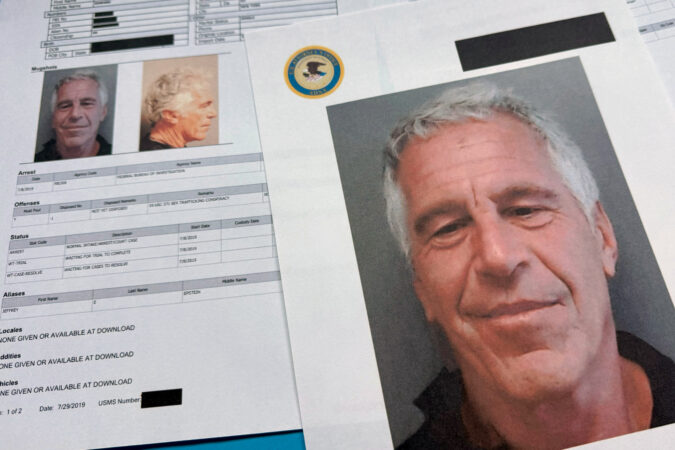
    NEW YORK — The FBI pored over Jeffrey Epstein’s bank records and emails. It searched his homes. It spent years interviewing his victims and examining his connections to some of the world’s most influential people.

    But while investigators collected ample proof that Epstein sexually abused underage girls, they found scant evidence the well-connected financier led a sex trafficking ring serving powerful men, an Associated Press review of internal Justice Department records shows.

    Videos and photos seized from Epstein’s homes in New York, Florida, and the Virgin Islands didn’t depict victims being abused or implicate anyone else in his crimes, a prosecutor wrote in one 2025 memo.

    An examination of Epstein’s financial records, including payments he made to entities linked to influential figures in academia, finance, and global diplomacy, found no connection to criminal activity, said another internal memo in 2019.

    While one Epstein victim made highly public claims that he “lent her” to his rich friends, agents couldn’t confirm that and found no other victims telling a similar story, the records said.

    Summarizing the investigation in an email last July, agents said “four or five” Epstein accusers claimed other men or women had sexually abused them. But, the agents said, there “was not enough evidence to federally charge these individuals, so the cases were referred to local law enforcement.”

    The AP and other media organizations are still reviewing millions of pages of documents, many of them previously confidential, that the Justice Department released under the Epstein Files Transparency Act and it is possible those records contain evidence overlooked by investigators.

    But the documents, which include police reports, FBI interview notes, and prosecutor emails, provide the clearest picture to date of the investigation — and why U.S. authorities ultimately decided to close it without additional charges.

    Dozens of victims come forward

    The Epstein investigation began in 2005, when the parents of a 14-year-old girl reported she had been molested at the millionaire’s home in Palm Beach, Fla.

    Police would identify at least 35 girls with similar stories: Epstein was paying high school-age students $200 or $300 to give him sexualized massages.

    After the FBI joined the probe, federal prosecutors drafted indictments to charge Epstein and some personal assistants who had arranged the girls’ visits and payments. But instead, then-Miami U.S. attorney Alexander Acosta struck a deal letting Epstein plead guilty to state charges of soliciting prostitution from an underage girl. Sentenced to 18 months in jail, Epstein was free by mid-2009.

    In 2018, a series of Miami Herald stories about the plea deal prompted New York federal prosecutors to take a fresh look at the accusations.

    Epstein was arrested in July 2019. One month later, he killed himself in his jail cell.

    A year later, prosecutors charged Epstein’s longtime confidant, Ghislaine Maxwell, saying she’d recruited several of his victims and sometimes joined the sexual abuse. Convicted in 2021, Maxwell is serving a 20-year prison term.

    Prosecutors fail to find evidence backing most sensational claims

    Prosecution memos, case summaries, and other documents made public in the department’s latest release of Epstein-related records show that FBI agents and federal prosecutors diligently pursued potential coconspirators. Even seemingly outlandish and incomprehensible claims, called in to tip lines, were examined.

    Some allegations couldn’t be verified, investigators wrote.

    In 2011 and again in 2019, investigators interviewed Virginia Roberts Giuffre, who in lawsuits and news interviews had accused Epstein of arranging for her to have sexual encounters with numerous men, including Britain’s former Prince Andrew.

    Investigators said they confirmed that Giuffre had been sexually abused by Epstein. But other parts of her story were problematic.

    Two other Epstein victims who Giuffre had claimed were also “lent out” to powerful men told investigators they had no such experience, prosecutors wrote in a 2019 internal memo.

    “No other victim has described being expressly directed by either Maxwell or Epstein to engage in sexual activity with other men,” the memo said.

    Giuffre acknowledged writing a partly fictionalized memoir of her time with Epstein containing descriptions of things that didn’t take place. She had also offered shifting accounts in interviews with investigators, they wrote, and had “engaged in a continuous stream of public interviews about her allegations, many of which have included sensationalized if not demonstrably inaccurate characterizations of her experiences.” Those inaccuracies included false accounts of her interactions with the FBI, they said.

    Still, U.S. prosecutors attempted to arrange an interview with Andrew, now known as Andrew Mountbatten-Windsor. He refused to make himself available. Giuffre settled a lawsuit with Mountbatten-Windsor in which she had accused him of sexual misconduct.

    In a memoir published after she killed herself last year, Giuffre wrote that prosecutors told her they didn’t include her in the case against Maxwell because they didn’t want her allegations to distract the jury. She insisted her accounts of being trafficked to elite men were true.

    Prosecutors say photos, videos don’t implicate others

    Investigators seized a multitude of videos and photos from Epstein’s electronic devices and homes in New York, Florida, and the U.S. Virgin Islands. They found CDs, hard copy photographs, and at least one videotape containing nude images of females, some of whom seemed as if they might be minors. One device contained 15 to 20 images depicting commercial child sex abuse material — pictures investigators said Epstein obtained on the internet.

    No videos or photos showed Epstein victims being sexually abused, none showed any males with any of the nude females, and none contained evidence implicating anyone other than Epstein and Maxwell, then-Assistant U.S. Attorney Maurene Comey wrote in an email for FBI officials last year.

    Had they existed, the government “would have pursued any leads they generated,” Comey wrote. “We did not, however, locate any such videos.”

    Investigators who scoured Epstein’s bank records found payments to more than 25 women who appeared to be models — but no evidence that he was engaged in prostituting women to other men, prosecutors wrote.

    Epstein’s close associates go uncharged

    In 2019, prosecutors weighed the possibility of charging one of Epstein’s longtime assistants but decided against it.

    Prosecutors concluded that while the assistant was involved in helping Epstein pay girls for sex and may have been aware that some were underage, she herself was a victim of his sexual abuse and manipulation.

    Investigators examined Epstein’s relationship with the French modeling agent Jean-Luc Brunel, who once was involved in an agency with Epstein in the U.S., and who was accused in a separate case of sexually assaulting women in Europe. Brunel killed himself in jail while awaiting trial on a rape charge in France.

    Prosecutors also weighed whether to charge one of Epstein’s girlfriends who had participated in sexual acts with some of his victims. Investigators interviewed the girlfriend, who was 18 to 20 years old at the time, “but it was determined there was not enough evidence,” according to a summary given to FBI Director Kash Patel last July.

    Days before Epstein’s July 2019 arrest, the FBI strategized about sending agents to serve grand jury subpoenas on people close to Epstein, including his pilots and longtime business client, retail mogul Les Wexner.

    Wexner’s lawyers told investigators that neither he nor his wife had knowledge of Epstein’s sexual misconduct. Epstein had managed Wexner’s finances, but the couple’s lawyers said they cut him off in 2007 after learning he’d stolen from them.

    “There is limited evidence regarding his involvement,” an FBI agent wrote of Wexner in an Aug. 16, 2019, email.

    In a statement to the AP, a legal representative for Wexner said prosecutors had informed him that he was “neither a coconspirator nor target in any respect,” and that Wexner had cooperated with investigators.

    Prosecutors also examined accounts from women who said they’d given massages at Epstein’s home to guests who’d tried to make the encounters sexual. One woman accused private equity investor Leon Black of initiating sexual contact during a massage in 2011 or 2012, causing her to flee the room.

    The Manhattan district attorney’s office subsequently investigated, but no charges were filed.

    Black’s lawyer, Susan Estrich, said he had paid Epstein for estate planning and tax advice. She said in a statement that Black didn’t engage in misconduct and had no awareness of Epstein’s criminal activities. Lawsuits by two women who accused Black of sexual misconduct were dismissed or withdrawn. One is pending.

    No client list

    Attorney General Pam Bondi told Fox News in February 2025 that Epstein’s never-before-seen “client list” was “sitting on my desk right now.” A few months later, she claimed the FBI was reviewing “tens of thousands of videos” of Epstein “with children or child porn.”

    But FBI agents wrote superiors saying the client list didn’t exist.

    On Dec. 30, 2024, about three weeks before President Joe Biden left office, then-FBI Deputy Director Paul Abbate reached out through subordinates to ask “whether our investigation to date indicates the ‘client list,’ often referred to in the media, does or does not exist,” according to an email summarizing his query.

    A day later, an FBI official replied that the case agent had confirmed no client list existed.

    On Feb. 19, 2025, two days before Bondi’s Fox News appearance, an FBI supervisory special agent wrote: “While media coverage of the Jeffrey Epstein case references a ’client list,’ investigators did not locate such a list during the course of the investigation.”

  • John Fetterman asks DHS to halt development of ICE detention centers in Pennsylvania, saying they will burden local communities

    U.S. Sen. John Fetterman (D., Pa.) is calling on the Department of Homeland Security to hit the brakes on its plan to develop two Immigration and Customs Enforcement detention centers in Pennsylvania, saying they would have a negative impact on local communities.

    “While I have been clear in my support for the enforcement of federal immigration law, this decision will do significant damage to these local tax bases, set back decades-long efforts to boost economic development, and place undue burdens on limited existing infrastructure in these communities,” Fetterman wrote in a letter addressed to DHS Secretary Kristi Noem and posted online Saturday.

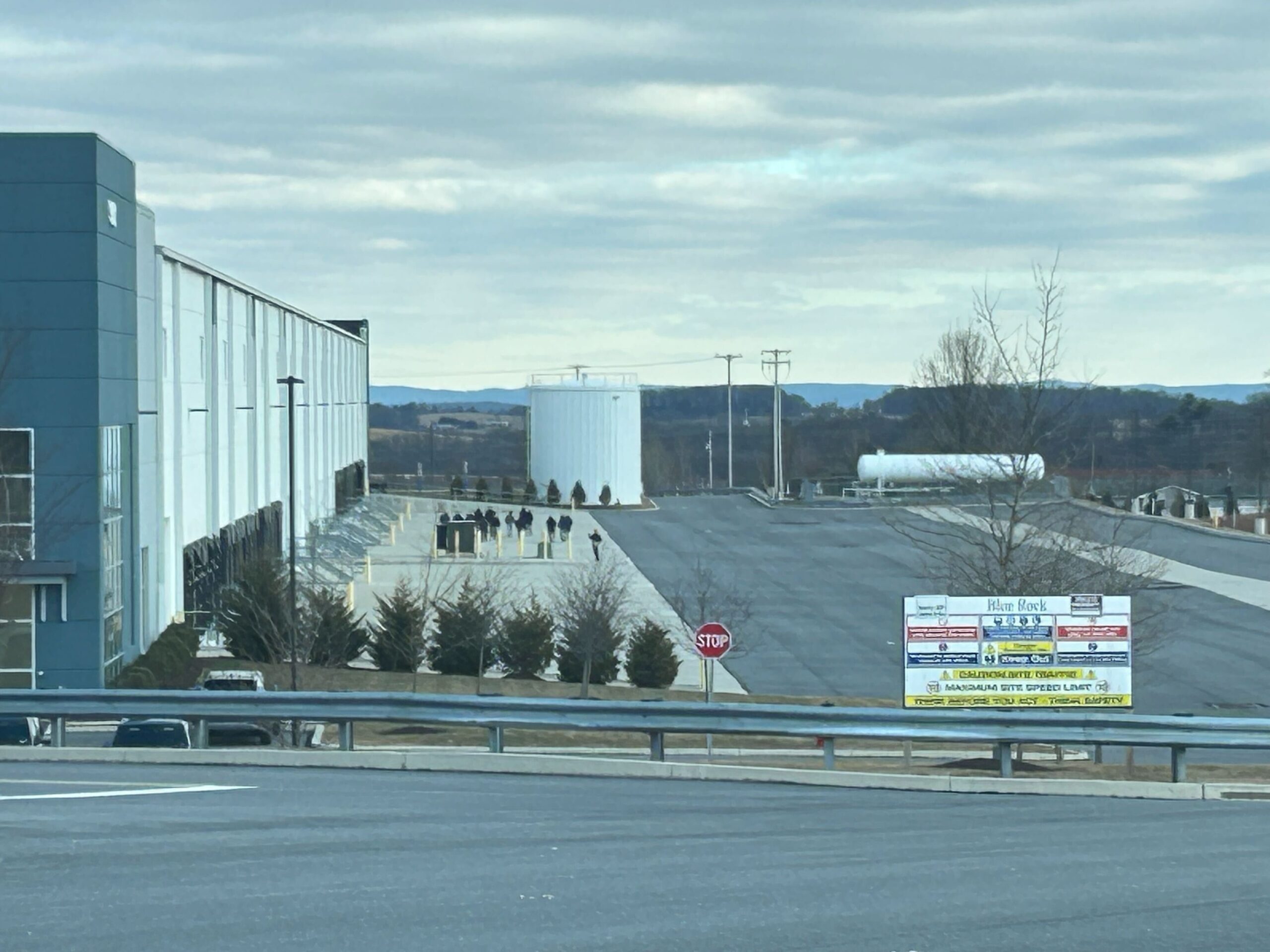
    Fetterman’s criticism comes shortly after DHS purchased an $87 million warehouse in Upper Bern Township, Berks County, and a nearly $120 million former Big Lots distribution center in Tremont Township, Schuylkill County.

    A 1.3-million-square-foot former Big Lots warehouse in Tremont, Pa., has been bought by U.S. Immigration and Customs Enforcement for $119 million. The agency plans to detain up to 7,500 immigrants there.

    The Tremont Township detention center would house as many as 7,500 people, Fetterman noted, while the Upper Bern Township one would be capable of detaining 1,500 people.

    Upper Bern Township has 1,606 residents, according to the U.S. Census Bureau, and is about 30 minutes northwest of Reading. The facility is near an Amazon warehouse and the Mountain Springs Camping Resort.

    Tremont Township — where the much larger detention center is set to be built — has just 283 residents and is next to the 1,670-resident Tremont Borough. Tremont is in a rural area northeast of Harrisburg, near the Appalachian Trail, state game lands, and Fort Indiantown Gap, an Army National Guard training center.

    In his letter, Fetterman said local and state officials did not have a chance to weigh in on how these massive facilities would affect everything from sewer systems and the electrical grid to hospitals and emergency medical services.

    “Both townships do not currently have the capacity to meet the demands of these detention centers, with Tremont Township officials specifically stating the proposed 7,500-bed detention facility would quadruple the existing burden on their public infrastructure system,” Fetterman said.

    A warehouse in Upper Bern Township, Berks County, Pennsylvania, was purchased by ICE and the Trump administration.
    A warehouse in Upper Bern Township, Berks County, Pa., was purchased by ICE and the Trump administration.

    The letter maintains Fetterman’s stance as someone who supports ICE operations in general while criticizing the federal government’s recent handling of them. After federal agents shot and killed two U.S. citizens in Minneapolis last month, Fetterman called on the Trump administration to fire Noem. A few days later, Fetterman said he supports ICE agents wearing face masks.

    Fetterman was among 23 Senate Democrats to cross the aisle last month to vote for a compromise bill funding the federal government through September, while granting just two weeks of funding for DHS.

    Fetterman said the Pennsylvania facilities would result in a tax loss of $1.6 million to the communities. He asked DHS to agree to several conditions before proceeding further with the sites.

    He requested an “impact assessment,” details on the criteria used to select these facilities, an agreement that federal funds be used to upgrade them, and “a commitment to a period of public engagement and dialogue with these communities.”

    “Due to these significant concerns, it is my fear that DHS and ICE did not perform any due diligence, spending more than $200 million in tax dollars for warehouses that cannot be adequately converted and further eroding trust between Pennsylvanians and the Federal government,” Fetterman wrote.

    The Department of Homeland Security and Immigration and Customs Enforcement did not immediately respond to a request for comment.

    This story has been updated to correct the location of one of the proposed detention centers to Upper Bern Township.

  • Police: Man dies after being shot in North Philly Saturday night

    Police: Man dies after being shot in North Philly Saturday night

    A man died in North Philadelphia Saturday night after being shot, city police said.

    The fatal shooting happened around 7:40 p.m. on the 3200 block of North Howard Street, police said. Officers responding to a call found the man “suffering from multiple gunshot wounds.”

    Emergency medical responders pronounced him dead at 7:45 p.m., police said.

    No arrests have been made, and police have not located the firearm used in the shooting.

    Police ask those with information to call 215-686-TIPS (8477).

    This is the 11th homicide in Philadelphia this year, according to the police department’s crime statistics website. That’s a 50% decrease from the same period last year, the website states. Last year, homicides were at a nearly 60-year low after peaking in 2021.

  • On a paradise island in the Pacific, meth and HIV epidemics rage

    On a paradise island in the Pacific, meth and HIV epidemics rage

    SUVA, Fiji — The methamphetamine drop-offs to a squatter settlement here followed a routine.

    Once a week, according to residents, a black Dodge truck with tinted windows pulled up to a tent on the edge of the community, a dense maze of tiny shacks connected by muddy paths, slick from the persistent summer rain. A man stepped out, swapped drugs for cash with his local contact, and drove off. Dealers repacked the white crystals into tiny zip-top bags, no bigger than a child’s pinkie, before doling them out for about $22 each.

    The settlement does not have plumbing or formal electricity. Even food is scarce. But the drugs were everywhere, according to community workers and one former user who lives here, a 17-year-old boy. Given that almost all his friends were on meth, he said, getting addicted was “only a matter of time.”

    For years, law enforcement partners and the United Nations had warned Fiji that international criminal syndicates were exploiting its geography as a South Pacific island, using it as a transshipment point for drugs originating in Southeast Asia and Latin America and destined for New Zealand, Australia, and North America.

    Those drugs — principally methamphetamines — have seeped into Fiji itself, devastating families and scarring this small society. Community workers say they have seen users as young as 10.

    Compounding the problem is how meth is used in Fiji: injected, rather than smoked, snorted or taken orally, according to interviews with current and former methamphetamine users and an assessment of drug use in Fiji’s capital, Suva, commissioned by the World Health Organization and U.N. Development Program (UNDP). Poor education around drugs and a deeply ingrained communal culture have meant that needles are routinely shared among users, who lack knowledge of or ignore safe sex practices — igniting an HIV public health crisis, health workers said in interviews.

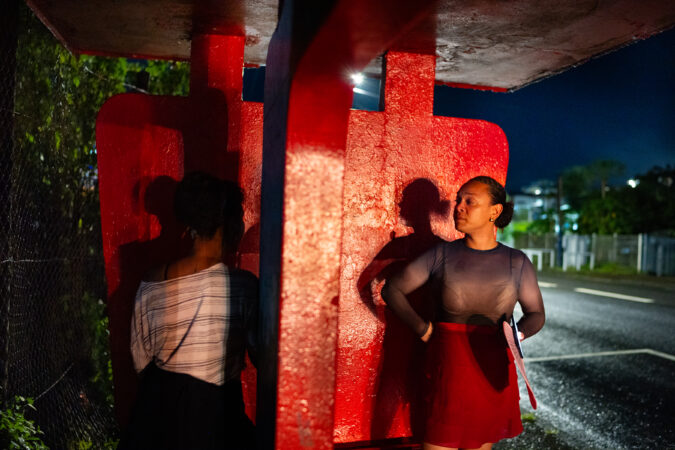
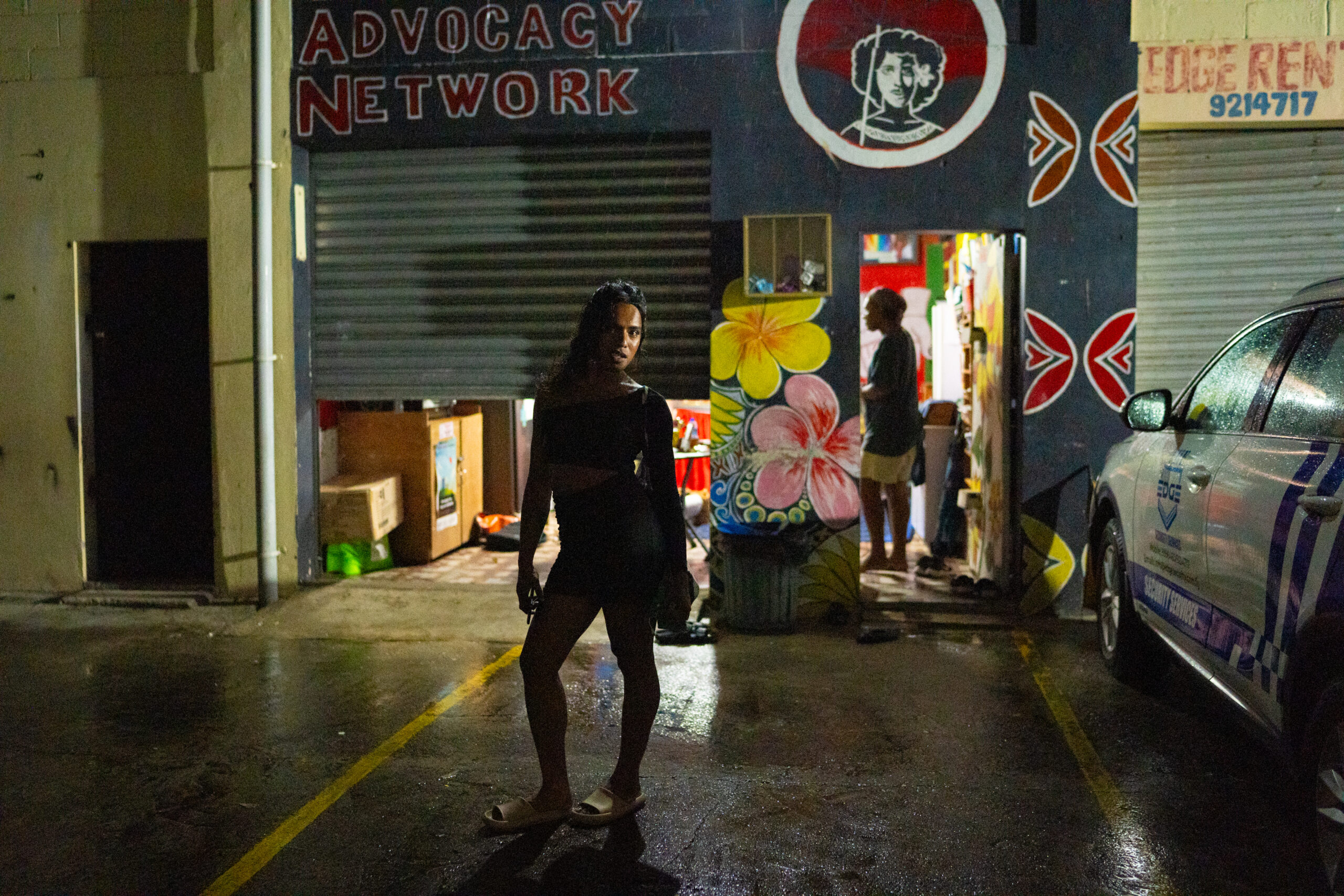
    A sex worker waits outside the Survival Advocacy Network, a safe haven for the LGBTQ+ and sex worker community in Fiji that in recent years has also served injecting drug users and provides free HIV testing.

    Fiji — a tourist destination known for its exclusive resorts, pristine waters, and white-sand beaches — now has one of the fastest-growing rates of HIV infection in the world, overburdening its donor-dependent public health system. More than 1,583 new HIV infections were recorded in 2024 in a country with a population of less than 1 million — the highest ever in Fiji’s history, and a 500% increase from 2018.

    That number, according to preliminary assessments from the Joint U.N. Program on HIV/AIDS (UNAIDS) and Fiji’s Health Ministry, is expected to double again this year to more than 3,000. And public health officials believe the true number of those infected is closer to double that, as many exposed Fijians have not yet been tested, especially on more remote islands.

    Conditions here “were a recipe for an explosive epidemic,” said Jason Mitchell, who leads the Fijian government’s HIV task force. “We have a long way to go … before we see the end of this.”

    A majority of these new cases have been recorded among young people between ages 15 and 34, while a growing number of mothers are passing the infection on to their babies, according to local health statistics; half of the new infections are linked to drug use.

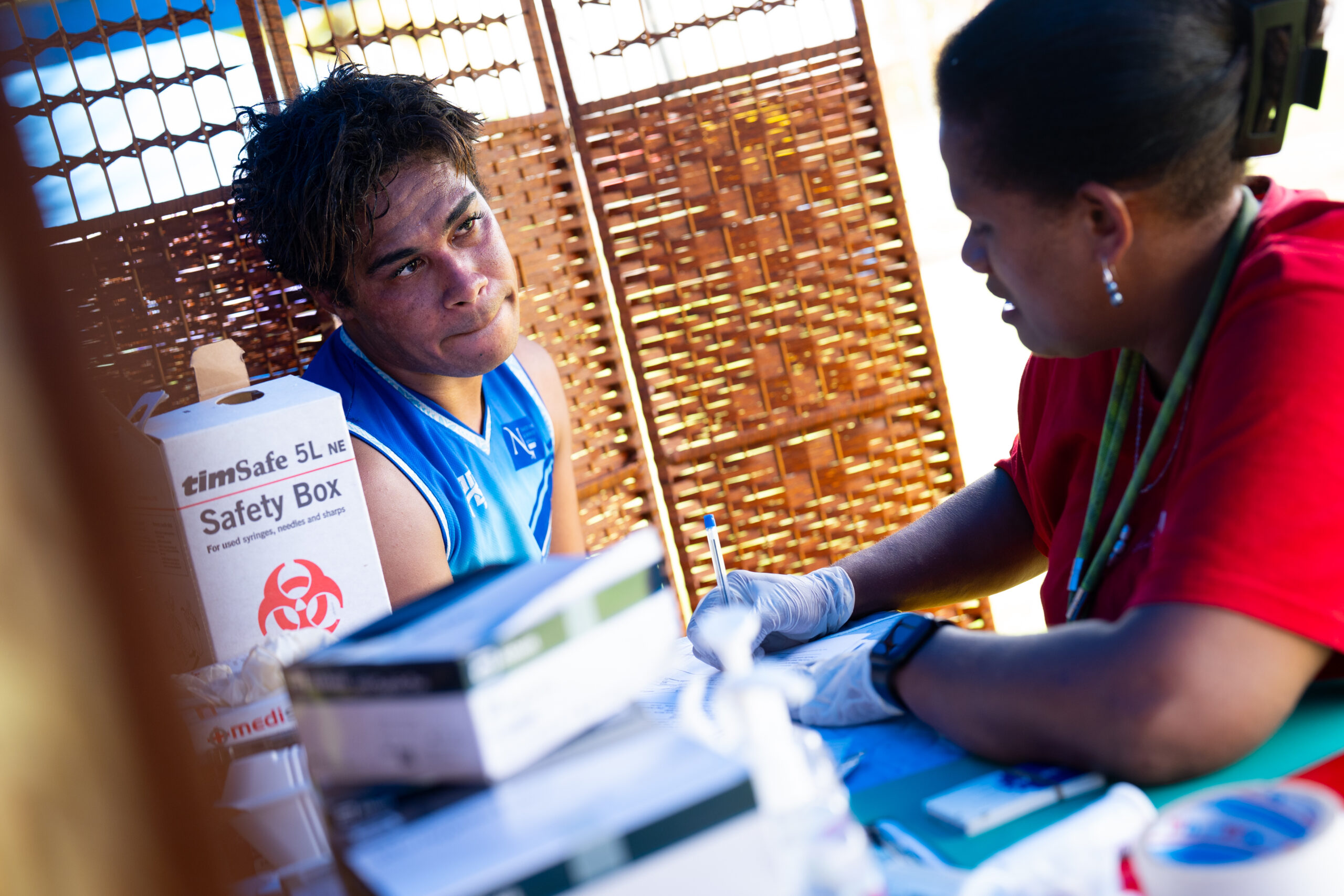
    The Reproductive and Family Health Association of Fiji (RFHAF) gives free HIV tests at a sporting event. Isoa Fou, 26, wasn’t ashamed to be getting a test and feels concerned about what’s going on in the country.

    Experts in both public health and transnational crime believe that Fiji is the starkest example of a phenomenon that is taking hold across the Pacific region: Rising HIV infections track drug shipment routes across islands that are smaller, more isolated and have significantly less testing for the virus, including in Tonga, Samoa, and the Solomon Islands.

    Those islands “all have the early signs that Fiji had in 2019,” said Renata Ram, UNAIDS’ country director in Fiji. Ram raised alarm bells of an impending HIV crisis in a 2022 article, warning that risky behaviors commonplace in Fiji were spreading to other parts of the Pacific.

    Law enforcement officials, customs agencies, U.N. officials and others who investigate drug syndicates believe that the groups operating in and around Fiji are working with each other, bringing together Chinese triads, Mexican cartels, Australian biker gangs, and other syndicates with connections as far away as Nigeria.

    Criminal organizations are targeting our region “because they understand our enforcement limitations to monitor across vast maritime territories using traditional enforcement methods,” said the Oceania Customs Organization Secretariat, a 24-member association that helps coordinate customs and border enforcement for Pacific nations, in a response to questions from the Washington Post. “We’re witnessing unprecedented coordination between drug cartels, organized criminal groups and regional networks.”

    That cooperation presents a huge challenge and has “thrown traditional narcotics work out the window,” according to one U.S. law enforcement official who, like others, spoke on the condition of anonymity to discuss counternarcotics operations. Criminal organizations from different countries, rather than violently seeking to secure turf, are working together in Fiji, law enforcement officials say, much like a diversified multinational corporation.

    “Those guys are going to make deals along the chain, even though they technically would be looked at as adversaries,” the U.S. law enforcement official said, “because at the end of the day they are going to do what it takes to succeed.”

    At the same time, international law enforcement agencies have been reticent to share intelligence with their Fijian counterparts, prosecutors said, because of allegations that drug syndicates have infiltrated the police and other agencies.

    In December, leaked chats on Viber, a messaging app commonly used in Fiji, allegedly showed police officers texting with traffickers about moving drugs. Seven senior officers are now under investigation in connection with that case, according to Fiji’s Ministry of Policing. Between January 2023 and October of last year, before the Viber investigation, 27 police officers were charged with drug-related offenses, the ministry said.

    John Rabuku, Fiji’s deputy director of public prosecutions, who last year secured convictions up to life in prison in connection with the Pacific’s largest-ever drug bust, acknowledged in an interview that these were only “middle-level people … involved in the logistics.” Even at trial, he said, prosecutors were unable to show the drugs came from a particular group. The syndicate had brought in 4.1 metric tons (about 4.5 U.S. tons) of methamphetamine worth over a billion dollars into Nadi, Fiji’s main tourist area, on a yacht in December 2023.

    “No one would give us that information,” Rabuku said. “The offshore intelligence community … just didn’t want to tell us.”

    Guests wait outside a nightclub in Suva in December.

    White money

    Joseph was a singer in a reggae band, performing for tourists at beach bars, when a contact he knew approached him about selling marijuana. The 47-year-old, who spoke on the condition that only his first name be used because of security concerns and ongoing criminal cases against him, started dealing, mostly selling locally grown product to foreigners.

    A few years before the COVID pandemic, he and others said, meth started hitting the streets, first as a party drug for tourists and wealthy Fijians. The drugs, according to the U.N. Office on Drugs and Crime (UNODC) and law enforcement officials, were from shipments transiting to Australia and New Zealand, where meth is growing in demand and exceptionally lucrative, selling for 18 times what it retails for in the United States, according to law enforcement officials and other experts on the drug trade.

    When COVID-19 hit, putting a freeze on tourist arrivals and complicating the transport of drugs in and out of Fiji, traffickers started paying runners in the drug itself — “white money,” as it is called on the streets. Joseph and experts on organized crime said dealers started selling meth locally to turn their pay into cash.

    “That payment in kind became the origin of the domestic market,” said Virginia Comolli, head of the Pacific program at the Geneva-based Global Initiative Against Transnational Organized Crime. There was so much that dealers “didn’t know how to price it,” she said, while users themselves had no idea how addictive the drug could be.

    As supply exploded and prices fell, meth quickly spread among the urban poor, sex workers and other marginalized communities.

    “It was the ‘in thing’ for us,” said Rochelle Naulunimagiti, a 37-year-old transgender sex worker and activist. “All the girls were on it.”

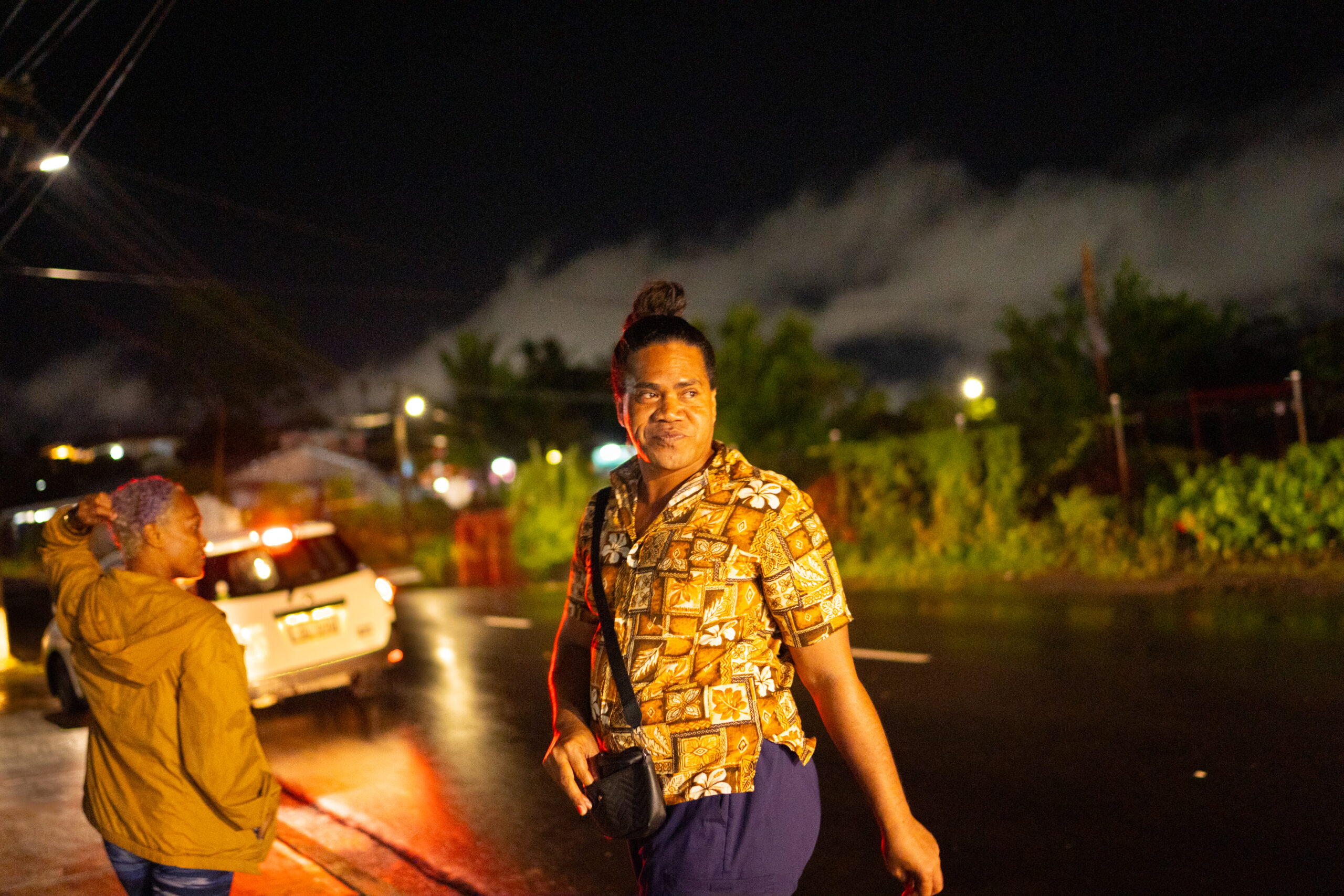
    Rochelle Naulunimagiti, 37, a trans sex worker and community activist, shared a needle with a friend one night when she was desperate to get high, amid an especially tough period in her life. A few months later, she tested positive for HIV, a diagnosis that initially crippled her.

    In Fiji, just as a single cigarette is often shared among a group of smokers and as the traditional psychoactive drink, kava, is passed around in a single cup, needles too were shared, community workers and users said.

    Friends would sit and inject in a group, using shared bottle caps or other mixing paraphernalia to dissolve the crystals into an injectable liquid. Often, just one person — called the “doctor” — would be in charge of administering the drug, injecting the others, users and community workers said. In rare cases, addicts injected themselves with the blood of a person who was already high to get a residual hit. But the high was never as strong. On one evening, reporters from the Post observed a user injecting “raw,” as it is called here: using their own blood, instead of water, to dilute the crystals, and then injecting the mixture back into their veins.

    Ben Morrison, who co-founded Inspire Pacific, which runs a camp for boys who are grappling with drugs and violence, said about 30% of those in the cohort are HIV-positive, most through needle-sharing.

    For them, “HIV is like, what’s that? OK, I got a sickness, but look at my life. I don’t have a dad, I don’t have a home, I don’t eat on a daily basis,” Morrison said. “So what’s another diagnosis from a doctor to me?”

    Sometimes, though, the risks were clear to users. Naulunimagiti knew better, she said. But one night in 2023, grappling with depression, she said she “really needed that feeling.” She took a needle from a friend and injected herself. Several months later, she tested positive for HIV.

    “I was a leader in the community,” Naulunimagiti said through tears. “I thought, what would people think of me?”

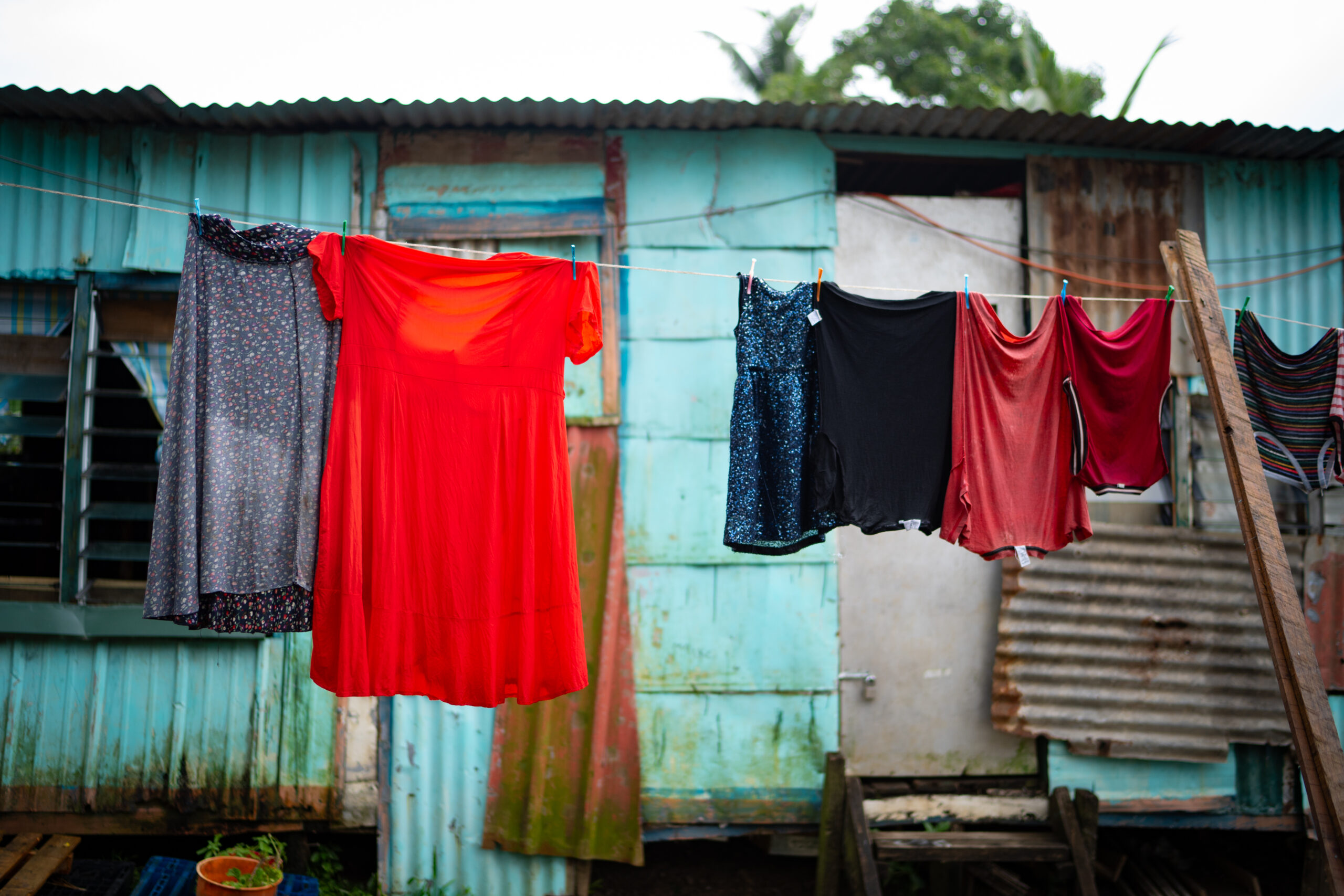
    Laundry hangs on a line in an urban squatter community in Suva.

    Culture of silence

    Mark Shaheel Lal, a 24-year-old student, was walking through the streets of Suva one afternoon when a driver rolled down his window and shouted, “he has AIDS!” before speeding off. It wasn’t the first time, he said. Just a few months earlier, someone pointed at him and called out, “HIV.”

    Just weeks before Fiji’s government officially announced there was an HIV outbreak in the country, Lal, a gay man who is not a drug user, came out as HIV-positive. In a nation where a culture of silence still exists around the diagnosis, Lal’s declaration made him a face of the epidemic, as well as a source of information for many HIV-positive Fijians. Through his Facebook page, Living Positive Fiji, Lal has counseled more than 100 newly diagnosed HIV patients over the past year, helping them navigate their diagnosis.

    Mark Shaheel Lal, 24, came out as a HIV-positive in 2024, hoping to break the “culture of silence” around the diagnosis.

    “I know how I felt when I got that note,” Lal said. “I thought my world was ending. It even came to a point where I thought I should take my own life because I was going to die anyway.”

    Some who have reached out to him have been hesitant to get treatment, believing that since they are not showing any signs of sickness, the diagnosis must be incorrect. Advances in antiretroviral therapy mean HIV is no longer the death sentence it once was — but only if detected early and if someone is receiving treatment. Fiji’s public health officials are also pushing for Pre-Exposure Prophylaxis (PReP) medication for high-risk groups, which can prevent people from contracting HIV altogether.

    Of the more than 120 people who died of HIV-related causes in Fiji in 2024, more than half found out their status the same year, according to data from the Health Ministry, long after their immune system had already been fatally compromised.

    Lal holds his HIV medication pills.

    Accessing critical medication has also not always been straightforward. At one point in late 2024, Lal and Naulunimagiti said, there were no antiretroviral pills in the country. There was also a shortage of specimen bottles for further testing, which Lal raised money for and then donated to the local reproductive health clinic.

    In recent months, both Australia and New Zealand have pledged millions to Fiji’s effort to get the HIV epidemic under control. The Fijian government was separately in discussions with the U.S. Agency for International Development (USAID) for additional funding and the U.S. Centers for Disease Control and Prevention (CDC) for help investigating the origins of the epidemic and the specific strain of HIV the country was dealing with, according to people familiar with the conversations. Both discussions did not progress under the Trump administration, which took office soon after Fiji declared its epidemic. USAID had just reopened its regional mission in Fiji in late 2023 after more than a decade.

    A spokesperson for the CDC, in response to questions from the Post, referred queries to the Department of Health and Human Services, which referred the Post on to the State Department. The U.S. Embassy in Suva did not respond to a request for comment.

    Ships in the waters off Fiji.

    New year, new bust

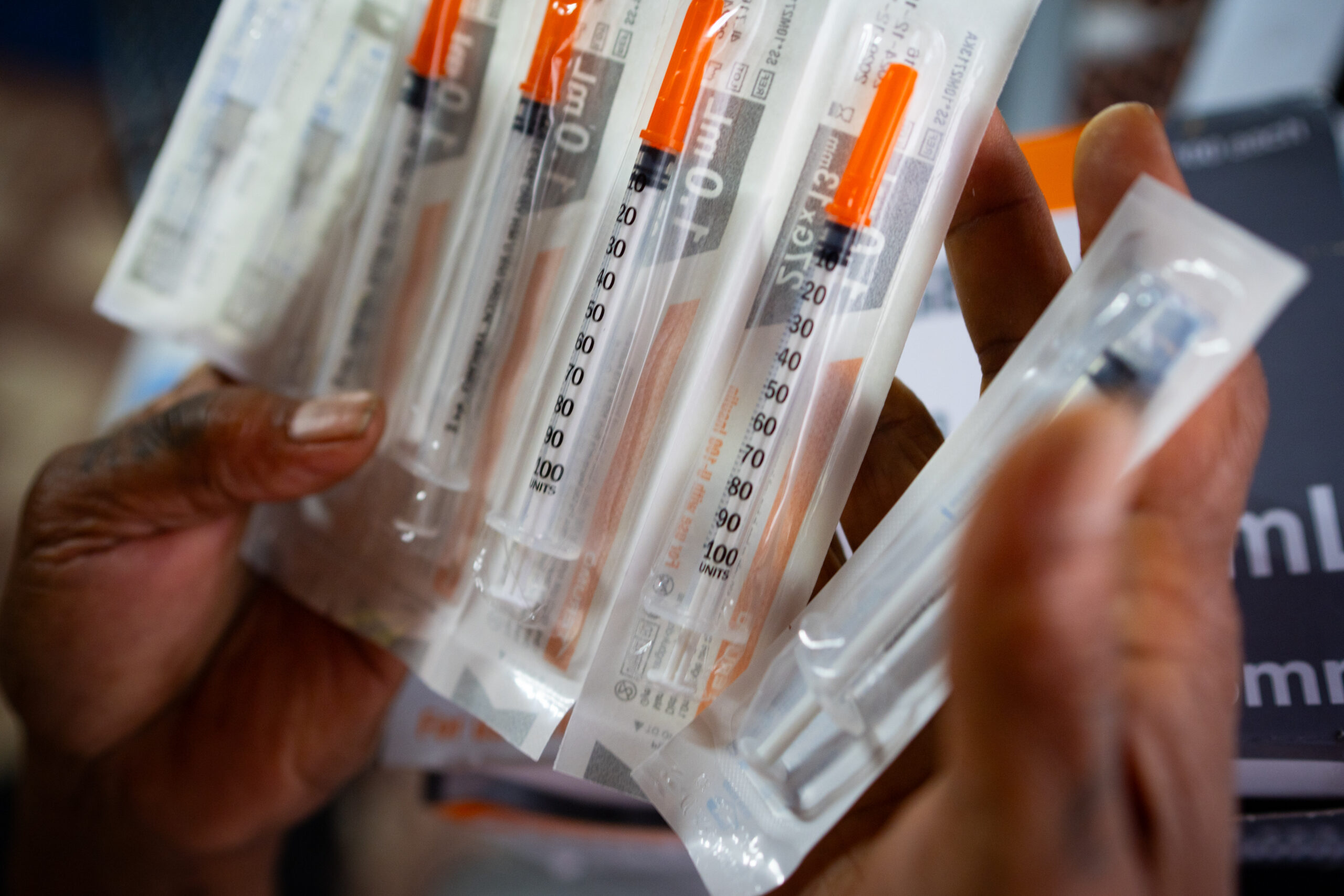
    On a recent afternoon in Fiji, a community worker sitting in a taxi rolled down the window, stuck out their hand and brandished a handful of new syringes, still wrapped in sterile packaging, to a group of zombielike men, scar tissue marking their forearms, sitting outside an alcohol store.

    It took them a minute to register that the syringes were free handouts. They rushed to the car, grabbed the syringes and asked for more.

    Needles have now become almost as valuable as the drug itself, as awareness of safe injecting practices grows in the country. Providing needles remains illegal, however. Participants in the WHO- and UNDP-commissioned assessment on drug use said they “without exception … reported difficulties accessing sterile needles and syringes for injection,” particularly in pharmacies, which are reluctant to give them out without a prescription.

    “Carrying the syringes sometimes feels just as risky as carrying weed or dope,” Joseph said.

    Needles have become almost as valuable in Fiji as meth itself, as awareness of safe injecting practices grows in the country.

    A needle and syringe program, where sterile needles are distributed free with no questions asked, is in the pipeline and likely to be implemented later this year after cabinet approval. The WHO, in its assessment, identified it as one of the highest priorities for Fiji.

    Meanwhile, the drugs keep coming. On Jan. 16, Fijian police raided a vessel off a wharf in the northwest of the country and found more than 2 metric tons of cocaine, packed in over 100 sacks. Prosecutors have charged six — four Ecuadoran nationals and two locals — in connection with the trafficking case. The drugs, prosecutors said, came in through semisubmersible vessels known as “narco subs.” Also so far this year, two senior police officers, who have since been suspended, were charged with illegally importing and possessing meth.

    “A culture of participation” in the drug trade has “seeped into our police force, our institutions and our society,” said Rabuku, the deputy public prosecutor, undeterred even by recent life sentences. As long as that does not change, he added, Fiji will “always remain a transit point for drugs.”

  • Could the Philly region become the ‘eds, meds, and defense industrial base’ region?

    Could the Philly region become the ‘eds, meds, and defense industrial base’ region?

    As Chris Scafario sees it, Philadelphia’s reputation as an “eds and meds” region, referring to its plethora of colleges and hospitals, could grow a third leg.

    It could also become the defense industrial base region, said Scafario, CEO of the Delaware Valley Industrial Resource Center.

    President Donald Trump wants to increase defense spending, with $1.5 trillion proposed for 2027. This could mean more research and workforce development training opportunities — and local universities are positioned to take advantage of it, Scafario said.

    Chris Scafario, CEO of the Delaware Valley Industrial Resource Center

    “A lot of that investment is going to be targeted toward university and innovation-based relationships because they need help getting stuff done,” said Scafario, who is talking to local colleges to help get them ready to capitalize. “They need access to brilliant people, whether they’re faculty or the faculty’s work products, the students.”

    The move comes as colleges face potential cuts in research funding under the Trump administration in other areas, such as the National Institutes of Health. Both Princeton University and the University of Pennsylvania in the last month announced cutbacks to cope with potential financial fallout from federal policies.

    Scafario’s center, which is based at the Navy Yard and was founded in 1988, aims to foster economic development and local manufacturing.

    The Philadelphia region has been involved in defense contracting on and off for years, with major hubs in naval and aerospace manufacturing, and local universities say they worked with the Department of Defense in the past. Rowan University in New Jersey says it has $70 million in defense-related research projects underway.

    But Scafario sees the opportunity for major expansion.

    Drexel University, Temple University, Penn, Rowan, and Villanova University, which is already a top producer of naval engineers, are among the schools that are “in a great spot to leverage the opportunities that are going to be coming through the defense industrial base,” Scafario said. “In the next year, people are going to start realizing that we are meds, eds, and a defense industrial base region. It’s going to bring a lot of investment, a lot of economic opportunities, and some really, really great employment opportunities in the region.”

    The Philadelphia region could become a national anchor for shipbuilding or other maritime industrial-based activities, he said.

    Scafario hopes to bring colleges together with other partners for more discussions in the spring when the timeline for those federal investments starts to become clearer, he said.

    Amanda Page, Warfighter Technologies Liaison for the Delaware Valley Industrial Resource Center

    Colleges could help with efforts to accelerate production capacity of naval ships and work on initiatives such as how to make submarines less traceable and more durable. Or they could help improve medical equipment and training for the battlefield. The treatment standard in the military used to be the “golden hour”; now it’s about “prolonged field care,” said Amanda Page, a retired active-duty Army medic who serves as warfighter technologies liaison for the center.

    “Medical personnel need to be prepared mentally, physically, emotionally, and electronically to keep those patients for 96 hours,” Page said. “That’s going to require a ton of research and technology.”

    Page was hired by the center in October to help build relationships between the center, the Department of Defense (which the Trump administration has rebranded the Department of War), local higher education systems, and the city.

    “I’m super excited about what it will bring to the region and what the region can prove to the Department of War about its legitimacy,” she said, “as a manufacturing and technology powerhouse.”

    Local colleges say they are reviewing potential collaborations.

    “There are a lot of opportunities we are looking at,” said Aleister Saunders, Drexel’s executive vice provost for research and innovation, declining to provide specifics for competitive reasons.

    In addition to opportunities with the Navy and the Navy Yard, he noted major local companies involved with aerospace and aviation, including Lockheed Martin and Boeing. There are also opportunities around materials and textiles with the Philadelphia-based Defense Logistics Agency Troop Support, which provides many of the supplies to the military.

    “Those are really valuable assets that we should find a way to leverage better than we are,” he said.

    Key opportunities are available in advanced manufacturing and workforce development, he said.

    “There could be folks who are already working in manufacturing who need [upgraded skills] in advanced manufacturing techniques,” he said.

    Temple University president John Fry said increasing research opportunities and impact — the school’s research budget now exceeds $300 million — is a priority in the school’s strategic plan. Temple offers opportunities around medical manufacturing, healthcare, and health services, he said.

    “The key to doing that is going to be partnerships,” he said.

    Josh Gladden, Temple’s vice president for research, said he has met with folks from Scafario’s group and they are talking about some opportunities, but declined to discuss them because they are in early development.

    He noted that the Navy is interested in working with Temple’s burn unit.

    Temple has also been getting to know the workforce needs of businesses at the Navy Yard and looking at how to align its educational programs, Fry said.

    “Those are relationships I would love to pursue,” he said. “Part of our mission is to develop the future workforce and grow the regional economy, and that’s one way of doing it.”

    Rowan has been a longtime research partner with the U.S. military, said Mei Wei, the school’s vice chancellor for research.

    “It’s encouraging to know there could be more funding available for research,” Wei said. “These projects give our undergraduate and graduate students the opportunities they need to develop their research skills with close guidance from our faculty and our external partners.”

  • Is protest music coming back? From Bad Bunny to Bruce Springsteen, Grammys to the Super Bowl, the answer seems to be yes

    Is protest music coming back? From Bad Bunny to Bruce Springsteen, Grammys to the Super Bowl, the answer seems to be yes

    Bad Bunny vows to protest with love. Bruce Springsteen has opted for a more confrontational approach.

    Both are part of a growing wave of pop-music dissent aimed at what critics see as overreach by the Trump administration’s Department of Homeland Security — actions in Minneapolis that have been linked to the deaths of two American citizens during encounters with U.S. Immigration and Customs Enforcement agents.

    Bad Bunny, the Puerto Rican superstar known as the King of Latin Trap, was the world’s most-streamed pop music maker in 2025. The rapper-singer-producer, whose full name is Benito Antonio Martínez Ocasio, has a massive platform to air his grievances if he chooses, serving as the half-time show headliner at Super Bowl LX on Sunday.

    This year’s half-time show is likely to surpass Kendrick Lamar’s 2025 performance, which drew 113.5 million viewers as the most-watched in history.

    The decision to book Bad Bunny, whom, NFL commissioner Roger Goodell this week called “one of the world’s great artists,” has been steadily attacked by conservative critics since September.

    Those critics include President Donald Trump. “I’m anti-them. I think it’s a terrible choice. All it does is sow hatred. Terrible,” he said last month, referring to Bad Bunny and Green Day, who will play a pregame concert during NBC’s broadcast. The clash between the Seattle Seahawks and New England Patriots will also stream on Peacock.

    Bad Bunny haters have an alternative: Kid Rock, whose 5 million monthly Spotify listeners is dwarfed by Bad Bunny’s 87 million, will top the bill on Turning Point USA’s All-American Halftime Show, shown on TPUSA’s YouTube page and conservative media outlets. Country singers Brantley Gilbert, Lee Brice, and Gabby Barrett will also perform.

    Will Bad Bunny’s performance be a virulent attack on the Trump administration’s immigration policy?

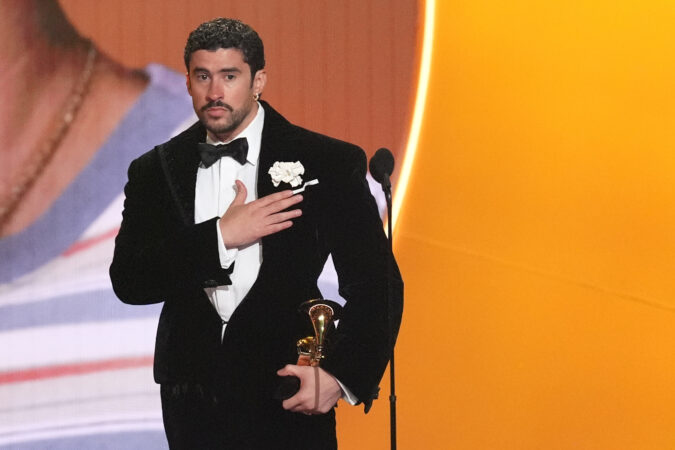
    That remains to be seen. But the speech he gave at the Grammys last weekend, after winning best música urbana album for Debí Tirar Más Foto — which also became the first Spanish-language album of the year winner — suggests a more subtle expression of Puerto Rican pride that emphasizes the humanity of demonized brown-skinned immigrants.

    Speaking in English, Bad Bunny thanked God, said “ICE Out,” then continued: “We’re not savages, we’re not animals, we’re not aliens. We are humans and we are Americans.” (As a Puerto Rican native, Bad Bunny is an American citizen unlike recent MAGA convert Nicki Minaj, who was born in Trinidad and Tobago.)

    “Hate gets more powerful with more hate. The only thing that is more powerful than hate is love. We need to be different. If we want to fight, we have to do it with love.”

    Bad Bunny’s speech was one of many gestures opposing ICE at the Grammys, from Bon Iver’s Justin Vernon wearing a whistle on his lapel to Billie Eilish criticizing anti-immigrant voices with a terse line: “Nobody is illegal on stolen land.”

    Olivia Dean, the British singer who won best new artist, said: “I’m up here as a granddaughter of an immigrant. I’m a product of bravery, and I think those people deserve to be celebrated.”

    Vernon and Eilish immediately were embroiled in left-right political back and forth. Eilish’s brother, Finneas O’Connell, sparred with multiple critics on social media and Vernon with Sirius/XM host Megyn Kelly.

    But the Grammys didn’t include any overtly political new music. A rumor that Springsteen would open the show with “Streets of Minneapolis” proved unfounded. Springsteen wrote the new anti-ICE broadside the day protester Alex Pretti was killed by federal agents.

    But Springsteen’s protest song leads the way in a trend toward musicians opposing the Trump administration in song, in many cases consciously connecting with a tradition that reaches back to Woody Guthrie, Peter Seeger, Bob Dylan, and the Civil Rights protest of the 1960s.

    In “Street of Minneapolis,” Springsteen meets the moment by expressing outrage at the deaths of Renee Good and Pretti, specifically the administration’s initial pronouncements that placed blame on the dead rather than the federal agents.

    Bruce Springsteen performs Oct. 28, 2024, during a Democratic concert rally at the Liacouras Center at Temple University.

    “Their claim was self-defense sir, just don’t believe your eyes,” the Boss sings. “It’s these whistles and phones against Miller and Noem’s dirty lies.”

    The song builds to a rousing “ICE out” chorus that’s so unsubtle it even gave the Boss pause.

    Performing in Minneapolis last month with rabble-rousing former E Street Band member Tom Morello, Springsteen said he asked the guitarist whether “Streets” was too “soap boxy.” Morello, of Rage Against the Machine, replied: “Nuance is wonderful, but sometimes you have to kick them in the teeth.”

    Springsteen, of course, can afford to be aggressively provocative. Not only is he a revered superrich artist at the tail end of his career whose loyal audience is not going anywhere. He’s also a white man whose fans who look like him are not in danger of being detained and deported.

    And he has a history of sparring with Trump, whose administration he repeatedly labeled “corrupt, incompetent, and treasonous” on stage in Europe last spring. At the time, Trump responded by calling the Jersey rocker “not a talented guy — Just a pushy, obnoxious JERK.” The president hasn’t responded to “Streets of Minneapolis” as of yet, but loyalist Steve Bannon called Springsteen “fake and gay, as the kids say.”

    Springsteen’s singing out will also surely lead to others joining the chorus. And plenty of broadsides have been in the works already.

    Low Cut Connie at Concerts Under The Stars in King of Prussia on Friday August 1, 2025. Left to right: Rich Stanley, Nick Perri, Adam Weiner, Jarae Lewis (on drums, partially hidden), Amanda “Rocky” Bullwinkel, Kelsey Cork.

    Philadelphia’s Adam Weiner of Low Cut Connie has been an outspoken Trump critic, among the first to pull out of a Kennedy Center performance last year.

    He’s announced an entire protest album called Livin’ in the U.S.A. Weiner said he made the album “because I am disgusted to see our country descend into an authoritarian hell, a place where art does not lead the cultural conversation.” It arrives timed to the Semiquincentennial on July 3.

    The same day that Springsteen released “Streets of Minneapolis,” British folk-punk singer Billy Bragg dropped “City of Heroes,” also written to commemorate Pretti’s death.

    Veteran punk rockers are joining in, too, sometimes by rewriting lyrics to old protest songs like Boston band Dropkick Murphys’ “Citizen I.C.E.” — a new version of “Citizen C.I.A.”

    The protest isn’t manifest only in topical song writing. In Philly, local events in the indie music scene are aiming to assist immigrants. Juntos, the organization that aids Philadelphia communities affected by ICE, will be the beneficiary of “A Jam Without Borders” at Ortlieb’s on Wednesday, with local musicians Arnetta Johnson, Nazir Ebo, and others.

    New generation protest singers include Liberian-born Afro Appalachian singer Mon Rovia, whose buoyant 2025 song “Heavy Foot” remains upbeat as he sings “the government staying on heavy foot / No, they never gonna keep us all down.”

    Most prominent in branding himself as a modern folk troubadour is Jesse Welles, whose “No Kings” duet with Joan Baez came out in December.

    Welles’ “Join ICE” uses humor as a weapon, with an early Dylan persona. “There’s a hole in my soul that just rages,” he sings. “All the ladies turned me down and I felt like a clown / But will you look at me now, I’m putting people in cages!”

    He plays the Fillmore on March 4.

    Serious songwriters are likely to continue to pen protest songs as long as scenes of turmoil continue to show up on TV and social media screens.

    But high-profile artists worried about alienating their audience aren’t likely to start flooding the zone with anti-ICE screeds if they’re concerned about backlash.

    A case in point would be formerly Philadelphian country superstar Zach Bryan. Last October, he released a song snippet of “Bad News” that included the lyrics “ICE is gonna come, bust down your door” and cited “the fading of the red, white and blue.”

    The song was met with disdain by the White House. Spokesperson Abigail Jackson said, “Zach Bryan wants to open the gates to criminal illegal aliens and has condemned heroic ICE officers.” DHS secretary Kristi Noem was “extremely disheartened and disappointed.”

    Bryan did include the song on his album With Heaven on Top in January, but not before taking great care to explain he wasn’t on one political side or the other.

    “Left wing or right wing, we’re all one bird and American,” the Eagles fan said. “To be clear I’m not on either of these radical sides.”

  • Creating art for U.S. coins is tricky. These Pa. artists have made a career of it.

    Creating art for U.S. coins is tricky. These Pa. artists have made a career of it.

    This story first appeared in PA Local, a weekly newsletter by Spotlight PA taking a fresh, positive look at the incredible people, beautiful places, and delicious food of Pennsylvania. Sign up for free here.

    If you’ve got coins in your pocket, purse, or wallet, you’re likely carrying around Pennsylvania-created art.

    The U.S. Mint produces coins in four cities: Denver, Philadelphia, San Francisco, and West Point, N.Y. But the Philly location — located just a few blocks north of Independence Hall — is the Mint’s hub for engraving, and employs a team of medallic artists who sculpt all the new designs for circulating coins, congressional medals, and collectible pieces.

    Yes, sculpt. The images in coins are three-dimensional and extremely detailed despite being only slightly raised.

    “There’s a great challenge in making something in relief like this,” said Phebe Hemphill, a medallic artist who has worked at the Mint since 2006. “It’s kind of a weird, fascinating challenge to fit everything into that very, very low space we’re allowed to sculpt.”

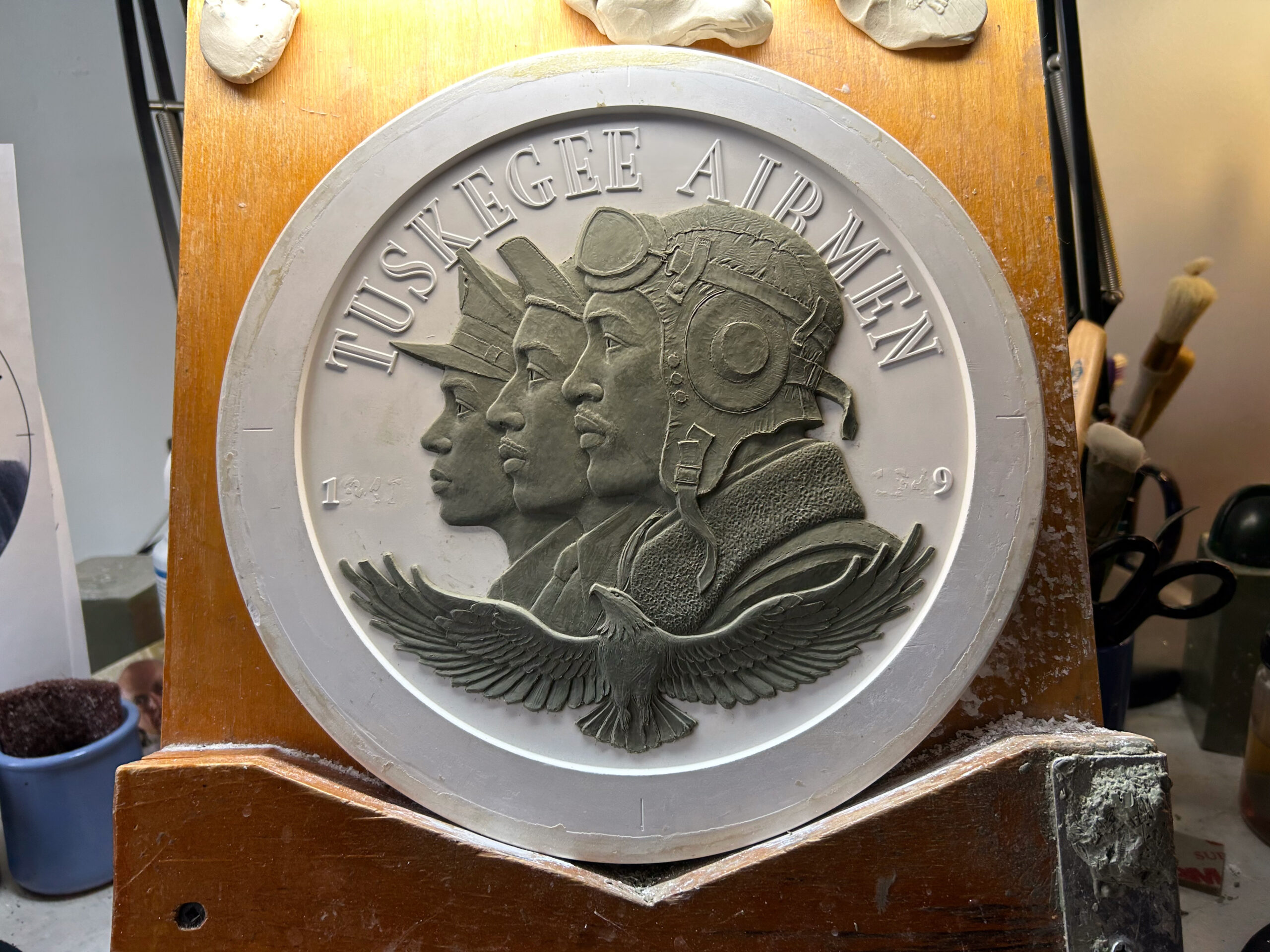
    Hemphill, a Pennsylvania Academy of the Fine Arts alumnus originally from West Chester, got some early experience working at the Franklin Mint, a private Delaware County-based company that produces coins and other collectibles. Her design and sculpting credits over her two decades at the U.S. Mint number in the dozens, from a Congressional Gold Medal presented to Tuskegee Airmen to a quarter depicting the Cuban American singer Celia Cruz.

    The coin-sculpting process requires many “small technical nuances” to create “the illusion of depth,” said Eric David Custer, another medallic artist at the Mint. While medals allow for a bit more “freedom” because they are larger, he said, coins like quarters are trickier. The sculpted image ends up being about as thick as “two or three human hairs” stacked on top of one another.

    Custer, who grew up in Independence Township in Western Pennsylvania, did some of his early engraving work at Wendell August Forge, a Pennsylvania-based artisan metalware company. An alumnus of the Art Institute of Pittsburgh with a degree in industrial design, he joined the Mint in 2008 as a product designer and became a medallic artist in 2021.

    Custer and Hemphill are part of a small team of medallic artists who span a range of backgrounds and skill sets. One previously designed dinnerware and pottery, while another founded a community sculpture studio.

    “Everyone that’s arrived here has come from different avenues in art, sculpture, and manufacturing,” Custer said.

    Since the first U.S. Mint was established in Philadelphia in 1792, the city has been the country’s center for coin engraving, according to spokesperson Tim Grant. The Mint’s headquarters moved to Washington in the 1870s, but its engraving operation remained in Philly.

    Some notable names in sculpture, such as Augustus Saint-Gaudens, have designed coins for the Mint over the years — a history that is not lost on the artists who work there now.

    “A perk of this job and to have this position is that you know that the greats went before you here,” Hemphill said.

    How coins are made

    The making of new coins and medals generally starts in Congress, which passes laws to authorize their creation.

    The Mint then outlines design standards, and taps staff artists and its pool of over two dozen freelancers from around the country to submit line drawings for consideration. The designs go through a robust revision and review process before one gets final approval from the U.S. treasury secretary.

    From there, the in-house medallic artists take the selected line art drawing and sculpt it into three dimensions, which can involve adding more detail than what is in the sketch.

    “The sculptor has to make some decisions,” Hemphill said. “They can’t just solely take a design and, you know, make it look good as a coin. You have to enhance certain things.”

    The completed artwork is then machine-engraved onto steel hubs, which are used to stamp dies that get used to strike coins. And once they enter circulation, the coins make their way to our pockets, jars, and couch crevices.

    Some medallic artists prefer to sculpt the designs by hand with clay or plaster on rounds that are about 8 or 9 inches in diameter, while others use software, Hemphill explained. She prefers to work by hand initially, then scan her work to make finishing touches digitally.

    The traditional approach “really allows the sculptor to gauge the depth properly using your own binocular vision,” Hemphill said, while digital tools make some “cool tricks” possible that “you wouldn’t even imagine you could do in traditional.”

    A clay and plaster sculpture in relief of the Tuskegee Airmen by U.S. Mint medallic artist Phebe Hemphill for a Congressional Gold Medal.

    Regardless of the methods used, the artistic process involves lots of constraints and “hard limits,” Hemphill said.

    First, designs have to comply with the legislation that authorized them, which outlines required elements like the type of people or symbols the coins must depict, as well as phrases to include.

    In some cases, stakeholders named in the law that authorized a coin — which can mean governors, museums, or organizations relevant to the design — have to be consulted.

    Time is a factor, too. After a design is approved, things can move pretty quickly to meet production schedules, with artists getting around 16 business days to translate a line drawing into a sculpture, according to Hemphill and Custer.

    And then there are medium-specific musts: Artists have to create designs that fit coins and medals. For example, certain angles don’t work well in coin art, Custer said, and nickels, dimes, and quarters each have specific font size requirements.

    Production design staff also have to provide feedback to artists to make sure an image will be “strikable” and won’t result in manufacturing errors or inconsistencies, Custer explained.

    “Designing and sculpting — they’re both problem-solving processes as much as they are art,” he said.

    Sculpting stories

    A medallic artist’s job ultimately boils down to finding a way to translate iconic moments or people in history into pocket-size art.

    In Philadelphia, one of the country’s oldest and most storied cities, that history can be pretty accessible. When working on a new series of coins meant to honor the nation’s 250th birthday, for instance, Custer drew on resources that are practically in the Mint’s backyard.

    His background research for the new “Emerging Liberty” semiquincentennial dime led him to the Museum of the American Revolution, a 10-minute walk from the Mint.

    Custer’s design for the tails side of the coin — which features an eagle with one empty claw and one claw holding 13 arrows — won out in the selection process.

    The image takes inspiration from the Great Seal of the United States, and represents the colonists before and during the American Revolution, Custer explained. While he included the arrows from the seal, he left out the olive branch to symbolize the fact that the colonies had not yet reached peace — but left the claw open to demonstrate that they were waiting for it.

    Hemphill also used the neighborhood to her advantage while working on the series. She sculpted the back of the “U.S. Constitution Quarter,” a design by Donna Weaver that features an image of Independence Hall.

    When translating a line drawing of a building to a three-dimensional coin, sculptors benefit from having additional visual context, like a photograph, to get the details right, Hemphill said. In this case, though, she didn’t need a photo.

    “I had a nice little walk down the street to really get a good gauge of how to do that one.”

  • In ‘Melt the ICE’ wool caps, a red tasseled symbol of resistance comes from Minneapolis to Philadelphia

    In ‘Melt the ICE’ wool caps, a red tasseled symbol of resistance comes from Minneapolis to Philadelphia

    Some yarn shops around Philadelphia are running low on skeins of red wool, as local knitters and crocheters turn out scads of “Melt the ICE” caps in solidarity with protesters in Minnesota.

    The hats don’t feature a patch or logo that says “Melt the ICE.” In fact, they carry no written message at all. What they offer is a deep scarlet hue, a dangling tassel, and a connection to an earlier, dangerous time, when a different people in another land sought to silently signal their unity.

    “The hat is really a symbol and reminder,” said knitter Laura McNamara of Kensington, who is making two caps for friends. “People are looking for a sense of community.”

    She refused her friends’ offers of payment, asking instead that they not let their involvement start and end with a hat ― but find a means to stand up for civil rights in some specific way.

    The original hat was a kind of conical stocking cap, known as a nisselue, worn in Norway during the 1940s as a sign of resistance to the Nazi occupation. The Germans eventually caught on to the symbolism and banned the caps.

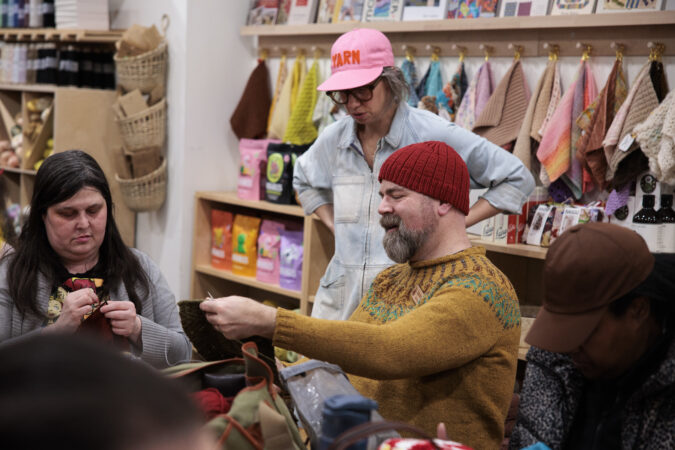
    Amanda Bryman works on a red wool hat known as a “Melt the ICE” hat, during Fiber Folk Night at Wild Hand yarn shop in Philadelphia on Wednesday.

    Now the new version that originated in a suburban Minneapolis yarn shop is spreading across the country. The hats signal opposition to U.S. Immigration and Customs Enforcement, which surged thousands of agents into Minneapolis, and sadness and anger over the deaths of Minnesotans and U.S. citizens Renee Good and Alex Pretti, who were shot to death by federal agents.

    Today, comparisons of ICE agents to Nazis have become both frequent and contentious in American politics, with even some Democrats, including Gov. Josh Shapiro, who is Jewish, rejecting that equivalence as wrong and unacceptable.

    ICE officials did not respond to a request for comment.

    This is not the first time that the Philadelphia region’s craftivist movement, as it is known, has brought its knitting needles and crochet hooks to bear.

    On the eve of Donald Trump’s first inauguration, artisans here turned out scores of cat-eared headgear known as pussy hats, a feline symbol of protest worn at the Women’s March on Washington. The hats aimed to tweak the then-president-elect over his comment about grabbing women by their genitals.

    The Melt the ICE caps carry some controversy within the fiber community, as it calls itself. There have been online complaints that it’s easy to tug a red cap over one’s ears, but unless that is accompanied by action it holds no more significance than clicking a “Like” button on Facebook.

    “It is just preening,” one person wrote in an internet forum.

    Another said that “if your resistance is only this hat, then you have not actually accomplished anything except make a hat.”

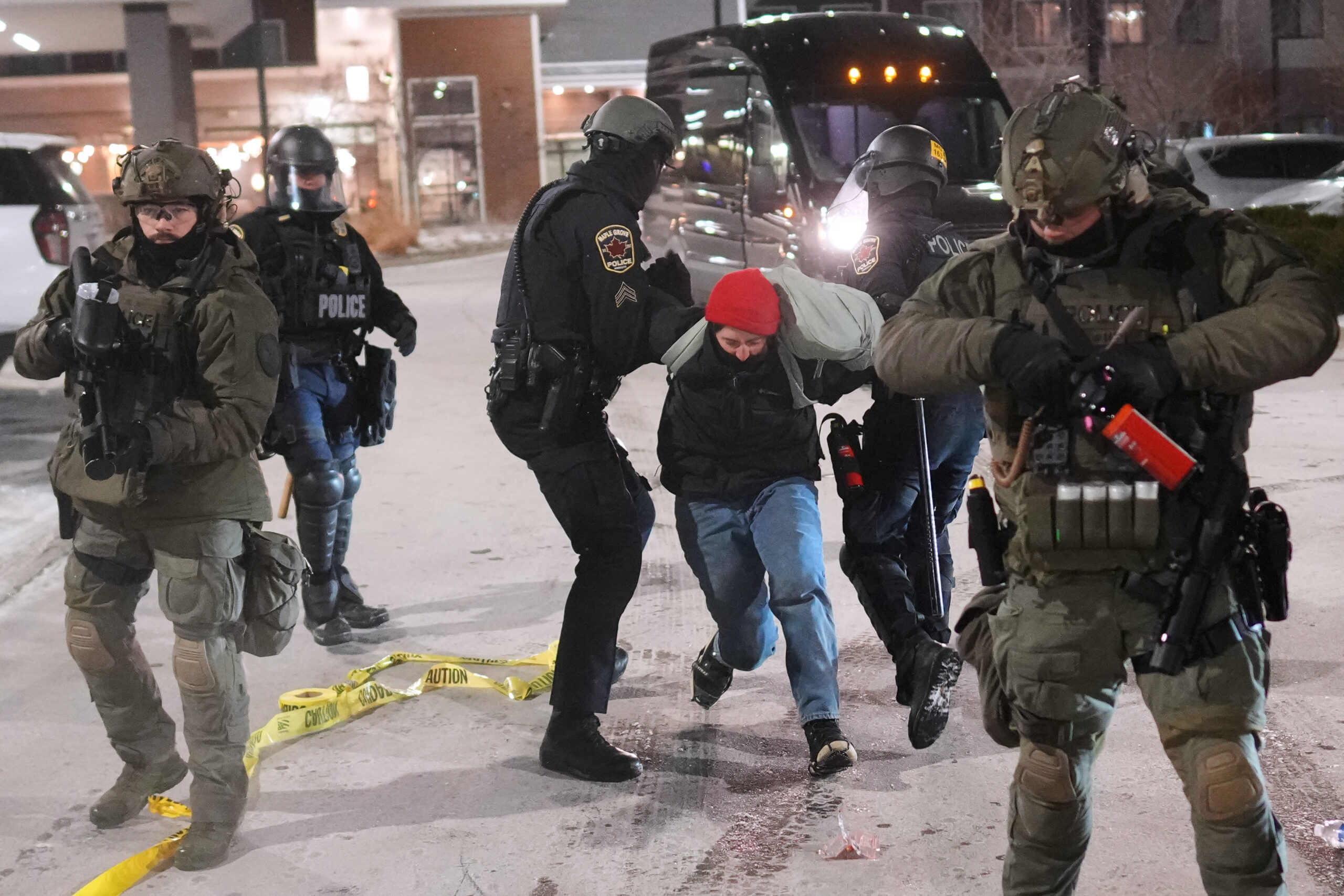
    Law enforcement officers detain a demonstrator during a protest outside SpringHill Suites and Residence Inn by Marriott hotels on Jan. 26 in Maple Grove, Minn.

    Liz Sytsma, owner of Wild Hand in West Mount Airy, has heard the criticism.

    But “the people in our community who are participating in making the hats, this is one of many things they are doing,” she said. That includes taking part in protests, calling elected leaders, and giving money to causes they support.

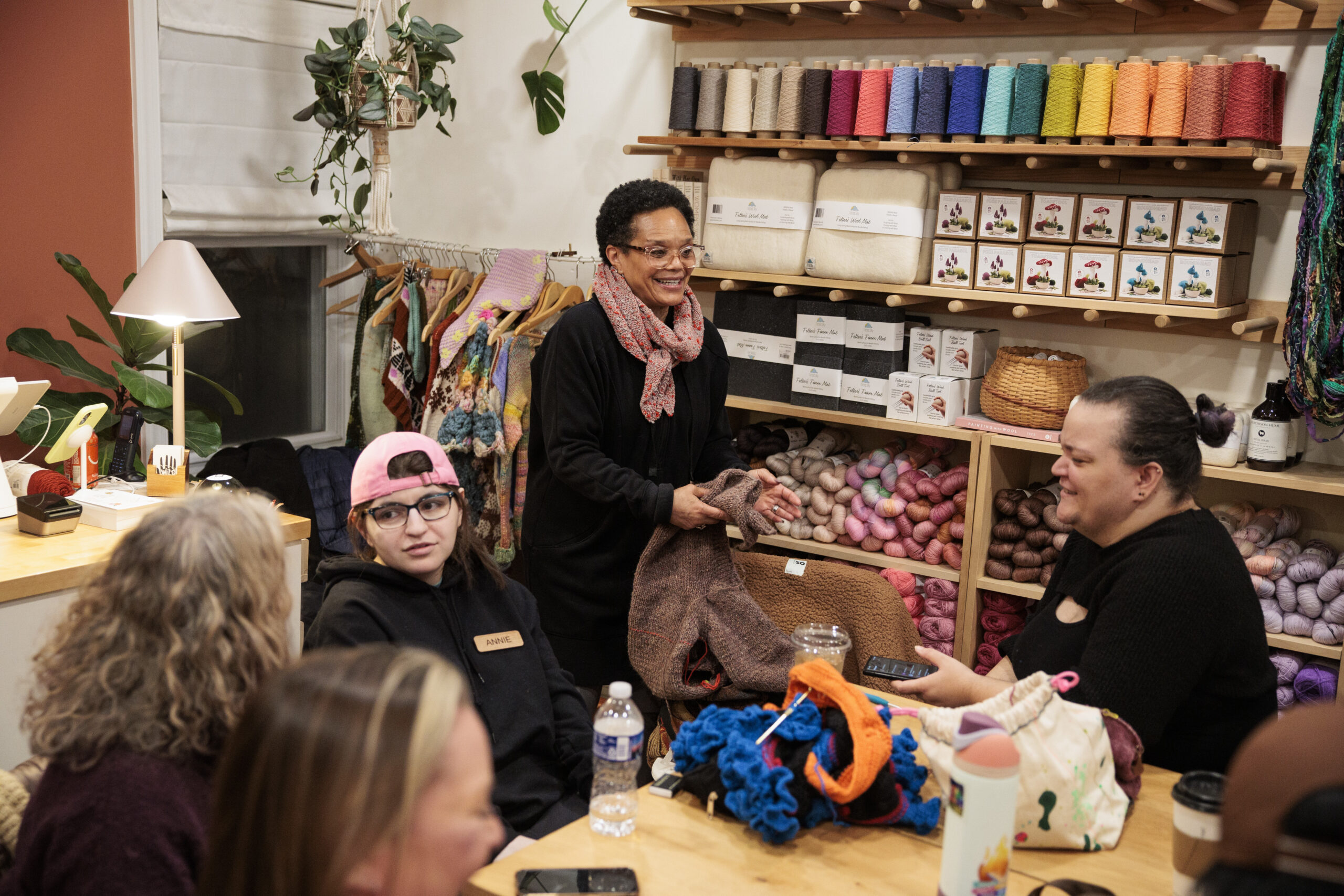
    On Wednesday, more than a dozen people gathered at Wild Hand for the weekly Fiber Folk Night, where crafters gather to knit, crochet, and chat ― and, now, to work on hats.

    Damon Davison traveled from Audubon, Camden County, having developed his own hat pattern, with sale proceeds to go to the activist group Juntos in South Philadelphia.

    He wants to show solidarity with people “who are expressing resistance to what has been happening in Minneapolis, but also what’s happening here in Philly,” he said. “The idea is to make it a little bit more local.”

    The shop has seen a rush on red, sought by about 70% of customers whose purchases have depleted stocks during the last couple of weeks.

    “We’re really low,” said store manager Yolanda Booker, who plans to knit and donate a hat. “I want to do whatever small part I can do to help out.”

    A single hat can take two or three days to make, though the best and fastest knitters can complete one in a couple of hours.

    In Minnesota, the owner of Needle & Skein, which produced the hats’ design, told reporters this month that online sales of the $5 pattern have generated more than $588,000 to be donated to area organizations.

    Store Manager Yolanda Booker, standing, laughs with attendees during Fiber Folk Night at Wild Hand yarn shop in Philadelphia on Wednesday.

    In West Mount Airy, Kelbourne Woolens closed its physical doors during the national “ICE Out” strike in late January and donated its online profits of $4,000 to Asian Americans United, Juntos, and New Sanctuary Movement of Philadelphia, said team member Bailey Spiteri. She estimated the store has sold enough red yarn to retailers to make 500 or 600 hats.

    At Stitch Central in Glenside, customers donated $1,000 during the strike and the store matched it, with the $2,000 going to Nationalities Service Center in Philadelphia.

    “Sometimes people are skeptical. How does wearing a hat or even making a hat make a difference?” asked Allison Covey of Drunken Knit Wits, a local knitting and crocheting organization. “But look at the donations. It does make a difference.”

    Veteran knitter Neeta McColloch of Elkins Park thinks the same. She has ordered enough yarn to make eight hats. And she is curious to see how the phenomenon will develop.

    “This is probably bigger than I think,” she said. “Knitters tend to be the type of people who in my experience have a strong moral compass. If they can combine something they love to do with something in which they can make a statement, that’s important to them.”

  • ‘We will pay,’ Savannah Guthrie says in desperate video plea to potential kidnappers of her mother

    ‘We will pay,’ Savannah Guthrie says in desperate video plea to potential kidnappers of her mother

    TUCSON, Ariz. — Savannah Guthrie told the potential kidnappers of her mother, Nancy Guthrie, on Saturday that the family is prepared to pay for her safe return.

    “We received your message, and we understand. We beg you now to return our mother to us so that we can celebrate with her,” Guthrie said in the video, flanked by her siblings. “This is the only way we will have peace. This is very valuable to us, and we will pay.”

    It was not immediately clear if Guthrie was referring to a new message from someone who might have kidnapped Nancy Guthrie. The Associated Press reached out to the Pima County Sheriff’s department seeking additional details.

    The frantic search for the 84-year-old Nancy Guthrie has entered a seventh day. Authorities have not identified any suspects or ruled anyone out, Sheriff Chris Nanos said this week.

    Authorities think she was taken against her will from her home just outside Tucson over the weekend. DNA tests showed blood on Guthrie’s front porch was a match to her, Nanos said.

  • Appeals court affirms Trump policy of jailing immigrants without bond

    Appeals court affirms Trump policy of jailing immigrants without bond

    President Donald Trump’s administration can continue to detain immigrants without bond, marking a major legal victory for the federal immigration agenda and countering a slew of recent lower court decisions across the country that argued the practice is illegal.

    A panel of judges on the 5th Circuit Court of Appeals ruled on Friday evening that the Department of Homeland Security’s decision to deny bond hearings to immigrants arrested across the country is consistent with the constitution and federal immigration law.

    Specifically, circuit judge Edith H. Jones wrote in the 2-1 majority opinion that the government correctly interpreted the Immigration and Nationality Act by asserting that “unadmitted aliens apprehended anywhere in the United States are ineligible for release on bond, regardless of how long they have resided inside the United States.”

    Under past administrations, most noncitizens with no criminal record who were arrested away from the border had an opportunity to request a bond hearing while their cases wound through immigration court. Historically, bond was often granted to those without criminal convictions who were not flight risks, and mandatory detention was limited to recent border crossers.

    “That prior Administrations decided to use less than their full enforcement authority under” the law “does not mean they lacked the authority to do more,” Jones wrote.

    The plaintiffs in the two separate cases filed last year against the Trump administration were Mexican nationals who had both lived in the United States for over 10 years and weren’t flight risks, their attorneys argued. Neither man had a criminal record, and both were jailed for months last year before a lower Texas court granted them bond in October.

    The Trump White House reversed that policy in favor of mandatory detention in July, reversing almost 30 years of precedent under both Democratic and Republican administrations.

    Friday’s ruling also bucks a November district court decision in California, which granted detained immigrants with no criminal history the opportunity to request a bond hearing and had implications for noncitizens held in detention nationwide.

    Circuit Judge Dana M. Douglas wrote the lone dissent in Friday’s decision.

    The elected congress members who passed the Immigration and Nationality Act “would be surprised to learn it had also required the detention without bond of two million people,” Douglas wrote, adding that many of the people detained are “the spouses, mothers, fathers, and grandparents of American citizens.”

    She went on to argue that the federal government was overriding the lawmaking process with DHS’ new immigration detention policy that denies detained immigrants bond.

    “Because I would reject the government’s invitation to rubber stamp its proposed legislation by executive fiat, I dissent,” Douglas wrote.

    Douglas’ opinion echoed widespread tensions between the Trump administration and federal judges around the country, who have increasingly accused the administration of flouting court orders.

    U.S. Attorney General Pam Bondi celebrated the decision as “a significant blow against activist judges who have been undermining our efforts to make America safe again at every turn.”

    “We will continue vindicating President Trump’s law and order agenda in courtrooms across the country,” Bondi wrote on the social media platform X.