Category: News

Latest breaking news and updates

  • Philadelphians are frustrated with the city’s snowstorm cleanup. What does that mean for Mayor Cherelle Parker?

    Philadelphians are frustrated with the city’s snowstorm cleanup. What does that mean for Mayor Cherelle Parker?

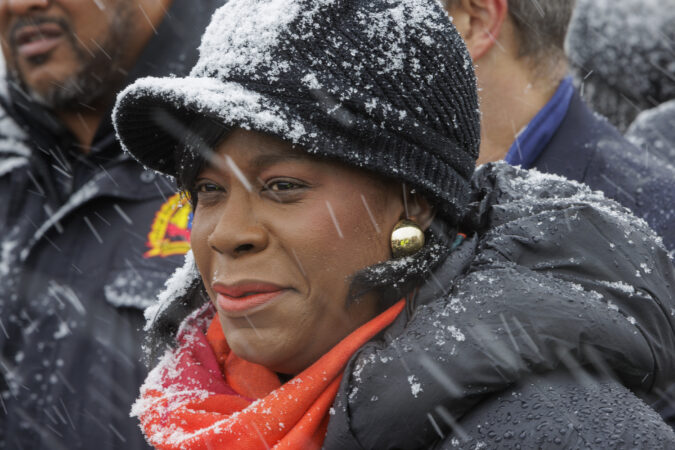
    Mayor Cherelle L. Parker often says she isn’t a fan of “Monday-morning quarterbacks” and “expert AOPs” — her shorthand for so-called articulators of problems who don’t offer solutions.

    Now she has a city full of them.

    After a heavy snowfall followed by a week of below-freezing temperatures, Philadelphia’s streets are still laden with snow, slush, and ice; SEPTA buses are packed; and numerous cars are still stuck in the spots residents left them in 11 days ago.

    The mayor acknowledged residents’ exasperation at a news conference at the Pelbano Recreation Center in Northeast Philadelphia on Wednesday, her first appearance dedicated to the city’s snow response since Jan. 26, the day after the storm walloped the region.

    “For anyone who is frustrated right now about the ice, about the ability for all of the streets to be fully cleared, I want you to know that I understand,” she said. “Everybody can Monday-morning quarterback. … That’s cool. We can’t stop people from feeling the way they feel. But let me tell you something: We were prepared.”

    Parker said the city deployed 1,000 workers and 800 pieces of snow-removal equipment to deal with the emergency.

    “We don’t promise to be perfect, Philadelphia,” she said. “We promise to go to war with the status quo and to fix things, to be doers. … We’re going to continue doing everything that we can to make sure all of this work is done.”
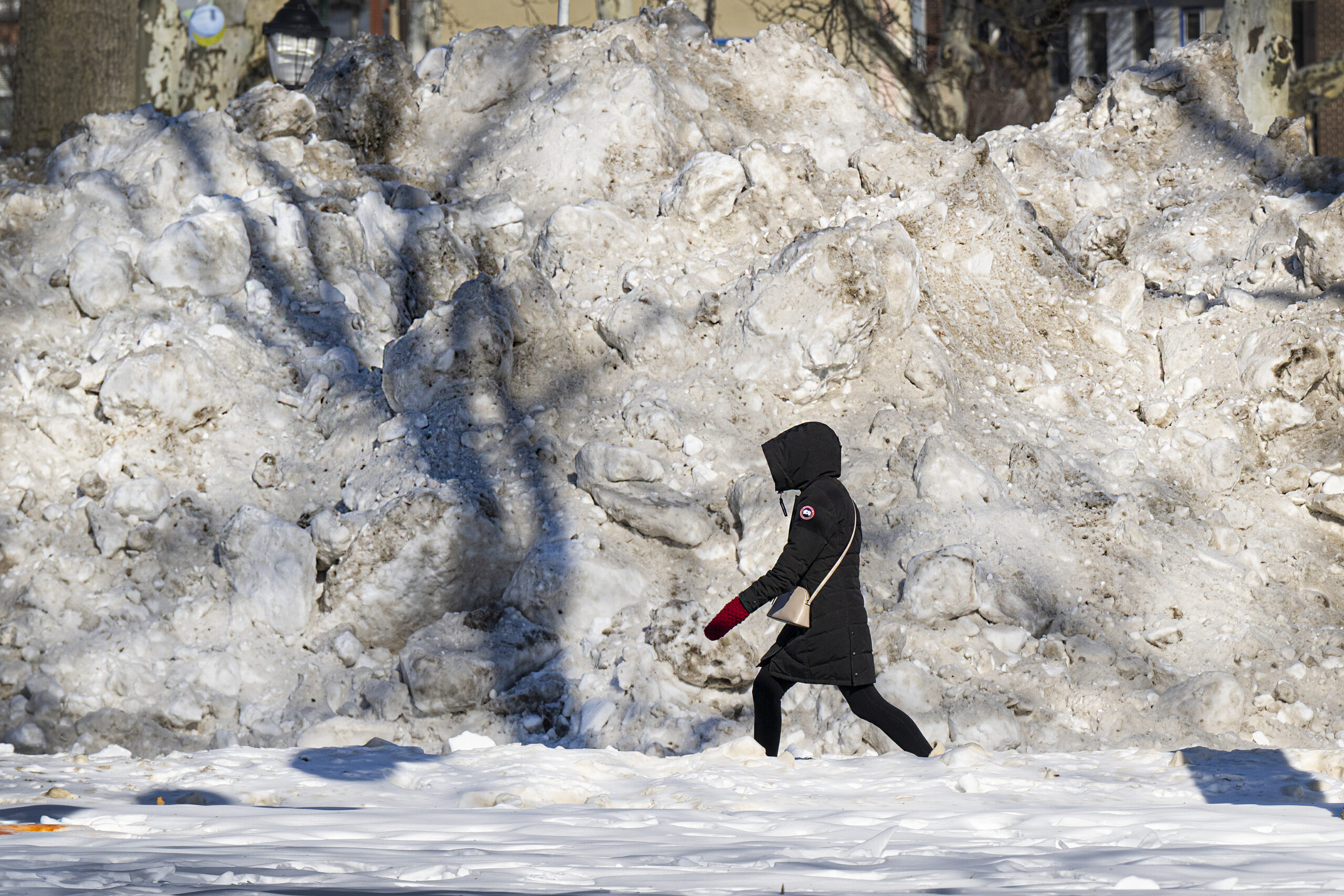
    A pedestrian walks past a large pile of snow and ice along the Benjamin Franklin Parkway days after a fierce winter storm dropped up to 9 inches of snow and sleet, with freezing temperatures leaving large banks of ice and snow on streets and sidewalks in Philadelphia, Monday, Feb. 2, 2026.

    Snowstorms are infamous for their ability to undermine constituents’ faith in their mayors. Over the years, they have been credited with ending political careers in Denver, New York, Chicago, and Seattle.

    The risk of political fallout could be heightened for Parker, who campaigned on a promise to upgrade city services. When Parker ceremonially dropped the puck at Tuesday night’s Flyers game, she was greeted with boos from many fans at Xfinity Mobile Arena.

    “Parker has pitched herself as the can-do mayor. ‘I’m not gonna deal with ideology. I’ve got principles, but I’m here to get the job done,’” said Randall M. Miller, a political historian and professor emeritus at St. Joseph’s University. “There’s that expectation you’re going to get this thing done.”

    Parker also faced questions about her administration’s commitment to delivering core services during the eight-day city workers strike last July, when “Parker piles” of trash mounted around Philadelphia in the hot summer sun. She escaped that ordeal relatively unscathed after winning what she called a “fiscally responsible” contract largely in line with her goals.

    But Miller said the mobility issues associated with snow removal have unique psychological effects for constituents.

    “You’re cold, you’re miserable, and you’re trapped. You’re looking around like, ‘Who is confining me?’” Miller said. “You get angry at the mayor because the mayor said, ‘I’m here to provide public services,’ and public service isn’t being provided.”
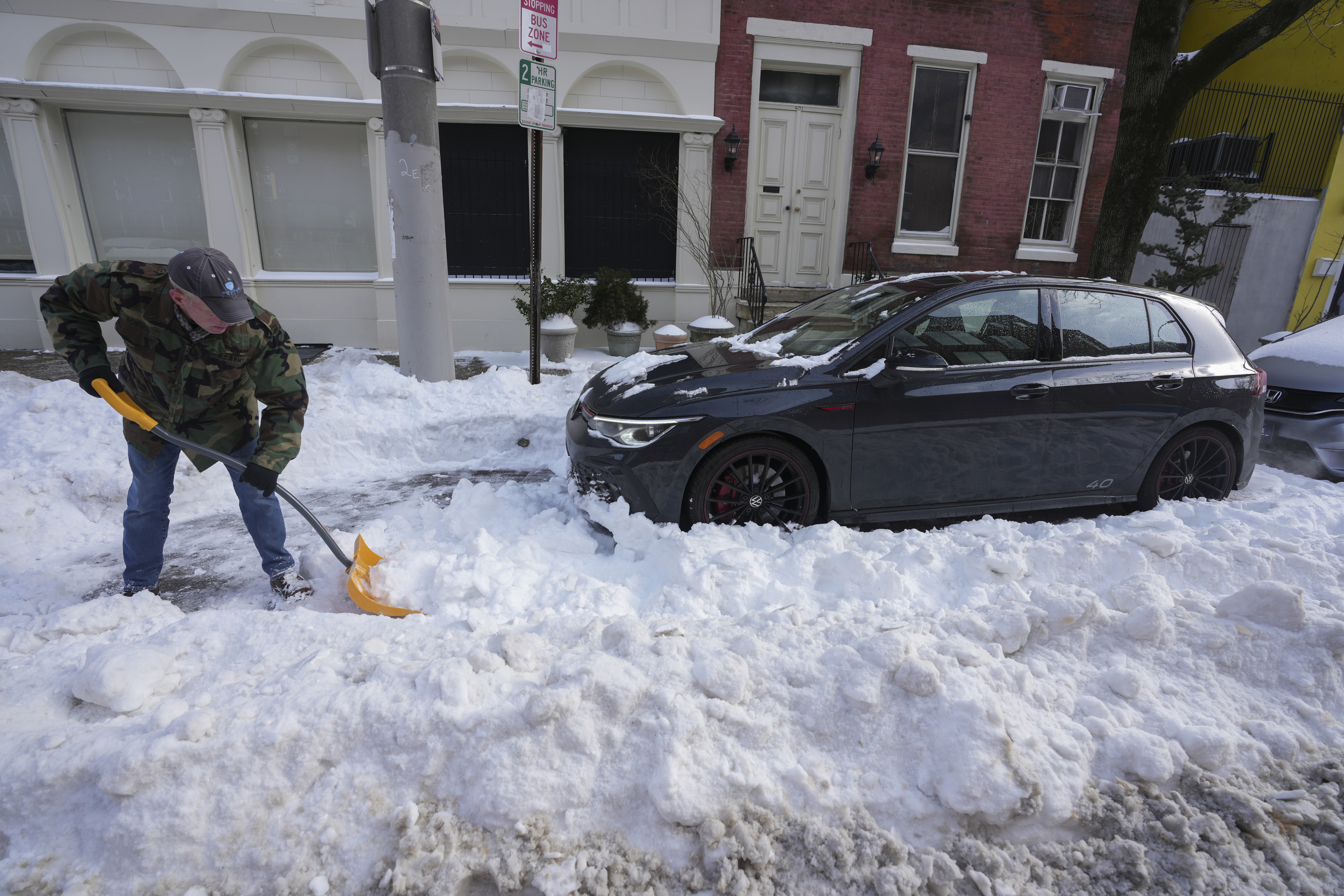
    Fred Scheuren shovels snow at 12th Street, near Waverly Street, in Center City, Philadelphia, Monday, Jan. 26, 2026.

    The circumstances of this year’s winter weather emergency could also give Parker some breathing room. Municipal leaders in Pittsburgh, New York, Washington, D.C., and Providence, R.I., are all feeling the heat amid the polar temperatures, thanks to an unusually persistent cold snap that has hampered snow-removal operations.

    A slight reprieve in the weather this week, with highs peaking above freezing Tuesday and Wednesday, could help the city’s cleanup efforts. But officials warned Wednesday that temperatures are forecast to fall again by the end of the week.

    “It’s not hyperbole to consider that we’re still under emergency conditions,” Dominick Mireles, who leads the Philadelphia Office of Emergency Management, said Wednesday.

    Lessons from past Philly storms

    By some measures, the city threw more resources at the latest storm than in the past, but got fewer returns.

    After the legendary blizzard of Jan. 7, 1996, then-Mayor Ed Rendell deployed more than 540 snowplows, dump trucks, and other vehicles to clear away the record 30.7 inches of snow that fell over two days, according to an Inquirer report from that year. Officials bragged at the time that the fleet eclipsed the 300 vehicles marshaled by former Mayor W. Wilson Goode Sr. for the last major blizzard, in 1987.

    Four days after the 1996 storm, the city said it hauled away 50,000 tons of snow, including truckloads famously dumped directly into the Delaware River and the Schuylkill. Officials also said that day that about 71% of roadways were passable, including around half of all side streets.

    In February 2003, the city got walloped with 19 inches of snow, followed by days of subfreezing temperatures. Four days after that storm, the city said it had cleared 75% to 80% of city streets.

    In 2016, Mayor Jim Kenney used 10,000 tons of salt and 1,600 city workers to clear away 22.5 inches of snow, clearing 92% of residential streets by day four — with a major assist from warmer temperatures a few days after the storm.

    The 800 pieces of snow-removal equipment Parker cited that were used in the most recent storm are far more than even in the blizzard of 1996. She also said the city brought in a snow-melting machine from Chicago, saying workers had melted about 4.7 million pounds of snow, while scattering 30,000 tons of salt.

    The result: More than a week after the end of the snowfall, about 85% of city streets had been “treated,” which includes salting, plowing, or both, according to the city.

    Heavy equipment clearing snow along S. Broad Street at Dickinson Street, Philadelphia, Tuesday, Feb. 3, 2026.

    But mobility nonetheless remains limited in much of the city, and officials pointed to the lingering icy conditions.

    The prolonged freeze is “not unheard of, but it is unusual, and that stresses and makes the potential for a lot of not-great things to happen,” Mireles said. “It’s affecting the snow-fighting operation.”

    An analysis of city plowing data shows that after the conclusion of the storm on Jan. 25, vehicles reached about 70% of city streets by the end of Monday. As the snow hardened, activity slowed by about a third on Jan. 27. Some parts of the city — including neighborhood-size chunks of South Philly — saw little plowing until five days after the storm or longer.

    The psychology of snow

    One reason voters punish mayors more harshly for failing to remove snow than for other problems is because of its omnipresence, from getting around the city to small talk about the weather, Miller said.

    Even trash-collection problems tend not to get under residents’ skin to the same degree because they don’t shut the city down, he said.

    “You are furious, and it’s day in, day out,” Miller said. “You’re constantly reminded.”

    Trisha Swed walks with her dog Alberta Einstein at North 30th Street and Girard Avenue in Brewerytown on Monday, Jan. 26, 2026 in Philadelphia. In Philadelphia, 9.3 inches of snow fell, the most in a decade.

    Parker has turned to private contractors to help with the snow-removal operation. And at Wednesday’s news conference, she touted the city’s efforts to deploy 300 “same-day pay and work” laborers earning $25 per hour to help manually clear streets and sidewalks.

    Those moves drew criticism Wednesday from the city’s largest union for municipal workers, District Council 33 of the American Federation of State, County and Municipal Workers, which went on strike for higher wages last summer.

    “District Council 33 is deeply concerned by the City’s decision to bring in outside laborers for snow‐removal operations without any consultation or collaboration with our union,” DC 33 president Greg Boulware said in a statement. “Our members deserve better, and the residents of Philadelphia deserve a snow‐removal strategy rooted in safety, foresight, and respect for the workforce that keeps this city running.”

    Miller said those efforts show the city is doing everything it can to clear the city’s streets and sidewalks.

    “There’s been a great effort to try to deal with it, but Philadelphia is a very difficult place to manage in terms of snow because it’s got so many older streets,” he said.

    Man with shovel clearing snow from small park on Main Street in Manayunk on Monday, Jan. 26, 2026.

    But, he said, hearing about the city’s efforts is cold comfort to residents struggling to navigate their neighborhoods.

    “The major thoroughfares, they’ve done a pretty good job. But folks are concerned with their neighborhoods. They’re not concerned with if they go down to Fourth and Market,” he said. “Once you start to hear those kinds of complaints, it’s hard to contain it.”

    Parker said complaints will not deter her team. “Whenever we’ve been dealing with something challenging in government … there are some people who are expert articulators for problems,” she said.

    Her staff, she said, “is not a team of expert AOPs.”

    “This is a team of subject-matter experts who are doers and they are fixers, and we don’t cry,” she said. “Our job won’t be done until every street in the city of Philadelphia is walkable.”

    Staff writers Ximena Conde and Anna Orso contributed to this article.

  • Penn State’s Gavin McKenna, a top 2026 NHL draft prospect, charged with aggravated assault

    Penn State’s Gavin McKenna, a top 2026 NHL draft prospect, charged with aggravated assault

    Penn State winger Gavin McKenna, the projected No. 1 pick in the 2026 NHL draft, was charged with aggravated assault and related crimes Wednesday, after allegedly assaulting a 21-year-old man during an altercation in State College over the weekend, according to a statement released by the State College Police Department.

    The arrest, first reported by Onward State, a Penn State student-run blog, stemmed from an incident hours after McKenna played in Penn State’s outdoor game against Michigan State at Beaver Stadium on Saturday afternoon. According to the local police department, at approximately 8:45 p.m. in the 100 block of South Pugh Street, he allegedly punched the male in the face twice, resulting in a fractured jaw and a lost tooth and requiring corrective surgery and his mouth being wired shut.

    McKenna, 18, has been charged with aggravated assault, simple assault, harassment, and disorderly conduct for fighting, court records show.

    The felony, which is defined as “attempts to cause serious bodily injury or causes injury with extreme indifference,” carries a 20-year maximum sentence in Pennsylvania. The misdemeanor carries a maximum of two years, and fines are also attached to each of the four counts.

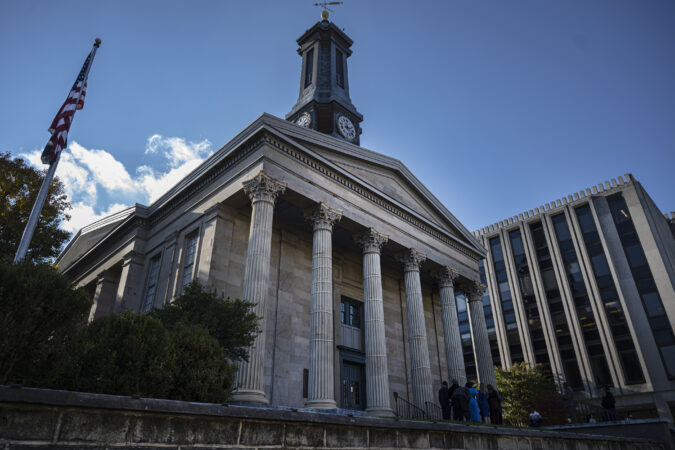
    McKenna, a freshman at Penn State, was arraigned before District Judge Casey M. McClain and released on $20,000 unsecure bail. He is scheduled for a preliminary hearing the morning of Feb. 11 at the Centre County Courthouse in Bellefonte, Pa.

    Penn State officials acknowledged the arrest on Wednesday evening, telling The Inquirer, “We are aware that charges have been filed; however, as this is an ongoing legal matter, we will not have any further comment.”

    McKenna’s adviser, Pat Brisson, was not immediately available for comment.

    Penn State forward Gavin McKenna was projected to be the No. 1 pick in the 2026 NHL draft.

    Hours before the alleged assault on Saturday, McKenna scored a goal and added two assists in the No. 6 Nittany Lions’ 5-4 overtime loss to the No. 2 Spartans.

    A native of Whitehorse, Yukon, McKenna is ranked No. 1 on the NHL’s 2026 Central Scouting list among North American skaters.

    After a new rule was passed granting Canadian Hockey League players NCAA eligibility this season, McKenna left the CHL this summer to play college hockey. The freshman, who is one of the biggest recruits to ever play college hockey and one of the faces of the changing landscape of the sport, has 11 goals and 32 points in 24 games this season.

    This is a developing story. Check back for updates.

  • LaMonte McLemore, singer and founding member of The 5th Dimension, has died at 90

    LaMonte McLemore, singer and founding member of The 5th Dimension, has died at 90

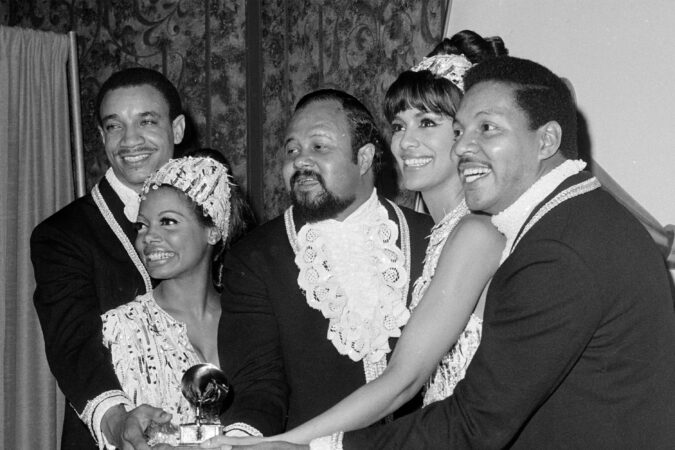
    Singer LaMonte McLemore, a founding member of vocal group The 5th Dimension, whose smooth pop and soul sounds with a touch of psychedelia brought them big hits in the 1960s and ’70s, has died. He was 90.

    Mr. McLemore died Tuesday at his home in Las Vegas surrounded by family, his representative Jeremy Westby said in a statement. He died of natural causes after having a stroke.

    The 5th Dimension had broad crossover success and won six Grammy Awards including record of the year twice, for 1967’s “Up, Up and Away” and 1969’s “Aquarius/Let the Sunshine In.” Both were also top 10 pop hits, with the latter, a mashup of songs from the musical Hair, spending six weeks at No. 1.

    Mr. McLemore had a parallel career as a sports and celebrity photographer whose pictures appeared in magazines including Jet.

    Born in St. Louis, Mr. McLemore served in the Navy, where he worked as an aerial photographer. He played baseball in the Los Angeles Dodgers’ farm system and settled in Southern California, where he began making use of his warm bass voice and skill with a camera.

    He sang in a jazz ensemble, the Hi-Fi’s, with future 5th Dimension bandmate Marilyn McCoo. The group opened for Ray Charles in 1963 but broke up the following year.

    Mr. McLemore, McCoo, and two of his childhood friends from St. Louis, Billy Davis Jr., and Ronald Towson, later formed a singing group called the Versatiles. They also recruited Florence LaRue, a schoolteacher Mr. McLemore met through his photography, to join them. In 1965 they signed to singer Johnny Rivers’ new label, Soul City Records, and changed their name to The 5th Dimension to better represent the cultural moment.

    Their breakthrough hit came in 1967 with the Mamas & the Papas’ song “Go Where You Wanna Go.”

    That same year they released the Jimmy Webb-penned “Up, Up and Away,” which would go to No. 7 on the Billboard Hot 100 and win four Grammys: record of the year, best contemporary single, best performance by a vocal group and best contemporary group performance.

    In 1968 they had hits with a pair of Laura Nyro songs, “Stoned Soul Picnic” and “Sweet Blindness.”

    The peak of their commercial success came in 1969 with “Aquarius/Let the Sunshine In,” which along with its long run at No. 1 won Grammys for record of the year and best contemporary vocal performance by a group.

    That same year they played the Harlem Cultural Festival, which has become known as the “Black Woodstock.” The festival, and The 5th Dimension’s part in it, were chronicled in the 2021 documentary from Ahmir “Questlove” Thompson, Summer of Soul.

    The 5th Dimension also had a rare level of success with white audiences for a group whose members were all Black. The phenomenon came with criticism.

    “We were constantly being attacked because we weren’t, quote, unquote, ‘Black enough,’” McCoo said in Summer of Soul. “Sometimes we were called the Black group with the white sound, and we didn’t like that. We happened to be artists who are Black, and our voices sound the way they sound.”

    The group had hits into the 1970s including “One Less Bell to Answer,” “I Didn’t Get to Sleep at All,” and “If I Could Reach You.”

    They became regulars on TV variety shows and performed at the White House and on an international cultural tour organized by the State Department.

    The original lineup lasted until 1975, when McCoo and Davis left to make their own music.

    “All of us who knew and loved him will definitely miss his energy and wonderful sense of humor,” McCoo and Davis, who married in 1969, said in a statement.

    LaRue said in her own statement that Mr. McLemore’s “cheerfulness and laughter often brought strength and refreshment to me in difficult times. We were more like brother and sister than singing partners.”

    Mr. McLemore is survived by his wife of 30 years, Mieko McLemore, daughter Ciara, son Darin, sister Joan, and three grandchildren.

  • Democratic campaign manager charged in Chester County for allegedly filing fake signatures in 2024 primary race

    Democratic campaign manager charged in Chester County for allegedly filing fake signatures in 2024 primary race

    A Democratic campaign manager was charged Monday in Chester County with filing fraudulent nomination petitions in the 2024 primary for auditor general, including the forged signature of a Chester County judge, authorities said.

    Mariel Kornblith-Martin, 40, of Philadelphia, is accused of filing the false nomination petitions when serving as campaign manager for Mark Pinsley, the Lehigh County controller, as he sought to secure a place on the competitive Democratic primary ballot.

    Petitions for Pinsley’s campaign included the names of people who said they had not signed them, including Chester County Judge Alita Rovito, Coatesville City Council members Carmen Green and Khadija Al-Amin, and West Goshen Township Supervisor Nate Wolman, The Inquirer reported.

    Rovito reported the forgery to the Chester County District Attorney’s Office at the time, saying the signature was not hers and she did not sign nominating petitions for any candidate, “as to do so would be a violation of judicial ethics,” according to charging documents.

    Rovito, a Democrat, told The Inquirer at the time that “the use of my name and signature is concerning to me due [to] the potential implications on my role as a member of the independent judiciary.”

    Alita Rovito, a Chester County judge, poses for a portrait in West Chester, Pa. in 2020.

    In the criminal complaint filed against Kornblith-Martin, the Chester County District Attorney’s Office alleges that she gave three college students “stacks of pages containing signatures of supporters” and asked them to sign the required sworn declaration at the bottom of each page. Among the charges filed against Kornblith-Martin was solicitation to false swearing.

    Prosecutors say she paid the students, who are not named in the charging documents, $50 on at least three occasions to sign the petitions.

    “That’s disgraceful,” former U.S. Rep. Bob Brady, the chair of the Philadelphia Democratic Party, said of the charges against Kornblith-Martin. “She’s not one of our favorites.”

    The three college students were all working part-time on several campaigns run by Kornblith-Martin, according to the complaint.

    The students were previously identified by The Inquirer as paid volunteers attending Temple University.

    Kornblith-Martin described herself to investigators as a “political operative” in Philadelphia with 13 years of experience who had worked on 16 campaigns, according to the criminal complaint. She previously served in Philadelphia’s 39th Democratic Ward, but resigned last year, according to its ward leader, Traffic Court Judge Michael Sullivan.

    Kornblith-Martin did not respond to requests for comment on Wednesday or Thursday.

    She turned herself in on Wednesday and has been released on bail, which was set at $50,000.

    Kornblith-Martin said in 2024 that the campaign was conducting an “internal investigation” when asked about the alleged fraudulent signatures.

    Pinsley told The Inquirer on Wednesday evening his campaign “reviewed what was brought to our attention but did not have enough verified information to reach independent conclusions” when concerns were raised.

    “Petition drives can involve invalid or questionable signatures for many reasons, and we were not in a position to determine intent,” he added in a text message. “I was not personally involved in the signature collection, and I believe the legal process is the appropriate place for the facts to be established. If anyone knowingly falsified signatures, that would be wrong and should carry consequences.”

    Pinsley said he has “not been involved” with Kornblith-Martin since his auditor general campaign and does “not know the facts of this situation.” Pinsley is now running in the crowded Democratic primary to challenge Republican U.S. Rep. Ryan Mackenzie in the Lehigh Valley.

    Pinsley’s campaign was not the only one with signatures that came under scrutiny.

    State Sen. Nikil Saval’s 2024 campaign complained about signatures on then-candidate Allen King’s petitions, which included two of the same student circulators and contributed to his being booted from the ballot.

    King, an entrepreneur who still has political aspirations, told The Inquirer the incident had disillusioned him about the two-party system and inspired him to reapply to law school.

    “When ballot access becomes a game of shortcuts and challenges, democracy loses before voters ever enter the booth,” he said.

    The February 2024 revelation that Pinsley’s campaign may have submitted fraudulent petitions shook up the race for a little-known office responsible for conducting audits to ensure that state money is spent properly.

    Pinsley failed to secure the Democratic nomination over State Rep. Malcolm Kenyatta, who ultimately lost to incumbent Republican Auditor General Tim DeFoor as the GOP swept the state’s row offices in the general election.

    Kenyatta did not formally challenge Pinsley’s nominating petitions to remove him from the ballot during the primary. Reached Wednesday, Kenyatta said in a statement: “Fraud occurring within any stage of our electoral process is a direct assault on our democracy.”

    “The charges brought today are a first step in the legal process but accountability must not end here: the buck always stops with the candidate,” added Kenyatta, the vice chair of the Democratic National Committee.

    Investigators found at least nine pages of alleged forgeries of Chester County voters, according to the complaint.

    To get on the ballot in Pennsylvania for a statewide row office like auditor general, a candidate must submit 1,000 signatures, including at least 100 from at least five counties.

  • Fire Marshal rules that a fatal house fire in Kingsessing was intentionally set

    Fire Marshal rules that a fatal house fire in Kingsessing was intentionally set

    A 25-year-old man was pronounced dead after he was pulled from a burning house in a fire that was intentionally set early Wednesday in the city’s Kingsessing, authorities said.

    The Philadelphia Fire Department responded just before 1:45 a.m. to a report of a fire in a two-story rowhouse on the 5400 block of Regent Street, authorities said

    Firefighters battled the fire on the second floor and attempted to rescue a man from the back bedroom. He was transported by medics to Penn Presbyterian Medical Center, where he was pronounced dead at 2:29 a.m.

    The fire was placed under control at 2:01 a.m. and no other injuries were reported.

    “The Fire Marshal’s Office did determine this fire was incendiary, meaning it was set intentionally,” said Rachel Cunningham, spokesperson for the fire department.

    The case is now being investigated by police.

  • Russia and Ukraine envoys meet in Abu Dhabi for 2 days of U.S.-brokered talks

    Russia and Ukraine envoys meet in Abu Dhabi for 2 days of U.S.-brokered talks

    KYIV, Ukraine — Envoys from Moscow and Kyiv met in Abu Dhabi on Wednesday for another round of U.S.-brokered talks on ending the almost four-year war, as a Russian attack using cluster munitions killed seven people at a market in Ukraine.

    The delegations from Moscow and Kyiv were joined in the capital of the United Arab Emirates by U.S. special envoy Steve Witkoff and President Donald Trump’s son-in-law, Jared Kushner, according to Rustem Umerov, Ukraine’s National Security and Defense Council chief who attended the meeting.

    “The discussions were substantive and productive, focusing on concrete steps and practical solutions,” Umerov said on social media as the first of two days of talks wrapped up.

    Secretary of State Marco Rubio said that a breakthrough in the talks may not come for a while but the Trump administration has made great progress on negotiations over the past year.

    “That’s the good news,” Rubio told reporters Wednesday. “The bad news is that the items that remain are the most difficult ones. And meanwhile the war continues.”

    Kremlin spokesman Dmitry Peskov wouldn’t offer any details on the talks and said that Moscow wasn’t planning to comment on their results.

    He said that “the doors for a peaceful settlement are open,” but that Moscow will proceed with its military campaign until Kyiv meets its demands.

    Last month’s discussions in Abu Dhabi, part of a U.S. push to end the fighting, yielded some progress but no breakthrough on key issues, officials said.

    The current talks also coincide with the expiry of the last remaining nuclear arms pact between Russia and the United States on Thursday. Trump and Russian President Vladimir Putin could extend the terms of the treaty or renegotiate its conditions in an effort to prevent a new nuclear arms race.

    Energy networks targeted

    The Abu Dhabi talks were held as Ukrainians were outraged over major Russian attacks on their energy system, which have occurred each winter since Russia launched its all-out invasion of its neighbor on Feb. 24, 2022.

    A huge Russian bombardment overnight from Monday to Tuesday included hundreds of drones and a record 32 ballistic missiles, wounding at least 10 people. This came despite Ukraine’s understanding that Putin had told Trump that he would temporarily halt strikes on Ukraine’s power grid.

    Ukrainian civilians are struggling with one of the coldest winters in years, which saw temperatures dip to around minus-4 degrees Fahrenheit.

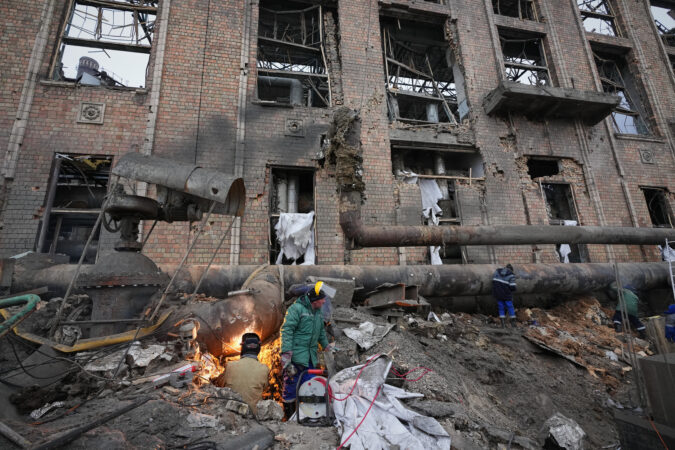
    About 60 foreign ambassadors took part in an organized visit Wednesday to a Kyiv thermal power plant that was almost completely destroyed by missiles and drones in the Monday night attack. The plant provided heating to about 500,000 people.

    Russia is hitting Ukraine’s energy facilities because its armed forces believe the targets are associated with Kyiv’s military effort, Peskov said.

    There has been a lack of clarity about how long Putin had promised to observe a pause on power grid attacks.

    Trump said Tuesday at the White House that Putin had agreed to halt strikes for a week, through Feb. 1, and that the Russian leader had kept his word. But Zelensky said Tuesday that “barely four days have passed of the week Russia was asked to hold off,” before Ukraine was hit with new attacks, suggesting that the Ukrainian leader wasn’t fully aware of the terms of the Trump-Putin agreement.

    Meanwhile, White House press secretary Karoline Leavitt said that Trump was “unfortunately unsurprised” by Moscow’s resumption of attacks.

    On Wednesday, more than 200 repair crews were at work in Kyiv to restore power, according to the Ukrainian Energy Ministry, which said that staff were exhausted and would be rotated. More than 1,100 apartment buildings in the capital were still without heating, Zelensky said.

    The Institute for the Study of War, a Washington think tank, said that the developments were part of Moscow’s negotiating strategy.

    “The Kremlin will likely attempt to portray its adherence to this short-term energy strikes moratorium as a significant concession to gain leverage in the upcoming peace talks, even though the Kremlin used these few days to stockpile missiles for a larger strike package,” it said late Tuesday.

    New attacks

    Russia used cluster munitions Wednesday in an attack on a busy market in eastern Ukraine that killed seven and wounded 15 others, officials said.

    The attack on the town of Druzhkivka darkened prospects for progress in the UAE, with Donetsk regional military administration chief Vadym Filashkin describing Russian talk of a ceasefire as “worthless.”

    Russia also launched 105 drones against Ukraine overnight, and air defenses shot down 88 of them, the Ukrainian air force said Wednesday. Strikes by 17 drones were recorded at 14 locations, as well as falling debris at five sites, it said.

    In the central Dnipropetrovsk region, a Russian strike on a residential area killed a 68-year-old woman and a 38-year-old man, regional military administration head Oleksandr Hancha said.

    The southern city of Odesa also came under a large-scale attack, regional military administration head Oleh Kiper said. About 20 residential buildings were damaged, with four people rescued from under the rubble, he said.

  • Still no suspect in the disappearance of ‘Today’ host Savannah Guthrie’s mother

    Still no suspect in the disappearance of ‘Today’ host Savannah Guthrie’s mother

    TUCSON, Ariz. — The search for Today show host Savannah Guthrie’s mother still had no suspect or person of interest Wednesday, authorities said, four days after she disappeared with signs of forced entry at her home in southern Arizona.

    Investigators believe Nancy Guthrie was taken against her will over the weekend and Pima County Sheriff Chris Nanos has said they don’t have credible information indicating Guthrie’s disappearance was targeted. Guthrie has limited mobility, and officials do not believe she left on her own. Nanos said she is of sound mind.

    “Detectives continue to speak with anyone who may have had contact with Mrs. Guthrie,” the sheriff’s department said in a statement on social media Wednesday. “Detectives are working closely with the Guthrie family.”

    Multiple media organizations reported receiving purported ransom notes Tuesday that they handed over to investigators. The sheriff’s department has said it’s taking the notes and other tips seriously but declined to comment further.

    The Pima County sheriff and the Tucson FBI chief urged the public to offer tips during a news conference Tuesday. Nanos has said Guthrie needs daily medication and could die without it. Asked whether officials were looking for her alive, he said, “We hope we are.”

    Authorities say Nancy Guthrie was last seen around 9:30 p.m. Saturday at her home in the Tucson area, where she lived alone, and she was reported missing midday Sunday. Someone at her church called a family member to say she was not there, leading family to search her home and then call 911.

    DNA samples have been gathered and submitted for analysis as part of the investigation. “We’ve gotten some back, but nothing to indicate any suspects,” Nanos said.

    There were signs of forced entry at Guthrie’s home, evidence of a nighttime kidnapping, and several personal items were still there, including Guthrie’s cell phone, wallet and car, according to a person familiar with the investigation, who was not authorized to publicly discuss details of the case and spoke to the Associated Press on condition of an anonymity. Investigators were reviewing surveillance video from nearby homes and information from area license plate cameras and analyzing local cell phone towers data.

    Guthrie’s upscale Catalina Foothills neighborhood is quiet and mostly dark at night, lit mainly by car headlights and homes spaced far apart. Long driveways, front gates and desert plants provide a buffer from the winding streets. Saguaro cacti tower above her home’s roofline, and wispy trees partially block the view of the front door. Decorative streetlamps and prickly pear cacti dot the grassy front yard.

    Jim Mason, longtime commander of a search and rescue posse for the Maricopa County Sheriff’s Office, said desert terrain can make looking for missing people difficult. Sometimes it’s hard to peer into areas that are dense with mesquite trees, cholla cactus and other brush, he said. His group is based 175 miles (280 kilometers) north of Tucson, and is not involved in the search for Guthrie.

    On the other side of the country, Victory Church in Albany, New York, said it’s offering a $25,000 reward for information that leads to finding Nancy Guthrie.

    “Me and my wife, we watch Savannah every single morning. We’ve heard of her faith. We’ve heard of her mom’s faith. And she’s got such a sweet spirit,” Pastor Charlie Muller said.

    For a third day Wednesday, Today opened with Nancy Guthrie’s disappearance, but Savannah Guthrie was not at the anchor’s desk. NBC Sports said Tuesday that Guthrie will not be covering the 2026 Milan-Cortina Winter Olympics “as she focuses on being with her family during this difficult time.”

    The Today host grew up in Tucson, graduated from the University of Arizona and previously worked as a reporter and anchor at Tucson television station KVOA. Her parents settled in Tucson in the 1970s when she was a young child. The youngest of three siblings, she credits her mom with holding their family together after her father died of a heart attack at 49, when Savannah was just 16.

  • Supreme Court allows new California congressional districts that favor Democrats

    Supreme Court allows new California congressional districts that favor Democrats

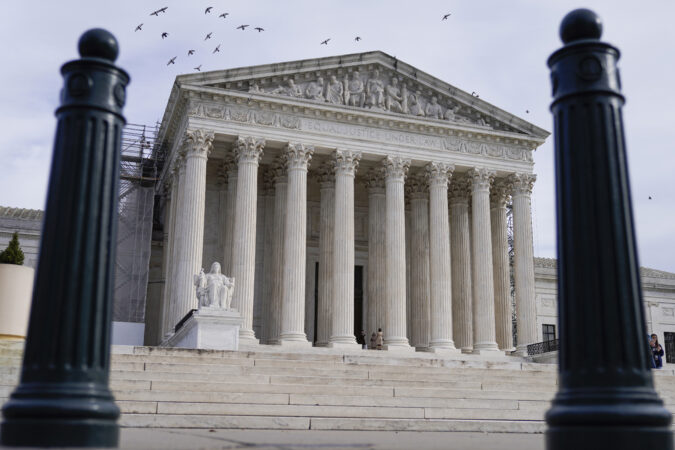
    WASHINGTON — The Supreme Court on Wednesday allowed California to use a new voter-approved congressional map that is favorable to Democrats in this year’s elections, rejecting a last-ditch plea from state Republicans and the Trump administration.

    No justices dissented from the brief order denying the appeal without explanation, which is common on the court’s emergency docket.

    The justices had previously allowed Texas’ Republican-friendly map to be used in 2026, despite a lower-court ruling that it likely discriminates on the basis of race.

    Conservative Justice Samuel Alito wrote in December that it appeared both states had adopted new maps for political advantage, which the high court has previously ruled cannot be a basis for a federal lawsuit.

    Republicans, joined by the Trump administration, claimed the California map improperly relied on race as well. But a lower court disagreed by a 2-1 vote. The Justice Department and White House did not immediately respond to messages seeking comment.

    The justices’ unsigned order keeps in place districts that are designed to flip up to five seats now held by Republicans, part of a tit-for-tat nationwide redistricting battle spurred by President Donald Trump, with control of Congress on the line in midterm elections.

    Last year, at Trump’s behest, Texas Republicans redid the state’s congressional districts with an eye on gaining five seats.

    California Gov. Gavin Newsom, a Democrat who is eyeing a 2028 presidential run, pledged to respond in kind, though he had to win over voters, not just lawmakers, to do so.

    Newsom celebrated the court’s decision, saying on social media that Trump had “started this redistricting war” and would end up losing out in the November midterms, when control of Congress is at stake.

    California’s attorney general, Democrat Rob Bonta, said the decision was “good news not only for Californians, but for our democracy.”

    The state Republican Party, which brought the case, vowed to keep fighting against the map’s use in future elections.

    “We will continue to vigorously argue for Equal Protection under the law for all of California’s voters,” Michael Columbo, counsel for the plaintiffs, said in a statement.

    One longtime party strategist, Jon Fleishman, a former executive director of the California Republican Party, said in a post on X that the decision means “this year’s elections will take place on the new lines shrinking the already very small Republican delegation from California.”

    Filing for congressional primaries in California begins on Monday.

  • The new Norristown school board plans to oust its superintendent, citing poor test scores

    The new Norristown school board plans to oust its superintendent, citing poor test scores

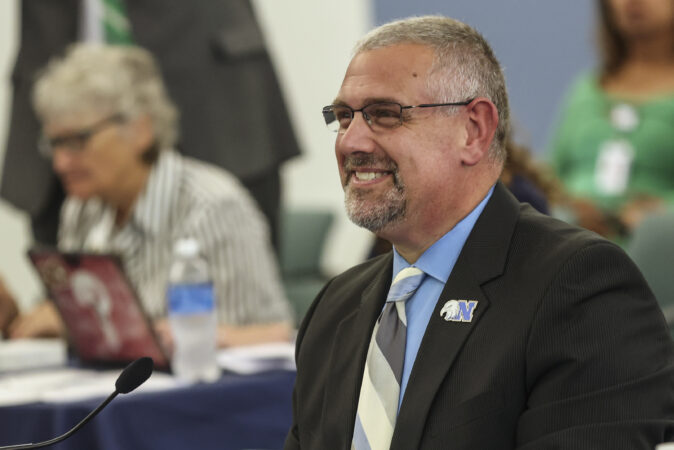
    The Norristown Area School District’s board is moving to oust its superintendent, saying the district needs a new leader to reverse years of poor test scores.

    The move to replace Superintendent Christopher Dormer, who has led the Montgomery County district since 2018 and whose contract expires June 30, comes after five new members were elected to the nine-person school board in November. The board voted unanimously Jan. 20 to give Dormer notice they would not renew his contract.

    Some community members expressed shock at the decision to part ways with Dormer, who is also the president of the Pennsylvania Association of School Administrators. Dormer has been a vocal advocate for increasing funding to Norristown, which is considered underfunded by the state, and where nearly three-quarters of students are economically disadvantaged.

    Jeremiah Lemke, who joined the Norristown school board in December and is now its president, acknowledged Dormer as “a leader statewide” in advocating for a new school funding system and a superintendent who has done “many good things for the district.” But, he said at the Jan. 20 meeting, test scores are a concern.

    “Student achievement in Norristown hasn’t been winning, under Mr. Dormer, for years, not months, but years — seven to be exact,“ Lemke said in an emailed statement Wednesday. ”If the Eagles didn’t win for seven years, regardless of what positive developments happened in the organization, there would be no questions asked when the head coach was replaced.“

    Norristown, a majority Hispanic district, enrolls about 8,000 students.

    About 28% of Norristown’s third-through-eighth graders scored proficient or above in English language arts on the Pennsylvania System of School Assessment standardized tests last year, compared to 48.5% statewide. In math, 27.4% of Norristown students were proficient, compared to 41.7% statewide.

    Over the last few years, changes in Norristown’s test scores have largely tracked Pennsylvania’s as a whole, with ELA scores sliding, and math scores improving. In 2023, 30.7% of Norristown students scored proficient in ELA, compared to 53.7% of students at the state level. In math, 21.6% of Norristown students scored proficient in 2023, compared to 39.4% statewide.

    In a message to staff and families after the Jan. 20 vote, Dormer said he was proud of what the district had accomplished during his tenure — “including consecutive years with minimal to no tax increases, the sizable and significant additions in staffing after years of reductions, the sustained investment in new instructional resources and educational opportunities after years of unaffordability, the development and implementation of our facilities master plan after decades of deferred maintenance, and the commitment to the principles of equity, inclusion, and belonging as we navigated a worldwide pandemic and an increasingly politically divided country.”

    Dormer, who began his career in education as an educational assistant in the Lower Merion School District, spent 13 years as a teacher, coach, and athletic director in the Upper Darby School District before moving into administration in 2005. He became Upper Darby High School’s principal in 2008, a role he held for five years, and came to Norristown in 2016.

    Performance reviews on the district’s website show Dormer was rated “proficient” by the board in 2021-22 and 2022-23. More recent reviews were not listed online.

    On Wednesday, Dormer declined to comment.

    Lemke — who works for a Philadelphia nonprofit, Jounce Partners, that has coached charter school leaders to improve teacher performance — said in a statement Wednesday that the decision was “thoughtful, reflective, data-informed, and unanimous, amongst new and continuing board members.”

    The board last week voted to approve a $79,500 contract with Alma Advisory Group, a Chicago-based firm, to conduct a national search for a new superintendent.

    Jordan Alexander, another new school board member, said during that board meeting that members “often have to make decisions that are very unpopular.”

    “I’m gonna be honest, I wasn’t so sold,” Alexander said. A former Norristown student, Alexander said that when Dormer “came to the scene, the pride did go up, and it was a breath of fresh air.”

    But “we cannot advocate ourselves to be the best if our performance does not reflect that,” Alexander said.

    Community reaction to the ouster

    Some community members accused the board of a predetermined decision.

    “Staff were not aware of these changes … the community was not aware, or anybody. You guys just threw it out there,” Ericka Wharton, a parent and leader of a Norristown community center, told the board at last week’s meeting. Wharton warned the decision could create instability, including a decline in student achievement.

    Carmina Taylor, a local advocate, told the board that community members deserved “a full explanation with dates and details that led to your decision.”

    “This decision is short-sighted, abrupt, without consideration as to how the students will be impacted by this major shift in leadership,” said Taylor, co-founder of the Movement for Black and Brown Lives in Montgomery County.

    The election of the new board came after infighting in the local Democratic Party. Chris Jaramillo, the former board president, lost the local Democratic Party’s endorsement for reelection last year. Jaramillo had opposed a tax break for a senior affordable housing development. Last week, the new board voted to rescind a November district policy that restricted tax abatements, saying it would replace it.

    Jaramillo is also a co-founder of the Movement for Black and Brown Lives in Montgomery County. In an interview Wednesday, he described the board’s new leaders as inexperienced and questioned how it could quickly replace Dormer without causing disruption.

    “I don’t think it’s a sound decision,” said Jaramillo. He said he worried the board would pick someone “without any sort of knowledge of how diverse Norristown and its surrounding area are.”

    Taylor said Wednesday she wasn’t speaking on behalf of Jaramillo. She accused the board of “plotting” to remove Dormer.

    “How in the world, if they didn’t have a sense of what they wanted to do, could they have even attempted to do that in the last 45 days?” said Taylor, who has filed a complaint with the school board, alleging insufficient transparency.

    Lemke said it is “categorially false” that the board acted too quickly and without transparency. “Once we were installed, we had a short time period in which to make a decision because we knew that if we didn’t renew his contract it would not be a quick task to do a national search for a superintendent,” he said.

    Taylor noted that while the district’s test scores “are bad,” Norristown has only been receiving additional state money under a new formula intended to remedy constitutional underfunding for the past two years. (The budget proposed by Gov. Josh Shapiro Tuesday would give underfunded districts their third installment of a nine-year plan.)

    “It’s not enough to address the systemic issue, period,” she said.

  • Washington Post cuts a third of its staff in a blow to a legendary brand

    Washington Post cuts a third of its staff in a blow to a legendary brand

    The Washington Post laid off one-third of its staff Wednesday, eliminating its sports section, several foreign bureaus, and its books coverage in a widespread purge that represented a brutal blow to journalism and one of its most legendary brands.

    The Post’s executive editor, Matt Murray, called the move painful but necessary to put the outlet on stronger footing and to weather changes in technology and user habits. “We can’t be everything to everyone,” Murray said in a note to staff members.

    He outlined the changes in a companywide online meeting, and staff members then began getting emails with one of two subject lines — telling them their role was or was not eliminated.

    Rumors of layoffs had circulated for weeks, ever since word leaked that sports reporters who had expected to travel to Italy for the Winter Olympics would not be going. But when official word came down, the size and scale of the cuts were shocking, affecting virtually every department in the newsroom.

    “It’s just devastating news for anyone who cares about journalism in America and, in fact, the world,” said Margaret Sullivan, a Columbia University journalism professor and former media columnist at the Post and the New York Times. “The Washington Post has been so important in so many ways, in news coverage, sports and cultural coverage.”

    Martin Baron, the Post’s first editor under its current owner, billionaire Jeff Bezos, condemned his former boss and called what has happened at the newspaper “a case study in near-instant, self-inflicted brand destruction.”

    Journalists pleaded with Bezos for help

    Bezos, who has been silent in recent weeks amid pleas from Post journalists to step in and prevent the cutbacks, had no immediate comment.

    The newspaper has been bleeding subscribers in part due to decisions made by Bezos, including pulling back from an endorsement of Kamala Harris, a Democrat, during the 2024 presidential election against Donald Trump, a Republican, and directing a more conservative turn on liberal opinion pages.

    A private company, the Post does not reveal how many subscribers it has, but it is believed to be roughly 2 million. The Post would also not say how many people it has on staff, although the New York Times estimated that more than 300 journalists were let go.

    The Post’s troubles stand in contrast to its longtime competitor the New York Times, which has been thriving in recent years, in large part due to investments in ancillary products such as games and its Wirecutter product recommendations. The Times has doubled its staff over the past decade.

    Eliminating the sports section puts an end to a department that has hosted many well-known bylines through the years, among them John Feinstein, Michael Wilbon, Shirley Povich, Sally Jenkins, and Tony Kornheiser. The Times has also largely ended its sports section, but it has replaced the coverage by buying The Athletic and incorporating its work into the Times website.

    The Post’s Book World, a destination for book reviews, literary news and author interviews, has been a dedicated section in its Sunday paper.

    A half-century ago, the Post’s coverage of Watergate, led by intrepid reporters Bob Woodward and Carl Bernstein, entered the history books. The Style section under longtime Executive Editor Ben Bradlee hosted some of the country’s best feature writing.

    All Mideast correspondents and editors laid off

    Word of specific cuts drifted out during the day, as when Cairo Bureau Chief Claire Parker announced on X that she had been laid off, along with all of the newspaper’s Middle East correspondents and editors. “Hard to understand the logic,” she wrote.

    Lizzie Johnson, who wrote last week about covering a war zone in Ukraine without power, heat, or running water, said she had been laid off, too.

    Anger and sadness spread across the journalism world.

    “The Post has survived for nearly 150 years, evolving from a hometown family newspaper into an indispensable national institution, and a pillar of the democratic system,” Ashley Parker, a former Post journalist, wrote in an essay in The Atlantic. But if the paper’s leadership continues its current path, “it may not survive much longer.”

    Fearing for the future, Parker was among the staff members who left the newspaper for other jobs in recent months.

    Atlanta paper also makes cuts

    Also on Wednesday, the Atlanta Journal-Constitution, which stopped print editions and went all-digital at the end of last year, announced that it was cutting 50 positions, or roughly 15% of its staff. Half of the eliminated jobs were in the newsroom.

    Murray said the Post would concentrate on areas that demonstrate authority, distinctiveness and impact, and resonate with readers, including politics, national affairs, and security. Even during its recent troubles, the Post has been notably aggressive in coverage of Trump’s changes to the federal workforce.

    The company’s structure is rooted in a different era, when the Post was a dominant print product, Murray said in his note to the staff. In areas such as video, the outlet hasn’t kept up with consumer habits, he said.

    “Significantly, our daily story output has substantially fallen in the last five years,” he said. “And even as we produce much excellent work, we too often write from one perspective, for one slice of the audience.”

    While there are business areas that need to be addressed, Baron pointed a finger of blame at Bezos — for a “gutless” order to kill a presidential endorsement and for remaking an editorial page that stands out only for “moral infirmity” and “sickening” efforts to curry favor with Trump.

    “Loyal readers, livid as they saw owner Jeff Bezos betraying the values he was supposed to uphold, fled The Post,” Baron wrote. “In truth, they were driven away, by the hundreds of thousands.”

    Baron said he was grateful for Bezos’ support when he was editor, noting that the Amazon founder came under brutal pressure from Trump during the president’s first term.

    “He spoke forcefully and eloquently of a free press and The Post’s mission, demonstrating his commitment in concrete terms,” Baron wrote. “He often declared that The Post’s success would be among the proudest achievements of his life. I wish I detected the same spirit today. There is no sign of it.”