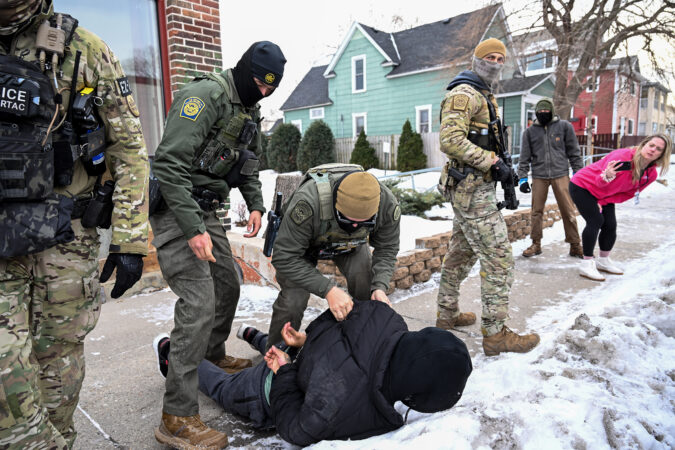
A 5-year-old boy and his father detained by immigration officers in Minnesota and held in Texas have been released following a judge’s order. They have returned to Minnesota, according to the office of Texas Rep. Joaquin Castro.
The two were detained in a Minneapolis suburb on Jan. 20. They were taken to a detention facility in Dilley, Texas.
Katherine Schneider, a spokesperson for the Democratic congressman, confirmed Adrian Alexander Conejo Arias and his son had arrived home.
Images of the young boy wearing a bunny hat and Spider-Man backpack and surrounded by immigration officers drew outrage about the Trump administration’s crackdown in Minneapolis.
Neighbors and school officials say that federal immigration officers used the preschooler as “bait” by telling him to knock on the door to his house so that his mother would answer. The Department of Homeland Security has called that description of events an “abject lie.” It said the father fled on foot and left the boy in a running vehicle in their driveway.
Conservator Angela Paola is lying on her back under the 16-ton gunboat, picking debris from between its nearly 250-year-old planks. She is wearing blue surgical gloves, grimy white coveralls, and a half-face respirator.
Dust floats in the beam of her headlamp, and the light reveals bits of the original oakum and pitch used to seal the bottom of the Philadelphia before it was sunk in battle by the British in 1776.
As she pokes a tool between the planks, clumps of hardened sediment fall on her. “It’s dirty,” she says. “But it is really satisfying work. And it’s really exciting to see it slowly start to show itself through all the mud and the years.”
Texas A&M University research assistant Marissa Agerton works on the project to preserve the gunboat Philadelphia at the Smithsonian National Museum of American History in Washington on Jan. 13.
The Philadelphia is the country’s oldest surviving intact warship, according to the Smithsonian Institution. It was launched on July 30, 1776, a few weeks after the Declaration of Independence was adopted. And as the nation prepares for its 250th birthday this summer, experts are grooming the old vessel for its place in the celebration.
“It’s one of the most important objects — movable objects — of the Revolution, flat out,” Anthea M. Hartig, director of the Smithsonian’s National Museum of American History, said in an interview at the museum this month.
The gnarled boat has survived battle, sinking, the elements, wood-eating bacteria, rodents, misguided attempts at preservation, tourists, and almost 250 years in the country it helped found.
It’s “one in a million,” Paola, the conservator from Texas A&M University, said through her respirator last week.
The 53-foot-long boat, hastily built of green oak, was sunk by British cannon on Oct. 11, 1776 at the Battle of Valcour Island, on Lake Champlain. But historians say the small fleet it was part of helped thwart British plans to invade the colonies from the north, and furthered the cause of independence.
The boat, powered by oars and sails, spent 159 years sitting upright in 60 feet of water at the bottom of the lake until it was raised in 1935. It then became a tourist attraction: admission 50 cents, according to an old advertising poster, and was carried from place to place on a barge.
After almost 30 years, it came to Washington in 1961 as one of the early arrivals at what was then the National Museum of History and Technology. It was hoisted inside while the building was still under construction and has been there ever since.
Since July, the museum has had the Philadelphia partially cordoned off in a special conservation lab on the third floor of the East Wing.
There, experts from the Smithsonian and Texas A&M are working with vacuums, brushes and dental tools to give it a state-of-the art cleaning and look for lost artifacts in areas they said have never been probed before. Visitors can watch the work through a large viewing window.
A portion of the Philadelphia.
The vessel rests in a huge cradle. Arrayed around it are its lower mast, rudder, two anchors, three big cast-iron guns, gun carriages, swivel guns, and the 24-pound British cannon ball that helped sink it.
The Philadelphia’s biggest weapon was an 8-foot-long, 3,800-pound cannon made in Sweden. It sat on a wooden rail at the front of the boat and fired a 12-pound iron ball. The gun still had a projectile in its mouth when it was discovered.
The boat was raised on Aug. 9, 1935 by history enthusiast and salvage engineer Lorenzo F. Hagglund and yachtsman J. Ruppert Schalk. When it came up, it contained a trove of more than 700 artifacts, according to John R. Bratten’s 2002 book, The Gondola Philadelphia & the Battle of Lake Champlain.
It also had a handful of human bones.
According to salvage reports, “there were a couple of arm bones … some teeth and a partial skull that were found on board the boat itself,” said Jennifer L. Jones, director of the museum’s Philadelphia gunboat preservation project.
“We know there were a lot of injuries,” she said in an interview at the museum this month.
Angela Paola goes through debris as she works on the Philadelphia.
The Oct. 11 battle was a daylong shootout with both sides firing iron cannon balls that could sink a ship or tear off a limb.
Less than two years after the start of the Revolutionary War, the British had been planning an attack from Canada south along the lake between New York and Vermont to try to split the colonies.
They quickly assembled a fleet of about two dozen vessels near the lake in Canada for the task.
The Americans countered, building and gathering a fleet of 16 vessels, including the flat-bottom Philadelphia and seven others like it, said Peter D. Fix, of Texas A&M, the lead conservator on the gunboat preservation project.
The two sides met in a narrow channel of the lake between the New York shore and Valcour Island, about five miles south of Plattsburgh, N.Y.
“It was a very bloody battle,” Jones said.
From the American hospital ship, “Enterprise,” crewman Jahiel Stewart wrote in his journal: “The battel was verryey hot [and] the Cannon balls & grape Shot flew verrey thick.”
“I believe we had a great many [killed] … Doctors Cut off great many legs and arm and … Seven men [were thrown] overbord that died with their wounds while I was abord,” he wrote.
Each side suffered about 60 men killed and wounded, Bratten wrote.
Jones said it is possible the limbs found on the ship had been amputated. Their whereabouts are unknown, she said.
The Philadelphia was commanded by a young Pennsylvania army officer, Benjamin Rue. He had 43 men from many walks of life under him.
“We have a wretched, motley crew in the fleet,” American Gen. Benedict Arnold wrote before the battle. “The refuse of every regiment, and the seamen, few of them, ever wet with salt water.”
Texas A&M University research assistant Alyssa Carpenter works on the Philadelphia this month in D.C.
Arnold, who commanded the patriot fleet, later deserted the American cause and went to fight for the British in 1780. He died in England in 1801. One of the crewmen on the Philadelphia, Joseph Bettys, also switched sides. He was later captured and hanged.
The Oct. 11 battle was a stalemate. The British withdrew; the Americans, bottled up in the channel, escaped that night. But two days later, the British force tracked down the Americans and destroyed most of their fleet.
Only a handful of American ships survived the fight. The Philadelphia was not one of them.
The ship is now “heavily degraded,” said Fix, the lead conservator,
The hull still bears three holes made by British cannon balls. A wooden cross piece near where the mast stood is charred, probably from the ship’s brick fireplace. The hull planks have lost about three-quarters of an inch in thickness to bacteria, Fix said.
Care of the boat “is a huge undertaking, of which the conservation is one part,” he said. “The conservation, the preservation, is kind of the avenue to learn all this other extra stuff, which has been great.”
“Our main task, as we were assigned, was ‘let’s make sure we make it last for another 250 years,’ ” he said.
Back under the vessel recently, conservator Paola put chunks of fallen debris in an orange bucket, to be sifted for artifacts later. She said it was amazing that the Philadelphia had survived.
“She lasted,” she said. “We’re really lucky.”
Texas A&M University research assistants Alyssa Carpenter, Marissa Agerton, and Angela Paola work on the gunboat Philadelphia, preparing it for the United States’ 250th birthday celebration this summer.
As Philadelphia endured another day of historically frigid temperatures, outreach workers on Friday fielded hundreds of calls for shelter as warming centers filled with people seeking respite from the cold.
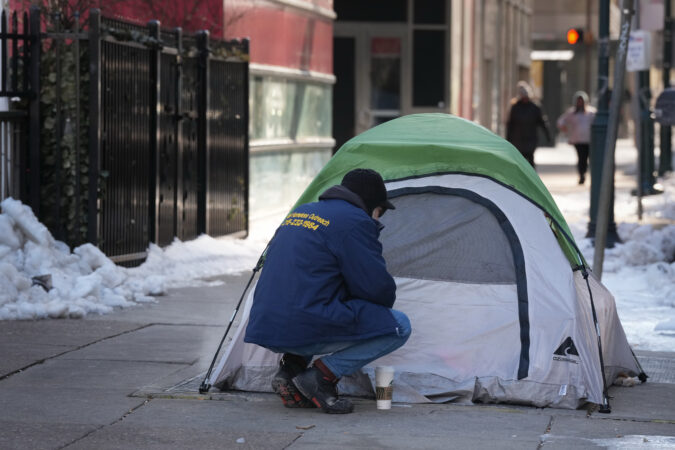
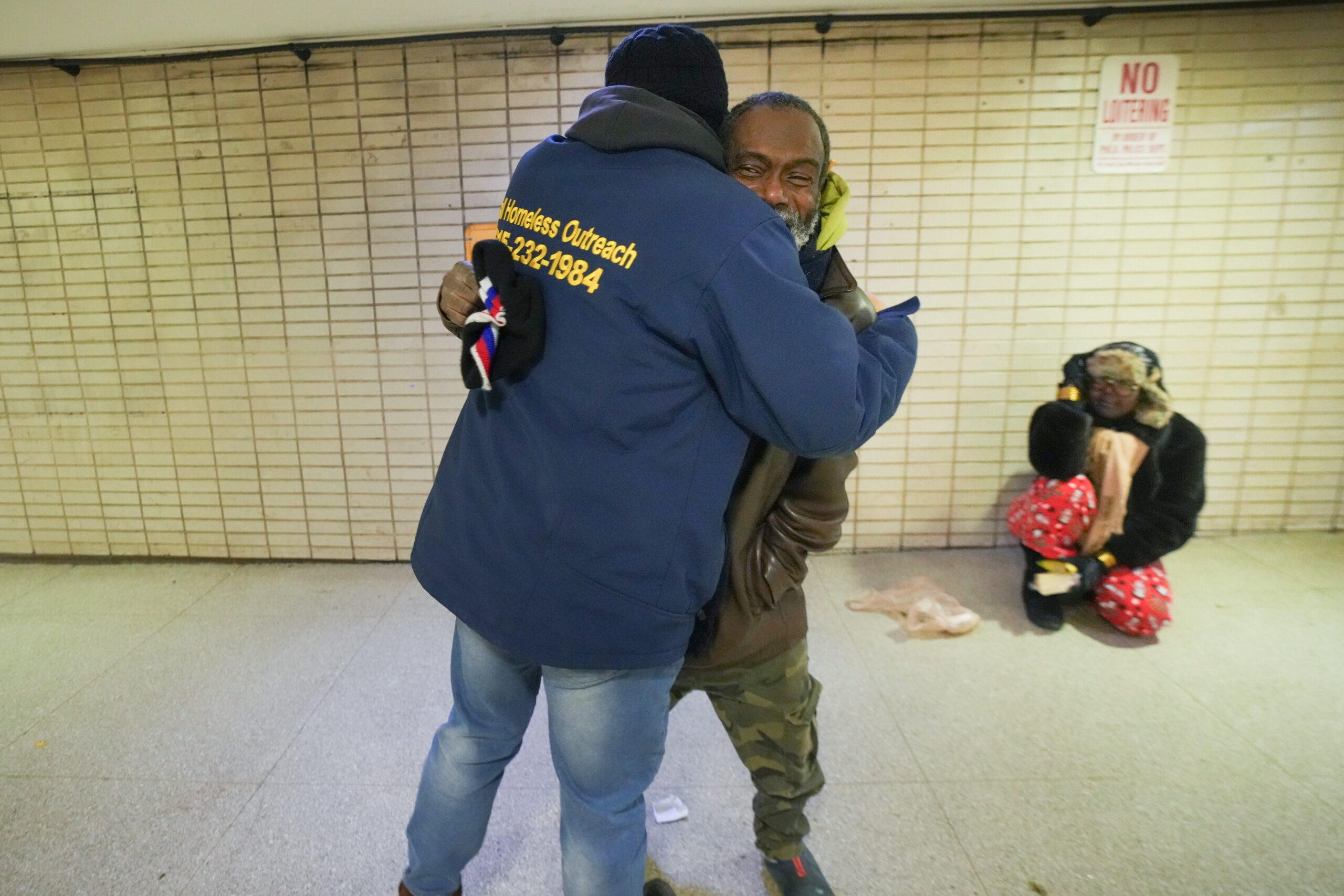
In the mazelike concourse at Suburban Station, a Project HOME outreach worker hugged clients and encouraged them to head inside.
At the Hub of Hope, the nonprofit’s drop-in center in the concourse for people experiencing homelessness, dozens lined up for hot meals. Later that night, as they had for the last several days, staff would set up cots for up to 80 people with nowhere else to go.
Typically, the Hub closes in the early evening. But amid the ongoing freeze, it’s open 24-7 as city officials and homeless services providers work to keep vulnerable Philadelphians safe.
Last month, the city declared a “Code Blue,” a designation that opens additional shelter beds and other resources. Ever since, the nonprofit’s hotline has fielded more than 6,000 calls, an average of more than 500 a day.
Normally, it receives about 140 a day.
“Many calls are concerned citizens who see someone who is homeless and want a team to go and check on them. Some are people who are literally homeless right now and need a place to go. Some are facing eviction and scared, reaching out for their options,” said Candice Player, the nonprofit’s vice president of advocacy, public policy, and street outreach.
“The extreme cold challenges us and pushes us even harder.”
City officials navigate a lengthy cold snap
When the wind chill makes it feel like it’s 20 degrees outside or lower for more than three days, the city can declare what is called an enhanced Code Blue. The distinction opens up furtherresources, including daytime and nighttime warming centers.
Cheryl Hill, executive director of the Philadelphia Office of Homeless Services, describes these periods as an all-hands-on-deck situation. Hill said that “every city entity can be outreach” during this time, and that work can also be aided by members of the public, who have been quick to call for help.
“We are all basically helping our neighbor, in essence — we see them out on the street, we want to help,” Hill said. “As a result, outreach is getting a lot more calls to go and check on those individuals.”
Philadelphia declared an initial Code Blue on Jan. 18 and an enhanced Code Blue on Jan. 20.
The city has about 3,500 shelter beds, which can become open as people get placed in longer-term housing.
If the beds reach capacity, the city has additional overnight spaces at warming centers, primarily in recreation centers. People who spend the day at warming centers that close overnight can receive transportation to a nighttime center.
People who need a ride to a warming center can ask for transportation at their local police district, city officials said.
On average, the overnight warming centers have provided shelter to about 300 to 400 people across the city per night. Last Monday night, after 9.3 inches of snow had blanketed Philly, warming centers sheltered just shy of 450 people.
Last year, peak usage of warming centers hovered around 150 people, Hill said.
Still, helping the city’s most vulnerable off the streets can be difficult even in the best of circumstances.
On Friday afternoon, a sign posted at the South Philadelphia Library informed people visiting to get out of the cold that they could eat and sleep in a section designated as a warming center. Librarians and community support groups collect and provide snacks, along with hand-warmers and other essentials, for those who need them.
Even so, only a handful of people sat in the area. A woman yelped in pain as she rubbed a blackened toe. Children played with blocks in another corner of the library as others checked out books.
The homeless services office tries to have medical staff at warming sites, but more serious cases get sent to the hospital.
In extreme cold, as a last resort, people with serious mental illnesses who refuse to come inside and are underdressed could be involuntarily committed.
Homeless services providers said they are working around the clock to care for clients exhausted by the struggle of simply staying warm.
“The experience of being homeless in this brutal cold is awful, and the folks who come in are just worn down,” Playersaid.
At shelters run by the Bethesda Project, staff are trying to keep residents’ spirits up and encouraging them to stay inside as much as possible, said director of shelter Kharisma Goldston. “One of our guests was doing haircuts last night,” she said. “We try to do a lot so guys don’t feel like they’re trapped inside.”
Staffers set up additional beds to accommodate more clients, she said.
“We do our best to set up however many beds we can,” she said. “When it’s this cold, it takes a very short amount of time for hypothermia to set in.”
Rachel Beilgard, Project HOME’s senior program manager for outreach, said that outreach teams have encountered several people suffering from frostbite who were involuntarily committed. Some, she said, risked limb amputations if they had stayed outside any longer.
But many people who typically refuse offers for shelter from outreach teams are now accepting help, Beilgard said. “We’ve had a lot of folks this winter who say, ‘Once it starts snowing, come find me,’” she said.
Tim Neumann works with people experiencing housing instability, in Philadelphia.
The count, taken every year at the behest of federal housing officials, happens over one night in January; city workers and volunteers fan out across the city to physically count people sleeping on the street and those in shelters. Federal officials use the count to gauge funding allocations, and city officials look to it to understand the needs on the streets.
The Jan. 22, 2025, count was also taken during a Code Blue, although temperatures were not as frigid as they were last week. It found that homelessness rose by about 9% between 2024 and 2025, after a 38% jump the year before. In Kensington, the number of homeless, unsheltered people dropped by about 17%.
The number of people experiencing chronic homelessness rose by 49%. This is a designation tightly defined by the federal government as a homeless person with a disability who lives in a shelter or in a place that is not meant for habitation, and who has been homeless for a full year, or homeless at least four times in the last three years for a total of 12 months.
The category also includes people who fit these criteria but have entered jail, rehab, or another care facility in the last three months. Most of Philadelphia’s chronically homeless residents were living in emergency shelters.
City officials and providers said a number of factors likely contributed to the increase.
People with substance use disorder and mental health issues are vulnerable to becoming chronically homeless, especially in Philadelphia, where a toxic drug supply causes wounds and intense withdrawal that keep many from seeking shelter. But a lack of affordable housing, low wages, job loss, or a major health issue can also put residents at high risk for homelessness, stressed Crystal Yates-Gale, the city’s deputy managing director for health and human services.
Hill also said that in recent years, Philadelphia has lost bids to receive competitive housing funds from the federal government.
“We’ve been working really intentionally to make sure that our programs will get funded” in the future, Hill said.
Yates-Gale also pointed to Mayor Cherelle L. Parker’s December executive order directing city officials to add 1,000 beds to the shelter system by the end of January. As of last week, the city had added 600 winter shelter beds that are crucial during the enhanced Code Blue and will eventually become available year-round, she said.
Anecdotally, neighborhoods have reported decreases in homelessness since last year, Hill said, although officials will have to wait until February to conduct the count this year.
The count had originally been set for Wednesday, but the city canceled it due to the cold — and because too many outreach staffers were at work getting people inside.
Editor’s note: This article has been updated to reflect that library staff and supporters provide people using daytime warming centers with snacks.
Spotlight PA is an independent, nonpartisan, and nonprofit newsroom producing investigative and public-service journalism that holds power to account and drives positive change in Pennsylvania. Sign up for our free newsletters.
HARRISBURG — Rents are soaring, homelessness is rising, and homeownership is out of reach for many families in Pennsylvania. As the state grapples with a serious housing shortage and affordability dominates the national political conversation, Gov. Josh Shapiro is preparing to release a long-awaited plan to tackle the crisis.
The plan, first announced in late 2024, will draw on months of outreach to advocates, developers, and local officials. Supporters hope it will offer a clear path forward and build momentum around proposals that can win support in Pennsylvania’s politically divided legislature. But significant obstacles stand in the way.
“The housing crisis has risen to the level such that none of the four caucuses can ignore it,” said Deanna Dyer, director of policy at Regional Housing Legal Services, a nonprofit law firm.
The housing shortage is a nationwide problem, but Pennsylvania has been particularly slow to build new units. The shortfall leaves families squeezed by rising costs, pushes recent graduates to take jobs in other states, and makes it harder for companies to expand.
Other states are passing laws to loosen local zoning restrictions and encourage new development — despite often fierce opposition from groups representing local governments.
Similar efforts in Harrisburg have not yet gained traction, although more lawmakers are exploring solutions, said State Rep. Lindsay Powell, a Democrat representing Pittsburgh who cochairs the House Housing Caucus.
“Pennsylvania has an opportunity to really push itself forward here.”
Falling behind
Underlying Pennsylvania’s housing crunch is the law of supply and demand.
Between 2017 and 2023, the number of households in Pennsylvania grew by 5%, according to a recent report from Pew Charitable Trusts, a think tank. Over the same period, local governments issued only enough building permits to increase the state’s housing stock by 3.4%.
That left Pennsylvania ranked 44th out of 50 states on the rate of housing built.
“The most important driver of affordability is whether there are enough homes for everyone,” said Alex Horowitz, Pew’s director of housing policy.
High demand for existing units, combined with a lack of new supply, gives landlords more leverage to raise rents and drives up house prices, Horowitz said.
“The shortage is what is causing housing to get so expensive right now.”
The problem is not spread evenly across the state. Costs have risen the most in areas with growing populations that have not added enough housing, including the Philadelphia suburbs, Northeastern Pennsylvania, and cities like Harrisburg, York, and Lancaster.
To keep up with the demand, state officials estimate, Pennsylvania needs to build 450,000 units by 2035 — a 70% increase in new construction.
In September 2024, Shapiro signed an executive order directing the Pennsylvania Department of Community and Economic Development to create a statewide plan to increase the supply of housing, and to review the effectiveness of existing programs. The executive order also requires the Pennsylvania Department of Human Services to conduct a separate review of policies to address homelessness.
“We don’t have enough housing, the cost of housing is going up, and the housing we do have is getting older and is in need of more repairs,” Shapiro said, announcing the plan.
Since then, DCED has received feedback from almost 2,500 people and organizations, and held 15 listening sessions across the state, a spokesperson said.
A draft was due to be submitted to the governor’s office in September, according to the executive order, but the details have not yet been made public.
Zoning headaches
In roundtables and written feedback, state officials heard about problems small and sweeping. One issue came up repeatedly, according to interviews with participants and a review of hundreds of pages of written recommendations obtained through the state Right-to-Know law: To build more housing, Pennsylvania needs to change local zoning rules that stifle new construction.
There are a number of ways the state could approach this. Many municipalities reserve most of their land zoned residential for single-family homes. Pennsylvania could allow apartment buildings on land currently zoned for commercial use, or near public transit, or legalize accessory dwelling units, like backyard cottages and granny flats.
Changes like these would require revising the municipal planning code, the state law that gives local governments authority over land-use decisions.
These changes would also make it easier to address rising demand for smaller units, as the average household size falls and more people live alone.
Any attempt to change zoning laws, however, will likely face strong opposition from groups representing Pennsylvania’s municipalities. They argue that local governments know their communities best and should retain control over decisions about land use. They also say the focus on zoning overlooks other factors contributing to the housing shortage, like the rising cost of construction materials and supply-chain disruptions.
Municipal zoning laws are “often scapegoated” as the culprit for a lack of affordable housing, Logan Stover, director of policy and legislative affairs at the Pennsylvania State Association of Boroughs, told Spotlight PA in a statement.
In October, a senior Shapiro staffer working on the housing plan told a local group in Lancaster the plan would focus on “incentives rather than mandates,” with a points-based system to give communities that adopt pro-housing policies priority for state funding. Communities with policies that restrict new development could be disqualified, he said.
At least six states — including California, Massachusetts, and New York — have already created incentive programs, which vary in design and enforcement mechanisms.
These efforts have not proven as effective as broader statewide zoning changes, said Horowitz, the Pew researcher.
“States that tried that early on didn’t see the supply response,” he said.
The state plan will also likely focus on how to simplify and speed up local permitting processes, which can delay construction with time-consuming paperwork and unpredictable outcomes. Streamlining state permitting has already been a major focus for Shapiro.
Focus on preservation
Pennsylvania doesn’t just need to build more housing — it also needs to help people stay in their current homes, state officials heard.
Groups that provide free legal services to low-income residents say there has been a dramatic increase in the number of people seeking help with evictions, foreclosures, and similar problems. In 2024, legal aid providers said, housing made up a third of all their cases — the single largest category.
They also urged state officials to keep pushing to seal eviction records in some cases, which Shapiro has said he supports but would require changing state law.
Another common thread was the need for a permanent source of funding to help low-income homeowners with repair costs. The state has some of the oldest housing stock in the U.S.; more than 60% of houses were built before 1970.
Investing in home repairs is broadly popular but has proven politically challenging.
In 2022, the state legislature agreed to spend $125 million in federal pandemic aid to create a new home repair program.
Demand was overwhelming: Some counties were able to take applications only for a few days and thousands of homeowners ended up on wait lists. The program was widely praised for its flexibility, which allowed administrators to help homeowners who would not have been able to get help from other programs, although some counties ran into administrative difficulties.
The program was created with bipartisan support, but efforts to continue it with state funding in 2023 and 2024 were unsuccessful. Last year, Shapiro proposed $50 million for a new, rebranded repair program, but the money didn’t make it into the final budget deal.
Looking ahead
Although Shapiro could make some changes through executive action, many of the suggested policy goals would require legislation.
Housing has proven to be an issue that can cut through political divides in Harrisburg, where Democrats control the state House and the governor’s mansion while Republicans hold a majority in the state Senate.
In recent years, lawmakers have agreed to a series of funding increases for a grant program to build and repair affordable housing. They also supported Shapiro’s proposal for a major expansion of a program that gives older and disabled residents a partial refund on their rent and property tax payments. The changes, which took effect in 2024, made more Pennsylvanians eligible and boosted the value of the rebates.
Between July 2024 and June 2025, more than 25 states passed legislation aimed at increasing the supply of housing, according to an analysis by the Mercatus Center, a libertarian think tank. Pennsylvania was not one of them, although lawmakers in both chambers have unsuccessfully introduced bills to loosenzoning requirements.
More recently, lawmakers from both parties have circulated proposals that echo some of the recommendations floated during the outreach for Shapiro’s housing plan. Republicans who control the state Senate say addressing the housing shortage will be a “key focus” for their caucus this year.
State Sen. Joe Picozzi (R., Philadelphia), chair of his chamber’s Urban Affairs and Housing Committee, plans to introduce legislation that would offer grants to local governments that work with developers to build housing near centers of employment. “To qualify, communities must show they are committed to smart housing policies — like updating zoning, faster permitting processes, or preparing development-ready land,” according to a legislative memo.
This year represents a real opportunity to make progress on the housing shortage, said State Rep. Jared Solomon, a Democrat representing Northeast Philadelphi,a who has sponsored several pieces of legislation aimed at adding more housing.
“We’re all seeing the same thing in our neighborhoods — we all know we have to be proactive about it,” Solomon said.
BEFORE YOU GO… If you learned something from this article, pay it forward and contribute to Spotlight PA at spotlightpa.org/donate. Spotlight PA is funded by foundations and readers like you who are committed to accountability journalism that gets results.
Every day, sometimes several times a day, the 7-year-old girl wants to talk about the mother she lost in the Northeast Philadelphia plane crash.
“She’s missing her all the time and she’ll ask me, `Do you think I look like my mom? Do you think I dress like my mom? Do you see my bag? This is my mom’s bag,’” said 35-year-old Shantell Fletcher, the girl’s godmother.
It has been a year since a medical jet crashed on Cottman Avenue near the Roosevelt Mall, killing all six people onboard. The explosion cast a plume of plane shrapnel and fire over the neighborhood. At least 16 homes were severely damaged and about two dozen people were injured that night.
The girl’s mother, Dominique Goods Burke, and her fiance, Steven Dreuitt Jr., along with Dreuitt’s 10-year-old son, Ramesses Dreuitt Vazquez, were driving on Cottman Avenue on Jan. 31, 2025, just after 6 p.m. when the plane slammed into the ground at more than 278 mph, within feet of their car.
Flames instantly engulfed the vehicle. Dreuitt, 37, trapped in the car with his legs crushed beneath the steering wheel, died at the scene, but Goods Burke and Ramesses escaped with severe burns.
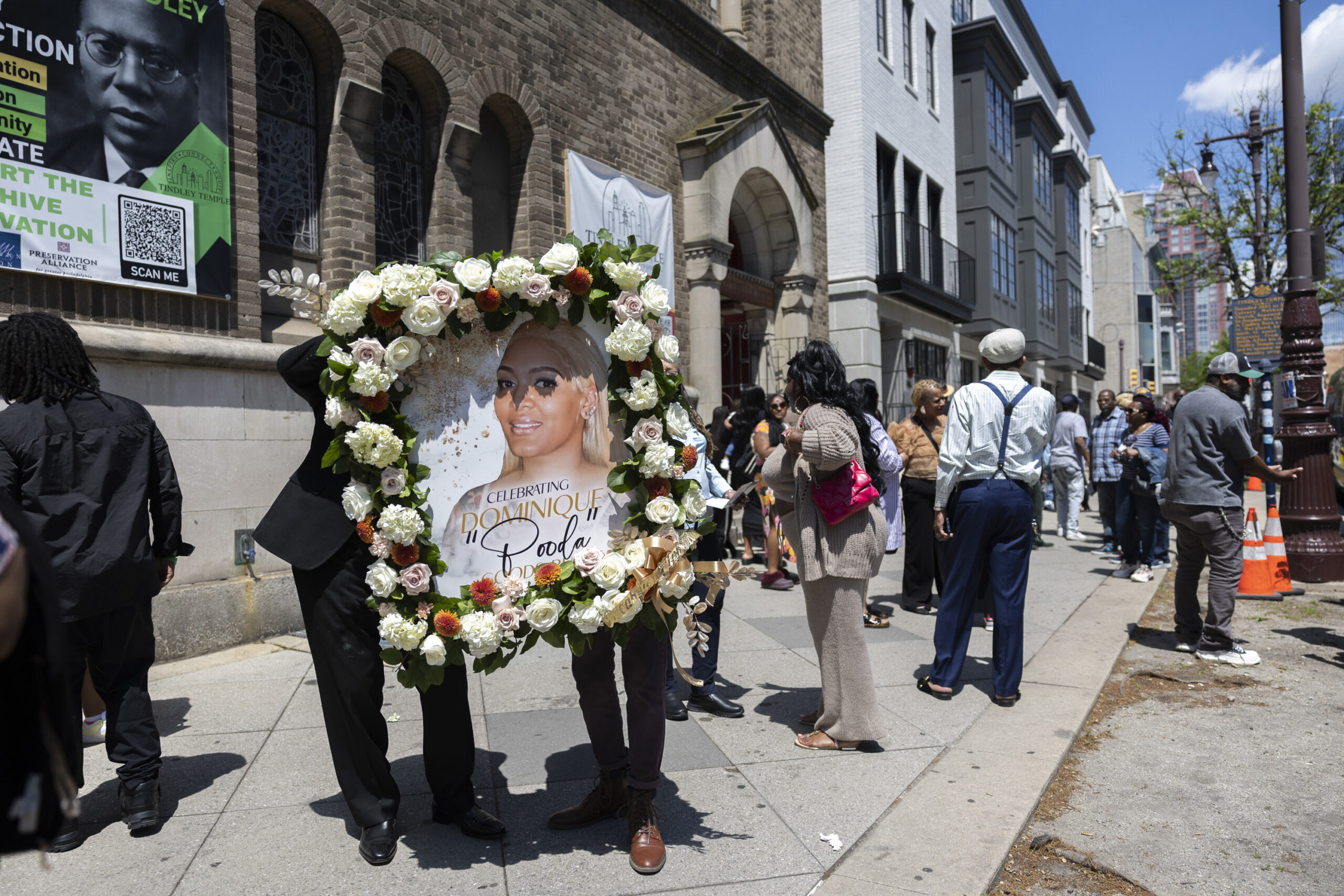
A floral photo of Dominique Goods Burke is carried out after the funeral service as family, friends and community members gather outside at Tindley Temple UM Church in Philadelphia, Pa., on Thursday, May 8, 2025. Dominique passed away at Jefferson hospital on April 27 due to the critical burns from the Roosevelt Mall Learjet crash along Cottman Avenue.
Goods Burke, 34, died of her injuries in April at Thomas Jefferson University Hospital, leaving behind her daughter and her 16-year-old son, Dominick Goods. (The family asked The Inquirer to withhold her daughter’s name to protect her privacy.)
On Saturday evening, Mayor Cherelle L. Parker and other city officials planned to place a wreath at the crash site. About 100 people gathered inside Engine 71 Fire Station on Cottman, the station closest to the crash site.
The plane’s impact had left a bomb-like crater in a driveway apron between a Raising Cane’s restaurant and a Dunkin’ Donuts. The 8-foot-deep hole has since been filled in and paved over, but the loss and devastation are irreparable.
“I don’t know how we made it through a year. It feels fresh, raw. Sometimes it’s hard to breathe,” said Fletcher, who was Goods Burke’s first cousin and best friend. “Losing her, I’ve felt alone and empty. I miss laughing with her. I miss joking with her. I miss celebrating life with her.”
Fletcher is helping to raise Goods Burke’s daughter and her son, Dominick, an 11th grader at Imhotep Institute Charter High School in East Germantown. Dominick’s father was Dreuitt, so he lost both parents.
“My godson doesn’t have his mother or his father. My goddaughter doesn’t have her mamma,” Fletcher said. “Other than them coming back, nothing could ever give us a reprieve from the pain.”
Ramesses Dreuitt Vazquez, 10, spent months in a Boston hospital recovering from burns to more than 90% of his body when the car he was riding in caught fire in the Jan. 31, 2025 plane crash in Northeast Philadelphia.
“I have my moments of still struggling. It’s been really tough,” said Dreuitt’s 61-year-old mother, Alberta “Amira” Brown, whose grandchildren are Ramesses and Dominick. “The life that we once had, we can never get it back.”
An irreplaceable booming voice
Dreuitt worked as a kitchen manager and team leader at the Philadelphia Catering Co. in South Philadelphia for more than seven years. Co-owner Tim Kelly said it was Dreuitt’s job to call staffers to lunch, which the company served to its 45 employees each day at noon.
“Steve would always call lunch, which basically was him just yelling, ‘LUNCH,’ three times loudly,” Kelly said. “His deep booming voice. Many of the guys here have tried to replicate it, but to no avail.”
“Time does help. It softens the blow,” Kelly said. “It was very difficult for a long time for a lot of us, but we’re at the point where we can remember him with a little less sadness and we can smile a bit.”
Goods Burke, whom loved ones affectionately called “Pooda” and colleagues called “Dom,” worked at High Point Cafe as a day bakery manager for years.
Cafe founder Meg Hagele said the staff treats her former work space, dubbed “Dom’s table,” with a shrine-like reverence. Seeing Goods Burke’s handwriting on recipes, scribbles in margins, stirs memories of her vibrancy and creativity.
“She’s very present with us still,” Hagele said. “This accident was just a shock to the entire city, but to be touched so personally by it is just freakish and profound.”
NTSB investigation continues
The National Transportation Safety Board is still investigating the crash’s cause. The plane — a medical transport Learjet 55 owned by Jet Rescue Air Ambulance, headquartered in Mexico City — had taken off at 6:07 p.m. from Northeast Philadelphia Airport. It climbed to 1,640 feet before nosediving just three miles away around 6:08 p.m.
NTSB investigators recovered the cockpit voice recorder at the scene, but after repairing it and playing it back, they found the device “had likely not been recording audio for several years,” according to a preliminary report released in March.
Brown, of Mount Airy, said she got a letter from the NTSB a few weeks ago saying investigators were making progress.
“That’s hope right there,” Brown said in a recent interview. ”It will help to know exactly what happened to make that plane come down. Does it change anything? No.”
Alberta “Amira” Brown remembers her son, Steven Dreuitt Jr., who died in the Jan. 31, 2025, plane crash in Northeast Philadelphia. In November, Brown attended a memorial service at Oxford Presbyterian Church in North Philadelphia.
The cremated remains of the six Mexican nationals who died aboard the plane were returned to loved ones in Mexico City last spring. Among the passengers were 11-year-old Valentina Guzmán Murillo and her 31-year-old mother, Lizeth Murillo Osuna. They were returning home after Valentinahad spent four months undergoing treatment for a spinal condition at Shriners Children’s Philadelphia.
Also killed were the pilot, Alan Montoya Perales, 46; his copilot, Josue de Jesus Juarez Juarez, 43; a Jet Rescue doctor, Raul Meza Arredonda, 41; and paramedic Rodrigo Lopez Padilla, 41.
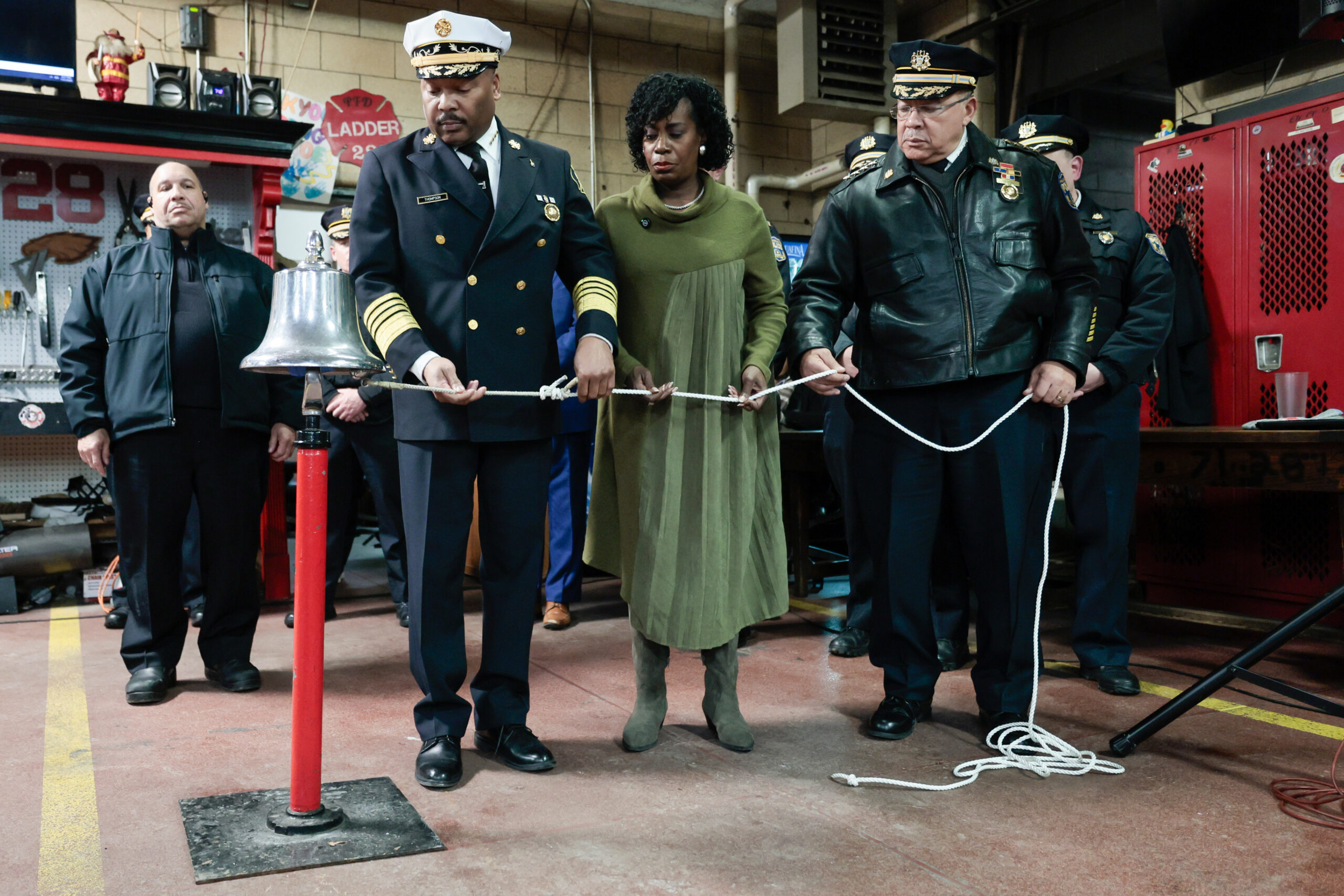
Philadelphia Fire Commissioner Jeffrey Thompson (from left) Mayor Cherelle L. Parker, and Police Commissioner Kevin J. Bethel ring a ceremonial bell at the one-year anniversary memorial observance of the Northeast Philly plane crash Saturday, Jan. 31, 2026, at Engine 71 Fire Station on Cottman Avenue in Philadelphia.
In the moments after the crash, hundreds of firefighters and rescue workers swarmed the area to put out homes and cars on fire from the jet fuel or burning pieces of aircraft that struck them.
Philadelphia Fire Commissioner Jeffrey Thompson, a 36-year veteran of the city’s fire department, said the plane crash “was without a doubt the biggest thing that I’ve ever responded to.”
In an interview on Thursday, Thompson recalled rushing to the scene from his Fishtown home, filled with dread and adrenaline.
“I remember it was dark. It was cold, and it was raining — it was like something out of a disaster movie,” Thompson said. “As I got closer, I could just see a sea of lights.”
He arrived to find multiple homes and cars on fire. Pools of jet fuel everywhere. And so many pieces of debris that he initially had no idea of the plane’s size. He said he and other first responders will never forget seeing body parts strewn among the wreckage.
“This still affects all of us. Just to see that is so unnatural,” Thompson said. “And the work that they did that night — that’s indelibly etched in their memories.”
More than 150 firefighters scoured “blocks and blocks” of homes, entering each one and every room, to make sure everyone was accounted for. He said he is amazed how multiple agencies worked together to bring “order to chaos.”
“That just gives me goose bumps,” Thompson said. He added, “This is actually therapeutic — me talking to you has been therapeutic because there was a lot there that night and I don’t often talk about this.”
Miracles, luck, and skill
As tragic as that night was, Thompson said, there was some miraculousness, including the fact that the plane struck a patch of empty pavement between two busy restaurants.
“Sometimes in this life, there’s luck,” Thompson said. “It was rush hour. You had a shopping mall and a densely populated neighborhood. It could have been infinitely worse.”
Lashawn ‘Lala’ Hamiel, Andre “Tre” Howard III, and his family cheer on the Eagles during Super Bowl LIX.
Andre Howard Jr. had just picked up his three kids — then ages 4,7, and 10 — from aftercare at Soans Christian Academy. They headed to Dunkin’ for strawberry doughnuts. As they were leaving the parking lot in Howard’s car, the plane exploded a few feet away. A plane part crashed through the car’s window. Howard’s 10-year-old son, Andre “Tre” Howard III, used his body to shield his 4-year-old sister and a piece of metal struck his head.
Tareq Yaseen, a neurosurgeon at Jefferson Torresdale Hospital, was having dinner with his family, including his kids, ages 10 and 6, at Dave & Buster’s at Franklin Mall when he rushed back to the hospital to perform emergency surgery on Tre.
The boy had two gashes in the right side of his head, and his skull had been shattered into more than 20 pieces, Yaseen recalled.
“My son is the exact age as Tre, which made things very personal and emotional to me,” Yaseen said. “He’s gonna die. He was basically losing consciousness and going in a bad direction.”
“I felt for a moment that I would not be able to help him,” Yaseen said. “I was very scared that I’m gonna fail. There’s too much on the line and it’s a little boy.”
Yaseen said he worked fast to relieve the pressure on Tre’s brain and remove bits of broken skull. The surgery was a success. More than 60 relatives and friends in the hospital waiting room hugged and thanked him, Yaseen recalled.
“It’s a moment that would happen in the movies,” Yaseen said. “I was very lucky to take part in saving his life.”
Tre was transferred to the Children’s Hospital of Philadelphia, where he made a near-full recovery. He celebrated his 11th birthday in December.
“With time, he’ll grow up and forget about it. God gave us a gift to forget, which is great,” Yaseen said. “But I will never forget.”
Jefferson neurosurgeon Tareq Yaseen poses for a photo with Andre “Tre” Howard III and his mother, Lashawn “Lala” Hamiel at Jefferson Torresdale Hospital.
A memorial
At the memorial Saturday, Mayor Parker read aloud the names of all eight who perished that night.
“To all the families who continue to carry this grief everyday, that until you’ve walked a mile in their shoes, you can’t begin to understand what it’s like,” Parker said. “It is important for us to affirm that they know that Philadelphia stands with you today and we will always.”
She asked the victims’ family members in attendance to stand and be recognized, including Brown, her grandson, Dominick, and Lisa Goods, the aunt of Goods Burke.
The mayor said she plans to keep close tabs on Dominick.
“Now he knows he belongs to me — don’t try to take him from me,” Parker said as she looked at Dominick seated in the front row.
Parker also recognized first responders for their “extraordinary bravery and selflessness.”
“In a moment of unimaginable tragedy, you all ran towards danger to protect others.”
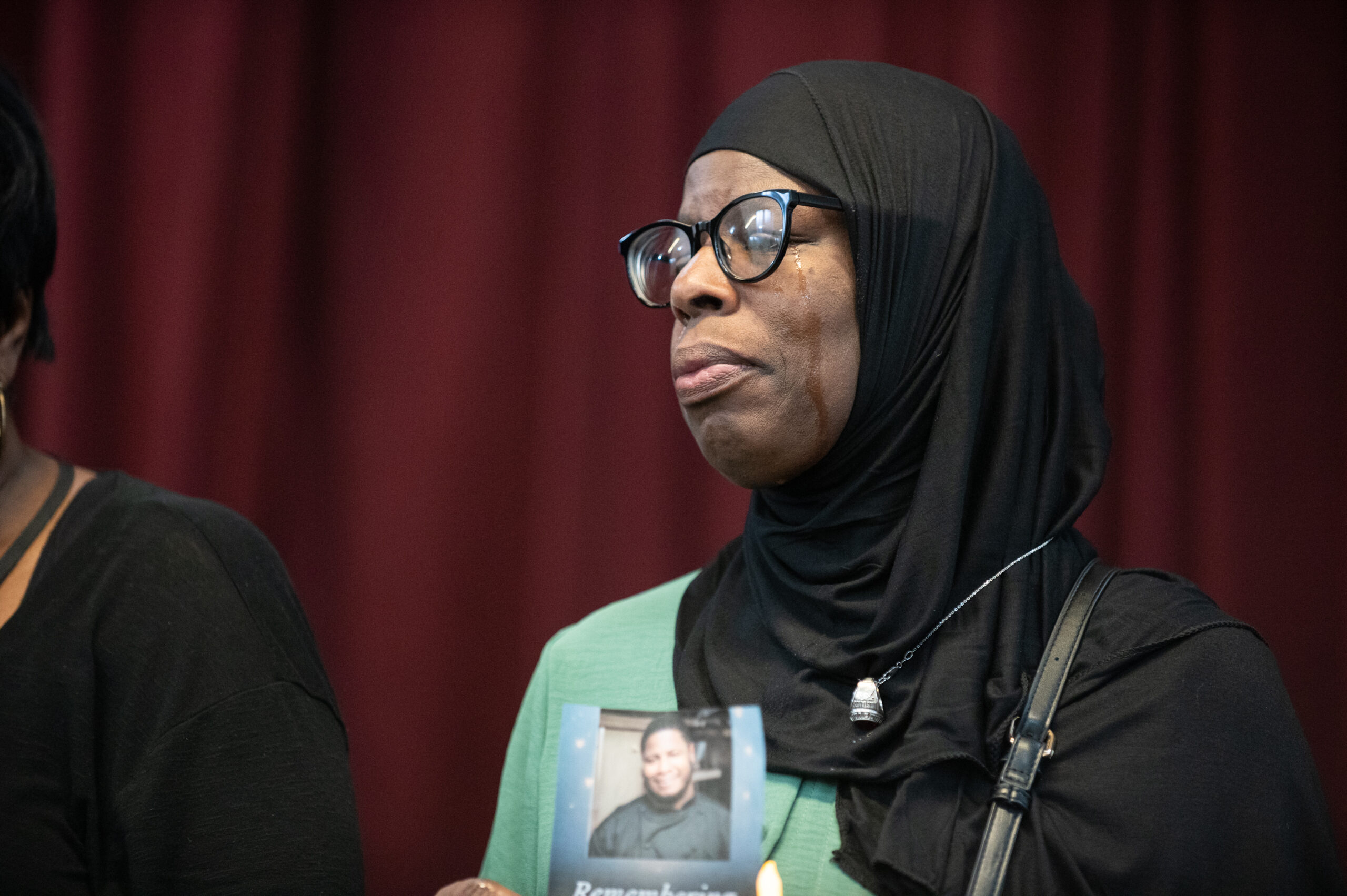
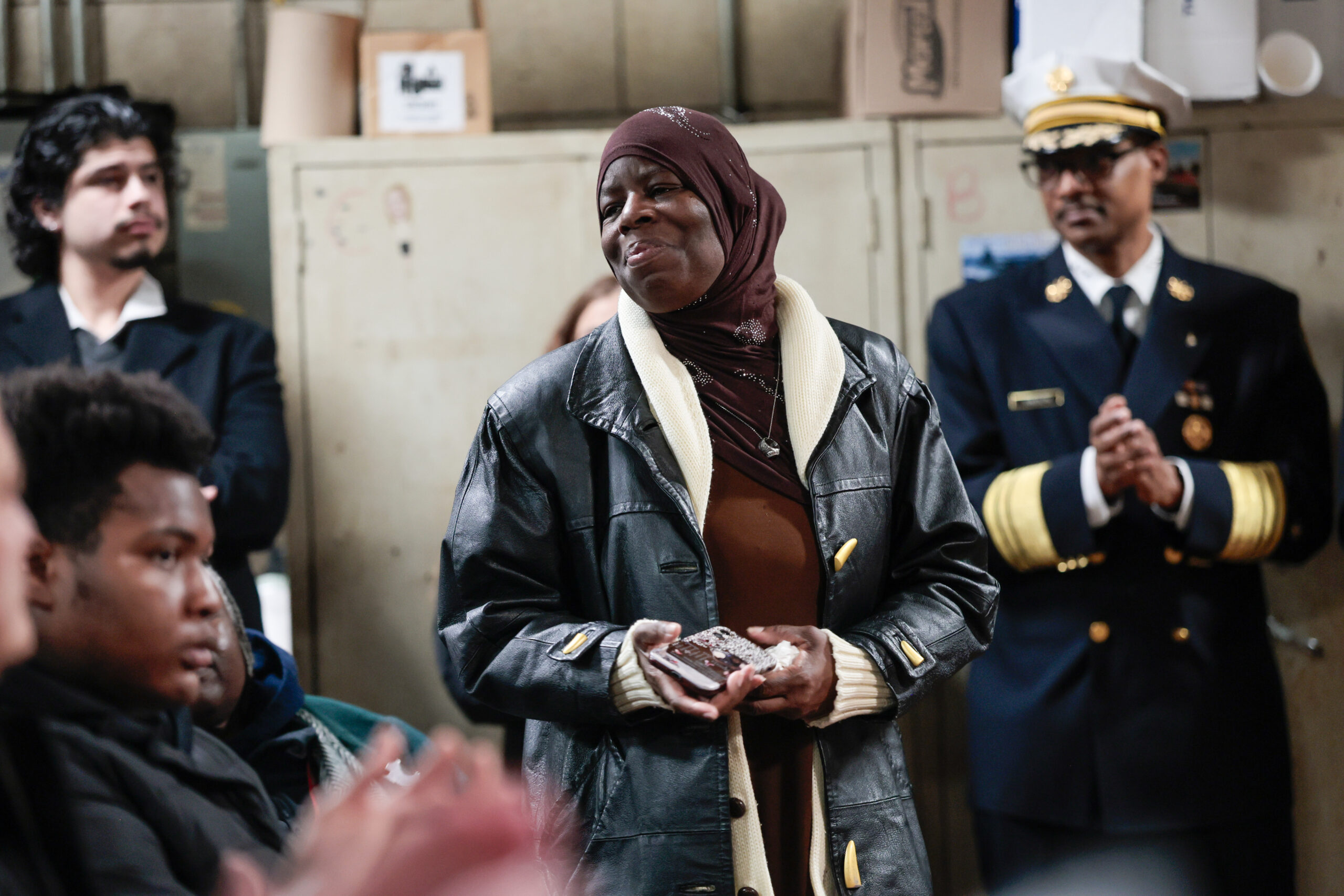
Alberta “Amira” Brown (center), the grandmother of 10-year-old Ramesses Dreuitt Vazquez, who was severely burned after a plane crashed into his North Philadelphia neighborhood last year at the one year anniversary memorial observance of the Northeast Philly plane crash Saturday, Jan. 31, 2026, at Engine 71 Fire Station on Cottman Ave., in Philadelphia
Nearly a month after dangerous winds snarled their New Year’s Day performances, a dozen Mummers string bands got their encore.
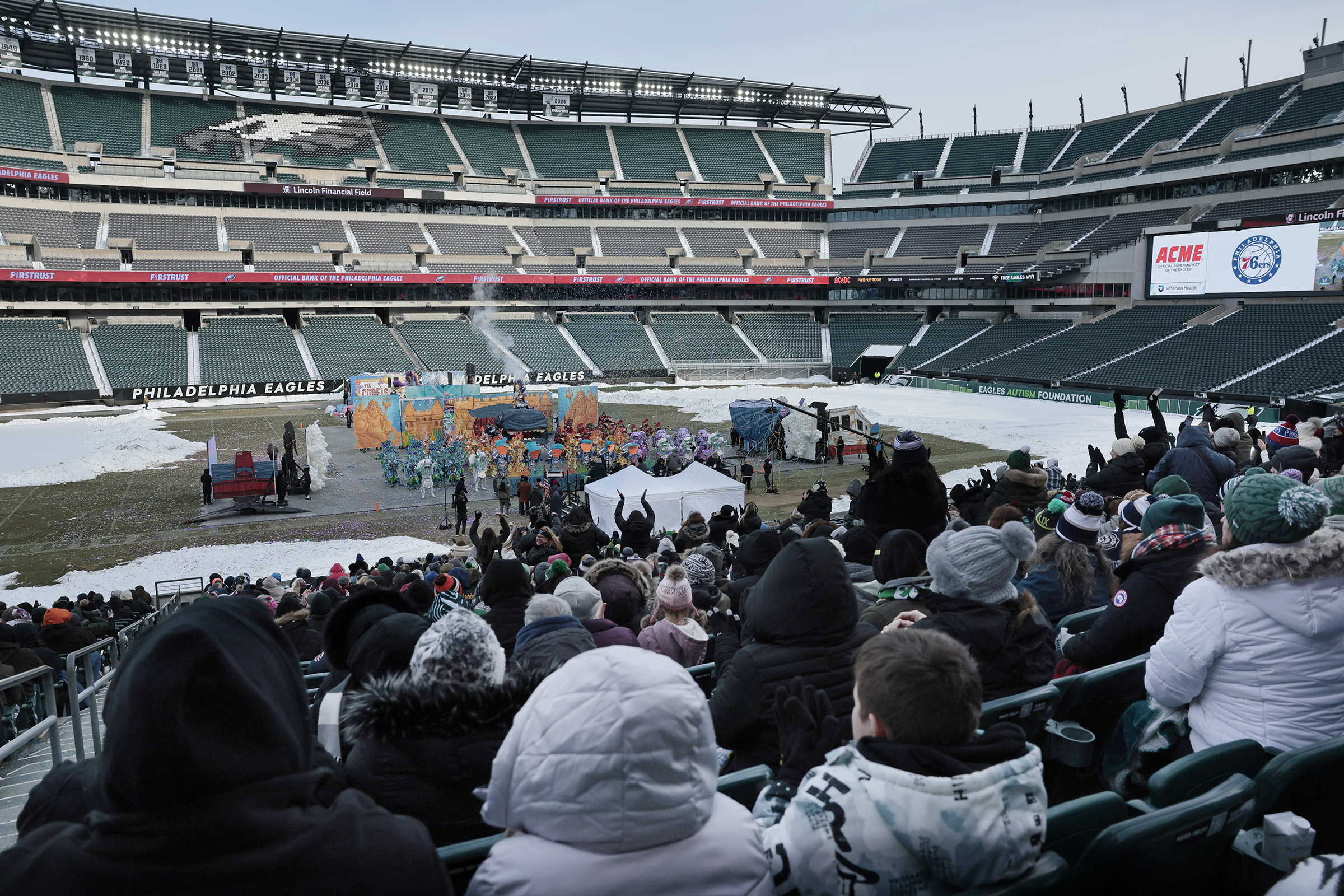
The slate of bands reimagined their Jan. 1 routines Saturday on the snow-covered Lincoln Financial Field. It was a break from the norm — but perhaps the start of a new tradition for the 125-year-old Mummers.
“This is how we do it in our city,” Mayor Cherelle L. Parker rallied the chilly but boisterous crowd. “When we set our minds to get something done, we won’t let the weather or anything stop us.”
The mayor suggested: “I think we might be on to something big.”
Folks applaud the bands during the 2026 String Band Spectacular at Lincoln Financial Field in Philadelphia on Saturday, Jan. 31, 2026.
It was not the first disruption to the century-old holiday parade, but it was the first time that the popular string band division was suspended. The reenvisioned judged portion — dubbed the String Band Spectacular — on the Philadelphia Eagles’ home turf was announced weeks later.
“Thousands of people are out here cheering like it’s New Year’s Day all over again,” Sam Regalbuto, president of the Philadelphia Mummers String Band Association, said. “The cold isn’t keeping the fans away, and it’s definitely not keeping the energy down out on the field.”
Laksumi Sivanandan, 27, and Carter Davis, 30, of East Passyunk, were at the parade on New Year’s Day but were excited to see the string bands with different scenery — and have the rare opportunity to be feet from the Eagles sideline at an accessible price. (More than 5,000 tickets, ranging from $12 to $25, were sold, according to Regalbuto.)
“It’s fun to see it in a different environment — usually you’re sitting on a lawn chair on Broad Street.”
But the rescheduled event was not without its own weather woes: On Friday, at least one string band pulled out of the performance, citing the frigid temperatures. A total of 14 bands make up the Philadelphia Mummers String Band Association, according to its website, but only 12 were scheduled to take the stage Saturday.
A coastal “bomb cyclone” was expected to douse parts of New Jersey and Delaware with some snowfall this weekend, while stinging winds and arctic air in Philadelphia pushed temperatures into single digits and plunged wind chills to as low as 10 degrees below zero. At the height of the show Saturday, temperatures barely eclipsed 20 degrees at the open-air Linc.
For spectators, who were clustered in the stadium’s lower bowl and sprinkled in suites, the keys to staying warm: layers, hand warmers, and beer jackets.
But the event offered Mummers enthusiasts and newbies alike an opportunity to enjoy the bands’ jovial music, unique sound, and elaborate costumes — with performances taking the audience from the sights of Las Vegas to New Orleans, a funhouse, and the Beauty and the Beast mansion — outside of New Year’s revelry.
“This is the moment each of the string bands work so hard for, and we’re so thrilled,” Regalbuto said. “This all came together to give them their shining spotlight out on that field in an unprecedented way. We couldn’t be more excited.”
The Fralinger String Band performs during the 2026 String Band Spectacular at Lincoln Financial Field in Philadelphia on Saturday, Jan. 31, 2026.
New Jersey Shore communities are forecast to see minor flooding Sunday, as an offshore storm is expected to bring high winds that will also cause another bitterly cold night for Philadelphia and its suburbs.
The biggest concern is the high winds, which are expected to bring gusts of up to 40 or even 50 mph in Cape May County, as well as Sussex County, Del., according to Amanda Lee, a meteorologist for the National Weather Service’s Mount Holly office. Sustained winds are forecast to be 20 to 25 mph.
“There’s potential for some minor coastal flooding with the high tide cycles,” Lee said. Sunday morning’s high tide looks to carry the greatest risk, she added, with the potential for more with the Monday morning high tide.
The threat of flooding is the result of two factors: the wind pushing water closer to the coast and the full moon.
“When we’re in full moons and new moons, the astronomical tides are higher as well,” Lee said. “So the combination of those factors are leading to the potential for the coastal flooding.”
While wind and flooding are the chief concerns, the Shore could also receive some snow — up to half an inch, she said.
Philadelphia and the region
The storm’s impact is expected to be felt much less in Philadelphia, with no snow and lower winds. But breezes could push the wind chill to minus 10 degrees, Lee said.
“It’s still certainly going to be a breezy day, particularly on Sunday. We’ll potentially see wind gusts up to around 30 miles an hour or so,” she said.
Sunday morning’s low is forecast to be in the high single digits to around 10 degrees, with winds picking up later in the day to keep things frigid.
“Again, still very much the same pattern we’ve been in: very, very cold,” Lee said.
Atlantic City gears up
Lee said that while any flooding along the Shore should be minor, that could still mean some full road closures. Conditions may be worse along the bays, where winds could push ice onshore.
One community gearing up for any high winds and floods is Atlantic City, said Scott Evans, the fire chief and emergency management coordinator. He said the city is expecting minor flooding, which may mean water on a few streets.
City public works crews have been out clearing drains, and were ready to salt icy roads, Evans said.
“Just a couple of our low-lying areas are going to experience what we call our nuisance flooding, but this … will be compounded because the temperatures will be well below freezing,” he said.
Evans encouraged Atlantic City residents to take steps, as they would ahead of other potential emergencies.
“Make sure you have your emergency preparedness kits, make sure you have your medications, your flashlights, extra batteries, cell phone chargers, and some of your basic things, some food and water, some other things should your power go out,” he said.
“Let’s hope for the best here,” Evans said.
The coming days
Beyond Sunday, it will remain cold this week, Lee said, “but in some ways a little bit warmer than we have been now.”
But not “warm” warm.
“We’re actually looking at potentially cracking above freezing, most likely on Tuesday,” Lee said. But even then, the highs will only be in the lower 30s. And another shot of cold is forecast for later in the week into the following week.
SAN ANTONIO — A judge on Saturday ordered the U.S. to release a 5-year-old boy and his father from a Texas detention center where they were taken after being detained in a Minneapolis suburb last month.
Images of Liam Conejo Ramos, with a bunny hat and Spiderman backpack being surrounded by U.S. Immigration and Customs Enforcement officers, sparked even more outcry about President Donald Trump’s immigration crackdown in Minnesota. It also led to a protest at the family detention center and a visit by two Texas Democratic members of Congress.
U.S. District Judge Fred Biery, who was appointed by former Democratic President Bill Clinton, said in his ruling “the case has its genesis in the ill-conceived and incompetently-implemented government pursuit of daily deportation quotas, apparently even if it requires traumatizing children.”
Stephen Miller, the White House chief of staff for policy, has said there’s a target of 3,000 immigration arrests a day. It’s that figure which the judge seemed to describe as a “quota.”
Biery also included in his ruling a photo of Liam Conejo Ramos and references to two lines in the Bible: “Jesus said, ’Let the little children come to me, and do not hinder them, for the kingdom of heaven belongs to such as these,” and “Jesus Wept.”
Spokespersons from the U.S. Department of Justice and U.S. Department of Homeland Security did not immediately reply to requests for comment.
Neighbors and school officials say that federal immigration officers in Minnesota used the preschooler as “bait” by telling him to knock on the door to his house so that his mother would answer. The Department of Homeland Security has called that description of events an “abject lie.” It said the father fled on foot and left the boy in a running vehicle in their driveway.
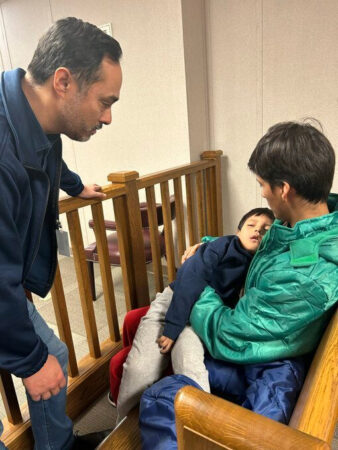
During the Jan. 28 visit with Reps. Joaquin Castro and Jasmine Crockett, the boy slept in the arms of his father, who said Liam was frequently tired and not eating well at the detention facility housing about 1,100 people, according to Castro.
Detained families report poor conditions like worms in food, lack of clean water, and poor medical care at the detention center since its reopening last year. In December, a report filed by ICE acknowledged they held about 400 children longer than the recommended limit of 20 days.
The White House stands about 70 feet tall. The Lincoln Memorial, roughly 100 feet. The triumphal arch President Donald Trump wants to build would eclipse both if he gets his wish.
Trump has grown attached to the idea of a 250-foot-tall structure overlooking the Potomac River, according to two people who spoke on the condition of anonymity to describe his comments, a scale that has alarmed some architectural experts who initially supported the idea of an arch but expected a far smaller one.
The planned Independence Arch is intended to commemorate the United States’ 250th anniversary. Built to Trump’s specifications, it would transform a small plot of land between the Lincoln Memorial and Arlington National Cemetery into a dominant new monument, reshaping the relationship between the two memorials and obstructing pedestrians’ views.
Trump has considered smaller versions of the arch, including 165-foot-high and 123-foot-high designs he shared at a dinner last year. But he has favored the largest option, arguing that its sheer size would impress visitors to Washington, and that “250 for 250” makes the most sense, the people said.
Architectural experts counter that the size of the monument — installed in the center of a traffic circle — would distort the intent of the surrounding memorials.
“I don’t think an arch that large belongs there,” said Catesby Leigh, an art critic who conceived of a more modest, temporary arch in a 2024 essay — an idea that his allies championed and brought to the White House. His allies also passed along Leigh’s recommendation of an architect, Nicolas Leo Charbonneau, who has been retained by the White House to work on the project.
Charbonneau did not respond to requests for comment.
Asked about the arch’s height, the White House on Saturday referred to the president’s previous comments.
“The one that people know mostly is the Arc de Triomphe in Paris, France. And we’re going to top it by, I think, a lot,” Trump said at a White House Christmas reception in December.
The Arc de Triomphe — already one of the world’s largest triumphal arches — measures 164 feet.
Trump also told Politico in December that he hoped to begin construction of the arch within two months, a timeline that appears unlikely given that White House officials have yet to make the final plans public or submit them to federal review panels. Memorial Circle, the plot of land that the president has eyed, is controlled by the National Park Service.
The White House reiterated the president’s desire to have an iconic monument.
The arch will become “one of the most iconic landmarks not only in Washington, D.C., but throughout the world,” spokesperson Davis Ingle said in a statement sent to the Washington Post after this article’s publication. “President Trump’s bold vision will be imprinted upon the fabric of America and be felt by generations to come.”
Washington does not have a triumphal arch, making it unusual among major cities that have built arches to commemorate wars and celebrate milestones, and some historians and civic leaders have long argued that such a monument is needed.
Rodney Mims Cook Jr., an Atlanta-based developer and president of the National Monuments Foundation, proposed a peace arch to Washington leaders in 2000 before the plans were withdrawn in the wake of the Sept. 11, 2001, terrorist attacks. Cook later built a monumental arch in Atlanta, the Millennium Gate Museum, intended to celebrate Georgia’s history.
Trump this month appointed Cook to the Commission of Fine Arts, a federal panel that would be set to review and approve the design of new monuments in Washington — including the president’s potential arch.
Trump on Jan. 23 also posted images on his Truth Social platform with no comment that depict three versions of a large triumphal arch, including one option with gold gilding — a hallmark of Trump’s construction projects. Asked about the president’s post, White House officials said that the arch design continues to be refined. The White House also said the plan to put a large Lady Liberty statue atop the arch, which was included in previous concepts presented by Trump and Charbonneau but not in the president’s Truth Social post, has not been abandoned.
City planners have eyed the land around what is now Memorial Circle for more than a century. A 1901-1902 report overseen by the Senate Park Commission, which laid the groundwork to construct the National Mall and beautify much of the city’s core, appears to envision some sort of structure in the circle, drawings show. Architect William Kendall in 1928 also presented plans to the Commission of Fine Arts to construct a memorial there.
Local historians and architectural experts have said that a large arch could change the relationship between several historic sites, including Arlington Memorial Bridge itself, which was intended as a bridge between North and South in the wake of the Civil War,and memorials for Lincoln and Confederate Gen. Robert E. Lee.
“It’s a very somber corridor,” said John Haigh, the chairperson of Benedictine College’s architecture program, who visited Memorial Circle with his students last year to consider the arch project. “We discussed the gravity of putting an arch there,” particularly one intended to be triumphal.
The structure as planned could obstruct views of Arlington House, the former Lee estate that sits on a hillside in Arlington National Cemetery.
“I would be very concerned about the scale,” said Calder Loth, a retired senior architectural historian for the Virginia Department of Historic Resources, warning that a 250-foot-high arch could alter pedestrians’ views as they approach Arlington National Cemetery from Washington. “It would make Arlington House just look like a dollhouse — or you couldn’t see it all, with the arch blocking the view.”
They also cautioned that, barring major changes to the circle, it could be difficult for pedestrians to visit a potential monument there, given the busy motor traffic.
Loth also invoked the vantage point from Arlington National Cemetery, where visitors often look across the river toward the Lincoln Memorial and the capital beyond — a view he said the proposed arch would reshape.
“How does it impact the panorama of Washington?” Loth said, invoking a question that he said should guide designers of monuments. “What is supposed to be doing the speaking?”
Leigh initially proposed a 60-foot arch that could pop up as a temporary structure to mark America’s 250th. Trump instead wants a permanent arch, more than four times larger, funded with leftover private donations to his White House ballroom project,which he has said could cost about $400 million. Publicly identified donors to the ballroom project, such as Amazon, Google, and Lockheed Martin, collectively have billions of dollars in contracts before the administration. (Amazon founder Jeff Bezos owns the Washington Post.)
Any construction plan for the arch would probably need to go through several review panels and potentially require the sign-off of Congress, given laws around constructing monuments in Washington.
Trump’s interest in enlarging the arch mirrors his desire to expand the White House ballroom, which last year sparked clashes with James McCrery II, the architect initially tapped for the project. Shalom Baranes, the architect now leading that work, told federal review panels this month that White House officials have halted plans to make the ballroom even larger.
Leigh suggested a compromise location that could allow Trump his large monument without imposing on other structures.
“If you’re going to build an arch that big, you should build it in another part of town and one possible site that comes to mind is Barney Circle,” Leigh said, referencing a site in Southeast Washington next to Congressional Cemetery, overlooking the Anacostia River. “There’s nothing around it competing with it.”
A judge on Saturday declined to order the Trump administration to immediately scale back its immigration enforcement surge in Minnesota, rejecting pleas from state officials who said the campaign was stepping on their sovereignty and endangering the public.
U.S. District Judge Kate Menendez said Minnesota and the Twin Cities had not definitively shown that the administration’s decision to flood the state with immigration agents, an initiative dubbed Operation Metro Surge, was unlawful or designed to coerce local officials into cooperating with other administration objectives.
However, while she denied the state’s request for a preliminary injunction ending the surge, the judge stressed that she was making not making a final determination on the state’s claims, a step that would take place after further litigation. She also cautioned that she was not deciding whether specific actions taken by immigration authorities during the surge were unlawful.
“It would be difficult to overstate the effect this operation is having on the citizens of Minnesota, and the Court must acknowledge that reality here,” wrote Menendez, who was named to the bench by President Joe Biden. “However, those are not the only harms to be considered. … Defendants have presented evidence that entry of the injunction requested by Plaintiffs would harm the federal government’s efforts to enforce federal immigration law.”
Immigration agents have flooded Minnesota in recent weeks, sparking protests as well as an intensive effort among residents to track and document the enforcement efforts. Federal authorities have shot and killed two people in Minneapolis since this surge began, prompting widespread outrage in Minnesota and across the country.
Minnesota officials sued the Trump administration on Jan. 12 in response to the surge, saying that federal agents had “stormed the Twin Cities to conduct militarized raids and carry out dangerous, illegal, and unconstitutional stops and arrests.”
In their lawsuit, Minnesota authorities said the Trump administration launched the campaign “to punish political opponents and score partisan points.” They said the federal government was putting public safety at risk, provoking protests, and undermining public trust in local law enforcement.
The Trump administration said Minnesota officials were “effectively seeking a state veto over the enforcement of federal law by federal officers.”
Federal officials wrote in court papers that the immigration crackdown has been a success despite attacks and threats against federal personnel. President Donald Trump campaigned on enforcing immigration laws, the Justice Department wrote, and “Minnesota is a crucial priority for immigration enforcement.”
Federal officials said in a court filing Monday that there were approximately 3,000 officers and agents from the U.S. Immigration and Customs Enforcement and Customs and Border Protection “conducting immigration enforcement actions in the greater Minneapolis area.”
Minnesota officials, in court filings and public comments, have said the situation in and around Minneapolis is dire and required urgent help from the courts. They have also pointed to the two recent shootings by federal authorities to bolster their case.
After an ICE officer shot and killed Renée Good on Jan. 7, Minneapolis launched its emergency preparedness protocols, leading to “significant additional work” for police and others in the city, Minnesota officials wrote in a court filing.
Federal agents fatally shot Alex Pretti, a 37-year-old ICU nurse, on Jan. 24. In a letter to the court the same day, Minneapolis and Minnesota officials said Pretti’s killing further illustrated the need for “a court-ordered respite” to the ongoing situation.
During a court hearing Monday, Menendez said that while “we are in shockingly unusual times,” she was skeptical about whether her authority let her decide if the immigration agents could remain deployed in Minnesota.
Menendez also questioned a letter Attorney General Pam Bondi wrote to Minnesota Gov. Tim Walz (D) on the day Pretti was killed, demanding access to the state’s voter rolls and records relating to food assistance programs.
Bondi appeared to link these moves with a possible end to the immigration crackdown in Minnesota. During the hearing, Menendez asked whether the letter was akin to a ransom note.