Category: News

Latest breaking news and updates

  • Two rival sex traffickers arrested in Norristown following shooting, police say

    Two rival sex traffickers arrested in Norristown following shooting, police say

    A street shooting in Norristown last week led investigators to discover two sex-trafficking operations that transported women from New York to Montgomery County to engage in prostitution, prosecutors said Thursday.

    A dispute between two men who ran rival enterprises erupted in gunfire on Feb. 13, police said, when one shot the other in the thigh during a confrontation on the 400 block of Sandy Street.

    On Tuesday, authorities arrested both men.

    Efran Flores-Rodriguez, 24, of Norristown, and Fernando Meza-Ramirez, 42, of Corona, Queens, are each charged with trafficking individuals and involuntary servitude. Flores-Rodriguez faces additional charges, including attempted murder, in connection with the shooting.

    Officers responding to reports of gunfire found Meza-Ramirez inside a bullet-riddled Toyota RAV4, police said. He had been shot in the thigh.

    Meza-Ramirez told police that a stolen white Acura TLX had followed him from Lafayette Street to Sandy Street. When he pulled over, he said, the sedan pulled up beside him and someone opened fire. A witness identified Flores-Rodriguez as the shooter, according to the affidavit of probable cause for his arrest.

    But investigators say the shooting exposed more than a personal feud.

    At the hospital where Meza-Ramirez was treated, officers found business cards in his wallet bearing photographs of scantily clad women posing on beds, according to the affidavit.

    Days later, on Feb. 17, police searched Flores-Rodriguez’s home and encountered a woman from Flushing, Queens, who told them she had worked as a prostitute under his direction last summer.

    She said Flores-Rodriguez, whom she knew as “Guerro,” drove her to Norristown six days a week, provided her a room and charged clients $60 for 10-minute sexual encounters. She told police she sometimes had as many as 15 encounters a day and kept half the money he collected.

    The woman said she also worked this year for Meza-Ramirez, whom she knew as “Leo,” under the same arrangement, according to the affidavit.

    Both men were denied bail at arraignment and are being held at the Montgomery County Correctional Facility.

  • Former Prince Andrew arrested and held for hours on suspicion of misconduct over ties to Epstein

    Former Prince Andrew arrested and held for hours on suspicion of misconduct over ties to Epstein

    LONDON — The former Prince Andrew was arrested and held for hours by British police Thursday on suspicion of misconduct in public office related to his links to Jeffrey Epstein, an extraordinary move in a country where authorities once sought to shield the royal family from embarrassment.

    It was the first time in nearly four centuries that a senior British royal was placed under arrest, and it underscored how deference to the monarchy has eroded in recent years.

    King Charles III, whose late mother lived by the motto “never complain, never explain,” took the unusual step of issuing a statement on the arrest of his brother, now known as Andrew Mountbatten-Windsor.

    “Let me state clearly: the law must take its course,’’ the king said. “As this process continues, it would not be right for me to comment further on this matter.’’

    The Thames Valley Police force said Mountbatten-Windsor was released Thursday evening, about 11 hours after he was detained at his home in eastern England. He was photographed in a car leaving the station near his home on the royal Sandringham Estate.

    Police said he was released under investigation, meaning he has neither been charged nor exonerated. Police said they had finished searching Mountbatten-Windsor’s home, but officers were still searching his former residence near Windsor Castle.

    The police force, which covers areas west of London, including Mountbatten-Windsor’s former home, said Thursday that a man in his 60s from Norfolk in eastern England, had been arrested and was in custody. Police did not identify the suspect, in line with standard procedures in Britain.

    Mountbatten-Windsor, 66, moved to the king’s private estate in Norfolk after he was evicted from his longtime home near the castle earlier this month.

    Police previously said they were “assessing” reports that Mountbatten-Windsor sent trade information to Epstein, a wealthy investor and convicted sex offender, in 2010, when the former prince was Britain’s special envoy for international trade. Correspondence between the two men was released by the U.S. Justice Department late last month along with millions of pages of documents from the American investigation into Epstein.

    “Following a thorough assessment, we have now opened an investigation into this allegation of misconduct in public office,’’ Assistant Chief Constable Oliver Wright said in a statement.

    “We understand the significant public interest in this case, and we will provide updates at the appropriate time,” he added.

    Police also said they were searching two properties.

    Earlier in the day, pictures circulated online that appeared to show unmarked police cars at Wood Farm, Mountbatten-Windsor’s home on the Sandringham Estate in Norfolk, with plainclothes officers gathering outside.

    Mountbatten-Windsor has consistently denied any wrongdoing in his association with Epstein.

    The allegations being investigated Thursday are separate from those made by Virginia Giuffre, who claimed she was trafficked to Britain to have sex with the prince in 2001, when she was just 17. Giuffre died by suicide last year.

    Still, Giuffre’s family praised the arrest, saying that their “broken hearts have been lifted at the news that no one is above the law, not even royalty.”

    The family added: “He was never a prince. For survivors everywhere, Virginia did this for you.”

    A ‘spectacular fall from grace’

    “This is the most spectacular fall from grace for a member of the royal family in modern times,” said Craig Prescott, a royal expert at Royal Holloway, University of London, who compared it in severity to the crisis sparked by Edward VIII’s abdication to marry American divorcee Wallis Simpson.

    “And it may not be over yet,’’ Prescott added.

    Thursday’s arrest came a day after the National Police Chiefs’ Council said it had created a coordination group to assist forces across the U.K. that are assessing whether Epstein and his associates committed crimes in Britain. In addition to the concerns about Mountbatten-Windsor ’s correspondence, documents released by the U.S. suggest Epstein may have used his private jet to traffic women to and from Britain.

    The documents also rocked British politics. Prime Minister Keir Starmer had to fight off questions about his judgment after the papers revealed that Peter Mandelson, the man he appointed ambassador to the U.S., had a longer and closer relationship with Epstein than was previously disclosed.

    London’s Metropolitan Police Service has said it is investigating allegations of misconduct in public office related to Mandelson’s own correspondence with Epstein. Mandelson was fired as ambassador to the U.S. in September.

    But it is Mountbatten-Windsor’s relationship with Epstein that brought the scandal to the doors of Buckingham Palace and threatened to undermine support for the monarchy.

    The last time a senior British royal was arrested was almost 400 years ago during the reign of King Charles I that saw a growing power struggle between the crown and Parliament.

    After the king attempted to arrest lawmakers in the House of Commons in 1642, hostilities erupted into the English Civil War, which ended with victory for the parliamentary forces of Oliver Cromwell.

    Charles I was arrested, tried, convicted of high treason, and beheaded in 1649.

    Modern concerns about Mountbatten-Windsor’s links to Epstein have dogged the royal family for more than a decade.

    The late Queen Elizabeth II forced her second son to give up royal duties and end his charitable work in 2019 after he tried to explain away his friendship with Epstein during a catastrophic interview with the BBC.

    But as concern mounted about what the Epstein files might reveal, the king moved aggressively to insulate the royal family from the fallout.

    Since October, Charles has stripped his younger brother of the right to be called prince, forced him to move out of the royal estate he occupied for more than 20 years and issued a public statement supporting the women and girls abused by Epstein.

    Last week, the palace said it was ready to cooperate with police investigating Mountbatten-Windsor.

    Charles was forced to act after Mountbatten-Windsor’s correspondence with Epstein torpedoed the former prince’s claims that he severed ties with the financier after Epstein’s 2008 conviction for soliciting a minor for prostitution.

    Instead, emails between the two men show Epstein offering to arrange a date between Mountbatten-Windsor and a young Russian woman in 2010, and the then-prince inviting Epstein to dinner at Buckingham Palace.

    Additional correspondence appears to show Mountbatten-Windsor sending Epstein reports from a two-week tour of Southeast Asia that he undertook in 2010 as Britain’s trade envoy.

    Danny Shaw, an expert on law enforcement in the U.K., told the BBC that in most cases, suspects are held between 12 and 24 hours and are then either charged or released pending further investigation.

    Mountbatten-Windsor will be placed in “a cell in a custody suite” with just “a bed and a toilet,” where he will wait until his police interview.

    “There’ll be no special treatment for him,″ Shaw said.

  • Some Delco SEPTA riders will have 15 minutes added to their commutes, beginning Monday

    Some Delco SEPTA riders will have 15 minutes added to their commutes, beginning Monday

    Rides on the two trolley lines serving Delaware County promise to be safer but longer with a modern signal system scheduled to go live on Monday, SEPTA said.

    The upgraded signals on the D1 and D2 trolley lines will require operators to make more gradual accelerations and decelerations. They will also enforce speed limits and stop signals with automatic braking if needed.

    “It will reduce the possibility of operator error,” SEPTA general manager Scott A. Sauer said. “They won’t be able to speed and risk derailment. They won’t be able to violate stop signals or misaligned switches.”

    But the computer won’t replace the judgment of the people operating a trolley, Sauer said. Operators will get an alert, and the system provides backup if they cannot correct it in time, he said.

    Trips will be up to 15 minutes longer on the D1 route and 10 minutes on the D2 route, depending on where a passenger boards and gets off the trolley.

    The trolleys operate between Media and the 69th Street Transportation Center in Upper Darby, and between Sharon Hill and the transit hub. They were formerly called Routes 101 and 102.

    The transit agency also is releasing new spring schedules for all elevated-subway and bus transit, using the new “Metro” way-finding nomenclature, which uses letters for the various services.

    SEPTA accounted for the increased Delaware County trolley travel times in the new schedules, which begin Monday.

    It took about a decade and $75 million to install the system, called Communications-Based Train Control, on the Delco trolleys, said John Frisoli, SEPTA’s top rail signals engineer. Radios communicate between the control system and the trolleys.

    A similar system has operated in the Center City trolley tunnel since 2005. SEPTA has been adding safety features to its rail-signal systems for about 20 years, including the installation of Positive Train Control on Regional Rail, which controls train speed and applies automatic brakes to prevent crashes caused by human error.

  • Silicon Valley is building a shadow power grid for data centers across the U.S.

    Silicon Valley is building a shadow power grid for data centers across the U.S.

    The GW Ranch project approved on 8,000 windswept acres of West Texas will look like many of the other data centers that have sprung up across the country to support Silicon Valley’s ambitions for artificial intelligence. Dozens of airplane-hangar-size warehouses packed with computing hardware will consume more power than all of Chicago.

    But it’s missing one standard feature: The mammoth project, recently green-lit by state environmental regulators, won’t need new power lines to deliver the electricity that it guzzles. GW Ranch will be walled off from the power grid and generate its own electricity from natural gas and solar plants installed on site.

    GW Ranch is set to become part of a shadow power grid emerging across the country with potentially far-reaching consequences for the U.S. electricity system and environment.

    After the rapid growth of data centers triggered pushback from politicians, utilities, and local residents over the pressures they place on the grid, tech companies are now building their own fleet of private power plants, mostly fueled by natural gas.

    Dozens of sprawling off-grid data center projects are planned across Texas, New Mexico, Pennsylvania, Wyoming, Utah, Ohio, and Tennessee, according to a review of regulatory filings, permits, earnings call transcripts, and other documents by the energy industry research firm Cleanview. Several are already under construction.

    Companies rushing to develop the facilities include Meta, ChatGPT-maker OpenAI, business software provider Oracle, and oil giant Chevron. (The Washington Post has a content partnership with OpenAI.)

    The off-grid projects already approved by state energy and environmental regulators could power all of New York City several times over, a vast new energy infrastructure that will bring huge new industrial facilities to communities across the country and increase U.S. emissions of carbon dioxide and other air pollutants. A handful of states have passed laws to encourage off-grid data centers by loosening rules around who can build power plants and where they can be located.

    The projects are sparking alarm from El Paso to Davis, West Virginia, from residents unhappy to learn that gas plants large enough to fuel major cities are set to sprout in places they were never expected.

    “This came out of nowhere,” said Amy Margolies, a resident fighting an off-grid data center planned near Davis, in one of West Virginia’s major tourism corridors. The project was permitted to operate a gas plant large enough to generate roughly equivalent power to that used by every home in the state. It is being propelled by a 2025 state law that eased approvals for off-grid data centers.

    “They removed local control completely for this speculative gold rush,” Margolies said. “Everything is shrouded in secrecy, and the public is removed from the process.”

    The idea of taking data centers off-grid is the latest in a line of provocative strategies adopted by the tech industry in its pursuit of more electricity that also includes reviving old nuclear plants, backing long-shot fusion energy schemes, and planning to plunk down hundreds of compact nuclear power plants in communities across the U.S. But while these approaches are fossil fuel-free, most of the sector’s immediate investments will be in gas power, driving up the planet-warming emissions the companies long promised to take a lead in curbing.

    Billions of dollars are now being invested in power plants for off-grid data centers, even though key engineering challenges have not been solved, according to veteran energy developers.

    Most of the projects rely on natural gas because the variable output of solar and wind is difficult to manage without the grid as backup. But the most efficient gas turbines are back-ordered for years, forcing developers to use more wasteful and polluting equipment.

    “It is catastrophic for climate goals,” said Michael Thomas, founder of Cleanview, which has identified 47 behind-the-meter projects nationwide.

    Others warn that off-grid projects could struggle to keep the lights on. Gas plants typically spend a third or more of the year down for maintenance, but data centers generally operate around the clock. “I get that cost is no object for these companies and they just want to get online,” said Jigar Shah, an energy entrepreneur who helped manage federal energy investments for the Biden administration. “But they have not figured out even with unlimited funds how to make these plants run with 24/7 reliability.”

    Shah said the projects could also drive up prices for customers who still use the power grid, as developers outbid utilities for equipment and leave other ratepayers to bear the costs of maintenance for older energy infrastructure. “This whole thing feels like a fairy tale concocted on the back of a napkin,” he said.

    Developers of the projects have said they can use backup generators or gas plants to keep data centers operating without interruption. President Donald Trump and White House officials have argued that loosening regulations that gave utilities a monopoly over power generation will make electricity more abundant and protect ordinary consumers.

    “President Trump’s vision really since the beginning of the administration is … ‘Let the AI companies become power companies. Let them stand up their own power generation as they built side by side with these new data centers,’” said David Sacks, Trump’s AI and crypto czar, during a podcast interview at the World Economic Forum meeting in Davos, Switzerland, last month. “We get this infrastructure, [and] residential rates don’t go up.”

    Silicon Valley’s build-out of AI infrastructure is “too onerous for the power grid to take on,” said Kevin Pratt, chief operating officer of Pacifico Energy, the energy developer building GW Ranch in Texas. “We were hearing, ‘We want you to build these projects, but the utility can’t give us the power we need. What can you do?’”

    The off-grid strategy appears to have worked for Elon Musk. In 2024, his company xAI got a Memphis data center up and running in months — instead of the more typical years — in part by largely sidestepping the grid and powering the facility with dozens of portable gas generators.

    Last month, the Environmental Protection Agency ruled the setup illegally breached emissions rules, and required the company to get permits. But tech industry officials say xAI had put rivals on notice that unless companies found work-arounds to lengthy wait times for power grid hookups, they risked being left behind.

    The fallout is now reverberating in places like Tucker County, W.Va. Residents learned through a legal notice in the community newspaper the Parsons Advocate that developer Fundamental Data was seeking to build a massive, off-grid data center with a large gas plant on a ridgeline near Davis.

    The state law promoting such projects strips local officials of their usual authority to vet and approve new developments if these proposals are related to data center campuses using off-grid power. Fundamental Data received a state environmental permit for the gas plant over the loud objections of residents and officials in surrounding communities.

    The company declined to say how many gas turbines it plans to use or what kind they will be. It would not comment on whether the data center would be for AI development, crypto mining, or something else.

    “As designed, it is intended to operate independently and does not rely on ratepayer-funded infrastructure or impact existing residential customers,” Fundamental Data said in a statement.

    The project is one of at least three large off-grid data center developments that builders are pursuing in West Virginia under its 2025 law. One of the others, the Monarch Compute Campus in Mason County, will initially use gas to generate enough electricity to power 1.5 million homes, plans say, and later quadruple its output. That would see the site generate and consume several times the total electricity consumption of West Virginia residents.

    The major tech companies that will tap this shadow grid are mostly keeping their names off the projects while developers go through the messy process of permitting, overcoming community opposition and construction.

    Meta is one exception. Through a subsidiary, it is working with natural gas colossus Williams on a project called Socrates in New Albany, Ohio, that will install a pair of off-grid gas power plants that will each sprawl across 20 acres. Williams says it will be operational this year.

    The social media giant has another off-grid project in El Paso, Texas, where it is working with the local utility to create a large gas generating facility by linking together 813 modest generators. Local officials and activists have protested the plan, alleging that Meta won lucrative city and county incentives after leaving the impression its data center campus would be powered by clean energy.

    Meta’s local partner, El Paso Electric, wrote in regulatory filings first reported on by the Texas Tribune that using solar panels and battery storage “would require thousands of acres adjacent to the Data Center site which are not available.”

    Meta said that the fossil fuel power used in El Paso will be paired with purchases of renewable energy. “As with all of our data centers, including dozens of renewable projects throughout Texas, we work to add energy to the grid and match our data center’s electricity use with 100% clean, and renewable energy,” company spokesman Ryan Daniels said in an email.

    Oracle and OpenAI are also developing off-grid power plants for their data centers. Construction is underway at their Stargate Project Jupiter campus in New Mexico, which will be powered by massive natural gas systems.

    OpenAI chief executive Sam Altman is an investor in aerospace firm Boom Supersonic, which has refashioned a jet engine design to power off-grid data centers. The first batch will go to developer Crusoe, which is building one of the world’s largest data center campuses in Wyoming.

    Despite the immense capital invested and shovels in the ground, the AI industry’s off-grid plans do not compute for some veterans of big energy projects.

    Developers are “trying to rush to market with a bunch of clankety old stuff that was headed to the scrapyard, or with dozens to hundreds of small generating units strung together,” said Aaron Zubaty, CEO of California-based Eolian, which builds large energy installations.

    Those untested designs will inevitably develop maintenance problems that cause cost overruns, malfunctioning equipment and unanticipated outages, Zubaty said. He predicted that spending on the projects may be more likely to pay off by creating pressure on utility companies to accommodate more data centers on the grid.

    “If you are a utility, this can’t be your future,” he said. “You can’t have your biggest customers never need you again.”


  • When Rhode Island shooter started firing, bystanders jumped into action to end the carnage

    When Rhode Island shooter started firing, bystanders jumped into action to end the carnage

    PROVIDENCE, R.I. — Sitting in the stands at a hockey game, Michael Black heard what he thought was popping balloons before quickly realizing it was gunfire. As dozens of people rushed out of the Rhode Island arena, Black told his wife to “run, run” and then lunged toward the shooter’s handgun.

    Black managed to get his left hand caught in the chamber of Robert Dorgan’s gun, jamming it and then briefly attempted to hold Dorgan down. But Dorgan, a former bodybuilder, hoisted Black into the air before at least two other bystanders rushed over to subdue the shooter. One of them could be seen on video putting Dorgan into a choke hold.

    Dorgan fell to the ground, with the 58-year-old Black on top of him. The shooter died from a self-inflicted gunshot after pulling out a second gun as the two locked eyes. Black never heard Dorgan say a word.

    “The first thought was the safety of my wife. And the second thought was, because the bullets were coming out, was to focus in on the gun,” said Black, who ran a printing company until he retired in 2021 and has no specialized emergency response training. “Get the gun and then subdue the shooter.”

    Pawtucket police have said the shooter behind the deadly ice rink tragedy on Monday was Robert Dorgan, who also went by Roberta Esposito and Roberta Dorgano.

    Dorgan’s ex-wife Rhonda Dorgan and adult son Aidan Dorgan were killed in the shooting, and three others were injured: Rhonda Dorgan’s parents, Linda and Gerald Dorgan; and a family friend, Thomas Geruso, all of whom remained in critical condition Wednesday.

    ‘Courageous citizens’ help stop tragedy

    Along with Black, Robert Rattenni, and Ryan Cordeiro are being credited as subduing the suspect. Separately, Chris Librizzi and Glenn Narodowy, both retired Rhode Island firefighters and EMTs, and nurse Maryann Rattenni provided first aid in the immediate aftermath.

    Pawtucket police say this group of “courageous citizens” who rushed to intervene in the attack “undoubtedly prevented further injury and increased the chances of survival for the injured.”

    “I look at it as being fortunate, saddened tremendously in the loss, but fortunate that a small group of people could make a difference,” Black said in a Zoom interview Thursday from South Carolina where he was on a college visit with his son.

    One of the more puzzling unsolved questions surrounding the ice rink shooting is over why Dorgan chose the Dennis M. Lynch arena. It was a familiar spot for Dorgan’s family, with Aidan Dorgan, 23, playing hockey and had once hoped to be recruited by a college hockey team. He’d shown up Monday to watch his little brother’s hockey match with his mom, grandparents, and other family. Dorgan had also been known to frequent the arena to watch family matches.

    On Monday, Amanda Wallace-Hubbard, Aidan Dorgan’s sister and stepdaughter to Rhonda Dorgan, was in the stands. She has since credited Black as the reason she’s still alive since she was likely next in line to have been shot.

    Black also said a detective reached out to him Tuesday to say that one of Dorgan’s daughters wanted to thank him for his efforts.

    Survivors grapple with hero title

    Authorities have not directly said that Dorgan was transgender and have said questions around Dorgan’s gender identity are not relevant to their investigation surrounding the case.

    However, court records from Dorgan’s past show that gender identity was at least one of the contributing factors to Dorgan’s wife filing for divorce in 2020 after nearly 30 years of marriage. Dorgan’s X account mentions being transgender and sharing far-right ideologies.

    With Dorgan dead, other bystanders rushed to provide treatment for the five people who had been shot and were lying between the bleachers. Blood was everywhere. Police arrived within minutes, and Black with his injured hand was escorted outside in the parking lot where he reunited with his wife.

    “My wife saw me and she ran underneath the yellow tape, kind of grabbed me from behind, and we gave a big hug,” Black said. “She said, ‘I heard you helped with the shooter. And she says, what’s all the blood? I said, ’I got my hand caught in the gun.’ And then she said, ‘Honey, I don’t know whether I should be proud of you, but I’m pissed off at you for putting yourself in that situation.’”

    As he was sitting in the hospital getting treatment on his injured hand, Black recalled a nurse calling him a hero — a label that has repeatedly been applied to all three bystanders in recent days.

    “I said I don’t feel like I’m a hero right now,” Black said. “I looked up and I was feeling for the family. So I started getting some tears in my eyes. And then she got tears in her eyes, too. It was just a moment of decompression at that point.”

    Black said after the shooting he initially canceled plans to take his son on a college visit to South Carolina before reconsidering and going ahead with the trip.

    “About an hour and a half later, as I was decompressing a little bit, I was on my couch, the TV, and I had my chocolate Lab next to me, and I started thinking that I’m not going to allow this shooter to change my life,” he said. “I’m not going to allow him to start, you know, dictating or making me afraid.”

  • Sledgehammer-wielding thieves stole $11,000 worth of Lululemon in Ardmore’s Suburban Square

    Sledgehammer-wielding thieves stole $11,000 worth of Lululemon in Ardmore’s Suburban Square

    Two men have been arrested after breaking into a Lululemon store in Ardmore and allegedly stealing nearly $11,000 in merchandise, police said.

    Quran Harmon, 23, and James Jordan, 49, both of Philadelphia, used a sledgehammer to break through the front door of the Lululemon in the Suburban Square shopping center on Jan. 6 at 1:52 a.m., according to the Lower Merion Township Police Department.

    Within five minutes, surveillance footage shows, Harmon and Jordan cased the Lululemon, broke the front door, and grabbed as much clothing from the men’s section as possible, said Lower Merion Police Superintendent Andrew Block. Afterward, police said, they fled the scene in a U-Haul pickup truck.

    Lower Merion detectives soon identified the suspects and, with the help of Philadelphia police, tied them to a similar sneaker burglary at a Famous Footwear store in Philadelphia the night before.

    Police served a search warrant five days after the robbery at a residence in Philadelphia, where merchandise from the Lululemon and Famous Footwear thefts was recovered, authorities said. Harmon turned himself in to Lower Merion police on Jan. 29 and is being held at the Montgomery County Correctional Facility.

    Jordan was arrested on Feb. 6 by Upper Moreland police in connection with a separate theft-related crime and is also being held at the Montgomery County Correctional Facility while awaiting burglary and theft charges in the previous robberies.

  • Former South Korean president receives life sentence for imposing martial law in 2024

    Former South Korean president receives life sentence for imposing martial law in 2024

    SEOUL, South Korea — Former South Korean President Yoon Suk Yeol was found guilty of leading an insurrection on Thursday and sentenced to life in prison for his brief imposition of martial law in 2024, a ruling that marks a dramatic culmination of the country’s biggest political crisis in decades.

    The conservative leader was ousted from office after he declared martial law and sent troops to surround the National Assembly on Dec. 3, 2024, in a baffling attempt to overcome a legislature controlled by his liberal opponents.

    Judge Jee Kui-youn of the Seoul Central District Court said he found Yoon, 65, guilty of rebellion for mobilizing military and police forces in an illegal attempt to seize the Assembly, arrest political opponents and establish unchecked power for an indefinite period.

    Martial law crisis recalled dictatorial past

    Yoon’s martial law imposition, the first of its kind in more than four decades, recalled South Korea’s past military-backed governments when authorities occasionally proclaimed emergency decrees that allowed them to station soldiers, tanks, and armored vehicles on streets or in public places such as schools to prevent anti-government demonstrations.

    As lawmakers rushed to the National Assembly, Yoon’s martial law command issued a proclamation declaring sweeping powers, including suspending political activities, controlling the media and publications, and allowing arrests without warrants.

    The decree lasted about six hours before being lifted after a quorum of lawmakers managed to break through a military blockade and unanimously voted to lift the measure.

    Yoon was suspended from office on Dec. 14, 2024, after being impeached by lawmakers and was formally removed by the Constitutional Court in April 2025. He has been under arrest since last July while facing multiple criminal trials, with the rebellion charge carrying the most severe punishment.

    Yoon’s lawyers reject conviction

    An expressionless Yoon gazed straight ahead as the judge delivered the sentence in the same courtroom where former military rulers and presidents have been convicted of treason, corruption and other crimes over the decades.

    Yoon Kap-keun, one of the former president’s lawyers, accused the judge of issuing a “predetermined verdict” based solely on prosecutors’ arguments and said the “rule of law” had collapsed. He said he would discuss whether to appeal with his client and the rest of the legal team.

    Former President Yoon claimed in court that the martial law decree was only meant to raise public awareness of how the liberals were paralyzing state affairs, and that he was prepared to respect lawmakers if they voted against the measure.

    Prosecutors said it was clear Yoon was attempting to disable the legislature and prevent lawmakers from lifting the measure through voting, actions that exceeded his constitutional authority even under martial law.

    The court also convicted and sentenced five former military and police officials involved in enforcing Yoon’s martial law decree. They included ex-Defense Minister Kim Yong Hyun, who received a 30-year jail term for his central role in planning the measure, mobilizing the military and instructing military counterintelligence officials to arrest 14 key politicians, including National Assembly speaker Woo Won-shik and current liberal President Lee Jae Myung.

    In announcing Yoon and Kim’s verdicts, Jee said the decision to send troops to the National Assembly was key to his determination that the imposition of martial law amounted to rebellion.

    “This court finds that the purpose of [Yoon’s] actions was to send troops to the National Assembly, block the Assembly building and arrest key figures, including the National Assembly speaker and the leaders of both the ruling and opposition parties, in order to prevent lawmakers from gathering to deliberate or vote,” Jee said. “It’s sufficiently established that he intended to obstruct or paralyze the Assembly’s activities so that it would be unable to properly perform its functions for a considerable period of time.”

    Protesters rally outside court

    As Yoon arrived in court, hundreds of police officers watched closely as Yoon supporters rallied outside a judicial complex, their cries rising as the prison bus transporting him drove past. Yoon’s critics gathered nearby, demanding the death penalty.

    There were no immediate reports of major clashes following the verdict.

    A special prosecutor had demanded the death penalty for Yoon Suk Yeol, saying his actions posed a threat to the country’s democracy and deserved the most serious punishment available, but most analysts had expected a life sentence since the poorly planned power grab did not result in casualties.

    South Korea has not executed a death-row inmate since 1997, in what is widely seen as a de facto moratorium on capital punishment amid calls for its abolition.

    Jung Chung-rae, leader of the liberal Democratic Party, which led the push to impeach and remove Yoon, expressed regret that the court stopped short of the death penalty, saying the ruling reflected a “lack of a sense of justice.”

    Song Eon-seok, floor leader of the conservative People Power Party, to which Yoon once belonged, issued a public apology, saying the party feels a “deep sense of responsibility” for the disruption to the nation.

    The office of current President Lee Jae Myung did not immediately comment on the ruling.

    Other officials sentenced for enforcing martial law

    Last month, Yoon was sentenced to five years in prison for resisting arrest, fabricating the martial law proclamation, and sidestepping a legally mandated full cabinet meeting before declaring the measure.

    The Seoul Central Court had previously convicted two other members of Yoon’s Cabinet in connection with the martial law debacle. That includes Prime Minister Han Duck-soo, who received a 23-year prison sentence for attempting to legitimize the decree by forcing it through a Cabinet Council meeting, falsifying records and lying under oath. Han has appealed the verdict.

    Yoon is the first former South Korean president to receive a life sentence since former military dictator Chun Doo-hwan, who was sentenced to death in 1996 for his 1979 coup, a bloody 1980 crackdown on pro-democracy protesters in Gwangju that left more than 200 people dead or missing, and corruption.

    The Supreme Court later reduced his sentence to life imprisonment, and he was released in late 1997 under a special presidential pardon. He died in 2021.

  • Murray Wolf, Avalon’s legendary beach patrol captain, has died at 87

    Murray Wolf, Avalon’s legendary beach patrol captain, has died at 87

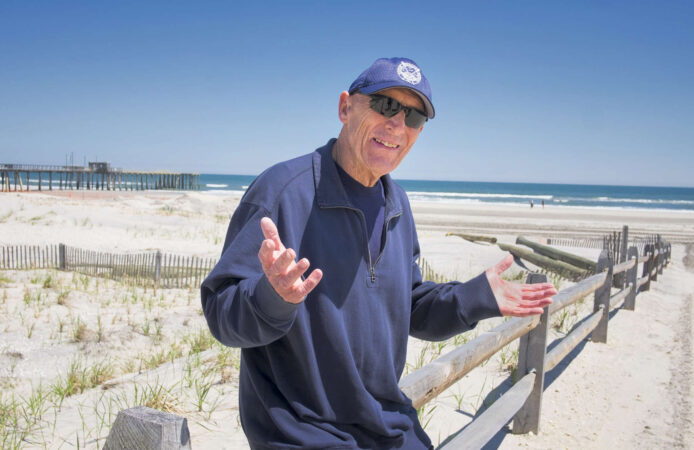
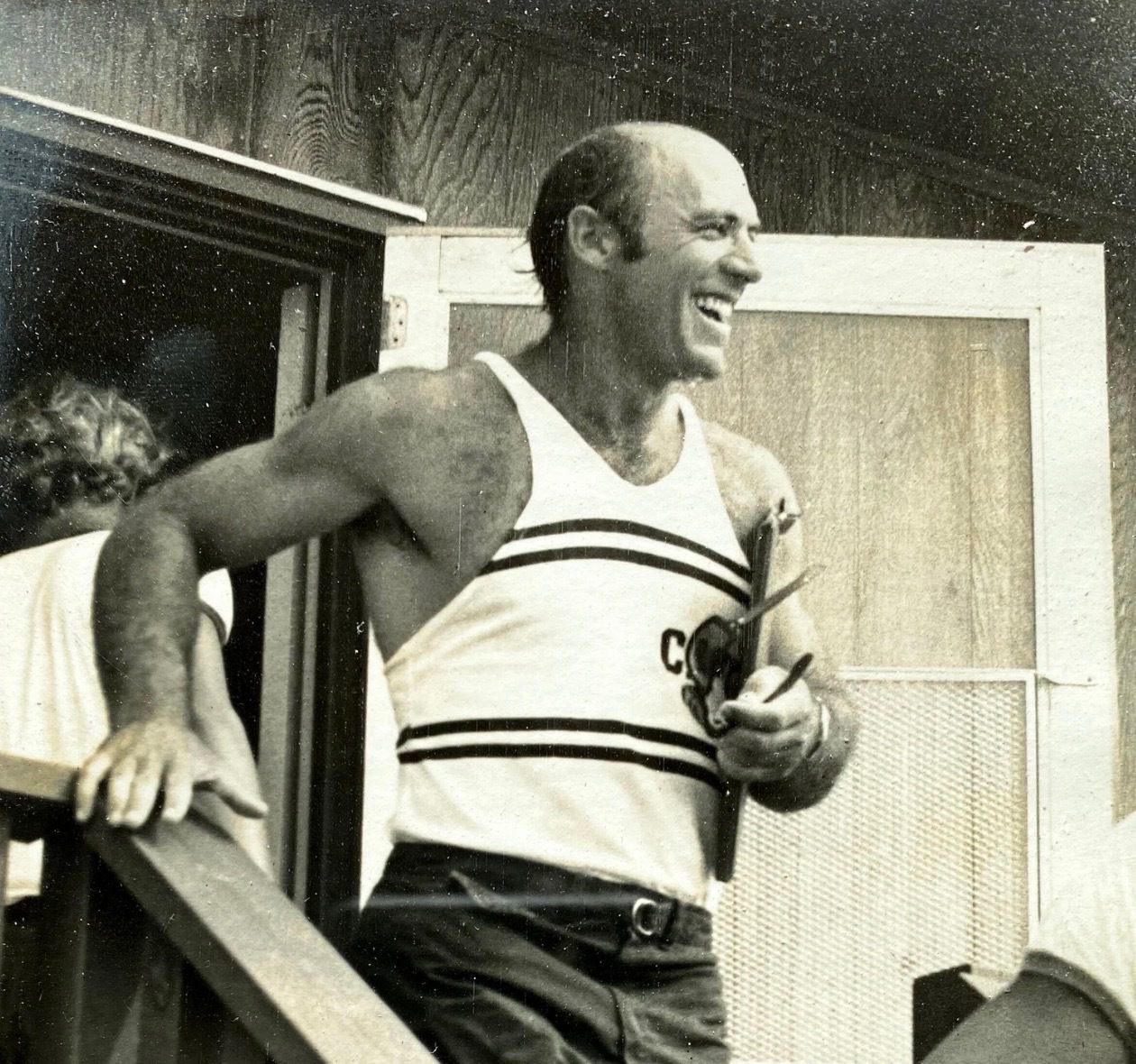
    Murray Wolf, 87, of Avalon, the legendary no-nonsense beach patrol captain whose half-century reign inspired and guided generations of lifeguards, while aggravating some famous and not-so-famous beachgoers along the way, died Monday, Feb. 16, at AtlantiCare Regional Medical Center in Atlantic City following a stroke.

    “He was probably the most loyal person I’ve known in my life,” said his wife of 43 years, Vicki Wolf. “Anybody who came into contact with him, he made them a better person, no question about it.”

    Murray Wolf was captain of the Avalon Beach Patrol for more than a half-century and spent 65 years on the patrol. “He had the highest of standards,” said John Glomb, who served under him for decades.

    “He had the highest of standards,“ said John Glomb, who served under him for decades. ”When the conditions were not favorable, he drove around the beaches and made sure the guards were on top of their bathers, making sure that nobody was in harm’s way. He had a record where in his 65 years, there was never a drowning. That’s a record that is absolutely spectacular.”

    Not everyone appreciated Mr. Wolf’s brand of beach enforcement. In 1999, he famously tangled with then-WIP sports radio personality Angelo Cataldi over a beach tag, showing him no mercy. Cataldi endlessly railed about it on air, and never truly got over it, saying in 2016, as Wolf entered his 61st year on the beach patrol, “I do harbor ill will toward Murray Wolf, and I always will.” Cataldi did not respond to an email following news of Mr. Wolf’s passing.

    Mr. Wolf brushed off the Cataldi encounter like he did most of his encounters on the beach, a place he patrolled with military precision, complete with nightly wave-offs, stand by stand, from his jeep. Rules were meant to be enforced. But he could laugh about it, even if Cataldi couldn’t.

    There was also Frank Wilson, formerly of Chester County, who sued Avalon in 2001 and won $175,000, driven arguably mad after being repeatedly whistled out of the water when he tried to swim after 5 p.m. “We have the right to protect our bathers,” Mr. Wolf said at the time.

    Murray Wolf, shown here rowing with his son, Tyler, during his final year on the Avalon Beach Patrol.

    Within the ranks of his family — wife Vicki, sons Matthew, Erich, and Tyler, and his 10-year-old black Lab, Ruger — Mr. Wolf’s loyalty, kindness, and appreciation for Avalon’s simple pleasures were deeply admired. The same was true for the ranks of lifeguards, wrestling teams, his Pleasantville school district physical education classes, and the multiple championship South Jersey beach patrol teams he coached in Avalon with the utmost of pride.

    Mr. Wolf rode his bike around Avalon almost to the end, and walked Ruger in the deepest of snows.

    Murray Wolf, pictured here at age 77, longtime captain of the Avalon Beach Patrol. Here, King takes a break from preseason preparations to watch his son coach his baseball team.

    “He was happy to sit home and watch the football game, sit on the couch, yell at the dog for running in and out,” his wife said. “He loved his Avalon. There wasn’t one time we rode over the bridge into town when he didn’t say, ‘Oh, that was the best decision I made, moving to Avalon.’ He was just a content man, satisfied.”

    His blunt style could rub some the wrong way. Vicki Wolf, who met her husband at the Princeton, Avalon’s iconic bar, spotting at first his muscular arms, she recalled, said she always knew when someone in town had had an uncomfortable encounter with Mr. Wolf when they would veer away from her in the supermarket. He led his patrols through a pandemic, hurricanes, and new technology: He vowed to fire any guard caught with a cell phone on the stand. “It says Lifeguard on Duty,” he said in 2016. “It’s a duty.”

    “There was nothing phony about him,” Vicki Wolf said. “He was never one to take low blows about him. Not everybody liked him. He had enemies, but they respected him.”

    “He took a lot of pride in Avalon doing well — that was in everything Murray did,” Glomb said. “He ran a tight ship. He ran a tight beach.”

    In the offseason, Mr. Wolf coached championship wrestling teams and was a physical education teacher in the Pleasantville school district for 50 years. His son, Matt, took his place as Avalon beach patrol captain in 2021, and also coaches wrestling in Middle Township.

    Murray Wolf, longtime captain of the Avalon Beach Patrol pictured here in 2016 with some of his lifeguards at the patrol’s headquarters. ED HILLE / Staff Photographer

    Matt Wolf said his father had a stroke on Nov. 11 and was hospitalized until his Feb. 16 death. It seemed to so many that he might live forever, given his lifelong physical fitness and vigor, the devotion to his routines of bike riding and dog walking through town. “I think people saw him as very serious when he was in that public spotlight,” Matt Wolf said. “He had a great sense of humor. He didn’t need to be out with a bunch of people. He was happy to be home with his family.”

    The generations of guards who worked under him paid tribute to Capt. Wolf following his passing. “It was an honor to work with The Captain — there’s nobody quite like him,” Ryan Finnegan wrote on Facebook. “He taught his guards countless life lessons over the decades. Thousands of lives were saved because of him. The beaches in heaven are much safer now! Rest easy Capt.”

    Murray Wolf was captain of the Avalon Beach Patrol for more than a half-century and spent 65 years on the patrol. “He had the highest of standards,” said John Glomb, who served under him for decades.

    George Murray Wolf III was born Aug. 16, 1938, in Philadelphia to Elizabeth Gerhard and George Murray Wolf II and was raised on the Main Line. He and his family vacationed in Avalon from the time he was a child.

    He graduated from Conestoga High School and, after briefly working in a steel mill, Mr. Wolf attended Western State College in Gunnison, Colo., where he competed in wrestling and won a team national championship. He graduated with a degree in physical education and later earned a master’s in educational administration from Rider University.

    Mr. Wolf spent more than 50 years teaching physical education in Pleasantville. As head wrestling coach, he led the Pleasantville High School Greyhounds to the 1974 District 32 Championship. “He loved his job working with students and his colleagues at Leeds Avenue School,” his son wrote in the family obituary.

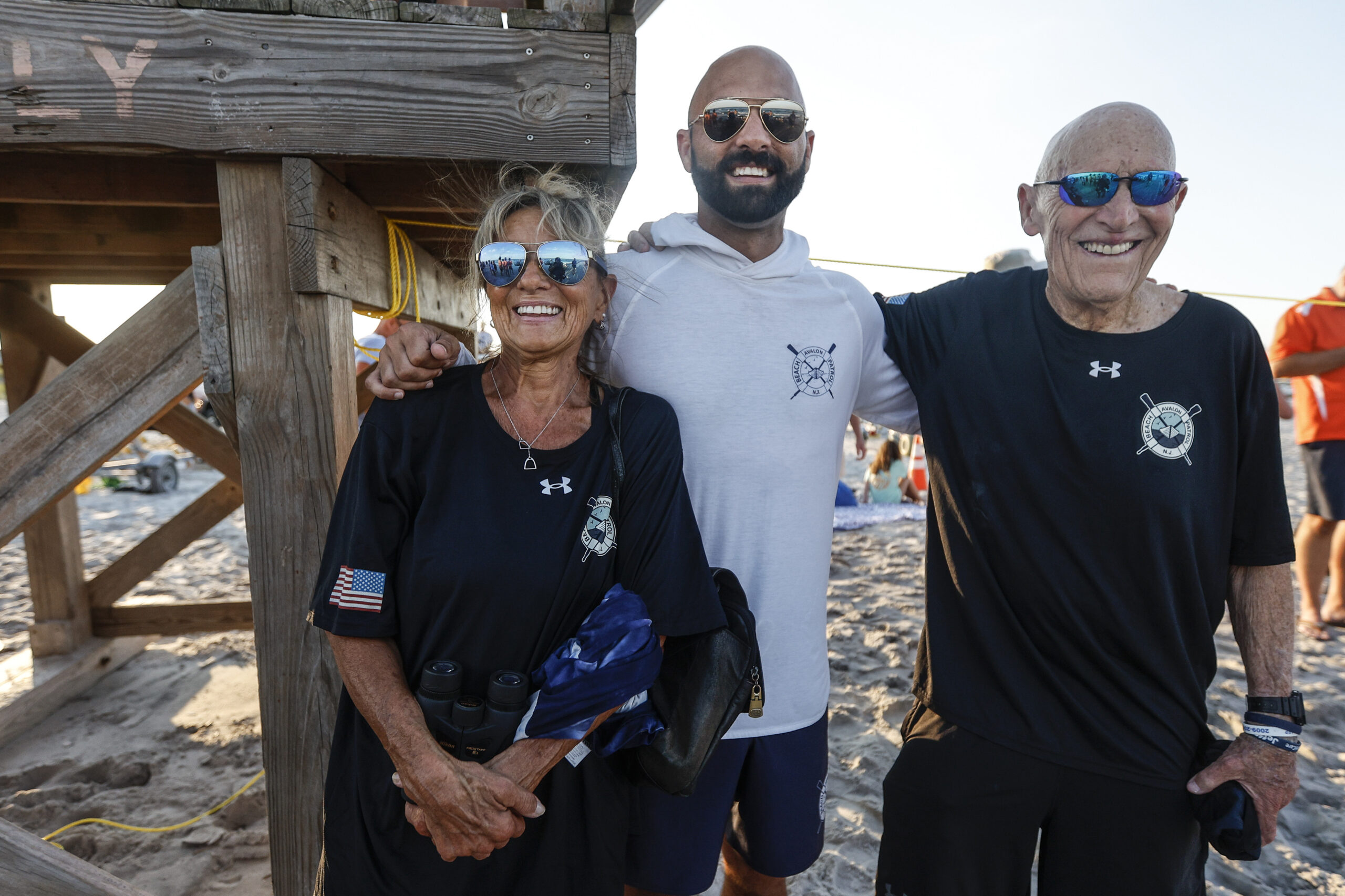
    Avalon Beach Patrol Chief Matt Wolf center, with his dad Murray and mom Vicky at the . Lifeguard Championships in Brigantine New Jersey. Monday, August 12, 2024.

    Mr. Wolf served as captain of the Avalon Beach patrol from 1967 to 2020, and served a total of 65 years on the patrol. His teams, competing in the storied lifeguard races every summer, won nine South Jersey Lifeguard Championships, and Mr. Wolf had the joy of coaching his sons in winning boats.

    Mr. Wolf and his wife were fixtures at their sons’ football, wrestling, baseball, and track and field games and meets, when their sons were competitors and, later, when their sons became coaches themselves.

    Ventnor’s retired beach patrol chief Stan Bergman, himself a legendary chief and coach, has called Mr. Wolf “a warrior.” “He’s battle-tested,” Bergman said in a 2016 interview. “They have a tough beach.”

    Murray Wolf was captain of the Avalon Beach Patrol for more than a half-century and spent 65 years on the patrol. “He had the highest of standards,” said John Glomb, who served under him for decades. He took great pride in his teams winning the South Jersey Lifeguard Championships.

    “He was a very staunch competitor,” said Ed Schneider, chief of Wildwood’s beach patrol and also a wrestling coach. “I was always nervous going up against his teams. He commanded a presence around him. He made people push themselves to be the best.”

    After Matt Wolf took his place as captain of the patrol, he would include his dad as much as possible, taking him in the jeep along the beach. Murray Wolf always attended the lifeguard races, talking to the guards about the David J. Kerr Memorial Races, a competition he began in 1984 to honor a guard who died of cancer.

    In his final weeks, when the family came into his hospital room, his wife said, he would look for his boys, and “always blow a kiss and say I love you.”

    “Every night I would get home, the dog would go sit on the deck and look down the street,” Vicki Wolf said. “It broke my heart. He was looking for Murray.”

    In addition to his wife and their three sons, he is survived by another son, George Murray IV, and a sister. A son, Michael, died earlier.

    Services will be at noon Friday, Feb. 27, at our Savior Lutheran Church, 9212 Third Ave., Stone Harbor, N.J. Visitation will be 10 to 11:45 a.m.

    Donations may be made to the Middle Township Wrestling Program or the Helen L. Diller Vacation Home for Blind Children.

    Murray Wolf was devoted to his three black labs, including Ruger.
  • Some of the California avalanche victims had roots in Lake Tahoe

    Some of the California avalanche victims had roots in Lake Tahoe

    TRUCKEE, Calif. — After days of increasingly brutal conditions in California’s Sierra Nevada, a group of 15 backcountry skiers set out for home. But as they left remote huts at thousands of feet of elevation and trekked back toward the trailhead, they were slammed by a treacherous avalanche that left eight dead and one missing.

    With avalanche warnings in effect through early Thursday, officials were still waiting for the powerful storm to clear so they could recover the bodies of the victims of Tuesday’s avalanche, the nation’s deadliest in nearly half a century. Officials have not yet released the names.

    The ski group involved has deep ties to the alpine recreation community in Lake Tahoe, including the elite Sugar Bowl Academy, which issued a statement late Wednesday mourning the loss of victims with “strong connections to Sugar Bowl, Donner Summit and the backcountry community.”

    It did not say how the skiers, said to range in age from 30 to 55, were connected to the school, which offers alpine and backcountry ski instruction and academics for young athletes.

    “We are an incredibly close and connected community,” Sugar Bowl Academy executive director Stephen McMahon said in the statement. “This tragedy has affected each and every one of us.”

    Four in the group employed by Blackbird Mountain Guides, which offers mountaineering and backcountry ski trips as well as safety courses across the West and internationally. One of them was among the six survivors.

    The three-day tour, which began Sunday, was for intermediate to expert skiers, according to the company’s website.

    The tour company said in a statement Wednesday night that it has launched an investigation and paused field operations at least through the weekend while it prioritizes supporting the victims’ families.

    The guides who led the group were trained or certified in backcountry skiing, and were instructors with the American Institute for Avalanche Research and Education.

    While in the field, they “are in communication with senior guides at our base, to discuss conditions and routing based upon conditions,” founder Zeb Blais said in the statement.

    “We don’t have all the answers yet, and it may be some time before we do,” the company said. “In the meantime, please keep those impacted in your hearts.”

    Mayor Max Perrey of Marin County’s Mill Valley, a small city about 14 miles (22 kilometers) north of San Francisco, confirmed that some in the group were women from his city. He was not able to provide additional details but told The Associated Press via email that more information would be released later.

    One of the victims was married to a member of a backcountry search and rescue team in the area, said Placer County Sheriff Wayne Woo.

    The Sierra Avalanche Center issued an avalanche watch Sunday morning, and that was elevated to a warning by 5 a.m. Tuesday, indicating that avalanches were expected. It is not clear whether the guides knew about the change before they began their return trek.

    Authorities described a harrowing scene as the survivors scoured the snow for the missing and waited six hours for help to arrive in blizzard conditions. They found three of the bodies, Nevada County Sheriff Shannan Moon said.

    The skiers all had beacons that can send signals to rescuers, and at least one guide was able to send text messages. But it was not clear whether they were wearing avalanche bags, which are inflatable devices that can keep skiers near the surface, sheriff’s Capt. Russell “Rusty” Greene said.

    One of those rescued remained hospitalized Wednesday, Moon said.

    Three to 6 feet (91 centimeters to 1.8 meters) of snow has fallen in the area since Sunday. The area was also hit by subfreezing temperatures and gale force winds.

    The avalanche is the deadliest in the U.S. since 1981, when 11 climbers were killed on Mount Rainier in Washington state, and the second deadly avalanche near Castle Peak this year, after a snowmobiler was buried January. Each winter the slides kill 25 to 30 in the country, according to the National Avalanche Center.

    The area near Donner Summit, where the ski trip took place, is one of the snowiest places in the Western Hemisphere and until just a few years ago was closed to the public. The summit is named for the infamous Donner Party, a group of pioneers who resorted to cannibalism after getting trapped there in the winter of 1846-1847.

  • U.S. trade deficit slipped lower in 2025, but gap for goods hits a record despite Trump tariffs

    U.S. trade deficit slipped lower in 2025, but gap for goods hits a record despite Trump tariffs

    WASHINGTON — The U.S. trade deficit slipped modestly in 2025, a year in which President Donald Trump upended global commerce by slapping double digit tariffs on imports from most countries. But the gap in the trade of goods such as machinery and aircraft — the main focus of Trump’s protectionist policies — hit a record last year despite sweeping import taxes.

    Overall, the gap between the goods and services the U.S. sells other countries and what it buys from them narrowed to just over $901 billion, from $904 billion in 2024, but it was still the third-highest on record, the Commerce Department reported Thursday.

    Exports rose 6% last year, and imports rose nearly 5%.

    And the U.S. deficit in the trade of goods widened 2% to a record $1.24 trillion last year as American companies boosted imports of computer chips and other tech goods from Taiwan to support massive investments in artificial intelligence.

    Amid continuing tensions with Bejing, the deficit in the goods trade with China plunged nearly 32% to $202 billion in 2025 on a sharp drop in both exports to and imports from the world’s second-biggest economy. But trade was diverted away from China. The goods gap with Taiwan doubled to $147 billion and shot up 44%, to $178 billion, with Vietnam.

    Economist Chad Bown, senior fellow at the Peterson Institute for International Economics, said the widening gaps with Taiwan and Vietnam might put a “bull’s-eye’’ on them this year if Trump focuses more on the lopsided trade numbers and less on the U.S. rivalry with China.

    In 2025, U.S. goods imports from Mexico outpaced exports by nearly $197 billion, up from a 2024 gap of $172 billion. But the goods deficit with Canada shrank by 26% to $46 billion. The United States this year is negotiating a renewal of a pact Trump reached with those two countries in his first term.

    The U.S. ran a bigger surplus in the trade of services such as banking and tourism last year — $339 billion, up from $312 billion in 2024.

    The trade gap surged from January-March as U.S. companies tried to import foreign goods ahead of Trump’s taxes, then narrowed most of the rest of the year.

    Trump’s tariffs are a tax paid by U.S. importers and often passed along to their customers as higher prices. But they haven’t had as much impact on inflation as economists originally expected. Trump argues that the tariffs will protect U.S. industries, bringing manufacturing back to America and raise money for the U.S. Treasury.