Category: News

Latest breaking news and updates

  • Montgomery County family awarded $7.8M  verdict in Bloomsburg U hazing death

    Montgomery County family awarded $7.8M verdict in Bloomsburg U hazing death

    A Luzerne County jury on Wednesday awarded a $7.8 million verdict to the family of Justin King, a Montgomery County resident and Bloomsburg University student who died in a 2019 fall after a night of drinking at a fraternity rush party.

    The fraternity, Kappa Sigma, and dozens of individual defendants previously reached confidential settlements with King’s mother, Carol King, who brought the complaint in 2021, said the family’s lawyers Helen Lawless, Benjamin Present, and Mark Fuchs of the Kline & Specter law firm.

    But the sorority, Alpha Sigma Tau, whose members’ house was used for the event, chose to go to court, and now it faces paying $3.5 million, including delay damages, the lawyers said.

    “I’m pretty happy about the verdict from the standpoint of its holding the national organization responsible for the actions of what happened,” said Carol King, of Gilbertsville in Montgomery County. “There is no bringing him back, and I will always have a hole in my heart for him. But this gets me closer to doing what I wanted to do, which is find some sort of justice for Justin.”

    The sorority in a statement said it was disappointed that it was held partially liable for King’s death.

    “We fundamentally disagree with this outcome and believe it both wrongly holds innocent parties responsible for circumstances beyond their control and establishes a deeply concerning precedent that violates settled Pennsylvania law,” Jordan Feldhaus, CEO of the sorority, said in a statement.

    The sorority is considering its legal options, Feldhaus said.

    King filed the lawsuit against the fraternity, sorority, and 36 of their members, alleging that they plied her son, then an 18-year-old freshman at Bloomsburg — now part of Commonwealth University — with liquor as part of an initiation process.

    He was given liquor, including a mixture with vodka known as “jungle juice” or “blackout water,” participated in a “crate race” — a game involving large amounts of alcohol consumption over little time — and later fell down a 75-foot embankment, where he was found the next morning, according to the wrongful-death lawsuit. King had a .22 blood alcohol content, which is nearly three times the legal limit, his lawyers said.

    Bloomsburg was not sued.

    “They took action in this case, unlike the national sorority office,” said Lawless, one of King’s lawyers.

    Bloomsburg permanently revoked the fraternity’s recognition, and the chapter was later expelled from the campus. The sorority was suspended for four years.

    Police had not filed charges in the case, and Columbia County Coroner Jeremy Reese had ruled King’s death accidental.

    The verdict assigned 35% of the fault for the death to the sorority, 35% to the fraternity, 24% to King, and 1% each to six fraternity members, King’s lawyers said.

    That means the sorority would be responsible for $2.73 million, but the delayed damages raise that to more than $3.5 million, King’s lawyers said.

    “The jury’s award makes clear that national Greek organizations cannot turn a blind eye to rampant drinking and policy violations on college campuses,” King’s lawyers said. “It speaks volumes that the six individual fraternity members each received only 1% of the causal fault. The jury understood where the culture at Bloomsburg came from, and they understood this case was about corporate responsibility.”

    Carol King said she understood the jury’s decision to assign some of the fault to her son.

    “He was drinking,” she said.

    King had been at Bloomsburg only three weeks before attending the Sept. 13, 2019, party. He had been recruited to join the fraternity through a flier distributed in freshman dorms.

    The lawsuit contended that the defendants violated the anti-hazing law enacted after the 2017 death of Tim Piazza, a Pennsylvania State University student who died after attending a booze-fueled fraternity party where he fell down stairs.

    The sorority, according to King’s lawyers, was found liable for negligence as well as for violating the Anti-Hazing Statute.

    Since her son’s death, Carol King, a retired corporate human resources director, said she has been speaking out about hazing to raise awareness and pursuing the legal action in her son’s case.

    “It was never about the money,” she said. “It was about them taking responsibility,”

  • Independence Hall reopens after a four-month preservation project

    Independence Hall reopens after a four-month preservation project

    The doors of Independence Hall had been flung open, and the British were coming.

    More specifically, English tourists Chadi Rahim and his daughter, Sophia Rahim, 18, shivered in their parkas Thursday, awaiting one of the first tours of Independence Hall since its 119-day closure.

    The historic state house, where American democracy was born in 1776, had been closed to the public since Oct. 1 — a temporary pause of access, stretching through the federal government shutdown and weeks of planned preservation work ahead of Philadelphia’s Semiquincentennial celebrations this year. The revamp included restoration of wood, masonry, plaster, and metal, historically accurate paint finishes, and the construction of accessibility ramps. The work would ensure that Independence Hall would continue as a “beacon of American freedom,” the National Park Service had said.

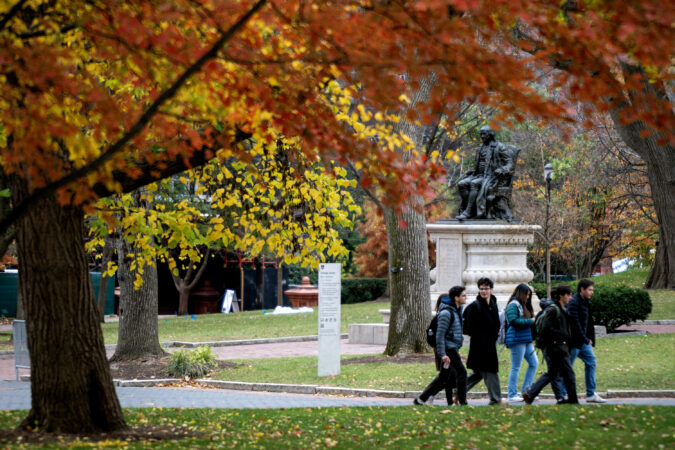
    Tourists Jenna Lippert and Brandon Camperlino from Syracuse, NY listen as park service volunteer Bill Rooney (right) gives a tour in the Pennsylvania Supreme Court Chamber in Independence Hall Thursday, Jan. 29, 2026.

    As part of the Independence Square Improvement Project, similar repairs were planned for Congress Hall and Old City Hall, which are part of the Independence Hall complex.

    “Wear and tear,” National Park Ranger Hugh Evans assured 14 visitors assembled for the 11:30 a.m. tour.

    All morning, a steady trickle of travelers trekked to the redbrick building in Old City where the Founding Fathers staked their necks on the promise of a freer and more perfect future.

    Independence Visitor Center information desk host Woody Rosenbach displays a free Independence Hall cookie offered to the first 250 visitors on Thursday.

    In Thursday’s cold, the tourists came from the rocky coasts of Oregon and the sunlit shores of California, from small towns and big cities, from red states and blue states. And their presence on such an auspicious day was completely by chance. None of the more than a dozen pilgrims to American democracy who braved frozen temps and icy footpaths said they had been aware that Independence Hall had only just reopened.

    The site where the Declaration of Independence was signed 250 years ago, the building is one of Independence National Historic Park’s central attractions. The Liberty Bell Center, which was also closed during the shutdown, reopened in November. Officials expect that more than five million people will visit Independence Hall in 2026 for the national milestone.

    Learning that their visits had fallen on the reopening of the historic site only lent more power, visitors said.

    Rahim, a business owner with the sturdy frame of a Victorian boxer, said he and his daughter had decided on a Philadelphia holiday for shopping and relaxation and Rocky (Sophia is also a fan of National Treasure, a 2005 Nicolas Cage history caper that was filmed at Independence Hall and other historic district sites). But also because of the story only Philadelphia can tell about America’s founding.

    And especially now, when the future of American democracy feels more at stake than ever.

    “We know the story about independence,” Rahim said, buttoning up against the cold. But he and his daughter had wanted to experience it up close. “Sometimes stuff gets in the way. But if you see the history, it makes you realize what people went through to get us where we are now.”

    During the 11 a.m. tour, National Park Ranger David Powers welcomed a half-dozen visitors into the stately, Georgian state room, where the Founders first passed independence. Walls and floors in the rooms where it happened reflected a new polish, while some painting could still use touching up.

    After four months of closure and renovations, guided tours resumed every half hour Thursday. Security staff said they did not encounter crowds of guests seeking to stroll the sun-streaked confines where profound compromises of democracy were hashed out 2½ centuries ago.

    Rather, on the day of the building’s reopening, many of the visitors represented just normal Americans, looking for signs of hope in uncertain times.

    Rachel Lawson of Bend, Ore., and Amanda Shapiro of Southern California, colleagues in town for a work event, admired the simple elegance of the original woodwork design inside Congress Hall, home of the U.S. Congress from 1790 to 1800.

    A newly painted pediment above a doorway in Independence Hall on Thursday, Jan. 29, 2026.

    “The attention to detail, the thoughtfulness, the regal energy,” she said.

    Nearby, Luke Morris, a 20-something political podcaster from Washington, had planned his visit to Independence Hall as a reminder that Americans are still fighting for that promised future amid all the pain and turmoil.

    “We are still fighting for what we think is right,” he said.

  • Justice Department charges man who squirted vinegar on Rep. Ilhan Omar

    Justice Department charges man who squirted vinegar on Rep. Ilhan Omar

    MINNEAPOLIS — The Justice Department has charged a man who squirted apple cider vinegar on Democratic U.S. Rep. Ilhan Omar at an event in Minneapolis, according to court papers made public Thursday.

    The man arrested for Tuesday’s attack, Anthony Kazmierczak, faces a charge of forcibly assaulting, opposing, impeding and intimidating Omar, according to a complaint filed in federal court.

    Authorities determined that the substance was water and apple cider vinegar, according to an affidavit. After Kazmierczak sprayed Omar with the liquid, he appeared to say, “She’s not resigning. You’re splitting Minnesotans apart,” the affidavit says. Authorities also say that Kazmierczak told a close associate several years ago that “somebody should kill” Omar, court documents say.

    Kazmierczak appeared briefly in federal court Thursday afternoon. His attorney, Jean Brandl, told the judge her client was unmedicated at the time of the incident and has not had access to the medications he needs to treat Parkinson’s disease and other serious conditions he suffers from.

    U.S. Magistrate Judge Dulce Foster ordered that Kazmierczak remain in custody and told officials he needs to see a nurse when he is transferred to the Sherburne County Jail.

    Kazmierczak also faces state charges in Hennepin County for terroristic threats and fifth-degree assault, Hennepin County Attorney Mary Moriarty announced Thursday.

    “This was a disturbing assault on Rep. Omar, who is frequently the target of vilifying language by fellow elected officials and members of the public,” Moriarty said. “The trust of our community in the federal government keeping politics out of public safety has been eroded by their actions. A state-level conviction is not subject to a presidential pardon now or in the future.”

    The attack came during a perilous political moment in Minneapolis, where two people have been fatally shot by federal agents during the White House’s aggressive immigration crackdown.

    Kazmierczak has a criminal history and has made online posts supportive of President Donald Trump, a Republican.

    Omar, a refugee from Somalia, has long been a fixture of Trump’s anti-immigrant rhetoric. After she was elected seven years ago, Trump said she should “go back” to her country. He recently described her as “garbage” and said she should be investigated. During a speech in Iowa earlier this week, shortly before Omar was attacked, he said immigrants need to be proud of the United States — “not like Ilhan Omar.”

    Omar blamed Trump on Wednesday for threats to her safety.

    “Every time the president of the United States has chosen to use hateful rhetoric to talk about me and the community that I represent, my death threats skyrocket,” Omar told reporters.

    Trump accused Omar of staging the attack, telling ABC News, “She probably had herself sprayed, knowing her.”

    Kazmierczak was convicted of felony auto theft in 1989, has been arrested multiple times for driving under the influence and has had numerous traffic citations, Minnesota court records show. There are also indications he has had significant financial problems, including two bankruptcy filings.

    In social media posts, Kazmierczak criticized former President Joe Biden and referred to Democrats as “angry and liars.” Trump “wants the US is stronger and more prosperous,” he wrote. “Stop other countries from stealing from us.”

    In another post, Kazmierczak asked, “When will descendants of slaves pay restitution to Union soldiers’ families for freeing them/dying for them, and not sending them back to Africa?”

    Threats against members of Congress have increased in recent years, peaking in 2021 following the Jan. 6 attack on the U.S. Capitol by a mob of Trump supporters before dipping slightly, only to climb again, according to the most recent figures from the U.S. Capitol Police.

    Officials said they investigated nearly 15,000 “concerning statements, behaviors, and communications directed against Members of Congress, their families, staff, and the Capitol Complex” in 2025.

  • Penn says its finances are stronger than anticipated. More budget cuts are still coming.

    Penn says its finances are stronger than anticipated. More budget cuts are still coming.

    The University of Pennsylvania will institute another round of budget cuts in response to Trump administration actions that threaten future funding and revenues, and because of rising legal and insurance expenses.

    That is even though officials said finances look better than they anticipated a year ago, though they did not provide specific numbers.

    Penn’s schools and centers have been directed to cut 4% from certain expenses in the next fiscal year and keep in place financial cutbacks instituted last year, including a staff hiring freeze and freezes on midyear adjustments in staff salaries. Schools and centers also were asked last year to cut 5% of certain expenses, and the new 4% reduction would be on top of this.

    The university did not detail which expenses would be cut, but it is likely that discretionary funds for things like travel and entertainment would be targeted.

    Penn leaders cited changes in student loan programs and visa policies, an increase in the endowment tax, and potential losses in research funding as reasons for continued financial restraint. Legal, insurance, and employee-benefit expenses also are rising faster than revenues, said Mark F. Dingfield, executive vice president, and John L. Jackson Jr., provost.

    “Taken together, these conditions reinforce our responsibility to continue careful financial management to stabilize our finances for the long term,” the leaders wrote. “It is important to note that this planning effort is just that — an effort to plan deliberately and collaboratively against a changing financial landscape.”

    Penn, which is the city’s largest private employer, with about 53,000 employees across the university and its health system, is expected to set tuition and fees and discuss its budget at board of trustee meetings in March.

    Penn’s legal expenses have increased as the university responds to the Trump administration’s demands and investigations, including an ongoing Equal Employment Opportunity Commission lawsuit seeking in effect personal contact information for Jewish faculty and staff. And the school faced additional costs related to a data breach in November.

    School officials noted that Penn has not enacted some of the deeper cuts instituted by its peer schools. Columbia University in May laid off 180 people following the loss of government research grants. Stanford said in August it would lay off more than 360 staff as part of budget cuts. Duke also instituted voluntary buyouts and layoffs last year. And Brown University, amid a $30 million deficit last year, planned for dozens of layoffs.

    But Penn said it had to take steps to prepare for the ongoing impact of federal policies.

    The tax on Penn’s endowment earnings will rise to 4% in 2027, up from the 1.4% the school has been paying since 2022. In 2024, Penn — which has a $24.8 billion endowment — paid $10.4 million in endowment tax. The increase is not as steep as the 14% to 21% that federal lawmakers had included in earlier budget versions, but it will still financially impact the school. The tax is applied to net investment income.

    Penn also stands to lose about $250 million if President Donald Trump’s cap on indirect cost reimbursement from the National Institutes of Health, currently the subject of litigation, is allowed to proceed.

    Concerns, too, remain about Trump’s policies regarding international students. In the last year, the administration for a period paused student visa interviews, sought to bar international students from Harvard, and promised to “aggressively” scrutinize Chinese students over whether they will be permitted to study here.

    It is unclear what long-term impact those policies may have on international enrollment. International student enrollment at U.S. colleges declined 1% from fall 2024 to fall 2025, according to the Institute of International Education. The number of international graduate students declined 12%.

    Penn also is bracing for the effects of the federal government’s decision, among other policy changes, to place new caps on loans that graduate students can take out.

  • Philly schools reopened Thursday. Some students returned to snowbanks, burst pipes, and frigid classrooms

    Philly schools reopened Thursday. Some students returned to snowbanks, burst pipes, and frigid classrooms

    Conditions were rough when staff and students arrived at Penrose Elementary in Southwest Philadelphia — some paths they needed to access to get inside the school were untouched by shovels or plows.

    Some buses could not open their doors to let students out at their usual spot because snow banks were so high, according to multiple people who work at the school and teachers union officials. A ramp that students with disabilities use to get into the school was blocked.

    And the heat was on the fritz for part of the day as outside temperatures were barely in the double digits.

    “It’s about 45 degrees inside this classroom,” one Penrose staffer said Thursday morning. The staffer was not authorized to speak to the media and asked not to be identified. “We’re all in jackets and hats.”

    After Monday’s snow day and virtual learning Tuesday and Wednesday, Philadelphia schools reopened Thursday, but for many students, it was anything but an inviting return. The combination of accumulated snow, days of subfreezing temperatures, and a clutch of old buildings — many of which have maintenance issues — made in-person learning challenging across the district.

    The rocky return came just hours before a planned rally to protest the district’s proposed $2.8 billion school facilities master plan, which is necessary, officials say, because of poor building conditions and other disparities.

    Around some schools, crosswalks were covered by giant piles of snow, forcing children to walk in streets. Elsewhere, there was no place for staff to park.

    At Vare-Washington Elementary, in South Philadelphia, pipes burst, rendering six classrooms, the cafeteria, the gym, and the entire basement unusable, according to the Philadelphia Federation of Teachers. There was a strong chemical odor throughout the building.

    At Mitchell, another Southwest Philadelphia elementary, “it’s a mess,” said a staffer who asked not to be identified for fear of retribution.

    A pipe broke at the school, and Mitchell had no running water for most of the day, with just one brief window where students could use the bathroom. And Mitchell’s student lunches were never delivered, so kids were fed cereal for lunch.

    “A lot of our kids rely on those lunches to sustain them throughout the day,” the staffer said.

    In addition, Mitchell’s back doors and fire tower exits were blocked by snow, so if there had been a fire or emergency, the only available exits would have been the front doors.

    Robert Morris, in North Philadelphia, which the district recently announced it was targeting for closure, also reported not having student lunches delivered.

    Taylor, also in North Philadelphia, also had burst pipes, with four rooms unusable and most of the school cold. School officials asked for permission to hold classes virtually Friday, but had received no response as of Thursday afternoon.

    The Philadelphia Federation of Teachers has called on the district to return to remote learning on Friday in light of “treacherous commutes and dangerous building conditions,” Arthur Steinberg, PFT president, said in a statement issued Thursday afternoon.

    Steinberg said in an interview that his office was inundated with reports of heating issues or a lack of snow removal or other problems at schools including School of the Future in Parkside; Farrell, Swenson, Mayfair, and Fox Chase in the Northeast; and others.

    “The District must also show respect to students, families, and our members by rectifying the broken heaters, burst pipes, icy sidewalks, and piles of snow in parking lots as soon as possible, so that students and staff can safely resume in-person instruction on Monday,” he said in the statement.

    Monique Braxton, a district spokesperson, said “the safety and well-being of our students, staff, and families remains our top priority.”

    Staff worked long hours inspecting boilers and buildings, restarting heating systems, clearing snow and ice, and more, Braxton said.

    “Across the district, teams are responding in real time to heating concerns, snow and ice conditions, and other weather-related issues as they arise. When conditions do not meet District standards, we work closely with school leaders to take appropriate action and communicate directly with our families,” she said in a statement. “We will continue to closely monitor building conditions throughout this bitter cold period and make adjustments as needed, while temperatures remain below freezing.”

    Both Thursday and Friday had long been scheduled as half days for students, with parent-teacher conferences planned. Those would be held virtually.

    John Bynum, a former building engineer who is now an official with 32BJ SEIU Local 1201, the union representing 2,000 Philadelphia school building engineers, maintenance workers, and bus drivers, said the going was rough for many schools in terms of building condition.

    “Most of these buildings are operating with the original boilers,” Bynum said. “We know with antiquated equipment, there’s going to be problems.”

    In some cases, snowblowers that school staff were using to attempt to clear parking lots and sidewalks failed, Bynum said.

    And like other school staff, his members often coped with trouble getting to work themselves, he said.

    “There were challenges regarding SEPTA not running at a full schedule and the anxiety of getting to work without a robust transportation system,” Bynum said. “Street conditions weren’t the greatest. However, they made the best of it, and they showed up.”

    Conditions like Thursday’s, Bynum said, highlight why the district needs more resources to address its buildings — and students’ learning conditions.

  • Trump says he’s instructed U.S. officials to reopen Venezuelan airspace for commercial travel

    Trump says he’s instructed U.S. officials to reopen Venezuelan airspace for commercial travel

    WASHINGTON — President Donald Trump said Thursday he has informed Venezuela’s acting president, Delcy Rodríguez, that he will open up all commercial airspace over the Venezuela and Americans will soon be able to visit.

    Trump said he instructed his transportation secretary, Sean Duffy, and U.S. military leaders to take steps to open the airspace for travel by the end of the day.

    “American citizens will be very shortly able to go to Venezuela, and they’ll be safe there,” the Republican president said.

    Venezuela’s government did not immediately comment.

    While the State Department continued to warning Americans against traveling to Venezuela, at least one U.S. airline announced its intention to soon resume direct flights between the countries.

    American Airlines was the last U.S. airline flying to Venezuela when it suspended flights in 2019 that it operated between Miami and the capital, Caracas, as well as the oil hub city of Maracaibo. The airline said Thursday it would share additional details about the return to service in the coming months as it works with federal authorities on security assessments and necessary permissions.

    “We have a more than 30-year history connecting Venezolanos to the U.S., and we are ready to renew that incredible relationship,” Nat Pieper, American’s chief commercial officer, said in a statement. “By restarting service to Venezuela, American will offer customers the opportunity to reunite with families and create new business and commerce with the United States.”

    Before Venezuela came undone in the mid-2010s, it was not uncommon for Venezuelans to take weekend leisure trips to Miami. U.S. airlines stopped flying to Venezuela before the Department of Homeland Security in 2019 ordered an indefinite suspension, arguing that conditions in Venezuela threatened the “safety and security of passengers, aircraft, and crew.”

    Earlier this week, Trump’s administration notified Congress that it was taking the first steps to possibly reopen the shuttered U.S. Embassy in Caracas as it explores restoring relations with the country after the U.S. military raid that ousted then-President Nicolás Maduro. In a notice to lawmakers dated Monday and obtained by The Associated Press, the State Department said it was sending in a regular and growing contingent of temporary staffers to conduct “select” diplomatic functions.

    “We are writing to notify the committee of the Department of State’s intent to implement a phased approach to potentially resume Embassy Caracas operations,” the department said in separate but identical letters to 10 House and Senate committees.

    Diplomatic relations between the two countries collapsed in 2019.

    Even as Trump suggested Americans will be safe in Venezuela, his State Department kept in place its highest-level travel advisory: “Do not travel,” a warning of a high risk of wrongful detention, torture, kidnapping and more.

    The department did not immediately respond to a message inquiring whether it would be changing that warning.

    In November, as Trump was ramping up pressure on Maduro, the American president said the airspace “above and surrounding” Venezuela should be considered as “closed in its entirety.”

    The Federal Aviation Administration, which has jurisdiction generally over the United States and its territories, told pilots to be cautious flying around Venezuela because of heightened military activity.

    After that FAA warning, international airlines began canceling flights to Venezuela.

    The FAA issued a similar 60-day warning in January, urging U.S. aircraft operators to “exercise caution” when flying over the eastern Pacific Ocean near Mexico, Central America, and parts of South America. The warning was issued after Maduro’s capture but came as the U.S. has threatened to continue military strikes on alleged drug trafficking boats in the area.

    The FAA on Thursday said it was lifting four Notices to Airmen (NOTAMs) for the region that it said were “issued as precautionary measures and are no longer necessary.”

    “Safety remains our top priority,” the FAA said in a statement, “And we look forward to facilitating the return of regular travel between the U.S. and Venezuela.”

  • Trump says he asked Putin not to target Kyiv for 1 week during brutal cold spell

    Trump says he asked Putin not to target Kyiv for 1 week during brutal cold spell

    KYIV, Ukraine — President Donald Trump said Thursday that President Vladimir Putin has agreed not to target the Ukrainian capital and other towns for one week as the region experiences frigid temperatures. There was no immediate confirmation from the Kremlin that Putin has agreed to such a pause.

    Russia has been pounding Ukraine’s critical infrastructure, hoping to wear down public resistance to the war while leaving many around the country having to endure the dead of winter without heat.

    “I personally asked President Putin not to fire on Kyiv and the cities and towns for a week during this … extraordinary cold,” Trump said during a Cabinet meeting at the White House, adding that Putin has “agreed to that.”

    Kremlin spokesman Dmitry Peskov was asked earlier Thursday whether a mutual halt on strikes on energy facilities was being discussed between Russia and Ukraine, and he refused to comment on the issue.

    Ukrainian President Volodymyr Zelensky late Wednesday had warned that Moscow was planning another large-scale barrage despite plans for further U.S.-brokered peace talks at the weekend.

    Trump said he was pleased that Putin has agreed to the pause. Kyiv, which has grappled with severe power shortages this winter, is forecast to enter a brutally cold stretch starting Friday that is expected to last into next week. Temperatures in some areas will drop to minus-22 Fahrenheit, the State Emergency Service warned.

    “A lot of people said, ‘Don’t waste the call. You’re not going to get that.’” the president said of his request of Putin. “And he did it. And we’re very happy that they did it.”

    Zelensky, for his part, thanked Trump for his effort and welcomed the “possibility” of a pause in Russian military action on Kyiv and beyond. “Power supply is a foundation of life,” Zelensky said in his social media post.

    Trump did not say when the call with Putin took place or when the ceasefire would go into effect. The White House did not immediately respond to a query seeking clarity about the scope and timing of the limited pause in the nearly four-year war.

    Russia has sought to deny Ukrainian civilians heat and running water over the course of the war, which began with Russia’s full-scale invasion on Feb. 24, 2022. Ukrainian officials describe the strategy as “weaponizing winter.”

    Last year was the deadliest for civilians in Ukraine since 2022 as Russia intensified its aerial barrages behind the front line, according to the U.N. Human Rights Monitoring Mission in the country.

    The war killed 2,514 civilians and injured 12,142 in Ukraine — 31% higher than in 2024, it said.

    A Russian drone attack killed three people in Ukraine’s southern Zaporizhzhia region overnight and caused a major blaze in an apartment building, officials said Thursday.

    Firefighters also worked through the night to put out fires in the central Dnipropetrovsk region, where two people were injured, officials said.

    Zelensky said Ukrainian intelligence reports indicate Russia is assembling forces for a major aerial attack. Previous large attacks, sometimes involving more than 800 drones as well as cruise and ballistic missiles, have targeted the Ukrainian power grid.

    The ongoing attacks discredit the peace talks, Zelensky said. “Every single Russian strike does,” he said late Wednesday.

    Russia’s daily bombardment of civilian areas behind the roughly 600-mile front line has continued despite international condemnation and attempts to end the fighting.

    Ukraine is working with SpaceX to address the reported use of its Starlink satellite service by Russian attack drones, Ukrainian Defense Minister Mykhailo Fedorov said Thursday on the Telegram messaging app.

    He said his team contacted the American aerospace company run by Elon Musk and “proposed ways to resolve the issue.” Starlink is a global internet network that relies on around 10,000 satellites orbiting Earth.

    Fedorov thanked Musk and SpaceX President Gwynne Shotwell for their “swift response and the start of work on resolving the situation.”

    Musk and SpaceX have sought to steer a delicate course in the war.

    Shotwell said a year after the invasion that SpaceX was happy to provide Ukrainians with connectivity “and help them in their fight for freedom.” At the same time, the company sought to restrict Ukraine’s use of Starlink for military purposes, she said.

    Negotiations between the two sides are poised to resume on Sunday amid doubts about Moscow’s commitment to a settlement.

    The European Union’s top diplomat accused Russia of not taking the talks seriously, calling Thursday in Brussels for more pressure to be exerted on Moscow to press it into making concessions.

    “We see them increasing their attacks on Ukraine because they can’t make moves on the battlefield. So, they are attacking civilians,” Kaja Kallas said of Russia at a meeting of EU foreign ministers.

    She stressed that Europe, which sees its own future security at stake in Ukraine, must be fully involved in talks to end the war. The push for a settlement has been led over the past year by the Trump administration, and European leaders fear their concerns may not be taken into account.

    Steve Witkoff, Trump’s special envoy, said Thursday “a lot of progress” was made in recent three-way talks and expressed optimism that more headway can be made when the parties meet again in the coming days.

    “I think the people of Ukraine are now hopeful and expecting that we are going to deliver a peace deal sometime soon,” Witkoff added.

    The number of soldiers killed, injured or missing on both sides during the war could reach 2 million by spring, with Russia suffering the largest number of troop deaths for any major power in any conflict since World War II, according to an international think tank report published Tuesday.

  • Joe Walsh, Hall of Fame football coach and longtime West Chester teacher, has died at 75

    Joe Walsh, Hall of Fame football coach and longtime West Chester teacher, has died at 75

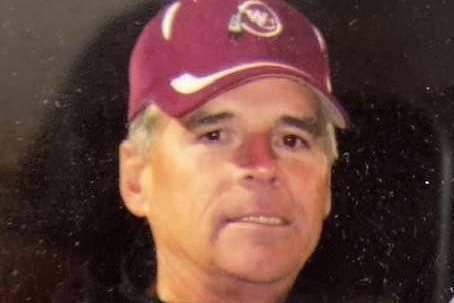
    Joe Walsh, 75, of West Chester, member of four athletic Halls of Fame, longtime high school and college football coach, retired health and physical education teacher at West Chester Henderson High School, mentor, and neighbor extraordinaire, died Tuesday, Jan. 27, of cancer at his home.

    Mr. Walsh grew up in the Farmbrook section of Levittown, Bucks County, and played football at the old Woodrow Wilson High School and what is now West Chester University. He got a job as a health and physical education teacher and assistant football coach at Henderson in 1972 and spent the next five decades coaching thousands of high school and college athletes, teaching thousands of high school students, and mentoring hundreds of friends and colleagues.

    He coached football, wrestling, lacrosse, and tennis at Henderson, and his football teams at Henderson and Sun Valley High School combined to win four league championships. He coached in 13 all-star football games and was named the Chester County area football coach of the year four times, the Ches-Mont League coach of the year three times, and the Del-Val League coach of the year once.

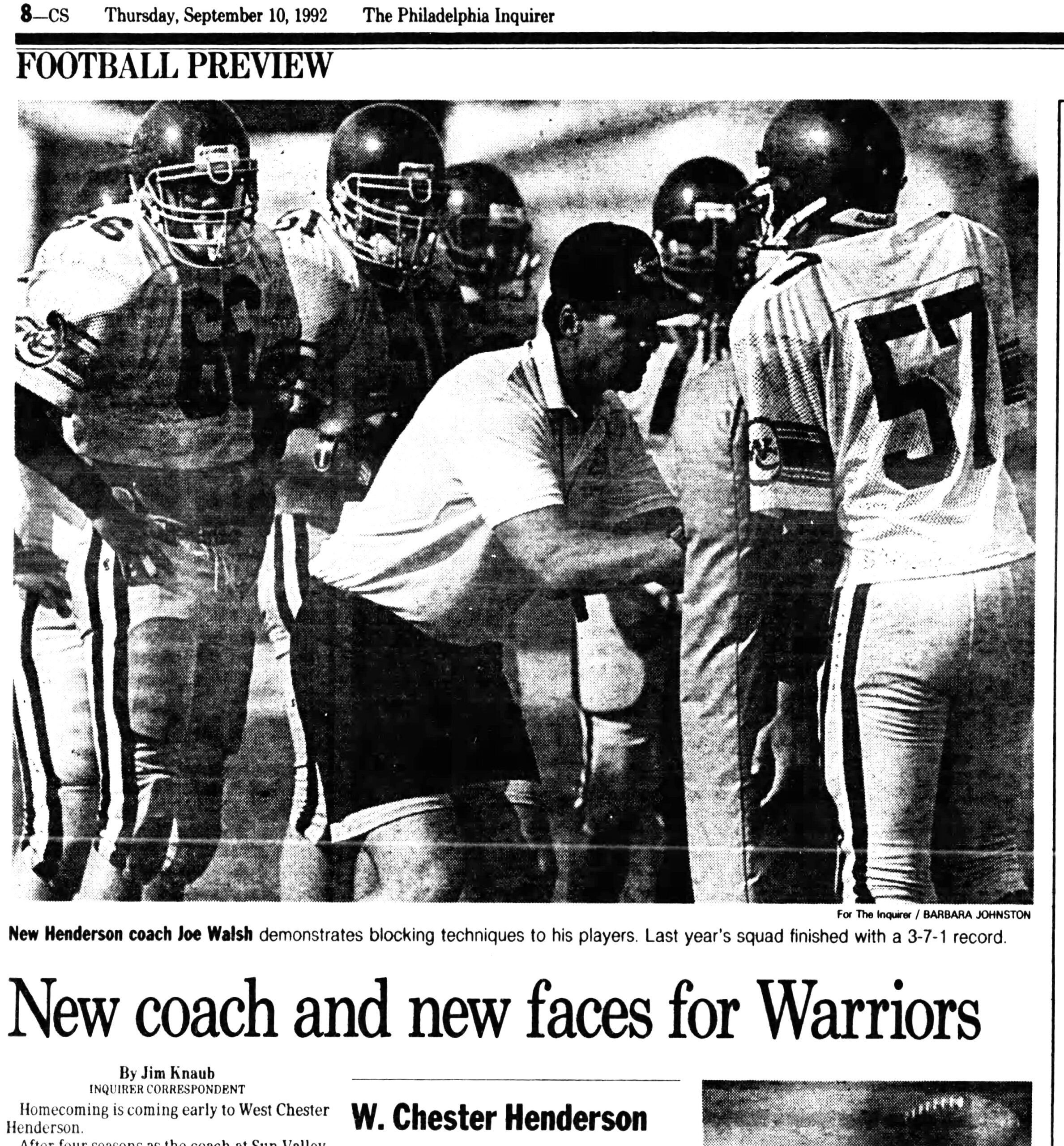
    In 1992, an Inquirer reporter asked him to describe himself. “I am an easygoing, volatile kind of coach,” he said with a big chuckle, the reporter wrote. “Actually,” he said, “I think I’m a player’s coach. I think my rapport with my players is my strong point.”

    Mr. Walsh (center) had many occasions to celebrate with family and friends on the football field.

    Former colleagues, players, and friends said in online tributes that Mr. Walsh was “an inspiration,” “a great coach,” and “a positive example for many, many young people.” On Threads, his brother, Russ, called him a “Hall of Fame human being.”

    “He was always there,” said John Lunardi, assistant principal at Henderson, who played quarterback for Mr. Walsh and served later as his assistant coach, “a steady, reliable role model, somebody who could be counted on no matter what.”

    In 20 years as head football coach at Henderson, from 1992 to 2011, Mr. Walsh’s teams won 131 games, lost 104, and captured three Ches-Mont League championships. From 1988 to 1991, he went 17-25 as head coach at Sun Valley and won the 1990 Del-Val League championship.

    His 2007 team at Henderson went 12-2, won the Ches-Mont title, and made it to the district championship game. “Our motto,” he told The Inquirer in 2004, “is no excuses, just results.”

    Mr. Walsh and his Henderson football team were featured in The Inquirer’s 1992 preview section.

    He coached the West Chester University defensive linemen as an assistant for seven seasons after leaving Henderson and was inducted into the university’s Killinger Football Foundation Hall of Fame in 2001. He entered the Pennsylvania State Football Coaches Association Hall of Fame in 2014 and the Ches-Mont League Hall of Fame in 2018.

    In 2025, he was inducted into the Chester County Sports Hall of Fame, and colleagues there noted his “remarkable achievements and contributions to local athletics” in a Facebook tribute. He earned a standing ovation after speaking at the ceremony, and Henderson officials recognized his legacy with a moment of silence at a recent basketball game. They said in a tribute: “Joe Walsh was a Hall of Fame person in every possible way.”

    Mr. Walsh taught health and physical education at Henderson from 1972 to 2008. He organized offseason clinics to encourage all students to join sports teams and told The Inquirer in 1992: “I’ve always tried my best to get as many people out and make it enjoyable for them so they stay out.”

    He served as board president for the Killinger Football Foundation and cofounded W & W Option Football Camps LLC in 2001. “It wasn’t about the wins and losses for him,” said his wife, Pam. “It was all about the kids, and he was that way in all aspects of his life.”

    Mr. Walsh and his wife, Pam, had many adventures together and spent countless afternoons at football games.

    Joseph Richard Walsh was born Feb. 5, 1950, in Philadelphia. He lettered in football, wrestling, and track in high school, and graduated from Wilson in 1968.

    He earned a bachelor’s degree in health and physical education at West Chester in 1972 and played center on its two-time championship football team.

    He married Sharon Clark, and they had a son, Joe, and a daughter, Kelly. After a divorce, he married Pam Connor in 1978, and they had a daughter, Jen, and lived in Downingtown and then West Whiteland Township since 1985.

    Mr. Walsh enjoyed all kinds of fishing and golf. In 2023, he and his wife visited half a dozen college football stadiums on a wild cross-country road trip to Yellowstone National Park.

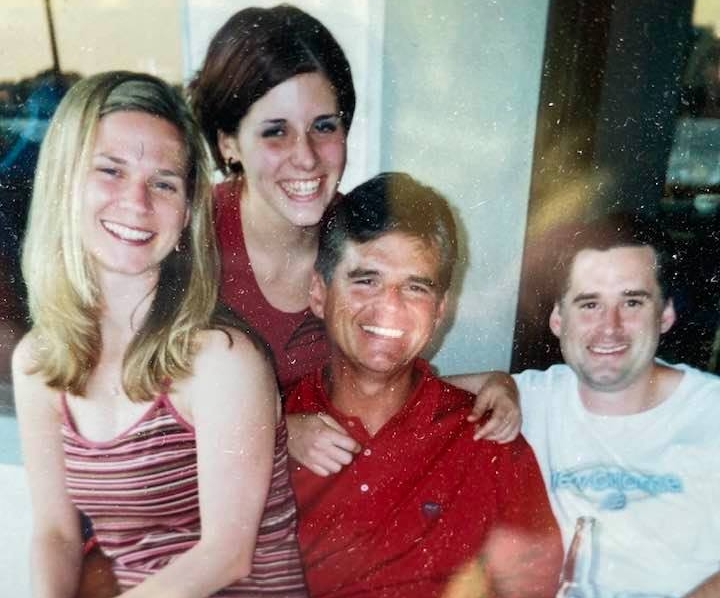
    Mr. Walsh enjoyed time with his children.

    They entertained often at home, and his gourmet soups were usually the hit of the party. He doted on his children and grandchildren, and never lost his sense of humor, they said.

    He was the best neighbor ever, friends said. He cleared miles of sidewalks and driveways with his snowblower every winter, hosted late-into-the-night firepit parties every summer, and could fix practically anything.

    “He was gentle but strong,” his wife said. “He was kind and considerate, and he never badmouthed anybody. He truly was a great man.”

    In addition to his wife, children, brother, and former wife, Mr. Walsh is survived by seven grandchildren, one great-granddaughter, sisters Eileen and Ruth, and other relatives.

    Mr. Walsh rarely let the big ones get away.

    Visitation with the family is to be from 5 to 8 p.m. Thursday, Feb. 5, and from 9 to 10:30 a.m. Friday, Feb. 6, at DellaVecchia, Reilly, Smith & Boyd Funeral Home, 410 N. Church St., West Chester, Pa. 19380. A celebration of his life is to follow Friday at 10:30.

    Donations in his name may be made to the Joe Walsh Scholarship Fund, c/o the Athletic Department, West Chester Henderson High School, 400 Montgomery Ave., West Chester, Pa. 19380.

  • A developer is seeking to expand its proposed data center in East Whiteland

    A developer is seeking to expand its proposed data center in East Whiteland

    A developer wants to increase the size of its proposed data center on a remediated Superfund site in East Whiteland Township, stoking ire from nearby residents who worry about the increased scope stressing the power grid and driving up costs, along with environmental and health risks.

    The facility — which would exceed 1.6 million square feet in the amended plan —would sit on roughly 100 acres at 13 S. Bacton Hill Rd., located along the boundary line for East and West Whiteland Townships, and near U.S. Route 202.

    The amended plan, brought before the township’s planning commission Wednesday, would increase the size of the two data center buildings by roughly 61% from what was previously approved.

    Other changes in the new plan include:

    • Scrapping two microwave towers, antenna yards, and ground-mounted cooling towers
    • Relocating office and loading facilities to face Swedesford Road
    • Redesigning cooling equipment to use waterless chillers instead of water-consuming cooling towers, reducing water use by about 3 million gallons per day

    The applicants are asking the planning commission to approve the modifications because the currently approved plan is outdated, in both technology capacity and what occupants of such centers would need, said Josh Rabina, principal for Sentinel Data Centers, who is working with Green Fig Land LLC on the project.

    The planning commission had approved the original plan in 2024, but the project has been underway since at least 2018, when the developer sought zoning changes to OK data center use. After the planning commission’s approval in 2024, Sentinel joined the project, and suggested changes to address water and energy consumption, said Lou Colagreco, the attorney for the applicant.

    “They just looked at it with a different set of eyes, and they said, ‘First plan works; this plan probably works better,’” Colagreco told the commission. “It addresses certain concerns that we have heard about regarding data centers.”

    But nearly an hour and a half of public comment showed that residents’ concerns weren’t assuaged by the proposed new plan.

    “My head’s spinning with what’s going on here. I think you guys are way out over your skis here with what you should be asking, and there’s a lot that appears to me that you don’t even know you should be asking,” said one resident, Dean Prescott.

    Across the county — and the region — data center projects have been met with scrutiny from the people who will reside near them. Their opposition clashes with Democratic Gov. Josh Shapiro, who has been championing data center development, promoting a 10-year plan that includes cutting regulatory “red tape” to make it easier to approve them. The governor’s office also recently announced Amazon would spend $20 billion to develop data centers and other artificial-intelligence campuses across Pennsylvania.

    Despite the enthusiasm at the state level, 42% of Pennsylvania say they would oppose the centers being built in their area, according to a recent survey.

    And it’s creating a bind for local officials, who are limited in what they can do to prohibit development in areas that are zoned for such purposes.

    Residents in nearby East Vincent, also in Chester County, are pressing hard on their board of supervisors to reject a proposed data center at the historic Pennhurst State School and Hospital. The board there had sought to impose restrictions on data centers, but last month declined to move forward with an ordinance after the township’s solicitor warned it could lead to a challenge from the developer.

    In East Whiteland, as residents called on officials to reject the plan, township solicitor Michael Gill warned it wasn’t that simple.

    “This property is zoned to allow a data center use,” Gill said. “From a perspective of sheer outright denial of the use, that is not likely something that the township has the authority to do at this point in time. Nor did the township ever have the opportunity or the legal right to completely say, ‘We do not want data centers at all in East Whiteland Township.’”

    The proposed data center would be located at a former limestone mining site that eventually became a lithium ore-processing business called the Foote Mineral Co., which closed in 1991. A Superfund cleanup was completed in 2010.

    It is slated to sit across from Malvern Hunt, a neighborhood with about 280 homes and would be intersected by the Chester Valley Trail, a 18.6-mile route popular with walkers, cyclists, and runners.

    Residents worried about the noise, the safety of their well water, and whether digging at a remediated site could adversely affect health. They also raised concerns about the stress — and cost — the facility could put on the power grid.

    The facility would be adjacent to Peco’s Planebrook substation, and the developer is paying for the upgrades needed to support the project, they said Wednesday. Peco officials said previously that surrounding customers wouldn’t see any impact.

    The developers sidestepped questions about resident utility cost increases. The township’s planning director, Zachary Barner, said they had not seen “any sort of detailed analysis of consumer prices or anything like that.”

    Chris Fontana, a Wakefield resident who said he works in software and infrastructure engineering leadership at Zillow, the real estate website, said industrial noise, massive infrastructure, and energy demands make buyers hesitate, affecting home values.

    “Any tax benefit does not outweigh the permanent impact on our land, the strain on local utilities infrastructure, and the risk to the value of our homes, the single biggest investment most families here will ever make,” he said.

    The developer will submit a revised plan and responses to consultant review letters in the coming days, township officials said. The developer will return to the planning commission next month, seeking a positive recommendation from the planning commission to go forward to the township’s board of supervisors.

  • Israel returns Palestinian bodies, marking last exchange between Israel and Hamas

    Israel returns Palestinian bodies, marking last exchange between Israel and Hamas

    DEIR AL-BALAH, Gaza Strip — Israel turned over the bodies of 15 Palestinians on Thursday, just days after recovering the remains of the last Israeli hostage, a Gaza Health Ministry official said.

    It marks the last hostage-detainee exchange between Israel and Hamas carried out as part of the first phase of the U.S.-brokered ceasefire reached in October.

    The Red Cross said that it helped facilitate the return of the bodies. They were taken to Shifa Hospital in Gaza City, health ministry spokeperson Zaher al-Wahidi said.

    The return of all remaining hostages, living or dead, had been a key part of the first phase in the ceasefire that paused the war.

    Israel agreed to return 15 Palestinian bodies for each hostage recovered, according to the ceasefire terms. It’s unclear if the bodies released Thursday were of Palestinian detainees who died in Israeli custody or bodies taken from Gaza by Israeli troops during the war.

    Israel has released roughly 2,000 Palestinian prisoners under the ceasefire deal, many of whom were seized by Israeli troops during the more than two-year war and held without being charged. It also has released the bodies of 360 Palestinians back to Gaza, where officials have struggled to identify them.

    The Gaza health ministry, part of the Hamas-run government, has posted photos of the deceased for families to identify. Of the bodies handed back by Israel, about 100 have been identified by families, al-Wahidi said.

    On Monday, Israel announced that it found and identified the remains of the last Israeli hostage, police officer Ran Gvili, following an extensive search at a cemetery in northern Gaza.

    The attack by Hamas-led militants on Israel on Oct. 7, 2023, which launched the war, killed about 1,200 people and saw 251 taken hostage. Gvili, a 24-year-old police officer known affectionately as “Rani,” was killed while fighting Hamas militants.

    The return of his body closed a painful chapter for the country and cleared the way for the next and more challenging phase of the ceasefire, which calls for deploying an international security force, disarming Hamas, pulling back Israeli soldiers and rebuilding Gaza.

    Deaths continue in Gaza

    While U.S. envoy Steve Witkoff announced the launch of the second phase of the ceasefire deal earlier this month, Israeli fire and strikes continue to kill Palestinians across Gaza almost daily.

    Israeli fire killed two Palestinians on Thursday in southern Gaza’s Khan Younis area, according to Nasser hospital, where the bodies were taken. Health officials said that the two men were killed in areas that aren’t Israeli-controlled.

    Another Israeli strike in central Gaza killed one Palestinian and wounded others, according to Al-Aqsa martyrs hospital, where the casualties were taken.

    Israel’s military said that it carried out a “precise strike” on Thursday that targeted a suspect planning to attack its troops in the southern Gaza Strip.

    The Gaza Health Ministry said that 492 Palestinians have been killed since the ceasefire. The ministry doesn’t distinguish between civilians and combatants in its figures. The ministry maintains detailed casualty records that are seen as generally reliable by U.N. agencies and independent experts.

    The Israeli military has said that some of those killed in recent months were along the ceasefire line that splits Israeli-held areas and most of Gaza’s Palestinian population, and that it has targeted those posing a threat to its troops.

    Rafah border crossing

    For Palestinians separated from their families by the war and the tens of thousands of people outside Gaza seeking to return home, the reopening of the Rafah crossing along the border with Egypt can’t come soon enough.

    The crossing is expected to reopen soon, Israeli officials have said, but how many people will be allowed to enter and leave Gaza remains unclear.

    Preparations are underway to allow the departure of a limited number of medical evacuees who were wounded in the war and need to travel abroad for medical care.

    But Israeli Prime Minister Benjamin Netanyahu has said that crossing won’t be open to goods for now. The crossing, Gaza’s main gateway to the outside world, has been largely closed since May 2024.