Category: News

Latest breaking news and updates

  • There’s now a ‘Club America’ at Great Valley High School. Turning Point USA says interest grew after Charlie Kirk’s assassination.

    Making his pitch to the Great Valley school board, Jed Lu said he and fellow students seeking to bring slain conservative activist Charlie Kirk’s Turning Point USA organization into their high school weren’t racists or extremists.

    “We simply have a different perspective,” Lu told the board at a late February meeting.

    The Chester County district is one of the latest in the Philadelphia area to approve a Club America chapter — the high school offshoot of Kirk’s group. The organization seeks to mobilize “anti-woke warriors” and has rapidly been adding new local chapters since his assassination in September, provoking debate around right-wing influence in public schools.

    Nationally, chapters have nearly tripled — from 1,200 prior to Kirk’s death, to more than 3,300, according to Turning Point officials. Governors in Republican-led states like Arkansas and Nebraska are partnering with Turning Point to expand clubs throughout their states.

    In eastern Pennsylvania, there were 11 Club America chapters at the end of last school year. Now, “we’re currently approaching 40,” said Nick Cocca, Turning Point’s enterprise director.

    The group’s expansion might be overstated in the Philadelphia region. Seven area high schools listed by Turning Point on its website or Instagram graphics as having Club America chapters said they didn’t have clubs.

    Souderton Area High School, for instance, appears on Turning Point’s map, but doesn’t have a club. The school’s assistant principal, Matthew Haines, said “a student made an inquiry” in September about starting a chapter, but never applied to do so.

    In some schools, like Springfield High School in Delaware County, “we have a few students who started running an after-school student pilot a few months back,” said principal Monica Conlin, but the district doesn’t officially recognize the club. Conlin said new clubs must complete a three-year pilot before gaining district approval.

    Still, the organization has gained traction. In addition to Great Valley, Penncrest High School in Rose Tree Media School District lists Club America among its student clubs; district officials and staff didn’t respond to requests for comment.

    Turning Point says it also has a Club America chapter at Pennsbury High School, and an Instagram account for “Club America at Pennsbury” invited students to a Feb. 25 meeting to discuss the State of the Union and “participate in prayer for law enforcement and our nation.” District officials didn’t respond to requests for comment.

    ‘An outpouring of support’ after Kirk’s death

    A spokesperson for Turning Point couldn’t explain the discrepancy between its list and schools that say they don’t have any Club America chapters.

    The organization was also unable to provide a local student willing to be interviewed.

    Cocca said Turning Point “saw an outpouring of support and outreach from young people across the country” in the wake of Kirk’s Sept. 10 assassination. To support its growth, the organization is hiring more field representatives to work with high school students, Cocca said.
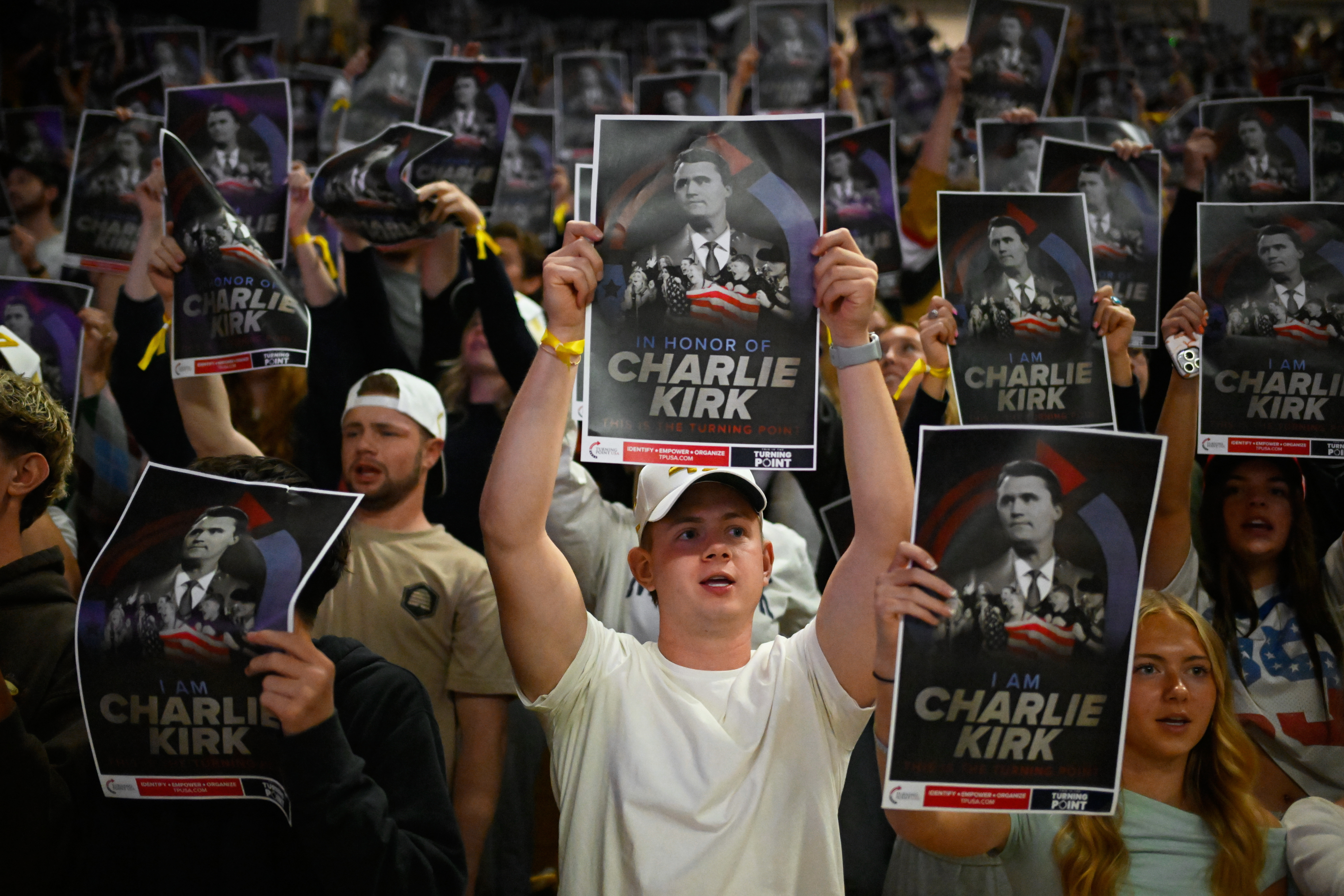
    People hold posters of Charlie Kirk during a Turning Point USA rally at Utah State University, as a part of the organization’s push to memorialize Kirk in Logan, Utah, in September.

    Turning Point, which began as an organization advocating for conservative views on college campuses, had previously been expanding its presence in high schools. (A Turning Point chapter launched years ago at Pennridge High School in Upper Bucks County, for example.)

    Turning Point last July renamed its high school operation Club America. “We wanted a brand that spoke specifically to them,” Cocca said. He said that “when Charlie was alive, he used to say ‘I want a Club America chapter in every high school in America.’”

    The expansion has spurred conflict. Critics have highlighted Kirk’s controversial statements, including referring to the Rev. Dr. Martin Luther King, Jr. as “an awful person” and calling the passage of the 1964 Civil Rights Act a “mistake.”

    Kirk also promoted the so-called “great replacement theory,” framing non-white immigration as a plot to replace white populations.

    “This club is an easy way to incorporate hate and discrimination within our high school. This should not be normalized,” a Change.org petition launched in January against a proposed Club America chapter at West Chester East High School read. An update to the petition later declared that Turning Point “was shut down at West Chester East.”

    Molly Schwemler, a district spokesperson, said that earlier this year, some students expressed interest in starting a Club America chapter.

    But “after discussing the process and need for sponsorship from a teacher with school administration,” students “instead decided to organize independently outside of the school,” Schwemler said. (On its website, Turning Point lists West Chester East as having a chapter.)

    In an Instagram post, the club said it decided to operate independently “because people can’t be mature, open minded or respectful at our school.”

    Activism hubs and kits

    In addition to identifying a teacher adviser, students looking to form clubs often have to supply information to administrators like their purpose, planned activities, and funding needs.

    Schools have little discretion to reject a new club, based on the federal Equal Access Act and First Amendment, said Jeffrey Sultanik, a solicitor for numerous Philadelphia-area districts.

    Districts need “to be viewpoint-neutral,” Sultanik said, noting that “once you open up the door to clubs coming in,” administrators can’t pick and choose which to permit.

    In its handbook for Club America chapters, Turning Point calls it “imperative that every chapter works to become officially recognized by the school,” offering students help if schools deny them.

    Students can form an “activism hub” outside of school for a specific geographic area “as a last resort,” the handbook says.

    In Downingtown — where Turning Point says there is an activism hub — a school district spokesperson said the district has not sponsored any clubs “related to religious or political groups in recent history.” (Some other area schools have official political clubs: Penncrest High School, for instance, lists Penncrest Democrats of America.)

    Turning Point says its Club America chapters are nonpartisan and don’t support specific candidates.

    But the group’s ideology is clear from materials it supplies to student members. Presentations available in Turning Point’s “Activism Library” for students to use have titles including “Taxes Are Shady,” “Socialism Kinda Sus,” and “Big Gov Scares.”

    “Why are those on the left not proud to be Americans?” a presentation titled “Always Love America” asks.

    Kids can order “Activism Kits” from Turning Point with posters and stickers. A “2A” kit features slogans like “Gun rights are women’s rights” and “Guns are the greatest equalizer.”

    Cocca said Turning Point provides students “anything they may need, to promote what they want to promote, and what they want to make their club about” — whether that’s registering students to vote, or learning about the Constitution, he said.

    “Ultimately, it’s up to the students to use those resources the way they want to use them,” he said.

    Opposition to Club America groups

    Critics accuse Turning Point of trying to indoctrinate high schoolers.

    “They are grooming at the high school level, and college level, for a generational change,” said Sherry Lawrence, a parent in Great Valley who opposed the district’s new Club America chapter. “All the red flags are there for people who don’t subscribe to this brand of conservatism, or this brand of Christianity.”

    Lawrence questioned whether adults were driving some efforts to organize Club America chapters.

    In an October Facebook post in a Turning Point Pennsylvania Action group, George Sabo, then a GOP candidate for township supervisor in East Whiteland, said his daughter was starting a chapter at Great Valley High School. “We had discussed it over the summer but pulled the trigger after Charlie’s assassination,” Sabo wrote.

    In a brief phone interview, Sabo said it was his daughter’s idea to start the chapter.

    “My daughter and family, who believe in the Bible, and believe God is king, value those properties and want to see that brought more into the school district,” Sabo said.

    He said that while there had been pushback from other kids, “there’s some support from other kids, too.”
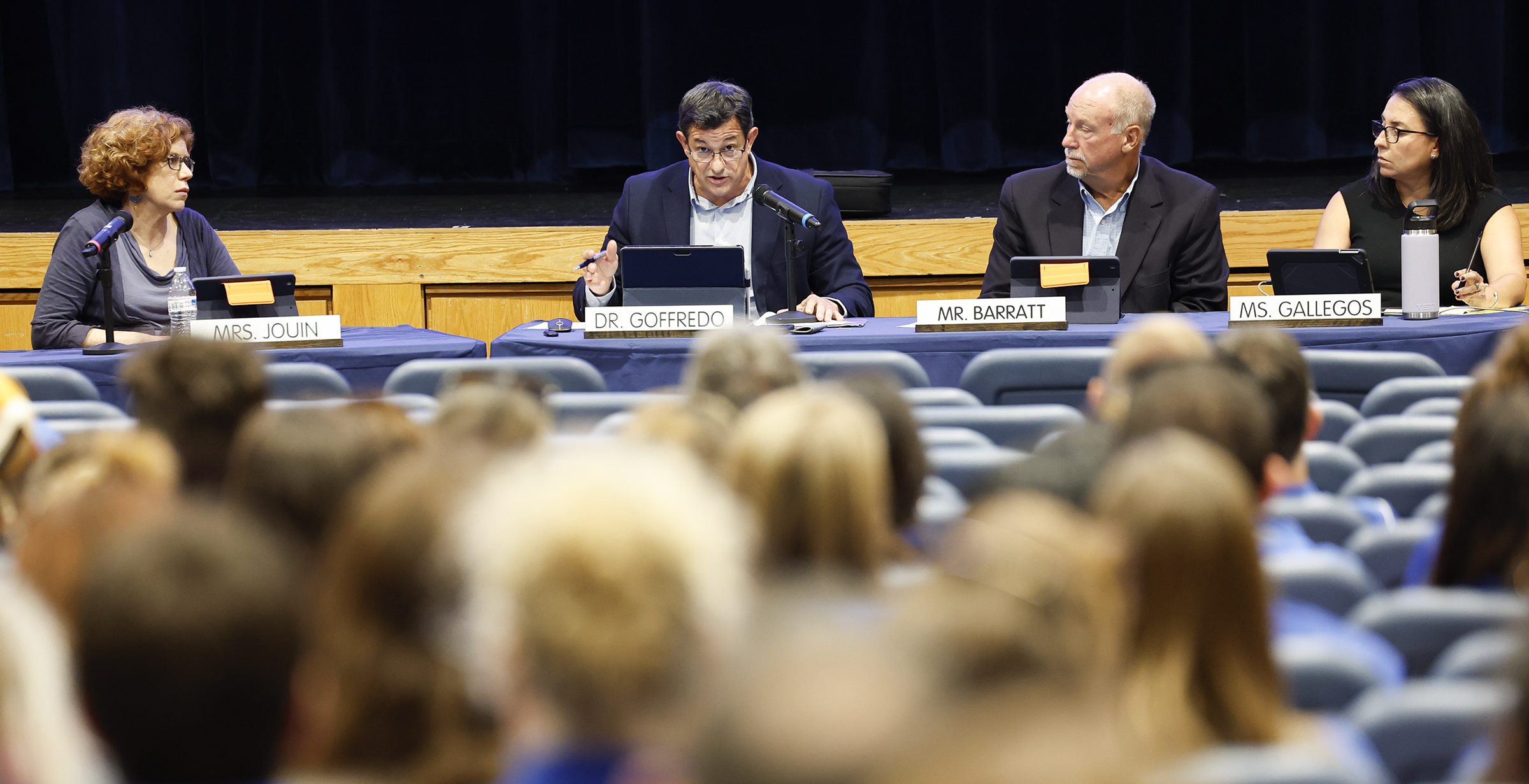
    Great Valley school board members during a meeting at Great Valley High School in Malvern in 2024.

    The Great Valley board approved the club 7-0 at its February meeting.

    At the board meeting, Lu, the club president, said he and the three other club officers had initiated its formation.

    While the club has a “conservative viewpoint,” Lu said, “our purpose is civic debate and civil discussion.” He added that the club is motivated by “the Christian value of love and compassion.”

    The club hopes to be an “impactful addition to Great Valley High School,” Lu said.

  • Israeli police prevent Catholic leaders from celebrating Palm Sunday Mass at Jerusalem church

    TEL AVIV, Israel — The Israeli police prevented Catholic leaders from entering the Church of the Holy Sepulchre to celebrate Mass on the Christian holiday of Palm Sunday for the first time in centuries, the Latin Patriarchate said Sunday.

    Jerusalem’s major holy sites are closed because of the ongoing Iran war, including the church, as the city has come under frequent fire from Iranian missiles.

    The Catholic Church called the police decision “a manifestly unreasonable and grossly disproportionate measure.” It prevented two of the church’s top religious leaders, including Cardinal Pierbattista Pizzaballa and the head of the Custos in the Holy Land, from celebrating Palm Sunday at the place where Christians believe Jesus was crucified.

    Palm Sunday commemorates Jesus’ triumphant entry into Jerusalem and launches the Holy Week commemorations for Christians who follow the Latin calendar, which culminates in Easter next Sunday.

    The Israeli police said it had notified the Catholic Church on Saturday that no Mass could take place on Palm Sunday because of safety considerations, the lack of access for emergency vehicles in narrow alleys of the Old City, and lack of adequate shelter.

    However, the Latin Patriarchate said the Church of the Holy Sepulchre has been hosting Masses that aren’t open to the public since the Iran war began on Feb. 28, and it was unclear why Sunday’s Mass and access by the two priests was any different.

    “It’s a very, very sacred day for Christians and in our opinion there was no justification for such a decision or such an action,” said Farid Jubran, the spokesperson for the Latin Patriarchate of Jerusalem.

    Jubran said that the church had requested permission from the police for a few religious leaders to enter the church for a private Mass on Sunday — not one that was open to the public. The Patriarchate said that the decision impeded freedom of worship and the status quo in Jerusalem.

    The traditional Palm Sunday procession normally sees tens of thousands of Christians from around the world walk from the Mount of Olives down the narrow, hilly streets toward the Old City, waving palm fronds and singing.

    The Patriarchate canceled the traditional processional last week because of safety concerns, and has held Masses limited to fewer than 50 worshipers in compliance with the Israeli military’s guidelines for civilians.

    Pizzaballa celebrated Mass in the nearby St. Savior’s Monastery, a soaring marble church which is located next to an underground music school that the Israeli military has deemed a safe shelter space. Later on Sunday, Pizzaballa held a prayer for peace at the Dominus Flevit Shrine on the Mount of Olives, but kept his homily concentrated on Jesus and didn’t mention the morning’s incident.

    In Rome, Pope Leo XIV said Sunday that God doesn’t listen to the prayers of those who make war or cite God to justify their violence, as he prayed especially for Christians in the Middle East during a Palm Sunday Mass in St. Peter’s Square.

    With the U.S.-Israeli war on Iran entering its second month and Russia’s ongoing campaign in Ukraine, Leo dedicated his Palm Sunday homily to his insistence that God is the “king of peace” who rejects violence.

    “Brothers and sisters, this is our God: Jesus, King of Peace, who rejects war, whom no one can use to justify war,” Leo said. “He does not listen to the prayers of those who wage war, but rejects them, saying: ‘Even though you make many prayers, I will not listen: Your hands are full of blood.’”

    Leaders on all sides of the Iran war have used religion to justify their actions. U.S. officials, especially Defense Secretary Pete Hegseth, have invoked their Christian faith to cast the war as a Christian nation trying to vanquish its foes with military might.

    Russia’s Orthodox Church, too, has justified Russia’s invasion of Ukraine as a “holy war” against a Western world it considers has fallen into evil.

    In a special blessing at the end of Mass, Leo said he was praying especially for Christians in the Middle East who are “suffering the consequences of an atrocious conflict. In many cases, they cannot live fully the rites of these holy days.”

    The Vatican spokesperson didn’t immediately respond when asked to comment on the Jerusalem incident.

    Italy condemns decision

    Italy formally protested the incident in Jerusalem to Israeli authorities. Premier Giorgia Meloni said that the police action “constitutes an offense not only against believers but against every community that recognizes religious freedom.”

    “The Church of the Holy Sepulchre in Jerusalem is a sacred site of Christianity, and as such must be preserved and protected for the celebration of sacred rites,” Meloni said. “Preventing the Patriarch of Jerusalem and the Custos of the Holy Land from entering, especially on a solemnity central to the faith such as Palm Sunday, constitutes an offense not only against believers but against every community that recognizes religious freedom.”

    Meloni’s conservative government tried to keep a balanced position with Israel during the war in Gaza, supporting Israel’s right to defense but condemning the toll on Palestinians.

    The Italian leader has also said that Italy won’t participate in the Iran war, while affirming that the Islamic Republic can’t be allowed to possess nuclear weapons.

    Foreign Minister Antonio Tajani instructed Italy’s ambassador to Israel to convey the protest “and to reaffirm Italy’s commitment to protecting religious freedom at all times and under all circumstances.”

    In addition, Tajani summoned the Israeli ambassador to Italy for talks on Monday at the Italian Foreign Ministry to seek clarification about the decision.

    Israeli leader explains closure

    Israeli Prime Minister Benjamin Netanyahu said on Sunday evening that there was no “malicious intent” and that the cardinal was prevented from accessing the church because of safety concerns, but that Israel would try to partially open the Church of the Holy Sepulchre in the coming days.

    “Given the holiness of the week leading up to Easter for the world’s Christians, Israel’s security arms are putting together a plan to enable church leaders to worship at the holy site in the coming days,” Netanyahu wrote on X.

    The Western Wall, the holiest site where Jews can pray, is also mostly closed because of safety issues, but authorities are letting up to 50 people at a time pray in an enclosed area adjacent to the plaza.

    Smaller churches, synagogues, and mosques are open in Jerusalem’s Old City if they are located within a certain distance of a bomb shelter deemed acceptable by Israel’s military and if gatherings are kept under 50 people.

  • Actor James Tolkan of ‘Top Gun’ and ‘Back to the Future’ fame dies at 94

    Actor James Tolkan of ‘Top Gun’ and ‘Back to the Future’ fame dies at 94

    Actor James Tolkan, known for his roles as a cigar-chomping naval commander in Top Gun and a gruff high school administrator in Back to the Future, has died. He was 94.

    Mr. Tolkan died Thursday in Lake Placid, N.Y., where he lived, his booking agent, John Alcantar, said Saturday. A brief obituary published on the “Back to the Future” website said Mr. Tolkan died “peacefully,” but no cause of death was given.

    In Back to the Future, Mr. Tolkan portrayed the bow tie-wearing vice principal Gerald Strickland, who eyeballed students for trouble in the halls of the fictitious Hill Valley High School — in particular Marty McFly, played by Michael J. Fox.

    “You got a real attitude problem, McFly,” Mr. Tolkan’s character says in the 1985 film. “You’re a slacker. You remind me of your father when he went here. He was a slacker, too.”

    Mr. Tolkan also appeared in Top Gun as commanding officer Tom “Stinger” Jardian. Near the end of the film, when Jardian asks Tom Cruise’s character, Capt. Pete “Maverick” Mitchell, about his choice for future duty, Mitchell replies that he wants to be a Top Gun instructor.

    “God help us,” Mr. Tolkan’s character replies, laughing.

    Born in Calumet, Mich., Mr. Tolkan graduated from high school in Arizona and served in the Navy during the Korean War. He eventually made his way to New York, where he spent a quarter century acting in theater roles. He was a member of the original ensemble cast of Glengarry Glen Ross.

    Mr. Tolkan is survived by his wife of 54 years, Parmelee Welles, who said in a statement that her husband also was an avid art collector and adored animals.

  • Iran-backed Houthis enter the month-old war and could further threaten shipping

    Iran-backed Houthis enter the month-old war and could further threaten shipping

    DUBAI, United Arab Emirates — Iranian-backed Houthi rebels entered the month-old war in the Middle East on Saturday, claiming two missile launches at Israel. About 2,500 U.S. Marines arrived in the region. And Pakistan’s government said that regional powers plan to meet Sunday to discuss how to end the fighting.

    The war has threatened global supplies of oil and natural gas, sparked fertilizer shortages and disrupted air travel. Iran’s grip on the strategic Strait of Hormuz has shaken markets and prices. The United States and Israel continue to strike Iran, whose retaliatory attacks have targeted Israel and neighboring Gulf Arab states. More than 3,000 people have been killed.

    The Houthis’ entry could further hurt global shipping if they again target vessels in the Bab el-Mandeb Strait off the Red Sea, through which about 12% of the world’s trade typically passes.

    There could be limited relief after Iran on Friday agreed to allow humanitarian aid and agricultural shipments through the Strait of Hormuz following a U.N. request. President Donald Trump, meanwhile, has given Iran until April 6 to reopen the strait.

    Witnesses in Tehran reported heavy strikes late Saturday. Israel’s military earlier said that it targeted Iran’s naval weapons production facilities, and said that it would finish attacking essential weapons production sites within “a few days.” Iran fired missiles toward Israel. The U.S. said that it has struck more than 11,000 Iranian targets in the war.

    And Ukraine’s president visited Gulf nations as his country offers defense help with drones.

    Houthi involvement sparks concerns

    Houthi Brig. Gen. Yahya Saree said on the rebels’ Al-Masirah satellite television station that they launched missiles toward “sensitive Israeli military sites” in the south.

    If the Houthis increase attacks on commercial shipping, as they have in the past, it would further push up oil prices and destabilize “all of maritime security,” said Ahmed Nagi, a senior Yemen analyst at the International Crisis Group. “The impact would not be limited to the energy market.”

    The Bab el-Mandeb, at the southern tip of the Arabian Peninsula, is crucial for vessels heading to the Suez Canal through the Red Sea. Saudi Arabia has been sending millions of barrels of crude oil a day through it because the Strait of Hormuz is effectively closed.

    Houthi rebels attacked more than 100 merchant vessels with missiles and drones, sinking two vessels, between November 2023 and January 2025, saying that it was acting in solidarity with Palestinians in Gaza during the Israel-Hamas war.

    The Houthis’ latest involvement would complicate the deployment of the USS Gerald R. Ford, the aircraft carrier that arrived in Croatia on Saturday for maintenance. Sending it to the Red Sea could draw attacks similar to those on the USS Dwight D. Eisenhower in 2024 and the USS Harry S. Truman in 2025.

    The Houthis have held Yemen’s capital, Sanaa, since 2014. Saudi Arabia launched a war against the Houthis on behalf of Yemen’s exiled government in 2015, and they now have an uneasy ceasefire.

    Diplomacy attempts as U.S. beefs up troop numbers

    Pakistan said that Saudi Arabia, Turkey, and Egypt will send top diplomats to Islamabad for talks aimed at ending the war, arriving Sunday for a two-day visit. Pakistani Prime Minister Shehbaz Sharif said that he and Iranian President Masoud Pezeshkian held “extensive discussions” on regional hostilities.

    But Iranian Foreign Minister Abbas Araghchi told his Turkish counterpart by phone that Tehran was skeptical about recent diplomatic efforts. Iranian state-run media said that Araghchi accused the United States of making “unreasonable demands” and exhibiting “contradictory actions.”

    Pakistani Foreign Minister Ishaq Dar later spoke with Araghchi and urged “an end to all attacks and hostilities.”

    Trump envoy Steve Witkoff has said that Washington delivered a 15-point “action list” to Iran for a possible ceasefire, with a proposal to restrict Iran’s nuclear program — the issue at the heart of tensions with the U.S. and Israel — and reopen the Strait of Hormuz. Tehran rejected it and presented a five-point proposal that included reparations and recognition of its sovereignty over the waterway.

    Meanwhile, U.S. ships with around 2,500 Marines trained in amphibious landings have arrived, adding to the largest American force in the region in more than two decades. And at least 1,000 paratroopers from the 82nd Airborne Division, trained to land in hostile territory to secure key positions and airfields, have been ordered to the Middle East.

    Secretary of State Marco Rubio has said that Washington “can achieve all of our objectives without ground troops.”

    U.S. troops wounded at Saudi base

    More than two dozen U.S. troops have been wounded in Iranian attacks on Saudi Arabia’s Prince Sultan Air Base in the last week, according to two people briefed on the matter who spoke on condition of anonymity because they weren’t authorized to comment publicly.

    Iran fired six ballistic missiles and 29 drones at the base Friday, injuring at least 15 troops, five of them seriously, they said.

    The base, about 60 miles from the Saudi capital Riyadh, was attacked twice earlier in the week, including a strike that wounded 14 U.S. troops, according to the people briefed on the matter.

    More than 300 U.S. service members have been wounded in the war. At least 13 have been reported killed.

    Death toll climbs

    Iranian authorities say more than 1,900 people have been killed in the Islamic Republic, while 19 have been reported dead in Israel.

    In Lebanon, where Israel has started an invasion in the south while targeting the Hezbollah militant group, officials said that more than 1,100 people in the country have been killed since the start of the war.

    In Iraq, where Iranian-supported militia groups have entered the conflict, 80 members of the security forces have died.

    In Gulf states, 20 people have been killed. Four have been killed in the occupied West Bank.

  • No Kings rallies draw crowds across U.S. Springsteen headlines Minnesota demonstration

    No Kings rallies draw crowds across U.S. Springsteen headlines Minnesota demonstration

    ST. PAUL, Minn. — Crowds of people protested Saturday against the war in Iran and President Donald Trump’s actions, in No Kings rallies across the U.S. and in Europe. Minnesota took center stage, in what organizers expected to be mass demonstrations involving millions of people.

    Thousands of people stood shoulder-to-shoulder on the Minnesota Capitol lawn and surrounding streets in St. Paul. Some held upside down U.S. flags, historically a sign of distress.

    The event’s headliner was Bruce Springsteen, who performed “Streets of Minneapolis.” He wrote the song in response to the fatal shootings of Renee Good and Alex Pretti by federal agents and in tribute to the thousands of Minnesotans who took to the streets over the winter to protest the Trump administration’s aggressive immigration enforcement.

    Before he launched into the song, Springsteen lamented Good and Pretti’s deaths but said people’s continued pushback against U.S. Customs and Immigration Enforcement has given the rest of the country hope.

    Bruce Springsteen performs during the No Kings protest Saturday in St. Paul, Minn.

    “Your strength and your commitment told us that this was still America,” he said. “And this reactionary nightmare, and these invasions of American cities, will not stand.”

    People rallied from New York City, with almost 8.5 million residents in a solidly blue state, to Driggs, a town of fewer than 2,000 people in eastern Idaho, a state Trump carried with 66% of the vote in 2024.

    Biggest crowds yet expected

    U.S. organizers have estimated that the first two rounds of No Kings rallies drew more than 5 million people in June and 7 million in October. This week they told reporters they expected 9 million participants Saturday, though it was too early to tell whether those expectations were met.

    Organizers said more than 3,100 events — 500 more than in October — were registered, in all 50 states.

    In Topeka, Kansas, a rally outside the Statehouse had people impersonating a frog king and Trump as a baby. Wendy Wyatt drove with “Cats Against Trump” sign from Lawrence, 20 miles to the east, and planned to drive back to her hometown for a later rally there.

    Wyatt said “there are so many things” about the Trump administration that upset her, but “this is very hopeful to me.”

    GOP officials dismissive of protests

    White House spokesperson Abigail Jackson characterized them as the product of “leftist funding networks” with little real public support.

    The “only people who care about these Trump Derangement Therapy Sessions are the reporters who are paid to cover them,” Jackson said in a statement.

    The National Republican Congressional Committee was also sharply critical.

    “These Hate America Rallies are where the far-left’s most violent, deranged fantasies get a microphone,” NRCC spokesperson Maureen O’Toole said.

    Protesters have a long list of causes

    The Trump administration’s aggressive immigration enforcement, particularly in Minnesota, were just one item on a long list of protester grievances that also included the war in Iran and the rollback of transgender rights.

    In Washington, hundreds marched past the Lincoln Memorial and into the National Mall, holding signs that read “Put down the crown, clown” and “Regime change begins at home.” Demonstrators rang bells, played drums and chanted “No kings.”

    Bill Jarcho was there from Seattle, joined by six people dressed as insects wearing tactical vests that said, “LICE,” spoofing ICE as part of what he called a “mock and awe” tour.

    “What we provide is mockery to the king,” Jarcho said. “It’s about taking authoritarianism and making fun of it, which they hate.”

    About 40,000 people marched in a No Kings event in San Diego, police there said.

    In New York, Donna Lieberman, executive director of the New York Civil Liberties Union, said during a news conference that Trump and his supporters want people to be afraid to protest.

    “They want us to be afraid that there’s nothing we can do to stop them,” she said. ”But you know what? They are wrong — dead wrong.”

    But organizers said two-thirds of the RSVPs for the rallies came from outside of major urban centers. That included communities in conservative-leaning states like Idaho, Wyoming, Montana, Utah, South Dakota, and Louisiana, as well in competitive suburban areas of Pennsylvania, Georgia, and Arizona.

    Main event is at the Minnesota Capitol

    Organizers designated the rally there as the national flagship event, in recognition of how the state where federal agents fatally shot two people who were monitoring Trump’s immigration crackdown.

    Springsteen’s Land of Hope & Dreams American Tour has a No Kings theme and kicks off Tuesday in Minneapolis.

    Before the rocker known as “the Boss” took the stage, organizers played a video from Robert DeNiro. The actor said he wakes up every morning depressed because of Trump but was happier Saturday because millions of people were protesting. He also congratulated Minnesota residents for running ICE out.

    An event on the Minnesota Capitol grounds in June drew an estimated 80,000 people and Minnesota organizers expected 100,000 on Saturday.

    The bill also included singer Joan Baez, actor Jane Fonda, Sen. Bernie Sanders, and a long list of other activists, labor leaders, and elected officials.

    Protesters held up a massive sign on the Capitol steps that read, “We had whistles, they had guns. The revolution starts in Minneapolis.”

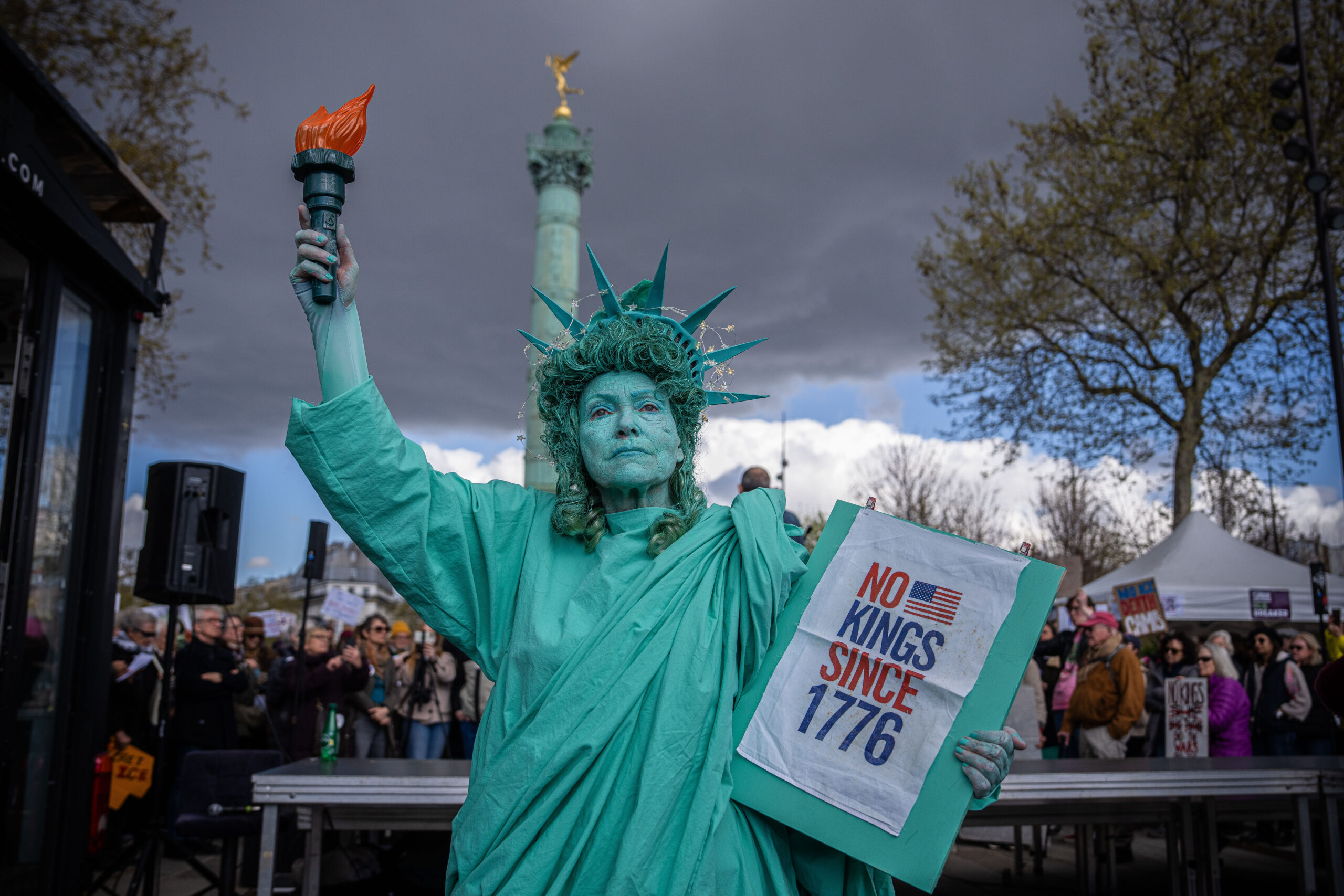
    A woman dressed as the Statue of Liberty takes part in the “No Kings” protest in Paris on Saturday.

    Rallies planned outside the U.S.

    Rallies are also planned in more than a dozen other countries, from Europe to Latin America to Australia, Ezra Levin, a co-executive director of Indivisible, a group spearheading the events, said in an interview. Countries with constitutional monarchies call the protests “No Tyrants,” he said.

    In Rome, thousands of people marched with defiant chants aimed at Premier Giorgia Meloni, whose conservative government saw its referendum for streamlining Italy’s judiciary badly fail earlier this week amid criticism that it was a threat to the courts’ independence. Protesters waved banners protesting the Israeli and U.S. attacks on Iran, calling for “A world free from wars.”

    In London, people protesting the war in Iran held banners that said, “Stop the far right” and “Stand up to Racism.”

    And on Saturday morning in Paris, several hundred people, mostly Americans living in France, along with French labor unions and human rights organizations, gathered at the Bastille.

    “I protest all of Trump’s illegal, immoral, reckless, and feckless, endless wars,” Ada Shen, the Paris No Kings organizer, said.

  • No Kings rallied for the third wave of anti-Trump protests in Philly and around the country

    No Kings rallied for the third wave of anti-Trump protests in Philly and around the country

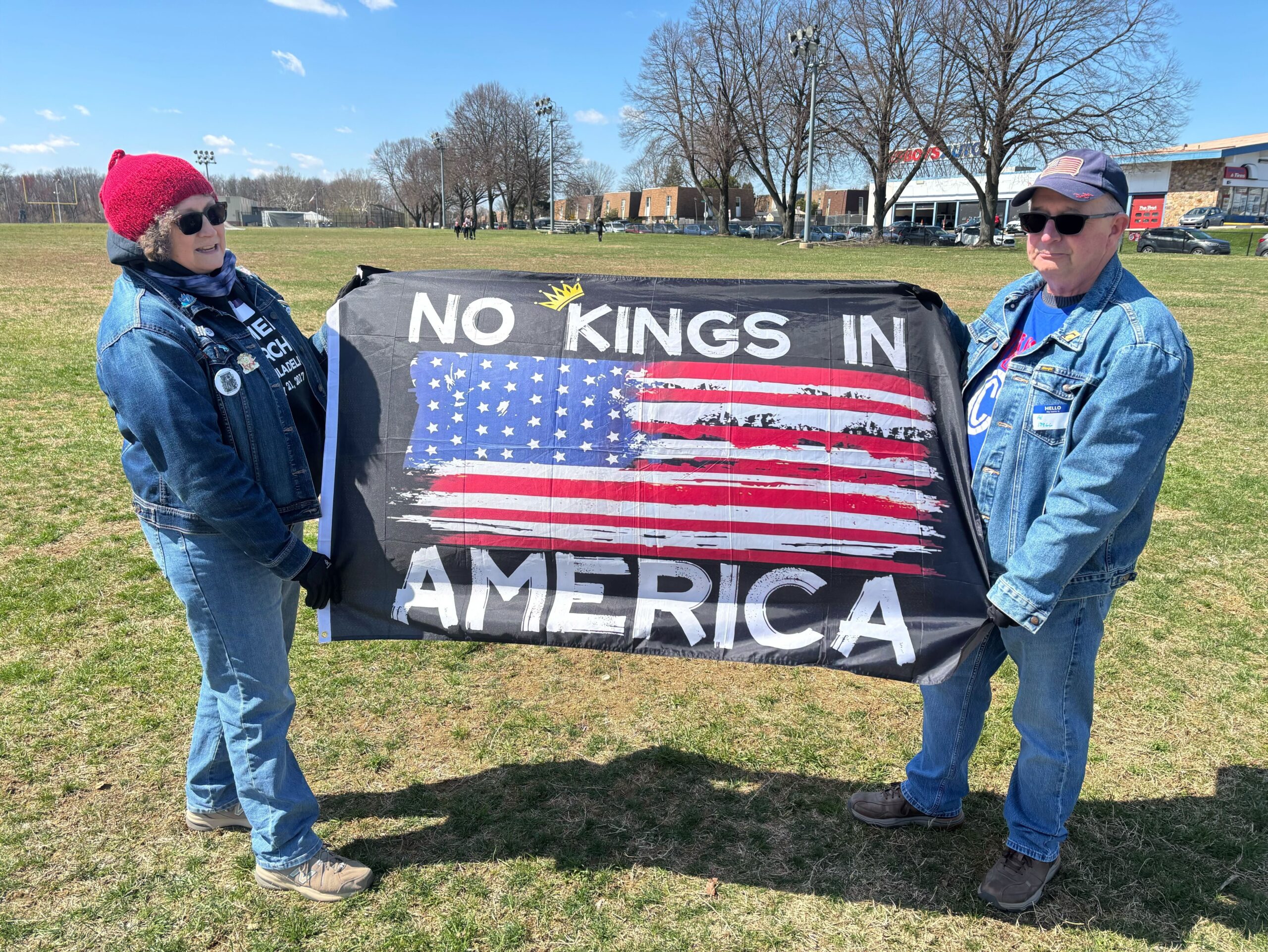
    In step with demonstrators nationwide Saturday, thousands took to streets across the Philadelphia region — from Center City, to Ardmore, to Camden — denouncing President Donald Trump, his policies, and his administration.

    It was the third No Kings protest in roughly nine months, signaling the breadth of dissent and concern over what protesters see as Trump’s authoritarianism and his attempts to consolidate and expand his power. Protesters condemned the gamut of the president’s agenda, including escalating immigration enforcement, the war in Iran and rising gas prices at home, and the dismantling of foreign aid programs.

    “The people in power are making decisions that they won’t have to live through,” said Electra Powers, who brought her Grays Ferry family to the demonstration outside Philadelphia City Hall. “The future they’re setting up for our kids is horrible.”

    On a brisk March afternoon, chants reverberated throughout Center City, drums beat in time, and homemade signs swung as participants marched down the Ben Franklin Parkway to a rally at the Philadelphia Museum of Art.

    Near City Hall’s north entrance, Meoshe McQueen unfurled a large American flag, a tribute to her father, she said, who served as an airman in World War II.

    “My father fought for equality and justice,” the North Philly native said. “The world we live in today threatens that. We want fairness, regardless of a person’s color, creed, or race. None of that matters.”

    More than 3,100 No Kings events were planned Saturday, spanning every state and most continents, according to organizers, who expected historic turnout. The movement’s flagship event was being held in Minnesota, an epicenter of resistance to Trump’s immigration crackdown and the site of two fatal shootings by federal agents. New Jersey’s own Bruce Springsteen performed his anti-ICE protest song, “Streets of Minneapolis,” there.

    “We need a world where kids can be safe, and not hauled off based on the color of their skin,” said Pamela Schott of Jenkintown, who held up a sign pleading for “peace and safety” for her grandchildren.

    Energy was also building in pockets of the region where Trump has more political capital, and those who oppose the president feel their voices drowned out.

    “I grew up in an America where I saw change for the good,” said Betsy Tucker of Bucks County. “Now, I’ve seen that change ripped away.”

    Michelle Dupree, 67, was one of the first of roughly 150 people at the Northeast Philly No Kings rally at Bustleton Field. She had hoped more people would show up in the Northeast.

    She was tired. But not defeated.

    “It’s important to me,” she said, waving her sign for the modest, but steady stream of drivers, who registered their approval with a honk or three. “My knees hurt. My back hurts. It’s so frustrating to be at home and to watch the news — you want to scream. You want to be heard.”

    Olivia Hayes was among a couple thousand ralliers in Ardmore. Hayes was cheered by reports of robust crowds at No Kings events in other suburban spots, like Wayne and nearby Havertown. For a few hours, at least, a sense of pride pierced the anger and hopelessness, she said.

    “It’s great to see such a community,” she said. “When you’re in your day-to-day life, and not around so many people, it can be hard to have hope.”

    Betsy and Al Tucker attend the Northeast Philly No Kings protest on Saturday.

    Across the river, Camden hosted its first No Kings protest (previous events were held in Collingswood and Haddon Heights). The change in locale was driven by increased immigration enforcement and presence in the area, said Michele Messer, of Cooper River Indivisible. Camden city’s population is about 54% Hispanic, according to U.S. Census data. Last month, a nearby ICE operation made a group of Camden County fourth graders and fifth graders run away from a bus stop in a panic, according to the Lindenwold School District.

    “We’re a united front,” she said, “no matter where you land on the political spectrum, we need to work together and build coalitions to fight back against what this administration continues to try to pile on us.

    “And the stronger that fabric, the stronger we’ll be.”

    In a statement to the Associated Press, the White House dismissed the nationwide protests as the product of “leftist funding networks” with little real public support.

    Center City attendees said the sense of urgency is growing.

    “We wanted to show our support for the movement,” Peter Maiolino said. “If we weren’t outraged last time, we definitely are now.

    “Things have only gotten worse.”

    In a video message to the crowd, U.S. Rep. Brendan Boyle — who was stuck in Washington, D.C., as congressional leaders haggle over the partial government shutdown, which has forced Transportation Security Administration employees to work for weeks without pay — encouraged people to continue their protest, even after the rally concluded.

    “This is a fight we cannot lose, but we need to be crystal clear about what is that stake in this country,” Boyle (D., Philadelphia) said. “Our president is more concerned about building his ‘big beautiful ballroom’ than he is about the poor and working-class people in this country.”

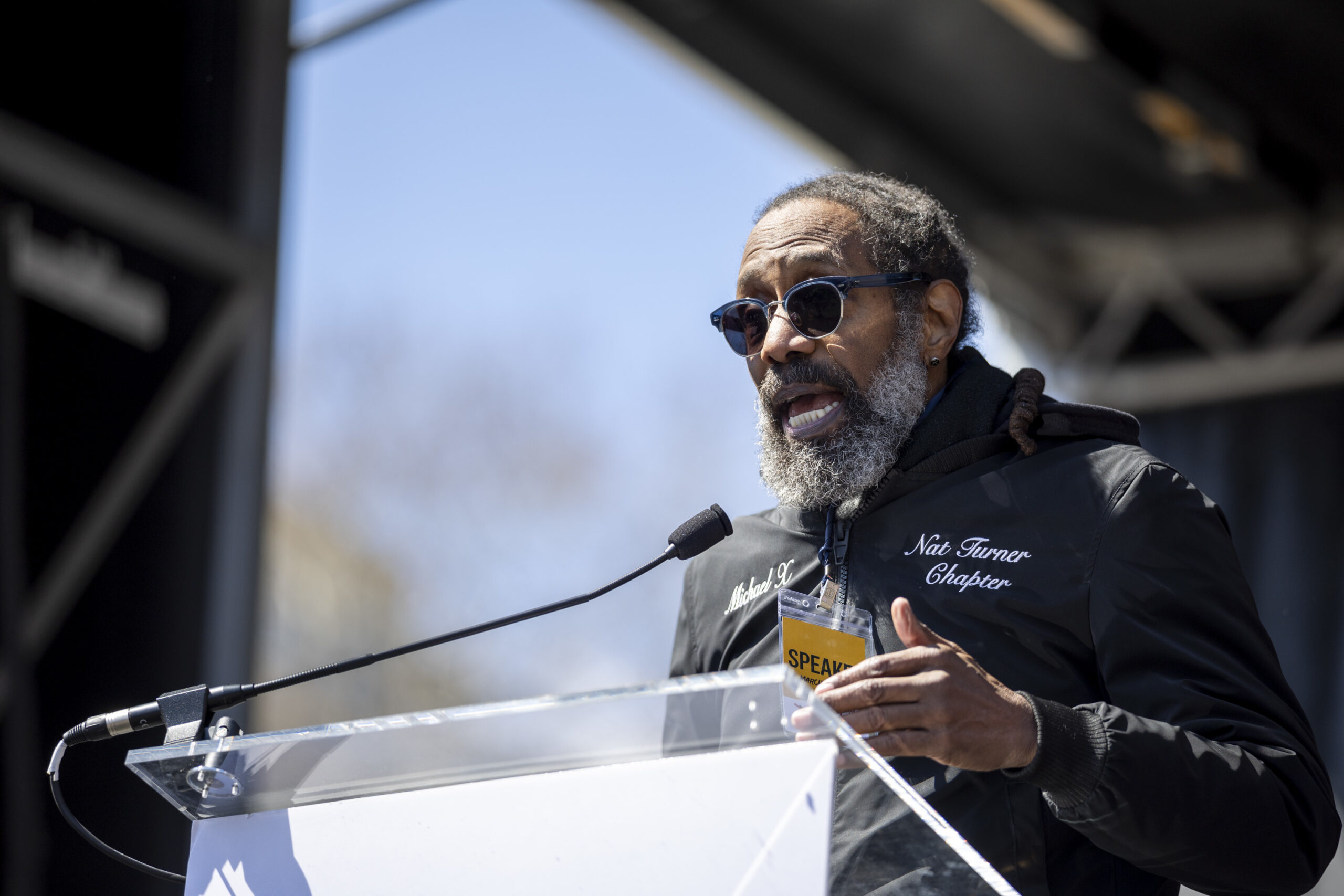
    Avenging The Ancestors Coalition (ATAC) leader and attorney Michael Coard echoed Boyle’s sentiments, calling the attendees “the revolution.” ATAC stewarded the President’s House Site on Independence Mall, a slavery memorial removed — and later partially restored by court order — in what some have called an attempt by the Trump administration to sanitize history.

    Michael Coard, of the Avenging the Ancestors Coalition, speaks Saturday at the third No Kings rally in Philadelphia.

    “When I say fascism, I want you to know that I say it without hyperbole,” he said. “Today America is where Italy was in 1926, but we are not going to do the same. We are going to fight a good fight and we are going to win.”

    The No Kings’ trajectory has been atypical compared to other social movements, where enthusiasm historically wanes over time, according to Billie Murray, an associate professor of communication at Villanova University. No Kings has, instead, gained momentum: Organizers say more than 5 million people took to the streets in June, followed by more than 7 million in October. Organizers projected 9 million people would participate Saturday.

    “The issues don’t seem to be getting resolved,” Murray said, “people see that as a motivating factor — ‘We have to keep pushing, we have to keep trying, we have to keep organizing.’ … People aren’t seeing the change that they want to see.”

    The Associated Press contributed to this article.

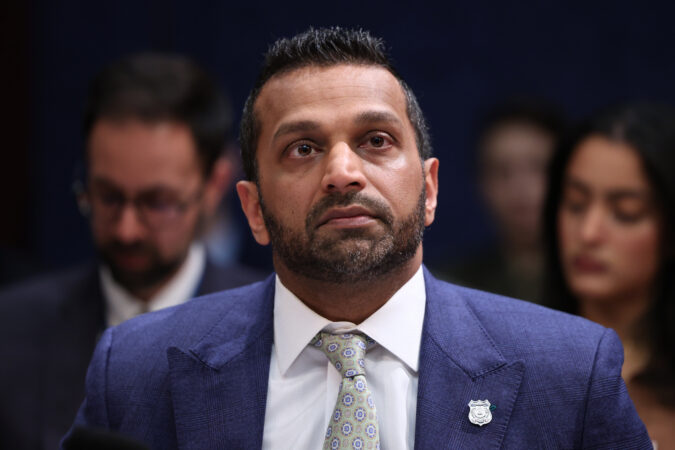
  • Kash Patel’s push against Democratic lawmaker raises concerns within FBI

    Kash Patel’s push against Democratic lawmaker raises concerns within FBI

    FBI Director Kash Patel is pressing to release a decade-old investigative file involving Rep. Eric Swalwell (D., Calif.) and a suspected Chinese intelligence operative, recently dispatching agents in the bureau’s San Francisco office to quickly redact the files before they are released publicly despite no evidence of wrongdoing by Swalwell, according to three people familiar with the effort.

    The potential release is part of the Trump administration’s aggressive push to investigate Swalwell, a vocal critic of President Donald Trump and a leading Democratic candidate for California governor, according to the people familiar with the effort. It is highly unusual for the FBI to release case files tied to a probe that did not result in criminal charges.

    As FBI director, Patel has focused on trying to bring a criminal case against the outspoken Democrat, reassigning multiple agents in San Francisco to work on the matter, the current and former officials said. FBI leaders have even discussed sending agents to China to talk to the suspected intelligence operative, believing she could have damaging information about Swalwell, according to two of the people familiar with the investigation. The people familiar with the matter spoke on the condition of anonymity to discuss an investigation that has not been made public.

    The Chinese woman at issue is Christine Fang, also known as Fang Fang, who reportedly courted Swalwell and other California politicians in the United States from 2011 to 2015. She helped with fundraising for Swalwell’s 2014 reelection campaign and even helped place an intern in his congressional office. When federal agents conveyed their concerns about Fang to Swalwell around 2015, he reportedly cut off ties with her and said he helped investigators.

    Swalwell was not accused of any wrongdoing when the FBI investigated his relationship with Fang a decade ago. In 2023, the Republican-led House Ethics Committee closed a two-year investigation into the congressman, deciding to “take no further action.”

    Despite that, FBI leaders have recently suggested in internal discussions that the government could try to arrange for Fang to get a U.S. visa in exchange for speaking with FBI agents about the Democrat, according to the three people with knowledge of Patel’s efforts. It would be highly unorthodox to grant a visa to a person suspected of being an intelligence agent for a foreign superpower.

    An FBI spokesperson disputed any notion of improper motives. “The contentions in this story are incorrect,” the spokesperson said. “This FBI, being the most transparent in history, prepares documents for numerous different reasons, including for release to different agencies and departments to further review investigations that may have been opened under previous administrations.”

    The push to publicly release the investigative files, the people interviewed said, suggests that the FBI has struggled to so far build a criminal case against Swalwell. Even if there is no incriminating evidence in the files, an extensive case file could contain revealing and personal details about Swalwell and his campaign operations.

    The lengths that Patel’s circle is going to in the bid to pursue a political foe of the president has raised alarms within the bureau, where some officials fear that releasing the files — even with redactions — could compromise law enforcement sources and investigatory methods, making it harder for the FBI to gain trust with potential witnesses.

    They also said they feared the repercussions of sending agents to the territory of an adversarial nation to dig up information on a sitting congressman. Such an interview, legal experts said, would be impossible without Chinese interference, and Fang would be considered an unreliable witness.

    “Most troubling about this is that we are now literally at war. We also face threats against the homeland,” Swalwell said in a statement to the Washington Post. “Kash Patel should be spending every moment trying to keep us safe, not scoring political points. A lot of people have bent the knee to this administration. But I will not, and neither will the people of California.”

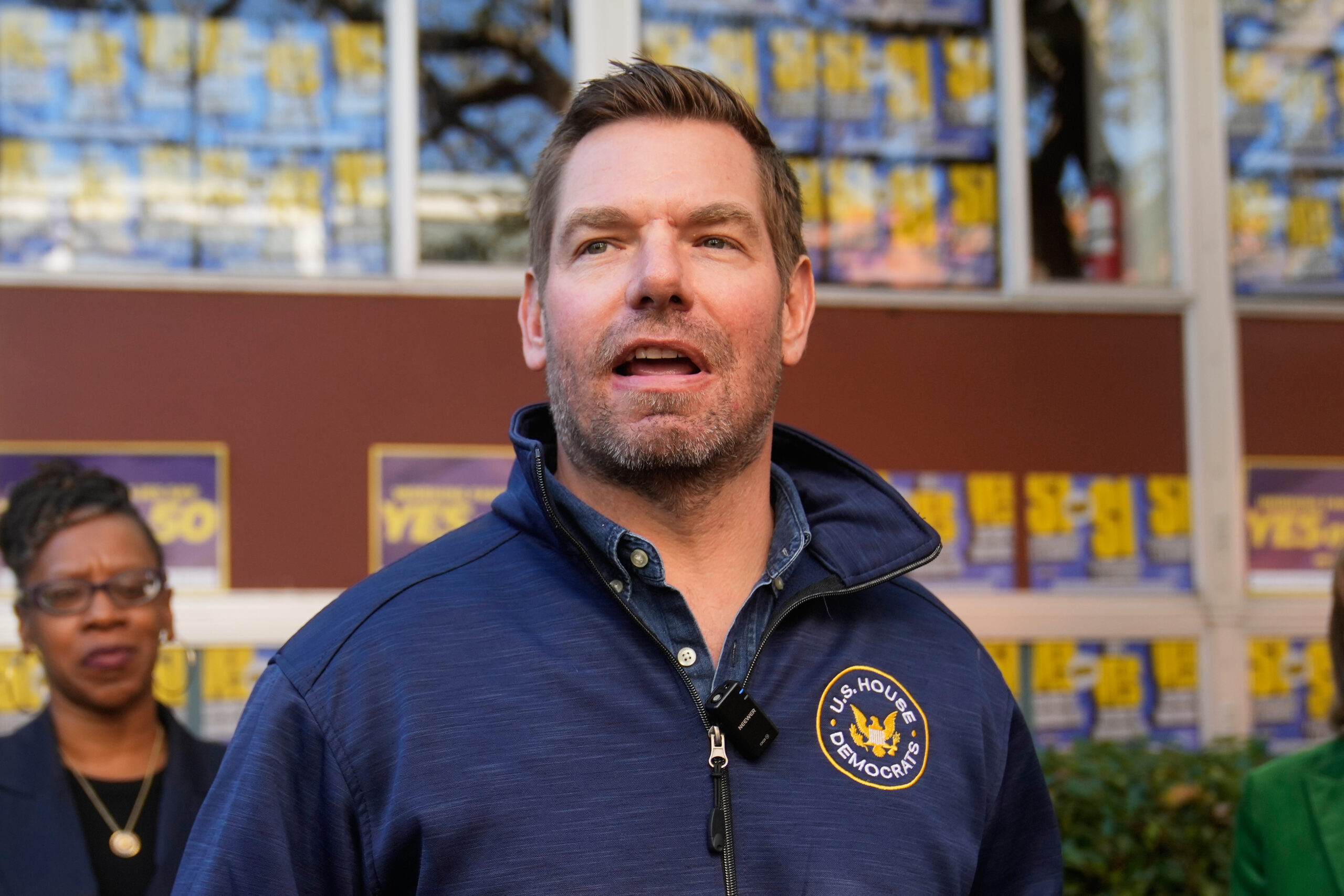
    Rep. Eric Swalwell (D., Calif.) speaks to reporters after a campaign event on Nov. 3, 2025, in San Francisco.

    Swalwell, who unsuccessfully sought the Democratic presidential nomination in 2020, has been an unusually aggressive and colorful critic of the president, frequently criticizing the president in media interviews and on the dais as a member of the House Judiciary Committee. Swalwell also was a House “manager” — essentially, a prosecutor — in Trump’s 2021 impeachment for his role in the Jan. 6, 2021, attack on the U.S. Capitol.

    Swalwell’s district in Northern California includes a large Chinese American population. Republicans and media personalities frequently criticize Swalwell for his ties to Fang and the Chinese community, suggesting that he is improperly working with them.

    But FBI agents typically need a specific investigative reason to reopen a closed investigation. The people familiar with the probe said it is unclear how or why the FBI reopened its examination of Swalwell.

    Internal Justice Department policy has long said that law enforcement should refrain from taking any public investigatory steps against a political candidate in the 60 days before an election, to prevent even the appearance of the department using its power to sway the vote.

    The Justice Department is not legally bound to follow this rule, however, and it is unclear whether it would do so in Swalwell’s case. The California gubernatorial primary is June 2.

    In California’s primaries, the top two vote-getters, regardless of party affiliation, move on to the November general election. Two Republicans currently lead the governor’s race in recent polls, despite the state’s liberal leanings, as a large number of Democrats — led by Swalwell — split the vote. Democratic leaders hope their voters ultimately coalesce around one or two candidates, but the outcome remains uncertain.

    The investigatory files are likely to include numerous interviews with Swalwell, his aides, friends and others about the congressman’s interactions with Fang, details about his campaign and more.

    Under a long-standing legal principle, agencies do not release potentially damaging material about people against whom they were unable to build a case strong enough to take to court.

    The department recently released the investigatory files in the case of sex trafficker Jeffrey Epstein, who had been indicted on federal sex trafficking charges but had not yet faced trial before killing himself. But in that case, the department’s hand was forced by political pressure and ultimately an act of Congress.

    Republicans and Democrats criticized the Justice Department’s handling of the Epstein release, saying the rollout was disorganized with few effective systems in place to ensure that appropriate redactions were made.

    Since Trump took office, his administration has mounted an aggressive campaign to use federal law enforcement agencies to pursue his political adversaries.

    The Justice Department filed criminal cases against former FBI Director James B. Comey and New York Attorney General Letitia James, for example. A judge threw out both indictments in November, ruling that Lindsey Halligan, the prosecutor overseeing both cases, had been unlawfully appointed.

    Federal Housing Finance Agency Director Bill Pulte — a staunch Trump ally — referred Swalwell to the Justice Department for criminal prosecution over mortgage fraud allegations, but the department never indicted Swalwell. Swalwell sued Pulte, saying he unlawfully looked used his position to look through private mortgage fraud documents, but he ultimately dropped the lawsuit.

    The department is also investigating Federal Reserve Chair Jerome H. Powell over the cost of the Fed’s recent building renovations. A federal prosecutor acknowledged in a closed-door hearing this month that the department did not have evidence of wrongdoing, the Post has reported.

    Even against this backdrop, a proposal to release extensive files, send agents to China to interview a suspected intelligence operative and offer her a U.S. visa in exchange for revelations about a U.S. congressman would be extraordinary.

    Patel, who before becoming FBI director was a conservative firebrand who attacked the “deep state” and vowed to “come after” Trump’s adversaries, has long been a critic of Swalwell. In his 2023 book Government Gangsters, Patel published a list of 60 names in an appendix that has been widely viewed by Patel’s critics as a sort of enemies list. It includes Trump foes, Democrats, and FBI agents who were involved in investigations into the president.

    Swalwell was among those named by Patel, who has said that his critics are mischaracterizing the appendix by calling it an enemies list.

    At a congressional hearing last year, Swalwell asked Patel if he would recuse himself from any investigation of people on the list, and Patel said no.

  • Abington high school principal returns after investigation into antisemitic social media post

    Abington high school principal returns after investigation into antisemitic social media post

    The principal of Abington Senior High School has been reinstated after an investigation into social media posts with antisemitic content.

    Alice Swift, who was placed on leave Feb. 12, returned to school Wednesday. District officials said in a letter to high school staff and families Tuesday that the findings of a third-party investigation had supported Swift’s reinstatement.

    The district had referred to allegations of “inappropriate social media posts” when it placed Swift on leave last month.

    In the letter Tuesday, Superintendent Jeffrey Fecher said one of the posts “contained an antisemitic stereotype and was not aligned with the values of Abington School District.” He said the district could not provide further information about the posts.

    “Given the sensitive nature of the posts that were called into question, we understand that there are members of our school community who may still be experiencing a sense of hurt, especially those in our Jewish community,” Fecher said.

    He said the district would work with faith leaders and the Anti-Defamation League “to ensure that Dr. Swift, along with students and staff, receive additional programming and training that align with our commitment to fostering welcoming, safe and positive learning environments for all of our students.”

    In a statement shared with staff and families Tuesday, Swift said that “recent content associated with my social media account has circulated within our community, and it is important to me that I address it directly.”

    “I want to be clear that this content does not represent me, my values, or anything I would ever choose to share,” Swift said. “I recognize, however, that regardless of how this content came to be shared, it caused real distress for members of our school community.”

    She said she accepted “full responsibility for not ensuring appropriate safeguards for my social media account, as the content does not reflect my core values and beliefs.”

    District officials said Swift would be meeting with student and community groups over the coming weeks.

    “I am pleased that Dr. Swift is willing to engage in such conversations in order to begin the process of restoring trust,” school board president Melissa Mowry said in Tuesday’s letter to families. “Central to this process is Dr. Swift’s welcome recognition that the post in question was corrosive and her explicit rejection of its antisemitism.”

    A former teacher and administrator in Maryland schools, Swift became principal of Abington Senior High School in 2024. She graduated from Abington in 1983.

  • Montco school officials expensed international trips, including a 14-day African safari

    Montco school officials expensed international trips, including a 14-day African safari

    The Montgomery County Intermediate Unit’s mission is to support schools in the county with early childhood intervention, professional development, and bulk-purchasing programs that save taxpayers’ money.

    In recent years, however, the Norristown-based intermediate unit has also served as an international travel agency of sorts — for its own leaders.

    Expense reports obtained by The Inquirer through a Right-to-Know request show that, since 2023, the Montco IU’s executive director, Regina Speaker, and its assistant executive director, Sandra Edling, have used public funds to book about $40,000 worth of professional-development travel to three continents.

    That includes a 14-day African safari that cost about $18,000.

    “Travel from towering Mount Kenya to the wild expanses of the Serengeti to witness the drama of the bush unfolding around you,” reads the online brochure for the trip Speaker and Edling took to Kenya and Tanzania in the summer of 2023.

    The expense reports show that Speaker subsequently used her IU credit card to fly to South Korea and Singapore for 11 days last spring. Edling used hers to purchase a trip to Central Europe in the fall, before the intermediate unit canceled it amid funding concerns.

    Some of the credit card charges lacked receipts or didn’t state a destination, or provide any indication that they involved overseas travel. Yet, they were approved by two presidents of the Montco IU board and a now-retired assistant executive director. The 21-person board is composed of members from each school district board in the county.

    The trips raise questions about how forthcoming the IU’s executive staff has been with the board about its spending, as well as the level of oversight provided by the board.

    In a recent interview, Speaker defended the trips as legitimate professional-development outings. She said she followed the proper procedure for spending money the board had already budgeted for that purpose.

    “Everything was signed off on by the board president and clearly communicated,” she said. “There was nothing underhanded about it.”

    Jennifer Wilson, who served on the intermediate unit’s board from 2017 to last November, first learned of the trips from an Inquirer reporter last month. She said some looked more like “vacations” that shouldn’t have been covered by the publicly-funded IU.

    “We never got notice [Speaker] was going on these trips at all,” said Wilson, who still serves as vice president of the Hatboro-Horsham School Board. “In my home school district, the superintendent tells us if he’s going out of town for the weekend.”

    Public finance experts also questioned whether taxpayers should pay for professional-development trips that include extensive leisure time, such as giraffe feeding and guided tours through the Great Rift Valley.

    Marguerite Roza, director of the Edunomics Lab at Georgetown University, said those types of expenses could leave taxpayers feeling cynical about how their money is being spent.

    “We use examples like this to warn people that these are public funds,” Roza said. “You need to make sure your expenditures make sense and are justified, but also, contemplate the optics.”

    The Montco IU, one of 29 state-mandated agencies in Pennsylvania, has a $198 million budget and 848 employees. It receives a mix of local, state, and federal funding, and provides support services to more than 200 public and private schools.

    Speaker, who was named executive director in 2020, has been thinking on a larger scale.

    “Our big mission is to be part of the global community,” Speaker, a former Great Valley School District superintendent, said in explaining her travel bills.

    The trip to Kenya and Tanzania, Speaker said, culminated a yearlong academy for education leaders run by the the School Superintendents Association, or AASA.

    “Everything was through the lens of leadership,” she said of the trip. “It was about that process of survival of the fittest, and how are you a leader, and what do you prioritize.”

    The itinerary included six sightseeing tours and eight wildlife drives in search of zebras, monkeys, lions, baboons, cheetahs, hippos, elephants, wildebeests and “the exceedingly rare black rhino,” as well as 11 nights in “handpicked hotels.”

    Speaker noted that the trip featured a visit to a tribal school.

    Expense reports show that in March 2025 Edling used her procurement card for about $7,000 related to what is described on the purchasing log as a “conference.” The documents don’t name a location or offer specifics.

    In response to questions from The Inquirer, Speaker said that Edling’s expenditure, which was approved by another assistant executive director in the office, was for a 10-day trip to Germany, Switzerland, and Austria in October 2025 sponsored by AASA, the superintendents group that put together the African safari.

    “The whole idea was to bring her up to speed on the leadership component,” Speaker said of Edling, who previously served as the IU’s chief financial officer.

    That trip, according to the online brochure, was to include a tour of Munich, quick-tempo Viennese waltz lessons, an underground train ride into Austria’s ancient Hallein salt mine, a “journey to crazy King Ludwig’s fairy tale castle of Neuschwanstein,” and an alpine hut dinner.

    “Ascend into the Alps for an evening of true Swiss hospitality,” reads the itinerary. “As you feast on beautiful views from your hosts’ mountain chalet, enjoy traditional food, entertainment and fun Swiss games and activities.”

    School visits were planned on day five and day nine, according to the itinerary.

    Speaker said that she subsequently froze all travel last year because Pennsylvania’s four-month budget impasse held up a large portion of the intermediate unit’s funding. The IU didn’t know if it would be able to pay its staff. The cancellation also came after The Inquirer had requested the records. Speaker said the IU was able to get a refund for that trip.

    Edling said that while she didn’t get to go on that trip, meeting with education leaders abroad is a justifiable public expense.

    “We believe we need to grow the global partnership concept. Other intermediate units are also working on that,” she said. “As an educational service agency, we have to be at the forefront of what’s next, what’s new.”

    Lara Wade, AASA’s director of communications, said in an email that her group is involved in planning the trips, but does not track whether participants bill taxpayers or pay their own way.

    “From AASA’s perspective, these international delegations are designed as professional learning experiences for senior education leaders,” Wade said. “They include school visits and meetings with education leaders, but they’re not intended to mirror classroom-style professional development or be evaluated solely by the number of hours spent inside schools.”

    A recurring theme

    Justin Marlowe, director of the Center for Municipal Finance at the University of Chicago, said questionable spending is a recurring theme at intermediate units and other regional educational agencies around the country.

    They received a lot of public money and are often given wide latitude in how to spend it.

    “The presumption is that everything is going to be on the up and up,” Marlowe said.

    At the same time, these organizations operate largely outside of public view and are overseen by board members who aren’t always as engaged as they are in their home school districts. Intermediate unit board meetings are open to the public but rarely draw much interest.

    “They don’t get the same level of scrutiny from taxpayers,” Marlowe said. “The stuff they do is not on people’s radar in the same way.”

    Still, he said, “I don’t know if I’ve seen African safaris.”

    Roza, the education finance expert at Georgetown, said board members have to be able to trust the judgment of executive directors and superintendents because they can’t review every expense. She said the safari, in her opinion, is a “misuse of public funds.”

    “If I was a board member and my superintendent was taking trips like this, I’d be like, ‘I think I just lost confidence in you,’” Roza said, after reviewing the itineraries for the African and Central European trips.

    A 2020 drone photograph of the annual migration of wildebeest in Serengeti National Park in Tanzania. Montco IU officials visited three years later on a professional-development trip.

    Roza compared the trips to those that made news in Clark County, Nevada in 2024. School district officials there spent more than $150,000 to attend job fairs and conventions around the country, including in Hawaii, with little to show for it.

    “Just because it’s legal doesn’t mean it’s advisable or a good use of public funds,” Roza said.

    Juliane Ramić, the former Montco IU board president who in 2023 approved Speaker’s credit card charges for the Africa trip, said this month that she could not recall if she was aware at the time what the charges were for.

    The records The Inquirer obtained show that some of the expenses Speaker submitted for that trip lack supporting documentation, even though she included receipts for routine business expenses.

    For instance, Speaker in May 2023 included a receipt for a $54.47 lunch at Redstone American Grill. But the $9,342 in purchases related to the safari only included what appears to be a screen grab from her phone showing the amount of money charged to the card.

    The only mention of Africa in the records came months later when she purchased a Tanzanian eVisa for $139.

    Ramić did not sign off on the expenses until August and September 2023, after Speaker and Edling had returned from Nairobi.

    Ramić, who now serves as the Montco IU board’s treasurer, said board members are focused more on big-picture issues, such as whether the unit’s programs are working correctly.

    “There is no onboarding or training for serving on an intermediate unit board,” said Ramić. “There is no guidance. There are gaps there.”

    In April 2025, with a new board president in place, Speaker traveled to South Korea and Singapore, as part of a leadership academy run by the Association of Educational Service Agencies. The registration cost $13,000, paid in two installments with Speaker’s IU credit card.

    Records show that one of the payments, in December 2024, apparently was not approved. That month’s expenses were not signed or dated by either Speaker or Janet Flisak, then the board president.

    Both lines are blank. Flisak, who has since left the board, could not be reached for comment.

    Ramić said she does not believe Speaker or Edling did anything wrong, but the board has requested more information from her office about travel expenses going forward. She said she intended to follow up with the board to see if new policies are needed to better monitor IU operational expenses.

    ‘It’s a personal trip’

    Not everyone who flew to Nairobi in 2023 billed their employer.

    Lee Ann Wentzel, who retired last year as superintendent of the Ridley School District, also went on the African safari, as well as an earlier trip to Israel that AASA sponsored. She paid for both trips herself.

    “Some people look at it as a vacation, others work related,” Wentzel said. “I think both things can be true.”

    Wentzel said she did not use Ridley school-district funds because her trips were too last-minute to include in her long-term professional development budget. But, she said, other superintendents are justified in using public funds.

    “Speaking to locals, learning about their personal education journeys and how different the government schools are versus the religious and private schools, and what services are offered, that’s something you’re not going to see unless you go to international settings,” Wentzel said.

    Janet Fike, superintendent of the Morris-Union Jointure Commission, a state-established educational service agency in New Jersey, also went on the Africa trip. In a detailed account written for the New Jersey Association of School Administrators’ website, she described it as a “bucket list” trip that she’d dreamed about for decades and explained how “a safari Jeep became our home on the road.”

    “The majestic Amboseli National Park, in the backdrop of Mt. Kilimanjaro, or ‘Kili’ as it is called in Africa, beckoned,” Fike wrote. “On this game drive, we saw the elusive cougars, cheetahs, plentiful wildebeests, elephants, and more giraffes, my favorite! Each species was more spectacular than the other.”

    Fike said recently that she paid for the trip out of pocket, instead of charging it as a business expense to the Morris-Union Jointure Commission.

    “I paid for my own trip because it’s a personal trip,” Fike said. “And I took vacation days.”

    Inquirer staff writer Kristen Graham contributed to this article.

  • Tredyffrin residents are concerned over the police response to the suspect who allegedly shot and killed a woman in a random attack

    Tredyffrin residents are concerned over the police response to the suspect who allegedly shot and killed a woman in a random attack

    Residents in Tredyffrin, where a woman was killed in a random act of violence last weekend, said Monday that more could have been done in the hours leading up to the shooting and criticized the township’s lack of communication before and after the crime.

    The remarks were brought before the township’s elected board of supervisors in the first public meeting since Steve Jahn, 44, was arrested and charged with murdering Megan Nieberle, a 53-year-old nurse, while she was driving home from seeing friends late in the evening of March 7. She died the next day.

    Residents were chilled by the fact that, in the hours before Jahn killed Nieberle, he had called the police himself, telling them he was being followed by undercover officers, according to authorities. Officers, who said Jahn was showing “frantic behavior,” escorted him to Paoli Hospital for a voluntary mental health evaluation but let him leave when he requested it, knowing he legally owned firearms and had one with him. Jahn was arrested and charged with murder the day after the shooting.

    “We can frame this a lot of ways: It was a random act of violence,” said resident Joe Maugeri. “But we could also frame it as: Was it a preventable act of violence? And I think that’s the question that all of us are thinking. Were there tools that police had? Were there things that could have been done?”

    Authorities said that Jahn had no connection with Nieberle, a Children’s Hospital of Philadelphia nurse and mother of three. A few hours after leaving the hospital, Jahn allegedly drove to the intersection of Contention Lane and Old State Road in Berwyn and shot Nieberle from his car.

    Passersby who saw Nieberle’s crashed car called police, who rushed her to Paoli Hospital.

    Her death has “left a profound void in the hearts of the many who were fortunate enough to know and love her,” loved ones wrote in her obituary last week. Nieberle’s “warmth, humor, and loyalty made her a cherished presence in the community,” the obituary says.

    In his opening remarks Monday, board chairman David Miller said that officers were limited in what they could do that day. Pennsylvania has no “red flag” law, which allows for the temporary removal of lawfully owned guns when the owner appears at risk for danger.

    “Now I’m not saying a red flag law would have changed what happened on [that] night. I can’t know that, but certainly would have given our police another tool to help manage the situation,” Miller said.

    Such a measure has repeatedly failed to get enough support in politically divided Harrisburg. Another version of the bill was introduced this session.

    Democratic State Rep. Melissa Shusterman, who represents the area, said in a statement that there had been an increase in interest in extreme risk protection orders in the community.

    “The loss of our neighbor was tragic, and while we may not know for certain if an ERPO would have prevented this senseless tragedy, we do know they help to reduce gun violence and keep our communities safer,” she said.

    Residents also criticized the township for not notifying the community of the possible danger, saying they went more than 30 hours before knowing Jahn had been arrested.

    “What are the protocols and policies that we have in place around notification when things like this happen?” resident Katie Angstadt asked. “From what we’ve understood is that there was someone in our community who was very dangerous, armed for six or seven hours, and we were not notified.”

    Superintendent of Police T. Michael Beaty said he understood why the incident was concerning.

    “Questions about firearm laws and policy are ultimately determined by legislators at the state and federal levels. Our role as law enforcement is to enforce the laws as they exist and to investigate crimes thoroughly when they occur,” he told them. “That said, when tragedies like this happen, it often leads to important conversations about how we can strengthen public policy, improve crisis intervention, and ensure officers and communities have the tools that they need to prevent violence whenever possible.

    “This is a very devastating situation, which has left a profound impact on many of our community members. At this time, my deepest condolences are with Megan’s family and loved ones as they navigate this unexpected loss. While I cannot speak on the timeline or specifics of the investigation, I know it remains ongoing.”

    This suburban content is produced with support from the Leslie Miller and Richard Worley Foundation and The Lenfest Institute for Journalism. Editorial content is created independently of the project donors. Gifts to support The Inquirer’s high-impact journalism can be made at inquirer.com/donate. A list of Lenfest Institute donors can be found at lenfestinstitute.org/supporters.