Category: News

Latest breaking news and updates

  • Top counterterrorism official Kent resigns over Trump’s Iran war, says Iran posed no imminent threat

    Top counterterrorism official Kent resigns over Trump’s Iran war, says Iran posed no imminent threat

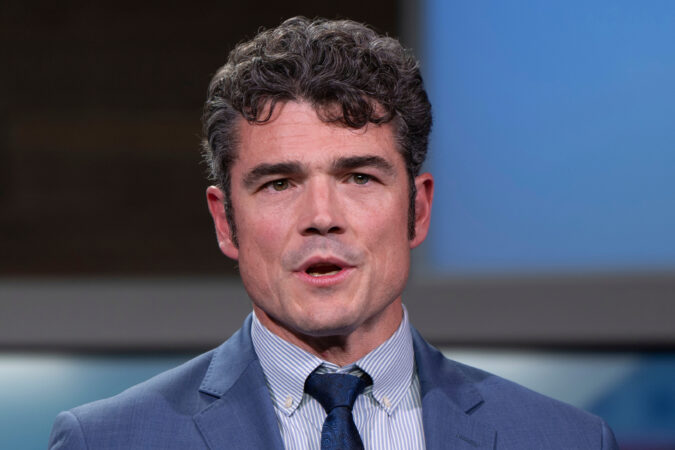
    WASHINGTON — Joe Kent, the director of the National Counterterrorism Center, announced his resignation on Tuesday, saying he “cannot in good conscience” back the Trump administration’s war in Iran.

    Kent said on social media Iran “posed no imminent threat to our nation, and it is clear that we started this war due to pressure from Israel and its powerful American lobby.”

    There was no immediate comment from the White House.

    Kent, a former political candidate with connections to right-wing extremists, was confirmed to his post last July on a 52-44 vote. As head of the National Counterterrorism Center, he was in charge of an agency tasked with analyzing and detecting terrorist threats.

    Before entering President Donald Trump’s administration, Kent ran two unsuccessful campaigns for Congress in Washington state. He also served in the military, seeing 11 deployments as a Green Beret, followed by work at the CIA.

    Democrats strongly opposed Kent’s confirmation, pointing to his past ties to far-right figures and conspiracy theories. During his 2022 congressional campaign, Kent paid Graham Jorgensen, a member of the far-right military group the Proud Boys, for consulting work. He also worked closely with Joey Gibson, the founder of the Christian nationalist group Patriot Prayer, and attracted support from a variety of far-right figures.

    During his Senate confirmation hearing, Kent also refused to distance himself from a conspiracy theory that federal agents instigated the Jan. 6, 2021, attack at the Capitol, as well as false claims that Trump, a Republican, won the 2020 election over Democrat Joe Biden.

    Democrats grilled Kent on his participation in a group chat on Signal that was used by Trump’s national security team to discuss sensitive military plans.

    Still, Republicans praised Kent’s counterterrorism qualifications, pointing to his military and intelligence experience.

    Sen. Tom Cotton, the GOP chair of the intelligence committee, said in a floor speech that Kent had “dedicated his career to fighting terrorism and keeping Americans safe.”

  • Hundreds of migrants are vanishing in the Mediterranean. Authorities are withholding information

    Hundreds of migrants are vanishing in the Mediterranean. Authorities are withholding information

    ROME — Bodies washing ashore day after day. Phone calls from relatives going unanswered. Migrants’ tents abandoned overnight.

    Migrants trying to reach Europe are vanishing in droves in what are known as “invisible shipwrecks” but governments responsible for search and rescue are withholding information about what they know.

    The beginning of 2026 ranks as the deadliest start to any year for people trying to cross the Mediterranean — an unprecedented 682 confirmed missing as of March 16 — according to the United Nations’ International Organization for Migration. But the real death toll is almost certainly much higher.

    Human rights groups are increasingly struggling to verify tolls as Italy, Tunisia and Malta have quietly restricted information on migrant rescues and shipwrecks along the deadliest migration route in the world. The news barely makes headlines, in part because the lack of transparency prevents journalists from confirming reports.

    “It’s a strategy of silence,” said Matteo Villa, a researcher focusing on migration and data at the Italian Institute for International Political Studies think tank.

    The organization Refugees in Libya and other human rights groups have been sounding the alarm since late January, reporting more than 1,000 people missing after Cyclone Harry hit the region. But authorities have not confirmed, denied or corrected those reports.

    In the weeks that followed the cyclone, more than 20 decomposing bodies washed ashore in Italy and Libya while other human remains were spotted floating in the middle of the sea.

    For the families of missing migrants, not knowing their fate is excruciating.

    “Europe should know that these people who got drowned in the sea have family members, have dreams, have passions,” Josephus Thomas, a migrant from Sierra Leone and community leader in Tunisia’s coastal town of El Amra, told AP.

    Sparse information means fewer deaths recorded

    Even the U.N.’s migration agency is increasingly unable to verify cases of migrants who die in what are known as “invisible shipwrecks” because of the growing lack of information.

    Last year, at least 1,500 people were reported missing whose fates IOM could not confirm, said Julia Black, who leads the organization’s Missing Migrants Project. The issue persists in 2026.

    “We started a new secondary data set of what we are calling unverifiable cases because it’s just become so many,” Black said. For this year, they already have more than 400 missing they could not verify.

    Many humanitarian organizations that previously filled some of the information gaps are no longer able to do so because of the global wave of funding cuts and government-imposed restrictions across the region.

    “We’ve seen the restriction of access for humanitarian actors, which is not right. And now we’re seeing even the restriction of information,” Black said.

    The Associated Press repeatedly asked authorities in Tunisia, Italy and Malta why they aren’t sharing information related to migrant rescues at sea and what their policies are. Not one responded.

    Countries quiet on reports of boats missing after cyclone

    Over the years, authorities in the Mediterranean have gradually reduced information related to migrants. But their silence was even more pronounced in late January after Cyclone Harry unleashed heavy rainfall, winds of 100 kph (62 mph), and 9-meter-tall (30 feet) waves.

    Hundreds of people had departed from Tunisia’s coastal region of Sfax and disappeared, according to information the group Refugees in Libya gathered from migrants in Tunisia and their relatives abroad.

    The group acknowledged it was difficult to be precise “because there is no central system recording departures, losses, or recoveries,” but it warned that the death toll was likely even higher.

    “We are looking at boats that never counted how many kids are inside,” Refugees in Libya founder David Yambio told AP.

    The AP sent five email requests to the Italian coast guard seeking information on the boats reported missing and search efforts but received no response. An officer who answered the phone said the coast guard did not have “any further verified and confirmed information regarding the circumstances.” AP also filed a Freedom of Information request, which is pending.

    The coast guard also declined to comment on an alert it issued on Jan. 24 asking vessels sailing between the Italian island of Lampedusa and Tunisia to be on the lookout for eight small boats in distress carrying some 380 people. The alert was made public by Italian journalist Sergio Scandura.

    One survivor rescued from the boats

    There is only one known survivor from the boats reported missing during Cyclone Harry. He was floating in the water when a merchant vessel rescued him on Jan. 22. The man told crew members he had been traveling with another 50 people, some of whose bodies could be seen in the water in video of the rescue. Thanks to his testimony, their deaths were included in IOM’s tally.

    According to the captain, the survivor was evacuated to Malta. The Maltese Armed Forces did not respond to multiple requests about their involvement or reports that they recovered the man and the bodies.

    The Tunisian Foreign Ministry and the Tunisian National Guard also have not responded to multiple requests for information by email and phone.

    Frontex, a European Union agency that assists nations with border surveillance, told AP that it spotted eight boats carrying about 160 migrants between Jan. 14 and 24 when the cyclone hit. It said six boats were rescued by Italian authorities, but the fate of the other two remains unknown.

    On Feb. 8, migrants prayed and cried during a memorial ceremony in the olive groves near Sfax, presuming their loved ones could not be alive after so many days without news.

    “All of us here are in deep trauma, are in deep agony,” Dr. Ibrahim Fofana, a migrant in Tunisia whose relatives have been missing since late January, said in a video shared by Refugees in Libya. He pleaded for authorities to identify the bodies that washed ashore in Italy.

    Tighter information follows migration crackdown

    Until mid-2024, Tunisian authorities regularly shared the number of migrants they were intercepting at sea, eager to show their European partners compliance with a 2023 deal to curb migration in exchange for financial aid. But the deal was also followed by a brutal crackdown against migrants on land that resulted in thousands being detained or dumped in the desert.

    Nongovernmental organizations such as the Tunisian Forum for Economic and Social Rights, known by its French acronym FTDES, which used to compile and share reports on migrant interceptions, were also caught in the crackdown.

    In June 2024, Tunisia’s Ministry of Interior stopped releasing any information on migrants, citing security reasons, said Romdhane Ben Amor, FTDES’ spokesperson. But in his opinion, the motives were political. The numbers were incompatible with the narrative that Tunisia was not Europe’s border guard, he said.

    Italy’s erosion of information on migrant rescues is even older than Tunisia’s. The Italian coast guard used to provide detailed monthly data on migrants rescued. The monthly reports became quarterly before stopping completely in 2020, Villa said. In 2022, previous reports were also removed from the coast guard’s website.

    This year, the Italian coast guard did not share any migration-related press releases despite nearly 5,000 migrants disembarking on Italian shores, according to Italy’s Interior Ministry statistics.

    “It is very clearly a political strategy to repress as much information as possible from the public,” Villa said.

  • Suspected suicide bombers target Nigeria’s Maiduguri city, killing 23 people

    Suspected suicide bombers target Nigeria’s Maiduguri city, killing 23 people

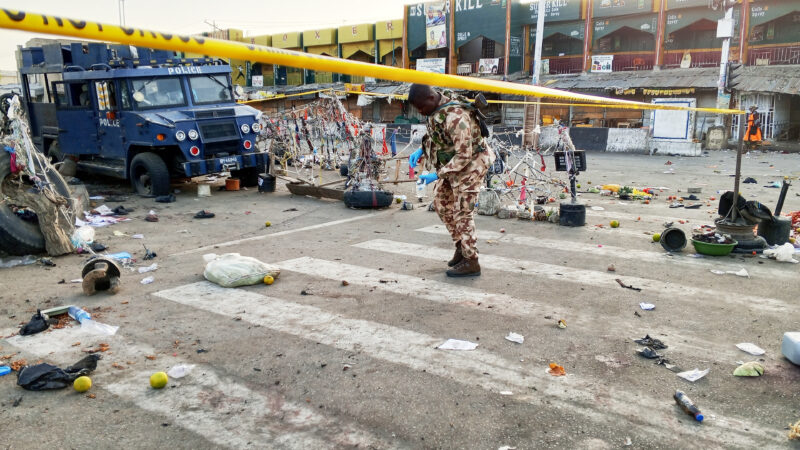
    MAIDUGURI, Nigeria — At least 23 people were killed and more than 100 wounded in suspected suicide bombings Monday night that targeted Maiduguri city in northeastern Nigeria, police said Tuesday. It was one of the deadliest attacks in the conflict-battered city in recent history.

    Residents and emergency services earlier told The Associated Press that three explosions were reported in crowded places in Maiduguri, the capital of Borno state, including in a major market and at the entrance of the University of Maiduguri Teaching Hospital.

    “Regrettably, a total of 23 persons lost their lives, while 108 others sustained varying degrees of injuries,” Borno police spokesperson Nahum Kenneth Daso said in a statement that blamed the attacks on suspected suicide bombers.

    No group has claimed responsibility for the attacks, but suspicion quickly fell on the Boko Haram jihadi group, which in 2009 launched an insurgency in northeastern Nigeria to enforce their radical interpretation of Shariah.

    Boko Haram has since become stronger, with thousands of fighters and different factions, including the Islamic State West Africa Province, which is backed by the Islamic State group.

    Maiduguri city has been at the heart of the deadly violence but has in recent years experienced relative peace even as the countryside is often battered by extremists.

    The attack took place less than 24 hours after the Nigerian military repelled attacks by militants on the outskirts of Maiduguri, in what some residents say could have been planned as a distraction.

    By Tuesday morning, there was heavy security deployment in the affected locations and along major roads in the city, but many public places remained closed amid heightened fear.

    “Investigations are ongoing to further ascertain the circumstances surrounding the incidents and to bring perpetrators to justice,” the Borno police command said.

    Explosions rocked crowded places almost simultaneously

    The first explosion was recorded at about 7:30 p.m. at the entrance of the teaching hospital, while the second and third followed few minutes later at the popular Monday Market and nearby Post Office business hub, both located about 2.5 miles from the hospital.

    Witnesses recounted the chaos that followed at the scenes and at hospitals as security forces and the emergency services quickly intervened.

    “This attack has been one of the deadliest in Maiduguri in years,” said Mohammed Hassan, a member of a volunteer group assisting security forces in fighting extremists. “We’re in dire need of blood,” he said of the situation hours after the attack.

    The extremists have intensified their attacks against Nigerian military bases in recent weeks, killing several senior officers and soldiers, and stripping the bases of stocks of weaponry and ammunition.

    The multiple attacks could be seen as a major victory for the jihadis in a city seen as impregnable despite the jihadis often targeting troops and villages on the outskirts of the city.

    Past attacks in the city have been limited to one-off incidents that occur once in a long while, including a suicide attack that killed five at a mosque on Christmas Eve last year.

    “Maiduguri being attacked is like an insult for the security forces … and for the (jihadi) groups, it is symbolic because it shows nowhere is out of their reach,” said Malik Samuel, a Nigerian security researcher with Good Governance Africa.

  • Republicans are launching a voting bill debate that could last days or even weeks

    Republicans are launching a voting bill debate that could last days or even weeks

    WASHINGTON — Republicans are launching an unprecedented effort on Tuesday to hold the Senate floor and talk for days about a bill that they know won’t pass — an attempt to capture public attention on legislation requiring stricter voter registration rules as President Donald Trump pressures Congress to act before November’s midterm elections.

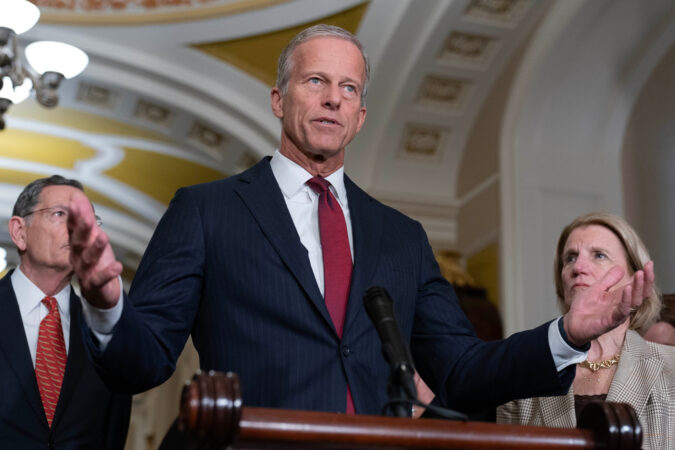
    The talkathon could last a week or longer, potentially through the weekend, as Senate Majority Leader John Thune tries to navigate Trump’s insistence on the issue and Democrats’ united opposition. Trump has urged Thune to scrap the legislative filibuster, which triggers a 60-vote threshold in the 100-member Senate, or find another workaround to pass the bill, but Thune has repeatedly said he doesn’t have the votes to do that.

    Instead, Republicans intend to make a long, noisy show of support for the legislation, which would require Americans to prove they are U.S. citizens before they register to vote and to show identification at the polls, among other things. It’s a risky strategy, with no guarantee it will be enough for Trump, who has said he won’t sign other bills until the Safeguard American Voter Eligibility Act — also known as the SAVE America Act or the SAVE Act — is passed.

    The floor debate is expected to eventually end with a failed vote. Republicans need 60 votes to advance the bill to a final vote, but they hold 53 seats, and all 45 Democrats and both independents, who caucus with the Democrats, oppose it.

    Still, the debate will “put Democrats on the record,” Thune said last week.

    Creating strict voter registration rules

    Trump says, without evidence, that Democrats can only win in the midterms if they cheat and explicitly said Republicans need the SAVE America Act to win in November. The House passed the legislation earlier this year, but the Senate turned to other issues as it became clear that Republicans didn’t have the votes to pass it.

    But Trump made clear he wasn’t satisfied and pushed the Senate to act. The Republican president has said he won’t sign other legislation, including a bipartisan housing bill backed by the White House, until the voting bill passes.

    The bill contains a slew of provisions that Trump and his most loyal supporters have pushed as part of a broad effort to assert federal control over elections. It would require voters nationwide to provide proof of citizenship when they register and to show accepted voter identification when casting a ballot.

    It would also create new penalties for election workers who register voters without proof of citizenship and require states to hand voter data over to the Department of Homeland Security so federal officials could screen for voters who are in the country illegally.

    Trump also wants new provisions added to the bill, including a ban on most mail-in ballots.

    “It’ll guarantee the midterms,” Trump said of the bill last week. “If you don’t get it, big trouble.”

    Democratic opposition to the bill is firm

    Democrats and many groups that champion voter access say there is little evidence of noncitizens voting and say the bill would disenfranchise millions of voters — including Republicans — by creating new burdens to prove citizenship.

    It is already illegal to vote if you are not a U.S. citizen, but the bill would lay out strict new rules for paperwork that people would have to present to register to vote. Opponents of the measure say those documents are not always readily available for many people.

    “There is no new problem to solve here,” said Janai Nelson, president and director-counsel of the Legal Defense Fund, a civil rights law advocacy group. “There is an apparatus already to ensure that elections are safe and secure and that only eligible voters are casting ballots in our elections.”

    Senate Democratic leader Chuck Schumer said that Democrats are not opposed to voter identification but “this is about purging the voter rolls in a massive way, so you never even get the chance to show a voter ID when you showed up to vote because you’d be knocked off the rolls.”

    Expect a show on the Senate floor

    Trump, backed by Republican Sen. Mike Lee of Utah, has pushed for a talking filibuster, which would force Democrats to talk for days or weeks to delay passage of the bill. But Thune and the larger GOP conference rejected that idea, arguing that it would end in failure after giving Democrats a stage and the opportunity to offer endless amendments, potentially adding their priorities to the bill.

    Republicans are instead taking over the floor with their own speeches, proceeding under regular order but operating outside the normal time limits that are customary when debating legislation. Democrats are expected to answer with their own procedural hijinks, potentially forcing Republicans to come to the floor at all hours for votes, meaning they will need to stay close to the Senate for the duration.

    Lee said last week that it’s unclear how it will all play out. He said he thinks Trump “understands that we need to put in an aggressive effort here.”

    “And a lot of that,” he said, “is going to have to be determined in real time as we go about it.”

    The extent of Trump’s satisfaction with the process, Lee said, “will depend on whether, in his view, we gave it everything we have.”

    On Monday night, Lee was rallying Trump’s base voters on X.

    “Once we’re on this bill,” he wrote, “we must stay on it until it’s passed into law.”

  • A journalist reported a missile strike. Then came the death threats.

    A journalist reported a missile strike. Then came the death threats.

    The message appeared in English on Emanuel Fabian’s phone.

    “You have 90 minutes left to update the lie,” said a WhatsApp message reviewed by The Washington Post. “If you do this — you solve in a minute the most serious problem you have caused yourself in life. And you won’t remember me anymore in a week.”

    Five days earlier, Fabian, a 28-year-old war correspondent at the Times of Israel newspaper, had published a short blog post reporting that an Iranian missile had struck an open area outside a Jerusalem suburb, harming no one.

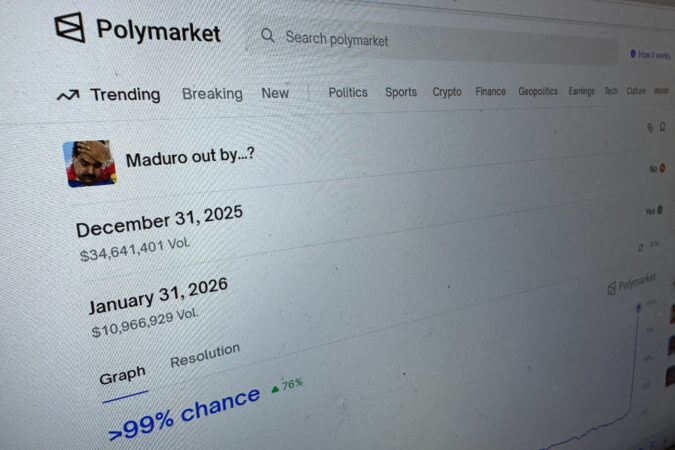
    Until he began to receive messages that threatened his life and family, Fabian didn’t know his brief report had triggered a dispute over bets on the prediction market Polymarket on whether an Iranian missile would strike Israel on March 10. For those with money down, millions of dollars were potentially riding on his blog post.

    Fabian was spooked enough by the threats to at least entertain the idea of revising his published reporting, he told The Post in a phone interview Monday. That could score a win for Polymarket users who had bet against a missile strike occurring that day — and at least one had offered to send Fabian a share of the profits.

    Instead, he stood by his post, reported the threats to the police and wrote an article for the Times of Israel chronicling the harrowing experience. Fabian said he decided to publicize the story in the hope that “anyone who’s ever thinking about threatening a journalist will maybe think twice.”

    Fabian’s run-in with disgruntled bettors follows a string of recent controversies triggered by prediction markets, fast-growing online platforms that host markets where people can bet on the outcome of future events such as elections or the Academy Awards.

    In January, an anonymous user on Polymarket, which bars U.S. users, won $400,000 betting on the ouster of Venezuelan leader Nicolás Maduro just hours before U.S. forces took him into custody. In February, Fabian reported that an Israel Defense Forces reservist was indicted along with a civilian for using classified information to place bets on Polymarket.

    This month, users of rival Kalshi, which is approved to serve U.S. bettors, complained after the site declined to pay out on bets that Iran’s Ayatollah Ali Khamenei would be ousted, citing a policy of not allowing bets on a person’s death.

    Polymarket and Kalshi say they monitor their platforms for insider trading and improper activity, but U.S. lawmakers have raised concern about the harmful incentives prediction markets create.

    “Polymarket condemns the harassment and threats directed at Emanuel Fabian, or anyone else for that matter,” a company spokesperson told The Post. “This behavior violates our terms of service and has no place on our platform or anywhere else. Prediction markets depend on the integrity of independent reporting. Attempts to pressure journalists to alter their reporting undermine that integrity and undermine the markets themselves.”

    The company added in a post on X that it had “banned the accounts for all involved” and would pass on their information to authorities.

    The bet that would turn into a nightmare for Fabian hinged on whether at least one Iranian missile would strike Israel on March 10.

    As sirens sounded across Jerusalem and the West Bank that day, indicating ballistic missiles in flight from Iran, Fabian began contacting authorities to see whether anything had landed or been intercepted. Within minutes, he published a brief post noting that medics were responding to reports of an impact near Beit Shemesh, a city about 20 miles west of Jerusalem. Soon after, he posted on X a dashcam video provided by a witness that showed a fiery explosion in a forested area not far from a residential complex.

    “One missile struck an open area just outside Beit Shemesh, first responders say and footage shows,” Fabian wrote, noting that no injuries were reported.

    Fabian moved on with his day, but on Polymarket, controversy was brewing. At the end of March 10, about $200,000 was at stake, according to a Post analysis of Polymarket data from crypto analytics data platform Dune and the website Polymarket Analytics.

    His blog post appeared to seal a win for users who had put money on at least one Iranian missile striking Israel that day. But in a group chat on the messaging platform Discord, a user pointed out that a daily report from the Israel Defense Forces did not mention any missile strikes on March 10. That user and others suggested the explosion may have been shrapnel from an intercepted missile.

    Under the terms of the bet on Polymarket, intercepted missiles did not count as strikes. And the terms said that if confirmation of a strike could not be provided within 48 hours, those who bet “no” would be declared the winners.

    Polymarket determines the “truth” used to resolve bets on its platform via a complex system of voting by users who have bought a particular cryptocurrency token. As those users debated who should win the bet over missile strikes on March 10 in the days following the blast, more Polymarket bettors piled in, wagering another $7 million, with some individuals standing to win more than $1 million if the market resolved to “yes.” And Fabian began to receive messages from strangers encouraging him to revisit his reporting.

    At first the messages were polite. “I’d appreciate it if you could update your article, as in its current form it does not reflect reality,” one correspondent told Fabian, according to his Times of Israel article. “Alternatively, if you have information that it was indeed a full missile that was not intercepted, I would be glad to be corrected.”

    Fabian said he didn’t know at the time why the person was so interested in what seemed to be a minor detail, given that the blast had not caused serious damage. His confusion grew as he began to receive similar messages from other strangers.

    “I started getting all these replies on Twitter, or X, where people asked me, ‘Hey, why aren’t you updating this story from the 10th of March?’,” he recounted. “I was so confused. Then I looked at the profiles, and I realized they’re all Polymarket bettors. That’s when it kind of clicked.”

    By Sunday morning one person’s messages to Fabian had grown menacing.

    In messages written in Hebrew on WhatsApp, which Fabian quoted in his published reporting and also shared with The Post, a user who called themselves “Haim” said if Fabian caused him to lose his $900,000 bet, “we will invest no less than that to finish you.” Alternatively, the message said, Fabian could change the article, “end this with money in your pocket, and also earn back the life you had until now.”

    When Fabian didn’t respond, Haim began sending messages counting down the minutes, and claimed that he knew exactly where Fabian lived and who his family members were. Eventually, Haim switched from Hebrew to English, telling Fabian he had “90 minutes to update the lie.”

    Fabian told The Post that he considered conceding to Haim’s demands.

    “I thought, ‘Do I just change it? Because it doesn’t really matter,’” he said. “But then I thought, ‘You know, if I do this now, they’re going to come back to me again and asked for other things to be changed.’ They would have probably never stopped doing that if they knew they could make money this way.”

    Instead, Fabian filed a police report, he said, and began working with his editor at the Times of Israel to publish a first-person account of the attempted shakedown. He said he hopes that the publicity will deter bettors from threatening other journalists in the future. But Fabian said he worries he won’t be the last — and that other journalists might respond differently.

    Asked whether it’s possible the bettors were right and the explosion was from the remains an intercepted missile, Fabian said he was confident it was a warhead, due to the size of the blast and verbal confirmation from the IDF. But he added that it’s not something he’d usually follow up on after a minor blast, given that it doesn’t matter to most people — unless they have money riding on the answer.

    Asked late Monday if they had any more information on the March 10 blast, an IDF spokesperson said they did not have any on hand but would look into it.

    As of Monday, Polymarket was still accepting bets on the March 10 missile strike, nearly a week after something struck the ground near Beit Shemesh. “No” bets were far cheaper than “yes” bets, because bettors appeared to judge that the odds heavily favored “yes.”

    Latecomers to the market were effectively betting not on what hit the ground in Israel but on how the mostly-anonymous voters in Polymarket’s system will ultimately settle the dispute. One trader with the username “poorsob” would win $1.6 million if the market resolved to “yes.” BenzoateOstylezeneBicarbonate would win $1.3 million. But, if the bet ended up as a “no,” Sofia1 and AAAAGAAaA65 would win about $400,000 each.

    Sen. Chris Murphy (D-Connecticut) and Rep. Greg Casar (D-Texas) are expected to introduce draft legislation on Tuesday called the BETS OFF Act, for “Banning Event Trading on Sensitive Operations and Federal Functions.” They were inspired in part by predictions market bets on Maduro’s ouster and the Iran strikes.

    The bill “would put a stop to these corrupt wagers, crack down on prediction markets that flout the law with offshore platforms, and reject the idea that we should commodify every part of our lives,” Murphy’s office said in a statement.

    Amanda Fischer, policy director at the financial advocacy group Better Markets, said the “chilling” threats against Fabian underscore the need for stronger oversight of prediction markets.

    Fabian’s choice to go public rather than change his story “speaks to his integrity,” said Fischer, a former chief of staff at the Securities and Exchange Commission. But she added that pressure like he experienced could add to the risks faced by war reporters.

    “The last thing they need now,” she said, “is folks with a gambling position on life or death harassing them and trying to coerce them to change their reporting so they can get a payout.”

    Jeremy Merrill contributed to this report.
  • Israel says 2 top Iranian officials killed in airstrikes in blow to Tehran leadership

    Israel says 2 top Iranian officials killed in airstrikes in blow to Tehran leadership

    DUBAI, United Arab Emirates — Iran’s top security official and the head of the Revolutionary Guard’s Basij militia were both killed in overnight strikes in a blow to the country’s leadership, Israel’s defense minister said Tuesday, while Tehran defiantly fired new salvos of missiles and drones at its Gulf Arab neighbors and Israel.

    Both security official Ali Larijani and Gen. Gholam Reza Soleimani were “eliminated last night,” Israeli Defense Minister Israel Katz said in a statement. Iran’s 86-year-old Supreme Leader Ayatollah Ali Khamenei died in an airstrike Feb. 28, the first day of the war launched by the United States and Israel, and other top leaders from the Iranian theocracy have been killed since then.

    Iranian state media did not immediately confirm either death. However, it said a message from Larijani’s office would be published shortly.

    The announcement came after the Israeli military had earlier said it had carried out a “wide-scale wave of strikes” across Iran’s capital and stepped up strikes on Iran-backed Hezbollah militants in Lebanon. Israel also reported two incoming salvos before dawn from Iran at Tel Aviv and elsewhere, and said Hezbollah targeted Israel’s north.

    Incoming Iranian missiles on the United Arab Emirates prompted Dubai, a major transit hub for international travel, to briefly shut its airspace and a man was killed by the debris of a missile intercepted over Abu Dhabi.

    Israel says it has killed two top Iranian officials

    Larijani hails from one of Iran’s most famous political families. A former parliamentary speaker and senior policy adviser, he was appointed to advise the late Khamenei on strategy in nuclear talks with the Trump administration.

    He also served as the secretary of Iran’s Supreme National Security Council, its top security body.

    Soleimani, meantime, was the head of the Basij militia forces, which Israel’s military called an “armed apparatus of the Iranian terror regime.”

    “During internal protests in Iran, particularly in recent periods as demonstrations intensified, Basij forces under Soleimani’s command led the main repression operations, employing severe violence, widespread arrests and the use of force against civilian demonstrators,” Israel’s military said in a statement.

    The U.S. Treasury lists Soleimani as having been born in 1965. He has been sanctioned by the U.S., the European Union and other nations over his role in helping suppress dissent for years through the Basij.

    Killing Soleimani would likely further strain the command and control of the Basij, which would be crucial in putting down any uprising against the theocracy. The Basij and other internal security forces have been a target of attack by both the Americans and the Israelis so far.

    Iranian strikes pressure neighbors and oil markets

    Iran kept up the pressure on the energy infrastructure of its Gulf Arab neighbors, hitting an oil facility in Fujairah, a UAE emirate on the country’s east coast with the Gulf of Oman that has been repeatedly targeted. State-run WAM news reported that no one had been injured in the blast from the drone strike.

    The man killed by falling debris from an intercepted missile was the eighth person to die in the UAE since the start of the war, authorities said.

    Iran’s attacks on Gulf nations and its grip on the Strait of Hormuz, through which a fifth of the world’s oil is transported, has given rise to increasing concerns of a global energy crisis. Early Tuesday it hit a tanker anchored off the coast of Fujairah, one of about 20 vessels hit since Israel and the United States started the war with an attack on Iran on Feb. 28.

    Iran’s parliamentary speaker, Mohammad Bagher Qalibaf, said his country had been given no choice but to keep up its pressure on shipping traffic in the strait.

    “They are flying, launching missiles, should we just sit back and do nothing in response?” he said in an interview on state television.

    With Washington under increasing pressure over rising oil prices, Brent crude, the international standard, remained over $100 a barrel, up more than 40% since the war started.

    U.S. President Donald Trump said he had demanded that roughly a half-dozen countries send warships to keep the Strait of Hormuz open. But his appeals brought no immediate commitments, with many saying they are hesitant to get involved in a war with no defined exit plan and skeptical that they could do more than the U.S. Navy.

    UAE briefly closes airspace as Iran launches new attacks on Gulf neighbors

    The UAE shut down its airspace early Tuesday as its military reported it was “responding to missile and drone threats from Iran.” The closure was soon lifted, and not long after the sounds of explosions could be heard as the military worked to intercept incoming fire.

    The snap announcement on its airspace showed the balancing act Emirati authorities face in trying to keep their long-haul carriers, Emirates and Etihad, flying as Iranian attacks continue to target the country.

    Saudi Arabia’s Defense Ministry reported intercepting a dozen drones Tuesday morning over the country’s vast Eastern Province, home to oil infrastructure.

    In Qatar, the sounds of explosions boomed over the capital early in the day as defenses worked to intercept incoming fire. Qatar’s Defense Ministry said later that it had successfully thwarted a missile attack on the city, though a fire broke out in an industrial area from a downed projectile.

    Attacks from Iran-linked proxy forces continued in Iraq, as the U.S. Embassy in Baghdad was hit with shrapnel from drones that had been intercepted.

    The embassy’s air defenses were able to shoot down all four drones targeting the facility, according to two Iraqi security officials, speaking on condition of anonymity to discuss intelligence matters.

    A separate strike targeted a house in the heavily fortified Presidential Compound in Baghdad’s al-Jadriya area, the officials said. It wasn’t clear who carried out either attack but Iran-allied militias have regularly been attacking American targets inside Iraq since the conflict began.

    Israel launches new attacks on Tehran and steps up strikes on Beirut

    The Israeli military early Tuesday said it had launched new attacks across Tehran in addition to the Lebanese capital targeting Hezbollah militants.

    In Iran, it said it hit command centers, missile launch sites and air defense systems. There was no immediate confirmation from Iran, where little information has been coming out due to internet outages, round-the-clock airstrikes and tight restrictions on journalists.

    Israel did not immediately release details of its attacks on Lebanon, but the Lebanese army said two of its soldiers were seriously wounded in an airstrike on the village of Kfar Sir.

    More than 1,300 people have been killed in Iran since the start of the conflict, according to the Iranian Red Crescent.

    Israel’s strikes have also displaced more than 1 million Lebanese — or roughly 20% of the population — according to the Lebanese government, which says some 850 people have been killed.

    Some Israeli troops have pushed into southern Lebanon, and there are fears Israel is preparing a large-scale invasion.

    The military’s chief of staff, Lt. Gen. Eyal Zamir, said Monday on a visit to the northern border that Israel’s army is “determined to deepen the operation until all of our objectives are achieved” and that the military’s Northern Command is being reinforced with additional soldiers.

    Israel reported two Iranian salvos early Tuesday fired toward Tel Aviv and an area south of the Sea of Galilee. More launches from Lebanon were also reported.

    In Israel, 12 people have been killed by Iranian missile fire. At least 13 U.S. military members have been killed.

    Closure of Strait of Hormuz pressures oil shipping

    The virtual shutdown of the Strait of Hormuz is unnerving the world economy, driving up energy prices, threatening food shortages in poor countries, destabilizing fragile states and complicating efforts by central banks to drive down prices for consumers.

    There have been a handful of ships getting through, primarily Iranian but also from other countries including India and Turkey, and Iran has said it technically remains open — just not for the United States, Israel and its allies. Iraq said Tuesday it was in talks with Iran about allowing passage for its ships.

    Underscoring the danger of even getting close to the strait, a tanker anchored off the eastern coast of the United Arab Emirates was hit by a projectile early Tuesday morning and sustained minor damage, according to the United Kingdom Maritime Trade Operations center, run by the British military.

  • Ocean County College dean charged with sex assault of minor, prosecutors say

    Ocean County College dean charged with sex assault of minor, prosecutors say

    A man who recently served as a dean at Ocean County College was charged with sexually assaulting a minor, the Atlantic County Prosecutor’s Office said Monday.

    James Hadley, of Barnegat in Ocean County, was arrested Friday when he allegedly traveled to Pleasantville in Atlantic County to meet the juvenile for a sex act, the prosecutor’s office said. Hadley was described as 66 years old, but public records indicate that he is 65.

    Earlier this year, Hadley became the dean of the School of Business and Social Sciences at Ocean County College.

    In an emailed statement Monday night, the college said it was informed by law enforcement on Friday afternoon about “the situation regarding James Hadley.”

    The statement continued: “Upon receiving this information, we took immediate action and placed Mr. Hadley on a suspension and restricted him from campus. An interim dean has been appointed.”

    Ocean County College said it has “no record of complaints or reports concerning his conduct while employed with our College. As an open active investigation is pending, the College will not be offering further comment at this time. We are fully cooperating with any police inquiry.”

    The prosecutor’s office said that based on three alleged incidents this month, Hadley was charged with second-degree sexual assault of a victim under the age of 16, second-degree luring a minor to commit a sexual act, third-degree endangering the welfare of a child, and fourth-degree criminal sexual contact.

    The investigation showed Hadley had previously met the child to engage in sexual acts that he paid the child to perform, the prosecutor’s office said.

    The case, which remains open, was investigated by the Pleasantville Police Department with assistance from the Atlantic County Prosecutor’s Office’s Special Victims Unit.

  • Philly has been seeing huge temperature swings within 24 hours. Here’s what’s going on.

    Philly has been seeing huge temperature swings within 24 hours. Here’s what’s going on.

    Like so many humans, perhaps the atmosphere is having issues adjusting to the time change. At the very least, it’s having trouble keeping track of the seasons.

    After making a run at 70 degrees on a stormy Monday, on Tuesday it will be welcome back to hats and gloves in Philly.

    Temperatures were forecast to fall to freezing by daybreak, which would be a drop of 35 to 40 degrees in less than 24 hours. In some years, that would rank among the biggest annual day-to-day temperature drops.

    But this comes less than a week after the official readings plummeted from 83 degrees, normal for mid-June, to 35 in 24 hours, one of the largest day-to-day temperature swings in Philly’s climate record.

    In official record-keeping dating to 1874 — covering more than 55,000 days — the Wednesday-to-Thursday shift would rank in the top 20 for day-to-day temperature tumbles, according to an Inquirer analysis.

    “It’s really remarkable,” said Eric Balaban, pulmonary and critical care fellow at the Temple Lung Center.

    He and other experts say that aside from what it may do to the morale of spring’s ardent fans, the thermal roller-coaster and the accompanying winds likely are having effects on health, particularly for people with respiratory cardiovascular conditions.

    And we probably should expect to see the dramatic swings to continue for a while, said Matt Benz, senior meteorologist with AccuWeather Inc.

    “I’d be surprised if we didn’t, given the pattern we’ve being going through,” Benz said.

    Why the temperature has been so jumpy lately in Philly

    Philadelphia and other areas in the mid-latitudes are prone to become battlegrounds this time of year between the stubborn winter and the impatient spring.

    March is notorious for temperature swings as cold air masses from the north encounter encroaching warmth and storms tend to form along the borders of the skirmishes.

    One reason the contrasts have been especially vigorous this year is the obvious. “After this hard winter, that’s to be expected,” said Ray Martin, a lead meteorologist at the National Weather Service. We haven’t had many of those lately.

    But that 48-degree drop last week belongs in an elite category. It ranked No. 18 among day-to-day temperature falls, based on the available records. The all-timer was the 57-degree drop from March 28 to 29 in 1921, with several 50-degree drops appearing in the record.

    Whenever they occur, the radical shifts can have health consequences, according to medical experts and a variety of studies.

    The possible health effects of rapid temperature changes

    The temperature changes typically are set off by potent fronts, such as the one that crashed through the region on Monday, and they generate powerful winds.

    By stirring particulate matter and transporting early tree pollens, the winds present a risk to those with respiratory conditions and allergies, said Manav N. Segal, with the Chestnut Hill Allergy & Asthma practice.

    “We are seeing an increase in call volume already because of patients’ spring allergy symptoms,” he said Monday. And conditions this week are just a prequel: The allergy season will pick up steam once the weather turns more consistently warmer and the allergy season intensifies, he said.

    Said Balaban, “People who have preexsiting conditions are simply at higher risk.”

    Rapid changes in temperature and levels of atmospheric moisture with frontal passages can irritate the airways and increase airway inflammation, said Joann Martin, nurse with Guardian Nurses Healthcare Advocates in Flourtown, Montgomery County. Studies have shown associations between temperature variability and increased asthma-related hospital visits.

    Changes in temperature, humidity, and barometric pressure — a measure of the weight of the air that falls as fronts approach and rises after they pass — are “recognized triggers for migraine and severe headaches.”

    In addition, “Sudden temperature shifts can affect blood pressure, vascular tone, and cardiac workload,” Martin said, increasing the changes for heart attacks and strokes.

    For most people, however, after a long winter, the temperature drops are a source of frustration over the delay of a much-anticipated spring.

    More temperature swings are likely in coming weeks in the Philly region

    For now, at least, it appears that the region’s cherry blossoms should be safe, even though temperatures Tuesday morning were expected to come close to freezing in Philly and may fall into the upper 20s Wednesday and Thursday mornings.

    Daytime highs won’t be much higher than 40 Tuesday and Wednesday, before a modest warmup begins.

    It likely would take a serious late-March or early-April freeze to damage the blossoms, said Sandi Polyakov, head gardener for the Japan America Society of Greater Philadelphia. He expects a bloom peak in early April.

    However, the temperature seesaw probably isn’t over, said AccuWeather’s Benz.

    “There’s still a lot of cold air left over in Canada,” he said, ”and a lot of warmth coming up from the Gulf.”

    He noted that Monday’s storm was dropping a healthy 20 to 30 inches of snow in the western Great Lakes.

    “Until we get out of that type of stuff,” he said, “the cold air doesn’t have to go very far to get here.”

  • Baby killed in ambulance crash was being driven to hospital by her grandfather, sources say

    Baby killed in ambulance crash was being driven to hospital by her grandfather, sources say

    An infant who died in a crash involving a private ambulance early Sunday morning was being driven to the hospital by her grandfather, who had jumped behind the wheel of the emergency vehicle parked at the family’s home after the baby became unresponsive, sources said.

    Robert Coleman was trying to rush the baby and her mother to a hospital around 5:15 a.m. after the child was found in distress inside their Frankford house, said a law enforcement source who spoke on the condition of anonymity to discuss an ongoing investigation.

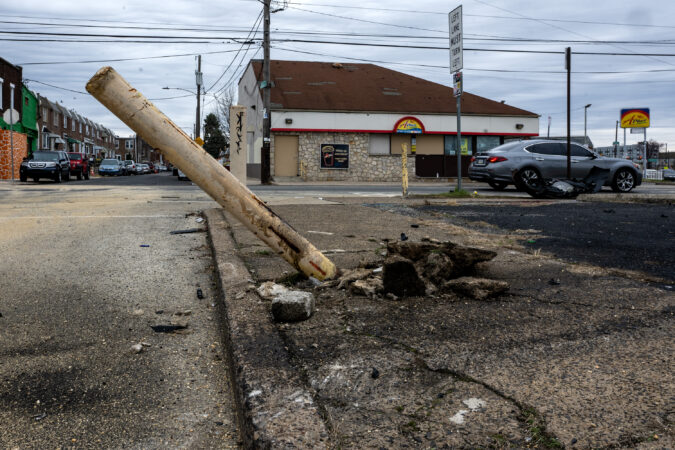
    Police said Coleman, 51, had been drinking — and did not turn on the ambulance’s flashing lights or siren before he sped through a red light at the intersection of Torresdale and Harbison Avenues and collided with a sedan.

    The mother and baby, who the source said were not restrained, were ejected through the windshield of the ambulance, police said.

    The 2-month-old infant, Marian Harris, was declared dead shortly after the crash at an area hospital. Her 32-year-old mother, whom police did not identify, was critically injured with severe head trauma, they said.

    It was not immediately clear why the ambulance, owned by Ambulance Express Inc. or Medstar EMS, was parked at the family’s house or whether the grandfather worked for the company or had experience driving emergency vehicles.

    Police said Sunday that the driver would be charged with driving under the influence and related crimes.

    District Attorney Larry Krasner said in a statement Sunday that no charges had been filed, however. He added that the investigation into the crash “may take some time” but that “we are committed to a fair, appropriate and just outcome.”

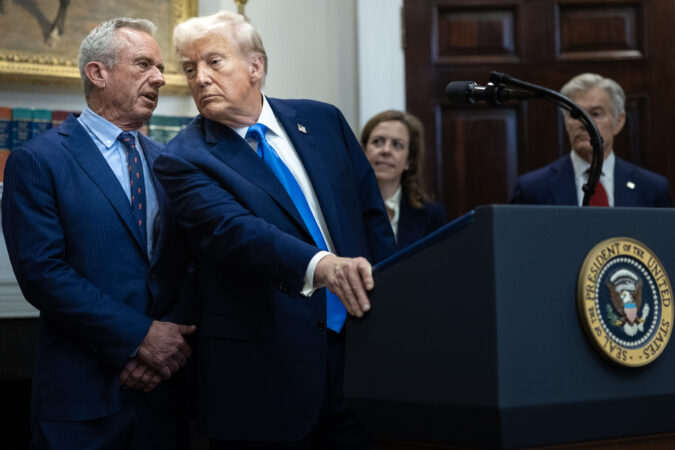
  • Federal judge blocks RFK Jr.’s vaccine policy overhaul for now

    Federal judge blocks RFK Jr.’s vaccine policy overhaul for now

    A federal judge on Monday blocked the Trump administration from implementing sweeping changes to the nation’s childhood immunization schedule, mostly siding with major medical organizations that argue Health Secretary Robert F. Kennedy Jr. unlawfully altered vaccine policy and improperly reconstituted a federal vaccine advisory panel.

    Under Kennedy, the federal government has cut the number of shots routinely recommended to children, including for flu, hepatitis A, rotavirus, and meningococcal disease. Kennedy also dismissed all 17 members of the vaccine advisory panel to the Centers for Disease Control and Prevention last year, installing new members, several of whom have criticized vaccines, especially COVID-19 mRNA shots.

    Several groups, including the American Academy of Pediatrics, the American College of Physicians, and the Infectious Diseases Society of America, sued.

    In his opinion, Judge Brian E. Murphy slammed the administration’s approach to revamping government recommendations for how and when children should be immunized. He said the government has undermined its history of recognizing “the importance and value” of involving independent experts in setting our national public health agenda and relying on “a method scientific in nature” to make such decisions.

    The U.S. District Court judge from Massachusetts wrote that the government bypassed the CDC’s vaccine advisory panel — which is how vaccine recommendations have been made for decades — to change the immunization schedule. He called it a “technical, procedural failure” and a “strong indication of something more fundamentally problematic: an abandonment of the technical knowledge and expertise embodied by that committee.”

    The pause on the administration’s actions are temporary as the dispute is expected to wind through multiple rounds of appeals, raising the prospect of a drawn-out court battle over who ultimately calls the shots on the scientific standards shaping federal vaccine recommendations.

    Andrew Nixon, a spokesperson for the Department of Health and Human Services, said the department “looks forward to this judge’s decision being overturned just like his other attempts to keep the Trump administration from governing.”

    As health secretary, Kennedy — the founder of a prominent anti-vaccine group — has made clear that he wants to overhaul the nation’s immunization system and argued the prior ACIP was plagued with conflicts of interest.

    In early December, President Donald Trump ordered federal health officials to review the childhood immunization schedule, including recommending fewer vaccines to align with other developed countries. The judge wrote that HHS cannot circumvent the long-standing practice of getting advice from the federal panel without offering an explanation “simply because they are following the President’s orders.”

    He also wrote that the government removed every member of the panel and replaced them without undertaking the “rigorous screening” traditionally used to select members.

    The judge also paused all votes taken by Kennedy’s handpicked advisers. Some recent votes include moving from broadly recommending everyone 6 months and older get a coronavirus shot to instead advising Americans to first consult a clinician. The panel also voted to drop a recommendation that all newborns receive a vaccine for hepatitis B.

    In court filings, the medical groups contend that Kennedy’s reconstitution of the vaccine panel was improper and that subsequent votes on vaccine recommendations — including changes affecting COVID-19 and other routine childhood immunizations — were, therefore, invalid. They argued that the administration bypassed established procedure and violated the Administrative Procedure Act, which governs how federal agencies make policy.

    Government attorneys have defended the secretary’s authority to remove and appoint advisory committee members, arguing that federal law grants HHS broad discretion over such panels. They also contend that policy disagreements over vaccine recommendations do not amount to legal violations.

    On Substack, Robert Malone, the committee’s vice chair and a prominent critic of coronavirus vaccines, called the opinion a “judicial overreach.” He wrote that there is a compelling “case for bringing intellectual diversity and fresh expertise” to the panel and for aligning vaccine recommendations with the practices of other nations.

    “In the meantime, the administration should continue its work,” he wrote.